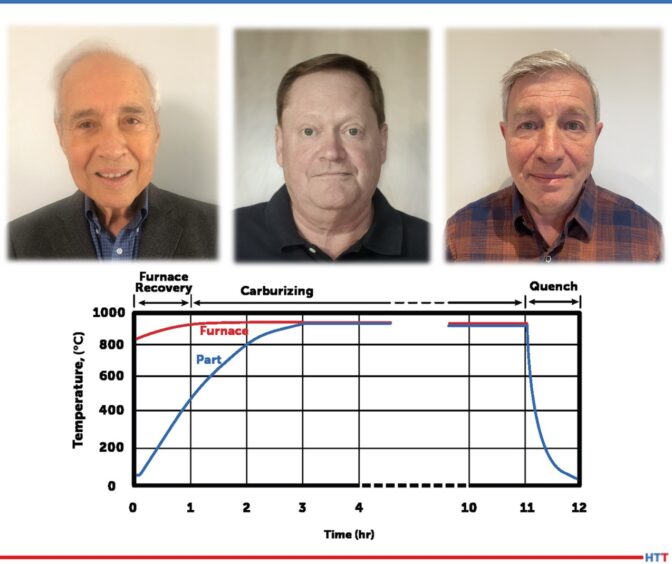
Heat TreatToday will take a break from publishing on Thursday and Friday, November 23 and 24. We will be celebrating the Thanksgiving (U.S.) holiday with our loved ones. Come Monday, November 27, look for the latest edition of Heat TreatDaily in your inboxes.
We are always grateful for you, our readers! We will take this week in particular to thank you for your commitment and passion in the heat treat industry. Thank you for your involvement with us. We work hard to provide you with material that helps support our mission: "We believe people are happier and make better decisions when they are well informed."
God bless each and every one of you, and enjoy the holiday this week.
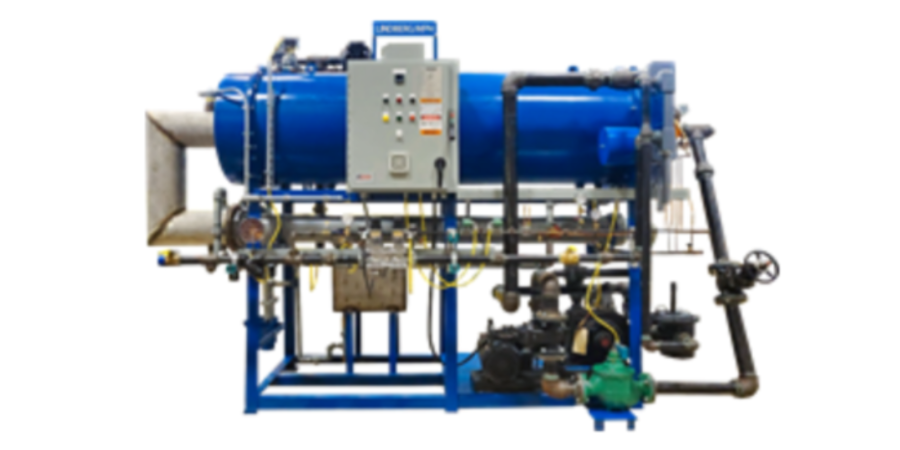
A gas-fired exothermic atmosphere generator has been shipped for the manufacturing industry.
The HYEX exothermic atmosphere generator from Lindberg/MPH features an energy efficient design that provides reliable and economic operation. The maximum exothermic gas output for this generator is 8,000 feet cubed (ft³) per hour.
The combustion chamber is a reinforced, water jacketed, steel shell that is insulated with a high temperature refractory lining and uses a variable ratio tunnel main burner. The chamber includes UV flame detection and peep sight so the operator can observe the operation of the main burner. In the event of a backfire, a fire-check at the burner inlet will automatically block the mixture line and an electrically latched manual reset valve in the gas inlet line will shut down the generator in the event of low gas pressure, high gas pressure, or electric failure.
Said Kelley Shreve, general manager at Lindberg/MPH, “The HYEX generator design allows for varying air/gas ratios to create atmospheres specific to your process."
Find heat treating products and services when you search on Heat Treat Buyers Guide.com
The question in many heat treaters’ minds is, “Why would I want more documentation on my furnaces?” TempTABs can act as an early warning sign that further temperature monitoring is necessary.
This Technical Tuesday article was written by Thomas McInnerney and Garrick Ackart of The Edward Orton Jr. Ceramic Foundation, for Heat Treat Today'sNovember 2023 Vacuum Heat Treatingprint edition.
The Need for User-Friendly Documentation
Thomas McInnerney
Engineering Manager of Pyrometric Products
Edward Orton Jr. Ceramic Foundation.
Source: Edward Orton Jr. Ceramic Foundation
Increased regulations called for in AMS2750G and CQI-9 were, for the most part, driven by the client purchasing the items. With a business climate that can generate a product-liability lawsuit quicker than a rapid quench, clients are trying to protect themselves.
Contact us with your Reader Feedback!
Consequently, most heat treating facilities will perform the necessary and required temperature uniformity surveys (TUSs) as well as thermocouple calibrations. Once the formal TUS is complete, other than the information generated from the control thermocouples, the challenge still exists for the furnace operators to ascertain what happens throughout the furnace between surveys. By passing the last survey but failing the next one, how do you detect that something changed two days after the good survey or two days before the failed survey?
It is true you can run a temperature data logger with an array of thermocouples attached through the furnace to get a complete picture of the furnace performance, but that process includes production interruption, an expenditure of precious manpower, and significant expense in maintaining the data logger. Essentially, we have just defined the need for a cost-effective, user-friendly device to monitor the day-to-day repeatability of the performance of the furnace.
Metals Industry Demands
Garrick Ackart
Marketing and Business Development Manager
Edward Orton Jr. Ceramic Foundation.
Source: Edward Orton Jr. Ceramic Foundation
Driven by the question raised above, The Edward Orton Jr. Ceramic Foundation initiated a development project to provide such a product for the metals industry.
Demands of the metals industry are quite different from those of the ceramic industry. The detection device would have to be able to withstand rapid heat-up schedules, rapid quench, a wide variety of furnace atmospheres (air, nitrogen, hydrogen), and no atmosphere (vacuum), and do all this without introducing contaminants to the products being heat treated — no small challenge for an engineered ceramic product. Following a great deal of consultation and experimentation, Orton developed a product, the TempTAB, that can be used to benchmark and monitor furnace performance in most heat treating applications.
Measuring Dimension: How a TempTAB Works
How does the device work, and how is it made and controlled? The device depends on a constant slope curve of shrinkage versus temperature. When the device is exposed to more temperature and for longer periods of time at peak temperature, the amount of shrinkage increases.
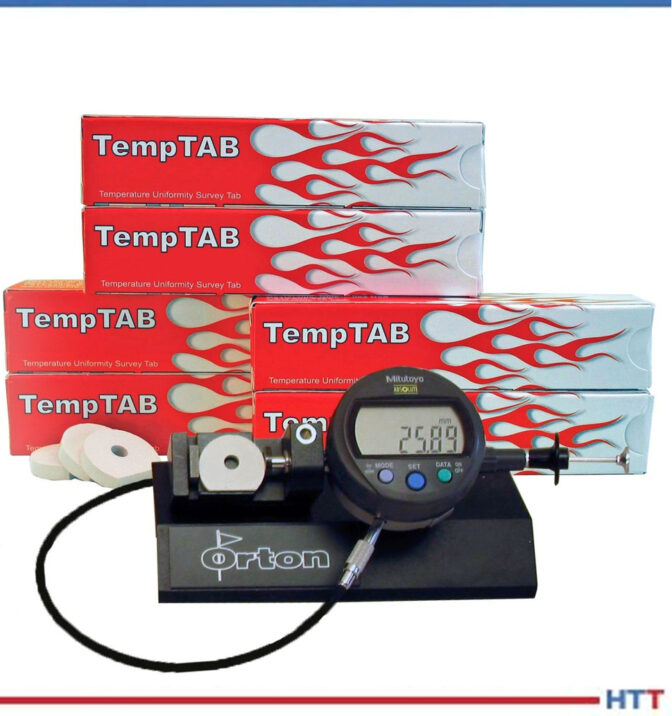
Figure 1. The temperature monitoring system consists of ceramic sensors, a
measuring gauge, and software to convert dimension to temperature.
Source: Edward Orton Jr. Ceramic Foundation
TempTABs are small disks made from exact blends of select ceramic materials prepared in an environment where the processing variables are tightly controlled. The ceramic material is selected based on its predictable shrinkage, which is affected more by temperature than time; even so, holding at or near the peak temperature will have an impact on the final dimension.
Once the TempTAB is out of the furnace, its diameter is measured with a micrometer. The dimension, in millimeters, is entered into an Excel workbook that automatically looks up the equivalent temperature inside the furnace based on the furnace cycle time.
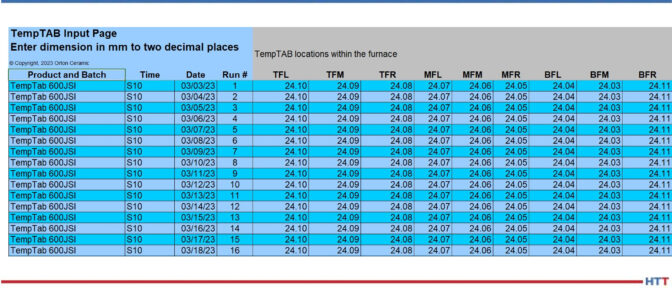
Temperature conversion charts are available with each batch of TempTABs for converting the diameter measurement to temperature. The charts have several columns of data which allow the user to find the data that is best associated with their final furnace cycle hold times (temperatures available for 10-, 30-, 60-, 120-, and 240-minute hold times). The charts are built into the software to allow you to monitor up to nine different locations inside the furnace for up to 360 runs (Figure 2). The software is available free from Orton’s website.
The resulting temperature data generated by the software is graphically displayed in both table and numerical format for easy interpretation. The data can also be copied into other Excel spreadsheets and SPC (Statistical Process Control) programs to be incorporated into existing quality programs.
Figure 2. Orton TempTAB software allows process temperature tracking at a glance.
Source: Edward Orton Jr. Ceramic Foundation
Primary Uses: Early Warning Device & Quality Control
Heat treat companies use these disks as an early warning device and to document that their processes are under control. First, they benchmark their thermal process by running several TempTABs through the heat treat furnace.
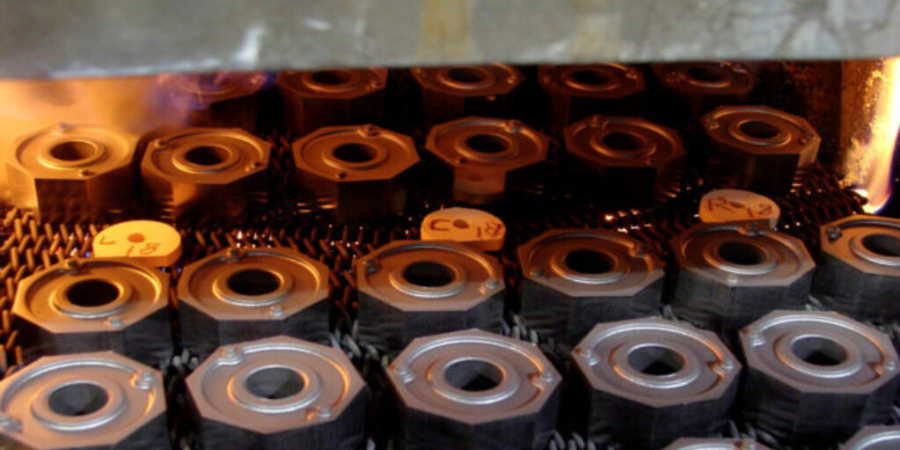
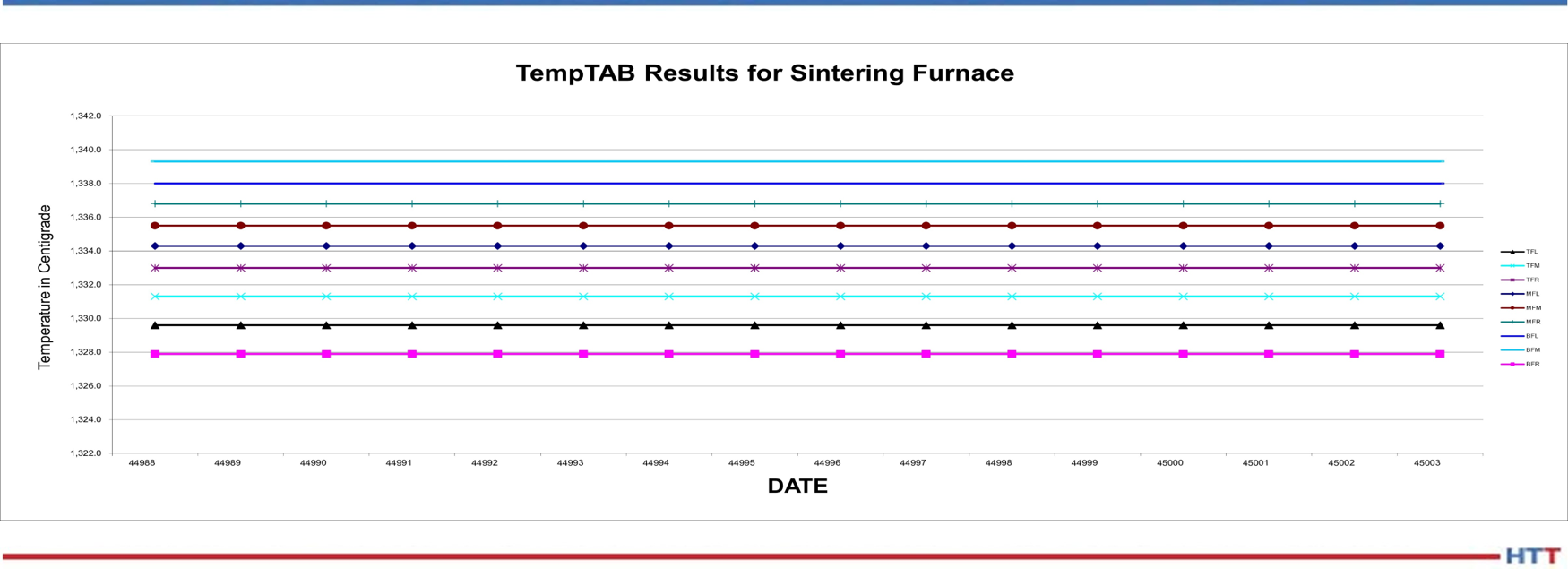
After establishing a benchmark with upper and lower control limits, the company will run the disks on a regular schedule, placing them in the same location alongside the parts being treated in the furnace (see process temperatures graphed with TempTABs in Figure 3).
Figure 3. Temperature data is displayed by location and can be copied into existing SPC software.
Source: Edward Orton Jr. Ceramic Foundation
At a glance, the furnace operator, the quality manager, or the general manager can see if the process is under control. The size of each disk indicates if the thermal process is, or is not, within the established control limits.
The case studies that follow demonstrate these primary uses in real-world heat treat.
Case Study #1: Furnace Documentation When You Need It
A manufacturer with in-house heat treating ran TempTABs alongside the thermocouples in one of its required nine-point uniformity surveys with a data logger. After the formal survey, they continued to run disks in each load, monitoring shrinkage of the disks. The heat treating operations wanted to document the thermal treatment of the product in every load. If something did change inside their furnace before the next required survey, the TempTABs would act as an early warning system alerting them that a formal survey may be necessary.
Case Study #2: Developing Backup Facilities/Preparing for Increased Demand
A company specializing in powder metal sintering wanted to duplicate a sintering process of one of their products, currently only being done at a single manufacturing site, at a second location. Initially, they duplicated all the settings in the new location (temperature settings and belt speed) and found that the resultant parts differed from those of the original site.
The company began to consider TempTABs. They liked the idea of having a device that could provide them with furnace temperature readings since they knew that it was an important variable to the quality of their parts. For one year, TempTABs were used daily for process control of the furnace. This use proved that the furnace was consistent and stable.
Since they had developed a benchmark of the disk dimensions yielding good parts, they were able to adjust the new facility settings so their process could be duplicated in the second facility. Within weeks, the powder metal sintering experts could produce products in the new facility consistent with the original facility.
Case Study #3: High-Value Heat Treating
A heat treating facility serving the aerospace industry historically ran nine thermocouples in every load of their batch furnace for bright annealing stainless steels to document furnace performance. The method required using many type S thermocouples and a data collection unit. Labor costs included setting up the thermocouple array and replacing the certified thermocouples. It was expensive and disruptive; they wanted an alternative.
The time needed to replace the TempTABs was minutes and only required one person’s time to place and gather them. After doing a correlation study of at least five runs over a week, the heat treat facility replaced the thermocouples with TempTAB disks. Now, a single operator places TempTABs inside every load so they can gather information at a lower cost. If they see any change in the amount of TempTAB shrinkage, they will run the thermocouple array to see precisely how the temperature profile has changed.
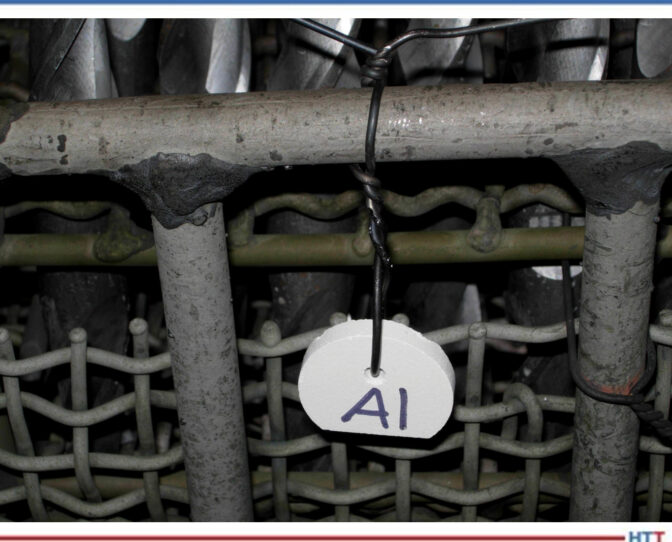
Figure 4. TempTAB wired in place during daily monitoring.
Source: Edward Orton Jr. Ceramic Foundation
About the authors:
Thomas McInnerney is the engineering manager of Pyrometric Products at The Edward Orton Jr. Ceramic Foundation. He received his BS in Ceramic Engineering at The Ohio State University and has been a key leader in the development and application of TempTABs for 22 years.
Garrick Ackart is the Marketing and Business Development manager at The Edward Orton Jr. Ceramic Foundation. He received a Bachelor of Science degree from Alfred University in Ceramic Engineering, an MBA from The Ohio State University, and has more than 25 years of experience in the ceramic and glass industry.
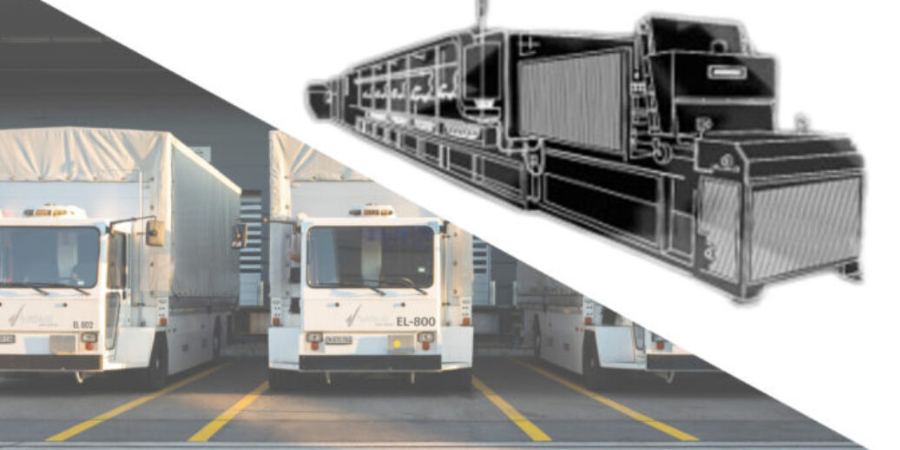
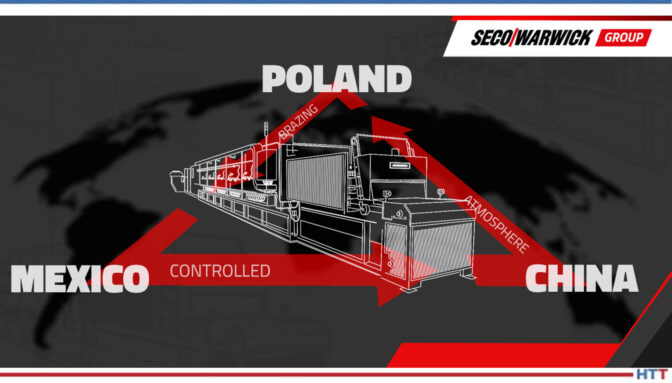
A Scandinavian manufacturer of heat exchangers has purchased two CAB lines, which will be delivered to factories in Mexico and Poland. They will be used for brazing heat exchangers for trucks and buses as well as power generators. The deliveries will be synchronized to arrive to the factories in the same timeframe.
The order is being carried out bySECO/WARWICKGroup’s Chinese branch. This partner has been operating globally since 2016, offering large-size heat exchangers for buses and trucks. The CAB lines on order meet the protective Nocolok® atmosphere aluminum brazing technology requirements.
Said Piotr Skarbiński, vice president of the Aluminum and CAB Products Segment at SECO/WARWICK, “This is a unique project for us, as we have sold two furnaces with the same delivery date to one customer at two different locations. It will be a logistical challenge overseen by SECO/WARWICK China.”
Find heat treating products and services when you search on Heat Treat Buyers Guide.com
Welcome toHeat Treat Today’s This Week in Heat Treat Social Media. As you know, there is so much content available on the web that it’s next to impossible to sift through all of the articles and posts that flood our inboxes and notifications on a daily basis. So, Heat Treat Today is here to bring you the latest in compelling, inspiring, and entertaining heat treat news from the different social media venues that you’ve just got to see and read!
This week, we check out what’s going on in the heat treat community (in person and afar), explore innovations in the automotive and aerospace industries, tune into a conversation on hydrogen combustion, and watch a seasonally-themed aluminum processing video.
Check out this news from Toyota, in which a gigacasting prototype built a third of a car body in three minutes. This technology has the potential to cut out hours of labor normally involved in the car-making process. Be sure to check out the video for an in-depth look into this innovative work. Read more here.
You can’t read everything, we get it. So how’s about you listen/watch/read this ONE epic podcast? Yes? Perfect. Tune in to give a listen to this highly informative exploration of the future of hydrogen combustion. Click here to see the episode.
5. Autumnal Happenings
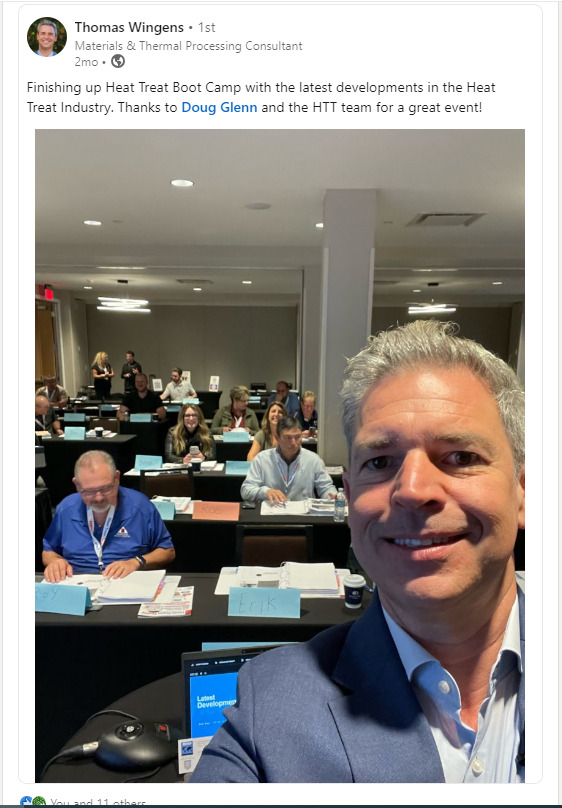
Breeze through the “goings on” of heat treaters from this fall. From Heat Treat Boot Camp, to the ASM Heat Treat show, to supporting breast cancer, heat treaters were on the move and in the news this season!
‘Tis the season . . . . and what if we told you that you could pair your favorite seasonal beverage with your passion for heat treating? Grab your PSL and enjoy this clever video!
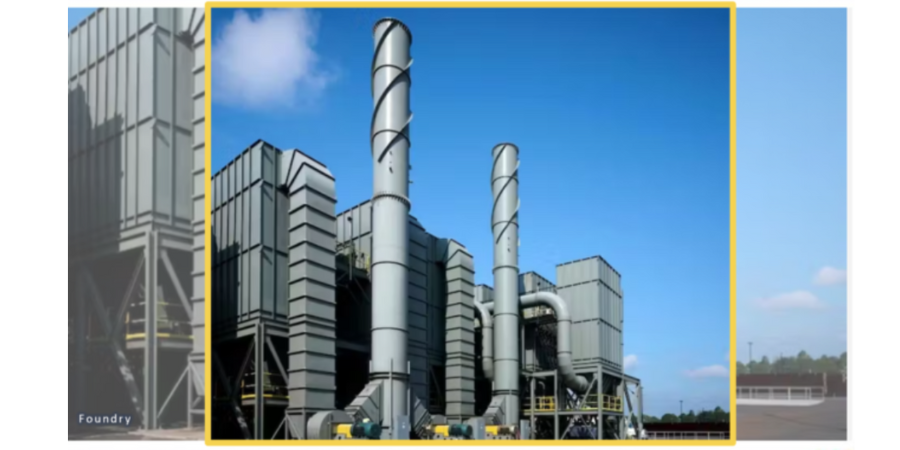
A 122-year-old cast-iron pipe maker started operating its $460-million ferrous foundry in North Carolina, and celebrated its role in “revitalizing manufacturing in the U.S.”
Charlotte Pipe and Foundry Company, a maker of cast iron and plastic pipe and fittings for plumbing applications, held its grand opening of a new $460 million foundry in Oakboro, North Carolina. Charlotte Pipe’s new foundry is situated on 700 acres in Stanly County, about 35 miles east of the cast iron foundry it operated in Uptown Charlotte for more than 100 years.
“The move to Oakboro will spur growth of other businesses, including vendors who supply and support the plant, opening a new window of economic growth for Stanly County,” said Hooper Hardison, CEO of Charlotte Pipe. “Even better, the region is already home to many of the Company’s associates who will benefit from reduced commute times and increased amenities within their work environment.”
Charlotte Pipe’s Oakboro Foundry, which became fully operational on September 5, 2023, employs more than 530 associates, and according to Hardison, up to another 500 construction workers were on the Oakboro jobsite each day over three years, working more than 1.2 million hours to open the new plant. All construction materials and supplies for the new foundry were 100% Made in the USA, as are all Charlotte Pipe products.
In addition, Charlotte Pipe added a rail spur to connect the new plant to the Aberdeen Carolina & Western Railway, a short-line railroad that crosses central North Carolina. The Aberdeen line connects to the Norfolk Southern Railway, giving the Oakboro Foundry rail access to move recycled materials to and from the Eastern Seaboard and the Midwest.
Find heat treating products and services when you search on Heat Treat Buyers Guide.com
A provider of custom solutions for refractory and high temperature applications in a wide range of industries, including metals, power, glass, and ceramics, has opened a warehouse in suburban Detroit.
The new Chiz Bros. facility carries the same inventory as the company’s Pittsburgh-area location. Those products include ceramic fiber blanket, papers and felts, boards, and modules. The Detroit Warehouse will also provide local support for routine and emergency needs.
“As one of the country’s largest Alkegen (formerly Unifrax) distributors, we are always looking for ways to better serve our core markets in the industrial heartland and Rust Belt with Made in the USA ceramic fiber products,” says Mark Rhoa, Jr., vice president of Chiz Bros. “With that purpose in mind, we opened the Detroit Warehouse under the leadership of Mike Klauk, our Regional Manager.”
“I am pleased to be responsible for the activities at our Detroit Warehouse,” says Klauk, who came to Chiz Bros. after more than a decade at Unifrax, where he held Sales Engineer and Applications Engineer positions. “I look forward to providing our customers with the products and technical assistance they need exactly when they need them.”
Find heat treating products and services when you search on Heat Treat Buyers Guide.com
Reducing the industrial carbon footprint has been at the forefront of much discussion, heat treat industry-specific or otherwise. How can heat treaters dealing with vacuum operations consider sustainability in a carbon-conscious market?
This Technical TuesdaySustainability Insight article was written by Bryan Stern, the product development manager at Gasbarre Thermal Processing Systems, for Heat TreatToday'sNovember 2023 Vacuum Heat Treating print edition.
Bryan Stern
Product development manager
Gasbarre Thermal Processing System
Source: Gasbarre
There is a growing understanding that changes in environmental policy and corporate initiatives will have an increasing impact on the landscape of domestic processing and manufacturing industries in the near future. This is of particular interest to the heat treating industry as thermal processing intrinsically consumes large amounts of energy.
Contact us with your Reader Feedback!
Energy has always been a financial reality for heat treaters, but the impact of transitioning environmental reform will reach beyond monthly utility bills. This is because large players in primary heat treat markets will seek to integrate low-carbon service and equipment suppliers into their direct and indirect supply chains to meet decarbonization objectives.
As a result of this impending trajectory, there has been more attention on furnace design and energy sources within the thermal processing industry. One topic that has received a great deal of focus is the potential benefit of vacuum furnaces as a less emissions-intensive approach to heat treating. Although fundamentally based on electrification, it would be difficult to argue that at least some of the interest in vacuum does not stem from a reactionary desire to distance thermal processing from the image of fire-breathing fossil fuel furnaces given the current political environment.
But beyond the undeniably more marketable aesthetic, the legitimate question remains: Does vacuum heat treating provide tangible environmental advantages over combustion-fired atmosphere alternatives?
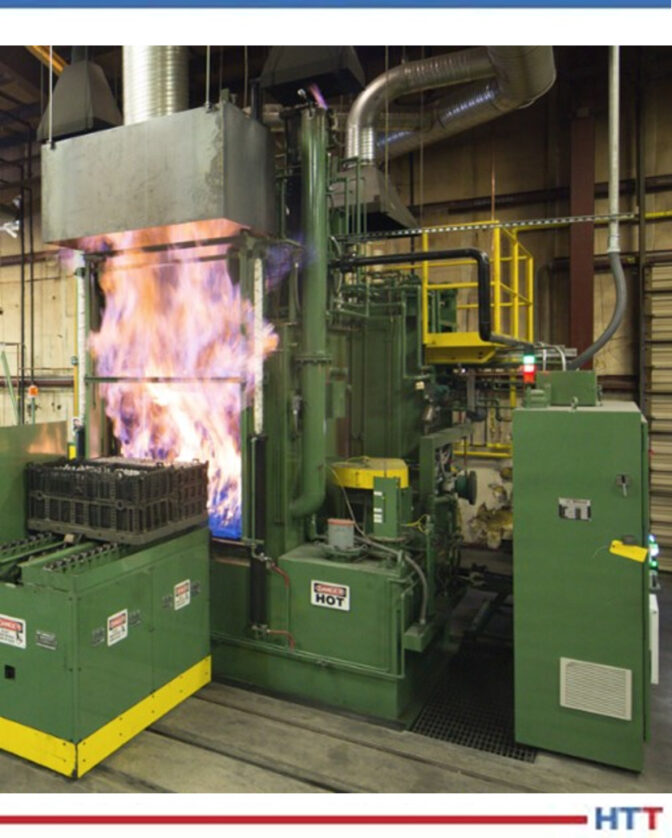
Atmosphere integral quench furnace
The soundness of the argument for electrification and vacuum is not as obvious as it might first appear. To start, eliminating on-site combustion does not eliminate CO2 emissions. Electrical utilities still have emissions factors (reported in CO2 equivalent emissions per kWh) that must be accounted for as part of Scope 2 supply emissions. Counterintuitively, the national average emissions factor for electric power is 2.2 times that of natural gas to produce an equivalent amount of thermal energy.1,2 This is primarily due to the inefficiencies associated with generating and transporting electricity versus converting fossil fuels directly to thermal energy on site.
In addition to having higher emissions, electricity is 3.6 times the cost of natural gas for an equivalent amount of energy based on national averages for 2022.3,4
The cost effectiveness of gas fired atmosphere furnaces historically has been the motivator behind their use, unless the process benefitted in some other way from vacuum processing.
If electricity has a greater carbon footprint and is more expensive per unit of energy than fossil fuels, why is the industry transitioning to electrification and increasingly favoring vacuum processing? The answer lies with several factors both internal and external to the equipment itself.
Within the scope of the equipment, gas fired furnaces are intrinsically inefficient. Burners exhaust hot gas which continuously siphons energy away from the process. Although less significant for direct fired burners, this effect is amplified for indirect burners, which are commonly used. Recuperators and regenerators can dramatically improve efficiencies by recycling exhaust to pre-heat combustion air, but additional energy is always required for burner systems beyond what is needed to heat the work and overcome losses through insulation. Electric furnaces, on the other hand, have no such additional demand, and the energy they consume is more directly applied to the process. Although the type of energy used is more financially and environmentally costly per unit, electric vacuum equipment uses that energy more efficiently.
In addition to the demands from the burner exhaust, gas fired furnaces usually depend on a blanketing atmosphere to protect the work from oxidation. Endothermic gas is commonly used for this purpose, and in addition to the heat input required for endothermic gas generation, CO and CO2 are products of the reaction. Although it is an objective of endothermic gas generation to minimize the amount of CO2 present in the furnace, the CO exhausted to the atmosphere eventually reacts to form CO2, leading to a higher effective emissions rate. The use of a vacuum as a protective atmosphere is less carbon-intensive as it relies primarily on the power required to operate the vacuum pumps. This leads to much lower emissions to create the processing atmosphere.
Looking outside of the equipment at the overall manufacturing process, heat treating in vacuum can often eliminate post processing steps required when using other types of equipment. This may come in the form of less oxidation or scale, meaning less part cleanup, or low distortion gas quenching, allowing final machining to be moved forward in the manufacturing process or removed altogether. These potential production cost savings are not new, but the value of eliminating the emissions associated with additional manufacturing steps will only serve to further incentivize vacuum equipment moving forward.
There is one final dynamic outside the scope of the equipment that contributes to the explanation of the industry’s push toward vacuum. The emissions factors associated with electric power generation are decreasing, a trend which is expected to continue. The contribution of renewable energy to the domestic power grid is projected to more than double in the next seven years.5
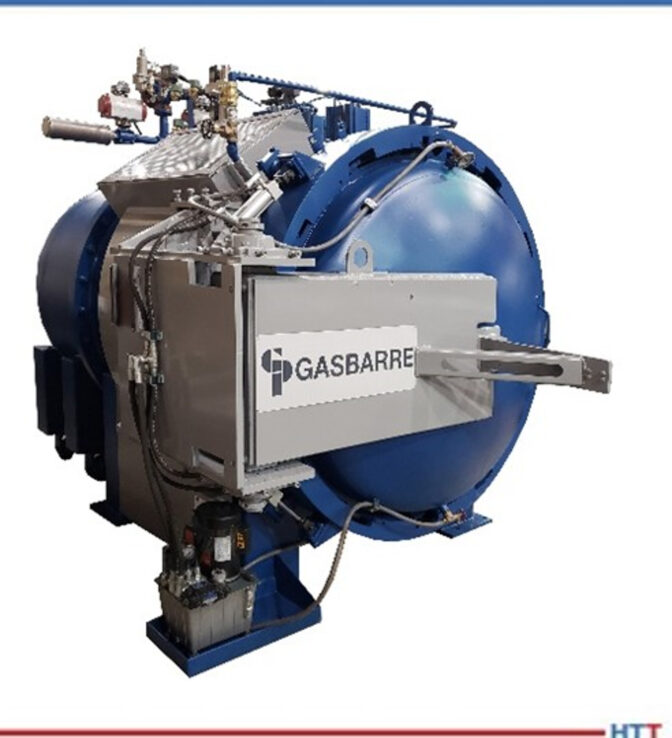
Single chamber vacuum furnace
Although the contribution from renewable sources is still significantly less than fossil fuels, changes in generation are not the only factors at play. Significant efforts are being made to develop grid-scale energy storage solutions. Although most often associated as a prerequisite for intermittent production from renewables, these storage solutions serve an important function for the existing infrastructure. By storing excess power during low demand and releasing it during peak hours, grid scale energy storage would allow fossil fuel power plants to run at more optimized efficiencies without having to ramp up and down to match demand.
Beyond the process efficiencies of vacuum discussed above, investing in electric fired equipment is the only way to capture the benefits of ongoing improvements to electric supply and generation infrastructure. While the benefits of electrification may currently depend on contextual variables such as geographic location and equipment design, natural gas fired processing has a relatively fixed ceiling for future improvement. As an added advantage of electrification, the carbon accounting reductions from the improvement in emissions factors can be captured passively after the initial investment.
While the above advantages of electrification and vacuum do help explain the industry’s push in that direction, it is worth considering how vacuum equipment will continue to evolve to maximize energy efficiency and reduce emissions. Historically, the majority of vacuum furnaces have been single chamber batch style pieces of equipment. This configuration usually requires that loading and unloading occur at, or near, room temperature to avoid oxidation of sensitive materials. In addition to longer floor-to-floor times, this means that the energy required to heat the furnace is thrown away at the end of each cycle.
The competitive demand for low-carbon solutions will drive the use of multi-chamber batch and continuous style furnaces that allow stored energy to be conserved between cycles. This will be especially true as we see more high-volume manufacturing shift away from traditional continuous atmosphere heat treating. In the past, batch vacuum processing has been too restrictive to both part cost and throughput to be competitive. As emissions concerns gain prominence, vacuum furnace configurations that offer higher energy efficiencies and throughput will begin to close that gap.
The processing and energy advantages of electric vacuum furnaces have positioned them well to meet the low-carbon demands of an increasingly emissions-conscious market. It will be exciting to see how the equipment continues to develop to meet those needs in the future.
Bryan Stern is the product development manager at Gasbarre Thermal Processing Systems. He has been involved in the development of vacuum furnace systems for the past 7 years and is passionate about technical education and bringing value to the end-user. Bryan holds a B.S. in Mechanical Engineering from Georgia Institute of Technology and a B.A. in Natural Science from Covenant College. In addition to being a member of ASM, ASME, and a former committee member for NFPA, Bryan is a graduate of the MTI YES program and is proud to have been included in Heat TreatToday's 40 Under 40 Class of 2020.
Thirsting for knowledge about quenching, but not sure where to start? Heat TreatToday has coalesced technical information across articles and podcast episodes from key experts, including significant quenching methods, innovative developments with quenching, and how to control temperature during the process.
Discover more about these three topics in today’s Technical Tuesday original content feature.
Monitor Quench Temperatures with Unique Thermal Barrier Designs
Automotive heat treating operations require repeatable operations to ensure that the composite parts within an automobile perform reliably. Steve Offley, also known as “Dr. O," the product marketing manager at PhoenixTM, outlines case studies of several temperature-critical operations to demonstrate how unique thermal barrier design for thru-process monitoring systems can solve temperature measuring problems. These processes include sealed gas carburizing into an integrated oil quench as well as LPC followed by transfer to a sealed high-pressure gas quench chamber.
Offley comments on the quenching process following LPC, saying, "During the gas quench, the [thermal] barrier [for temperature monitoring] needs to be protected from Nitrogen N2(g) or Helium He(g) gas pressures up to 20 bar." If you are facing heat treat processing with integrated quench, learn more about this temperature monitoring solution.
Intensive Quenching: An Answer for a "Greener" Heat Treat?
Gas furnaces have the potential to be a significant source of carbon emissions in many essential heat treat processes. However, an innovative approach combining induction through heating with intensive quenching could be one answer for greener heat treating, particularly for steel production.
In this article, Chris Pedder,Edward Rylicki, and Michael Aronov share that an “ITH + IQ” technique "eliminates, in many cases, the need for a gas-fired furnace when conducting through hardening and carburizing processes." A lot of this comes down to shortening the time it takes to perform this process, but there is so much more that the authors illuminate in their tests and graphs.
Drinking from a Firehose: Answering Your Quench Questions with a Thorough Radio Review
Stay afloat in a sea of quenching tips with this Heat TreatRadio review, summarizing three recent podcast episodes centered around quenching tips, techniques, and training — especially applying to the auto industry.
Explore the "green" process of salt quenching with Bill Disler of AFC-Holcroft, the topic of water in your quench tank with Greg Steiger of Idemitsu Lubricants America, and a broad review of auto industry quenching with Scott MacKenzie of Quaker Houghton, Inc.
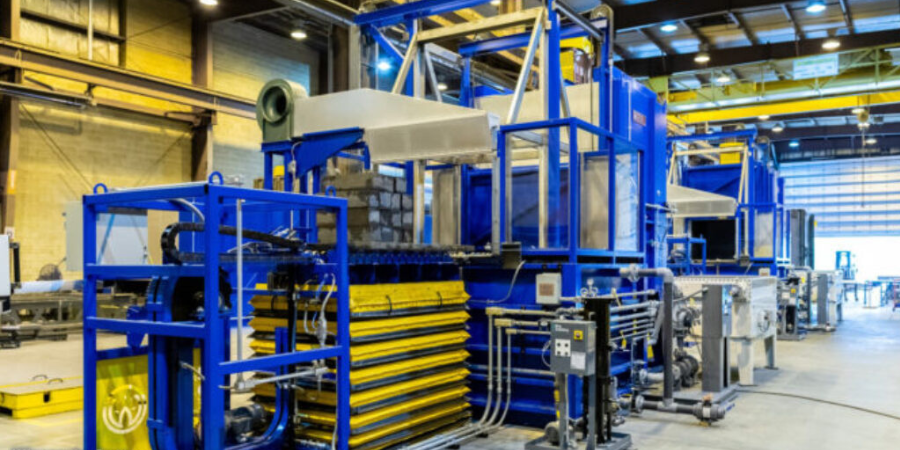
Two electrically heated horizontal quench systems have been shipped to a supplier for the semiconductor industry. The systems will be used for the annealing and rapid cooling of various high purity alloy parts.
The operating procedure for each horizontal quench system from Wisconsin Oven includes loading the product on a work grid located on the loading platform. Once the load is lifted into place, a pusher/extractor mechanism located at the front of the quench tank moves the load onto the quench lift platform, then the furnace pusher/extractor mechanism pulls the load into the furnace for annealing.
After completing the heating cycle, the vertical lift door opens, the furnace pusher/extractor transfers the load onto the quench lift platform, and the load is lowered into the water quench tank. After the load has sufficiently cooled, the quench lift is raised, and the front mounted pusher/extractor mechanism pulls the load back onto the scissor lift. While the load is pulled onto the scissor lift, a blow off system removes the majority of the water from the load.
See below to watch a video of this system in operation.