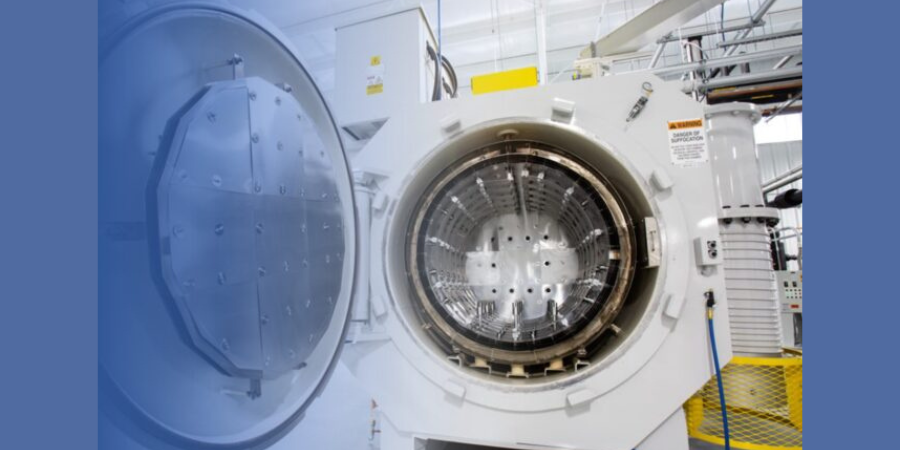
A heat treat furnace has been delivered to a Midwest manufacturer of ceramic matrix parts. This system will be used for aerospace and military purposes.
Atmosphere-Controlled Retort-Burn Off Furnace Source: L&L Special Furnace Company, Inc.
Ceramic matrix parts materialize when nanofibers of silicon carbide or other ceramic nano threads are wound together, forming various sheets and 3D-printed shapes. The nano threads in the process are coated with proprietary resins that must be completely removed from the substructure using heat. The resulting finished product is lighter and stronger than titanium.
L&L Special Furnace Company, Inc.'s Model XLC3672 has a work zone of 32” wide by 32” high by 66” deep. It has a single zone of control with a temperature gradient of ±20°F at 1,100°F using four zones of temperature control with biasing to balance any temperature gradients. The Model XLC3672 is controlled by a Eurotherm Nanodac Mini 8 program mechanism with overtemperature protection.
Find heat treating products and services when you search on Heat Treat Buyers Guide.com
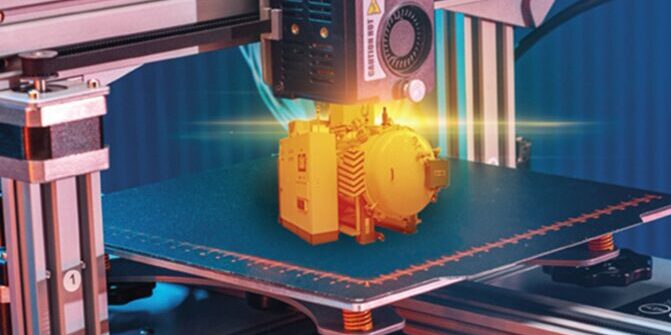
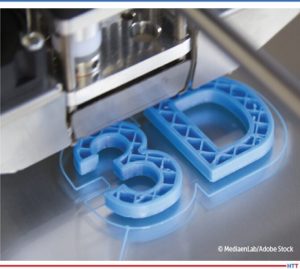
All the buzz in our industry seems to indicate that additive manufacturing (AM) and 3D printing are the next hot topics in heat treat, particularly in vacuum heat treat. Heat Treat Today decided to find out how these new technologies are shaping the industry. Read what five heat treat industry leaders had to say about how their companies are preparing for the next generation of AM and 3D printing.
This Technical Tuesday article bringing together the responses from these five companies was first published in Heat Treat Today‘s November 2022 Vacuum print edition.
What changes have you made to accommodate the AM/3D printing marketplace?
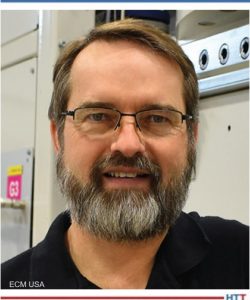
Dennis Beauchesne General Manager ECM USA, Inc.
The most important changes relate to the build plate size and how it connects to our standard size systems. Build plates are ever-changing, it seems, as customers have new applications and mostly larger build plates are being requested. In addition, the process parameters – such as temperature and time at temperature and quantity of material – are important. These two items have the most to do with reconfiguring equipment for the AM market. We have also been able to implement our wide range of automation and robotics skills into this equipment as the market scales up for high production.
How will your products and/or services change to accommodate this marketplace?
We are/will be introducing equipment that is in line with standard-build plate dimensions along with reducing operating costs.
Share how 3D printing or AM products/services help heat treaters.
Contact us with your Reader Feedback!
Recent debind and sinter applications have involved, as previously mentioned, complete robotics to handle parts after printing, to debind, to sinter, and then to process specialized by ECM, such as low-pressure carburizing. ECM has also provided equipment to provide all three processes in the same furnace without moving the load or requiring the furnace to cool and reheat. This reduces work processing time along with less handling and less utility cost.
What changes have you made to accommodate the AM/3D printing marketplace?
Mark Hemsath Vice President of Sales, Americas Nitrex Heat Treating Services
Nitrex Vacuum Furnaces, through its GM Enterprises acquisition, has moved heavily into additive manufacturing via large production MIM furnaces, which are able to both remove large amounts of powder binders and sinter the parts in the same process. We are in the process of installing and/or starting up five furnaces for these markets, and we have recently employed even more advanced concepts on high volume wax removal. A further trend is on higher value materials, like nickel and cobalt alloys and titanium, necessitating diffusion vacuum levels for processing. Nitrex Vacuum has had this experience already for many years, so moving to smaller scale 3D designs comes with years of experience.
How might your products and/or services change to accommodate this marketplace?
Smaller units are a trend to keep an eye on. We have over a decade of learning from the large units we offer, and this will allow us to compete in these lower volume markets (i.e., 3D) via our proven expertise. Several facts/ideas that we are keeping top of mind are:
Large potential in the future (whole new market starting to evolve)
Redesign the product to meet the new needs
Good for rapid prototyping and quick low volume parts
Furnaces need to be available with fast delivery 3D printing is finding a tremendous niche in fast part production, sourced internally or sourced quickly. These parts may cost more per piece, but having them fast is often more important, and 3D offers this ability to cut weeks or months off of supply chain sourcing.
Share how 3D printing or AM products/services help heat treaters.
The AM sector is still in growth mode. How we help is to give a full-service solution to those customers who want to really increase their volume yet use vacuum in the process. Vacuum helps to transport the binder vapors away from the parts and into the traps for removal. Full binder removal adds to the quality of the parts, as does vacuum sintering of the final parts. We have supplied a few systems over the years with higher, diffusion vacuum levels. As powder materials evolve to higher value materials, there is more interest in diffusion vacuum, and we recently supplied such a system.
What do readers need to know about AM/3D to make decisions today?
Vacuum is the proper way to debind and sinter. Additionally, 3D printing started slow and there were many technologies evolving. Now, it has started to really grow, and the need for smaller furnaces that can offer the same quality as MIM parts produced in high volumes will be a need for 3D part makers, in medium to low volume parts. This may involve furnaces for sinter only, debind and sinter, or even sinter and heat treat. We can see the need to both sinter 3D parts in a small furnace and also heat treat them with special added processes and surface treatments.
What changes have you made to accommodate the AM/3D printing marketplace?
Phil Harris Marketing Manager Paulo
Adding a hot isostatic press has been the most notable change Paulo has made to serve the growing AM market. It goes a step further than that though; heat treatment of AM parts has rapidly evolved, and the desire for custom cycles and more data has caused us to make instrumentation changes and do more R&D type work. Understanding the full production path of the parts and doing our part to reduce the time parts are spending in post-processing steps, including offering stress relief, HIP, EDM, and vacuum heat treatment in a one-stop-shop.
How might your products and/or services change to accommodate this marketplace?
As trials continue and boundaries are pushed for both additive and the accompanying thermal processing, we’re constantly keeping an eye on what’s next. Investing in equipment that’s capable while maintaining and instrumenting it to provide the data and reliability the market needs is the name of the game. Of course, open communication with additive manufacturers and printer designers makes this far easier. We value communication with printer manufacturers as it helps us understand demand for our services in terms of build plate size, since, as we all know, furnaces and HIP vessels aren’t one size fits all!
Share how 3D printing or AM products/services help heat treaters.
Additive parts have become commonplace and we’re now regularly providing HIP, stress relief, and solution treating for them. A more interesting example is for parts printed in Inconel 718; we’ve developed a combined HIP and heat treat (or High Pressure Heat Treat) cycle which was able meet material properties specifications when the traditional processing techniques were not. This is where we feel the real cutting edge is when it comes to heat treatment of additive parts; the slow cooling HIP cycles developed for casting decades ago aren’t always optimal for today’s additive parts.
What changes have you made to accommodate the AM/3D printing marketplace?
Trevor Jones President Solar Manufacturing, Inc. Source: Solar Manufacturing, Inc.
There are several methods for 3D printing and we as heat treaters and vacuum furnace manufacturers generally classify those methods into two basic groups: those that use liquid binding polymers and those that do not.
For the group who does not use liquid binding polymers, there are no changes thus far to the design of the vacuum furnace that must be made. One significant caution is insuring there is no loose powder on the surface or cavities of the parts. Residual powder on or in the parts could have adverse effects on the parts themselves and to the vacuum furnace. The loose powder can liberate from the part during the heat treat or quench steps during the process and contaminate the vacuum furnace. The powder in the furnace is then considered FOD (foreign object debris) for subsequent heat treatments processed in that furnace. The powder could also accumulate over time and cause an electrical ground the heating elements or the quench motor, clog the heat exchanger, contaminate vacuum gauges and hot zone insulation, among other issues.
For the group that does contain liquid binding polymers, in addition to the comments about avoiding loose powder on or in the parts, care must also be taken to accommodate for the vaporization of the binder that occurs during heating of the parts. The binder, in its vapor form, will condense at cooler areas in the vacuum furnace. The condensed areas are potential contamination points and could have all the same issues and concerns of loose powder as described above. The binder collection locations, whether at intentional or non-intentional places, will also have to be routinely cleaned to maintain ideal binder collection, optimum vacuum pumping, and overall furnace performance.
How might your products and/or services change to accommodate this marketplace?
With the growth of 3D printing using liquid binder polymers, Solar Manufacturing has taken what was learned from the furnace modified at Solar Atmospheres of Western PA for MIM and AM processing and applied it to a new furnace product line specific for the debind and sinter applications. Solar Manufacturing collaborated with our affiliate company, Solar Atmospheres of Western PA, in modifying an existing vacuum furnace to accommodate the debind and sintering processes. A modified hot zone was installed, and a dedicated binder pumping port was added that helps minimize and target the condensation of detrimental binders evaporating out of parts containing binders. The modified Solar Atmospheres furnace is extremely valuable in gaining knowledge about various aspects of the process and learning what works, and what does not work, in furnace and recipe design. Combining the knowledge and experience of process development of Solar Atmospheres with the advanced Engineering Design Team at Solar Manufacturing, we believe we have a furnace design that modernizes and simplifies the debinding process while minimizing traditional maintenance issues.
Share how 3D printing or AM products/services help heat treaters.
We developed a process of debinding and sintering stainless steel parts with our affiliate company Solar Atmospheres in Souderton PA. The project started out with our Research and Development group to develop the process for the client’s parts. As the trials scaled up, test coupons became test parts, eventually full-size loads. There are always challenges to scaling up from test parts to production loads and we were able to provide the support the customer needed through that transition. The R&D eff orts were successful, and the client ended up purchasing multiple furnaces, which was the end goal for both parties.
Additionally, Solar Atmospheres is currently vacuum stress relieving a 3D component for a major U.S.-based aerospace company that is in use in aircraft today. Also, numerous large-scale components destined for deep space.
What do readers need to know about AM/3D to make decisions today?
Bob Hill, president of Solar Atmospheres of Western PA, reminded us to “realize and acknowledge that AM is still in its infancy stage. Therefore, many metallurgical uncertainties still exist for the multiple printing processes that exist. Understanding this new kind of metallurgy for each printing process, while developing standards and specifications unique to additive manufacturing, is still a huge obstacle. Until this is accomplished, AM will not be the ‘disruptive’ technology that all the experts predict it will be.” If your business is printing parts with liquid polymer binders, you should seriously consider how you plan on debinding and sintering the parts ahead of time. Printed parts in the “Green” or even “Brown” state are fragile and if you are going to ship the parts somewhere else for the debind and sinter steps, extreme care must be taken to prevent the parts from fracturing during transit. Although the shipping can be safely and successfully accomplished, ideally a furnace is available at the print shop to immediately perform the debind and sinter process to avoid those potential shipping difficulties. The other forms of 3D printing that do not contain liquid polymers generally do have this issue.
What changes have you made to accommodate the AM/3D printing marketplace?
Ben Gasbarre Executive Vice President Sales & Marketing Gasbarre Thermal Processing Systems
From our inception, Gasbarre has had expertise in the powder metallurgy industry, which requires debind and sinter applications similar to that in the AM and 3D printing markets. Our ability to supply equipment for both powder and parts producers has set us up for quick adoption into this market. While considerations need to be made specific to AM, our focus has been on technical support and helping the market grow to higher volume applications.
How might your products and/or services change to accommodate this marketplace?
As adoption of these technologies grow, the volume at which parts need to be produced will grow. Our line of continuous processing equipment in both vacuum and atmosphere applications are well suited. Whether it be debind and sinter, annealing, or stress relieving, we have equipment and expertise that can grow from early production to high volumes.
Share how 3D printing or AM products/services help heat treaters.
Overall, Gasbarre is here to be a resource and support the growth of the additive market. Whether that be through new equipment, servicing existing equipment, or involvement in the industry organizations, we have the expertise to drive success today and into the future!
What do readers need to know about AM/3D to make decisions today?
Additive manufacturing is such a dynamic technology, it is difficult to state one specific item. There is the potential for significant growth opportunities for new applications, but also the potential replacement of traditional manufacturing methods. We also know there is substantial backing for the technology by both private industry and government entities. Like other emerging technologies in the automotive and energies sectors, additive manufacturing isn’t a matter of if, but when it’ll achieve wide scale adoption and high-volume applications.
It is amazing how the list of materials being utilized with this technology is growing. While metals and alloys have not been the majority of the market, it is rapidly growing. With that growth, there is a wide variety of applications and thermal processing requirements for those materials. As well, the different additive and 3D printing processing methods (i.e., binder jetting, powder bed fusion, etc.) leads to a similar diversity in thermal processing requirements.
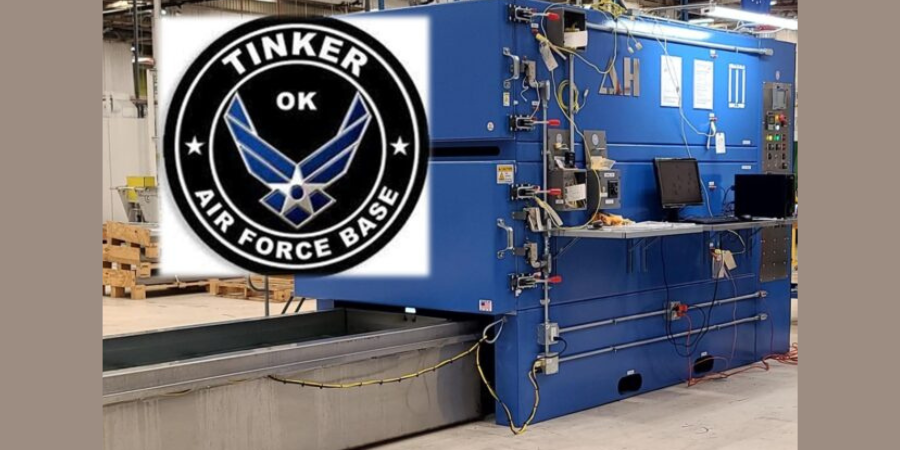
A heat treat system for use in the aerospace and defense industry was recently delivered to Tinker AFB, OK - USAF. The system is certified to AMS2750G and will be used to heat treat aluminum as well as other metals for use on military aircraft.
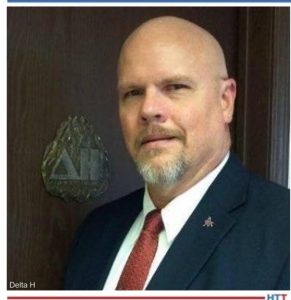
Richard B. Conway Founder/Director/ CTO DELTA H® Technologies, LLC Source: DELTA H
DELTA H® and Phillips Federal delivered the furnace to Tinker AFB, which will be used for for heat treating aviation grade aluminum for military purposes. Third party services for calibration and qualification were performed by Andrew Bassett, president of Aerospace Testing and Pyrometry. The certifications for instrumentation, temperature uniformity surveys, and system accuracy testing were completed through ATP’s new Aerospace Compliance Software (ASC) to AMS2750G.
The Dual Chamber Aerospace Heat Treat (DCAHT ®) system has a certified TUS volume of 24” wide, 16" high, 72" long. In addition to aluminum, the system can be used for PH stainless steel aging, as well as titanium and ferrous alloy processes. Training was provided to several operators, QC personnel, and two “Trainers” qualified to train other operators.
“As an USAF veteran," commented Richard B. Conway, founder, director, and CTO of DELTA H. "[I]t is a deep honor to do all we possibly can to assure that our Warfighters have the finest heat treating equipment available for defending our nation."
Find heat treating products and services when you search on Heat Treat Buyers Guide.com
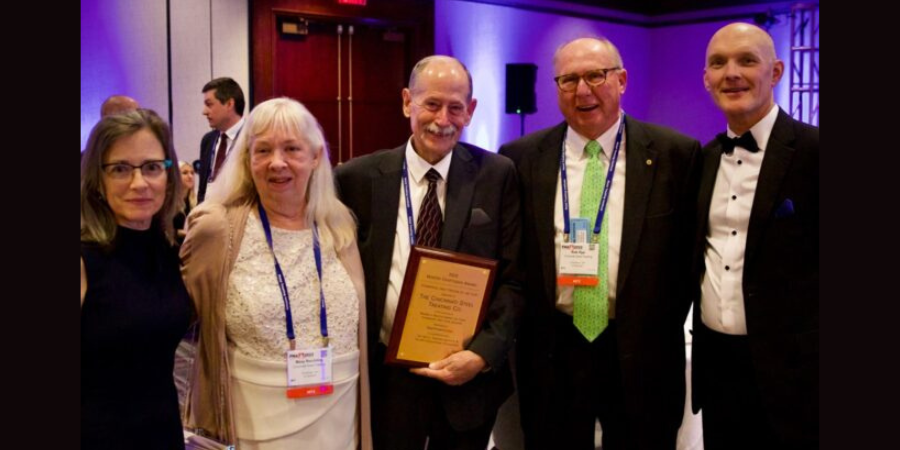
Heat TreatToday, in cooperation with the Metal Treating Institute (MTI), recently presented the 2022 Master Craftsman Award (also known as the Commercial Heat Treater of the Year Award) to Mike and Mary Reichling of The Cincinnati Steel Treating Co. The award was presented at the formal awards presentation banquet following the Furnaces North America trade show on October 5, 2022, in Indianapolis, IN.
(Left to right) 2021 MTI President Don Hendry stands with Mike and Mary Reichling of The Cincinnati Steel Treating Co., and presenter Doug Glenn, publisher of Heat Treat Today.
This award is given to the company that demonstrates making a positive impact on their community and their industry. Recognition is based on quality programs, pollution & hazardous waste control, community involvement, and industry leadership and judged by a panel of previous recipients.
The Cincinnati Steel Treating Co. received a plaque and a scholarship fund of $1500 from Heat TreatToday that was matched with another $1500 from MTI’s Education Foundation. They will award this $3000 to a high school or college student who is pursuing an education in heat treat.
Congratulations to The Cincinnati Steel Treating Co.
Main picture caption: (Left to right) Mary Glenn, Mary Reichling, Mike Reichling, Rob Rye, and Doug Glenn
Find heat treating products and services when you search on Heat Treat Buyers Guide.com
Dr. Valery Rudnev was recently selected to be the American Society for Metal's (ASM) William Hunt Eisenman Award. Dr. Rudnev has many years of experience in the heat treat industry, particularly in induction heating. He is quite a mover and a shaker in the industry with more than 40 years involvement with his work and publications. He has even come to be known as "Professor Induction".
Dr. Valery Rudnev was recently selected for ASM's William Hunt Eisenman Award winner “for dedicated service to the global materials science community, leadership, development and promotion of induction heating and heat treating technologies and novel technologies.” The award was established by ASM Int’l in 1960 in recognition of unusual achievements in industry in the practical application of materials science and engineering through production or engineering use.
Contact us with your Reader Feedback!
Over the years, Dr. Rudnev has close professionals ties with Heat TreatToday authoring a popular multi-installment exclusive column “Dr. Valery Rudnev on …”. He has published eleven articles in Heat TreatToday including:
Dr. Rudnev and His Grandson Current Priorities Source: Dr. Rudnev
During his career, Dr. Rudnev has authored and co-authored numerous chapters and articles for many handbooks devoted to various aspects of induction heating, heat treating, metallurgical aspects, computer modeling and innovative process development. His credits include a great deal of “know-how”, more than 60 patents and inventions (U.S. and International) and more than 300 engineering/scientific publications
In October of 2021, Dr. Valery Rudnev retired from his professional activity and now he is focusing on his Christian faith, family and hobbies.
Heat TreatToday sincerely congratulates Dr. Valery Rudnev with this well-deserved award and wish him all the best in his retirement.
Find heat treating products and services when you search on Heat Treat Buyers Guide.com
Beginning November 1, 2022, Nor-Cal Products will begin doing business as Pfeiffer Vacuum Valves & Engineering. In 2017, Nor-Cal Products was acquired by Pfeiffer Vacuum which launched a new phase of the company’s growth.
Located in Yreka, CA, Nor-Cal Products manufactures vacuum components, valves and chambers for industrial equipment manufacturers, universities, and national laboratories.
”This is a major step towards completing the integration of Nor-Cal Products with the Pfeiffer Vacuum Group," commented Bryan Strait, general manager at Pfeiffer Vacuum Valves & Engineering. "We will be stronger together as we continue making progress executing our strategic business plan and continuing to invest in the Yreka site as to better serve our customers.”
Find heat treating products and services when you search on Heat Treat Buyers Guide.com
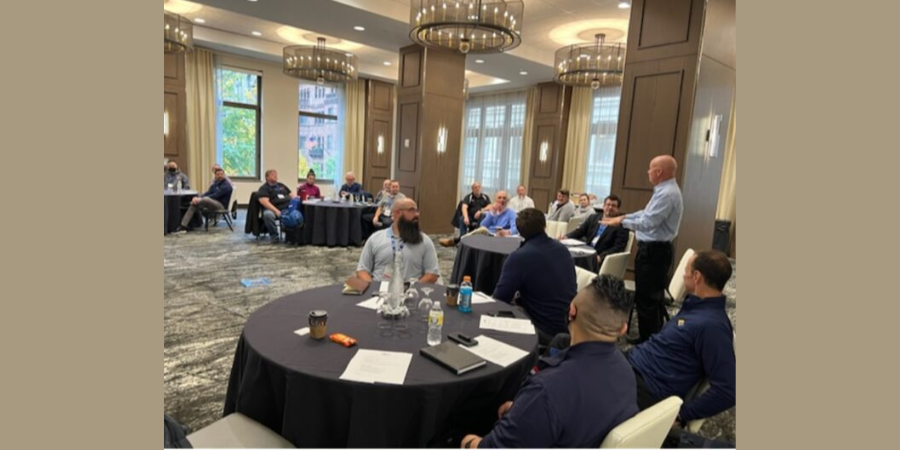
The Metal Treating Institute (MTI) hosted a special meeting for members at the Embassy Suites by Hilton in Downtown Pittsburgh, PA, on Monday, October 17, to review key Nadcap and AMEC topics. During the meeting, members addressed challenges that heat treaters face in Nadcap/audit compliance, how to navigate audits more effectively, and what suggestions to present to the Nadcap committee so that heat treaters would be better equipped for audits.
MTI’s Technical Standards Committee Co-Chairs Bob Ferry, VP of Engineering and Quality at FPM Heat Treat, and Edward (Ed) Engelhard, VP of Corporate Quality at Solar Atmospheres, facilitated the meeting. It was hosted by Tom Morrison, CEO MTI Management, and Jim Orr, president of Penna Flame Industries and current president of MTI. Several attendees who made particularly significant contributions to the discussion were; Doug Shuler, lead auditor at Pyro Consulting, LLC; and Roy Adkins, director of Corporate Quality at Braddock Metallurgical and recipient of the 2022 MTI Award of Industry Merit.
A Room Full of MTI members Including (l-r): Doug Glenn, Ed Engelhard, Bob Ferry, and Doug Shuler
At the meeting, attendees identified the number one challenge in Nadcap/audit compliance is understanding and implementing new Nadcap revisions; a close second was the challenge of ensuring quality when auditors give different feedback. These challenges were addressed in the meeting, especially when discussing two specific topics: first, Auditee Advisories – Type P (Potential Product Impact) and Type C (Confirmed Product Impact) as well as Audit Observations.
Several key points that came out of these discussions were to (1) always read up on the most recent revisions in order to be confident in your compliance with quality standards; (2) be sure to reference objective evidence on the Nadcap Checklist questions to help facilitate the audit; (3) let the Nadcap auditor do their job but address any clarifications/follow-ups to the staff engineer immediately; (4) investigate immediately when receiving a Type P write-up so that you can ask the auditor to add a comment on the limits of that product impact; and finally (5) always push-back on findings that are clearly not valid so that they are “voided” by the Performance Review Institute (PRI).
Another main point of the meeting was to address AMS2750H, an update consisting of editorial and language updates for added clarity.
Lastly, the facilitators of the meeting addressed aerospace standard AS13100: AESQ Quality Management System Requirements for Aero Engine Design and Production Organizations. The standard seeks to harmonize and simplify supplier quality requirements among the major aero engine manufacturers, supplemental to standard AS9100. This standard is in the process of being flowed down to the supply chain and compliance is required January 1 of 2023, meaning that heat treaters have a couple months to get up to standard.
This special meeting happens each year during the October Nadcap meeting in Pittsburgh, PA. MTI encourages heat treaters to attend the Nadcap meetings to share their invaluable voice to guide industry standards.
Photo caption for main image: Jim Orr speaks to members of MTI.
Find heat treating products and services when you search on Heat Treat Buyers Guide.com
Shopping for a new heat treat vacuum furnace? Much thought and research goes into preparing for such an investment. Expanding heat treat capabilities or replacing current equipment are big decisions in business growth. Take the time to ensure wise decision making. This best of the web article helps examine what specifically is needed in the vacuum furnace purchase. Following these tips will help you make an informed and industry-savvy furnace purchase.
First, the article encourages knowing what the new furnace's "process and production" specifically will be. Next, a list of many of the furnace's capability options is examined. Finally, choices regarding technology on the furnace are presented.
"Always keep in mind your process, parts and industry regulations as you begin your research. Choosing a furnace is a big investment, one that, if chosen wisely, can streamline your processes and save critical time and resources."
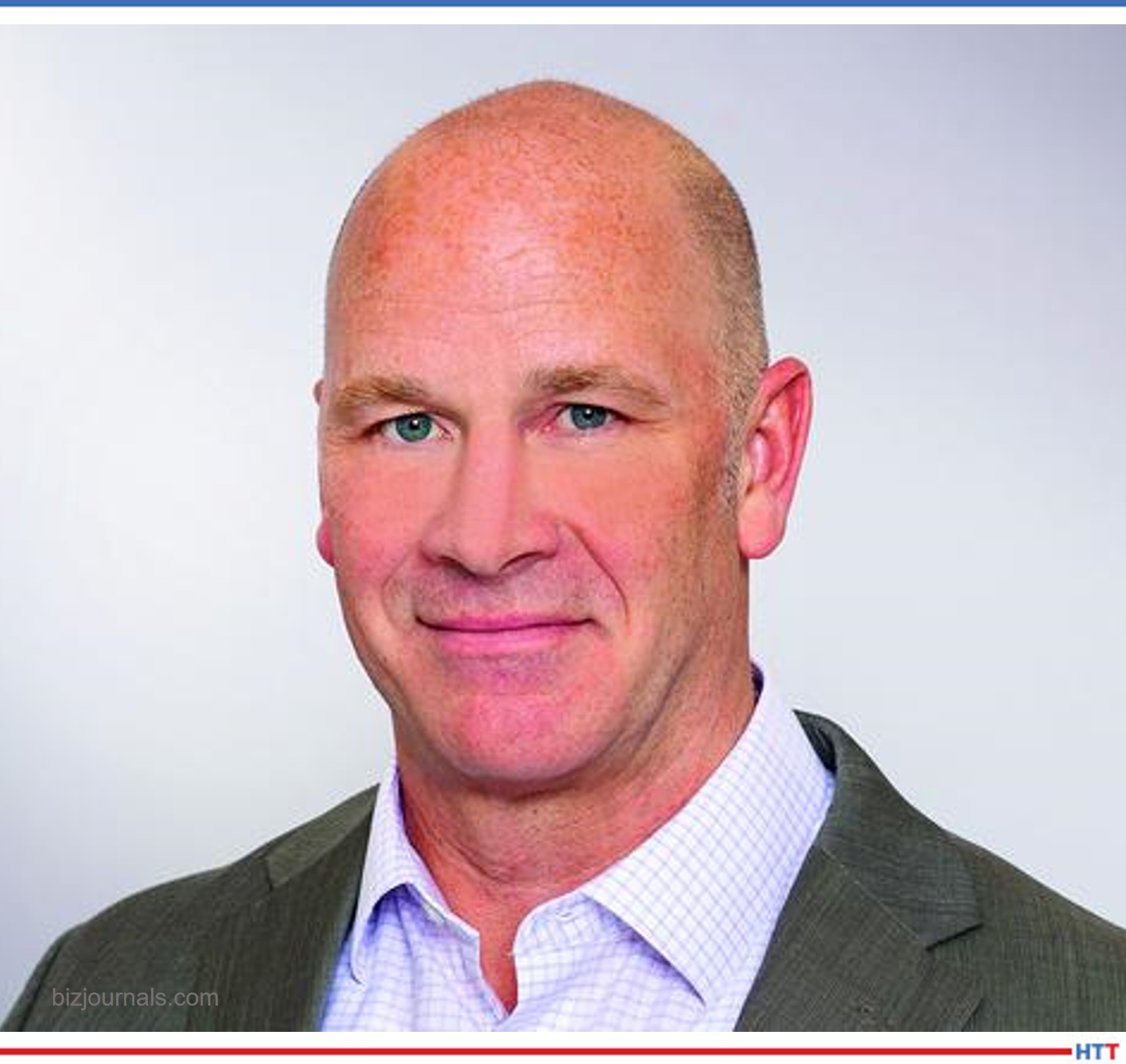
Rob Gilmore CEO Watlow Electric Manufacturing Company bizjournals.com
Watlow, a North American designer and manufacturer of complete industrial thermal systems, announced it has completed its acquisition of Eurotherm from Schneider Electric Company on October 31, 2022.
Eurotherm, coming from Schneider Electric Company, is a global provider of temperature, power and process control, measurement and data management equipment, systems, software and services. The company employs about 650 people worldwide, with headquarters in Worthing, U.K. and core manufacturing operations in Ledziny, Poland.
“We are excited about Watlow and Eurotherm and all we will accomplish together," said Rob Gilmore, CEO at Watlow. "This acquisition aligns with our vision of providing innovative thermal products and technologies that help increase our customers’ competitive advantage."
Watlow will establish and expand Eurotherm’s sites in Europe in order to provide a path to growth in other parts of the world including the Americas and Asia in industries such as semiconductor processing, environmental chambers, energy processes, diesel emissions, medical, and foodservice equipment.
Read more about the history of the acquisition here.
Find heat treating products and services when you search on Heat Treat Buyers Guide.com
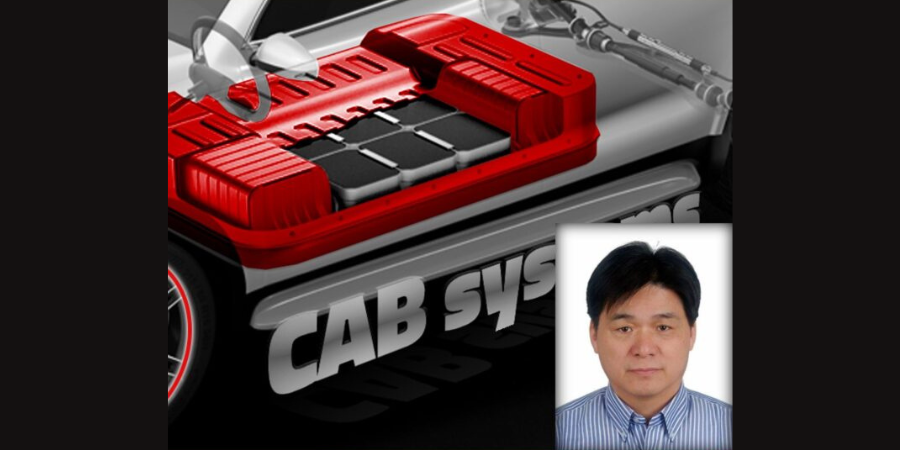
A heat treat supplier is scheduled to deliver two CAB lines and one universal chamber furnace for aluminum brazing to automotive manufacturer in China. The manufacturer of diesel engine components will be able to braze large-size coolers for vehicle batteries.
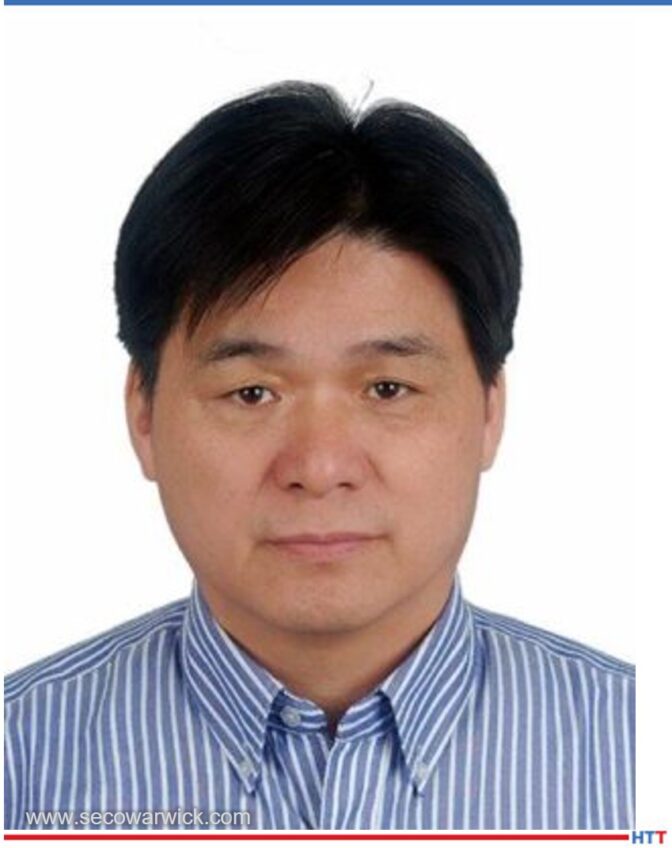
Liu Yedong managing director SECO/WARWICK Retech China
The universal chamber furnace brazes a variety of heat exchangers in horizontal or vertical positions. "The system’s [universal chamber furnace] advantages include a shorter loading time, higher efficiency, and relatively lower cost," summarized Liu Yedong, managing director at SECO/WARWICK China.
One of the CAB lines will incorporate a furnace equipped with a 2.3 meters wide conveyor belt for large-dimensions battery coolers. The second, narrower line, has a 1.5-meter conveyor belt width.
Find heat treating products and services when you search on Heat Treat Buyers Guide.com





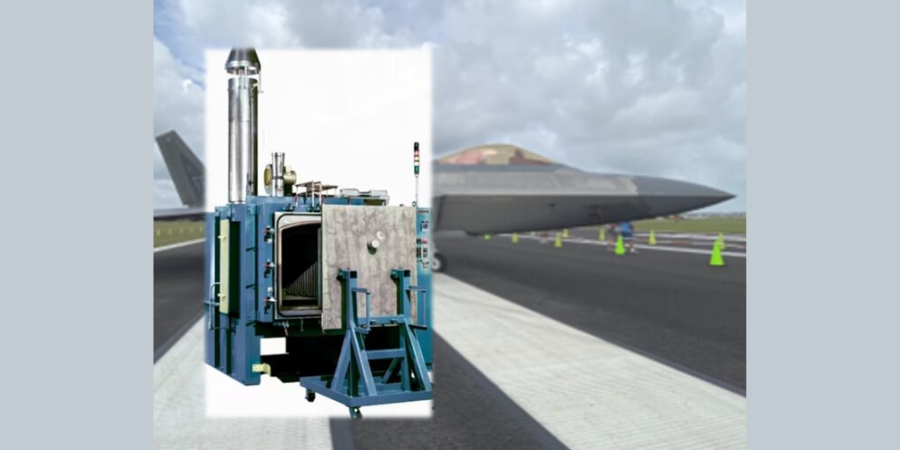
 A heat treat furnace has been delivered to a Midwest manufacturer of ceramic matrix parts. This system will be used for aerospace and military purposes.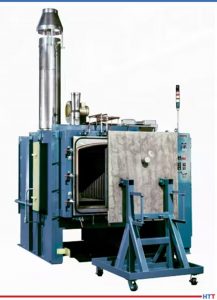
 Find heat treating products and services when you search on Heat Treat Buyers Guide.com




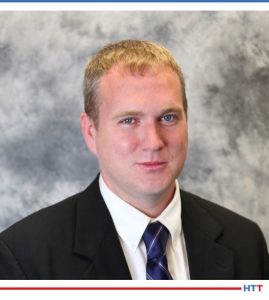



 Dr. Valery Rudnev was recently selected to be the American Society for Metal's (ASM) William Hunt Eisenman Award. Dr. Rudnev has many years of experience in the heat treat industry, particularly in induction heating. He is quite a mover and a shaker in the industry with more than 40 years involvement with his work and publications. He has even come to be known as "Professor Induction".


 Source: