


Leone

Heat Treaters Go Back to School

OCSummer is slipping away, is it time to go back to school? Heat Treat Today is sharing some of the training resources that you should consider if you're committed to increasing your heat treat knowledge.

The resources in this original content article come from Heat Treat Today's 2021 Trade Show September print edition. If you have a training resource that we missed send your own top pick to Karen@HeatTreatToday.com to be published in the 2022 print edition!


There’s nothing like gathering with fellow industry colleagues at in person seminars, conferences, and classes to learn the basics, the newest trends, and everything in between. Check out the different training opportunities and organizations that provide lessons and courses.

AP University

Dan Hill, AFC-Holcroft: "Applied Process offers their AP University by invitation to train attendees in the benefits, design, and manufacture of austempered ductile iron and austempered steel components. The two-day program includes classroom instruction by several presenters combined with a heat treat plant tour and a ductile iron foundry demonstration. I was fortunate to attend this thorough training and enjoyed all the interaction with presenters. I would recommend this training for prospective customers’ product designers, metallurgists, and quality personnel as the use of austempered components continues to rapidly increase."

Find it here: https://www.appliedprocess.com/applied-process-university/


Ipsen U Training for Vacuum Furnace Equipment

Hunter Levan, Chart Industries and Chemicals: "Ipsen’s 'Ipsen U' class is an excellent resource for professionals in the heat treat industry."

Find it here: https://www.ipsenusa.com/ipsen-customer-service/training


MTI’s Online Academy for Heat Treaters

Tom Morrison, Metal Treating Institute: "MTI’s online academy has 5 different certificate programs in the areas of technical knowledge, management skills and plant safety. MTI’s online academy meets training guidelines for Nadcap, ARP 1962, ISO9000 and AS9100. Check out the specific certificate programs."

Find it here:  www.MTIAcademy.com


AFC-Holcroft University

Justin Bunzeluk, AFC-Holcroft: "AFC-Holcroft recently implemented our 'AFC-Holcroft University' courses, which were initially developed specifically for our own employees. Three levels of training, ranging from Basic to Advanced, were offered on a number of topics drilling deep into the technical aspects of equipment design and function. Each training session has been championed by an internal expert on the selected topic. Because the content of each of the 12+ courses is so highly specific to furnaces, we may decide to offer some sessions to customers in the future."


YES Management Training Program

Tracy Dougherty, AFC-Holcroft: "We have been fortunate enough to have had a number of employees over the years enrolled in MTI’s intensive YES Management Training Program. Our graduates have found the program to be well worth the time and travel investment, and AFC-Holcroft considers it an honor to nominate any of our employees to take part in the program."

Find it here: https://www.heattreat.net/educationtraining/educationandtraining/yes/yes


ASM’s Practical Heat Treating and Basics of Heat Treating

Dan Hill, AFC-Holcroft: "ASM International offers several courses in self-study, virtual, and in-person format designed for the heat treating industry. These allow for great flexibility to get training completed at time and pace convenient for the trainee. I’ve attended both 'Practical Heat Treating' and 'Basics of Heat Treating' courses myself. These are excellent primers with a wealth of course material that I still refer back to from time to time as references."

Find it here: https://www.asminternational.org/learning/courses/classroom/-/journal_content/56/10192/43938428/CLASS Practical Heat Treating:


.

Search for heat treat solution providers and suppliers on Heat Treat Buyers Guide.com


Heat Treaters Go Back to School Read More »
Endogas Generator Increases Efficiency for OWZ Ostalb

HTD Size-PR Logo

Daniel Panny
Product Manager
UPC-Marathon in Germany
Source: LinkedIn

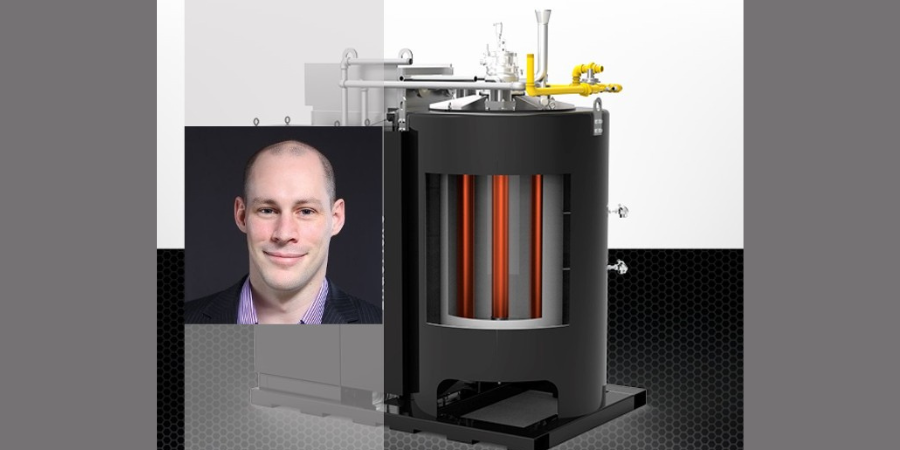
OWZ Ostalb received a new electrically heated endothermic gas generator. The company wanted to replace the old generator since it had no automatic process control and was unable to control the dew point efficiency in situations where the ambient air changed too much. The old components, which were difficult to replace, further reduced the generator’s overall efficiency.

OWZ Ostalb, a commercial heat treatment company in Aalen, Germany, received the EndoFlex™ S from UPC-Marathon, a Nitrex business unit, in late 2021.

"The customer chose us," says Daniel Panny, product manager at UPC-Marathon in Germany, "because we offered [a] gas mixing and control system, the EndoInjector™, and the [. . .] ReactionCore™ multi-retort system to deliver a reliable, on-demand supply of quality endogas, resulting in significant CO2 savings for their heat-treating operations."

The EndoFlex™ S that was purchased is the electrically heated version with an air cooler, an automatic nitrogen purge system, and additional CH4 monitoring to meet the highest safety standards.


Find heat treating products and services when you search on Heat Treat Buyers Guide.com


Endogas Generator Increases Efficiency for OWZ Ostalb Read More »

What Does It Mean To “Heat Treat Green”?

OCWhat does it mean to "heat treat green"? Between the hype and the cynicism of abilities of "green solutions" to meet climate concerns, there is a robust conversation going on about the real world effects of heat treat technologies and heat treat innovations. In this Technical Tuesday, we'll examine three topics that have been paramount in the discussion over the course of the past year and a half.

If you'd like to read more robust original content from Heat Treat Today, subscribe to the Heat Treat Daily here. Or, if you have a technical article you'd like to share with the North American heat treat industry, contact our editors at editor@heattreattoday.com.   


Heat Treating Equipment: Furnaces and Induction Heating

Recently, Solar Atmospheres demonstrated how their new vacuum oil quench furnace is both efficient and safe as well as a "green" alternative to other VOQ methods. Additionally, talk of the greenness of the induction heating process continues to be highly vocalized due to the repeatable and electric method of heating components. Compare these two heat treating equipment technologies below:

Vacuum Oil Quench

"Solar Atmospheres of Western PA announced their newly designed vacuum oil quench furnace (VOQ) has passed startup protocol. There were zero flare and smoke-ups during the quench cycle and the transfer mechanism moved 2000 pound loads with no issues."

Read more: "Western PA Heat Treat Facility VOQ Passes Startup Protocol"

Induction Heating

"Induction heating is a fast, efficient, precise, repeatable, non-contact method for heating metals or other electrically conductive materials."

Read more: "Why Induction Heating Is a Green Technology"

Renewable Energy Combustion

Using renewables in the combustion arena of heat treating is a complex topic: real energy used, efficiency, costs, and time to adjust all factor into the discussion. While there still doesn't seem to be one solution to this problem, individuals and companies are drawing lines in the sand to help them make equipment investment decisions for their heat treat operations now.

Overview of the "Renewables" Question

"Using a broad spectrum of green energy sources, likely generated in a decentralized manner, and with regional focus on infrastructure capabilities such as transportation and storage of energy carriers, seems more plausible than focusing purely on an electricity-based energy system."

Read more: "Future of Heat Treat: Renewable Energy"

Energy Expert Weighs In

"But there is really no easy path to replacing the efficiency, both thermodynamic efficiency and economic efficiency, of high temperature heat (flames) — that’s the nature of processing materials. So then, you’re only option is the current affection for “green hydrogen.” This is a profoundly misplaced aspiration."

Read more: "Heat Treat Radio: Energy’s Bright Future with Mark Mills, Senior Fellow at the Manhattan Institute"

Related: Steel Manufacturing With Hydrogen

Water vapor instead of CO2. A huge part of steelmaking is retrieving the pure iron itself in a blast furnace. But this traditional method of getting iron into its usable form requires a lot of heat and a lot of energy. Alternative options that companies are wrestling with are using electric arc furnace (EAF) mills and replacing CO2 with hydrogen. This is a "fringe" conversation to heat treaters, but it is still relevant as downstream manufacturers engineers.

CO2: BOF and EAF Furnaces

"There are a few shifts that need to happen. We must move away from blast furnace steel making. Every product based on that will create huge amounts of CO2. Electric arc furnace (EAF) mills are running the world."

Read more: "Going Carbon Free: An Interview with H2 Green Steel"

HYBRIT Use of Direct Reduction

"Around 71 per cent of steel produced today comes from an iron-ore-based method. This typically uses a blast furnace at temperatures of around 1,500°C in which carbon, usually coal, is used to remove oxygen and impurities from the ore to make pig iron. The latter is then turned into steel via a basic oxygen furnace whereby oxygen is blown onto the liquid iron to burn unwanted elements."

Read more: "Fringe Friday: Making Steel 'Green'"

New Technology vs. Practical Solutions

"At Cliffs, we don’t want to rely on breakthrough technologies, but rather deal with practical decarbonization options. Our efforts involve the use of the hydrogen contained in natural gas, which is actually a mix of 95% CH4 and 4% C2H6."

Read more: "Green American Steel: The Envy of the World with CEO Lourenco Goncalves"


Find heat treating products and services when you search on Heat Treat Buyers Guide.com


What Does It Mean To “Heat Treat Green”? Read More »

Happy 4th of July!

Whether you’re at the beach, at home, or sneaking in a few workaholic hours on the job, we hope everyone in the United States will be able to celebrate the ideals of freedom and liberty introduced at the signing of the Declaration of Independence in 1776.

Wishing you and yours happy celebrations, and we’ll see you on Tuesday, July 5th when Heat Treat Today comes back to the office!

- Bethany Leone, Managing Editor, Heat Treat Today

Happy 4th of July! Read More »

Spotlight on 40 Under 40 Alumni

OCHeat Treat Today’s 40 Under 40 was created to bring recognition to young professionals in the industry, giving names, faces, and words to the rising generation of industry professionals. In this original content article, released on the final day to nominate someone to Heat Treat Today’s 40 Under 40 Class of 2022, we caught up with exemplary classmates from past years to hear where they are now and what comments they have about the industry.


Justin Powell

It has been 15 years since, "at the age of 19, I started working for a company that serviced high temperature furnaces and industrial combustion systems. I cut my teeth in the industry by doing burner retrofits and turnkey system installations."

Since being nominated to receive Heat Treat Today’s 40 Under 40 award, Justin says he has "started a company called MP Combustion with my very good friend, Ryan McClain. We literally started the company working out of our basements in 2019 and with the support of this wonderful industry have since grown to a team of six with hopes to expand to more employees soon. Our team works hard to support the heat treat community by supplying the best combustion equipment and technical support in the industry." Justin notes that starting MP Combustion is "easily the highlight of my career so far."

When asked what his favorite thing about the industry is, he commented, "The never-ending learning curve. I love to learn, and this industry has a seemingly endless supply of new skills to learn and hone. I also have a great admiration for the people in this industry, they are always willing to help teach and learn from one another. It's an amazing community to be a part of!"

As a final word of advice for the winners being selected to Heat Treat Today’s 40 Under 40 Class of 2022 this summer, Justin encourages them, saying, "My friends, this is only the beginning. I wish you all great success throughout your career and hope that our paths meet along the way!"

Read more about Justin here.

Jaime Sanchez

Jaime got involved in the world of heat treat seven years ago, seeking "a job opportunity in Engineering and Project Management and in automotive, power generator, or automation." Since receiving the award, Jaime has "received a promotion from Engineering Manager to Operations Manager in MATTSA FURNACE COMPANY, expanding my area of responsibilities to equipment manufacturing without [fully] leaving engineering and project management."

His aptitude to pivot is evident in what he finds most exciting about heat treating: "Every day is a new challenge for me, from receiving and managing new projects to helping our clients to solve issues or coordinate the activities of MATTSA plant with all the personnel involved. All these activities and the way I solve them make me excited every day when I arrive at my workplace."

"Receiving this nomination is an honor," Jaime shares, "it is a way of showing the world the talent you have, in addition to showing that being young is not synonymous with being inexperienced, but that our generation can do great things with a lot of dedication and effort. Never stop fighting for what you want and show that your talent is world class."

Read more about Jaime here.

Miguel Humberto Fajardo

For Miguel, it has been six years of service in the heat treat industry. "I started in 2016," he commented, "with an internship program, in the John Deere materials laboratory. I had the opportunity to collaborate in the development of suppliers, certify the quality and mechanical properties of treated parts, participate in the design of new heat treat recipes and the introduction of new processes. Those were the first steps in the world of heat treat. After the internship and thanks to that experience, I was hired as the engineer in charge of John Deere's heat treatment lines."

Over the past few years since nomination, Miguel notes that his role in heat treatment "has changed a lot. My position evolved to a Sr. level with more responsibilities and challenges, including renewing the technology of our lines, implementing improvements to make processes more efficient and achieving cost and expense reductions. I was awarded trade secrets for these upgrades." He continues, saying, "I am currently working on fully exploiting the capacity of our equipment, focusing on cost reductions, reducing gas consumption, and improving emissions."

It's the science paired with experimentation in heat treat that continues to interest Miguel: "What I like the most is that it is a true science, it requires a lot of experimentation and generating hypotheses. My colleagues tell me that they are like occult arts or magic, since two parts that look the same can be completely different inside."

To the upcoming 40 Under 40 Class of 2022, Miguel offers a challenge: "Although the literature on HT is many years old, there is always an opportunity to innovate and create different things and different ways of doing things. Experiment and ask yourself many things. and this will become more than a job, a different experience day by day. Very challenging and fun."

Read more about Miguel here.

Heat Treat Today's 40 Under 40 Authors

Check out some of the technical content that 40 Under 40 award winners have published with Heat Treat Today over the years:

Alberto Cantú - 40 Under 40 profile

Ben Gasbarre - 40 Under 40 profile

Josh Hale - 40 Under 40 profile

Mike Harrison - 40 Under 40 profile

Kyle Hummel - 40 Under 40 profile

Trevor Jones - 40 Under 40 profile

Ellen Conway Merrill - 40 Under 40 profile

Shawn Orr - 40 Under 40 profile

Justin Sims - 40 Under 40 profile

Andy Wilkosz - 40 Under 40 profile


Find heat treating products and services when you search on Heat Treat Buyers Guide.com


Spotlight on 40 Under 40 Alumni Read More »

Vacuum Heat Treat Capabilities Expand for Magnetic Shields Ltd

HTD Size-PR Logo

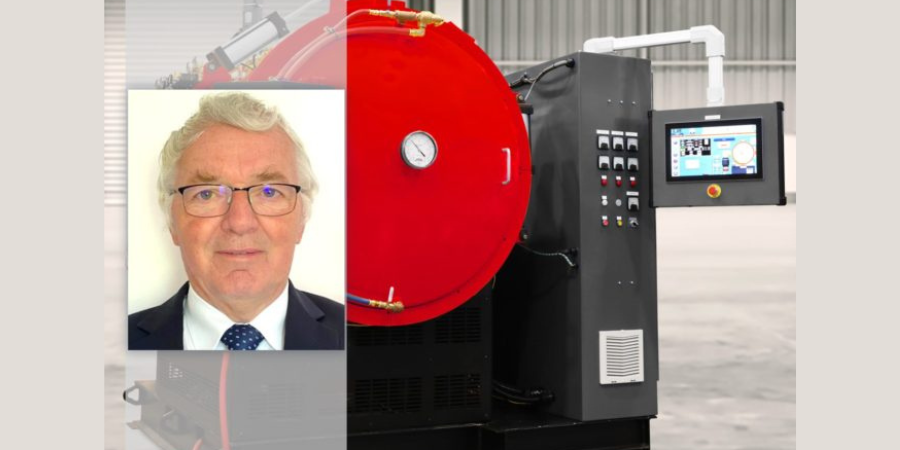
Colin Woolger, Director, MSL Heat Treatment
Source: LinkedIn

A U.S. manufacturer of heat treat furnaces will supply a new vacuum furnace to the heat treat subsidiary of Magnetic Shields Limited (MSL) of Kent, United Kingdom. MSL Heat Treatment will use this furnace in the manufacture of medical and scientific devices.

The partnership between Solar Manufacturing and MSL began in 2016, and this new Mentor® Pro vacuum furnace (HFL-3036-2IQ) will be manufactured in accordance with CE standards including the vacuum chamber being built to ASME/UKCA requirements.

This furnace has a working hot zone area of 18” wide x 18” high x 36” deep (457mm x 457mm x 914mm) with a weight capacity of 1,000 pounds (455 kgs). It will be able to reach temperatures up to 2400°F (1315°C) and will feature a three gas partial pressure system and an internal quench system designed for 2-bar (15 PSIG) positive pressure quenching.

"MSL Heat Treatment specialize in brazing and controlled heat treatment for medical and scientific applications," Colin Woolger, director of MSL Heat Treatment added, "This latest furnace [. . .] will enable us to continue to provide high quality solutions to our growing customer base. The inclusion of hydrogen as a process gas also allows us to utilize the furnace for magnetic annealing to a very high specification."

"[We're] pleased to continue working with MSL as a supplier for their thermal processing needs," stated Rick Jones, vice president of International Sales at Solar Manufacturing. This will be the third vacuum furnace that the heat treat furnace provider will supply to MSL Heat Treatment.


Find heat treating products and services when you search on Heat Treat Buyers Guide.com


Vacuum Heat Treat Capabilities Expand for Magnetic Shields Ltd Read More »

DUAL PERSPECTIVES: The Heat Treat Shop of 2050

op-ed

Changes are inevitable, but the world today is changing so rapidly that it’s constantly keeping us on our toes. Do two men from different parts of the world, both with significant experience within the heat treating community, have vastly different perspectives on the happenings in the heat treat industry?

We want to find out, so we asked a question that focuses on the world of heat treating to Thomas Schneidewind, the editor-in-chief of heat processing magazine, and Doug Glenn, the publisher and founder of Heat Treat TodayThe question: What does the heat treat shop of 2050 look like?

Thomas’s expertise lies in the European market while Doug’s resides in the North American market. We will feature their responses in each print magazine. Will their views align? Time will tell. Enjoy this second installment of an ongoing column. This column was first published in the June 2022 Heat Treat Buyers Guide print edition.


What Does the Heat Treat Shop of 2050 Look Like?

Thomas Schneidewind, Editor-in-Chief, heat processing magazine

The Limits of Digitalization

Thomas Schneidewind
Editor-in-Chief
heat processing Magazine

Do you still remember the New Economy? The predictions of some economists at the beginning of the internet economy heralded the end of the classic business cycle when it vanished into thin air in March 2000 – just like the internet bubble on the stock market.

However, a look back at the turn of the millennium shows that many ideas were formulated back then that are only now – more than 20 years later – changing our lives. At this point, I would like to recall The Cluetrain Manifesto, the internet bible of the first hour. This document sets out 95 theses for the new corporate culture in the digital age. Thesis 1 states, “Markets are conversations.” Thesis 19 says, “Companies can now communicate directly with their markets. If they don’t seize this opportunity, it could be their last.”

Today, real-time communication is commonplace. Many companies are designing their workflows to be flexible and able to respond quickly to the needs of their customers and employees. One example: LOI Thermprocess GmbH relies on networked working at its new location in Duisburg, Germany. The central component of the concept is a digital room. From here, employees around the world can take virtual tours with customers. They walk through the plant with a terminal device and employees of the plant manufacturer interact with them remotely.

The SMS group will also implement even closer cooperation along the entire value chain at its new site in Mönchengladbach. The Technology, Service, and Digitalization Campus currently under construction will enable agile working in a 5G infrastructure and offer generous social and communication areas.

In heat treatment, digitization is making an important contribution to implementing the changeover in automated drive technology production. Significantly higher speeds of electrified drives and the resulting change in stress on components require heat treatment that meets these requirements. The high number of variants in drive technology also leads to smaller production sizes – the plants have to be designed more flexibly. In this context, digitization plays an important role.

Another aspect is the work in plant engineering with digital twins. Digital models can be used to increase efficiency in production. It is also about speed in the development of plants and the optimization of processes. The result of any digitization strategy is an increase in competitiveness.

Since almost anything is technically feasible today – at least in theory – the question is rather about the limits of digitization. These are manifold in nature: starting with heterogeneous IT landscapes in companies. These make cross-process integration difficult in regard to data security, (which apparently cannot be guaranteed), to dystopian fears of the replacement of humans by machines, (which stands in the way of the acceptance of digital solutions). In other words, digitization must always remain only a tool, not an end in itself. We recognize this most when the digital space prevents genuine personal communication.

Doug Glenn, Publisher, Heat Treat Today

Doug Glenn
Publisher and Founder
Heat Treat Today

Roughly 30 years ago, I asked this same question to the publishing staff of Industrial Heating magazine. I was their publisher at that time and the answers were intriguing. One person predicted that we would not have phones on our desks and that we would do most of our communication over our computers. Smart phones were not a thing at that time, so that prediction seemed far-fetched, but the “no phones on our desks” prediction has proven to be pretty much true.

What a 2050 heat treat shop/department will look like will be largely dependent on the type of work being processed. For captive shops, we should fully expect that these shops will be nearly 100% automated and self-governing. This includes incoming material analysis, load configuration optimization, multi-furnace utilization schedules, and part-by-part processing analysis – all will be done without human intervention. We will undoubtedly see more artificial intelligence including the resolution of unexpected problem situations that arise during the heat treating process.

More importantly, the idea of a distinct heat treat department will be less and less prevalent. By 2050, the vast majority of captive heat treatments will be done in-line with the manufacturing process with little or no interventions from humans. Washing, fixturing/loading, temperature measuring and control (most of which will be done continuously with full-part, non-contact infrared scanning), and inspection will all be done autonomously.

Most parts will be heat treated individually with single-part traceability/accountability.

The need for heat treat will be minimized with advances in the development of nanomaterials and the ability to designer-build alloys with specific metallurgical/mechanical properties.

Equipment controls and process control will be remote and cloud-based. These are some of the characteristics for captive shops where product variability is low and volumes are high.

For commercial heat treat shops where variability is high and volumes are relatively low, much of the same will be true with less and less human interaction needed. Nonetheless, these job shops will still have a higher need for human interaction than the captive shops. Commercial shops, however, will be much more highly automated than they are today, especially when it comes to part recognition and the recipes associated with those parts.

Finally, I don’t see heat treating as a carbon-free activity in 30 years. In fact, as the need for energy grows, I see the heat treat industry continuing to use carbon-based fuels. The only thing that will change in the next 30 years is the opinion that carbon is the devil. Although much slower moving, I think the world’s opinion about the evils of carbon will change much like the anti-cancer diet du jour in today’s world. In 2050, carbon will no longer be a dirty word.


Find heat treating products and services when you search on Heat Treat Buyers Guide.com


DUAL PERSPECTIVES: The Heat Treat Shop of 2050 Read More »

Heat Treat Fabrication Provider Acquires Certain Assets From Performance Industrial Products

HTD Size-PR Logo

On June 16, 2022, a heat resistant high alloy casting and fabrication company headquartered in Avilla, Indiana acquired certain assets of Performance Industrial Products, LLC (PIP), a dynamic heat resistance high alloy foundry located in Waupaca, Wisconsin.

"We are excited to add PIP’s casting expertise to our American-based centrifugal and no-bake sand casting capabilities," said Chad Wright, president of WIRCO, Inc. "PIP’s expertise and capacity [. . .] greatly increases our ability to supply the growing demand for highly engineered tubular and sand-based castings."

"We are thrilled to be a part of the WIRCO team," added Chris Robbins, president of PIP. He continues that his company looks forward to  "We look forward to contributing to their already exceptional reputation in supplying high quality domestic made heat resistant castings and fabrications to the thermal processing industries."

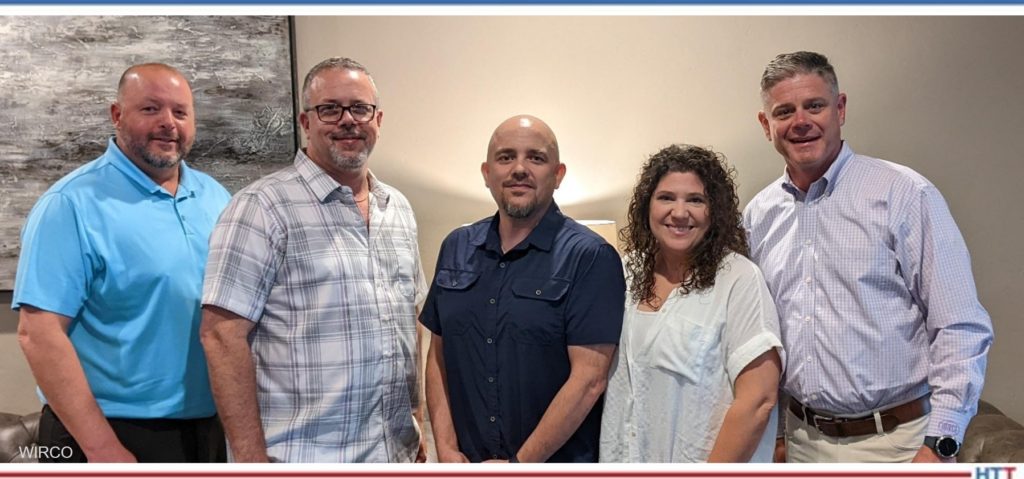
Pictured Above (From Left to Right): Aaron Fisher -Vice President Wirco, Chad Haines – Sales Manager Wirco, Chris and Betsy Robbins PIP, Chad Wright – President Wirco
Source: WIRCO

The WIRCO family of companies is headquartered in Avilla, Indiana and is now comprised of three Indiana manufacturing centers along with foundry operations in Champaign, Illinois and Waupaca, Wisconsin.


Find heat treating products and services when you search on Heat Treat Buyers Guide.com


Heat Treat Fabrication Provider Acquires Certain Assets From Performance Industrial Products Read More »

News From Abroad: Heat Treat Investments, Management, and Anniversaries

Heat Treat Today is partnering with heat processing, a Vulkan-Verlag GmbH publication that serves mostly the European and Asian heat treat markets. Together, we are sharing the latest news, tech tips, and cutting-edge articles that will serve our audience — manufacturers with in-house heat treat.

In the June 2022 Heat Treat Buyers Guide print edition, we looked to our European information partner to hear about captive heat treaters investing in new equipment, furnace manufacturers shifting management, and heat treaters celebrating big anniversaries.


French Captive Heat Treater Invests in Screw Press
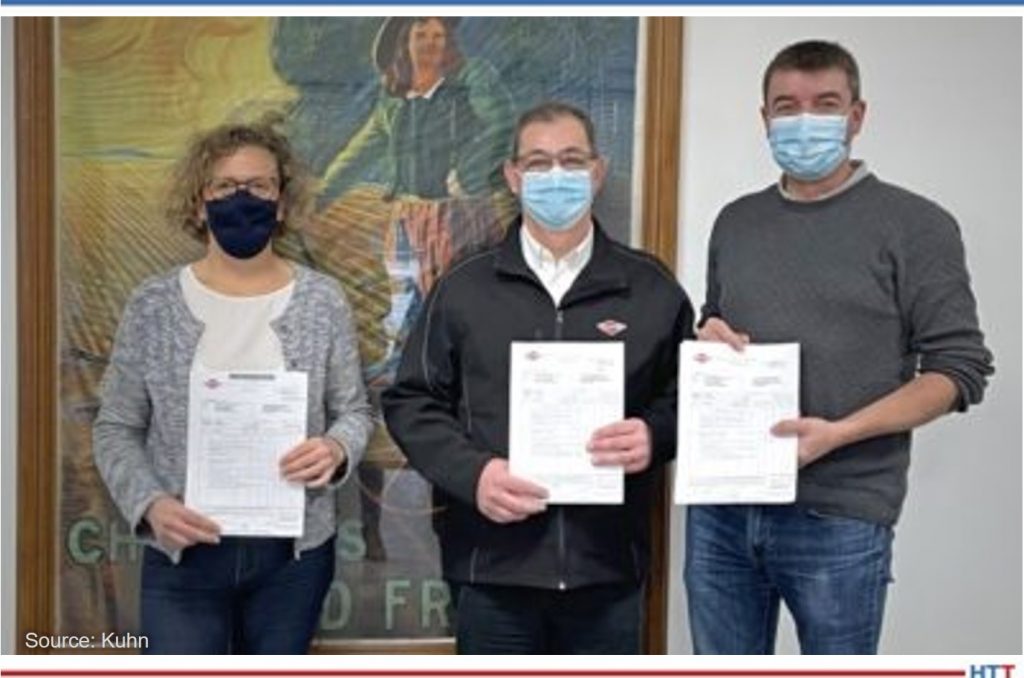
"At its location in the French town of Châteubriant on the Atlantic coast, the agricultural equipment manufacturer Kuhn develops and manufactures, amongst other things, tillage equipment, plows, and sowing machines. From the very start, Kuhn Huard has had an undeniable competitive advantage thanks to its forging and heat treatment know-how."

Read More: "Kuhn Orders Screw Press by Schuler"


Shifting Management for Global Player in Heat Treatment
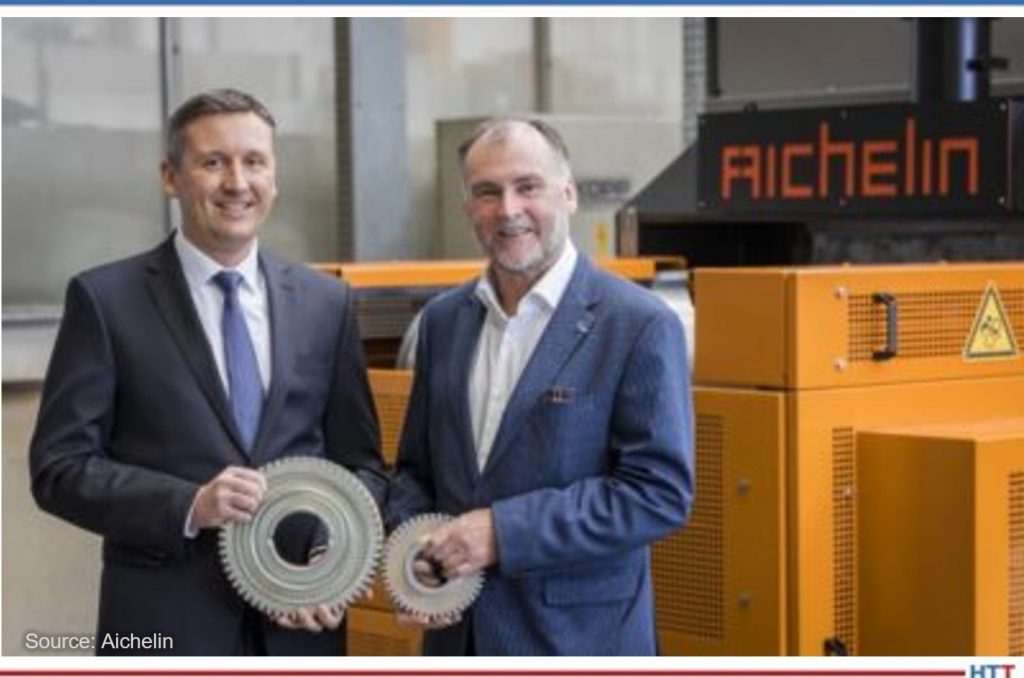
"[Dr. Peter Schobesberger’s] place as CEO of AICHELIN Holding GmbH will be taken by Dipl.-Ing. Christian Grosspointner. He is a trained industrial engineer with a wide range of experience in the management of manufacturing companies in the mechanical and plant engineering industry as well as in metal processing."

Read More: "Aichelin Announces Change in Holding Management"


Celebrating Decades of Serving Heat Treaters with Burner Technology


"Since its foundation in 1992, NOXMAT has stood for state-of-the-art burner systems, which are developed, manufactured, and produced in Oederan. Research and Development thus play an especially important role. At the in-house ‘Technikum,’ technological innovations are developed and tested for marketability."

Read More: "NOXMAT Is Celebrating Its 30-Year Anniversary"


.

Search for heat treat solution providers and suppliers on Heat Treat Buyers Guide.com


News From Abroad: Heat Treat Investments, Management, and Anniversaries Read More »

How To Make $17,792.00 in a Couple of Hours

op-edWe will explore the ever-popular subject of how to make money the easy way. Well, better stated: How to save some money, but at the end of the year the result is the same.



This column is a Combustion Corner feature written by John Clarke, technical director at Helios Electric Corporation, and appeared in June 2022 Heat Treat Buyers Guide print edition.

If you have suggestions for savings opportunities you’d like John to explore for future columns, please email Karen@heattreattoday.com.


John B. Clarke
Technical Director
Helios Electric Corporation
Source: Helios Electric Corporation

For our discussions, we will assume that we are operating a continuous heat treat furnace that processes work at 1600°F. The furnace currently consumes 2,000 SCFH of 1000 BTU/SCF natural gas and operates 8,000 hours per year. With today’s natural gas at 8.00 USD per 1 mmBTU (1 mmBTU = 1,000 SCF of natural gas), our furnace’s annual operating cost is:

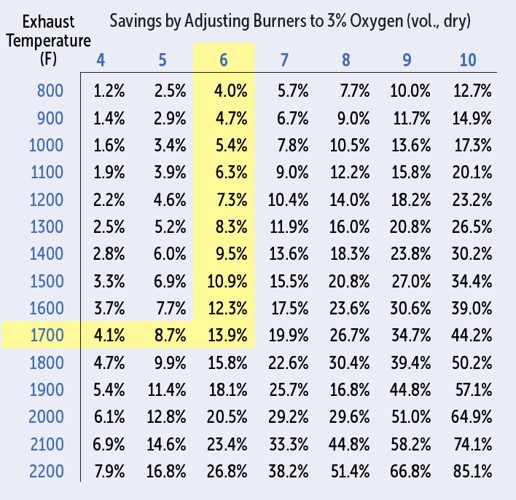
Using our trusty combustion analyzer that provides a readout of the oxygen present in the flue products, we quickly determine the fuel contains 6% O2 (measured by volume, dry basis). The “volume/dry basis” is the most common value measured by handheld combustion analyzers. We measure the temperature of the flue products at 1700°F. Our burner and/or furnace specifications say the system should be operated at 3% O2. How much can we save by adjusting the burner(s) on this furnace?

Table 1 below provides savings numbers that result when non-recuperated burners are returned to 3% O2.

If we read where the exhaust temperature row intersects with our column for our starting O2 volume in the flue products, we see the resultant savings will be 13.9%:


We chose 3% O2 in the flue products (around 15% excess air) because radiant tubes and direct fired systems can commonly operate at this level with little CO or soot generation. A simple combustion analyzer can be purchased for a few thousand dollars and the labor required to make these adjustments is generally under a day. The payback period for this maintenance investment is measured in weeks, even if it requires the purchase of new tools.

There may be an added benefit we receive when adjusting the furnace. We may have an opportunity to increase the throughput, so perhaps production can be increased while fuel costs are reduced.

Table 1 can be used for other specific conditions, so keep it handy. Next month, we will explore the savings resulting from recuperation or pre-heating the air.

Recuperation projects are more complicated and require greater investments, but they are becoming increasingly critical for heat treaters working to stay competitive in our new reality of dramatically higher natural gas prices.

About the Author:

John Clarke, with over 30 years in the heat processing area, is currently the technical director of Helios Corporation. John’s work includes system efficiency analysis, burner design as well as burner management systems. John was a former president of the Industrial Heating Equipment Association and vice president at Maxon Corporation.


Find heat treating products and services when you search on Heat Treat Buyers Guide.com


How To Make $17,792.00 in a Couple of Hours Read More »

Skip to content