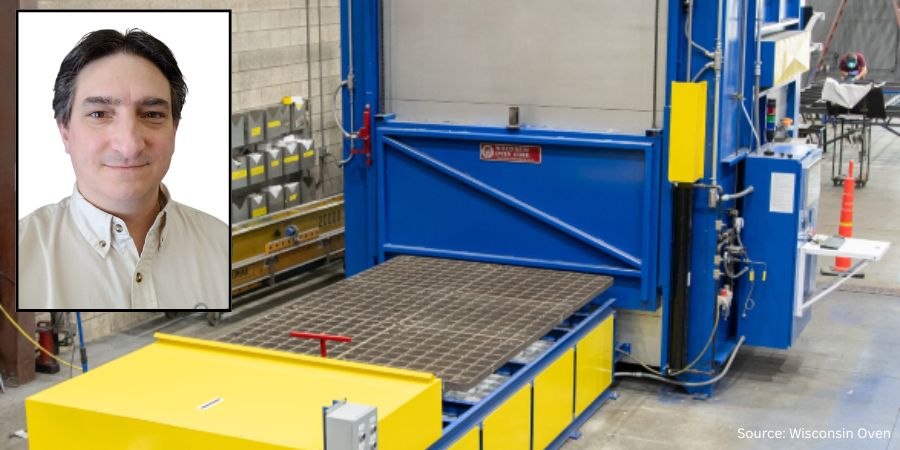
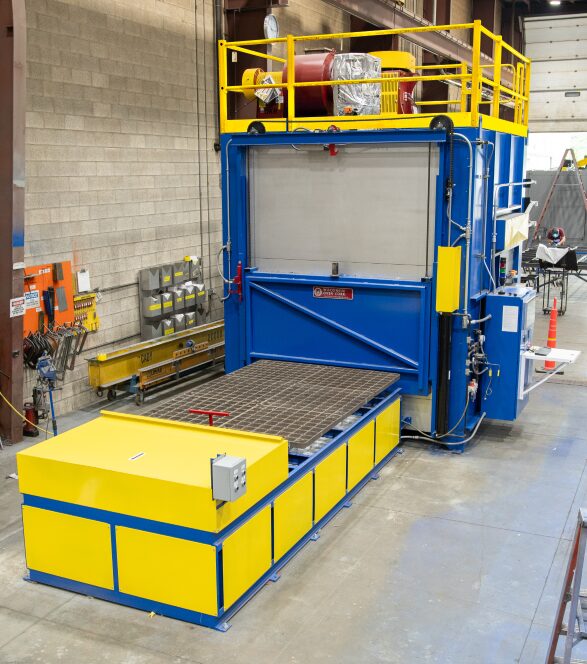
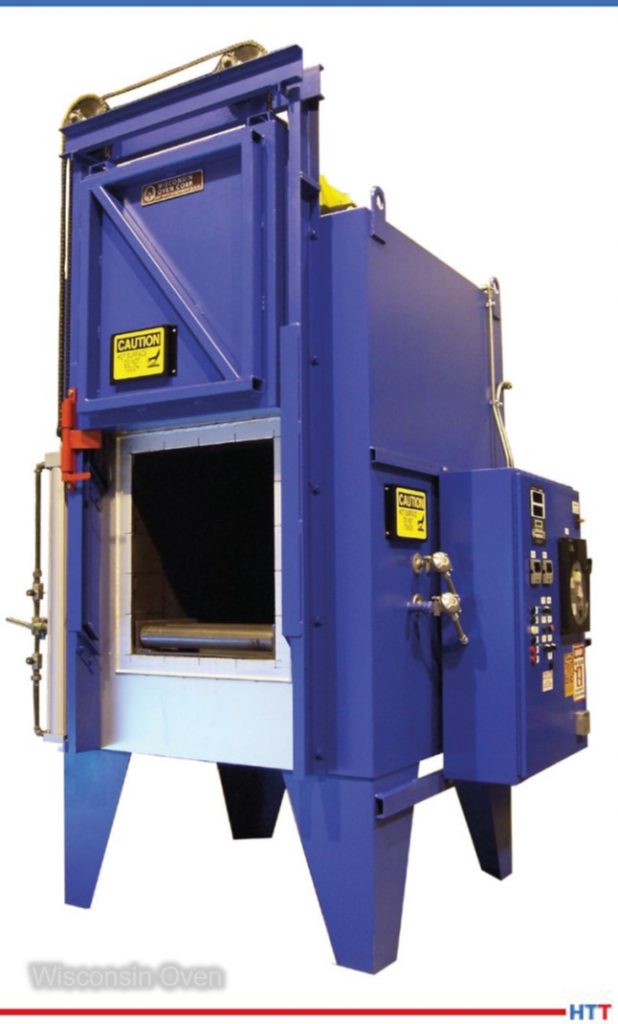
An electrically heated batch oven has been shipped to a leading space exploration company. The custom batch oven will be used to stress relieve titanium parts.
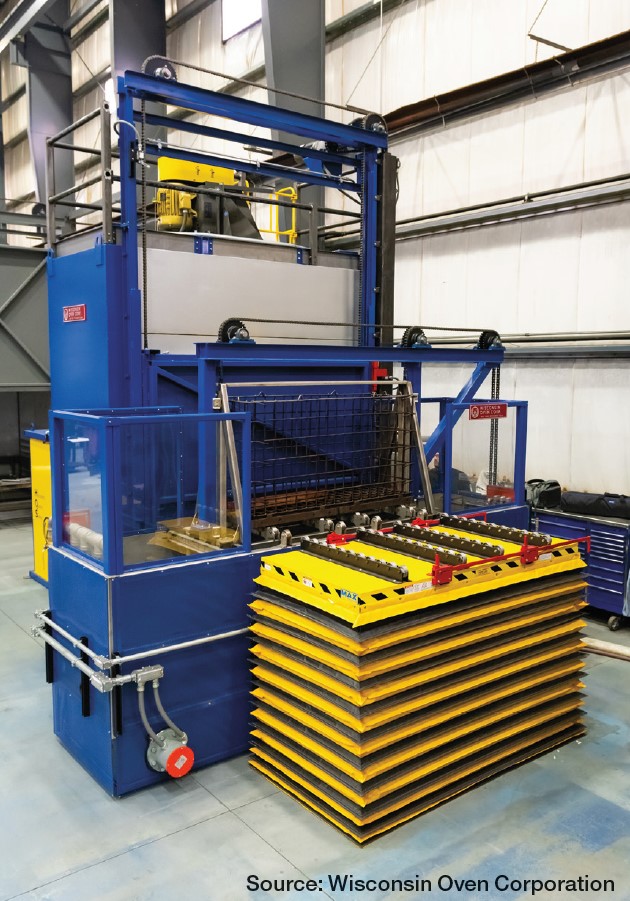
Wisconsin Oven Corporation is providing the stress relieving oven, which includes a powered load/unload table. The oven is designed for a maximum operating temperature of 1250°F and provides temperature uniformity of ±15°F at three set points. Uniformity was verified through a nine (9) point profile test before shipment.
The oven is designed to heat and cool loads up to 1,200 pounds per cycle. Parts are placed on a high strength grid and transferred into the 7’ wide x 10’ long x 3’ high work chamber by an automated pusher/extractor system. After processing, the load is extracted onto the load table where 6 high speed fans direct ambient air upwards across the parts for further cooling.
A top-down airflow system delivers heats air vertically down through the chamber for even distribution across the product load. This oven is capable of meeting the requirements of AMS2750G, Class 3, Instrumentation Type A.
The control system features an Allen-Bradley CompactLogix PLC, a Eurotherm programmable temperature controller with advanced auto-tune, and a Eurotherm digital recorder for precise temperature control and data logging.
Mike Grande,
Vice President
of Sales,
Wisconsin Oven
Corporation
“This custom batch oven was designed to deliver exceptional temperature uniformity…and optimized airflow distribution ensures consistent processing and superior part quality,” commented Mike Grande, vice president of Sales for Wisconsin Oven Corporation.
This stress relieving oven was fully factory tested and adjusted prior to shipment from the furnace supplier’s facility. All safety interlocks were checked for proper operation and the equipment was operated at the normal and maximum operating temperatures. This equipment is backed by Wisconsin Oven’s 3-Year WOW™ warranty.
Press release is available in its original form here.
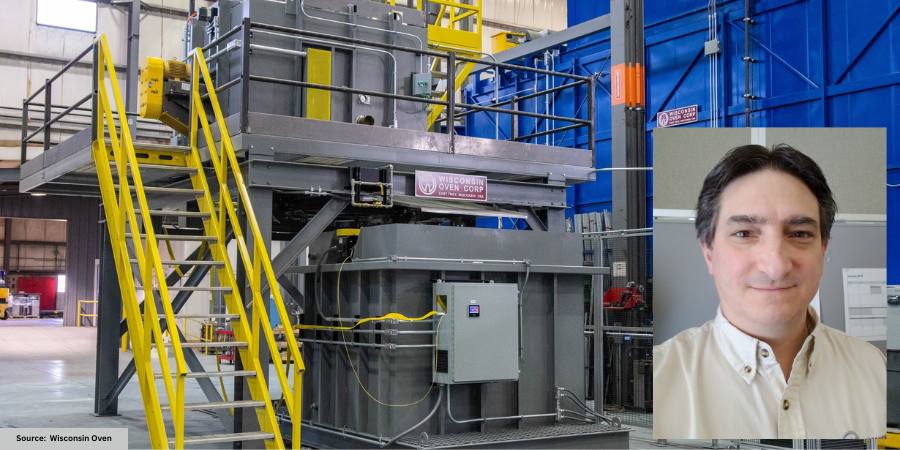
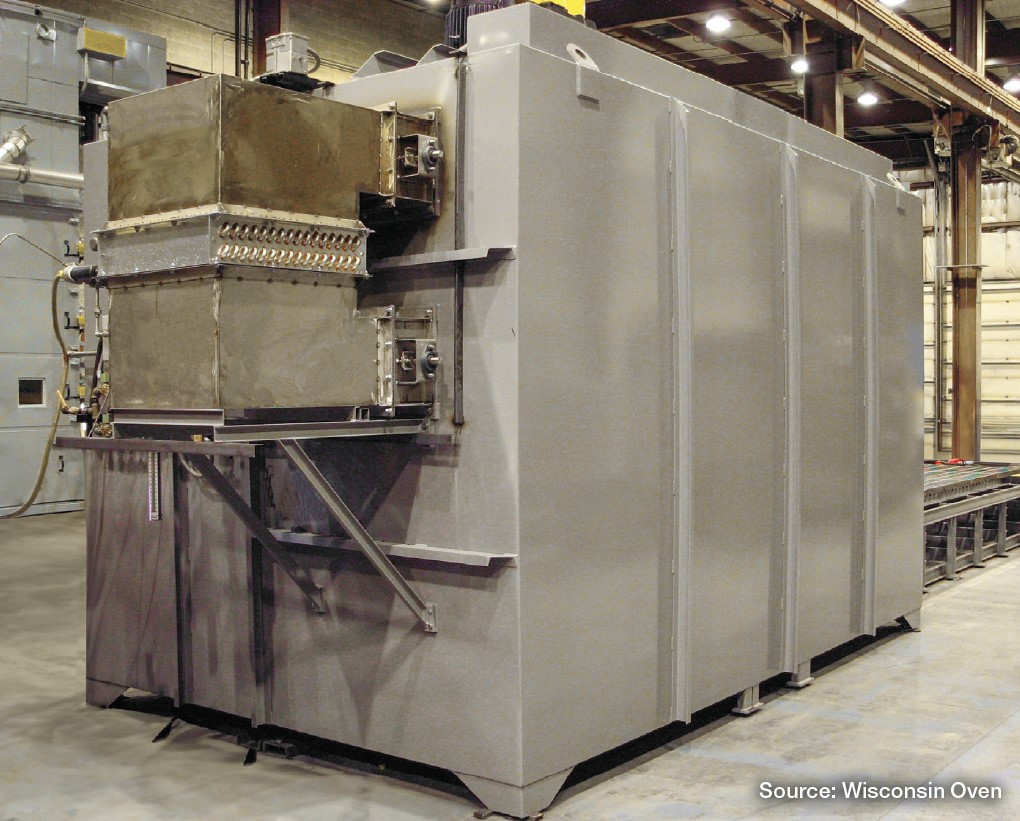
A defense industry manufacturer has purchased an inert atmosphere batch oven for processing stainless steel parts in a reduced oxygen environment to prevent scaling. The furnace is designed to use a nitrogen atmosphere system to reduce surface oxidation of parts and includes a flow meter calibrated for nitrogen and controlled via closed loop to maintain the reduced oxygen level.
Wisconsin OvenCorporation shipped the system, which has a maximum temperature rating of 1,250°F with the capacity to heat and cool approximately 6,000 lbs. of steel per load in an inert atmosphere. The temperature is controlled by a Watlow F4T digital recorder/controller with ethernet communication capabilities. Temperature uniformity of +/- 10°F at 1,000°F and 1,200°F was verified with a nine-point profile test.
Mike Grande Vice President of Sales Wisconsin Oven Corporation Source: Wisconsin Oven Corporation
The oven features a “CAN” style construction with a heavy plate exterior, a total of six inches of insulation, and an 18-gauge 304 stainless steel interior. To maximize throughput and productivity, the oven is designed with a pneumatically operated vertical lift door and powered load/unload table capable of handling up to 6,000 lbs., along with a water cooling system to reduce the cooling time, to allow for faster production cycles.
“This inert atmosphere oven includes several state-of-the-art features that increase production throughput and provide reduced surface oxidation,” said Mike Grande, vice president of sales at Wisconsin Oven. “These include water cooling to reduce the cooling time at the end of the cycle, closed-loop nitrogen control to prevent nitrogen overconsumption, oxygen and humidity sensors to provide real time data, and an industrial IoT system to connect the unit to the Wisconsin Oven aftermarket team for remote data monitoring and tech support.”
The press release is available in its original form here.
An electrically heated drop bottom furnace with a traveling quench tank and a maintenance platform has been shipped to an aerospace company for the solution heat treatmentMike Grande Vice President of Sales Wisconsin Oven Corporation Source: Wisconsin Oven Corporationof aluminum parts.
Wisconsin Oven designed the drop bottom furnace with sufficient capacity to heat 600 pounds of aluminum per load and provide a quench delay that does not exceed 5 seconds. The system also includes a slow drop speed program to be used for heating applications that do not require a quench.
“This drop bottom furnace was designed with a 5 second quench delay, and a temperature uniformity of +/- 5°F at the set points 850°F and 1,100°F. In addition, the system was tested to be in compliance with AMS2750F, Class 1 furnaces and instrumentation Type C prior to shipment from our manufacturing facility,” said Mike Grande, vice president of sales at Wisconsin Oven.
The press release is available in its original form here.
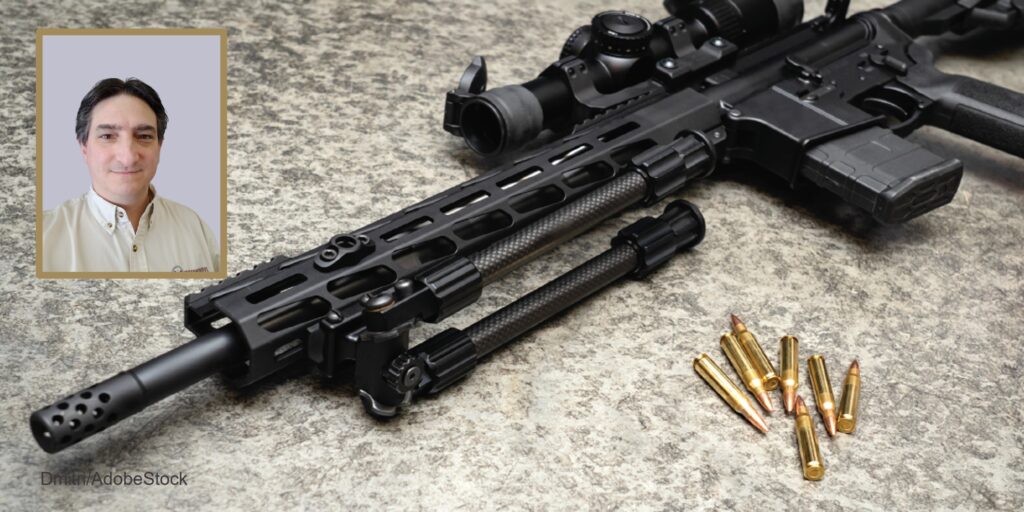
For gun barrels, tempering is essential to bring steel to the necessary hardness. But what equipment is needed, and how is this done under a nitrogen cover gas? Explore how low-oxygen temper furnaces — often electrically heated — accomplish this feat.
This article by Mike Grande was originally published inHeat Treat Today’sMay 2024 Sustainable Heat Treat Technologies 2024print edition.
Contact us with your Reader Feedback!
Steel tempering is a heat treatment process that involves heating the steel to a specific temperature and holding it at temperature for a specific time to improve its mechanical properties. Tempering is most commonly performed on steel that has been hardened by quenching. Quenched steel is too brittle for most uses, and so it must be tempered to bring the hardness down to the desired level, giving the steel the desired balance between strength, toughness, and ductility.
Steel is tempered in an oven (often referred to as a “temper furnace”) at temperatures of roughly 350°F to 1300°F, with the exact temperature dependent on the alloy and the desired hardness and toughness. This heating process creates a layer of oxide scale on the surface of the tempered steel, which is unsightly, can weaken it, and can lead to failure or damage. Further, the scale can directly interfere with the intended use of the steel parts. Although in many applications this surface oxidation is not a detriment (it may be removed in a subsequent operation for example), it is not acceptable for certain steel parts.
In order to prevent surface oxidation during tempering, the oxygen can be removed from the oven using nitrogen injected into the heating chamber. More specifically, the nitrogen acts as a protective “cover gas” by displacing the oxygen, reducing the percentage of oxygen in the heating chamber. Essentially, the nitrogen dilutes the oxygen in the oven until it is brought down to a low concentration, such that very little oxidation can occur, preserving the surface quality of the tempered steel.
Gun barrels, for example, are tempered to remove the residual stresses from rifling and other prior processes and bring the steel down to the required hardness.
The tempering process involves heating the barrel to a specific temperature in a nitrogen atmosphere which is very low in oxygen. This helps prevent oxidation and other unacceptable surface contamination that would weaken the steel and make it unsuitable for the rigors of shooting. The internal barrel pressure during the firing of an AR15 rifle, for example, can reach 60,000 PSIG, which generates the 2,200 pounds of force required to produce the typical 3,000 feet per second (2,000 miles per hour) muzzle velocity. Considering these operating conditions and the temperature cycling experienced by the barrels, the tempering process must be performed precisely, and it must be very repeatable. This requires a carefully designed furnace engineered specifically for low-oxygen tempering under a nitrogen cover gas.
Design of the Low-Oxygen Temper Furnace
The key features of a properly designed temper furnace are a tightly sealed shell, a robust heating and recirculation system, a nitrogen delivery and control system, and an atmosphere-controlled cooling arrangement.
The shell of the controlled-atmosphere temper furnace must be tightly sealed so that the factory air, which contains oxygen, is prohibited from mixing with the heated environment inside the furnace. Air contains about 21% oxygen, and if it gets into the interior of the furnace during heating, this oxygen will quickly cause oxidation of the steel. This requires the heating chamber itself to be designed and manufactured with tight tolerances to prevent uncontrolled entrainment of air into the furnace and leaking of the nitrogen cover gas out of the furnace.
Low-oxygen temper furnaces are most commonly electrically heated, and the wall penetrations for the heaters are designed with special seals to preserve the low-oxygen furnace atmosphere. The same is true for the penetrations to accommodate the thermocouples and other sensors, the cooling system, and the door. Special attention must be given to the door opening, and the door itself. As the interface between the hot furnace interior and the room temperature factory environment, it is especially prone to warping, which will allow leaks. There are different technologies used to combat this, including double door seals, water cooled seals, and clamps to squeeze the door against the furnace opening.
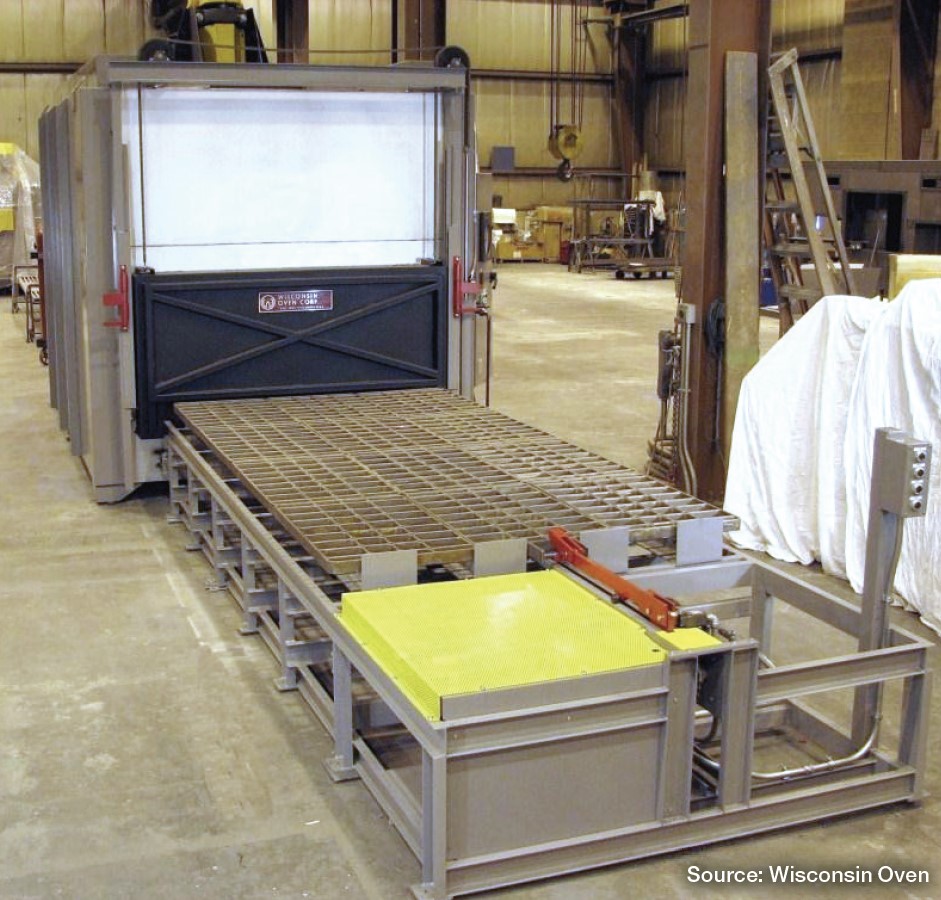
Figure 1. Nitrogen temper furnace with a load/unload table
As with a conventional non-atmosphere temper furnace, the heating and recirculation system must be designed with a high recirculation rate and a sufficiently robust heating system to aggressively and evenly transfer the heat to the load of steel. The furnace manufacturer will do calculations to ensure the heaters are sufficiently sized to heat the loaded oven within the desired time, and this is an important part of the technical specification for anyone purchasing a temper furnace. Otherwise, the equipment may not be able to maintain the required production rate.
One of the most critical parts of the atmosphere temper furnace is the nitrogen control system. The idea is to inject sufficient nitrogen into the heating chamber to maintain the reduced oxygen level, and no more than that. Th e most effective design uses a sensor to continuously measure the oxygen level in the furnace, and a closed-loop control system to regulate the flow of nitrogen into it. It is important the nitrogen is high purity (that it contains a sufficiently low oxygen level), and that it is sufficiently dry, as moisture in the heating chamber can greatly increase the likelihood of oxidation.
The process starts by purging the furnace with nitrogen to establish the required low-oxygen environment. Sufficient nitrogen is introduced to the furnace to bring the oxygen level down to the percentage required to heat the parts without undo oxidation. Each time a quantity of nitrogen equal to the interior furnace volume is injected into it, it is considered one “air change.” The number of air changes employed is determined by the desired oxygen concentration in the furnace, with five air changes being a common rule of thumb.
Figure 2. Purging the furnace with nitrogen to reduce the oxygen concentration
Purging is complete when sufficient nitrogen has been injected into the furnace to reduce the oxygen purity to the desired level. The nitrogen flow is then reduced to the minimum required to replace any nitrogen leaking out of the furnace. Some furnace designs simply flood the furnace with a high volume of nitrogen in an uncontrolled manner. Although effective at reducing the oxygen concentration, these systems can waste a profuse amount of nitrogen since it is used at an unregulated rate. A nitrogen control system, therefore, is advisable.
After the load is heated up and soaked at temperature for the required time, the furnace must be cooled down. In an ordinary non-nitrogen furnace, the door is simply opened, or a damper system is actuated, allowing cool factory air into the furnace, while exhausting the heated air. A nitrogen atmosphere temper furnace, however, must remain tightly sealed with the door closed, until the temperature is reduced to below the oxidation temperature, commonly 300°F to 400°F, aft er which the door can be opened. Since the equipment utilizes a well-insulated, tightly sealed design, it would take many hours, or even days, to cool sufficiently without a forced cooling system. For this reason, nitrogen temper furnaces must employ a sealed cooling system that cools the furnace without introducing factory air. This is done with a heat exchanger used to separate the reduced-oxygen furnace atmosphere from the cooling media, which is air or water.
Figure 3. Rear-mounted cooling system
The most effective style of cooling system uses cooling water passing through one side of the heat exchanger and the furnace atmosphere passing through the other. The heat exchanger is mounted to the rear exterior of the furnace, and the furnace atmosphere is conveyed through the exchanger, with dampers included to start and stop the atmosphere flow, thereby starting and stopping the cooling action. There are also systems available that pass cooling air through the exchanger, rather than water. Although less expensive, they provide a much slower cooling rate, which greatly increases the cooling time and reduces the production rate of the equipment, as fewer loads can be processed on an annual basis.
Nitrogen Tempering for Materials Other Than Steel
Some metals other than steel are heat processed in a low-oxygen nitrogen environment, while others do not benefit from this process.
Pure copper can be processed under a nitrogen cover gas to reduce oxidation during heating. If the oxygen concentration is not low enough, spotting of the material can occur, where black, sooty spots appear on the surface. Copper is much less sensitive than steel to moisture in the heating chamber. Copper alloys, such as brass or bronze, are not suitable for processing in a nitrogen atmosphere due to a phenomenon known as dezincification, which removes zinc from the alloy, weakening the material and turning it a yellow color. Titanium is not processed with nitrogen, as “nitrogen pickup” (a nitrogen contamination of the titanium) will occur. Aluminum can be processed under a low-oxygen nitrogen atmosphere to some benefit, which slows down the growth of surface oxidation during heating, but not to the degree experienced with steel.
About the Author
Mike Grande,
Vice President
of Sales,
Wisconsin Oven
Corporation
Mike Grande has a 30+ year background in the heat processing industry, including ovens, furnaces, and infrared equipment. He has a BS in mechanical engineering from University of Wisconsin-Milwaukee and received his certification as an Energy Manager (CEM) from the Association of Energy Engineers in 2009. Mike is the vice president of Sales at Wisconsin Oven Corporation.
For more information: Contact sales@wisoven.com.
Find Heat Treating Products And Services When You Search On Heat Treat Buyers Guide.Com
Precise heat treating is essential to enable components to withstand space exploration. In this Technical Tuesday, Mike Grande, vice president of Sales at Wisconsin Oven Corporation, discusses the role of aluminum solution treatment and aluminum aging in heat treating space exploration components.
This column was first released in Heat Treat Today March 2024 Aerospace Heat Treatprint edition.
Contact us with your Reader Feedback!
In space exploration, the various parts, electronic components, and materials used to make the rockets, crew capsules, rovers, and other equipment, are subjected to brutal extremes of temperature, vacuum, and radiation. In order to withstand these extreme environments without failure, the parts must be manufactured to very tight tolerances and precisely heat treated. Therefore, convection heat treatment emerges as a critical process in the manufacturing of space exploration components and materials, offering tight control over temperature profiles and the microstructure of materials.
Heat treatment involves heating a material to a specific temperature, holding it at that temperature for a certain duration, and then cooling it down at a controlled rate, which can be rapid or gradual, depending on the objective. The purpose of heat treatment is to improve the material’s mechanical properties, such as strength, ductility, and toughness. Probably the most common metal used in space exploration is aluminum. It is an excellent choice for spacecraft components because it is lightweight, durable, and has excellent thermal conductivity, which is necessary for components that need to dissipate heat.
The first stage of the Falcon 9, for example, utilizes four legs used during landing. They are manufactured from an extremely light, rigid, aluminum honeycomb material that also contains carbon fiber and has a very high strength to weight ratio. Another aluminum component common in space exploration is gas transfer tubes, used to transfer gases, such as methane, between chambers in the interior of rocket propulsion systems. Additionally, there are composite overwrapped pressure vessels (COPVs), which carry compressed fuels such as hydrogen and oxygen, among other gases. These are made of an aluminum tank covered with filament-wound, resin-impregnated composite material, which forms an extremely robust structure capable of withstanding the high pressures created by compressed gases and the rigors of high-speed propulsion. For aluminum to be useful in space applications, it must be heat treated to give it the strength and durability required.
Aluminum Solution Treatment
Since aluminum has such widespread use in space exploration, aluminum heat treatment plays a central role in this industry, with solution treatment and aging being the most common heat treatments utilized. All aluminum materials that require high strength are solution heat treated, then subsequently aged, in two separate heat treat processes. The purpose of solution heat treatment is to evenly dissolve the alloys contained in the aluminum, such as manganese, magnesium, copper, zinc, and silicon, and then rapidly quench it to retain the grain structure. The aluminum alloy is heated and held at a temperature of 800°F to 1000°F (420°C to 540°C), which is just below its melting point. The aluminum is then quenched in water or a water/glycol mixture quickly (within 7 to 15 seconds) to essentially “freeze” the microstructure before the alloying elements can redistribute themselves.
Aluminum Aging
After quenching, aluminum is precipitation hardened. Also known as artificial aging, this process involves heating the aluminum at a lower temperature, typically in the range of 200°F to 400°F (93°C to 204°C) for several hours. This final process dramatically increases the hardness, yield strength, and ultimate strength of the aluminum, making it suitable for use in space applications.
A solution treatment system for processing aluminum
The above is just a sample of the many types of heat treatments for materials used in space exploration. Other examples are annealing, tempering, normalizing, and hydrogen embrittlement relief, to name a few. In conclusion, heat treatment plays a critical role in the manufacturing of parts used in space exploration and is essential to the reliability and safety of space missions.
About the Author
Mike Grande,
Vice President
of Sales,
Wisconsin Oven
Corporation
Mike Grande has a 30+ year background in the heat processing industry, including ovens, furnaces, and infrared equipment. He has a BS in mechanical engineering from University of Wisconsin-Milwaukee and received his certification as an Energy Manager (CEM) from the Association of Energy Engineers in 2009. Mike is the vice president of Sales at Wisconsin Oven Corporation.
For more information: Contact sales@wisoven.com.
Find Heat Treating Products And Services When You Search On Heat Treat Buyers Guide.Com
What process holds a soft spot in your heart? Tempering or annealing? For Valentine's Day, turn up the heat -- errr heat treatments -- with this look at the differences in tempering and annealing! Heat TreatToday has resources for you to spark some thought and learning on these processes.
Sentiments and strong feelings can certainly be heightened this Valentine's Day. While tempering and annealing may not lend themselves easily to the holiday, we hope you enjoy a bit of a nod to the day in our headings below. Make use of the Reader Feedback button, too, and keep us in the loop with questions and comments on what heat treatment you love.
Problem with Annealing? Get to the Heart of the Issue
An automotive parts manufacturer was running into problems with cracking parts. The variable valve timing plates were returning from heat treatment with this problem. To determine why those parts were cracking after the annealing process, an investigation was launched by metallurgists at Paulo.
The presence of nitrogen combining with the aluminum already present in the particular steel being used was forming aluminum nitrides. What could be done? Read more in the case study article below to find out a workable solution that allowed the annealing to create a crack-free product.
Induction, Rapid Air, Oven and Furnace Tempering: Which One do You Love?
Contact us with your Reader Feedback!
This article gives some perspectives, from experts in the field, on what kinds of tempering are available and for what the processes are used.
Hear from Bill Stuehr of Induction Tooling, Mike Zaharof of Inductoheat, and Mike Grande of Wisconsin Oven with some basics and background information on tempering. Those reasons alone make this resource helpful with information like this: "tempering at higher temperatures results in lower hardness and increased ductility," says Mike Grande, vice president of sales at Wisconsin Oven. "Tempering at lower temperatures provides a harder steel that is less ductile."
More specific in-depth study is presented as well. The Larson-Miller equation is considered, and the importance of temperature uniformity is emphasized. Read more of the perspectives: "Tempering: 4 Perspectives — Which makes sense for you?"
Cast or Wrought Radiant Tubes in Annealing Furnaces - is Cheaper Really What to Fall For?
Marc Glasser, director of Metallurgical Services at Rolled Alloys, takes a look at radiant tubes. He particularly discusses the cast tubes and wrought tubes. For use in continuous annealing furnaces, there are several factors contributing to choice of radiant tube type.
Marc says, "Justification for the higher cost wrought alloy needs to take into consideration initial fabricated tube cost, actual tube life, AND the lost production of each anticipated downtime cycle as these downtime costs are often much more than material costs." He probes into areas that may not be considered when thinking of all the costs involved. Read more of his article "Radiant Tubes: Exploring Your Options."
Tempering Furnaces: Improvements are Thrilling
The expert behind this piece shows the importance of tempering, particularly in automotive fastener production. Tim Donofrio, vice president of sales at CAN-ENG Furnaces International Limited examines what's working in the tempering furnaces. The products are meeting and exceeding expectations.
To wrap up this Technical Tuesday post on tempering and annealing, head over to this additional resource to round out the scope of each process. "What is the Difference: Tempering VS. Annealing" gives a summary perspective on the heat treatments discussed above.
Find heat treating products and services when you search on Heat Treat Buyers Guide.com
A leading firearms manufacturer ordered a continuous conveyor furnace from a Wisconsin furnace supplier. The oven will be used for heat treating aluminum parts prior to quenching.
Mike Grande Vice President of Sales Wisconsin Oven
This industrial conveyor furnace has a maximum temperature rating of 1,110°F and interior chamber dimensions of 4’2” W x 30’ L x 1’ H. The parts are manually loaded onto the flat wire belt conveyor and transported through both zones of the oven. The recirculation system utilizes two 56,000 CFM blowers, and the furnace is equipped with a performance monitoring system that collects information from predictive maintenance sensors.
“[W]e provide custom design solutions to meet each of our customer’s unique requirements," commented Mike Grande, vice president of sales at Wisconsin Oven Corporation. "This conveyor furnace was designed to sit at an incline which allows for the quench tank to fit under the conveyor discharge end.”
Find heat treating products and services when you search on Heat Treat Buyers Guide.com
Tempering. A vitally important step in the hardening process and a process that is used extensively throughout the heat treatment industry. There are three main schools of thought on how to achieve a properly tempered part. Here we have asked three experts to share their knowledge on the specific approach they feel works best for tempering: Bill Stuehr of Induction Tooling, Mike Zaharof of Inductoheat, and Mike Grande of Wisconsin Oven. Learn how each approaches tempering and why they feel it works well for them.
Please note that mechanical properties and microstructure, in addition to hardness, need to be carefully considered when choosing any tempering process so as to help ensure the part is fit for its intended purpose.
This Technical Tuesday article first appeared inHeat Treat Today’sMay 2022 Induction Heating print edition.
Induction Tempering: Captive Heat Treating
By William I. Stuehr, President/CEO, Induction Tooling, Inc.
William I. Stuehr President/CEO Induction Tooling, Inc.
I can only speak to this subject through a lens of 46 years and thousands of induction hardening applications. That said, I have had many tempering inductor requests within the domain of captive heat treating. The commercial induction heat treaters that I service most always use oven tempering because it is accurate, economical, and easy.
Figure 1. Wheel bearing hub and spindle sectioned and etched to show the selective hardened surfaces. Source: Induction Tooling, Inc.
For the captive heat treat departments processing high volume components, the interest in induction tempering as an in-line process sparked in the mid-1970s with the production “cell” concept. This was most evident in the manufacturing of modular wheel bearing assemblies – raw forgings were fed into the cell and completed units exited. Modular wheel bearings are composed of a hub and a spindle. Within the production cell both needed selective induction hardening and tempering. The specification for the wheel spindle required a casehardened profile to provide wear and strength and for the wheel hub, the bearing races were hardened. Equipment manufacturers designed and built specialized high-volume parts handlers, integrated with the proper induction power supplies to operate efficiently within the cell. The inductors, both hardening and tempering, were designed, built, and characterized to produce a specification hardened part (Figure 1).
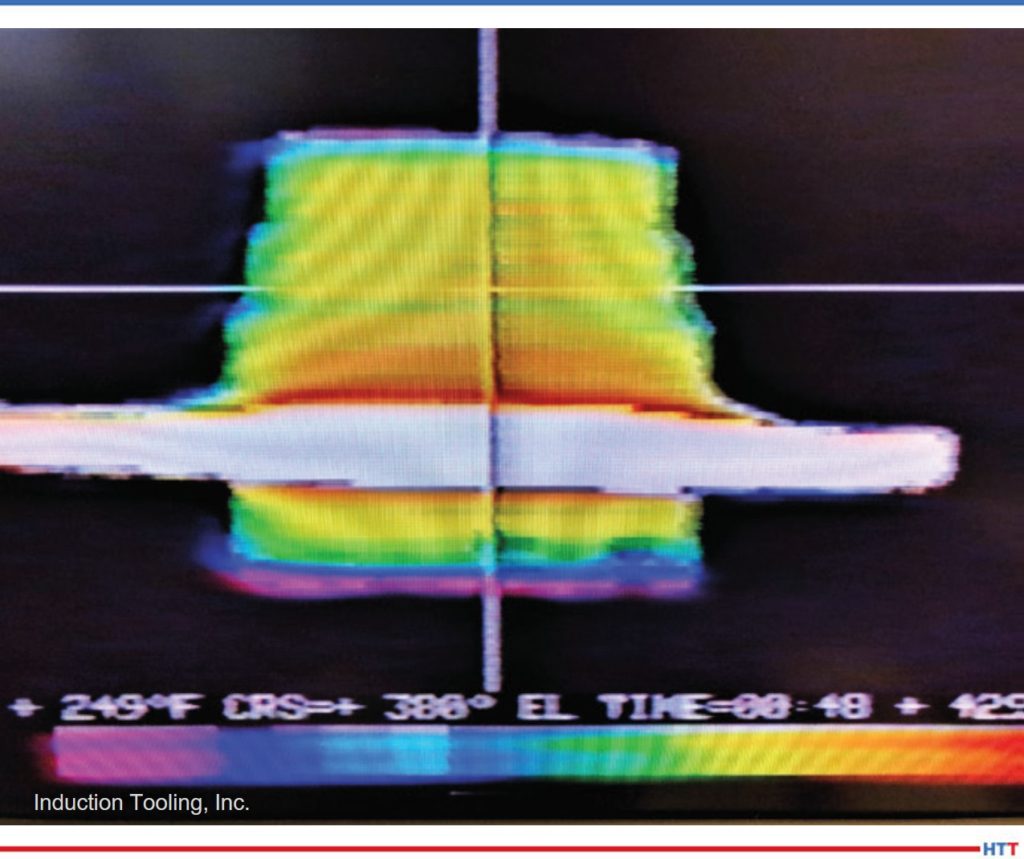
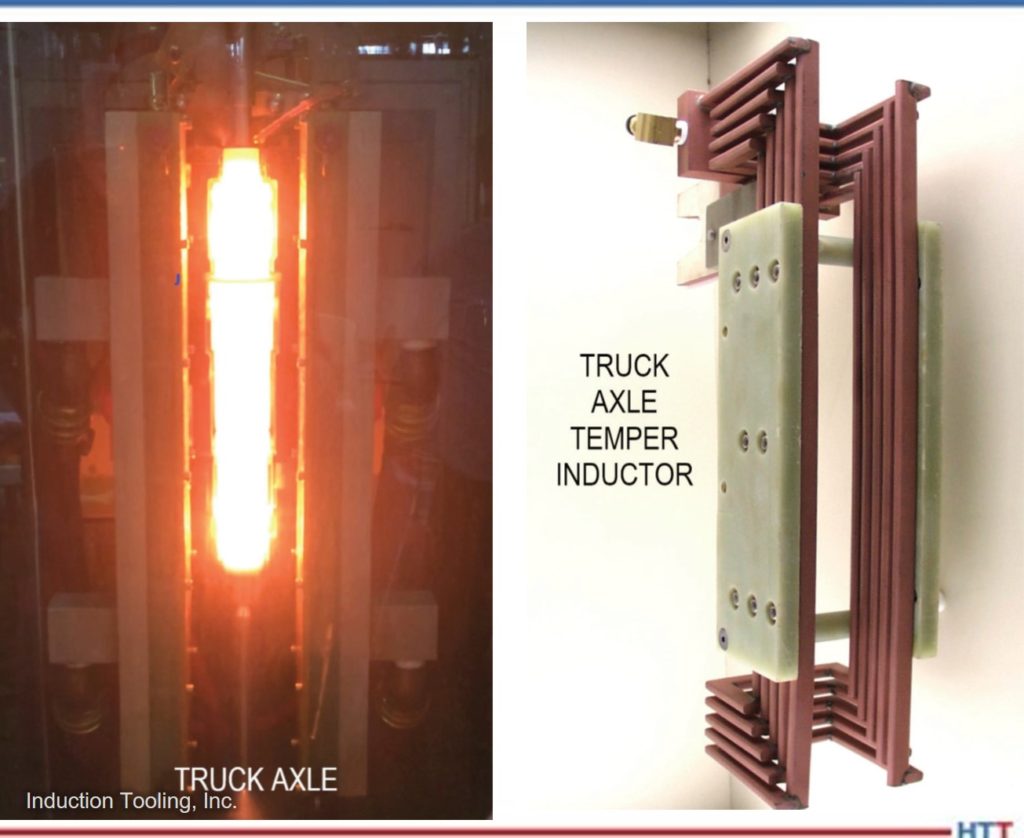
Figure 2. Thermal image of a wheel spindle Source: Induction Tooling, Inc.Figure 3. Truck axle and truck axle temper inductor Induction Tooling, Inc.
Induction hardening for the hub and spindle is quick – usually five seconds or less; induction tempering is a much longer heating process. Both parts required a low power soak until the optimum temperature was achieved. For the two wheel bearing components, tempering had to be accomplished either in a long channel-type inductor or several multi-turn inductors to keep pace with hardening. The long channel inductor was designed to hover over a conveyor belt. The belt would move the hardened hub or spindle at a slow, even pace allowing the precisely controlled induction energy to migrate throughout. Care was taken in the design and length of the channel inductor to assure temperature uniformity. Multi-turn inductors are circular solenoid designs that required the hub or spindle to lift and slowly rotate at three or four locations in order to complete the temper. As in hardening, the temper installation required its own induction power supply. Thermal imaging confirmed the results (Figure 2).
Truck axle shafts are another high production component that is induction hardened and tempered. Often the axle shafts are robotically loaded in a vertical or horizontal inductor. The shaft is rotated, heated, and then shuttled to a quench position. The loading robot then moves the hardened axle shaft to another inductor, usually within the same unit, specifically designed for the tempering process. A separate induction power supply controls the input energy. The temper time can be equal to the induction hardening time added to the quenching time. This will allow for the proper input of uniform induction temper energy (Figure 3).
Today, high production automotive driveline components are routinely induction tempered. Among the examples explained are CV joints, gears, and camshafts. Monitoring of the induction energy is different compared with furnace tempering. When heating parts with complex geometries, it is necessary to focus upon where the induction energy is concentrated. Heat conduction can be carefully monitored to confirm that an overheat condition does not occur at the target temper areas. Power input, soak time, and inductor characterization control these
fundamentals.
Induction tempering is sometimes attempted using the hardening inductor. For some very low volume parts, depending upon the part geometry and induction power supply frequency, the results may be acceptable. Careful power control and timing along with thermal imaging is needed to confirm the results. Again, since tempering takes longer, output will be much slower. Experience has demonstrated that a part specific tempering inductor coupled with a dedicated induction power supply works best.
About the Author: Bill Stuehr is the founder and president of Induction Tooling, Inc, a premier heat treat inductor design and build facility. The holder and partner of many induction application patents, Bill shares his expertise and generously donates his time and facility resources to mentor young students entering the heat treat industry.
By Michael J. Zaharof, Customer Information & Marketing Manager, Inductoheat
Michael J. Zaharof Customer Information & Marketing Manager Inductoheat
Induction tempering is the process of heating a previously hardened workpiece to reduce stress, increase toughness, improve ductility, and decrease brittleness. A medium-to-high carbon steel (i.e., 1045, 1050, 4140, 5160) heated above the upper critical temperature causes a high-stress shear-like transformation into very hard and brittle martensite. This untempered martensite is generally undesirable and too brittle for postprocessing operations such as machining and can pose a concern for poor performance in high fatigue applications. Therefore, tempering is needed to reduce internal stresses, increase durability, and reduce the possibility of cracking.
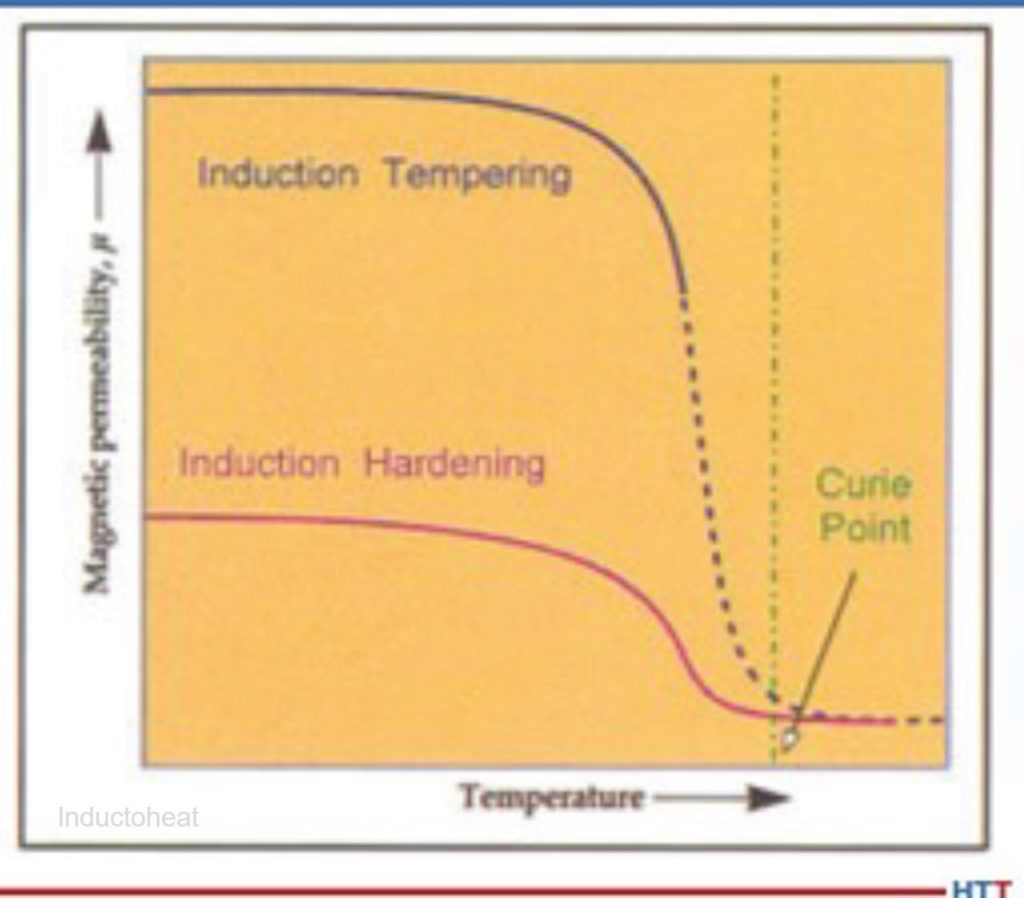
In most cases, induction tempering occurs in-line and directly after the induction heating, quenching, and cool-down operations. Traditionally, workpieces are moved to a tempering spindle or separate machine after hardening. Once moved, the part is then inductively heated and often force cooled to ambient temperature. The induction tempering process itself generates temperatures on the workpiece (typically) well below the curie point (248°F-1112°F/120°C-600°C – solid blue line in Figure 1). This phenomenon is referred to as “skin effect,” where the current density is highest at the surface of the material. Therefore, a lower inverter frequency is most desirable in order to increase the electrical reference depth.
However, while most cases reflect a secondary/separate station for induction tempering, this is not always the case. Recent advancements in power supply technology permit “real-time” frequency and power adjustments. These next-generation induction power supplies have brought tremendous flexibility into the market and have allowed induction hardening and tempering to occur at the same station, on the same induction coil. Using such a novel approach with induction heating often speeds up production while reducing the number of part movements. Induction tempering is a preferred method for many manufacturers as it offers several notable advantages. In production applications, it is viewed as a fast-tempering method, as the parts are heated quickly, cooled, then moved on to the next operation, reducing potential bottlenecks.
There is no need to collect the parts, place them into batches, and wait for long subsequent processes to finish before moving them down the production line.
Figure 1. The induction tempering process itself generates temperatures on the workpiece (typically) well below the curie point. Source: Inductoheat
Induction is a clean process and does not rely on combustible gases or chemicals that may be harmful to the environment. Additionally, it is also a very efficient process as induction power supplies are only powered on when needed compared to batch processing (like those requiring an oven). Ovens must be preheated prior to use and can often stand idle for long periods between batches, as the pre-heat/cooldown cycles can be lengthy. Induction heating equipment is also physically smaller in most cases and occupies much less real estate on the manufacturing floor.
Individual part traceability and data collection are possible when utilizing induction tempering. If paired with a quality monitoring system (QAS), data can be evaluated in real-time and compared to a known good “signature” for the part during the induction tempering process. This allows precise control of the process and the ability to reject parts that deviate outside of established metrics. It is also an effective tool for detecting process issues early when a variation occurs minimizing potential scrap and helping to prevent delivery of “bad” parts to the end customer.
Induction tempering offers many advantages over other methods of tempering and is an effective choice in many applications. Due to the benefits of speed, efficiency, repeatability, and environmental cleanliness, induction technology is widely accepted and is being used throughout many industries today.
References:
[1] “In-Line Tempering on Induction Heat Treating Equipment Relieves Stresses Advantageously,” by K. Weiss: Industrial Heating, Vol. 62, No. 12, December 1995, p. 37-39.
[2] “Induction Heat Treatment: Basic Principles, Computation, Coil Construction, and Design Considerations,” by V.I. Rudnev, R.L. Cook, D.L. Loveless, and M.R. Black: Steel Heat Treatment Handbook, G.E. Totten and M.A.H. Howes (Eds.), Marcel Dekker Inc., Monticello, N.Y., 1997, p. 765-871.
About the Author: Michael Zaharof is a customer information & marketing manager at Inductoheat in Madison Heights, Michigan. He has been with the company since 2011 and has worked in the sales application, digital media, outside sales, and engineering departments. Michael has a bachelor’s degree in computer science in information system security.
By Mike Grande, Vice President of Sales, Wisconsin Oven
Mike Grande Vice President of Sales Wisconsin Oven
Tempering (also known as “drawing”) is a process whereby a metal is heated to a specific temperature, then cooled slowly to improve its properties. It is commonly performed on ferrous alloys such as steel or cast iron after quench hardening. Quenching rapidly cools the metal, but leaves it brittle and lacking toughness, which is a desirable characteristic that represents a balance of hardness and ductility. After quenching, the material is tempered to reduce the hardness to the required level and to relieve internal stresses caused by the quenching process. The resulting hardness is dependent on the metallurgy of the steel and the time and temperature of the tempering process. Tempering is performed at a temperature between approximately 255°F (125°C) and 1292°F (700°C). In general, tempering at higher temperatures results in lower hardness and increased ductility. Tempering at lower temperatures provides a harder steel that is less ductile.
Draw batch ovens: the high-powered workhorses of the tempering process Wisconsin Oven
Tempering is performed in a convection oven using a high volume of air circulating through and around the load of steel being tempered. The air is heated in a plenum separated from the load, then delivered to the load at high velocity through distribution ductwork using a recirculation blower. Since the air is the medium used to carry the heat from the source (a gas burner or heating elements) to the load, it is important that the blower recirculates a high volume of air through the heating chamber. Further, since air becomes significantly less dense at higher temperatures, the recirculated air volume must be higher for ovens operating at higher temperatures in order to provide sufficient mass (pounds or kilograms) of air to transfer the heat from the source to the load.
For example, a typical batch tempering oven designed to process a 2,000 lb. load with dimensions of 4′ x 4′ x 4′ might have a recirculation rate of 10,000 cubic feet per minute (CFM). At this airflow volume, the oven recirculating system operates at 156 air changes per minute, which means all the air passes from the recirculating blower through the heating chamber 2.6 times per second. At a temperature of 1000°F (538°C), for example, the weight of the air being recirculated is 290 lbs. (132 kg) per minute, or 17,400 lbs. (7,909 kg) per hour. It is this high volume of air that provides good heat distribution to the load being processed and ensures tight temperature uniformity within the load during tempering.
The higher the mass of air being recirculated, the tighter the temperature uniformity will be. The temperature uniformity (±10°F or 6°C, for example) defines how much the temperature is allowed to vary within the load being tempered. If the oven operates too far outside of this tolerance, the parts may not be tempered uniformly, and the hardness might vary among different parts in the same load. It is important that the temperature uniformity of a tempering oven be verified (“certified” or “qualified”) by testing, and that this is repeated periodically, as well as after any changes or repairs are made that could affect the uniformity.
About the Author: Mike Grande is the vice president of Sales at Wisconsin Oven with a bachelor’s degree in mechanical engineering and over 30 years of experience in the heat processing industry. Over that time, he has been involved with convection and infrared technologies, and several industrial oven energy efficiency design advancements.
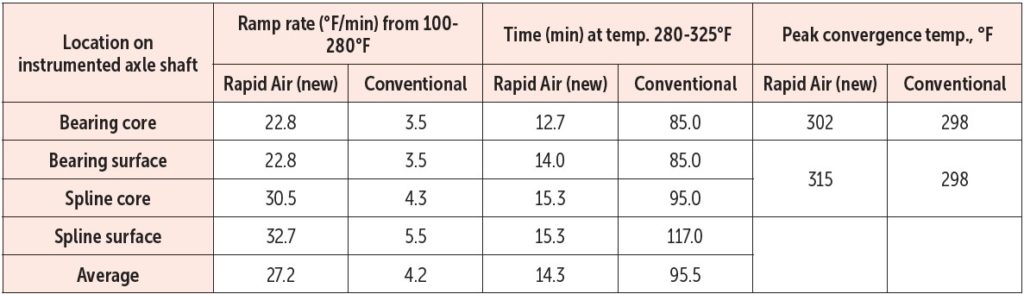
The next type of tempering we’d like to address is rapid air tempering. This process involves “any tempering technology taking advantage of rapid heating methods combined with shortened soak times at temperature based on those predicted by use of the Larsen-Miller calculator.”1 Here “rapid heating” is defined as “any heating method that accelerates conventional furnace heating.”2
Table 1.3 Thermal profile of conventional tempering and vertical rapid air furnaces
Rapid air tempering takes advantage of the use of a higher initial heating temperature (i.e., the use of a so-called heat head) to drive heat into the part more quickly. Additionally, rapid air tempering shortens soak time at temperature (from the more conventional furnace tempering times).
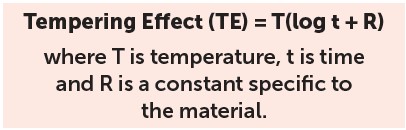
The Larson-Miller calculator is used in rapid air tempering to provide a comparison of hold times at various tempering temperatures and the results of tempering time change is assumed be the same (see example below); however, the interpretation of the data and results are left to the end user.
Larson-Miller Calculator
There are various reports describing the use of the Larson-Miller equation for assessing stress-relieving and tempering process conditions.4 “The relationship between time and temperature can be described as a logarithmic function in the form of the Larson-Miller equation, which shows that the thermal effect (TE) is dependent on the temperature and the logarithm of time:
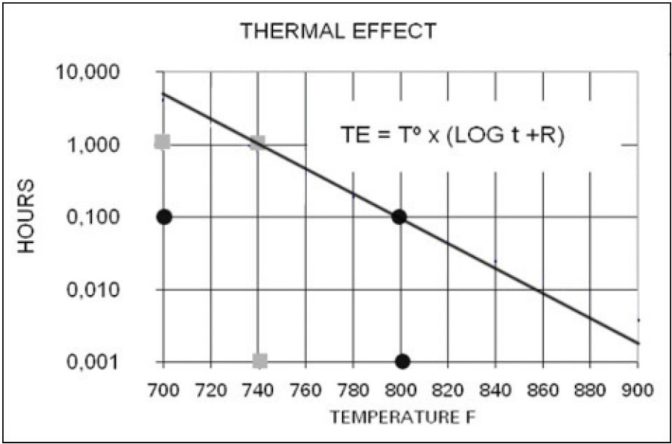
“This thermal effect is also interpreted as the tempering parameter. For example, a material that is required to be tempered at a temperature of 740°F for one hour has the same TE as a material treated at 800°F for 6 minutes (Fig. 1).”5
Figure 1.5 The “TE” is a logarithmic function of time
References:
[1] Roger Gingras, Mario Grenier, and G.E. Totten, “Rapid Stress Relief and Tempering,” Gear Solutions, May 2005, pg. 27-31.
[2] N. Fricker, K.F. Pomfret, and J.D. Waddington, Commun. 1072, Institution of Gas Engineering, 44th Annual Meeting, London, November 1978.
[3] Thomas Neumann and Kenneth Pickett, “Rapid Tempering of Automotive Axle Shafts,” Heat Treating Progress, March/April 2006, pg. 44.
[4] Lauralice C.F. Canale, Xin Yao, Jianfeng Gu, and George E. Totten, “A Historical Overview of Steel Tempering Parameters,” Int. J. Microstructure and Materials Properties, Vol. 3, Nos. 4/5, 2008, pg. 496.
[5] Roger Gingras and Mario Grenier, “Tempering Calculator,” in ASM Heat Treating Society, Heat Treating: Proceedings of the 23rd ASM Heat Treating Society Conference September 25-28, 2005, David L. Lawrence Convention Center, Pittsburgh, Pennsylvania, USA, Daniel Herring and Robert Hill, eds., Materials Park, Ohio: ASM International, 2006. pg. 147-152.
Find heat treating products and services when you search on Heat Treat Buyers Guide.com
















 A leading firearms manufacturer ordered a continuous conveyor furnace from a Wisconsin furnace supplier. The oven will be used for heat treating aluminum parts prior to quenching.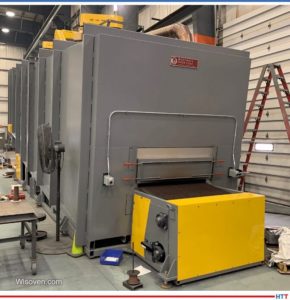










 Rapid Air Tempering