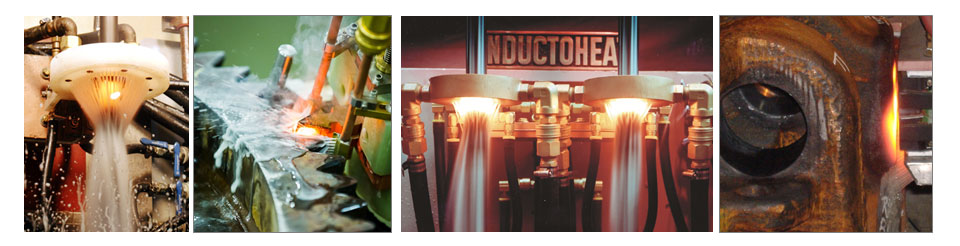
Heat treating plays a critical role in the making of a mold base, notes an Austrian manufacturer of standard parts for mould bases and die sets in a recent process profile in ETMM-online.
An excerpt:
"Heat-treat[ing] all steel plates for stress relief . . . at approximately 580°C [1076°F] for 24 hours . . . creates optimal conditions for low-deformation processing of parts. . . . With stress-relieving heat treatment, the tension in the material is minimized without changes to the microstructure or strength. This is a great advantage during subsequent machining. If there was still tension in the material, it would, for example, cause deformation during sawing or milling. During stress-relieving, it is important to heat the plates slowly and consistently and then maintain this temperature for six hours."
With the recent reopening of its drawing mill in Hallstahammar, Sweden, a leading supplier of industrial heating technology and resistance materials expects to meet an increased global demand for heating, resistance and thermocouple wire.
Nicklas Nilsson, president at Kanthal
Kanthal, which is part of the Sandvik Group, recently expanded its capacity by reopening its drawing mill, which includes a new production line designed in a flexible way to secure a sustainable and cost-effective wire drawing.
“We want to support our customers to grow and stay competitive. To be able to do this, we must ramp up our production of Kanthal® wire to secure short and reliable lead times,” said Christoffer Saarnio, global supply chain manager (shown above). “With the new production line, we will be able to meet increased demand for many years to come.”
“We have produced Kanthal wire in Hallstahammar since 1931, except for the past five years,” said Nicklas Nilsson, president at Kanthal. “It’s great to close the circle and once again see the drawing mill up and running.”
A North American extrusion and forging grade billet producer recently announced plans to proceed with new aluminum remelt facilities for billet and slab ingot casting and related processes and services. This will involve new facilities, increasing the company’s existing 1 billion pounds per year capacity by 75%.
With this approval from the Giampaolo Group Management Board, Matalco increases capacity by 350 million pounds in Lordstown, Ohio, 180 million pounds in Canton, Ohio, 225
million pounds in Bluffton, Indiana (previously Alexin LLC), and 250 million pounds in Brampton, Ontario.
Tom Horter, president of Matalco USA Operations Photo credit: Light Metal Age
Earlier in the year, Matalco acquired Alexin LLC.
The catalyst for these investments is in response to the needs voiced by customers in under-served market geographies, their requirements for increased product breadth, and processing services for the vast and growing automotive fflat-rolled aluminum product supply chain and the product feature needs of specialty alloy aluminum billet markets.
“We are an established leader in the remelt aluminum business. Matalco’s four existing aluminum plants have the broadest product offering and flexibility for providing closed loop, scrap-based billet, and slab ingot products,” said Tom Horter, president of Matalco USA Operations noted. “The proven capabilities of our people, assets, and technologies provide the nucleus and granularity for understanding market challenges and generating the solutions to meet the
future supply chain requirements of our customers.”
Horter added, “The recent integration of Alexin into Matalco has provided the right base for new employee training and innovative product and process development enabling speed to
market in these growing niche areas, bringing to life the exciting business possibilities to attain the Giampaolo Group’s medium and long-term objectives for our businesses.”
Matalco has not announced the number of plants that have been approved, nor their exact locations.
“Our team has been working with state and local economic representatives in the Upper Midwest states of Michigan, Illinois, Wisconsin, and Minnesota, and the southern states of Alabama, Tennessee, and Kentucky,” said Frank Mastrandrea, from the Giampaolo Group Management Board.
Induction heat treaters know that proper coil design is crucial to increasing longevity, improving production quality, and cutting costs. The authors of this paper on Coil Design Techniques (C. Yakey, V. Nemkov, R. Goldstein, J. Jackowski) draw on an extensive library of published case histories in induction coil design and performance evaluations and provide their own case study of an automotive CVJ stem hardening coil in order to demonstrate how the elimination of failure points and application of improved design guidelines can result in increased coil lifetimes, even in an inductor that in some circumstances can have a short lifetime.
An excerpt:
“The quality of an induction coil is a major determinant of the cost to produce induction heat treated components. Oftentimes, the difference between a well designed and manufactured inductor and a poor performing inductor is not readily apparent. However, a high-quality induction coil can lead to substantially lower component manufacturing costs and higher profitability for the induction heat treater.”
A refractory materials provider in Newark, New York, recently announced its acquisition of the assets of a refractory sales and service business, expanding its construction capabilities.
Dave Wetmore, URS president
With this acquisition of Hanyan-Higgins Company, Upstate Refractory Services Inc (URS) will continue to offer Plibrico refractory products across upstate, central, and western New York, in addition to providing uninterrupted service to Hanyan-Higgins customers. The purchase will also allow URS to expand into three new New York locations, including Syracuse, Albany, and Massena.
“We are delighted to have purchased the assets of Hanyan-Higgins Company,” said Dave Wetmore, URS president. “We’re proud to carry on their history of service and commitment provided to customers, and look forward to continued growth as a result of this purchase.”
Photo credit: Wayne County Industrial Development Agency
Heat treatment of stainless steels calls for striking the right balance between effective corrosion resistance and maintaining machinability and formability. An analysis of the types of stainless steels and the annealing process was recently published to examine how different alloys respond to various forms of heat treatment.
Adam Devine, CEO, co-founder, and head of R&D, Ranger Point Precision
A Texas-based manufacturer of custom-built, match-grade rifles and performance parts for rifles and pistols recently announced that superior vacuum heat treatment capabilities result in the expansion of its line of parts for Steyr Arms Inc. A-1 pistols.
Ranger Point Precision, based near Houston, Texas, reported that their advanced heat treating process and salt bath black nitride allows for the conversion of any 40 S&W pistols to a .357 Sig, delivering match-grade accuracy, increased durability, reduced chamber friction, and extended barrel life. The expanded line includes both standard and threaded options along with thread protectors and mini-comps for .357 Sig / 9mm calibers.
“We start with premium Douglas barrel blanks with precise rifling, then use minimum spec chamber reamers, and the most advanced methods for heat treating and salt bath black nitride to produce the best Steyr pistol barrel available on the market,” said Adam Devine, CEO, co-founder, and head of R&D, Ranger Point Precision.
Steyr .357 pistol barrels are vacuum heat treated to 42 HRC and salt bath black nitride coated, giving them a surface hardness above 80 HRC.
The Industrial Heating Equipment Association’s monthly economic executive summary reported very strong gains for both automotive and light truck sales as well as new home starts. Regarding new home starts, here is an extended quote for the 12-page monthly report available in full to IHEA members:
The news in the housing sector is very good right now and that is in the face of those headwinds that have been referenced all year. Thus far the consumer is shrugging out the higher price of homes as well as the bigger down payments and there has been buying at a variety of levels – from the starter home to the much more expensive “McMansion.” The fastest growing segment is still the multi-family home and there are still major shortages of this kind of abode. The recovery this month after a down period the month before is somewhat related to the weather, but not as much as would have been assumed this time of year. There is evidence that housing activity is surging in the jobs data as well – over 60,000 jobs added in construction this month. The majority of these are in the housing sector as there has not been a huge recovery in either commercial construction or in public sector activity.
The dozen indicators reported were split evenly between those that were up and those that were down. Significant is the fact that the PMI saw a slight dip but has been strong, in the mid-sixties, for quite some time, reaching a peak in December 2017 at 70.
Anyone interested in receiving a copy of the full report which includes statistics and analysis of the following indicators should contact Anne Goyer, Executive Director of IHEA. You can email Anne by clicking here.
Induction Hardening Tips: Equipment Selection for Scan Hardening, Part 2
This is the second installment of a multi-part column on equipment selection for induction heat treatment. Part 1, Dr. Valery Rudnev On . . . Induction Hardening Tips: Equipment Selection for Scan Hardening, covered types of scanners, scan hardening system setup, quenching challenges, maximizing process flexibility, and computer modeling. In this installment, Dr. Valery Rudnev discusses another critical aspect of induction scan hardening: inductor design subtleties and a comparison of different fabrication techniques (brazing vs. CNC
machining vs. 3D printing).
Introduction
Hardening inductors are often considered the weakest link in an induction hardening system because they may carry significant electrical power and operate in harsh environments exposed to high temperatures, water, and other coolants while being subjected to mechanical movement and potential sudden part contact.
Single-turn or multiturn inductors may be used in scan hardening (Figure 1). Copper profiling and the number of turns is determined by the workpiece geometry, required hardness pattern, and the ability to properly load match the coil to the power supply without reaching the operational limits or by other specific process requirements, such as the production rate or the hardness pattern runout/pattern cutoff. [1]
Figure 1: Single-turn or multiturn inductors may be used in scan hardening.
The longer (in case of horizontal arrangement) or the higher (vertical arrangement) the scan coil is, the faster the scan rate can be. This is due to the simple fact that the longer inductor leads to a longer period when the part will be inside the coil; therefore, the scan rate can be greater. However, limitations on the maximum length of the inductor’s heating face may be associated with the maximum permissible runout.
Hardness Pattern Runout Control
Single-turn inductors with narrow heating faces (3mm-6mm wide) are used where a sharp pattern runout is needed. An example of this would be the case where a pattern must end near a snap ring groove. Inductors with wider heating faces or two-turn coils can be used when a faster scan rate is desired and an extended runout is permitted. The main disadvantage to the excessively wide heating face is that it may result in an unspecified shift of coil current density when hardening complex geometric parts due to an electromagnetic proximity effect. [1]
Inductor Fabrication Techniques
In applications where high process repeatability is critical (including automotive, aerospace, defense and other industries), the great majority of scan hardening inductors are CNC machined from a solid copper block, thus making them rigid, durable, and repeatable. CAD/CAM/CNC software programs are created that provide appropriate cutter-to-copper spatial relationships, which produce inductors of the required shape and precision regardless of complexity. Figure 2 shows a variety of finished and semi-finished CNC-machined hardening inductors. [2]
Figure 2: finished and semi-finished CNC-machined hardening inductors
In other cases, copper tubing (square, rectangular, round, or die-formed shaped tubes) may be used for coil fabrication (Figure 3). Copper tubing is typically annealed to improve its ductility, bending properties, and workability. When sharp bends or complex coil shapes are required, inductor segments made from tubing are assembled by brazing. Joints are often overlapped, creating tongue-and-groove joints. Butt-joints should not be used.
Figure 3: Copper tubing (square, rectangular, round, or die-formed shaped tubes) may be used for coil fabrication.
A complex geometry inductor that contains numerous brazed joints, and elbow-type 90° joints in particular, could experience impeded water flow in the cooling coil turns, shortening coil life. Poor quality brazed joints are prime candidates for water leaks affecting not only the coil life expectancy but also a quality of hardened components due to a potential soft spotting in the areas of water leaks. Eliminating braze joints or dramatically reducing their number, particularly in current-carrying areas, is the key to fabricating durable, reliable, and long-last inductors.
Additive manufacturing (AM), or 3D printing, delivers successful fabrication of fixtures, tooling, holders, etc. Recently, some inductors have been fabricated using 3D printing as well. It is important to keep in mind that AM is not a single technology but it comprises a number of processes including direct metal laser sintering, electron beam melting, directed energy deposition, direct and indirect binder jetting, and others.
Depending upon a particular AM technique used in fabricating hardening inductors, it may face major challenges to match properties of pure copper. This includes (1) obtaining sufficiently high thermal conductivity (2) or low electrical resistivity, (3) ensuring high volumetric density, and (4) having minimum amount of residuals, just to name a few. All these factors affect coil life. Therefore, if you compare 3D printed inductors with brazed coils comprising numerous brazed joints, in the majority of cases, the life of 3D printed coils will surpass life of brazed inductors because of elimination of brazed joints in current-carrying regions. In addition, fabrication accuracy and repeatability of AM inductors typically surpasses the accuracy of brazed or bended coils.
The situation is different when comparing life of 3D printed coils vs. CNC machined inductors. Fabrication accuracy of both processes is very similar, however, in high-power density applications even small degradation of above discussed four factors associated with AM might become essential causing greater probability of stress-fatigue and stress-corrosion copper failure of 3D printed coils compared to CNC machined inductors fabricated from pure copper. Another factor to consider is repairability of 3D printed inductors. If you need to do a revision then it would be most likely required you to re-manufacture 3D printed coils. Regardless of a fabrication method and for quality assurance purposes, it is beneficial to apply computerized 3D metrology laser scanner technology (Figure 4) to verify coil dimensional accuracy and alignment precision after inductor fabrication and assembly.
Figure 4: It may be beneficial to apply computerized 3D metrology laser scanner technology to verify accuracy and alignment after inductor fabrication and assembly.
Material Selection
Copper and copper alloys are almost exclusively used to fabricate induction coils due to their reasonable cost, availability, and a unique combination of electrical, thermal, and mechanical properties. Proper selection of copper grade and its purity is crucial to minimize the deleterious effects of factors that contribute to premature coil failure including stress-corrosion and stress-fatigue cracking, galvanic corrosion, copper erosion, pitting, overheating, and work hardening. Cooling water pH also affects copper susceptibility to cracking.
Oxygen-free high-conductivity (OFHC) copper should be specified for most hardening inductors. In addition to superior electrical and thermal properties, OFHC copper dramatically reduces the risk of hydrogen embrittlement and developing localized “hot” and “cold” spots. The higher ductility of OFHC copper is also important because coil turns are subjected to flexing due to electromagnetic forces. The higher cost of OFHC copper is offset by improved life expectancy of hardening inductor.
For scan inductors that are intended to heat fillets, an appropriate copper heating face region must be focused into the fillet area. Coil copper profiling and the use of flux concentrators (flux intensifiers) are beneficial to focus the magnetic field into the fillet. These applications require careful design because the induced current has a tendency to take the shortest path and stay in the shaft area rather than flowing into the fillet [1]. Therefore, all efforts must be made to focus the heat generation into the fillet. Typically, higher frequencies work better for this purpose.
Copper Wall Thickness
It is important to maintain sufficient wall thickness to carry the electrical currents. The wall thickness of an inductor’s heating face should increase as frequency decreases. This fact is directly related to both the current penetration depth in the copper δCu. [1] It is highly desirable for the current-carrying copper wall thickness to be 1.6 times greater than the δCu calculated at maximum working temperature. Increased kilowatt losses in the copper, which are associated with reduced coil electrical efficiency and greater water-cooling requirements, will occur if the wall is thinner than 1.6∙δCu.
The table below shows the variation of δCu vs. frequency at room temperature (20°C/68°F).
In some cases, the copper wall thickness can be noticeably thicker than the recommended value of 1.6∙δCu. This is because it may be mechanically impractical to use a tubing wall thickness of, for example, 0.25 mm (0.01 in.).
I recommend Reference #1 to readers interested in further discussion on design of hardening inductors.
Dr. Valery Rudnev, FASM, is the Director of Science & Technology, Inductoheat Inc., and a co-author of Handbook of Induction Heating (2nd ed.), along with Don Loveless and Raymond L. Cook. The Handbook of Induction Heating, 2nd ed., is published by CRC Press. For more information click here.
A global provider of industrial furnace controls and process automation solutions announced a new collaboration with a leading industrial gas company that combines the core competencies of each company into a comprehensive offering for heat treatment customers. Praxair Inc is based in Danbury, Connecticut, and produces and distributes atmospheric, process, and specialty gases and high-performance surface coatings. Customers will have access to Praxair’s gases, application technologies, and supply systems, along with United Process Control Inc’s portfolio of specialized industrial flow measurement and atmosphere control products. This continues the long-standing relationship between Praxair and Atmosphere Engineering Company, now a member of UPC, based in West Chester, Ohio.
The combined capabilities of the two companies will bring more end-to-end technologies for a broad spectrum of batch and continuous heat-treating processes such as carburizing, carbonitriding, neutral hardening, annealing, gas quenching, and heat-treatment applications under vacuum processing.
“The automotive and aerospace industries continue to expand requirements for heat treating,” said Steve Mueller, Praxair’s Associate Director of Business Development for Metals and Materials Processing. “We have a team approach in place, combining Praxair’s process know-how and expertise in industrial gases with United Process Controls’ specialized products. Together we meet customers’ requirements for high-quality heat treating with reproducible standards in their furnace operations.”
“This strategic agreement with Praxair reflects our commitment to offer the heat-treating industry a complementary and evolving portfolio of innovative technologies that help drive process efficiency and reliability. We look forward to working closely with Praxair in the coming years, as we strive to further increase our presence in North America,” said Paul Oleszkiewicz, President, UPC.






 ofile in ETMM-online.