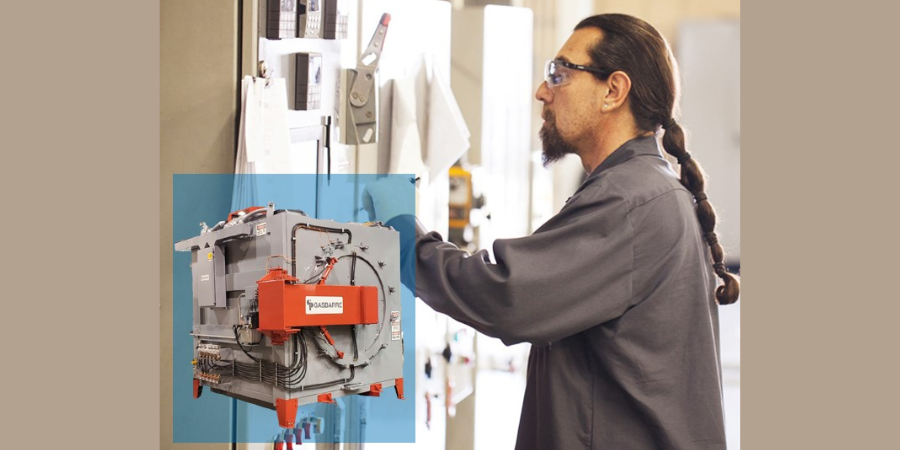
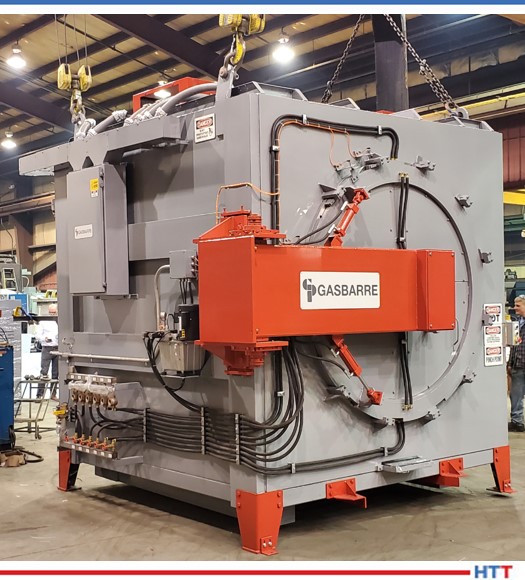
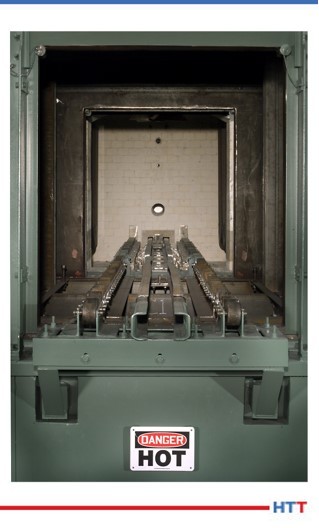
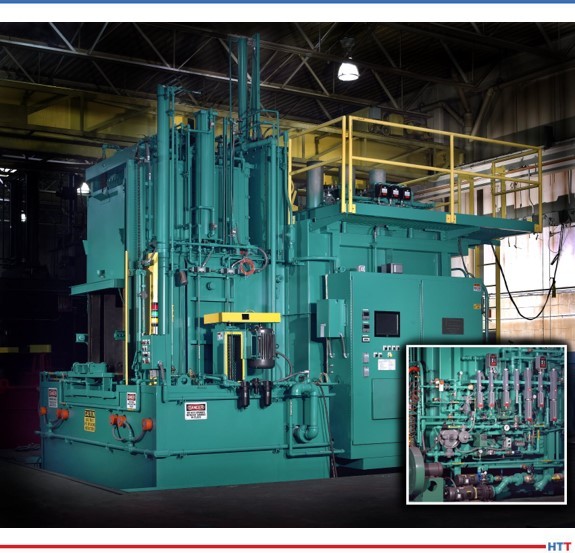
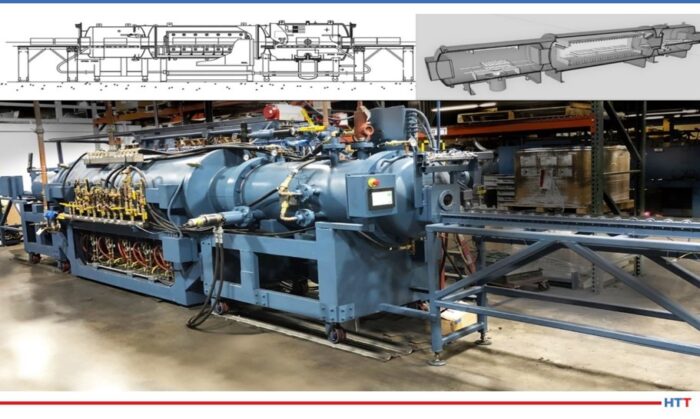
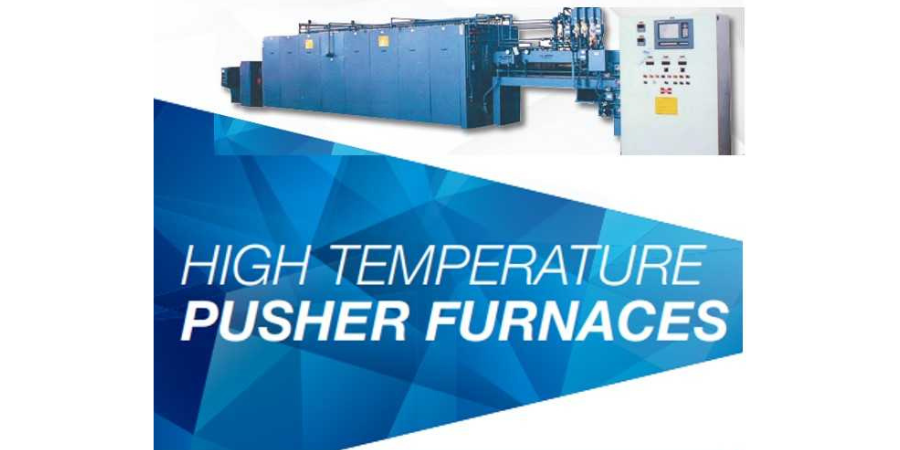
A specialty tungsten alloy products manufacturer in the eastern United States will receive a high temperature pusher furnace.
The furnace, from Gasbarre Thermal Processing Systems, is designed for high temperature sintering with operating temperature capabilities up to 2750°F (1510°C). The system is electrically heated using molybdenum elements and utilizes the latest in refractory materials for efficient operation.
The pusher system processes trays 8” wide x 12” long under 100% hydrogen atmosphere and includes an automated return conveyor for effective loading and unloading.
Gasbarre was selected as the equipment provider based on their knowledge of high temperature sintering and ability to service and support the client.
Gasbarre Furnace to Thermal Vacuum Services, Inc. Gasbarre
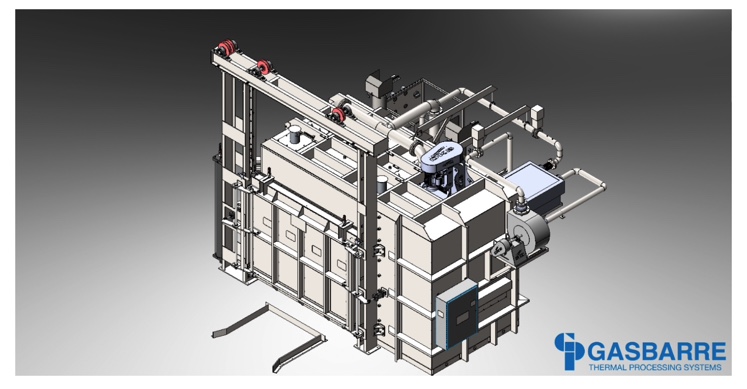
Thermal-Vac Technology will expand their capabilities with a precision nitriding and ferritic nitrocarburizing furnace at their facility in Orange, California. The furnace is capable of processing workloads that are 48” wide by 72” long by 40” high and weigh up to 7,000 pounds.
Gasbarre Thermal Processing Systems‘ electrically heated furnace utilizes Super Systems, Inc. controls for automatic KN and KC control to AMS 2759/10 & 2759/12 specifications. The furnace is designed to meet AMS 2750F as a Class 2 furnace, which allows it to be used to perform nitrogen tempering and stress relieving processes. For cycle time improvements and consistent process control, the furnace is equipped with a vacuum pump for purging processes, pre- and post-oxidation capabilities, and accelerated air and atmosphere cooling systems. The furnace also comes with an ammonia dissociator to achieve zero white layer processes.
Gasbarre engineered, manufactured, and serviced this system out of their United States locations. Thermal-Vac is set to receive the equipment in March of 2021.
Ben Gasbarre President, Industrial Furnace Systems Gasbarre Thermal Processing Systems
A 7,700 sq. ft. technical center for heat treat has opened in Livonia, Michigan. This technical center will expand heat treaters’ range of support in the Midwest, housing sales, engineering, and service personnel to their clients.
With locations in Pennsylvania, Rhode Island, and Michigan, the addition of the technical center completes another step in the process thatGasbarre Thermal Processing Systems announced a little over a year ago to position themselves to better support their clients and advance their product offering.
The company is currently in the process of installing both atmosphere and vacuum processing equipment in the technical center to support product development, client trials, and demonstrations.
“The opening of the technical center,” commented Ben Gasbarre, president of Industrial Furnace Systems at Gasbarre, “not only maintains our presence in the Midwest, but also allows us to have a convenient location for customers and vendors to meet with our experienced team. The furnace equipment being installed will give us the flexibility to process material in both atmosphere and vacuum environments. The technical center is a key addition for us to continue to position ourselves as a leader in the thermal processing market and provide solutions to our growing customer base.”
All images provided by Gasbarre Thermal Processing Systems.
Considerable investment is made when purchasing a batch integral quench (BIQ) furnace. These popular furnaces need specific care and maintenance to keep them in prime operating condition. In this informative article by Ben Gasbarre, president of Industrial Furnace Systems at Gasbarre Thermal Processing Systems, learn how you can protect your BIQ from avoidable downtime.
This original content article appears in Heat TreatToday’s Air and Atmosphere’s February 2021 magazine. When the print edition is distributed, the full magazine will be accessible here.
Ben Gasbarre President, Industrial Furnace Systems Gasbarre Thermal Processing Systems
The batch integral quench furnace, or sealed quench furnace, is one of the most popular pieces of equipment in the heat treating industry. The core benefit is its versatility as it can easily adjust to changes in load weight, configurations, and heat treating processes. This makes
it a highly efficient and profitable piece of equipment for both captive and commercial heat treaters.
With all the good that is done in these furnaces, the downside comes in the maintenance of the equipment. By nature, these furnaces are hot, dirty, and have many moving parts, including multiple doors, load handlers, elevators, fans, quench agitators, and pumping systems; this furnace has it all! Although there are many areas of an integral quench furnace, understanding the subassemblies and having a good maintenance program can ensure the equipment operates safely and maintains its highest level of performance year after year.
Maintenance Safety
The discussion on maintenance of any piece of equipment begins and ends with safety. Prior to any work being done on the equipment, safety measures need to be considered based on the work being performed. Certain maintenance activities must be completed while the equipment is in operation; in these cases, proper personal protective equipment must be considered for work being done around hot surfaces, high voltages, elevated work, and potentially hazardous gases. If work is necessary while the equipment is offline, additional safety procedures must be followed, including lockout/tagout of all major power sources, special atmospheres, and natural gas supplies to the furnace.
Integral quench furnaces are considered confined spaces. Prior to entry into the quench vestibule, furnace chamber, and even quench pit, confined space procedures must be followed; hard stops must be in place for doors and elevators. Technicians need to ensure proper oxygen levels and air circulation prior to entry. The buddy system is always recommended when someone is entering the furnace. Prior to returning the furnace to operation, it is important to ensure all necessary safety and maintenance equipment has been removed, all supply lines are receiving designed gas pressures, and proper startup procedures are followed.
For furnace safety during shut down periods, it is wise to review furnace interlock systems and safeties to ensure proper operation. This includes items such as high-limit controllers, solenoid valves, burn off pilots, and other components critical to emergency situations. Additionally, per NFPA 86 requirements, valves and piping should be leak-checked periodically.
Reporting and Metrics for Optimum Performance
Image Source: Gasbarre Thermal Processing Systems
While Industry 4.0 is a popular concept in today’s manufacturing environment, the basic concepts behind the technology are what is important to any good maintenance plan. First, having an asset management system that enables engineers, operations, and maintenance personnel to access maintenance records is critical to ensure they can troubleshoot issues and perform maintenance activities more efficiently. Asset management tools are readily available and can range from well-established cloud-based software systems to simple Excel spreadsheet records. Ensuring important information, such as alloy replacements, burner tuning, or control calibration information, can help operations and maintenance personnel as they plan and assess future equipment needs.
The second concept is preventive or predictive maintenance plans. While these are not interchangeable concepts, the goal of implementing either is to reduce the likelihood of significant unplanned downtime, which can be costly to an organization. Preventive maintenance is a schedule of planned maintenance activities on a piece of equipment using best practices that give the best chance to catch a problem before it arises.
Predictive maintenance uses data and analytics from equipment operations that can be used to predict when problems are likely to occur. There are considerations for either approach, and the evaluation criteria for preventive versus predictive maintenance plans could be an article in and of itself.
Integral Quench Furnace Maintenance
As stated previously, breaking the furnace down into a series of subassemblies is the easiest way to develop an overall maintenance plan for equipment that has many sections and components. Discussed items will include mechanical assemblies, the heating system, the filtration system, atmosphere controls, temperature controls, and furnace seals. Each has its own importance to ensuring reliable equipment performance.
Mechanical Assemblies
Typical load transfer system alignment.
The mechanical system includes the load transfer system, recirculation fans, quench agitators, door assemblies, and elevator system. There are many exterior items that can cause abnormal equipment operation, including position sensors, rotary cam switches or encoders, and proximity switches, that if not operating properly can interrupt or cause failure within the furnace. Position settings should be logged for future reference, and sensors should be inspected regularly. Belts that may be used on recirculation fans and quench agitators should be inspected regularly for damage and excessive wear. Vibration of these items should be monitored as excess vibration can be an indication of damage or wear to the fan or agitator bearings, shaft, or blades.
The largest item of concern in this system is the alignment of the load transfer system. Unsuccessful load transfer due to misalignment or obstruction can cause significant furnace damage and create unsafe conditions within the furnace. Internal alloy components should be evaluated for integrity and alignment every six to twelve months. Elevator alignment should be reviewed to ensure smooth operation during the same period. Frequent visual inspection through sight glasses, quench time monitoring, and motor load data can give valuable information of future potential transfer issues within the furnace.
Heating Systems
Whether your furnace is gas or electrically heated, well-maintained systems can have significant impact on the operating efficiency of a furnace. For gas-heated systems, proper burner tuning and combustion blower filter cleaning can ensure optimum gas usage and can also improve radiant tube life. Burners, pilots, and flame curtains should be cleaned at least once or twice a year to ensure proper performance.
Electrically heated systems typically require less general maintenance and have fewer components that are susceptible to failure. Regular checks of heating element connections and electrical current resistance can help to identify upcoming element failure.
The largest and most critical components of reliable process performance are the radiant tubes. A crack or leak in a radiant tube can cause part quality issues. Changes in your furnace atmosphere gas consumption or troubles from controlling carbon potential can be signs of tube leaks. If the radiant tube failure is unexpected, it can also cause significant downtime if replacement tubes are not available. Cycle logs and run hour timers are the best metrics for preventive or predictive maintenance on radiant tubes.
Filtration Systems
Filtration systems are recommended for most integral quench applications. They help to eliminate build up and contamination in the oil recirculation system that flows through the heat exchanger and top/atmosphere cooler on the furnace quench vestibule. Filtration systems typically are comprised of a pump, dual filters, and an alarm system to alert users when it is time to change filters. Maintenance on your quench oil can vary by composition. Quarterly analysis of the quench oil performance is common. However, it is recommended to consult with your quench oil supplier to ensure safe and effective performance.
Atmosphere Controls
Integral quench furnace atmosphere systems can vary both by manufacturer and in overall gas composition. The most common being endothermic gas, nitrogen/methanol, along with options for ammonia or other process gases. Although these items may vary, maintenance remains consistent. Users need to ensure the integrity of the piping system including regulators, solenoid valves, and safety switches.
Endothermic gas lines should be cleaned out at least once or twice a year. Many furnace atmosphere problems can be traced back to endothermic gas generator issues, so it is important to have a well-maintained atmosphere generator to ensure peak performance in your integral quench furnace.
Typical integral quench furnace atmosphere system.
Recent technology allows for automatic burn-off of carbon probes and automated atmosphere sampling. However, probes should be burned off once per week if they are manual. Probes will require calibration and periodic replacement, and they can be rebuilt to like-new specifications. Controllers or gas analyzers that support carbon potential control should be calibrated quarterly, biannually, or annually depending on heat treat specification requirements.
Updates in the automotive CQI-9 specification will require calibration of all atmosphere flowmeters on a periodic basis. Users will need to be aware of this requirement and understand how their gas flowmeters should be calibrated. In some cases, control upgrades may be required.
Temperature Controls
Temperature control maintenance typically follows AMS2750 or CQI-9 specifications. This would relate to thermocouple replacement, system accuracy test procedures, and controller calibrations. Depending on the age of the equipment and specification requirement, these items may need to be done as frequently as once per quarter or annually.
Temperature uniformity surveys (TUS) follow similar specifications for frequency. However, a TUS can diagnose areas of the furnace that may need maintenance attention. Having a baseline TUS to reference will help identify changes in furnace performance. Changes to a TUS can indicate burner or element tuning requirements, an inner door leak, refractory damage, fan wear, or radiant tube failure.
Furnace Seals
Integral quench furnace seals can be a source of heartache for any maintenance technicians working to troubleshoot a furnace. Typical seal areas include the inner door cylinder rod, elevator cylinder rods, inner door seal against furnace refractory, outer door seal against quench vestibule, fan shaft(s), and an elevator seal if there is a top atmosphere cooler.
Typical sealing of cylinder shafts are glands comprised of refractory rope and grease. Greasing of these areas should be completed weekly. Outer door and elevator seals are typically fiber rope and may have adjustment built in as they wear, but ultimately will need to be replaced. Frequent inspection of these areas will help identify early issues. Using a flame wand or gas sniffer can help find leaks in unwanted locations. Small furnace leaks can cause part quality issues, and larger leaks can also create safety concerns within the furnace.
Additional Maintenance Items
Other key maintenance items include a bi-monthly or monthly burn out of the furnace heating chamber. This requires the furnace to have air safely injected into the chamber at or slightly above process temperature to allow the carbon to burn out of the furnace. Doing this process on a regular basis will help improve refractory and alloy component life as well as helping to maintain good process control.
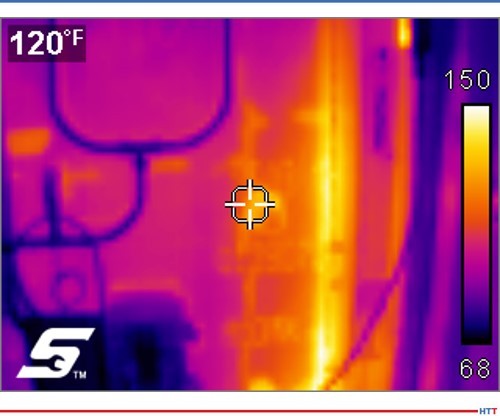
Example thermal camera image
Another helpful snapshot of furnace health is using a thermal camera to take images of the equipment. It is recommended to do this on a monthly or quarterly basis. Thermal camera images can identify hot spots on the furnace outer steel shell that may indicate refractory deterioration or a furnace atmosphere leak. Thermal images can also identify potential issues with motors or bearings on fans and agitator assemblies.
Conclusion
In the end, all furnaces have different nuances that require different maintenance approaches. This could be based on the manufacturer, types of processes being run, or utilization of the equipment. By consulting with your original equipment manufacturer or other furnace service providers, a strong maintenance plan can be developed and implemented. This can include support and training from experienced professionals on that style of furnace. Broader cost benefit analysis should be done as it relates to spare part inventories, resource allocations, frequency of preventive maintenance activities, or investments into predictive maintenance and asset management technologies and how those activities can maximize utilization of each piece of equipment.
About the Author: Ben Gasbarre is president of Gasbarre’s Industrial Furnace Systems division. Ben has been involved in the sales, engineering, and manufacturing of thermal processing equipment for 13 years. Gasbarre provides thermal processing equipment solutions for both atmosphere and vacuum furnace applications, as well as associated auxiliary equipment, and aftermarket parts and service.
All images provided by Gasbarre Thermal Processing Systems.
Heat TreatTodayoffers News Chatter, a feature highlighting representative moves, transactions, and kudos from around the industry.
Equipment Chatter
TAV VACUUM FURNACES SPA sold two horizontal all metal high vacuum heat treatment furnaces to a well-known Chinese heat treater working in the manufacturing industry.
Honeywell announced that Global Control Pte Ltd, a global heating system original equipment manufacturer (OEM), is incorporating Honeywell technologies, including the ControlEdge™ HC900 controller, into its heat treatment solutions to help its customers improve their asset performance, reduce their inventory and lifecycle costs, and save energy.
Grieve Corp. announces 1250°F (667°C) inert atmosphere oven currently used for heat treating firearms components at a customer’s facility.
Tenova, a company specializing in innovative solutions for the metals and mining industries, started up the most productive Electric Arc Furnace in history, a Tenova Consteel® EAF, at Acciaieria Arvedi, Cremona (Italy) on September 17 this year.
ECM Technologies announces the release of a new furnace system which will replace current sealed quench (SQ) or integral quench (IQ) style furnaces.
Hubbard-Hall has completed the first phase of a three-year Digital Initiative Strategy. This phase focuses on creating a more engaging user experience, with use of Web Chat and On-Demand Portal technologies.
Gasbarre Thermal Processing Systems is pleased to announce the recent commissioning of a Vacuum Oil Quench Furnace, which included 2 BAR gas quench capabilities to an international manufacturer.
Kanthal is adding a 60 kW heater to its range of flow heaters to meet demands for higher power in industries like aluminum and glass.
Grieve Corp. Inert Atmosphere Oven
Tenova Consteel® EAF at Acciaieria Arvedi, Cremona (Italy)
ECM Technologies announces new furnace
Gasbarre’s Vacuum Oil Quench Furnace
Personnel Chatter
Hubbard-Hall Inc. welcomes Joshua McClellan as application engineer-cleaning and Becky Cavazuti as customer engagement key accounts manager. These roles are critical in expanding Hubbard-Hall’s services in metal finishing operations and achieving customer’s goals with less cost, complexity, and chemical consumption.
Group picture with Joshua and Becky from Hubbard-Hall.
Hubbard-Hall Inc. welcomes Fernando Carminholi as Business Development Manager.
Wire Experts Group, the parent company to Pelican Wire of Naples, Florida and Rubadue Wire of Loveland, Colorado has named Trent Dunn as the new WEG Marketing Manager, with overall responsibility for the marketing departments of all business units, including the parent organization.
The Heat Treating Society of ASM International welcomes to the board Steven Ferdon, director engineering technology, Cummins Incorporated. Chuck Faulkner, commercial development manager-heat treatment, Quaker Houghton, and Marc Glasser, director of metallurgical services, Rolled Alloys, were reappointed for a second three-year term.
Fernando Carminholi Business Development Manager Hubbard-Hall, Inc.
Trent Dunn Wire Experts Group Manager Marketing Manager
Marc Glasser serves at Heat Treating Society of ASM International
Company Chatter
Brian Fitzpatrick, District 1 US Congressman, Bucks County, Pa., at the Solar Manufacturing plant.
Custom Electric Manufacturing was acquired by Sweden-based Kanthal in 2018 and will now go to market under the Kanthal brand. The transition will be effective as of January 1, 2021. View a video with Jon Hartmayer and Victor Strauss about the brand transition.
Brian Fitzpatrick, District 1 US Congressman, Bucks County, PA., toured the Solar Manufacturing plant in Sellersville, PA.
Advanced Heat Treat Corp. (AHT), a recognized leader in heat treat services and metallurgical solutions, announced a new logo for their UltraOx® heat treatment today. The new logo features an ox as the term ‘ox’ is often used as an abbreviation of the term ‘oxide’ – one of the three steps of this protective heat treatment.
Jon Hartmayer Sales Area Manager NAFTA Kanthal
Victor Strauss Vice President and Director of Operations CEM
Kudos Chatter
Lindsey Newcomb, Marketing Manager at Advanced Heat Treat Corp. (AHT), was recently selected for a “2020 20 under 40 list,” furthering the understanding/awareness of heat treat among the general public.
In August, 2020, Solar Atmospheres of Western Pennsylvania (SAWPA) participated in a Boeing Supplier Assessment. The on-site, preventative engagement resulted in zero findings and Solar, once again, achieving preferred status for Heat Treating, Hardness, and Non-Destructive Liquid Penetrant Testing.
Advanced Heat Treat Corp. recognized in the 2020 Courier Employers of Choice. These honorees demonstrate the diversity of career options in and continued commitment to healthy communities in Cedar Valley, IA.
Solar Atmospheres of Western Pennsylvania (SAWPA) recognized from the Boeing Supplier Assessment
Heat TreatToday is pleased to join in the announcements of growth and achievement throughout the industry by highlighting them here on our News Chatter page. Please send any information you feel may be of interest to manufacturers with in-house heat treat departments especially in the aerospace, automotive, medical, and energy sectors to editor@heattreattoday.com.
A North American based aerospace manufacturer will receive a continuous vacuum (CV) furnace with 10 bar pressure quench capabilities. The 4 position, 4 zone furnace is rated to 2400°F, and will work well in processing medium to high volume parts.
The supplier, Gasbarre Thermal Processing, shares that the independent load and quench modules allow the heat module to hold temperature and vacuum, creating a pure environment. The extended heating element coverage is conducive for thorough temperature uniformity, and then only the workload is cooled in the isolated cooling chamber. Quick transference from the heat module to the cool module as well as fast quench capabilities will aid processing of medium to high volume parts.
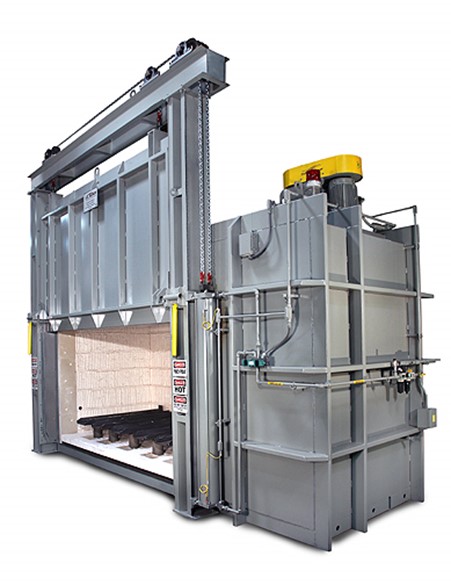
A manufacturer in the aerospace market with captive heat treating capabilities received a custom built atmosphere tempering furnace. With a working load size of 84” wide, 42” deep, and 60” tall, coupled with a max load weight of 6,000 pounds, the furnace is specifically designed for the customers' key manufactured components.
The electrically heated furnace, shipped by Gasbarre Thermal Processing Systems, has an operating temperature range of 350℉ to 1600℉, and passes uniformity at +/- 10℉ per AMS2750E. The system is equipped with custom controls, including Eurotherm brand temperature controlling instrumentation and an Allen-Bradley PLC and HMI.
Automatic atmosphere control is included for running under nitrogen, argon, and/or a hydrogen blend. Custom designed atmosphere cooling systems are installed to reduce overall cycle time. The equipment configuration also enabled the customer to switch from pit furnace style processing, which eliminated infrastructure costs and maintenance concerns.
A commercial heat treating company located in the heart of the aerospace industry on the West Coast of the United States recently commissioned a custom built batch tempering furnace. With a working load size of 168” wide, 48” deep, and 48” tall, coupled with a max load weight of 10,000 pounds, the furnace from Gasbarre Thermal Processing Systems can accommodate a number of differently sized parts within its market.
The gas fired air furnace passes survey at +/- 10℉ over a temperature range of 850℉ to 1350℉ per AMS2750E. At the customer’s request, the electrical controls are UL approved and include the latest in Eurotherm brand temperature controlling instrumentation.
Heat Treat Today is privileged to oversee the 40 Under 40 recognition awards highlighting a group of young, up-and-coming talent in the North American heat treat industry every year. This year’s Class of 2019 is no disappointment–a group of industry elite, significant contributors to the heat treat market.
Every couple of weeks we highlight two of the current class of recipients. This week we introduce Uwe Rahn of Rubig USA and Mike Harrison of Gasbarre Thermal Processing Systems.
Name: Uwe Rahn
Company: Rubig USA
Position: Area Sales Manager for US and Canada
Uwe has been in the heat treat world for his whole career, starting in Austria and continuing when he moved to the U.S. on a business visa. In the States, he learned the language and continued to become an expert in nitriding. He currently leads the U.S. team selling and servicing gas and plasma nitriders as well as plasma coating systems.
Nominated by: Mountain Rep
Name: Mike Harrison
Company: Gasbarre Thermal Processing Systems
Position: Metallurgist, General Manager, Engineering Manager
From starting as a metallurgist with a large tier 1 supplier, to running a commercial heat treat plant with a large commercial heat treater, Mike has developed a wide range of experience in the heat treating industry. He is now on the OEM side making a difference in equipment design for our customers. During Mike’s past employment he has helped implement a global ERP system across multiple facilities in multiple countries and has led the charge in launching a brownfield facility, changing it over as a facility for conventional heat treating processes to highly technical precision nitriding processes. Within the company, Mike has standardized capital quoting processes for higher accuracy and efficiency and is now doing the same for the engineering department. Instrumental in the development of Gasbarre’s precision nitriding equipment, he is able to ensure the end user’s daily interaction with the equipment is accounted for in the design. Mike completed his MBA from Walsh College in 2017 and the MTI YES program in 2019; he presented on “Furnaces for Gas Nitriding and Nitrocarburizing” at the 2018 FNA show.
Nominated by: Gasbarre Thermal Processing Systems
Read more about the feature at Heat Treat Today’s 40 Under 40 resource page and find out more about each of this year’s winners by clicking on their image. To nominate someone for the Class of 2020 40 Under 40, please click here.
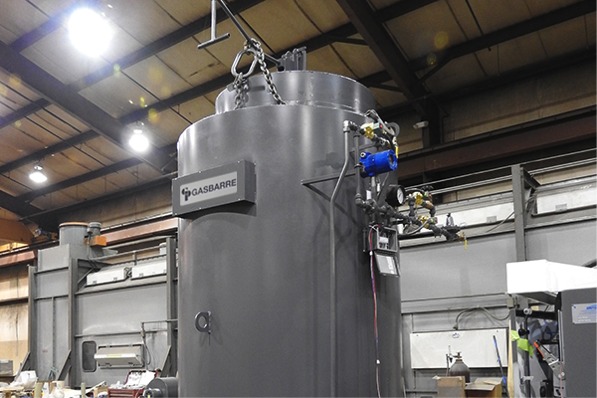
Three batch steam treaters were recently shipped to the medical and automotive industries. Gasbarre Thermal Processing Systems recently received three separate orders for batch steam treating equipment. The batch steam treaters produce an oxide layer that promotes corrosion and wear resistance properties and provides an attractive surface finish. The three unique orders range in size from 18” to 30” in diameter and 12” to 48” deep. The gross load weight capacity ranges from 300lbs to 1800lbs with Gasbarre supplying the production tooling. The equipment is electrically heated and has a maximum operating temperature rating of 1400℉.
Steam treating processes are used in many different industries. As such, these orders will be shipped to companies that provide products to the medical, additive manufacturing, automotive and consumer products industries.
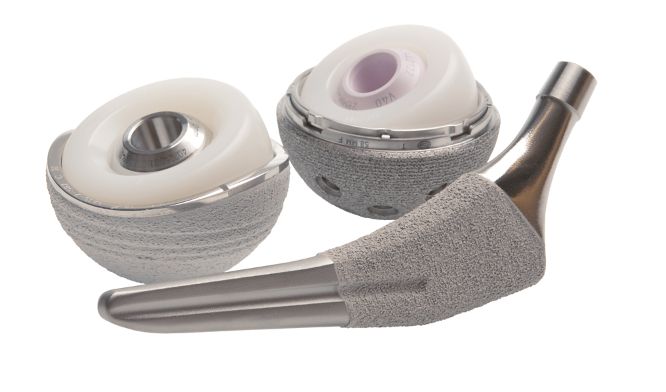
Stryker Hero JR Hip Replacement Source: Stryker.com




 A specialty tungsten alloy products manufacturer in the eastern United States will receive a high temperature pusher furnace.