Recently, the first ever Heat Treat Boot Camp took place in Pittsburgh, Pennsylvania from October 31 to November 2. Heat treat participants networked, learned, and attended tours during the intensive, two-day training.
Instructors were Doug Glenn, publisher and founder of Heat Treat Today, and Thomas Wingens, president/CEO and founder of WINGENS International Industry Consultancy. Several of the sessions were "Heat Treat Processes & Materials," "Heat Treat Products", "End-User Products", and "Latest Heat Treat Developments." Questions and discussion were encouraged during the formal sessions, and heat treaters had plenty of informal, additional learning time through interactions with each other and the instructors.
Doug Glenn presents information about industry players and the main markets. Source: Heat Treat Today
Thomas Wingens presented on heat treat processes and other technical topics. Source: Heat Treat Today
"Personally, I really enjoyed interacting with the participants," commented Glenn. "We had an excellent cross-section of the industry represented from captive heat treaters to commercial heat treaters to industry suppliers. The interaction between individual participants was also excellent and perhaps one of the greatest benefits of attending."
Attendees visited the Duquesne Incline on Mount Washington at the end of the first day of lectures to enjoy the view of Pittsburgh (see main article image above). At the end of the training, attendees had the option to visit the Solar Atmospheres of Western PA heat treat plant, getting the chance to see the processes, parts, and markets that had been discussed during lectures.
Group Tour Solar Atmospheres of Western PA Source: Solar Atmospheres
Heat Treat Today thanks everyone for their participation in the first-time Heat Treat Boot Camp. Plans are underway for Heat Treat Boot Camp2023. Stay tuned for registration information; see you next year!
Find heat treating products and services when you search on Heat Treat Buyers Guide.com
Heat Treat Today publishes eight print magazines a year and included in each is a letter from the publisher, Doug Glenn. This letter first appeared in Heat Treat Today's November 2022 Vacuum Heat Treat Systems print edition.
Doug Glenn Publisher and Founder Heat TreatToday
Immediate credit for the content of this column goes to Mark Mills, author of The Cloud Revolution: How the Convergence of New Technologies Will Unleash the Next Economic Boom and a Roaring 2020s, and podcast host of The Last Optimist, the source for most of the below content — see episode #20, “Congress & the ‘Groundbreaking’ Energy Spending Act: Top 10 Truths to Keep in Mind.”
Contact us with your Reader Feedback!
Heat TreatToday interviewed Mr. Mills not long ago. If you’d like to listen to, watch, or read that interview, go to our website and search for “Mark Mills” or Bing/Google search for “Heat TreatRadio #73 Mark Mills.”
Here are some interesting thoughts from The Last Optimist podcast, episode #20.
Energy transformations are slow. In the last 20 years, the Western world has spent over $5 trillion to avoid using hydrocarbons, but reduced the percentage share by only 2%, from 86% to 84%. Remarkably, the burning of wood, today, provides 500% more energy to the world than all the world’s solar panels combined. Burning wood will most likely not change in the near future; in fact, more wood is burned today than 20 years ago.
Economic growth always produces more demand for energy. Wealthy economies use 500–5,000% more energy per capita than poor economies. Ironically, wealthy economies use energy more efficiently than poor economies but consume vastly more. Implication: the wealthier we become the MORE energy we will consume.
The shale revolution (mostly happening in America) is the world’s biggest energy revolution. From 2005-2020, the amount of energy provided from shale was TWICE the amount of energy produced from wind and solar arrays combined. This is the largest increase in energy supply in the history of the world, anytime, anywhere. The next closest “revolution” was the Saudi oil fields, but the shale fields have produced nearly DOUBLE the amount of energy.
Green energy is NOT carbon free. According to a study done by Volkswagen, the first 60,000 to 70,000 miles of driving a diesel-powered Volkswagen emits less CO2 than driving an electric vehicle. Its only AFTER that many miles that the vehicle is a net saver of CO2.
Energy tech cannot emulate the digital tech performance curve. The exceptionally high reductions in cost of computers and other digital technologies have been unprecedented in world history. Unfortunately, those who claim that green energy developments will see the same drastic reduction in costs are misled and ignore, at their own peril, the physics of energy conversion and transmission. That’s not to say there won’t be significant improvements in energy technology – in fact, there have already been and will continue to be vast improvements, but not to the scale of information/digital technology.
The energy transition hardware radically increases the demand for physical minerals and thus mining. The need for green energy minerals, the materials needed to build green energy materials like solar panels, electric vehicles, and wind farms, is 1,000% higher than building similar hydrocarbon-based hardware. In other words, the push for green energy will require a drastic increase in the need for minerals, requiring mining, which is currently a carbon intensive .
Energy transition policies — as currently presented — will cause prices to rise. This point ties in directly to point #6. If you increase the demand for materials, such as copper, cobalt, nickel, silicon, aluminum, and lithium, the price of these materials will increase precipitously and will therefore impact the price of all goods that use those materials. The energy sector is a minor user of these materials now, but if demand increase hundredfold, the energy sector will become a major user and will invariably push prices northward.
Scan QR code to listen to The Last Optimist podcast.
Green energy isn’t cheap. Every country who has thus far embraced, even in part, some sort of green energy has experienced a 200%–500% increase in consumer energy costs.
China is the OPEC of green energy minerals. It’s not so much that the mining of these minerals and rare-earth materials is done in China (some is but not all), but a huge majority of these minerals are refined in China. They are truly dominant. China’s share of mineral refining is more than double OPEC’s share of the world’s petroleum market.
Markets and consumer want reliable AND cheap energy. The most radical transition in society over the past century has been the percentage of time that mankind has had to invest in acquiring food and fuel. For most of human history, roughly 60-80% of all human exertion was spent acquiring food and fuel for existence. Today, thanks primarily to the discovery and utilization of hydrocarbons, that number is more in the range of 15%. One measure of an economy’s prosperity is the amount of time designated to getting food and fuel. The lower that percentage, the more prosperous a society. It has never been lower than today.
The 30-minute podcast from which this information comes is well worth a listen.
Find heat treating products and services when you search on Heat Treat Buyers Guide.com
Heat Treat Todayis launching a How Things Work periodic content series. The first topic is the basics of thermocouples. Thermocouples are the bread and butter of the heat treating world. How many of the following questions are news to you? Take a deep dive into the topic and read this question and answer session between Doug Glenn, publisher and founder ofHeat Treat Today, and Eric Yeager, director of Corporate Quality at Cleveland Electric Laboratories.
This Technical Tuesday discussion on thermocouple basics will be published inHeat Treat Today'sNovember 2022 Vacuum Heat Treating digital edition.
What is a thermocouple?
Doug Glenn (DG): In this industry, and I suppose in a lot of industries, they often refer to thermocouples as T/Cs.
Let’s start off with one of the very most basic questions: What is a thermocouple?
Eric Yeager (EY): A thermocouple is a device that measures temperature. It contains no moving parts, has no power source and it does not contain any hazardous materials like liquid mercury or anything like that.
DG: Right. That’s interesting you say that, and it’s actually good that you say that, because some of our residential consumer thermometers (which a thermocouple is kind of like a thermometer in one sense) do have hazardous materials like mercury.
EY: Absolutely, absolutely.
How does a thermocouple tell temperature?
DG: So, there are no moving parts or anything of that sort. How, exactly, does a thermocouple tell the temperature?
EY: All metals that exist, when introduced to a temperature gradient (so, if you had the length of metal A and you introduce it to a temperature gradient, which would be a difference from one end to the other) will produce a microvoltage. That microvoltage is the potential that is known as the "absolute Seebeck effect" and that’s the basis on which the single thermocouple element functions.
DG: So, when you say the single thermocouple element, what do you mean by that?
Eric Yeager Director of Corporate Quality Cleveland Electric Laboratories
EY: That would be one leg — either your positive leg or your negative leg — or it could be any actual wire that exists, and as long as you introduce a temperature gradient, it will produce some microvoltage. With thermocouples, there are set standards for what those materials are manufactured from, but any wire will create a microvoltage or an EMF output.
DG: So, let’s say we took a copper wire from our house, and we put one end on top of a candle (just for heat’s sake); you’re saying that within the span of that wire, there is going to be a voltage of some sort.
EY: Correct. And that’s actually called the "absolute Seebeck effect" or EMF.
DG: EMF, electromotive force. And Seebeck, if I understand correctly, he was the guy that discovered this stuff, right?
EY: He’s one of them. Peltier was involved and I think a gentleman named Thompson. But it was all around the same time — they kind of all collaborated with one another.
DG: You mentioned, with a thermocouple, if you have a section of wire material, add heat to one end, there’s going to be a voltage of some sort, a millivoltage in this case, a very small voltage, but a voltage, nonetheless. But you mentioned one leg. Explain more about the one leg; because, typically, isn’t there just one piece of wire in there?
EY: Right, correct. A thermocouple consists of two dissimilar metals, two dissimilar wires. For example, in a type K thermocouple, one leg would be chromel and the other leg would be alumel, and when you join those two dissimilar metals together, the net voltage between the two combined dissimilar metals is what is used to measure the output of the thermocouple. [blockquote author="Eric Yeager" style="1"]This conversion of thermal energy to electrical energy is known as the Seebeck effect.[/blockquote]
DG: So, let’s say you stick a piece of copper wire over a candle that’s burning at 400 degrees, or whatever the candle might be burning at, you’re going to get a certain voltage across there or within the wire.
EY: Along the length of that wire, yes.
DG: So, if the temperature of that candle is twice the temperature (let’s say you double the temperature of the candle) the voltage across the length of that wire is now different, yes?
EY: It’s proportional. So, the greater amount of heat energy you apply, the greater amount of EMF will be generated.
DG: And that wire, typically, for the useful life of the wire, does not change? It’s always the same? If it’s at a 100 or 1000 °F, that voltage is one; if it’s 2000, it’s that; it doesn’t ever dissipate over time, does it?
EY: No. It only degrades when a contaminate is introduced to the material.
DG: Gotcha. Because it then prevents the flow, I assume.
EY: Correct. And it’s not as pure. So, that’s one of the effects as you see something that’s called "drift" over time, over use.
Why do dissimilar materials/metals produce a millivolt signal?
DG: Now, you said, though, that in a type K, and I know that in almost all thermocouples we’ve got two dissimilar metals. If one wire can tell you an output of the voltage, why do you need two dissimilar metals in order to get a different type of voltage?
EY: It’s basically the sum of the two materials; combine the voltage generated from the entire length of the wire of the two thermal conductors.
You have to have a signal path. You have to have a source for your voltage to start and a voltage for it to end into your instrumentation. You have to have some way to read that temperature gradient and it’s typically done with two dissimilar metals to create a greater and more stable EMF.
When a lot of the cable or wire manufacturers create, say, a melt of chromel, they test that, and actually test it against a pure platinum wire so as to return the voltage back to the instrument to measure the actual EMF for the single leg output.
How important is the joining of these dissimilar metals?
DG: Now, you talked about the joining of the two dissimilar metals. How exactly how does that need to be done? Can they be welded together, and if they’re welded together, doesn’t the metal that’s used in the weld mess it up? And does it have to be just at a point, or can it be along a length that they are joined together?
Eric Yeager Source: LinkedIn
EY: It’s important to have the purest, most secure junction when joining the two dissimilar metals. It’s typically done by welding the metals together without adding any filler material. That’s especially important when you have something that has a very low EMF output, which is like your noble metal thermocouples. That’s where purity is essential. Loose connections from twisted or crimped junctions also might cause intermittencies under thermal expansion and affect the thermocouple output signal.
DG: So, typically, they are welded together without a filler; they’re just welded together.
EY: Correct. You just bring a TIG torch in, give it a quick zap, and it melts the two wires together. Once you get that nice little joint or junction, you can run and complete the assembly.
DG: Okay. We already talked about why there are different millivolt readings at different temperatures, because basically it’s the difference in the heat.
EY: Correct. As the temperature increases, there’s a direct correlation to the microvoltage output from that particular wire or wire pair.
DG: And I asked about how important are the joining of these materials. Typically, you don’t want it over a wide section, right? Does it matter if it’s a spot weld, instead? What would happen if you had one that was an inch or two inches long? Is that a big deal?
EY: It’s best to keep it as small and concise as possible, because it could form a heat sink later on when you’re in application; typically you just want a small nice round junction. For example, you want the junction to be about twice the diameter of the single thermal element. So, if it was a 20 thousandths-diameter wire, you want it 40 thousandths in diameter.
Thermocouples welded to a workload; wouldn’t that weld introduce some “interference” in the millivolt signal?
DG: Aren’t some T/Cs welded? I think I’ve heard that sometimes they’ll take thermocouple wire that will be joined and then welded to, or in some way applied right to, a load. If you were applying it directly to a workload, wouldn't that extra metal kind of mess up the millivolt?
EY: You would think so, but as long as they’re kept as close as possible, and the workpiece that you’re welding to is kept isothermal or actually uniform in temperature between the two welded junctions, it won’t have a detrimental effect on the thermoelectric output. [blocktext align="right"]But you want to make sure that the workpiece is uniform in temperature because you have a temperature gradient across where those two junctions are welded to the material, and it can have a slight effect.[/blocktext] That’s essential to basically ensure that your workpiece is isothermal.
DG: What do you mean by isothermal?
EY: Uniform in temperature across the entire workpiece between the welded beads. The workpiece will become the welded bead, but it won’t create any additional EMF output to the combination because it’s the combination of the length — it measures the temperature across the entire length of the wire not necessarily at the bead.
It’s kind of a common misconception that the bead creates all the EMF, but it’s actually along the length of the wire.
DG: It is along the length of the wire. I always thought that the temperature was measured basically at the bead, at the joint.
EY: Well, that’s where it starts, but it’s combined along the length of the wire.
In the heat treating world, what is the most popular T/C and what are the materials from which it is made?
DG: So, in the heat treat world, what’s the most popular T/C and what are the materials it’s made from?
EY: I would say it’s definitely the type K and those two materials are chromel and alumel as we previously discussed. It’s probably the most popular due to the low cost and the wide temperature range capability. Basically, you can go from 32°F all the way up to 2450°F. It won’t last very long at those temperatures, but it’s the most common and the most versatile. I would say type K is the most popular.
How long do type K thermocouples last in a furnace/application?
DG: The factors: you were talking about them not lasting all that long. This is probably a loaded question, but if you’re in an average heat treat application, what’s a typical lifespan of a type K?
EY: To be honest with you, that’s the question that everybody wants to know. And truthfully, it depends on the application. It depends on thermal cycling, it depends on how well the thermocouple thermoelements are protected from the environment, for example, whatever protection tube you put it in, if it’s an MGO, or an exposed bead. All of those things are contributing factors. Really, it’s very, very application dependent. For example, I’ve seen type K control thermocouples last for 5 years but that’s basically at a stable temperature without any thermocycling and a constant, nice, clean environment. But I’ve seen units that get consumed rapidly at the elevated temperatures, like I mentioned, 2450°F. They don’t last very long there but they do measure.
DG: So, the undesirable conditions for those things would be a lot of thermocycling up and down, so, it’s going to fail faster, I assume?
EY: Correct. And temperature of course: the higher temperature, the greater degradation in the material. That pretty much stands for any thermocouple type.
DG: I want to ask a couple questions that aren’t on here just because I’m curious about this. A lot of times, you’ll have the spot weld where you put them together, that’s called the bead?
EY: Yes. Or junction. Either/or.
DG: So, the bead or the junction — that’s obviously bare wire, right? Assuming we’re actually using to put it on a workpiece. You’ve got the bead and then you’ve got, obviously, a little bit of bare wire at least. Is the rest of that wire covered or is it often not covered?
EY: It must be covered because it could short somewhere along the length of the wire. It could be either a soft wire insulation, like a ceramic fiber or a REFRASIL® or even a fiberglass-type insulation depending upon the temperatures.[blockquote author="Eric Yeager" style="1"]What I actually prefer is an MGO-style thermocouple where it has a metallic outer sheath surrounded by a magnesium oxide insulator that prevents it from shorting out.[/blockquote] So, for example, if you just ran straight wire and had any kind of airflow or thermal expansion, it could short out somewhere along the length of the wire. Basically, a thermocouple will measure from the closest measuring junction to the instrumentation. Therefore, if it’s shorted out, you’d get a false reading.
DG: So, if you had it attached to the load and it runs over here but it touches something else just before it goes out to the outside of the furnace or whatever, you’re going to measure that spot closest to the temperature wall, so it doesn’t give you anything on the load.
EY: What’s very common is people will run the software thermocouples through a door of a furnace where it closes on the door, that’s where it shorts out.
What are some of the factors that will affect the longevity of a T/C? What is the most common cause of failure?
DG: What are the most common causes of failure? Did you have any others besides that we just talked about the door one?
EY: For control thermocouples, like your type R, S, or B, those are subject to contaminates more than the other types. They’re more susceptible to carbon, graphite, silica, and those type of things. So, when you have an assembly like that, like a control thermocouple in a furnace, you have to ensure that it’s properly protected from the environment to which it’s exposed to allow it to have the greatest longevity. There are different sheath materials that you can put the thermocouples in: alumina, it could be silicon carbide tubes, all kinds of different varieties.
DG: You want to keep the environment, the atmosphere out of it and all that good stuff.
EY: Real quick, Doug: You mentioned control thermocouples. If you had like a type R or S control thermocouple and it was exposed to something that was going to contaminate it, what typically happens when a thermocouple fails? The EMF output of the thermocouple is degraded. What that would actually cause is it would cause your furnace to call for more heat because the EMF was degraded. Even if it’s a few degrees, that might cause an overtemp condition when you have very tight requirements on a thermal process.
DG: Right. And then, hopefully, your overtemp thermocouple would kick in and say, “Wait a minute!”
EY: Yes, that’s exactly right. Hopefully, you don’t have it set too high.
How can you tell when your T/C is going bad? Drift, etc.?
DG: How can you tell when your T/C is going bad and could you talk about drift?
EY: The best way to determine if your thermocouple is going bad is to perform regular system accuracy tests. Those tests, will allow you to track the lifecycle of the thermocouples and determine when they begin to drift and when it’s time to remove them from service. Unfortunately, when a thermocouple drifts, there is not adjustment knob on it; you can’t fix it. Once it starts going, it goes, and you just have to replace the assembly.
When thermocouples drift, they typically drift negative. They will see less of a temperature due to the contaminates getting into the material and altering the EMF output of the thermocouple. So, your control will essentially ask for more heat, and that’s where you end up having the problem. That’s why it’s essential to perform your SATs and maybe set up a little PM schedule for your system to know that you're experiencing "x" many life cycles out of the thermocouples before they fall out of your requirements, and so maybe every "x" months you have to replace the assemblies and install new ones.
Because of the drift, the best thing you can do is perform a system accuracy test with a thermocouple that has not been subject to long exposure at temperature.
Dissimilar metals and EMF?
DG: I want to go back to the two-wire thing because I don’t quite understand that. I’m not an engineer guy so see if you can explain. You’ve got the one wire that has an EMF in it, but I still don’t quite get why we use dissimilar metals to create the EMF.
EY: The summation of the voltage between the two thermocouples that provides the set EMF. The set EMF, is determined by the international temperature scale ITS-90 scale; that sets all the microvoltages for the thermocouples. It’s designed as a paired thermocouple group not as a single element. With a single element, you really would not have a good way to return the signal to your instrument.
Both wires conduct the voltage back to the instrument; one is a positive and one is a negative. Since it is a direct current (DC) voltage, one leg provides the negative path and one leg provides the positive path.
DG: Ok, so there’s a millivoltage signal being sent back to the instrument, which is reading that millivolt and then converting it based on what type of thermocouple is out there; and it’s recording that reading and turning it into a temperature.
About our expert:
Eric Yeager is the director of Corporate Quality at Cleveland Electric Laboratories. He's been with Cleveland Electric Labs for 17 years and is working on year 18. In that time, he has been director of quality and runs their accredited thermocouple calibration laboratory. Eric is involved with ASTM and is a subcommittee chairman for E2011, which is the calibration section of the thermocouple standards. He also was technical consultant on some of the rewrite of the latest AMS2750.
Find heat treating products and services when you search on Heat Treat Buyers Guide.com
What does cybersecurity look like in a heat treat shop? In this episode, Doug Glenn, publisher of Heat TreatToday and host of Heat TreatRadio, will be speaking with four industry experts about this challenge: Heather Falcone, CEO of Thermal-Vac Technology, Inc.; Brian Flynn, plant manager at Erie Steel Ltd.; Mike Löpke, head of software & digitalization at Nitrex Metal; and Don Marteeny, VP of Engineering at SECO/VACUUM Technologies LLC. Watch, listen, and learn all about the risks, preventions, practical steps, and future outlook that this panel has to share.
Below, you can watch the video, listen to the podcast by clicking on the audio play button, or read an edited transcript.
The following transcript has been edited for your reading enjoyment.
Doug Glenn (DG): Welcome to another episode of Heat Treat Radio. We’re going to talk about a relatively serious issue today. I hope to have a little bit of enjoyable time doing it. I’m really happy to have these four people on the call with us. We’re going to talk about cybersecurity -- probably one of the most pressing issues. Obviously, it’s not heat treat specific, but we’re hoping to take some of the specific issues that deal with cybersecurity and, if possible, drill them down into the heat treat industry, as best we can.
So, I’d like to introduce our prestigious crowd here today. They’re going to talk a little bit about it.
Contact us with your Reader Feedback
Heather Falcone CEO Thermal-Vac Technology, Inc.
First, I’d like to introduce Heather Falcone who is the CEO of Thermal-Vac Technology, Inc. out of California. Heather is the CEO, as I mentioned, and currently serves as a member on the board of directors of the Metal Treating Institute. She is a recognized trainer, writer, public speaker on a variety of topics such as leadership, business, and heat treat equipment. At her company, she has led them to be fully compliant in missed 800-171 and DFAR 252.204-7012 -- that’s important, I’m sure -- cybersecurity program as well as EOS system. Heather is, in fact, a member of Heat TreatToday's 40 Under 40 Class of 2019. And I, also -- I don’t know if they’re going to be able to see this; I’ll put it up on the screen if not -- there’s Heather’s picture in a really nice magazine that we got about leadership. Anyway, I am glad to have you here, Heather.
Brian Flynn plant manager Erie Steel Ltd.
Next is Brian Flynn from Erie Steel, Ltd. Brian is a third-generation heat treater. He attended the University of Cincinnati earning a Bachelor of Science and Chemical Engineering degree with a minor in Material Science. He’s also completed an executive MBA from the University of Toledo. As a plant manager, he has close familiarity with technology development, people skills, customer service, and management of technical services. He is also a member of Heat TreatToday's 40 Under 40 Class of 2021. We’ve asked Brian to get involved here because I think he’s probably got a good perspective on implementing some of this cybersecurity stuff. I appreciate you being here, Brian, thank you.
Mike Löpke head of software and digitalization Nitrex Metal
Next on our list we have an international entry -- Mike Löpke from Nitrex, actually. He’s working out of Germany, right now, but let me read what we’ve got here. Mike has been with Nitrex going on two years and is leading the creation, implementation and marketing of new digital platform for the Nitrex group. He has a background in mathematics and physics as well as substantial knowledge in R&D and metallurgical modeling and is currently in charge of Nitrex software and digitalization department. His expertise in AI (artificial intelligence) and process prediction led Nitrex to develop the very first IIoT-based platform called QMULUS. His thirst for knowledge enables him to remain ahead of evolving technologies. As I mentioned, he’s working out of Germany and he was, and maybe still is, a professional wind surfer. I did enjoy the videos, by the way, Mike. It was very, very good.
Mike Löpke (ML): Thank you very much!
DG: It’s interesting and it looks exciting. You certainly went to some nice places there.
Don Marteeny VP of Engineering SECO/VACUUM Technologies LLC
Finally, I would like to introduce Don Marteeny (DM) who I’ve had the pleasure of working with in the past. Don, it’s always good to see you. Don is the VP of engineering at SECO/VACUUM Technologies for over 5 years. During his career, Don has fulfilled many roles including 3 years as a project engineer, 2 years project manager and 2 years as the engineering team leader. He’s a licensed professional engineer. Don led the implementation of a 3-D modeling tool at SECO/WARWICK, when he is not busy being a Cub Scout den leader, which is great, Don presents papers on state-of-the-art heat-treating technologies. Don is also a Heat TreatToday's 40 Under 40 Class of 2021 recipient; congratulations on that. And Don’s just a heck of a nice guy all around, which I’m sure all of you are!
It's good to have you all.
Let’s jump in, guys. This is a relatively serious topic that we’ve got going on here but let me just throw out some questions to you. Heather, maybe I’ll start with you, if you don’t mind.
When we look at the risk potential in the heat treat market, I guess the first question that comes to my mind is: Okay, who should really be worried about this? Who are some of the people? Brian, maybe I’ll jump to you after Heather is done with some input on that, as well. Go ahead, Heather.
Heather Falcone (HF): Well, the short answer is literally everybody. Literally every person in the United States is subject to being a target for a nation-state level adversary such as China, Russia, Iran, North Korea. No one is safe, no one should assume they are safe, and every single person in this country, regardless of whether you’re a businessperson or not, should protect the data that keeps us safe.
DG: Do we have a sense, Brian, maybe over to you on this -- and again, as I mentioned before we started, if somebody doesn’t have a comment on this, just pass on it -- but are there people or organizations or systems in the heat treat industry, specifically, that are at a higher risk? What do you think as far as risk?
Brian Flynn (BF): In terms of age group demographics the Baby Boomers as well as Gen Z and younger are considered the most vulnerable for cyberattacks. Baby Boomers didn’t have great exposure to today’s brand of cyberattacks nor did they grow up with the internet and computers as we know them today. Gen Z and younger, there is a certain carelessness in terms of sharing personal information they’re too trusting. On top of that, Covid created new types of uncertainty in conjunction with the influx of new users going online since 2020.
But more from a business perspective, I guess it depends. Healthcare, government and financial-like institutions pose the highest potential reward but also the highest risk. In terms of frequencies, small businesses, like myself as a commercial heat treater, are the number one target as they typically lack resources and capital expenditures in order to invest in the infrastructure. And it might just be a pipeline where they’re going through the small businesses to get to my bigger Fortune 500 customers, but it’s really mainly phishing emails that are infected with malware. Over the past 12-18 months, it’s been crazy how many have made it through our firewall.
DG: Over to our equipment guys. I should mention -- Heather and Brian are both commercial heat treaters, Mike and Don are really both kind of equipment guys, although Nitrex also does some commercial heat treating, as well. Don, why don’t we start with you. The same question: Who’s at risk here? And then, Mike, we’ll end with you, please.
Don Marteeny (DM): Well, in addition to what Brian said, which I found interesting on some of the demographics, it’s important to realize, too, that it’s not just people, it’s also equipment. The equipment is becoming more and more interconnected, especially with the IIoT capabilities that most of them have now and all the unique features that that brings, but what that means is -- in order for that technology to function as it intended, it has to be connected to the internet which opens up more doors for access to sensitive data. And it’s not just data that you receive, it’s data that you generate, right? And that’s the important thing, I think, that everybody’s got to realize is that once you’re in that chain of subcontracts, shall we say, and you’re working with those folks that are contracting to the government -- handling sensitive data, you’re in that, too. It’s important to recognize that it’s not just you and your users but also your equipment and how it’s interconnected to the network.
DG: I’m reading a book right now -- I’ll give a plug to this guy -- Mark Mills, who we’ve interviewed before, on this show actually -- it’s called The Cloud Revolution and he’s been talking a little bit about this. The amount of data that is out there, because we’re able to get data off of machines and things like that now and are doing more and more, is just skyrocketing. It’s that data that’s going to be an issue.
Mike, over to you; I just want to wrap up as far as risk assessment, here. Who are the people, organizations, equipment or whatever that is most at risk?
ML: From our perspective, there’s not that much to add. We covered already the topic so we have this human factor which plays a really, really big role in terms of cybersecurity, how people are really sloppy and do not have the right mindset to treat data as they should. We have also, a lot of times, not the right policy in place, we do not have the education needed and so on. There is always this human factor.
But also, with heat treatment as a really old industry and steel manufacturing, as well, we have a lot of facilities with outdated infrastructure. This is also a also big topic. Outdated infrastructure, old, dated network designs firmware which we do not need to talk about it’s 20 years old and older so nobody knew about the potential risks that arise during the last decade and during the last years. This is also a really important factor. That’s it, from my perspective. Everyone, as said, is at a high risk, so, summing it up -- it’s literally everyone and everywhere.
DG: If you think you’re safe, you’re not, right? I think when Heather first started talking, I thought, “Boy, this is going to be a horror show.” If you think you’re safe, you’re not; you’re most at risk.
Let’s talk about data and data storage. Those types of things are really at the core of this, I think. Where are we going to store of all our data? How do we do it safely? When it comes to data storage, what problems have you witnessed or are you aware of, and how about solutions for data storage?
Don let’s start with you on this one then we’ll go to Mike. I know a lot of companies say, “Well, I just want to keep my data in-house.” Is that the answer? What are we doing with data?
DM: That varies. From my observations, it varies from customer to customer, industry to industry. There is a sense to move it to the Cloud, just because it’s easier to manage there, but with that brings risks. I think everybody’s got to be aware of that when they make that decision. On one hand, do I maintain my own servers, do I hire the people to man those servers, etc., or do I pay somebody else to do that in the Cloud? Do I take that risk of the data being someplace I don’t know and I rely on the Fortune 500 company who I’m contracting to maintain the Cloud to secure it, or do I do it myself? Especially for small businesses, these are not easy questions to answer. Like I say, I’ve seen both. And, again, with the invent of Industry 4.0 and IIoT, the pressure to move to the Cloud is pretty high, so, if you want to take advantage of those technologies.
DG: Mike, how about you? What do you think as far as data storage and things of that sort?
ML: I think Don mentioned already the two options we have. We could take of all the data storages ourselves, having big data service on premises, having people responsible for it, managing everything, keeping it running, no creation of redundancy, call it like this, having back-up systems -- all of these things you would need to manage by yourself. And the requirements are getting tougher. If you think of having data for the aerospace stored, you’re talking about decades of years, so that’s it.
The alternative is to put everything to the Cloud so then you’d just say, “Ok, I need more data” and more data storage space is available. You can also make use of all the security measures created, for example, by the big Cloud infrastructure providers like AWS in Asia. They are professionals in this. If they say your data is secure because we are using the latest technologies, I think you can be sure that it is. We, at Nitrex, rely fully on this. We say we could not do it better. There are thousands of people working every day on Cloud security, on infrastructure security, and so on and so on. I think our facilities could not be safer.
DG: Brian, let’s go to you on this one and then, last, to Heather. Data security -- if you want to make comments on that and maybe even, if I can put a little sharper point on the pencil on this -- just because a person keeps data in-house, does that make them safe from cyberattacks? General question, or if you want to answer that specific one, Brian.
BF: In today’s climate, the security of the data storage remains at the top of our lists. Knock on wood, very fortunately, we haven’t been on the receiving end of any of those types of cyberattacks, likely because we have a good firewall in place. More relevant to Erie Steel, the problems we face are data storage limits, length of data retention and scalability, and also accessibility -- whether it be video records, furnace records, quality records, shipping records, the list goes on, as far as how long do we want to retain that data and how accessible does it need to be? We utilize surveillance cameras, not spying on employees but really more proof of key operations, proof of start, proof of completion. The cardinal sin of heat-treating is don’t ship a green part back to the customer, so what better way to prove that other than by surveillance systems.
But that poses an issue -- we make sensitive cameras, increase the sensitivity, length of retention goes down. It’s a nice balance between form and function as well as retention, whether we use IP high-definition cameras or low-definition cameras. But that’s on its own internal server, on-site.
A lot of our continuous furnace trending software is continuously recorded -- that’s on its own separate dedicated server with off-site back-ups. Then we have all of our PLC data -- that could fill up a server in a matter of weeks if we really wanted it to. At times, we were recording every second; we don’t need to do that for most operations. Every minute, make the data accessible for a month and then, after that, we send it off to the Cloud.
For our ERP system and our quality management system, we utilize Bluestreak which is a web-based platform. We used to have on-site grid-based platform and that frees up a tremendous amount of space for the server so we can A. keep it 70% or less for capacity reasons. The only issue then, of course, is if we have a power outage, we lose internet -- but those are risks, at this point, that we’re willing to take.
DG: Heather, how about you? Data storage, generally speaking, what’s the situation?
HF: I think whether you’re deciding to store locally or in the Cloud, there are a couple things to consider: your digital rights management and your data loss prevention. If you’re working in-house, that means isolating assets on the land to make sure that, if there is an infection, it stops immediately. That’s one of the basic controls in, what is now, level 1. You have to have some of that in place so that if someone does get into your system, and we’re not talking a brute force attacker, we’re talking a person with the password of 1 2 3 4. We’re talking about the person that has not changed their password in 23 years and they’re still working on a DOS-based system. All those legacy systems that are not yet updated, that’s where the real risk comes from -- storing data locally. It’s really user behavior oriented that’s backed up by the solid digital rights management and data loss protection, as far as storing locally. One thing to be very careful about when moving to Cloud solutions, most commercially off the shelf available Cloud solutions are not compliant within the 800-171. If you’re talking about just Office 365, you have to move to the government version. Now we’re on zoom.gov instead of regular zoom, Doug, I don’t know.
DG: We are not, so be careful what you say.
HF: The problem with that is when you move to those Cloud solutions, they are inherently user prohibitive. They’re awful to work with, and they’re extremely expensive. You are kind of in a rock and a hard place: do we store locally and take on more risk and more in-house compliance cost or do we trust these big guys who have a billion-dollar backing them up who seems to know what he’s doing but also humans are humans and it’s still an inherent broken system? We all have to be careful and take our ownership of the programs that we’re putting in place -- that we have working knowledge where our data is going, how it’s being backed up, how it’s being stored or retained.
DG: Just a quick round-robin question, just kind of a yes or a no, and if you want to elaborate a little bit, feel free: Do you think, in today’s day and age, that it’s just as safe to store things in the Cloud as it is locally? Mike, what do you think?
ML: Yes. But you have to respect the requirements.
DG: Don, what do you think?
DM: Yes, for the most part. Like we said, the larger companies have teams of people working on this every day, so not only can they react, they can be more proactive in staying out in front of it than the rest of us can because they the resources. So, in theory, yes.
DG: Heather, what do you think? Just as safe to store in the Cloud as local?
HF: I believe that it has the potential to be more safe because you can rely on a group of resources that you don’t have to actively manage yourself. However, it takes a lot of oversight and research. It might be easier for a smaller company to create a very small locus of control as opposed to moving to a large collect Cloud solution during their migration to CMMC.
DG: Brian, how about you? Just as safe?
BF: I think the short answer is yes but, you know, it depends on which Cloud are we talking about and what does your internal infrastructure look like as well as what are your internal policies. Then it gets into more of a convenience discussion. How do you need that data? How frequent do you access it? But, I think, there’s the potential to be as safe or potentially more safe.
DG: I want to take a brief break and ask Heather a question. If you can just do a 30-second/60-second explanation of CMMC for us, and then we want to ask some questions about that. But I want to make sure that those who are listening who might not know what that is -- what is that? CMMC -- it’s important.
HF: It’s the Cybersecurity Maturity Model Certification. The government, in all of their perpetual wisdom, decided that they’re really tired of getting attacked by all the bad guys. To protect the state of the defense infrastructure and, I guess, maybe protect themselves because they have to do it too, they designed this system. Now, for today’s talk, I want to make sure that we understand that I’m personally going to be vacillating between CMMC 1.0 and CMMC 2.0. They are drastically different -- CMMC 2.0 is in rulemaking, but it’s got a lot of exciting, better things, potentially, in it versus CMMC 1.0. The point is, CMMC 1.0 is the law of the land and has been since 2019, so, it’s up to everyone who deals with the federal government to ensure that they are up to the minimum standard requirements for CMMC 1.0 which is just, basically, a self-assessment and some basic controls.
The government really wants to put in place the supply chain that is not full of holes for the enemy to take our most trusted and effective data.
DG: I’m curious, when it comes to CMMC then, implementation, best strategies for implementation, how do we find out about it more? Heather, I’ll stick with you on this one and then maybe we’ll move down to Mike and Don and then over to Brian.
CMMC -- what are some good strategies for implementing this?
HF: The first thing is to identify what you’re going to attack. If your whole company does not deal with CUI or FCI (control of unclassified information or federal contract information), then you don’t need to be talking about CMMC. The first step is to get your senior leadership team together and start with a block of information that’s manageable, either by location, by area, by contract, by project. Start at that top level and read the flow-downs to find out if you even have to do this, then decide a plan of action. I strongly recommend a phased integration approach over a period of about 18 months. If you’re trying to jam this into a 6-month process, it likely will be unsuccessful, strictly because that’s not enough time to even get the written policies and procedures in place. Plan for this to take about 18 months to 2 years and plan for it to cost you about $180,000; it’s about 60 grand a year. This is what the government, the Department of Defense says it will cost.
"The first thing is to identify what you’re going to attack. If your whole company does not deal with CUI or FCI (control of unclassified information or federal contract information), then you don’t need to be talking about CMMC. The first step is to get your senior leadership team together and start with a block of information that’s manageable, either by location, by area, by contract, by project. Start at that top level and read the flow-downs to find out if you even have to do this, then decide a plan of action." - Heather Falcone, Thermal-Vac Technology, Inc.
DG: Alright. You’re speaking from experience though, yes? You guys have done this?
HF: Absolutely, yes. It took us closer to 2 ½ years but, luckily, we started early enough to where that phased approach was okay.
DG: Mike, how about to you -- CMMC. Are some of your customers needing to do it? Are you guys needing to do it? What do you think?
ML: Nitrex is a solution provider so we are not only having commercial heat treatment, but we are also creating furnaces, we are building furnaces. We are also creating this control software and lately we released our QMULUS IIoT platform. We are really involved with this topic because we need to make sure that our customers are getting a solution which is CMMC compliant in the end. One thing which I really would like to mention here is that it does not only stop with the software. It’s not only software, it’s also controllers, it’s a hardware on the controllers, it’s even the network. Let’s say, a component on your controller which has to be CMMC compliant, in the end, which makes it really hard for small companies to take care of it. I suggest that you outsource a lot of these things. You can make your suppliers responsible for it, for sure. This would come with rising prices and so on, but for small heat treatment shops, it’s not maintainable, I guess. Maybe with the new approach of the CMMC release, which is relaxing a lot of things, it might be better, but we still do not know.
DG: Your suggestion is to outsource a lot of these, whether it be components or whatever.
ML: I would just like to add -- because we spend a lot of time to figure out what it really means (the CMMC things) and, as Heather already said, it will take you months to understand everything and if you’re not a professional in cybersecurity and maybe created these policies, you are lost.
DG: Don, how about you?
DM: I think I would echo a lot of what Mike is saying. As the whole industry goes more towards the IIoT implementing things, CMMC will be more and more difficult and you need help. Bottom line, unless you’ve got enough resources internally that can address the needs and understand, first off, as Heather mentioned, understanding the law (the regulations), in and of itself is usually enough to keep someone occupied for quite some time. But, even after that, then knowing what it means in implementing it, getting the right person on it, would certainly help the process.
DG: Brian?
BF: I think Heather really hit the nail on the head. The first step is to make sure it matches your strategic plan and your business plan. Currently, this is not a certification that Erie Steel possesses. It’s on our business plan as a threat under SWAT analysis but based on our current and forecasted customer base, this isn’t something that we plan on moving forward on here in the near future.
DG: Heather, you had mentioned about the control of unclassified information. Can you just expound on that a little bit? If I remember what you were saying, you were saying that it’s important to know whether you’re in that category, right? Because if you are, you need to do certain things; if you’re not, you don’t need to do certain things.
HF: Yes, if you handle CUI at your company or if you create CUI, then you’re likely going to be subject to the DFAR’s requirements when they’re flowed down to you. If you’re a federal contractor, it’s likely you don’t have a choice in this; it’s going to be in your contract flow-downs.
If you want to know more about control of unclassified information, there is an ongoing and everchanging list that’s available to you on the National Archives’ website which is archives.gov. If you go in there and you search controlled, unclassified information, it has a subsection list by industry. If all you do is firearms, cool, click on firearms and it’s going to tell you which CUI you have. If you only work defense, ok cool, here’s a nice little chart. It’s an invaluable resource on picking out key terms of your parts of your business to see if it matches up with the CUI.
But also, FCI, which is the Federal Contract Information, grand jury data is protected. Now, do we all deal with that? No. But financial transactions and general data information that you might not think is protected is protected. Spend some time in the National Archives -- it’s not boring, I promise, it’s actually pretty easy reading. It has nice charts and hyperlinks.
DG: It sounds boring, if I may just say so. Being the National Archives doesn’t sound like a place I want to spend my Friday afternoon.
HF: Well, call me, I’ll make it more exciting for you.
"Lately, we started with education because, we said it already multiple times in this discussion here, that the human factor is the most important part. We need to sensitize people about all the risks and all the things the internet brings. That’s why we started to have these security trainings, web-based and so on, which really help, also, to make people aware of these things."
DG: I want to deviate a little bit from the questions that we sent and maybe wrap up with two questions. We’ll deal with them individually but I’ll get you thinking about it just a little bit. Because we want to make this fairly practical for people, question one will be: Can you tell us what your company has done, thus far, to address cybersecurity? Again, it’s going to be a range of things; some have done a lot, some have done a little. Then, the second question I want to ask you which we will wrap up with is: If you could put on your prognostication hat here and you’re looking into the future -- what do you see being some of the major movements that we’re going to have to be dealing with as far as cybersecurity? It’s a little bit of fun looking into the future and seeing what we’re going to have to deal with in the heat treat industry.
Mike, if you don’t mind, we’ll start with you with Nitrex. What have you had to do so far to really deal with the whole cybersecurity threat?
ML: In the past, we started with the human factor. Until 6 years before, everyone had administrator rights on his local PC and everyone was installing everything -- malware, spyware and even things which were ‘unsuspicious.’ But a lot of things happen in the background without even noticing and these actions are opening doors for cybersecurity things. That’s why we installed something like MS LAPS which is a local admin password solution so that we can make really sure that people are only installing things which have been approved and so on. This was one of the things. Then, we also introduced something like MS Defender as an antivirus solution which is hosted in the Cloud which is making use of AI-identifying things before they get really serious. This for all internal IT infrastructure, making use of the latest approaches and software solutions we can get.
Lately, we started with education because, we said it already multiple times in this discussion here, that the human factor is the most important part. We need to sensitize people about all the risks and all the things the internet brings. That’s why we started to have these security trainings, web-based and so on, which really help
In terms of our solutions which we are offering, we planned accordingly a roadmap on how to make it CMMC compliant. All our hardware, we have to rework our whole controller infrastructure which we are offering to make our furnace CMMC compliant. The same for our MES software which we are having on premise for QMULUS, as well, which is our IIoT solution which is hosted in AWS. Here, it really depends on our customers if you’re hosting it in the Cloud or in the usual, let’s say, public Cloud. That’s what we are doing. We’re investigating our needs and to the needs of our industry.
DG: Good. And we will get to what do you plan on doing in the future, too.
Brian, why don’t we jump up to you on this. So far, what is Erie Steel been up to?
BF: As I stated during the risk assessment portion of management review, cybersecurity is regularly listed as a consistent internal and external threat. Historically, it’s been less relevant than it is today so little action was done. Now, over the past few years, we’ve really focused in this area and targeted internally on internal infrastructure. With that, we always try to keep a focus on understanding current environmental trends in cybersecurity, but with anything, any policy, any initiative, it should start and end with a strategic plan. Plans need to be well thought out, employee expectations clearly communicated prior to rollout, and feedback welcomed throughout these transitions.
Here, we practice self-audits and realize that server capacity as well as the life expectancy of our server was a great concern. We met with IT several times and came up with the plan to replace and upgrade our existing server and came up with it in four separate phases -- phase 1 being clean up the current system, phase 2 being change the system over, phase 3 being the new file structure for day-to-day operations, and phase 4 is to implement our new cybersecurity policy. Right now, we’re approaching the end of phase 3; so we’ll be sitting down again and reviewing the cybersecurity policy. Like I said, though, if you have doubts, self-audit, or you can always have a third-party auditor come in and share their two cents.
Some other things we’ve done are antivirus, antispyware software -- those should be givens. When individuals need to access the servers remotely, make use of VPN’s, utilize firewall security, ensure management has a firm understanding on the server capacity and requirements, regularly back-up the critical data, have redundant back-ups in different locations, of course make sure your Wi-Fi is secure, passwords should regularly change, same for all the usernames. You’ll see this with a lot of larger companies -- you really want to limit access to data and limit authority to make changes.
One thing we have done is our PLCs are operating locally on our own internal internet in case there is a server storm, in case there is a power outage. Well, a power outage wouldn’t help us in that situation but in case there is a server storm or internet outage, we can still operate locally, we just don’t have all the trending software to support it like day-to-day operations.
DG: That, just by itself, sounds like a huge task. Just switching over a server sounds like a lot of work. I think a lot of companies are going to be listening to this, especially some of the smaller captive heat treaters. Where to start? I think self-audit is a good idea and good advice.
Don let’s go to you then we’ll finish up this question with Heather then we'll move into thinking about the future.
DM: From our perspective, we’re focusing on the human factor. We’re trying to increase training and then once it’s out there, we test it. Once in a while, you’ll get forewarned that sometime within the next 24 hours you’re going to get a phishing email and what do you do with it? Sometimes they won’t tell us and all of a sudden, it’s, “Oo, what’s that?” I’m not going to click on that link. But honestly, those are the doors that are easier to close that we need to.
Some other activities have been like adding multifactor authentication where it’s necessary. Yes, it takes longer, yes, it’s a pain, but it’s necessary to make sure it is you and not somebody else. And then, as everybody else has mentioned, the usual firewalls, protecting Wi-Fi data networks, etc.
I did want to touch a little bit more on the equipment side, for just a minute. In my experiences with customers, sometimes an easier way to deal with this, especially because the interconnectivity to the equipment is becoming more and more prevalent, it’s just basically have a separate service, a separate internet connection that you control. And it’s basically if you need help, if you need to connect that piece of equipment to the internet, you physically plug it in, if not, you take it out. And when it’s out, you are in control. On your network, you’re passing data where you need to and that’s it. It’s back under that umbrella. Then, when you physically plug it in, you’re doing so making that decision consciously to say, “Okay, for this period of time, I need it to be connected.” But at least, then, you have some direct control. Is it rudimentary? Yes. Is it maybe not the most convenient? Yes. But, until you’re to the point where you can research all the needed data and regulations, they can get you to the point where, at least, you have some control.
DG: Right. Nothing like a physical line to plug in and unplug to help you feel safe.
Heather, how about you? What has Thermal Technology been doing?
HF: We started with an assessment that we paid people to do -- an expert that came in and evaluated our system against the CMMC requirements. That was very scary and expensive and it felt like someone was speaking Greek to me and, frankly, I got bored within the first 30 minutes of him giving me the report. But that’s where you start. And don’t be afraid if you get a negative score on the darn test because you’ve got to pick a place and you’ve got to get the baseline.
The nice thing about CMMC is it’s progressive; it’s meant to be transitional. You’re not going straight to level 3 and your whole life is going to change. You go from that assessment and then you work your way into phase 1. The CMMC level 1 is meaning we’re doing this stuff; we just can’t repeat it and we don’t have any documentation. And then level 2 -- okay, now we’re doing stuff and now we’re going to make it repeatable by documenting it. Then phase 3 is now we’re going to make machines manage the processes that are documented so we can repeat them and do them. It builds upon itself. So, embrace the stages. That’s what we’ve done and we started all the way back when we were a .79.
DG: Out of what?
HF: Out of the level 1 – 3. We were .79. Now, I’ve seen people who are minus numbers (-2, etc.) and that’s okay. Everyone starts somewhere, and if you haven’t had to look at infrastructure as related to information technology in 20 years, then why would you have ever looked at it? Take it in the phased approach. That’s what we did and we baby-stepped our way in and took all the painful points and broke them down into 1,000 substeps and that was the best thing we could have done.
DG: We’re going to go backwards in order, if I can, and let’s talk about the future. I guess, what I want to get a sense from you guys, to wrap up, is 1.What do you see as being the greatest risks to your companies, and, I think, especially with our equipment guys with Nitrex and with Mike and Don, if you’re able to address from your customer’s perspective, 2.What are the issues with new equipment going in? What are the biggest risks that you’re seeing, if there are any, and what do you see us doing in the future differently than what we’re doing now as far as mitigating any of those risks?
Heather, back to you on this one?
HF: The biggest risk is complacency or denial. This will come to you and it already has. If you take the viewpoint of, “Well, I’ll do it when my customer makes me,” you will be so far behind the ball, it’s going to be painful. The absolute worst risk you could possibly take is not looking at it or denying that you’re involved in it. If you’re in heat treating, it is 90% likely that this is going to apply to you in some way. Now, the great news is CMMC 2.0 -- over 60% of the industrial supply base is only going have to be a level 1 -- that’s a self-report annually. That’s not that big a deal. Anybody can do that. And there are great resources that are being developed to help people that want to get that basic level of CMMC compliance.
So, don’t wait, don’t deny it, get your customers to pay for it, put it in your RFPs. It is an allowable cost for reimbursement; don’t let anyone tell you otherwise. If you need more help on that, let me know.
"On the note of chaos, when it sets in, communication is key. If you’re the responsible party, designate primary and secondary points of contact for cybersecurity support. Have performance incentives in place for the responsible managers. If you’re rolling out a new policy, based on the successful rollout of that policy, put some incentives in place. Maintain open lines of communication and welcome feedback."
DG: That’s one of the questions we didn’t get to and that was how to make your customers pay for it which sounds like a very intriguing question, but yes, you mentioned it there.
Don, how about you? We’ll go over to you on this one.
DM: I think, moving forward, a couple of things are happening: The labor market is changing; it’s changing to a demographic that’s more familiar with this technology, which is a good thing. Although, as we said, I think it was Brian that said earlier on, some of those generations may not be as sensitive as they need to be. But what that means is that the older days when we relied heavily on operators to know what’s going on, now we’re switching more towards the technology managing the equipment from the equipment’s point of view. What that means is there will be fewer people managing more equipment from fewer places. So, if you’re looking at a multilocation operation that’s managing data from a central location, that becomes pretty complex pretty quick; but it’s becoming more commonplace in the industry than it used to be. Obviously, that opens up a lot of doors for cybersecurity risk and that’s got to be carefully managed, in the light of CMMC and others as far as cybersecurity goes.
I think the future is -- the technology is there, it’s available, but it has to be implemented carefully and it has to be well thought out by people who know what they’re doing.
DG: Brian, I think we go to you and then we end with Mike.
BF: When chaos sets in, the one standing by your side, without flinching, can be considered your family. When chaos sets in manufacturing, managers must remain flexible, patient and understanding which leads to the difference between a leader and a manager. A good manager is not always a leader, and good leaders are always managers. Managers have people work for them while leaders have people follow them. On the note of chaos, when it sets in, communication is key. If you’re the responsible party, designate primary and secondary points of contact for cybersecurity support. Have performance incentives in place for the responsible managers. If you’re rolling out a new policy, based on the successful rollout of that policy, put some incentives in place. Maintain open lines of communication and welcome feedback. Make sure that training materials are available. Something that I’ve come to realize is that employees often shy away from asking for help. Instead, try to get the help at their fingertips and ask specific, strategic questions to prove they’re understanding.
Really, at the end of the day, conduct your risk assessments. You don’t know what you don’t know, and that’s 95% of what is knowledge today. Be cognizant of what’s out there. Let’s face it -- cyberwarfare, cyberterrorism are very real, very selective, quick and cheap attacks from the hacker’s perspective, and they remain anonymous.
DG: And devastating for the companies that are on the receiving end, potentially.
BF: On the microscale, it’s real, especially for small businesses.
DG: You’ve hit on an interesting thing, Brian, and obviously we can’t spend time talking about everything but, it’s just the way you address this from a personnel perspective inside your company -- are you having someone there that’s the point person for cybersecurity? This shows my ignorance, but that’s okay, it’s easy to do. Do they have a chief security officer, a CSO, now, I assume, adding to the ‘C-suite’?
But yes, I think that’s a good point.
Let’s go over to Mike. What do you see as being the future threats and how are we going to be mitigating them?
ML: I think there is not that much to add here. We talked about the human factor, as I said, is the most important thing. Education and also more of education is needed here. Also, with the people on the shop floor, they are often working still with pen and paper -- they are not really used to going with the digital mediums and components and so on. So, really, we have to be sensible there, as well. You mentioned that the management has to take care that they are not "steamrolled" by all these approaches. This is really important.
The other thing, I already mentioned as well, is to outsource as much as possible, if it’s possible. Talking about the hardware, the software components and solutions and so on -- if you can get a solution which is CMMC compliant and the vendor is stating it, get it, because it’s taking a lot of work from you.
DG: The last thing we’ll do, and you may or may not have anything for this -- any final thought you want to leave with the people that might be listening to this, watching this? These are basically going to be people who are manufacturers who have their own in-house heat treat shops, commercial heat treaters, suppliers to the industry. Are there any last comments that you want to leave?
Don, anything?
DM: The only thing I’d add is just to be proactive. That always helps in these cases. And what that means is up to you but be proactive to address it.
DG: I was thinking the same thing: Don’t stick your head in the sand. Or, if it is there, get it out. Get it out of wherever it is and pay attention. Be proactive.
Heather, how about you?
HF: That’s exactly right. And some of us have larger egos that prevent us from reaching out for help. Understand that the literal federal government wants to help you, and there are so many resources out there that can be a nightmare to navigate but start with the people on this call. Reach out, talk to someone, get outside your circle and start figuring out how to make it work for you.
DG: Mike, how about you and then we’ll end with Brian, if you have any other comments. Again, if you don’t, no problem.
ML: That statement of Heather’s, I think, of being proactive, ask for help, don’t be shy. Invest the money. It will be worth it to invest.
DG: Brian, how about you?
BF: I think, find what works best for your organization and remain flexible. Solutions to cybersecurity should not be a one size fits all approach, so plan for the worst and strive for the best.
DG: Guys, thanks very much. I appreciate it. This is a huge, huge topic. I know we’ve just skimmed across the top.
Doug Glenn, publisher of Heat Treat Today, returns to the question on the future of hydrogen for heat treaters as he moderates a panel of five industry experts. What are the technological developments since last year and how do heat treaters need to prepare for these developments?
The experts who will give their take on the issue include Joe Wuenning, WS Thermal; Jeff Rafter, Selas Heat Technologies; Justin Dzik, Fives North American Combustion; John Clarke, Helios Electric Corporation; and Perry Stephens, EPRI.
Below, you can watch the video or listen to the podcast by clicking on the audio play button, or read an edited transcript.
The following transcript has been edited for your reading enjoyment.
Doug Glenn (DG): Well, we’d like to welcome everybody to a second round of Hydrogen Combustion. We’re going to have a discussion about hydrogen combustion here on Heat Treat Radio which is now really a Heat Treat Radio (and video). We’re welcoming back some of the same folks that talked with us from about one year ago.
Contact us with your Reader Feedback!
I want to do some introductions, reintroductions in most cases, and we’ve got one new participant on the panel this year. So, let’s start with the introductions and then we’re going to jump in. We’ve got about six questions to cover; hopefully we’ll be about 30–45 minutes of discussion on this.
Let’s first introduce John Clarke (if you want to raise your hand just to let everybody know who you are there). This is John Clarke. He is the technical director and owner of Helios Electric Corporation, a Fort Wayne, Indiana-based company that specializes in energy and combustion technologies. John is also a regular columnist for Heat TreatToday, which we appreciate, by the way, and has written 12 articles with our publication in a series called Combustion Corner. So, John, I want to thank you, and welcome.
Next is Justin. Justin is our “newbie” on this one, but not a newbie to the industry — of course! — but to this panel. Justin Dzik from Fives North American Combustion, Inc. is the manager of business development at Fives North America with a special focus in combustion engineering. Justin has written technical articles about Ultra Low NOx combustion technology for the steel industry and is closely involved with spearheading the advent of a thermal process combustion tuning solution that leverages industrial internet of things (IIOT) and Industry 4.0 technology. So, Justin, welcome, glad to have you with us this time.
Next is Jeff Rafter from Selas. Jeff is the VP of sales and marketing for Selas Heat Technology Co., the company being out of Streetsboro, Ohio; Jeff being out of somewhere in the lovely state of Wisconsin. Jeff has a rich history in the combustion industry including many years with Maxon Corporation, 29 years of industry experience in sales, research and development, and marketing, combustion application expertise in process heating, metals, refining and power generation. He also has 11 years of service on the NFPA 86 committee and holds patents for Ultra Low NOx burner design and is an IHEA member, as well.
Next is Perry Stephens. Perry is the principal technical leader for the Electric Power Research Institute (called EPRI) and, among other things, currently leads the End-Use Technical Subcommittee of the Low Carbon Resource Initiative, which is a collaborative effort with GTI Energy, formerly known as Gas Technology Institute and nearly 50 sponsor companies and organizations which is aiming and advancing low carbon fuel pathways on an economywide basis, hopefully towards the achievement of decarbonization. Perry is also an active member of the Industrial Heating Equipment Association (IHEA).
Jeff Rafter Selas Heat Technology Company, LLC
We wanted to bring someone in, as we did last time — Joe Wuenning (Joachim Wuenning) — from Europe. Joe is the president and owner and CEO of WS Thermprocess Technic Gmbh [WS Wärmeprozesstechnik GmbH] in Germany and also WS Thermal Process Technology, Inc., in Elyria, Ohio, here in the States. Joe’s company has been on the cutting edge when it comes to hydrogen combustion, and Joe’s company is also an IHEA member company.
Gentlemen, welcome. Thanks a lot. Let’s just start off.
Jeff Rafter, I’m going to start with you, if you don’t mind. It’s been about a year since we spoke last, so the question is (and I’ll address this to all of you, but I’ll throw this one out to Jeff first): What has changed? In the last 12 months, have we seen any major changes in hydrogen combustion technology application?
Jeff Rafter (JR): I think I would say, probably, that the dominant change over the last 12 months has just been general interest in momentum. We’re now seeing inquiries and interest from a variety of different industries. A lot of people are preparing for the future and starting to think about decarbonization in a bigger sense, and then watching that interest be amplified by geopolitical events, I think, is obviously a later discussion question that we’ll talk about, but we’re now getting to a place where parts of the world sincerely have more motivations. It’s now not just an environmental protection motivation, but we’re also seeing, really, a need to continue operations as fuel supplies, in some parts of the world, have now become called into question.
Dr.-Ing. Joachim G. Wünning President WS Wärmeprozesstechnik GmbH
DG: Let’s go to Joe next and then after Joe we’ll jump over to Perry. Joe, what do you think? Any major changes in the last 12 months?
Joe Wuenning (JW): Of course. Here, we are closer to Ukraine Russian war. Germany is directly, very much dependent on Russian gas and the real fear here for companies is that they have to shut down in the Fall because of gas shortages. So, that intensified, of course, the thinking about the future. One issue which became less important is the price. At the moment, the people think- do we even get gas and don’t think what it costs for it. Before, it was a big discussion if prices would go up by 5% or 10%; now, everybody is happy if they will get it and so, basically, we have no more jobs within Europe where that is not a point of discussion.
What can we do? Some people think about electrifying, of course, but we still produce electricity from gas, so that is not really the solution alone, and we don’t know what the electricity grid will do in the future, so flexibility has become a major player also besides. So, not only hydrogen but can we also go ammonia? Can we do other things? What are the options which keep us independent and doesn’t make us dependent so much on one source as it is now, at the moment?
Perry Stephens Electric Power Research Institute (EPRI)
DG: Let’s go to Perry and then over to Justin and then, John, we’ll finish up with you. Perry, what do you think — the last 12 months?
Perry Stephens (PS): I would echo what Jeff said. I think we’re seeing not only sort of a general greater interest but the leadership of Fortune 500 companies which are global in nature and seeing all of these geopolitical situations occur, wanting to think through stabilizing their future energy supplies and understanding that the impacts of climate are beginning to really push down to their suppliers a desire to decarbonize all of their final energy pathways. So, they’re beginning to make inquiries in terms of how they can change over equipment and what needs to be done.
From a technology standpoint, we’re beginning to understand a bit more what elements of hydrogen combustion or blended hydrogen with natural gas, for example, have impacts on what parts of overall systems and what areas may have significant costs or performance impacts for which we may need to do a bit of additional research, so we’re beginning to understand where those impacts may be, as well. I think, finally, we’re beginning to see some results of research that sort of tells us, on an economy-wide basis, the drivers for demand for hydrogen and sort of under various scenarios how much hydrogen might be needed for various economic sectors including the industrial sector.
Justin Dzik Manager of Business Development Fives North American Combustion Source: Fives North American Combustion
DG: Justin, how about you? Now, you weren’t with us a year ago but if you can take your imagination back to about a year ago, what have you seen change on the hydrogen combustion side of things?
Justin Dzik (JD): Honestly, what we’ve seen is just the growing acceptance across not only just industry but government and society that we need to transition from where we are with natural gas or conventional fuels to lower or zero carbon intensity. So, obviously, depending on where you are in the world, the exact timeline varies, but there is increasing focus on how we get from where we are to where we’ve got to go. Obviously, hydrogen is the purer, noncarbon footprint fuel so that’s obviously the ideal state. We’ve also received an increased amount of inquiries and interest in hydrogen, specifically on combustion equipment, and not only just from industry but from utility companies even here in the states talking about blending fuel and putting hydrogen in the natural gas lines and what effect that has on industry as well as some of the residential implications it might have, going forward, for their users.
DG: John, how about you?
John B. Clarke Technical Director Helios Electric Corporation Source: Helios Electrical Corporation
John Clarke (JC): I believe we’re kind of living through that old Chinese curse — “May we live in interesting times!” — because we have seen disruptions, both on our energy supplies and our energy costs. In the U.S., we were tracking Henry Hub prices approaching $10 and now, all of a sudden then, we had a fire in pre-port and the price of natural gas fell 30%. But I think the long-term trend (and the trends are being recognized by everybody), is that we are in an international market, not only for oil, but for natural gas, as well. I think we’ve seen the effect really come home.
The other thing that’s going on, too, is the price of gasoline and transportation in the U.S. has skyrocketed and we’re now experiencing the kind of prices that Europe has lived with for years and years and years. I think all these factors, these externalities, are going to drive interest in any alternative. Hydrogen, for combustion, but hydrogen also for fuel cells and for automobiles. We’re kind of entering a period where I think our technological focus needs to be “all of the above” and I think there’s an acceptance throughout industry and industry leaders that that’s the path we have to be on to protect our businesses going forward.
DG: So, it seems like the consensus, is, from a year ago, the interest — and to a certain extent some of the technologies is advancing, but at least the interest — is very much being advanced. So, it’s becoming more and more of an issue.
Let’s talk specifically and, Perry, I’m going to address this one to you first if you don’t mind: Have we seen in the last 12 months actually any new applications and/or industries that are aggressively adopting it? There is one that pops to my mind that’s been very obvious.
PS: Probably the one you’re thinking about is the steel industry that has a specific nuance of steel production that huge amounts of fossil fuels, natural gas, cooking coal, are involved in the production of raw steel and so that reduction reaction, hydrogen can serve as a chemical-reducing agent. So, it not only introduces thermal inputs but also serves as a thermochemical-reducing agent to actually remove the oxides from the ore that allow you to liberate pure iron content that eventually becomes steel. Plus, a significant amount of process-related emissions that come from steel production make it a target industry, so they’ve been fairly aggressive, particularly in Europe, with a couple projects where hydrogen is involved. And the fact that, as we grow the use of steel, high-strength steel, and a lot of applications, globally, there will be a need to add new iron units into the system. A lot of steel is now recovered scrap steel that is melted through electric arc furnaces, but we need to add additional iron content. So, direct reduced iron processes are beginning to take a close look at hydrogen as a reducing agent and also for thermal inputs.
Quickly, beyond that, in most industrial settings, there is a lot of mobile equipment, and that mobile equipment uses a variety of diesel, compressed gas, propane and so forth, and those applications have a particularly easily converted to hydrogen type applications because they’re relatively small size and captive space; they compete with electric equipment in that space and so those two technologies will come forward.
"That is a little bit more challenging, but we see no real major problems towards that because, of course, we will not have hydrogen as a cheap fuel tomorrow, but we have to introduce it slowly if we have excess electricity converted to hydrogen and then get into the grid but therefore the burner systems have to be able to handle that — the change in compositions; not only switching but also the change in compositions." - Joe Wuenning, WS Thermal Process Technology
As far as other industries, the petrochemical industry uses a lot of hydrogen — they’re used to it. They’ll continue to look at both liberated hydrogen from process and other sources of hydrogen for their end-product production for process heating as well as inputs into the production of various synthetic fuels and other synthetic products that they make in the petrochemical industry.
So, those are the two — steel and petrochemical — in my view, probably most aggressively looking at hydrogen. Others may have other experience, as well.
DG: Justin, let’s jump over to you next on that question; then, Joe, we’ll go to you after that. So, Justin, new applications? Is there anything of that sort you’ve seen?
JD: Yes, absolutely. To echo what Perry said, obviously, the steel industry with their green steel initiative is really pushing forward. From our experience, a lot of interest is coming from the aluminum industry, as well. We play heavily in the aluminum industry, specifically on the melting side, and some major companies are interested in adopting hydrogen firing, especially the ones coming out of Europe and their interest really comes from what happens when you fire hydrogen fuel, and it interacts with the molten bath. There are a lot of material concerns with hydrogen, right? Not just in aluminum, but in titanium firing, as well. Those types of metals tend to have an affinity for hydrogen which could, obviously, have a detrimental effect on the final product. So, really there’s pilot scale tests, full scale tests, all kind of undertaking right now. Obviously, the focus is in Europe but a lot of European companies have plants in the U.S., so we’re seeing a lot of that kind of drift into our territory here and, obviously, being focused out of the European headquarters.
DG: Joe, how about you?
JW: We see a lot of projects right now are running now in the last 12 months. We have various customers which told us they want to try out, out of whatever their furnace with a hundred burners, so two of them run with hydrogen and see what happens — see what the emissions are, see what the burner life is, do they have varying parts? That is a part we do with many customers. It’s quite inexpensive to just try and see what happens. And then, we have two big research projects where we can do it in a more thorough manner, together with university, really also not only switch to hydrogen but also to see what happens if we switch back and forth. So, if we have hydrogen coming in, it goes to hydrogen, it should automatically adjust without human interference. That is a little bit more challenging, but we see no real major problems towards that because, of course, we will not have hydrogen as a cheap fuel tomorrow, but we have to introduce it slowly if we have excess electricity converted to hydrogen and then get into the grid but therefore the burner systems have to be able to handle that — the change in compositions; not only switching but also the change in compositions.
On the other hand, we are using hydrogen now in our lab for quite some time and the people in the lab, really, they get more and more used to it. I think they think it’s more and more rather the better fuel than natural gas, cleaner fuel the more they work with it, and I think not really too many people are concerned now that it could be a replacement if the hydrogen would be easily available.
"But what we’ve seen in the last 12 months is now a general interest shift and we’re starting to field inquiries and take on demonstration projects and things that we would traditionally consider low-temperature heating: baking applications, foods production, metal finishing. And it tells me that, again, momentum is building." - Jeff Rafter, Selas Heat Technologies
DG: Yes, being easily available is an issue, I’m sure. We’ll talk about that a little bit more.
John, how about you? Any new applications, new industries that are adopting?
JC: The thing I have seen is a little off the core of your question, but I’ve seen a couple of municipalities dealing with some of their distribution challenges, and that I’ve seen in the last year where they recognize that hydrogen is a potential opportunity to save on carbon emissions but what would it take and at what percentages can you introduce what kind of impact will it have on common appliances? That is a trend, too, and I think the middle between the production and the utilization is going to be a serious challenge for us in the U.S. and it’s an impediment if we’re trying to advance the front. You know, we have to advance on all three fronts simultaneously if we’re going to achieve an effective market. I’ve seen some very encouraging work now being considered at the local distribution level.
DG: Yes, I think we talked last time. Maybe it was Jeff Rafter, I can’t remember if you brought it up, about some of the distribution snags that we might see in New England with type of old pipe or something like that- wood pipes or something, I forget what it is.
It’s your shot, Jeff, so you go ahead. Any advances? And you can comment on that if you like.
JR: I guess I would say what’s different is that the dominant pattern over the last couple of years that we’ve seen is primarily most of the interest came from industries that were highly energy intensive which usually travels with a high temperature process. So, it goes without saying that many of the early adopters were glass, steel, other metals. But what we’ve seen in the last 12 months is now a general interest shift and we’re starting to field inquiries and take on demonstration projects and things that we would traditionally consider low-temperature heating: baking applications, foods production, metal finishing. And it tells me that, again, momentum is building.
I think, in general, industries beginning to be comfortable with the concept of decarbonization and low carbon fuels, whether it’s ammonia, whether it's hydrogen, but, again, the recognition is that we’re only going to get so far until we see some more significant advancements in the generation of hydrogen and the distribution of hydrogen. Again, I think that remains probably the largest hill that we have to crest before we really get through some significant decarbonization impacts.
DG: It seem that everybody really loves the concept; it’s just the matter of producing it and getting it where it needs to be.
"[Heat] treaters use a lot of hydrogen as an atmosphere, and they use it chemically rather than as an energy source. So, I think when the price comes down, they will jump very quickly on the use of hydrogen or hydrogen blends for furnace atmospheres to replace endo or nitromethanol atmospheres."
Just a quick question to follow-up on this one before we move on to the next question which, John, I’ll address to you first. But, just real quick, a lightening round here: Has anybody seen any significant application of hydrogen, specifically in heat treat, whether it be a commercial heat treat or a captive heat treat? Jeff, have you seen anything? I don’t know that I have the answer, so I’m just curious — have you seen anything, Jeff?
JR: Nothing specific, and I think I’ll take an attempt at explaining why. I think it’s because so much of the heat treat application is really dominated by commercial heat treaters. I think they all do the bulk of most of the capacity. Where end-use companies do indeed have internal or vertically integrated heat treat, we have some interest but nothing yet in terms of meaningful commercial activity where we’ve seen commitment to projects. A couple of major industrial manufacturers have brought forward projects and studies, but nothing on-line that I’m aware of, at least in our space.
DG: Joe, how about you? Anything in the heat treat specific, just briefly?
JW: In the heat treat industry, like I said, single burners, of course. No complete heat treat shop will switch to hydrogen --- it’s simply too expensive. But we don’t need to switch/convert all operations; we can take one or two burners and see that it works.
DG: Justin, how about you? Anything specifically in heat treat?
JD: No, we haven’t had anything in heat treat, mainly for the reasons, I think, John has already highlighted.
DG: John, how about you? Anything specific you’ve seen in heat treat?
JC: No, but I would like to also point out that our heat treaters use a lot of hydrogen as an atmosphere, and they use it chemically rather than as an energy source. So, I think when the price comes down, they will jump very quickly on the use of hydrogen or hydrogen blends for furnace atmospheres to replace endo or nitromethanol atmospheres.
DG: Joe, did you want to add something?
JW: Just a comment: That makes it of course easier since many of the heat treaters have the hydrogen tank available, making tests is not really getting the hydrogen. It’s more expensive for a little while, but they can run the tests for a week or so and that’s done then pretty easily.
DG: Perry, anything specific in heat treat?
PS: The short answer is no; we’ve not seen or heard of anyone, primarily because of that. There are a lot of inquiries around direct electrification as an alternative but that doesn’t work in every case. There are a number of scenarios where that’s not a viable decarbonization pathway and so we need to continue to pursue this as aggressively as we can, but at this point, that, the market price of hydrogen and, I’ll add, the sort of working out of a reliable supply chain of hydrogen because, right now, tube trucks is probably the only way you could really deliver hydrogen reliably to a remote heat treat shop so there is a supply issue there, as well.
DG: And just to unduly poke fun at Perry, you’re the only guy on here that is allowed to mention electricity and get away with it, okay? The rest of us don’t even like that topic. ~chuckle~
John, I’m going to jump over to you on this question. It may or may not apply to you in this case, but your company: What have you specifically been doing developing, let’s say encouraging, over the last 12 months? This is kind of a time when you can tell people what your company is doing.
JC: As far as technology, nothing like my colleagues on this roundtable. We have spent and spend a good deal of time running economic simulations for major users but we still act as consultants. I wouldn’t say we’re laying the groundwork, but when the economic data can be put in, we’ll be in a position to better and more rapidly provide people good, accurate feedback as to cost of switching and cost of implementation.
DG: I think you and Perry kind of are maybe a little bit more on the consulting side, so it will be interesting to see what Perry has to say. But let’s go to Joe next. Joe, what has your company been doing? Then, Justin, we’ll jump over to you after Joe.
JW: At the moment, we are doing two things: one is installing a bigger ammonia tank because we want to get into using ammonia as a form of indirect hydrogen combustion. Do we need to crack it first? Can we use it directly? How far have to purify it? These are questions we want to resolve and do in-house. That is one thing. And then also to improve our hydrogen supply, we will install an electrolyzer. We have a lot of solar on our roofs. It’s not directly our business to produce hydrogen, but we want to have the knowledge to tell our solar customers- does it make sense to produce your own hydrogen on site or should it come from the pipeline? What are the options here? We want to be prepared for that.
DG: Justin, over to you, and then Perry, then we’ll finish up with Jeff.
"[So] we’ll really be focusing on not only the burners ability to run hydrogen . . . but also we’re going to try to really look at the material impacts that hydrogen has on heating and as well as metallurgy to try to help some of these end-users because obviously this is a huge shift going from natural gas to hydrogen." - Justin Dzik, Fives North American Combustion
JD: As of about two months ago, we just fired hydrogen on our regenerative burners. This was in an effort to supply data for our talk at AISTech in Pittsburgh, back in May, where we sat on a panel about decarb. From that, we are actually in the process of breaking ground on installing a permanent hydrogen facility to supply our lab with hydrogen fuel for all our test furnaces.
From what I’ve been told, we’re looking in aiming at about 10 million BTU an hour as the max capacity, so we’ll really be focusing on not only the burners ability to run hydrogen --- we’ll focus on the markets, obviously steel and aluminum first because those have shown the greatest interest, what burners actually go on those, testing the burners ability to run hydrogen; but also we’re going to try to really look at the material impacts that hydrogen has on heating and as well as metallurgy to try to help some of these end-users because obviously this is a huge shift going from natural gas to hydrogen. So, over the next year, we hope to make significant headway in, obviously, our hydrogen studies in our conventional burners here.
DG: Perry, how about you? What are you seeing?
PS: From a purely industrial perspective, we have a handful of projects that we’re working on now. They are essentially down-selecting the most viable pathways for industrial process heating through alternate energy carriers, whatever those might be. We have sister groups within our low carbon resources initiative that are looking at the production and transportation storage of hydrogen, whether that is the electrolysis of hydrogen from water, whether that happens to be the use of steam methane reformation with a carbon captured scenario associated with that, and we’re looking at the cost and performance of all of those particular pathways.
And looking at that for a couple of different sizes of steam boilers as well as direct combustion which is, I think, the primary focus here, and a variety of different types of furnaces, ovens, heaters and a variety of different types of burner configurations in order to assess cost and performance of those, and then begin to do the technoeconomic analysis to determine where these technologies might compete as we project the cost and delivering storage costs of hydrogen into these locations regionally where these industries may be located. So, we’re doing all of that work to basically circle wagons around the most important research that we need to do going forward.
We’re also involved in an oxy firing project with GTI Energy which is looking at, right now, natural gas but also evaluating oxy firing. Of course, if you electrolyze hydrogen, you liberate a lot of oxygen from water and that oxygen is valuable and can be a very important constituent in oxy firing combustion which has a variety of advantages, whether you do carbon capture at the source or just trying to improve the overall thermal efficiency of the process. Those are some areas that we’re working on right now.
DG: Jeff, how about Selas? What’s been going on the last 12 months or so?
JR: Well, I think the last year has really just been a continued pattern of counseling customers on applications and, in specific, what particular burner styles are appropriate for utilizing hydrogen in different processes. But I will say, the other topic that is starting to garner some of our attention and efforts is thinking forward about codes and standards as an enabler for more of industry to get interested in decarbonization and, realistically, while burning hydrogen is relatively easy, the handling and distribution of hydrogen has yet to really permeate the codes and standards that we use on a daily basis to govern design of products and processes. Again, it’s not unknown; it’s used in other industries for other purposes like heat treating, like refining, but we need to bring that knowledge into our codes and standards and really kind of be the highway for industries and customers to be able to convert without a significant amount of “white sheet of paper” engineering.
"I think the work that the steel industry is doing is interesting from a couple of perspectives. One is: How do you supply huge amounts of hydrogen, at scale, at a cost that is reasonably competitive? So, they’re really challenging that outer envelope in terms of how much hydrogen, and in what manner, it needs to be produced, whether blue hydrogen or green hydrogen, and really pushing forward to ultimately, hopefully, drive the price of hydrogen down, green hydrogen."
DG: Are you still at all involved with the NFPA? Is that the type of standards you’re talking about, like the 86’s and things of that sort?
JR: NFPA 86, obviously 85 you could drive into the boiler’s world, 87 if you go into process heaters.
DG: Are you still involved with that? I know it says you have done that in the past.
JR: No, I am not currently on the committee.
DG: But you’d know enough about what’s going on in those, so that’s good.
A quick question. I don’t know that we need to spend a lot of time of this. Justin, I’m going to start with you on this one. We talked about it earlier, about the steel industry and the fact that they seem to be with steel and/or aluminum, but steel specifically, I guess; they seem to be one of the early adopters, or at least attempting to adopt it. The specific question here is: Do you see what they are doing in the steel industry as having any impact beneficial (and/or otherwise) on the heat treat industry, at all? Is there any obvious connection between what they’re doing and how it might apply to a captive heat treater or potentially a commercial heat treater?
JD: Yes. Obviously you have to a crystal ball to know what the future is, but obviously, I think, as the demand for 100% green steel increases and the green steel producers can push their will down on scope 1, 2, 3 suppliers, you’re going to see all processing steps will need to be decarbonized. That’s the future goal, that’s the future state. So, obviously if you go down far enough in the scopes, obviously that includes processes for heat treatments of steel. Who knows how long that will take, but for sure, that is probably the future path in the next quarter century or so.
DG: John, how about you? Do you see any benefit or any impact in what’s going on in the steel industry on the heat treat? After John, we’ll go to Jeff.
JC: Specifically, in the short-term, no, but it’s like with any technological initiative, often there are unforeseen breakthroughs, unforeseen bits of technology that are developed that are very beneficial. Again, it’s the “known unknown” in technological development — we don’t know what it will be but, from experience, we know it’s there. So, I’m optimistic that something will benefit them, but I can’t tell you what it is.
DG: Jeff, how about you?
JR: Well, I’ll take a little bit of a projective throw at this one and that is I think that experiences in the steel industry will help some types of heat treating, in particular, direct-fired applications like annealing. When we move to atmosphere furnaces, I think you get to a position where the application becomes so unique that the experiences in steel probably don’t translate. So, I think there are a couple of different bodies of transferability, so to say; when we look at what happens in steel or other industries, I think it’s going to application specific.
DG: Perry, what about you? Then we’ll finish up with Joe.
PS: I think the work that the steel industry is doing is interesting from a couple of perspectives. One is: How do you supply huge amounts of hydrogen, at scale, at a cost that is reasonably competitive? So, they’re really challenging that outer envelope in terms of how much hydrogen, and in what manner, it needs to be produced, whether blue hydrogen or green hydrogen, and really pushing forward to ultimately, hopefully, drive the price of hydrogen down, green hydrogen.
They are also, I think, helping us to evaluate what we need to understand about valve trains, other supply components and materials, whether that’s seals, and at pressure, obviously, hydrogen has a little quirk of wanting to embrittle carbon steels that may be used for storage or transport. So, work around how to really pardon the systems such that those risks can be mitigated and understanding what it’s going to cost to convert when we go to higher and higher concentrations of hydrogen, up to 100% hydrogen, as a fuel or reducing agent. So, they’re pushing the envelope; the rest of us will be able to take advantage of what they learn.
DG: So, Joe, I think in Europe, the steel industry is probably a little bit more aggressive than the rest of the world. What are you thinking about what they’re doing there and how it might benefit heat treaters specifically?
JW: I’m very happy about that — that they are moving forward and being proactive. I think it used to be a dirty, complaining, dying industry (the steel industry), and now suddenly they are on the forefront of really changing themselves and really wanting to do that. I think we will, absolutely, also profit from that. We see students coming to apply for work from us because they think that’s the future: to work in that business and, I think, that’s true, but that was different twenty years ago when everybody thought maybe we will have no steel industry in twenty years. It might sound stupid that we will have steel industry, but the steel industry presented themselves as being “go to Gary, Indiana or whatever,” if you don’t think that’s a future industry, but that is changing at the moment, and I am very happy about that.
DG: I would like to start with Joe, actually, we’ll just start with you; let’s reverse the course on this one. Let’s talk about obstacles. Whether it be production of hydrogen, distribution of hydrogen, or other technologies, what do you see being the main obstacles for adoption? And again, if you can tailor comments specifically into heat treat, fine, but I think, to a certain extent, where we see it being done in steel and aluminum then, probably, the obstacles will be very similar for the heat treat market.
Joe, what do you think?
JW: I think, at the moment, of course, it’s uncertainty. The people are a little bit sometimes wait-and-see because nobody knows. Will it be electricity? Will it be widely available for affordable prices? Will it be energy carriers? So, I think, and in general, at the moment, of course, there is a lot of uncertainty. What will happen with China? What will happen here? So, it’s very different. Some people just now are sitting there like a little rabbit and doing nothing; other companies are still active and say and see what their options are. I think we will see a lot of changes into the next decade compared to the past and it will be interesting times.
JW: I think the uncertainty, that is, of course, there is no clear pathway to go; everybody has to make their own decisions.
DG: Perry, how about you? Main obstacles for the adoption of hydrogen?
PS: It’s the big elephant in the room: the price. It has to come down in price at the burner tip to be competitive or else, globally, there has to be some agreement which is very difficult to obtain in terms of, sort of, regional competitiveness and globally economic competitiveness of industries. And so, something has to be done.
We have to continue to pursue how we’re going to produce hydrogen, transport and store it and have it become cost effective at the end-use. There are a number of strategies around how to do that but, obviously, if you’re going to electrolyze it, there’s a lot of work looking at how that could be improved in terms of its overall, final efficiency. That’s the biggest challenge. I think, the other transport and storage attributes can be overcome technically; I think we kind of know how to do that.
There is a big decision, I think, with regard to whether we produce hydrogen centrally and then move it around the world in various modes of transport including pipelines, which is generally the most cost-effective way, or in some cases, do you produce that in situ and then the question of whether or not you use steam methane reformation of a fossil fuel and carbon capture — that’s a policy matter.
I will say this: our first round of studies and sort of bookend scenarios that we’ve looked at for hydrogen production and use economywide suggests that policy matters a lot and whether or now we allow carbon capture and sequestration will make a huge difference in the degree to which hydrogen penetrates economically, markets beyond the very big ones that we’ve talked about. So, if we get into heat treat shops, other end-use applications, economically and transport and buildings, a lot depends on where we end up with carbon policy.
DG: Jeff, how about you? Obstacles?
JR: Well, very similar comments to what Perry had said — it has a lot to do with economics, distribution, and availability. Obviously, the last 12 months has not been a typical economic environment for what we’ve enjoyed for fuel security in the last 40 or 50 years, and I think, at this point, nobody has a crystal ball to determine what the relative price of fuel alternatives is going to look like going forward. Obviously, the hydrogen play is still reasonably new from the perspective that we need better ways to generate hydrogen, ones that could put the fuel on par or near natural gas, and as a real-world example of that is we’ve actually seen a resurgence in interest for firing liquid fuels as an alternative to a nonsecure natural gas supply and why? For the simple reason that they’re transportable without a pipeline. So, it will be interesting, but I think it’s that juncture of economics, supply and distribution that’s really going to be the determinate on where we land 10 or 15 years from now.
DG: John, how about you? Obstacles?
JC: For the heat treat area, I think the transportation. Heat treats, unlike steel mills, unlike petrochemical facilities, tend not to be collocated. The commercial heat treat and the captive heat treat tend to be distributed and they’re used to being able to obtain natural gas from a pipe on the road. So, until we have a means to run more pipe, which is a challenge, it’s a very real challenge, especially if you’re trying to obtain a new right-of-way in the U.S., that’s an extremely lengthy period of time. So, assuming, and I’ll assume for one minute that the cost of production, that issue can be dealt with. I think distribution, very likely, will be a longer-term impediment for heat treat in the U.S., maybe not so much for steel or other applications.
DG: Justin, how about you? Last one here on the obstacles.
JD: Yes, obviously, to just echo everyone else — it’s cost and availability, right? So, cost is like ten times what natural gas is right now so, in availability, like John said, do we have a pipeline that goes around the United States with it, that’s quite difficult, or do we produce at site? And then we have to consider the manufacturing capacity of the electrolyzers and the device if we’re going to do it on site; can that keep up with the demand?
Operationally, the cost. You know, thermal efficiency and process integration — really those things will help bring down the cost of hydrogen. The other industries like steel and aluminum are advocates of heat recovery right now — they employ it with recuperative technology or regenerative. Heat treaters don’t really do that and, I think, that is kind of a need when you’re switching to hydrogen to try to bring the cost close. It’s never going to be equal, but to bring it closer to natural gas, heat recovery is almost a must.
DG: Production and distribution, yes, as somebody said, “it’s cost at the nozzle,” how much is it costing?
If anybody wants to comment on this, fine, otherwise we’ll gloss over it and move on to the last question, but somebody commented and said, “I don’t know if you’ve noticed or not, but three-quarters of the earth is made up of water with two hydrogen and one oxygen, right? I don’t know if you noticed, but the bond between those two things is very, very strong.” It’s very difficult to break the hydrogen away from the oxygen. So, almost anything we do to produce it from that, the most abundant source, it seems like, would be water, would be very, very expensive. Does anybody want to comment on that?
JR: Just one additional thought is that in addition to water being widely available, the other challenge you have to have is you’re typically looking for a relatively clean source of water to run through an electrolyzer, and if you think about just what you see on the news every night, we already have a challenge where many parts of the world are having difficulty coming up with adequate supplies of clean, fresh water. So, desalinization definitely has a play in there, but the abundance of water, or hydrogen being the most abundant element in the universe, really doesn’t solve our problems. There are still a lot of developmental challenges around the generation of hydrogen.
DG: Anyone else care to comment on that before we move on? Joe, go ahead.
JW: Regarding the price, of course, that’s a little relative. We fear the moment the natural gas prices triple and quadrupling, it’s also the hydrogen price has to come down. But if the net/gas price goes up steeply, that will then make them also equal, just at another level, not that it’s what the people want but that could well make it much more attractive sooner natural price gas go up.
DG: It’s all the relative price, you’re correct. Any other comments? I think it’s a good segue into our last question and that is: the disruptions that we’ve seen, geopolitical situations and what impact that’s having on the advancement of hydrogen.
Justin, why don’t we start with you on this one. Any comment on the geopolitical situation, how that’s helping or hurting the current move to hydrogen?
JD: Yes, obviously every day it’s changing, so every day it’s making a different effect. But with the increased upward pressure on fossil fuels due to the geopolitical environment, there are potential cost penalties for changing from fossil fuel to carbon-neutral fuels like hydrogen that may be decreased, obviously. So, the desire to maintain the production capability in the face of fossil fuel shortage may further drive switching to hydrogen — hopefully, it will — or other carbon neutral fuels and obviously or ways to achieve the thermal input needed for the processing steps for all these customers.
DG: Perry, how about you? Any comment on the geopolitical situation?
PS: It’s unpredictable. I think the volatility of fossil fuels is an issue. The attraction that we have, at the moment, for hydrogen is that, ultimately, if we look at the production of green hydrogen, it would come from some renewable source.
Now, that could be biofuels that are hydrocarbon-based that are produced in natural avenues that are carbon-fixing so they’re renewable, but when you look at the green pathway for hydrogen through electrolysis, you’ve got to use electricity and so the attractiveness to that right now is that there are periods of time where we have a lot of excess power and we need to store that; batteries are not a good option for the volumes and timeframes that we want to store that power and so production and storage of hydrogen so that we then can reuse it either directly as combustible fuel somewhere or otherwise. That helps the whole energy system work a little better in terms of periods of higher and lower demand and so, I think, to me, that’s going to be sort of near-term more likely to drive things.
I think the geopolitical situations create a lot of interest and realization that we’ve got to do something, but the changes that are going to have to happen, I don’t think they’re going to happen fast enough to respond to those kinds of shock scenarios. So, this is going to take some time for us to deliver an integrated energy system takes advantages of low-cost power to produce hydrogen pulls together production distribution systems that end up working on a fairly seamless and effective final energy distribution system. So, this is not a quick fix.
DG: John, how about you? Geopolitical situation.
JC: Speaking as an American, our geopolitical concerns differ greatly with our European friends. We produce and export 10% of the natural gas — or attempt to export 10% of the natural gas we produce, so we are actually awash with natural gas while our European friends are not. Even if the instability in Ukraine is settled tomorrow, the question comes up: Can Europe trust Russia, long-term, to be a critical supplier and, arguably, I think you can’t. So, I think there’s going to be a divergence.
But even in the U.S., we have a significant political risk that we have to recognize and that is forming a consensus to put in place the necessary rules and put in place the necessary legislation to enable this transformation because we have yet to form a solid consensus in the U.S. that decarbonization is necessary. There are a lot of, again, I’ll use the term “externalities” at play and in the U.S. we, ourselves, even with all our resources are not yet in a position to form any sort of coherent plan to tackle this initiative. So, I caution people from the political side to keep working on the technology and keep writing your congressman.
DG: Two fronts there. So, Joe, give us the unique perspective from Europe on this. Geopolitically, you’re going to have a little different perspective here.
JW: John already mentioned, of course, we are in a different position because we don’t have our own energy sources and now, I think, we are hurt pretty badly by relying on cheap, Russian natural gas supply. We thought that we would get that forever and very reliably and that’s not the case. So, I think we have to diversify, we have to get more of our own resources, we have to conserve energy, use less, because otherwise we are just dependent — we are not free in our political possibilities if we have to rely on that cheap energy. Of course, to a degree, maybe, that is a little different in the U.S. but being dependent if everybody goes out on the street if the electricity shuts off and the air conditioning cuts down is also a kind of dependency on certain things so no telling for the future. So, I think that dependency on cheap energy is dangerous everywhere. And we should work on that to be here more conservative in using it — using less, using on-site; you can have local tank and there have your own air condition on every roof and not depend on the grid and everything. I think that would be good. We learn the hard way right now, but I think sort of which it wouldn’t hurt for the U.S. to do certain things the same way.
DG: Learn by watching rather than learn by doing, you know?
Jeff, how about you?
JR: Well, I think the current geopolitical situation is a reminder that although we’ve enjoyed five decades of really stable, inexpensive energy supply, it’s never guaranteed. It’s been quite a while since we had this type of market disruption around fuel supplies, but it’s a reminder that fuel supplies and energy really are a worldwide market that are deeply interlinked region to region. So, as we look at potential changes and what’s coming forward, I think we have to give a significant amount of focus to where we can make the most impact and decarbonization, and manufacturing really represents, at least in the United States, about a third of all the natural gas consumption. That means that two-thirds of it is power generation residential building and heat and from that perspective it kind of echoes Joe’s comments that it’s multiple technological advancements and market changes at the same time that are going to drive the initiative forward; it can’t just be heat treating or manufacturing, it has to be a union of multiple technological changes and adoptions at the same time for heat, power, electricity and industrial heating.
DG: That wraps up the initial questions that you all knew about ahead of time, so I’m just going to throw out one more: If there was something we were talking about here and you said, “You know, this is really something important that ought to be said.” Did anything like that jump to your mind? Is there anything that you would say kind of as a concluding or also a “Hey, let’s not forget about this?” Anything come to mind?
PS: I’ll jump in, Doug, just tagging on to what Jeff just said. Just a reminder that our energy systems, our supply of binary energy where the energy comes from and the final end-use systems are interconnected by very complex markets and delivery and storage systems, whether you’re talking about power, natural gas, fossil fuels, other liquid fuels and so forth. Those sources, whether you’re looking at bio sources, have limitations in terms of land use or whether you’re looking at hydrolysis of water, whether that be the cost or the impact on water resources and availability or whether you’re looking at wind and solar- all of them have their positives and their negatives. In the end, the marketplace, with all of these various end uses, there are a lot of societal decisions we’re going to have to make around who gets access to which sources. As an example, aviation fuel is a very difficult one to replace in terms of the liquid fuel because of energy density needed and the need to carry it along with you. How do we ensure that aviation gets the type of fuel at a cost that we can all withstand?
So, whether a lot of competition — not just within our industry that we’re talking about here, but amongst all aspects of the economywide uses of these various fuels, including hydrogen — there will be competitive forces that ultimately will create challenges for where and how we use hydrogen and how we produce it and where the best end-uses of hydrogen, specifically, would be, or other fuels like Joe mentioned- ammonia has its interesting potential areas where it could be applied as a combustible fuel and so forth. We just need to understand that there are complex economics involved in determining to what degree hydrogen may end up being a fuel for industrial furnaces.
DG: Anyone else? Something that needs to be mentioned you might’ve forgot?
JR: I would throw in one other comment. Knowing that the audience, for most of this presentation, is going to be in heat treating, I think perhaps one word of advice would be: hedge your bets. Design in and plan for flexibility. Being linked to one energy source is probably not economically advisable for any manufacturing business at least until markets and geopolitical events settle down.
DG: That’s a good point.
Gentlemen, thanks a lot, I appreciate the update in 12 months. Justin, thank you for joining us this time, I appreciate that.
Heat Treat Radio host, Doug Glenn, and several otherHeat Treat Today team members sit down with long-time industry expert Dan Herring, The Heat Treat Doctor® of the HERRING GROUP, to finish the conversation about mill processes and production. Enjoy this third informative Lunch & Learn with Heat Treat Today.
Below, you can watch the video, listen to the podcast by clicking on the audio play button, or read an edited transcript.
The following transcript has been edited for your reading enjoyment.
Dan Herring (DH): When it comes to heat treating, the mill will do what we typically call ‘basic operations.’ They will anneal the material and, if you’ll recall, annealing is a softening operation (it does other things, but we will consider it, for the purpose of this discussion, a softening operation) so that the steel you order from the mill will be in a form that you can then manufacture a product from. You can machine it, you can drill it, you can bend it and things of this nature.
Contact us with your Reader Feedback!
There are various forms and various types of steel that can be ordered directly from the mill. So, the mill typically does annealing operations and normalizing operations. The difference between annealing and normalizing is that annealing has a slower cooling rate than normalizing does.
In the aluminum industry, we don’t talk about normalizing but talk about homogenizing. Homogenizing is to aluminum what normalizing is to steel; it’s a crude analogy, but it’s true. The mill can do other processes; they can do other heat treatments, they can do specialized rolling and things of this nature to give you enhanced mechanical properties. In today’s world, there is a lot of what we call “custom” or “specialty mills” that can manufacture very specialized products. There are mills that primarily make pipe and tube, there are mills that make primarily wire, there are mills that make primarily strip. There are some very customer-specialized mills out there. In general, a mill will produce most of the type of products that we see or use in industry (or the steel for those products), and they will make it in a form that is usable for the end user and heat treated to a condition where the end user can make a product with it. Now, obviously, once you make a product, you may then have to further heat treat that product, for example, to harden it or to give it certain characteristics that you need. We’ll talk about those things in later discussions about this.
What I did want to talk about is the types of steel that are produced by the mills. I’ll do this, hopefully, in a very, very broad context, but I think it will make sense to everybody. Again, metallurgists aren’t known too much for their creativity, so we start out with something called carbon steel. Very original. There is low carbon steel, medium carbon steel and high carbon steel. Low carbon steel has low carbon, medium carbon steel has medium carbon, and a high carbon steel has high carbon.
Now, to be more serious, a low carbon steel typically has less than or equal to 0.3% carbon, or less than 0.3% carbon. A medium carbon steel has between .3% carbon and .6% carbon, and a high carbon steel is greater than .6% carbon. An example of a medium carbon steel might be a 1050 or 1055 grade of steel. Those are commonly used for stampings, for example. So, all of your seatbelt, both the tongue and the receptacle are made of a 1050/1055 steel and they’re austempered to give them both strength and toughness so that in an accident, the buckle won’t shatter because it’s hard but brittle and it won’t bend abnormally and therefore release because it has inherent toughness.
So, there are various things you do with these carbon steels in the heat treat mill to enhance their properties. Carbon steels are used because they’re low cost and they’re produced in tremendous quantities. If you went to a hardware store and bought a piece of steel, it is very likely it will be a simple carbon steel.
On the other hand, we also make alloy steels and, interestingly enough, there are low alloy steels, medium alloy steels, and guess what, high alloy steels. Again, metallurgists are very creative with their names. But idea here is you get higher strength than a carbon steel, a little better wear resistance and toughness, you get a little better corrosion resistance, for example, you might even get some specialized electrical properties and things like this.
But low carbon steel, just to go back to that for a minute, as I said, is produced in huge quantities. Examples are steel for buildings, steel for bridges, steel for ships. We learned our lesson, by the way, with the Titanic; we got the steel right this time. The problem with that steel, by the way, was high in sulfur which embrittled it, interestingly enough, in cold water. So, when it hit the iceberg, the steel shattered because it was brittle because it had too much sulfur. But we learned our lesson.
Titanic, 1912 Source: Wikipedia
There are also various construction materials; anything from a wire that’s used in fencing to automotive bodies to storage tanks to different devices.
When you get into medium carbon steels, because they have a little better strength and a little better wear resistance, you can use them for forgings, you can use them for high strength castings. So, in other words, if you’re producing gears or axles or crank shafts, you might want to consider a medium carbon steel, or seatbelt components as we talked about.
Then there is the family of high carbon steels. Again, they can be heat treated to give you extremely high hardness and strength. Now, they’re obviously more expensive than medium carbon or low carbon steels, but when you’re making knives and cutlery components, (knives and scissors, for example), when you’re making springs, when you’re making tools and dyes. Railroad wheels are another example of something that might be made out of a high carbon steel. As a result of this, the type of product that your company is producing, means that you’re going to order a certain type of steel that you can use to make your product and give it the longevity or the life that your customers are expecting.
One of the things about steel that differentiates it from aluminum: Aluminum has a very good strength to weight ratio. But so again does steel, but obviously the strength to weight ratio, the weight is specifically much more, from that standpoint. But we can take steels that we produce from the mill, and we can do processes like quench and temper them. If we do that, we can make things like pressure vessels, we can make the bodies of submarines, for example, we can make various pressurized containers and things.
Stainless steel pots Source-Justus Menke at Unsplash.com
There are a lot of different things we can do with steels to enhance the products that we’re producing. Besides just low carbon steel or carbon steels and alloy steels, we then can go into the family of stainless steels, for example. Most people think of stainless steels as being corrosion resistant. I’ll warn you that not all stainless steels, however, are corrosion resistant; some of them can corrode in certain medias or chemicals, if you will. But with stainless steels, a good example of that is food processing containers or piping or things that will hold food or food products, and again, we can make with stainless steels a variety of different products. We can make different components for buildings, for example, or for trim components and things.
Besides stainless steels, of course, we can make tool steels. Now, tool steels represents a very, very high alloy steel. The alloying content of tool steels is typically 30 to maybe 50% alloying elements: molybdenum and vanadium and chromium and these types of materials. As a result, we can make a lot of dyes and we can make a lot of cutting tools, we can make taps and other devices that are used to machine other metals, if you will. So, tool steels have a lot of application.
But there are a lot of specialty steels that are made by the mills, as well. One example of that, that I like to talk about or think about, is spring steels because you can make various things like knives and scraper blades, putty knives, for example, besides cutlery knives. You can make reeds for musical instruments, the vibrating instruments in the orchestra, if you will. You can make springs and you can make tape measures, tapes and rules and things of this nature out of these various spring steels, if you will.
Depending on what your end-use application is, the bottom line here is that whatever your end-use application is, there is a particular type of steel that you should be using and there is a form of that steel that you can use. Again, those steels can be produced by a variety of different processes; they can be forged, they can be rolled, hot and cold rolled, again. And when I’m talking about hot rolling, I’m talking about temperatures in typically the 1800-degree Fahrenheit to 2200/2300-degree Fahrenheit range. When I talk about hot rolling, the metal is, indeed, hot, if you will.
By the way, roughly, iron will melt at around 2800 degrees Fahrenheit, just to give you a perspective on that, if you will.
The key to all this is that the form that is produced by the mill meets the needs of their customers and their customers’ applications. If you need a plate, for example, they will produce plate in various sizes and thicknesses.
Rolling direction Source: Barnshaws Group
By the way, just a quick note, and this is for all the heat treaters out there: Be careful of the rolling direction in which the plate was produced. We have found that if you stamp or cut component parts out of a plate with the rolling direction, or transverse or across the rolling direction, you can get vastly different properties out of the products. It’s amazing that you can get tremendous distortion differences from heat treated products depending on the rolling direction. If you’re stamping or forming out of a plate, you’re transverse or in line with the rolling direction. Most people don’t even think of that. They take the plate, they move it into the stamping machine, and they could care less about the rolling direction. Then, when the poor heat treater does his heat treating and distorts all the parts, the man comes back and says, “What’s wrong?”
By the way, that little example took only nine years of my life to solve. We had some, what are called, "springs" that are the backing on a knife. When you open a knife blade, there is a member that it’s attached to called a spring. Those springs were distorting horribly after being oil-quenched in an interval quench furnace. It happened to be a conversation around the coffee machine where one of the guys made the comment that, “You know, it’s really funny, we never had problems with distortion until we got that new stamping machine in.” Low and behold, in investigating it, the old machine took the plate in one direction, the new machine had to take the plate in a different direction and it rotated. . . . End result.
So, I guess for everybody listening, the key to this is that no matter what the material is that’s being produced, we need to use it sometimes in its cast form, we need to use it sometimes in its finished forms, which again can be bar and sheet and plate and wire and tube and things of this nature. And to get those shapes, we need to do things like hot and cold rolling, we need to do forging, we need to do operations like piercing to actually produce rings and things of this nature. So, although I didn’t go all the details about that, there is a lot of information out there about it. I wanted to set the stage for it to say that it’s the end-use application by the customer that fuels the type of steel being produced and fuels the form in which the steel is produced.
Perhaps as a last comment, on my end anyway, at this point, is the fact that a mill is a business just like anyone else’s business. We’re always looking for ways to cut costs, (not cut corners, but reduce cost), and mills have found that in the old days — and the old days weren’t necessarily the “good old days” — a mill made everything; they made all types of steel, they made all types of shapes and forms. But today, a lot of mills are saying it’s not economical to produce that particular type of steel or that particular form of steel, so we’ll leave that steel production to someone else, and we’ll only concentrate on high volume production.
You know, it’s very producing steel, a typical heated steel (and people will probably correct me on this), is somewhere in the order to 330,000 pounds of steel. So, if you’re a small manufacturer and don’t happen to need 330,000 pounds of steel, you have to go to a distributor and, more or less, maybe compromise a little bit to get the steel that you need. But the mills are producing large quantities of steel and very specialty steel grades, in general, today.
Doug Glenn (DG): It’s essentially specialization of labor so it helps keep each individual mill’s cost down, but it doesn’t have the variety it used to.
Let’s open up for questions, really quick. I’ve got one if nobody has one, but I hope somebody else has one. So, fire away if you’ve got one.
Carbon steel gate valve Source: Matmatch
Bethany Leone (BL): When you said that, Doug, my question jumped out of my head. I had 3 questions though but the ones I remember aren’t that important. One is — I recently visited an old blast furnace in Pittsburgh, Carrie Blast Furnaces; everybody should go, if you’re in the Pittsburgh area), so some of this sounds familiar. The second thing I was wondering is just how high can the carbon percentages go in carbon steels, .6%+, right?
DH: Yes, greater than .6%, and it’s not uncommon for carbon in various types of steels to go over 1%. It typically can go in certain tool steels and things higher than that. But one of the things that differentiates a steel from a cast iron is the percentage of carbon in the material. And carbon over 2% is considered a cast iron as opposed to a steel. Steel has a carbon percentage from .008 all the way up to 2%. That’s a great question and something to be aware of. When you buy a cast iron skillet, for example, you’re getting a material that has greater than 2% carbon in it.
BL: The other question I had is sort of more on the business end, if you know any of this, is- with the high energy that it takes to process iron, I imagine there have been efforts to try to reduce costs to produce energy that’s used to be a technology and innovation and especially right now with many people concerned with sustainability in those practices, are there ways that maybe even clients have influenced how businesses iron manufacturers in the iron manufacturing world have been trying to keep those environmental loads down, do you know?
DH: That’s a very intriguing question. I don’t have all the facts and information on it, but I’ll share a few things. As opposed to the production of aluminum, which is primarily using electricity, steel production uses typically natural gas. There were, in the old days, oil-fired equipment and things of this nature but today it’s typically gas-fired furnaces and things of this nature. Now, I have to be careful when I say that because some of the steel refining methods, (for example, the vacuum arc remelting furnaces and things of this nature), again, use carbon electrodes and use electricity, if you will, in the process. But essentially, what they’re trying to do is they’re trying to, for example, capture waste heat and reuse it to preheat different materials and processes and things of this nature, and they’re using methods that are trying to make the overall equipment more energy-friendly; if you will, better insulations, better fit of components than the old days when they didn’t care too much about if we got heat pouring out into the shop, we don’t care. Today, we really care about those things.
But steelmaking, again — for a different reason than aluminum — is a very energy intensive process; it uses a lot of energy to produce steel.
I’ll make a quick comment also, and I’m not saying this especially from anyone internationally who happens to be listening in to this: I’m not saying this is an “America only” comment, if you will, but in 1900, the largest industry, the largest company in the U.S. was U.S. Steel. United States Steel was the number one most profitable company in the country. If you think about it, throughout what would be the 20th century, steel and steel production has fueled, if you will, the American economy. We’ve since transitioned to other more angelic materials, if I can use that phrase; I won’t define it. However, who do you think produces over 50% of the world’s steel today? Anyone want to guess?
DG: The U.S.?
DH: No! China. And where is the manufacturing growth taking place? So, the production of aluminum, the production of steel, fuels manufacturing is my message here.
Yes, there are environmental consequences, but I often use the phrase and, again, this is not intended to be insultive to any one country, but for all the recycling, for all the energy saving, for all the environmental progress we can make in the United States, if we could reduce coal consumption in China (and India, of course), it would have major, major impact on the environment. And that’s not having 100-year-old steel mills, like we have here in the U.S., will go a long way, if you will.
DG: I’m going to give you 30 seconds, Dan, to answer one more question, okay? Here’s the question: Aluminum doesn’t rust, most steels do. Why is that?
DH: In simple terms, because aluminum reforms an aluminum oxide on the surface and that oxide is impenetrable, virtually, to further oxidation, whereas iron produces an iron oxide on the surface in the form of rust, it flakes off and you can reoxidize the surface. Now, there are steels — core10 is an example — self-rusting steels, that once they rust, they don’t reoxidize, but that’s the basic difference, Doug, between them.
DG: Perfect, perfect.
Alright guys. Thank you very much, Dan. I appreciate it. We’re going to get you on deck for another one here pretty soon on another topic, but we appreciate your expertise.
DH: Always a pleasure and, as I’ve said, I’ve reduced 3,000 pages into 30 minutes so hopefully people that are interested will read up more on these processes.
Changes are inevitable, but the world today is changing so rapidly that it’s constantly keeping us on our toes. Do two men from different parts of the world, both with significant experience within the heat treating community, have vastly different perspectives on the happenings in the heat treat industry?
We want to find out, so we asked a question that focuses on the world of heat treating to Thomas Schneidewind, the editor-in-chief ofheat processingmagazine, and Doug Glenn, the publisher and founder ofHeat TreatToday. The question: Is green hydrogen a game changer in the heat treat industry?
Thomas’s expertise lies in the European market while Doug’s resides in the North American market. We will feature their responses in each print magazine. Will their views align? Time will tell. Enjoy this third installment of an ongoing column. This column was first published in Heat TreatToday’s August 2022 Automotiveprint edition.
Is Green Hydrogen a Game Changer in the
Heat Treat Industry?
Thomas Schneidewind, Editor-in-Chief, heat processing magazine
Green hydrogen is the oil of tomorrow
Thomas Schneidewind Editor-in-Chief heat processing Magazine
Last year, as moderator of our “Hydrogen in Practice” webinar, I had conversations with representatives of various industries about hydrogen. We always came to the same conclusion: technically, everything is already feasible today, only hydrogen is missing. Whether combustion processes, infrastructure or even the fuel cell, ultimately all the processes and technical challenges are not only known, but already solved. After all, hydrogen is an industrial gas that has long been used in many processes and is sometimes simply produced as a waste product. When hydrogen comes into contact with atmospheric oxygen and the necessary ignition energy is supplied, both burn together to form water. In the process, up to 90% of the energy that previously had to be applied to split the water is released again. During its combustion, apart from water in the form of water vapor, only a very small amount of nitrogen oxide is formed through reaction with atmospheric nitrogen. No hydrocarbons, no sulfur oxides, no carbon monoxide and, above all, no carbon dioxide are produced. This is why hydrogen is the great hope of the energy industry and a key building block in the decarbonization of the industry.
Contact us with your Reader Feedback!
In 2050, hydrogen will be the most important energy carrier for energy-intensive industry alongside electricity produced by renewable energies. We need hydrogen for the direct reduction of iron ore (DRI) in the steel industry as well as for burners in the heat treatment industry. Many metallurgical processes require the use of gas-fired burners. Electric heating in heat treatment is not an alternative in many cases. That is why the “all electric” concept pursued by some politicians has long since been abandoned, after many engineers from the industry have spoken out. That is why hydrogen will be the green gas of heat treaters in the next decades. But it’s still a long way to get there.
Alongside renewable electricity, green gases such as hydrogen are seen as a central element of the German and European energy transition. The German government and the European Union have long recognized this and are funding government projects worth billions of euros, as in the Important Projects of Common European Interest (IPCEI Hydrogen). Nevertheless, a large-scale hydrogen economy is still a long time coming.
The first step to be able to use hydrogen as an energy carrier on a broad scale in the future is to build up an infrastructure, both here and in the future exporting countries. At least in Germany, the starting position is very good; with the existing gas infrastructure, there is already the foundation for a successful hydrogen future. Nevertheless, investments are necessary here as well, but above all the necessary development of the international infrastructure is capital-intensive. For investors, however, it will only become attractive when development and market opportunities arise in the interim to long term.
The development is driven by climate protection legislation. On June 24, 2021, the German Bundestag (German federal parliament) passed a new Federal Climate Protection Act. The amended law raises Germany’s greenhouse gas reduction target for 2030 to minus 65% compared with 1990. Previously, a reduction target of minus 55% applied. By 2040, greenhouse gases must be reduced by 88%, and greenhouse gas neutrality must be achieved on a binding basis by 2045. That is why many companies are investing in the green market.
Electrolyzer manufacturers aren’t able to handle the fast-growing demand. Metallurgical plant manufacturers are also far from being able to process all the requests from customers in the steel industry in a timely manner. The problem is not only the lack of hydrogen, but also the limited resources of plant manufacturers. The steel industry and heat treaters cannot be transformed and decarbonized within a short time. Even though these problems are focused on today, the structural change will take time. It’s the classic ketchup effect that everyone knows: You hit the bottle, and nothing comes out the front – but eventually everything comes out at once. Everyone knows that hydrogen is coming, but no one can say exactly when and in what quantity. Only some politicians claim to know this. In my opinion it’s up to the industry to manage this. I’m convinced that hydrogen will be the oil of tomorrow. We will see in 2045 if I was wrong.
Doug Glenn, Publisher, Heat Treat Today
No. Nor do I see it being a significant player within the next decade. By significant, I mean more than 5% of all heat treat combustion being fueled by green (generated by renewable or low-carbon sources) OR gray (steam/methane reformed)
hydrogen.
Doug Glenn Publisher and Founder Heat TreatToday
That’s the short answer.
But it’s the “why” behind the answer that is important. And the “why” is predominantly economic. As some experts I’ve been talking to say, “The price of hydrogen at the burner nozzle.” The nozzle price is impacted by three significant factors:
The cost to produce the hydrogen
The cost to deliver the hydrogen
The cost to store and/or use the hydrogen
None of these costs are anywhere near competitive given current technology or infrastructure, and it is going to take well over 10 years to get those technologies and infrastructures in place. And that assumes that there is adequate economic incentive – not political or environmental incentives, but economic incentives – in place TODAY. These economic incentives don’t exist today, especially here in North America. Some have argued that geopolitical disruptions have made hydrogen a bit more appealing. Possibly. Nonetheless, it is drastically more profitable to fire with natural gas than hydrogen, and there are no market-driven economic incentives to push us toward hydrogen at this point. There is no scarcity of natural gas and there is no scarcity of the technology to extract it from the earth. The only thing that is scarce is the political will to allow its extraction.
Here’s one more observation about the cost of producing hydrogen compared to producing natural gas. For all practical purposes, natural gas is ready to use once it comes out of the ground – after a few and relatively inexpensive purification processes. The major cost involved with the production of natural gas is drilling.
Hydrogen, on the other hand is abundant and readily accessible. Three-fourths of the earth’s surface is made of two hydrogen atoms combined to one oxygen atom. It’s everywhere and easy and inexpensive to “extract” from the earth unlike natural gas. However, even though it is easily extracted, the molecular bond between those two hydrogen atoms and one oxygen atom is VERY STRONG – one of the strongest bonds occurring in nature. The cost of breaking that bond is what makes the production of hydrogen so economically unviable, and there are no incipient technologies currently being developed that will change that within the next decade.
Water, water everywhere and not a drop to . . . burn.
Hydrogen combustion – green or gray – will not be a significant player in the heat treat industry for at least a decade. That’s not to say that some of our more forward-looking companies will not and should not start researching and developing technologies to help increase the economic incentive to produce, distribute, and use hydrogen. I know for a fact that there are a number of combustion companies already heavily investing in this way. More power to them. I’m looking forward to the day when I can fill up my vehicle with water and drive 500 miles, and I’m sure there are heat treaters who would love to fuel their furnaces and drinking fountains from the same source.
Find heat treating products and services when you search on Heat Treat Buyers Guide.com
Heat Treat Today publishes eight print magazines a year and included in each is a letter from the publisher, Doug Glenn. This letter first appeared in the Heat Treat Buyers Guideprint edition.
Doug Glenn Publisher and Founder Heat TreatToday
In the world of dieting and food, it is pretty much commonly accepted that today’s diet or medical advice will be proven wrong tomorrow. For example, it used to be that coffee was good for you; then it became bad for you; then good again. The Atkins Diet, heavy on protein and light on carbs and fats, was once considered the best way to lose weight — today, not so much.
Contact us with your Reader Feedback!
Just this week, I was visiting with a heat treat industry legend in Brighton, Michigan. He and his wife own a building in downtown Brighton where their son runs a successful microbrewery business. On the wall near the bar area, there is an old, 1900s-vintage newspaper advertisement for a miracle elixir that was purported to cure any ill. The ingredients in the elixir were ingredients that one would be arrested for possessing in today’s world — think cocaine, etc. — and are known to be poisonous today. But back in the day when the ad for this elixir was published, the contents were widely accepted as a miracle cure for many ailments.
The point being that yesterday’s “truth” quite frequently is shown to be untrue over time.
Enter the “carbon” debate.
This last week I also attended three trade shows: AISTech in Pittsburgh, Fastener Fair USA, and Rapid+TCT (both in Detroit). Especially at AISTech, but also at the other two events, the discussion of carbon neutrality and green technologies was rampant. It is safe to say that carbon is today’s bad boy element. According to the prevailing science of the day, carbon is the source of many of our societal problems. Carbon dioxide (the stuff we exhale until we die) is considered to be the single most dangerous compound in the universe — one that will be responsible for the extinction of man if it goes unchecked.
What if we’re wrong about carbon in the same way that we’ve been wrong about a myriad of other things? What if carbon really is good? What if increased levels of carbon dioxide result in more vegetation growth (because green things LOVE carbon dioxide), resulting in a natural stabilization of the environment? What if we fi nd out that our concern about the badness of carbon has been misguided? What if we fi nd out that we’re actually doing more harm to the earth by minimizing the amount of carbon dioxide?
I know it sounds crazy, but if we can learn anything from history, it is this: We are often wrong about those things that we feel so strongly about and those things we once thought were right are wrong, and those things we once thought were wrong are right.
Based on history, approaching the carbon problem with a degree of humility and caution seems appropriate. Much like the Keto Diet has recently been all the rage but may well be yesterday’s diet fad, we should also remember, although on a much longer timeframe, that carbon and carbon dioxide may one day be our friend.
It could happen!
Find heat treating products and services when you search on Heat Treat Buyers Guide.com
Heat Treat Today publishes eight print magazines a year and included in each is a letter from the publisher, Doug Glenn. This letter first appeared in Heat Treat Today's May 2022 Induction Heat Treatingprint edition.
Doug Glenn Publisher and Founder Heat TreatToday
With the war in Ukraine, the availability of energy resources has taken centerstage. Readily available energy is nowhere more important than in the heat treat industry where roughly 80% of the processes being performed are still carbon based. Granted, over the past several decades there has been a slow and steady move away from oil and gas to electric-based heating processes — especially with advances in both vacuum and induction technologies — but the vast majority of heat treat processes are still fueled by natural gas.
Heat Treat Today's regular energy/combustion columnist, John Clarke, often has interesting and insightful things to say about the heat treat industry’s energy needs and consumption. I recommend his column to you on page 8. Here are a few less technical thoughts about our current energy situation.
Technology Is a Problem
Mark Mills, from the Manhattan Institute, is one of the most articulate and informed individuals I know whenit comes to energy. Mark and I met in 2017 in Düsseldorf, Germany, at the International Thermprocess Summit where he was a keynote speaker. You’ll be hearing and seeing more from Mark in future issues of Heat Treat Today. Mark says a lot of things that make sense when it comes to energy. One point that resonated with me is his assertion that we do not have an energy shortage problem; we have a technology problem. His point is this: We have essentially an endless supply of energy, especially if we’re able to derive energy from the hydrogen found in water, which is abundant. But even if not from water, there is an abundance of energy under, on, and above the earth that could keep the world warm, clean, and productive for thousands of years into the future. The issue is not the presence of those energy resources; the issue is developing technologies to extract those energy sources in an affordable and socially acceptable way.
Take for example the recent shale gas revolution. That energy resource has always been there — even back in the 1970s when most people believed that there was only so much oil in the world, and we would soon run out and all freeze to death. Because of technology advances, we are now able to extract that resource and the future has never looked brighter for an abundant supply of clean, inexpensive energy.
Imagine what will happen when we figure out how to tap the heat from the center of the earth or burn the hydrogen
straight out of water. Seems unthinkable today, but who in the 1970s would have predicted that we could drill down, take a 90-degree turn and drill horizontally? With advances in technology, we’ll have more energy than we need.
Geopolitics Is a Problem
Getting oil and gas from anywhere on the globe is physically possible and relatively affordable. The challenge is not finding the energy, extracting the energy, or transporting the energy. The obstacle is the presence of free markets, open markets, or unrestricted trade among world players — a geopolitical issue. We’re not importing oil from Russia because they’ve invaded Ukraine — a geopolitical problem. Others in the world are not buying liquified natural gas from the United States because the political bent in the U.S. right now is leaning heavily “green,” which significantly restricts the amount of gas U.S. companies can extract — a geopolitical problem.
Bottom line, adequate energy resources are NOT the issue. The real issue lies with other impediments — technology and geopolitical concerns to name just two. We live in an energy-rich world, so be encouraged North American heat treater.
All we need to do now is remove all the other obstacles.
Find heat treating products and services when you search on Heat Treat Buyers Guide.com
Changes are inevitable, but the world today is changing so rapidly that it’s constantly keeping us on our toes. Do two men from different parts of the world, both with significant experience within the heat treating community, have vastly different perspectives on the happenings in the heat treat industry?
We want to find out, so we asked a question that focuses on the world of heat treating to Thomas Schneidewind, the editor-in-chief ofheat processing magazine, and Doug Glenn, the publisher and founder ofHeat TreatToday. The question: What does the heat treat shop of 2050 look like?
Thomas’s expertise lies in the European market while Doug’s resides in the North American market. We will feature their responses in each print magazine. Will their views align? Time will tell. Enjoy this second installment of an ongoing column. This column was first published in theJune 2022 Heat Treat Buyers Guide print edition.
What Does the Heat Treat Shop of 2050 Look Like?
Thomas Schneidewind, Editor-in-Chief, heat processing magazine
The Limits of Digitalization
Thomas Schneidewind Editor-in-Chief heat processing Magazine
Do you still remember the New Economy? The predictions of some economists at the beginning of the internet economy heralded the end of the classic business cycle when it vanished into thin air in March 2000 – just like the internet bubble on the stock market.
However, a look back at the turn of the millennium shows that many ideas were formulated back then that are only now – more than 20 years later – changing our lives. At this point, I would like to recall The Cluetrain Manifesto, the internet bible of the first hour. This document sets out 95 theses for the new corporate culture in the digital age. Thesis 1 states, “Markets are conversations.” Thesis 19 says, “Companies can now communicate directly with their markets. If they don’t seize this opportunity, it could be their last.”
Today, real-time communication is commonplace. Many companies are designing their workflows to be flexible and able to respond quickly to the needs of their customers and employees. One example: LOI Thermprocess GmbH relies on networked working at its new location in Duisburg, Germany. The central component of the concept is a digital room. From here, employees around the world can take virtual tours with customers. They walk through the plant with a terminal device and employees of the plant manufacturer interact with them remotely.
The SMS group will also implement even closer cooperation along the entire value chain at its new site in Mönchengladbach. The Technology, Service, and Digitalization Campus currently under construction will enable agile working in a 5G infrastructure and offer generous social and communication areas.
In heat treatment, digitization is making an important contribution to implementing the changeover in automated drive technology production. Significantly higher speeds of electrified drives and the resulting change in stress on components require heat treatment that meets these requirements. The high number of variants in drive technology also leads to smaller production sizes – the plants have to be designed more flexibly. In this context, digitization plays an important role.
Another aspect is the work in plant engineering with digital twins. Digital models can be used to increase efficiency in production. It is also about speed in the development of plants and the optimization of processes. The result of any digitization strategy is an increase in competitiveness.
Since almost anything is technically feasible today – at least in theory – the question is rather about the limits of digitization. These are manifold in nature: starting with heterogeneous IT landscapes in companies. These make cross-process integration difficult in regard to data security, (which apparently cannot be guaranteed), to dystopian fears of the replacement of humans by machines, (which stands in the way of the acceptance of digital solutions). In other words, digitization must always remain only a tool, not an end in itself. We recognize this most when the digital space prevents genuine personal communication.
Doug Glenn, Publisher, Heat Treat Today
Doug Glenn Publisher and Founder Heat TreatToday
Roughly 30 years ago, I asked this same question to the publishing staff of Industrial Heating magazine. I was their publisher at that time and the answers were intriguing. One person predicted that we would not have phones on our desks and that we would do most of our communication over our computers. Smart phones were not a thing at that time, so that prediction seemed far-fetched, but the “no phones on our desks” prediction has proven to be pretty much true.
What a 2050 heat treat shop/department will look like will be largely dependent on the type of work being processed. For captive shops, we should fully expect that these shops will be nearly 100% automated and self-governing. This includes incoming material analysis, load configuration optimization, multi-furnace utilization schedules, and part-by-part processing analysis – all will be done without human intervention. We will undoubtedly see more artificial intelligence including the resolution of unexpected problem situations that arise during the heat treating process.
More importantly, the idea of a distinct heat treat department will be less and less prevalent. By 2050, the vast majority of captive heat treatments will be done in-line with the manufacturing process with little or no interventions from humans. Washing, fixturing/loading, temperature measuring and control (most of which will be done continuously with full-part, non-contact infrared scanning), and inspection will all be done autonomously.
Most parts will be heat treated individually with single-part traceability/accountability.
The need for heat treat will be minimized with advances in the development of nanomaterials and the ability to designer-build alloys with specific metallurgical/mechanical properties.
Equipment controls and process control will be remote and cloud-based. These are some of the characteristics for captive shops where product variability is low and volumes are high.
For commercial heat treat shops where variability is high and volumes are relatively low, much of the same will be true with less and less human interaction needed. Nonetheless, these job shops will still have a higher need for human interaction than the captive shops. Commercial shops, however, will be much more highly automated than they are today, especially when it comes to part recognition and the recipes associated with those parts.
Finally, I don’t see heat treating as a carbon-free activity in 30 years. In fact, as the need for energy grows, I see the heat treat industry continuing to use carbon-based fuels. The only thing that will change in the next 30 years is the opinion that carbon is the devil. Although much slower moving, I think the world’s opinion about the evils of carbon will change much like the anti-cancer diet du jour in today’s world. In 2050, carbon will no longer be a dirty word.
Find heat treating products and services when you search on Heat Treat Buyers Guide.com






 Recently, the first ever Heat Treat Boot Camp took place in Pittsburgh, Pennsylvania from October 31 to November 2. Heat treat participants networked, learned, and attended tours during the intensive, two-day training.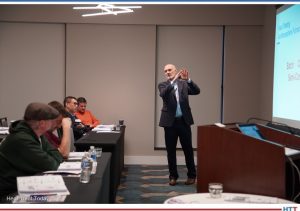


 Find heat treating products and services when you search on Heat Treat Buyers Guide.com




 The shale revolution (mostly happening in America) is the world’s biggest energy revolution. From 2005-2020, the amount of energy provided from shale was TWICE the amount of energy produced from wind and solar arrays combined. This is the largest increase in energy supply in the history of the world, anytime, anywhere. The next closest “revolution” was the Saudi oil fields, but the shale fields have produced nearly DOUBLE the amount of energy.

 Heat Treat
  What is a thermocouple?
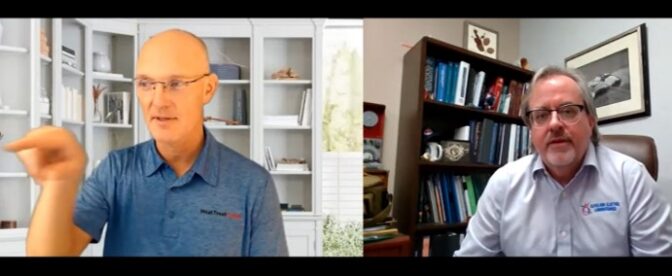 DG: Right. That’s interesting you say that, and it’s actually good that you say that, because some of our residential consumer thermometers (which a thermocouple is kind of like a thermometer in one sense) do have hazardous materials like mercury.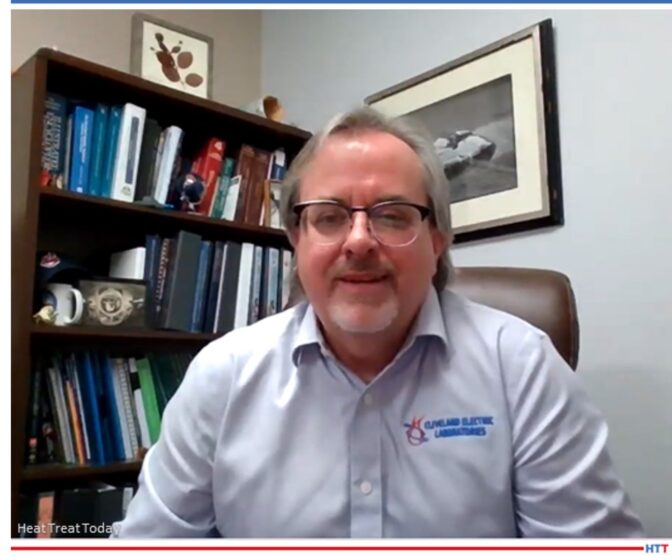
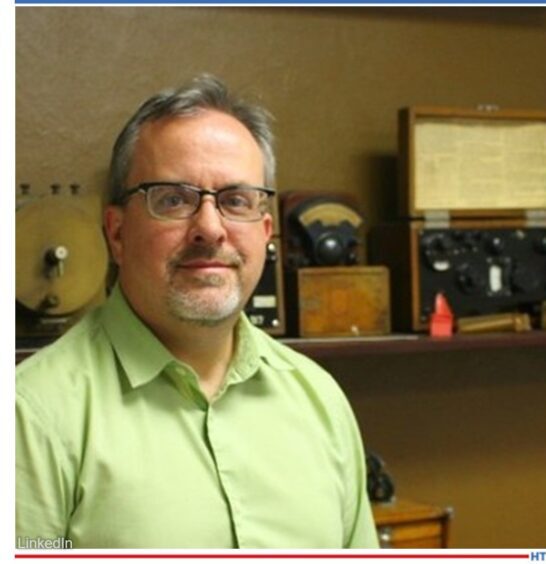

 What does cybersecurity look like in a heat treat shop? In this episode, Doug Glenn, publisher of







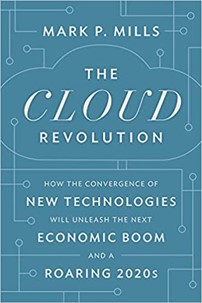




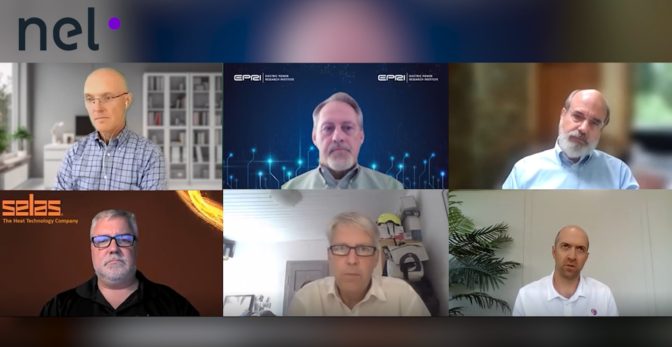 Next is Justin. Justin is our “newbie” on this one, but not a newbie to the industry — of course! — but to this panel. Justin Dzik from Fives North American Combustion, Inc. is the manager of business development at Fives North America with a special focus in combustion engineering. Justin has written technical articles about Ultra Low NOx combustion technology for the steel industry and is closely involved with spearheading the advent of a thermal process combustion tuning solution that leverages industrial internet of things (IIOT) and Industry 4.0 technology. So, Justin, welcome, glad to have you with us this time.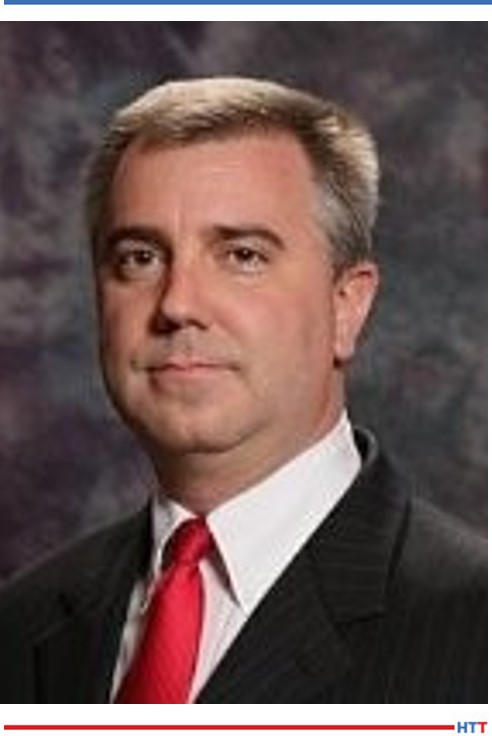






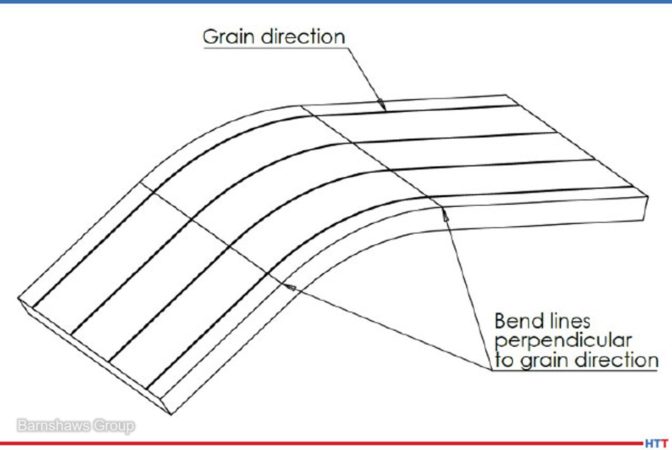
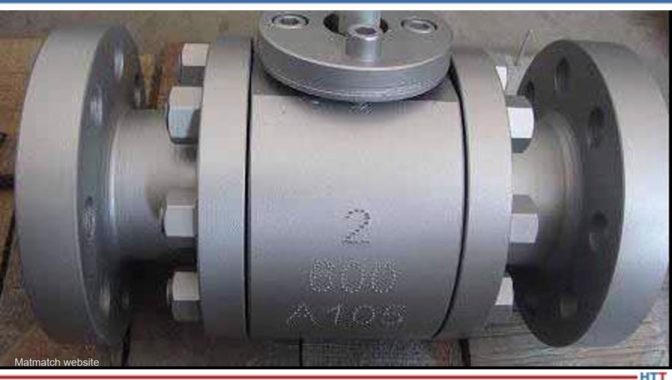

 Changes are inevitable, but the world today is changing so rapidly that it’s constantly keeping us on our toes. Do two men from different parts of the world, both with significant experience within the heat treating community, have vastly different perspectives on the happenings in the heat treat industry?