Let's talk about exploding gas bubbles -- or, perhaps more accurately, cavitation erosion and how cavitation can be prevented. If you're facing surface deterioration, this may be the best of the web article for you!
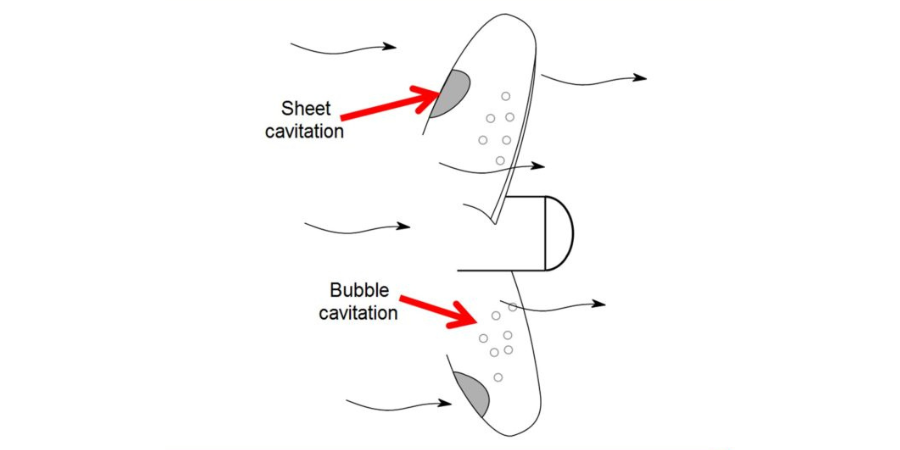
In this technical summary, you'll learn the basics of cavitation erosion such as the following: what it is, why it happens, what influences it, how to prevent it, and more. The three types of adaptations for prevention are must-reads. Additionally, this article provides a visual aid that supplements a quick breakdown on two different types of cavitation erosion.
An excerpt:
[blockquote author="" style="1"]Low temperature carburizing or nitrocarburizing offers a solution to enhance mechanical properties without altering the corrosion resistance. These thermo-chemical diffusion processes form meta-stable carbon or nitrogen S-phase while avoiding precipitation of carbides and nitrides that causes sensitization.[/blockquote]
Stephen Harris Bodycote Group Chief Executive Source: Bodycote
Bodycote, a global thermal processing services provider, is expanding its hot isostatic pressing (HIP) capability in Greenville, SC in the U.S. The two vessels will be online by the end of 2022.
The new HIP capacity will focus on developments in additive manufacturing and advanced materials. This pairs well with the numerous vacuum furnaces and other capabilities at the facility that would support additive manufacturing clients. The Greenville site will serve the aerospace, defense, medical and general industrial customers in the Southeastern region.
"We are pleased to address our customer needs by bringing HIP services closer to their facilities," commented Stephen Harris, Chief Executive at Bodycote Group. "With the largest HIP operational capacity in the world, our continued investment demonstrates Bodycote’s commitment to align resources to serve our customers across North America."
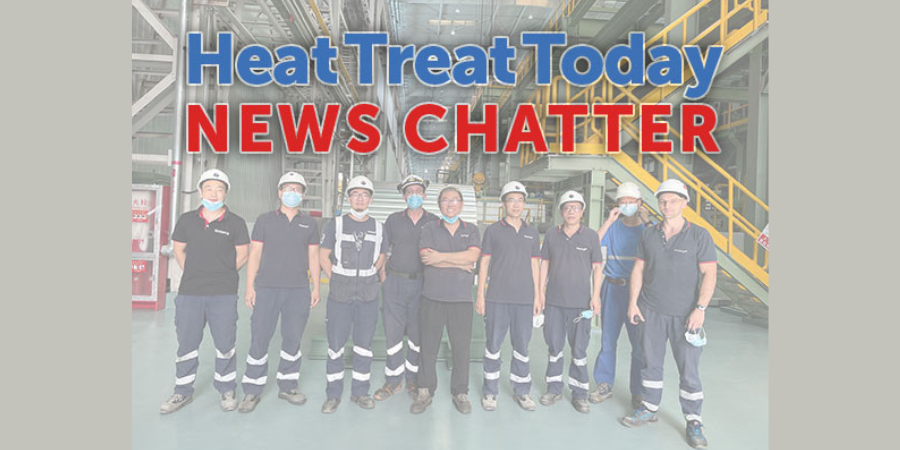
Heat Treat Todayoffers News Chatter, a feature highlighting representative moves, transactions, and kudos from around the industry. Enjoy these 12 news bites that will help you stay up to date on all things heat treat.
Equipment Chatter
Plastometrex, a materials science startup, is working with global testing and inspection provider Element Materials Technology.
National Test Pty Ltd. has been contracted by AusGroup Ltd. to provide NDT and heat treatment services on 58 stainless steel and carbon steel tanks for the covalent lithium refinery in in Australia.
Indentation Plastometer solution from Plastometrex
Heat treat partnership between AusGroup Ltd. and National Test Pty Ltd.
Personnel/Company Chatter
Bodycote increases hot isostatic pressing capacity in Greenville, SC.
PEER Energy GmbH and SCHWING Technologies GmbH signed a long-term cooperation agreement to further technical development and marketing of fluidized bed technology for the heat treatment of metal components.
Nitrex, a global provider of fully integrated surface treatment solutions, has announced that G-M Enterprises has made its official market debut under the Nitrex banner as of January 2022.
Nancy Easterbrook has joined HarbisonWalker International (HWI), a refractory products and services supplier in North America, as the director of Recycled Materials.
GHI Smart Furnaces celebrated the 84th anniversary of their founding in December 1937.
HeatTek announced the purchase of an additional facility in Ixonia, WI to serve primarily as a distribution center for the rapidly growing company’s components and spare parts inventory. This expansion follows another plant acquisition in West Allis, WI.
Hubbard-Hall announced that they’ve made the Dow product line available on their e-commerce site.
Increased hot isostatic pressing capacity for Bodycote
Ralf Giebmanns (PEER Energy) and Andreas Guderjahn (SCHWING Technologies)
G-M Enterprises officially under Nitrex banner as of January 2022
Nancy Easterbrook, Director of Recycled Materials, HWI
GHI Smart Furnace’s 84th anniversary
Kudos Chatter
Bodycote in Syracuse, NY passed certification to AS9100 standard with zero findings.
A group of 70 employees and management of SECO/WARWICK located in Świebodzin, Poland planted 3,000 beech seedlings on Lumberjack and Forester World Day.
Nitrex Metal, Inc., global of fully integrated surface treatment solutions and technologies, was selected to be part of a “Global Thought Leaders” series broadcast on CBS News.
SECO/WARWICK and sustainable practices
Advertisement for CBS News feature on Nitrex Metal, Inc.
Heat Treat Today is pleased to join in the announcements of growth and achievement throughout the industry by highlighting them here on our News Chatter page. Please send any information you feel may be of interest to manufacturers with in-house heat treat departments especially in the aerospace, automotive, medical, and energy sectors to bethany@heattreattoday.com.
Heat Treat Todayoffers News Chatter, a feature highlighting representative moves, transactions, and kudos from around the industry. Enjoy these 29 news bites that will help you stay up to date on all things heat treat.
Equipment Chatter
Baowu Aluminum Technology Co., Ltd.’s continuous annealing and chemical pre-treatment line for processing strip coils for the aluminum market supplied by Tenova produced its first hot coil.
A Midwest manufacturer of brass components is upgrading their heat treat capabilities with a new furnace from Gasbarre Thermal Processing Systems.
Plastometrex, a materials science startup, is working with global testing and inspection provider Element Materials Technology.
A global bearing manufacturer decided to furnish one of its Chinese plants with a vacuum furnace by SECO/WARWICK with gas quenching, carburizing (LPC), and carbonitriding (LCPN).
To support R&D and additive manufacturing projects, Solar Atmospheres of California has added some small vacuum furnace capacity to their equipment offerings.
An Indian manufacturer of feed machinery and contractor for “turnkey” agricultural engineering projects has placed an order with SECO/WARWICK for a Vector® vacuum furnace with vertical insertion of loads.
Heat treatment specialist Bodycote provided solutions for the world’s first hydroformed architectural stainless-steel façade screen that was manufactured by German fabricator Edelstahl-Mechanik. This screen was installed in the newly constructed Science and Engineering Complex at the Harvard University campus in Boston, MA.
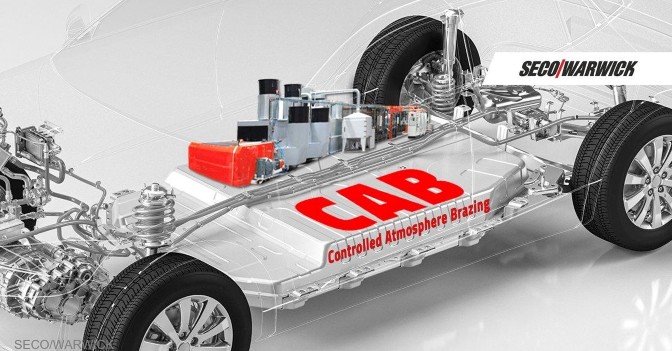
SECO/WARWICK will install a continuous line for controlled atmosphere brazing (CAB) of large-dimension battery coolers at the plant of a European manufacturer of heat exchangers.
A Gasbarre Thermal Processing Systems integral quench furnace line was recently commissioned to a manufacturer of specialty nut and bolt assemblies in the eastern U.S.
One of the largest Brazilian hardening plants has started to operate a SECO/WARWICK Vector® vacuum furnace.
Tenova’s team at Baowu Aluminum plant, China; Pomini Tenova’s equipment Photo Credit: Tenova
Indentation Plastometer solution from Plastometrex Photo Credit: Plastometrex
Vacuum furnace from SECO/WARWICK for Chinese manufacturing plant Photo Credit: SECO/WARWICK
Additive manufacturing furnace support at Solar Atmospheres of California Photo Credit: Solar Atmospheres
Vector® furnace for the agricultural industry Photo Credit: SECO/WARWICK
Inspired by the shapes, strength, and thinness of everyday objects like tin cans and soup bowls, Behnisch Architekten worked with Josef Gartner GmbH/Permasteelisa North America Corp. and the German fabricator Edelstahl-Mechanik to create the world’s first hydroformed tensile façade. Photo Credit: Brad Feinknopf
Gasbarre Thermal Processing Systems’ integral quench furnace system Photo Credit: Gasbarre Thermal Processing Systems
CAB line for European manufacturer Photo Credit: SECO/WARWICK
Personnel/Company Chatter
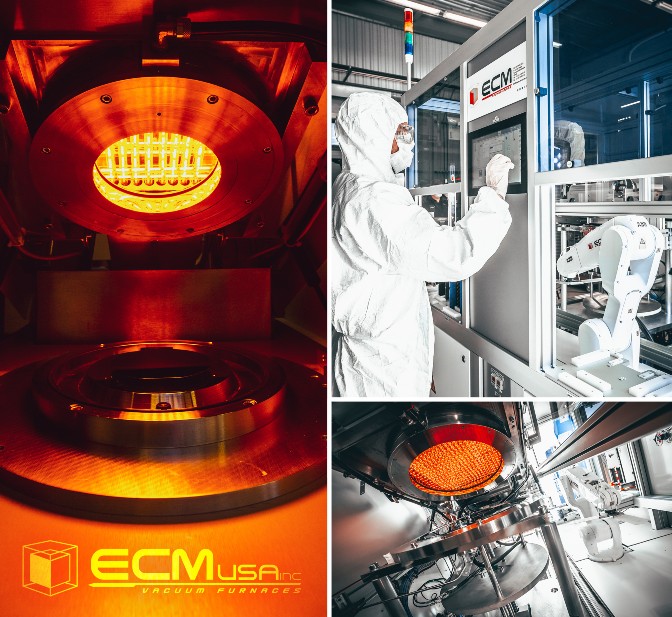
With increased interest in U.S. semiconductor research and manufacturing, ECM USA, Inc. recently announced a strong bi-monthly sales order pattern for 2021 related to their product expansion both in research & development and with laboratory furnace systems.
Pfeiffer Vacuum introduced OmniControl® universal control unit for pumps and measurement instruments.
Ipsen reported a surge in interest for standardized equipment and revealed a steady increase of orders for TITAN® vacuum furnaces this year, with five in July. Clients range from those in cutting tools and machinery to additive manufacturing and aerospace.
Heating technology company Kanthal announced the agreement to divest its semiconductor capital equipment business to Yield Engineering Systems, Inc., headquartered in Fremont, CA.
Bodycote increased hot isostatic pressing capacity in Greenville, SC.
Nitrex, a global provider of fully integrated surface treatment solutions, has announced that G-M Enterprises has made its official market debut under the Nitrex banner as of January 2022.
Nancy Easterbrook has joined HarbisonWalker International (HWI), a refractory products and services supplier in North America, as the director of Recycled Materials.
HarbisonWalker International is building a manufacturing and service hub for its steel customers in North America.
During the Metal Treating Institute’s (MTI) Fall Meeting, Ipsen, along with several other vested organizations, presented donations to support the MTI Educational Foundation, which provides scholarships for the next generation of heat treating industry professionals.
GHI Smart Furnaces celebrated the 84th anniversary of their founding in December 1937.
HeatTek announced the purchase of an additional facility in Ixonia, WI to serve primarily as a distribution center for the rapidly growing company’s components and spare parts inventory. This expansion follows another plant acquisition in West Allis, WI.
Hubbard-Hall announced that they’ve made the Dow product line available on their eCommerce site.
JIPELEC rapid thermal processing with automation Photo Credit: ECM USA, Inc.
Leading women at HarbisonWalker International(HWI) based at the company’s headquarters in Pittsburgh, PA have recently been recognized for their work: HWI has promoted Melissa Bihary to vice president of People and Organizational Effectiveness Also, the — the workforce development and education partner of the — has presented Bryn Snow, director of Application Technology-Nonferrous/Glass at HWI, with a STEP Ahead Award. Lastly, Jodi L. Allison, CAP,OM, has been promoted to chief executive assistant & administrative manager at HWI.
At the recent Metal Treating Institute (MTI) 2021 Fall meeting held in San Antonio TX, Ed Engelhard, vice president of Corporate Quality, has been recognized with the MTI Award of Industry Merit. This award is given in recognition of current/ongoing commitment to the betterment of the commercial heat treating industry with one or more significant accomplishments.
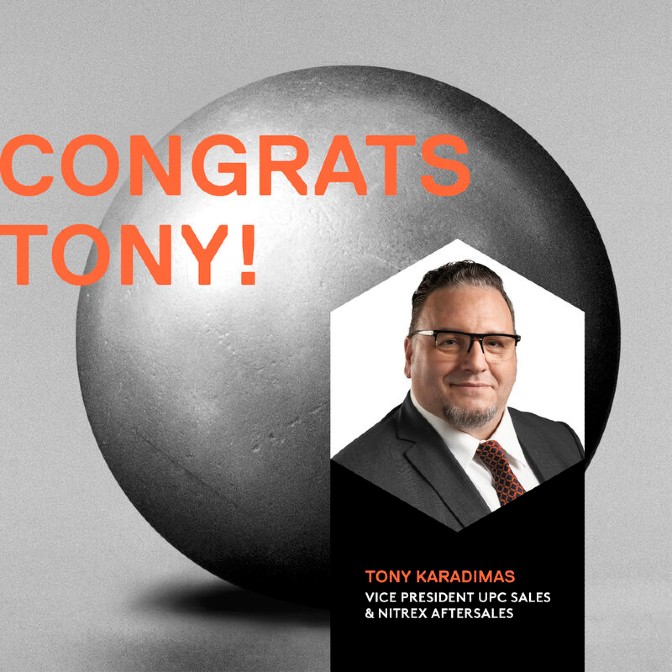
Tony Karadimas has been nominated as vice president of UPC-MARATHON Sales and NITREX.
Bodycote in Syracuse, NY passed certification to AS9100 standard with zero findings.
A group of 70 employees and management of SECO/WARWICK located in Świebodzin, Poland planted 3,000 beech seedlings on Lumberjack and Forester World Day.
Nitrex Metal, Inc., global provider of fully integrated surface treatment solutions and technologies, was selected to be part of a “Global Thought Leaders” series broadcast on CBS News.
Deep Cryogenics International trademarked the slogan “Infinitely Renewable, Infinitely Recyclable” for the use of liquid nitrogen in their deep cryogenic treatment process.
Melissa Bihary, Vice President of People and Organizational Effectiveness Photo Credit: HWI
Bryn Snow, Director of Application Technology-Nonferrous/Glass Photo Credit: HWI
Jodi L. Allison, CAP, OM, Chief Executive Assistant & Administrative Manager Photo Credit: HWI
Tony Karadimas, Vice President of UPC-MARATHON Sales and Nitrex Aftersales Photo Credit: UPC-Marathon
Ed Engelhard, Vice President of Corporate Quality, awarded MTI Award of Industry Merit Photo Credit: MTI
SECO/WARWICK and sustainable practices Photo Credit: SECO/WARWICK
Advertisement for CBS News feature on Nitrex Metal, Inc. Photo Credit: CBS News
Heat Treat Today is pleased to join in the announcements of growth and achievement throughout the industry by highlighting them here on our News Chatter page. Please send any information you feel may be of interest to manufacturers with in-house heat treat departments especially in the aerospace, automotive, medical, and energy sectors to bethany@heattreattoday.com.
Welcome to Heat Treat Today's This Week in Heat TreatSocial Media: The Christmas Edition. With so much content available on the web, especially during Christmas, it’s next to impossible to sift through all of the articles and posts that flood our inboxes and notifications on a daily basis. So before you head off to celebrate with friends and family, Heat Treat Today is sharing some great Christmas-themed heat treat news from the different social media outlets!
"Tinsel, the thin sparkling strands we drape over Christmas trees, first appeared in Germany around 1610 and was originally thin strips of material extruded from real silver. According to WiseGeek.com, silver looked good but tarnished quickly and was soon replaced by other sparkly metals. Tinsel was first placed on Christmas trees to accentuate the glow of lit candles, and only the wealthiest people could afford entire garlands.
"Advances in manufacturing eventually resulted in cheaper aluminum-based tinsel, and by the early 20th century most consumers could afford tinsel garlands, as well as individual pieces of tinsel known as icicles. By the 1950s, the use of tinsel garlands and icicles nearly overshadowed the use of Christmas lights." (Thomasnet.com)
2. Christmas Chatter
Chestnuts roasting on an open fire? Sounds like a safety hazard. Check out what people are chatting about this holiday season.
3. Light Up the Night
What do you get when you mix candles with combustion?
What's the future of ferritic nitrocarburizing and how does it compare to other hardening processes? When it comes to metal hardening, there are many variations on central processes, including recent innovations in how to apply hardening processes.
This Technical Tuesday brings you a quick overview of how hardness technologies differ, specifically nitriding and FNC, and how certain heat treaters have developed these specific hardness technologies.
Understanding the Various Hardening Processes
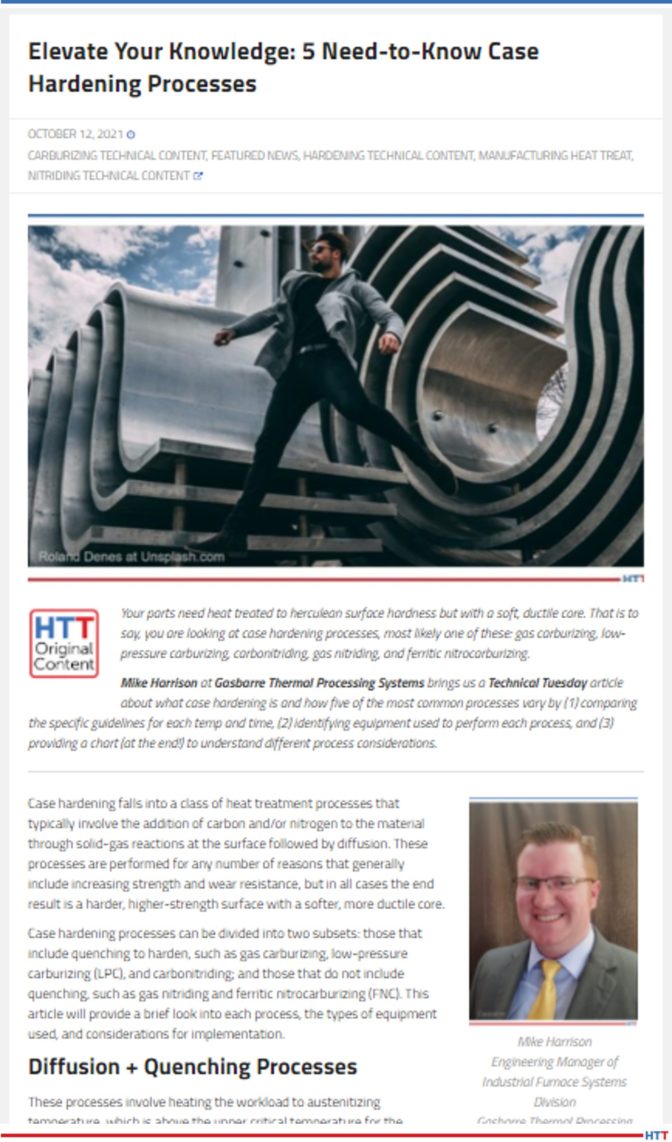
If you want to know the future, the best you can do is understand the past and present. Let’s begin with looking at the most common hardening processing methods. Here are a few excerpts from “Elevate Your Knowledge: 5 Need-to-Know Case Hardening Processes” by Mike Harrison, engineering manager of Industrial Furnace Systems Division at Gasbarre Thermal Processing Systems:
Read more about these 5 processes in Mike Harrison's article. Click to read.
Carburizing: “Gas carburizing is a process where carbon is added to the material’s surface. The process is typically performed between 1550-1750°F, with carburizing times commonly between 2-8 hours [this spec is disputed, and times may run up to 24 hours]; of course, these values can vary depending on the material, process, and equipment. The most common atmosphere used for atmosphere gas carburizing is endothermic gas with additions of either natural gas or propane to increase the carbon potential of the furnace atmosphere.”
Nitriding: “Gas nitriding is a process where nitrogen is added to the material surface. The process is typically performed between 925-1050°F; cycle times can be quite long as the diffusion of the nitrogen is slow at these temperatures, with nitriding times typically ranging from 16 – 96 hours or more depending on the material and case depth required. Nitriding can be performed in either a single or two-stage process and has the potential to produce two types of case, the first being a nitrogen-rich compound layer (or “white layer”) at the surface that is extremely hard and wear-resistant but also very brittle.”
Carbonitriding: “Despite its name, carbonitriding is more closely related to carburizing than it is to nitriding. Carbonitriding is a process where both carbon and nitrogen are added to the material surface. This process is typically performed in a range of 1450-1600°F [this spec is disputed, and temperatures may go up to 1650°F] and generally produces a shallower case depth than carburizing.”
Ferritic Nitrocarburizing (FNC): “In the author’s opinion, just like with carbonitriding, ferritic nitrocarburizing (FNC) is named incorrectly as it is more closely related to nitriding than it is with carburizing. FNC is a process that is still mostly nitrogen-based but with a slight carbon addition as well. The added carbon helps promote compound layer formation, particularly in plain carbon and low alloy steels that do not contain significant nitride-forming alloys. This process is typically performed in a range of 1025-1125°F with cycle times much shorter than nitriding, typically 1-4 hours.”
Low Pressure Carburizing (LPC): “Low-pressure carburizing (LPC), or vacuum carburizing, is a variation of carburizing performed in a vacuum furnace. Instead of the atmospheres mentioned previously, a partial pressure of hydrocarbon gas (such as acetylene or propane) is used that directly dissociates at the part surface to provide carbon for diffusion. After LPC, the workload is transferred to a quench system that could use oil or high-pressure gas, typically nitrogen.”
Nitriding
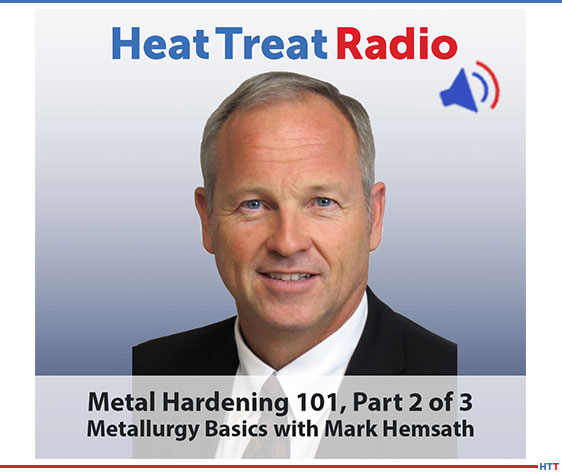
Learn more about the basics of hardening at Heat Treat Radio. Click to listen,
Gas nitriding, a process over 100 years old, is a hardening process that involves diffusing nitrogen into the surface of steel to create a hard, wear-resistant case. Among many benefits, the part will have enhanced fatigue properties, anti-galling properties under load, and a resistance to softening at elevated temperature. This makes it an excellent choice for the aerospace industry.
There is some recent history regarding problems related to the “white layer”. In a typical microstructure, the “white layer” is a nitrogen-rich surface layer and the diffusion layer exists beneath it.1 It is essential that the surface layer be controlled to avoid an overly brittle part. Mark Hemsath the vice president of Sales – Americas for Nitrex Heat Treating Services, elaborated on this in a Heat TreatRadioepisode:
"Doug Glenn: I assume, with all the modern day technology and whatnot, we're able to control that white layer and/or depth of nitriding layer through your process controls and things of that sort."
"Mark Hemsath: Yes. Nitriding has been around a long time, but one of the problems that they had was controlling the white layer. Because they basically would just subject it to ammonia and you kind of got what you got. Then they learned that if you diluted it, you could control it. That's with gas nitriding. Then plasma nitriding came around and plasma nitriding is a low nitriding potential process. What that means is it does not tend to want to create white layer as much. It's much easier to control when the process itself is not prone to creating a lot of white layer, unlike gas. Now, in the last 10 – 15 years, people have gotten really good at controlling ammonia concentrations. They've really learned to understand that."
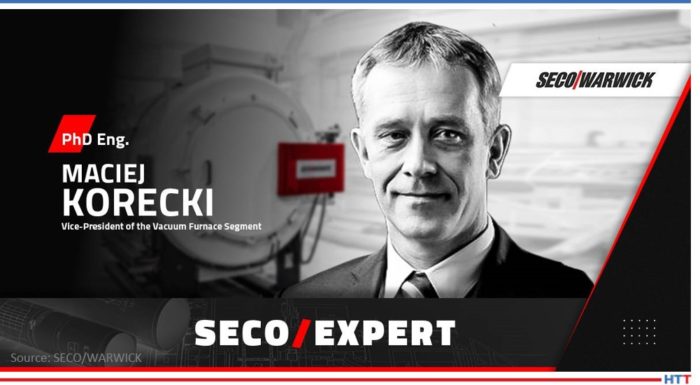
"ZeroFlow nitriding is ammonia-based gas nitriding," commented Dr.Maciej Korecki, PhD Eng., vice president of the Vacuum Furnace Segment at SECO/WARWICK Group. "It is distinguished by the fact that the nitrogen potential is controlled by introducing the right portion of ammonia at the right time and only ammonia, instead of a continuous flow of a mixture of ammonia and diluent gas."
"Consequently, the ZeroFlow method uses the minimum amount of ammonia needed to achieve the required nitrogen potential and replenish the nitrogen in the atmosphere, taking into account the situation where no ammonia is supplied to the furnace at all, no flow, hence the suggestive name of the solution," he continued. "Using ammonia alone in the nitriding process, we are dealing with a stoichiometric reaction (as opposed to some traditional methods), that is, one that is uniquely defined and predictable based on the monitoring of a single component of the atmosphere. Therefore, the ZeroFlow process controls very precisely through the analyzer only one gas, obtaining an improvement in the quality and repeatability of the results compared to various traditional methods."
According to Dr. Korecki, the process is about going back to the basics of nitriding: "The inventor of the method is Prof. Leszek Maldzinski of the Poznan University of Technology, who developed the theoretical basis and confirmed it with research. Then, more than 10 years ago, a partnership between SECO/WARWICK and the Poznan University of Technology initiated a project to develop and build the first industrial furnace designed to perform the ZeroFlow nitriding processes. The furnace was launched at SECO/WARWICK's research and development department (SECO/LAB®), where the method has been implemented and validated on dozens of industrial-scale processes."
Ferritic Nitrocarburizing
This nitrogen-based process can produce a deeper compound layer than nitriding, which is great for industrial machinery applications where this deep layer is needed for increased wear resistance and the critical strengthening of a deep case depth is not essential.
FNC has gone through a technical evolution with different heat treaters in the industry developing their own unique applications with method in mind. We'll look at two recent examples: AHT's Super Ultra Ox and Bodycote's Corr-I-Dur.
Edward Rolinski Senior Scientist Advanced Heat Treat, Corp. (Source: https://www.ahtcorp.com/)
According to experts at Advanced Heat Treat Corp. (AHT), Edward Rolinski (Dr. "Glow"), Jeff Machcinski, Vasko Popovski and Mikel Woods, "Thermochemical surface engineering of ferrous alloys has become a very important part of manufacturing. Specifically, nitriding and nitrocarburizing (FNC) processes are used since their low temperature allows for treatment of finished components. They are applied to enhance the tribological and corrosion properties of component surfaces.2 In many situations, nitriding replaces carburizing even if the nitrided layer is not as thick.3 A post-oxidizing step, applied at the end of FNC, leads to significant enhancement of corrosion properties by formation of a magnetite layer (Fe3O4).
"AHT’s newly developed process, UltraOx® Hyper, results in superior wear and corrosion resistance and allows for good control of the parts’ blackness. The latter is very important when the treatment is used for firearms. While the parts’ corrosion resistance improves with nitriding alone, the additional steps in UltraOx® Hyper significantly extend corrosion resistance. AHT is committed to achieving its customers’ desired metallurgical and cosmetic results through R&D and investing in state-of-the-art equipment. These innovations allow for flexibility in these areas."
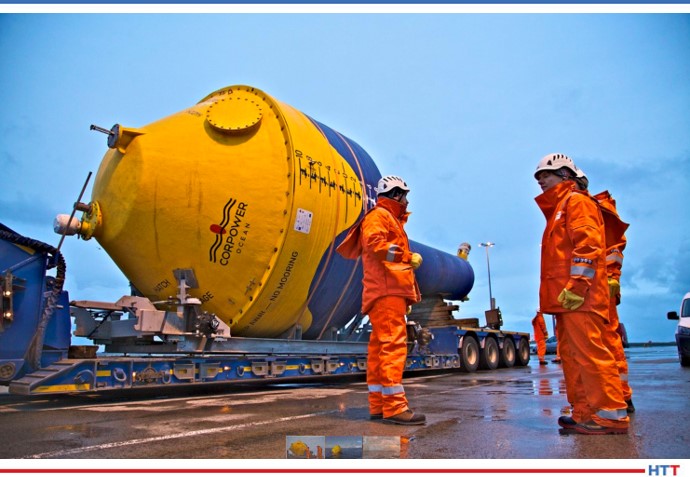
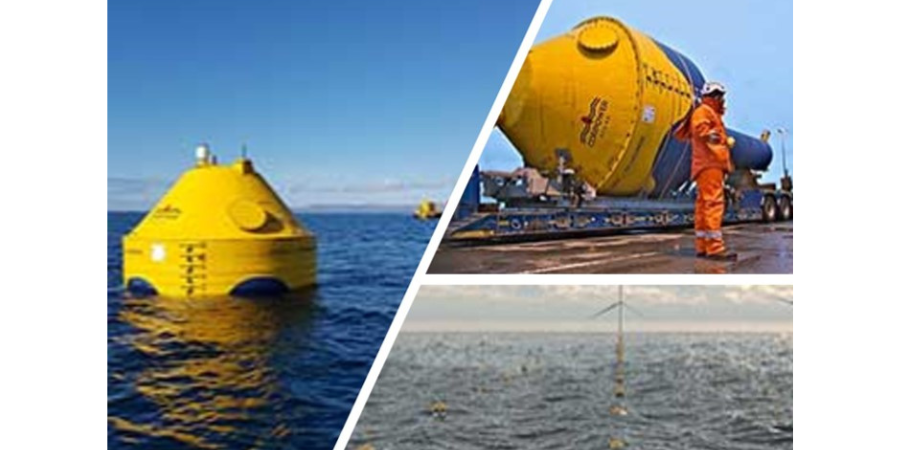
In recent news, wave energy pioneer CorPower Ocean will be using Bodycote's thermochemical treatment, Corr-I-Dur®, for CorPower’s high-efficiency WECs. Image Source: www.waterpowermagazine.com
From Bodycote, they say that their proprietary Bodycote thermochemical treatment “Corr-I-Dur® is a combination of various low temperature thermochemical process steps, mainly gaseous nitrocarburising and oxidising.”
They explain, "In the process, a boundary layer consisting of three zones is produced. The diffusion layer forms the transition to the substrate and consists of interstitially dissolved nitrogen and nitride precipitations which increase the hardness and the fatigue strength of the component. Towards the surface it is followed by the compound layer, a carbonitride mainly of the hexagonal epsilon phase. The Fe3O4 iron oxide (magnetite) in the outer zone takes the effect of a passive layer comparable to the chromium-oxides on corrosion resistant steels.
"Due to the less metallic character of oxide and compound layer and the high hardness abrasion, adhesion and seizing wear can be distinctly reduced. Corr-I-Dur® has very little effect on distortion and dimensional changes of components compared to higher temperature case hardening processes."
How to Implement?
We’ve seen a lot of development in way of nitriding and ferritic nitrocarburizing (FNC), but for many heat treaters, you inherit specific processes and traditions of accomplishing heat treatment and do not have the chance to understand how to implement each process. Read the full 21 point comparative resource at FNC vs. Nitriding
Conclusion
The more informed you are, the better decisions you can make. For example, knowing these recent developments in metal treating and hardening is sure to help you decide whether to shift directions in how you company process parts for electric vehicles, or if you are ready to expand your offerings for your aerospace clients. It is clear that each of these processes have a future all-their-own. It’s up to you to decide whether that future should be yours, too.
For more information on the basics of hardness, listen to the what, why, and how of hardening with Mark Hemsath, an expert on metal hardness and vice president of Sales – Americas for Nitrex Heat Treating Services, on this Heat TreatRadio episode with Doug Glenn, publisher of Heat TreatToday. You can also review the resources below that were referenced in today’s article.
2 “Thermochemical Surface Engineering of Steels”, Woodhead Publishing Series in Metals and Surface Engineering: Number 62, Ed. Eric J. Mittemeijer and Marcel A. J. Somers, Elsevier, 2015, pp.1-769.
3 J. Senatorski, et. al, Tribology of Nitrided and Nitrocarburized Steels”, ASM Handbook Vol 18, Friction, Lubrication and Wear Technology, ed. G. Totten ASM International, 2017, pp. 638-652.
Senatorski, J. Tacikowski, E. Rolinski and S. Lampman, “Tribology of Nitrided and Nitrocarburized Steels”, ASM Handbook Vol 18, Friction, Lubrication and Wear Technology, ed. G. Totten ASM International, 2017.
“Thermochemical Surface Engineering of Steels”, Woodhead Publishing Series in Metals and Surface Engineering: Number 62, Ed. Eric J. Mittemeijer and Marcel A. J. Somers, Elsevier, 2015, pp.1-769.
The privilege of unveiling the Heat Treat Today40 Under 40 Class of 2021 comes with the reality that not every one of the nominees could be included in the final count; even though each young, up-and-coming, talented heat treating professional whose name was submitted is making a significant difference in their field.
The individuals pictured are those we acknowledge in 2021 for their contribution to their company, their dedication of service to their customers, and their commitment to pursue skills and knowledge to further contribute to their field.
The 2021 Honorable Mentions
Daniel Dudar Absent Atmosphere Maintenance, Inc.
Nathan Howell S&C Electric Company
Justin Waldrop Paulo
Joshua Fuentes Bodycote Thermal Processing, Inc.
Heat Treat Today will be back next year looking for rising leaders in the 40 Under 40 Class of 2022. We encourage you to consider the talented young professionals in the heat treating sphere, especially in the captive heat treatment industry, who deserve this recognition for their leadership. You can begin the process right now: Click here to nominate a young professional for Summer 2022.
Welcome toHeat Treat Today'sThis Week in Heat TreatSocial Media. As you know, there is so much content available on the web that it’s next to impossible to sift through all of the articles and posts that flood our inboxes and notifications on a daily basis. So, Heat Treat Todayis here to bring you the latest in compelling, inspiring, and entertaining heat treat news from the different social media venues that you’ve just got to see and read!
This week, we are looking at where rockets are flying next and exploring the heat treat conversations that people are having through social media. A few graphs, charts, and interview resources are further down.
"Under the new Rocket Cargo Vanguard, the DAF will seek to leverage these commercial advances and position the DoD to be an early adopter of the new commercial capability." Read the entire article at "USAF wants to deliver cargo around the world with reusable rockets."
The US Air Force has announced the development of a new type of rocket-powered transporter to deliver cargo around the world https://t.co/0SOBd3gqTE
— Aerospace Manufacturing (@AerospaceTweets) June 7, 2021
2. Join the Conversation
A few quick tours around your heat treat shops: what have heat treaters accomplished this past year? Have you done anything similar? Let us know and tag @HeatTreatToday on your next post!
An Aerospace Question to the Heat Treaters
.
Breaking it Down: Annealing, Hardening, Tempering
.
The Ladies With Elbow Grease
3. A Little Heat Treat Kudos
Social media is a great place to celebrate your advances with your coworkers and clients. Check out some of the kudos that has been circulating around the inter-web.
A New Measurement System
It's Always Hot in Houston
Click Image to see gallery of images on LinkedIn
Structural Integrity of an Open Die
4. Reading and Podcast
Tune into these interviews and fun conversations this weekend, or check out the reading snippets from around the industry.
Internet Security in the Industry World
Learn how Oldcastle uses SecureLink to manage vendor privileged access for multiple users across 85 locations and how they were able to resolve pain points associated with using VPNs for vendor access. You have to submit your contact information, and then you can read more here: "Oldcastle Infrastructure, Inc. Strengthens Security and Centralizes Remote Access"
So, Then, Can I Really Trust IoT Security
You desire to implement and maintain the best manufacturing practices in your workplace. With technological solutions pressing a connected work system, you may very well be hesitant to adopt them as they come with a different set of security concerns. Read about the "Top 10 Best Practices for Zero Trust IoT Manufacturing."
A Selection from Heat Treat Radio
Click the selections to hear what's new from Heat TreatRadio!
5. What Do You Get When An Automobile Renovates a Restaurant?
If you are going out to eat this weekend, would you prefer your waiter to act like this? I mean, who doesn't love a little dinner theatre?
Wave energy pioneer CorPowerOcean has partnered with a global heat treater and thermal specialist with locations in North America, Europe, and Asia.
The UK-headquartered Bodycote firm is now breaking into ocean energy thermal processing after helping Swedish developer CorPower optimize key components in its Wave Energy Converters (WECs).
The thermochemical treatment that they are using is Corr-I-Dur®, a combination of various low temperature thermochemical process steps, mainly gaseous nitrocarburizing and oxidizing. In the process, a boundary layer consisting of three zones is produced. The diffusion layer forms the transition to the substrate and consists of interstitially dissolved nitrogen and nitride precipitations which increase the hardness and the fatigue strength of the component. Towards the surface, it is followed by the compound layer, a carbonitride mainly of the hexagonal epsilon phase. The Fe3O4 iron oxide (magnetite) in the outer zone takes the effect of a passive layer comparable to the chromium-oxides on corrosion resistant steels. Due to the less metallic character of oxide and compound layer and the high hardness abrasion, adhesion and seizing wear can be distinctly reduced. Corr-I-Dur® has very little effect on distortion and dimensional changes of components compared to higher temperature case hardening processes.
Source: www.waterpowermagazine.com
CorPower’s high-efficiency WECs, inspired by the pumping principles of the human heart, offer five times more energy per ton of device compared to previously known technologies. Incorporating a series of unique features to boost storm survivability and power capture, the WECs also benefit from thermochemical treatment to protect against the harshest marine conditions.
"This thermochemical treatment," Thomas Lindahl, senior procurement and quality engineer, CorPower Ocean, "simultaneously improves corrosion resistance and wear properties by generating an iron nitride-oxide compound layer. Durability and robustness are of paramount importance in the wave energy sector, and effective protection of devices in the hostile ocean environment has always presented a major challenge to our industry. Corr-I-Dur® proved a particularly favorable solution being specifically designed for components subjected to a corrosive environment in combination with wear."
Bodycote is now supporting the ocean energy market after helping Swedish developer @Corpowerocean optimize key components in its Wave Energy Converters.
"We are pleased to be contributing to the marine renewable energy industry by making components last longer in extreme conditions," Paul Clough, president for northern and eastern Europe at Bodycote. "By using Corr-I-Dur®, CorPower was able to design mechanical components such as pistons, guides and linkages, that are suitable for the world’s harshest environments for metal. Our customers value Corr-I-Dur® for its ability to provide superior material properties such as wear and corrosion resistance, reducing maintenance costs and downtime for hard to access equipment. CorPower was looking to push the performance of their metal components through durability and corrosion resistance."
Paul Clough President Northern and Eastern Europe Bodycote Source: LinkedIn
CorPower Ocean is aiming to bring reliable and competitive wave energy technology to the world, unlocking one of the largest untapped sources of renewable energy – harnessing the natural power of the oceans to help us tackle climate change and achieve a sustainable low-carbon future.
The firm is now increasing operations for its HiWave-5 demonstration project in northern Portugal to propel its wave technology to a bankable product offering by 2024 – proving the survivability, performance and economics of a grid-connected array of WECs. The 16MEUR project includes investment to build a wave energy hub in the Port of Viana do Castelo, involving R&D, Manufacturing and Servicing facilities for the long-term development of supply and service capacity for commercial wave energy farms.
Welcome to Heat Treat Today’s This Week in Heat TreatSocial Media. As you know, there is so much content available on the web that it’s next to impossible to sift through all of the articles and posts that flood our inboxes and notifications on a daily basis. So, Heat Treat Today is here to bring you the latest in compelling, inspiring, and entertaining heat treat news from the different social media venues that you’ve just got to see and read!
This week, get a taste of the changes in the industry from the new U.S. President’s plans to neon heat treating signs to aerospace “demos”.
1. It’s General, But You’ll Want To Know These 5 Things
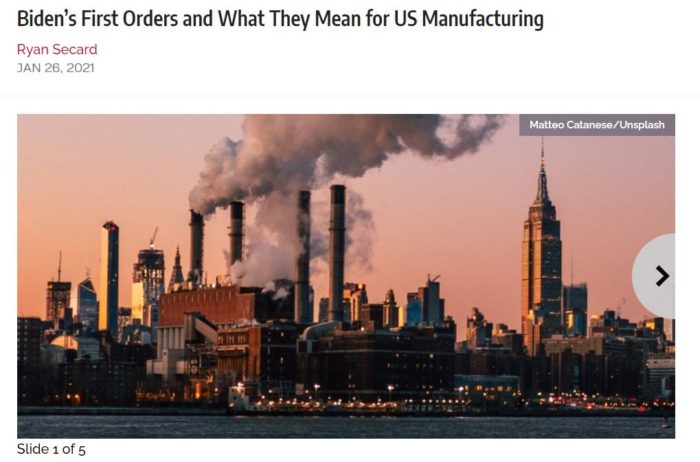
“Upon entering office, President Biden quickly set to work undoing executive actions taken by his predecessor, President Trump, and issuing new ones reflecting his own priorities. During his first week as President, Biden signed executive orders on topics as varied as COVID-19, supply chains, and climate change. Here are five of Biden’s early-term executive actions with potential impact on the manufacturing sector.” (Industry Week)
(Click the Image to view slideshow)
2. People Talk!
Catch up on the latest things that people have been talking about on social media!
Walk Around the Plant Floor
.
That Neon Glow
.
Heat Applications: Waffle Iron
.
Too Hot To Touch, Or…
3. What’s with the #?
Did you know that you can find the topics you love by typing a hashtag (#)? And if you see a # in a post, did you know that you can find other content by CLICKING that term? Give it a try on one of our posts on LinkedIn! Hit the “see more” and click #heattreatment.
Get into the meat of it with these podcasts and articles from all around the heat treat industry.
What is Electron Beam Welding?
.
Heat Treat Radio Series
We just completed a series with Thomas Wingens with podcast episodes on Washing and Ferritic Nitrocarburizing. You can also find the complete Heat Treat Radio series with James Hawthorne of Acument Global Technologies and Justin Rydzewski of Controls Service, Inc. on CQI-9. All of these and more on our Heat Treat Radio page.
.
Prerecorded Webinar:
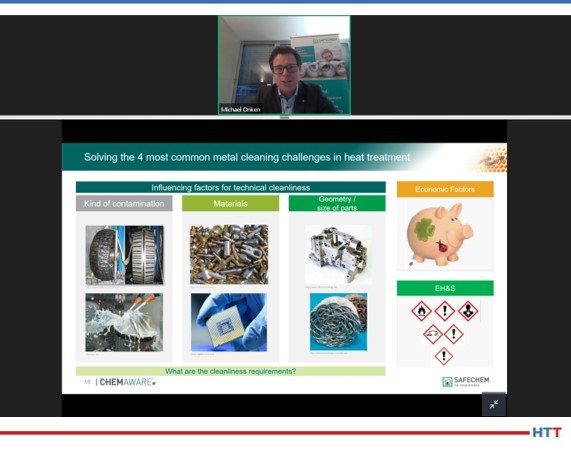
“Solving the 4 most common metal cleaning challenges in heat treatment”
In January 2021, Hubbard-Hall hosted a free webinar with Thomas Wingens of Wingens International and Michael Onken of SAFECHEM. These two experts described the influencing factors for technical cleanliness and some solutions for washing. We shared an original content overview of what happened at the virtual event here.
5. When Your Client Wants a Demo…
In honor of the March Aerospace edition of Heat TreatToday’sprint magazine, check out this aerospace “demo”.




 Source: Bodycote
 Find heat treating products and services when you search on Heat Treat Buyers Guide.com


 Heat Treat