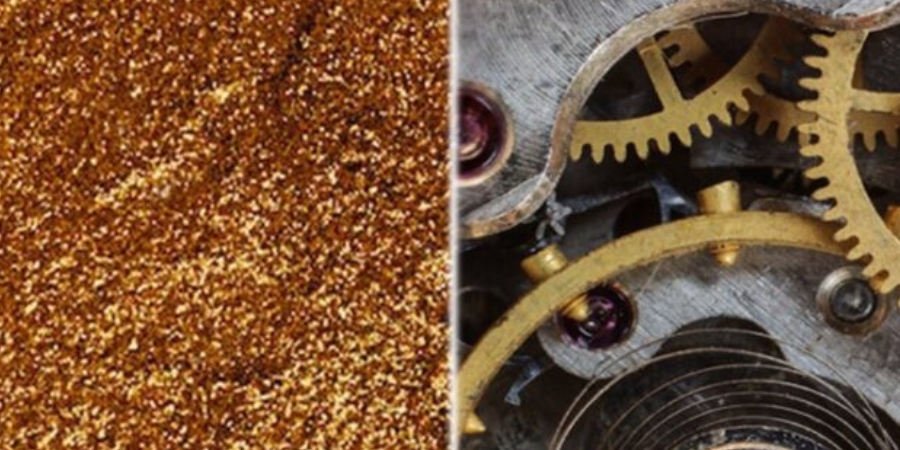
The powder metal industry continues to develop to keep up with production and industry needs. What exactly goes on with powdered metals and additive manufacturing? What is the sintering process? What should heat treaters know about the future of this industry?
In this original content article, three different resources -- an article, a radio broadcast, and a Heat TreatTVepisode -- come together to answer these questions and much more.
Ron Beltz Director of Strategic Accounts Bluestreak | Bright AM™
In this article, investigate the processes used to treat the metal powders. Sintering is one such process and others, like annealing and hot isostatic pressing, are examined too. Ron Beltz, director of strategic accounts at Bluestreak | Bright AM’s™ takes a look at these processes and also discusses other elements like software use and serialization. "One of the issues of additive manufacturing is the possibility of internal defects," Beltz explains. "Direct metal laser sintering (DMLS) regularly produces near 100% dense parts, but to provide another level of control to help reduce part failure, hot isostatic pressing (HIP), instead of heat treating, is successfully being used by many aerospace companies and in the casting industry."
Harb Nayar TAT Technologies (photo source: tat-tech.com)
Hear from Harb Nayar, president and CEO, TAT Technologies; as he peers into the future of the industry; "The other [change in industry] I think that’s going to emerge is most probably making more and more parts by powder metallurgy from metal powder which are 100% free alloyed." Nayar is confident that the powder metal industry will keep growing, and this interview gives good insights from his depth of knowledge.
John Engquist,FAPMI (past president of the Center for Powder Metallurgy Technology), gives some practical basics on what powder metallurgy (PM) is and how sintering helps produce automotive components. "Let's take a look at some PM applications: here we have a notch and pocket plate that are used in one way clutches. . . .made from sinter hardened steel and iron carbon steel. Here we have an automotive planetary carrier system. . . .Here we see stator cores for electric motors . . . ." Listen in on ways to use powdered metal.
These thought-provoking pieces give an opportunity dig a little deeper into sintering and additive manufacturing. Stay on top of education and developments within the powder metal industry.
Find heat treating products and services when you search on Heat Treat Buyers Guide.com
Stephen Harris Bodycote Group Chief Executive Source: Bodycote
Bodycote, a global thermal processing services provider, is expanding its hot isostatic pressing (HIP) capability in Greenville, SC in the U.S. The two vessels will be online by the end of 2022.
The new HIP capacity will focus on developments in additive manufacturing and advanced materials. This pairs well with the numerous vacuum furnaces and other capabilities at the facility that would support additive manufacturing clients. The Greenville site will serve the aerospace, defense, medical and general industrial customers in the Southeastern region.
"We are pleased to address our customer needs by bringing HIP services closer to their facilities," commented Stephen Harris, Chief Executive at Bodycote Group. "With the largest HIP operational capacity in the world, our continued investment demonstrates Bodycote’s commitment to align resources to serve our customers across North America."
Hot isostatic pressing. . . What is it? How is HIPing benefiting the medical industry? What is its place in additive manufacturing? In today's Technical Tuesday, Heat TreatToday is doing a deep dive into HIPing and its benefits. Check out these resources for some hot takes on HIPing.
What exactly is HIPing? It's taking over the additive manufacturing world. In this article, written in 2020 by Derek Denlinger, corporate lead metallurgist at Paulo, find out the answer and also discover the applications, materials, and advantages of HIPing.
"HIP was initially developed as a diffusion bonding technique. In diffusion bonding, high heat and pressure work together to weld similar or dissimilar metal surfaces without filler materials."
Product efficiency, reduced environmental impact, and improved process reliability are becoming more and more important everyday. HIPing's future has never been brighter. It's about to see a renaissance. To explore HIPing in depth, read this free ebook from Heat TreatToday and Quintus Technologies.
"Modern HIP machinery is an extremely good fit with the traditional heat treatment market, offering the opportunity to further adjust material properties through tailored HIP cycles."
Check out what Chad Beamer and Magnus Ahlfors at Quintus Technologies had to say about HIPing. Shrinkage, gas porosity, and lack of fusion between layers are all things that do not belong in medical implants. Implants manufactured with metal injection molding and casting often still contain defects, but HIPing eliminates those defects and produces a 100% dense material. HIPing is widely used across the medical industry to reduce the occurrence of these issues.
"The elimination of defects results in improved fatigue properties, ductility, and fracture toughness. For this reason, HIP is widely used for orthopaedic implants like hip, knee, spine, ankle, wrist as well as dental implants to ensure quality and performance and prevent early failure of the implant inside the patient."
High temperatures, high pressures. That's HIPing. Cliff Orcutt of American Isostatic Presses, Inc. describes HIPing as "pressurize sintering." Because of the high pressure, HIPing is faster and leads to less part deformation. In this episode of Heat Treat Radio, learn the many applications of HIPing (including ceramics) and learn if outsourcing is right for you.
"In HIP, since you’re starting with powders that are solid, you can blend things like graphite powder and steel. You couldn’t blend them very well in a molten state, but in here, you can. And, you can squeeze it to solid, you can get interlocking and bonding and diffusion bonding materials that you couldn’t otherwise. So, you can make things you couldn’t make any other way."
A retrofitted vacuum furnace will now produce more metal injected molded (MIM) components with considerably less downtime.
In 2021, a North American heat treater, Solar Atmospheres of Western PA, retrofitted a vacuum furnace for use in a new metal injection molding (MIM) and additive manufacturing (AM) binder removal technology application. The goal was to build a vacuum sintering furnace with a new innovative hot zone and pumping technology that would minimize and target the deposit of detrimental binders evaporating out of MIM and AM parts.
Robert (Bob) Hill, FASM President Solar Atmospheres of Western PA
The hot zone, after a month of repeated 2400°F sintering cycles, remains clean. The problematic binders coalesced at the targeted area within a separate heated pumping port while keeping the primary pump and booster uncontaminated. Most importantly, the client reported that their sintered parts processed in this new furnace never looked better. The MIM parts were extremely bright and met their critical density and dimensional requirements.
The heat treater anticipates considerable maintenance savings on this dedicated furnace versus processing sintering and AM work with binders in a traditional vacuum furnace. Working in a traditional furnace meant added labor and material costs coupled with the lost production time and degradation on the life of the hot zone, which cost the company more than $180,000 per year. The projected maintenance costs on this newly designed sintering furnace will be $10,000 per year.
"Knowing the effects," reported Bob Hill, president of Solar Atmospheres of Western PA, "of what MIM and certain AM processing had done to our equipment in the past, Bill Jones and the engineers at Solar Manufacturing developed an innovative solution for us. Having this newly designed vacuum furnace will be an asset for our future in MIM and AM processing."
Massachusetts manufacturer Desktop Metal, Inc., is acquiring The ExOne Company, a North Huntingdon, Pa. company that specializes in 3D printing technology, in a deal valued at $575 million.
"We are thrilled to bring ExOne into the DM family to create the leading additive manufacturing portfolio for mass production," said Ric Fulop, founder and CEO of Desktop Metal, in a statement. "This transaction is a big step in delivering on our vision of accelerating the adoption of additive manufacturing 2.0.
"We believe our complementary platforms will better serve customers, accelerate adoption of green technologies, and drive increased shareholder value," said John Hartner, CEO of ExOne, in a statement.
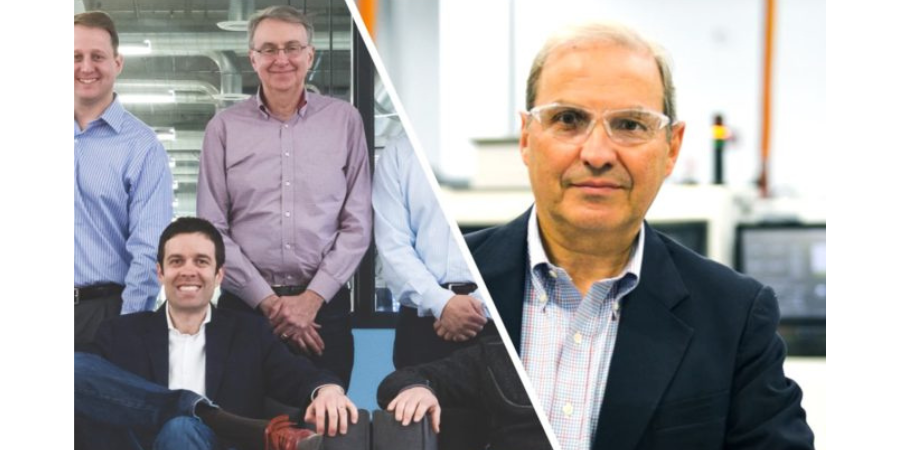
Ric Fulop (bottom left), Co-Founder and CEO with the 2015 core leadership team at Desktop Metal, Inc.
The deal, which has been unanimously approved by the ExOne’s board of directors, is expected to close in the fourth quarter of 2021, subject to the approval of ExOne shareholders and satisfaction of customary closing conditions.
Canada’s Burloak Technologies will use hot isostatic press (HIP) technologies to push the limits of additive manufacturing (AM) to deliver new levels of mechanical performance and strength properties in parts for mission-critical applications. Providing rapid cooling under pressure will minimize thermal distortion and non-uniform grain growth in components, producing finished parts with optimal material properties and allowing Burloak to significantly increase production.
Peter Adams Founder and Chief Innovation Officer Burloak
As a full-service additive manufacturer, Burloak works with innovative companies in the space, aerospace, automotive, and industrial markets to rapidly transition their most challenging part designs to be additively manufactured at scale. The High Pressure Heat Treatment™ (HPHT™) capability of the new QIH 60 M URC™ HIP from Quintus Technologies facilitates this rapid transition. Combining high pressure, heat treatment, and cooling in a single process makes it possible to remove several operations from the AM production line, generating significant savings in both cost and time. Additionally, the press’s highly customizable cooling cycle can be programmed to stop at a specific temperature while maintaining the desired pressure set point.
The press's capability to rapidly cool under pressure, "is critical for Burloak as a full-service supplier for all customers, and, in particular, for the development of high-strength flight components," comments Peter Adams, founder and Chief Innovation Officer at Burloak. "Without this in-house capability, outsourcing this process would slow down our project timelines, add complexity to our processes, and risk damaging critical customer components as they would need to be shipped internationally."
The model QIH 60 press features a hot zone of 16.14 x 39.37 inches (410 x 1,000 mm), an area large enough to process any component printed on most powder bed machines, Mr. Adams notes. It operates at a maximum temperature of 2,552°F (1,400°C) and maximum pressure of 207 MPa (30,000 psi).
"We are very pleased to be chosen as their strategic partner in furthering the development of additive manufacturing," says Jan Söderström, CEO of Quintus Technologies, "and we look forward to sharing our applications expertise through our Quintus Care program."
The Fraunhofer Institute for Manufacturing TechnologyandAdvanced Materials IFAM in Dresden has received a hot isostatic press. This HIP technology will permit researchers to deepen their expertise and refine processes for pressure-supported heat treatment, used to maximize theoretical density, ductility, and fatigue resistance in high-performance materials.
Applications for the new system from Quintus Technologies include the hot isostatic pressing and heat treatment of specialty materials such as nickel-based superalloys and intermetallic compounds like titanium aluminides, as well as densification of the unconventional microstructures associated with additive manufacturing (AM).
Dr. Thomas Weißgärber Director of the Branch Lab Fraunhofer IFAM Source: ifam.fraunhofer.de
The QIH 15L is equipped with Quintus’s Uniform Rapid Quenching® (URQ®) technology, which achieves a cooling rate of 103K/minute, while minimizing thermal distortion and non-uniform grain growth for finished 3D printed parts with optimal material properties. The press’s furnace chamber has a diameter of 6.69 inches (170 mm) and a height of 11.4 inches (290 mm) and operates at a maximum pressure of 200 [207] MPa (30,000 psi) and a maximum temperature of 2,552°F (1,400°C).
Acquiring the Quintus HIP allows Fraunhofer IFAM researchers to “strengthen their technological expertise in the field of pressure-supported heat treatment,” comments Dr. Thomas Weißgärber, director of the Branch Lab at Fraunhofer IFAM. “The new system is not only used for R&D projects but is also available as a service for carrying out predefined HIP cycles.”
The press model QIH 15L incorporates heat treatment and cooling in a single process known as High Pressure Heat Treatment™ (HPHT™). HPHT combines stress-relief annealing, HIP, high-temperature solution-annealing (SA), high pressure gas quenching (HPGQ), and subsequent ageing or precipitation hardening (PH) in one integrated furnace cycle.
Jan Söderström CEO Quintus Technologies Heat Treat Today
Consolidating these multiple steps in the HIP process brings several benefits for Fraunhofer IFAM. Several functions can be performed in a single location with fewer pieces of equipment on the production line. The Quintus press produces fast throughput and high work piece quality. It also enhances efficiency and reduces per-unit processing costs while generating savings in space, energy, and infrastructure.
“We have noted exceptional interest in new approaches that improve quality, lower cost, and reduce environmental impacts,” says Jan Söderström, CEO of Quintus Technologies. “HPHT is rapidly emerging as the go-to post-processing path to lean AM operations, and we are delighted to be working with Fraunhofer IFAM as its talented researchers expand the potential for high pressure heat treatment.”
The new system will be installed in the Innovation Center Additive Manufacturing ICAM® of Fraunhofer IFAM Dresden, where various technologies for additive manufacturing are a major focus.
(source: background image from ifam.fraunhofer.de and Quintus HIP image from Quintus Technologies)
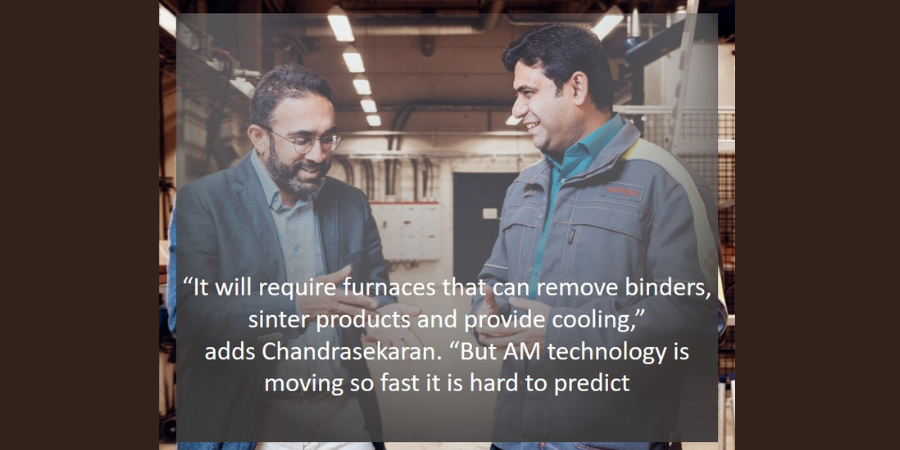
Heat treat methods are going to change in more ways than one, claims Dilip Chandrasekaran, head of R&D and Technology at Kanthal. “What we’ll see in the future as the industry grows is more automated processes where 3D printers feed parts into post-treatment. It will need to be smooth and streamlined, and the heating will need to perform different processes.”
Heat TreatToday brings you this quick, best of the web piece to keep you current with the latest insights in additive manufacturing.
An excerpt:
[blockquote author=”Kanthal®” style=”1″]The growth of additive manufacturing is creating new challenges in the field of heat treatment technology and prompting a shift toward electrification and greater flexibility from heat treatment equipment. These changes are expected to affect heat treatment in other industries too.[/blockquote]
Curious about proper gas atmospheres needed to meet high-tolerance standards for additive manufactured parts before, during, and after the heat treating process?
Learn about them in this detailed original content article from Heat TreatToday’sAerospace 2021 print magazine. The author, Lisa Mercando, Ph.D., is the marketing manager of strategic marketing & development at Air Products. You can access the other articles in our digital edition here. Enjoy the Technical Tuesday!
Lisa Mercando, Ph.D. Marketing Manager, Strategic Marketing & Development Air Products
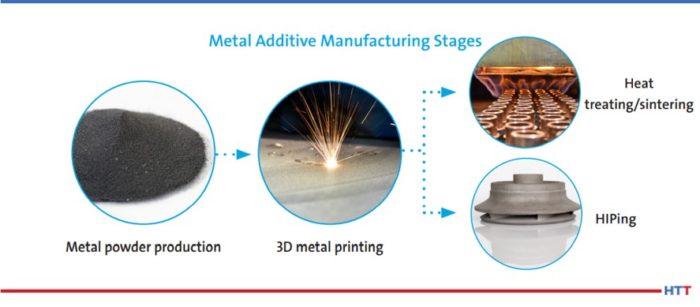
In a world of rapid prototyping and production of metal components, it is imperative to have the proper gas atmosphere to produce quality parts. Argon, nitrogen, and helium are commonly used to create inert atmospheres in order to meet the high-tolerance standards required for additive manufactured (AM) aerospace parts. Industrial gases are used every step of the way from powder production to various additive manufacturing techniques to finishing processes that include heat treating and hot isostatic pressing (HIPing).
Inert gas atomization is the best method to obtain dense, spherical particles, which are best for AM applications where the desired particle size is usually less than 100 microns. Additionally, inert gas atomization greatly reduces risk for oxidation, providing a high level of powder purity and quality. Helium provides the best results when its superior heat transfer capabilities are needed. This process achieves the following properties: dense and spherical particles; high quality and purity metal powders; and narrow particle size distribution. We can provide high pressure gases for powder atomization and hydrogen-based atmospheres for powder reduction and annealing.
Image demonstrating metal additive manufacturing
To meet the high-tolerance standards required in additive manufacturing–particularly for aerospace–nitrogen and argon are commonly used to provide inert atmospheres. The use of helium, with its high thermal conductivity, offers an interesting option for minimizing the thermal distortion of elongated parts during printing. An inert atmosphere provides numerous benefits on a printed part by:
reducing oxidation of printed parts by lowering the oxygen concentration in the build chamber
improving safety through the inerting of combustible dust during powder handling and sieving
creating a stable printing environment by maintaining constant pressure in the print chamber
mitigating powder clumping in the feed tube
preventing part deformation by controlling thermal stress through effective cooling
Gas requirements differ based on the process being used and the material being printed.
Often, AM aerospace parts require additional processing to achieve the desired final properties. This is done mainly in the form of heat treating, sintering, or HIPing. All three processes have industrial gas requirements for preventing oxidation. Heat treating with argon, nitrogen, hydrogen, or a nitrogen/hydrogen blend can relieve internal stresses and enhance part properties such as strength, ductility, and hardness. In sintering applications, nitrogen/hydrogen blends or argon/hydrogen blends are important in producing near-net shape parts with increased strength and uniformity. High pressure argon is used in HIPing applications to provide fully dense parts with increased strength and reliability.
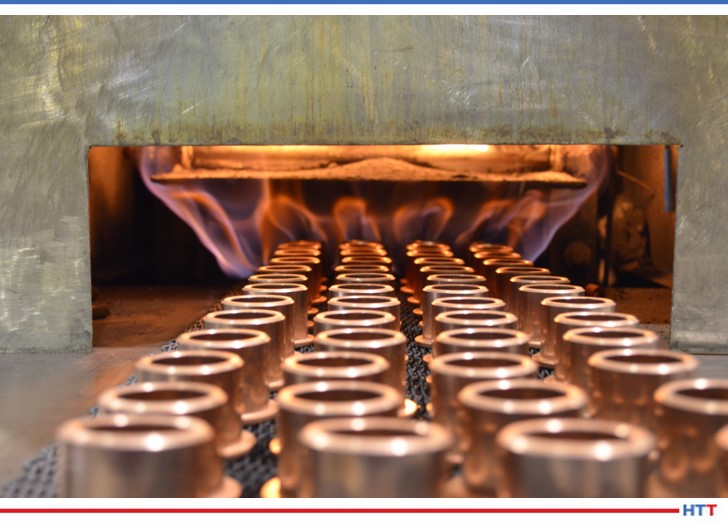
Image of a furnace heating metal parts
In addition to providing the bulk industrial gases required, the company has developed state-of-the-art process intelligence systems. These systems monitor atmosphere composition parameters to ensure the process is running with the desired gas atmospheres and provide alerts for any needed maintenance or adjustments. Decades of metals processing experience in gas supply, applications, process knowledge, and safety are applied to help improve heat treating efficiency and part quality.
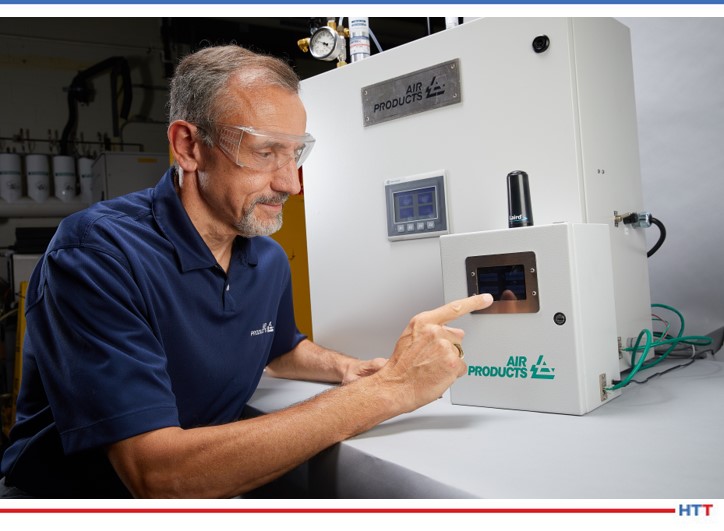
Remote tank monitoring is one example of the company’s Process Intelligence™. Operators increasingly rely on data to closely track critical process parameters, such as the use and inventory of vital industrial gases. This tank monitoring system enables operators to remotely check their supply levels and monitor usage from a touch screen in the plant, on their laptop, or on their mobile device. Customized daily reports are a common way to stay current on their industrial gas supply.
For heat treatment operations using a furnace atmosphere that is flammable or potentially flammable, an inert purge gas – typically nitrogen – is utilized to help ensure safe operation. This system alerts operators to the condition of the liquid nitrogen supply and helps them remotely track their supply and usage of gases. Optional system alarms allow operators to safely initiate a controlled purge shutdown, enabling compliance with NFPA 86 by confirming they have adequate liquid storage levels, or ensuring their nitrogen piping temperature remains at a safe level. Typically installed near the furnace operation, the remote touch screen on the base station displays conditions of all bulk gas storage tanks and can use both audible and visual alarms to warn the operator of a potentially critical situation.
Tank Monitoring
In addition to using inert gases, such as nitrogen and argon for the 3D printing processes, GE Additive Manufacturing, located in Cincinnati, OH and a major manufacturing center for additive manufacturing, also performs post processing heat treatment/sintering on the metal parts to enhance part quality. Their capabilities allow for the production of quick, precise parts with high levels of accuracy, even on intricate shapes and geometries across multiple applications.
Conclusion
If you are prototyping and producing metal components, be sure to consider the importance of achieving the optimum gas atmosphere to efficiently make quality parts. The heat treat postprocessing of AM metal parts is often required to produce the high-quality parts specified for the aerospace industry.
About the Author: Dr. Lisa Mercando is the marketing manager, Strategic Marketing & Development, for Air Products’ metals processing industry. She has worked at Air Products for 28 years in a variety of roles and responsibilities and is the author of several patents and technical articles.
This brief reference guide is composed in response to insights on Industry 4.0 from Robert Szadkowski, VP of Aftermarket Sales at SECO/WARWICK. The list contains pertinent terminology to consider when speaking about Industry 4.0.
If this or any other article piques your interest and/or you would like to contribute to aHeat TreatToday article, please contact editor@heattreattoday.com.
Additive Manufacturing – “a disruptive technology trend that is continuing to influence the future of the manufacturing industry and will continue to provide additional opportunities for heat treaters going forward.” (“Heat Treating, Additive Manufacturing, and Serialization” by Ron Beltz, Bluestreak)
Augmented Reality – Digital enhancement of a real-world environment. For example, phone apps which can portray a digital overlay on a video feed, like Snapchat lenses. This can be used for the following (examples provided by Robert Szadkowski)
OEM internal training of new employees
remote training of the client’s employees
remote reviews
first line of support, direct from OEM for the customer
second line of support, OEM internal service support
“step by step” maintenance instructions
access to documentation directly on site
access to technical data directly at the device
access to technological data of the device operation bypassing the control cabinet
access to the knowledge base
possibility of multi-person interaction (furnace user, furnace OEM, manufacturer of the affected component)
Autonomous Robots – Machines which have “decision-making” computers and can carry out precise actions from that computation (“What are Autonomous Robots?”)
Big Data and Analytics / Big Data Analytics – The use of analytical software to comb through huge data sets in order to find trends and other useful insights that will enable a user to better understand a process in their control (“Datamation: Big Data Analytics”)
The Cloud – a network of servers where a user can store information — versus their hard drive — and access it via the internet (“What is Cloud Computing”)
Cybersecurity – Security of privacy and security of devices; “digital viruses threaten not only computers and phones, but together with industry cybernetics, all devices, including industrial furnaces, e.g. PLC, HMI, SCADA and even single intelligent sensors.” (Robert Szadkowski, SECO/WARWICK.
Industrial Internet of Things (IIoT) – The physical networking of objects via internet-supported software is what is commonly known as the internet of things (IoT). Similarly, the “industrial internet of things” (IIoT) refers to these systems supporting industrial purposes, like synthesizing information from furnace sensors on a central app.
Simulation – The technological imitation of a real-world process for the sake of education, experimentation, training, etc. (“Computer Simulation”)




 The powder metal industry continues to develop to keep up with production and industry needs. What exactly goes on with powdered metals and additive manufacturing? What is the sintering process? What should heat treaters know about the future of this industry?

 Heat Treat TV episode: "Press-and-Sinter Powder Metallurgy."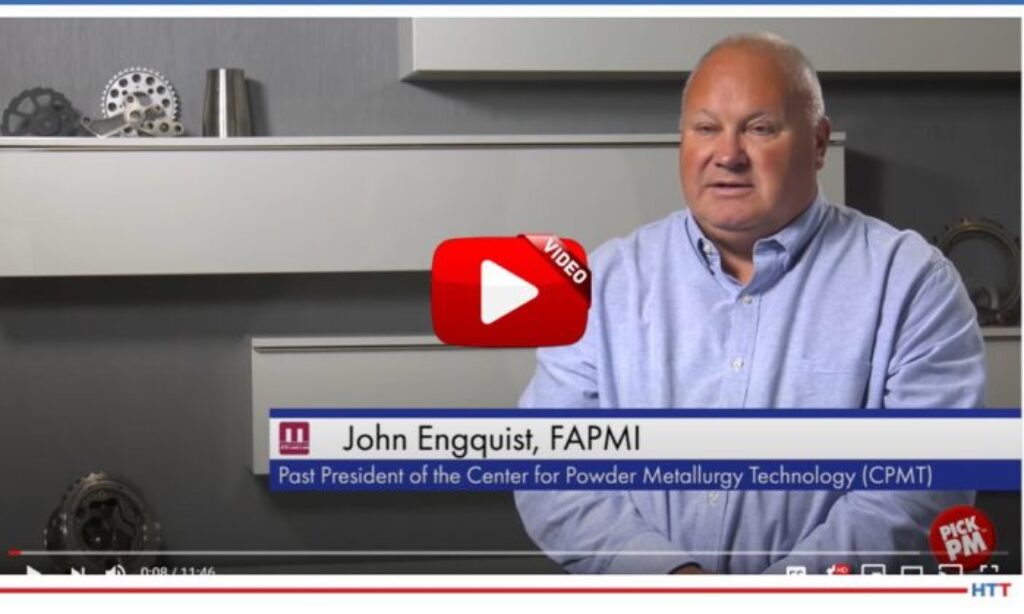
 Find heat treating products and services when you search on Heat Treat Buyers Guide.com