Welcome to Heat Treat Today’sThis Week in Heat Treat Social Media. We’re looking at hot summer events, hot summertime activities, and hot heat treat industry events coming soon to a social media page near you. Check out these posts, podcasts, and videos for a roundup in Heat Treat Social Media.
As you know, there is so much content available on the web that it’s next to impossible to sift through all of the articles and posts that flood our inboxes and notifications on a daily basis. So, Heat Treat Today is here to bring you the latest in compelling, inspiring, and entertaining heat treat news from the different social media venues that you’ve just got to see and read!If you have content that everyone has to see, please send the link to editor@heattreattoday.com.
1. Heat Treating Skateboards > Hot Moves
This space is usually reserved for something rich and technical, but it’s summertime in the northern hemisphere and heat treating is just as essential for the proper working of items affiliated with leisure and outdoor activities as the products that make the world go round (e.g., automotive, aerospace, etc.). “Skateboarding is not just a sport; it’s an art form, a mode of transport, and a way of life for many. But did you know that the metal trucks on a skateboard—those T-shaped pieces that mount the wheels to the deck—are a product of meticulous heat treatment?” (from Bodycote on LinkedIn, November, 2023)
Check out this recent post from Bodycote laying out how critical it is to safety and experience for skateboard trucks to be heat treated with the same level of skill that it takes to execute an ollie or a shuvit.
2. It’s a Beautiful Day in the Heat Treat Neighborhood
What’s everyone been up to on the social channels?
Summer Engineering Institute reshaping the Future of Heat Treating
Future Leaders: Report to the Dome!
Take Us Out to the Old Ballgame!
It may Be Summer but It’s Never Too Early to Think About the Fall
‘Tis also the season for Registration for 2024’s industry events and social media provides an excellent platform for getting the word out. Here are some of the events taking place just in September — don’t delay! Registration is still open for all of these!
Marking Milestones
3. Learn with Us
Sometimes, it’s the small things on social media that grab your attention or give you the “ah ha!” moment. And sometimes things affecting the industry in other places cause us to go “hmm.” Do any of these short posts make you say “eureka”?
Queueing and Sequencing (and more!)
Quiz Time
4. Open Your Ears: The Podcast Corner
You can’t read everything, we get it. Heat Treat Today is here to recommend two informative podcasts to enjoy on your daily commute!
Tune in to Listen to Heat Treat Radio #110! Isolated Heat, the Future of Vacuum Furnaces
Sharpen your hearing: Heat Treating Knives on the TTT Podcast
5. Junk Food and a Logo Extravaganza
Click through to see what Kowalski Heat Treating thinks about junk food and how that thinking gets them counting logos.
Have a great weekend!
Find Heat Treating Products and Services When You Search on Heat Treat Buyers Guide.com
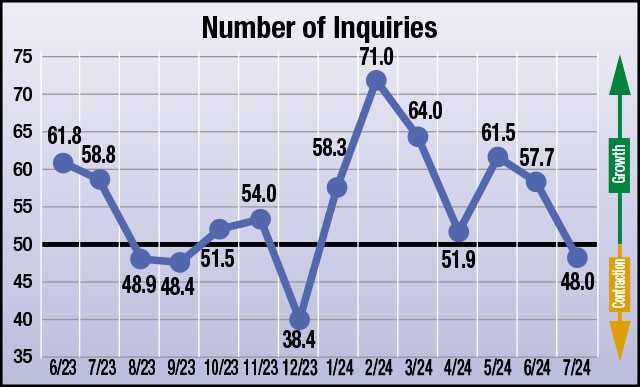
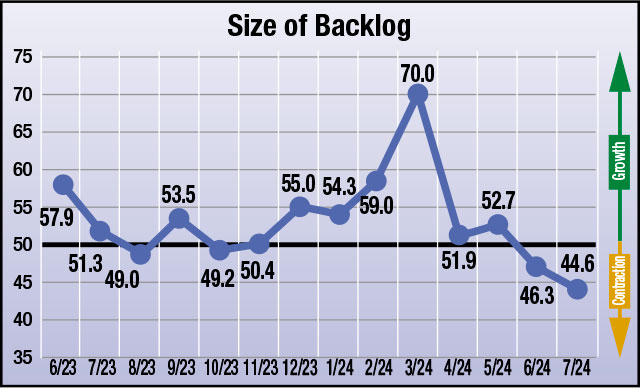
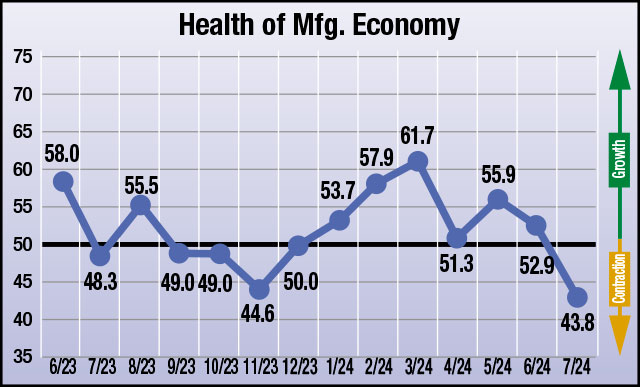
The four heat treat industry-specific economic indicators have been gathered by Heat Treat Today each month since June 2023. Through the first half of 2024, the economic indicators have shown that suppliers to the heat treat industry have expected growth across all four indicators, with numbers in June remaining in the “growth” category in three out of four heat treat industry indices. This month, suppliers are reporting that they expect indicators to reflect a midsummer calm; contractions are anticipated with some falling just below neutral.
The numbers, which were compiled in the first week of July, show that responding parties anticipate indices to reveal contraction, but the expectation for contraction is minimal for number of inquiries and value of bookings, both settling just below the “neutral” x-axis, indicated by the number “50.” Backlogs and overall health of the manufacturing economy are expected to shrink, with the backlog indicator falling below our neutral axis for the second month in a row. This is the first month that suppliers anticipate contraction across the board since data started being collected in June 2023.
The results from this month’s survey (July) are as follows; numbers above 50 indicate growth, numbers below 50 indicate contraction, and the number 50 indicates no change:
Anticipated change in the Number of Inquiries from June to July: 48.0
Anticipated change in Value of Bookings from June to July:48.5
Anticipated change in Backlog Size from June to July: 44.6
Anticipated change in the Health of the Manufacturing Economy from June to July: 43.8
Data for July 2024
The four index numbers are reported monthly by Heat Treat Today and made available on the website.
Heat TreatToday’sEconomic Indicatorsmeasure and report on four heat treat industry indices. Each month, approximately 800 individuals who classify themselves as suppliers to the North American heat treat industry receive the survey. Above are the results. Data started being collected in June 2023. If you would like to participate in the monthly survey, please click here to subscribe.
Find heat treating products and services when you search on Heat Treat Buyers Guide.com
Hot isostatic press (HIP) processing is a manufacturing technology used to densify metal and ceramic parts to improve a material’s mechanical properties. It is based on applying high levels of pressure (up to 2,000 bar/200Mpa) and temperature (up to 3632°F (2000°C)) through an inert atmosphere in order to densify parts and components, mostly of metallic and ceramic material, and to give them improved mechanical properties.
HIP technology has become the decisive tool for aerospace parts and components to certify materials and parts with the strictest quality and safety controls. These developments require highly advanced, complex, and processed materials capable of withstanding the demanding work they will be subjected to.
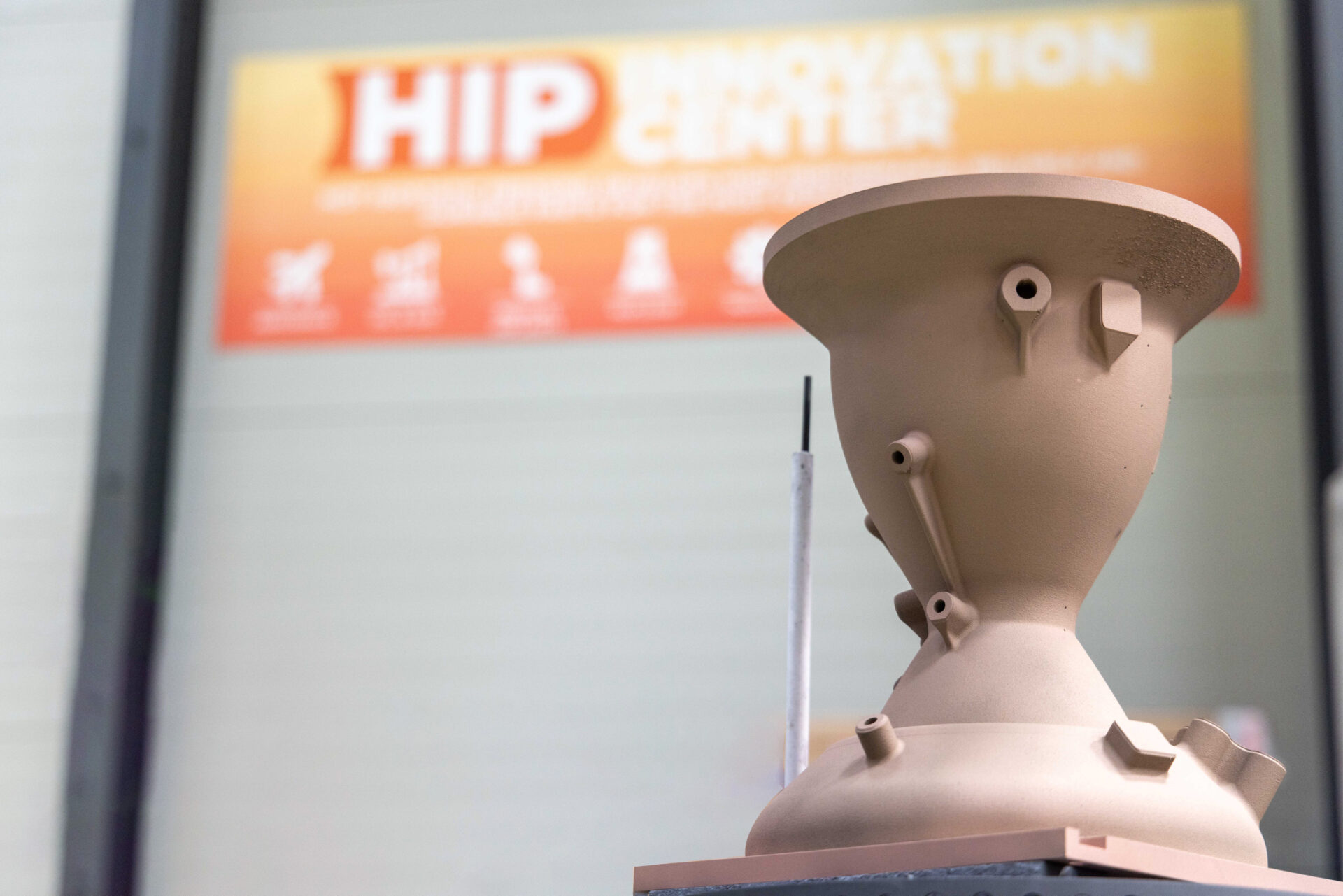
There are strategic materials and components in the space sector that can only be manufactured by advanced manufacturing in a specific way. Rubén García, project manager of HIP at Hiperbaric, noted that “These developments need very advanced, complex, and processed materials that are capable of withstanding the demanding work they will be subjected to. Therefore, advanced processes are needed to ensure and certify that these materials can be part of a satellite or rocket.” In addition to elements that form part of satellites and rockets and their respective engines, turbomachines, burners, and more intended for space also see benefits from HIP processing.
Rocket engine treated by HIP Technology Source: Hiperbaric
An X-ray inspection of each part evaluates the suitability of the component and ensures that it will not fail during the combustion process. “If we find any pores in the part, they are repaired with HIP technology, which repairs and densifies the component,” explains García. The HIP technology supplier uses Fast Cooling technology to cool materials very quickly, especially in materials whose capabilities may be impaired if they are not cooled quickly.
Emphasizing how HIP is the key that takes components to space, García describes, “The more complex qualification components are required to go through a HIP process to ensure that the component will not fail. Materials engineering and the metallurgical process are closely tied to these innovations to ensure what some processes can’t do 100%. That is where HIP becomes our best ally.”
Hiperbaric has devoted a HIP press for its HIP Innovation Center in Spain for companies worldwide for the purpose of investigating and developing HIP products with a particular focus on the aeronautical sector. Here, companies will find the help and knowledge required to achieve success.
About the Expert:
Rubén García Reizábal HIP Project Manager Hiperbaric
Rubén García Reizábal is an industrial engineer with a master’s degree in Material Components and Durability of Structures and has recently obtained his PhD. After his first stage in Hiperbaric, where he held the position of Quality Manager, he has been working as project manager of several R&D projects for more than 11 years. In this role, he leads all the actions of the Spanish-based company related to its hot isostatic pressing (HIP) business line, including R&D and business development efforts.
What is the path forward for thermal loop systems, and how is “sustainability” at the forefront of this technology? The following article is co-authored by Peter Sherwin, global business development manager of Heat Treatment, and Thomas Ruecker, senior development manager, at Watlow. They examine four scopes to take into consideration when assessing thermal loop systems in the context of greenhouse gas emissions and their environmental impact.
Heat treatment thermal loop solutions provide several sustainability benefits, including reduced energy consumption and waste. The power controller regulates the power output to minimize energy waste, and the possible integration with renewable energy sources and circular economy principles provides a complete power solution that spans from element design to recycling and renewables. The thermal loop solutions, in combination with insulation design and materials, provide energy-efficient solutions that contribute to sustainability and reduce the environmental impact of heat treatment processes.
When discussing these systems in the context of greenhouse gas emissions and their environmental impact, it is essential to consider Scopes 1, 2, and 3, as well as the less common Scope 4:
Scope 1 (Direct Emissions): Heat treatment processes often involve the combustion of fossil fuels like natural gas, propane, or oil to generate heat. These direct emissions are attributed to the equipment used in the heat treatment process, such as furnaces and ovens. Efforts to reduce Scope 1 emissions include upgrading to more efficient equipment or adopting alternative heating technologies, like induction or electric heating systems.
Scope 2 (Indirect Emissions from Energy): In heat treatment processes and thermal loop systems, electricity is often used to power various components, such as pumps, fans, and control systems. The emissions associated with generating this electricity are considered Scope 2 emissions. To reduce Scope 2 emissions, companies can improve energy efficiency, invest in renewable energy sources, or purchase green energy from their utility provider.
Scope 3 (Other Indirect Emissions): These emissions are associated with activities throughout the value chain of heat treatment applications and thermal loop systems, such as the manufacturing and transporting of raw materials, equipment, and waste management. Companies can work to reduce Scope 3 emissions by collaborating with suppliers to improve the environmental performance of their products and services, optimizing transportation and logistics, and implementing waste reduction strategies.
Scope 4 (Avoided Emissions): In heat treatment applications and thermal loop systems, avoided emissions may come from implementing energy-efficient technologies, waste heat recovery systems, or other innovative solutions that reduce overall energy consumption and associated emissions. By quantifying these avoided emissions, companies can showcase the positive impact of their sustainability efforts on reducing their carbon footprint. Avoided emissions can also be highlighted when subcontracting heat treatment requirements to a more energy-efficient source rather than running an in-house operation. In this approach, the heat treatment process is outsourced to an external, specialized heat treatment service provider, especially if the in-house equipment is due to be lightly utilized. These service providers operate independent heat treatment facilities and offer services to multiple clients across various industries and generally run 24/7 with high utilization.
At the component level, energy savings can be realized using current technology. Advanced SCRs provide predictive load management functions and hybrid firing algorithms and contribute to sustainability by optimizing the energy usage of heat treatment processes. These SCRs offer real-time monitoring and control of energy consumption, while predictive load management systems use specific algorithms to manage peak power loads and adjust to optimize for local conditions (load shedding or load sharing). Hybrid firing systems use a combination of firing methods to control power factors and reduce the negative impact on the electrical infrastructure.
Heater design is also essential. Switching time impacts heater life with fast, modern switching modes (hybrid firing) significantly extending heater life compared to slower switching from conventional mechanical contactors.
Systems can be rapidly tested, simulated, and modeled through computational engineering. Several thermal loop systems today have improved temperature uniformity due to these methods.
Adaptive thermal system (ATS) solutions are the next frontier of thermal loop solutions. Rather than selecting the best-of-breed components — sometimes with overlapping functionality and kitting a complete solution — ATS provides a merged design between heater and control systems. ATS is already in place in several semiconductor applications, and this type of technology is looking to scale into heat treatment applications shortly.
Figure 2. Watlow Adaptive Thermal Systems ATSTM Source: Watlow
Challenges and Limitations
The initial investment in heat treatment thermal loop solutions can sometimes be higher than in traditional methods. However, this investment often leads to a significantly lower total cost of ownership and improved return on investment due to the thermal loop solutions’ increased efficiency, improved quality control, and extended life.
Ensuring regulatory compliance is complex and time-consuming, requiring organizations to have the right people, processes, and equipment.
Future Trends
As Industry 4.0 and digital transformation continue to gain momentum and Industry 5.0 practices are implemented, heat treatment thermal loop solutions will become increasingly important. Integrating digital technology and machine learning algorithms will provide even greater control, traceability, and transparency, enabling organizations to make informed decisions based on real-time data and predictive analytics. In addition, as new materials and manufacturing processes are developed, adaptive and flexible heat treatment thermal loop solutions will need to evolve to meet these challenges and provide the necessary level of control and efficiency for these new applications.
Conclusion
Heat treatment thermal loop solutions provide several benefits over traditional heat treatment methods, including improved temperature control, increased efficiency, and improved sustainability outcomes. The integration with Industry 4.0 and data management systems, as well as the use of FMEA and OEE metrics, further help enhance the performance of heat treatment processes. As Industry 4.0 digital transformation and Industry 5.0 practices continue to evolve, heat treatment thermal loop solutions will play an increasingly important role in the future of heat treatment.
About the Authors:
Peter Sherwin Global Business Development Manager of Heat Treatment WatlowThomas Ruecker Senior Business Development Manager of Heat Treatment Eurotherm, a Watlow company
Peter Sherwin, global business development manager of Heat Treatment at Watlow, is passionate about offering best-in-class solutions to the heat treatment industry. He is a chartered engineer and a recognized expert in heat treatment control and data solutions.
Thomas Ruecker is the business development manager of Heat Treatment at Eurotherm Germany, a Watlow company. His expertise includes concept development for the automation of heat treatment plants, with a focus on aerospace and automotive industry according to existing regulations (AMS2750, CQI-9).
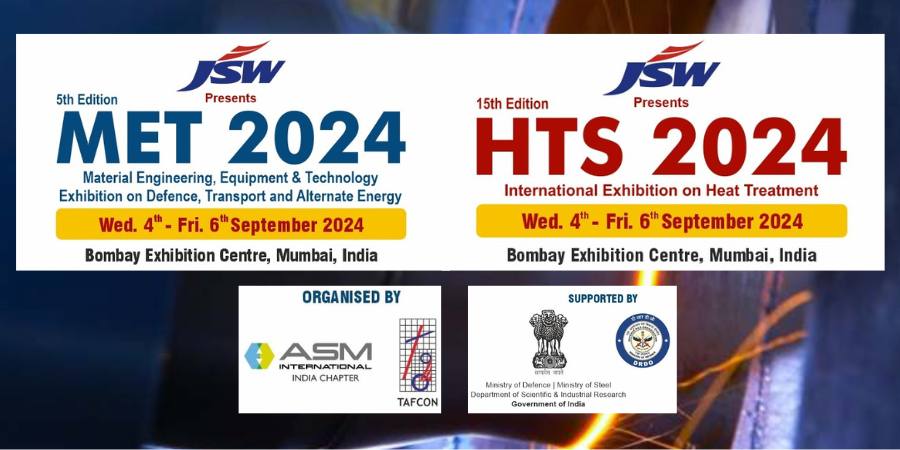
Sign up now to attend the MET 2024 and HTS 2024 event in Mumbai, India, where new initiatives, machinery, products and technologies will be displayed and launched in a combined show, offering opportunities for Indian and international exhibitors to establish joint ventures and develop and renew contacts. Online registration is open for the September 4-6, 2024, gathering, organized by ASM International India Chapter and Tafcon.
MET (Material Engineering, Equipment and Technology Exhibition on Defence, Transportation and Alternate Energy, 5th Edition) joins HTS (The International Exhibition on Heat Treatment, 15th Edition) for a 3-day international conference headlining industry-focused addresses, plenary sessions, panel discussions, and technical presentations. The focus for the conference is on advanced materials and processes for use in defense, transport, and alternate energy sectors along with advances in heat treatment, accomplished through three parallel symposium themes:
Materials and Processing
Material Degradation and Failure Analysis
Advances in Heat Treatment
MET and HTS will bring together experts, suppliers, innovators, buyers, and decision makers from around the globe:
Participation of government departments, PSUs, corporates, SMEs, start-up organizations
Innovation/start-ups, SMEs, R&D institutes, academia, etc. showcasing global developments
Innovation pavilion inviting models/posters from entrepreneurs and engineering students
Student outreach program from the senior engineering students
MET and HTS are excited to unveil its lineup of Sponsors and Supporting Organizations for the upcoming conference and exhibition Title Sponsor for the event is JSW. Platinum Sponsors are Aditya Birla Hindalco and SECO/WARWICK. Silver Sponsors include:
Bharat Forge/Kalyani
Fluidtherm
Gefran
Suzlon
The Germany Pavilion is sponsored by VDMA.
The event is supported by the Government of India Ministry of Defence, Ministry of Steel, and Department of Scientific and Industrial Research. Supporting Associations are:
Spirit AeroSystems, a global manufacturer of aerostructures for commercial airplanes, defense platforms, and business/regional jets recently announced it has entered into a definitive merger agreement with The Boeing Company. Additionally, Spirit has agreed to a subsequent agreement in which aerospace manufacturer Airbusacquires certain Spirit assets that serve Airbus programs.
Dave Calhoun President & CEO The Boeing Group Source: Linked In
The $8.3 billion Boeing transaction, expected to close mid-2025, will include all Boeing-related commercial, defense, aftermarket operations, and a commitment to ongoing partnership with the U.S. Department of Defense and Spirit defense operations. Spirit AeroSystems manufactures fuselage structures for the Boeing 737 MAX and 787 Dreamliner, among other aircraft programs.
Patrick M. Shanahan President & CEO Spirit AeroSystems Source: U.S. Department of Defense
“This is an opportunity to bring back critical airplane manufacturing work on Boeing airplanes into our factories–where Boeing and Spirit world-class engineers and mechanics can work seamlessly together, focused on a common mission to build safe and quality airplanes for our customers,” said Dave Calhoun, president and CEO of Boeing, in a statement to employees on July 1, 2024.
The Airbus transaction will run concurrently with the closing of Spirit’s acquisition by Boeing and involves the potential acquisition of major activities related to Airbus, notably the production of A350 fuselage sections in Kinston, North Carolina, U.S., and St. Nazaire, France; of the A220’s wings and mid-fuselage in Belfast, Northern Ireland, and Casablanca, Morocco; as well as of the A220 pylons in Wichita, Kansas, U.S.
“Bringing Spirit and Boeing together will enable greater integration of both companies’ manufacturing and engineering capabilities, including safety and quality systems,” said Patrick M. Shanahan, president and CEO of Spirit. “We are proud of the part we have played in Airbus’ programs and believe bringing these programs under Airbus ownership will enable greater integration and alignment.”
In taking over those operations, Airbus will pay a nominal $1.00 and will be compensated with $559 million from Spirit AeroSystems.
Related press releases are available in their original form here, here, and here.
Happy Independence Day from Heat Treat Today. Our team will be enjoying a long weekend of festivities, celebrating our nation’s 248th birthday with fireworks, community events, picnics, parades, and time spent with family. We have much to be thankful for; first and foremost are the freedoms we treasure articulated in that timeless Declaration of Independence and encoded in the Constitution of the United States.
We here at Heat Treat Today love to see how others in the industry honor our heritage and flag, and we thought you’d appreciate the heat treating work done by Advanced Heat Treat Corp. and shared on their LinkedIn page:
Posted to mark Flag Day, June 14, 2024, this is an ideal item for Heat Treat Today’s “This Week in Heat Treat Social Media,” but we didn’t want to wait. Here’s what the original post at LinkedIn said, “June 14th is Flag Day. We thought sharing these unique heat treated metal flags would be fun. Nitriding the flag makes it stronger and last longer outdoors.” You can see that post here.
Heat Treat Today’s offices will be closed July 4 and 5. There will be no e-newsletter either of those days. See you on Monday!
A global manufacturer of aircraft parts has ordered a single-chamber vacuum furnace for brazing jet engine parts. The new equipment will replace a 30-year-old unit previously operating in its Poland-based plant.
Jędrzej Malinowski Sales Manager SECO/WARWICK Group Source: LinkedIn
The new Vector® vacuum furnace is being supplied by SECO/WARWICK, which also manufactured the retiring equipment. The upgrade is based on a standard Vector vacuum furnace with a working space of 900 x 900 x 1200 mm, with screen insulation and metal heating elements. The solution has been adapted to industry specific needs and can heat treat jet engine components, such as complex gears or main shafts.
“This unit is distinguished by the ability to carry out efficient and clean high vacuum processes thanks to the use of a molybdenum heating chamber and a very efficient pumping system. This ensures very high purity and the dynamics required for brazing processes. Another big advantage is the very good temperature uniformity in the molybdenum heating chamber and compliance with the strict requirements of industry standards such as AMS2750,” said Jędrzej Malinowski, sales manager, SECO/WARWICK Group.
The press release is available in its original form here.
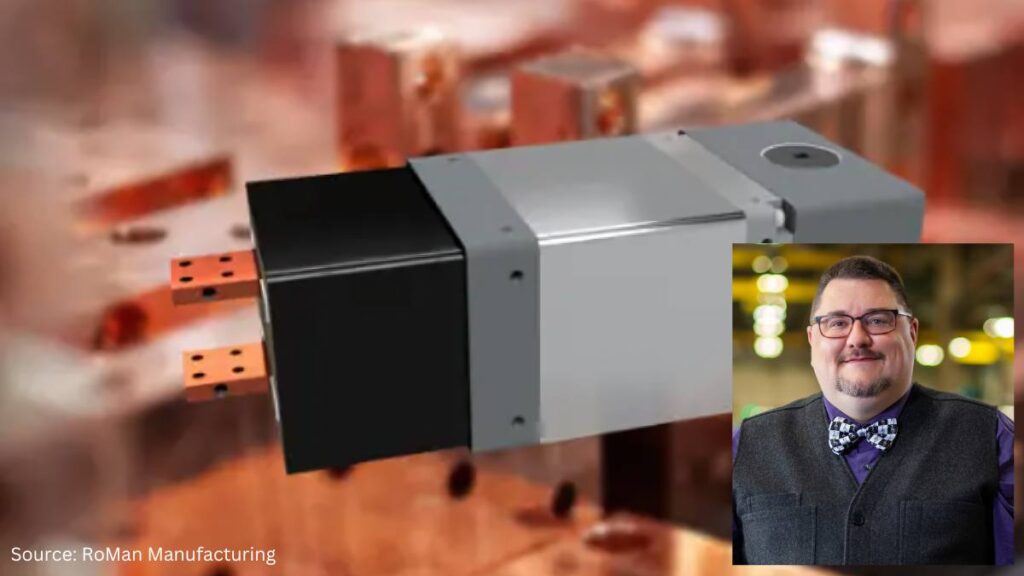
“Communication is key.” As heat treating equipment and processes evolve, it becomes critical that the accompanying control systems also develop to maintain “communication.” In this Technical Tuesday installment, guest columnist Stanley Rutkowski III, senior applications engineer at RoMan Manufacturing, Inc., discusses how digital control system communications have improved to increase energy efficiency for manufacturers with in-house heat treat operations.
This informative piece was first released inHeat Treat Today’sMay 2024 Sustainability Heat Treat print edition.
Industrial furnace applications that rely on resistive heating will consume large amounts of electrical energy when processing their loads. Utilizing digital controls technologies to maximize this type of heating allows for a cleaner-and thus greener-approach to energy demands.
Typically, heat treat processes have a long duration (hours to days in length), and each load can have its own unique recipe in the amount of power required. With unique recipes, there tends to be a ramp-up phase (getting the vessel to temperature), followed by a soak phase (which demands more control over the power system), and then a cool-down phase (an even more controlled state). As the power is controlled through the furnace system, disturbances occur with different technologies. This starts with “tube technology,” then variable reactance transformer (VRT) technology, then silicon controlled rectifier (SCR) technology, and finally IGBT (insulated-gate bipolar transistor) technology. As these technologies have evolved, their ability to communicate information digitally has allowed for less disturbance in the power system and allowing both a less expensive energy bill and a cleaner energy usage for the process.
Definitions
Electrical Power
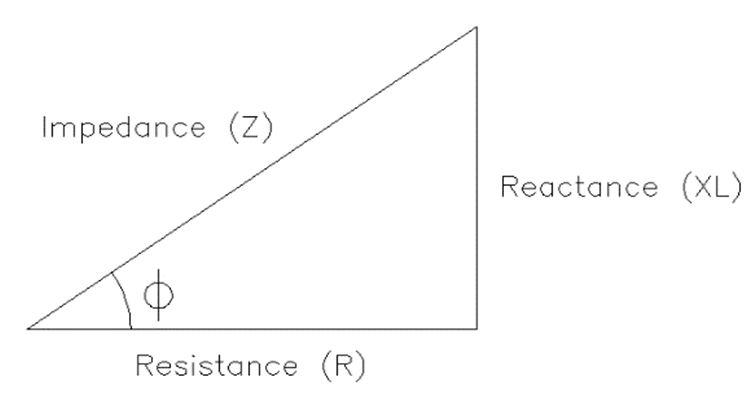
Power losses in an electrical system are defined by five aspects (Figure 1):
Resistance (R): a function of the material cross section and the length of an electrical conductor.
Reactance (XL): a function of the area in a circuit and is a vector 90 degrees offset from resistance.
Capacitance (XC): a vector 180 degrees offset from reactance. In inductive circuits, capacitance can be added for power factor correction.
Impedance (Z): the vector sum of resistance, reactance, and capacitance.
Power Factor [cos(F)]: the ratio of resistance to impedance. In industrial applications, displacement power factor (DPF), the offset of the current to voltage waveforms, is used in the billing of electrical power.
There are five unique aspects that define electrical power usage (Figure 2):
Real power (kW): the amount of power that is generated.
Reactive power (kVAR): the amount of power that is wasted.
Total power (kVA): the rate at which power is consumed. This is also referred to as apparent power.
Power factor (cos(F)): the ratio of real power to total power. In industrial applications, the displacement power factor (DPF) is the offset of the current to voltage waveforms and is used to bill for electrical power.
Peak demand: the capacity required when the power grid experiences the highest power demand in a specified period of time.
3 Most Popular Types of Control Systems
For the most part, today’s furnace manufacturers use three main types of control systems: VRT, SCR, and IGBT. Each operates with slightly different methods to control how power goes into the heat treat furnace and creates heat.
VRT Control System
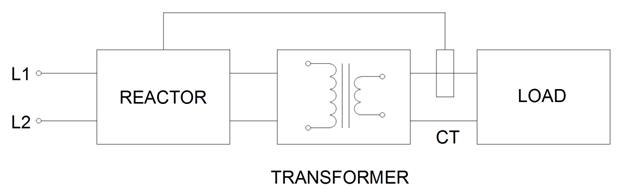
One traditional resistance heating setup uses a VRT control system that incorporates a saturable reactor, which controls the power applied to the transformer in the system (Figure 3). The control transformer on the output side of the transformer feeds back to the reactor to set the limit on the input power to the transformer.
Figure 3. VRT Control and Transformer Schematic (CT=control transformer); Source: RoMan Manufacturing, Inc.
SCR Control System
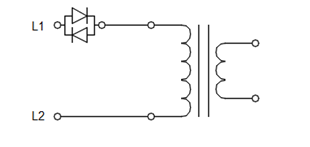
Figure 4. SCR Control and Transformer Schematic; Source: RoMan Manufacturing, Inc.
Another traditional resistance heating setup uses an SCR control system that includes dual thyristors (gated diodes) to control the amount of power applied to the primary of a transformer.
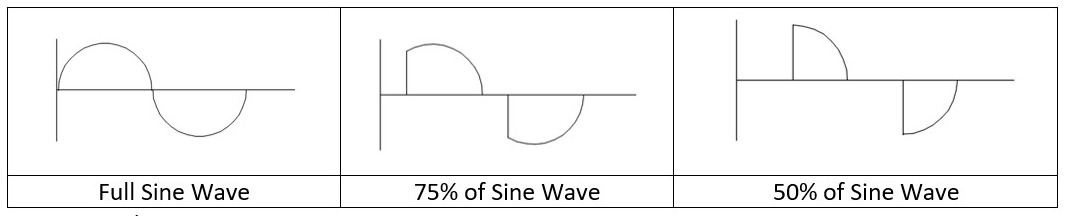
The SCR control delays the start of the waveform, and the control point is reset when the waveform crosses the zero line.
Figure 5. Comparison of Sine Waves; Source: RoMan Manufacturing, Inc.
IGBT Control System
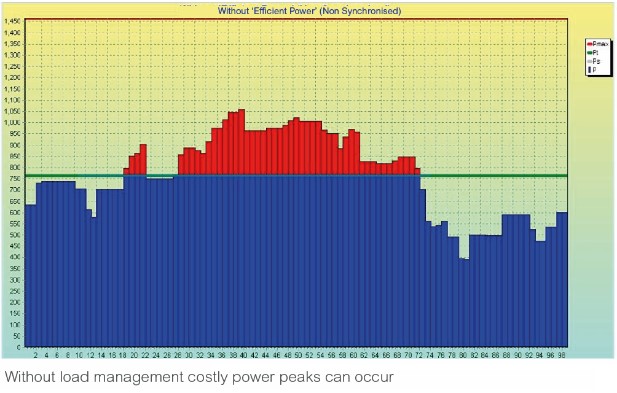
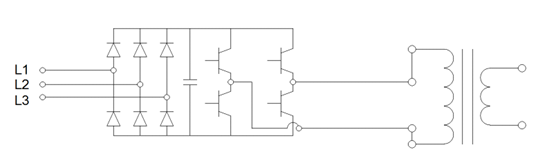
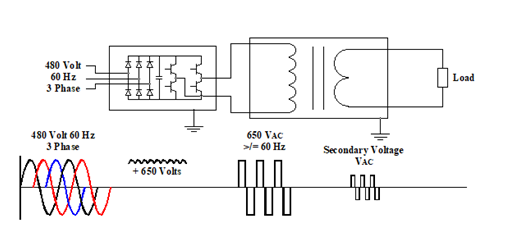
Finally, an IGBT control system uses a diode bridge, capacitor, and switching transistors to control the amount of power applied to the primary (i.e., main power input of a transformer). The input frequency to the transformer is controlled by the switching transistors. Since the IGBT control system utilizes all three phases of the power system, the IGBT control can be set to a particular phase for the zero cross (for phase orientation in the application, synchronous mode) or left floating (non-synchronous mode), as is demonstrated in Figure 6. The input voltage to the transformer is increased by the operation of the IGBT control. As such, potential energy savings may be had with these types of controls as compared to tradition controls (such as on-off contractors, time proportioning controls, or other types of current proportioning control systems).
Figure 6. IGBT Control and Transformer Schematic; Source: RoMan Manufacturing, Inc.
Synchronization with the IGBT can be to the incoming lines (A, B, or C phase) and can be offset from each of the phases. The ability to offset from a phase allows for traditional arrangements (Single Phase, Scott-T, Delta and Wye) as well as unique offsets allowing for additional vector heating in the application with AC outputs. The unique arrangements beyond the traditional systems could allow for more uniform heating of the part and less energy being consumed during the process.
Advantages of Utilizing Communications
As technology for controlling heating systems has evolved, and with an emphasis on clean energy sources, the ability to communicate with the control system has increased as well. This communication allows for more precise control of the run for the load, improved power usage (better power factors and less peak power usage as well as less total power usage), and inputs into a preventive maintenance program.
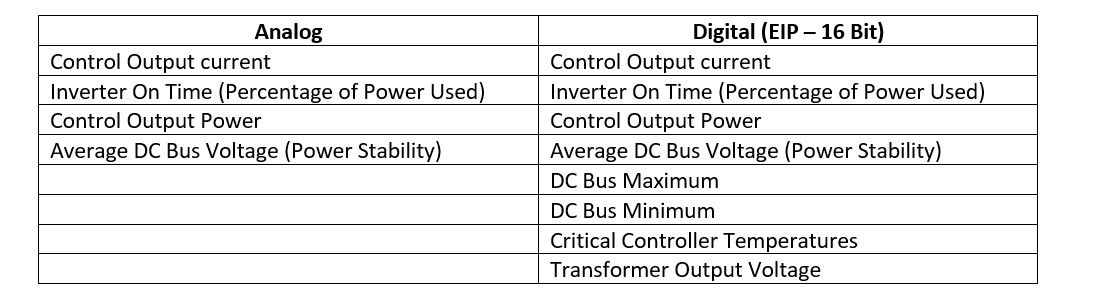
Table A. Analog vs. Digital IGBT Systems
With an IGBT system, both analogue and digital control communications are available today. See Table A for a comparison on how each control option works.
In addition to the EIP defined pieces, there is the ability to access the FPGA system for graphical outputs that can be downloaded into another system in your process for storage, comparisons, or general record keeping for a part run. The FPGA is an internal processor in the control that allows for more data, charting, and diagnostics to be captured and used by the system for both energy consumption and possible preventative maintenance purposes.
Why does this matter? Let’s turn to some possible ways of using the data generated from digital controls systems:
Evaluate average, minimum, and maximum DC bus voltages to plan for the best time and day to run heat treat jobs. For high power draw jobs, planning ahead can minimize power costs; similarly, knowing power trends can be helpful to plan jobs requiring sensitive control of the heating.
Evaluate transformer output voltage to allow the system to detect any shorts in the process. If the controller output and transformer output diverge from the known turns ratio, a change has occurred in the system. This could be corroborated if controller on time and output power do not trend.
Track furnace run records with EIP communications and FPGA data. This will be most helpful in processing lots of data, as is the case for Milspec records.
Evaluate changes in power factor to monitor any loose cables, and so avoid reactive power losses.
Evaluate the current versus the voltage to monitor the resistance of the system. If there is an increase in the resistance, you could project the trends in wear of the heating elements, therefore predicting future required maintenance.
Evaluate the critical control temperatures of the system to know if it is being run close to, or above, its ratings or if there is a disturbance in the cooling systems.
Use knowledge of power usages and power stability to update recipes for load runs so they use less power over the total run; this allows for a less costly power-savings solution. With less power usage, more output of the total facility can be had as each station contributes less to energy consumption
Even more benefits can be realized when users and builders of furnace systems and component manufacturers collaborate in the design of the total system. Such dialogues lead to the creation of more interactive and intuitive solutions that minimize power consumption, minimize downtime, and maximize outputs. These practical benefits are the foundation of a greener system.
About the Author:
Stanley F. Rutkowski III Senior Applications Engineer RoMan Manufacturing, Inc.
Stanley F. Rutkowski III is the senior applications engineer at RoMan Manufacturing, Inc., working on electrical energy savings in resistance heating applications. Stanley has worked at the company for 33 years with experience in welding, glass and furnace industries from R&D, design, and application standpoints. For more than 15 years, his focus has been on energy savings applications in industrial heating applications.