

18 News Chatter To Keep You Current

Heat Treat Today offers News Chatter, a feature highlighting representative moves, transactions, and kudos from around the industry. Enjoy these 18 news items.


Equipment

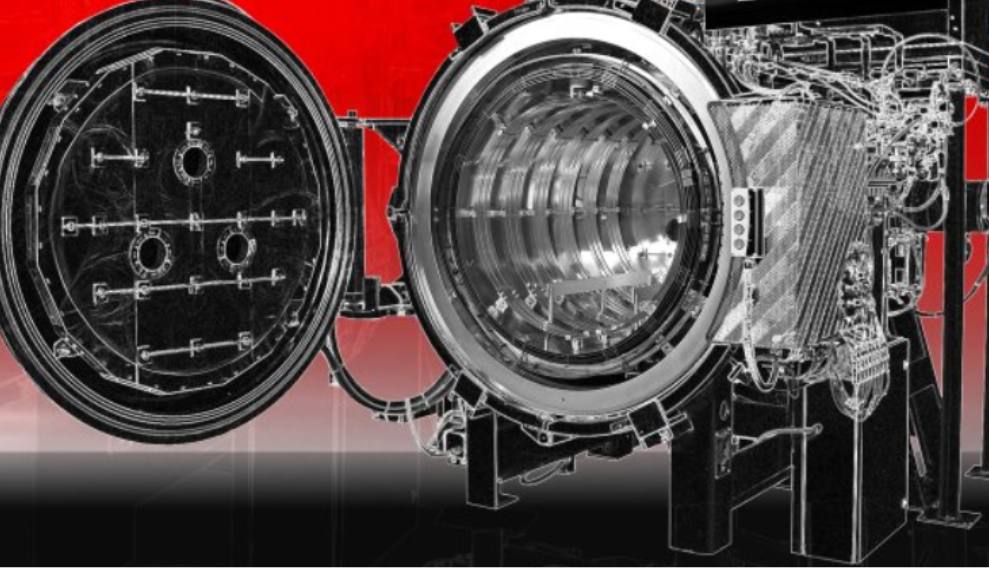
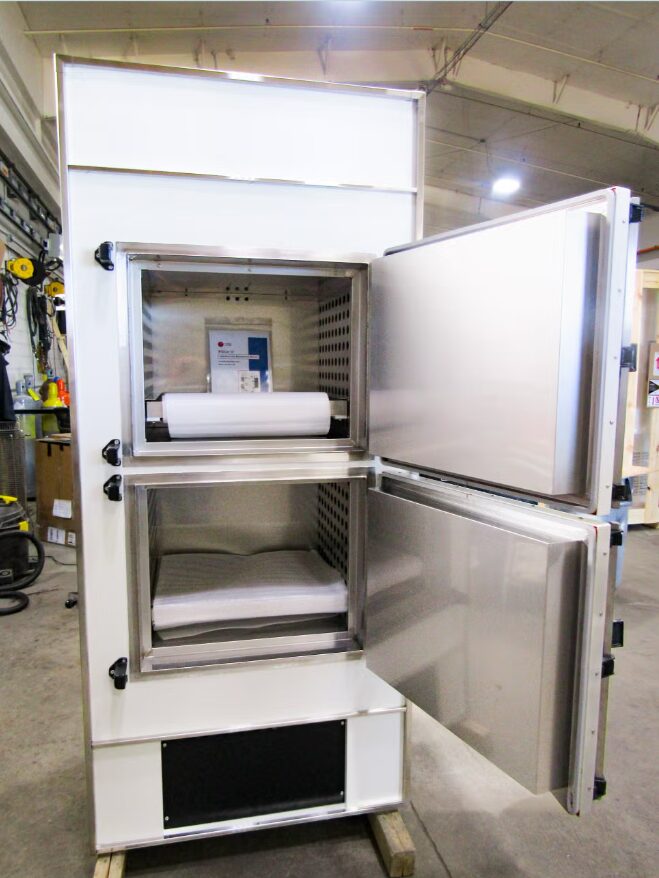
  1. Blue M, a global industrial and laboratory ovens manufacturer, has announced the shipment of a stacked mechanical convection oven to be used for non-hazardous curing applications between 570°F and 750°F (300°C and 400°C).
  2. Hammerer Aluminum Industries (HAI) has implemented a Nitrex nitriding system at its facility in Romania, replacing the traditional salt bath nitriding process. The new system has a load capacity of 3,300 lbs (1,500 kg), is designed specifically for treating extrusion dies, and offers controlled nitriding and controlled ferritic nitrocarburizing.
  3. SECO/WARWICK recently completed three transactions: a European manufacturer of modern armament equipment and armaments supplier for NATO acquired a vacuum furnace with gas cooling and a molybdenum heat chamber; a Slovenian manufacturer ordered a vacuum furnace with 15 bar high pressure gas hardening and two nitriding furnaces; and a Turkish company purchased an induction vacuum furnace for melting and obtaining castings designed for manufacturing aviation components.
Company & Personnel

  1. Industry veteran Mark Stein was recently added to the Nitrex team as regional sales manager for Michigan territory. In his role, Mark will lead sales initiatives across Michigan, working directly with current and prospective clients to enhance service, optimize growth strategies, and ensure market demands are met. 
  2. To mark 175 years of innovation in specialty chemicals and distribution, Hubbard-Hall recently unveiled a new logo and a completely redesigned website. The updates reflect the company’s rich history and ongoing evolution, noting its founding year of 1849.
  3. Bluestreak Compliance, a quality management (QMS) and manufacturing execution system (MES), has hired Rory Godsell as its new Cybersecurity Compliance Specialist to assist clients and their vendors in achieving compliance of NIST 800-171, CMMC and DFARS. He brings expertise in cybersecurity, penetration testing, ethical hacking, digital forensics, cyber operations, and project management, to the company’s mission of advancing CMMC certification services.
  4. Steelhead Technologies, which delivers ERP, MES, and CRM solutions designed to transform job shop manufacturing, recently announced the successful completion of a $12.5M Series B funding round. This brings the company’s total funding to $23 million. 
  5. Ipsen USA announced the promotion of two team members to new roles in 2025. Matt Clinite has been promoted to Ipsen USA Sales Director, and Christina Connelly has been promoted to Director of Ipsen Customer Service (ICS) – Parts.

Kudos

  1. Kanthal, a leader in industrial heating technology, has won the prestigious industry award “E-prize” in the category Energy Optimization for its technology that helps companies and industries transform to a fossil-free production. The award is organized by Sweden’s largest business newspaper, Dagens Industri, and the newspaper, Aktuell Hållbarhet, together with the energy group E.ON.
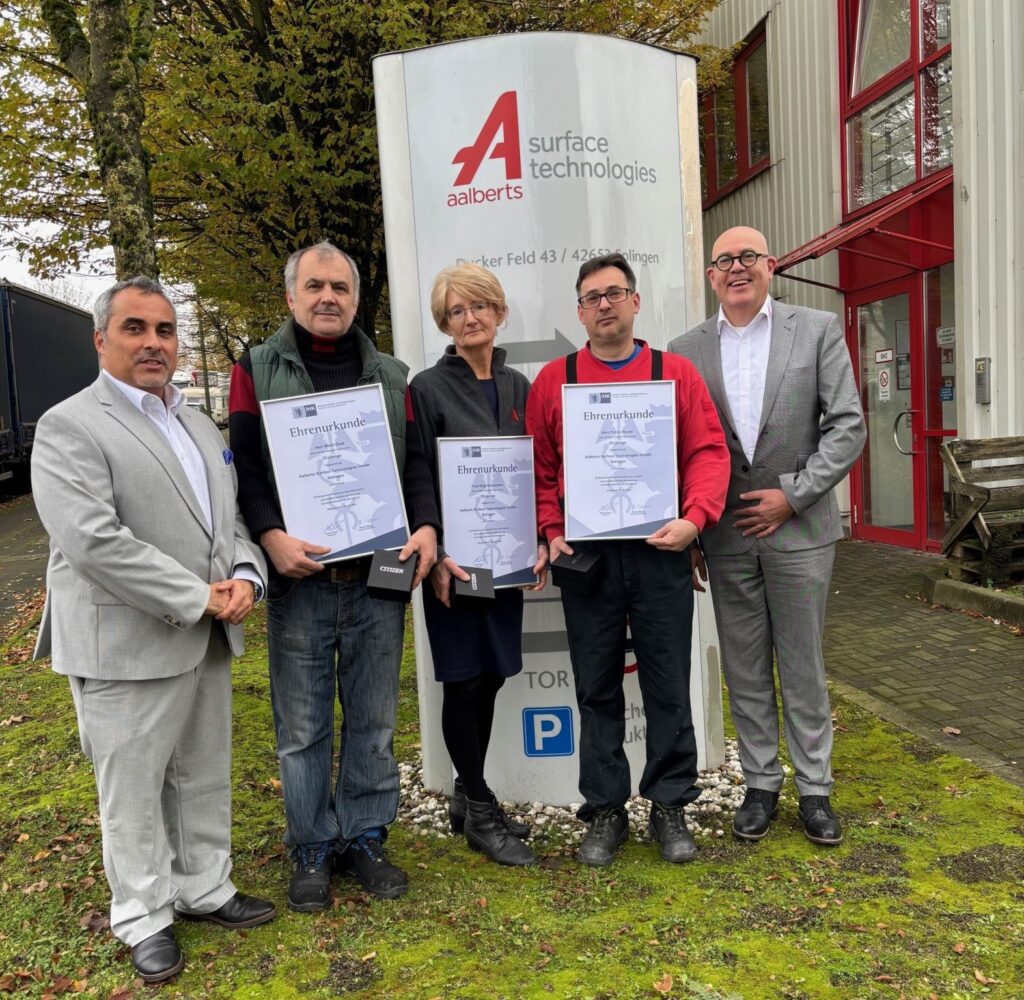
  2. Aalberts surface technologies honored Olga Kovalenko, Patric Keune and Metin Önal for 25 years of commitment in Solingen. Presenting the certificates were Guido Heijnen, sales director, and plant manager Miguel Rodrigues.
  3. TAV VACUUM FURNACES was recently awarded the title of “Best Performer Enterprise 2024 in the Province of Bergamo.” This prestigious award is reserved for the top 1000 companies in the province.
  4. StandardAero was selected by US-Bangla Airlines, a leading Bangladeshi carrier, to provide OEM-authorized PW127M Maintenance, Repair and Overhaul Services. In addition, the company has been chosen by Brazilian Air Force to support PT6A-68C engines powering its A-29 Super Tucano Fleet, it has secured Indian DGCA Approval for its OEM-authorized PW127M Maintenance, Repair and Overhaul Services, and it has received CAAC Approval for Its LEAP-1A and LEAP-1B Engine MRO Services, enabling it to support A320neo and B737 MAX operators across China.
  5. HeatTek, a leader in manufacturing ovens and washers, recently celebrated the company’s 25th anniversary, noting its numerous achievements since 1999, including industry accolades, editorial recognition, as well as awards identifying its positive culture as an employer. “We are incredibly proud to celebrate this milestone,” says Jason Plowman, president and 2nd generation owner of HeatTek. “The success we’ve achieved over the past 25 years is a direct result of the hard work and commitment of our employees, the trust of our customers, and the support of our partners. We look forward to continuing our journey of innovation and growth in the years to come.”
  6. Ron Waligora, chief operating officer for AFC-Holcroft, recently announced his retirement date of May 4, 2025. Throughout his 36 years with the company, he moved through the engineering disciplines and eventually into a management role as mechanical engineering manager and later senior engineer manager in 2015. In the spring of 2023, Ron Waligora and Tracy Dougherty assumed the roles of chief operating officers. Upon the announcement of Ron’s retirement, Tracy assumed the role of president and CEO on January 1, 2025.
  7. Aalberts surface technologies is proud to announce they have received the EcoVadis Bronze Medal. The sustainability rating reviews a company’s management of economic, environmental, and social performance, covering different industries, locations, and company sizes contributing to business sustainability on a global scale, and is based on a “best-in-class” approach, assessing whether a company reaches the best possible level for their business activity.
  8. The Divergent team was recently granted the Nadcap 12-month Accreditation for the Additive Manufacturing (AM) scope.
  9. Solar Atmospheres Greenville, SC facility announced it has been awarded Parker Aerospace approval.
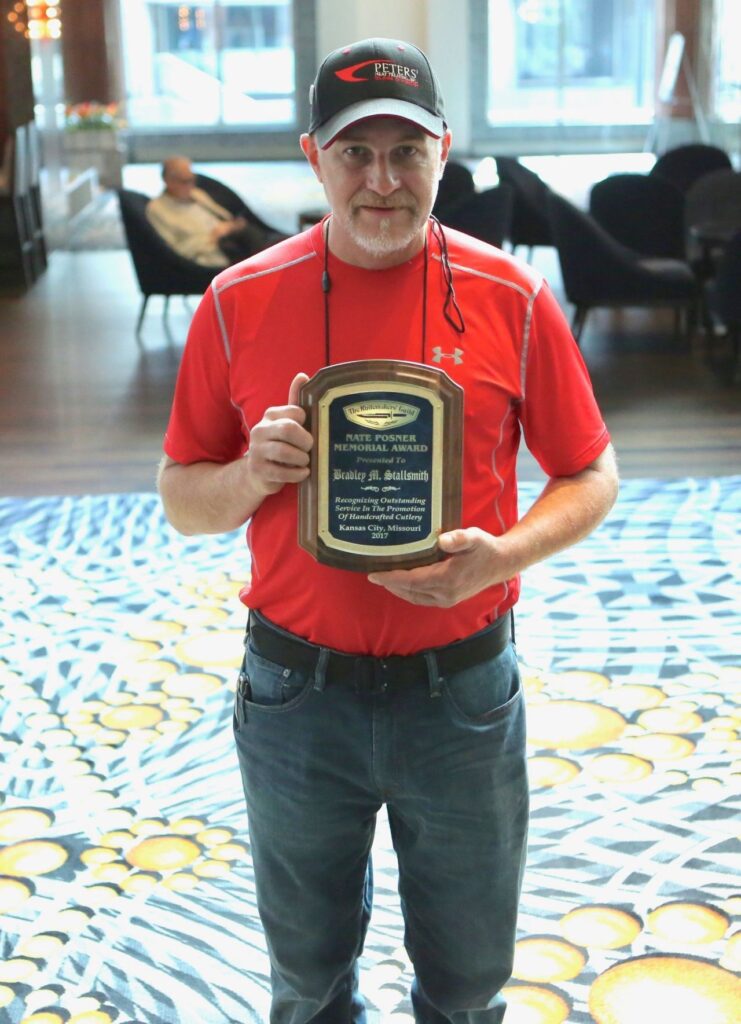
  10. Brad Stallsmith recently marked his retirement after 43 years of dedicated service at Peters’ Heat Treating. His journey has included starting the Blade Division, mentoring new team members and ensuring high standards in processing.

Find Heat Treating Products And Services When You Search On Heat Treat Buyers Guide.Com

18 News Chatter To Keep You Current Read More »

ECM Group Expands with Acquisition in Italy

The ECM Group, a provider of solutions and services for industrial heat treatment companies with a subsidiary based in North America, recently acquired Vacuum Service & Maintenance (Vacuum SM), an Italian company which specializes in the maintenance of industrial furnaces for vacuum heat treatment. This acquisition will enable the company to consolidate its European presence and improve its responsiveness by being closer to its client base.

Vacuum SM anticipates the benefit of support from ECM Group while keeping its independence under the management of Roberto Bartoli, Andrea Cantarini, and Lorenzo Tirloni. The company will begin training on the products of ECM Technologies, the Grenoble-based Group’s main subsidiary.

The press release is available in its original form here.


ECM Group Expands with Acquisition in Italy Read More »
Pittsburgh-based Providers Merge, Strengthen Heat Treatment Capabilities

A global supplier of equipment, systems, and digital solutions for several manufacturing sectors recently announced that it has acquired Bloom Engineering, Inc, a provider in industrial heating applications. The company will join the Freight & Industrial Components Group at Wabtec Corporation, which serves the freight and transit rail industries and is a worldwide leader in the decarbonization of freight rail.

Mike Fetsko
President
Freight & Industrial Components Group
Wabtec Corporation

This acquisition strengthens Wabtec’s heat transfer and energy solutions, integrating Bloom’s advanced technologies in burners, combustion systems, and overall services for industrial and process heating applications. Both companies are headquartered in Pittsburgh, PA.

“This is another exciting addition to Wabtec,” said Mike Fetsko, president of Wabtec’s Freight & Industrial Components Group. “Bloom Engineering is a great fit within our heat transfer and energy solutions business, and we already serve many of the same customers. Our shared vision toward driving customer productivity within their industrial processes will enable us to deliver a more comprehensive portfolio for our customers to operate more efficiently and sustainably.”

In addition to supplying solutions for the freight and transit rail industries, Wabtec also serves the mining, marine and industrial sectors. The acquisition is expected to provide increased value to its worldwide customer base.

The press release is available in its original form here.


Pittsburgh-based Providers Merge, Strengthen Heat Treatment Capabilities Read More »

Digitalization Propels Heat Treating to Industry of the Future

If you work in a standards-driven industry, you may already feel the imperative of digitalization. In today’s Technical Tuesday, Mike Loepke, head of Nitrex Software & Digitalization, posits how, even if you aren’t necessitated to track compliance digitally, you are probably looking to synthesize and leverage the strengths of multiple advanced operations — furnace and process record-keeping, knowledge of furnace past operations, juggling different new equipment capabilities — across just one platform. In other words, you are looking to bring digitalization system management to your operations.

This informative piece was first released in Heat Treat Today’s December 2024 Medical & Energy Heat Treat print edition.


The Future of Heat Treatment Relies on Digitalization

The ultimate goal for heat treaters, whether commercial or captive, is to uphold the quality of their product and meet client expectations while remaining profitable. Digitalization supports these efforts as it synthesizes and presents detailed, transparent, and accessible data that allows heat treaters to better manage their equipment, processes, and product quality. In addition, the collection of detailed information can serve as a database of knowledge to be used by the next generation of heat treaters, supporting future viability and advancement in the field.

There are necessary steps to take to establish a digital solution and essential components to look for when choosing a software platform that assists heat treaters in optimizing equipment and processes, effectively creating the digitalization of the heat treat operations. Let’s explore these now.

How Digitalization Optimizes Heat Treatment Processes

Digitalization in the heat treatment industry relies on the integration of industrial internet of things (IIoT) technologies with traditional and modern heat treatment processes. Using enabling devices such as sensors, modern connectivity methods, analytics, machine learning, and IIoT software platforms, it is possible for heat treaters to collect and process data that, after analysis, drives informed decisions to optimize equipment, processes, and product quality. To put a finer point on it, digitalization occurs when a manufacturing system is digitally integrated to capture and preserve human experience and knowledge, forming a holistic virtual representation of heat treat operations.

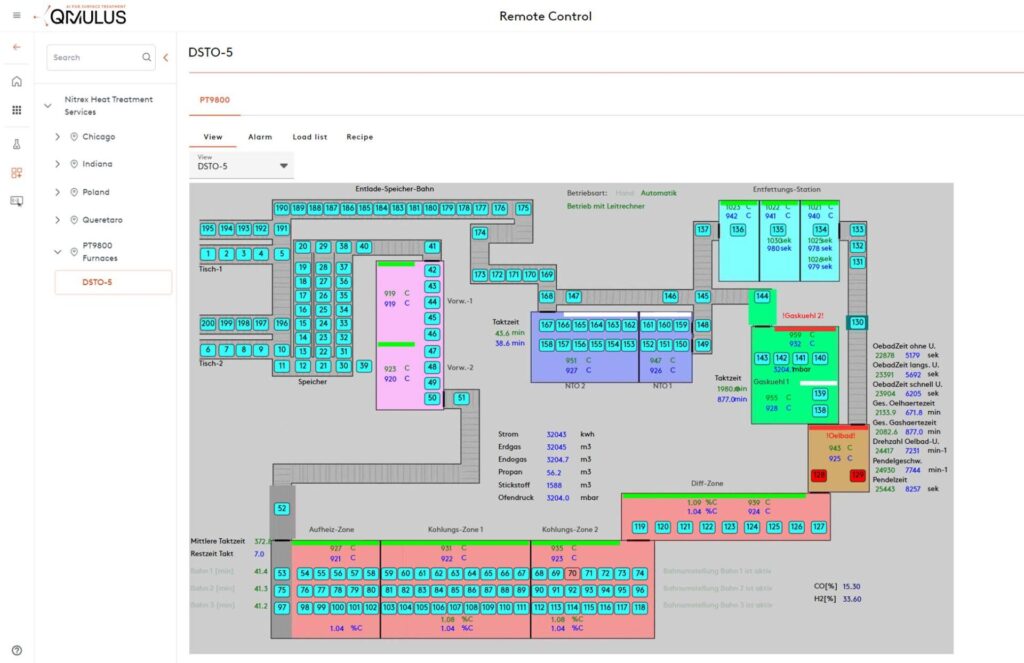
Figure 1. QMULUS Shop Layout enables visual inspection of the current production status, the location of goods and parts, as well as the real-time status of assets and their ongoing processes.
Source: Nitrex

While digitalization varies from industry to industry and plant to plant, there are some common ways in which heat treaters can employ digital technologies to build such a system. Firstly, digitally integrated solutions can optimize process management and control. For example, when a sensor detects a temperature anomaly during a heat treatment process, the integrated software platform picks up that reading, analyzes it in real time, recognizes it as an error based on historical data or programmed parameters, and alerts the operator.

This integration also facilitates predictive, condition-based maintenance. For example, if collected data and analysis suggests that a furnace is behaving abnormally, the system can automatically generate a work order along with a list of potential failure causes, so that a technician can troubleshoot, identify, and correct small issues — such as a failing thermocouple — before they impact quality or result in equipment failure. By addressing these proactively, heat treaters can avoid extended periods of costly unplanned downtime and ensure continuous operation.

Secondly, artificial intelligence through machine learning plays a crucial role in optimizing quality control in a digitalized system. By analyzing data collected during heat treating processes, it learns to detect patterns and identify anomalies. As in the examples above, this capability enables the system to identify deviations from the desired outcomes, allowing heat treaters to quickly rectify any issues before they impact quality.

Figure 2. The heart of the IIoT data platform needs to be thoughtfully planned and designed. Illustrated are 5 steps to follow to ensure the cloud data system properly engages with the data generated from your specific heat treat operations, ultimately delivering actionable insights. Step 1 depicts the various data sources; Step 2 shows the data transformation, integration, and processing stages; Step 3 highlights the central QMULUS database where data is indexed and organized; and Steps 4 and 5 demonstrate how data is further processed, distributed, and accessed by different end-users.
Source: Nitrex

Thirdly, algorithms can be programmed into a comprehensive management system to identify the most energy-efficient operating conditions for the heat treating process, helping heat treaters reduce their carbon footprint, minimize energy costs, and comply with sustainability goals.

In addition to these types of operational advantages, digitalization technologies can also be used to create a database of knowledge before experienced operators and experts leave the workforce. Traditionally, a handful of experts in the plant oversee the furnaces and equipment and understand how to best control and maintain them based on experience. However, passing down this knowledge to the next generation of heat treaters can take years, which may not be possible due to a company’s workflow demands and cost pressures. Digitalization addresses this challenge by creating a streamlined and accessible database of knowledge, offering less experienced operators and technicians immediate access to detailed information about what may be happening in the equipment or process for an issue at hand. This ensures that essential insights are not lost and enables quicker problem-solving and decision-making on the shop floor.

Making the Digitalization Transformation

While digitalization presents obvious advantages, the heat treatment industry, often conservative in its approach to technology, has some initial work and investment required before realizing the full benefits.

Going “paperless” in order to unlock the full potential of the available data is an important first step. All reports, histories, drawings, and other paperwork associated with equipment, processes, maintenance activities, product quality, and other relevant information should be digitized to provide a comprehensive view of both historical and current data.

Connectivity and integration between machine and higher-level systems are essential for effective data acquisition, monitoring, and remote control. SCADA systems, Manufacturing Execution Systems (MES), and other higher-level systems are rich sources of machine and process data. Gathering and analyzing this data can provide actionable insights that operators can use to make smarter decisions about the control and maintenance of equipment and processes.

Figure 3. A comprehensive overview displays all detected control loop anomalies, indicating possible root causes as well as recommended actions. Incorporating feedback from the responsible maintenance personnel further improves accuracy and delivers more effective recommendations for future occurrences.
Source: Nitrex

Finally, just having data is not enough. The data must be accessible, transparent, and relevant to be valuable. Achieving a complete picture of all the collected data, known as data consolidation, is necessary.

To build an IIoT platform with a well-architectured data engine, heat treaters should begin by identifying and understanding the different sources of data provided by sensors and high-level systems. This involves integrating the data through interfaces adapted to the data type and source, as well as documenting the integrated data sources, data fields, and data streams. Next, a “data lake” should be created to store the collected raw data. From this foundation, a data warehouse can be established to store enriched or analyzed data, derived values, data models, and forecasts in an organized way. For heat treaters, this type of contextualized data might be grouped by parts, loads, or orders.

Once the data engine is in place, the information stored in the data warehouse must be presented in a way that makes sense to operators and technicians for them to make informed decisions for heat treatment processes. To facilitate this, a universal data interface should be considered.

Building from this well-architectured data engine, the IIoT platform can then be expanded with statistical analytics, remote monitoring, KPI tracking, machine learning, artificial intelligence, and other applications to optimize processes and increase profitability.

What Heat Treaters Need in a Digitalization Solution

Harnessing modern technologies tomake digitalization a reality presents heat treaters with the opportunity to implement a solution based on a complete and well documented data system. It also means that the solution creates a holistic solution to data analysis, interpretation, reporting, and action that supports the real-world actions of heat treaters on the plant floor and in the office.

For this reason, a digitalization solution that has cloud and on-premises allows real-time access to analysis and alert messages for operators on the floor as well as managers who are away from the plant, ensuring quick problem-solving and maximum uptime in the event of process or machine issues.

Additionally, heat treaters should look for a solution that offers the freedom to integrate all the various platforms and equipment from which data are gathered from. These may include relevant machinery and production data from the shop floor as well as third-party and custom controllers. This flexibility to synthesize information from multiple sources will ensure the digitalization efforts lead to a comprehensive solution with actionable process overviews, recipe control, batch tracking, and other customization options.

To further this intent of a holistic solution, heat treaters should consider various data capabilities with different portal views, such as a manufacturer portal, a plant portal, and a client portal. However, considering the historic value of a comprehensive software solution, it may be worthwhile to consider how each user could transfer direct feedback and add new rules into the system, creating a repository of knowledge that bridges the knowledge of outgoing generations to future heat treaters.

Finally, any platform that directs the digitalization of a plant must prioritize robust security measures. Several features to look for are:

  • enhanced encryption standards to keep data confidential and tamper-proof during transmission and storage;
  • secure protocols based on industry best practices to safeguard data integrity;
  • a granular access control system (ACS) to allow IT administrators to define and manage user permissions of authorized personnel, thereby minimizing the risk of data breaches and unauthorized data manipulation; and
  • intrusion detection and prevention systems to continuously monitor network and system activities, enabling instant identification and mitigation of suspicious behavior. This serves as an additional layer of defense against potential cyber threats.

Beyond the software setup, be sure to use best practices by conducting regular security audits to assess the platform’s vulnerabilities and ensure compliance with evolving cybersecurity standards. While digitalization of heat treat operations may seem like a task for the next generation to complete, secure software options that integrate the hard work of digitizing plant activities can make this endeavor just a step away.

About the Author:

Mike Loepke
Head of Nitrex Software & Digitalization
Nitrex

Drawing from a background in Mathematics and Physics, coupled with extensive R&D experience and metallurgical modeling, Mike Loepke specializes in AI and process prediction. He has led Nitrex’s initiative in developing QMULUS, a pioneering IIoT cloud-based platform. Mike’s relentless pursuit of knowledge keeps him at the forefront of evolving technology.

.

For more information: Contact Mike at mike.loepke@nitrex.com


Digitalization Propels Heat Treating to Industry of the Future Read More »

US Defense Contractor Upgrades with Vacuum Retort Furnace

A U.S. military firearms manufacturer announced its plan to update its in-house stress relieving operation with a new vacuum retort furnace. The new equipment will be replacing an outdated vacuum stress relieving furnace in order to keep up with production demands.

Piotr Zawistowski
Managing Director
SECO/VACUUM
Source: SECO/VACUUM

The SECO/VACUUM retort furnace will be used to stress relieve firearms components at 1400°F (760°C). At this relatively low temperature, the process is used to prevent subsequent part distortion while enhancing the quality of the firearms. 

“Their old furnace was showing its age,” said Piotr Zawistowski, managing director of SECO/VACUUM, USA. “Once we showed them the control system advancements, the cycle time improvements, and the more competitive lead time we could offer, the upgrade really made sense from both a quality control and production pace standpoint.”

Switching from the vertical configuration of the old furnace to the new horizontally configured furnace will shorten loading times. The turbo-cooling option selected by the firearms manufacturer decreases the cooling cycle from 3.5 hours to 1.5 hours. Improved loading paired with shorter cooling will bring total heat treat cycle times down by as much as 2.5 hours.

The press release is available in its original form here.


US Defense Contractor Upgrades with Vacuum Retort Furnace Read More »

Autonomous Solution for Industry

Heat Treat Today publishes twelve print magazines a year and included in each is a letter from the editor, Bethany Leone. In this installment, which first appeared in the December 2024 Medical & Energy Heat Treat print edition, Bethany addresses the ongoing discussion about automation in industry, the data on how it affects labor, and the way forward for manufacturing and the government.

Feel free to contact Bethany at bethany@heattreattoday.com if you have a question or comment. 


You can afford it.

Supervisors, you can afford to raise wages. Skilled laborers, you can afford to purchase a home.

Maybe you’ve heard these hopeful statements before? You can afford it, says economist Mark P. Mills, executive director of the National Center for Energy Analytics, by leaning on automation. Far from destroying jobs, tools like AI and robotics enhance productivity and require highly skilled laborers who, in turn, can and should be compensated. This editor’s page summarizes some of Mills’ main points and how these might be considered in the heat treat industry.

Labor Market Needs Automation

In a recent article released in City Journal, the economist draws attention to what he sees as a new norm for the labor market: the successful bargaining for higher wages by the Longshoremen’s Association. The result of the union’s strike means a starting salary of $80k and a mid-career salary of $150k. Mills terms this “The Great Inversion,” where we see salaries for the trades supersede 90% of salaries for college graduates.

His argument that this is the new norm rests on three points. The first is that population has been in decline; this is exacerbated in the trades by the fact that the average age for skilled tradesmen is older than the average age across U.S. manufacturing.

Secondly, though there is a trend of young workers choosing a career in the trades, not enough would fill the generational chasm that is opening as the older generation leaves the workplace. This means there is still a demand for skilled labor.

Thirdly, industrial manufacturing creates consumable goods, for which there is no end to want, unlike in food and agriculture where there is a limit of consumption. As people grow wealthier, they can afford more “wants” — even if it’s going out to eat at restaurants where iPads automate server-kitchen communications.

Even with the population decline, individuals continue to gain wealth and want to spend it, Mills explains. In this situation, particularly where we have efforts and interests in America restoring industrial productivity, the argument is that automation will allow companies to keep up with the demand for consumable goods while filling the labor gap. This result means a need for upskilling workers to work with robotics, automation software, and AI on the manufacturing floor.

Automation in Heat Treat

In the heat treat industry, I’ve heard several perspectives on this topic. Robotics and automation don’t take away jobs, some claim; they only improve labor market jobs that are there. At another’s operations, the installation of an automated piece of instrumentation didn’t result in any immediate layoff, but did result in the company not having to train an operator to fill a position since that position was no longer available.

The fact is that the pro-automation side relies on addressing situations where there is a lack in able workers in the labor market. This demonstrates that jobs are being filled by automation.

Turning to employment opportunity, it is hard to argue with Mills’ outlook that automation in jobs increases wages and profits. He supports this claim saying, “data show that, over the last half of the twentieth century, even as manufacturing productivity rose (that is, fewer labor-hours per output), the U.S. manufacturing workforce remained surprisingly unchanged and really started to shrink only when an increasing share of manufactured goods were imported — namely, when the production and labor were exported.” Interestingly, while he acknowledges the role of companies in offshoring goods in the last century, he puts focus on the difficult environment for businesses in meeting the government regulations in America. Therefore, he offers three steps forward addressed at government (in)action:

  1. The U.S. government must look for ways to make the country more amenable to industrial expansion that go beyond subsidies with caveated use.
  2. Policymakers must avoid intervening in the economy when a system isn’t broken. (Here, Mills addresses cost and reliability issues tied to state and federal energy policies.)
  3. The trifecta of policymakers, unions, and manufacturers need to welcome advances in automation.

Mills points out that in order for automation to be successful, skilled laborers need to welcome it and help it, emphasizing that, like the Longshoremen’s Union strike, automation allows for wage increase.

My question to you in the heat treat industry is: What is your job function in the industry? How have you benefited from automation (AI, robotics, digitalization) initiatives in the industry? What concerns — or hopes! — do you see that have yet to be addressed? Write to me. And if any article on digitalization in this magazine strikes you, I would love to hear that, too.

References

Mills, Mark P. “The Longshoremen’s Strike and the Great Inversion.” City Journal, October 8, 2024. https://www.city-journal.org/article/the-longshoremens-strike-and-the-great-inversion.

Contact Bethany at bethany@heattreattoday.com.


Find Heat Treating Products And Services When You Search On Heat Treat Buyers Guide.Com


Autonomous Solution for Industry Read More »

The Holiday Edition of This Week in Heat Treat Social Media

Welcome to the first installment of Heat Treat Today’s This Week in Heat Treat Social Media of 2025, and today we are focusing on holiday-themed social media posts. From handing out Christmas cheer to learning opportunities shared over the holiday break, check out these posts and videos for a roundup of festal heat treat social media: We start with alternatives to New Year’s resolutions.

As you know, there is so much content available on the web that it’s next to impossible to sift through all of the articles and posts that flood our inboxes and notifications on a daily basis. So, Heat Treat Today is here to bring you the latest in compelling, inspiring, and entertaining heat treat news from the different social media venues that you’ve just got to see and read! If you have content that everyone has to see, please send the link to editor@heattreattoday.com.


1. Not Into Resolutions? Here Are Some Alternatives

Leave it to young leaders in the heat treat industry to think of new ways to approach a new year. What’s your innovative alternative to resolutions?

2. Heat Treaters Changing Lives

Something about the folks in this industry: they just love to reach out and help others.

Look these posts up on LinkedIn here: Wirco and Solar Atmospheres

3. We Don’t Stop Learning Just Because It’s a Holiday Break

Between important family time, seasonal activities, and festal joy, some of your industry colleagues were uploading opportunities for you to expand your knowledge about heat treating and all things related.

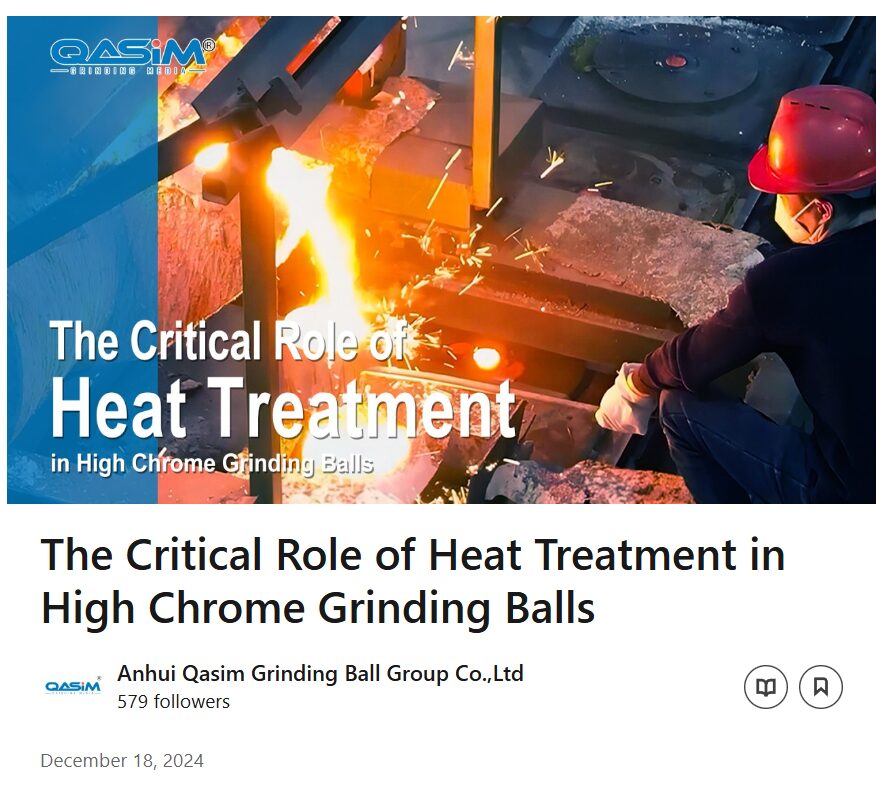
Look these posts up on LinkedIn here: Anhui Qasim Grinding Ball Group Co.,Ltd; Nonthaphat Sinprasong; and Light Metal Age.

4. Watch & Listen

Did you see or hear any of these videos or podcasts from 2024?

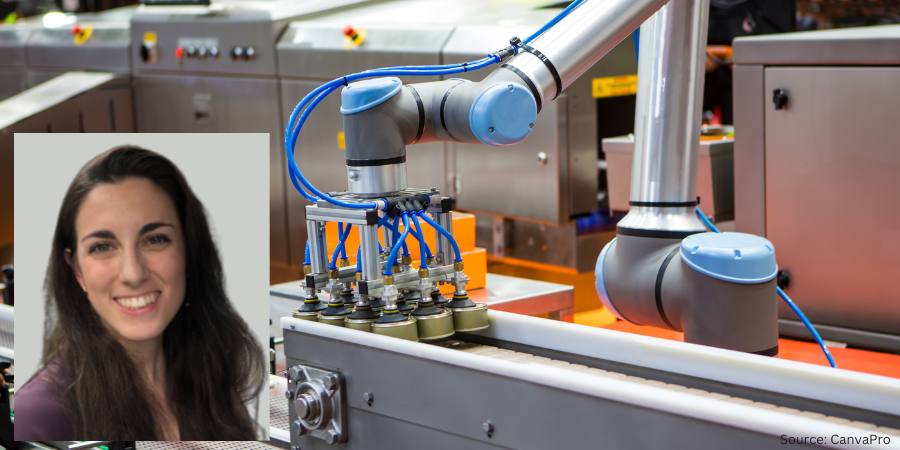
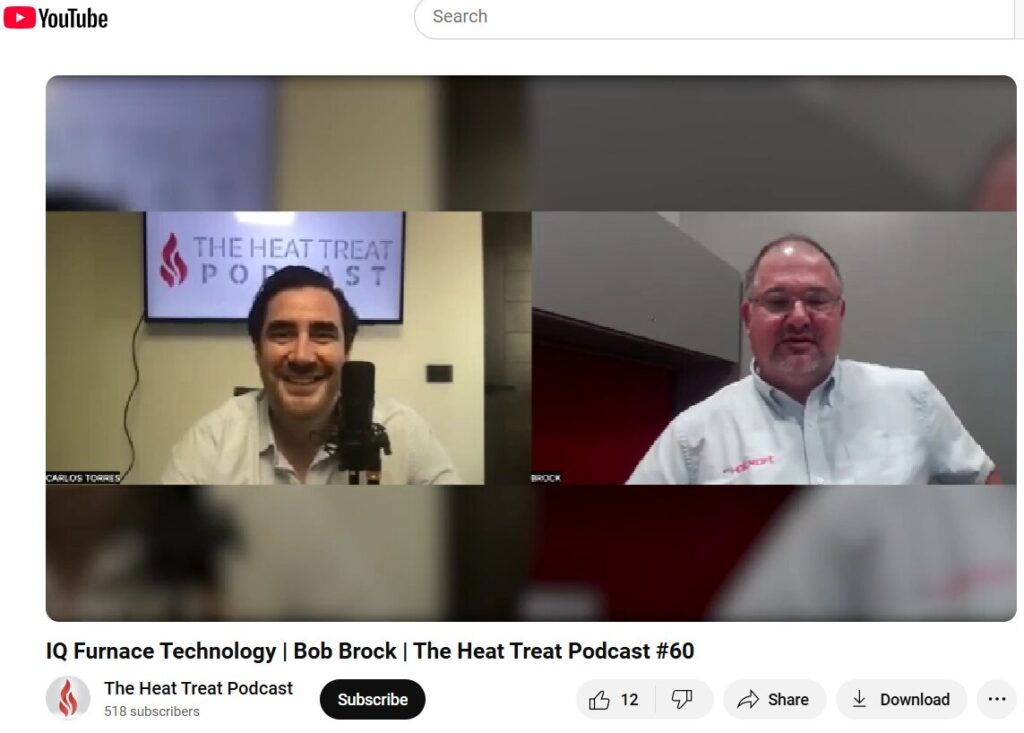
Check out Carlos Torres (2019 40 Under 40 alumni) hosting the Heat Treat Podcast on YouTube; Advanced Heat Treat Corp‘s post on LinkedIn; and the Heat Treat Radio page here.

5. Brain Fun To Launch the New Year

Sweep out that holiday fog! It’s time for some gymnastics for the brain!

Look these posts up on LinkedIn here: Metallurgical Engineering; Srini Vanapalli (the question); Srini Vanapalli (the solution); and Metallurgical Engineering.


Find Heat Treating Products and Services When You Search on Heat Treat Buyers Guide.com

The Holiday Edition of This Week in Heat Treat Social Media Read More »
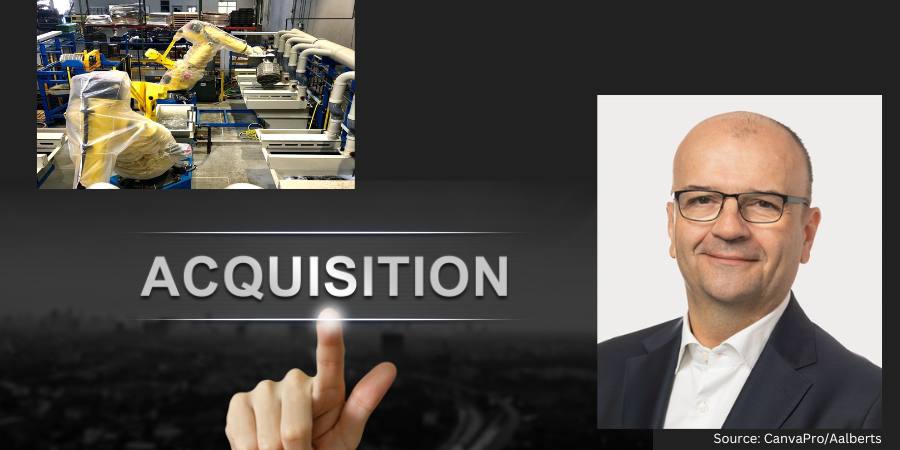
Aalberts Acquires Paulo, Expands Heat Treat Reach in N.A.

Aalberts N.V. has reached an agreement to acquire 100% of shares of Paulo Products Company (Paulo), expanding the company’s geographical footprint in the U.S. The acquisition will bolster the Dutch company’s capabilities to provide heat treating, brazing, and metal finishing operations for the North American automotive, aerospace, defense, and energy sectors.

Stéphane Simonetta
CEO
Aalberts N.V.

Pending regulatory approval, the management team of Paulo, which operates five heat treatment facilities in the USA and one in Mexico, will work with the management of Aalberts Surface Technologies in North America. The transaction is expected to be finalized in the second quarter of 2025 and generate an annual revenue of approximately USD 105 million with 522 employees.

“We are excited about the growth potential in the different end markets and are looking forward to welcoming Paulo’s employees to Aalberts,” said Stéphane Simonetta, CEO of Aalberts N.V. “This strategic acquisition will further enhance our proximity in North America and Mexico as per our ‘thrive 2030’ strategy. Together, our leadership position will enable us to serve our customers with short lead times, high quality and full-service capabilities.”

The press release is available in its original form here.


Aalberts Acquires Paulo, Expands Heat Treat Reach in N.A. Read More »

Merry Christmas from Heat Treat Today

Your Heat Treat Today team will be celebrating the holidays with our families, and our offices will be closed from December 21 to January 1. Look for your next Heat Treat Daily e-newsletter on January 2nd! Until then, we hope this message encourages you and directs you to the true source of hope during this season.

Room with Him

In the next few days, it’ll be easy to get overwhelmed with all the activities, the gatherings, the lights and colors, crinkly wrapping paper and Christmas songs . . . and the movies. Who doesn’t settle down at least once during the season to watch a favorite Christmas movie? Some folks prefer the classics like White Christmas or It’s a Wonderful Life. Others love the new seasonal specials, like Home Alone or Elf. Maybe it’s Rudolph the Red-Nosed Reindeer that reigns in your house. My family’s favorite is The Muppet Christmas Carol.

In most Christmas movies, there’s always a special scene that moves viewers, reinforcing the themes of Christmas: hope, love, hospitality, faith, generosity, thankfulness. One scene from Rudolph moves me more than most, but I bet it’s not the one you’re thinking of.

Do you remember the residents of the Island of Misfit Toys? Dolly, and Charlie-in-the-box, and the boomerang who wouldn’t come back — toys that weren’t wanted because they didn’t do what was expected of them, or they were a little different in their design. Exiled to the Island of Misfit Toys, they waited and hoped for a chance to be enjoyed, appreciated and loved. However, the island was so far off course that they were forgotten year after year, and they were never given the opportunity to brighten a child’s Christmas morning.

Disappointments, slights, brokenness are felt, even at this time of year. Dolly’s words resonate with us when she says, “I just don’t feel like I have any more hope left in me.” Our hearts are troubled, and our coordinates don’t register on the radar. We might feel lost and forgotten along with the misfit toys.

This season is about more than parties, gifts, and decorations, as we all know. Jesus, the Son of God, became man, taking the form of a baby and living as the God-man, the perfect redemption for the lost, the broken, the misfits.

It is striking that at the end of his ministry, as he was wrapping up his time with his disciples before he went to the cross, Jesus assured them, “In my Father’s house are many rooms. If it were not so, would I have told you that I go to prepare a place for you? And if I go and prepare a place for you, I will come again and will take you to myself, that where I am you may be also.” (John 14:2-3) Jesus wandered about without a place to lay his head, yet he is quick to promise his troubled people not merely shelter, any shelter, but a room in the Father’s house.

Although the Savior came to no room at his birthplace, he has gone on to prepare rooms for us, and it’s not just a room, that is, a designated space with measurements and coordinates. He will be there also. And not just a room with him there — that would be awesome enough, but he also prepares for us, his followers, to be with him, to abide with him, to reside in him. He is what makes up the features, the atmosphere, the feng shui of the room. He is home. He is the where of kicking off our shoes and settling down with a cuppa joe. He is comfort food, a soft blanket, and a wagging tail at the door. This is what Christians mean when we say Jesus is our Sabbath.

A popular saying at this time of year is “Make room in your heart for Jesus.” Notwithstanding we can’t make the room, but he must, the truer saying is that “Jesus has made room for us.”

Hear his tender words of encouragement, which come after his prediction that Simon Peter will fail and deny him, just as we do in unbelief and discontentment: “Let not your hearts be troubled.” What follows next is his exhortation: “You believe in God? Believe also in me.” (John 14:1)

He doesn’t leave us to our own devices or our own means of finding our way to him. He comes to dwell with us; he becomes our dwelling place. And now, he is preparing an eternal dwelling place for his people. That’s the hope he gives the disciples as their steps falter under the burden of their troubled hearts, “that where I am you may be also.”

Know Jesus, and we can be assured we won’t be left on this island of misfit toys forever. We have a home.

And that makes for a merry Christmas message!

Here at Heat Treat Today, we are looking to 2025 with much anticipation and hope for more opportunities to work together and challenge ourselves and others with new ideas in the North American heat treat industry. Thank you for the opportunities every day to serve and encourage you in our heat treat corner of the world.

From the entire Heat Treat Today team, we wish you a very joyous and restful Christmas celebrating the birth of Jesus Christ!

by Laura Miller


Merry Christmas from Heat Treat Today Read More »

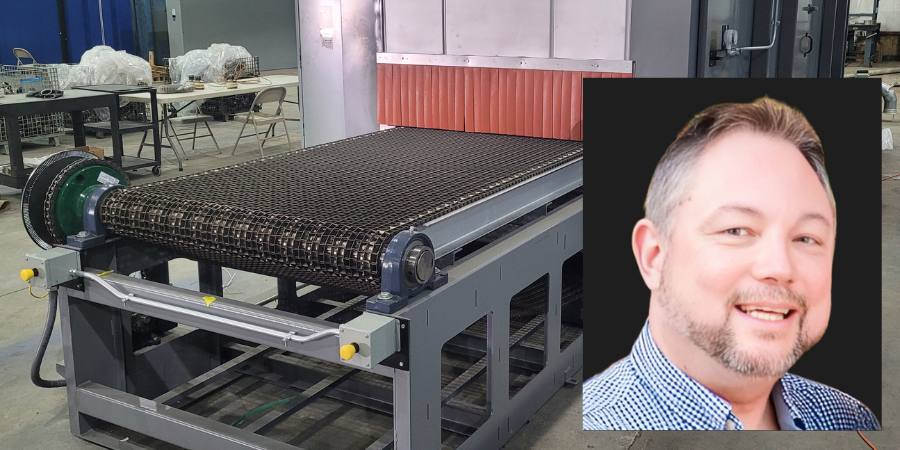
Steel Parts Manufacturer Expands Annealing Capabilities

A North American manufacturer has bolstered its heat treatment capabilities for annealing steel parts after induction hardening. The two-zone belt conveyor furnace shipped to the facility ensures precise temperature control, energy efficiency, and compliance with AIAG specification CQI-9.

“The customer chose to enhance the operating efficiency of the oven with the E-Pack™ Energy Efficiency Package. Depending on utility rates, operating temperature, and weekly usage, customers may achieve significant annual energy savings with this upgrade,” said Tom Trueman, senior application engineer for Wisconsin Oven Corporation.

Tom Trueman
Senior Applications Engineer
Wisconsin Oven Corporation

Wisconsin Oven Corporation designed the conveyor furnace with the capacity to heat 2,400 pounds of steel per hour from 70° to 350°F with a maximum temperature rating of 500°F and the ability to anneal the components after induction hardening. The recirculation system features a top-down airflow design with a 32,000 CFM blower, with each of the two zones utilizing 16,000 CFM. The temperature for both zones is controlled by a Watlow F4T digital recorder/controller, which provides Ethernet communication capabilities and PID temperature control with adaptive tuning. As a factor in its CQI-9 compliance, a temperature uniformity survey was conducted, documenting uniformity of ±10°F at 350°F with verified part soak.

To maximize energy efficiency, the oven has been upgraded with an E-Pack™ Energy Efficiency Package, which includes 2” thicker insulation in the walls, floor, and roof, as well as variable frequency drives on the recirculation blowers.

The press release is available in its original form here.


Steel Parts Manufacturer Expands Annealing Capabilities Read More »