The Industrial Heating Equipment Association (IHEA) has announced its 2025-26 Board of Directors and Executive Officers. Established in 1929 to meet the need for effective group action in promoting the interests of industrial furnace manufacturers, IHEA has expanded and currently includes designers and manufacturers of all types of industrial heat processing equipment used for the melting, refining and heat processing of ferrous and nonferrous metals, certain nonmetallic materials, and the heat-treatment of products made from them.
IHEA also welcomes a new face to the Board of Directors, Chad Spore of John Deere. Chad has been an active member of IHEA for the past several years, especially supporting IHEA’s sustainability and decarbonization efforts. Chad is the enterprise materials engineering supervisor for John Deere where he has been employed for more than 25 years. “Chad has been a wealth of knowledge supporting IHEA’s Industrial Heating Decarbonization SUMMIT,” notes IHEA Executive Vice-President Anne Goyer. “His insight into our program development is helping us produce an even better SUMMIT for 2025. We are grateful for his time and expertise.”
Rounding out the lineup of IHEA’s Board of Directors for 2025-2026, the following members continue their tenure:
In today’s News from Abroadinstallment, we highlight new partnerships and technology aimed at efficiency and sustainability; a multi-organization collaborative work on a hybrid facility, an all-in-one machine that performs hot and cold forming for screws, tubes, and spokes, and a Turkish steel expansion doubling production. Read more below!
Heat TreatTodaypartners with two international publications to deliver the latest news, tech tips, and cutting-edge articles that will serve our audience – manufacturers with in-house heat treat. Furnaces International, a Quartz Business Media publication, primarily serves the English-speaking globe, and heat-processing, a Vulkan-Verlag GmbH publication, serves mostly the European and Asian heat treat markets.
A collaboration for an innovative reuse strategy
Source: Adobe Stock
“To support the growing activity at its Valenciennes site, Stellantis has chosen ECM Technologies to assist with the relocation and retrofitting of a heat treatment installation for vacuum carburizing. Scheduled to be fully operational in 2025, this hybrid facility, composed of reused, retrofitted and new components, reduces Stellantis’ carbon footprint while increasing its production and the performance of its industrial equipment. Stellantis has around 15 ECM Technologies “Flex” low-pressure carburizing units spread across its various sites. To support the production needs of its Valenciennes site, the company has decided to give a new lease of life to a line already in service within the group by entrusting ECM with the implementation of the project: relocation, reuse, updating of equipment, acquisition of new components (latest-generation gas quenching module), and conversion of furnaces from propane to acetylene, Bringing the performance of the entire hybrid system up to state-of-the-art standards. Another major factor is that this installation is part of the energy transition, as this transformation will enable the production of mechanical parts for electric vehicles, whereas previously the facility was dedicated to the production of manual gearboxes for combustion engine vehicles.”
READ MORE: Stellantis and ECM Technologies: An exemplary collaboration for an innovative reuse strategy atprozesswaerme.net
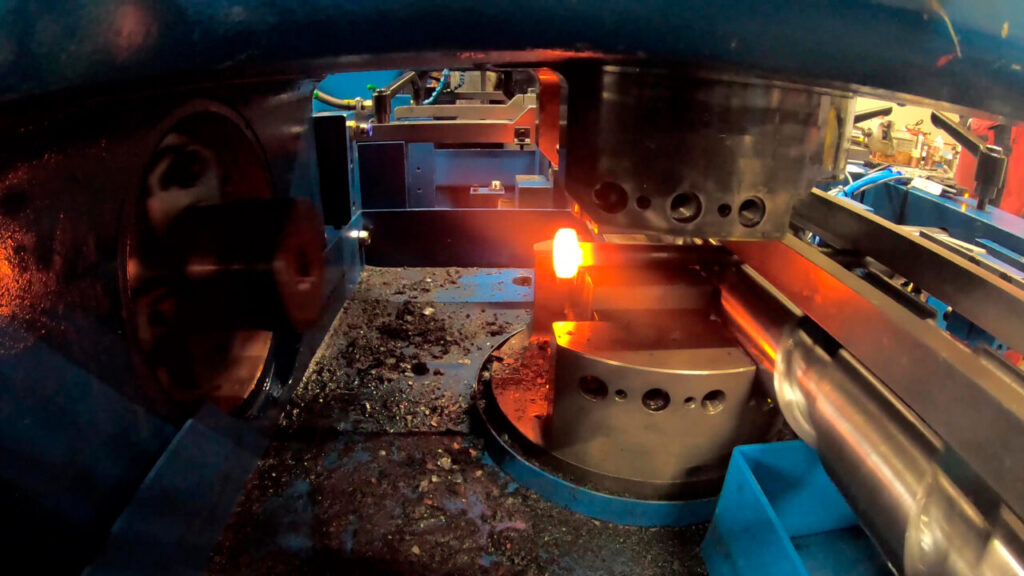
All-In-One Machine: Cold And Hot Forming
Due to the high forming forces required, the heads of larger screws are heated inductively Source: VIP Communication
“Aachener Maschinenbau GmbH (AMBA) has so far been known for its all-in-one machines for the production of components such as screws, tubes and spokes by cold forming. What is new is that the company is integrating more and more technologies into its systems that enable operators to produce components such as special screws or pipes with variable cross-sections more efficiently. A current example is the integration of induction heating in the forming of large screws. With new systems, AMBA enables customers to produce more components with complex geometries according to the all-in-one principle and thus reduce costs. In doing so, the company goes beyond traditional cold forming and integrates innovative technologies, including for hot forming.”
READ MORE: AMBA offers new possibilities for efficient production: cold and hot forming of screws, tubes and spokesat prozesswaerme.net
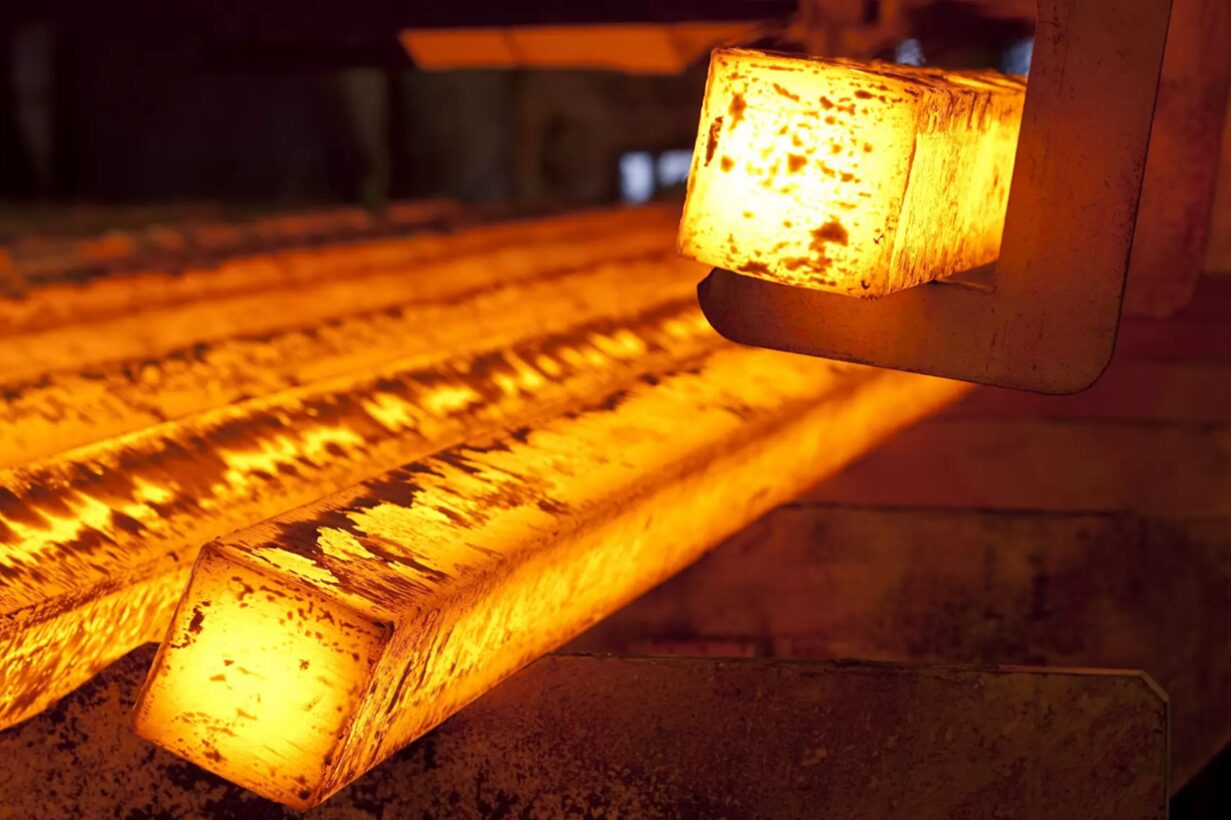
Concast continuous casters to increase billet and bloom production capacities
İzmir Demir Çelik Sanayi A.Ş (IDC) has ordered a seven-strand continuous caster for its facility in Aliağa, İzmir, Türkiye. The SMS caster is designed to produce billets and small blooms in six distinct section sizes (Source: SMS group)
“İzmir Demir Çelik Sanayi A.Ş (IDC), a manufacturer of reinforcing steel and profiles, has expanded its steelworks with a Concast seven-strand continuous caster at its plant in Aliağa, İzmir, Türkiye. This new machine provides izmir Demir Çelik with the flexibility to efficiently meet diverse market demands, while also increasing production capacity and enhancing the quality of billets and blooms. The installation of the new continuous casting plant significantly expands izmir Demir Çelik’s annual steel production output from 1,550,000 tons to approximately 3,100,000 tons. This increase enables IDC to meet growing market demands more effectively while reducing its dependence on imported semi-finished products. The new caster’s ability to produce billets and small blooms in six distinct section sizes, ranging from 150×150 millimeters to 220×280 millimeters, gives IDC the flexibility to adapt quickly to changing market needs . . . Internal quality is enhanced through electromagnetic stirring (M-EMS) and modular wave stirring (MWS) technologies, which guarantee a homogeneous internal structure. Additionally, precise strand guidance, accurate cooling spray alignment, and a three-zone secondary cooling system further improve billet and bloom quality. This innovative setup enables IDC to produce high-quality steel products efficiently while reducing operational costs and meeting diverse market demands.”
READ MORE: izmir Demir Çelik Sanayi A.Ş. uses Concast continuous casters to increase billet and bloom production capacities atprozesswaerme.net
By Jose Miguel Equihua Toral, Head of the New Projects and Development, BOINSA Mexico and Manager,InTech NDT, USA.
Nondestructive testing (NDT) techniques have been used exclusively to detect defects in structures and components after they have been manufactured. To protect public safety and security, it is imperative to test parts efficiently and ensure their quality. Nondestructive evaluation, like ultrasonic backscattering, serves an important role in this area.
This informative piece was first released inHeat TreatToday’sApril 2025 Annual Induction Heating & Melting print edition.
Induction hardening is a critical process in manufacturing automotive, agricultural, and aeronautical components, such as crankshafts, camshafts, constant velocity joints, and axle shafts (Figure 1a). The procedure for the evaluation of metallurgical characteristics is carried out in the laboratory and is destructive testing (Bernard, “Methods of Measuring Case Depth in Steels”). This means the component will be unusable. Additionally, this procedure is time-consuming, expensive, and cannot be integrated into the production line. Over time, the industry has sought faster and more efficient methods to evaluate metallurgical characteristics, such as eddy current testing, magnetic methods, and ultrasound. Having the capability of monitoring material properties after each key process can help minimize the cost of processing out-of-specification material. A combination of nondestructive testing methods can help to guarantee the quality of induction heat treatment operations (ASM Handbook, vol 4c).
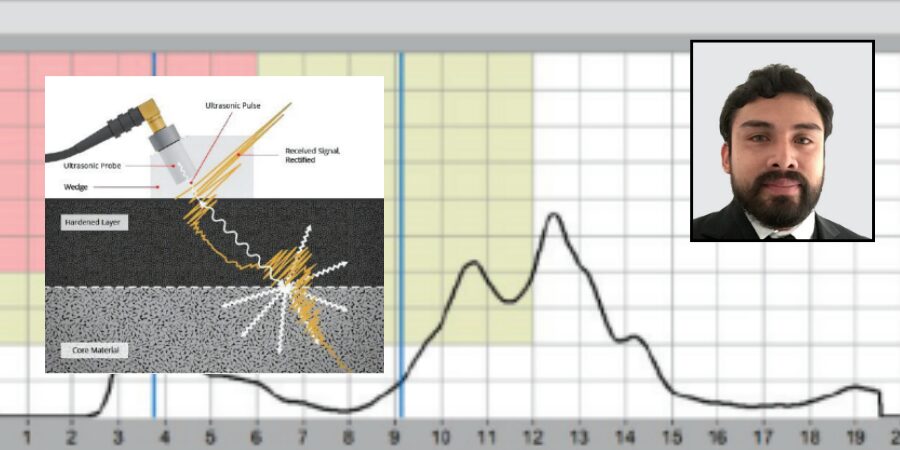
Ultrasonic methods, for example, can be used to determine microstructural differences in metals. For this, contact testing with pulse-echo technique is used. For inductive-hardened parts, the ultrasonic backscattering method works because the hardened layer (martensite) is almost transparent to ultrasonic waves (in range of 20 MHz), while bulk material (ferrite-pearlite) scatters ultrasonic waves very strongly.
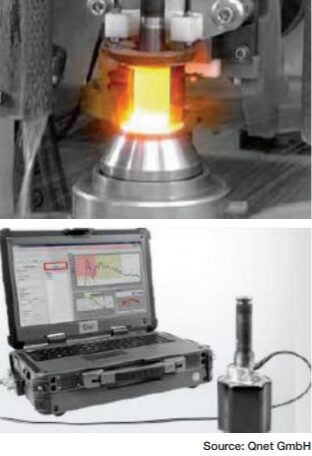
In this article, we will address the use of industrial ultrasound applying the backscattering technique, which offers a direct determination of the depth. This method is simple and does not require prior calibration to evaluate the components (Figure 1b).
Iron crystals exhibit notable acoustic anisotropy, meaning the acoustic velocity (c) varies depending on the direction of travel within the crystal. Grain boundaries represent transitions between crystal structures with varying orientations. The resulting variation in impedance causes the ultrasonic pulse to scatter at the grain boundaries. The ultrasonic technique for measuring hardness depths (SHD) utilizes this grain boundary scattering effect. This technique is known as the ultrasonic backscattering method (Kruger et al., “Broadband Ultrasonic Backscattering”).
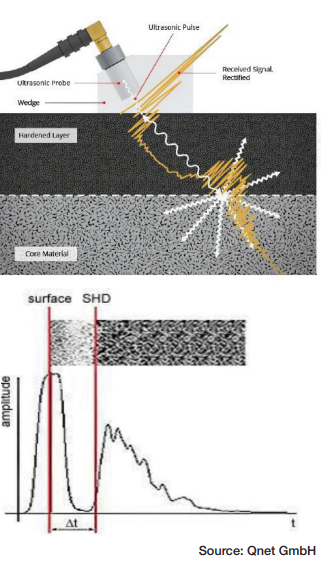
The ultrasonic backscattering method for hardness depth testing relies on finding the ultrasound frequency that does not scatter at the fine-grained hardened microstructure of the outer layer but at the coarse-grained core material (Figure 2a). The different scattering properties from the varied grain sizes of the hardened surface layer and the core material are seen in the backscattering measurement. The connection between scattering and the material’s grain size is utilized to produce a detectable backscattering echo when the ultrasound penetrates the core material.
The depth (SHDUS) of the interface can be determined using the time (t) it takes for the sound pulse to reach the scattering interface, the angle of the shear wave (βT), and the velocity (c) of the shear wave in steel. Therefore, the following equation is relevant for a flat shape:
SHDUS=1/2∙c∙t∙cos∙βT
Based on this equation, the acoustically measured surface hardness depth (SHDUS) is always found before the sound exit point of the probe wedge. To guarantee an accurate measurement of this location during destructive testing, this distance (A) must be calculated. The next equation is used for a plane geometry:
A=1/2∙c∙t∙sin∙βT
The backscattered ultrasonic amplitude depends on the actual gradient of the microstructure. In the transition zone, grain boundaries, grain size, and second phases change the acoustic impedance value discontinuously, depending on the ultrasonic frequency. Different backscattering signals in the hardened and bulk material occur (Yanming Guo, “Effects of material”). Th ese amplitude characteristics can be used to evaluate the case depth by using simple time-of-flight measurements (Figure 2b). Contact testing is generally done by using portable equipment, using a contact wedge where the transducer is mounted to be inclined at a certain angle, and shear waves are emitted into the component. Ultrasonic backscatter takes place at the surface of the component due to surface roughness and results in the return of the energy to the transducer (first echo). Ultrasonic energy enters the hardened surface layer made of fine martensitic structure, and thus, no scatter of ultrasonic waves takes place in this region. However, when the shear waves reach the transition zone where martensitic structure is gradually converted into ferrite-pearlite structure, which has a larger grain size, once again energy is scattered at the grain boundaries, and the transition zone backscatter forms the second echo. The difference in time-of-flight of these two echoes is proportional to the case depth of the component.
Technical Requirements
Technical requirements for testing hardness depth using the ultrasonic backscattering method will produce optimal results in the following conditions:
The test parts should be induction-hardened.
The test parts must be forged, not cast.
There is minimal or no microstructure present between the hardened martensitic microstructure and the core material.
The grain size of the core material is significantly larger than the grain size of the hardened microstructure, leading to considerable backscattering of shear waves at a frequency of 20 MHz.
The minimum hardness depth that can be measured is 1.2 mm. Smaller hardness depths need special considerations, such as adjustments to the wedge design.
Practical Correlation Between NDT and DT
Destructive hardness depth testing is a method to determine the thickness of the case depth of hardened parts. In the process, the parts are destroyed, or their surface is altered rendering each tested part unusable. Hardness depth profiles are usually determined by using the Vickers test to measure the hardness of a reference sample at different points in a line from the surface to the core.
If you compare the acoustically measured surface hardness depth SHDUS with the surface hardness depth measured with destructive methods SHDDT, you will see a basic difference: Independent of the hardness limit and the minimum hardness, the acoustic testing always determines the depth of the core material that has not been affected by the hardening process. As a consequence, this value tends to be slightly higher than the surface hardness depth measured with destructive methods SHDDT. This difference can be compensated by means of a correction term ΔT (“Off set”):
SHDUS = SHDDT – ΔT
In the case of hardness curves with rapidly decreasing hardness values just above the interface, the transit time is measured at 20% of the height of the backscattering signal’s amplitude, and the results of the acoustic and the destructive hardness depth tests will match. The reason for this is the slightly shorter sound path in the marginal ray of the divergent sound field, which induces the backscattering echo.
If cases occur regularly in which the hardness curve deviates significantly from the characteristics, reference tests must be conducted to determine the correction factor ΔT. Reasons for this could be material and/or process related. The calculated correction factor can then be integrated in the respective test task as a test parameter.
Technical Description and Measurement Highlights
The manual device includes a four-channel ultrasonic board managed by a software package for program settings, signal processing, reporting, and overall quality assurance requirements. The parts are put together in an industrial notebook meant for tough industrial settings. The probe systems allow testing of components with complex shapes. The wedge of the probe system is adjusted to fit the geometry of the specific test location. Testing can be done before or after machining.
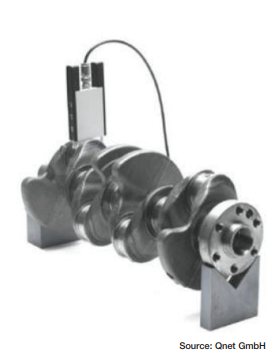
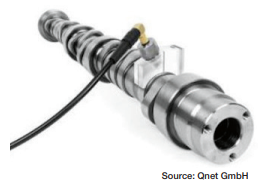
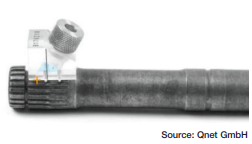
The primary cause of measurement error is the evaluation of surface position; the shape of the surface signal relies on proper coupling and the operator’s skill. Another source of error is the placement of the marker that indicates the time-of-flight when the pulse hits the interface. The sharper the signal rises, the less the error. Therefore, a shear wave angle as low as reasonable is employed, and scanning in the direction of decreasing SHD is advised. Achievable accuracy of better than ±0.1 mm is possible for standard parts with high-quality surfaces. Nevertheless, the operator must monitor the “good” shape of the A-scan during data collection. Accuracy based on microindentation hardness profiles compared to the backscatter method is slightly lower, estimated at ±0.2 mm on average, based on the material microstructure (Bogaerts et al., “Surface Hardness Depth Measurement”). We are able to test different geometries like crankshafts (Figure 3), camshaft s (Figure 4), tulips (Figure 5), and barshafts (Figure 6), to mention some components.
Situation: During induction hardening, an unanticipated variation on the case depth was detected on the shaft of an axle bar (Figure 7). We were requested to examine the case depth in this important area using a P3123 Hardness Depth Tester to find out if the case depth met specifications.
Figure 7. Induction case-depth variationFigure 8. Axle bar inspection
Results: During the testing, we noted the case depth was insufficient compared to the minimum required case depth of 5.5 mm. This meant all induction hardened parts made before the discovery had to be paused while a complete check of the case depth was performed. All axle bars hardened after the discovery were analyzed (Figure 8), starting with the most recently hardened parts. Case depth was also evaluated by making a microindentation hardness profile in the hardened area, showing a case depth consistent between ultrasound readings with the P3123 and the destructive testing measurements. In Figure 9, we can observe the measurement of the out of specification case depth, and in Figure 10, we have the measurement within specification case depth.
Hardness depth testers are used for optimizing production parameters, reducing downtimes after inductor changes, fast production control, and quality management. The techniques discussed in this article offer the technical advantages to ensure quality assurance for both steel and induction hardened components. Feasibility testing is required, which can be performed with prompt review of the ultrasound behavior in components.
Figure 10. Case depth within specificationFigure 9. Case depth out of specification
Bernard, William J. “Methods of Measuring Case Depth in Steels.” Steel Heat Treating Fundamentals and Processes (2013): 405-416. https://doi.org/10.31399/asm.hb.v04a.a0005795.
Bogaerts, Mike, Michael Kroening, Paul Kroening, and Tobias Mueller. “Surface Hardness Depth Measurement Using Ultrasound Backscattering.” AM&P Technical Articles 177, no. 8 (2019): 58-62. https://doi.org/10.31399/asm.amp.2019-08.p058.
Guo, Yanming. “Eff ects of material microstructure and surface geometry on ultrasonic scattering and fl aw detection.” Dissertation, Iowa State University, 2003.
Kruger, S.E., J.M.A. Rebello, and J. Charlier. “Broadband Ultrasonic Backscattering Applied to Nondestructive Characterization of Materials.” IEEE Transactions on Ultrasonics, Ferroelectrics and Frequency Control 51, no. 7 (2004): 832-838. https://doi.org/10.1109/tu c.2004.1320742.
About The Author:
Jose Miguel Equihua Toral Head of New Projects and Development BOINSA Mexico Manager, InTech NDT, USA
Jose Miguel Equihua Toral graduated as a mining engineer from Guanajuato University and obtained his Master’s Degree in Engineering from the National Technology Institute of Mexico. He currently works as head of the new projects and development department of BOINSA de Mexico, involved in technological and operational advances in the design, manufacture, and repair of induction coils, as well as advances in the application of non-destructive testing methods for the quality assurance of components for the automotive, agricultural, and energy industries. This experience has led to the formation of InTech NDT, to serve the U.S. market.
For more information: Contact Jose Miguel Equihua Toral at miguel.equihua@intech-ndt.com.
Heat Treat Todaypublishes twelve print magazines a year and included in each is a letter from the editor. This letter is from the April 2025 Annual Induction Heating& Meltingprint edition, and serves as a farewell from Evelyn Thompson, a dear member of the Heat Treat Today team.
In 2015, my dad came home with yet another big idea. As the last remaining Glenn kid at home — a bit of an angsty 16-year-old living in the attic above my dad’s home office — I had plenty of experience with my dad’s big ideas, enough to know, “This isn’t going to work out.” To give you some examples, here are a few of my dad’s other big ideas:
“Cappuccino eggs.” Exactly what it sounds like — a gas station cappuccino poured over scrambled eggs.”
“I’m thinking about selling vegetables at the local farmer’s market.” He is in no way a farmer.
“Let’s invite a few complete strangers to intimate family gatherings!” This made for some pretty awkward family dinners.
Source: Evelyn Thompson The infamy of Dad’s big cappuccino egg idea lives on in the minds of all three Glenn kids.
The track record was not looking good for the big idea of 2015. And that big idea was: “I’m thinking of making a career change in my early 50s while paying for three student loans. I’m going to start my own thermal processing magazine!” Sounded like cappuccino eggs to me. Needless to say, I did not believe in him.
Much to my surprise, though, this big idea stuck.
Throughout my last few years of high school, my dad would come home every day, walk up to his office, put his backpack down, boot up his computer, and get comfortable at his standing desk. From my attic perch, I could hear him tippety-type away. When I ventured down, he’d say, “Ev, come take a look at this!” “This” was a mid-sized email list he’d compiled from his phone contacts.
“I’m putting together news items to send out on a semi-regular basis. I call it ‘Chatter.’” And that Chatter will go straight into everyone’s junk folder, I thought.
But I was wrong about Chatter, and I was wrong about my dad’s big idea.
Today, the Heat Treat Daily e-newsletter (what Chatter became), has a circulation of more than 4,000 industry members. My dad employs over ten people, and Heat Treat Todayis the number one thermal processing magazine in the North American heat treating industry. Making a drastic career change in his 50s wasn’t such a bad idea. He was right after all.
Doug and Evelyn at Evelyn’s wedding in 2020
As I wrap up my time as assistant editor at Heat Treat Today to have my second kiddo, I am beginning to realize my dad was right after all on a few other things, too.
Here they are, for posterity’s sake:
“Don’t worry about money, just do what you love.”
“Always do the right thing.”
“Sleep is underrated.”
And lastly (most importantly to me): “God does not make junk.”
Contact the Editorial Team at editor@heattreattoday.com.
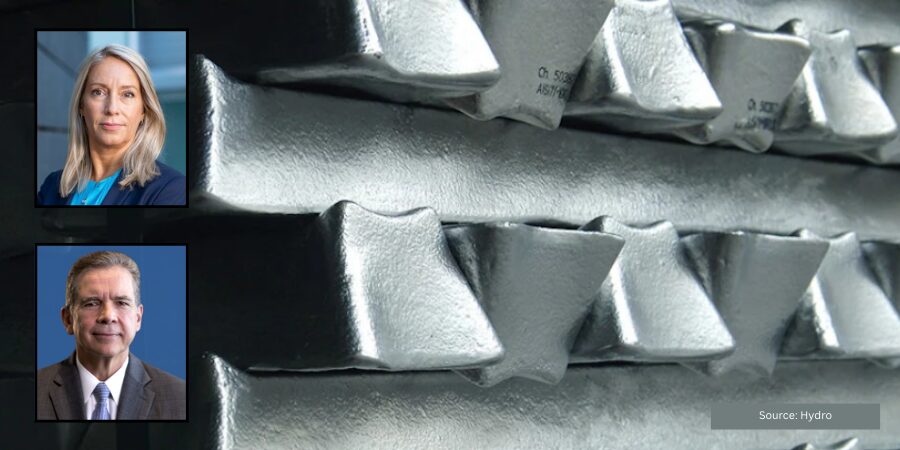
Hanne Simensen Executive Vice President Hydro Aluminium Metal
Two companies have signed a letter of intent (LOI) to develop low-carbon aluminum casting products for the automotive industry. This will serve to accelerate decarbonization efforts and support car manufacturers in reaching their sustainability goals.
Hydro and Nemak have signed the LOI, with the intention that the decarbonization will be done by using more post-consumer scrap and changing to cleaner energy sources like natural gas and electrical boilers at Hydro’s Alunorte alumina refinery in Brazil. The long-term ambition is to develop foundry alloy aluminum solutions qualified for automotive applications with a CO2 footprint below 3.0 kg CO2 per kilo aluminum. The objective is to utilize the full potential of aluminum as a low-carbon solution in casting components, such as engine and structural components for vehicles.
“This can make a difference for automotive companies looking to decarbonize their supply chains and meet ambitious sustainability goals,” says Hanne Simensen, Executive Vice President for Hydro Aluminium Metal.
Hydro currently supplies Nemak with Hydro REDUXA primary foundry alloy (PFA), with an estimated carbon footprint below 4.0 kg CO2 per kilo aluminum. This is 25 percent of the global average and the LOI aims to further reduce the CO2 footprint by 25 percent. Hydro and Nemak share the decarbonization target of making net-zero products by 2050 or earlier.
Armando Tamez CEO Nemak
For more than 40 years, there has been continuous growth in the use of aluminum in the automotive industry. This is due to its light weight, alloy strength, corrosion resistance and processing possibilities.
“As the automotive industry accelerates toward sustainability. . . aluminum is one of the most effective ways to improve the energy efficiency of electric and hybrid vehicles. Through our collaboration with Hydro, we are enhancing our lightweighting solutions to drive sustainable mobility forward,” says Armando Tamez, Chief Executive Officer for Nemak.
Press release is available in its original form here.
Welcome to Heat Treat Today’sThis Week in Heat Treat Social Media. We’re looking at a new manufacturing center, an AFC-Holcroft farewell, fun heat-treatment quizzes, and more.
As you know, there is so much content available on the web that it’s next to impossible to sift through all of the articles and posts that flood our inboxes and notifications on a daily basis. So, Heat Treat Today is here to bring you the latest in compelling, inspiring, and entertaining heat treat news from the different social media venues that you’ve just got to see and read!If you have content that everyone has to see, please send the link to editor@heattreattoday.com.
1. New Advanced Manufacturing & Aerospace Center at UTEP
Check out the exciting inauguration of UTEP’s Advanced Manufacturing and Aerospace Center (AMAC). On the website, heat treatment is listed as one of the future undertakings of the AMAC. Some new heat treat trainees may be coming your way out of UTEP!
2. Goodbye is The Hardest Word
You know someone is special if they are with you for almost 50 years! Congratulations to Jerry Waineo from AFC-Holcroft on his retirement. We hope you ate an extra slice of cake for us here at Heat Treat Today!
3. Try Your Hand at Heat Treat Quizzes
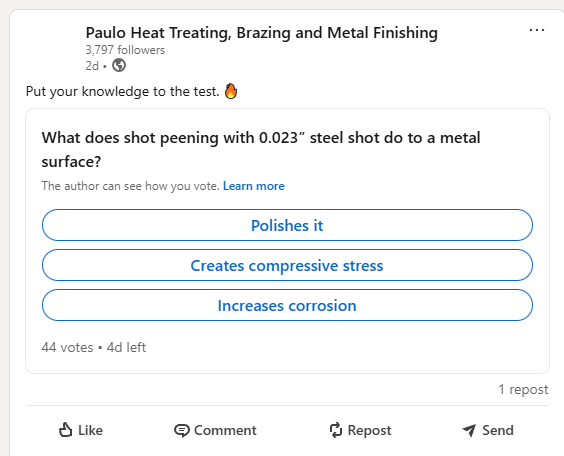
If you’re ever looking for something light during your work week, Paulo Heat Treating, Brazing and Metal Finishing posts fun heat treat related quizzes on their LinkedIn page on a regular basis. Each quiz shows how the respondents on LinkedIn have answered.
4. We Love Seeing Friendly Faces
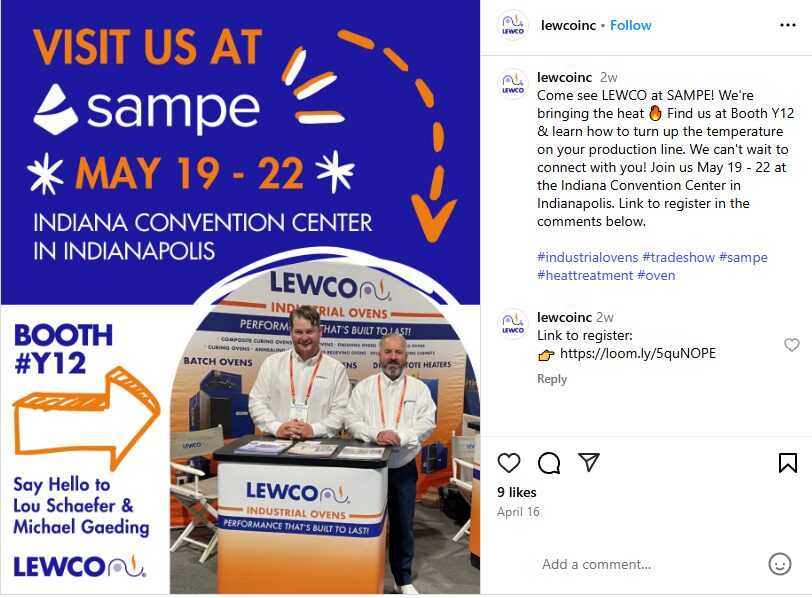
Oh, how we do enjoy seeing all of our friends at conferences and tradeshows. We have always said, “I get by with a little help from my friends.” (Well, it may have been the Beatles, but we agree!)
5. Scary: PFAS. NOT Scary: Heat Treat Radio
Tune in to Listen to Heat Treat Radio #119: Solvent vs. Aqueous Cleaning: Choosing the Best Method for Your Process. This helpful information shared by Fernando Carminholi on Heat Treat Radio, will keep you well informed!
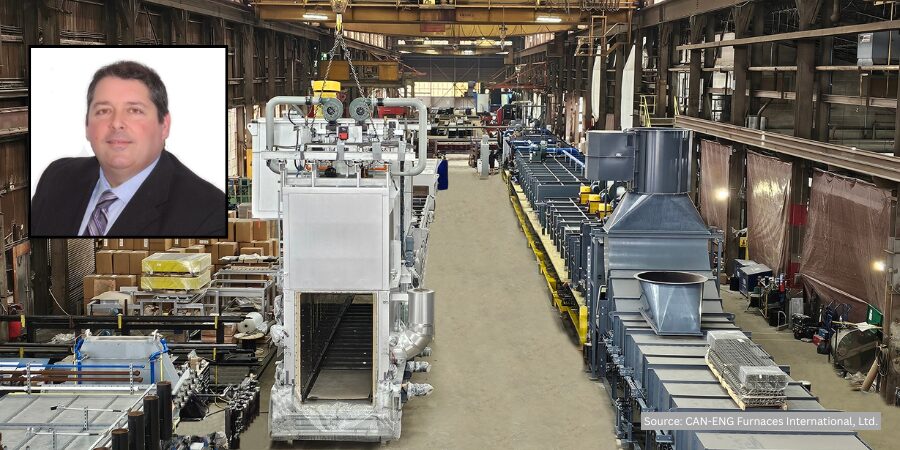
Three endeavors are underway to deliver advanced roller hearth furnace technology, featuring large-scale atmosphere quench and temper, annealing, and solution treatment systems to support the automotive and energy industries.
CAN-ENG Furnaces International, Ltd. is engaged in providing three separate systems amounting to over 450 feet of roller hearth furnace capacity.
Tim Donofrio Vice President of Sales Can-Eng Furnaces International, Ltd. Source: Can-Eng Furnaces International, Ltd.
The first of the three undertakings is a high capacity, roller hearth lamination annealing system. Produced for the transformer manufacturing industry, it will be supplied to one of North America’s largest transformer core manufacturers with operations in the USA, Canada, Mexico and China. The lamination annealing process is applied to transformer cores to enhance their magnetic properties and reduce core loss, ultimately improving efficiency and performance. The system integrates a pre-heat system, high temperature annealing furnace with integrated protected atmosphere-controlled cooling and accelerated cooling chamber. It is more than 300ft long and is capable of producing over 14,000 lbs/hr of atmosphere protected electrical steel core laminations used to manufacture high voltage transformer stations needed in the development of North America’s electrical distribution infrastructure.
“This project is being carried out largely to satisfy the demand for improving America’s aging and overburden power distribution network. As part of improving the nation’s power distribution network, consideration is being made to increase access to electric vehicle charging stations of which transformer cores are a critical part,” shared Tim Donofrio, Vice President of Sales, Can-Eng Furnaces International, Ltd.
The second endeavor is a roller hearth solution treatment furnace system for a tier one supplier of cast aluminum automotive components. The furnace will be used as part of a continuous T-6 heat treatment system for the manufacturing of cast aluminum, safety critical suspension components, and will serve to supply for one of America’s largest Japanese-based automotive manufacturers. These suspension components are to be integrated into future hybrid and electric automobiles produced in America by the manufacturer.
The third project is a roller hearth atmosphere mesh belt furnace system for a tier one supplier of safety critical, high value fasteners. This system is used to atmosphere, quench and temper high value, safety critical fasteners used in automotive manufacturing. The system is rated for processing over 6000 lbs/hr, and is being supplied to an existing customer with four similar roller hearth furnaces. The system supports the ongoing demands for domestic-supplied, high volume, heat treatment capacity.
What is missing from induction heat-treating maintenance? Learn seven methods for improving your induction tooling component performance in today’s article by David Lynch, Vice President of Engineering at Induction Tooling, Inc.
This informative piece was first released inHeat Treat Today’sApril 2025 Annual Induction Heating & Melting print edition.
The heat-treating industry is constantly evolving, whether it is due to the influx of AI or the introduction of new materials. The field of induction is not exempt from this constant change. Yet there remains a constant — induction tooling components need to be tough to resist harsh environments comprised of high frequencies, high power, heat, smoke, steam, dirt, oil, quench fluid and additives, and contaminants. It’s been almost four years since we visited the topic of induction tooling equipment longevity and maintenance (see the May 2021 print edition). Amidst the constant change, how do we protect against the same old toxic environment?
Let’s explore some new methods of improving the performance and longevity of induction tooling components:
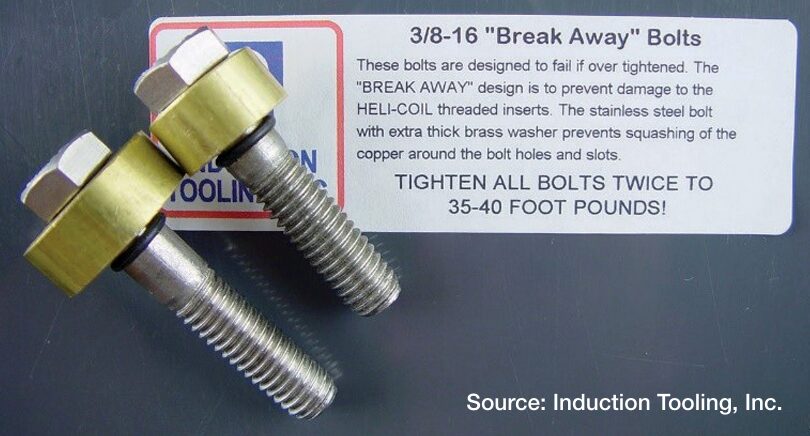
Figure 2. Break-Away bolts designed to fail beneath the washer if over tightened
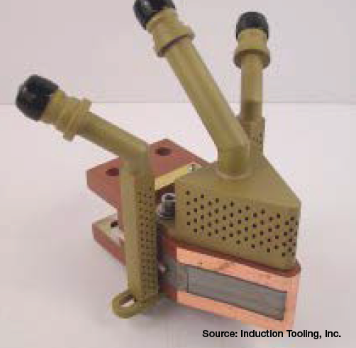
More than coils — When working to optimize the life of induction equipment, don’t focus solely on the coils. Bus bars, inductors, and quenching equipment are also key to success.
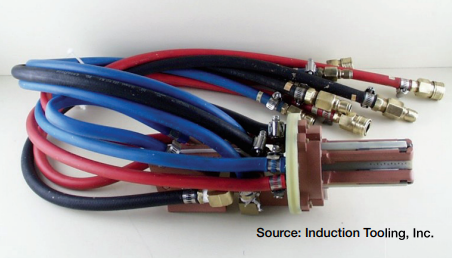
Austenitic stainless steel — Use austenitic stainless steel for fasteners, fittings, and hose clamps, and remember, non-ferrous is the way to go.
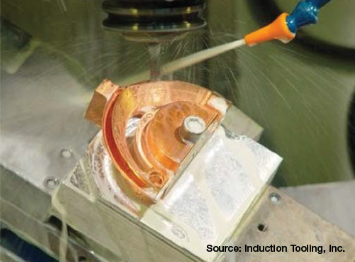
CNC machining — Manufacturing with a 5-axis CNC machine ensures quality and consistency.
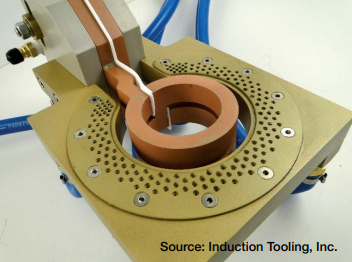
“Break-Away” bolts — For fasteners, use “Break-Away” bolts on contact surfaces. These bolts are designed to fail beneath the washer if they are overtightened, a design that prevents damage to the threaded insert inside the copper contact.
Cooling water — For cooling the inductor coil, bus bars, and adapters, reverse osmosis and distilled and deionized water are overkill. Stick with keeping the water below 70°F. This may require a separate cooling supply. Through laboratory experimentation and real-world production trials, it has been proven that lower cooling water temperatures can drastically increase the life of these components, especially in high-volume, high-power, and short cycle applications. In some hard water areas, this may not be possible. Typical cooling-conductivity for the inductor and bus bar is 200–800 microsiemens per centimeter (μS/cm).
Non-ferrous fittings — Use non-ferrous fittings on cooling and quenching water connections, as well as color-coded hoses.
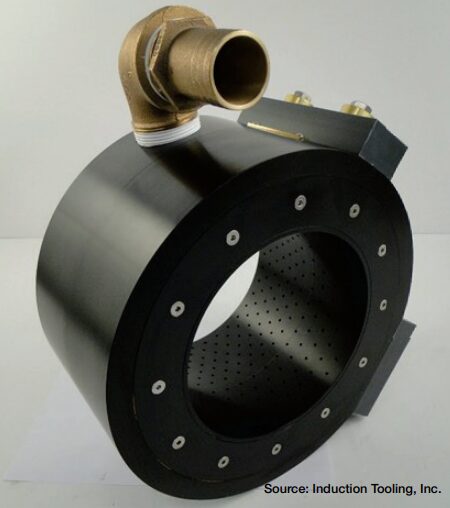
Cleaning — Design with cleaning in mind. Designing a quench with bolted removable quench plates ensures easy clean out. As the heat-treating industry continues to evolve, our practices and technologies for optimizing the performance and longevity of induction tooling equipment evolve with it. Whether it’s using a new method or revamping a tried-and-true practice, we can continue to produce strong induction tooling components to sustain these harsh environments.
Figure 3. 5-axis CNC machining of water-cooling passages to maximize water flow and minimize sharp transitionsFigure 4. CVJ inductor with non-ferrous fittings and color-coded hoses on cooling and quench water connectionsFigure 5. Barrel style OD quench ring with bolted removable quench plates to allow easy clean outFigure 6. Multi-turn OD scanning inductor with integrated quench featuring removable quench plate for easy clean outFigure 7. Heavily used inductor
About The Author
David Lynch Vice President of
Engineering Induction
Tooling, Inc.
David Lynch is Vice President of Engineering at Induction Tooling, Inc. He has over 36 years of experience and is the deputy of the ISO quality system. He has created and developed the system and templates being used today for creating and tracking engineering drawings, job history, rate tracking, and job performance. David holds several design patents, has authored several published articles, and has often presented at technical sessions. He enjoys working closely with customers to develop valued solutions across a wide range of induction heating applications from initial design concepts to implementation, customer support, and troubleshooting.
This article showcases the utilization of data-driven modeling assisted by machine learning (ML) to simulate the melting process of different steel grades in a medium-frequency induction furnace concerning the target variable of energy consumption. The results of the predictive models developed are presented in this article, along with the possibility of producing optimized charge combinations through the use of predictive outcomes and backward analysis.
This informative piece was first released inHeat Treat Today’sApril 2025 Annual Induction Heating & Melting print edition.
Introduction
The steel and foundry industry faces several ongoing challenges, such as escalating costs of raw materials and energy, CO2 emission regulations, and fierce global competition. To tackle these challenges, there is a continual demand for improving current production processes. Despite the strides made by smelters and equipment manufacturers in enhancing plant technology, there is still room for improvement in production procedures and processes. One possible approach to enhancing these processes is through modeling.
In recent times, digitalization and machine learning (ML) have emerged as a promising modeling method, as demonstrated in material development or process optimization in the steel industry (Lee et al., “A Machine-Learning-Based Alloy,” 11012; Klanke et al., “Advanced Data-Driven Prediction,” 1307-1313; Yingjun et al., “A Machine Learning and Genetic,” 360-375.) The subsequent example showcases how the melting process in a medium-frequency induction furnace can be modeled with respect to energy consumption, using specific process data obtained from a steel foundry, and subsequently optimized through synthetic data generation and backward analysis.
Modeling
Various ML algorithms [including Random Forest, Extra Trees, LightGBM, XGBoost, MLP (Neural Network), K-Nearest Neighbors] were trained and their hyperparameters optimized for modeling Erikson et al., “Autogluon-tabular”. The hyperparameters are set before the learning process begins and influence how well a model can represent a process. Some examples of hyperparameters in ML are the learning rates, the number of hidden layers in a deep learning neural network, or the number of branches in a decision tree.
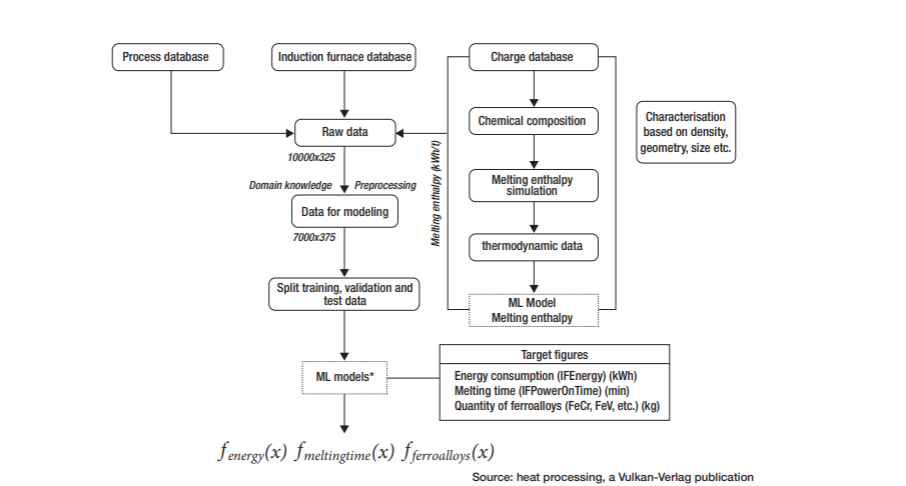
For the modeling, data from the process, induction furnace, and charge database of a medium-sized steel foundry were consolidated and pre-processed. The melting unit is a medium-frequency induction furnace with a capacity of approximately 7 tons. Figure 1 depicts an overview of the modeling workflow. The process and furnace databases contain data, such as the chemical analysis of the input raw materials, the measured melting time, and the measured melting energy requirement of the respective melts. The required melting energy (kWh), the required melting time (min) to reach the required tapping temperature, and the alloy quantities (Co, FeCr, FeV, FeSi, etc. kg) to be added after the melting process to correct the chemical analysis were selected as target values. The charge database contains data on the charge scrap for each melt, with details of its quantity and chemical analysis.
At the foundry, the scrap is roughly pre-sorted in separate bins so that the scrap used in a batch can be distinguished. As an intermediate step, the expected melting enthalpy of the scrap was calculated from the chemical analyses using simulation software (CALPHAD method). Based on the thermodynamic data, an ML model was trained to also consider the theoretically required melting enthalpy of the raw materials based on the chemical analysis. The measured raw data consist of approximately 10,000 individual melts of different steel grades. After pre-processing (removing outliers, formatting the data, etc.) and applying domain knowledge, about 70% of the data was used for process modeling. Domain knowledge in this context means reviewing and filtering the data with an understanding of the process. For example, some obvious outliers or erroneous data, such as negative charge quantities or charges of allegedly more than 7 tons of material, were not detected by the pre-processing algorithms and were manually filtered out.
Figure 1. Process modeling of the melting process
*The ML Models are a function of the change of energy, melting time, and chemical composition of the ferro alloys
The remaining dataset contains information on approximately 7,000 individual steel melts with approximately 300 influencing variables (columns in the dataset influencing variables, also called “features”) of which approximately 200 are charge-relevant influencing variables. In addition, the steel scrap was divided into groups, such as recycled or foreign scrap and alloys, characterized based on its empirically assessed geometry (cut-offs, “bones,” plates, chipped scrap, etc.), and added to the dataset as information.
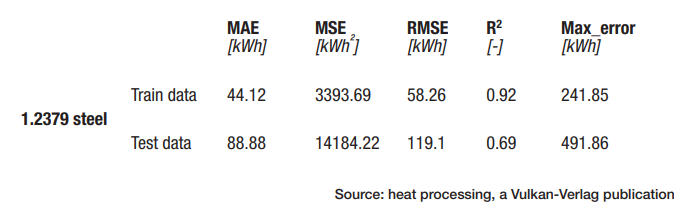
Table 1. Overview of the prediction metrics of the energy models for 1.2379 steel
The data were subsequently split as 70% training, 20% validation, and 10% test data. The algorithms were trained on the training data and then tested for prediction quality on the test data. This step is necessary because overfitting or underfitting can occur when training ML algorithms. This means that the models perform well on the training data but poorly on unknown future process data. The test data, representing completely unknown future process data or states, are separated beforehand. In each case between the prediction of the model and the “real” measured value of the respective melt in the test dataset, the prediction of the models was evaluated with the metrics MAE (mean absolute error), MSE (mean square error), RMSE (root mean square error), and R2 (coefficient of determination).
The energy consumption during melting in an induction furnace depends on many factors, such as the raw materials being fed (fine or bulky material, impurities, etc.), the sequence in which they are charged, the actual process control (e.g., is the furnace lid open for an unnecessarily long time due to bulky scrap in the charge), and many other direct and indirect influencing factors. Due to this complexity, modeling
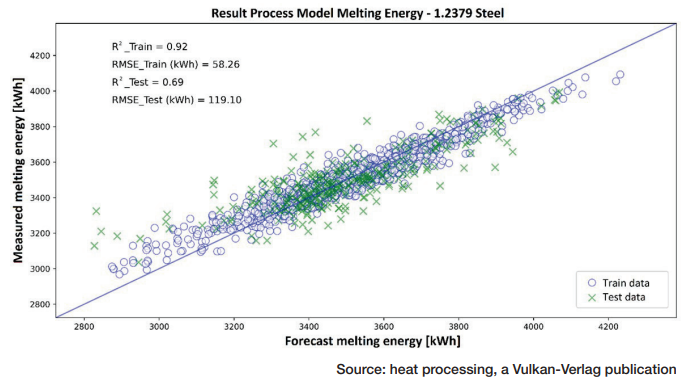
Figure 2. Result of the process model in terms of predicting the energy required to melt 1.2379 steelFigure 3. Residuals of the energy model test data for 1.2379 steel
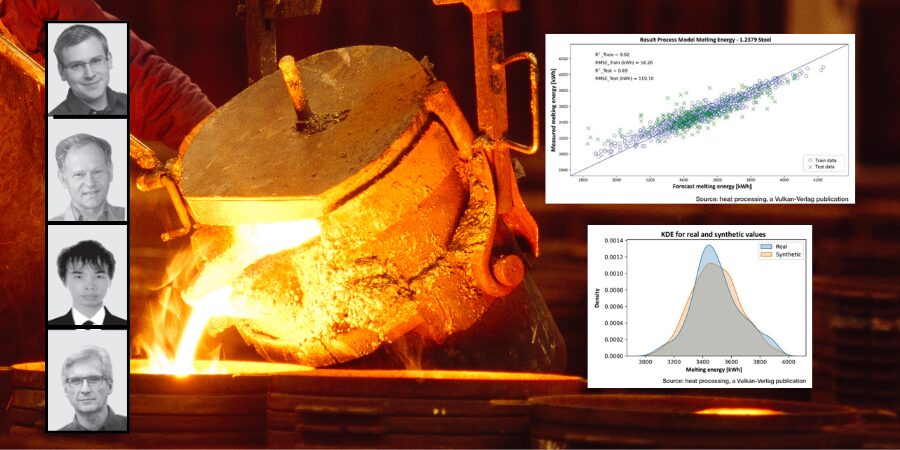
Figure 2 depicts the comparison of the values (1.2379 steel) of energy consumption (x-axis) predicted by the best ML model based on the input features and the actual measured values (y-axis) in the test and training datasets, respectively. For the training dataset the R² is 0.92 with an RMSE of 58 kWh, and for the test dataset, the R2 is 0.69 with an RMSE of 119 kWh (Table 1). For the test data, this corresponds to a relative prediction error of about 5%–10%.
Figure 3 illustrates the residual distribution (difference between the actual measured value and the model prediction) of the 1.2379 energy model in the test dataset. The residual distribution gives an indication of the prediction quality of a model. If the expected value of the residuals is not close to zero and they are not approximately normally distributed, this means that the model has a systematic tendency to either over- or under-predict. Furthermore, if there is a pattern in the residuals, the model does not appear to be able to explain some relationships within the data and is therefore qualitatively inconsistent. In the generated model, the residuals are almost normally distributed, and the prediction error does not appear to follow any pattern, suggesting good prediction quality.
Charge Optimization
After a trained ML model has been prepared for use, backward analysis can be applied to the training dataset to determine the range of values of the independent variable that corresponds to a given target variable. Consequently, backward analysis offers an inverse function of the prediction function, which can be leveraged to determine optimized process values. In this scenario, the optimized process value is the charge composition, with the target variable being energy consumption.
There are multiple mathematical optimization methods that can be employed for this purpose based on a well-trained ML model. A straightforward and easy-to-understand approach is to create a dense set of independent process variables using linear interpolation within a given range, such as the minimum and maximum values of a variable. The target variable is subsequently predicted based on this set of generated variables. This method can be computationally intensive and time consuming, and it does not consider the hidden patterns within the dataset, resulting in some useful information being disregarded.
In order to capture the hidden information and accurately reflect the true value of the original data set, a deep learning-based method called SDV (Synthetic Data Vault) is used in this work Patki et al., “The Synthetic Data Vault,” 1-10. Various synthetic data generation algorithms, such as Gaussian copula, are used in the SDV library. Mathematically, a Gaussian copula is a distribution over the unit cube between 0 and 1 in dimensions generated by applying the probability integral transformation to a multivariate normal distribution over all real numbers (R). Intuitively, the Gaussian copula is a mathematical function that can describe the joint distribution of several random variables by analyzing the dependencies between their marginal distributions. It can learn the intrinsic information of the original dataset to generate new synthetic data that have the same format and statistical properties as the original dataset.
Figure 4. The KDE comparison of real and synthetic variable values of the target variable energy consumption
Since the SDV library learns probabilistic rules, most of the synthesized data is general. To improve the quality of the synthesized data, some technical constraints can be defined when generating the data. For example, constraints can be set so that the values of a column in the generated data set are always larger or smaller than another column. Figure 4 shows the comparison of the Kernel Density Estimation (KDE) of the target variable energy consumption in the real and synthetic data. The distributions are very similar. In the current production process, the SDV dataset can be used to quickly determine the values that best approximate the required quality according to the prediction for the independent variables. This selection can then be further optimized, for example, in terms of cost and energy efficiency.
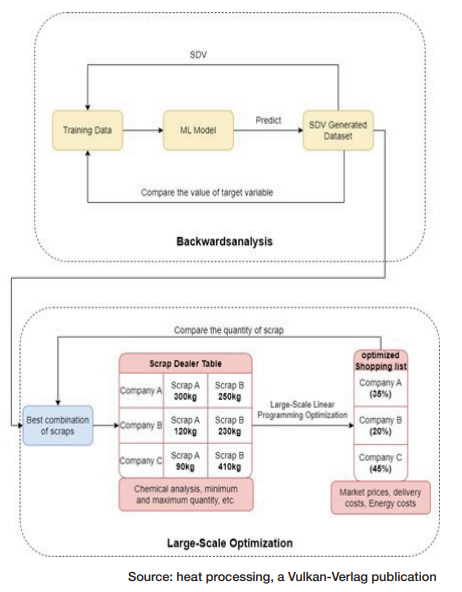
Figure 5 illustrates the process of backward analysis and resulting optimization based on the target, the required chemical elements, and the amount of scrap that must be included in a melt to ensure the target composition. The aim of data-driven optimization is to determine the most cost-effective scrap mix or “recipe,” taking into account the predicted energy consumption and metal yield. The database, which contains information from scrap suppliers, is constantly updated and fed new data. Because of this, the results of the optimization are automatically adjusted on an ongoing basis.
Figure 5. Sequence of backward analysis and large-scale charge optimization
The solution to the programming problem should indicate from which scrap supplier and which type of scrap combinations should be purchased to maintain the desired stock levels of the steel producer that will meet the above conditions (desired chemical analysis, minimized energy consumption, post-gating with ferro-alloys) or minimize costs Goutam and Fourer, “A Survey of Mathematical Programming,” 387-400.
The availability of individual scrap suppliers, the market price, and the levels of elements, such as chromium, vanadium, sulfur, and phosphorus, all affect how economically recovered steel scrap can be used. To ensure that steel grades are consistent throughout the cast or semi-finished product and to meet a client’s criteria, such as weldability and hardness, it is critical to control the amount of these elements in the final melt.
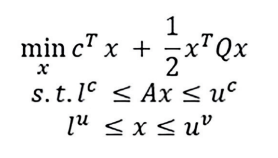
A model-based linear first-order (LP) optimization problem has been developed as a tool for scrap purchasing decision makers Applegate et al., “Practical Large-Scale,” 20243-20257 and Miletic et al., “Model-Based Optimization,” 263-266. The computations are performed by the model using the results of the ML model shown earlier in terms of energy consumption and scrap quality data, market prices, and supplier availability information. Prices, quality, and supplier information are included in the model along with quality and density constraints and a production schedule. The LP considers the following convex quadratic programming problem:
where A is an m × n Matrix and Q is a symmetric and n × n positive semidefinite matrix. The vectors of the input features have the upper bounds uc and uv and the lower bounds lc and lv , which have values in R U+∞ and in R U–∞ respectively. This equation assumes that lc ≤ uc and lv ≤ uv. For example, it can take into account that a particular scrap is only used between 500 kg and 1,500 kg, which may be due to process-related circumstances, and is therefore added as a constraint to the optimization objective.
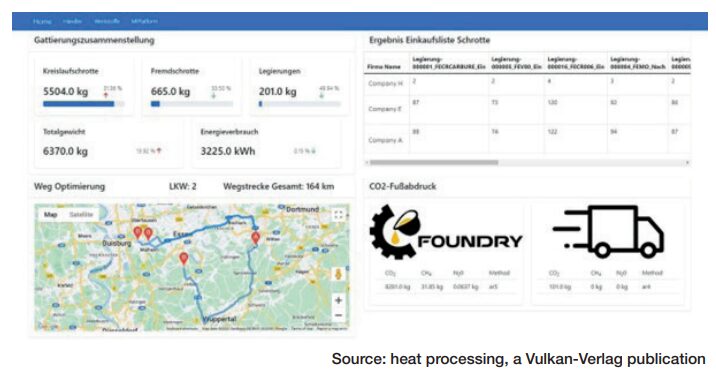
An approximate linear cost equation is used in the model. Scrap costs are determined by market prices and availability, as well as internal storage costs; energy costs are calculated by estimating the energy consumption predicted by the ML model for each type of scrap and the amount of electricity required. The work described above ends with a web-based user interface (Figure 6) that displays the concrete purchase plan. Transportation of the purchased scrap could be considered through route planning. Finally, an estimate of the quantitative carbon footprint of the melting process and the logistics of scrap delivery can be calculated and tracked.
Figure 6. Overview of the entire software: In the background, the software accesses the generated ML model and the database of available scrap and generates an optimized shopping list for the scrap. Factors such as energy consumption predicted by the ML model, scrap prices, calculated CO2 emissions, the distance, and desired chemical composition are considered.
Conclusion
This article has shown how the melting and purchasing process in the steel industry can be modeled and optimized using modern methods from the field of artificial intelligence and mathematical optimization methods. Based on the input features (the scrap composition and the process parameters), the generated models can predict the expected energy consumption with a relative error of about 5%–10%. The optimization software can then be used to generate a scrap composition. Here, the composition of the purchase list from a purely monetary point of view (scrap prices) is supplemented by the consideration of resource and energy efficiency.
The foundry and steel industry naturally must go through a large number of (partial) processes on the way from raw material to finished casting or semi-finished product, where a large amount of production data is generated. For a future data-driven optimization of foundry processes, it is therefore necessary to consolidate this data to make the available knowledge usable for process optimization with the help of tools such as ML. This can provide foundries and their staff with another useful tool, like casting simulation, to further improve existing processes and procedures.
References
Applegate, David, Mateo Díaz, Oliver Hinder, Haihao Lu, Miles Lubin, Brendan O’Donoghue, Warren Schudy. “Practical Large-Scale Linear Programming Using Primal-Dual Hybrid Gradient.” Advances in Neural Information Processing Systems 34 (2021): 20243-20257.
Dutta, Goutam, and Robert Fourer. “A Survey of Mathematical Programming Applications in Integrated Steel Plants.” Manufacturing & Service Operations Management 3, no. 4 (2001): 387-400.
Erickson, Nick, et al. “Autogluon-tabular: Robust and accurate automl for structured data.” arXiv preprint arXiv:2003.06505 (2020).
Klanke, Stefan, Mike Löpke, Norbert Uebber, and Hans-Jürgen Odentha. “Advanced Data-Driven Prediction Models for BOF Endpoint Detection.” Association for Iron & Steel Technology Proceedings (2017), 1307-1313.
Lee, Jin-Woong, Chaewon Park, Byung Do Lee, Joonseo Park, Nam Hoon Goo, and Kee-Sun Sohn. “A Machine-Learning-Based Alloy Design Platform Th at Enables Both Forward and Inverse Predictions for Thermo-Mechanically Controlled Processed (TMCP) Steel Alloys.” Scientific Reports 11, no. 1 (2021): 11012.
Miletic, I., R. Garbaty, S. Waterfall, M. Mathewson. “Model-Based Optimization of Scrap Steel Purchasing.” IFAC Proceedings 40, no. 11 (2007): 263-266.
Patki, Neha, Roy Wedge, and Kalyan Veeramachaneni. “Th e Synthetic Data Vault.” IEEE International Conference on Data Science and Advanced Analytics (DSAA) (2016): 1-10.
Yingjun Ji, Shixin Liu, Mengchu Zhou, Ziyan Zhao, Xiwang Guo, and Liang Qi. “A Machine Learning and Genetic Algorithm-Based Method for Predicting Width Deviation of Hot-Rolled Strip in Steel Production Systems.” Information Sciences 589 (2022): 360-375.
This article content is used with permission by Heat Treat Today’s media partner heat processing, which published this article in February 2023.
About The Authors:
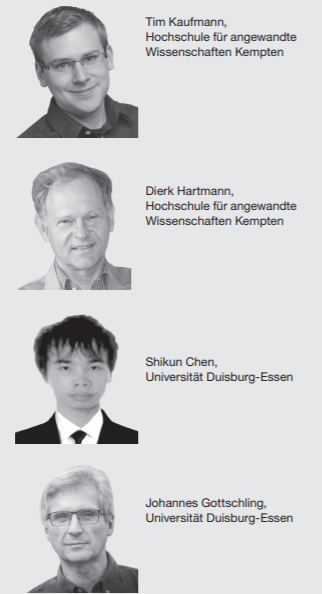
For more information: Contact Tim Kaufmann at tim.kaufmann@hs-kempten.de Dierk Hartmann at dierk.hartmann@hs-kempten.de Shikun Chen at shikun.chen@uni-due.de or Johannes Gottschling at Johannes.gottschling@uni-due.de
Heat Treat Today publishes twelve print magazines a year and included in each is a letter from the publisher, Doug Glenn. This letter is from the April 2025 Annual Induction Heating& Meltingprint edition.
This magazine has been a blessing to publish. The industry is niche, yes, but it is far-reaching and impactful on nearly every aspect of life. There isn’t a place where I can go where heat treating and thermal processing have not made life better and/or possible. The people are by and large good people, fun to work with, and interesting to talk to. The content written in these pages is a good mix of challenging technical content, as well as general interest information.
Our target audience, the 15,000–20,000+ engineers and managers that make purchasing decisions for the vast number of manufacturers who have their own in-house thermal processing operations, is highly engaged with Heat Treat Today. While it is impossible to gauge the engagement of our monthly print editions, when readers respond, it is usually because of something they read in one of our print editions.
Granted, it’s easier to see if/when someone opens or clicks on any of our e-newsletters, but it is surprising the number of people who email us about something they’ve seen in the print editions.
The bottom line is: All of our audience (whether print or digital) is an engaged bunch.
Suppliers who want the attention of these manufacturers with in-house heat treat departments would do well to remember the reach of Heat Treat Today. Whether you use Heat Treat Today or some other format to tell your story, you can’t sell if you don’t tell.
This may seem to be an abundantly obvious statement to many, but you would be shocked at the number of engineering-based companies who believe, “If we build it, they will come.” Thank you, Kevin Costner — that may be true in a field of your dreams, but it is untrue in the real world. Your selling story needs to be told.
Just having a great product — even the best product of its kind — is not a guarantee of success. Sooner or later, you must let people know, somehow, you exist and your product is unparalleled.
Here are a few of the ways that companies typically spread the news:
E-blasts: While e-blasts are low cost and convenient, there are a few challenges: 1. Reaching new people, and 2. People will look at your in-house e-blast as a purely promotional effort, and because of that, will not give it the full attention it might deserve.
Advertising in magazines or on a website: A decent way to tell since they boast a targeted audience, however, magazines do not offer metrics, and websites, while able to provide numbers, typically reach far fewer people than a print version of a magazine and are not consumed for as long as print.
Word of mouth: This method is typically slower and dependent on others talking about you. If your product is that good and it causes a buzz in the industry, then word of mouth may be all you need. It is, however, a passive form of telling, which you do not control and depends on others.
Representatives: Assuming your reps are giving you a large enough portion of their time and are knowledgeable in your capabilities, this is a good way to tell your story. The downside is the rep’s reach. Even if a rep were making four calls a day every weekday of the year, that totals up to just over 1,000 visits a year. And let’s be honest, most companies would be thrilled if a rep made 500 calls a year.
Internal sales teams: Assuming they’re on the phone consistently and not fulfilling orders or being distracted by other internal demands, an in-house sales team, although potentially expensive to maintain, is one of the better options a company has for telling their story. Nearly everyone I know has an internal sales staff. It is pretty much a must.
Website: Websites are not as good at getting the message out as many think, but they are still absolutely necessary. Websites are the most misunderstood marketing tool in the marketing toolbox. Most people think if they have a website, they’re good. Please remember, website “advertising” is passive marketing. Once a website is built, it just sits there until someone decides to come look at it.
Marketing materials: Similar to a website, literature sits there until someone decides to look at it. It’s a passive form of marketing. The bottom line here is this — as you plan for the success of your business, don’t forget it is not just about product quality. You must also remember that “telling” is just as important, if not more so, than building the best product out there.
Our audience of in-house heat treaters is interested in hearing your story. Remember, you can’t sell if you don’t tell.