A new production facility for lightweight refractory materials has opened in Missouri, increasing supply for furnace-lined industrial processes that operate at elevated temperatures. The materials support thermal insulation and durability in equipment used across sectors such as petrochemicals, aluminum, and power generation, where reliable furnace performance is essential to high-temperature manufacturing and other heat-intensive processing operations.
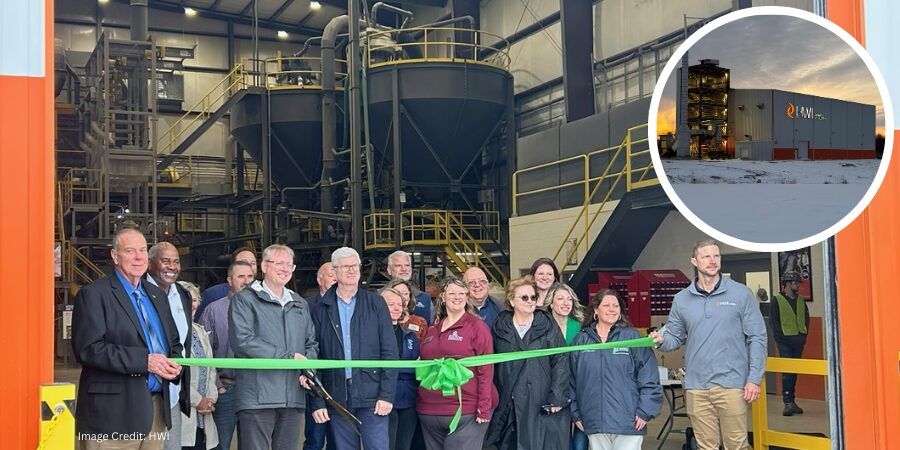
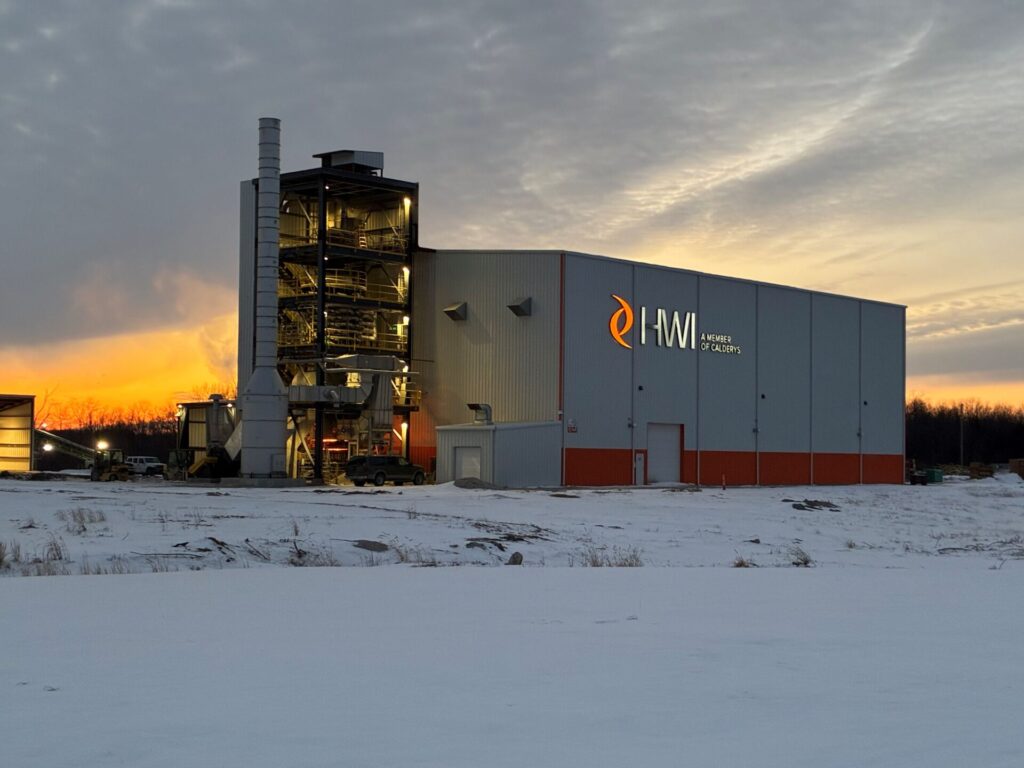
The new lightweight monolithics production facility in Fulton | Image Credit: HWI
HWI, a member of Calderys, has opened a lightweight monolithics production facility in Fulton, Missouri. Built on existing HWI property at the company’s Rotary Kiln complex, the greenfield investment increases production capacity for lightweight refractory materials used to line heaters, reformers, boilers, crackers, and furnaces in a range of industrial applications.
The facility has direct access to local clay reserves, enabling vertical integration intended to support raw material consistency and supply reliability. Operational features include a furnace system used to produce GREENLITE® aggregate, along with robotic automation for packaging and material handling, as well as updated packaging capabilities.
Michel Cornelissen President and CEO Calderys Group
The added capacity is expected to shorten lead times, support make-to-stock inventory, and allow the company to pursue larger projects that were previously limited by supply constraints. Premium GREENLITE® products, including the GREENLITE®-45-L family of monolithics and GREENLITE® 115 AR brick, are now shipping through the company’s distribution network.
“Demand for these high-performance, energy-saving lightweight refractories continues to grow rapidly while global supply chains remain under pressure,” said Michel Cornelissen, president and CEO of Calderys Group.
Monolithic refractories provide insulation and structural stability for equipment operating in high-temperature environments. HWI’s GREENLITE® lightweight monolithics provide insulation with optimized strength-to-density ratios that help minimize heat loss, reduce fuel consumption and CO2 emissions, extend campaign life, and enable longer service intervals. These, in turn, help clients lower operating costs and improve energy efficiency while maintaining productivity and reliability.
Press release is available in its original form here. Main image shows the ribbon cutting with local officials at the Fulton plant. Image Credit: HWI
Heat TreatToday offers News Chatter, a feature highlighting representative moves, transactions, and kudos from around the industry. Enjoy these 22 news items, including Advanced Heat Treat Corp.’s expansion of induction hardening and gas nitriding capacity in Alabama, Dauch Corporation’s acquisition of Dowlais Group, CAN-ENG Furnaces International’s new certification as a FANUC Authorized System Integrator, and more!
Equipment
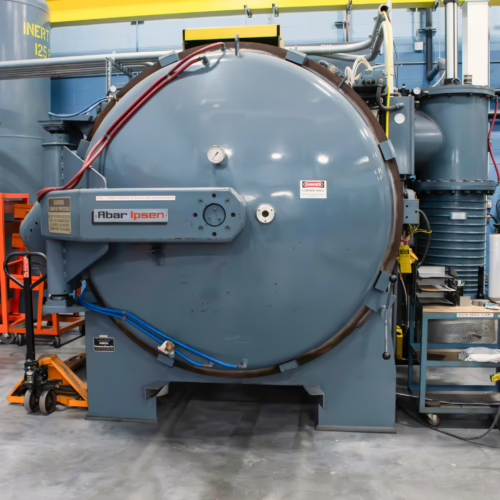
1. Urschel Laboratories, a manufacturer of precision food-cutting equipment, has ordered a new MetalMaster HR vacuum furnace from Ipsen USA to support in-house heat treating of stainless steel components used in its machines. The system will replace a furnace that has been operating since 1986 and marks Urschel’s sixth furnace purchase from Ipsen, reflecting a decades-long partnership. The upgrade is expected to strengthen Urschel’s manufacturing efficiency and product reliability, reinforcing equipment performance across the global food processing industry it serves.
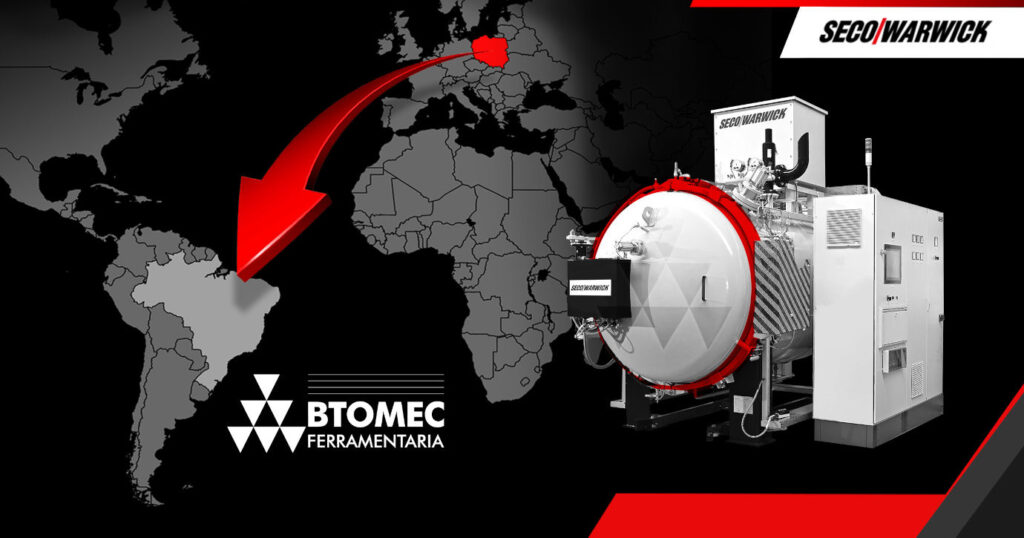
2. BTOMEC Ferramentaria e Usinagem de Precisão Ltda., a manufacturer of multi-cavity injection molds, has invested in a Vector vacuum furnace from SECO/WARWICK to bring die and tooling hardening in-house. The move enables the company to reduce reliance on external heat treaters while gaining greater control over production timelines, costs, and quality. The investment reflects a broader industry trend of manufacturers establishing internal heat treat capabilities as production volumes grow.
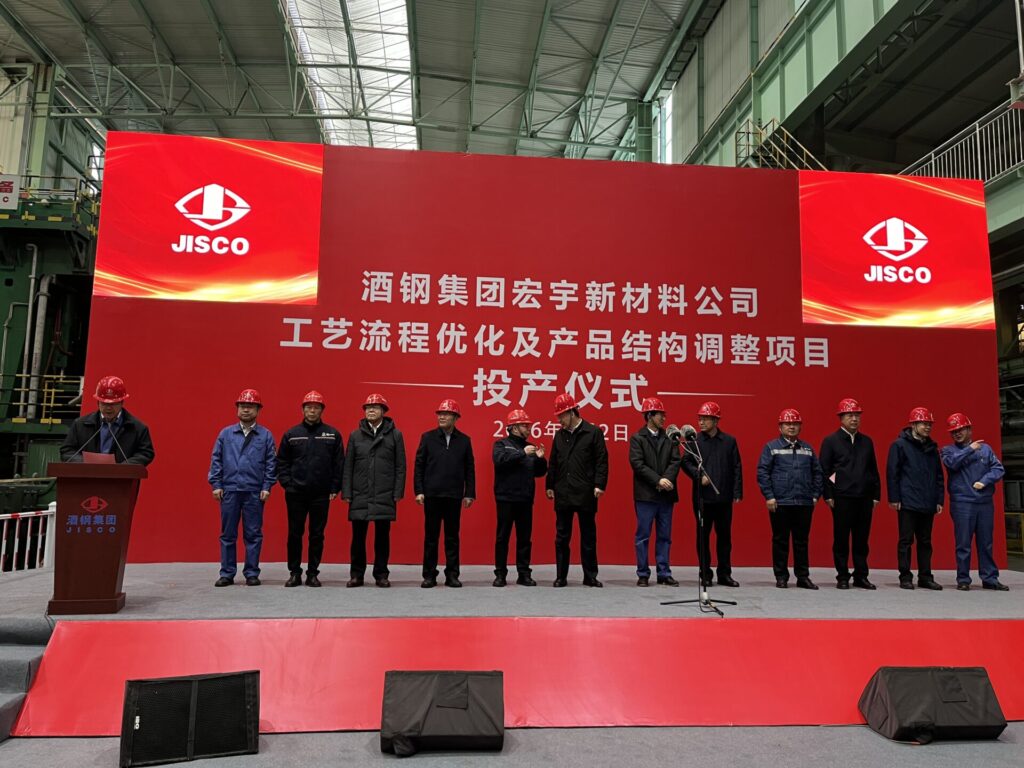
3. JISCO Carbon Steel has commissioned a new integrated CSP®-HSM production line at its Jiayuguan facility, combining Compact Strip Production casting with a hot strip mill in a fully automated system supplied by SMS Group. The upgrade doubles the plant’s annual production capacity from about 2 million to 4.5 million tons while improving operational flexibility and process integration between casting and rolling. The project strengthens JISCO’s ability to deliver consistent flat-steel products for global manufacturing markets.
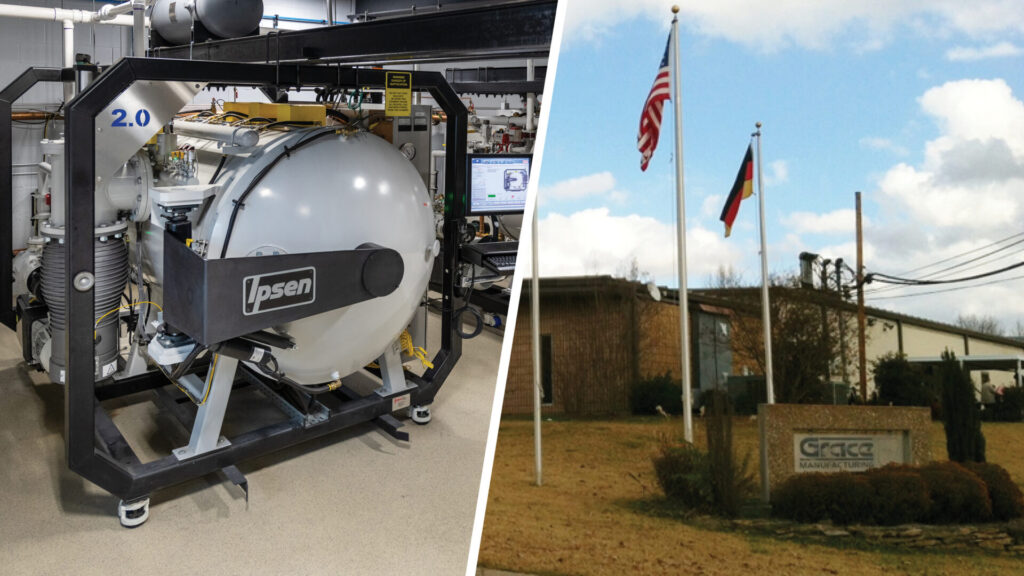
4. Grace Manufacturing has installed a new TITAN H2 vacuum furnace from Ipsen at its Russellville, Arkansas facility to expand heat treating capabilities for thin martensitic stainless steel components used in medical devices. The system replaces an aging furnace and was selected after third-party testing confirmed it met the company’s processing requirements. The upgrade strengthens production reliability and metallurgical control for precision medical manufacturing.
5. An international aircraft motion-control manufacturer has ordered an additional low-temperature vacuum tempering furnace from SECO/WARWICK’s U.S. subsidiary to expand its heat treat capacity for precision aerospace components. The system will support tempering, aging, and other sub-critical heat treat processes while meeting stringent aerospace thermal-processing standards.
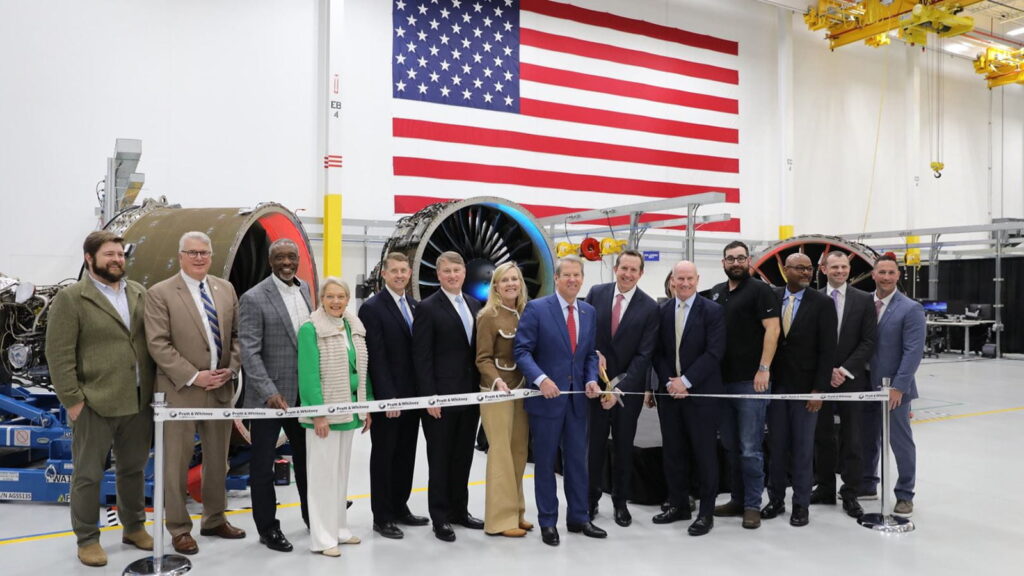
6. Pratt & Whitney, an RTX business, is investing $200 million to expand its Columbus, Georgia, manufacturing site with a seventh isothermal forging press to produce rotating compressor and turbine disks for commercial and military jet engines. The new equipment is expected to increase output of these critical engine components by about 30% and is scheduled to be operational in 2028. The expansion strengthens production capacity for next-generation aerospace engine programs and supports growing global demand for aircraft propulsion systems.
7. A defense-sector firearm manufacturer has selected a vacuum furnace system from SECO/WARWICK to support carburizing and heat treatment of steel components used in firearm production. The new equipment will enhance control over case hardening processes, helping improve durability and performance of critical firearm parts. The investment strengthens thermal processing capacity within the defense manufacturing supply chain.
8. Advanced Heat Treat Corp. (AHT) has expanded induction hardening and gas nitriding capacity at its Cullman, Alabama facility, adding a larger induction system and an additional nitriding unit. The upgrade enables the processing of larger and more complex components while supporting higher production volumes. The investment strengthens surface hardening capabilities for manufacturers by improving throughput and maintaining fast turnaround times for industrial parts.
9. Bodycote has installed a new diffusion hardening treatment vessel at its Mooresville, North Carolina facility, expanding stainless steel processing capabilities in North America. The system enables the company to surface-harden larger components using its ADM® low-temperature diffusion hardening process. The investment broadens capacity for industries such as oil and gas, food and beverage, and medical technology by improving durability of stainless steel parts while maintaining corrosion resistance.
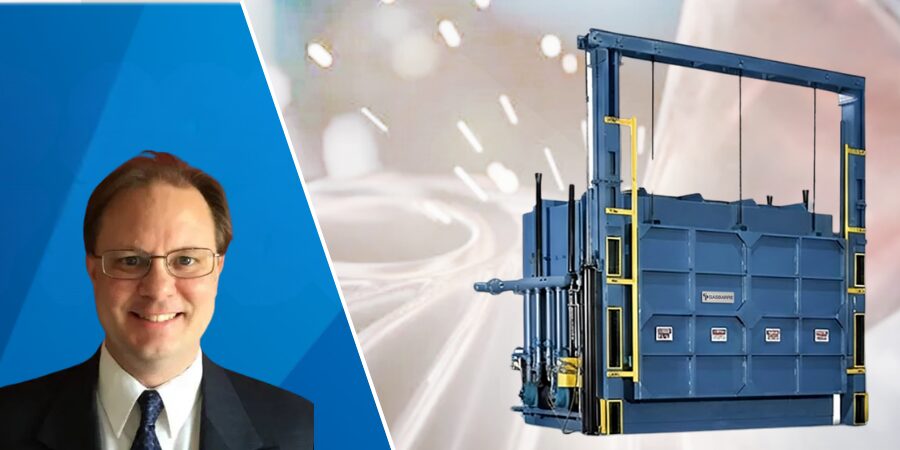
10. Gasbarre Thermal Processing Systems will supply a custom-engineered box furnace and loading system to a U.S. government manufacturing facility to expand a previously validated high-temperature thermal process. The system, designed to meet strict space and operational constraints, will operate up to 2100°F in an air atmosphere and represents the largest configuration the facility can accommodate. The installation enables the government manufacturer to scale production while maintaining specialized thermal processing capabilities.
11. A China-based manufacturer of vacuum circuit breakers has ordered two vacuum furnaces from SECO/WARWICK to add vacuum brazing capability for producing vacuum interrupter components used in power distribution systems. The installation expands the manufacturer’s ability to produce brazed, hermetically sealed interrupter assemblies used in circuit breakers that interrupt electrical current in industrial and utility power networks.
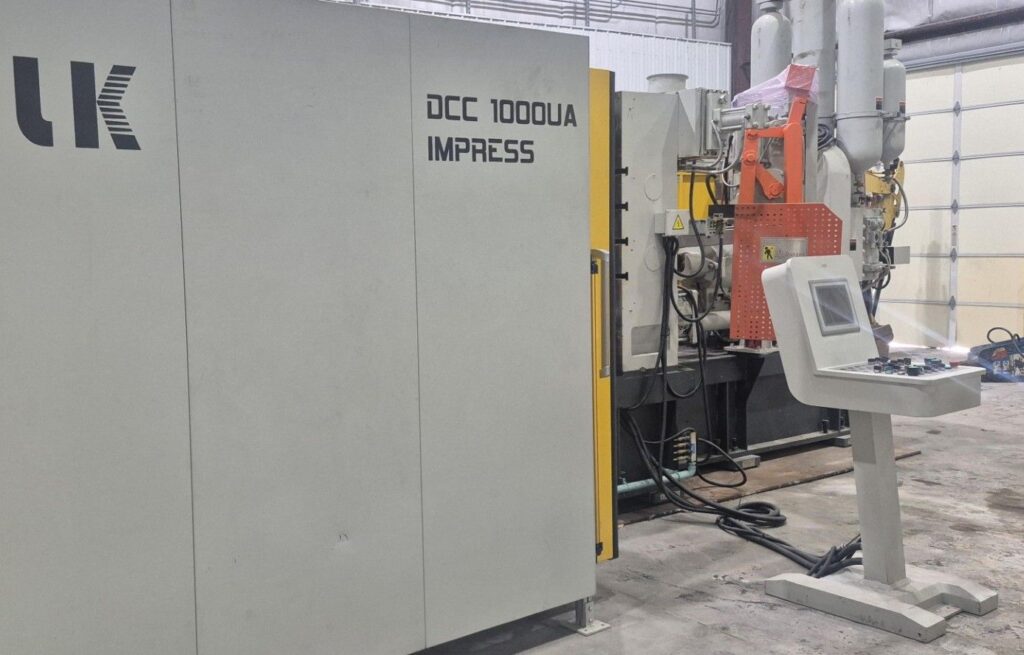
12. PSW Group has opened a new High Integrity Diecasting Center at its Magretech plant in Bellevue, Ohio, focused on semi-solid casting technologies for aluminum and magnesium components. Led by Dr. Tao Wang, the facility allows OEMs, Tier 1 suppliers, and die casters to trial, develop, and scale advanced casting processes using semi-solid and high-pressure die-casting methods. The center aims to accelerate development of lighter, stronger, and lower-carbon metal components, supporting innovation and faster time-to-market across the automotive and light-metal manufacturing sectors.
Ipsen MetalMaster furnace originally commissioned in 1986 awaiting replacement at UrschelBTOMEC’s Vector vacuum furnace order from SECO/WARWICKCommissioning ceremony on February 2, 2026, at JISCO’s site
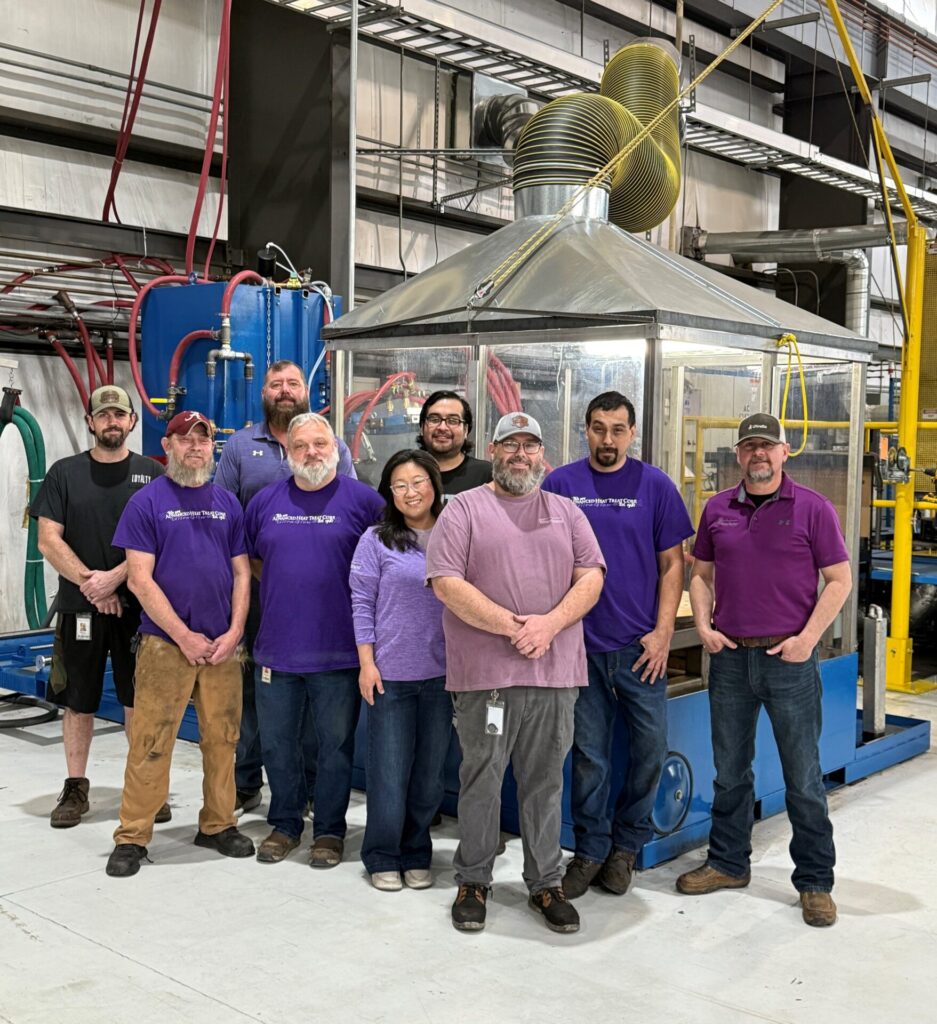
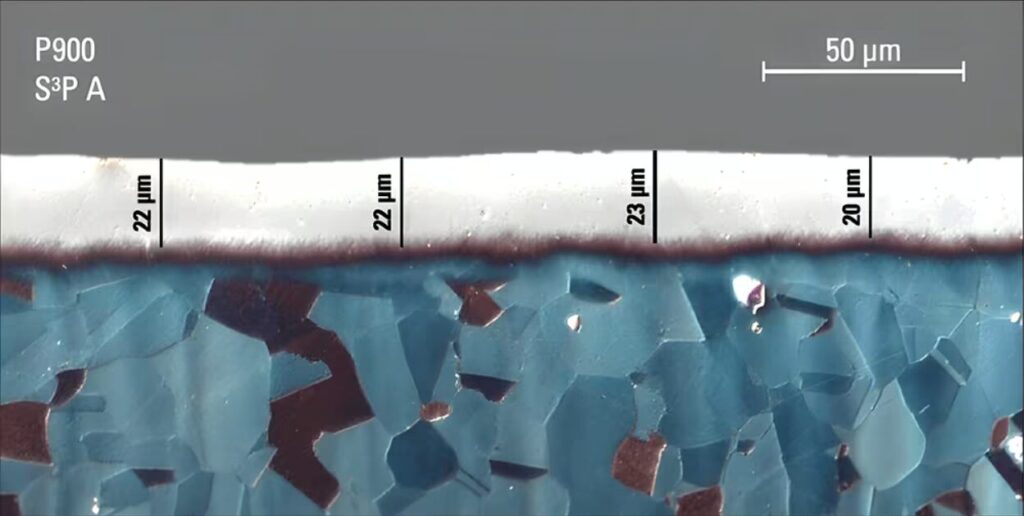
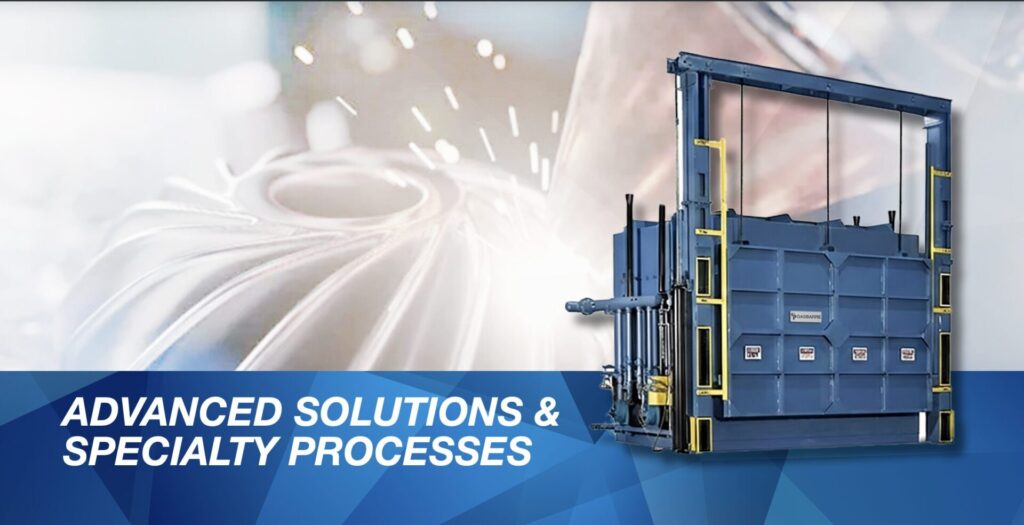
An Ipsen TITAN H2 vacuum furnace for Grace ManufacturingRibbon cutting at Pratt & Whitney’s Columbus, Georgia facilitySECO/WARWICK vacuum tempering furnace for aerospace componentsA new SECO/WARWICK furnace strengthening the defense manufacturing supply chainAHT Employees in Front of Induction Unit in AlabamaMicrostructure of surface hardened stainless steel AIS1660 (1.4980) | Image Credit: BodycoteCustom-engineered box furnace from Gasbarre Thermal Processing SystemsVacuum furnaces for a vacuum circuit breaker manufacturerPSW Group’s High Integrity Diecasting Center in Bellevue, OH
Company & Personnel
13. Dauch Corporation has completed its acquisition of Dowlais Group plc, bringing together major automotive manufacturing operations including GKN Automotive and GKN Powder Metallurgy. The combined company expands global capabilities in driveline systems, metal forming, and powder metallurgy under the leadership of CEO David C. Dauch. The move strengthens supply and engineering capacity for internal combustion, hybrid, and electric vehicle platforms across the global automotive industry.
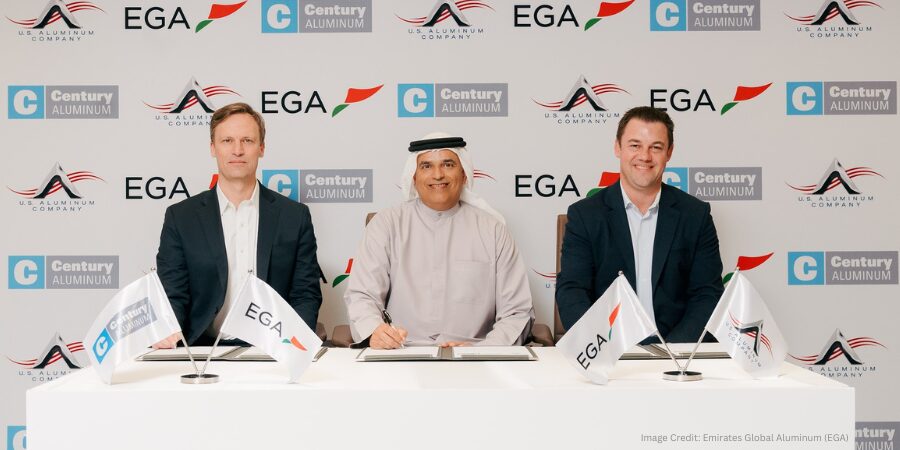
14. U.S. Aluminum Company has signed an agreement with Emirates Global Aluminum (EGA) and Century Aluminum to explore building a downstream aluminum fabrication facility in Inola, Oklahoma, near a planned primary aluminum smelter. The proposed plant would convert molten aluminum into value-added products for sectors such as electrical, defense, aerospace, automotive, and machinery manufacturing. The project aims to strengthen U.S. aluminum supply chains and help expand domestic primary aluminum production capacity.
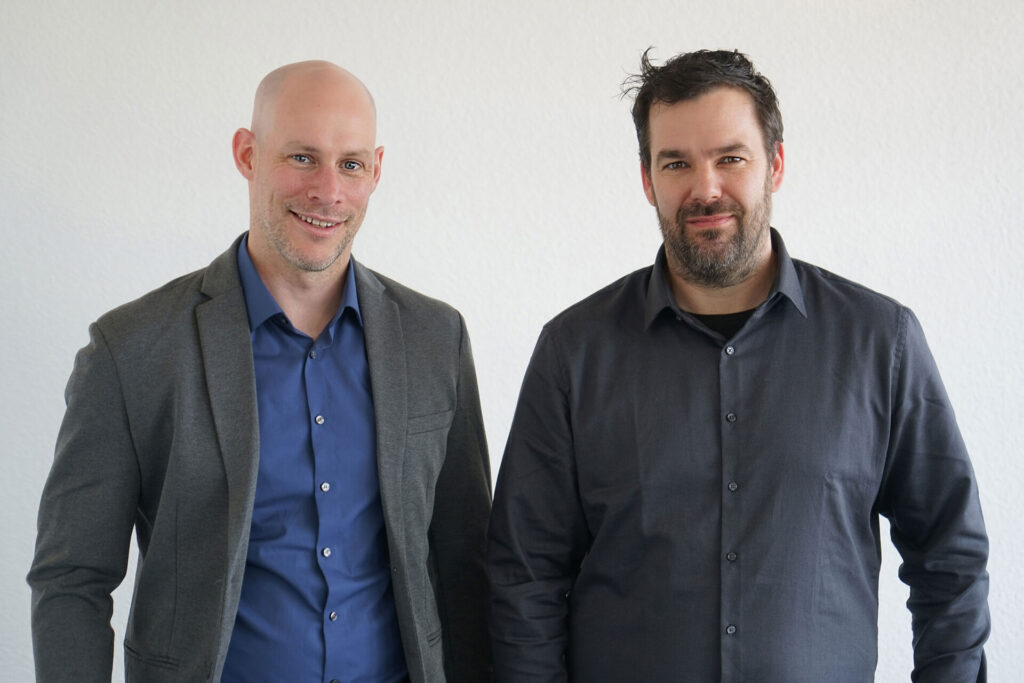
15. The AICHELIN Group has appointed Daniel Panny as head of United Process Controls (UPC) in Göppingen and Mike Löpke as head of QMULUS in Düsseldorf as part of organizational changes following the integration of NITREX. The leadership updates strengthen the group’s focus on automation, plant control, and IIoT-driven digital solutions for heat treatment operations. The move supports closer integration of furnace technology, process expertise, and data-driven optimization across the global heat treat industry.
16. SECO/WARWICK has appointed Pan Gaojun as managing director of SECO/WARWICK China, following a succession process within the company. Gaojun, who joined the group in 2010, will lead operational development and strengthen the company’s presence in key technologies such as CAB lines and vacuum furnaces in the Asian market. The leadership change is intended to support continued growth and strengthen SECO/WARWICK’s position in China’s expanding heat treat and thermal-processing sector.
17. Vienna-based refractory manufacturer RATH AG has appointed Christian Morawetz as chief operating officer, bringing the experienced operations executive onto its Executive Board to oversee production, purchasing, R&D, quality management, and IT across the company’s global manufacturing operations. Morawetz’s leadership and industrial management experience are expected to strengthen operational efficiency and innovation as the company undertakes a broader transformation of its product portfolio and production structures to better serve high-temperature industries such as steel, glass, and ceramics.
CEO David C. DauchU.S. Aluminum, EGA, and Century Aluminum signing agreement to strengthen planned Oklahoma aluminum fabrication hubNewly appointed head of UPC Daniel Panny and newly appointed head of QMULUS Mike Löpke
Change of leadership at SECO/WARWICK China with newly appointed managing director Pan GaojunNewly appointed RATH AG COO Christian Morawetz
Kudos
18. The U.S. Department of War (formerly Department of Defense) has awarded contracts through the Defense Logistics Agency to 24 manufacturers to supply additively manufactured metal and polymer parts under the Joint Additive Manufacturing Acceptability (JAMA) IV pilot program. The firm-fixed-price IDIQ contract, valued at up to $9.8 million with a base period through Feb. 2027, allows the Pentagon to issue task orders for 3D-printed components supporting U.S. military programs.
19. CAN-ENG Furnaces International Ltd. has been certified as a FANUC Authorized System Integrator, expanding its capabilities in robotic automation for industrial furnace and thermal-processing systems. The certification allows CAN-ENG to design and integrate FANUC robots into heat treat operations, including material handling and high-volume furnace automation. The partnership strengthens automation options for manufacturers seeking greater efficiency, reliability, and safety in heat treat and thermal processing environments.
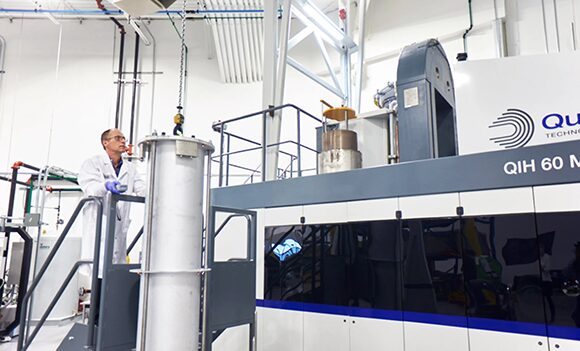
20. Burloak Technologies Inc., based in Oakville, Ontario, has completed its latest Nadcap audit, enabling its heat treatment capabilities to support demanding industries. The certification reinforces the company’s thermal processing services — including hot isostatic pressing (HIP), vacuum heat treatment, and alloy heat treat cycles — used in sectors such as aerospace, defense, automotive, and medical manufacturing.
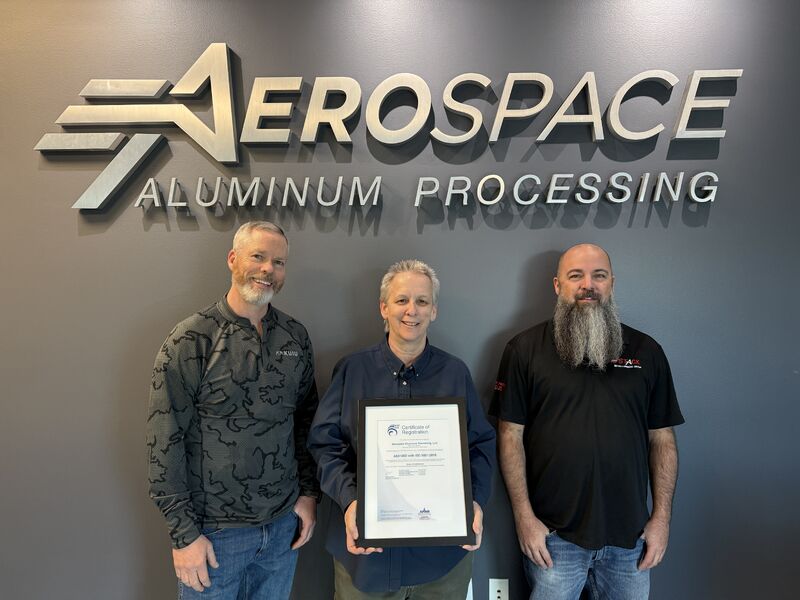
21. Stack Metallurgical Group announced that its Salt Lake City facility, Aerospace Aluminum Processing (ASAP), has achieved AS9100D certification following an audit completed with zero findings. The accreditation strengthens the facility’s quality credentials for aerospace aluminum heat treating and related processing, reinforcing its role in supporting high-spec aerospace manufacturing and positioning other Stack facilities to pursue similar approvals.
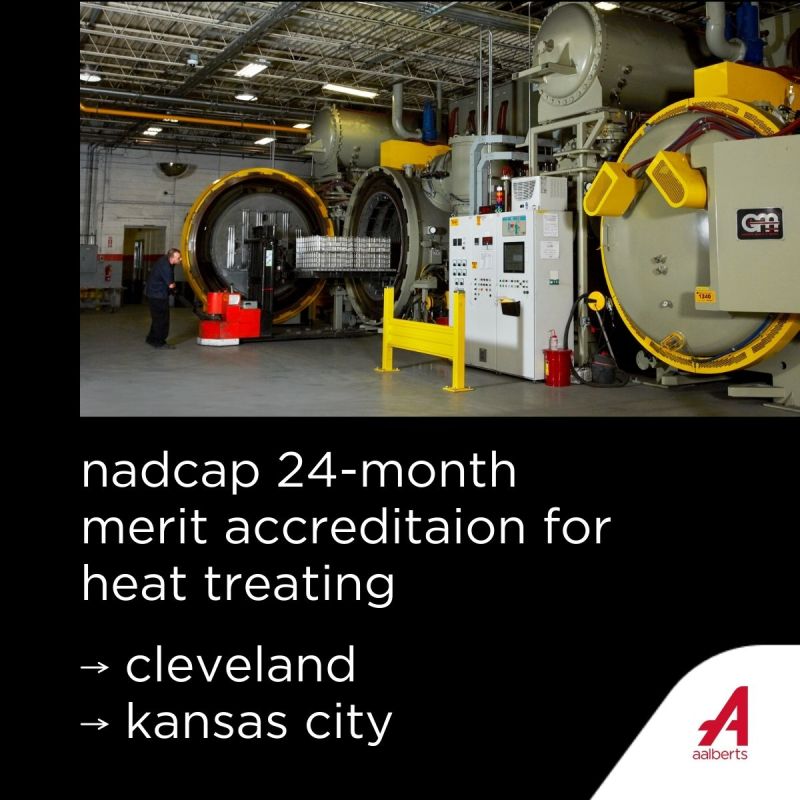
22. Aalberts surface technologies announced that its Cleveland, Ohio, and Kansas City facilities have earned Nadcap 24-Month Merit Accreditation for heat treating, effective February 10, 2026. The designation — achieved after years of near-zero audit findings and strict AMS2750 pyrometry compliance — signals strong process discipline and quality systems for aerospace heat treat operations, helping reduce supplier risk and strengthen reliability across the aerospace manufacturing supply chain.
FANUC Authorized System Integrator certification for CAN-ENG FurnacesNadcap-certified Burloak Ontario facilityStack Metallurgical Group’s Aerospace Aluminum Processing receiving its AS9100D certificationAalberts surface technology’s Cleveland and Kansas City facilities earning their Nadcap 24-Month Merit Accreditation for heat treating
We’re celebrating getting to the “fringe” of the weekend with a Heat TreatFringe Fridayinstallment: the U.S. Department of War (formerly Department of Defense) has awarded contracts to two dozen U.S. manufacturers to produce additively manufactured metal and polymer parts for defense programs. The contracts were issued through the Defense Logistics Agency (DLA) as part of the Joint Additive Manufacturing Acceptability (JAMA) IV pilot parts program.
While not exactly heat treat, “Fringe Friday” deals with interesting developments in one of our key markets: aerospace, automotive, medical, energy, or general manufacturing.
The Pentagon has awarded contracts to produce additively manufactured metal and polymer parts for defense programs. The awards, issued through the Defense Logistics Agency as part of the Joint Additive Manufacturing Acceptability (JAMA) IV pilot parts program, allow the Department of Defense to issue task orders to 24 participating manufacturers capable of producing parts using additive manufacturing technologies.
The awards are structured as a firm-fixed-price, indefinite-delivery/indefinite-quantity (IDIQ) contracts with a maximum value of approximately $9.8 million. The contract includes a one-year base period running through February 24, 2027, with four one-year option periods.
The JAMA IV pilot parts program supports the procurement of additively manufactured components for U.S. military clients, including the Army, Navy, Air Force, and Marine Corps. By awarding contracts to multiple manufacturers, the program establishes a pool of suppliers eligible to compete for task orders related to additively manufactured parts.
Heat Treat Todaypublishes twelve print magazines a year and included in each is a letter from the editor. This letter is from the February 2026 Annual Air & Atmosphere Heat Treatingprint edition. In today’s letter,Bethany Leone, managing editor at Heat Treat Today, shares her insights on the restlessness stirred by recent shifts in the heat treat industry — and why sitting with uncertainty, rather than rushing to diagnose it, may be the most intentional form of leadership we can practice right now.
Recently, we have observed the shift in industry brain trust. In fact, if you follow the Heat TreatDaily, there have been a lot of significant acquisitions, announcements of growth, and refocusing of efforts. Yet no singular statement emerges to define what this moment is for the heat treat industry. This constant movement and reorienting is exciting, but what does it mean?
To recap some highlights, a brazing icon retired — Dan Kay, our tribute to him later in this publication (p. 49). Innovator and furnace expert Mark Hemsath joined forces with WINGENS CONSULTANTS as an executive expert. Major industry suppliers continued to consolidate under more international leadership, and we wait to see how priorities at these organizations will be recalibrated.
While all of these changes are decisive moves, there is hardly a definitive direction to describe where the heat treat industry is going. With the world at our fingertips, digital projections and instantaneous AI analysis feed the desire to know what to expect, what to avoid, what to get excited about. Data is the bread and butter of informed decisions, though tempered with discernment. A lack of satisfying answers, however, exposes how easily we can overuse data to create a safety net from uncertainty or seek a quick diagnosis for a discomfort whose true nature may be far more complex.
And so, we find ourselves without clear answers about what these industry shifts ultimately mean. Perhaps some are already making projections, but for me, I’m sitting in a restless state about what we should expect for the rest of the year. Still, restlessness isn’t something to “seek and destroy,” as my immediate inclination often is. Sitting with it can make space for true stewardship.
Stewardship
Stewardship takes the present form. The emphasis is simple: What is in my control now to change, cultivate, care for? Lots of garden terms with this word! This idea of stewardship shows up for me in small ways. The closest I am to gardening is the peace lily who stares at me while my one-year-old takes another swat at her leaves, brown and crinkled from the drafty air. Here’s the thing — stewardship, at least in this season, is not the one-plant garden. It’s knowing to cultivate joy in the one-year-old… and waiting to see if the peace lily survives.
Another key aspect of stewardship is listening. Stewardship happens after the pause that listens to the unsettled state. This attitude allows uncertainty, complexity, and even contradictory messaging. As leaders of wherever life finds us, listening to the noise and waiting through the discomfort of not having an answer is what precedes intentional action.
Waiting for the Meaning
If you have been observing the changes in industry with bated breath, continue the waiting. No need to diagnose. Dedicate yourself this year not to the novel goals of January, but the essential approach of not balking at the restlessness that you may find yourself in. It is enough to tend to what is immediately entrusted to you.
A manufacturer of vacuum circuit breakers has added vacuum brazing capability for producing electrical power components utilized in modern power distribution systems. The thermal processing technology joins metal parts used in vacuum interrupters, helping ensure consistent performance in circuit breakers used across industrial and utility power networks.
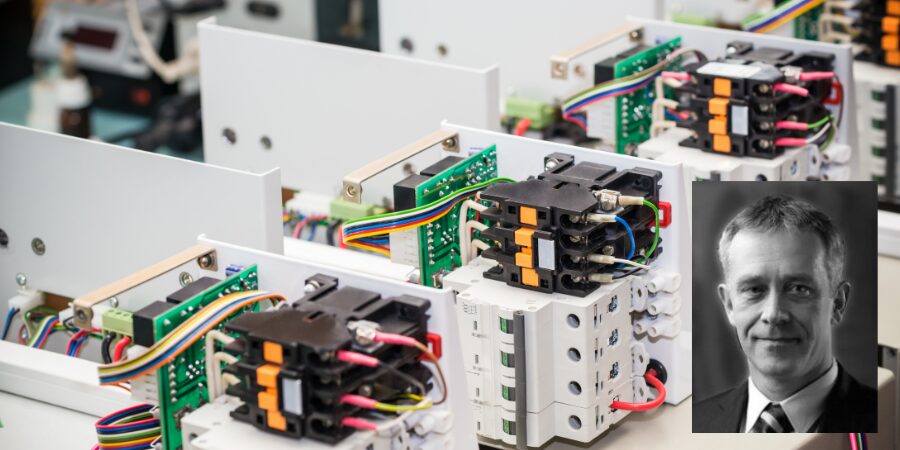
Image Credit: SECO/WARWICKMaciej Korecki Vice President of Vacuum Business Segment SECO/WARWICK
The manufacturer, based in China and specializing in multiple types of vacuum circuit breakers, ordered two vacuum furnaces from SECO/WARWICK, a global manufacturer of industrial heat treatment equipment with operations in North America. The client has previously installed multiple systems from SECO/WARWICK. “We have [clients] who operate more than a dozen of our systems,” said Maciej Korecki, vice president of the Vacuum Furnace Segment at SECO/WARWICK Group.
The furnaces will be used primarily for vacuum brazing and related thermal processing of interrupter assemblies and other circuit breaker components that require strict control of mechanical strength, hermetic sealing, and dimensional stability.
The systems use a pumping configuration with a turbomolecular pump designed to achieve ultra-high vacuum conditions. High temperature uniformity and rapid heating — enabled by seven control zones, including a central heating element — allow for consistent processing of loads. The furnaces are also equipped with a horizontal gas-cooling system and an external cooling unit.
As a critical component in circuit breakers, vacuum interrupters play a key role in safely interrupting electrical current during switching operations. The addition of vacuum brazing capability and controlled vacuum furnace processing allows the manufacturer to produce the sealed assemblies required for reliable performance in power distribution equipment.
Press release is available in its original form here.
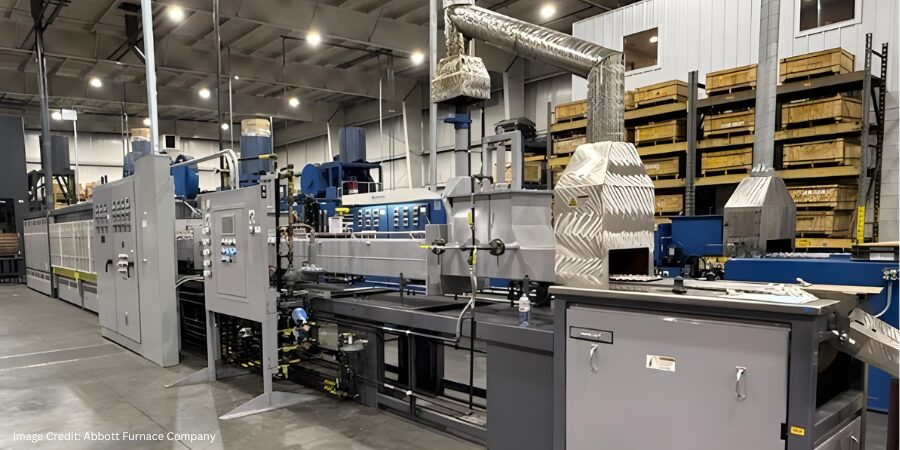
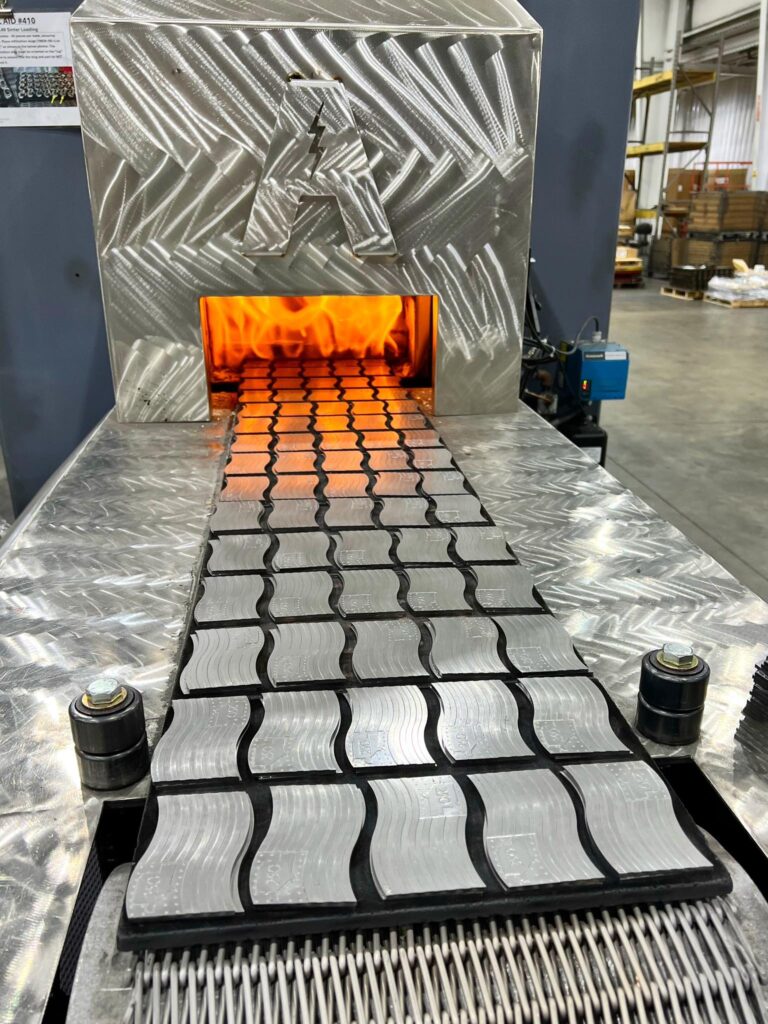
Metco Industries has added a new seven-zone continuous belt sintering furnace to improve process control and consistency in the production of powdered metal components. The installation supports tighter thermal processing parameters and enhanced monitoring capabilities, helping ensure repeatable results for parts used across industrial manufacturing applications.
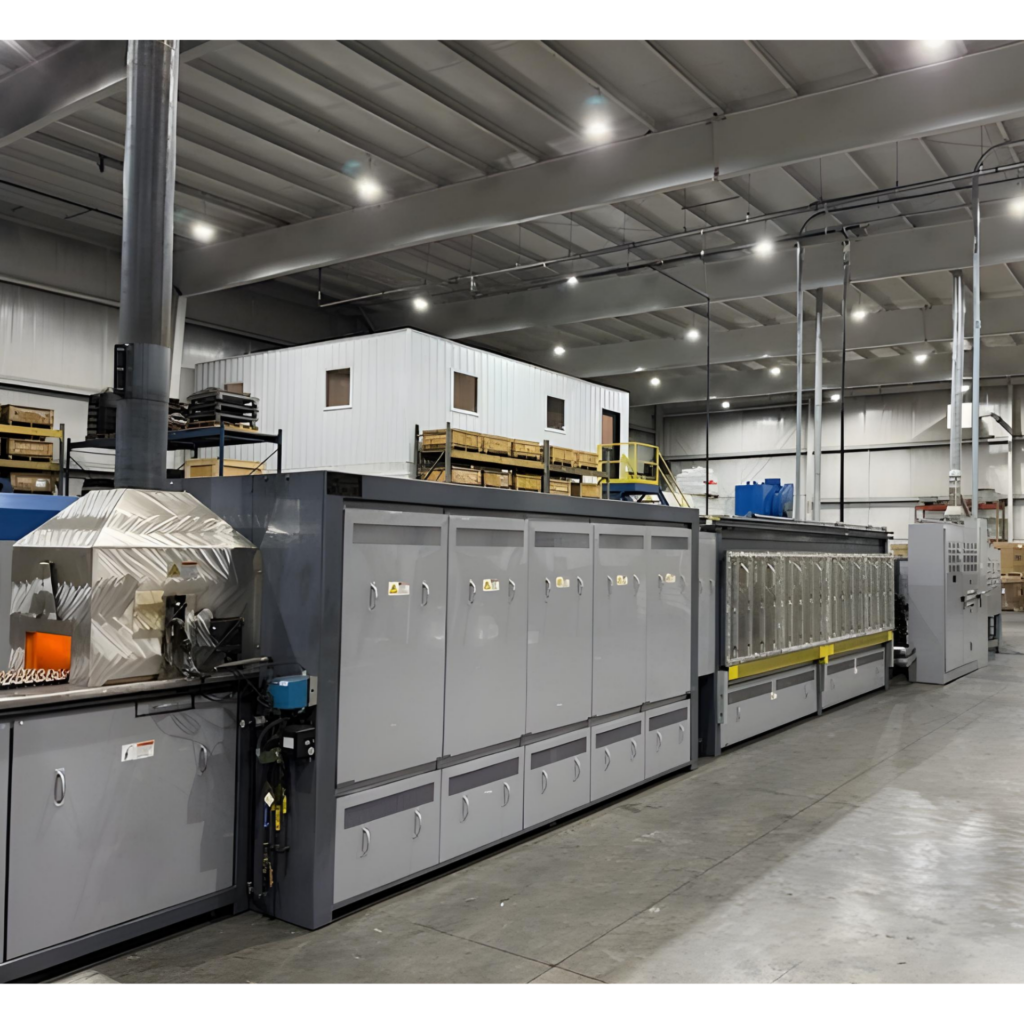
Continuous belt furnace installed at Metco Industries incorporating fully digital atmosphere control technology developed in-house at Abbott Furnace Company | Image Credit: Abbott Furnace CompanyParts entering the sintering furnace | Image Credit: Abbott Furnace Company
The furnace was engineered and manufactured by Abbott Furnace Company, incorporating fully digital atmosphere control technology developed in-house. Digital flow control, advanced monitoring, and data-driven diagnostics allow operators at Metco to track furnace performance in real time and adjust sintering conditions as needed.
The technology is designed to improve repeatability and provide greater visibility into furnace operations. These capabilities allow manufacturers to optimize thermal processing conditions and maintain more consistent production outcomes.
Press release is available in its original form here. Main image shows the full seven-zone continuous belt furnace installed at Metco Industries. Image Credit: Abbott Furnace Company
In this installment of Answers in the Atmosphere, David (Dave) Wolff, an independent expert focusing on industrial atmospheres for heat treat applications, highlights the practical value of smartphone apps designed for industrial gas calculations and conversions.
This informative piece on mobile tools that simplify gas property calculations, unit conversions, and storage or flow-rate estimations — drawing attention to apps developed by major gas suppliers and equipment providers that help heat treaters access critical data in the field —was first released in Heat Treat Today’sJanuary 2026 Annual Technologies to Watch print edition.
The field of industrial gases is complicated by the fact that the physical characteristics of gases depend on the temperature and pressure at the time of measurement. Industrial gases may be delivered and stored as cryogenic liquids and highly pressurized gases, though they are generally used in relatively low-pressure gaseous form. Additionally, gases may be used for different purposes; for example, hydrogen may be used as a metallurgical atmosphere or as a burner fuel. As such, users need a ready source of data on various industrial gases to make necessary calculations.
Image Credit: Open Library/Internet Archive
Years ago, industrial gas users had to rely on data tables in publications like the CRC Handbook of Chemistry and Physics — the nearly 8 lb, $195 hardbound handbook that has been published continuously since 1914 and is currently on its 106th edition.
Today, there are many more mobile solutions in the form of smartphone applications. Several of the major gas providers have developed handy apps available for both Apple and Android operating systems to simplify gas conversions and calculations. Equipment providers have also developed apps to help understand the specifics of their equipment. All of these can be helpful to metals thermal processors, including heat treaters at in-house processing operations.
Some examples follow:
Air ProductsandLinde both provide powerful conversion engines that enable users to convert from imperial to metric units, from mass to volume measurements, and from liquid to gaseous volumes for common industrial gases. For example, users can calculate how many hours of atmosphere coverage 6,000 gallons of liquid hydrogen stored in a tank will provide.
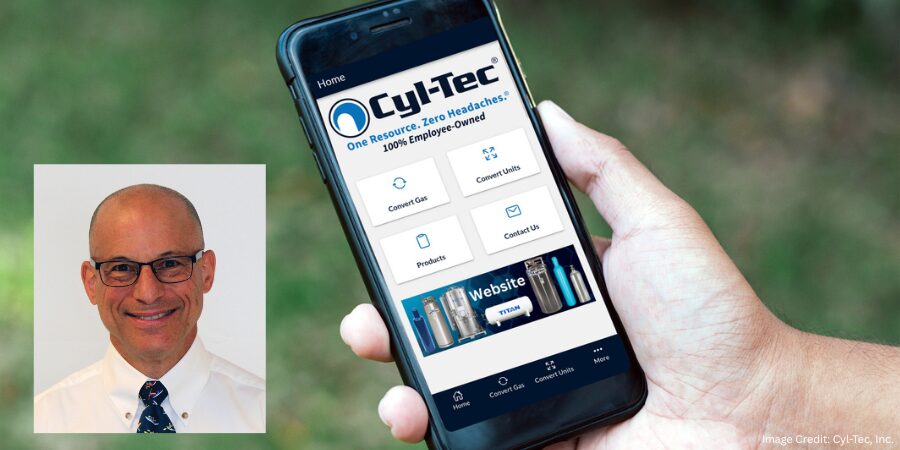
Cyl-Tec, Inc. has developed an app that focuses on calculations primarily specific to cryogenic and pressurized gas storage. In addition to unit of measure conversions for each common industrial gas, the app provides detailed information on each of the storage vessels that the company makes.
WITT-Gasetechnik of Germany has developed an app to support their gas safety and controls business. Their products include gas mixers, gas analyzers, regulators, and other controls. The app provides a variety of gas blending and measurement information, including welding gas blend suggestions, unit conversion, and flow rate calculators.
Gasmet of Finland has developed an app that simplifies calculation of dewpoint and combustion products depending on the fuel being combusted.
While these suppliers hope that you will buy their products, be assured that the measurements and conversions performed with their tools, and the recommendations generated, will be equally applicable to products and systems supplied by others.
I suggest you create a folder called “calculations and conversions” on your smartphone and load it up with several of these apps while you are connected to your home or office internet, so that you will have the apps handy when you are away from your standard technical resources.
About The Author:
David (Dave) Wolff Industrial Gas Professional Wolff Engineering
Dave Wolff has over 40 years of project engineering, industrial gas generation and application engineering, marketing, and sales experience. Dave holds a degree in engineering science from Dartmouth College. Currently, he consults in the areas of industrial gas and chemical new product development and commercial introduction, as well as market development and selling practices.
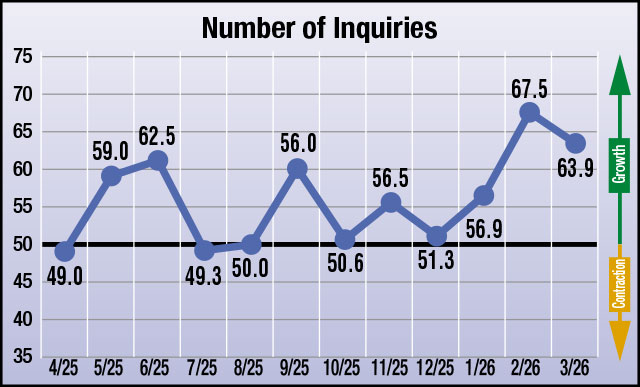
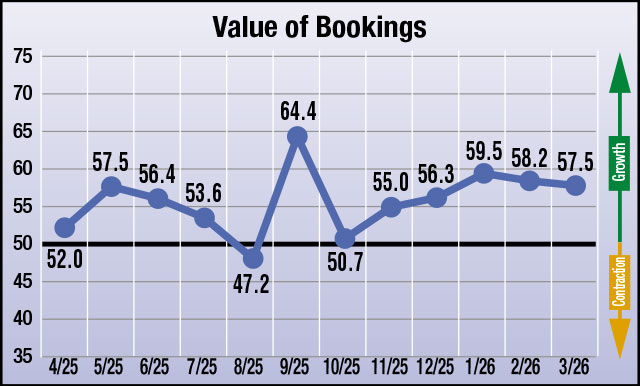
Heat Treat Today has gathered the four heat treat industry-specific economic indicators for March 2026. The March results show continued stability compared to the February 2026 predictions.
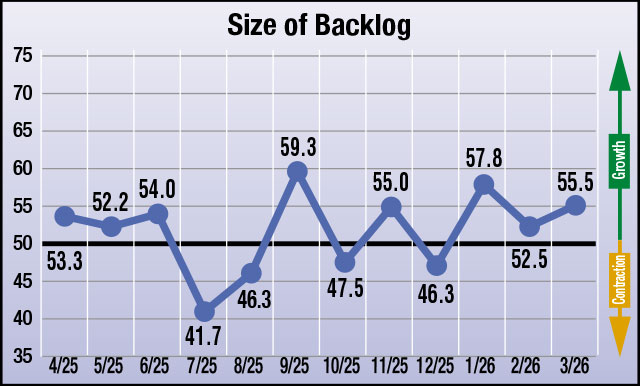
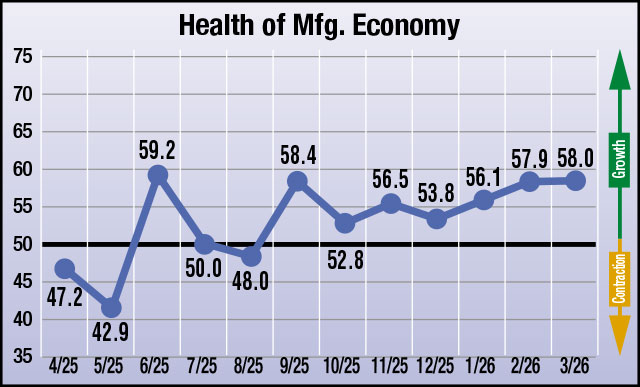
March’s data indicates anticipated continued growth across the heat treat industry, as all four indices remain above the growth threshold. Inquiries are projected to stay strong at 63.9 (from 67.5 in February). Bookings are expected to hold in healthy expansion territory at 57.5 (from 58.2 in February). The Backlog index continues to forecast growth at 55.5 (up from 52.5 in February). Finally, the Health of the Manufacturing Economy index growth expectations remain constant at 58.0 (up from 57.9 in February).
March’s indicators show suppliers anticipating steady demand from heat treaters in the month ahead. With all four metrics projected to remain comfortably in growth territory, the outlook points to continued activity from shops supporting aerospace, automotive, energy, and general manufacturing markets as we move further into the spring production cycle.
The results from this month’s survey (March) are as follows: numbers above 50 indicate growth, numbers below 50 indicate contraction, and the number 50 indicates no change:
Anticipated change in Number of Inquiries from February to March: 63.9
Anticipated change in Value of Bookings from February to March: 57.5
Anticipated change in Size of Backlog from February to March: 55.5
Anticipated change in Health of the Manufacturing Economy from February to March: 58.0
Data for March 2026
The four index numbers are reported monthly by Heat Treat Today and made available on the website.
Heat TreatToday’sEconomic Indicatorsmeasure and report on four heat treat industry indices. Each month, approximately 800 individuals who classify themselves as suppliers to the North American heat treat industry receive the survey. Above are the results. Data collection began in June 2023. If you would like to participate in the monthly survey, please click here to subscribe.
When a load hangs up during quenching, seconds matter and improvised decisions can escalate risk. In this Technical Tuesday installment, Bruno Scomazzon, general manager of Precision Heat Treat Ltd., outlines a step-by-step emergency response procedure for exactly this scenario, which is one of the most dangerous in atmosphere heat treating. Drawing on real-world experience, this guide is intended to help companies develop their own effective procedures for maintaining safety, controlling furnace conditions, and coordinating with emergency responders in high-risk situations.
This informative piece was first released in Heat Treat Today’sFebruary 2026 Annual Air & Atmosphere Heat Treating print edition.
Scenario Overview
A load has been transferred to the quench and the elevator is lowering into the oil, but the load becomes hung up and fails to fully submerge. The inner door successfully closes, and the outer (front) door remains closed.
This is an extremely high-risk situation requiring strict adherence to emergency procedures. The goal is to protect: first the personnel (minimize the chance of injury or escalation of the situation), then the facility, and finally the equipment.
1. Immediate Actions
DO NOT Open Outer Door
There may be a natural urge to assess the situation but resist temptation. DO NOT stand in front of or directly beside the outer door and never open it during an active hang-up. Opening this door can introduce oxygen to a hot chamber, causing:
Explosions or flash fires.
Loss of containment due to door warping or mechanical failure.
In extreme cases, the outer door may be compromised (blown off, stuck open, or partially open) with visible flames. This warrants immediate escalation to the fire department.
If Outer Door Cannot Be Closed
In this scenario, immediately notify the fire department and advise them to prepare for a foam response. DO NOT allow the use of water. This may trigger violent reactions with oil or atmosphere and spread the fire!
Internal trained responders should:
Don PPE.
Retrieve fire suppression gear.
Be ready to protect critical systems until responders arrive.
DO NOT shut down the furnace.
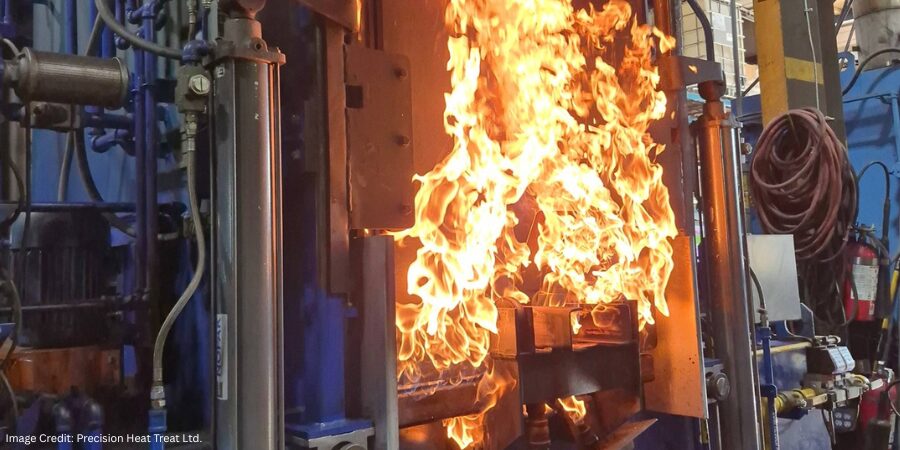
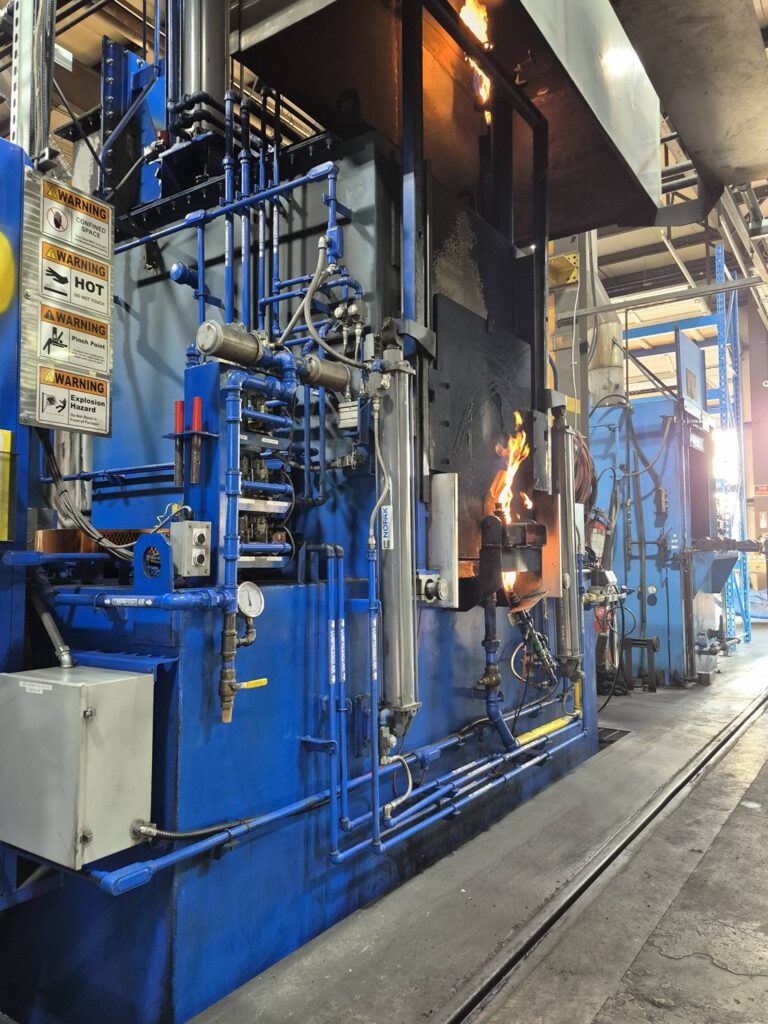
Figure 1. Atmosphere furnace during normal operation | Image Credit: Precision Heat Treat Ltd.Figure 2. Vestibule door partially opened during a controlled simulation to illustrate gas release behavior — not an actual incident | Image Credit: Precision Heat Treat Ltd.
2. Maintain Electrical Power
To ensure essential systems stay active, you must maintain electrical power. Ensure these systems stay active:
Set the furnace cycle to manual mode from auto mode. This will bypass any PLC sequencing from auto cycling doors, elevators, and handlers.
Keep the pilots lit.
Keep the oil cooler running to prevent tank overheating.
Shut off oil heaters to prevent additional heat loading in the quench tank.
Keep quench agitation on low during the entire period to assist in lowering the temperature at the interface surface area between the hot load and the oil. This prevents stratification and dissipates radiant heat into the oil.
Keep the recirculating fan running.
Keep the instrumentation functioning for monitoring.
NOTE: Loss of these systems eliminates visibility, atmosphere control, and safe response options.
3. Atmosphere Management
Maintain a protective atmosphere and positive furnace pressure to prevent oxygen ingress and uncontrolled combustion:
Set the carbon control to “0”.
Shut off the enriching gas.
Shut off the ammonia.
Shut off the dilution air.
Nitrogen Purge
These steps depend on whether a nitrogen purge is available; it is highly advised that nitrogen purge be available for all IQ or straight through units. Be sure you understand how long it takes for your specific furnace to fully purge endothermic gas. While NFPA 86 recommends five volume turnovers, some experts advise planning for up to ten per hour in an emergency. Each furnace should have established purge data under normal conditions so operators can act with confidence when time is critical.
Figure 3. Bulk nitrogen supply used for emergency purging and atmosphere control | Image Credit: Precision Heat Treat Ltd.
Begin a nitrogen purge immediately (if available) and maintain it throughout the event.
Use at least the minimum flow rate specified in your documentation. If safe, higher flow may be used to help displace flammable gases from the heating and quench chambers.
Maintain furnace temperature at 1500°F during the purge.
Residual pockets of Endo gas may remain trapped in less ventilated areas. If the chamber temperature drops below the ignition point before all flammable gas has been displaced, the introduction of oxygen could trigger an explosion. In some cases, trapped Endo and pressure imbalances can lead to sudden releases (“furnace burp”), where oil or gas is expelled due to internal pressure buildup.
After the Purge
The goal of the nitrogen purge is to displace Endothermic gas with an inert atmosphere while maintaining elevated temperature to assist in burning off residual flammable gases and preventing dangerous mixtures. This process must ensure positive pressure throughout the furnace.
A purge followed by plunge cooling in nitrogen is a valid approach if the purge is verifiably complete.
Depending on furnace size and cooling rate:
Larger furnaces may cool slowly enough for a complete purge.
Smaller or faster-cooling units may require a brief temperature hold before controlled cooling or plunge cooling.
NOTE: Once the hung-up load cools to a safe temperature (~150°F), perform a standard shutdown.
Without Nitrogen (in Endo)
If there is no nitrogen purge, or it is insufficient, the only option is to let the hung-up load cool in the vestibule while continuing to burn Endo and maintain the furnace temperature at 1500°F. Once the vestibule/oil tank cools below 150°F and the danger has passed, initiate a standard furnace shutdown.
4. Safety Management
Alert the local fire department immediately. If the situation becomes unmanageable, or if there is any doubt about the ability to maintain control, evacuate the facility and wait for trained professionals. The safety of plant personnel is paramount.
Notify plant safety and site management.
Evacuate all non-essential personnel from the heat treat area.
Inform all departments that a high-risk incident is in progress.
Fire departments are most effective when they are familiar with your facility before an emergency occurs. Make sure they know the layout of your operation, including:
Oil tank locations and sizes
Electrical panels
Gas shutoffs
Hot zones
5. Controlled Cooling Period
Maintain atmosphere protection throughout the event.
DO NOT open doors until the vestibule’s temperature is low and stable.
Cooling time will depend on load mass and heat retention. Expect five or more hours.
Use furnace pressure stability, effluent observations, and gas behavior as indirect temperature indicators.
6. Load Recovery Procedure
Once cooled and stabilized, perform a standard shutdown, starting with the removal of endothermic gas if applicable.
DO NOT attempt manual load removal until the system is verified safe.
Only maintenance personnel may retrieve the load, using PPE and appropriate tools.
7. Fire Department Familiarization
Every facility should build rapport with the local fire department before an emergency ever happens. Schedule annual walkthroughs and identify the following:
Number of furnaces
Quench oil tank volumes
Hot zone and live panel locations
Emergency shutoff points
Stuck doors are commonly caused by failed pneumatic valves. Shutting off and bleeding compressed air may allow the mechanism to reset. Always consult your equipment manual or the manufacturer before attempting corrective action.
The fire inspector conducting walkthroughs is not the one coming to fight your fires — train the ones who are.
8. Post-Incident Protocol
Before returning the furnace to service:
Conduct a formal investigation.
Identify and correct root cause(s).
Document all key parameters and actions taken.
Re-train operators as needed.
Furnace Signage
An operator is likely to read your safety plan but may forget a vital protocol during an emergency. Having bold, brightly colored warnings printed and posted at the panel that the operator can remove and use in an emergency can be invaluable.
Final Reflections
We cannot predict every consequence. No procedure can account for every possible variable in a live emergency. Once an event is in motion, all we can do is respond with the best judgment, training, and intentions — always with the safety of people as the highest priority.
This document is intended as a working reference: a structured reference developed with care, real-world experience, and best practices. It is not a one-size-fits-all solution, but a tool to help teams create or enhance their own effective procedures and respond adaptively in high-risk situations.
Fire preparedness is essential in every heat treating facility. Fires happen, and they are not always small. It is critical to know when to act, when to evacuate, and when to call for help. Equipment manuals provide a foundation, but preparedness through training and planning is the best defense.
Acknowledgments: The author would like to thank Daniel H. Herring, “The Heat Treat Doctor,” The HERRING GROUP, Inc., and Avery Bell with Service Heat Treat in Milwaukee for their valuable input.
About The Author:
Bruno Scomazzon General Manager Precision Heat Treat Ltd.
Bruno Scomazzon is the general manager of Precision Heat Treat Ltd. in Surrey, British Columbia, Canada, with over 40 years of experience in metallurgical processes and heat treating operations.
A specialized U.S. government manufacturing facility will install a custom thermal processing system to support expanded high-temperature operations. The new box furnace will enable the facility to scale a previously validated thermal process, increasing capacity while meeting strict spatial and operational constraints within the plant environment. The system is designed to support demanding thermal applications required in government manufacturing.
Image Credit: Gasbarre Thermal Processing Systems
The project involves installing a custom-engineered box furnace and loading system designed to meet the facility’s layout and process requirements. The direct-fired furnace will operate in an air atmosphere with a maximum temperature of 2100°F and represents the largest configuration that can be accommodated within the available footprint. The system supports a specialized high-temperature thermal operation that had previously been proven at a smaller scale and is now being expanded to meet increased production demands.
Patrick Weymer Business Development Manager Gasbarre Thermal Processing Systems
The thermal processing system is being supplied by Gasbarre Thermal Processing Systems, which worked with the client to engineer a design that meets strict space, access, and installation limitations that had previously restricted equipment options. Rather than modifying a standard design, the furnace was developed specifically for the application to ensure compatibility with the facility’s constraints and processing requirements.
The project progressed under a tight timeline, with Gasbarre working closely with the client from the initial inquiry through final authorization. According to Patrick Weymer, business development manager for Gasbarre, “some applications don’t allow for compromise, whether due to space, schedule, or process requirements.” He added that certain applications require custom-engineered solutions when standard equipment won’t work.
Press release is available in its original form here.