


Metallography of Steels Updated, Translated into English


Professor Hubertus Colpaert

A valuable reference publication that combines a metallographic atlas for steels and cast irons and an introductory textbook covering the fundamentals of phase transformations and heat treatment of these materials has recently been updated and re-released in a fourth edition English translation.

Metallography of Steels: Interpretation of Structure and the Effects of Processing was first published in 1951 by Professor Hubertus Colpaert from the Institute for Technological Research (IPT) of São Paulo, Brazil. The book became one of the most important Brazilian references for professionals interested in the processing, treatment, and application of steels and cast irons and has now been updated and translated by Professor André Luiz V. da Costa e Silva, preserving the concept of the original edition. Important developments in the areas of metallographic characterization and steel and iron products were added. Progress in the understanding of the transformations that made the extraordinary developments of these alloys possible was also added to the new edition.

Every important stage of processing, from casting to cold working is clearly discussed and copiously illustrated with metallographs that show the obtained structures, both desired and those achieved when deviations occur.

Most metallographs are of actual industrial materials, and a large number originate from industry leaders or laboratories at the forefront of steel and iron development. As steel continues to be the most widely used metallic material in the world, Metallography of Steels continues to be an essential reference for students, metallographers, and engineers interested in understanding processing-properties-structure relationships of the material. The balance between theoretical and applied information makes this book a useful resource even for experienced steel practitioners.

Metallography of Steels: Interpretation of Structure and the Effects of Processing is available at http://www.asminternational.org/metallographyofsteels or by calling the ASM International Service Center at 440-338-5151.)

Metallography of Steels Updated, Translated into English Read More »

Major U.S. Alum Heat Treater Acquired by Metal Services Provider


The largest commercial aluminum heat treater in the United States was recently acquired by a leading provider of metal heat treating services.

Steve Wyatt, President of PTS

Al-Fe Heat Treating has been purchased by Premier Thermal Solutions (PTS), which provides commercial metal processing services to a variety of industries, including automotive, energy, and aviation, through its wholly-owned subsidiaries, Atmosphere Annealing and NitroSteel. PTS maintains five facilities in four locations across the Midwest.

“With the acquisition of Al-Fe, PTS has expanded its service offerings to include both ferrous and aluminum heat treating services. This is an important diversification of our portfolio as we expect to see substantial growth in the use of aluminum in the automotive industry as well as in a variety of other industries that we serve,” said Steve Wyatt, President of PTS. “In addition to its aluminum processing capabilities, Al-Fe is Nadcap certified which will allow PTS to enhance its service offerings in other end-markets such as aerospace and defense.”

Rahul Sawhney, Senior Managing Director of Z Capital

Al-Fe Heat Treating, which has plants in Defiance, Ohio; Saginaw, Michigan; WadsworthIndiana; and Wabash, Indiana, provides demanding heat treat applications including continuous or drop-bottom processing, precision air quench for distortion control, and hyperquench for aerospace specifications or testing/inspection services.

“We are thrilled to have closed this transaction and expect to announce incremental acquisitions over the next 12 months,” said Rahul Sawhney, Senior Managing Director of Z Capital. Premier Thermal Solutions was acquired by Z Capital Partners, LLC in 2017. “Not only does Al-Fe add incremental heat treating capabilities, but also further strengthens the collective talent at PTS, which will be instrumental in continuing to provide superior customer service.”


Photo credit: Al-Fe Heat Treating

Major U.S. Alum Heat Treater Acquired by Metal Services Provider Read More »

Hot Zone Insulation Materials Critical in Preventing Heat Loss


Source: Solar Atmospheres of Western PA


With electricity costs increasing, heat treat facilities are looking for ways to harness energy and minimize heat loss through a variety of insulating methods and applications. Heat Treat Today‘s Technical Tuesday feature comes from Reál J. Fradette of Solar Atmospheres Inc of Souderton, PA (with Nicholas R. Cordisco of Solar Manufacturing Inc. contributing), analyzing the different types of furnace hot zone insulation materials with the following points taken into consideration:

A) Hot Zone Designs

  • All-Metal Designs
  • Ceramic Fiber Included Designs
  • Graphite Type Insulated Hot Zones

B) Defining Hot Zone Losses For Different Hot Zone Configurations

  • Calculating Power Losses For A Given Size Furnace
  • Effect Of Hot Zone Losses On Heating Rates and Peak Power

C) Effect on Power Losses With Various Insulation Layers and Thicknesses

  • Projecting Relative Losses Versus Felt Thicknesses

D) Equating Insulation Designs To Actual Power Usage

  • Projecting Cycle Costs For Different Areas Of Operation
  • Impact of Hot Zone Type on Total Cycle Cost

E) Summary And Conclusions

An excerpt:

The heating rate of a load will dictate the total energy required to heat that load at that heating rate. Heating as fast as possible is not often the best solution to the application.


Read more: “Understanding Power Losses In Vacuum Furnaces”

Hot Zone Insulation Materials Critical in Preventing Heat Loss Read More »

Metals Processing Company Doubles Its Kentucky Presence


Source: Bowling Green Daily News


An Ohio-based metal processing plant recently announced plans to expand its Warren County facility in Bowling Green, Kentucky, where the company processes, stores and delivers steel and aluminum to multiple industries, including automotive.

Precision Strip Inc. will increase its footprint by 80,000 square feet — doubling in size — in this $16.2 million expansion.

“After having been operational for only a year at our Bowling Green facility, it became clear that the south-central Kentucky region was continuing to see healthy growth and investment in the markets we serve,” said Joe Wolf, president of Precision Strip. “As a result, we feel the addition of a state-of-the-art slitting line will help us continue to best serve our customers who need metals toll processing. We greatly appreciate the ongoing support we receive from the Chamber and the Commonwealth of Kentucky on these projects that fuel economic growth.”

Metals Processing Company Doubles Its Kentucky Presence Read More »

Industrial Gases Provider to Build World-Scale Liquid Hydrogen Plant


A leading industrial gases company recently announced plans to build a new liquid hydrogen plant to produce approximately 30 tons per day at its La Porte, Texas, industrial gas facility to meet increasing product demand from several customer markets, including industries which provide heat treatment.

Global hydrogen provider Air Products will draw hydrogen for the liquid hydrogen plant from Air Products’ existing Gulf Coast hydrogen pipeline system network and is to be onstream in 2021.

“The investment in this new liquid hydrogen production facility in Texas will assist with meeting current customer demand, as well as capture the increased growth that we see coming from several markets,” said Marie Ffolkes, president, Americas at Air Products. “Logistically, our La Porte plant has several operational benefits which make the site selection for this new facility a good choice. We are confident with this additional capacity that we will be able to meet the projected growing liquid hydrogen needs coming from the varied industries in the United States for which a reliable source of this product is vitally important to our customers’ manufacturing operations.”.

Once liquefied at La Porte, the hydrogen will be delivered in trailers to customers in industries which provide heat treatment as well as several others including electronics, chemical and petrochemical, material handling, float glass, edible fats and oils, and utilities.

The new facility at La Porte will join Air Products’ existing hydrogen and syngas production operations, as well as an air separation unit. The liquid hydrogen plant will be connected to, and draw hydrogen from, Air Products’ Gulf Coast Pipeline (GCP), the world’s largest hydrogen plant and pipeline network system. The 600-mile pipeline span stretches from the Houston Ship Channel in Texas to New Orleans, Louisiana, and supplies customers with over 1.4 billion feet of hydrogen per day from 23 hydrogen production facilities.


Photo credit: Air Products. Caption: Air Products employee practices checking a pipeline valve for leaks at the company’s training site in La Porte, Tex.

Industrial Gases Provider to Build World-Scale Liquid Hydrogen Plant Read More »

News Chatter Follow Up: Heat Treat Facility Groundbreaking to Accommodate Equipment


As we reported last week in the News Chatter edition of September 21, 2018, a Wisconsin-based, heat treating company recently broke ground on an addition to its operations in order to accommodate newly purchased equipment.

ThermTech of Waukesha expects to construction to be completed on the 13,000-sq-ft facility in December 2018 with an opening soon after.

In plans submitted to the city, the company “had to make a quick decision on the purchase” of a large heat-treating furnace. “We are incredibly busy, and need the capacity. That said, we also realized that the equipment would not fit in any of our current locations.”

ThermTech provided Heat Treat Today photos of the groundbreaking ceremony, prompting this follow-up post.

Photo caption: 

News Chatter Follow Up: Heat Treat Facility Groundbreaking to Accommodate Equipment Read More »

IHEA Monthly Economic Report: Economy Strong, Rising Prices Predicted


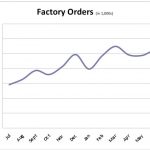
The monthly economic report published by the Industrial Heating Equipment Association (www.ihea.org) for its member companies reported that the economy is strong mostly due to tax cuts and deficit (debt) spending and warns of rising prices in the future.

Of the 11 indices that are watched and commented on each month, 5 of them are moving in a positive direction, lead by very strong positive numbers from both the Purchasing Managers Index (PMI) as well as the Credit Managers Index (CMI). Six indices trending downward all moved only slightly downward, leaving economists to believe that the industrial sector may be treading water while the flood waters (literally and figuratively) recede and until the direction of the economy is more clear.

Of more immediate concern was the reason behind the strong economy. According to IHEA’s economist, the economy has responded positively primarily due to tax cuts and deficit spending. Both of these factors tend to result in future broad-based price increases.

The 11-page report has one overview page followed by 10 pages of deep-dive analysis, one page for each of the 11 indices watched.


To get a full copy of this monthly report, please contact Anne Goyer, Executive Director of the Industrial Heating Equipment Association (IHEA). Email Mrs. Goyer by clicking here.

Ann Goyer, Executive Director of IHEA
Anne Goyer, Executive Director of IHEA


IHEA Monthly Economic Report: Economy Strong, Rising Prices Predicted Read More »

Medical Device Manufacturer Acquires Metal and Silicon Nitride Developer


A medical device design, development, and manufacturing company recently announced plans to acquire an innovative biomaterials and OEM company that develops and commercializes silicon nitride for various biomedical applications including orthopedic, dental and arthroplasty.

Amedica Corporation announced that it has entered into an asset purchase agreement with CTL Medical, based in Dallas, Texas, medical device manufacturer with in-house manufacturing facilities that focuses on the spine implant and instrument market. The agreement will make CTL Medical the exclusive owner of Amedica’s portfolio of metal and silicon nitride spine products, with access to future silicon nitride spine technologies.

Dr. Sonny Bal, Chairman of the Board of Directors of Amedica

As part of the up to $10 million transaction, CTL Medical will acquire Amedica’s entire existing inventory of spine products, including US and OUS regulatory clearances and intellectual property related to such. Amedica’s products, which are presently sold under the brand names of Taurus, Preference, and Valeo will be transferred to CTL Medical, while manufacturing, R&D, and all intellectual property related to the core biomaterial technology of silicon nitride will remain with Amedica in Salt Lake City. Amedica will serve as CTL’s exclusive OEM provider of silicon nitride products.

Following the purchase, CTL Medical will change its name to CTL Amedica. Amedica will re-position under a new name that is reflective of the breadth of its technology and potential applications.

“The transaction makes strategic sense, by monetizing our commercial spine sales organization and allowing Amedica to focus on its core biomaterials and OEM business,” said Dr. Sonny Bal, Chairman of the Board of Directors of Amedica. “The addition of a highly-differentiated silicon nitride and metal product line to CTL Medical’s complete offering of spine surgery implants and instruments will benefit both companies, as well as our surgeon customers. Amedica’s products and scientific data have established that silicon nitride resists bacteria, promotes bone healing, and has superior clinical outcomes. CTL Medical is best positioned to profitably leverage these advantages in the retail spine market.”

CTL Medical produces a full line of cervical, thoracic, and lumbar products (hence “CTL”) at its manufacturing headquarters in Dallas, Texas.

Medical Device Manufacturer Acquires Metal and Silicon Nitride Developer Read More »

Process Control Methods Standard Debuted for Aerospace Applications


A global association committed to providing and monitoring standards for the engineering profession recently published a new standard with guidance material to support specific aerospace engine applications, with a focus on the practical application of control methods for many different situations.

Dan Eigenbrode, vice president of module centers & supplier quality at Pratt & Whitney and AESQ Executive Sponsor for AS13006

SAE International in Warrendale, PA, released AS13006: Process Control Methods, which AESQ Strategy Group members will accept the immediate use of AS13006 within their respective supply chains. In addition, organizations are strongly encouraged to begin using this latest standard before it becomes a contractual requirement.

Aerospace engine manufacturers and their suppliers currently have differing requirements for process control that have similar intent. This new SAE standard establishes a common practice and methodology, defining the requirements for ongoing process control to improve quality performance through optimized process variation management beyond customer-defined key characteristics.

“The release of AS13006 is a big step forward in harmonizing requirements in the Aero-Engine supply chain,” said Dan Eigenbrode, vice president of module centers & supplier quality at Pratt & Whitney and AESQ Executive Sponsor for AS13006. Aerospace Engine Supplier Quality (AESQ), an SAE ITC program, was founded and formed by major aerospace engine companies to standardize quality requirements across the supply chain.

“Process Control is the key ingredient for sustained product quality and AS13006 provides the means for all suppliers to implement robust systems to ensure consistent quality regardless of product type,” added Eigenbrode.

AS13006, the previously released AS13003, Measurement Systems Analysis Requirements for the Aero Engine Supply Chain, and AS13004, Process Failure Mode and Effects Analysis (PFMEA) and Control Plans align and support the SAE standard AS9145, Requirements for Advance Product Quality Planning and Production Part Approval Process, developed by the International Aerospace Quality Group (IAQG)/SAE G-14 AAQSC Committee. The SAE G-22 AESQ Committee and the IAQG/SAE G-14 AAQSC Committee worked together cooperatively to ensure proper alignment of these standards.This standard also aligns and collaborates with the requirements of AS9103, Quality Management Systems – Variation Management of Key Characteristics.

Although designed for the aerospace engine supply chain, AS13003, AS13004, and AS13006 may be applied effectively by other segments of the aviation, space, and defense industries.

The Aerospace Engine Supplier Quality (AESQ) Strategy Group, a program of the SAE ITC, was established to develop, specify, maintain, promote, and deploy quality standards specific to the aerospace engine supply chain. AESQ member companies include Arconic, GE Aviation, GKN Aerospace, Honeywell Aerospace, MTU Aero Engines, PCC, Pratt & Whitney, Rolls-Royce, and Safran.

Process Control Methods Standard Debuted for Aerospace Applications Read More »