A leading integrated steel producer headquartered in Pittsburgh, Pennsylvania, recently announced plans to make significant upgrades to its works plant in Gary, Indiana.
David B. Burritt, president and CEO of United States Steel Corporation
U.S. Steel will apply a $750 million asset revitalization investment to the Gary Works plant to modernize and enhance the company’s flagship operation through building expansion and improvement, including the installation of new, state-of-the-art production equipment, machinery, and modernizing technology to meet customer demand in the automotive, energy and other industries.
“We are pleased to be making this significant investment at Gary Works, which will improve the facility’s environmental performance, bolster our competitiveness and benefit the local community for years to come,” said David B. Burritt, president and CEO of United States Steel Corporation. “Through the skill and determination of our employees, support from the state and city, without which this project would not be possible, and favorable trade policies with the strong Section 232 national security action on steel imports, we are experiencing a renaissance at U. S. Steel.”
Burritt was joined by Indiana Governor Eric J. Holcomb and Gary Mayor Karen Freeman-Wilson in the announcement.
Providing both steelmaking and finishing capabilities, Gary Works is U. S. Steel’s largest manufacturing plant and the largest integrated steel mill in North America.
Akitsohi Fujikawa, president of Miyake Forging North America Corporation
A Japanese bearing manufacturer which incorporates heat treating into its processing recently celebrated the opening of its new 48,000-sq-ft plant in Phipps Bend Industrial Park in Surgoinsville, Tennessee.
This is Miyake Forging’s first expansion into North America. The company currently operates in Japan and Thailand, producing bearings and components for bearing assemblies for the automotive industry. Bearing the name Miyake Forging North America, the facility was built to adapt to growth and allow for expansion.
“I have a great feeling about opening our new facility in Hawkins County. At Miyake, we are very happy to expand our business in the United States of America. We are extremely thankful to all of the people who helped make this happen.” ~ Akitsohi Fujikawa, president of Miyake Forging North America Corporation
Photo credit and caption: The Rogersville Review, Miyake Forging North America company officials and representatives after the ribbon-cutting.
A U.K. technology company with a solid-state process to produce valuable alloy powders is powering up the world’s first commercial plant at its Materials Manufacturing Centre in Wath upon Dearne, South Yorkshire, U.K.
Since Metalysis’s mechanical completion of the Generation 4 (“Gen4”) project, it has undergone hot commissioning, trial runs, optimization and handover to operations. The handover signifies Metalysis’ transition into commercial production following more than a decade of phased technology development.
Dr. Dion Vaughan, chief executive officer, Metalysis
Gen4 is the first facility to take Metalysis’ solid-state, modular, electrochemical process to industrial scale and can produce tens-to-hundreds of tonnes per annum of high value, niche, and master alloys. It creates a new U.K. source of supply for global end-users in advanced manufacturing disciplines including aerospace, automotive, batteries, light-weighting, magnets, mining and 3D printing consumables.
Metalysis’ technology has multi-metal capability, which enables the company to produce a mix of titanium alloys — master alloy “recipes”, including Scandium-Aluminide, which continues to pose excellent launch product potential, as announced on 11 June 2018; compositionally complex alloys including High Entropy Alloys; magnet materials; high temperature materials; and Platinum Group Metal alloys.
“In powering up and operating our industrial plant, Metalysis is poised to achieve its target to generate significant profits from our new South Yorkshire production facility,” saidDr. Dion Vaughan, chief executive officer. “Ours is a true British success story with international implications. Metalysis has grown from the ‘lightbulb moment’ at Cambridge University in the late-1990s, relocated to South Yorkshire to benefit from regional excellence in operational skillsets in the early-2000s, and now onwards towards a bright commercial future.”
15 Quick Heat Treat News Items to Keep You Current
Heat Treat Todayoffers News Chatter, a feature highlighting representative moves, transactions, and kudos from around the industry.
Personnel and Company Chatter
ThermTech of Waukesha, Wisconsin, celebrates the groundbreaking of a 10,500-square-foot manufacturing addition. Construction is expected to be completed in December 2018.
An Ohio-based engineering firm, Dana Incorporated, announced a new series of Brevini™ heavy-duty winch drives for marine and offshore applications. This new series of lightweight winch drives have been engineered with a sealing system designed to withstand harsh marine environments, and with improved power density, housing made from either cast iron or steel, and high-radial load bearings to deliver reliable lifting performance for heavy loads.
Brunel University London opened its Advanced Metal Processing Centre (AMPC) at the Brunel Center for Advanced Solidification Technology (BCAST), which will enable R&D activity to enable innovations, such as lightweight car parts, to make the leap from the lab to full-scale industrial trials. The 1,500 sq m AMPC facility includes industrial and pilot-scale equipment for processing and fabrication of extruded metals (novel bending processes, machining, and advanced joining); additional casting processes (gravity die casting and sand casting, etc.), and supporting materials characterization technologies (strength and fatigue testing and 3D x-ray tomography).
A global leader in manufacturing and overhauling aerospace structures, systems, and components, Triumph Group, Inc., based in Berwyn, Pennsylvania, recently announced that its Aerospace Structures business has been awarded a multi-year airframe component contract for Lockheed Martin’s C130J Super Hercules program. Under initial terms of the contract, Triumph Fabrications in San Diego, California will provide 108 different part numbers for the C130J program. The parts include fabricated sheet metal structures made from a combination of aluminum, steel and titanium materials that will be fitted to the nacelle, wing and fuselage sections of the aircraft.
Aerospace equipment manufacturer Liebherr Aerospace has been awarded another contract from Boeing Commercial Airplanes for their 777 and 777X programs. Liebherr-Aerospace will deliver two electronic components of the main gear steering system for the two wide-bodies: the main gear steering control unit and the nose gear steering position transducer.
Engineered bearings and power transmission manufacturer, The Timken Company, based in Canton, Ohio, recently completed the acquisition of Rollon Group, a leader in engineered linear motion products. Rollon specializes in the design and manufacture of engineered linear guides, telescopic rails and linear actuators used in a wide range of industries such as passenger rail, aerospace, packaging and logistics, medical and automation.
Gear Motions, which has divisional offices in central New York, recently appointed to executive positions: Dan Bartelli to Director of Operations of Nixon Gear, a division of Gear Motions, and Anna Pastore to Corporate Controller. Bartelli, who began his career as a machinist, also recently celebrated his 30th anniversary with Nixon Gear, a division of Gear Motions. He is responsible for all Nixon Gear Division Operations including Manufacturing, Quality, and Engineering. Pastore previously served as Director of Finance for Cascade & Maverik Lacrosse, and Vice President of Finance of the Produce and Technology Division at Agway.
Worthington Industries, a metals manufacturing firm based in Columbus, Ohio, announced today that Mark Russell, president and COO is retiring. Andy Rose has been named president and will continue as chief financial officer (CFO). Geoff Gilmore has been named vice president and chief operating officer (COO) and will also continue to lead the Pressure Cylinders business.
Brunel University London opens its Advanced Metal Processing Centre.
Triumph Group awarded multi-year airframe component contract for Lockheed Martin.
Liebherr Aerospace has been awarded 777 and 777X contract from Boeing Commercial Airplanes.
The Timken Company The Timken Company, based in Canton, Ohio, recently acquires Rollon Group
Dan Bartelli, Director of Operations, Nixon Gear, a division of Gear Motions.
Anna Pastore joins Gear Motions as Corporate Controller.
Andy Rose, president and CEO, Worthington Industries.
Geoff Gilmore, vice-president and COO, Worthington Industries.
Equipment Chatter
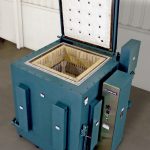
An electric box furnace has been supplied to a plant located in Louisiana that is a global supplier of large industrial valves for various industries. L&L Special Furnace Co., Inc., shipped this furnace, which is the fifth supplied by the company to this facility. The furnace is used to both heat treat and temper various rings and seals deployed in the manufacturing of valves used in the power-generation field. It is also used for general heat treating of various steels prior to machining.
Two furnaces have recently been shipped to customers from Grieve Corporation. No. 1040 is a 2200°F (1204°C), inert atmosphere pit furnace, currently used for heat treating automotive parts in baskets at the customer’s facility. No. 989 is an electrically heated, 2,000°F (1,093°C) inert atmosphere furnace from Grieve, used to process fabricated parts at the customer’s facility.
A leader in the technology industry recently purchased an electrically heated enhanced duty walk-in oven from Wisconsin Oven Corporation to be used for composite curing small parts. The batch oven has the capability to heat 16,000 pounds of a composite material from 70° F to 350° F within 6-7 hours.
L&L Special Furnace Co., Inc., ships electric box furnace to valve manufacturer..
Grieve No. 1040, an inert atmosphere pit furnace, for heat treating automotive parts in baskets
Grieve No. 989 is an electrically heated, inert atmosphere furnace used to process fabricated parts.
Wisconsin Oven Corp shipped an electrically heated enhanced duty walk-in oven to the technology industry.
Kudos Chatter
Akron Steel Treating celebrated its 75th anniversary August 31, 2018, with guests, officials, employees, customers, and suppliers in attendance, as well as the deputy mayor for economic development, Samuel D. DeShazior, who presented AST president Joseph Powell with a letter of congratulations from Mayor Daniel Horrigan. Joe’s grandfather, Prosper P. Powell, founded the company in 1943, and his daughter, Christina Somogye, recently purchased a 10% interest in ASTC and is an integral part of the succession plan.
Deputy Mayor Samuel D. DeShazior presents Joseph Powell with letter.
Celebrating 75 years with Akron Steel Treating Company. L-R Thomas Wingens, Christina Somogye, Joseph Powell, Laura Miller, Mary Glenn, and Michael Garvey
For the second year in a row, GKN Aerospace has received a supplier award from Spirit AeroSystems. Spirit recognized GKN Aerospace with a Collaboration Values Partner award for superior performance at the 2018 Spirit AeroSystems supplier recognition banquet in Wichita, Kansas. In addition, GKN Aerospace also recently announced via Stratasysthat the company is improving production times and removing design constraints for multiple tooling applications since integrating additive manufacturing at its Filton manufacturing site in the UK.
Retech Systems, a SECO/WARWICK company based in Mendocino County, California, recently won North Bay Maker Award for “best manufacturing process innovation”.
Induction heating company Ambrell Corporation is the honoree for the Global Advancement Award and Ambrell President Tony Mazzullo is a finalist for CEO of the Year at the Technology and Manufacturing Awards, created by the Rochester Business Journal and Rochester Technology and Manufacturing Association. The Global Advancement Award is given to a company that demonstrates dynamic growth through expansion of export opportunities and participation in new global markets. The CEO of the Yeardemonstrates leadership in the industry, commitment to staff development, and dedication to the Greater Rochester/Finger Lakes Region. Tony Mazzullo is one of two finalists and the winner will be announced on October 23rd.
GKN Aerospace recognized for 2nd year in a row with a Collaboration Values Partner award for superior performance.
Retech Systems wins North Bay Maker Award for \”best manufacturing process innovation\”.
Ambrell Corporation is the honoree for the Global Advancement Award.
Heat Treat Today is pleased to join in the announcements of growth and achievement throughout the industry by highlighting them here on our News Chatter page. Please send any information you feel may be of interest to manufacturers with in-house heat treat departments especially in the aerospace, automotive, medical, and energy sectors to the editor at editor@heattreattoday.com.
An Arizona-based aerospace service provider recently opened a new 206,000-sq. ft. repair facility in Cincinnati, Ohio, directly adjacent to its current 236,000 sq. ft. component repair facility, nearly doubling its capacity.
Rick Stine, president of StandardAero Components, Helicopters & Accessories
StandardAero Component Services hosted a ribbon-cutting ceremony attended by city and state of Ohio officials, local economic development executives, customers, company officials, and other guests.
The facility will accommodate component repair growth on new and legacy platforms, aero-derivative, military and commercial aircraft engine component repair, as well as larger components. Once fully operational, StandardAero expects to employ 200-300 new technicians to continue to meet the growing demands of customers over the next 12-18 months.
“As new engine platforms are launched and legacy fleets are still maintained, the entire industry is seeing tremendous growth. Demand for component repair has increased so we are stepping up to directly support our customers and address the continued and rapid need for more component repair capacity,” said Rick Stine, president of StandardAero Components, Helicopters & Accessories.
During 2018, StandardAero also increased shop capacity by an additional 60,000 sq. ft. with expansions of its facilities in Hillsboro, Ohio and Miami locations.
Welcome to another episode of Heat Treat Radio, a periodic podcast where Heat Treat Radio host, Doug Glenn, discusses cutting-edge topics with industry-leading personalities. Below, you can either listen to the podcast by clicking on the audio play button, or you can read an edited version of the transcript. To see a complete list of other Heat Treat Radio episodes, click here.
Audio: C3 Data
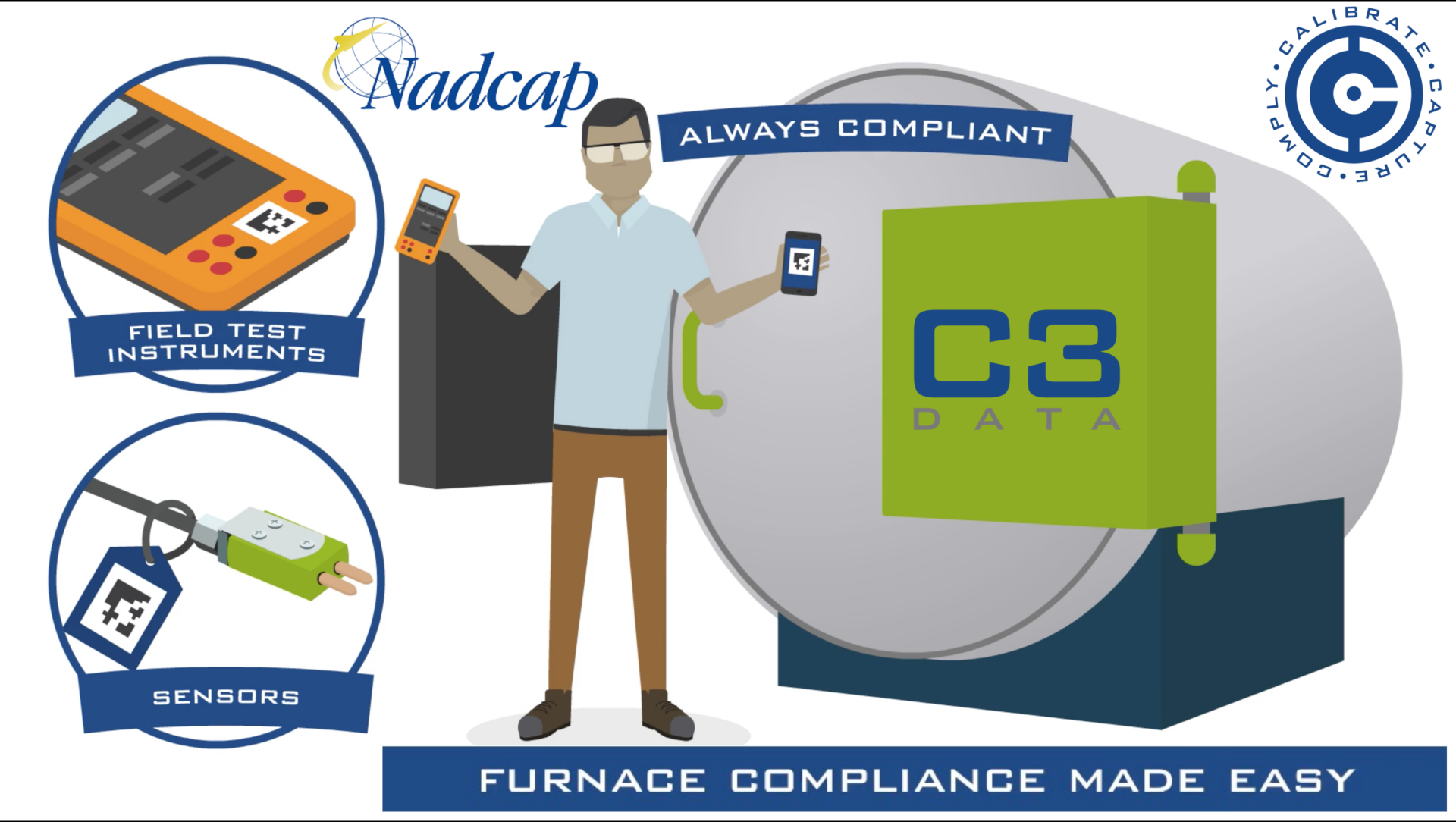
In this conversation, Heat Treat Radio host, Doug Glenn, interviews Nathan Wright of C3Data, a company based in Indianapolis, Indiana, which assists heat treaters and calibration labs ensure furnace compliance with Nadcap, AMS2750 & CQI-9. Their discussion about how you can cut the amount of time you spend testing and repairing furnace calibration report for your CQI9 and NADCAP compliant furnaces — from what might currently be up to an hour or more, per furnace, to somewhere down around five minutes per furnace — will help you imagine the day when you can have a single dashboard in your office where you can see in real time whether your furnaces are currently compliant with those standards or your own custom standards. Imagine not having to guess if your furnace is compliant or having to wait until the next SAT or TUS is performed to find out that you just ran two or three loads in a furnace that is out of spec. Also, imagine being able to click a few buttons and have a fully code compliant report printed out in minutes for when the auditor shows up at your door. After listening to today’s Heat Treat Radio podcast, you’ll be one step closer to making this a reality in your shop.
Click the play button below to listen.
Transcript: C3 Data
The following transcript has been edited for your reading enjoyment.
Nathan Wright of C3 Data
Welcome to Heat Treat Radio. I’m your host and publisher of Heat Treat Today, Doug Glenn. Before we jump on the phone with Nathan Wright, of C3 Data, let me encourage you to visit www.heattreattoday.com for more helpful heat treat information. Manufacturers with in-house heat treat departments, especially in the aerospace, automotive, medical and energy sectors as well as general manufacturing, find this site especially helpful. Every weekday, at least one new piece of technical or commercial news is posted to the site. The site also includes a new feature: Heat Treat Consultants. If you have ever wondered where you can find a simple, concise list of heat treat consultants, check out Heat Treat Today. You can find it on the site under the “Resources” tab. Today’s Heat Treat Today radio episode is brought to you by Dry Coolers. Designers and builders of industrial cooling systems and the professional engineering services surrounding those systems. As a leader in the heat treat industry for decades, they are located in Oxford, Michigan, and supply cooling systems for the aerospace, automotive, medical and energy industries plus many others. If you have an industrial cooling need, call Dry Coolers. They are on the web at www.drycoolers.com. Or you can reach them by phone at 800-525-8173.
Heat Treat Radio jumped on the phone and called Nathan Wright to discuss this new technology. Here’s a lightly edited version of our conversation. Nathan is a long-time pyrometry guy with multiple pyrometry labs around North America, including a lab in Mexico. With several decades of experience in the industry, Nathan was pretty convinced there was a better way to do pyrometry and furnace compliance. Here’s Nathan to explain what it is, exactly that his company, C3 Data does for the heat treat market.
Nathan Wright (NW): Heat treaters and other companies come to us to help them reduce the cost to comply with NADCAP. So if you are a NADCAP heat treater, and or trying to become compliant with CQI9, you are an ideal client. So, companies come to us to help them reduce the cost associated with trying to comply with those two specifications, specifically with respect to the pyrometry requirement; so, in terms of time and money spent, we help them reduce those costs. We do this by leveraging two very simple technologies: the cloud and mobile devices. And we use these to eliminate virtually all of the time spent writing reports and calculating correction factors and ensuring that all the equipment that you use is compliant. We build these higher specs into the software so that all the end user has to do after they set their exponents is plug in the readings, and we do the rest.
Doug Glenn (DG): And it’s cloud-based?
NW: That’s correct. It’s cloud-based in terms of where all the data is stored. But we do have, as I mentioned earlier, the mobile technology that is used, sort of a modern-day version of the clipboard. When a pyrometry technician is out in the field, rather than writing down on a piece of paper or lugging around a laptop with an excel spreadsheet, there is an app specifically designed for those types of testing requirements. And that’s done all on the mobile device. The app really knows everything about the furnace when you walk up to it. We integrate QR codes into our calibration labels that get printed, and simply by scanning the barcode on the furnace, the app knows everything about your furnace from the furnace class to the operation ranges to the instrument types, the calibration points, everything about it. So, in terms of training and the technician making sure that that furnace is tested and compliant with the specs, it’s kind of a no-brainer. Walk up, scan the QR code, and the app kind of walks you through a tutorial step by step, and at the end, it gives you sort of a green means go, red means no indicator as to whether or not the test that you are performing passed or failed.
DG: I understand the spec is built right into the app. So, if, or should I say when, the spec is updated, your app is updated and the end user pretty much automatically has the new spec immediately on his device.
NW: That’s correct. And we intentionally sit on a couple of the committees — CQI9 as well as the AMAC committee — when you talk about AMS . . . really just to participate in the conversation to understand what changes are being made to the new revisions of both of those specifications. So, proactively, we have our coders in the background sort of prewriting some of the code that may or may not become part of the specification. So that from day 1, all the customer would have to do is refresh their web browser (for the web version), and on the mobile app version they simply do the auto update on their app, and they know moving forward that every test they do from that day forward is in compliance with what will be the AMS 27 revision F, and of course with CQI9, it will be rev. 4. So, yes, we address those concerns by being actively connected with those communities and ensuring the software automatically gets updated.
A Better Way: The Story Behind C3 Data
DG: So, tell us a bit about how this all came about. And also about you.
NW: I started doing pyrometry work, I’d say calibrations, surveys, and SATs, approximately twenty years ago. And I always had in my mind that there had to be a better way of doing this type of testing. Having sat in literally hundreds of NADCAP audits myself, there’s just a lot of human error that goes into — I guess the root of the non-conformances, and I even tried to bring a C3 Data like product to life back in the most powerful hand-out tool that you could get — a palm pilot. So, you can see that I’ve been thinking about this in depth for quite a while. And anyone who’s ever had to do an SAT, and all that’s required to make sure the equipment is current and then actually doing the reporting, knows the agonizing pain that goes into doing this type of testing. So, after twenty years of doing that I have a unique perspective on how to build this from the industry. So we started building the product, the C3 Data product, for our own pyrometry labs. I’ve been doing this for twenty years. I own two labs, and as I mentioned earlier, we just wanted to build a tool that would eliminate most of the arduous and daunting parts of the pyrometry compliance. Anyone who is responsible to comply with NADCAP, CQI9 – they know that it’s the paperwork administration, it’s the scheduling, and frankly, sometimes it’s just the math. So, in a sense, we can honestly say that we built this product with each customer in mind because we do the same things that they do and we initially built it for us. It’s pretty exciting to get the word from our subscribers that they are saving a lot of time and eliminating the NCRs. I talk about saving time. . . . We’ve had customers tell us as much as 60 percent of the time that they were spending doing testings and reportings, has been reduced by 60 percent. We are pretty excited about those numbers.
DG: I imagine it’s not only the time savings that is a real benefit, but the peace of mind knowing that you are compliant – especially when the auditor comes a-knockin’!
NW: Yes, I would say that the most comforting feeling — from one of our subscribers – is going into a NADCAP audit knowing, with confidence, that all the information that is required is there. Not only is it there, but it is all compliant. No matter what report you pull up, whether it’s a certification for a thermocouple or for a daylogger or for a field test instrument. Any type of test result is insured and guaranteed to be compliant because the system is built around those specifications and doesn’t allow you to make some of the most common mistakes that are attributed to about 50 percent of the non-conformances really are pyrometry related. So the confidence that the end user has is really high going into an audit. And anyone that has been in an audit knows that that is the most nervous day.
DG: You mentioned “we” when you were talking about the company. Tell me a bit about the company now. You have some pyrometry labs, correct?
NW: We do, we have a couple of laboratories. One in Mexico, one in the midwestern part of the United States, but in the last three years, I’ve sort of taken a back seat to those companies in order to really focus on C3 Data. We’re headquartered in Indianapolis and the product has actually been under development for about five years although it has only been commercially available, I guess, going on now about three years. So we employ a staff of five here in the U.S., and more recently we’ve established sales and support channels in Europe – covering the UK, France, Germany, Italy, and Spain. So, we are excited about that new relationship and getting that product in the hands of a large segment of the heat treat world over there.
DG: Are there different standards there in Europe? Or are they all the same?
NW: No, No. Very similar. I mean, it’s the AMS 2750 for NADCAP accredited companies and CQI9 for the automotive. In fact, well, CQI9 was authored by the big three here in the U.S., and for several years, Europe was not really recognizing that standard and more recently with several automotive recalls in Europe from European manufacturers, they were really looking for a way to minimize the large expense associated with those non-compliances and recalls. And so, they really have, in the last nine/ten months – more recently — started to adopt CQI9 pro-actively because rather than write their own specifications they wanted to adopt it. So we are pretty excited that we don’t have to customize the software for yet another specification. I will say, speaking of custom specification, the software is not limited to just AMS and CQI9. We do have a build-your-own spec feature that is built into C3 Data that allows you to take a Boeing spec that by and large is AMS 2750 but has its own nuances that are associated with an individual prime like Boeing, just to use them as an example. And so we allow users to go in and build their own specifications to ensure compliance to not just the prime specifications that we typically think of (i.e. AMS and CQI9).
DG: And now for a quick reminder that this episode of Heat Treat Radio is being sponsored by Dry Coolers. Dry Coolers can provide open evaporative towers, closed loop evaporative towers, air cooled or dry cooler closed loop systems, chillers, vapor coolers and condensers, pumping stations, control panels, emergency backup systems, filtration and solids removal equipment, as well as complete plant-wide water systems. If you have any industrial cooling need, call Dry Coolers. They are on the web at www.drycoolers.com or by phone at 800-525-8173.
C3 Data in Action
DG: So, Nathan, how would this look for a heat treater? How do they interface with C3 Data? You mentioned subscribers.
NW: It’s set up as what we call “software as a service”. So, unlike a traditional software product where you buy it once and own it, and then pay for incremental updates, we just have a subscription service that the user can customize based on their needs. If you are just using the software to perform SATs, there is a fixed monthly fee. But if you wanted, a year later, to add temperature uniformity surveys, or instrument calibration, you can incrementally bump up and add on plugins to the software. It’s all web-based so the beauty of this is that there is no IT that needs to be involved. There’s not a lot of technology that the end user needs to have other than how to go to the website and log in to their password-protected account. You can increase or decrease your subscription levels at any time and it’s month to month. There are a lot of advantages to this software model because it is low risk. You can try it out. You can cancel it a month later and decide that it’ not for you. So, we like that. The biggest, most powerful part of software and servers being web-based is, as we mentioned when these specifications get updated, we can simply update them in the background and the end user just has to refresh their browser and instantly the update is made. The system is very intuitive. By the way, the subscription service comes with unlimited phone and email support. So, as you bring on new users, we will train them. This is typically done through a “go to meeting” online, so there is no need to incur travel expenses. And we can do a twelve-minute meeting, we can do a two-hour meeting with a large group if we need to. We can customize the training based on the skill set of the group or group of individuals that are using the software.
But in terms of the setup, I think the biggest hurdle is getting all the information into the system. The system only knows what you tell it. So, there is a section in the portal where the user can go in and must go in and define all the furnace settings. So, we talked earlier about instrument types, operating ranges, furnace classes, all those types of things. Once you define all those, what we call furnace set up variables, the system will hand walk you through everything. I guess my only point is that there is a little up-front investment to populate the user account with all the furnace and instrument information. That’s probably the biggest hurdle for any user because we have knocked down all the other hurdles – the training, the updating of the software as we mentioned is a simple refresh of the browser. So, it’s very intuitive but there is a little bit of upfront time involved – and we say about five to ten minutes per furnace is the typical amount of time spent and that can be reduced over time by getting people familiar with the software. So, if you are a typical, well I shouldn’t say typical because there is no typical heat treat size, but a heat treater that has ten furnaces, it might take you a couple hours to populate your system.
DG: Well, five to ten minutes per furnace does not sound like much. Tell us a bit about this dashboard.
NW: Dashboard culminates all the information that’s being populated in a single system, and it gives the ability to display a real-time plant overview of all the furnaces and their real-time compliant status against the specifications. So, we have customers out there currently that have 60- to 70-inch television monitors displaying the C3 dashboard. And in their procedure, the operators of the furnaces are told that before they load a furnace, the first thing that they do is that they look at their C3 Data dashboard and they verify that that furnace is either green, yellow or red. Depending on the company, they may have different protocols, but ultimately if it is red, you are supposed to stop as the furnace operator and go to your boss and say, “Hey, I can’t load this furnace because it is not compliant. What should I do?” And, there is a lot of power in that because, you know, currently the systems that exist today are spreadsheets or, worse yet, printed pieces of paper that just sit stagnant in a filing cabinet and they don’t tell you anything in real time. Meanwhile, furnaces are being loaded — potentially furnaces that are not compliant — being loaded with product that are safety critical parts for the aerospace and automotive industry. So, dashboard really takes that culmination of a lot of details of compliance-related information and gives it to you instantaneously. This also gives the ability for a quality assurance manager of a company that may have multiple locations to sort of figure out where he or she should be focusing their efforts on helping with furnace compliance. Case in point, if you have seven different facilities that you are responsible for as a quality assurance manager, you are going to want to go to those places where more furnaces are red and not really spend any of your time in those locations where all those furnaces are green. And so this allows them to have that real-time visibility without ever leaving their desk and make real-time decisions about where they need to focus their time and energy.
DG: Any specific heat treaters that will find this system helpful? Or is it pretty much broad-based?
NW: Generally speaking, any heat treater that needs to ensure high quality should be using a system like C3 Data. And many do. The problem is that most people have failed at what we call rolling their own. These systems range the gambit. They are also susceptible to the same issues. Namely, the cost to manage these cobbled together mixtures of cell spreadsheets, and outlook for scheduling and other tools that they combine and rely on, and there is usually what we call the “key man” risk associated with these systems. And that employee may or may not always be employed there to keep the system up to date. So this usually causes frustration and ends up costing much, much more than people think. But, to be specific to your question, the customers that are NADCAP, or just simply required to comply with AMS 2750 or CQI9, they rely on the software and so any customer that’s, as we mentioned, that’s looking to comply with those specifications, C3, all those specs are included out of the box with C3. That would be our ideal demographic.
DG: Anything else like it in the marketplace? And if so, how does C3 differ?
NW: There are a few companies that have attempted to build what C3 Data has. But I would say that they all suffer from the same two problems. Their software was not built around the prevailing specifications like the AMS and CQI9, as we keep mentioning. And secondly, they were built by people that don’t do pyrometry. So, the user experience quickly becomes frustrating for people using the competition’s product. Because, unless you have done this type of work, it’s really impossible to know all the limitless permutations of the spec and account for them all. So, their software ends up running you instead of the other way around. Another thing that is unique about C3 is that we allow the user to fully integrate with existing service providers and vendors. For example, if you had a lab that is coming in on site to perform your calibrations, their reports will automatically funnel in to the C3 account. And they are available in real time. So, that’s one. I mean we integrate with sensor vendor. GeoCorp is one of our sensor vendors. When you buy a thermocouple from GeoCorp, and you have a C3 Data account, your sensors will automatically get pulled into your C3 Data account. Including all the correction factors and the math associated with the rounding and all that, so there is a lot of integration with the vendors and service providers – including data logger manufacturers. But there are some major data logger manufacturers that integrate directly with our temperature uniformity survey software that, again, all that calibration data for those loggers technically can go into our system as well as generating temperature uniformity survey reports that are fully compliant in less than five minutes. So, this is a big one. I think there are listeners out there who have done surveys know that a survey report can take, and it varies depending on your experience and what systems you have, but it can take anywhere from 20 to 45 minutes and even sometimes an hour just to do a report. We can consistently offer a product that does this in less than five minutes and guarantee its compliance. But I think our biggest competitor is really not a company, it’s the status quo. People who are “getting by” with their in-house systems and they don’t know what else is available and they don’t realize the tremendous cost they currently are incurring doing it the way they have always done it. So, that is probably our biggest competitor – getting past the “If it ain’t broke, don’t fix it” type of mentality.
Nathan didn’t want to name drop during the podcast but shortly after the interview, Nathan informed me that C3 Data signed a distributor agreement with CCPI Europe, Limited – to represent C3 Data in Europe. CCPI will do essentially the same thing in Europe that Geocorp does here in North America. CCPI Sensors will integrate directly with C3 Data for customers in that part of the world.
DG: And how about when the auditor walks in. Do most of them accept your reports?
NW: Most auditors have accepted it. We are trying to get the word out to a lot of the NADCAP auditors that this is a user-friendly system and that it can be trusted. As a result of some of the feedback we have gotten from some auditors we’ve built in some, I guess, “check your math here” kind of thing — they want to know — yes, it says that the test passed because I see the number turns green instead of red but how do we know that? And so we’ve built in some software validation tools in there for NADCAP auditors to become more comfortable by seeing the math behind the numbers. As well as for our users. But, yes, you are right. The most rewarding moment is the day of the NADCAP audit, you can go to the single screen where you have scheduler and tests. You have one system. Not a filing cabinet, not an excel spreadsheet and another spreadsheet on a different file server. It’s one system accessible anywhere on the web that you can go and have a NADCAP audit. You can personally have a NADCAP audit remotely. In an ideal world, that might be something that is considered by PRI someday but the beauty is, yes, it’s in one location. You are never chasing down paper. And the bottom line is you know that it’s all compliant – 100 percent of the time.
So, if you are a captive or commercial heat treater looking for smart ways to reduce your compliance investment, you might want to take a look at C3 Data. Here’s a system that could significantly reduce the time you invest in conducting the litany of compliance tests required and the time it takes to prepare those time-consuming reports after each test. Better to let C3 take care of it. If you’d like to contact Nathan, feel free to email me directly and I’ll put you in touch with him. You can email me at Doug@heattreattoday.com. C3 Data is on the web at www.C3data.com. And you can reach out to Nathan that way as well.
Special thanks go to Dry Coolers, Inc., for their support of Heat Treat Radio and for their sponsoring this podcast. Dry Coolers, industrial cooling systems, made to order. Dry Coolers is on the web at www.drycoolers.com.
Don’t forget to visit www.heattreattoday.com frequently. We post a new heat treat industry item – either a technical article or some industry news — every weekday. If you would like more Heat Treat Radio, simply google Heat Treat Radio. We are the first thing that pops up. Or, you can also subscribe to Heat Treat Radio on iTunes or Soundcloud. This and every other episode of Heat Treat Radio is the sole property of Heat Treat Today and may not be reproduced without express written permission and appropriate attribution from Heat Treat Today. Jonathan Lloyd of Butler, Pennsylvania, produced and mixed this episode. I’m your host, Doug Glenn. Thanks for listening.
Doug Glenn, Heat Treat Today publisher and Heat Treat Radio host.
To find other Heat Treat Radio episodes, go to www.heattreattoday.com/radio and look in the list of Heat Treat Radio episodes listed.
A Wichita, Kansas-based, manufacturer of fabricated parts for the aerospace industry recently announced its partnership with the world’s pioneering supplier of aerospace-grade, additive-manufactured, structural titanium components to initiate qualification of parts for the Boeing 787.
Spirit AeroSystems and Norsk Titanium US Inc. have reached an agreement to initiate qualification of Spirit’s first additive-manufactured, titanium, structural component for the Boeing aircraft.
Ron Rabe, Spirit AeroSystems Senior Vice President of Fabrication and Supply Chain Management
This qualification will validate NTi’s production and industrialization processes, integrate Spirit’s work scope of machining final parts from additively manufactured near-net shapes, and verify material and final part conformity to requirements.
“Spirit has had a comprehensive and long relationship with Norsk Titanium, and this part will be our first additive structural titanium component incorporated into a commercial airplane program,” said Ron Rabe, Spirit AeroSystems Senior Vice President of Fabrication and Supply Chain Management.
NTi is the world’s first FAA-approved, OEM qualified, supplier of additive-manufactured, structural titanium components. NTi’s proprietary Rapid Plasma Deposition™ (RPD™) process has been in serial production of Boeing 787 titanium components since April 2017.
“I am very proud of the Norsk Titanium team and this accomplishment. It represents years of technology development,” said Mike Canario, CEO of Norsk Titanium. “I also would also like to thank Spirit for this vote of confidence in the Norsk RPD™ process and capability.”
Mike Canario, CEO of Norsk Titanium
NTi’s Plattsburgh, N.Y., facility was recently added to Spirit’s Approved Supplier List (ASL) and Boeing’s Qualified Producer’s List (QPL). Spirit and NTi have had an ongoing technology collaboration for more than nine years. In 2017, both companies signed a Master Procurement Agreement (MPA) for qualification and production activities. The first commercial aircraft part will begin serial production later this year.
Heat Treat Todayannounces that the inaugural 40 Under 40 Class of 2018 will be revealed Friday, October 5, 2018, just days prior to the opening of Furnaces North America in Indianapolis, Indiana, October 8-10.
These 40 finalists represent heat treating professionals who are making a mark on the industry before they turn 41. It’s impossible to read through this section without being encouraged about the future of heat treating, especially as it pertains to in-house processes in the aerospace, automotive, medical, and energy industries, as well as general manufacturing. Enthusiastic, forward-thinking, skilled — they are part of the reason the future of this industry is bright. This inaugural class is breaking barriers, saying yes to challenges, resolving the impossible, and reinforcing the culture of hard work and customer service.
Did you miss the deadline to have a young professional included in this inaugural class? Heat Treat Today asks you to keep your eyes open for young professionals you encounter within your heat treating sphere, especially in the captive heat treatment industry, who deserve recognition and encouragement to take the industry to greater heights of technology, quality control, standards and leadership.
A corporation based in Richmond, Virginia, that produces metals equipment for a broad range of manufacturing applications recently announced that it was awarded an $8 million tubing order.
Bristol Metals LLC, a subsidiary of Synalloy Corporation, has begun shipment of the product from its Bristol, Tennessee, and Munhall, Pennsylvania, facilities. The company stated that this is the single largest order of its type that Bristol Metals has received since being acquired by Synalloy.
Synalloyengages in a number of diverse business activities including the production of stainless steel pipe and tubing, galvanized pipe and tubing, fiberglass and steel storage tanks, specialty chemicals and the master distribution of seamless carbon pipe and tubing.
From an article provided by the Office of Technology Commercialization and Partnerships and published at Tech Briefs, heat treaters and other students of metal alloys can glean valuable information about hardface coating systems developed to protect from and build resistance to high wear deterioration, weak interfacial bonding, and corrosion.
In applications ranging from sports equipment to turbine blades, and power-generating surfaces to military hardware,
“Metal alloys, such as titanium alloys and steels, are known to have a good combination of mechanical properties for many structural applications, but these metal alloys do not meet the wear and corrosion resistance requirements for some structural applications. . . . To overcome these shortcomings and provide high wear- and corrosion-resistant surfaces on metal alloy substrates, surface alloying and reactive surface modification have been developed — depositing and post-heat-treating a unique combination of materials, selected based upon the substrate material and specific application environment.” ~ Tech Briefs