

Heat Treat Radio #37: Rethinking Heat Treating for the 21st Century with Joe Powell (Part 1 of 4)

In this 4-part series, Heat Treat Radio host, Doug Glenn, talks with Joe Powell of Integrated Heat Treating Solutions about bringing heat treating into the 21st century.

According to Joe, the real focus should be on the quenching portion of the process where distortion often happens. In many instances, distortion is able to be eliminated. Find out how in this episode.

Below, you can either listen to the podcast by clicking on the audio play button, or you can read an edited version of the transcript.


Click the play button below to listen.


The following transcript has been edited for your reading enjoyment.

Doug Glenn (DG):  On today’s episode, I sit down with Joe Powell, president of Akron Steel Treating Company to hear what he and his team are doing to combat heat treat distortion.  Joe Powell is a veteran in the industry and carries a wealth of knowledge with him.  Joe, your company has 75 years of experience working with different part makers, and after a very brief conversation with you, pretty much anyone would conclude that you’re a man on a mission to bring heat treating into the 21st century.  Before we turn you loose on that topic, first tell us a little bit about Akron Steel Treating and how it got started.

Joe Powell (JP):  It was founded by my father in our garage in 1943 at the behest of the Department of the Army who wanted him to heat treat some parts, and it grew along with all the tool and dye makers in Akron, OH by making machinery for making various rubber products like tires, belts and hoses . . . you name it.

DG:  You’ve also spearheaded another company: Integrated Heat Treating Solutions.  What are you doing with that company?

It should be “quench treating” not “heat treating.”  That’s the way I look at it.

JP:  Integrated Heat Treating Solutions is the culmination of 75 years of commercial heat treating experience with literally over a 1000 different part makers.  What we’ve learned that if we can integrate our heat treating solutions with the part-making design and the optimal material selection, we can produce better parts.  And what I mean by “better parts” is they could be lighter, they could have longer fatigue life, and they could have less distortion after heat treating.  All of these benefits are brought to the table to part makers so that heat treating becomes a fully integrated part of lean manufacturing.

Once heat treating becomes a lean, integrated part of manufacturing, everybody wins.  It enables the use of leaner alloy materials; it eliminates oil quenching; it eliminates long carburizing cycles and batch carburizing cycles; and we now are able to literally do the heat treating in the manufacturing cell where the parts are made.

DG:  What do those two companies look like now?

JP:  We have about 50,000 square feet and are currently in the process of acquiring another building to our east.  We have 48 employees and there are three shifts; and again, we do salt heat treatment, vacuum heat treatment and controlled atmosphere heat treatment.  Also, we are currently getting into induction heat treating with our friends at Induction Tooling.

For the last 23 years, we have been concentrating on finding the best way to quench parts and to drive the distortion out of the part-making process.  The heat treat distortion has been a problem for centuries.  Parts crack, they distort, they come out of the heat treat process unpredictably with size change that is absolutely necessary to get the mechanical properties, but also, if it’s nonuniform, that size change can cause major problems down the line that have to be corrected by hard turning, grinding, flattening, straightening, you name it.

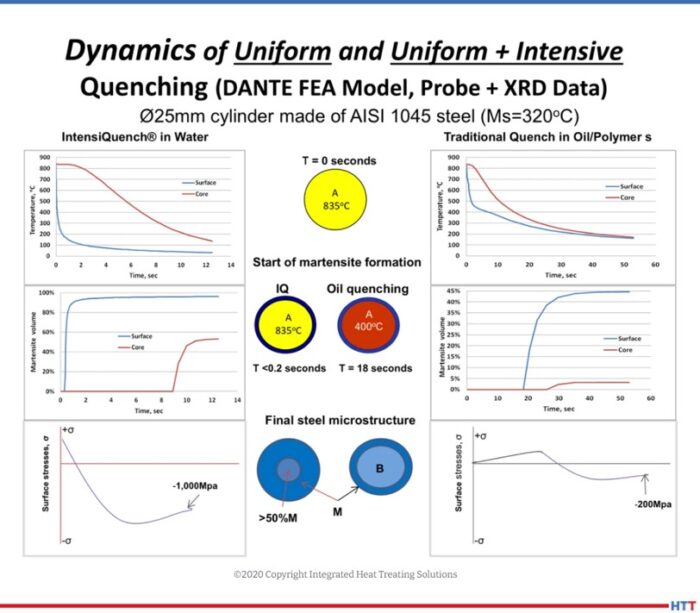
Dynamics of uniform and Uniform Intensive Quenching model (Source: integratedheattreatingsolutions.com)

We’ve also delved into the science of computer modeling, finite element modeling as well as computation of fluid dynamic modeling with our friends at DANTE Solutions.  What has happened from that modeling is seeing this concept: the surface of the part contains a bunch of grains, and those finite elements – if they are not quenched uniformly – will transform nonuniform, leading to nonuniform thermal shrinkage upon beginning quenched. Then they will also transform to martensite nonuniformly, which means that the thin and thick sections of a part will have different amounts of distortion and size change.  In order to control that, we’ve developed what we call “quench to fit” technologies where we literally build a shell on the outside of the part, using a gas quench or a uniform salt quench or uniform water quench.  Once you’ve built that shell in the first few seconds of the quench on the outside of the part, that martensite shell acts like a custom-made quench dye, and that custom-made quench dye allows the part core to cool by conduction through that shell.  So, if that cooling by conduction happens by very uniform conduction through the geometry and the mass of a given part, you will have a predictable size change after heat treat. And, you will enable the part designer to go back to the initial part design and adjust it accordingly so that it quenches to fit during the quench process.

When a commercial heat treater receives the part, 99 times out of 100, that part is using a material that was selected many, many years ago, because that is what they’ve always used.  Additionally, it’s going to be heat treated in legacy equipment that has always been used.  For instance, case carburized 8620 steel valve seats have been used for decades now, and they last about 40-70 hours in the fracking pump, but a ductile iron valve seat can be made to last many times longer; it’s cheaper to buy the material and our heat treating equipment can heat treat it in 5 minutes instead of a 20 hour case carburizing cycle in batches.  That single part flow of that new induction heat treating equipment and quenching equipment that is built into it can be built in right at the end of the CNC machines.

I am a commercial heat treater who believes that part design should be integrated for heat treating by the part-maker.  It’s a nuance, but what it really boils down to is that sometimes commercial heat treaters do it best, but sometimes the part-maker can do it better.  [Side bar quote: I am a commercial heat treater who believes that part design should be integrated for heat treating by the part-maker.  It’s a nuance, but what it really boils down to is that sometimes commercial heat treaters do it best, but sometimes the part-maker can do it better.]

I am a commercial heat treater who believes that part design should be integrated for heat treating by the part-maker. It’s a nuance, but what it really boils down to is that sometimes commercial heat treaters do it best, but sometimes the part-maker can do it better.

DG:  So, the importance in the part design process of including the heat treater is that you can more consistently predict what the distortion will be, because if I understand it correctly, you can actually predict distortion in the part and therefore design the part with the distortion that will come consistently every time you design that part, yes?

JP:  Yes.  And it doesn’t matter if it’s an air quench or a hot salt quench or a uniform water quench, it just has to be very, very uniform from the initiation of the quench.  In other words, you can’t take it out of the furnace and air cool it for 45 seconds and then begin a water quench, it doesn’t work that way.  That shell is starting to form instantaneously when the heat is turned off.  An air quench is very slow compared to an intensive water quench and so you have to introduce that quench all over the part surface shell as instantaneously, and with as much uniform impact, as possible.  That’s what we do in terms of designing equipment to do the quench process.

DG: Right now, there are a lot of companies, a contractor or commercial heat treater, that send you parts to heat treat.  Is it not possible that if the part designer and the heat treater talk in advance as they design the part, that some of these parts could be, in fact, heat treated in-house and not be sent out to a commercial heat treater?  Is that possible?

JP:  They could actually be heat treated not only in-house, but directly after the CNC machine, right in the manufacturing cell, right after the forge.  It takes the proper selection of the optimal hardened ability material. In other words, part of that part design with the heat treater has to be considerations like, “Is it going to get too hard in the core?  Is it going to swell up too much in the core?  Is it going to be unable to build that shell on the surface without blowing it off, because the core starts to harden up?”  So again, the optimal material selection and the design of the mass and the geometry of the part need to be considerations that the heat treater gets a chance to look at.

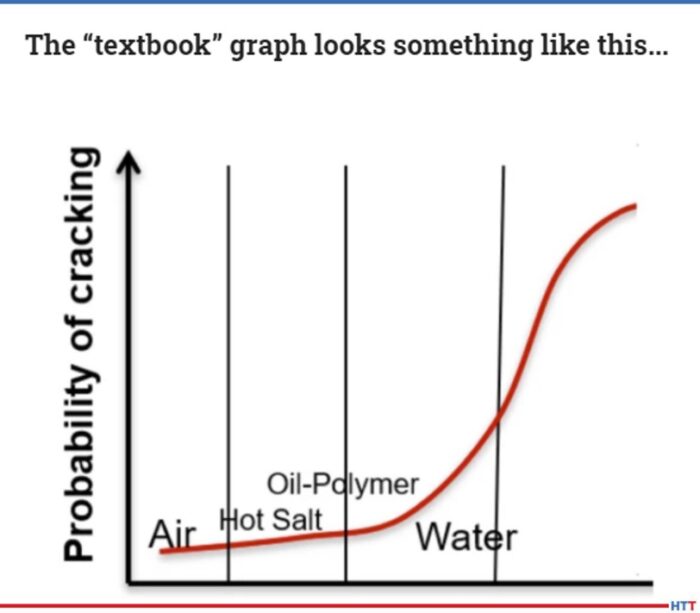
A “textbook” example of the bell curve. (Source: integratedheattreatingsolutions.com)

DG:  So, if the part designer and the heat treater get together and talk about the part design before the part is finalized, or if they’ve got a legacy part, they can sit down and talk with a heat treater that understands what you’re doing over at Akron Steel and Integrated Heat Treating Solutions. If they can understand that, and if they can talk with you about how that part might be redesigned, it’s very possible that you could use lower cost materials to get the same thing, minimize the amount of time to actually heat treat, and you may be able to put that part in a single piece or at least possibly a small batch flow so that there’s not a bottleneck at heat treat, yes?

JP:  Yes.

Sponsorship for this episode is Furnaces North America the Virtual Show.

DG:  Joe, let’s talk about the quenching bell curve as it relates to distortion.

JP:  There are many, many metallurgists and many metallurgical textbooks that indicate that the faster the quench cooling rate, the higher the probability of distortion.  There is a curve that is generated that basically says that if you quench very slowly in gas, or if you increase that quench rate and go to a hot salt or a martemper bath or an austemper bath or you increase it even further with warm oil or highly agitated oil, or you go to a brine quench where you do a polymer or a polymer water quench where you increase the rate of quench cooling, there is a point at which most of the parts are going to crack and you’re going to have major distortion.  It is not because of the quench speed being faster, it is because the uniformity tends to be less the faster your quenchant.  In other words, you need to keep the water from film-boiling and creating a situation where the initial quench is actually done under a steam blanket, or gas, very slowly.  Once the thin sections of the part quench-out under gas, then you have the thick sections that are still under that gas blanket, and you have very rapid cooling and very rapid martensite transformations that cause a shift in the size of the part where the shell now cannot contain the core swelling that’s happening underneath the surface.

Whereas 21st century heat treating practice is, what I call, a “uniform quench renewal rate” and an instant impact.  In other words, you instantly impact the shell, create that shell, and once it’s created with uniform cooling, then the rest of the cooling happens by conduction through that shell.  Whatever the geometry and the mass of the part is will determine that uniform conduction cooling which ends up being very predictable.  Once it’s predictable, then you can morph the green size of the part before heat treating so that it predictably quenches to fit during the quench process.

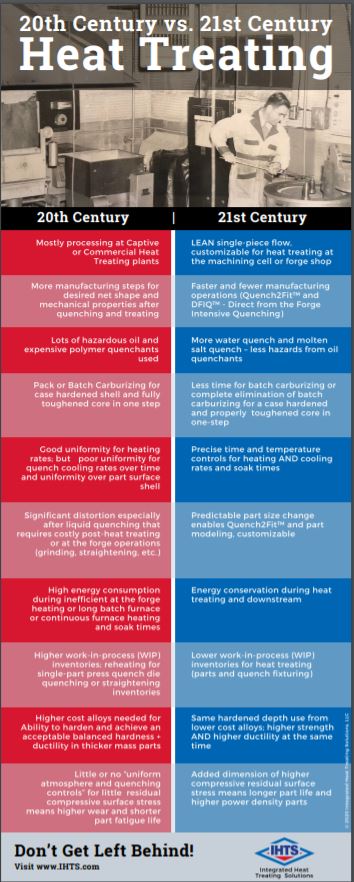
(source: integratedheattreatingsolutions.com)

DANTE Solutions has a method where they use their model to model the finite elements in the part so that the thin and thick sections of the part quench uniformly. IQ Technologies Inc. and my company, Integrated Heat Treating Solutions, have gone on the other side and shown that it is really a bell-shaped curve, and that the probability of distortion goes back down if you can create that shell on the outside of the part instantaneously, and then provide a uniform quench renewal rate to the part surface so that the core can cool by uniform conduction through that shell.

DG:  Let’s just put in our listener’s minds the standard bell curve.  Most of the quenching and most of the textbooks that we see these days is done on the left hand side of that bell curve, and as you approach the peak of that bell curve, the probability of distortion and/or cracking occurs.  People are saying – don’t quench too fast because you’ll get cracking.  You’re kind of switching the whole paradigm to say that it’s not the speed at which you quench, but more so: Can you create, almost instantaneously, a hard shell because of exceptionally rapid cooling on the whole part so that that shell basically holds the part in place?  If you can get that, then you can cool the rest of the part, however slow or fast, in a sense, you want, because it’s not going to distort because it’s already locked in.

JP:  Right, and this is cooling by conduction which is the physics of the material.  How fast will it give up the heat through its mass?  It’s the difference between 100 degrees or 50 degrees or 10 degrees per second of cooling and 400 to 600 degrees centigrade cooling per second, so it’s very, very intensive.  The middle of the bell curve, where most parts are cracking, is because there is not a uniform quench renewal rate.  You start off with a gas quench, then you end up with a very intensive evaporative cooling quench with nucleate boiling.  You then end up with water quenching without boiling, and so you have three different phases of cooling happening on different parts of the part. This is exacerbated by different parts in different sections of the batch which will have different cooling rates.

It’s almost impossible to get the full benefits of very, very intensive quenching or even very, very uniform gas quenching in a vacuum furnace unless you have staged the cooling in such a way that you create that uniform shell at the beginning of the quench, and you hit that martensite start temperature and cool to that martensite start temperature all over the shell of the part uniformly.  That’s the key.

DG:  There are several things that jump into my mind like questions that might arise from people.  You’ve already hit on the differences in part thickness – you may have thick sections, you may have thin sections.  It’s very possible to maybe get down to the martensite start temperature on the thin section right away, but the thick section may not be, and therefore you’re going to distort because you haven’t created that “frozen shell” uniformly around the entire part.  Let’s talk about, not just part thickness, but part geometry in the sense of the awkward curves and turns or lips and things of that sort on parts.  How would we deal with that?

JP:  That’s where new 21st century heat treating equipment needs to be designed.  Every furnace company that is selling furnaces to either captive heat treaters or commercial heat treaters calls itself a furnace company.  The reality is, yes, heating is important and it is the precursor to getting the mechanical properties, but the heat treatment is actually done, and the mechanical properties are actually obtained, in the quenching process.  It should be “quench treating” not “heat treating.”  That’s the way I look at it.

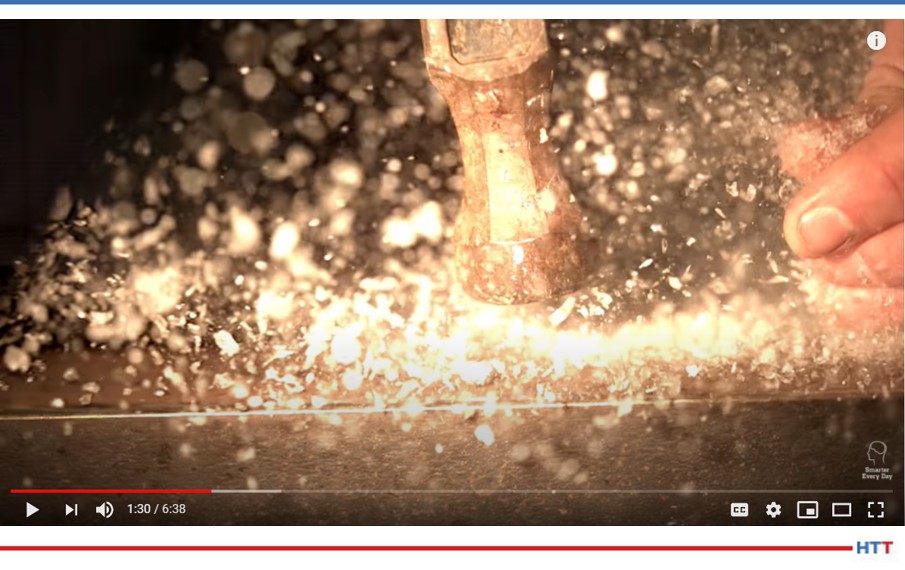
Image from Smarter Everyday YoutTube video on Prince Rupert’s Drop (source: https://www.youtube.com/watch?v=xe-f4gokRBs&ab_channel=SmarterEveryDay)

For the last 23 years that’s what has been more apparent to me.  My dad taught me how to quench stamps that were used for marking the inside of tire molds, and these steel stamps would uniformly blow up if you just quenched them.  But if you were able to uniformly quench the marking end, you could get it hard as hell and it would last a long, long time, but you had to kind of bifurcate the quench.  You had to make sure that you created that shell in the marking area of the stamp and let the rest of the stamp kind of cool much more slowly.  In other words, create the shell in the face of the stamp where the lettering is, and set those letters.  Then the rest of the stamp can basically cool much slower because you don’t need the hardness there; it’s not the working part of the part.

Also, the designers of the stamps had to integrate the right radius in the face of the stamp.  If they had sharp corners, those sharp corners would blow off during the heat treat.  So, over time, we said, “If you don’t want us to crack this stamp, you’re going to have to put a radius over here and change the design slightly.”  It didn’t take much change, but it did take a recognition of the fact that this was not going to work.  There’s no way to eliminate the nonuniform cooling in the shell if you’ve got a corner.  Steam collects in that corner and it doesn’t quench, so you can’t create the hardened shell.

DG:  Let’s take a little deviation and talk about something non-metal.  Let’s talk about the Prince Rupert’s drop to illustrate residual compressive stresses.

JP: The mystery of the Prince Rupert’s drop of glass is that glass makers noticed that if they dropped a drop of molten glass into a bucket of cold water it would form a drop that has a head and then a tail – it almost looks like a tadpole.  If you hit the head of that glass drop with a hammer or try to break it with a pair of pliers, you can’t do it.  It is literally unbreakable at the head.  However, if you snap the tail off, it instantaneously explodes.  This is because there are counterbalancing tensile stresses that are below the surface in the tail that once you break the compressive stresses off, it’s like taking the hoop off a barrel and the barrel staves explode; the elements on the surface just explode.  The reason they don’t explode on the drop of glass at the other end is because there are sufficiently high compressive stresses on that surface that hold the drop of glass and keep it from fracturing.

DG:  This is a fascinating video where you take a Prince Rupert’s drop, actually hang this Prince Rupert’s drop and shoot it with a .38 or a .45 or a 9 mm, hitting the head of that tadpole, if you will, and it shatters the bullet while the glass remains untouched.  However, if a guy just simply takes his finger, or whatever, and snaps the tail, not just the tail shatters, but the whole tadpole blows up.

JP:  What we’ve been able to do with all of the research that we’ve done is to harness those compressive stresses and make them available to the part-marker for making their parts more robust, making them lighter, and making them basically carbide hard and hammer tough.  They don’t chip when hit with a hammer.

DG:  Let’s jump back to some of the projects you’ve done at Integrated Heat Treating Solutions.  Do you have any current projects that you’re working on where this integrated solution – where you were involved with part design or improvement of part design – worked well?

JP:  Yes.  There are several case studies.  The first case study was a punch that lasts 2 – 9 times longer than an oil quench punch.

DG:  A punch for what?

JP:  Punching holes in metal plates. And the other thing that has happened is that since we’ve begun working with Induction Tooling, we’re able to then bring this down to the level of thinner parts and more complex geometry parts.  We’re able to get more hardenability out of lean hardenability alloy such as ductile iron. Plain ductile irons are now acting as carbides.  Even the people that make the material said it couldn’t be done, but we’re doing it.

DG:  Can you give an example of that?

Watch more resources at Integrated Solutions website. Click the image above to access these resources.

JP:  Yes, that would be a fracking pump valve seat made out of ductile iron and heat treated with our special heating and quenching technologies.

DG:  What was the performance prior to the treatment and afterwards?

JP:  40 to 60 hours and our initial testing we got 166 hours, so 2 ½ times longer.

DG:  So 2 ½ times better performance on this fracking valve seat, and you were using the same material?

JP:  No.  Rather, we replaced an 8620 carburized steel that needed to be carburized for 20 hours in the furnace, and we did it with a 5 minute induction heating process.

DG:  Of what type of material?

JP:  Ductile iron.

DG:  So we’ve got a punch, a valve seat in the fracking industry.  What else?

JP:  We have bevel gears that we do.  We have worked with the part manufacturer and they’ve adjusted their CNC program so that it actually quenches to fit and doesn’t require a final grind.

DG:  Expensive hard machining or hard grinding after heat treat.

JP:  Right.  And it saves them about $750 per gear in final grind costs.  And, the gear lasts longer because it has high residual compressive surface stresses versus a standard carburization process and quenching in oil that does not have as high of a residual compressive surface stress.  Especially after you grind it all off to get the final dimensions you want.

DG:  Right.  So you put all these nice hard stresses in, then you grind them off.

JP:  Exactly.

DG:  Any other examples?

JP:  We have a company that wanted to have a weldable gear rack that could be welded on in the field on mining equipment that’s out on the side of a mountain.  Because it might be cold up there, and they didn’t want to have to pre- and post-heat in order to weld on the gear rack, or repair a tooth on the gear rack, they wanted to have a material that had less hardenability but still wanted to have all of the mechanical properties.  We were able to get the mechanical properties of 4330 from a 4130 material that doesn’t need to be pre- and post-heated to prevent it from cracking when welding it onto the machinery.  They call that “field repairability.” So, we were able to enable field repairability and still maintain the mechanical properties’ requirements.

DG:  In future episodes, we’ll go into some depth on some of those applications you just described, but before we wrap up things for this episode, is there a last impression you’d like to leave with us?

JP: Professor Jack Wallace* did not believe that there was a right half of the bell-curve, he did not believe that intensive quenching would work, but, again, he became a believer. It is all key to understanding the dynamics and uniformity of quenching over time. If you get the uniformity, you’re in good shape and eliminate a lot of heat treating problems.

DG: Thanks, Joe. Looking forward to you joining us for future episodes.

JP: Thanks so much.


*Professor Jack Wallace was the “Dean of the College of Metallurgical Engineering at Case Western Reserve University in Cleveland Ohio – who said in 1997, ‘Intensive water quenching would not work!  – The parts will blow up in the quench!’  He became a convert once he figured out how compressive surface stresses worked during uniform quenching.” Information provided by Joe Powell.


Doug Glenn, Publisher, Heat Treat Today
Doug Glenn, Heat Treat Today publisher and Heat Treat Radio host.

To find other Heat Treat Radio episodes, go to www.heattreattoday.com/radio and look in the list of Heat Treat Radio episodes listed.

Heat Treat Radio #37: Rethinking Heat Treating for the 21st Century with Joe Powell (Part 1 of 4) Read More »

Heat Treat TV: The Quenching Mystery of Prince Rupert’s Drop

Heat Treat TV pulls the best heat treat videos from the web for your viewing, and today Heat Treat TV highlights the pressurizing effect of quenching.

The mystery of Prince Rupert’s Drop is a well-known phenomenon. Somehow, the glass will not break under significant pressure, but a breakage to compromise the structure of the tail of the drop leads to absolute combustion, similar to a chemical explosion.

In this video, you won’t only simply learn about what the drop is, but also why it works and where it comes from. The relationship between glass and metal is the effect that the quench process has on the structural integrity of the materials. Learn more about external surface tension and its role in heat treat in this Heat Treat Radio podcast about Rethinking Heat Treating, Part 1 with Joe Powell of Integrated Heat Treating Solutions.


For more information about the contributor, visit Integrated Heat Treating Solutions.

If you have a video you’d like included on Heat Treat TV, please send an email to editor@HeatTreatToday.com and include a link to the video.

Heat Treat TV: The Quenching Mystery of Prince Rupert’s Drop Read More »

Looking Ahead: Industry Expansion in Uncertain Climate

We see the expansion plans of companies related to the heat treat industry, and we are with you: How? Why? At this time?

Heat Treat Today’s Original Content article seeks to illuminate some of these questions and frame industry expansion in real terms, as well as share reasons to be hopeful for the future. Featured in this article are Industrial Heating Equipment Association (IHEA) Economic Specialist Dr. Chris Kuehl, Managing Director at Armanda Corporate Intelligence, and Jason Orosz, President of Nitrex Heat Treating Services (HTS).


COVID-19 may own the spotlight today, but manufacturing’s tomorrow is getting some big-dollar investments.

– Jill Jusko, Looking for Good News in US Manufacturing? Major Expansion Plans Add Some Sizzle,” Industry Week

[spacer color=”3366ff” icon=”fa-question-circle”]

It is safe to say that manufacturers have taken encouragement from news of industry giants in the manufacturing industry announcing the status of their expansion plans. Last month, Industry Week covered several of these changes: Navistar International Corp. broke ground for a plant in San Antonio, TX; Canpack Group, based in Krakow, Poland, will build an aluminum beverage can plant in Pennsylvania; Tesla had already begun its Gigafactory located near Austin, Texas which is set to be operational by the end of 2021; and Nikola Corp. also broke ground on its 1 million-square-foot manufacturing facility in Coolidge, Arizona.

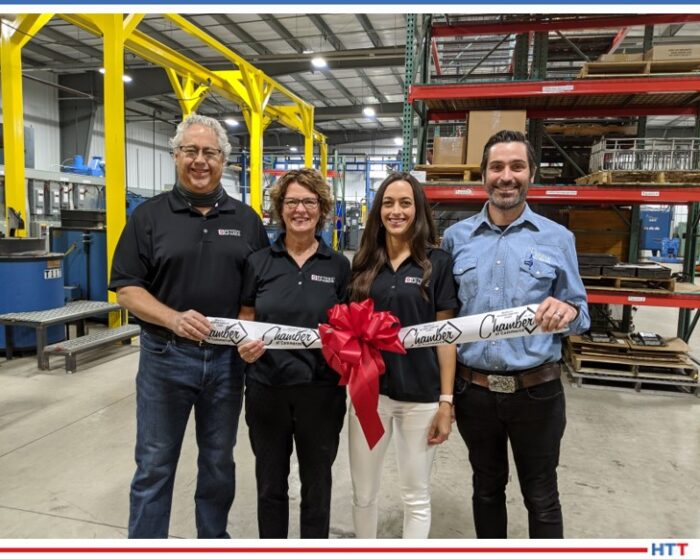
Ribbon Cutting with the Owners: Doug and Jackie Peters, Diana Wilkosz (VP), and Andy Wilkosz (President)
(photo source: Peters’ Heat Treating, Inc.)

In the heat treat world, we’ve seen companies, like Peters’ Heat Treating and Nitrex, celebrating plant expansions, opening new facilities and breaking ground to expand existing ones. Jason Orosz, president of Nitrex Heat Treating Services (HTS), illuminates that there is a backstory to the titillating headlines: “[many] recently announced expansion plans… were being formulated well before COVID-19 hit, and are based on assumptions about future business levels for 2021, 2022, 2023, and so on.” He goes on to recognize that, “for many industries, this year’s contraction will be seen as more of a temporary, but severe, loss of business than a permanent reduction.”

Still, what does this trend of expansion in the automotive industry in North America mean?

Dr. Chris Kuehl
IHEA Correspondent
Managing Director at Armanda Corporate Intelligence

Dr. Chris Kuehl, managing director at Armada Corporate Intelligence and IHEA’s executive economic summaries author, indicates that one must consider existing circumstances before one can understand the transition. For instance, setting up production sites abroad, Kuehl notes, typically has lower production costs, more than simply lower wages. In certain locations, one does not adhere to the same magnitude of regulations and restrictions that are implemented in the U.S. Additionally, access to raw materials is priority, and “setting up shop” closer to those foreign resources has helped to diminish production costs in the past. Lastly, Kuehl points out that thoughtful location of production centers abroad can open up new market opportunities for companies.

Looking at the current rise in production centers in the U.S. may mean three things, says Kuehl. First, the role of technology in capital distribution: “Technology and robotics [have] reduced the importance of cheap labor. The company using machines can worry about other factors. Now, they can think more about transportation costs and access to their market.”

Second, “working overseas is harder now than it was,” Kuehl comments. In  previous years, more countries have engaged in protectionism, and the trade wars of last year did not make life any easier. Now, COVID-19 is just another blow to international supply chains, having “stranded some 40% of global cargo and basically crushed the whole concept of JIT [just-in-time production system].”

Jason Orosz
President
Nitrex Heat Treating Services

This current disruption in the economy cannot be minimized. Orosz states that the current economic climate has impacted how capital is deployed, and can occur in construction being delayed, or perhaps firms holding their cash for any future, COVID-19-related disturbances.

And third: the new trend of “mass customization.” Instead of needing mass quantities of products being made cheaply — which drove the practice of “distance sourcing” — Kuehl highlights that the present “consumer wants infinite variety and specialization,” which, as it were “requires manufacturers be close to that market to understand what is needed and when.”

This trend of bringing supply-chains closer to home is cause for hope, though. “[I] think companies,” comments Orosz, “are optimistic that, going forward, an increasing portion of the supply chain for American multinationals will be U.S.-based vs. what may have been seen over the past few decades. If this trend proves true, it will certainly trickle down into the local industrial heating sector.”

[blockquote author=”Jason Orosz, President of Nitrex Heat Treating Systems” style=”1″]”Over the long term, expansion plans for stable, forward thinking manufacturing companies will proceed mostly unchanged. Of course, there are notable exceptions… but I think situations like that are the exception, not the rule.”[/blockquote]

From left to right : Groundbreaking with Tom Cooper (Vice President of Business Development), Bill Walter (Facility Manager), and Raja Gumber (Senior Account Manager)

Considering present events, Orosz notes that “over the long term, expansion plans for stable, forward thinking manufacturing companies will proceed mostly unchanged. Of course, there are notable exceptions like the passenger aerospace industry whose supply chain will be impacted for a number of years, but I think situations like that are the exception, not the rule.”

“Our expansion in Aurora is on track,” Orosz continues, as an anecdote to his point, “and we expect it to be operational mid-2021. Our main goals are to increase our overall production capacity and install the latest in new technology to ensure that the services we can offer our customers are on the leading edge of what’s possible metallurgically.”

Hope is the often idealized maxim of many societies: “Hope is the thing with feathers,” “we hope in the things unseen,” “our greatest glory is not in never falling, but in rising every time we fall.” But in times of crisis, how many of us choose to do the hard and essential thing: hope?

Looking Ahead: Industry Expansion in Uncertain Climate Read More »

Heat Treating Short Cut, Or Just a Bad Idea?

Source: Ipsen, The Harold

Jim Grann, Technical Director, Ipsen (photo source: www.ipsenharold.com)

We all like to make savvy commercial decisions, in fact, Heat Treat Today’s 101 Heat Treat Tips on page 20 of this digital magazine is a great example of  tips that can save you time and money. But will it pay off to use your conventional vacuum furnace for aluminum brazing?

Questions involving safety, effectiveness, and quality might come to mind with this proposal. Before implementing such a strategy, head over to Heat Treat Today’s best of the web Technical Tuesday article by Jim Grann, technical director at Ipsen. He tackles the components of aluminum brazing versus the capabilities of conventional vacuum furnace as well as detailing some of risks that can happen if you do try to use your conventional vacuum furnace for aluminum brazing.

An excerpt: “By nature, vapor pressure aids in the depletion of magnesium and parent aluminum alloys in high vacuum, depositing magnesium onto the hot zone and into the shielding… Proper vacuum aluminum brazing requires special components that standard vacuum furnaces generally do not have, including…”

Read more: “Can I Use My Conventional Vacuum furnace for Aluminum Brazing?


(photo source: www.ipsenherald.com)


Heat Treating Short Cut, Or Just a Bad Idea? Read More »

15 Quick Heat Treat News Chatter Items to Keep You Current

Heat Treat Today offers News Chatter, a feature highlighting representative moves, transactions, and kudos from around the industry.

Equipment Chatter

  1. Vacuum and Atmosphere Services (VAS) Ltd., located in the UK, sold a refurbished Ipsen VVFC 60×60.
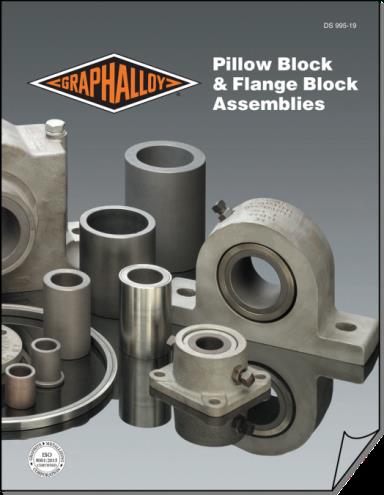
  2. Graphalloy announces their new Graphalloy® Pillow Block and Flange Block Catalog for high temperature applications.
  3. Heat Treating Services Unlimited, Inc. (HTSU) deployed C3 Data technology to heat treat customers across the United States.

Kyle Favors, President of Heat Treat Services Unlimited, Inc.

Graphalloy® Pillow Block and Flange Block Catalog


Personnel Chatter

  1. Alder Moldenhauer, President of Vectorr Industries, an outside sales representative to AFC-Holcroft

    AFC-Holcroft announced the addition of Vectorr Industries to their outside sales representative network. Located in Buffalo, New York, Vectorr Industries will support AFC-Holcroft customers within Western New York, Oregon, Washington, and Canada (excluding Ontario). Adler Moldenhauer is president of the company.

  2. Tom Hart returned to SECO/Vacuum to Product Manager, Vacuum Furnaces, having previously worked at the team as a sales engineer.
  3. Super Systems Inc. announced the movement within the company: Jim Oakes from Vice President of Business Development to President; Bob Fincken to Vice President of Sales for North America; and Steve Thompson, Super Systems President, is moving to the position of Chief Executive Officer (CEO).
  4. Andy Martin joins Sales Team at Graphite Metallizing and will be responsible for Australia and New Zealand markets.
  5. Tom Hart, Product Manager, SECO/VACUUM

    Nitrex welcomes Ali Emre Akgunes as its new manufacturer representative in Romania and Turkey. Akgunes brings decades of experience in sales and business development to his new role at Nitrex, where he will lead sales initiatives and guide new business growth for Nitrex and member companies G-M Enterprises and UPC-Marathon.

  6. Solar Manufacturing announced that Aaron Ackerman of Met-Pro, Inc. will assume the role of Sales Representative for Michigan.
  7. Hubbard-Hall Inc. announced the promotion of Ted Saltzman to Business Development Manager and the hiring of Andre Depew as Product Manager of Metal Coloring.


Jim Oakes, President, Super Systems, Inc.

Steve Thompson, CEO of Super Systems, Inc.

Bob Finken, Vice President of Sales for North America, Super Systems, Inc.


Andy Martin joined Sales Team at Graphite Metallizing

Mr. Ali Emre Akgunes, Nitrex's new manufacturer representative in Romania and Turkey

Aaron Ackerman, Met-Pro, Inc. to assume the role of Sales Representative for Michigan on behalf of Solar Manufacturing

Ted Saltzman, Business Development Manager, Hubbard-Hall

Andre Depew, Product Manager of Metal Coloring, Hubbard-Hall


Company Chatter

  1. Peters’ Heat Treating grows its plant operation, moving its headquarters into a newly expanded Meadville, Pennsylvania facility. Read more.
  2. Nitrex Heat Treating Services continues its expansion program at their Aurora, Illinois commercial heat treat facility, located just west of Chicago. Read more.
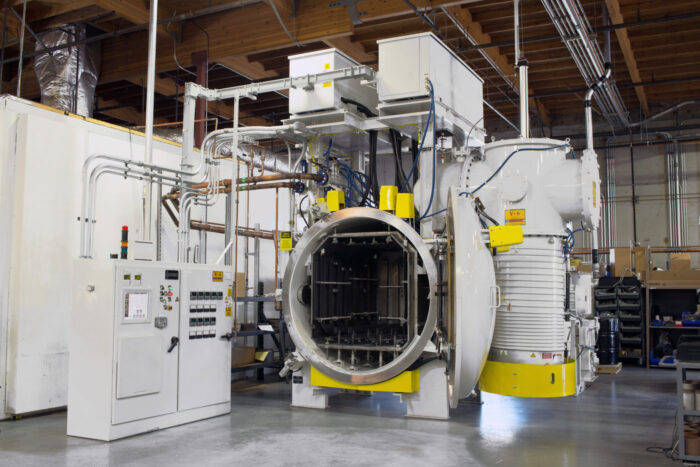
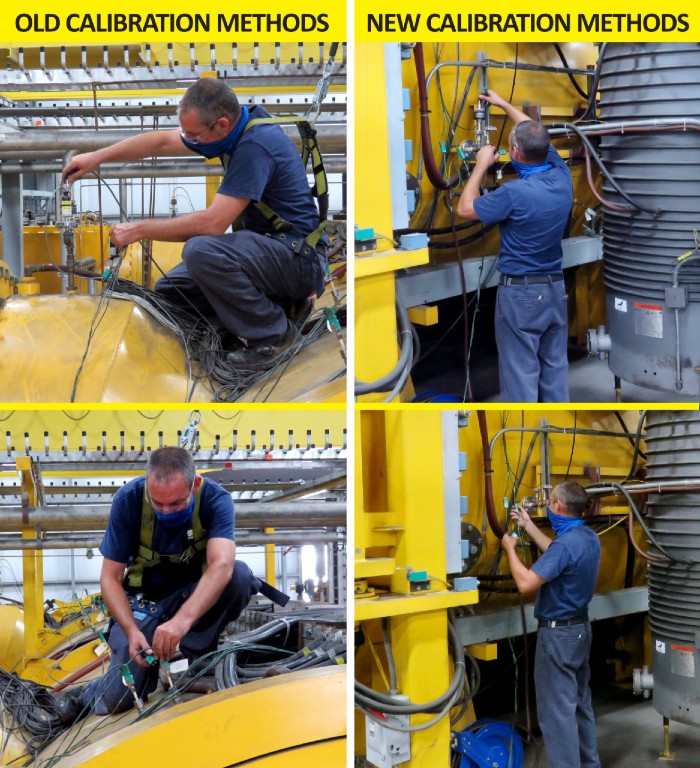
  3. Solar Atmospheres reaffirms their commitment to safety with new safety features, particularly for calibrations, being implemented to all existing furnaces.
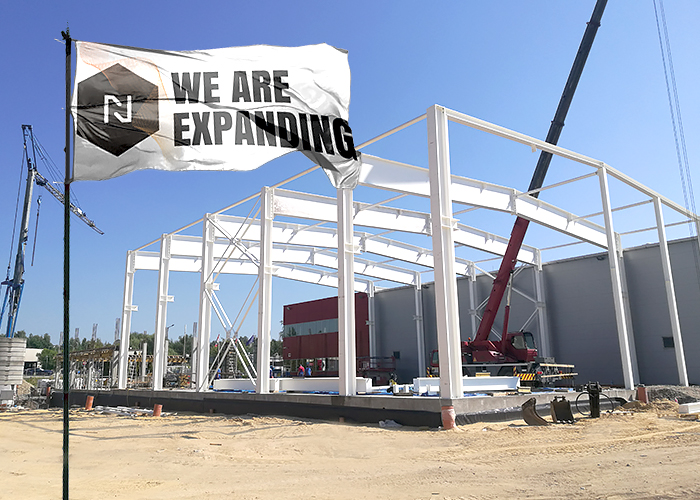
  4. Nitrex announces that they are in Phase II of the Polish facility expansion, indicating that they are on schedule with the foundation complete and framing underway. This expansion will add 21,500 square feet (over 2000 m2) of new space to the existing building, which will double production capacity and support future growth. The expansion project is expected to be complete in Q1 2021.
  5. Kittyhawk Products OR LLC completed the installation of another hot isostatic press with a working zone of 46” x 100".

Ribbon Cutting with the Owners: Doug and Jackie Peters, Diana Wilkosz (VP), and Andy Wilkosz (President)
(photo source: Peters' Heat Treating, Inc.)

Solar Atmospheres reaffirms their commitment to safety.

Nitrex's Polish Facility expands

Kitty Hawk Image 1


Kittyhawk Image 2


Kudos Chatter

  1. The US Air Force and Boeing X-37B autonomous spaceplane has won the Robert J. Collier Trophy for the greatest American achievements in aeronautics and astronautics of 2019.
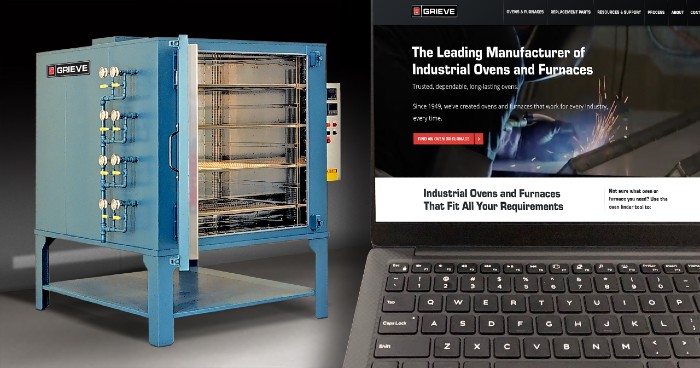
  2. The Grieve Corporation launched an updated website featuring a user-friendly catalogue and ordering system among other new features and enhancements to existing capabilities.

US Air Force and Boeing X-37B autonomous spaceplane won the Robert J. Collier Trophy.

The Grieve Corporation updated its website.


Heat Treat Today is pleased to join in the announcements of growth and achievement throughout the industry by highlighting them here on our News Chatter page. Please send any information you feel may be of interest to manufacturers with in-house heat treat departments especially in the aerospace, automotive, medical, and energy sectors to editor@heattreattoday.com

15 Quick Heat Treat News Chatter Items to Keep You Current Read More »

Heat Treat TV: Solar Atmospheres

Heat Treat TV pulls the best heat treat videos from the web for your viewing, and today Heat Treat TV highlights Solar Atmospheres.

As a commercial heat treater, Solar Atmospheres is dedicated to providing vacuum heat treating and brazing services of the highest possible quality and meeting the expectations of their customers. They seek to educate their customers and will design a heat treating process that fits their needs.

This video demonstrates what a commercial heat treater considers when processing parts, including explaining why a heat treater chooses some methods over others. Topics mentioned in the presentation are brazing, carburizing, and nitriding as well as post-heat treat processing, vacuum brazing, vacuum carburizing, and vacuum gas nitriding.

Click here for more information on Solar Atmospheres.

If you have a video you’d like included on Heat Treat TV, please send an email to editor@HeatTreatToday.com and include a link to the video.

Heat Treat TV: Solar Atmospheres Read More »

Heat Treat TV: Press-and-Sinter Powder Metallurgy

Today’s story is an industry update coinciding with an excellent video resource describing conventional press and sintering with PM. Heat Treat TV seeks to provide helpful content on the latest trends in the industry and keep you current with what is happening between overlapping technologies. Read on to see how this great video relates to current trends.

If you have a video you’d like included on Heat Treat TV, please send an email to editor@HeatTreatToday.com and include a link to the video.


There has been a lot of talk in the industry about how sintering and powder metallurgy (PM) have been making headway in the world of heat treat. From how to use 3D printed green parts to understanding the step-by-step protocols of vacuum sintering, innovative heat treaters are envisioning new horizons at their fingertips, literally, by using the myriad of tools and skills at their disposal.

One of the most prominent figures, who is on the cutting edge of sintering, PM, and 3D printing in the North American market, is Harb Nayar, president and founder of TAT Technologies LLC. He spoke about some of the changes in these overlapping applications of 3D printing, sintering, PM, and additive manufacturing (AM). “Now, that ‘most probability low alloy steel,’ with even a lower amount of alloying, is going to be more conducive to faster quenching. In powder metallurgy – gas quenching is already used after sintering: they call it sinter hardening. In my opinion, heat treat will have to somehow modify its practices to deal with if the same forged product is really made from micro ingots as opposed to a macro ingot.”

This video highlights the questions of “what” and “how” of conventional press-and-sinter powder metallurgy. The creators of this excellent presentation are the Metal Powder Industries Federation’s Industry Development Board and John Engquist, FAPMI (past president of the Center for Powder Metallurgy Technology). Giving the very basics, they share that PM is just metal powder, molded by high pressure in a closed die, and that molded 3D green compacts are then sintered to produce parts in the various industries which service the automotive, recreation, agricultural, hydraulics, and other markets. Watch the video to see how this process breaks down, and what factors to consider (like size) when planning your PM use.

Additionally, this video is now available as the introduction video to Heat Treat Today’s Sintering & Powder Metallurgy page where even more new and technological articles and videos are available.

Heat Treat TV: Press-and-Sinter Powder Metallurgy Read More »

GALLOS Receives Custom Engineered Continuous Atmosphere Heat Treating System

Gallos Metal Solutions Inc., Milwaukee, WI (GALLOS) recently received a high capacity mesh belt heat treatment furnace line. The company specializes in continuous mesh belt atmosphere heat treatment, and this new line will be used primarily for demanding processing including carbonitriding and carburizing, while still allowing for neutral heat treatment with a production capacity up to 4000 lbs/hr.

This furnace line is part of GALLOS’ massive plant expansion and modernization project, which has more than doubled the existing plant square footage, increased capacity, and added automation. The benefits of the system -- including increased usable hearth area for high-volume processing while running products requiring carbon diffusion and lighter belt loading -- are aligned to the expansion-oriented plant plans.

Custom Engineered Continuous Atmosphere Heat Treating System (photo source: Can-Eng.com)

The supplier, Can-Eng Furnaces International, Ltd. (CAN-ENG), lists some the additional features of this furnace: a computerized controlled automated bin dumping and vibratory part feeder system, dunk and spray pre-washer, protective atmosphere controlled mesh belt hardening system, oil quench, dunk and spray post wash system, forced recirculation temper furnace, in-line post cooling system, and CAN-ENG’s PETTM Level 2 SCADA system.

GALLOS is a family-owned commercial heat treating company which is involved in the automotive, agricultural, aerospace, and medical industries.

(photo source: Chad Stembrid on unsplash.com)

(photo source: Lucas Vasques on unsplash.com)


GALLOS Receives Custom Engineered Continuous Atmosphere Heat Treating System Read More »

Best of Both Worlds in Polymer Quenching

Jerry Dwyer, Marketing Manager, Hubbard-Hall

"The success of most heat treating processes comes down to the battle between time v. temperature..." In this Heat Treat Today Technical Tuesday article, Jerry Dwyer of Hubbard-Hall describes innovative heat treating practices with organic polymer quenchants.

If you are interested in learning about what these polymer quenchants can do, and want to know specifically how a high-performing polymer reacts in the quenching process, read on for the details from a specific case study. Between time and temperature, you may just get the best of both worlds.


The success of most heat treating processes comes down to the battle between time vs. temperature, better known as isothermal transformation. The delicate balance between how long to quench a part and at what temperature often comes down to which media is being used to do the quenching.

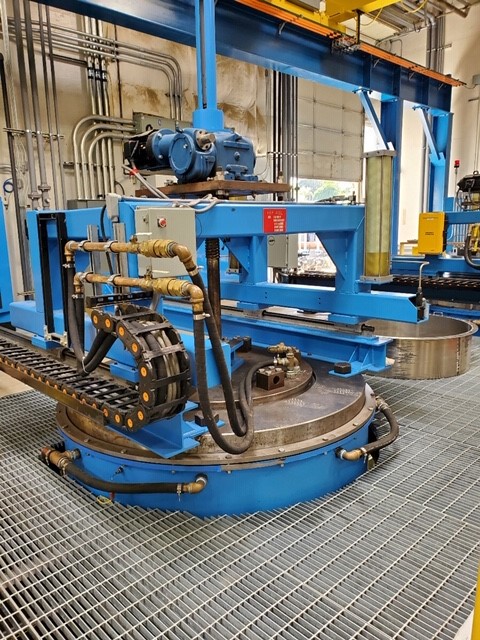
Image of a clean machine

For decades, water and oil have been the go-to solution for quenching heat-treated parts in order to harden them to proper specifications. Of the two, water has the highest cooling rates (between 2,000°F/sec to 10,000°F/sec), which often leads to high distortion rates in parts and more cracking because of the high residual stresses. Oil-based solutions have been used extensively in the metalworking industry on larger, thicker parts because it has basically three cooling speeds: slow for lower hardness and less distortion, medium for when moderate to high hardenability is needed, and high for carburized and carbo-nitriding part applications.

But with increasing concern for both environmental disposal and safety issues, many heat treaters have been searching for an alternative quenching technology that meets their needs. With water and oil so prevalent, industry researchers developed a hybrid of the two in order to come up with a series of polymer quenchants that serve numerous functions and also reduce some concerns.

Development of Polymer Quenchants

Image of polymer

The polymer quenchants contain organic inhibitors and other additives that produce concentrates, which are diluted for use. The advantage of polymer solutions is that they have widely variant properties, which give a heat treater flexibility in how they use the product compared to just water or oil. They are also non-flammable, which eliminates the need for operators to install needed fire suppressant equipment that might be needed with other quenching methods.

There are several different types of organic polymer quenchants, including polyalkylene glycol (PAG), sodium polyacrylate (ACR), polyvinyl pyrrolidone (PVP), and polyethyl oxazoline (PEO).

The polyalkylene glycol (PAG) polymer is one of the most widely used in the heat treating industry and provides an ideal uniform cooling for minimizing distortion and preventing crack formation during hardening machine components and tools. Scott Papst, vice president of specialty sales and business development at Hubbard-Hall, says that many of their customers have inquired about adding a polymer quenching alternative to their process.

“The technology of the polymer process has grown tremendously over the years, and we wanted to make sure we had that technology in their hands,” Papst says.

Partnership with Idemitsu Grows Offerings

Hubbard-Hall, which has a line of several heat-transfer and heat-treat salts for annealing, martempering, isothermal quenching and other applications, began to look for a partner company to supply its customers with polymer quenchants and set their sights on Idemitsu Kosan Co., a Japanese energy company that owns and operates oil platforms and refineries, and manufactures numerous petroleum, oils and petrochemical products.

“We found Idemitsu to be a wonderful partner which has a tremendous focus on advanced technology, especially when it came to heat treating,” Papst says. “We were very happy when we could put together a partnership to offer their polymer quenches to the U.S. market.”

Polymer quenches are used primarily in what is called an “induction hardening operation.” An electric current is put through a copper coil to create a magnetic flux that heats up the target section of the part. Induction hardening uses a shorter time to harden the targeted section of the part instead of using an atmosphere furnace to heat treat the entire part.

Where salt quenches are used to heat treat an entire part, the polymer quenches can be targeted to certain areas of a parts, such as gear teeth. Greg Steiger, a senior key account manager for quench products at Idemitsu, says polymer quenches work great on parts like gears because it treats the most vital sections of the part.

“A gear has to be hardened because it needs to withstand a lot of wear-and-tear; but the teeth take the brunt of the load when the part is in use,” Steiger says. “The teeth of the gear have to be harder than the rest of the part; if the entire gear was as a hard as just the teeth, then that part would fracture and shatter.”

Benefits of Inverse Solubility

Polyalkylene glycols utilize inverse solubility in water; while they are completely soluble at room temperature, they become insoluble at higher temperatures from 140°F to 195°F, depending upon chemical structure. Inverse solubility controls the cooling and quenching mechanism. The ability to vary the concentration of a polymer quench provides great flexibility of the cooling rate. The polymer separates from water as an insoluble phase, and the ensuing deposited layer becomes as an insulator that determines the rate of heat extraction from the quenched part.

“The polymer slows the cooling compared to water, and controls the heat treating process” Steiger says. “The transformation rate is much more controllable, which makes the heat treating more tailorable to the part.”

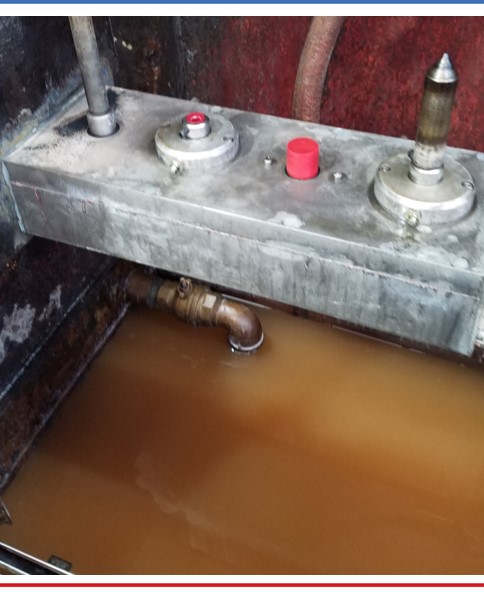
Image with the door closed

Image of a door before process

Idemitsu’s high-performance polymer quenchant is its Daphne Plastic Quench HF, which has excellent oxidation stability performance that protects the integrity of the quenchant even after contamination by metalworking fluids. Steiger says Daphne Plastic Quench HF virtually eliminates the formation of sticky films common in most quenching polymers, which reducing the amount of drag out and thus reducing consumption.

“It is formulated to provide superior biocidal protection, preventing bacterial contamination in the recirculating induction hardening systems,” he says. “It also offers outstanding rust and corrosion prevention to better protect quenched parts. It is highly resistant to degradation.”

Lower Viscosity, Improved Efficiency

The Daphne Plastic Quench HF has a viscosity (at 104°F/40°C) of 29.5 mm2/s, which bests its two top competitors at 536.1 and 301.7. The lower viscosity improves handling and production efficiency, and also reduces or eliminates sticky build-up on machines, gauges, fixtures and parts.

The product also has excellent rust preventative properties and is thermally stable. In fact, Steiger says, testing with a Tier I parts supplier who was having rust issues with a competitor’s product showed that Daphne Plastic Quench HF has stable cooling performance after six months of use, and they only recharged their system twice in a year, reducing consumption by over 66%.

Further, when a global automotive OEM switched to Daphne Plastic Quench HF from a competitor, the result was better separation from tramp oils. The previous product was causing unstable cooling performance that resulted in cracks on the parts; it turns out the OEM was dumping machines and recharging every three months because tramp oil contamination become more than 5%.

“The actual quench oil usage by the OEM was reduced by up to 75% after just four months, and their sump life was much longer at more than six months,” Steiger says. “Lower concentrate usage and a significant reduction in residue directly correlates to improved productivity, reduced maintenance costs and lower disposal costs.”


About the Author: Jerry Dwyer is Hubbard-Hall’s market manager for product groups pertaining to heat treating, phosphates and black oxide. To learn more or get in touch, please visit Hubbard-Hall's website.

(photo source: Bill Oxford on unsplash.com)


Best of Both Worlds in Polymer Quenching Read More »