Heat TreatToday would like to wish everyone a peaceful Memorial Day. The holiday, formerly known as Decoration Day, gives us all a time to reflect with gratefulness on those who have served our country well.
Our offices will be closed on Monday, May 29; and we will resume Tuesday morning, May 30. We grieve with those who have lost a loved one in the service of the U.S. military, and we look forward with joy to the future under the care of those who protect us. Thank you to those who have served.
If you, or someone you know, is a veteran and is also in the heat treat industry, we would like to know a little more about you. Please fill out the Heat TreatVeteranssubmission form to share the information about time in service. Thank you.
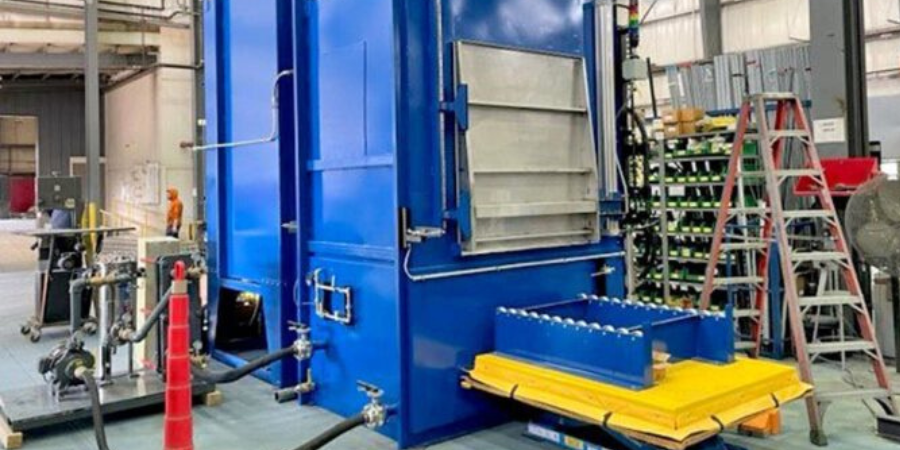
A new, fully automated quenching system is nearing completion and will be installed at C/A Design’s heat treat facility in Exeter, NH, which serves the aerospace and defense industry. It has been custom designed and developed specifically to service aluminum brazing applications, expanding capabilities and services.
The system, from Wakefield Thermal, adheres to the guidelines set by both AMS2750 and AMS2770, ensuring proper heat treatment for aluminum brazements and adherence to critical specifications. The custom solution for C/A Design includes temperature and quenching control technology.
Find heat treating products and services when you search on Heat Treat Buyers Guide.com
If you are considering making the leap to laser heat treat, buckle up. Nic Willis, metallurgist/heat treat supervisor of Emerson Professional Tools — RIDGID® TOOLS, and recipient of Heat TreatToday's 40 Under 40 recognition in 2020, shares how he led the company to look at laser hardening for some of their induction heat treated projects. It’s a fascinating story that includes the decision-making process, the transition itself, and the continued implementation of this technology.
Below, you can watch the video, listen to the podcast by clicking on the audio play button, or read an edited transcript.
The following transcript has been edited for your reading enjoyment.
Doug Glenn: We’ve interviewed you before, and it’s good to have you back. You are one of our 40 Under 40 Class of 2020 winners. Give a brief history about yourself.
Class of 2020, 40 Under 40 Source: Heat Treat Today
Contact us with your Reader Feedback!
Nic Willis: I’ve been in the heat treat world for about 5 years now. I’m the metallurgist and heat treat supervisor at RIDGID® TOOLS in Elyria, Ohio. We have a captive heat treating department where we specialize in neutral hardening, carburizing, carbonitriding, salt tempering. We do some induction hardening, vacuum hardening, and flame hardening, as well. There are a lot of heat treating applications at RIDGID, and it’s pretty exciting.
The Project: Bringing Induction Hardening In-House (02:56)
Doug Glenn: RIDGID is a manufacturer with in-house heat treat. You do some outsourcing, but for the most part, you do your own heat treating.
Let’s talk a bit about your recent decision to change from one type of heat treating over to another type of heat treating.
Nic Willis: This particular project started when I was tasked with finding a way to bring an outsourced process in-house to our facility. That process was the induction hardening of a particular product line. I began by reaching out to different machine builders of induction hardening equipment.
One thing I noticed when I started to get some quotes was how much the tooling cost was going to be and what percentage of the project that was going to account for. Being somewhat new to induction hardening at the time, I was really taken aback.
We had also seen some quality issues with cracking of these components. I just happened to listen to an episode of Heat TreatRadio that had to do with laser hardening. After I got done listening to the podcast, I reached out to Laser Hard, Inc. We started a conversation about learning more about laser hardening and if it was a fit for this particular product line.
Did you consider any other possibilities besides bringing an induction process in or laser?
Nic Willis: It was pretty much between those two technologies. These components, like a lot of parts that are going to make use of either of these two technologies, have one area we want to keep ductile and then another (contact) area we want to have wear resistance. These particular components will get furnace-hardened first, and then they go out for the selective hardening process.
Induction vs. Laser Heat Treating (06:48)
Doug Glenn: What did the rest of the process look like? How long did it take, who was involved, what were some of the key questions that needed to be answered before a final decision could be made?
Nic Willis: For this particular application, it just so happened that the specifications that we required were a good fit for the laser process, namely case depth. One of the limitations of laser hardening versus induction is you’re not able to get as deep of a case with laser as you can with induction. For these components, that wasn’t really a factor. So, there was some initial vetting that went on.
After that, we sent some sample parts to Laser Hard that they would have processed. It took some testing on that end to get their parameters set up, and they cut up a lot of parts to check the case depth. Once we got that dialed in, the parts would’ve come back here to RIDGID where we did some life testing. We have a test apparatus that we use that basically cycles these parts to failure. From there, it turned out that these met or exceeded the life of the induction hardened components. At that point, we would have updated the drawings and approved laser hardening as a substitute process.
The Cost (08:34)
"[The project] needs to be somewhat, or at least, cost neutral." Source: Unsplash.com/Alexander MillsDoug Glenn: Do you have any sense or was there any calculation done of what you anticipated the cost savings would be?
Nic Willis: I can’t get into any specifics; but in order to get any type of substitution like this off the ground, it needs to be somewhat, or at least, cost neutral.
Doug Glenn: How about the maintenance of the equipment — laser versus induction?
Nic Willis: Like I mentioned before, the maintenance of the coils themselves is something that you don’t have to account for with laser. Any type of specialized tooling for laser is going to be on the work-holding end of the spectrum which can be adapted after the fact to improve cycle times and things like that.
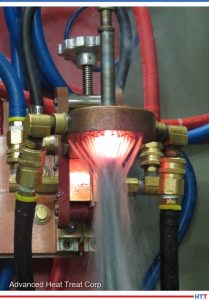
Laser does not make use of a quenchant. The parts self-quench, meaning that the core material doesn’t get heated up and is cool enough to quench out the heated area. Anybody that’s familiar with induction knows that the quenching process can be kind of messy and needs to be contained.
The Winner: Laser Heat Treating (10:30)
Doug Glenn: Those are all good additional cost savings items. Laser won the day on this one. Have there been other parts that you’ve looked at potentially going to laser but decided to not do it?
Nic Willis: Yes. In Elyria, the parts that we make are our pressing tools to make our pipe wrenches and threading machines. With the threading machines, there is a lot of gearing. We’ve looked at some of our gears that we flame hardened, and they’re a lot bigger. It’s just not a good fit with laser. You would have to go tooth by tooth, which is going to really increase your cycle time. In those parts, you run into that issue with case step requirement.
Doug Glenn: Can you tell us what laser hardening is?
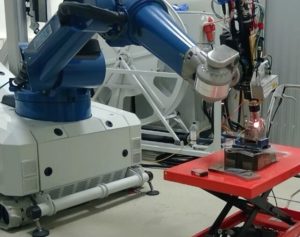
Nic Willis: It’s a form of selective hardening where you want some of the part to have a hard case for wear resistance. The rest of the part keeps its ductility. In this case, you’re using a laser — rather than an induction field or a flame — to heat up this specific area that you want to harden.
Doug Glenn: You mentioned “part holding.” I don’t want you to give away more than you can and want to respect all the propriety measures. Is this something where you’re spinning a part and laser, so you’re just actually lasering a specific area?
Nic Willis: Correct.
Doug Glenn: I know with flame hardening they’re actually spinning the part as it goes — or they can spin the part. Is laser something you can do that with?
Nic Willis: Yes, absolutely. But then you’re starting to talk about additional costs to build a specialized machine to do the hardening process. For me, I wanted something “off the shelf,” for lack of a better term. I didn’t want a super specialized piece of equipment.
Doug Glenn: In the decision-making process itself, did you and the team require to see laser hardening be done other places or did you work basically just with Laser Hard and make sure they could prove the process? How much of a pioneer were you willing to be? Were you willing to be one of the first people to ever do laser heat treating?
"[W]e sent some sample parts to Laser Hard that they would have processed." Source: Laser HardNic Willis: There is a company that is pretty close to Laser Hard, and some of their products are laser hardened (it’s not the same but it’s a similar application). I was aware of them. Laser hardening has been around for a long time. I think what’s made it more attractive nowadays is that the laser equipment itself has become more affordable. It’s not a new process, by any means. I would assume that it’s been around since lasers have been around.
Success with Laser Heat Treating for RIDGID® (16:40)
Doug Glenn: You’ve been through the decision-making process, and you’ve got it up and running. I assume you’re happy with what’s going on now. You’ve got it down now, and it’s a relatively smooth process?
Nic Willis: Absolutely. We’re looking at bringing the process in-house in the next few years. I’d like to say that it’s a dream of mine to see it done here on site in Elyria.
Doug Glenn: Looking back on the whole process of moving from wanting to bring it in-house, to deciding to go with laser — is there anything you would’ve done differently now, knowing what you know?
Nic Willis: That’s a good question. I think one thing that I really learned through the process was anytime you’re switching from a tried-and-true process to something new, whatever your reasons may be, it takes some time to get people on board. [blocktext align="left"]I think one thing that I really learned through the process was anytime you’re switching from a tried-and-true process to something new, whatever your reasons may be, it takes some time to get people on board.[/blocktext]
Like I mentioned earlier, we were setting the parameters with the laser, doing the metallurgical testing, doing the life testing — it wasn’t a bang, bang, bang type thing. More and more people were brought into the discussion. The commercial side has to be addressed, as well. There are always some question marks when you’re moving from one supplier to another, and that took some time.
I don’t know if I’d do anything different, but I’d tell myself to be a little more patient, given the opportunity.
Doug Glenn: That’s probably the great lesson, honestly. It does take patience and a little perseverance because you’ve got to prove the process. You’ve got to prove it, not only metallurgically, like you said, but you’ve got to prove it commercially.
Nic Willis: From the conceptual stage to when we actually were putting parts into the field, it was probably about two years.
Doug Glenn: When you first started, how long did you think it was going to take?
Nic Willis: I thought it would be relatively quick!
Doug Glenn: Right. A 6-month process turns into 2 years, easily, huh?
Nic Willis: Exactly.
Doug Glenn: Are there any other thoughts regarding the whole process of that transition or laser heat treating or anything that you’d like to share?
Nic Willis: A challenge that I’ve run into is you see success with one product line, and you want to see how far you can take it and expand it to these other product lines. We talked about how sometimes it’s not a good fit. I mentioned that with some of the gears and larger cylindrical-type components. I think induction definitely still has its place.
I’m working on some projects to bring some of our induction parts in-house. In these cases, based on case depth, part geometry, and things like that, induction, in some cases, is a better fit than laser. Although in this particular case, it made sense to switch from induction to laser, it’s not always a one-for-one type switch.
Doug Glenn: That’s excellent advice; you’ve got to take each part in its turn and figure out which is the best process for it.
About the expert:
Nicolas Willis is metallurgist/heat treat supervisor at Emerson Professional Tools — RIDGID® TOOLS. Nic is the metallurgical authority for all Emerson Professional Tool operations worldwide. He has been leading the modernization of the heat treatment department throughout the company, upgrading capital equipment and developing new processes to improve safety, increase throughput, and improve quality of RIDGID and Greenlee brand products. He was elected to the position of secretary of the Cleveland ASM chapter in 2020 and has served on the Research Committee of the Heat Treat Society.
An East Troy, WI, heat treat systems manufacturer announced the shipment of an electrically heated horizontal quench system to a manufacturer of products for the automotive industry, specifically for aluminum solution treatment.
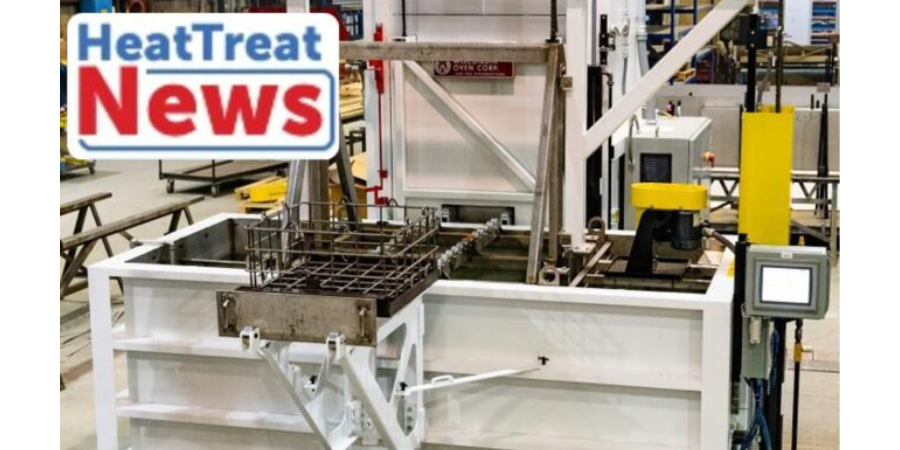
Wisconsin Oven manufactured the system with a maximum temperature of 1,200°F and interior chamber dimensions of 2' x 2' x 2'. The system has the capacity to heat 450 pounds of aluminum parts plus the steel basket within 60 minutes. Temperature uniformity of +/- 10°F at set points 850°F and 1,050°F was verified with a nine point profile test prior to shipment.
This horizontal quench system provides a 15-second quench delay from when the door begins to open until the load is fully submerged in the tank. The quench is manual, where the operator pulls the load out of the oven and onto the quench elevator using a hook. "This horizontal quench system was designed with a manual quench which is a cost-effective option and still ensures there are no improperly processed parts," commented Doug Christiansen, senior application engineer at Wisconsin Oven. "The system also features foldable unload wheel rails to save on floor space.”
Find heat treating products and services when you search on Heat Treat Buyers Guide.com
In previous months, this series has explored the geometry of a tube, why radiant tubes matter, what happens inside the tube, and radiant tube control systems. For the first three installments, check out Heat Treat Today’s digital editions in November 2022, December 2022, and February 2023. For the month of May, we will continue our discussion of different modes of control for radiant tube burners.
This column is a Combustion Corner feature written by John Clarke, technical director at Helios Electric Corporation, and appeared in Heat Treat Today’s May 2023 Sustainable Heat Treat Technologiesprint edition.
If you have suggestions for radiant tube topics you’d like John to explore for future Technical Tuesdays, please email Bethany@heattreattoday.com.
John B. Clarke Technical Director Helios Electric Corporation Source: Helios Electric Corporation
High/low and on/off controls require different control strategies from a proportional mode of control. In all cases, we assume the temperature control will be provided by a proportional-integral-derivative loop (PID loop). The function can be provided by a stand-alone instrument or a PID function in a programmable or process controller. The PID algorithm looks not only at the temperature of the process as indicated by the control element (thermocouple or RTD) and compares it to the setpoint — but it also considers the offset and rate of change as well. When properly tuned, a PID control loop can provide control accurate enough to match the process (actual) temperature to the setpoint within a degree or two.
For the lay person, another way of describing a PID loop is to consider how a driver regulates the speed of his automobile. Assume you are driving and want to catch up with and follow the car ahead of you — to do so, you need to match that car’s speed and maintain a safe distance. What you don’t do is floor the automobile until you get to the desired following distance and then hit the brakes. What you do is first accelerate to a speed faster than the target car to close the gap, then you instinctively take your foot off the accelerator when you get close, slowing gradually until your speed and position are as you desire. In this example, you have considered your speed, how close you are to the car you are attempting to follow, and the rate at which you are closing the gap. A PID loop is nothing more than a mathematical model of these actions.
The PID control loop provides an output — the format can vary, but it is in essence a percent output. It is a percent of the maximum firing rate the system needs to provide to achieve and maintain the desired furnace temperature. This percent output can be translated directly into a proportional output for proportional control — where the firing rate is proportional to the loop’s output.
On/off or high/low controls require a different approach where a time proportioning output is provided in which the burner fires on and off on a fixed time cycle. In this mode of control, the PID loop’s output is multiplied by the cycle time to determine the on or high fire period and the on or high fire time is subtracted from the cycle time to determine the off or low fire period. Cycle times can run from as little as 30 seconds to as much as a few minutes. Obviously, the shorter the cycle time, the more responsive the control, but also the more wear on the control components. The cycle time should be as long as possible but still meet the needs of the process control.
Don’t confuse these pulses with other control methods that are marketed as pulse firing. When people speak of pulse firing, they often mean a pattern with alternate burners firing to provide greater temperature uniformity and heat transfer. This is a very interesting subject and the topic for another day.
Find heat treating products and services when you search on Heat Treat Buyers Guide.com
Heat Treat Today publishes eight print magazines a year and included in each is a letter from the publisher, Doug Glenn. This letter first appeared in Heat Treat Today's March 2023 Aerospace Heat Treating print edition.
Doug Glenn Publisher and Founder Heat Treat Today
Depending on where you live, “green” started to appear outside in March.
Contact us with your Reader Feedback!
Such was the case this March with Heat Treat Today. Our efforts were “greening up” around here as well. With the push for sustainability and environmental corporate responsibility, we decided to start the industry’s first and only “green” heat treat annual magazine edition and quarterly e newsletter. The Heat Treat Today team has been working on these items for several months now, but we are officially announcing them this month and encouraging you to watch for them both in May.
Whether you’ve been mandated to make your in-house heat treat operation more sustainable, or you want to do it simply because it’s the right thing to do, we’re here to help.
NEW Green Technologies in Heat Treat Annual Print Edition
Heat Treat Today's May print magazine will be the inaugural yearly focus on Green Technologies in North American heat treat. We’ll have articles and special editorial sections focused on sustainable technologies currently or soon-to-be available in the North American heat treat industry. This highly-focused issue will give industry suppliers a chance to shout loud and far about the technologies they have that will help you make your in-house heat treat operation more sustainable and productive. We anticipate topics such as:
Induction heating equipment
Electrical furnaces and ovens, including vacuum furnaces
High-efficiency gas-fired equipment
High-efficiency burners
Efficiency-maximizing control systems
Energy-saving insulating materials
Emission control or capture
Eco-friendly quench media
Economizing cooling systems
Industrial gas economizing systems
High-efficiency radiant tubes
High-efficiency heating elements
Potentially, there will be many other topics added to this list. There should be something for everyone who is interested in making their in-house heat treat operations, or commercial heat treat shop, more sustainable. I hope you look forward to receiving your copy and enjoying the content . . . in May!
NEW Quarterly Heat TreatGreen E-Newsletter
Sustainable technologies come into the market more than once a year, so, Heat Treat Today is launching a new quarterly e-newsletter this May that focuses on sustainable heat treat technologies for the North American marketplace. This e-newsletter, aptly named Heat Treat Green, will also focus on emerging and currently available sustainable technologies and products that will help your heat treat operations reduce environmental waste in a responsible manner. We anticipate that this e-newsletter will be deployed in the months of February, May, August, and November each year.
Do You Have a Green Story To Tell?
In both the annual magazine edition and the quarterly e-newsletter, we’d be interested in publishing your in-house heat treat sustainability story if you have one to tell. Our readers benefit from hearing what other manufacturers are doing to make their heat treat operations more sustainable. Many chief compliance officers or others in your organization responsible for promoting sustainable practices are typically quite interested in telling their sustainability stories. If that’s you or your company, we’d like to help you get the word out to the North American heat treat industry. Please contact our editors at editor@heattreattoday.com, and we’ll be sure to be in touch
Finally, if you’re a supplier to the North American heat treat industry and your product has a sustainability story to tell, you also should contact our editors: editor@heattreattoday.com.
Keep your eyes peeled for Heat Treat Green!
Find heat treating products and services when you search on Heat Treat Buyers Guide.com
In 2007, an indirectly heated roller hearth furnace with energy-efficient REKUMAT® burners was put into operation at a Schaeffler plant in Germany. These burners were serviced last fall in Renningen and adapted in order to be operated with both natural gas and H2 as fuel with high efficiency and lowest emissions. The successful commissioning with natural gas has already been carried out, and once the hydrogen infrastructure has been established, commissioning with H2 as fuel gas will proceed.
With this and other conversions as well as newly built projects, Schaeffler is demonstrating its comprehensive commitment to sustainability while investing in the long-term future of the respective plants. Wienstroth Wärmeprozesstechnik GmbH in building the plant and then servicing it recently helps with the adaptation to H2 as fuel. This conversion is possible for many existing plants with reasonable effort, without having to install new burners. Until the necessary hydrogen infrastructure is available, continued operation on natural gas or mixtures of natural gas and hydrogen is possible.
Find heat treating products and services when you search on Heat Treat Buyers Guide.com
Heat Treat Todayoffers News Chatter, a feature highlighting representative moves, transactions, and kudos from around the industry. Enjoy these 39 news bites that will help you stay up to date on all things heat treat.
Equipment Chatter
The precision forging manufacturer Jiangsu Pacific Precision Forging Company has placed an order with SMS group for a fully automatic MP 3150 eccentric closed-die forging press. Pacific Precision will be able to forge aluminum chassis components on a much larger scale. This new expansion provides Pacific Precision with access to the growing automotive market segment for more lightweight designs.
A commercial heat treater in Mexico purchased a third vacuum furnace from SECO/WARWICKGroup.
Ecocat India, a catalyst manufacturer, has ordered an advanced technology vacuum gas cooling furnace from SECO/WARWICK. The system will carry out brazing and annealing processes.
Several new CAB lines have been ordered from SECO/WARWICK to be delivered to manufacturers in China. Two companies specifically chose EV/CAB lines while another manufacturer purchased a CAB line.
SECO/WARWICK delivered two CAB lines and one universal chamber furnace for aluminum brazing to an automotive manufacturer in China. The systems will braze large-size coolers for vehicle batteries.
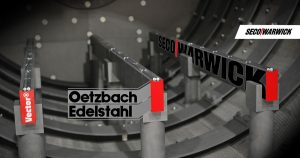
Oetzbach Edelstahl GmbH, a hardening plant, has purchased a third furnace from SECO/WARWICK.
A Swiss commercial heat treater ordered a brazing furnace to be used for nickel and silver from SECO/WARWICK.
Tenova LOI Thermprocess has completed the production optimization of a new Twin-Chamber Melting Furnace (TCF®) at E-Max Billets in Kerkrade, the Netherlands.
An Asian thread rolling die conglomerate selected a SECO/WARWICK vacuum furnace. The Vector® will be used for vacuum hardening and tempering fastener dies.
Vacuum furnace for heat treater in Mexico
SECO/WARWICK vacuum gas cooling furnace for Ecocat India
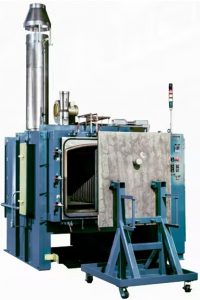
Box furnace for a manufacturer
Brazing furnaces for automotive manufacturer in China
3rd furnace for Oetzbach Edelstahl from SECO/WARWICK
SECO/WARWICK\’s brazing furnace for Swiss heat treater
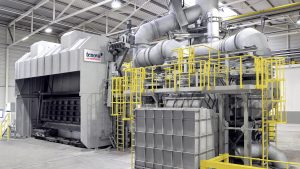
TCFR for aluminum scrap recycling
Heat treated flat thread rolling dies
Company and Personnel Chatter
Hubbard-Hall has expanded its product offering and customer resources by acquiring the assets of Torch Surface Technologies, a specialty chemical company based in Whitmore Lake, MI.
New simulation software is being launched at CENOS Simulation Software. The application portfolio expands with some new electromagnetic case software apps. The first apps will be launched in Q4 or a little later.
Solar Atmospheres of California announced it has been awarded the approval to process parts for Lockheed Martin (LMCO) owned Sikorsky. The Sikorsky approval adds to the existing LMCO process specifications held for vacuum heat treatment of titanium, nickel alloys, and stainless steel per AMS 2801, AMS 2774, AMS 2759/3, and others.
Nel Hydrogen US, a subsidiary of Nel, has entered into a joint development agreement with General Motors to help accelerate the industrialization of Nel’s proton exchange membrane (PEM) electrolyzer platform. The two companies are looking to enable more cost competitive sources of renewable hydrogen.
The Supervisory Board of thyssenkrupp AGextended the appointment of Oliver Burkhard by five years. Burkhard has been a member of the Essen-based group's Executive Board since February 2013, Thyssenkrupp AG director of Labor since April 2013, and additionally CEO of thyssenkrupp Marine Systems since May 2022.
Joe Coleman, cyber security officer of Bluestreak Consulting™, has earned his Cyber AB CMMC Certification as a Registered Practitioner (RP). CMMC is a U.S. Department of Defense (DoD) program that applies to Defense Industrial Base (DIB) contractors.
CG Thermal welcomes associate process engineer Signe Laundrup to the Process Systems Group. Laundrup is a 2021 chemical engineering graduate from the University of California, San Diego. Her background is in manufacturing and research and design.
Tata Steel signed a memorandum of understanding with SMSGroup to reduce carbon emissions at Tata’s integrated steel plants across India.
Two heat treat technology companies integrate: C3 Data’s real-time pyrometry compliance software enables digital uploading of certificate data of all TT Electronics.
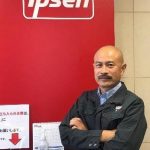
Ipsen Japan announced the addition of Mr. Masakazu Kanaka in the role of customer service director. Kanaka is responsible for the growth of all Ipsen Japan customer service business, which includes retrofits, parts, and service. He will oversee the aftermarket sales team and field service engineers.
Solar Atmospheres of California announced Honeywell approval to heat treat austenitic steels, martensitic steels, pH steels, tool steels, nickel alloys, cobalt alloys, titanium alloys, and magnetic alloys.
Aluplast – ZTG, an Altest company, recently expanded its production capacity with a second Nitrex nitriding system. The second furnace, a model N-EXT-612, is capable of processing a load of extrusion dies weighing up to 1300lbs.
Solar Atmospheres of Michigan is pleased to announce the addition of Chris Molencupp as their new sales manager.
Metal Exchange Corporation announced that Matt Rohm, current President and Chief Operating Officer (COO), will be promoted to Chief Executive Officer (CEO) of Metal Exchange Corporation effective January 1, 2023. At that time, current CEO Rick Merluzzi will assume the title of executive vice chairman, serving as an advisor to executive chairman, Mike Lefton, on key strategic initiatives for the organization, through the end of 2023.
Quintus Technologies joins the newly opened Application Center at RISE to support further development of additive manufacturing. The AM Center will also include the Quintus press model QIH 15L-2070.
Abbott Furnace Company announced that it has partnered with Obsidian Technical Group for sales and service support across much of the eastern United States.
Robert Roth announced the appointment of Nelson Sanchez as RoMan’s new president, effective January 1, 2023. Sanchez is the first non-family member to hold the office.
Hubbard-Hall hired Aaron Mambrino as chief financial officer. Her expertise lies in driving process changes to create operational synergies, developing strategic partnerships, and LEAN manufacturing.
John Savona, vice president of Americas Manufacturing and Labor Affairs, Ford Blue, will retire on March , after more than 33 years. Bryce Currie will step into the role.
AFC-Holcroft welcomed employees and their families, company retirees, and invited guests to view their newly renovated building as part of an open house.
Solar Atmospheres of California participated in the “Spark of Love” toy drive in coordination with the San Bernardino County Fire Department.
Raytheon Technologies expands Bengaluru operations with opening of Pratt & Whitney India Engineering Center. The facility is co-located with Pratt & Whitney’s India Capability Center and Collins Aerospace engineering and global operations centers.
Lucifer Furnaces in Warrington, PA, a manufacturer of heat treating furnaces and ovens for the last 80 years, has added Brett Wenger to its leadership team as vice president of sales.
Signe Laundrup, CG Thermal
Tata Steel and SMS Group to reduce carbon emissions
Mr. Masakazu Kanaka, customer service director, Ipsen Japan
Matt Rohm, CEO, Metal Exchange Corporation
Nelson Sanchez, new president of RoMan Manufacturing
Bill Disler, President & CEO of AFC-Holcroft, during the open house
Christmas toys for kids in Southern CA
Opening of Pratt & Whitney\’s India Engineering Center
Brett Wenger new vice president of sales at Lucifer Furnaces
Kudos Chatter
Global Thermal Solutions celebrates 15 years in Mexico.
Ipsen USA announced that 2023 represents a milestone anniversary. This year marks 75 years since Harold Ipsen founded the company.
Desktop Metal is sponsoring on a new season of BattleBots. The completely rebuilt robot is aided by the design freedoms and fast turnaround times of metal 3D printing.
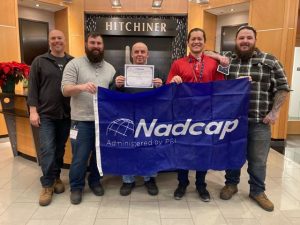
Solar Atmosphere’s Michigan and Western Pennsylvania facilities have recently been awarded Nadcap Merit status for vacuum heat treating and brazing.
In September, the Swiss Steel Group (SSG) held the 1st Hydrogen Symposium at the Henrichshütte Iron and Steel Works in Hattingen. Speakers from academia, business, and politics held lectures in four sessions.
Borikengineers, a team mentored by Pratt & Whitney employees in Puerto Rico, has advanced to the Qualifiers’ Finals Competition in the FIRST Tech Challenge DC Qualifier. The team won the Judges Choice Award.
Hitchiner Manufacturing Nadcap accredited
SawBlaze on Discovery Channel\’s TV show, \”BattleBots\”
Borikengineers, Judges Choice Award winners
Heat Treat Today is pleased to join in the announcements of growth and achievement throughout the industry by highlighting them here on our News Chatter page. Please send any information you feel may be of interest to manufacturers with in-house heat treat departments especially in the aerospace, automotive, medical, and energy sectors to sarah@heattreattoday.com.
Find heat treating products and services when you search on Heat Treat Buyers Guide.com
Heat Treat Today’s Technical Tuesday feature means that on just about any given Tuesday, there will be an article that aims to educate our heat treating readers—be it in a process, equipment, metals, analysis, critical parts, or more. Enjoy this sampling of Technical Tuesday articles from the past several months.
Case Study: Heat Treat Equipment Meets the Future Industry Today
Contact us with your Reader Feedback!
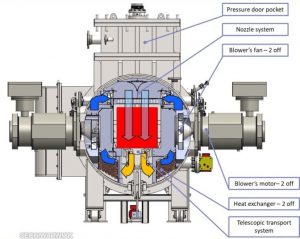
Construction and schematic furnace cross-section CMe-T6810-25 Source: SECO/WARWICK
How has one heat treat furnace supplier contended with modern challenges of manufacturing? In this case study about a shift away from traditional forms of heat treat, explorehow vacuum furnace technology has more technological horizons to bound.
Several key features discussed will be the various challenges that characterize modern industry; the differences between historical heat treat furnaces and vacuum furnaces; furnace features that can meet these obstacles; and a close look at what one equipment option from SECO/WARWICK helps. Additionally, explore the case study of a process that resulted in the following assessment: "all technological requirements have been met, obtaining the following indicators of efficiency and consumption of energy factors calculated for the entire load and per unit net weight of the load (700 kg)."
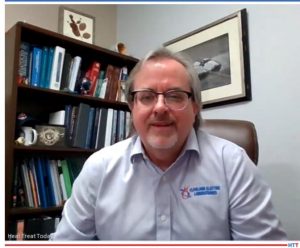
Eric Yeager of Cleveland Electric explaining the 101 of all things thermocouple Source: Heat Treat Today
How do thermocouples work? How would you tell if you had a bad one? Those ever present temperature monitors are fairly straightforward to use, but when it comes to how it works — and why — things get complicated.
This transcript Q&A article was published in the print edition last year (2022), but there was too much information to fill the pages. Online, read the full-length interview, including the final conversation about how dissimilar metals create EMF. Included in the discussion is proper care of the T/C and knowledge of when it’s time to replace.
Trends in the heat treat industry Source: Unsplash.com/getty images
What’s “hot” for heat treaters in recent months? The trends are pointing towards streamlining upgrading information systems, more efforts to reduce carbon footprint, and ensuring processes in salt quenching and electricity use are as efficient as they can be.
Each of the 6 trends included in the article demonstrates that heat treaters are making thoughtful and responsible decisions and purchases. Considerations include care for the environment and methods to help employees share and receive information needed for each job.
Read more about each of the trends to see what’s happening with equipment purchases and technology decisions and how companies are pushing to make that carbon footprint smaller.
A Quick Guide to Alloys and Their Medical Applications
Sneak peak of this medical alloys resource Source: Heat Treat Today
If you're pining for a medical heat treat quick resource in our "off-season," we have a resource for you. Whether you are a seasoned heat treater of medical application parts or not, you know that the alloy composition of a part will greatly determine the type of heat treat application that is suitable. Before you expand your heat treat capabilities of medical devices, check out this graphic to quickly pin-point what alloys are in high-demand within the medical industry and what end-product they relate to.
The alloys addressed in this graphic are: titanium, cobalt chromium, niobium, nitinol, copper, and tantalum.
Resource -- Forging, Quenching, and Integrated Heat Treat: DFIQ Final Report
Examples of DFIQ equipment Source: Joe Powell
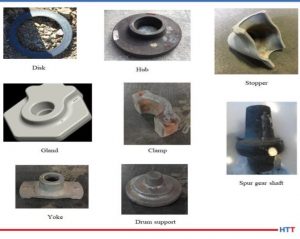
How much time and energy does it take to bring parts through forging and heat treatment? Have you ever tried to integrating these heat intensive processes? If part design, forging method, and heat treat quenching solutions are considered together, some amazing results can occur. Check out the report findings when the Direct from Forge Intensive Quenching (DFIQTM) was studied.
Forgings were tested, in three different locations, to see if immediate quenching after forging made a difference in a variety of steel samples. The report shares, “The following material mechanical properties were evaluated: tensile strength, yield strength, elongation, reduction in area and impact strength. Data obtained on the mechanical properties of DFIQ forgings were compared to that of forgings after applying a conventional post-forging heat-treating process.”
Plot your heat treat events with Heat TreatToday's Industry Calendar. This planner is located under "Resources" on www.heattreattoday.com, and it is always updating with the latest industry events. Thinking about those summer plans? Make sure to add some heat treat trade shows and events to your schedule!
If you have an event to add -- or want to give us a heads up on an event that you and others are going to attend -- feel free to reach out to the editors at editor@heattreattoday.com.
Head on over to the "Resource" tab on the website to find the Industry Calendar located fifth down. This calendar let's you search by month in list or calendar view format so that you can visualize your season with ease.
Preview of Summer 2023 events
ThermProcess 2023
When: June 12 - June 16
"ThermProcess is the world’s most important platform for the presentation of highly innovative technology and environmental concepts for industrial thermal processing plants. It's part of the international trade fair quartet made up of: GIFA, METEC, THERMPROCESS and NEWCAST. International buyers, users, experts and decision makers from the metallurgy, heat technology and foundry industries meet here at four events, at the same time and at the same place."
Additive Manufacturing with Powder Metallurgy Conference (AMPM) 2023
When: June 18 - June 21
"Focusing on metal additive manufacturing, AMPM2023 will feature worldwide industry experts presenting the latest technology developments in this fast-growing field. 'Presenting cutting-edge R&D at AMPM conferences, one of the world's leading forums on metal additive manufacturing, provides a unique opportunity for technology transfer between peers,' commented Joseph T. Strauss, president at HJE Company, Inc."
ALUMINIUM CHINA
When: July 5 - July 7
"ALUMINIUM CHINA brings together high-quality resources from the aluminium industry and end-use applications at home and abroad to comprehensively display innovative technologies and products. We actively promote the synergistic development of the upstream and downstream of the industry, expand business opportunities, and jointly draw a new path for the sustainable development of the global aluminium industry."
There's so much more! Explore theIndustry Calendarhere.
Find heat treating products and services when you search on Heat Treat Buyers Guide.com







 If you are considering making the leap to laser heat treat, buckle up. Nic Willis, metallurgist/heat treat supervisor of Emerson Professional Tools — RIDGID® TOOLS, and recipient of













 Heat Treat