

FEATURED NEWS

Improving Your Use of Radiant Tubes, Part 2

op-edLast month, we introduced the importance of radiant tubes in the heat treat industry. We explored the “why” of radiant tubes and skimmed the surface, exploring materials, sizing, shapes, longevity, and installation — all topics we’ll deep dive into in future posts. This month, let’s explore what typically occurs inside a radiant tube.

This column is a Combustion Corner feature written by John Clarke, technical director at Helios Electric Corporation, and appeared in Heat Treat Today's December 2022 Medical and Energy print edition.

If you have suggestions for topics you’d like John to explore in future columns, please email Karen@heattreattoday.com.


John B. Clarke
Technical Director
Helios Electric Corporation
Source: Helios Electrical Corporation

The radiant tube burner combines fuel and an oxidizer (commonly air) in the presence of a source of ignition. Radiant tube burners differ from burners that are fired into an open furnace. They function to distribute heat as uniformly as possible within the interior of the tube to maximize its temperature and heat transfer uniformity. In some applications, a low rate of heat transfer is acceptable (for example, in the holding zone of a continuous furnace). In that same furnace, a much higher heat transfer rate may be required in the front of the furnace. In all cases, higher heat  transfer rates result in higher internal tube temperatures. In most cases, the higher the temperature, the greater the stress on the material.

Within the radiant tube in the visual flame region, the energy is transferred to the inner surface of the tube by convection and radiation. The rate of convective transfer has much to do with the mixing characteristics of the burner in question. Once combustion is complete, the heated products of combustion — CO2 , O2 , H2O, and N2 — continue to flow through the radiant tube. They impart heat to the interior surface of the radiant tube through convections and — in the case of the CO2 and H2 — radiation. The non-polar gases (O2 and N2) are effectively transparent to radiation: neither absorbing nor radiating heat. This transparency poses a problem for the performance of radiant tubes because the combustion process is ideally complete some distance before the end of the radiant tube.

There are a few ways to make use of the heat stored in the O2 and N2 . One way is to stir the mixtures to ensure these gases meet the inside walls of the tube and can convectively transfer their energy. Another way is to insert a “core buster” or other device into the exit end of the radiant tube. This device must be able to withstand the peak temperature of the products of combustion at this point, so it is typically constructed of some ceramic material or a composite of ceramics. As the heated gases pass over this “core buster,” the resistance forces higher flows around the perimeter of the tube, increasing convective transfer. The “core buster” also is convectively heated and can then radiate heat to the inner surface of the tube and, finally, the “core buster” increases mixing of the gases to ensure all remaining hydrocarbons and carbon monoxide are brought into contact with oxygen to complete the oxidation process.

The transfer of heat to the inner surface is dependent on the effective surface area. A tube with a nominal inside diameter of four inches may have a much greater effective surface area due to roughness, which resemble very small peaks and valleys. Anyone who has attempted to walk around a small Caribbean island can attest — it takes a lot longer than you would think by looking at the map and really scares your shipmates when they cannot find you. Cast and composite radiant tubes can be fabricated to increase this effective internal surface area. Tubing can also be equipped with internal fins.[blocktext align="left"]No matter what the construction, ultimately it does no good to transfer heat to the interior of the radiant tube if the tube cannot transfer the same quantity of heat through the exterior to the furnace and work being heated.[/blocktext]

Which mode of control is better? High/Low, proportional, or pulsed? Any method can achieve a uniform tube heat release given the correct burner radiant tube combination. The important thing is that the vigor of the mixing is matched to the length and roughness of the radiant tube. Burner X may be perfectly suited to a short radiant tube but lead to non-uniform heating as the tube length is extended. On the other hand, Burner Y, with a relatively lazy flame, may work perfectly on long tubes with lower heat transfer demands but be unsuitable for short tubes where high heat transfer rates are desired.

In the coming months, we will examine many of these areas in greater detail, and this author can make use of his experience of many failures to inform the readers of what not to do. Then, by extension, we’ll learn how to get more from the furnaces by thinking systematically about their radiant tubes, burners, and controls.


Find heat treating products and services when you search on Heat Treat Buyers Guide.com



Improving Your Use of Radiant Tubes, Part 2 Read More »
Heat Treater Expands with Vacuum Furnace

HTD Size-PR LogoA Swiss commercial heat treater ordered a vacuum furnace. A system will increase the production capacity of their nickel and silver brazing processes.


Maciej Korecki
Vice President of Business of the Vacuum Furnace Segment
SECO/WARWICK

The SECO/WARWICK vacuum furnace helps with hardening larger size parts and significantly increases the efficiency of the current hardening plant. The furnace increases production. In the version ordered by the Swiss, a large working zone (36"X36"X48") with the potential to adjust to an oversized load utilizes the advantages of a round heating chamber.

“[With a] cooling capacity of 15 bar, it is possible to process parts that require very fast cooling . . . . Vector also allows the system to perform more difficult brazing processes with either nickel or silver," explains Maciej Korecki, vice president of the Vacuum Furnace Segment, at SECO/WARWICK Group. "This is our second installation with this partner. Previously, we delivered a solution from the SECO/WARWICK furnace family of a similar size, in a non-pressurized version."


Find heat treating products and services when you search on Heat Treat Buyers Guide.com


Heat Treater Expands with Vacuum Furnace Read More »

With New Heat Treatment, 3D-printed Metals Can Withstand Extreme Conditions

HTD Size-PR Logo

Sometimes our editors find items that are not exactly "heat treat" but do deal with interesting developments in one of our key markets: aerospace, automotive, medical, energy, or general manufacturing. To celebrate getting to the “fringe” of the weekend, Heat Treat Today presents today’s Heat Treat Fringe Friday press release: a look at the future of heat treating and 3D printing in aerospace engines and energy turbines.

Find out more about the possibilities of bringing additive manufacturing and heat treating turbine and engine components; and read on to see what's happening at MIT.


A new MIT-developed heat treatment transforms the microscopic structure of 3D-printed metals, making the materials stronger and more resilient in extreme thermal environments. The technique could make it possible to 3D print high-performance blades and vanes for power-generating gas turbines and jet engines, which would enable new designs with improved fuel consumption and energy efficiency.

There is growing interest in manufacturing turbine blades through 3D-printing, but efforts to 3D-print turbine blades have yet to clear a big hurdle: creep. While researchers have explored printing turbine blades, they have found that the printing process produces fine grains on the order of tens to hundreds of microns in size — a microstructure that is especially vulnerable to creep.

Zachary Cordero
Boeing Career Development Professor in Aeronautics and Astronautics
MIT

Zachary Cordero and his colleagues found a way to improve the structure of 3D-printed alloys by adding an additional heat-treating step, which transforms the as-printed material’s fine grains into much larger “columnar” grains. The team’s new method is a form of directional recrystallization — a heat treatment that passes a material through a hot zone at a precisely controlled speed to meld a material’s many microscopic grains into larger, sturdier, and more uniform crystals.

“In the near future, we envision gas turbine manufacturers will print their blades and vanes at large-scale additive manufacturing plants, then post-process them using our heat treatment,” Cordero says. “3D-printing will enable new cooling architectures that can improve the thermal efficiency of a turbine, so that it produces the same amount of power while burning less fuel and ultimately emits less carbon dioxide.”

Materials Science student
Oxford University
MIT

“We’ve completely transformed the structure,” says lead author Dominic Peachey. “We show we can increase the grain size by orders of magnitude, to massive columnar grains, which theoretically should lead to dramatic improvements in creep properties.”

Cordero plans to test the heat treatment on 3D-printed geometries that more closely resemble turbine blades. The team is also exploring ways to speed up the draw rate, as well as test a heat-treated structure’s resistance to creep. Then, they envision that the heat treatment could enable the practical application of 3D-printing to produce industrial-grade turbine blades, with more complex shapes and patterns.

“New blade and vane geometries will enable more energy-efficient land-based gas turbines, as well as, eventually, aeroengines,” Cordero notes. “This could from a baseline perspective lead to lower carbon dioxide emissions, just through improved efficiency of these devices.”

Cordero’s co-authors on the study are lead author Dominic Peachey, Christopher Carter, and Andres Garcia-Jimenez at MIT, Anugrahaprada Mukundan and Marie-Agathe Charpagne of the University of Illinois at Urbana-Champaign, and Donovan Leonard of Oak Ridge National Laboratory.

This research was supported, in part, by the U.S. Office of Naval Research.

Watch this video from Thomas to see a visual of some of the heat treating advances.


Find heat treating products and services when you search on Heat Treat Buyers Guide.com


With New Heat Treatment, 3D-printed Metals Can Withstand Extreme Conditions Read More »

IHEA Monthly Economic Report: Good and Bad News

The monthly Industrial Heating Equipment Association (IHEA) Executive Economic Summary released in November takes a look at high inflation. The report focuses the reasons for current inflation on four factors: supply chain issues, oil crises stemming from Ukraine situation, increase in wages, and possibility of bringing jobs back to American soil.

"If one compares the readings for other nations to that of the US, there is still more growth here than in Europe and even Asia." Hints of good news can be found, even as inflation continues to be high.

The IHEA report hones in on good and bad news related to wages and reshoring of jobs. Thirty or forty years ago, moving production overseas meant that U.S. employers could spend very little on wages. What's happening now is China and other players are seeking to have domestically independent economies, which means paying their own employees higher wages. The report states, "The China under Xi Jinping seeks to be far less dependent on its export economy and wants to be driven by its own consumers. For that to happen the Chinese consumer needs more money and that means higher wages. The bargain that was Chinese production has faded." So the bad news for manufacturers is that wages are high everywhere. The good news is that this helps bring the jobs back to North America.

Good and bad news carries over into the steel industry. "Imports of steel are down and that is good for domestic producers but the demand slump has many concerned."

Anne Goyer, Executive Director of IHEA

There is good and bad for reshoring the jobs back to America. The report states, "If they [American companies] produce close to the consumer, they can be more adaptable . . . . The ability to take advantage of U.S. innovation and development improves. This all comes at a cost as well – higher wages, higher regulatory costs and higher taxes." It seems that America has been caught off guard. Bringing jobs back to America, in a time when preparations have not been implemented, means growing pains. The pressure is on to find workers, train workers, and keep current and new workers happy.

Check out the full report to see specific index growth and analysis which is available to IHEA member companies. For membership information, and a full copy of the 11-page report, contact Anne Goyerexecutive director of the Industrial Heating Equipment Association (IHEA). Email Anne by clicking here.


Search for heat treat solution providers and suppliers on Heat Treat Buyers Guide.com


IHEA Monthly Economic Report: Good and Bad News Read More »

Firearms Manufacturer To Receive Furnace To Heat Treat Aluminum

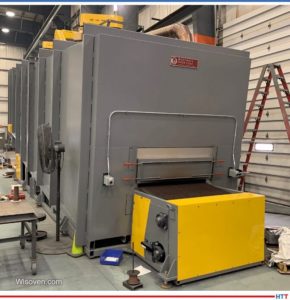
HTD Size-PR LogoA leading firearms manufacturer ordered a continuous conveyor furnace from a Wisconsin furnace supplier. The oven will be used for heat treating aluminum parts prior to quenching.

Industrial Conveyor Furnace
Source: Wisconsin Oven Corp.

Mike Grande
Vice President of Sales
Wisconsin Oven

This industrial conveyor furnace has a maximum temperature rating of 1,110°F and interior chamber dimensions of 4’2” W x 30’ L x 1’ H. The parts are manually loaded onto the flat wire belt conveyor and transported through both zones of the oven. The recirculation system utilizes two 56,000 CFM blowers, and the furnace is equipped with a performance monitoring system that collects information from predictive maintenance sensors.

“[W]e provide custom design solutions to meet each of our customer’s unique requirements," commented Mike Grande, vice president of sales at Wisconsin Oven Corporation. "This conveyor furnace was designed to sit at an incline which allows for the quench tank to fit under the conveyor discharge end.”


Find heat treating products and services when you search on Heat Treat Buyers Guide.com


Firearms Manufacturer To Receive Furnace To Heat Treat Aluminum Read More »

Improving Your Use of Radiant Tubes, Part 1

op-edRadiant tubes are prevalent in heat treating applications. They are very simple devices: basically, a pipe that enters and exits the work chamber. Geometrically simple — but the considerations of how they should be applied, the optimal materials for their construction, and the best burner to use present a myriad of challenges and opportunities for improvement. As all heat treaters know, radiant tubes represent a significant expense as well as an opportunity to save on maintenance costs and improve furnace performance.

This column is a Combustion Corner feature written by John Clarke, technical director at Helios Electric Corporation, and appeared in Heat Treat Today's November 2022 Vacuum print edition.

If you have suggestions for topics you’d like John to explore in future columns, please email Karen@heattreattoday.com.


John B. Clarke
Technical Director
Helios Electric Corporation
Source: Helios Electrical Corporation

In the coming months, I hope to challenge the reader to spend some time researching opportunities to improve their use of radiant tubes — that is to improve their performance, both heating rates and efficiency, as well as to extend their life and perhaps improve the uniformity of the furnace being heated.

I apologize in advance if I sound like an economist — “It is this way, but on the other hand . . .” There are a lot of factors to consider when planning to upgrade your radiant tubes, their associated burners, recuperators, mountings, and supports.

To start, let’s answer a simple question: Why do we use radiant tubes? Two reasons come to mind: to protect the furnace atmosphere from the products of combustion and/or to diffuse the release of heat within the furnace or oven chamber to maximize temperature uniformity. In many heat treating applications, even a very small leak will contaminate the furnace atmosphere, damaging the work being processed.

How do we size radiant tubes? Again, it is obvious that we need to have sufficient heated external surface area to transfer the heat to the furnace chamber. This heat transfer will occur through convection and radiation, with the latter mode being more significant as the furnace temperature rises. The rate of convective heat transfer will depend on mass and velocity of air or atmosphere passing over the tubes. The radiant heat transfer rate is a function of the difference between the tubes’ surface temperature and the temperature of the furnace and work being heated. The good news with radiant heat transfer in closed furnaces is that all surfaces in the furnace participate to a degree with the transfer of heat to the work.

There are many shapes for radiant tubes: U-shaped, W-shaped, three legged, as well as systems where the firing and exhaust occur at the same opening, including P-tubes and single-ended tubes. Each has its advantages and disadvantages, which we’ll discuss in future articles.

How about materials? Again, we have a lot of choices. The tubes can be centrifugally cast, fabricated from sheet, or made of some ceramic or composite material. [blocktext align="center"]The formulation of each material varies greatly, and it is important that the material is suitable for the use temperature and chemical composition of the furnace atmosphere as well as always being compatible with the common products of combustion.[/blocktext]

How are the radiant tubes installed? Are the ends welded to a mounting plate, or perhaps a packing gland is employed to seal the tube while allowing some expansion or contraction? Both methods are commonly applied successfully. Composite tubes may have a flange that is clamped at the mounting location, or they may use a packing gland. The tubes may have internal supports within the furnace to prevent sagging. The tubes can be hung vertically, located to the side of, or placed under and over the work being heated.

How long should my radiant tubes last? Simply answered, for as long as practical. As a young person, I was mortified when I dropped a hammer in a customer’s pusher carburizing furnace, and it broke an alloy tube. When I confessed to the plant metallurgist, he laughed and told me the tube I broke was over twenty years old. Other customers may be satisfied if their tubes last 18 months, so there is no simple answer. That said, there may well be opportunities to extend the life of the radiant tubes in your specific application.

We will revisit many of these discussions in later articles, but hopefully this column has whetted your appetite for the next discussion in December: What typically occurs inside the radiant tube? After all, this is the Combustion Corner.


Find heat treating products and services when you search on Heat Treat Buyers Guide.com


Improving Your Use of Radiant Tubes, Part 1 Read More »

Attend the Largest Heat Treat Show in the World June 12-16, 2023

Held only once every four years, THERMPROCESS is the largest heat treat show in the world with thousands in attendance.

Brace yourselves for 2023 THERMPROCESS, in Düsseldorf, Germany; the world’s most important platform for the presentation of highly innovative technology and environmental concepts for industrial thermal processing plants.

THERMPROCESS is part of the tradeshow quartet that happens every four years in Dusseldorf. The other events in the quartet are GIFA, METEC, and NEWCAST. Climate neutrality by 2050 means that the industry faces an extreme transformation that will be discussed at the Düsseldorf trade fair quartet, including the challenges that the sectors must overcome and the innovations that machinery and plant manufacturers will offer to enable climate solutions.

Lastly, North American heat treat suppliers: If you have any interest in exhibiting, reach out to Heat Treat Today SOON, preferably NOW, to reserve your specially priced booth in an exclusive North American Exhibitor Group. If there is enough participation, Heat Treat Today will provide a centrally located Resource Center where participating companies can come for food & drink, meeting rooms, some North American fellowship, and language interpreters. Essentially, this is all the perks of a big company without the expense! Costs for your booth will range from $9,000 to $12,000. Contact Doug Glenn at doug@heattreattoday.com or via phone at 724-923-8089 for more exhibitor info.

Attend the Largest Heat Treat Show in the World June 12-16, 2023 Read More »

Heat Treat Brought In House for North American Producer

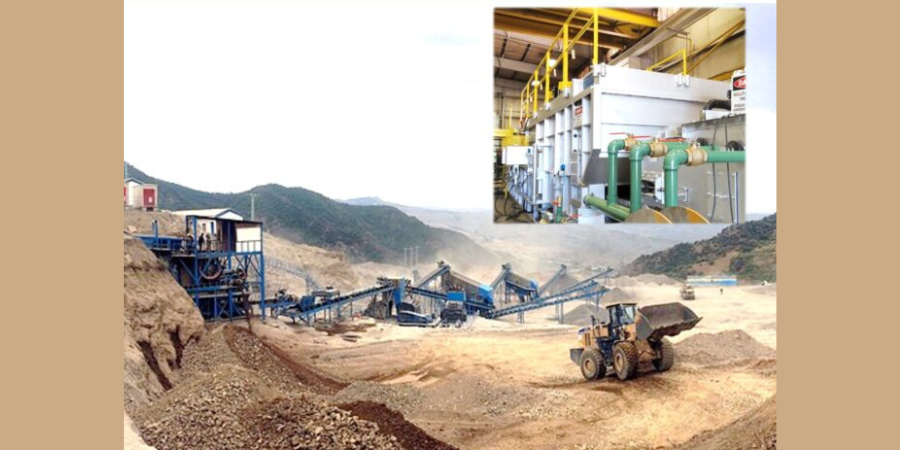
HTD Size-PR LogoA North American producer of mining, construction, and material handling products added a continuous quench and temper furnace system as part of a larger plant expansion to bring foreign outsourced manufacturing in house.

Can-Eng Furnaces International Limited's furnace will be part of an automated manufacturing cell and fed automatically from upstream handling equipment. The multizone belt style temper furnace employs high efficiency natural gas-fired heating and recirculation systems. Having the furnace system in house will not only improve part quality but also help eliminate overall shipping costs and reduce supply chain issues.


Find heat treating products and services when you search on Heat Treat Buyers Guide.com


Heat Treat Brought In House for North American Producer Read More »

Thank You for a Wonderful, Inaugural Heat Treat Boot Camp!

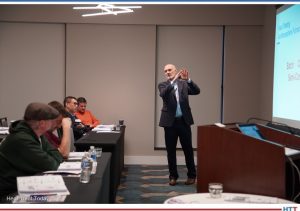
HTD Size-PR LogoRecently, the first ever Heat Treat Boot Camp took place in Pittsburgh, Pennsylvania from October 31 to November 2. Heat treat participants networked, learned, and attended tours during the intensive, two-day training.

Instructors were Doug Glenn, publisher and founder of Heat Treat Today, and Thomas Wingens, president/CEO and founder of WINGENS International Industry Consultancy. Several of the sessions were "Heat Treat Processes & Materials," "Heat Treat Products", "End-User Products", and "Latest Heat Treat Developments." Questions and discussion were encouraged during the formal sessions, and heat treaters had plenty of informal, additional learning time through interactions with each other and the instructors.

"Personally, I really enjoyed interacting with the participants," commented Glenn. "We had an excellent cross-section of the industry represented from captive heat treaters to commercial heat treaters to industry suppliers. The interaction between individual participants was also excellent and perhaps one of the greatest benefits of attending."

Attendees visited the Duquesne Incline on Mount Washington at the end of the first day of lectures to enjoy the view of Pittsburgh (see main article image above). At the end of the training, attendees had the option to visit the Solar Atmospheres of Western PA heat treat plant, getting the chance to see the processes, parts, and markets that had been discussed during lectures.

Group Tour Solar Atmospheres of Western PA
Source: Solar Atmospheres

Heat Treat Today thanks everyone for their participation in the first-time Heat Treat Boot Camp. Plans are underway for Heat Treat Boot Camp 2023. Stay tuned for registration information; see you next year!


Find heat treating products and services when you search on Heat Treat Buyers Guide.com


Thank You for a Wonderful, Inaugural Heat Treat Boot Camp! Read More »

2 Companies Choose EV/CAB Lines for Battery Cooler Components

HTD Size-PR Logo

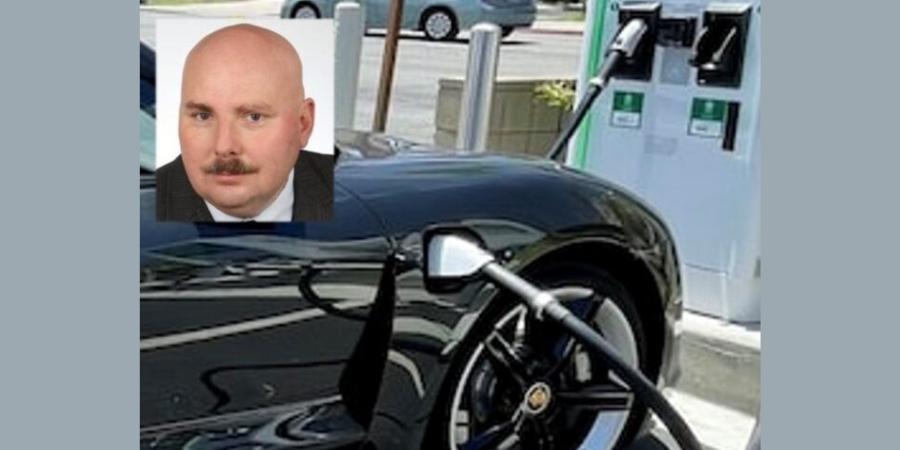
Piotr Skarbiński
Vice President of Aluminum and CAB Products Segment
SECOWARWICK
Source: LinkedIn

Two Chinese manufacturers choose EV/CAB lines to expand their heat exchanger production to better heat treat oversized battery cooler.

The furnace supplier, SECO/WARWICK, noted that this will be the fourteenth CAB line for one of the manufacturers in the China market.

“This year, CAB lines for brazing heat exchangers have been sold to several new customers on the Chinese market," said Piotr Skarbiński, vice president of the Aluminum and CAB Products at SECO/WARWICK. “The EV/CAB line . . . [has] temperature uniformity across the belt, suitable for the strict requirements of the automotive industry, as well as its reliability and quality."


Find heat treating products and services when you search on Heat Treat Buyers Guide.com


2 Companies Choose EV/CAB Lines for Battery Cooler Components Read More »

Skip to content