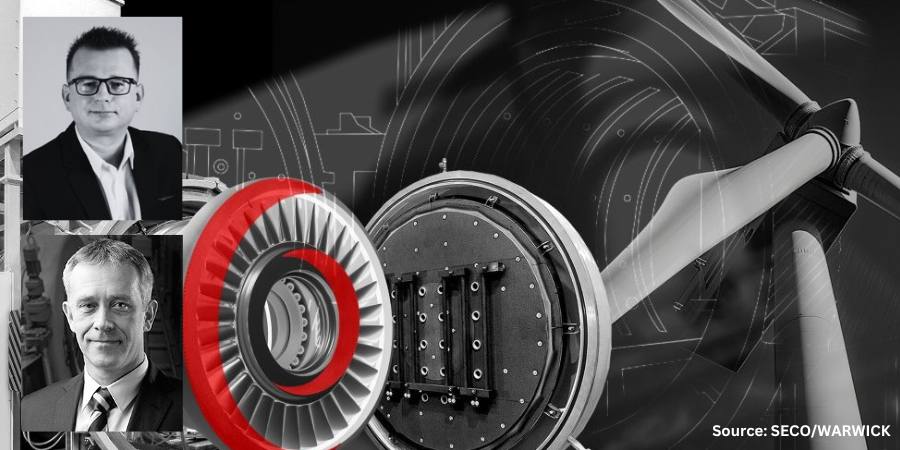
A manufacturer of wind and gas turbines is bolstering its heat treatment capabilities with a vacuum furnace to process oversized gas turbine structural components.
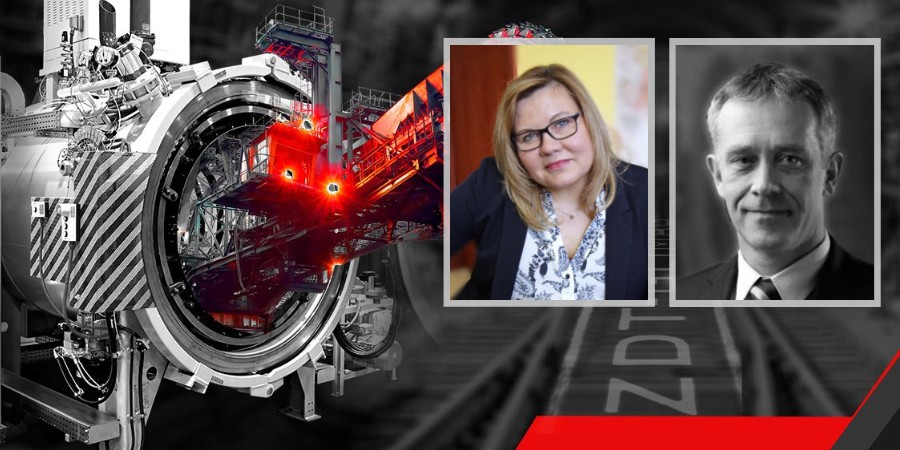
Maciej Korecki Vice President of Vacuum Business Segment SECO/WARWICK Source: SECO/WARWICK.com
The vacuum furnace provides a work zone that accommodates the company’s need to heat treat large-sized parts and uses three process gases, argon, nitrogen, and hydrogen, to increase the process purity and reduce gas consumption costs during the cooling process. This is the eighth vacuum furnace the company has purchased from SECO/WARWICKand will be installed at the manufacturer’s European location.
“The demand for gas and wind turbines is systematically growing all over the world, and renewable energy is currently the focus of attention in all industries. It plays an important role in mitigating climate change, which is why it is important for us to be able to support a Partner who focuses on sustainable, renewable, and unlimited green energy,” said Maciej Korecki, vice president of the vacuum segment, SECO/WARWICK Group.
“The furnace’s three-gas partial pressure system helps prevent evaporation and sublimation of alloying elements from the load surface during vacuum heat treatment or vacuum brazing. Partial pressure control is important when processing many materials to prevent the hot zone evaporation and contamination,” said Kamil Siedlecki, sales manager at SECO/WARWICK.
The press release is available in its original form here.
A German industrial plant will be the first to receive locally generated wind power through a direct connection.
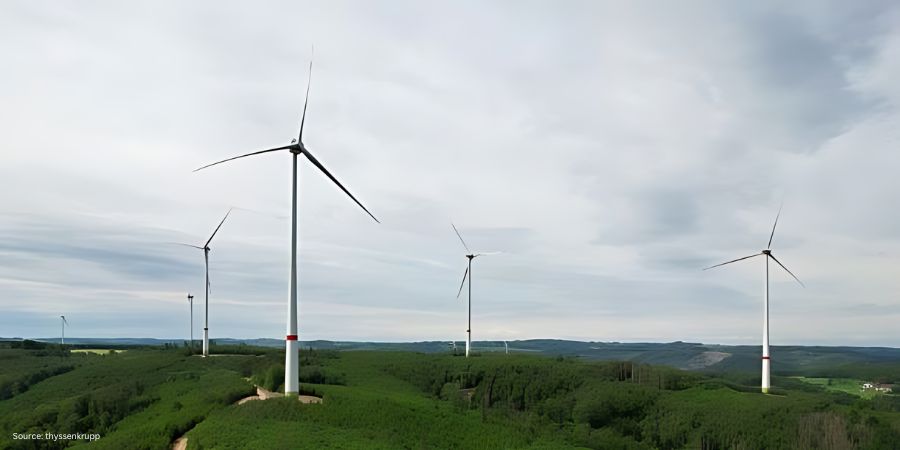
With the green energy from the four new wind turbines installed by project partner SL NaturEnergie, thyssenkrupp Hohenlimburg, a subsidiary of thyssenkrupp Steel, can now cover 40% of its average annual electricity requirements.
The four wind turbines, each up to 160 meters in height and with a rotor diameter of 138 meters, are connected to the thyssenkrupp Hohenlimburg plant network via a direct line a good 3 kilometers in length. The wind farm generates over 55 million kilowatt hours annually, allowing the majority of this energy to be used directly without relying on the public grid. Surplus quantities are only supplied to other Group sites via the public grid in the event of high wind speeds or lower demand at the plant.
A company developing advanced alternative renewable energy technologies large-scale industrial applications is expanding their heat treat capabilities with two identical vacuum furnaces.
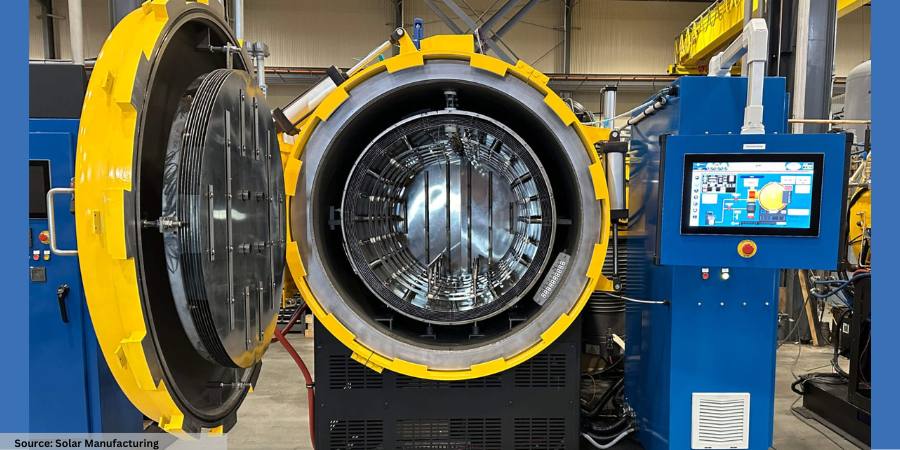
The Research and Development team of Solar Manufacturing, Solar Atmospheres, assisted the client’s engineers to verify the process in the Mentor® Pro vacuum furnace prior to sending this furnace. Solar Manufacturing shipped the identical vacuum furnaces and assisted the company’s engineers to verify the molybdenum shielded hot zone operation of the new equipment at the developer’s facility. The furnace’s internal gas quenching system processes workloads to quench at 2 bar positive pressure in either nitrogen or argon gas, a flexibility that assists the company in achieving results across a wide range of metallurgical applications.
The client also finds benefit from the compact design of the Mentor® Pro features a molybdenum shielded hot zone measuring 18” wide x 18” high x 36” deep, capable of temperatures up to 2500°F, and a workload weight capacity of up to 1,000 lbs.
The press release is available in its original form here.
Today’s News from Abroad installment brings us news of a climate-neutral metallurgical thermal process center in Germany, a twin-ladle furnace station in Brazil, and a Korean steel maker gaining furnace efficiency.
Heat TreatTodaypartners with two international publications to deliver the latest news, tech tips, and cutting-edge articles that will serve our audience — manufacturers with in-house heat treat. heat processing, a Vulkan-Verlag GmbH publication, serves mostly the European and Asian heat treat markets, and Furnaces International, a Quartz Business Media publication, primarily serves the English-speaking globe.
ArcelorMittal Brasil Orders Twin-Ladle Furnace Station from Danieli
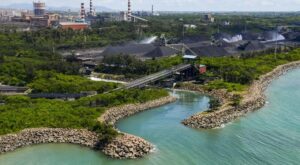
ArcelorMittal’s Tubarão integrated steel plant in Serra, Espirito Santo state, where Danieli will install twin-ladle furnace station. Source: furnaces-international.com
“ArcelorMittal Brasil has chosen Danieli Centro Met technology and equipment for a twin-ladle furnace station to be installed at the Tubarão integrated steel plant in Serra, Espirito Santo state, where 7+ Mt/yr of high-quality, flat carbon steel products are produced. The new twin-ladle furnace station will be placed in the melt-shop bay between converters and continuous casting machines to complete the refining area, remove sulphur contents and make quality adjustments to the steel bath, to produce USIBOR steel for automotive applications.”
TU Bergakademie Freiberg Opens Climate-Neutral Metallurgical Thermal Processing Center
At TU Bergakademie Freiberg, the simulation of a torch in a test furnace is part of developing technologies that could replace the natural gas burners of the future. Source: TU Bergakademie Freiberg
“’Our goal is emission-free thermal processes, which we optimize through a closed loop system,’ says Professor Gotthard Wolf, head of the Foundry Institute at TU Bergakademie Freiberg. In order to get closer to this goal, two technologies have already been developed at the TU Bergakademie Freiberg that could replace the natural gas burners of the future. When using green electricity, the process step of melting, for example of aluminum, becomes completely CO2-free. These are a plasma-heated hot gas flare and an inductively heated got gas flare. ‘Each of the electrically operated flares could be replaced in existing melting furnaces without the mostly medium-sized foundry companies having to invest in alternative furnaces,’ explains Professor Wolf.”
Tenova’s NextGen® System Enhances Dongkuk Steel Mill Furnace Efficiency
The installation and commissioning of Tenova’s NextGen® will provide enhanced EAF efficiency, real-time monitoring, and control capabilities. Source: furnaces-international.com
“Dongkuk Steel Mill Co. Ltd., a leading steelmaker in Korea, has recently contracted Tenova Goodfellow, Inc, a subsidiary of Tenova, a leading developer and provider of sustainable solutions for the green transition of the metals industry, to improve its furnace efficiency. The scope of the contract involves the supply and installation of Tenova’s NextGen® System at Dongkuk’s Incheon Plant in Dong-gu, Incheon, Republic of Korea. The Next-Gen® System, tailored for Dongkuk Steel’s 120-ton AC shaft furnace, incorporates advanced hardware and temperature sensors for off-gas measurement which include two sampling stations and a central cabinet.”
NGC Gears, a manufacturer of wind power gearboxes, has completed the installation of two additional Endothermic generators from a manufacturer with North American locations.
UPC-Marathon, a Nitrex company, installed the Endo generators at NGC Gears‘ its new facility in Jinhu, China. This acquisition brings the total of generator sets to five since 2022, collectively generating an impressive 800 m³/h (22,252 ft3/h) capacity of Endothermic gas supplied to carburizing and hardening furnaces used for processing various gear components. The latest installations in February and March of 2024 support the heat treating operations of the company’s wind energy gearbox production.
NGC’s decision to expand capacity is in response to the growing demand for wind power solutions in China and globally. The new Endothermic gas generating systems will significantly enhance the company’s production capabilities, enabling NGC to meet increasing market needs with greater efficiency and reliability.
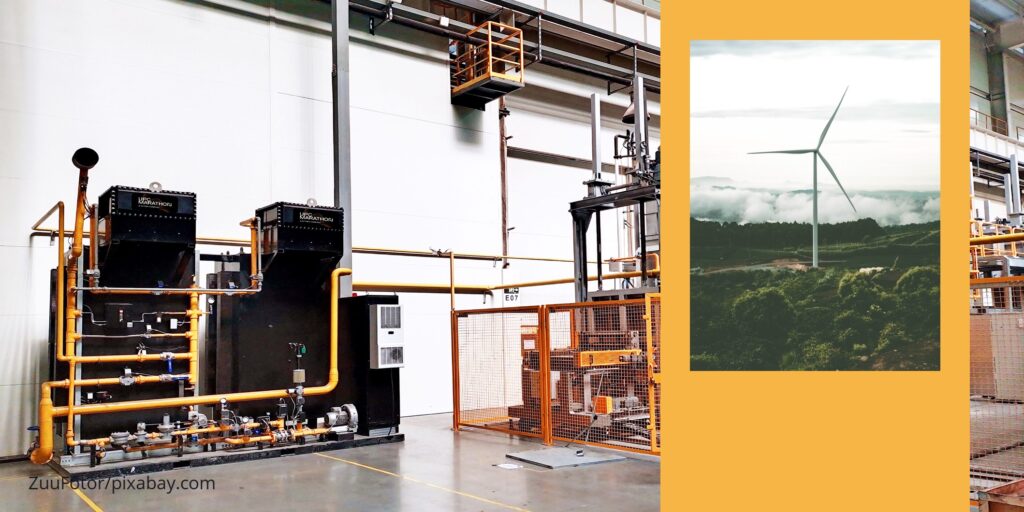
EndoFlex generators from UPC-Marathon (Source: Nitrex)
EndoFlex offers precise control of production media to the carburizing and hardening environments, leading to higher quality gear production with improved longevity and performance. The result is improved carburizing and hardening processes, higher-quality hardened gears, reduced operating costs, and increased efficiency, as well as immediate cost savings through reduced electricity and gas consumption and minimized waste.
Johnny Xu, general manager at UPC-Marathon China, shared, “The latest EndoFlex investments align with NGC’s development of low-consumption, high-efficiency gearbox products for large-scale onshore and offshore wind turbines.”
This press release is available in its original form here.
IperionX Limited and Vegas Fastener Manufacturing, LLC (Vegas Fastener) have agreed to partner to develop and manufacture titanium alloy fasteners and precision components with IperionX’s advanced titanium products.
The commercial focus of this partnership is on developing and manufacturing titanium alloy fasteners and precision components for the U.S. Army Ground Vehicle Systems Center (GVSC), which is the United States Armed Forces’ research and development facility for advanced technology in ground systems. GSVC’s research and development includes robotics, autonomy, survivability, power, mobility, intelligent systems, maneuver support and sustainment.
Additionally, the partners will design, engineer and produce titanium fasteners for critical sectors such as the aerospace, naval, oil & gas, power generation, pulp & paper and chemical sectors. These sectors demand fasteners that provide not only high strength-to-weight ratios but also exceptional corrosion resistance for high-performance applications.
Vegas Fastener, headquartered in Las Vegas, Nevada, is a global leader in the development and manufacturing of high-performance fasteners and custom machined components. Together with its allied company, PowerGen Components, Vegas Fastener serves a diverse array of customers in the defense, marine, power generation, oil & gas, nuclear, chemical, and water infrastructure sectors. Vegas Fastener develops and manufactures precision high-performance fasteners using specialized alloys to meet demanding quality specifications.
IperionX’s leading titanium technology portfolio includes high-performance near-net shape titanium products, semi-finished titanium products, spherical titanium powder for additive manufacturing and metal injection molding, and angular titanium powder for a wide range of advanced manufacturing applications. These innovative patented technologies allow for sustainability and process energy efficiencies over the traditional Kroll titanium production process.
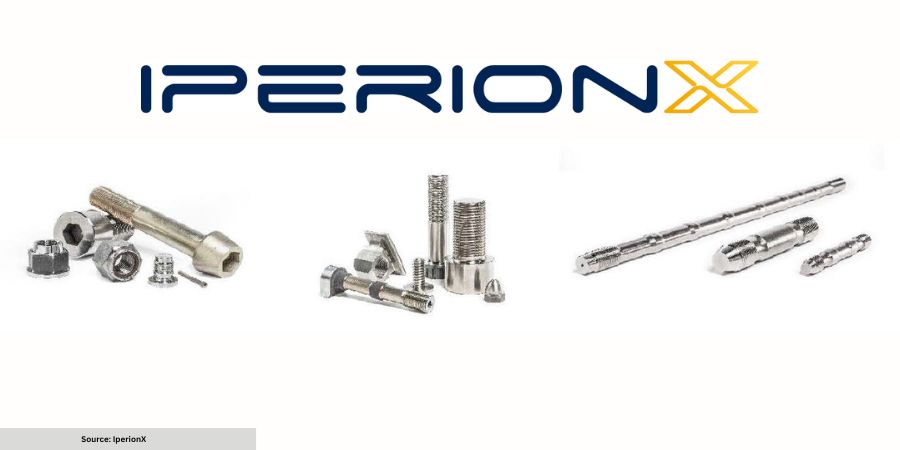
Image above: High-performance fasteners manufactured by Vegas Fastener
This press release is available in its original form here.
Kuźnia Jawor, a company specializing in the production of hot forged and CNC machined components for the automotive, machinery, mining, and piping industries, has enhanced its manufacturing capabilities through the addition of an oil-hardening furnace and two nitriding furnaces from a supplier based in North America.
Kuźnia Jawor replaced their production line with an oil-hardening furnace and two outdated nitriding furnaces from Nitrex. The decision to upgrade was prompted by the need to eliminate outdated technology and address controls issues. The current production line has been designed using a Nitrex nitriding system and a vacuum hardening furnace.
Kuźnia Jawor leverages its in-house capabilities to design and manufacture forging tools, a crucial element of the production process. This is necessary for obtaining repeatable strength parameters in steel and ensuring their resistance to geometric changes or abrasive wear, factors that are addressed through heat treatment. The new equipment enables them to actively reduce CO emissions, decrease energy consumption, and more.
Nitrex furnace
The company’s forging and CNC processes are marked by meticulous precision, with dies initially undergoing treatment in the vacuum furnace before proceeding to the nitriding phase. This multi-step approach is essential for achieving a zero-white layer, effectively preventing surface cracking in the H11, H13, and WNL hot work steel dies subjected to high-pressure hammer forging. A crucial part of this initiative was the installation of a Nitrex horizontal-loading system, featuring the furnace model NXH-9912, a custom solution designed to facilitate the seamless automatic transfers of loads between operations.
The turnkey system is equipped with Nitreg® nitriding technology, which enhances the wear and corrosion resistance of treated tooling. This technology improves efficiency gains, leading to savings in process time and resources, including electricity and process gases. Furthermore, the system adheres to industry standard 2759/10 controlled nitriding, ensuring the highest quality and precision in the heat treating process.
Interestingly, Kuźnia Jawor is also engaged in an ongoing collaborative research and development project with a local university, exploring hybrid coatings that combine Nitreg® nitriding technology with PVD and CVD processes, with the aim of further enhancing tool performance.
Located in the southwestern region of Poland, Kuźnia Jawor is a provider of forged and CNC automotive parts within Poland and mining parts in international markets such as Czechia and Türkiye.
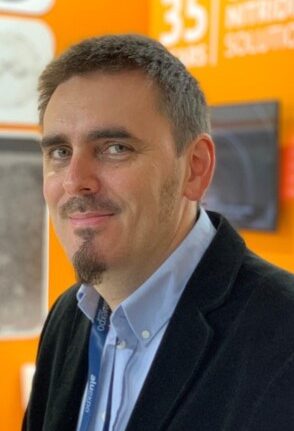
Marcin Stokłosa, Nitrex Technical Sales Manager, NITREX Poland (Source:LinkedIn.com)
Marcin Stoklosa, manager of Technical Sales at Nitrex, who oversaw this endeavor, sums it up, “Kuźnia Jawor’s choice to partner with Nitrex was driven by the need to replace outdated equipment, modernize, and expand their production facility. The result? Improved quality, enhanced performance, and a stronger position in the forging industry.”
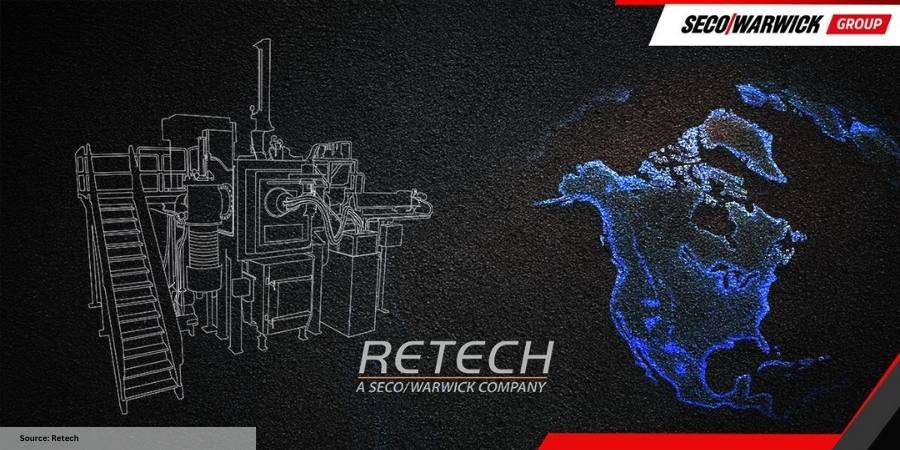
A custom-built vacuum induction melting (VIM) equipment is set to expand thermal processing for a manufacturer, whose operations already has two VIM solutions.
The furnace will be fabricated at the Buffalo headquarters of Retech, a SECO/WARWICK Group subsidiary, to capitalize on available schedule improvements. As custom equipment, the subsidiary’s furnaces are not dependent on assembly-line style construction, so they can be fabricated and assembled just in either location.
While this client prefers not to divulge this VIM’s application, Retech’s solution can handle casting a wide range of materials used in applications from automotive and consumer products to critical, high-value equiaxed, directionally solidified, or single-crystal aerospace parts. Almost every furnace Retech makes is modified to meet the specifications and associated applications of its clients.
VIM from the Retech Buffalo, NY location.
Source: SECO/WARWICK
Vacuum heat treat operations expand for ZDT Glimag, an entity providing services in the field of vacuum heat treatment, laboratory tests, and production of parts for mining machines.
The addition of this Vector® vacuum furnace will be the third vacuum furnace from SECO/WARWICK. The current design has an operating space of 600 x 600 x 900 mm and will be equipped with numerous options to allow a wide range of heat treatment processes for various steel grades. Main processes will include vacuum brazing, FineCarb® vacuum carburizing, and high-pressure hardening. The design of the chamber size will enable efficient heat treatment of large packages of test and research elements.
The efficiency of processes is also influenced by the ability to cool at 15 bar (which, unlike the old furnaces, eliminates the need to wash the parts after the process). In combination with inverter control, the system also helps reduce power consumption peaks, which are so problematic today. Another big advantage is low heat losses and appropriate temperature uniformity in the heating chamber, which is resistant to rapid wear and is easy to use and service.
Beata Kowalewska President of the Management Board – Financial Director of ZDT Glimag Source: LinkedIn
Beata Kowalewska, president of the Management Board – Financial Director of ZDT Glimag, comments: “Since the 1960s, we have been designing prototypes, conducting research and technological tests, and implementing new technologies for mining. We are currently in the process of materializing the project titled ‘Implementation of an innovative product resulting from research and development work: a brake pad with a composite friction layer with increased abrasion resistance,’ implemented under the European Funds for a Modern Economy (FENG) 2021-2027 Program. FENG is a program supporting entrepreneurs in the area of broadly understood innovation. It places great emphasis on R&D activities.”
He continues, “The new SECO/WARWICK furnace fits perfectly into the policy of broadly understood modernity implemented in this project. It will streamline and expand the scope of heat treatment processes and improve their economics, taking into account energy savings and the graphite chamber efficiency. It will also ensure the process cleanliness and velocity. With the FineCarb® vacuum carburizing option, the technology also increases our flexibility and research capabilities. Additionally, this technology will allow us to perform more difficult processes requiring extremely low contamination levels, thanks to the ability to obtain the appropriate vacuum needed for these processes.”
Maciej Korecki VP of the Vacuum Furnace Segment SECO/WARWICK Source: SECO/WARWICK
Maciej Korecki, VP of the Vacuum Furnace Segment in the SECO/WARWICK Group, comments on ZDT Glimag saying, “It is a center very well oriented in the metal heat treatment industry, constantly testing new, innovative solutions that in turn make the mining industry more efficient. The new Vector will introduce revolutionary changes in the hardening plant, introducing innovation and a very wide range of precise processes.”
The Vector® line vacuum furnaces can be used in most standard vacuum carburizing, hardening, tempering, annealing, supersaturation, and brazing processes. At the same time, the solution can be adapted to the recipient’s individual requirements, and therefore to a specific industry, an attribute necessary for research centers that test innovative solutions for external customers.
The solution‘s characteristic features are convection heating, i.e., a system improving the heat transfer efficiency when heating at lower temperatures, and directional cooling, which allows complex, flimsy, and long elements to be cooled in various ways, minimizing their deformations. An additional advantage is the vacuum carburizing option, which allows users to carry out precise processes to increase the steel surface hardness (carburizing) during the entire thermal process.
The original press release from SECO/WARWICK Group is available here.
A Louisiana-based foundry — a supplier of iron, stainless, and specialty alloy castings for paper/pulp, energy, mining, and petrochemical customers — is getting financial support for infrastructure investments from the state as part of a three-phase effort to expand its 3D printing operation for sand molds.
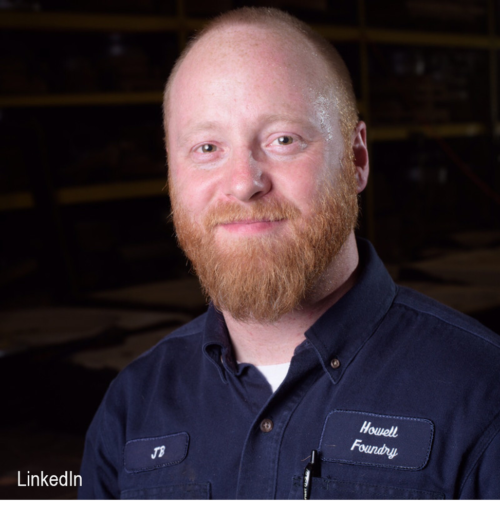
JB Shoaf President Howell Foundry
Howell Foundry plans to expand its 3D-printing capabilities following a $7.4 million update to its operation in St. Francisville, LA. This expansion is expected to create 26 new jobs and retain 22 current, according to an announcement by the Louisiana Economic Development agency. Work was scheduled to start in December for completion by the end of 2027, LED said.
The state will provide a $400,000 performance-based forgivable loan for infrastructure work, contingent upon Howell Foundry meeting investment and payroll targets. Also, the foundry is expected to participate in the state’s Quality Jobs and Industrial Tax Exemption programs.
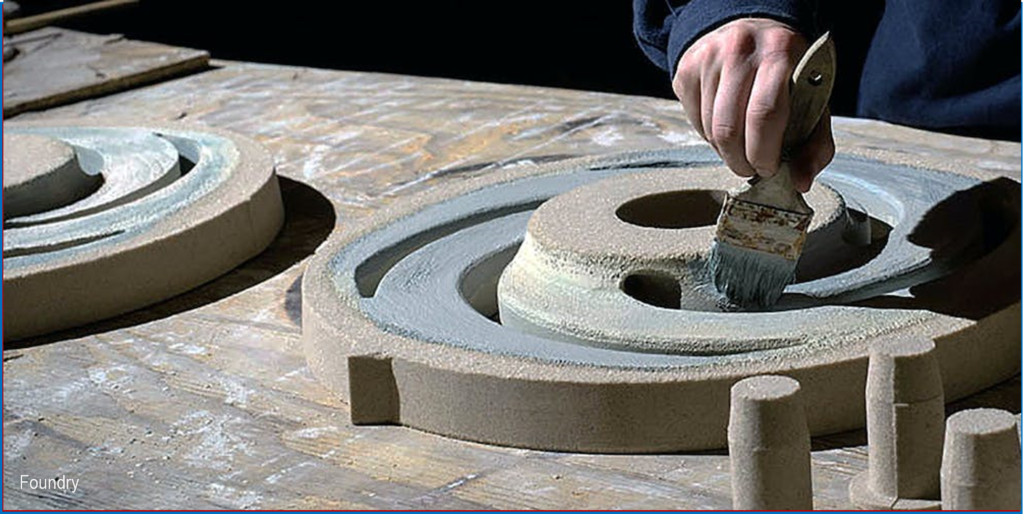
The foundry emphasizes its ability to deliver complex parts with quick turnaround, using 3D-scanning to convert parts or patterns into reproducible programs, casting process simulation to plan and set-up production, and 3D-sand printing of molds and cores.
“Howell Foundry combines modern-day 3D innovations with proven craftsmanship in one of the oldest known trades to produce rapid and reliable solutions to its valued customers who are primarily located on the Gulf Coast,” stated company president JB Shoaf said. “We take great pride in being a local business that serves local businesses.”