

laura

Evolving Efficiency: Advantages of Multi-Chamber Isolated Heat Vacuum Furnaces

Adapting to new processing demands puts traditional equipment to the test. Can single-chamber solutions keep up, or will applications require different equipment options for efficient processing? In today’s Technical Tuesday, Bryan Stern, product development manager at Gasbarre Thermal Processing Systems, addresses the advantages multi-chamber isolated heat vacuum furnaces bring to the floor.

This informative piece was first released in Heat Treat Today’s November 2024 Vacuum print edition.


Do You Hear That? It’s the Sound of Change . . .

In the evolving landscape of vacuum heat treatment, single-chamber batch furnaces have long been the cornerstone of material processing. However, with more traditional processes shifting to vacuum, rising energy costs, and increasing environmental pressure, the disadvantages of that approach are emphasized, enhancing the appeal of alternative technologies. Multi-chamber vacuum equipment, while not new to the industry, offers significant solutions to inefficiencies and challenges faced by single-chamber systems. With advances in technology, improved operational planning, and an increasingly competitive market, multi-chamber isolated heat furnaces are becoming a more viable choice.

What Is an Isolated Heat Vacuum Furnace?

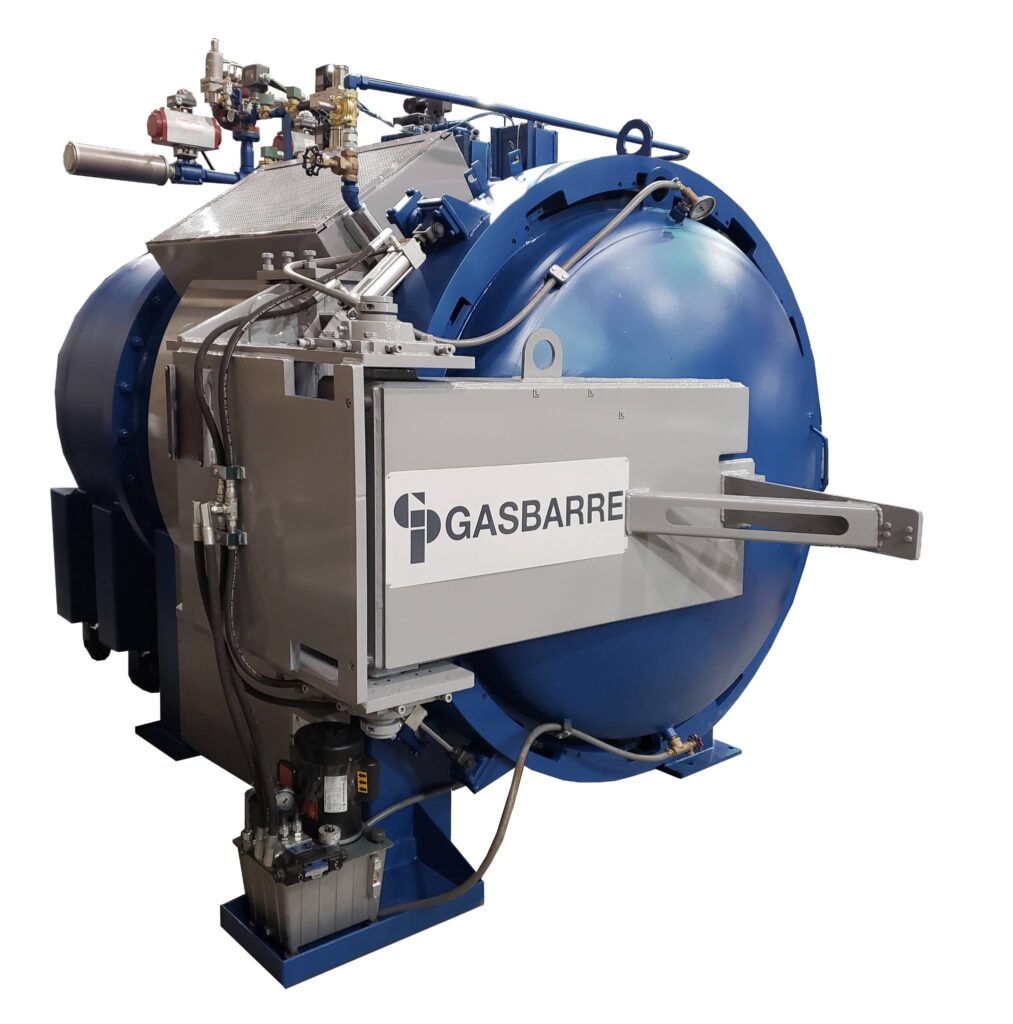
An isolated heat vacuum furnace keeps the heat chamber separate from the ambient atmosphere throughout the process, including loading and unloading. This allows the heated zone to maintain a stable temperature and vacuum between cycles, unlike single-chamber furnaces, which must heat up and cool down for each new load. Key components of this furnace type include an additional evacuation chamber, a dynamic sealing door, and a mechanism for moving the workload between chambers. While multi-chamber isolated heat furnaces may be batch or continuous, the above features fundamentally distinguish them from single-chamber batch equipment. This difference is more than just a technical nuance; it has profound implications for operations and efficiency.

The widespread use of single-chamber vacuum furnaces has significantly shaped the design and operation of vacuum furnaces today. But it is important to remember some of the challenges to this approach that we often take for granted.

Energy Efficiency Has Entered the Chat

Single-Chamber Challenge

In single-chamber systems, the entire furnace must go through a full cycle of loading, evacuation, ramping, soaking, cooling, and unloading for every batch of parts. This adds significant “dead time” on either side of the thermal process. In addition to pump-down time, ramping from room temperature typically adds 1–2 hours to the cycle time before soaking which creates a barrier to throughput. Another drawback is that the energy required to heat the furnace is thrown away after every cycle. Due to the high thermal capacity of materials like graphite and molybdenum, this is not inconsequential. With 100% thermal efficiency defined as only consuming the energy required to heat the work and fixturing, single-chamber batch furnaces typically operate in a thermal efficiency range of around 30%–50%.

Isolated Heat Advantage

In an isolated heat furnace, the work zone remains at temperature and the energy required to heat the furnace is not thrown away. Additionally, the introduction of work to a preheated work zone allows the load to be heated more quickly, reducing the time required to achieve temperature and reducing holding losses. While multi-chamber batch furnaces experience some savings, they still consume excess energy since the heat cage is empty during unloading, loading, and evacuation. Continuous configurations, however, see significant improvement with only holding losses and the energy required to heat the work and fixturing being consumed. These advantages mean that continuous furnaces typically operate in a thermal efficiency range of 45%–65%. The result is a 15%–35% energy efficiency improvement over the majority of existing equipment.
Design Optimization: Do I Detect Some Tension?

Single-Chamber Challenge

The tension of designing a single-chamber furnace to handle both heating and cooling in the same space presents substantial challenges. Insulation pack thickness is often limited to balance the need for quick pump-down. Gas nozzle penetrations through the insulation pack create direct radiation losses. This erodes thermal efficiency, adds thermal mass, and restricts gas flow during cooling. These conflicting design priorities often lead to unsatisfactory compromises and fluctuating designs. Between the additional energy to heat and cool and increase power demand at temperature, there are a lot of energy savings being left on the table.

Isolated Heat Advantage

Because the heating and cooling take place in separate locations, multi-chamber isolated heat equipment benefits from the ability to have dedicated designs tailored at each work position. More insulation can be used as conditioning time is not a significant consideration. Additionally, the insulation can be designed without penetrations, further reducing losses. Moving the work to a dedicated cooling position removes restrictions to gas flow and allows the work to radiate directly to the cold wall. This is especially beneficial at the beginning of a quench when the work is at high temperature. This can allow cooling rates to be achieved with lower quench pressures and smaller quench motors.

Thermal Cycling: Here We Go Again . . .

Single-Chamber Challenge

A single-chamber furnace must be built to endure extreme thermal cycling again . . . and again. This requires detailed design consideration to account for thermal shock, expansion, ratcheting, creep, and low-grade oxidation — all of which contribute to maintenance and replacement cost for expensive, long lead refractory components.

Isolated Heat Advantage

Since the heated portion of the furnace remains at stable temperature and vacuum, internal components are not subject to the same destructive forces. An isolated heat cage can remain in service much longer before requiring service or replacement. It also decreases the likelihood of sudden and unexpected equipment failure. Increasing the lifespan of the most expensive consumable assembly in the furnace is an incredibly valuable advantage that is frequently overlooked.

rectangular promo of HTR, smiling bearded man, blue background, HTR banner
Find more on this topic in Heat Treat Radio episode #110. Bryan discusses the shift from single-chamber batch furnaces to isolated heat vacuum furnaces and speaks to some of the advantages mentioned in this article. Click the image to watch, listen, and learn on Heat Treat Radio.

Throughput and Load Size: Can They Help?

Single-Chamber Challenge

Single-chamber batch vacuum processing is notorious for the long cycle times and resulting limited throughput. One way to reduce the costs of the wasted energy and dead time is to increase the load size to distribute the cost over more work. While this can increase capacity and reduce the cost per part, it is counterproductive to many objectives of the heat treating process. As the load size increases, it becomes more difficult to maintain thermal and process uniformity across parts at the surface versus the center of the load. This is especially problematic for densely packed loads. Loads take longer to soak out to a uniform temperature, extending cycle times. Similarly, it is difficult to achieve rapid and uniform cooling rates which can lead to higher quench pressures, larger cooling motors, or underutilizing the work envelope.

Isolated Heat Advantage

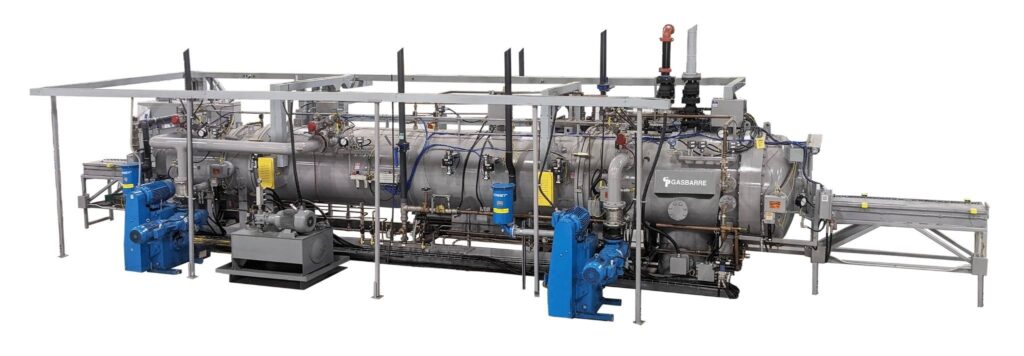
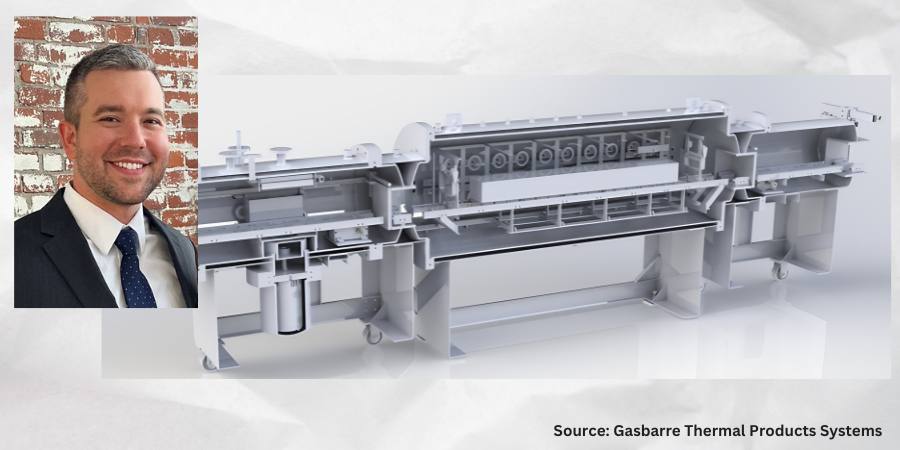
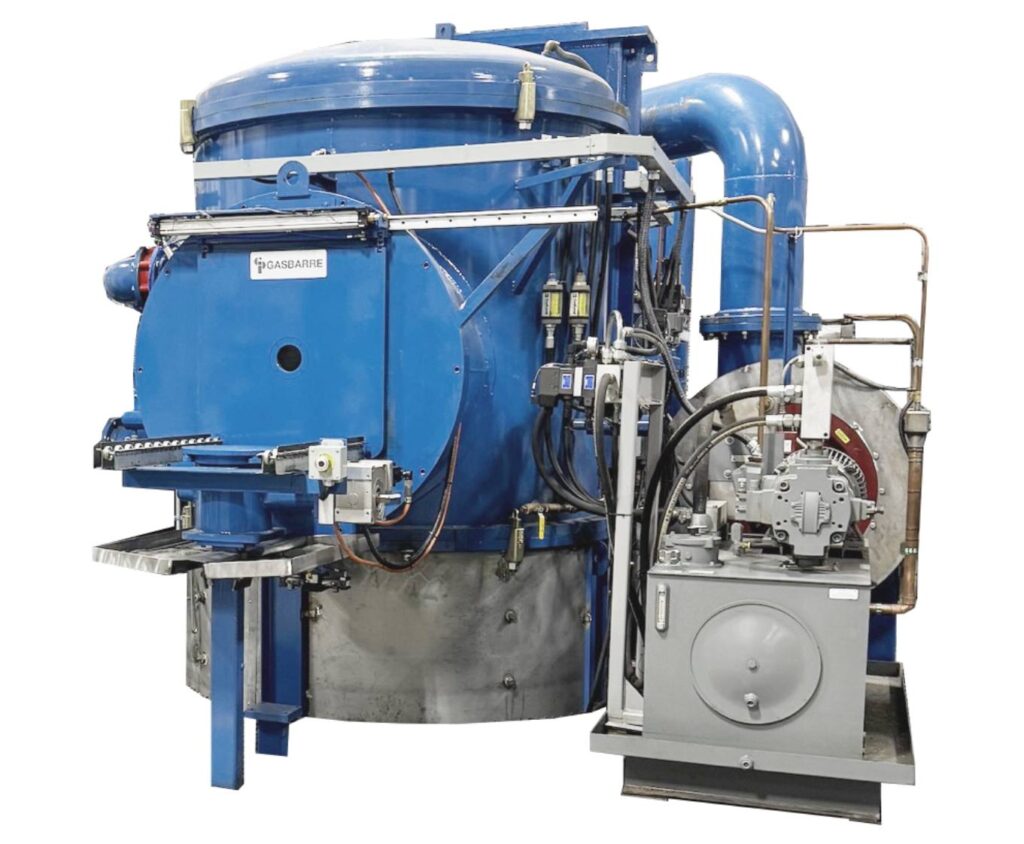
While multi-chamber batch isolated heat furnaces experience many of the other advantages discussed in this article, throughput is where continuous configurations really shine. Because separate loads are being processed simultaneously, similar or greater throughputs can be achieved with much smaller load sizes. For instance, a process with a two-hour soak would typically require around a five-hour total cycle time in a single-chamber furnace. That same process could be segmented in a continuous furnace indexing loads in as little as 15 minutes, depending on the configuration of the equipment (see Figure 3). With a throughput ratio of 20:1, each load would only need to be 1/20th of the batch load to achieve the same throughput. With these mechanics, it quickly becomes apparent how continuous processing is capable of achieving much greater throughput while benefiting from the uniformity of smaller load sizes as well as the other advantages discussed.

Figure 3. Multi-chamber continuous gas-quench furnace
Source: Gasbarre Thermal Processing Systems
Scalability: And Another and Another . . .

Single-Chamber Challenge

Increasing the capacity of a single-chamber production line necessitates adding additional discrete furnaces. This means that all of the equipment systems are duplicated. Each furnace means another chamber, pumping system, manifolds, quench motor, VFD, control cabinet, certifications, instrument calibrations, etc. There really is no economy of scale available to help facilitate high volume production.

Isolated Heat Advantage

For most processes, increasing the capacity of a continuous multi-chamber furnace only requires adding additional heated work positions to shorten the index rate. All other auxiliary equipment and infrastructure can serve double-duty, and redundant systems and maintenance are avoided. This applies the cost directly to the necessary equipment (heat cage, elements, power supply, etc.). The resulting economy of scale often makes continuous equipment a far greater value proposition for high-volume applications that would otherwise require multiple furnaces.

Vacuum Performance: Don’t Reduce Me Like That!

Single-Chamber Challenge

Because single-chamber batch furnaces are exposed to air and humidity between each cycle, they require a higher vacuum (i.e., lower pressure) to achieve the purity required for a given process. This is because even though the furnace is evacuated to a low pressure, the remaining atmosphere is still primarily comprised of oxidizers in the form of residual air and water molecules desorbing from the internal surfaces of the furnace. Achieving the high vacuum levels required to achieve the necessary reducing atmosphere in a reasonable time can result in additional pumping equipment such as a booster or diffusion pump. This adds to system complexity, upfront cost, maintenance, and operating cost. Unfortunately, vacuum processes are often developed in, and organized around, single-chamber batch processing, so the actual purity requirement often gets distilled into an ultra-low vacuum level on the process specification. Consequently, these aggressive vacuum specifications are carried over to other types of equipment where they may not be necessary to achieve the same results.

Isolated Heat Advantage

Because the heat cage remains under vacuum throughout the process, there is less exposure to atmospheric contaminants. This allows oxidizing constituents to decay to very low levels leading to improved vacuum purity. Even though the absolute pressure is higher, the makeup of the remaining atmosphere is primarily inert. Given time for desorption to decay, it is entirely possible to have a purer environment at a higher pressure without requiring the complex pumping systems necessary in a single-chamber batch furnace. Reduction levels associated with diffusion pumping in single-chamber furnaces can be achieved at higher pressures with a two-stage or even single-stage pumping systems in an isolated heat furnace. This is one of the most overlooked and misunderstood advantages of isolated heat processing.

The Shift Toward Isolated Heat Furnaces

Despite the many challenges associated with single-chamber batch processing, the prevalence of these furnaces has remained high due to their simplicity and familiarity. So, why are multi-chamber furnaces gaining traction now?

“There is a pending perfect storm of market conditions poised to tip the scales.”

There is a pending perfect storm of market conditions poised to tip the scales. More and more traditional processes are shifting to vacuum for its long list of advantages, including tighter process control, flexibility, safety, insurance liability, and improved working environment, just to name a few. This push to convert more processes is driving a need to optimize efficiency and improve cost. The existing approach has known intrinsic inefficiencies and a limited growth path for improvement.

As more heat treaters either experience or compete with the benefits of multi-chamber isolated heat equipment, adoption will continue to accelerate.

Challenges and Considerations

While isolated heat furnaces offer numerous advantages, they are not without challenges. These systems are more complex, require a detailed specification process, and may not be suitable for very large components, intermittent operations, or applications requiring a high degree of flexibility. Many of the advantages of multi-chamber equipment show up in operating and maintenance costs. These benefits can be missed if these costs are not properly accounted for in the ROI analysis phase. Overemphasizing upfront costs can mean missing out on a much better return on investment for equipment with installation life in the range of 20–30 years.

Applications and Future Prospects

Isolated heat vacuum furnaces are not industry specific; rather, they offer advantages across a wide range of applications. Processes characterized by short cycle times benefit because a greater percentage of the floor-to-floor time is dead time and can be recovered, improving equipment utilization. Processes characterized by long cycle times benefit because they can be segmented and indexed at much faster rates, increasing throughput. Surface treatments can benefit from the process uniformity of smaller load sizes without sacrificing throughput. High-volume production environments, in particular, stand to gain the most. Whenever there is a need for more than one batch furnace or where there are numerous small parts in a large work zone, the efficiency and cost savings of continuous isolated heat furnaces truly stand out.

Conclusion

The industry’s focus on efficiency, reduced emissions, and lower operating costs makes isolated heat vacuum furnaces a promising direction for the future. While single-chamber furnaces will still have their place, isolated heat furnaces are becoming more prevalent for many heat treatment processes. Offering superior energy efficiency, better process control, and a more sustainable approach to thermal processing, these furnaces will enable manufacturers to provide high quality, cost-effective solutions that meet today’s market demands and future challenges.

About the Author:

Bryan Stern
Product Development Manager
Gasbarre Thermal Processing Systems

Bryan Stern has been involved in the development of vacuum furnace systems for the past eight years and is passionate about technical education and bringing value to the end-user. Currently product development manager at Gasbarre Thermal Processing Systems, Bryan holds a B.S. in Mechanical Engineering from Georgia Institute of Technology and a B.A. in Natural Science from Covenant College. In addition to being a member of ASM, ASME, and a former committee member for NFPA, Bryan is a graduate of the MTI YES program and recognized in Heat Treat Today’s 40 Under 40 Class of 2020.

For more information: Contact Bryan at bstern@gasbarre.com


Evolving Efficiency: Advantages of Multi-Chamber Isolated Heat Vacuum Furnaces Read More »

Heat Treat Economic Indicators: November 2024 Results

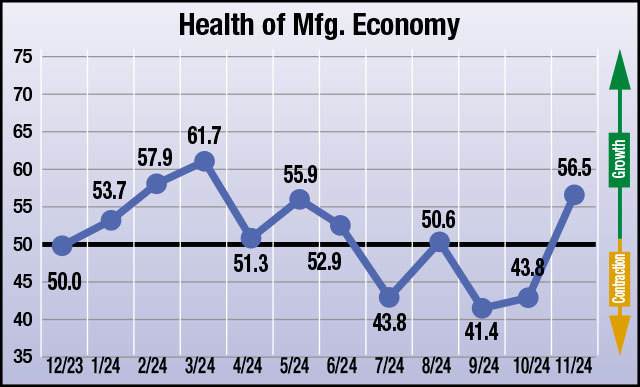
The four heat treat industry-specific economic indicators have been gathered by Heat Treat Today each month since June 2023. Last month, suppliers expected the economy to experience contraction in all four indices. This month, for the first time since May 2024, all four economic indicators are reflecting anticipated growth.

The numbers, which were compiled in the first week of November, show that responding parties expect the economy to experience growth in all four indices. In three of the four, the numbers change by more than 12 points over the past month from contraction to growth. For number of inquiries, the results from the polling increase by over 19 points, and on the other end of the indices, suppliers anticipate growth in the health of the manufacturing economy by 9 points.

The results from this month’s survey (November) are as follows; numbers above 50 indicate growth, numbers below 50 indicate contraction, and the number 50 indicates no change:

  • Anticipated change in Number of Inquiries from October to November: 64.0
  • Anticipated change in Value of Bookings from October to November: 56.0
  • Anticipated change in Size of Backlog from October to November: 57.5
  • Anticipated change in Health of the Manufacturing Economy from October to November: 56.5

Data for November 2024

The four index numbers are reported monthly by Heat Treat Today and made available on the website. 

Heat Treat Today’s Economic Indicators measure and report on four heat treat industry indices. Each month, approximately 800 individuals who classify themselves as suppliers to the North American heat treat industry receive the survey. Above are the results. Data started being collected in June 2023. If you would like to participate in the monthly survey, please click here to subscribe.


Heat Treat Economic Indicators: November 2024 Results Read More »

Cybersecurity Desk: CMMC vs. NIST SP 800-171: Understanding the Differences

In Department of Defense (DoD) compliance, many acronyms and standards define how businesses manage processes to stay compliant. In this Cybersecurity Desk column, which was first released in Heat Treat Today’s September 2024 People of Heat Treat print edition. In it, Joe Coleman, cybersecurity officer at Bluestreak Compliance, a division of Bluestreak | Bright AM™, discusses the similarities and differences between the Cybersecurity Maturity Model Certification (CMMC) 2.0 and NIST Special Publication 800-171 Rev. 2.


What Is CMMC?

The Cybersecurity Maturity Model Certification (CMMC) evaluates the maturity of an organization’s cybersecurity program. Developed by the DoD, it aims to equip over 300,000 Defense Industrial Base (DIB) contractors with robust defenses against cyber threats. Once formally published, CMMC 2.0 will be a mandated framework for private contractors and subcontractors seeking government contracts.

CMMC’s comprehensive approach includes NIST SP 800-171, NIST SP 800-172, and the Cybersecurity Framework (CSF), incorporating industry-leading practices. It ensures the effective implementation of critical controls and safeguards the integrity of the supply chain. CMMC 2.0 compliance certification has three levels:

  • Level 1: Foundational: For companies handling Federal Contract Information (FCI) but not Controlled Unclassified Information (CUI).
  • Level 2: Advanced: For companies that store, process, or transmit CUI.
  • Level 3: Expert: For companies implementing highly advanced cybersecurity practices.

It will be referred to as DFARS 242.204-7021 when integrated into government-awarded contracts.

Source: Department of Defense

What Is NIST SP 800-171?

NIST SP 800-171 is the National Institute of Standards and Technology Special Publication 800-171 Rev. 2. It outlines security standards for non-federal organizations that handle CUI, ensuring they maintain strong cybersecurity practices. Compliance is mandatory for DoD primes, contractors, and supply chain service providers.

NIST 800-171 specifies five core cybersecurity areas: identify, protect, detect, respond, and recover. These areas serve as a framework to protect CUI and mitigate cyber risks. The standard comprises 110 security controls within 14 control families, leading to 320 control or assessment objectives. Compliance is measured on a 110-point scale, with a possible range from -203 to 110. An initial negative score is not uncommon.

Even for organizations with some cyber/IT security measures, retaining a qualified DFARS/NIST 800-171 consultant or a CMMC Registered Practitioner (RP) or CMMC Registered Practitioner Advanced (RPA) is highly recommended to guide you through the process.

Similarities Between NIST SP 800-171 and CMMC

Both CMMC and NIST SP 800-171 aim to strengthen information security and protect sensitive data, ensuring the confidentiality, integrity, and availability of organizational information assets. Here are some of the key similarities:

  • Control Alignment: CMMC 2.0 Level 2 aligns with NIST SP 800-171 Rev. 2’s 110 controls.
  • Focus: Both frameworks emphasize protecting data confidentiality, integrity, and availability.
  • Role Definitions: They describe roles within an organization’s cybersecurity program and interactions among those roles.
  • Asset Identification: Both require identifying assets and vulnerabilities and creating a risk management plan.
  • Cybersecurity Program Development: Organizations must develop a program with policies, procedures, and standards.
  • Risk Management: Both require identifying, assessing, prioritizing, and responding to risks, though CMMC is more comprehensive.

Differences Between NIST SP 800-171 and CMMC

While both frameworks enhance cybersecurity, they have distinct features:

  • Compliance Requirement: DFARS 252.204-7012 mandates NIST SP 800-171 compliance; DFARS 252.204-7021 mandates CMMC certification for handling CUI.
  • Assessment: NIST SP 800-171 compliance is self-assessed, while CMMC requires an independent third-party assessment.
  • Levels: CMMC has three certification levels, each more stringent than NIST SP 800-171 alone.
  • Scope: CMMC integrates additional NIST SP 800-172 practices and industry standards beyond NIST SP 800-171.

Conclusion

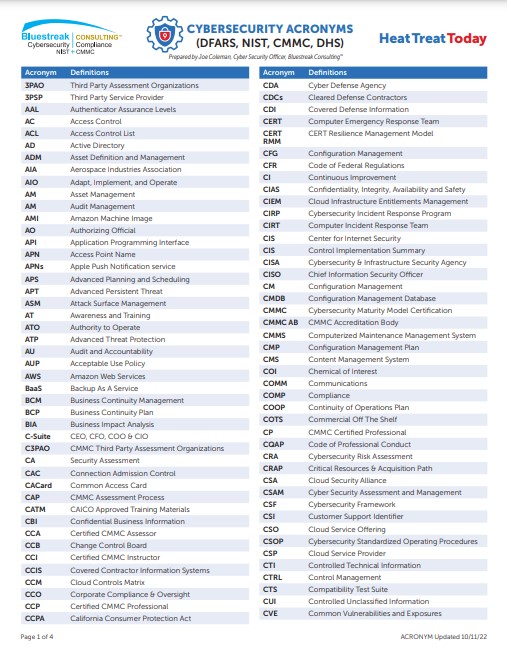
Click image to download a list of cybersecurity acronyms and definitions.

Understanding the differences between CMMC 2.0 and NIST SP 800-171 Rev. 2 is crucial for organizations enhancing their cybersecurity posture. Both frameworks are essential for assessing maturity in governance, risk management, incident response, data protection, and technology assurance. Adopting these frameworks ensures proactive adaptation to evolving threats and compliance with regulatory standards.

About the Author:

Joe Coleman
Cyber Security Officer
Bluestreak Consulting
Source: Bluestreak Consulting

Joe Coleman is the cybersecurity officer at Bluestreak Compliance, which is a division of Bluestreak | Bright AM™. Joe has over 35 years of diverse manufacturing and engineering experience. His background includes extensive training in cybersecurity, a career as a machinist, machining manager, and an early additive manufacturing (AM) pioneer. Joe presented at the Furnaces North America (FNA 2024) convention on DFARS, NIST 800-171, and CMMC 2.0.

For more information: Contact Joe at joe.coleman@go-throughput.com.


Cybersecurity Desk: CMMC vs. NIST SP 800-171: Understanding the Differences Read More »

Sandia National Laboratories Expands Production Capabilities with 2 Vacuum Furnaces

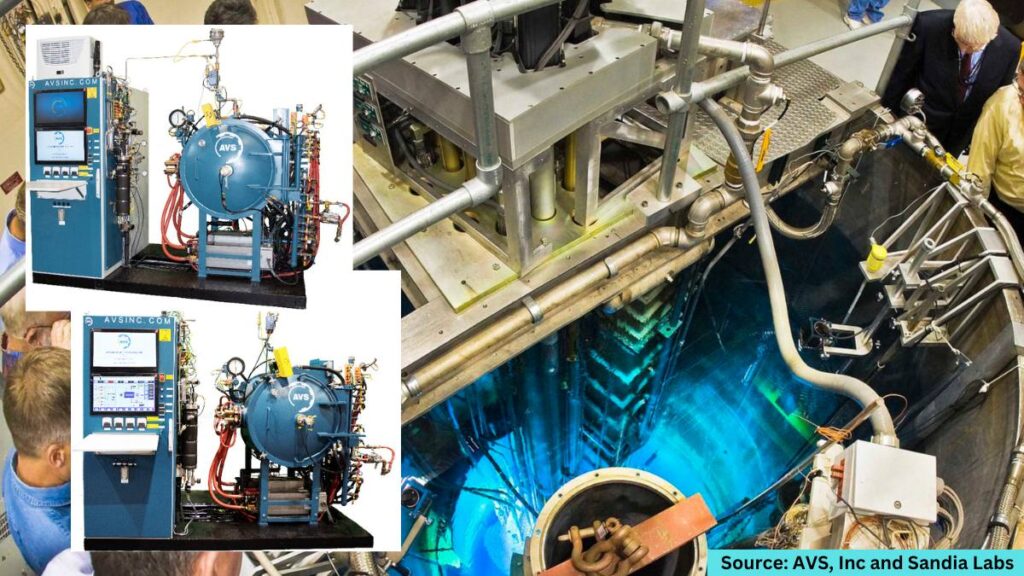
Sandia National Laboratories has acquired two horizontal vacuum furnaces for one of its production labs in Albuquerque, NM. The furnaces will meet the multimission laboratory’s goal to maintain process parameters and datalogging essential for analysis to coincide with the process payload run results. The facility’s applications target roughly 70 industry sectors, including nuclear deterrence, arms control, nonproliferation, hazardous waste disposal, and climate change.

In the tandem system designed and set up by AVS Incorporated, one furnace operates at a maximum of 1600°C (2912°F) and the other at 1300°C (2372°F). Both have a 100-lb load capacity. The systems integrate wet and dry hydrogen process gas along with all refractory metal hot zones. The HMI interface and controls allow for countless combinations of recipes and selectable functions.

Sandia National Laboratories is one of three research and development laboratories of the United States Department of Energy‘s National Nuclear Security Administration (NNSA) with the primary goal of advancing U.S. national security by developing various science-based technologies. 

The press release is available in its original form here.


Sandia National Laboratories Expands Production Capabilities with 2 Vacuum Furnaces Read More »

Schilling Forge Increases Capacity with Car Bottom Furnace

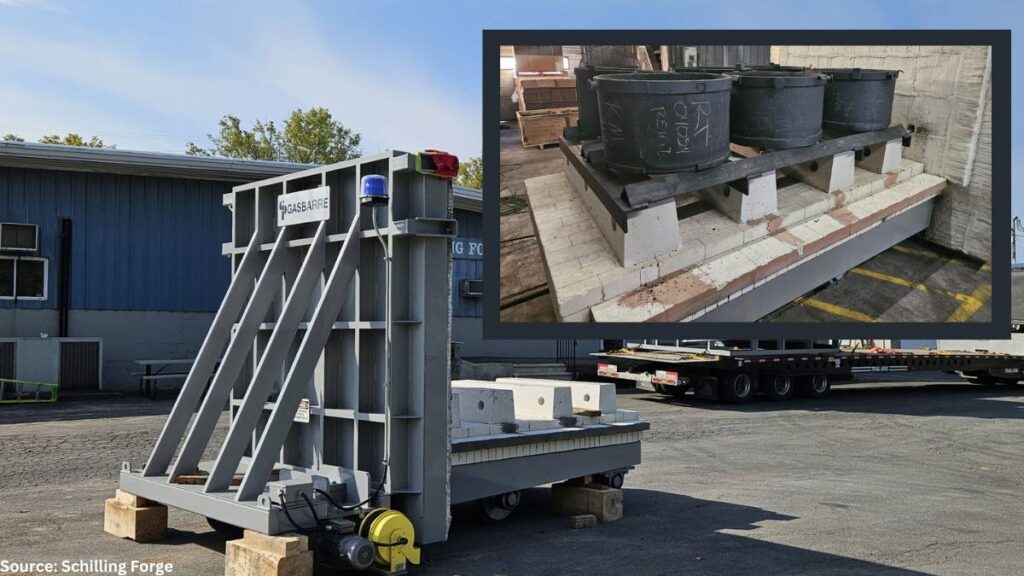
Schilling Forge, a supplier of precision forgings based in Syracuse, NY, recently increased its annealing capacity with a car-bottom furnace. The company produces forgings for a variety of industry segments in medical manufacturing, including surgical, dental, orthodontic, and endoscopic.

The furnace, designed and manufactured for the company by Gasbarre Thermal Processing Systems, is electrically heated with an operating range of has a work zone of 60” x 84” x 40” with a 9,000-lb load.  It is electrically heated with operating range of 1250°F to 1600°F (732°C to 871°C).

“We are excited about the arrival of our new Gasbarre car-bottom furnace that increases our annealing capacity by 67%,” reported Schilling Forge on a LinkedIn post. “You can see our survey posts where we attached our thermo-couples at 9 various locations to verify the temperatures throughout the cycle.


Schilling Forge Increases Capacity with Car Bottom Furnace Read More »

Basics of Vacuum Furnace Leak Detection, Part 1

If you have the right leak detection equipment, the process of detecting leaks can be more time efficient. In this Technical Tuesday installment, learn more about the practical side of leak detection, from potential sources of leaks to equipment and methods of effective leak detection. Guest columnist Dave Deiwert, president of Tracer Gas Technologies, also provides 10 tips for identifying the most common sources of leaks. Stay tuned for his follow-up article that will focus on operating and maintaining a helium leak detector and repairing the leaks that are found.

This informative piece can be found in Heat Treat Today’s November 2024 Vacuum print edition.


When leaks develop in a vacuum furnace, they can inhibit the furnace’s ability to achieve the desired process vacuum level. Without an appropriate leak detector, an operator and maintenance team are limited to guessing where the leak might be, a time-consuming process of elimination evaluating each component or possible leak point one at a time. Alternatively, if you have the right leak detection equipment, the process of detecting leaks can be more time efficient.

First, a team needs to know the possible sources for leaks — especially if they are troubleshooting without a leak detector. Then, selecting the appropriate equipment can speed up the leak detection process. Ultimately, that equipment is most useful if a team is informed on how to best use and maintain the equipment.

Troubleshooting Without a Leak Detector

If a team does not have a leak detector, they first must disassemble potentially leaking components to clean and replace gaskets and seals. For some products, like valves and pumps, they might use a supplier-provided repair kit.

After reassembling, if they discover they still have a leak in their furnace, they will continue to select possible leaking components for maintenance.

The team would then start with the components most likely to be leaking — for example, the door seal. The door to the furnace is opened and closed every cycle of the furnace as the operator removes products that were under process for the previous cycle and then places the next product, or batch of products, into the furnace. This opening and closing of the door creates wear on the gasket and also provides opportunity for foreign materials and debris to land on the seal and cause a leak. As this is just one possible source of a leak, continuing to troubleshoot can become a lengthy process. (See sidebar for more information on possible sources for leaks.)

Selecting Equipment To Support Vacuum Furnace Leak Detection

Having a leak detector on-site allows a team to identify the source of the leak more efficiently. Typically, major OEM furnace suppliers, their field service teams, and major end-users of vacuum furnaces have selected “fixed magnetic sector mass spectrometers” optimized for using helium as a tracer gas to look for leaks in vacuum furnaces. These are also the tool of choice for OEM companies and end-users in other vacuum applications such as glass coaters, solar panel manufacturing, automotive, medical, aerospace, and others. In industrial manufacturing plants and R&D, we commonly call these tools “helium leak detectors.”

Helium leak detectors are the well-established method for leak testing because helium — the second smallest molecule and a safe, inert gas that does not react with other gasses or material — is useful for finding the smallest of leaks.

10 Practical Tips for Leak Detection

The following tips for leak detection pertain to using helium leak detectors:

  1. Understand how your leak detector works to the point that you can confirm it is working properly.
  2. A common question is, “How long after I spray a point on the furnace should I wait for a reaction on the leak rate meter to ensure that point doesn’t leak?” The answer is to characterize your system so that you know what the longest time constant can be for a leak to be detected. For example, purposefully apply a leak at the furthest point on the furnace from where the leak detector is installed. Then, spray helium and count the seconds to when the leak detector reacts to helium from the leak. Now you will know that you never have to wait longer than that without a reaction before moving on to the next point of leak testing.
  3. Avoid moving along too quickly around the furnace as you spray helium. If there is a reaction at the leak detector when you stop spraying, you may have passed the point of leakage. After the leak detector leak rate drops back to baseline, you will try respraying the point of concern. If there is no reaction, consider that you may have moved along too quickly, and retrace the area you had sprayed more slowly. If you do not get a reaction again, it is very possible that the air currents of the room had carried the helium towards a point that you have not even reached yet.
  4. Remember: There are naturally five parts per million of helium in the air we breathe. Therefore, when you spray helium, it becomes the victim of the air currents in the air and the fresh air makeup of the room. Helium can go up, down, left, right, away from you, and towards you depending on the air currents of the room. 
  5. Because helium spreads so pervasively, it is better to spray very small amounts of helium so that when you get a reaction from the leak detector, you know you are getting closer to the leak. If you spray helium like you are trying to dust off the system at the same time, you will quickly confirm there is a leak but will be forced to wait forever and a day for the helium to clear up in the room to the point that you can continue looking for the leak.
  6. If you have confirmed the location of the leak to a small area, but there are still several points of possibility within it and you are unable to pinpoint the leak, diminish the amount of helium you are spraying. You can try to further restrict the flow of helium by using the “dead stick” method. This is where you spray helium from the spray nozzle away from the area of interest, then you place the nozzle near the potential leak points one at a time, relying on the residual helium that is present at the nozzle. This can still work well because (if you remember that there are 5 parts per million of helium in the air we breathe) there could still be hundreds, if not thousands or more, parts per million of helium present at the tip of the nozzle — at least long enough for using the dead stick method.
  7. If you are looking to minimize the costs of helium, consider buying your tanks of helium at a lower percentage using nitrogen as the balance gas in the cylinder. People already tend to spray too much helium when conducting leak detector tests, and we are not trying to measure the severity of the leaks. So, decreasing the percentage of helium will save money without negatively impacting leak detection. If you are not yet comfortable with this but interested in testing it, simply buy one tank with a lower percentage of helium. Next time you find a leak with your 100% tank of helium, roll the tank with a lower percentage of helium over, spray the same leak on your system, and determine the difference (if any) in the effectiveness of detecting any leaks found.
  8. Learn the “wellness” checks from your leak detector’s manufacturer. This can help you establish preventative maintenance for your leak detector before it has a problem that makes it unavailable for use when your furnace needs a leak check. Your leak detector manufacturer should be able to recommend what points of interest on their leak detector need regular scrutiny.
  9. Calibrate your leak detector when you start it up and check calibration when you are finished to confirm it is working properly.
  10. If you are fortunate to not need your leak detector for many months, I recommend you schedule a few times per year to start it up and ensure it is still working well. Occasionally, I hear of someone who needed their leak detector after months to a year of disuse who found that it was not working well. Leak detectors, like pumps, should not be neglected indefinitely.
Figure 3. Blower mounted atop pump
Source: Dave Deiwert

The Value of Efficiency

While it is possible to identify and repair leaks without a helium leak detector, a team with one is likely to net significant time savings if they operate and maintain it intentionally. An operation with many furnaces typically will have their own leak detector — and probably a spare. Operations with just one or two furnaces may choose to hire a service company to find the leaks in their system; this works well if they rarely encounter leaks on their systems.

“Basics of Vacuum Furnace Leak Detection, Part 2” will cover advancements in helium leak detector technology, operating and maintaining a leak detector, and comparing whether it would make sense to repair vs. replace a leak detector.

About the Author:

Dave Deiwert
President
Tracer Gas Technologies
Source: Dave Deiwert

Dave Deiwert has over 35 years of technical experience in industrial leak detection gained from his time at Vacuum Instruments Corp., Agilent Vacuum Technologies (Varian Vacuum), Edwards Vacuum, and Pfeiffer Vacuum. He leverages this experience by providing leak detection and vacuum technology training and consulting services as the owner and president of Tracer Gas Technologies.  

For more information: Contact Dave at ddeiwert@gmail.com.


Basics of Vacuum Furnace Leak Detection, Part 1 Read More »

Special Springs Enhances Production Capabilities with Nitriding System

Springs and gas cylinders manufacturer Special Springs has bolstered its heat treating capacity with a new nitriding turnkey system. By adding to their production capabilities, the company aims to meet the growing demands of their client base, which includes the automotive, appliance, agriculture, and heavy equipment sectors.

Marcin Stokłosa
Technical Sales Manager
NITREX Poland

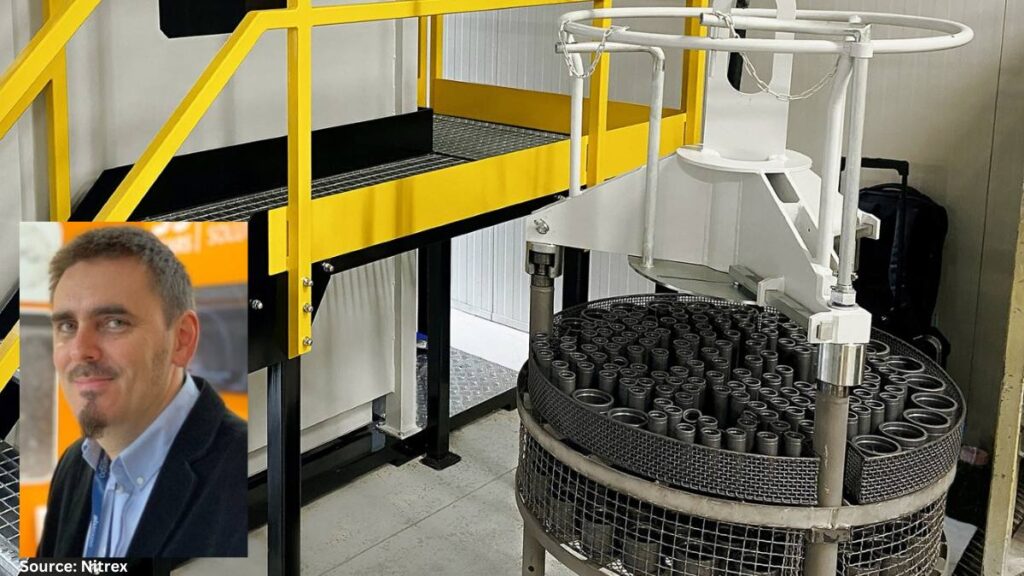
This expansion follows a long-standing collaboration, which began in October 2004 with the commissioning of Special Springs‘ first Nitrex nitriding turnkey system and continues with the installation of an NXK series furnace in July 2024.

The springs manufacturer installed the compact NXK-812 furnace, which incorporates the heat treat technologies Nitreg and ONC, to accommodate increased capacity and optimize production efficiency. The system has a load capacity of 1,200 kg (2,600 lbs); the two furnaces work alongside each other, utilizing interchangeable material handling equipment to ensure continuity and efficiency in their production process.

“[Special Springs’] decision to expand with a second Nitrex system highlights the strength of our solutions and the trust we’ve built over the years. We look forward to seeing future advancements supporting advanced gas springs exemplifies the synergy achieved through strategic collaboration, advanced heat treat technologies, and exceptional support,” said Marcin Stoklosa, technical sales manager of EMEA region at Nitrex.

The press release is available in its original form here.


Special Springs Enhances Production Capabilities with Nitriding System Read More »

FPM Heat Treating Increases Capacity with Vacuum Furnace

FPM Heat Treating has announced the acquisition of a vacuum furnace, enhancing the company’s capabilities to serve the manufacturing community, especially in the automotive and aerospace sectors. The furnace will meet an increasing demand for a specialized family of parts.

Bob Ferry
Vice President of Quality & Engineering
FPM Heat Treating

The furnace, fully compliant with NFPA, NADCAP, AMS, CQI-9, and other critical industry standards, has been installed at FPM Heat Treating by Solar Manufacturing. With an operating temperature of up to 2400°F (1315.5°C) and a weight capacity of 5,000 pounds, the furnace processes at specialized heat treatment cycles critical for automotive components as well as precise specifications for applications within consumer products and the military/aerospace sectors.

“We are committed to meeting the growing demands of our clients in the manufacturing community,” said Bob Ferry, vice president of quality and engineering at FPM Heat Treating. “The new Solar furnace enhances our capabilities and enables us to maintain the highest standards of quality and efficiency in our operations.”

Main Image: Adam Jones, Midwest regional sales manager at Solar Manufacturing, viewing the vacuum furnace’s 48” x 48” x 72” deep insulated hot zone

The press release is available in its original form here.


FPM Heat Treating Increases Capacity with Vacuum Furnace Read More »

Commercial Heat Treater Expands Capabilities with 12th Vacuum Furnace

HART-TECH has expanded its capabilities with a vacuum furnace that will allow for the heat treatment of multiple steel types and the ability to implement a wide range of processes, from hardening through vacuum carburizing and carbonitriding. The furnace will efficiently heat treat large loads of research, test, and production elements.

Maciej Korecki
Vice President of Business of the Vacuum Furnace Segment
SECO/WARWICK

The commercial heat treater has previously incorporated over 10 SECO/WARWICK processing solutions. This system is being provided to work on the implementation of vacuum carbonitriding technology services that HART-TECH can now offer to a wide range of clients.

“We can say that we have a kind of synergy with the HART-TECH hardening plant,” said Maciej Korecki, vice president of the SECO/WARWICK Group’s vacuum segment. “Our partner, just like us, loves science, research, and development, and the common curiosity about the world motivates us to create further innovations.” 

Dr. Eng. Robert Pietrasik, Sc.D.
Management Board CEO & Technological Dept Head Director
HART-TECH Sp. zo. o.

“This solution will help us to put into action a project concerning the implementation of vacuum carbonitriding technology at the HART-TECH plant with our customers in mind,” said Dr. Eng. Robert Pietrasik, president of HART-TECH. “We want to implement the low-pressure carbonitriding process and be able to use it in mass production. 

“By expanding the machine park with a new vacuum furnace,” Dr. Pietrasik continued, “we will also significantly shorten the waiting times for heat treatment for our current and future customers. The large workspace will significantly increase our capabilities for processing elements hardened in gas. Thus, we will be able to gradually switch from hardening elements in oil to hardening in gas, which is more efficient, cleaner and ensures smaller deformations.” 

The vacuum furnace supplied to the company has been enhanced with a gas system equipped with two acetylene mass valves, a hydrogen mass valve, and an ammonia mass valve. The furnace can use three gases for various technologies: acetylene, hydrogen and ammonia. HART-TECH specializes in hardening, carburizing, nitriding, sulfur nitriding, steel tempering, supersaturation and aging, annealing, vacuum brazing and low-friction layers, and hardening of machine and tool elements.

The press release is available in its original form here.


Commercial Heat Treater Expands Capabilities with 12th Vacuum Furnace Read More »

Nearly 100 Industry Professionals Gather To Discuss Sustainable Technologies

Nearly 100 attendees gather at the Conrad Hotel in Indianapolis for a three-day event to discuss industrial decarbonization and sustainable technologies. Targeting users and suppliers of industrial heating processes, the Industrial Decarbonization Summit is organized by the Industrial Heating Equipment Association (IHEA).

IHEA designed the SUMMIT to help everyone using heat technologies understand and overcome these important concerns and challenges.

Emceed by Jeff Rafter, vice president of sales and marketing, Selas Heat Technology Co. LLC, the event began yesterday (Tuesday, October 29th) with a keynote presentation by Dr. Avi Shultz, of the United States Department of Energy, Industrial Efficiency & Decarbonization Office (US DOE IEDO), who spoke on “Understanding the US DOE Industrial Decarbonization Initiatives.” Other speakers and topics covered during the 2-day event include:

  • Mr. Tim Hill from Nucor and Mr. Jeff Kaman from John Deere talking about the implementation of their companies’ decarbonization plans.
  • Mr. Perry Stephens from EPRI, Mr. Brian Kelly from Honeywell, and Mr. Erik Anderson from Ambient Fuels discussing alternatives to fossil fuel combustion.
  • Mr. Sandeep Alavandi of GTI Energy addressing how companies can get to net zero by reducing, converting, and trading.
  • Mr. Bryan Stern from Gasbarre Thermal Processing Systems addressing economic and business concerns related to industrial adoption of decarbonization technologies.

Summit attendees come from a wide cross section of industries including companies such as Daido Steel, Whirlpool, Detroit Stoker Co, Wenger Mfg, Trane, Nucor Steel, Timken, John Deere, Oak Ridge National Lab, Siemens Energy, Dowa THT America, and many more.

The content of the Summit is targeted at company thought leaders who are attempting to learn how to navigate the decarbonization roadway. Click on the video below to view some of Jeff Rafter’s opening remarks.

For more information on the Summit, please go to https://summit.ihea.org.


Nearly 100 Industry Professionals Gather To Discuss Sustainable Technologies Read More »

Skip to content