WATERLOO, IA—Advanced Heat Treat Corp. (AHT) recently announced that it has received a Federal Firearms License (FFL) issued by the U.S. Department of Justice, Bureau of Alcohol, Tobacco, Firearms and Explosives at their facility in Monroe, Michigan. AHT now has licenses at all four of the company’s locations in Iowa, Alabama and most recently, Michigan. All licenses are available to view or download on the Quality section of their website: www.ahtcorp.com under the “About” section.
“While we are no stranger to processing firearms, the addition of this license will allow us to better serve those customers whose parts require an FFL,” stated Gary Sharp, President and CEO. “Our firearm customers have recently experienced better lubricity and corrosion resistance with one of our trademarked processes, UltraOx®, so we wanted to be better equipped to handle all of their parts for aesthetics and consistency. We are excited to now be able to expand that offering to our Michigan customers.”
The aluminum association launched a new series of informative videos, hosted by former NASA astronaut Dan Tani that explain how aluminum helps automakers develop the safest, greenest, and most sustainable vehicles ever.
One of the great privileges of being the publisher of an industry publication is meeting many outstanding people. Some are exceptionally wealthy, some not. Some have a deeper degree of “outstandingness” in that they are kind and others-centered; others not so much. Due to the kindness of Ginny Smith, daughter of Hank Rowan, both of Inductotherm fame, I had the great honor of meeting Hank Rowan, the founder and former CEO of the Inductotherm Group of Companies. This short article is mostly about Mr. Rowan, although it is also about the people Mr. Rowan, I’m sure, would have championed.
My brief encounters with Mr. Rowan were two and both very brief. I’ll tell you more about my experiences with Mr. Rowan and his daughter, Mrs. Smith, below, but for now, you should take some time to listen to the excellent podcast that Malcolm Gladwell did about Hank Rowan shortly after Mr. Rowan’s passing in 2015. Fascinating.
Click here to be taken to the podcast that Mr. Gladwell did about Hank Rowan.
Mr. Rowan
Encounter #1. Not long into my publishing career with BNP Media (I was the publisher of Industrial Heating magazine from 1994-2014), I heard about Mr. Rowan’s book The Fire Within. Wanting to get a little better acquainted with the induction industry, I searched for the book. This was pre-Amazon days…or at least before I knew how to use it! Being a rather forward person, and not having any luck finding the book elsewhere, I called Inductotherm in Rancocas, NJ, to see if I could obtain a copy of the book from them. They answered the phone.
Receptionist: “Hello, Inductotherm, how can I help you?
Me: “Hi, my name is Doug Glenn and I was wondering if I could get a copy of Hank Rowan’s book from you?”
Receptionist: “Hold please.”
Next Voice: “Hello. This is Hank Rowan, how can I help you?”
Me: (Stone-dead silent…….) “Mr. Rowan! Nice to meet you….”
I went on to explain why I was calling and we had a nice discussion. Needless to say, I was surprised and appropriately impressed that Mr. Rowan took calls of this nature. He was a genuinely nice person. I got two copies of the book several days later with a short, hand-written note from Mr. Rowan.
Encounter #2. Multiple years later when I was making a sales call on Ginny Smith, Mr. Rowan’s daughter, who I mentioned earlier, I was about ready to leave and Mrs. Smith asked me if I’d like to meet her father. I was a bit surprised but, of course, said “yes.” We commenced to walk up the steps and directly into Mr. Rowan’s office. He had just completed some sort of minor surgery on his face and was slightly bandaged up…but still at work…and if I remember correctly still coming into work nearly every day even at the advanced age of 80+. His reception was warm and the three of us had a brief and pleasant conversation. No pretension; just a normal guy…as was his daughter, Ginny. I, of course, recounted the book request incident to him (not knowing what else to talk about) and he didn’t act surprised.
Some exceptionally wealthy people are aloof. Not Mr. Rowan.
Other Industry Champions
I’m going to step out and speculate a bit here because I did not know Mr. Rowan well enough to say what I’m about to say emphatically…I could be wrong, but I think Mr. Rowan would probably champion the not-so-rich-and-famous people in the heat treat industry. People like Dan Reardon of Paulo Products with whom I’ve had the privilege of developing an online relationship (!). Dan and I have corresponded by LinkedIn only. I’ve never met him in person. Nonetheless, I consider Dan to be an industry (and life) champion. I think Mr. Rowan would as well.
If you’ve listened to the Malcolm Gladwell podcast (see above), you know that Mr. Rowan donated millions of dollars to educate the every-day engineers in and around his New Jersey home. It would be hard to say how many educational lives Mr. Rowan has impacted.
Mr. Reardon, on the other hand, father of five, is, as I am, struggling to get our kids (Dan has 5, I have 4) through college. Based on the LinkedIn exchanges Dan and I have had, it is easy to conclude that Dan is not independently wealthy. By his own admission, it is a “struggle” to know how he and his wife are going to do it — how are they going to put all the kids through college and still have a half decent retirement. My guess is that if Dan had to choose, he’d sacrifice his retirement for the benefit of his kids. Go Dan!
These are the types of people that make the heat treat industry tick. There are undoubtedly thousands of others that could be mentioned. Malcolm Gladwell doesn’t have time to profile them all; nor do I, but please know that each and every one of you that sacrifices himself for the good of others is a champion.
Holland, NY: One of North America’s leading high-temperature radiant tube manufacturers, INEX Incorporated, recently completed a three-phase building expansion nearly doubling the companies footprint in Holland, New York, 30 miles southeast of Buffalo. According to Mike Kasprzyk, president and owner of INEX, “we’re now able to meet the growing needs of our expanding customer base.”
The expansion included additional production, engineering, and shipping/receiving floor space as well as the addition of new manufacturing equipment and technologies to meet consistently increasing demand. The company’s high-temperature silicon/silicon-carbide (Si/SiC) radiant tubes are one alternative to conventional all-metal radiant tubes and tend to have long life cycles and a higher BTU output per square inch than traditional all-metal radiant tubes.
For more on this expansion, listen to an audio interview with Mike Kasprzyk conducted by Heat Treat Today publisher DougGlenn by clicking here.
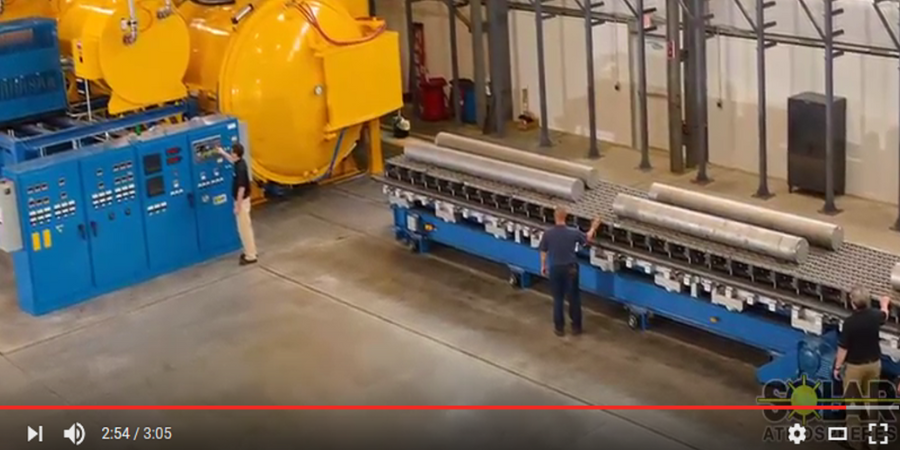
Take a look at this fascinating time-lapse video of a 48 foot vacuum furnace being installed at a leading commercial heat treat shop in western Pennsylvania. The furnace was manufactured by Solar Manufacturing and will be used for vacuum processing very large, long, and/or heavy aerospace, automotive and energy sector parts. Watch it now by clicking here or on the image below.
This is the first in a series of blogs titled Metallurgy for the Non-Metallurgist, in this first blog we will look at materials.
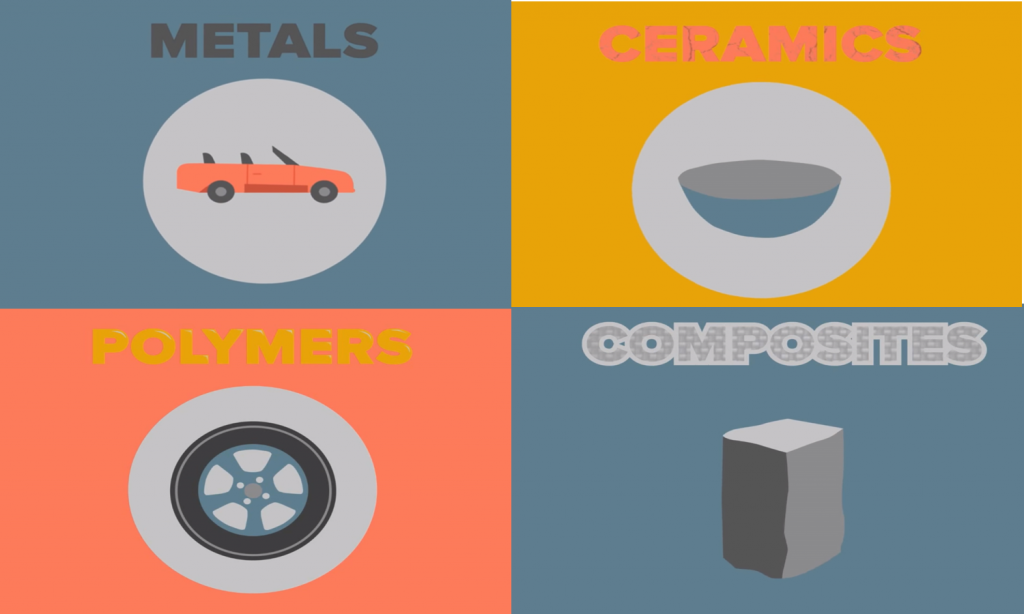
Engineering materials can be divided in to 4 key areas, Metals, Polymers, Composites and Ceramics.
Metals – Metals are the widest used of the four materials. Even if a material is not made of metal, metal will have been used at some point during its manufacture.
Metals can be divided into two sub groups; ferrous and non-ferrous. In ferrous metals the main constituent is iron and this group consists of steels and cast irons. Considering the amount of strength that is achievable in steel and cast irons, it is a cheap material. This is because iron is one of the most plentiful elements in the earth’s crust.
Non-ferrous metals include any other metals, some examples include aluminum, copper, zinc, titanium, and nickel.
Metals can be strengthened by adding more than one metal together such as copper and tin to make bronze. In this example the two combined have far greater strength than each of the individual metals (the sum is greater than the parts). We can also change the properties of metals by adding non-metallic elements like carbon.
When we produce steel we use the same principle as bronze, we take one element iron, which is the bulk of all steels and add another chemical element (alloying addition), these could include carbon, manganese, nickel, copper, molybdenum, boron, chromium, niobium, titanium, vanadium. In this way we can tailor a steel to a specific application.
When we add alloying additions to the metal it distorts the atomic structure, this makes it more difficult for the atoms to move around and makes the metal stronger. Depending on the type and amount of an alloying element we can make a metal much stronger.
Polymers – Polymers are widely used in many different industries and can be natural (wool, silk, natural rubber) or synthetic (synthetic rubber, nylon, polystyrene).
Plastics are probably the most used polymer and are made up from hydrogen and carbon (hydrocarbons). These are a by-product from the petroleum industry and due to this they are an abundant, and therefore a cheap material.
The carbon and hydrogen which make up the plastics are the key to how they work, because these can form together to produce long chains, this enables plastics to be versatile and easily processed.
Composites – A composite is a combination of two or more materials and consists of a binder and a reinforcement. They have been used for centuries in the form of concrete, and in Roman text from 25BC different aggregates are discussed for use in lime mortars. In 1853 steel bars were first added to concrete making one of our widest used composites: reinforced concrete. In concrete, cement is the matrix and the stone or aggregate is the reinforcement. The other main composites are fibre glass and carbon fibre.
Ceramics – Ceramics have been used for thousands of years and the most common two are glass and clay. Clay was the first material that we learnt to transform into another state using fire. This was done about 29000 years ago when clay was formed into decorative figures. Much later clay was used to form items like jugs and bowls.
Glass which is mainly made from sand, was mastered by the Romans who unlocked the secret of blown glass by mixing it with minerals. The Romans were the first people to use glass for windows.
Heat treatment standards are stricter in the aerospace industry than in the medical industry where lives are on the line. This doesn’t make sense and something is being done about it.
Click here to read more about how Bob Hill, President of Solar Atmospheres of Western Pennsylvania believes the medical industry could benefit from adopting quality standards from the aerospace industry.
Author: Bob Hill, President, Solar Atmospheres of Western Pennsylvania
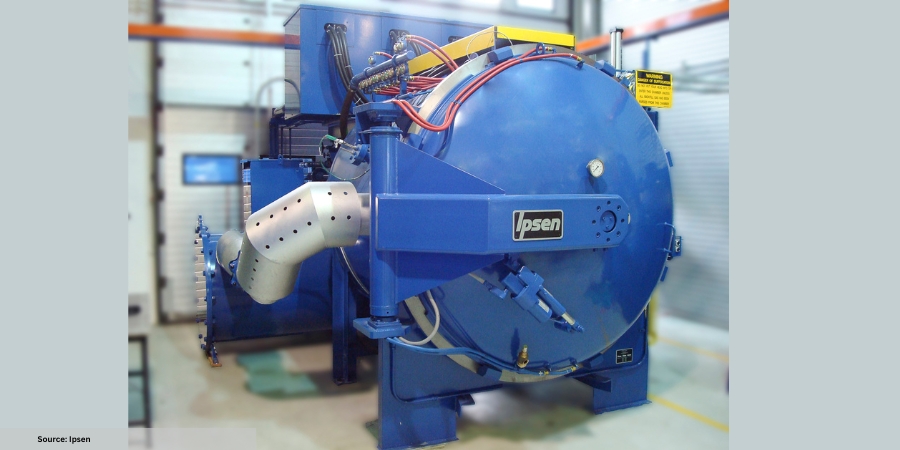
CHERRY VALLEY, IL – Ipsen recently shipped a horizontal-loading MetalMaster® vacuum furnace with 2-bar gas quenching to a company in the Southwest U.S. for use in manufacturing catalytic converter products, which are then used by such industries as Aerospace, Automotive and Power Generation. Ideal for brazing and other high vacuum applications, this vacuum furnace line performs well with thin section parts and lighter pieces.
This customized furnace features a 36″ x 36″ x 72″ (914 mm x 914 mm x 1,829 mm) graphite work zone with a carbon steel gas distribution plenum and graphite heating elements, as well as a 3,000-pound (1,361 kg) load capacity. It operates at temperatures of 1,000 °F to 2,400 °F (538 °C to 1,316 °C) with ±5 °F (±3 °C) temperature uniformity.
The furnace is also equipped with a 35-inch diffusion pump and Ipsen’s CompuVac® controls system. In addition, this MetalMaster furnace is capable of meeting applicable AMS 2750E requirements and providing tight temperature tolerances with DigiTrim® controls settings. It also features an open heating element detection system, as well as offers a specially engineered heat exchanger and turbine blower that are designed to optimize gas flow for more efficient cooling.
MetalMaster furnaces can also include several high-productivity options, including specialized instrumentation, increased pumping capability and material handling systems.
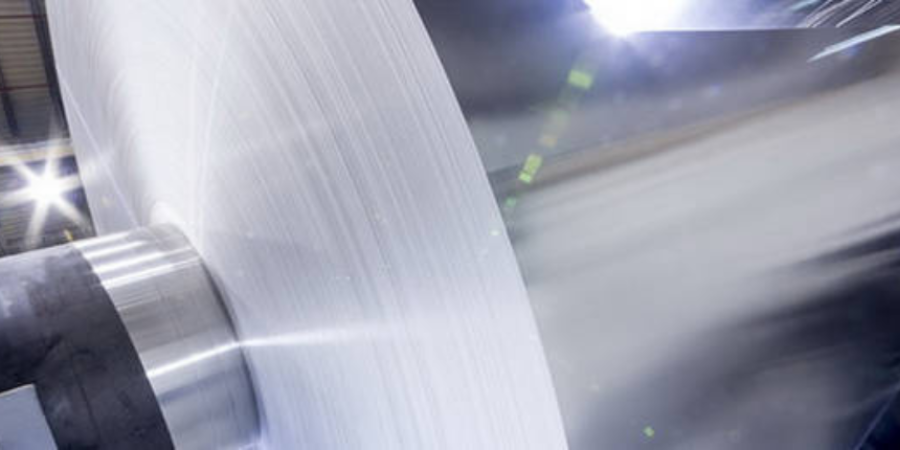
Source: Heat Processing AMAG rolling GmbH, Austria, has placed an order with SMS group for the supply of a cold rolling mill, a heat treatment line with a connected passivation section, a high-bay warehouse and a packaging line. Thus, numerous key assets of the AMAG 2020 investment project, dedicated to the set-up of production facilities for cold rolled premium aluminum strips and sheets, will all be supplied by SMS group. Commissioning of the new facilities is scheduled for 2017.
The six-high cold rolling mill with CVC plus technology (Continuously Variable Crown) supplied by SMS group will provide the high degree of flexibility required to handle the extensive range of products, including strip in widths of more than two meters. The rolling mill will come with actuators that ensure production to the required, extremely tight product tolerances, and it will be equipped with X-Pact control systems. An Airwash system will provide most efficient purification of the exhaust air from the rolling process. In a highly eco-friendly process, the recovered rolling oil will be fed back to the process cycle. The technological highlights of the heat treatment line and the connected passivation section are the water-cooled floater furnace, the resource-saving process technology and the compact layout. During the heat treatment in the puller furnace, the strip receives the mechanical properties specified by the customer. The final chemical coating process (passivation) gives the strip the perfect condition for the downstream processing steps. Passivated strips are requested primarily by customers from the automotive industry.
An integral element of the new rolling complex will be the central coil handling system which consists of a fully automatic high-bay warehouse with links to the rolling and processing lines. All material flows will be controlled by a warehouse management system which will be connected to the higher-level production control system. The warehouse technology will include an innovative cooling system which will be able to flexibly switch between air circulation and forced cooling in the various warehouse areas depending on the material grades of the coils and the type of downstream processing.SMS group’s scope of supply also includes a semi-automatic packaging line, which will weigh the finished coils and securely tie, pack and label them for their transport to customers all over the world. The warehouse and the packaging line will be provided by SMS Logistiksysteme.With this investment project, AMAG will increase its production capacity as a supplier of special sheet for automotive body applications (exposed and structural parts) and for use in modern passenger aircrafts. The newly added production capacity will also be used to make the other strip products of AMAG’s portfolio, e.g. packaging material. The new facilities will make the works in Ranshofen, Austria, a top location of the aluminum industry and one of the most efficient and modern production plants for lightweight engineering sheets in the world.
Ajax TOCCO Magnathermic, Ambrell and SMS Elotherm have all joined the Industrial Heating Equipment Association’s (IHEA) newest membership division — the Induction Division which focuses on keeping the industry up-to-date on the latest heat treat innovations, best practices and safety standards associated with induction heating. Several national utilities are also involved: Duke Energy, Georgia Power, Alabama Power, and the Electric Power Research Institute (EPRI). At least one other induction company is scheduled to join later this year.
The new division members are in the process of developing content for a 2016 Induction Seminar which will take place later this fall.