


Best of the Web

Heat Treating Comparative Study on New Tech

Best of the WebSource: AMpower

Don't you just wish there was direct, consolidated information that clearly identified the key characteristics of new technologies? All too often, there is a dissonance between scholarly discoveries and jargon and the work on the ground (or the shop floor, as it were). But today's resource is different.

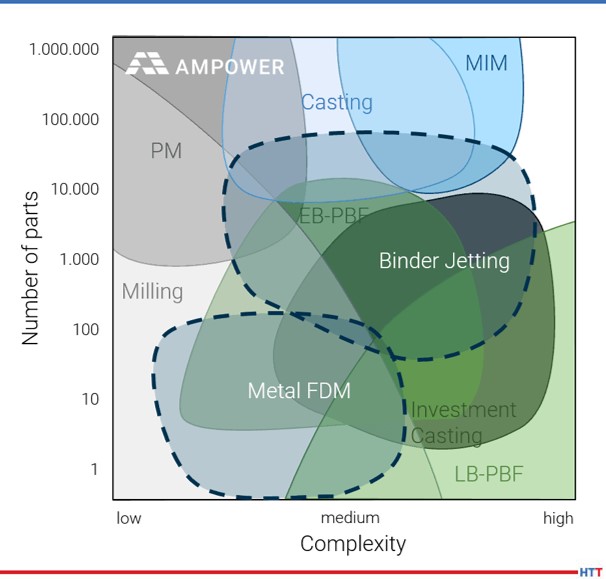
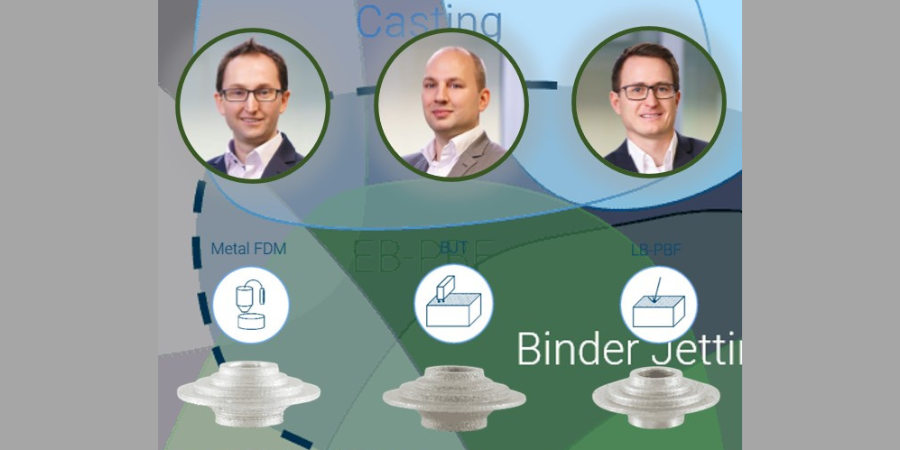
In this Heat Treat Today Best of the Web feature, Ampower presents analytical evaluations of sinter-based additive manufacturing (AM) technologies compared against laser beam powder bed fusion (LB-PBF) and metal injection molding (MIM). The analysis covers over 50 specimens from 9 different system suppliers. The authors are Dr.-Ing. Maximilian Munsch, Matthias Schmidt-Lehr, and Dr.-Ing. Eric Wycisk (pictured above left to right).

An excerpt: "For automotive and machine industry, binder jetting technology and metal fused deposition modeling offer great future potential. They will cover the gap between casting and LB-PBF regarding cost and productivity."

Read more: Metal Additive Manufacturing with Sinter-Based Technologies

All images were sourced from www.am-power.de/.


Heat Treating Comparative Study on New Tech Read More »
Heat Treat Basics: What’s Happening to Metals During Heat Treatment

Best of the WebSource: Advanced Heat Treat Corp. Blog

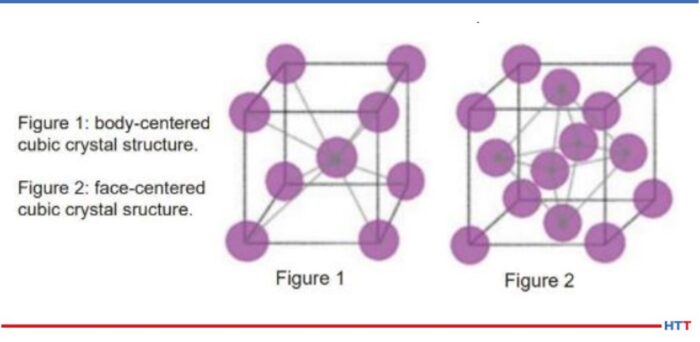
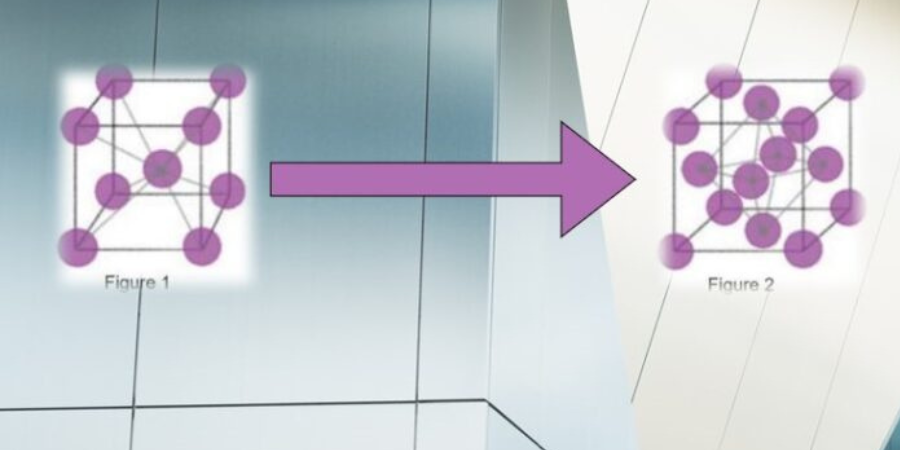
Graphic of Atomic Structures (Photo Source: AHT Blog post “What’s Happening to Metals During Heat Treatment”)

For this Heat Treat Today Technical Tuesday, check out this Best of the Web primer if you are looking to share a few basic pieces of heat treat info with your trainees. These heat treat fundamentals are about what happens to metals in the heat treatment process, tracing steel heat treating back to the ancient Romans in 223 B.C. — though, Encyclopedia Britannica currently places the origins in Egypt by 900 BC. Heat treatment benefits, atomic structural transformation, and hardenability are all covered here.

An excerpt: “Not every steel reacts the same. Chemical composition can vary greatly between the different grades of steel. Certain alloying elements can greatly increase the hardenability of steels such as nickel (Ni), chromium (Cr) and molybdenum (Mo). Hardenability is not how hard a material is. Hardenability directly relates to the ability of a metal to form martensite and martensistic [sic.] structure upon quenching, which points to…”

Read more: “What’s Happening to Metals During Heat Treatment”

(photo source: Lance Anderson at unsplash.com)

Heat Treat Basics: What’s Happening to Metals During Heat Treatment Read More »

New Study in AM Released

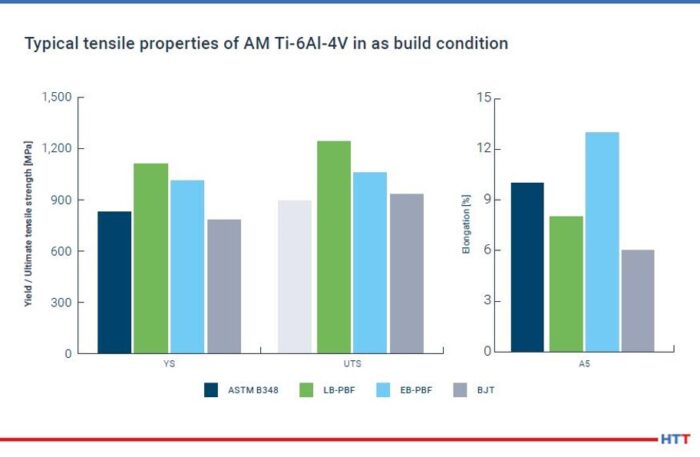
Typical tensile properties of AM Ti-6Al-4V in as build condition

Source: AMPOWER

There is so much to learn in so little time, but if you are at all interested in additive manufacturing (AM), you will want to check out this new study.

This Heat Treat Today’s Best of the Web feature is full of scholarly findings presented in an easily accessible PDF for free. Three insights that the study elaborates on are: Titanium represents largest share of materials in AM; HIP cycles are not optimized for AM; and part performance may be increased by optimized HIP cycles. The study was developed by Dr.-Ing. Maximilian Munsch, Matthias Schmidt-Lehr, and Dr.-Ing. Eric Wycisk (pictured above in that order).

You can check out these summary insights of the study, or download the complete study for free at “Additive Manufacturing Material Performance Optimization: Increasing properties of Ti-6Al-4V parts by AM specific HIP treatments.”

An excerpt: “To increase the part performance hot isostatic pressing (HIP) is commonly used for highly demanding applications and has become a common post- process for titanium AM parts as well. However, the typically used temperature-pressure-cycles for AM are derived from HIP processes originally used for casting parts.”


All images were sourced from www.am-power.de/.


New Study in AM Released Read More »

Fringe Friday: Can Solar Panels Use Non-Toxic Metals?

Source: Interesting Engineering

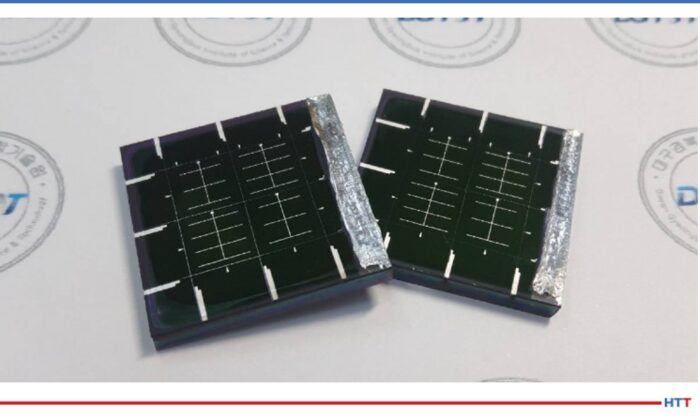
Solar Panels (photo source: InterestingEngineering.com)

Sometimes our editors find items that are not exactly "heat treat" but do deal with interesting developments in one of our key markets: aerospace, automotive, medical, energy, or general manufacturing. To celebrate getting to the "fringe" of the weekend, Heat Treat Today presents today's Heat Treat Fringe Friday Best of the Web article on efficient alloy-based solar panels. These solar panels are free of toxic metals and can be implemented in producing electronic devices, buildings, and vehicles.

Check out how scientists from Daegu Gyeongbuk Institute of Science and Technology in South Korea were able to overcome issues of underperformance in this article by Interesting Engineering: "Efficient Alloy-Based Solar Panels Created Free of Toxic Metals."

An excerpt: "'Thin-film solar cells using bronze (Cu-Sn) and brass (Cu-Zn) as base materials are composed of non-toxic earth-abundant materials, and have been studied worldwide because of their low cost, high durability, and sustainability,' said Kang[...] While theoretically they are said to perform as well as top market products, in reality, they severely underperform[...] The scientists looked for a way to bypass these flaws and produce the best quality CZTSSe (copper, zinc, tin, sulfur, and selenium) thin films. They came up with the ingenious solution..."


(photo source: marvin meyers at unsplash.com)

(photo source: gabriel chouinard at unsplash.com)


(photo source: Alin Zainescy at unsplash.com)


Fringe Friday: Can Solar Panels Use Non-Toxic Metals? Read More »

Tips for a Healthy Vacuum Furnace System

Source: Ipsen, the Harold blog

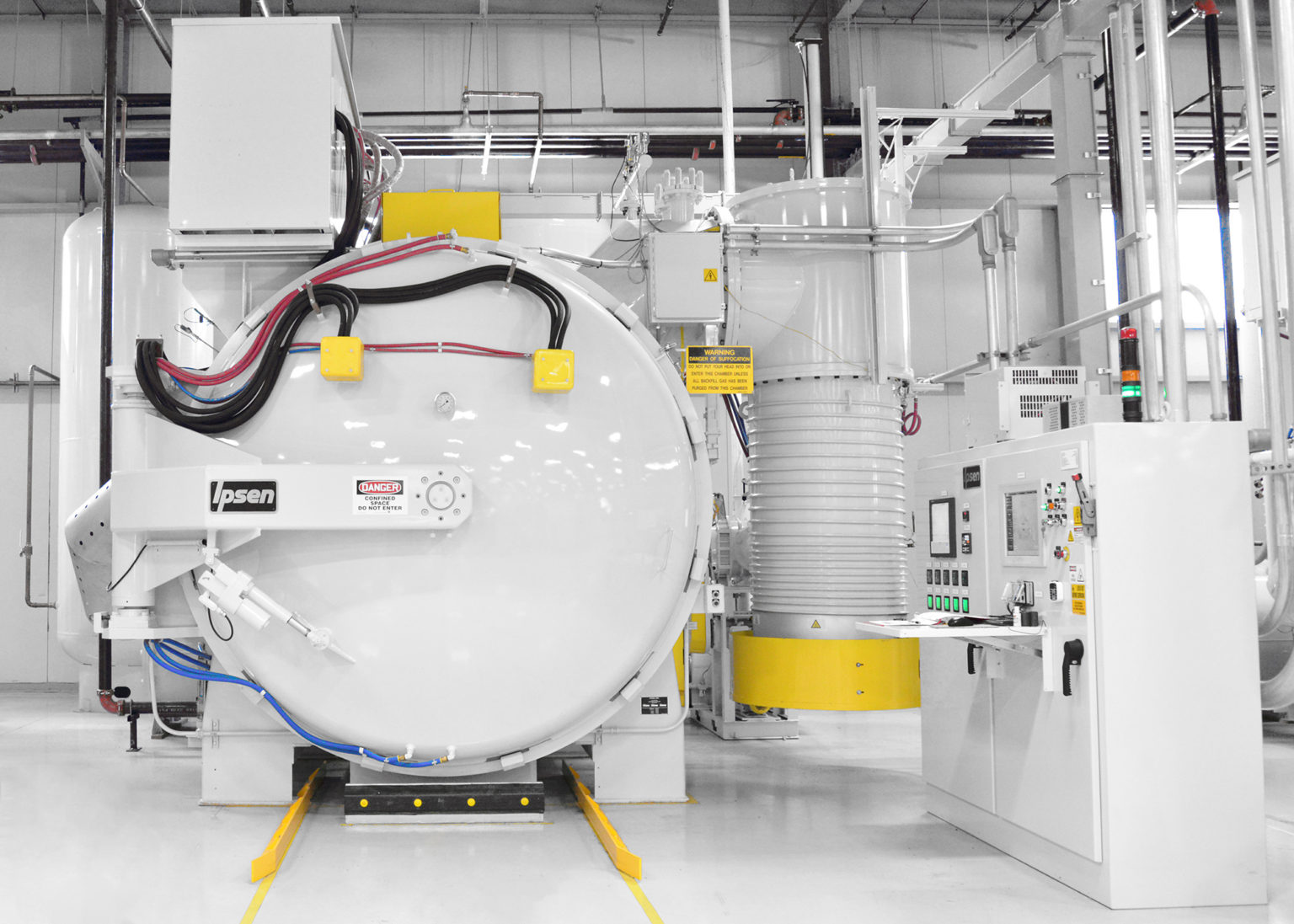
Vacuum Furnace (source: Ipsen, the Harold)

A strong and healthy vacuum furnace system is essential for heat treaters who want to stay competitive and serve their customers well. The heart of the vacuum furnace system is just as critical as the heart of the human body. Just as a healthy heart is essential to living well, keeping a healthy vacuum furnace system pumping strong is essential to certain heat treating operations.

In this Heat Treat Today Technical Tuesday Best of the Web feature, Ipsen USA provides tips for how you can get the best performance out of your vacuum furnace by selecting the most appropriate pumping system, and by following a few simple tips for vacuum furnace maintenance over at its blog, Ipsen, The Harold.

An excerpt: Vacuum furnace systems utilize various types of pumping system combinations to evacuate atmospheric pressure from the vacuum chamber to required ranges for specific processes. Since the heart of the furnace is the vacuum system, it is essential to maintain the pumping system as specified in the operator’s manual, taking into consideration any special accommodations that the type of process being conducted may require.

This post from Ipsen’s blog guides readers through the basics, troubleshoots common problems, and gives tips for avoiding the heat treater’s primary enemy.

Read more: “Tips to keep your vacuum furnace system healthy and pumping strong”

(source: Ipsen, the Harold)

Tips for a Healthy Vacuum Furnace System Read More »

Inside the Carbon Nanotube Method for Airplane Production


Source: Design and Development Today


A modern airplane’s fuselage is composed of multiple sheets of different materials, not unlike a phyllo dough pastry. Once these layers are stacked and molded into the shape of a fuselage, they are transferred into warehouse-sized ovens and autoclaves, where the layers fuse together to form a resilient, aerodynamic shell.

MIT engineers have now developed a method to produce the same high level of composites without the enormous ovens. This discovery may speed up the manufacturing of airplanes and other large, high-performance composite structures.

In this HTT Best of the Web Technical Tuesday feature, Design and Development Today introduces us to carbon nanotubes, their usefulness in potentially taking airplane manufacturing to new heights, and what the future of the research surrounding this discovery looks like.

Brian Wardle, professor of aeronautics and astronautics at MIT

An excerpt: “‘If you’re making a primary structure like a fuselage or wing, you need to build a pressure vessel, or autoclave, the size of a two- or three-story building, which itself requires time and money to pressurize,’ says Brian Wardle, professor of aeronautics and astronautics at MIT. ‘These things are massive pieces of infrastructure. Now we can make primary structure materials without autoclave pressure, so we can get rid of all that infrastructure.'”

Read More: www.designdevelopmenttoday.com/industries/aerospace/news/21110057/a-new-approach-to-making-airplane-parts?lt.usr=70118934

Photo Credit: Melanie Gonick, MIT

Inside the Carbon Nanotube Method for Airplane Production Read More »

The Nadcap Accreditation Process Explained

          Source: Vac Aero International Inc.

Nadcap accreditation is looked on by most of the heat treating world as a significant achievement and a guarantee of quality. It not only permits a company to perform heat treating for the Aerospace/Defense industries but also tells customers that this company has a high standard of quality.

So what is it, and how does it work?

In this HTT Best of the Web Technical Tuesday feature, Vac Aero International takes readers through the entire Nadcap accreditation process from start to finish, examining what it is, how it works, and troubleshooting problem areas.

An excerpt: “Nadcap accreditation benefits not only the company being audited but helps ensure their customers receive products and services that meet or exceed both their expectations and requirements. The audit and accreditation processes result in continuous improvement in multiple areas, with deficiencies (i.e., nonconformances) identified and corrected based on specific rules (i.e., guidelines) to ensure each process meets or exceeds industry standards.”

Vac Aero gives a detailed look at the common pitfalls in the accreditation process, useful resources and training courses to help companies prepare for their audit, and what to do after the audit is complete.

Read More: The Nadcap Accreditation Process by Vac-Aero International

Photo Credit: TAV Vacuum Furnaces

The Nadcap Accreditation Process Explained Read More »

Skip to content