


aerospace

Reverse Engineering Aerospace Components: The Thought Process and Challenges

op-ed

You can take the aircraft apart, but can you put it back together? Reverse engineering, as anyone who has ever taken apart the TV remote will tell you, is more complicated than it first appears. It is, however, far from impossible. Learn the essential steps to reverse engineering, the role of heat treating, and the challenges the thought process presents.

For this Technical Tuesday piece, take a few minutes to read Jonathan McKay's, heat treat manager at Thomas Instrument, article drawn from Heat Treat Today's March Aerospace Heat Treating print edition. Heat Treat Today is always pleased to share pieces from one of our 40 Under 40 alumnus like Jonathan!

If you want to share ideas about the aerospace industry, our editors would be interested in featuring it online at www.heattreattoday.com. Email Bethany Leone at bethany@heattreattoday.com with your own contributions!


Contact us with your Reader Feedback!
Jonathan McKay
Heat Treat Manager at Thomas Instrument
Source: Thomas Instrument

Reverse engineering (RE) is the process of taking a component or design and dissecting it all the way down to the raw material. Reverse engineering can range from a singular component such as a piston or gear, to multiple components that make up an overall assembly such as an engine or mechanical actuator. This process allows engineers to analyze and gain an understanding of a component’s overall function and design through deductive reasoning. RE can range in the type of analysis, from geometric measurements and material analysis to electrical or mechanical testing. Each analysis reveals clues of how something can be reproduced. The idea of reverse engineering is to look beyond what’s in front of you and find the unexposed clues that can show why something was designed or possibly the thought process of the original designer.

Reverse engineering typically happens through a third-party manufacturer usually not affiliated with the original equipment manufacturer (OEM). Often this is done because the original manufacturer no longer supports the product, or the original design is outdated and needs to be modernized to improve efficiency, functionality, or life expectancy. To put this in perspective, the U.S. Airforce received its first B-1 Bomber in 1984. Since then, over 100 aircrafts have been delivered. After nearly 50 years the aircraft is still flying, but many OEM manufacturers have moved on to newer programs, thus allocating their capabilities and capacity towards the present and future market demands. This creates a market for fabrication of replacement components and assemblies to support aging platforms. In most cases, the OEM’s retain proprietary data thus creating a need for RE processing.

"[T]he U.S. Airforce received its first B-1 Bomber in 1984.
Source: Unsplash.com/midkiffaries

With aerospace products in particular and specifically aging aircrafts, one will encounter obsolescence issues. The goal is to maintain the aircraft with replacement parts that conform to all form, fit, and function requirements while also assuring they have proper life expectancy with respect to maintenance cycles. With this in mind, you typically work with low volume production and invest more time into the design and planning phase of the process. When engaged in this process, it is critical that one understands and implements a fabrication plan that will yield a product that is equivalent or better than that of the OEM. Some engineers would say “Well, let’s make it bigger and better,” but with aerospace components this is not always the case. Typically, the main focus is to replicate the original design intent to the best of your ability because you have a specific footprint and weight to maintain as well as functionality. The exchangeability of the original design and RE design is key. The reverse engineered product needs to possess the same functional and physical characteristics and be equivalent in the performance, reliability, and maintainability. This allows both items to be exchanged without concern for fi t, performance, or alterations to its adjoining component(s).

Another key point in RE processing could be to limit long lead phases by minimizing the need for additional qualification testing where possible. As plating, heat treat, or materials begin to deviate from the initial design, you must consider requalification testing to prove those changes are not detrimental to the application and do not cause more harm than good. Sometimes engineers create features within a design that are meant to be a weak point; this prevents a more critical component from breaking or being destroyed. When you begin to make deviations, it may push the weak point closer to the critical component.

While there are certainly many steps to RE, the essential steps include:

  1. Collect as much data as possible from an external standpoint without destroying or disassembling; i.e., note the overall measurements, orientation, special features, electrical or mechanical properties, etc. It is also a good idea to analyze mating components and/or the system in which the component is utilized. Mating parts are a big part of the discovery; the mating parts can help determine what alternate materials, plating, heat treat, or finishes can be used.
  2. Start creating preliminary drawings with detailed dimensions, notes, and features that were inspected from Step 1.
  3. Slowly disassemble the part (if an assembly) and inspect key features and create preliminary drawings for sub-assembly components. In some cases, it helps to reassemble the product to ensure an understanding of how it goes back together in order to optimize the assembly process once new components are manufactured.
  4. Evaluate the product(s). Conduct material analysis to acquire chemical and mechanical property data. This will aid in defining the appropriate layout for machining, material conditioning (i.e., heat treatment), external finishes/coatings, etc.

While the design and planning phase may pose some challenges, the more critical challenges that occur during reverse engineering are in the execution of the manufacturing, assembly, and qualification testing. To elaborate, once you begin machining and processing components, there may be special methods of manufacturing that require discovery because standard methods may not have worked when the OEM produced it. When this happens, you go back and forth on updating and fine-tuning the process plans, fixturing, programs, etc. Sometimes this means scrapping parts and starting over or validating if parts are still usable for prototyping. Along the same lines, when the process progresses into the assembly and testing phase, engineers typically discover variability, errors, or weak points that require adjustments. In those cases, the engineer’s drawings must be revised. A large percentage of these issues can be limited through experience with similar components or assemblies, but in most cases, there is a lot of analysis and some trial-and error involved in the manufacturing, assembly, and testing phase that is not apparent upon initial RE processing.

References:

  1. Boeing. “The Bone.” https://www. boeing.com/defense/b-1b-bomber/
  2. DLA. “Master List of Technical and Quality Requirements Version 14.”
  3. MIL-STD-280A. “Handbook for definitions of item levels, item exchangeability, models, and related terms.”
  4. DOD Washington, D.C. 20301.

Special thanks to David V. Jones and Thomas R. Blackburn IV at Thomas Instrument for their input on this topic.

About the Author:

Jonathan McKay is a mechanical engineer at Thomas Instrument, a company specializing in reverse engineering critical aerospace components. At the company, he is manning the establishment of heat treat operations, has created procedures and process plans for Thomas Instrument to be an approved heat treater for an aerospace prime, and has attained Nadcap accreditation for heat treat.

Contact him at Jonathan.mckay@thomasinstrument.com


Find heat treating products and services when you search on Heat Treat Buyers Guide.com


Reverse Engineering Aerospace Components: The Thought Process and Challenges Read More »

NTSB: American Airlines Engine Failure Caused by Fatigue

BOTW-50w

Source: Airways Magazine


Gary Berwick, Dry Coolers

Special thanks goes to Gary Berwick of Dry Coolers, one of our first (and best) advertisers, for informing Heat Treat Today about the below article in Airways Magazine.


MIAMI — The National Transportation Safety Board (NTSB) issued and Investigative Update of American Airlines flight AA383, which caught fire on runway 28R at Chicago O’Hare International Airport after aborting its take-off.

The report states that the right engine number 2 stage high pressure turbine (HPT) disk failed and fractured into at least four pieces. A large disk fragment landed in a UPS warehouse located about 2,920 feet (890 meters) from the aircraft.

Read more about this failure in Airways Magazine.

NTSB: American Airlines Engine Failure Caused by Fatigue Read More »

Heat Treat TV: 48′ Vacuum Furnace Installed in Western Pennsylvania

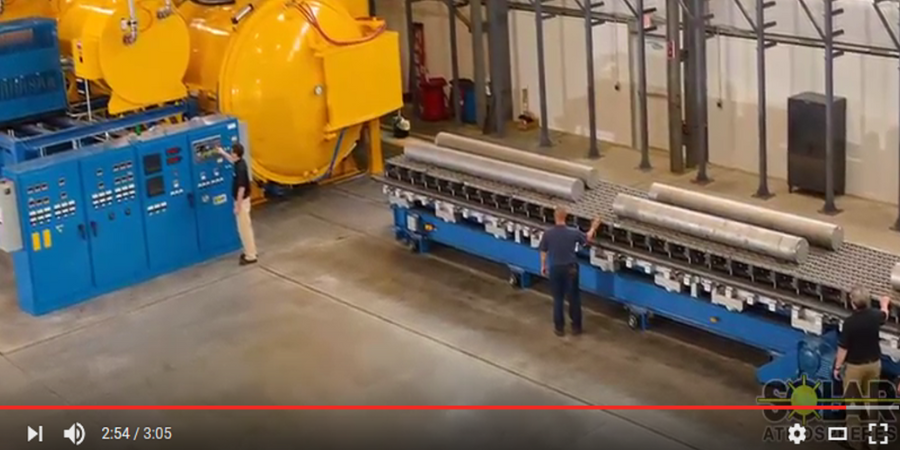
Take a look at this fascinating time-lapse video of a 48 foot vacuum furnace being installed at a leading commercial heat treat shop in western Pennsylvania. The furnace was manufactured by Solar Manufacturing and will be used for vacuum processing very large, long, and/or heavy aerospace, automotive and energy sector parts. Watch it now by clicking here or on the image below.

Solar Atmospheres' 48' Vacuum Furnace 2

Heat Treat TV: 48′ Vacuum Furnace Installed in Western Pennsylvania Read More »

Alcoa to Supply 3D-Printed Metal Parts for Airbus

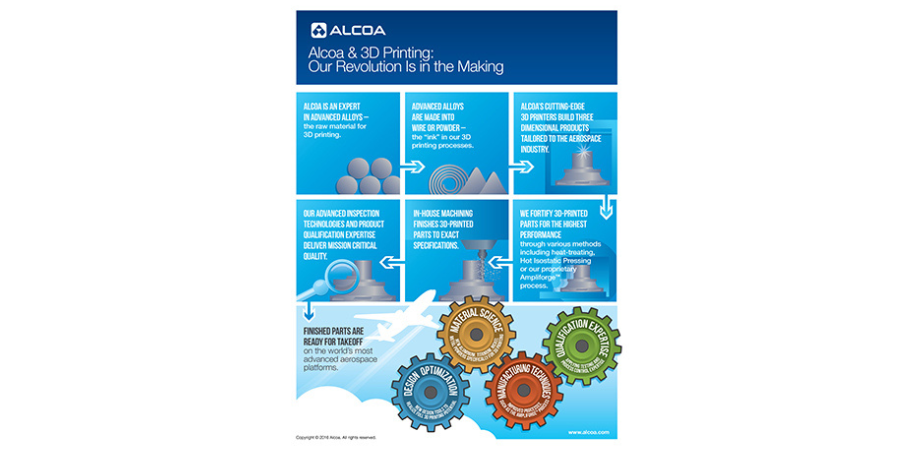
Lightweight metals leader Alcoa (NYSE:AA) has entered into an agreement with Airbus to supply 3D-printed titanium fuselage and engine pylon components for Airbus commercial aircraft. Alcoa expects to deliver the first additive manufactured parts to Airbus in mid-2016.

“We are proud to partner with Airbus to help pave the way to the future of aerospace development and manufacturing,” said Alcoa Chairman and Chief Executive Officer Klaus Kleinfeld. “The unique combination of our multi-material alloy development expertise, powder production capabilities, aerospace manufacturing strength and product qualification know-how position us to lead in this exciting, emerging space.”

Airbus chose to work with Alcoa because of its comprehensive capabilities, from materials science leadership to additive manufacturing and aerospace parts qualification. The agreement will draw on Alcoa’s decades of aerospace experience and new technologies gained through the recent acquisition of RTI and organic expansion in Whitehall, Michigan. Alcoa also recently invested in 3D-printing and metallic powder production capabilities at its technical center outside of Pittsburgh, Pennsylvania.

Last year, Alcoa acquired RTI International Metals (RTI)—now known as Alcoa Titanium & Engineered Products (ATEP)—which grew Alcoa’s additive manufacturing capabilities to include 3D-printed titanium and specialty metals parts produced at ATEP’s Austin, Texas facility. The Airbus agreement will draw on these capabilities as well as ATEP’s titanium ingot melting and billetizing, machining, finishing and inspection technologies.

Alcoa will employ advanced CT scan and hot isostatic pressing (HIP) capabilities at its advanced aerospace facility in Whitehall, Michigan. HIP is a technology that strengthens the metallic structures of traditional and additive manufactured parts made of titanium and nickel based superalloys. Through a $22 million investment in the technology in Whitehall, Michigan, Alcoa today owns and operates one of the largest aerospace HIP technology complexes in the world.

Additionally, Alcoa is bolstering its additive manufacturing capabilities through a $60 million expansion in advanced 3D-printing materials and processes, including metallic powders. The expansion is located at the Alcoa Technical Center near Pittsburgh, Pennsylvania, the world’s largest light metals research center.


Post updated Thursday 4/29/2021 at 3:37pm.

Alcoa to Supply 3D-Printed Metal Parts for Airbus Read More »

Element Launches World-Leading Material Testing, PQT Facility

Following significant capex investment, Element Materials Technology has launched its newly expanded and upgraded Cincinnati, Ohio, facility, as one of the largest independent materials testing and product qualification testing (PQT) service facilities in the U.S. The former-Accutek location has expanded to 62,000ft2 and now provides specialist testing to both the aerospace and medical device sectors and houses three of Element’s Global Centers of Technical Excellence delivering critical testing services to these sectors.

Charles Noall, president and CEO of Element, comments: “Our investment at Element Cincinnati marks a significant step towards securing our position as the strategic partner of choice for our clients in the aerospace and medical device industries. We are committed to developing Centers of Technical Excellence across our global platform, allowing us to deliver market-leading technical expertise where needed by our partners, from aerospace primes to leading medical device manufacturers.”

Element Cincinnati is a world-leading ceramic matrix composite (CMC) Center of Technical Excellence, that is equipped with market-leading environmental controls, high temperature facilities (up to 2,400°F) and doubled capacity in CMC testing, to support its major clients in the development of the next generation of aero engines. The laboratory also houses the Element Group’s Center of Technical Excellence in low-cycle fatigue (LCF) testing, which tests aerospace forgings for airframers and their supply chain partners. Finally, the laboratory also contains the group’s medical device testing center of Technical Excellence that offers a comprehensive range of 21 test methods including accelerated aging testing capabilities and mechanical testing for physiological studies for new spine, knee and hip wear simulator evaluations.

Rick Sluiters, Element’s executive vice president, aerospace, comments: “Our investment at Element Cincinnati allows us to act as a strategic partner to primes and OEMs working at the forefront of CMCs for the aerospace sector. The CMC Center of Technical Excellence provides testing services to respond to the industry’s most demanding challenges through the laboratory’s market-leading environmental controls. The increase in quality of environmental controls also gives us a very tight tolerance, allowing for highly accurate measurement of straining of CMCs.

“The investment also enhances the location’s medical device capabilities, with the mechanical, biological and related testing services allowing us to act as a full-service testing provider for clients. Element Cincinnati is a leading center for Medical Device testing and its newly expanded scope of accreditation underlines our commitment to acting in strategic partnership with key clients.”

Element Cincinnati is Nadcap and ISO accredited, as well as having an impressive range of Original Equipment Manufacturer (OEM) approvals, including GE Aviation, Snecma, MTU, Honeywell, Kawasaki Heavy Industries, Rolls-Royce (Germany, U.K., and U.S.), Pratt & Whitney, and Bell Helicopter.

Element Launches World-Leading Material Testing, PQT Facility Read More »

Ipsen Ships Seven Vacuum Furnaces

Ipsen recently shipped seven furnaces around the globe, which will be used to support the Aerospace, Automotive and Power industries. This selection of shipments included both custom-built furnaces and standard TITAN® furnaces that were sent to customers in Alabama, California, Missouri and Texas, as well as China and Japan.

The equipment shipped ranged from a vertical, bottom-loading MetalMaster® with an 84″ x 84″ (2,134 mm x 2,134 mm) molybdenum hot zone traveling to California to a TITAN® H2 vacuum furnace that was sent to Japan. Other furnaces shipped included horizontal MetalMaster furnaces, H2- and H4-sized furnaces from Ipsen’s TITAN line and a Global Vertical furnace from Ipsen’s TurboTreater® line. Overall, these shipments represent Ipsen’s ability to provide sophisticated and intuitive heat-treating solutions through an all-inclusive product line that supports various applications and processes.

Ipsen Ships Seven Vacuum Furnaces Read More »

Solar Manufacturing, Refrac Systems Partner to Build Furnace System

Refrac Systems of Chandler, Ariz., contracted Solar Manufacturing to design and build a large 100-ton-load gas fan quench vacuum hot press (GFQVHP) system for its aerospace diffusion-bonding operation. Refrac Systems, working with Solar’s engineering team, selected a derivative of Solar’s standard internally quenched 2-bar vacuum furnace as the base design of the system. The new system contains many new designs, as it needed to be both an automated vacuum hot press and be extra versatile for making super plastically formed and diffusion-bonded (SPFDB) aerospace structures. Solar Manufacturing expects to ship the GFQVHP unit in July.

The furnace chamber for this unit was built by Amity Industries of Douglassville, Pa.  Beckwood/Triform of St. Louis, Mo., was selected to build the large 100-ton four-post hydraulic press frame for the system. The control console unit was built by Optima-Stantron of Lawrenceville, Ga. Final assembly, testing and start-up of the system is projected for the fourth quarter of 2016 in Chandler.

Solar Manufacturing, Refrac Systems Partner to Build Furnace System Read More »

Anhui Yingliu Group Inaugurates Quintus® Hot Isostatic Press

Västerås, Sweden, December 17, 2015 – Jan Söderström, CEO of Quintus Technologies (formerly Avure Technologies), joined Frank Du, President of China’s Yingliu Group, to celebrate the inauguration of a Quintus® hot isostatic press (HIP) at the Anhui Yingliu Group Huoshan Casting Co. Ltd. foundry in Anhui province, China, in early December.

The new press, model QIH 1.6 x 2.5 – 2000 – 1400M URC, brings several advanced capabilities that enable the Huoshan facility to manufacture products meeting mission-critical performance standards in the aerospace and nuclear power environments.

Operating at a pressure of 200 MPA (29,000 psi) and temperatures up to 1400°C (2552°F), the Quintus HIP produces complex components with improved fatigue strength and extended service life, ever-more-important characteristics that are difficult to achieve in traditional manufacturing technology.

A work zone of 1600 mm (63 inches) in diameter and 2500 mm (98 inches) in height accommodates the size requirements for production of large aircraft engine casings and core components for nuclear power, marine engineering, metallurgy, and other applications. Quintus’ proprietary Uniform Rapid Cooling (URC) technology enables increased productivity with optimal temperature control.

“Quintus HIP systems produce parts with excellent isotropic material properties and offer the highest possible density of all available compaction methods,” noted Mr. Söderström as he handed the keys to the press to Mr. Du during the inauguration ceremony. The event was attended by more than 500 guests, including representatives from a dozen prominent Chinese companies in the aviation and nuclear power industries.

Reminding the audience of the Made in China 2025 campaign to improve quality and production efficiency, Mr. Du referenced the Yingliu Group’s own strategic commitment to industrial upgrading. The company ordered the QIH 1.6 x 2.5 in December 2013. It was delivered after a 15-month manufacturing process at the Quintus plant in Västerås, Sweden. Installation, testing, and commissioning took place over a period of 20 weeks. Now fully operational, the press fulfills the Yingliu Group’s vision of establishing a world-class hot isostatic pressing center at the Huoshan Casting facility.

Quintus Technologies specializes in the design, manufacture, installation, and support of high pressure systems for sheet metal forming and densification of advanced materials and critical industrial components. Headquartered in Västerås, Sweden, and represented in 35 countries worldwide, the company is the world leader in high pressure technology and has delivered more than 1,800 systems to customers across the globe within industries such as aerospace, automotive, energy, and medical implants.

Anhui Yingliu Group Inaugurates Quintus® Hot Isostatic Press Read More »

New Metallurgical Department in Czech Republic

Global testing group Exova has made a series of investments at its laboratory in Plzeň, Czech Republic to extend its range of capabilities for customers within the global aerospace market, and further grow its presence in Mainland Europe.

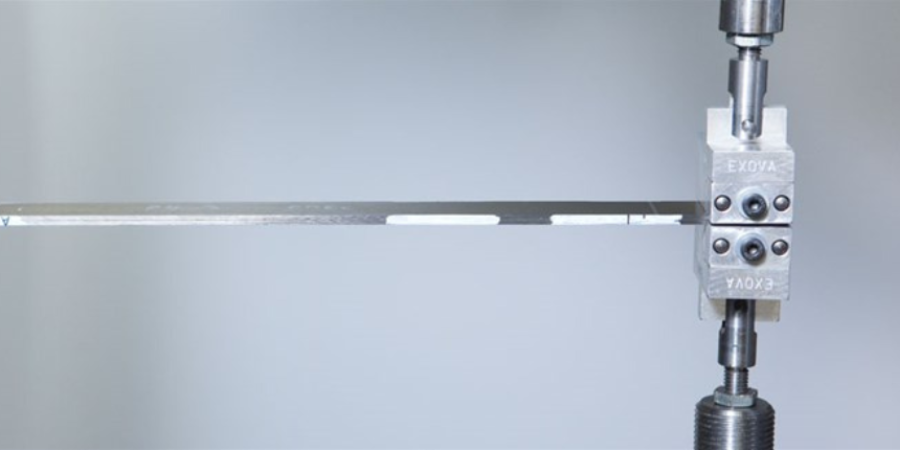
Central to the laboratory’s investment is a new metallurgical department with increased capacity. This includes modifications to the facility and the acquisition of new state of the art equipment such as optical microscopy and precision cutting machinery to meet the growing demand from the aerospace industry. In addition to the new equipment, the lab has invested in its computer-based operating systems to increase efficiency at each stage of testing, improving both operations and reporting.

As well as a broad scope of mechanical testing, the Plzeň laboratory provides metallurgical assessment, including macro assessment and mapping and a range of micro examinations, along with corrosion resistance testing. Its customers work predominantly in the aerospace sector, but the laboratory conducts testing on forgings and welding, so can work across the automotive, power generation and general engineering sectors as well.

Jiri Fidransky, general manager of the Plzeň laboratory, said: “These upgrades have streamlined our day-to-day operations and reflect the growth we are seeing in the aerospace sector. Exova’s continued strong growth in the sector is driven by our highly technical and efficient service provision, and through these investments our customers will benefit from improved turnaround times and increased capacity, as well as advances in testing capabilities.”

New Metallurgical Department in Czech Republic Read More »

Skip to content