

Case Study: Adapting a Continuous Rotary Hearth Furnace to an Existing ‘Brownfield’

Are you looking to expand in-house heat treat operations on a brownfield industrial site? These sites can bring complications due to a more restrictive footprint combined with other fixed process conditions. In today’s Technical Tuesday installment, the authors of this case study reveal how to consider available footprint and conveyance mechanism options in a continuous steel reheat furnace, as well as the key design variables for industrial furnaces.

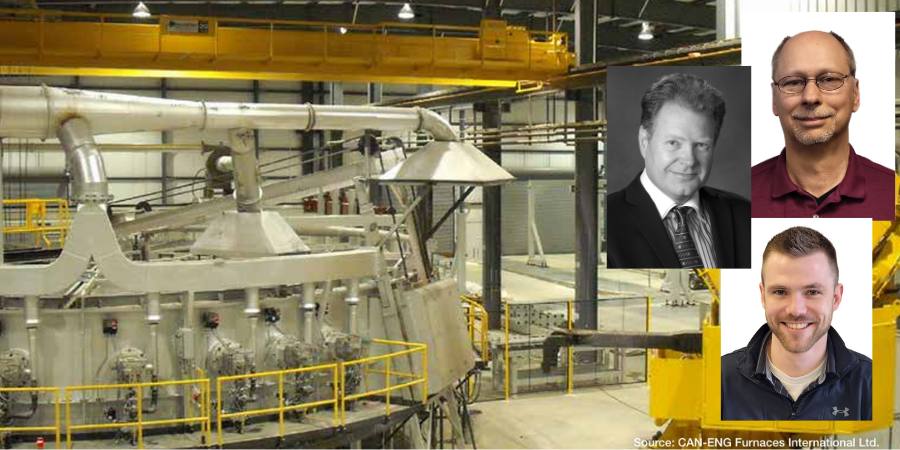
On the research team are the following: Michael K. Klauck, P.Eng., President; Robin D. Young, P.Eng., Vice President — Mechanical Engineering; Gerard Stroeder, P.Eng., Manager — Sr. Technology Specialist; and Jesse Marcil, E.I.E., Project Manager — Mechanical Engineering, all from CAN-ENG Furnaces International.

This informative piece was first released in Heat Treat Today’s February 2025 Air/Atmosphere Furnace Systems print edition.


Introduction

A manufacturer with in-house heat treating had the need to develop a custom furnace for a critical step in the forging process. Specifically, this furnace would be for reheating bottom poured ingots and/or continuously cast round blooms to forging temperatures.

Like all industrial furnaces, the design for such a furnace takes into consideration many factors, including but not limited to:

  • Production throughput/capacity
  • Product configuration/condition
  • Material composition
  • Target product temperature uniformity
  • Soak time
  • Cycle time
  • Serviceability
  • Upstream and downstream process integration
  • Automation

Continuous reheat furnaces that supply steel rolling mills (slabs, blooms) are often designed for very large capacities up to 500 TPH (tons per hour). However, this client’s site was in the 15–30 TPH capacity range. For an open die forging application, this would be considered a low to medium capacity range.

Another consideration was that this was a location with already existing buildings. “Greenfield” sites are undeveloped areas free from prior industrial use; thus, they impose very few restrictions on the layout of the reheating furnace and overall forging cell. In this case, the manufacturer was developing on a “brownfield,” a place with evidence of prior industrial production. Places like these often have the blessing and curse of existing, vacant structures. So, in addition to the design considerations listed above, the physical limitations of a brownfield places constraints on what technology can meet the key performance deliverables.

In this article, we will review how this manufacturer with in-house heat treat was able to customize their furnace to successfully adapt it to the constraints of a brownfield location. The key: An appropriate conveyance mechanism.
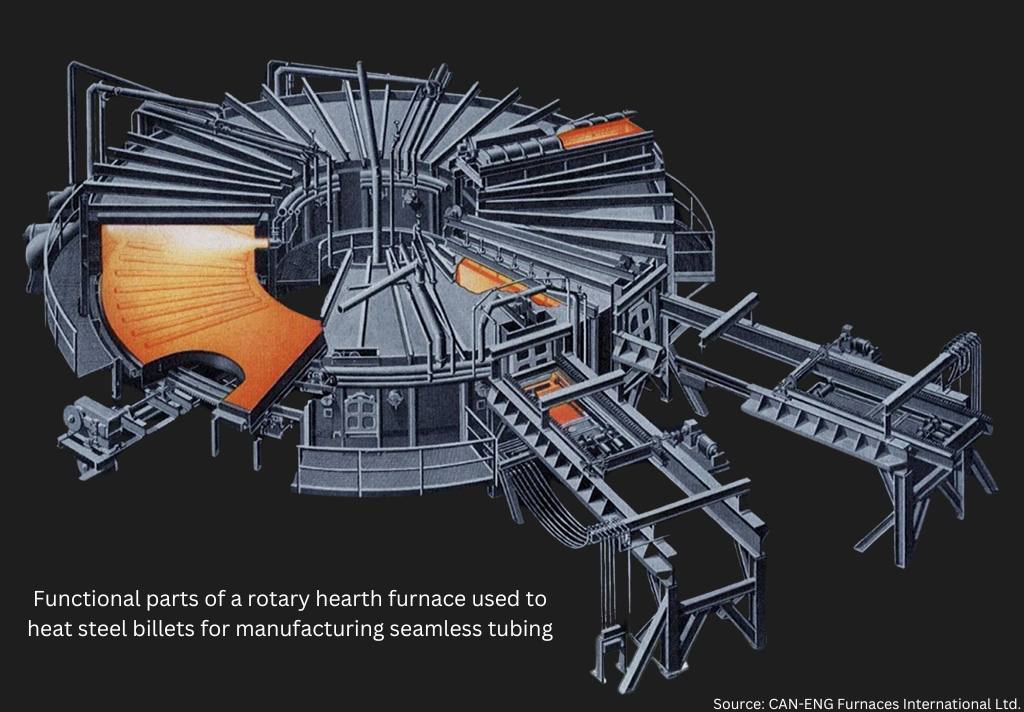
Figure 1. Traditional gantry style loader/unloader

Continuous Furnace Design for Cylindrical Round Reheating

The client’s product was a cylindrical “as cast” (continuous casting or static cast) round of approximate weight 1.5–2 tons with required reheating at 2300°F. With a design production capacity of 15–30 TPH, batch reheating was not a viable option; the main choices for continuous furnace reheating are either a walking hearth or rotary hearth furnace (“ring furnace”).

The scope of plant equipment that had to be installed in custom forging cells consists of the following:

  1. Incoming raw material preparation and cutting
  2. Reheat prior to forging
  3. Forging
  4. Post-forging operations — trimming, shearing, and heat treatment (normalizing, tempering)
  5. Machining and finished goods

For a recent reference site, the incoming raw material preparation, the cutting facility consumed approximately 30% of the overall floor space and the forging machine consumed 35% of the footprint, leaving approximately 35% of the available area for the reheating furnace. A comparison of the advantages and disadvantages of the walking hearth technology and rotary hearth technology was made and presented to the end user.

Some of the advantages of the rotary hearth design included the following:

  • A smaller overall footprint/lower consumption of building length
  • Non-water-cooled hearth
  • Positive product positioning with low risk for movement during conveyance
  • No complicated pits/foundations
  • Less complicated drive system
Figure 2. Wrought round bar discharge via a single door system

For this reason, the end user opted for the rotary hearth furnace design over the walking hearth system. A traditional rotary hearth furnace design incorporates two gantry style units, one for loading and one for unloading (see Figure 1). There is a “dead zone” of 10–20° between the charge and discharge which does not contribute to the overall effective heated length.

Alternatively, the CAN-ENG design employs a single door vestibule for both charging and discharging. Instead of dedicated mechanical systems with limited degrees of freedom, this design uses a pedestal-mounted, purpose-built furnace tending robot with a 270° axis slew (see lead article image). The result of these design changes is a more effective utilization of the building width for reheating with no dead zone combined with a robot that has considerable freedom when transferring products from furnace elevation to discharge conveyor elevation.

The robotic feature is particularly important when considering pass line differences for various pieces of equipment in a production cell. Some installations cannot have pits due to high water table considerations, and so the flexibility of robot reach combined with the 270° of axis slew yields fewer restrictions for the end user.
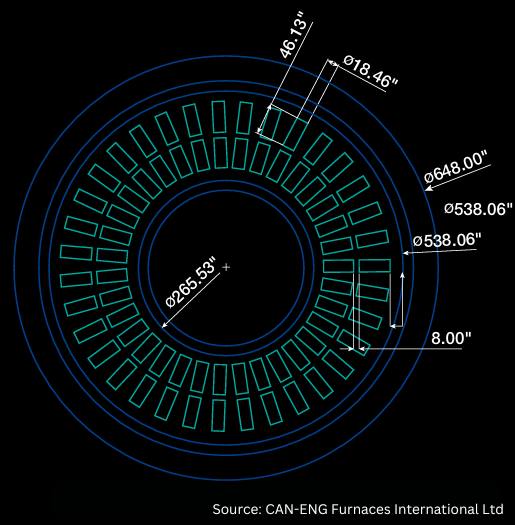
Figure 3. Plan view product layout showing inner and outer charge positions

This rotary hearth furnace can be configured for loading a single long piece or two shorter pieces, one charged towards the furnace inner ring, and one charged to the furnace outer ring, with a suitable gap between the pieces and the refractory walls. This provides considerable flexibility for piece size which is accommodated by the furnace tending robot. Had gantry style loaders/unloaders been used for the charging/discharging functions, the requirement for charging an inner and outer ring of the furnace would have been significantly more challenging.

The overall diameter of a typical steel rotary furnace for 15–30 TPH of production capacity is in the 55’–65’ diameter range (outside of steel service platform). This is dependent on the soak time specified by the end user and the heat up time for the cast or wrought steel
product that is charged.

There are many aspects of industrial furnace design that are not covered in this article, and they would include at a minimum:

  • Refractory — hearth, wall, roof and flue areas
  • Flue design
  • Burner type — heat-up zones (both above and below auto-ignition), holding zones (i.e. soak zones
  • Physical zone separation vs. soft zoning
  • Drive configuration/drive synchronization
  • MES or Level II automation and controls
  • Incoming raw material cutting — carbide-blade, band saw and torch
  • Downstream post-forge heat treatment — normalizing, normalizing & tempering
  • Integrated machining operations
  • Integration with end user’s ERP system

A full article could be dedicated to each of these subjects. Many details are considered confidential design aspects of the furnace builder.

To speak just on support pieces (piers/bunks), nearly all refractory pier compositions are subject to interaction between the scale that is formed during heating (Fe2O3/Fe3O4) and silicates in the refractory matrix, particularly at reheating temperatures of 2300°F or higher.

Under the conditions of pressure and extremely high temperatures, a low melting point liquid compound of fayalite (iron silicates) is formed at the contact point between the workpiece and refractory pier. This is very undesirable and severely limits the overall pier life. Nickel- and cobalt based super alloys have been used successfully at temperatures up to 2450°F, but these materials can be cost prohibitive, especially considering that 70 or more product locations/pier placements may be required. Unless the product requires very restrictive uniformity in reheating (i.e., titanium ingots), consideration of nickel- or cobalt-based work support pieces is not economically feasible.
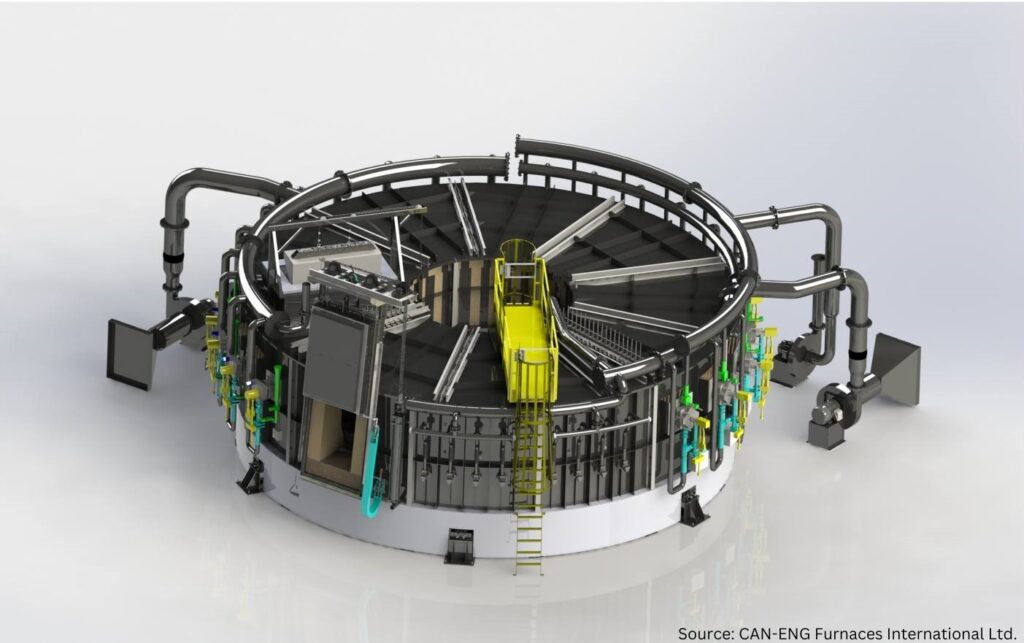
Figure 4. 3D rendering of a CAN-ENG single door rotary hearth furnace

The most important consideration for the forging cell downstream of the reheating furnace is the uniformity of the bar, ingot, bloom or mult as delivered for forging. Accurate determination of the temperature uniformity is often misleading by infrared radiation (IR) methods since primary scale is removed in the breakdown passes and secondary scale reforms in its place. Workpiece thermocouple measurements at defined locations in predrilled test pieces under full load conditions yield the best results for determining product uniformity prior to furnace discharge.

Conclusion

The modern rotary hearth ring furnace at low to medium production capacities of 15–30 TPH offers a compact footprint that has many advantages compared to water cooled beam walking hearth type reheating furnaces. This is particularly important to brownfield sites which need to adapt the existing industrial layout to current production needs. When combined with automated saw cutting and forging cells, an integrated manufacturing solution results in very low man-hour/ton of labor input. As seen in this article, recent reference sites where material handling conveyors, robots, descale units, vision systems and Level II MES (Manufacturing Execution Systems) were supplied have allowed U.S.-based end users to achieve the lowest total production costs, allowing them to be competitive with India and China.

About the Authors:

Michael K. Klauck, P.Eng., has nearly 40 years of working in the foundry, steel, commercial heat treating and industrial furnace businesses. He started at CAN-ENG in the year 2000 and has been president since 2012.

Robin D. Young, P.Eng., joined CAN-ENG in the year 2000 and has held progressive positions with the company since then. In his current role, he is responsible for departmental oversight of all aspects of Mechanical Furnace Design as well as the Field Service Team.

Gerard Stroeder, P.Eng., joined CAN-ENG METAL TREATING in 1984, a commercial heat treater, moving over to CAN-ENG FURNACES in 1991. With four decades of process and industrial furnace knowledge, Gerard has expert knowledge of industrial furnace costing and ERP business systems.

Jesse Marcil, E.I.E., is a mechanical engineer working on his Professional Engineer Certification (P.Eng.). Prior to joining CAN-ENG in 2021, he worked in the Engineer, Design — Build of Commercial and Industrial buildings. In his four years with the company, he has now completed several large custom ETO (Engineered To Order) furnace projects.

For more information: Contact the team at www.can-eng.com.


Case Study: Adapting a Continuous Rotary Hearth Furnace to an Existing ‘Brownfield’ Read More »
Green Energy Equipment Manufacturer Adds VIM System

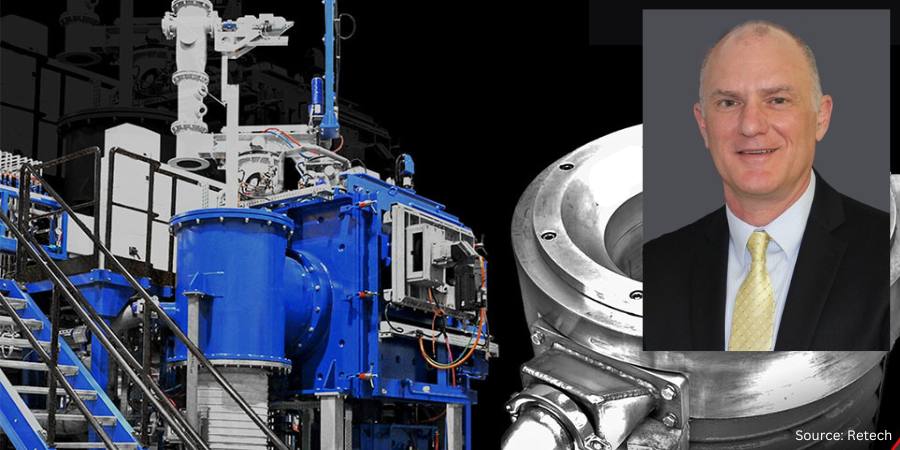
A green energy equipment manufacturer has expanded its vacuum induction melting capacity with another VIM furnace for melting and casting refractory alloys. The new VIM system will be used to cast directionally solidified parts for the next generation of green energy technologies.

Earl Good
Managing Director
Retech

Retech, a SECO/WARWICK Group company, designed this system with directional solidification, a casting process used to control the crystalline structure formation in cast parts. This process precisely controls the rate and direction from which heat dissipates from a part as it cools in the mold.

Similarly equipped VIM systems melt ultra-high-purity alloys used in a diverse array of applications, including single-crystal jet engine blade casting, super alloys, shape memory alloys, and silicon for semiconductor wafers.

“This is going to help this industry partner accomplish both their production and R&D metallurgy goals,” said Earl Good, managing director of Retech, “They also appreciate that buying from us again means that their staff is already trained on this equipment.”

Press releases are available in their original form here.


Green Energy Equipment Manufacturer Adds VIM System Read More »

thyssenkrupp Bolsters Electric Mobility Production with Annealing, Isolating Line

A new annealing and isolating line has been supplied to thyssenkrupp Steel for the production of high-grade NGO (non-grain-oriented electrical steel strip). This strip processing line comprises a precise heat treatment in which the structure of the cold-rolled strip is recrystallized during the annealing process, followed by the application of an insulating layer to ensure optimal electrical properties. This is particularly important for the materials used in motors and generators installed in electric vehicles.

The new processing line, supplied by the project partner, SMS Group, has an annual capacity of 200,000 tons and is designed to process electrical steel strip in widths of up is now in operation. SMS technology enables the production of electrical sheet for energy-efficient applications, for example electromobility. The technological core of the line is the combined heat treatment and coating process.

With this line, the modernization of thyssenkrupp‘s Bochum location is nearly complete, allowing the steel producer to better serve its clients in the automotive, energy, and other manufacturing sectors. The new plant will allow the manufacture of up to 0.2 mm thin electrical sheet with particularly homogeneous mechanical and magnetic properties, specially designed to meet the requirements of highly efficient motors used primarily in electric vehicles. The finishing line is scheduled to go on stream in 2026.

“This facility not only represents a huge step forward in our production capacities,” said Dr. Harald Espenhahn from thyssenkrupp Steel Europe, “it enables us to manufacture high-quality NGO steels that allow our customers to meet the changing demands of the market and to develop products with increased energy efficiency.”

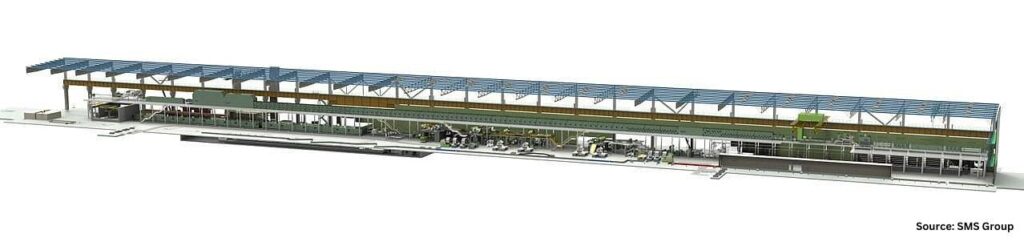
3D model of the new annealing and insulating line for the production of non-grain-oriented (NGO) steel at thyssenkrupp Steel Europe’s Bochum site

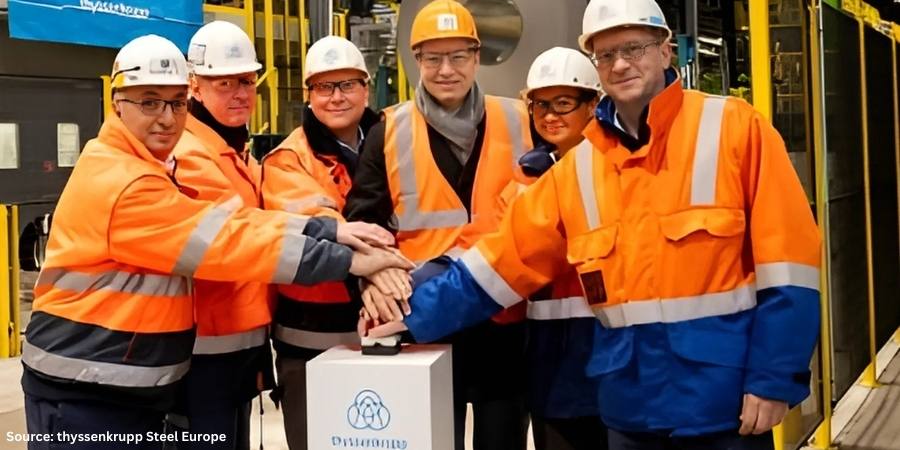
Main image: The team from thyssenkrupp Steel Europe and SMS Group preparing to start up the pioneering plant technology for the manufacture of high-grade electrical sheet / L to R: Engin Karakurt, Chairman of the Works Council of thyssenkrupp Steel in Bochum; Dr. Harald Espenhahn, Head of Technology and Environmental Management, thyssenkrupp Steel; Andy Rohe, Head of Downstream Operations, thyssenkrupp Steel; Thomas Eiskirch, Mayor of Bochum; Dr. Marie Jaroni, Chief Transformation Officer at thyssenkrupp Steel; Markus Kovac, Head of the Bochum Plant Area, thyssenkrupp Steel

Press releases are available in their original form here and here.


thyssenkrupp Bolsters Electric Mobility Production with Annealing, Isolating Line Read More »

2025 Hiring in Heat Treat Q&A

In this informative piece, professional recruiters in the heat treat industry answer questions about what to expect in the heat treat industry’s hiring environment, with valuable insight both for hiring companies and rising talent.

Josh Hale, managing recruiter, and Jessica Maier, senior recruiter, both of International Search Partners, discuss changes in the hiring landscape within the heat treat industry. Their topics include adaptability to industrial technology innovations, Gen Z expectations and how hiring personnel can best articulate their needs to this labor group, and the most in-demand skill that industry employers will be looking for in 2025.

This article was first released in Heat Treat Today’s January 2025 Technologies To Watch in Heat Treating print edition.


Q1: In 2020–2021, placing long term employees became a difficult challenge to solve. As we approach the end of 2024, how has the hiring scene changed?

Josh Hale (JH): In many ways it hasn’t; it continues to be a candidate-driven market that’s tight on talent and robust in openings, and it’s hard to see things changing any time soon. With more established professionals entering retirement, fewer new workers coming in from the younger generations to meet replacement needs, and overall growth in the industry, there very simply remains a huge demand for workers and a dearth of supply.

Q2: The nature of work continues to evolve rapidly. From robotics and AI to various GPTs tailored for specific company use, industrial technology innovations continue to alter the workplace. For an industry that historically has been slow to change, have we seen any changes in how heat treat employers look to fill labor needs, compensate employees, etc.?

JH: It’s taken some time, but finally, YES! The heat treat industry isn’t known to be the bastion of new technology and has a reputation for being slow to change, but we’re just now starting to see some developments, including very simple things like touch screens, updated computers, etc. to bigger, more cultural shifts, like flexible schedules and remote work options (where applicable). At FNA in October, there were even a few furnace OEMs sharing new artificial intelligence products! This is all great news, especially for a historically very traditional industry that has been slow to evolve. Progress, growth, and getting up to speed with 21st century systems, tools, and norms goes a long way towards attracting younger talent.

Q3: What strategies have heat treat departments or companies been using to find, hire and retain the “best fit” job hires? What makes them successful (or not successful at all)?

JH: The best way for a company to hire top talent is to engage the services of a professional recruiter. I might be biased, but there’s a good reason for this — in a tight labor market where unemployment is at record lows, the best employees are currently working and engaged in their jobs and being treated very well by their employers. High performers aren’t trolling job boards, applying online, or sending out résumés. An experienced recruiter can reach this untapped market of passive candidates by reaching out to currently employed individuals and enticing them to other opportunities — I call this “surgical recruiting” because it is quite simply “cutting” an employee out of one company and placing them in another.

I also like using sports as an analogy. Imagine that you want to put together the best baseball team in the world. Are you going to post an ad online and hope Shohei Ohtani applies, or are you going to pursue him and try and lure him to quit the Dodgers and join your team? That’s the difference between direct recruiting vs. “post and pray” (the nickname recruiters give to advertising jobs online and hoping for the best), and the service that a good third-party recruiter provides.

Q4: When it comes to young people (particularly Gen Z), they have grown up in a different age of the internet and have certain expectations about what starting a career looks like, such as: How or when career mile markers are accomplished, the purpose of work, the nature of how work is accomplished, and what job benefits should look like. Translated to the heat treat industry, are there any expectations that you would encourage Gen Z to maintain, and why? Alternatively, are there certain misconceptions that you would want to reframe for them so they have a better idea of what to look for in their job options?

Jessica Maier (JM): I’m closer to this generation than Josh (Gen X), but I’m still a Millennial. I have also studied the topic and talked to many in the Gen Z workforce and gotten a good sense of their expectations. From my research, early career Gen Zs are looking for the following (along with my commentary as it pertains to the heat treat industry):

1. GEN Z EXPECTATION: 2–3 year mile markers (target and goals accompanied by either promotion or raises)

HEAT TREAT TRANSLATION: One thing that we’re seeing with the younger generation is that company loyalty is becoming less valued. If Gen Z workers don’t see the mile markers that they’re looking for in those first few years, their eyes will start to wander. While a promotion might not always be viable for someone working in a small commercial heat treat company, raises combined with praise go a long way and are achievable for most managers.

2. GEN Z EXPECTATION: A strong sense of purpose in their work (i.e., they want to feel fulfilled in their work and not feel like they’re just punching a clock)

HEAT TREAT TRANSLATION: Heat treating has a huge impact on the world, but that contribution can sometimes get lost in the shuffle of everyday work. An initiative to highlight these impacts could go a long way. Additionally, we often hear from younger candidates, “I don’t want to feel like a number; I want to feel like a human being.” Managers making a point to make sure their employees feel seen and heard could also be a quick and easy (and free!) feel good fix in this regard.

3. GEN Z EXPECTATION: PTO around 15–20 days to start, not including holidays along with basic benefits (medical/vision/401k)

HEAT TREAT TRANSLATION: Gen Z would do well to adjust these expectations a bit. I have rarely seen an entry-level position begin with more than 2 weeks (10 days) PTO. This is the norm for the first year of employment with opportunities to gain more in the future. Other benefits (health insurance, etc.) are usually standard across the board for most companies. As Gen Zs are younger and typically single, they are not usually looking at benefits for families but focused on individual care. In general, however, the more that is paid by the company, the more appealing it is for the worker (which can be a useful recruitment and/or retention tool).

Note about 401ks … Gen Z is learning from previous generation’s mistakes and are very interested in getting a jump on their retirement funds. With that, and in the same vein as the benefits, the higher the percentage matched by the company, the more appealing it is to the employee — another great tool for attracting top talent!

4. GEN Z EXPECTATION: Work/life balance (including the WFH trend kicked off by the pandemic)

HEAT TREAT TRANSLATION: In a post-COVID world, “work/life balance” is a huge buzz word in the hiring process, and with that, I see some good news and bad news as it pertains to the heat treating industry … the good news for Gen Z is that we’re seeing a trend of companies understanding that when an employee is not “on the clock,” they are not expected to be attached to their phones or emails and provide an immediate response. The bad news for Gen Z is that being on site is critical for many/most of the jobs in the industry. Of course, there are exceptions (hello, Sales!), but generally, it remains true that remote work is untenable for most heat treaters.

5. GEN Z EXPECTATION: Fair pay

HEAT TREAT TRANSLATION: We could talk about this for hours, but I’ll boil it down to this: If you’re a younger Gen Z who is looking for a job, you’re likely not going to get the pay that your professor, buddy, or family member told you to aim for … on the flipside, if you’re a manager looking to hire, you’re probably going to pay a little more for entry-level talent than you probably thought. Expectations need to be adjusted on both sides.

Q5: What is the number one mistake entry-level engineers in heat treat make when applying for jobs?

JM: This sounds crazy but the number one mistake is not applying! I can’t tell you how many times we talk to talented engineers that see a job description and decide that they are not right for a role because they don’t have one or two of the bullet points listed. You need to take job descriptions with a grain of salt. Generally, the description is a list of what an employee will be doing once they’ve earned the role, but what many people forget is that you can (and will) learn skills on the job. Speaking to employers now — if you want superstar entry-level engineers to eventually take the place of your veterans that are nearing (well deserved!) retirement, invest in heat treat education for the younger generation!

It’s taken some time, but finally, YES! The heat treat industry isn’t known to be the bastion of new technology and has a reputation for being slow to change, but we’re just now starting to see some developments, including very simple things like touch screens, updated computers, etc. to bigger, more cultural shifts, like flexible schedules and remote work options (where applicable).

Josh Hale

Q6: In 2025, what will be the most in-demand skill that industry employers will be looking for? What can job seekers do to position themselves best for this position?

JM: Field service and maintenance. Next question.

JH: Okay, I’ll handle this one … Jessica isn’t joking. FSEs and maintenance professionals of all levels are hyper in demand across the board. If you can spell “PLC” and have seen a furnace, we probably have a job for you! To get more to the heart of your question, however, we are seeing companies seeking more communication skills. Gone are the days of engineers sitting behind a desk and programming all day from their cubicle. Today’s technical roles often involve customer interaction, sales support, and a level of interdisciplinary collaboration that requires interpersonal skills, verbal communication abilities, and competency in writing. Often, we see the “C” student who maybe partied a little too hard in college but learned to socialize get hired over the “A+” candidate who can’t string a coherent sentence together while making eye contact. A lot of this might sound like stereotypes, but it is true. I recommend students in engineering and materials science to take some humanities or writing courses in college to help and that more established workers should consider toastmasters or improv classes to better position themselves to be competitive in the future.

Q7: 10 years from now, what can we expect to change in job openings, availability, and work-life balance in the heat treat industry?

JM: I wish I had a crystal ball to tell you the exact future, but seeing as I’m only human, here are my best guesses:

  • Job openings: As someone who has spent almost a decade working in the heat treat world, I can safely say that most of the job openings will remain the same. Roles like field service engineer, sales, metallurgist, design engineer, etc. will always be in demand. However, I think we will start to see more technology incorporated into these roles. At the most recent FNA show in October, we saw many companies bringing new and better software into the mix. Not only will current positions start to involve more tech, but I think we will see some newer positions, like software engineers, join the industry as well.
  • Availability: As mentioned, a lot of experienced heat treat professionals are starting to reach retirement age, while some are working well into their 60s and beyond, I think we’re going to hit a point in the next 10 years where that dam will break, and we’ll see a large wave of retirement which will open up A LOT of previously tenured positions.
  • Work-life balance: For Gen Z, work-life balance is of high priority. For heat treat companies to compete, they need to be willing to give more consideration to remote work where applicable and offer flex schedules when possible. Of course, many of the roles we come across in the heat treat industry would not do well remote as they are either hands-on or collaborative. That said, for an on site employee, 40–50 hours should be considered the norm. With many heat treaters operating 24/7, companies may need to come to terms with the need to hire more people or dole out extra incentives, such as bonuses or overtime to keep their workforce engaged.

About the Authors:

Josh Hale, Managing Recruiter, International Search Partners (left)
Jessica Maier, Senior Recruiter, International Search Partners (right)

Josh Hale has collaborated with companies to identify, engage, and hire top performers as a professional “headhunter” where he’s focused exclusively on the heat treat industry as part of International Search Partners since acquiring the firm in 2015.

Jessica Maier works closely with him to support the practice, and, together, they’ve helped dozens of companies and hundreds of candidates find a match within the industry, including roles for engineering, sales, quality, metallurgy, management, and more.

For more information: Contact Josh and Jessica at info@internationalsearchpartners.net or call 619-465-9621.


2025 Hiring in Heat Treat Q&A Read More »

News From Abroad: Launches and Strategic Steps

In today’s News from Abroad installment, we highlight changes in personnel, production lines, and facilities throughout the industry, including the launch of a new refractory technology and an aerospace manufacturer updating its operations with a batch oven. Read more about these updates as well as those a thermal processing company is taking affect its management line-up and its facilities footprint.

Heat Treat Today partners with two international publications to deliver the latest news, tech tips, and cutting-edge articles that will serve our audience — manufacturers with in-house heat treat. Furnaces International, a Quartz Business Media publication, primarily serves the English-speaking globe, and heat-processing, a Vulkan-Verlag GmbHa publication, serves mostly the European and Asian heat treat markets.

Aerospace Manufacturer Adds Modern Batch Oven Solution

Collaboration to address operational challenges with batch oven

“International Thermal Systems (ITS) has successfully partnered with an aerospace company to address significant operational challenges by designing and delivering a customized batch oven solution. The collaboration highlights ITS’s commitment to safety, efficiency, and customer satisfaction. The aerospace company faced significant challenges with their existing batch oven…

International Thermal Systems aimed to address these challenges by replacing the unsafe, outdated batch oven with a safer and more modern alternative. Their goal was to improve usability by incorporating updated controls and optimizing the loading and unloading processes… [ITS] designed and installed a state-of-the-art batch oven featuring melting wax technology to optimize production processes. Advanced control systems were integrated to enhance operational ease and precision.”

READ MORE: “International Thermal Systems Enhances Aerospace Manufacturing with Custom Batch Oven Solution” at heat-processing.com. 

Refractory Technology Launched To Address Kiln Interruptions

Refractory technology for use in many industrial applications and all types of industrial furnaces

“Calderys is pleased to announce the launch of CALDE® FD (Fast Dry), a refractory technology that can be used in many industrial applications and offers superior efficiency and reliability for all types of industrial furnaces. Calderys is constantly striving to improve its processes in order to offer its customers the best possible solutions. In the field of cementitious refractory concretes, the drying out of the furnaces is a critical challenge due to its duration, regardless of the industrial process. Once the refractory lining has been installed, the kilns are unusable for up to several days to allow drying out, which inevitably leads to an interruption in operations.

Calderys is directly addressing this by expanding its product offering with the CALDE® FD (Fast Dry) range. This solution has been designed to integrate seamlessly into the Calderys product range. Crucially, the CALDE® FD products offer customers increased reliability, reduced downtime, streamlined processes and improvements in CO2 reduction. This expanded product range has been developed in line with Calderys’ ESG objectives to support customers with their energy transition requirements.”

READ MORE: Calderys Launches an Expanded Range of Fast Dry Refractory Solutions To Improve the Drying of Industrial Furnaces at heat-processing.com

AICHELIN Makes Changes in Management and Site Operations

Management and business strategy changes at AICHELIN

“Philipp Krenn, Managing Director of AICHELIN Ges.m.b.H. in Austria, has taken over the management of the German AICHELIN Service GmbH in Ludwigsburg on February 1, 2025. The company is the leading company within the AICHELIN Group for all services for thermal processing systems… Philipp Krenn will intensify the cooperation between the locations in Austria and Germany.

At the same time, the AICHELIN Group has decided to discontinue the business operations of its Slovenian subsidiary Bosio d.o.o. and to have all products supplied by Aichelin Ges.m.b.H (Austria) in the future. Production will not be affected and will continue to take place at the AICHELIN Assembly Center Europe (AICHELIN ACE d.o.o.) in Celje, Slovenia, which [opened] in 2023… The decision to take this step is the result of intensive analyses and a strategic adjustment to the current economic conditions in Europe.”

READ MORE: AICHELIN Group Strengthens European Business with Future-Oriented Structure at heat-processing.com


Find Heat Treating Products And Services When You Search On Heat Treat Buyers Guide.Com

News From Abroad: Launches and Strategic Steps Read More »

AM/3D Trivia

In today’s Technical Tuesday installment, we highlight the various techniques and developments in the world of metal AM as it pertains to post-process heat treating. Check out the trivia quiz below to test your knowledge of the AM/3D industry, the processes, and the technology.

This feature was first released in Heat Treat Today’s January 2025 Technologies To Watch in Heat Treating print edition.


Additive manufacturing (AM), commonly known as 3D printing, has a history marked by constant innovation for uses across the space, aerospace, medical, food, and manufacturing industries, to name a few. While AM is known to support, streamline, and customize part production, advanced materials paired with evolving AM techniques are creating new possibilities in materials engineering and industrial manufacturing. Due to the nature of this ever-developing technology, in-house heat treaters must continually learn about AM components and how thermal processing may enhance component properties.

Emanuel “Ely” Sachs
  1. What was the original name for additive manufacturing (AM), circa 1980s?
    A) 3D printing
    B) Rapid prototyping (RP)
    C) Additive manufacturing (AM)
    D) Rapid tooling (RT)
  2. What grade of stainless steel is most commonly used for AM to achieve varying levels of strength, hardness, and elongation when heat treated?
    A) 17-4 PH
    B) 316L
    C) 304
    D) 430
  3. Who is Emanuel “Ely” M. Sachs?
    A) An engineer at GE Aviation who combined multiple parts into one huge, complex design using a laser-based additive manufacturing method called direct metal laser melting
    B) An engineer at Stratasys Ltd., an American-Israeli manufacturer that began using a material extrusion based process with their FFF (fused filament fabrication) technology to print parts, patented in 1989
    C) A professor of Mechanical and Materials Engineering at Worchester Polytechnic Institute who evaluated the post process heat treating of DMLS titanium alloy parts
    D) An MIT engineering professor who patented the process of metal binder jetting technique in 1993
  4. What do cast parts made from powder metallurgy methods and AM parts have in common?
    A) The same heat treatment cycles produce the best results
    B) Custom cycles are used in less than 2% of both applications
    C) Parts exhibit porosity
    D) None of the above
  5. What are the most commonly adjusted parameters to achieve higher yield strength when heat treating AM parts?
    A) Cooling and heating rate
    B) Temperature and time
    C) Time and pressure
    D) Temperature and pressure
  6. Why is HIP known as the “gold standard” for processing AM parts for space?
    A) Eliminates porous microstructures without compromising the part’s geometries and dimensions
    B) High level of control and uniformity
    C) Combines high temperature and pressure to improve a part’s mechanical properties
    D) All of the above
  7. What is NOT a potential benefit of additive manufacturing?
    A) Immediate cost savings
    B) Fast part production
    C) Rapid prototyping
    D) Opportunity for increased automation and use of robotics
  8. What are the two main categories for most 3D printing methods?
    A) Those that use liquid binding polymers, and those that don’t
    B) Binder jetting technology (a non-melt-based process) and melt-based processes
    C) Both A and B
    D) Neither A nor B
  9. Which alloy was originally developed for aerospace applications but became one of the most common biomedical alloys?
    A) Inconel 718
    B) Inconel 625
    C) Ti-6Al-4V
    D) Hastelloy C22
  10. What was the first rapid prototyping method to produce metal parts in a single process (and is one of the most widely used AM technologies to manufacture Ti-6Al-4V parts)?
    A) Powder-bed fusion (PBF)
    B) Directed energy deposition (DED)
    C) Sheet lamination (SL)
    D) Direct metal laser sintering (DMLS)
  11. In what way does high temperature processing — specifically HIP below the annealing temperature (1470°F/799°C) — improve DMLS Ti-6Al-4V parts?
    A) Preserves surface roughness and enhances osteointegration
    B) Reduces porosity and enhances corrosion resistance
    C) Both A and B
    D) Neither A nor B
  12. What is the ideal way to process 3D printed parts made using liquid binder polymers?
    A) Print the parts in-house followed by debind and sinter.
    B) Have AM parts delivered in-house for heat treating when parts are at the “Green” stage
    C) Have AM parts delivered in-house for heat treating when parts are at the “Brown” stage
    D) None of the above

How Did You Do?

Click here for answers.

We would like to thank Dan Herring, Animesh Bose, Ryan Van Dyke, Rob Simons, and Phil Harris for contributing their expertise to this trivia feature.


AM/3D Trivia Read More »

Heat Treat’s “7-Year Itch”

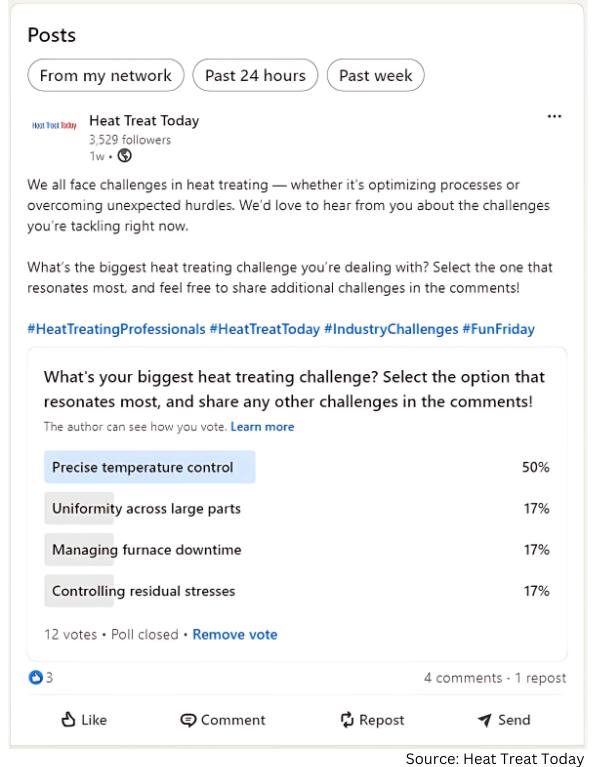
Heat Treat Today publishes twelve print magazines a year and included in each is a letter from the editor, Bethany Leone. In this installment, which first appeared in the January 2025 Technologies To Watch print edition, Bethany reports on the changing landscape of the industry and the resulting challenges, according to a poll on LinkedIn. Respondents shared their views on uniformity and temperature control, residual stresses, managing downtime, and more, and our editor gives her summary of the feedback.

Feel free to contact Bethany at bethany@heattreattoday.com if you have a question or comment. 


January 2025 Magazine

Now granted, heat treating isn’t in a romantic relationship, but this 2025, there are many relationships that have vied for the industry’s attention over the past decade plus. 2025 seems to be the year to scratch the itch that heat treaters have: Is it time to try something new?

Recently, Heat Treat Today released a poll on LinkedIn. We asked what the number one challenge that heat treat experts faced in the North American manufacturing industry. There were several big-ticket items that we offered: Precise temperature control, uniformity across large parts, managing furnace downtime and controlling residual stresses. Unsurprisingly, temperature control was voted as the top challenge of the four choices, though it was surprising that few respondents piped in on the topic of residual stresses.

Yet perhaps the most important engagement came from a commenter who addressed using legacy materials in changing industry requirements. How closely are we thinking about the future that materials — use of legacy materials as well as different legacy materials — have on our work in heat treatment? (Ok, your work. We all know that I’m leaving the discovery and application to you!)

As the commenter noted, the choices in the poll are all critical characteristics, and therefore factors heat treatment practitioners should already be concerned with. If you are looking at your heat treat operation’s relationship with a variety of processes and technologies and think that the relationship is ideal as can be, great.

But if you are in the “seven-year itch” camp — that is, there is some relationship with a process or technology that is on the rocks — this new annual magazine we are releasing each January highlights the heat treat technologies to watch for in 2025. It’s time to reevaluate the relationship your heat treat operations have with current technologies.

Technological Relationships Under Consideration

The heat treat industry is navigating a rapidly evolving landscape shaped by new materials and technologies. Additive manufacturing (AM), or 3D printing, introduces unique material requirements that challenge traditional heat treating. Complex geometries and the use of non standard alloys in AM demand processes tailored for uniformity and precision at an unprecedented level. These disruptions, coupled with constant innovations by researchers in materials science, are prompting a reevaluation of whether conventional heat treating methods are needed as is, or even at all. Check out the AM quiz on page 24 to get up-to-speed on some of these developments.

Meanwhile, robotics and AI are revolutionizing how operations are managed. AI-powered predictive maintenance is becoming indispensable, helping to minimize furnace downtime by identifying potential failures before they occur. Machine learning enhances furnace control systems by refining temperature cycles and gas flow in real time, ensuring consistency and efficiency. How are these systems working for heat treaters? Read the case study article on page 10.

Digitalization technologies, such as smart sensors and IoT-enabled systems, are making it easier than ever to monitor and analyze heat treating operations. These tools, combined with advanced software, empower operators to make data driven decisions and reduce energy consumption. Several articles in last month’s magazine release focused heavily on these technologies, but the conversation persists in the commentaries found on pages 17 and 27.

The question for 2025 is clear: Are heat treaters ready to adopt these innovations and adjust their processes to align with the needs of tomorrow’s manufacturing? Have your operations found the perfect relationship with these new technologies? Tell me what you’re finding to be most difficult to address in 2025 so we can examine that relationship in future editions.

Bethany Leone
Managing Editor
Heat Treat Today

Contact Bethany at bethany@heattreattoday.com.


Find Heat Treating Products And Services When You Search On Heat Treat Buyers Guide.Com


Heat Treat’s “7-Year Itch” Read More »

US Heat Treater Adds Furnaces, Marquenching Capabilities

A commercial heat treating company recently added new furnaces and process improvements to its operations in order to serve manufacturers in advanced industries, including aerospace and defense. The improvements include a high-temperature oxidation furnace, a fully rebuilt furnace, and the expansion of marquenching capabilities.

Phoenix Heat Treating, based in Phoenix, AZ, has introduced a high-temperature oxidation furnace specifically designed for space components. This equipment has a maximum operating temperature of 1975oF and operates in an air atmosphere, providing the thermal stability and precision needed for the demands of aerospace applications and to serve the evolving needs of the space industry.

A fully rebuilt furnace has been reactivated in the company’s production lineup. This furnace is tailored for processing primary long Inconel 718 and A286 age cycles. With a maximum weight capacity of 2000 lbs., it handles heavy and complex loads with a goal of ensuring consistent and reliable results for critical nickel-based alloy applications and improving efficiency and capacity by increasing the number of Inconel 718 cycles per week.

Marquenching operations are also seeing an upgrade as materials have been ordered to increase load sizes from 25 lbs. per load to 250 lbs. per load. Expected to be complete by mid-February, this enhancement represents a tenfold increase in capacity, allowing Phoenix Heat Treating to achieve faster turnaround times and larger batch processing capabilities.

Additionally, a state-of-the-art freeze/temper unit has been brought online. This equipment is capable of reaching temperatures between -270oF and 200oF and will be a part of the company’s aluminum thermal cycling processes, enabling precise control over temperature profiles for optimal material performance. The new unit’s capacity is roughly double that of the previous maximum reached and will allow Phoenix to handle significantly larger loads and meet growing customer demand.

The press release is available in its original form here.


US Heat Treater Adds Furnaces, Marquenching Capabilities Read More »

Fringe Friday: Atomizer Enhances Capabilities at Metals Company

We’re celebrating getting to the “fringe” of the weekend with a Heat Treat Fringe Friday covering news about a metals company enhancing its processing line with an atomizer, increasing its capability to produce metal powders for the advanced manufacturing industries that it serves. Atomization, a process that forces molten metal into a controlled environment through a nozzle at high pressure, improves sustainability and efficiency in metals production for industries such as aerospace, medical and defense.

While not exactly heat treat, “Fringe Friday” deals with interesting developments in one of our key markets: aerospace, automotive, medical, energy, or general manufacturing.


A multinational metals company recently bolstered its processing line by adding an atomizer for the production of metal powders. The atomizer will be installed at one of the company’s U.S. production facilities and is capable of producing a wide variety of metal powders, optimized for both throughput and maintenance.

Retech, a division of SECO/WARWICK Group and a pioneer in advanced metallurgical equipment, has announced the procurement and the delivery and installation of the advanced manufacturing equipment to the metals manufacturer.

Earl Good
Managing Director
Retech

“We stuck with them,” said Earl Good, president and managing director at Retech. “We maintained the response times they needed, going above and beyond. This level of dedication was crucial in meeting their ambitious timeline, from RFQ to turnkey execution.”

The atomizer system is designed to be highly efficient, reducing operational costs and environmental impact. The system’s all-electric process ensures zero carbon emissions, aligning with sustainable production practices, and the inert gas recovery and recycling enhances resource efficiency and reduces waste. Maintenance features allow for rapid changeover between heats, minimizing downtime.

The press release is available in its original form here.


Fringe Friday: Atomizer Enhances Capabilities at Metals Company Read More »