Largest Commercial Vacuum Furnace Nearing Completion

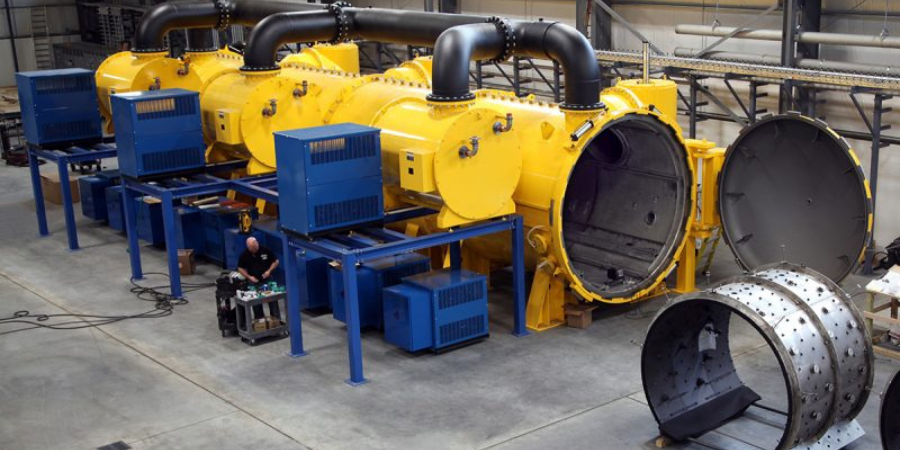
Solar Atmospheres of Western Pennsylvania and Solar Manufacturing, Inc. have been very busy these days building the largest vacuum furnace anywhere in the world.  The working hot zone of this high vacuum (three 35 inch Varian diffusion pumps) furnace is 80 inch diameter X 48 feet long with a maximum operating temperature of 2400°F.  Thirty five points of temperature will be surveyed to within +/- 10°F per the stringent AMS 2750E specification. The robust US Patented dual load car design will have the capacity to transfer up to 150,000 pounds of material in and out of the furnace.  For dimensionally critical, near net shaped jobs, the dual load car design will also have the capability to maintain the critical support needed at elevated temperatures to keep parts flat to within .030 inches.

All of the major components have been delivered and installed.  The gas and water systems are in place.  The remaining installation of all the electrical components and wiring will occur over the next several weeks.  This multi-million dollar project is expected to be completed in June with the commissioning of the furnace into production in July of 2016.  This unique piece of equipment will not only open up new production opportunities within the North American vacuum heat treating markets, but also internationally.

Largest Commercial Vacuum Furnace Nearing Completion Read More »

Vacuum Heat Treating for Space Exploration

BOTW-50w Source:  Solar Atmospheres

Vacuum furnaces are highly flexible tools capable of providing numerous thermochemical conditions with various reactive gases at elevated temperatures and extreme pressures to alter the chemical or mechanical properties of materials.  Conditions inside vacuum furnaces are equivalent to conditions found on the planets in our solar system.    Each planet in our solar system is unique in terms of its atmospheric contents, pressures, and temperatures.  One planet with unique atmospheric conditions is Venus.

Read More: Vacuum Heat Treating for Space Exploration


Vacuum Heat Treating for Space Exploration Read More »

Bodycote To Open New Heat Treatment Facility in Mexico

Bodycote, the world’s largest thermal processing services provider, today announces the company will open a new, state-of-the-art heat treatment plant in San Luis Potosi, Mexico.

Mexico is one of the largest automotive manufacturing countries in the western hemisphere, with many of the world’s leading car manufacturers investing in manufacturing and assembly plants.

Bodycote’s latest investment, a 100,0002ft facility, established to serve the country’s extensive and growing automotive supply chain, will be capable of supporting large automotive projects and providing the necessary heat treatment services for technologically advanced components, such as complicated transmissions.

The plant, which will be TS 16949 certified as well as holding all required OEM quality approvals, will offer a wide range of heat treatment processes, including low pressure carburizing, ferritic nitrocarburizing, and Bodycote’s proprietary Corr-I-Dur® process.

In addition to the existing Silao and Empalme plants, the San Luis Potosi facility will be Bodycote’s third plant in Mexico and will be able to provide customers with complementary services and qualified backup to the existing sites, if needed. It is scheduled to be fully operational by fourth quarter.

Bodycote To Open New Heat Treatment Facility in Mexico Read More »

NASA Releases Dozens of Patents into the Public Domain

Washington – NASA has released 56 formerly-patented agency technologies into the public domain, making its government-developed technologies freely available for unrestricted commercial use. In addition to the release of these technologies, a searchable database now is available that catalogs thousands of expired NASA patents already in the public domain.
These technologies were developed to advance NASA missions but may have non-aerospace applications and be used by commercial space ventures and other companies free of charge, eliminating the time, expense, and paperwork often associated with licensing intellectual property. The technologies include advanced manufacturing processes, sensors, propulsion methods, rocket nozzles, thrusters, aircraft wing designs, and improved rocket safety and performance concepts.
“By making these technologies available in the public domain, we are helping foster a new era of entrepreneurship that will again place America at the forefront of high-tech manufacturing and economic competitiveness,” said Daniel Lockney, NASA’s Technology Transfer program executive. “By releasing this collection into the public domain, we are encouraging entrepreneurs to explore new ways to commercialize NASA technologies.”
This patents release is the latest in NASA’s long tradition of extending the benefits of its research and development into the public sector, where it may enhance the economy and quality of life for more Americans. The release also may help familiarize commercial space companies with NASA capabilities and result in new collaborations with private industry.
The innovations included in this transfer were selected by NASA officials using a rigorous review process, during which decision-makers looked for technologies that offer the potential for high unit values but are less likely to be licensed by outside companies because of low demand for resulting products (for example, spacecraft), or the technology still requires significant development before it is marketable.
A few examples include:
  • Inventions related to rocket nozzles, injection systems, and propellants that might help launch a new generation of commercial spacecraft
  • Methods for controlling airflow around vehicles in hypersonic flight
  • Technologies designed to mitigate the dangerous gases created as humans live and work in space
NASA’s patent portfolio, managed by the agency’s Technology Transfer Program, includes more than 1,000 technologies in categories such as manufacturing, optics and sensors, and is available for industry use through licensing agreements.

NASA Releases Dozens of Patents into the Public Domain Read More »

GM Dumps Korea as Source for 2017 Holden Commodore

BOTW-50w Source:  Wheels

“The same factor that pushed General Motors  to quit building the Holden Commodore in Australia – the high cost of labour – appears to have led it to dump a decision to build the first-ever fully imported Holden Commodore in Korea.”

Read More:  GM Dumps Korea as Source for 2017 Holden Commodore


GM Dumps Korea as Source for 2017 Holden Commodore Read More »

FDA Has Important New Views on 3-D Printed Devices

BOTW-50w Source:  MPMN Medtec Pulse

The FDA has released “leapfrog” draft guidance for the rapidly evolving world of 3-D printed medical devices.

The agency based the guidance on input from device manufacturers, 3-D printing companies, and academics who testified at a 2014 hearing. The document covers device design, manufacturing, and design testing. For the purposes of the draft, FDA identified four main types of 3-D printing—powder fusion, stereolithography, fused filament fabrication, and liquid-based extrusion.

Manufacturers would have to clearly identify every step in the 3-D printing process, and might need to submit a “high-level summary of each critical manufacturing process step,” the guidance says. They would also have to document each step’s risk, and describe how they would mitigate those risks.

Read More:  FDA has Important New Views on 3-D Printed Devices

FDA Has Important New Views on 3-D Printed Devices Read More »

7 Recent Medical Device Failures Catching FDA’s Eye

BOTW-50w Source:  QMED – Qualified Suppliers to the Medical Device Industry

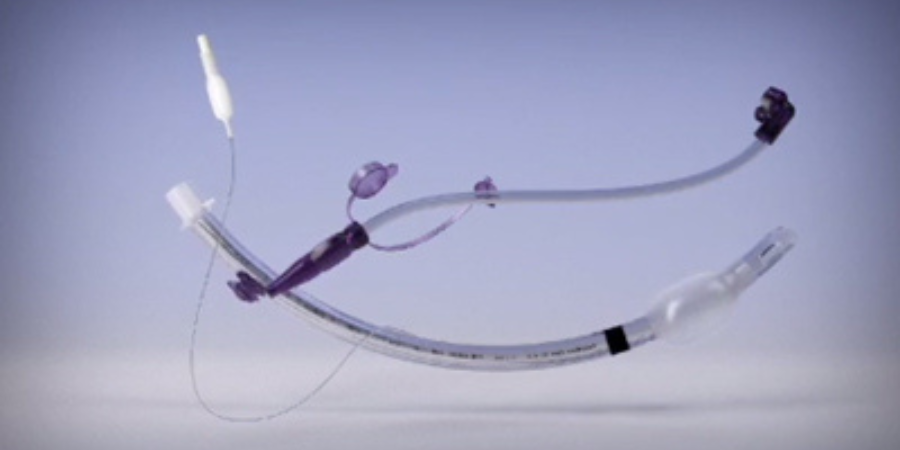
“The FDA last month designated a Medline Industries guidewires recall as Class I.

The Medline guidewire is identified as the ACME Monaco Guidewire .035×150 3MMJ TCFC item number 88241, with affected products distributed between March 2013 and August 2013.

The guidewire is used in various surgical convenience kits assembled and marketed by Medline Industries. It is meant to fit inside a percutaneous catheter for the purpose of directing the catheter through a blood vessel.

The guidewires in question, however, have the potential for the coating to flake off of the wire, according to the FDA.”

Read More: 7 Recent Medical Device Failures Catching FDA’s Eye

7 Recent Medical Device Failures Catching FDA’s Eye Read More »

Plastics and Metals Team Up in Medical Device Apps

BOTW-50w Source:  MPMN Medtec Pulse

“… to be able to deliver devices with ever-increasing performance levels, medical device manufacturers continue to face many design challenges and requirements. Propelling these requirements is the unrelenting trend toward minimally invasive procedures, requiring smaller and smaller devices made from a range of microcomponents, and the trend toward increasing medical device connectivity. As a result, there is a growing need to unite plastics and such metals as stainless steel, although they used to be fierce competitors.”

Read More: Plastics and Metals Team Up in Medical Device Apps

Plastics and Metals Team Up in Medical Device Apps Read More »

Stryker’s Spine Division to Debut 3D Printed Tritanium Posterior Lumbar Cage Spinal Implant

BOTW-50w Source:  3D Print.com

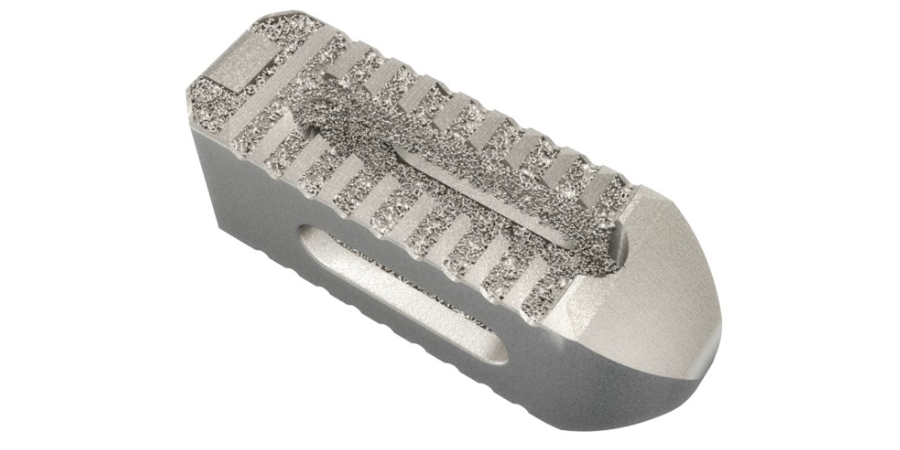
“Stryker’s proprietary Tritanium technology has now been applied to spinal implants designed to encourage healthy regrowth of the bone tissue, and to reduce any strain or damage caused by being implanted. The Tritanium Posterior Lumbar (PL) Cage is a 3D printed intervertebral body fusion device that was developed to help patients dealing with lumbar spinal fixation due to ongoing back problems brought on by degenerative disc disease.”

Read More:  Stryker’s Spine Division to Debut 3D Printed Tritanium Posterior Lumbar Cage Spinal Implant

Stryker’s Spine Division to Debut 3D Printed Tritanium Posterior Lumbar Cage Spinal Implant Read More »

Record Gas Quenching Speeds Achieved in Ipsen’s ARGOS Heat Treating System

KLEVE, GERMANY – Ipsen’s Global Development Team recently celebrated the first build and testing of the ARGOS heat-treating system. The ARGOS uses low-pressure carburizing (AvaC®) in combination with 20-bar nitrogen quenching to provide metallurgical properties never before seen in gas quenching systems – even those utilizing 20-bar helium quenching. One industry visitor who witnessed the test run commented, “The ARGOS is likely the fastest inert gas quench furnace in the world.”

This initial test was performed on one of the most difficult to quench vacuum carburized components: layshafts for large gears. Until now, helium gas, which is both expensive and declining in availability, was required to fully transform parts with very high cross-sectional thicknesses.

Test outcomes showed that the shafts processed in the ARGOS system with 20-bar nitrogen quenching achieved higher surface hardness and core hardness values than shafts processed in the existing vacuum heat-treating furnaces that use 20-bar helium quenching. The ARGOS heat-treating system also offers several benefits, including:

  • Flexible installation with a selectable number of carburizing, nitriding, subzero and high vacuum process chambers with a nitrogen gas and/or oil quench module
  • Excellent temperature uniformity during heating and cooling
  • Minimal and controllable distortion due to temperature homogeneity throughout the entire load and the reversible gas flow during cooling
  • Extremely high gas velocity and volume due to Ipsen’s unique cooling system design

Overall, the ARGOS furnace line represents a significant milestone in the growing trend to operate low-pressure carburizing (LPC) lines in combination with inert gas quenching.

Record Gas Quenching Speeds Achieved in Ipsen’s ARGOS Heat Treating System Read More »