HEAT TREATING EQUIPMENT

The Evolution of Cleaning Technology in Heat Treating: Time To Rethink the Approach

This instructive piece was first released in Heat Treat Today’s April 2025 Induction Heating & Melting print edition.


In heat treating, clean parts are essential for repeatable, high-quality results. Yet cleaning is often seen as a necessary evil rather than a strategic process. That mindset must change. 

For decades, gas carburizing with oil quenching has dominated the industry despite challenges, such as contamination, environmental concerns, and part distortion. These issues have driven growth in alternative processes, such as vacuum carburizing with gas quenching and nitriding, which eliminate post-quench oil contamination. However, not all metallurgical requirements can be met with these newer processes, and gas carburizing with oil quenching remains necessary for many part sizes, geometries, and material types. Furthermore, some alternative processes require more advanced pre-cleaning technology, adding complexity. 

I briefly left heat treating in 1998 — I call it my sabbatical from heat treating — to work in advanced industrial cleaning and automation. When I returned about five years later, I was struck by how far behind the industry was in cleaning technology. While other manufacturing sectors had embraced modern solvent and hybrid cleaning systems, heat treating continued to rely on outdated aqueous washers that struggle to clean oil-contaminated parts effectively. It goes back to the old axiom: oil and water don’t mix. Spraying harder only emulsifies the oil further, making separation and disposal even more difficult, increasing costs, and creating sustainability concerns. 

Paths Forward 

  1. Process shift — Where practical, companies have transitioned from oil quenching to vacuum carburizing with gas quenching, nitriding, and other alternative processes that reduce contamination issues. Of course, such changes are not driven solely by cleanliness — metallurgical requirements and process economics are complex topics. Gas carburizing with salt quenching is an often overlooked alternative, which offers superior heat transfer over gas quenching, reduces distortion, and is environmentally sustainable. Unlike oil quenching, cleaning aft er salt quenching is far simpler, as hot-water washers reclaim over 99% of the salt in a closed-loop system. The old negative mindset about salt, which questions the safety and toxicity of high temperature salt, has restrained process growth in this area. New equipment designs could create interesting, alternative paths with multiple benefits. 
  2. Mindset shift — If oil quenching remains necessary, cleaning processes must improve. Conventional aqueous washers are inefficient, and while modern cleaning systems are effective, they are costly. However, when considering part quality, sustainability, efficiency, and long-term cost savings, these systems provide a strong ROI and should not be dismissed. 
  3. Technology shift — Sustainability in cleaning cannot be ignored. Water-based systems with distillation attempt to recycle but have high energy costs, making solvent-based systems with integrated distillation more practical for higher efficiency and lower hazardous waste output.  
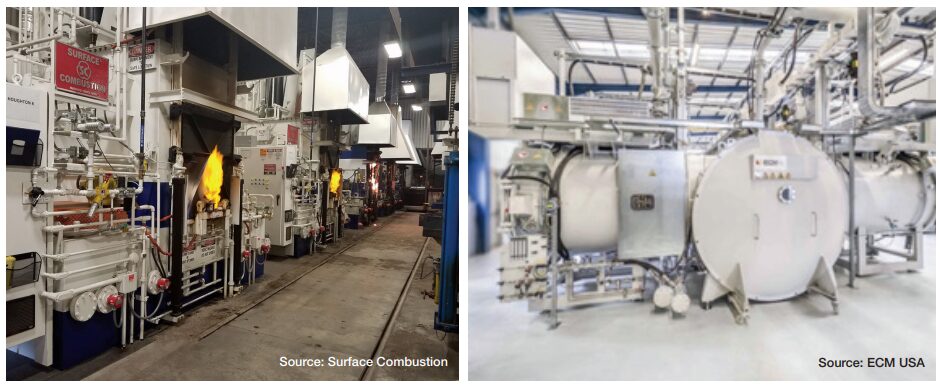
Rugged environments (left) require cleaning systems that modern washers are not often built for. Many new washers are more suited to clean controlled environments like vacuum heat treating (right). (Images from “All About IQ Furnace Systems,” 16)

Challenges with Modern Washer Designs — Thoughts for Manufacturers  

One major barrier to adopting advanced cleaning systems is cost, driven by their design. Many new washers are built for clean, controlled environments like vacuum heat treating but are poorly suited for traditional heat treat shops using oil quenching. Th ese shops have different requirements — floor space constraints, varied load configurations, and harsher conditions — meaning rugged, adaptable, and cost-effective solutions are needed. Function must take priority over aesthetics. 

Washer manufacturers should rethink their designs to better fit conventional operations by focusing on durability, modularity, and cost-conscious engineering. Doing so could lower costs while improving adoption rates and accelerating industry-wide improvements in part cleanliness, quality, and sustainability. 

Conclusion 

Heat treating is changing, and cleaning technology must evolve with it. Whether by adopting better process alternatives, improving cleaning methods, or rethinking equipment design, companies that embrace innovation will reduce waste, improve efficiency, and ensure long-term success with a stronger commitment to sustainability and environmental responsibility. 

The industry is evolving. It’s time to evolve with it. 

References

About The Author:

William (Bill) Disler
President
WDD Consulting LLC

William (Bill) Disler entered the heat treat industry as a young engineer, quickly establishing himself as a hands-on expert and eventually leading an international heat treat supplier company as CEO/president. He now serves the industry as a strategic advisor and partner to the C-Suite, as an engaged board member, through his consultancy, WDD Consulting, and in roles where he can make a positive impact. 

For more information: Contact Bill Disler at wdisler@wddconsulting.com 


The Evolution of Cleaning Technology in Heat Treating: Time To Rethink the Approach Read More »
How To Find Both Real and Virtual Vacuum Leaks

In this Technical Tuesday installment, Thomas Wingens, Founder & President, WINGENS CONSULTANTS; Dr. Dermot Monaghan, Managing Director, and Dr. Erik Cox, Manager of New Business Development, Gencoa, train readers for finding both real and evasive virtual vacuum leaks.

Leak detection is difficult enough with a “real” leak, but “virtual” leaks present their own challenges. To enhance cost savings and further process efficiencies, it’s essential to have leak sensor technology that can effectively monitor the vacuum chamber and pinpoint these problematic leaks.  

This informative piece was first released in Heat Treat Today’s March 2025 Annual Aerospace Heat Treating print edition.


Uncontrolled impurities in a vacuum furnace can significantly affect the quality of vacuum heat treating and brazing processes. They can compromise the integrity of the processed material, leading to defects, reduced performance, and increased costs. 

Real vs. Virtual Leaks 

Real leaks are physical openings in the vacuum system that allow external gases to enter the chamber. These can be cracks, weld failures, improperly installed fittings, faulty seals from damaged or worn O-rings on doors, rotating assemblies, or other components of the vacuum furnace. 

The impact on quality includes: 

  • Oxidation and contamination: Real leaks introduce atmospheric gases (like oxygen, nitrogen, and moisture) into the vacuum chamber, which can lead to oxidation of the materials being treated or brazed, as well as other forms of contamination. 
  • Inconsistent results: The presence of unwanted gases can interfere with the chemical processes required for proper heat treatment or brazing, leading to inconsistent metallurgical results. 
  • Reduced mechanical properties: Contamination and oxidation can weaken the materials being processed, leading to defects and reduced mechanical properties of the final product. 
  • Difficulties in achieving desired vacuum: Real leaks can prevent the system from reaching or maintaining the necessary vacuum levels, leading to longer cycle times or failed processes.  
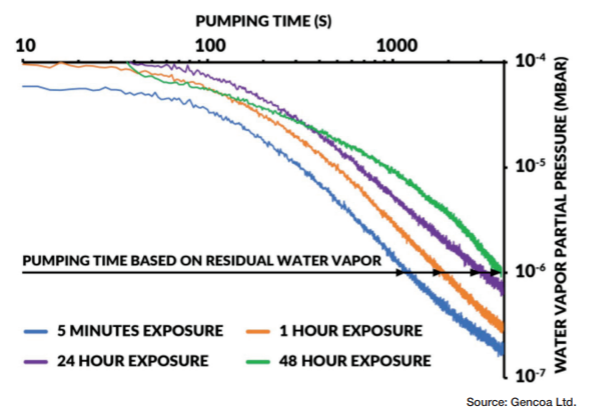
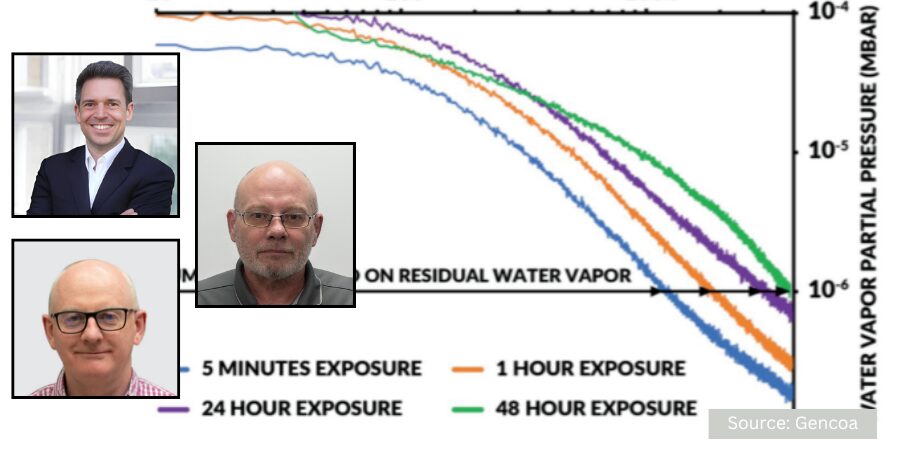
Figure 1. Pumping times based on residual water vapor

Real leaks are often easier to detect, especially larger leaks, which can be identified by hissing sounds or the inability of the furnace to pump down. They can be located using methods such as pressure rise tests, solvent detection, or helium leak detectors. 

Virtual leaks, however, are much harder to detect as they are not physical openings but rather trapped volumes of gas within the vacuum system that slowly release over time. These trapped volumes are typically found in blind holes, porous materials, or unvented components. Even more problematic are leaks from internally sealed systems, such as water cooling or hydraulics. Leaks from these areas cannot be detected via a leak detector, as the water or oil media can “mask” the leak site and prevent the tracer gas from penetrating. 

Aside from increasing the pump time it takes to reach the required vacuum levels, leaks can be a continuous source of contamination within the vacuum chamber. Outgassing can be especially problematic during the heating cycle as it can lead to large vacuum “spikes” or a rise in pressure, affecting the stability of the process environment. Gases released from virtual leaks can contaminate the materials being treated. For example, residual solvents or water vapor from cleaning or incomplete drying can lead to contamination and outgassing. It can be small volumes of air or gas trapped at the bottom of threaded holes or trapped volumes between two O-rings that are not properly vented. Also, outgassing from various hydrocarbons in porous materials such as low-density graphite or powder metallurgy components can release unwanted gases when heated up.  

They usually become apparent during the pump-down cycle when the ultimate pressures are not reached or when it takes a long time to reach blank-off pressure. Traditional leak detectors will not pick up virtual leaks.  

Detecting Virtual Leaks Accurately 

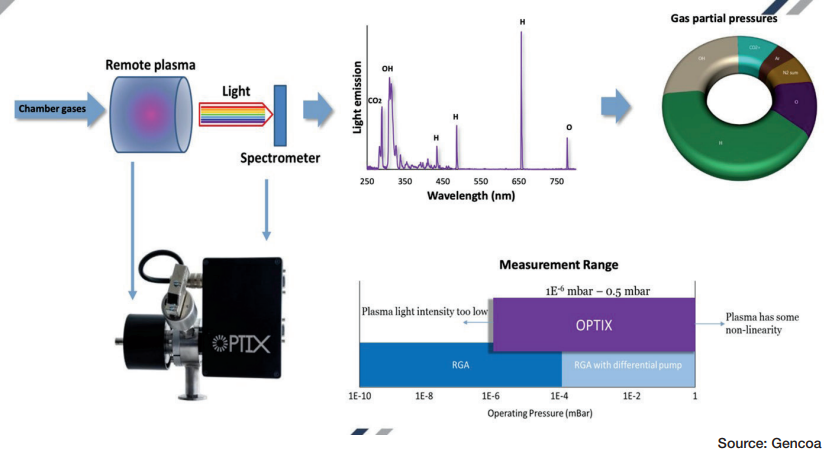
However, residual gas analysis (RGA) and remote plasma emission monitoring (RPEM) can identify virtual leaks by monitoring the composition of gases in the chamber. RPEM offers advantages over traditional quadrupole mass spectrometry (QMS) RGA, particularly in large vacuum systems. Unlike RGAs, RPEM technology operates over a much wider pressure range (50 mbar to 10-7mbar) without requiring additional pumps. The RPEM detector is located outside the vacuum chamber, making it more robust against contamination and high pressures, which commonly damage RGA detectors. This external setup also reduces maintenance needs, as RPEM avoids frequent rebuilds required for traditional RGAs in volatile environments. 

Figure 2. Functionality and pressure range of the OPTIX sensor

An example of this newer sensor is the OPTIX, which enables real-time monitoring and process control by providing immediate feedback to maintain chemical balance and ensure product quality. By identifying specific gas species, the sensor allows versatile leak detection with faster problem-solving and continuous system monitoring. Determining the nature of the gas leak will be a clear indication of where the problem originates. Also, whether the gas levels are stable or decreasing will point towards either a real leak or outgassing problem. Unlike RGAs, this sensor does not require highly skilled staff for operation, further lowering the technical burden. Its effectiveness in harsh environments with volatile species makes it a robust and versatile tool for industrial vacuum processes.

Conclusion 

By understanding the differences between real and virtual leaks, and their specific impacts on vacuum heat treating and brazing, operators can implement more effective detection and prevention strategies, ultimately leading to improved product quality and process efficiency. 

Attention to design, manufacturing, and assembly processes is critical to minimize the occurrence of leaks. This includes proper venting of components, use of appropriate sealing methods, and high-quality welding. Ensuring that components and materials are properly cleaned and dried before being introduced into the vacuum system can reduce outgassing. 

Regular leak checks, including leak-up-rate tests, are essential for identifying both real and virtual leaks. Advanced gas analysis techniques are very useful for identifying the type of leak and its source through analysis of the gases in the vacuum chamber. Th e method provides continuous on-line monitoring, rather than periodic leak testing when there is a “suspicion” of a problem. 

In the demanding environment of vacuum heat treating and brazing, the OPTIX sensor’s advanced technology not only simplifies leak detection and process control, but also delivers significant cost savings through reduced maintenance and operational expenses. Adopting this type of technology gives operators the ability to enhance vacuum system performance, improve product quality, and achieve greater process efficiency.

About The Authors:

Thomas Wingens
Founder & President
Wingens Consultants
Industrial Advisor
Center for Heat Treating Excellence (CHTE)

Thomas Wingens is the Founder and President of Wingens Consultants, and has been an independent consultant to the heat treat industry for nearly 15 years and has been involved in the heat treat industry for over 35 years. Throughout his career, he has held various positions, including business developer, management, and executive roles for companies in Europe and the United States, including Bodycote, Ipsen, SECO/WARWICK, Tenova, and IHI-Group

For more information: Contact Thomas Wingens at thomas@wingens.com 

Dr. Dermot Monaghan
Managing Director
Gencoa

Dr. Dermot Monaghan founded Gencoa Ltd. in 1994. Following completion of a BSc in Engineering Metallurgy, Dermot completed a PhD focused on magnetron sputtering in 1992 and went on to be awarded with the C.R. Burch Prize from the British Vacuum Council for “outstanding research in the field of Vacuum Science and Technology by a young scientist.” He has published over 30 scientific papers, delivered an excess of 100 presentations at international scientific conferences, and holds a number of international patents regarding plasma control in magnetron sputter processes. 

Eric Cox
Manager, New Business Development
Gencoa

Dr. Erik Cox is a former research scientist with experience working in the U.S., Singapore, and Europe. Erik has a master’s degree in physics and a PhD from the University of Liverpool. As the manager of New Business Development at Gencoa, Erik plays a key role in identifying industry sectors outside of Gencoa’s traditional markets that can benefit from the company’s comprehensive portfolio of products and know-how. 


How To Find Both Real and Virtual Vacuum Leaks Read More »

Largest Commercial Vacuum Furnace Nearing Completion

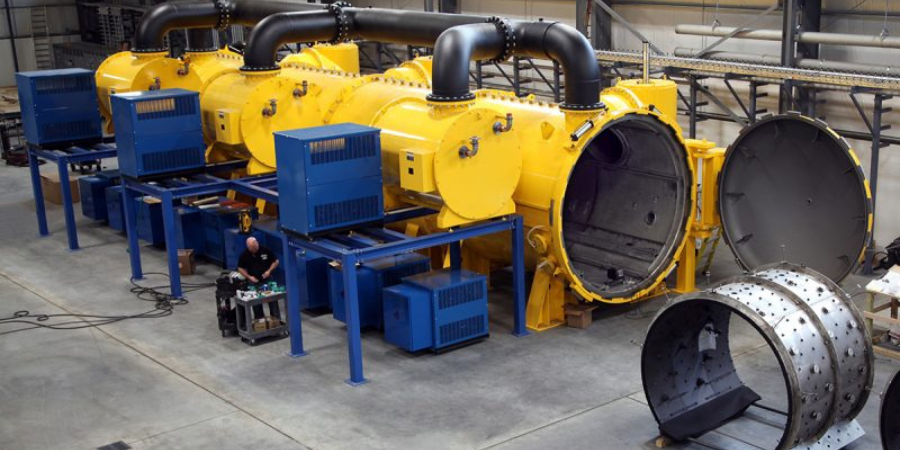
Solar Atmospheres of Western Pennsylvania and Solar Manufacturing, Inc. have been very busy these days building the largest vacuum furnace anywhere in the world.  The working hot zone of this high vacuum (three 35 inch Varian diffusion pumps) furnace is 80 inch diameter X 48 feet long with a maximum operating temperature of 2400°F.  Thirty five points of temperature will be surveyed to within +/- 10°F per the stringent AMS 2750E specification. The robust US Patented dual load car design will have the capacity to transfer up to 150,000 pounds of material in and out of the furnace.  For dimensionally critical, near net shaped jobs, the dual load car design will also have the capability to maintain the critical support needed at elevated temperatures to keep parts flat to within .030 inches.

All of the major components have been delivered and installed.  The gas and water systems are in place.  The remaining installation of all the electrical components and wiring will occur over the next several weeks.  This multi-million dollar project is expected to be completed in June with the commissioning of the furnace into production in July of 2016.  This unique piece of equipment will not only open up new production opportunities within the North American vacuum heat treating markets, but also internationally.

Largest Commercial Vacuum Furnace Nearing Completion Read More »

Heat Treat Expansion Complete at McGinnis Rolled Rings

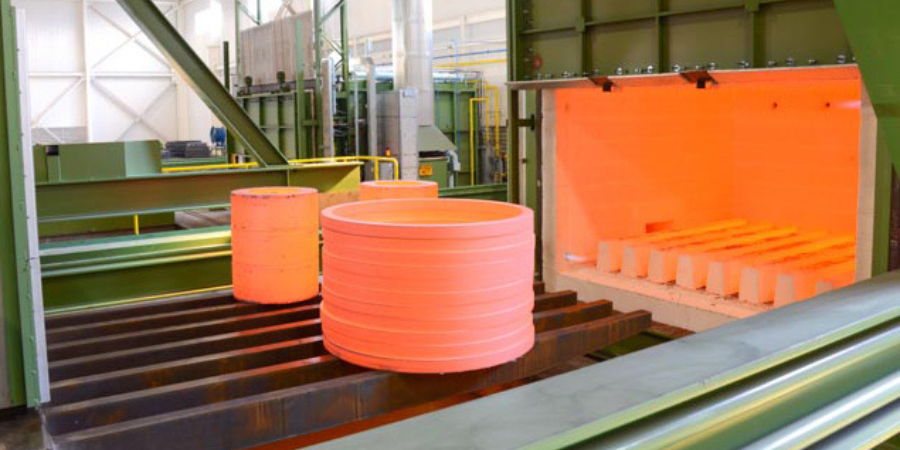
 McInnes Rolled Rings has completed an $8 million, 25,000-square-foot expansion to its current manufacturing facility.  The addition expands its present heat treat size capabilities by providing the ability to quench and temper forgings up to 144 inches in diameter. With separate high agitation water and polymer quench tanks, this new state-of-the-art bay will significantly expand the daily tonnage capacity to ensure the fastest delivery times available in the industry.

McInnes contracted with Can-Eng Furnaces Intl. Ltd. to design and install the most advanced technology to process large diameter product. The furnace & quench tank designs are augmented by a customized material handling system by Dango & Dienthal Hollerbach GmbH capable of processing loads up to 25 tons.  The system’s fast transfer from furnace to quench tank provides optimal and repeatable process controls.

“This new bay nearly doubles our quenched and tempered offerings to the power transmission industry and adds the ability to solution anneal large diameter stainless steel rings. Also, the addition of water quenching improves our ability to meet the high property demands of the custom flange markets,” said Shawn O’Brien, VP Sales & Marketing.

The expanded heat treat operation will officially begin service on March 1, 2016.

Heat Treat Expansion Complete at McGinnis Rolled Rings Read More »

Industrial Batch Ovens to Automotive Supplier

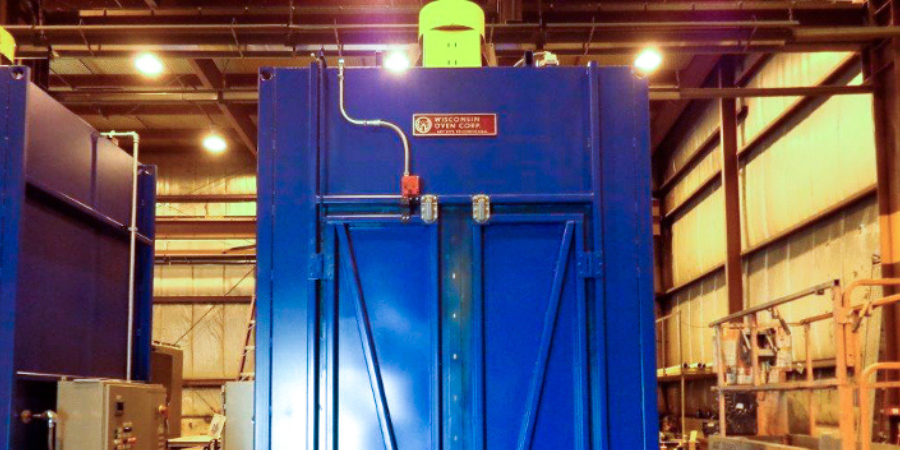
Wisconsin Oven Corporation announced the shipment of two (2) direct gas fired batch ovens to a leading automotive supplier for tempering tire molds. The tempering process of the molds results in a longer mold life. This industrial oven was designed with the load capacity of 6,000 pounds and provides easy access of loading and unloading of tire molds by fork truck.

Each tempering batch oven has a maximum operating temperature rating of 800°F, work chamber dimensions of 5’0”W x 5’0”L x 8’0”H, and a 6” reinforced insulated floor. The recirculation system utilizes combination airflow which provides both horizontal and vertical upward airflow to maximize heating rates and temperature uniformity of the product. The batch oven is equipped with a 10,850 CFM @ 15 HP belt-driven blower. Supply air is delivered through fully adjustable boxed ducts and side-mounted along the length on each side of the work chambers. The heating system features an industrial air heat burner rated at 850,000 BTU per hour.

“Designing a solution for our customers that improves their production process is always a top priority. Improved work flow and ease of loading/unloading was a focus for this project to increase production efficiencies.” Tom Trueman, Senior Application Engineer, Wisconsin Oven Corporation

Unique features of these tempering batch ovens include:

  • Load capacity to 6,000 pounds
  • 575-volt electrical capacity
  • Operating temperatures to 800° F
  • 3/16” plate construction for durability
  • High volume of air flow; 10,850 CFM
  • Motorized dampers for quick cool down
  • Natural gas fired
  • Programmable controller
  • Meets all Canadian requirements – CUL, CSA TSSA
  • Field inspection provided by a trained factory technician
  • Temperature triggered door locks with safety pull cord

Industrial Batch Ovens to Automotive Supplier Read More »

Universal High Pressure Quench Delivers Wide Range of Process Capabilities to Slovenia Commercial Heat Treater, MIHEU

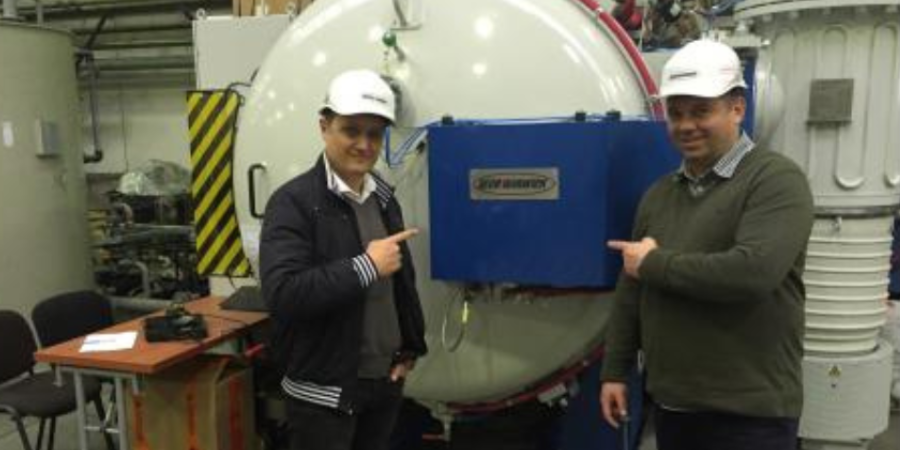
Slovenia commercial heat treater, MIHEU, is expanding their production capacity with the addition of a new Vector™ High Pressure Gas Quench vacuum furnace. Delivered in February 2016, the new installation will enable MIHEU to increase production capacity and expand their markets by offering a wide variety of processes with the installation of a single system.

According to Aleš Prikeržnik, Managing Director, „ We wanted to partner with a company with expertise in both emerging technologies as well as reliable standard solutions to expand our market base and continue to deliver a high quality product to our customers into the future. The SECO/WARWICK team provides more than good equipment, they have the technical and service support that we demand to keep our operation running smoothly.” Family owned for three generations, learn more about MIHEU at www.miheu.si/en/abous-us.html

Maciej Korecki, SECO/WARWICK Vacuum VP commented, „The VECTOR Universal High Pressure Quench is our signature technology in use by commercial heat treaters worldwide for over 20 years. We are pleased to work with MIHEU as a supplier-partner to provide them with the world’s best technology and technical services. ”

VECTOR™ Universal High Pressure Quench Vacuum Furnaces

The standard Universal VECTOR vacuum furnace is used for wide range of industrial heat treatment applications including gas quench hardening & tempering, degassing, annealing, solution heat treatment and brazing. Equipped with Data Portal™, the control system can connect to a configurable website that gives the user access to archive data using a web browser. This application can use an internal data recorder or it can work with other software. Recorded data is displayed in the form of web pages. Access, depending on the customer’s choice, can be through a local area network or via the Internet from anywhere.

The MIHEU Furnace main parameters include:

Useful dimensions: 600 x 600 x 900 mm (24” X 24” X 36”)

Maximum load gross weight: 600kgs (1,300 lbs.)

temperature: 1300°C (2400°F)

Quenching pressure: up to 10,0 bar abs.

The system was delivered complete with a water cooling system, load fixture, DataPortal™ software package, installation, start up and training.

Universal High Pressure Quench Delivers Wide Range of Process Capabilities to Slovenia Commercial Heat Treater, MIHEU Read More »

Aluminum Immersion Holding Furnace to Large Automotive Die Caster

Aluminum Immersion Holding Furnace to Large Automotive Die Caster

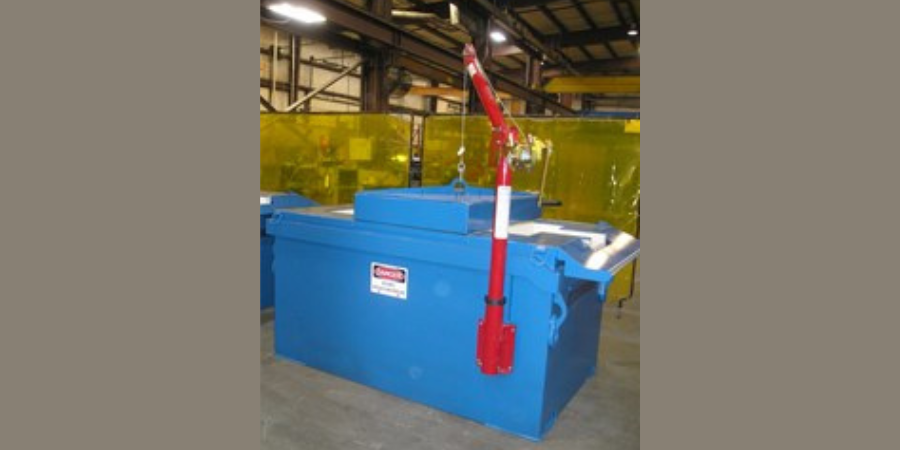
Lindberg/MPH announced the shipment of an electric immersion aluminum holding furnace to a large automotive die caster. The equipment provided includes three electric immersion aluminum holding furnaces used to keep aluminum at die casting temperature.

These aluminum holding furnaces utilize Lindberg/MPH patented board lining and high efficiency immersion tubes/heaters. A manually operated winch crane operates the center cover for cleaning.

Repeat business based on past performance is a testament to the quality and durability of Lindberg/MPH equipment. We work closely with our customers to provide the best possible solution to their application needs and are pleased to be their chosen vendor.”  Andrew Paul, Sales Engineer

Unique features of these aluminum holding furnaces includes:
• Efficient electric immersion heating.
• Excellent temperature control and fast recovery.
• Lindberg/MPH patented board lining.
• Longer lining life.
• Manually operated winch crane cover lift

Aluminum Immersion Holding Furnace to Large Automotive Die Caster Read More »

Heat Treating 101

[Best of the Web] Source: Energy Insights
Looking for a solid primer on heat treatment that you can share with your new heat treat employees, family members, open houses, or at a college job fairs? Take a look at this excellent resource from South Carolina Electric & Gas (SCE&G).

Key Points

  • Heat treating is a widely used industrial process to optimize the mechanical properties of metal.
  • Metal is heated to a set temperature and then cooled according to a prescribed schedule.
  • Heat treating processes vary according to equipment type, energy source, temperature profile and environment.

Read more.

Heat Treating 101 Read More »