Aerospace Manufacturer Expands Metal Alloy AM Capabilities, Acquires AM Services Provider

A technology-based manufacturer of aerospace and defense parts and systems recently expanded its capability to develop and produce metal alloy additive manufacturing parts for aerospace and power systems through the acquisition of AM provider which services the aerospace, defense, medical, and industrial markets.

Eileen Drake, CEO and president of Aerojet Rocketdyne

Aerojet Rocketdyne Holdings, Inc. has acquired 3D Material Technologies (3DMT) from ARC Group Worldwide, Inc., complementing Aerojet Rocketdyne’s industry-leading capabilities to develop and produce metal alloy additive manufacturing parts for aerospace propulsion and power systems. Aerojet Rocketdyne has qualified production parts for the RL10 and RS-25 liquid rocket engines and continues to develop and demonstrate the benefits of additive manufacturing for its hypersonic propulsion systems.

“The addition of 3DMT’s capacity and expertise in metal alloy additive manufacturing expands our range of products and services in the space and defense markets,” said Eileen Drake, CEO and president of Aerojet Rocketdyne. “As we look to the future, additive manufacturing will continue to play an important role in lowering costs and production timelines. This deal allows Aerojet Rocketdyne to broaden its application of this revolutionary technology. We respect the long-standing reputation for quality and customer focus that 3DMT has built in the aerospace industry and we are thrilled to welcome them to our company.”

3DMT will continue to operate with its existing workforce at its 28,000 square ft. facility located in Daytona Beach, Florida.


Main photo credit/caption: Aerojet Rocketdyne / Hot-fire test of Aerojet Rocketdyne’s ISE-100 thruster conducted at the company’s Redmond, Washington test facility

Aerospace Manufacturer Expands Metal Alloy AM Capabilities, Acquires AM Services Provider Read More »

A Dozen & a Half Quick Heat Treat News Items to Keep You Current

A Dozen & a Half Quick Heat Treat News Items to Keep You Current

Heat Treat Today offers News Chatter, a feature highlighting representative moves, transactions, and kudos from around the industry.

Personnel and Company Chatter

  • Mike Woolery has recently joined Plibrico Company, LLC,  as its purchasing manager. Woolery will report directly to the company’s Chief Financial Officer, Rob Wasieleski.
  • The recent acquisition of the SME Group by Dana Incorporated, as well as the Drive Systems segment of Oerlikon Group, including the Graziano and Fairfield brands, has resulted in the addition of five facilities throughout China.
  • Gasbarre Industrial Furnace Systems is pleased to announce the promotion of Mike Harrison to Engineering Manager for Gasbarre (formerly J.L. Becker), in Plymouth, MI.
  • A global investment firm recently announced that it has closed its purchase of StandardAero. The Carlyle Group completed the purchase from Veritas Capital. StandardAero is a global provider of repair and maintenance services to the aviation industry.
  • R. Joseph Stratman, Chief Digital Officer and Executive Vice President of Nucor Corporation, recently announced plans to retire on June 8, 2019, after more than 29 years of service with Nucor. Effective May 19, 2019, MaryEmily Slate will be promoted to Executive Vice President and will assume responsibilities for the Tubular Products Group, logistics and certain joint ventures.
  • Saint-Gobain Coating Solutions, Amherst, N.Y., has recently appointed Tim Vitorino, a member of the ASM Thermal Spray Society, to the position of Product Manager for Thermal Spray Powders. In this role, he will have global responsibility for the current TSP portfolio and for new product development.

Equipment Chatter

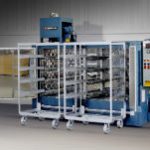
  • A modified shelf oven, No. 879 from Grieve Corporation, heats to 350°F (177°C) and is currently used for pre-heating bulk friction material in trays at the customer’s facility.
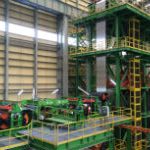
  • A continuous annealing and chemical pretreatment line for processing strip coils for the aluminum market has been contracted by Henan Tongren Aluminum Co. Ltd, which specializes in aluminum products. Tenova will deliver the new line, which will process automotive and aircraft aluminum alloys, family series 2XXX, 5XXX, 6XXX and 7XXX.
  • A new 12’ long car-bottom vacuum furnace with advanced pumping system and rapid cooling capability has been ordered for Solar Atmospheres’ Greenville, South Carolina, facility. The horizontal vacuum furnace has been manufactured by sister company Solar Manufacturing; installation is scheduled for early 2020.
  • Two CaseMaster Evolution® (CMe) vacuum furnaces have recently been delivered to an aerospace components manufacturer, and an additional CMefurnace has gone to a performance automotive manufacturer, from SECO/WARWICK Group.
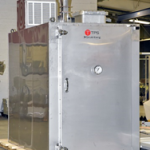
  • A Gruenberg explosion resistant truck-in oven has been shipped to the defense security industry by Thermal Product Solutions.
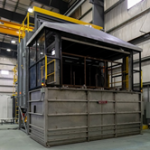
  • An electrically heated horizontal solution treat system with a maximum oven operating temperature of 1,100°F and a chiller system has been shipped to a manufacturer in the aerospace industry by Wisconsin Oven Corporation. Guaranteed temperature uniformity of ±10°F at set points of 870°F, 920°F, & 985°F was documented with a twelve (12) point profile test in an empty oven chamber under static operating conditions and was performed in accordance with BAC 5621F specifications.
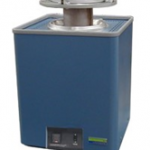
  • A 2012°F (1100°C) crucible furnace has been shipped to a research and development laboratory in the nuclear industry by Lindberg/MPH. This crucible furnace will be used for a wide variety of laboratory melting applications, including annealing, ashing, carbon firing, ceramic firing, hardening, melting, nitriding, normalizing, sintering, solution treating, and stress relieving.


Kudos Chatter

StandardAero recently celebrated the delivery of the company’s 500th CFM International CFM56-7B turbofan engine from its overhaul facility in Winnipeg, MB, Canada. This milestone engine powered a Boeing 737 Next Generation passenger jet operated by a major North American airline supported by StandardAero via offload agreements with its valued partner GE Aviation. StandardAero launched its CFM56-7B program in June 2009,

Precision Micro is now certified to ISO 13485 – the internationally recognized quality management system for medical device manufacturers. The accreditation was awarded following a successful site audit conducted by the British Standards Institution (BSI), the national standards body of the United Kingdom.

Stratolaunch Systems Corporation recently completed the first flight of the world’s largest all-composite aircraft, the Stratolaunch. With a dual fuselage design and wingspan greater than the length of an American football field, the Stratolaunch aircraft took flight at 0658 PDT from the Mojave Air and Space Port. Achieving a maximum speed of 189 miles per hour, the plane flew for 2.5 hours over the Mojave Desert at altitudes up to 17,000 feet. As part of the initial flight, the pilots evaluated aircraft performance and handling qualities before landing successfully back at the Mojave Air and Space Port.

JTEKT North America (JNA), a supplier of steering systems, driveline components and bearing technologies was recognized with an Excellent Award in Technology & Development from Toyota Motor North America, Inc. (TMNA) at its Annual Supplier Business Meeting (ABM) in March.

The leading producer of flat-rolled aluminum products recently hosted a ribbon cutting celebration to commemorate a $4.5 million investment at its facility in Warren, Ohio. Through this investment, Novelis, Inc., will provide greater versatility for pretreatments, improves operational efficiency and reduces costs over time.


Heat Treat Today is pleased to join in the announcements of growth and achievement throughout the industry by highlighting them here on our News Chatter page. Please send any information you feel may be of interest to manufacturers with in-house heat treat departments especially in the aerospace, automotive, medical, and energy sectors to the editor at editor@heattreattoday.com.


A Dozen & a Half Quick Heat Treat News Items to Keep You Current Read More »

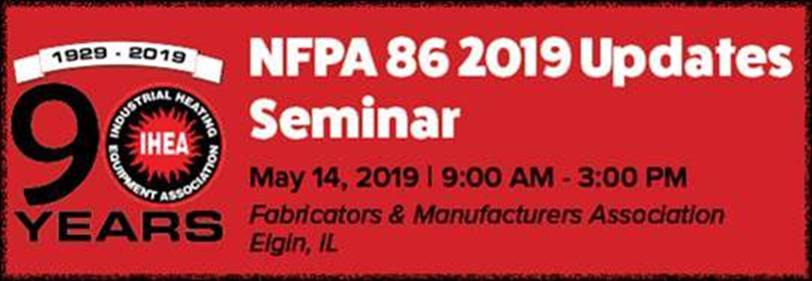
IHEA Seminar: The Latest Updates to NFPA 86

Join IHEA for this new 1-day seminar which will highlight the recent changes to NFPA 86.  If you already have a good knowledge of NFPA 86, then this seminar will be a great overview of the recent changes to the standard and how they affect you. If you are not familiar with NFPA 86, we recommend attending the full IHEA Safety Standards Seminar which will be held this Fall (details coming soon).

For more information, click here.

Instructors are industry experts and committee members involved in the discussions and changes to NFPA 86.

Noteworthy updates to the following:

  • furnace heating systems
  • safety equipment and application
  • programmable logic controller systems
  • safety shutoff valves
  • safety controls and devices
  • commissioning, operations, maintenance, inspection, testing and auditing.

Tuesday, May 14, at Fabricators & Manufacturers Association (FMA) in Elgin, Illinois, from 9:00 AM to 3:00 PM.

Registration fee includes a printed copy of the slides and the new 2019 NFPA 86 Standard for Ovens and Furnaces. For heat treaters not familiar with NFPA 86 or who need more in-depth instruction on the standard and how it applies to a shop’s operation, the full two-day Safety Standards and Codes Seminar will be held this September in Cleveland, Ohio. For more information, click here.

Registration is now open: click here.

IHEA Seminar: The Latest Updates to NFPA 86 Read More »

Heat Treatment of FDM Parts to Determine Effect on 3D Printing: UT-Arlington Study


Source: 3DPrint.com


A University of Texas at Arlington thesis student recently investigated thermal annealing to determine how to increase inter-bead bond strength overall in 3D printing processes.

Rhugdhrivya Rane tackled the dilemma of weak tensile strength in FDM parts and whether parameters chosen by the user — such as temperature ranges and pressure gradients — can affect an increase in inter-bead bond strength. The researcher used thermal annealing, and thermal annealing with unidirectional mechanical pressure in the Z direction, 3D printing a variety of specimens in ABS. The method of 3D printing was chosen due to its increased popularity in mainstream manufacturing.

“The parts were printed using two different sets of print parameters: high and low settings, to investigate the effect of heat treatment on both sets of print parameters. The values of temperature, time and applied pressure during heat treatment were varied to obtain a detailed comparative study and the correlation between the given variables and the increase in ultimate tensile strength.” ~ Rane

The discovery was that “higher temperatures and longer exposure to heat produced better tensile strength, along with increased ductility.”

“Though thermal annealing and uniaxial pressure cause an increase in the strength of the parts, the print parameters play a vital role in determining the initial mechanical properties of the parts. When the parts are fabricated with a higher value of flow rate and extrusion temperature, they exhibit significantly higher mechanical properties as compared to parts printed with substandard setting,” concluded the researchers. “Thus, by controlling the print parameters and using the right values of temperature and pressure we can see substantial increase in strength of FDM parts.”


Photo credit/caption: via UTA / “Tensile testing of dogbone specimens”

Heat Treatment of FDM Parts to Determine Effect on 3D Printing: UT-Arlington Study Read More »

Heat Treat Tips: Safety and Cost-Saving Hacks

During the day-to-day operation of heat treat departments, many habits are formed and procedures followed that sometimes are done simply because that’s the way they’ve always been done. One of the great benefits of having a community of heat treaters is to challenge those habits and look at new ways of doing things. Heat Treat Today‘101 Heat Treat Tips, tips and tricks that come from some of the industry’s foremost experts, were initially published in the FNA 2018 Special Print Edition, as a way to make the benefits of that community available to as many people as possible. This special edition is available in a digital format here.

Today we continue an intermittent series of posts drawn from the 101 tips. The tips for this post come from a variety of categories but all generally address safety or cost-saving ideas. 


Dr. Valery Rudnev, FASM, Fellow of IFHTSE, Professor Induction, Director Science & Technology, Inductoheat Inc., An Inductotherm Group company

Heat Treat Tip #2

Avoid axle shaft cracks after induction tempering

Situation: In induction scan hardening of axle shafts, there was NO cracking occurred after scan hardening (case depth varies from 5 mm to 8 mm). Cracks appeared in the spline region after induction tempering.
Solution: Most likely, the cause of this problem is associated with a reversal of residual stress distribution during induction tempering. Reduce coil power for tempering and increase time of induction tempering. Multi-pulse induction tempering applying lower power density might also help. As an alternative, instead of modifying temper cycle, you can also try to reduce quench severity by increasing the temperature of the quenchant and/or its concentration.

Submitted by Dr. Valery Rudnev, FASM, Fellow of IFHTSE, Professor Induction, Director Science & Technology, Inductoheat Inc., An Inductotherm Group company


Heat Treat Tip #4

Closed Loop Water System on Top

When designing a vacuum furnace installation with a closed loop water system, elevate the tank and pump about 9 feet, then cage the space underneath for thermocouple storage, spares, and tools. Saves shop floor space.

Submitted by AeroSPC


IR Cameras are inexpensive and worth the price.

Heat Treat Tip #6

Don’t Be Cheap. Buy an IR Camera.

IR cameras have come way down in price—for a thousand dollars, you can have x-ray vision and see furnace insulation problems before they cause major problems—also a great diagnostic tool for motors, circuit breakers, etc. (And you can spot deer in the dark!)

Submitted by Combustion Innovations


Heat Treat Tip #7

An Engineer’s Design Checklist

Get an SCR design checklist and avoid mistakes.

When SCRs are involved in the design of a new piece of equipment, questions arise. Control Concepts Inc of Chanhassen, MN, offers a 20-point design checklist to help engineers who don’t specialize in power controllers. Good reading. Search for “design checklist” at the website.

Submitted by Control Concepts, Inc.


Heat Treat Tip #9

Question the Spec! Save Money!

Before you specify a heat treatment, stop and consider your options. Rather than reusing an old specification, ask the design engineer to determine the stress profile, and base the hardness or case depth on real stress data. Is this complicated? Maybe. But especially for carburizing, why pay for more depth than you need, and why take the risk of inadequate strength? The 21st century is here. We have ways to help with the math. Let’s move beyond guess and test engineering methodology.

Submitted by Debbie Aliya


Heat Treat Tips: Safety and Cost-Saving Hacks Read More »

Facility Approved to Heat Treat Flight Critical, Flight Safety Configurations Invests in UBQ, UBTN Furnaces

an AFC-Holcroft UBQ furnace

A commercial heat treat company which is approved to heat treat certain flight critical and flight safety configurations for prime aerospace and helicopter companies recently invested in a new Universal Batch Quench (UBQ) furnace and a Universal Batch Temper (UBTN) annealing furnace to be operated at its plant in Fraser, Michigan.

Tracy Dougherty, VP Sales, AFC-Holcroft

“We’re excited to be a part of the continued growth and expansion of Specialty Steel Treating,” said Tracy Dougherty, Vice President of Sales at AFC-Holcroft. “The customization of these furnaces combined with state of the art controls and IoT features (Remote Diagnostics™), enable both AFC-Holcroft and Specialty Steel Treating the ability to offer superior quality, performance and continuous improvement to customers.”

Delivery of the UBTN is expected in the 2nd quarter of 2019 to the Specialty Steel Treating site on Malyn Road in Fraser, with the UBQ to follow in the 3rd quarter to the Commerce Road plant, also located in Fraser.

Facility Approved to Heat Treat Flight Critical, Flight Safety Configurations Invests in UBQ, UBTN Furnaces Read More »

Temperature Monitoring and Surveying Solutions for Carburizing Auto Components: AMS2750E and CQI-9 Temperature Uniformity Surveys

Dr. Steve Offley (“Dr. O”), Product Marketing Manager PhoenixTM

This is the final installment in a 4-part series by Dr. Steve Offley (“Dr. O”) on the technical challenges of monitoring low-pressure carburizing (LPC) furnaces. The previous articles explained the LPC process and explored general monitoring needs and challenges (part 1), the use of data loggers in thru-process temperature monitoring (part 2), and the thermal design challenge (part 3). In this segment, Dr. O discusses AMS2750E and CQI-9 Temperature Uniformity Surveys. You can find Part 1 here, Part 2 here, and Part 3 here


A significant challenge for many heat treaters is the need to provide products certified to either AMS27150 (aerospace) or CQI-9 (automotive). To achieve this accreditation, furnace Temperature Uniformity Surveys (TUS) must be performed at regular intervals to prove that the furnace set-point temperatures are both accurate and stable over the working volume of the furnace. Historically, the furnace survey has been performed with great difficulty trailing thermocouples into the heat zone. Although it’s possible in a batch process when considering a semi-batch or continuous process, this is a significant technical challenge with considerable compromises as summarized below.

Trailing Thermocouple TUS Process Steps

Figure 1. Typical TUS thermocouple. Positions — 9 point survey. Furnace void corners and center
  • TUS is often carried out using long or ‘trailing’ thermocouples that exit through the furnace door.
  • Furnace often needs to be cooled, then de-gassed so TUS frame can be set up in the furnace.
  • Thermocouples are then led out through the furnace door and connected to a data logger or chart recorder.
  • The furnace is then heated to surveying temperatures.
  • The survey is then carried out, after which furnace is cooled, and thermocouples are removed.


Disadvantages of Traditional TUS Process

  • Lots of furnace downtime may be involved (can be up to 24 hours).
  • Thermocouples have to exit the furnace door.
    • This may involve “wedging” the door up, or “grooving” out the hearth to get thermocouples out.
    • Or thermocouples may get caught in the furnace door.
  • A significant amount of the technician’s time is taken up preparing report.

Applying the “Thru-Process” approach to TUS, the measurement system is transferred into the furnace with the survey frame allowing the setup process to be done quickly, safely, and repeatable. (See Figure 2)

Figure 2. PhoenixTM System loaded into a furnace as part of a TUS frame. Thermocouples pre-fitted to the 8 vertices of the cube frame and center. Furnace ambient temperature recorded either with a virgin exposed junction thermocouple (typical MI) or with heat sink damper fitted.

Operating the system with RF telemetry, TUS data is transferred directly from the furnace back to the monitoring PC where at each survey level temperature stabilization and temperature overshoot can be monitored live with TC and logger correction factors applied. The Thermal View Software is developed to ensure that the final TUS report complies fully to the AMS2750E/CQI-9 standards.

Figure 3. PhoenixTM Thermal View Survey Software showing a TUS profile at three set survey temperatures. The probe map shows exactly where each probe is located and easy trace identification. Detailed TUS report generated with efficiency.

Features incorporated into the Thermal View Software to provide full TUS capability include the following:

TUS Level Library – Set-up TUS level templates for quick efficient survey level specification (Survey Temp °F, Tolerance °F, Stabilization, and Survey Times)

TUS Frames Library – Show clearly exact TUS frame construction and probe location using Frame Library Templates – Frame Center and 8 Vertices.

Logger Correction File – Create a logger correction file to compensate TUS readings automatically from the logger’s internal calibration file.

Thermocouple Correction File – Create the thermocouple correction file and use to compensate TUS readings directly.

TUS Result Table & Graph View – For each TUS temperature level, see from the graph or TUS table instantaneously full survey results.

Furnace Class Reporting – Report the specified furnace class at each temperature level.


Overview

The PhoenixTM Temperature Profiling System provides a versatile solution for both performing product temperature profiling and furnace TUS in industrial heat treatment. It is designed specifically for the technical challenges of low-pressure carburizing (LPC) whether implementing either high-pressure gas quench or oil quench methodology, providing the means to Understand, Control, Optimize and Certify the LPC Furnace and guarantee product quality and process operation efficiency and certification.


Temperature Monitoring and Surveying Solutions for Carburizing Auto Components: AMS2750E and CQI-9 Temperature Uniformity Surveys Read More »

Nitrocarburizing System Installed for Aluminum Extrusion Manufacturer

A manufacturer of aluminum profiles and complex extrusion press products recently purchased a nitrocarburizing system for its new state-of-the-art manufacturing facility in northwestern Romania.

Quebec-based Nitrex delivered and installed the turnkey NX-815 nitrocarburizing system for Swiss corporation Alu Menziken Extrusion AG, incorporating the Nitreg®-C technology for treating aluminum extrusion dies at the greenfield site which produces a range of profile products for aerospace and automotive companies. The process technology adapts to the application requirements to deliver improved performance of extrusion dies.

“With a focus on the environment, Alu Menziken also sought to introduce eco-friendly technologies for all equipment at its greenfield facility. Not only is there a benefit of reduced process gas use with the Nitrex system, the integral high-efficiency neutralizer also helps comply with environmental regulations,” said Marcin Stoklosa, Nitrex European Project Manager.

Nitrocarburizing System Installed for Aluminum Extrusion Manufacturer Read More »

Heat Treating Melanin for Modern Biotechnology Applications


Source: Discover Magazine


In furnaces and ovens all over the world, most of the material being heat-treated at 1000°F or above is metal or a metal alloy, with a fair percentage being other materials like glass and ceramics.

Thermal processing is used to heat other materials, as well, though, as we all know, but perhaps one of the most unusual purposes is found at the source article for Heat Treat Today’s Best of the Web feature for today.

Our story focuses on researchers who have developed an annealing process for eumelanin, an electrically conductive type of melanin —  yes that natural chemical pigment that gives color to our eyes, hair, and skin, and which protects our skin from harmful radiation, yet which also can lead to cancer. Vacuum heating films of eumelanin at 1112°F (600°C) modifies its properties and makes it more useful for modern biotechnology applications and perhaps even to create devices to help treat Parkinson’s, control artificial limbs, and more.

The researchers have published their findings in an article titled, “Evidence of Unprecedented High Electronic Conductivity in Mammalian Pigment Based Eumelanin Thin Films After Thermal Annealing in Vacuum” in the journal Frontiers in Chemistry.


Read more: “High-tech Melanin Might Help Put Technology Inside Our Bodies”


Photo credit:


Heat Treating Melanin for Modern Biotechnology Applications Read More »

Exhibitor Registration High for GIFA, METEC, THERMPROCESS, and NEWCAST 2019

Forming the “The Bright World of Metals”, the four trade fairs GIFA, METEC, THERMPROCESS, and NEWCAST will take place from June 25 – 29, 2019 at the fairgrounds in Düsseldorf, Germany, where the latest advancements for foundry technology, metallurgy, thermo-process technology, and castings will be on display.

Excellent exhibitor registration figures for the “Bright World of Metals”

About 2,100 exhibitors from all over the world will showcase their innovations at the quartet of trade fairs for foundry and metallurgical technology.

“For the first time in the more than 60-year history, we had more than 2,000 exhibitors at the 2015 staging. Therefore I am particularly pleased that we have succeeded in maintaining this high level and in confirming the dominant position of our four trade fairs,” said Friedrich Kehrer, Global Portfolio Director Metals and Flow Technology at Messe Düsseldorf.

The exhibitors will present the entire spectrum of foundry technology, castings, metallurgy and thermo process technology in twelve halls.  As the leading trade fairs in their respective sectors, GIFA, METEC, THERMPROCESS and NEWCAST 2019 will cover the most important trends – including additive manufacturing (with a special show in Hall 3 and the “Metal 3D Printing” conference on June 26) and Industry 4.0 as well as lightweight structures in the automotive industry. The international reach of the four trade fairs is expected to be very broad again this year. Usually, more than 50% of the 78,000 trade visitors from overseas and other European countries.

ecoMetals & ecoMetals Trails 

The ecoMetals campaign by Messe Düsseldorf is an established and successful feature at the “Bright World of Metals”. The emphasis this year will again be on environmentally sound operation and production in the sector, with resource and energy efficiency, climate protection and innovative processes and products as the main topic. About 30 exhibitors will participate under the heading “ecoMetals@Bright World of Metals” and the “ecoMetals Trails” will offer visitors guided tours.

Bright World of Metals: 4 Trade Fairs Under One Roof

GIFA, METEC, THERMPROCESS and NEWCAST are independent trade fairs but together form the “Bright World of Metals”. At GIFA, the International Foundry Trade Fair and Technical Forum, about 900 exhibitors from 47 countries will display their products in Halls 10 to 13 and 15 to 17. Participating world market leaders will include Bühler AG (Switzerland), ASK Chemicals GmbH (Germany), FOSECO (Germany), Hüttenes Albertus (Germany), Loramendi S. Coop (Spain) and Vesuvius GmbH (Germany). There will also be large country group exhibits from Italy and China.

NEWCAST is fully booked

NEWCAST, the 5th International Trade Fair for Castings with the Newcast Forum, is fully booked for its 5th anniversary. Some 400 exhibitors from more than 30 nations will demonstrate in Halls 13 and 14 how global the production of castings has become. Market leaders such as Finoba Automotive GmbH (Germany), GOM GmbH (Germany), Gießerei Heunisch (Germany), Eisenwerk Brühl (Germany), Kimura Foundry Co. Ltd. (Japan), Kutes Metal Inc. (Turkey) and Waupaca Foundry (U.S.) will participate. The Fraunhofer Institute for Manufacturing Technology and Advanced Materials/IFAM (Germany) will also be represented. The foundry associations from Croatia, Mexico, and Hungary will be at NEWCAST for the first time.

METEC 2019: New Record for Its 10th Anniversary

METEC, the 10th International Metallurgical Trade Fair, will feature the large plant manufacturers. With 530 from 34 countries so far,  METEC is setting a new exhibitor record this year. Inteco (Austria), Primetals Technologies Ltd. (UK), RHI Magnesita (Austria), SMS Group (Germany) und Tenova S.P.A. (Italy) are among the exhibitors. Forged components will be on show at METEC for the first time. These were previously part of NEWCAST, but due to their increased importance they are better suited to the metallurgy trade fair.

Industry Leaders at THERMPROCESS

With 300 exhibitors and 50% foreign participation, THERMPROCESS, the 12th International Trade Fair and Symposium for Thermo Process Technology, is the top event for international equipment suppliers. This is reflected in the list of exhibitors including many of the industry leaders: Aichelin Holding GmbH (Germany), Ajax Tocco Magnethermic GmbH (Germany), Andritz Maerz GmbH (Germany), Honeywell Thermal Solutions (Germany), Inductotherm Group (U.S.) and ITG Induktionsanlagen GmbH (Germany).

For further information on visiting or exhibiting at GIFA, METEC, THERMPROCESS, or NEWCAST 2019, contact Messe Düsseldorf North America, 150 North Michigan Avenue, Suite 2920, Chicago, IL 60601. Telephone: (312) 781-5180; Fax: (312) 781-5188; E-mail: info@mdna.com. Visit the web site http://www.mdna.com, subscribe to the blog at http://blog.mdna.com, or follow on Twitter http://twitter.com/Industrial_MDNA

For hotel and travel information, contact TTI Travel, Inc. at (866) 674-3476; Fax: (212) 674-3477; E-mail: info@ttitravel.netwww.traveltradeint.com

Further information:  www.tbwom.com
Twitter: www.twitter.com/tbwom
Facebook: http://www.facebook.com/TheBrightWorldofMetals
LinkedIn: http://www.linkedin.com/groups/7442674

World Foundrymen Organization: www.thewfo.com

ESTAD, the “European Steel Technology and Application Days”: www.metec-estad2019.com

German Society of Metallurgists and Miners/GDMB: www.emc.gdmb.de

Exhibitor Registration High for GIFA, METEC, THERMPROCESS, and NEWCAST 2019 Read More »