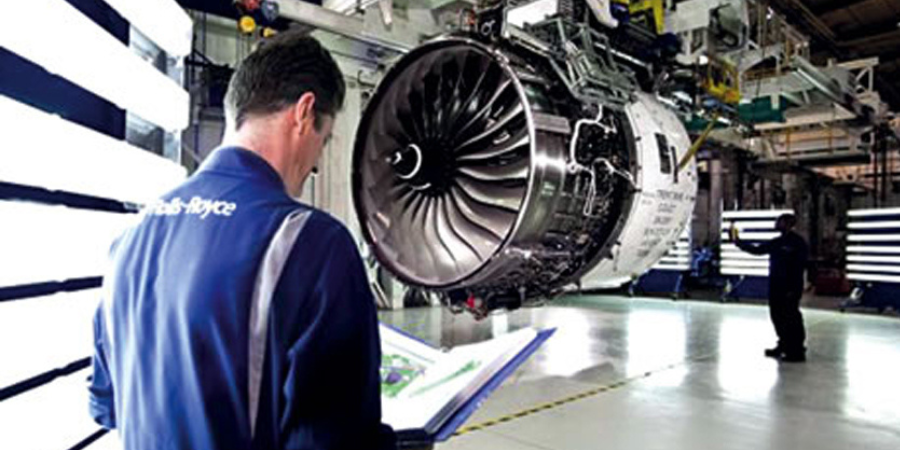
A manufacturer of power systems for aviation and other industries recently announced that it has extended its Long-Term Purchase Agreement (LTPA) with a global specialty metals company headquartered in Pittsburgh, Pennsylvania.
Rotating disc quality specialty materials will be supplied to Rolls-Royce for their Trent engine family by Allegheny Technologies Incorporated (ATI). The LTPA extends Rolls-Royce and ATI’s agreement through 2029.
“We are very pleased to have signed another long-term agreement with ATI for disc quality nickel alloys,” said Warrick Matthews, Executive Vice President, Procurement and Installations Supply Chain, Rolls-Royce. “Rolls-Royce’s supply chain requires on-time delivery of the highest quality materials. ATI’s track record of cost, quality and delivery performance has been a key consideration in award of this contract. This new contract provides an opportunity for Rolls-Royce and ATI to further develop their relationship and to enjoy engine production and services volume growth.”
Robert S. Wetherbee, ATI’s President and Chief Executive Officer
“We are pleased to extend our long-standing relationship with Rolls-Royce, partnering with them on the development of next-generation jet engines and supporting their legacy jet engine supply chain,” said Robert S. Wetherbee, ATI’s President and Chief Executive Officer. “This agreement reliably secures Rolls-Royce’s supply of critical materials for their innovative engine portfolio for the next ten years.”
John Sims, Executive Vice President, High-Performance Materials and Components Segment
“This agreement covers the production of a wide range of critical products used to make Rolls-Royce’s next-generation jet engines as well as spare parts for in-service engines. It supports ATI’s market-leading alloy development and broad production capabilities, including our iso-thermal forging operations,” said John Sims, Executive Vice President, High-Performance Materials and Components Segment. “In recognition of ATI’s commitment to innovation, quality and operational reliability, Rolls-Royce awarded ATI a majority share of all materials covered under this LTPA. We are honored to support Rolls-Royce as they work to confidently deliver on this unprecedented aerospace ramp.”
A Wisconsin-based additive manufacturing company recently came out with metal filaments encased in a binder, allowing for a two-step process of printing then heat treating to produce a safer metal 3D printing solution as well as broader use in industry applications such as
Biomedical innovators
Jet engine technology
Radiation shielding
Space exploration
Nuclear power
“Even with the furnace step, filament-based printing tends to be faster and requires less specialized training, making AM technologies more accessible to manufacturers who don’t have large numbers of specialists.” ~ Aerospace Manufacturing & Design
Main Image Credit/Caption: The Virtual Foundry Facebook page/”Stainless Steel 316L Filamet™ Filament. Printed using a FlashForge Creator Pro.”
This article on the critical role of valve safety trains in the prevention of catastrophic fuel-delivery accidents at heat treating facilities is authored by Robert Sanderson, P.E., Director of Business Development in the Combustion Safety division of Rockford Systems, LLC, based in Rockford, Illinois. Valve safety trains require regular inspections, maintenance, and training.
Heat treating, a thermal process used to alter the physical, and sometimes chemical, properties of a material or coating, is a high-temperature operation that involves the use of heating or chilling, normally to extreme temperatures, to modify a material’s physical properties — making it harder or softer, for example. Applications for heat treating are virtually endless, but at the heart of all thermal processes is the valve safety train.
These fuel-delivery devices maintain consistent conditions of gasses into furnaces, ovens, dryers, and boilers, among others, making them crucial in assuring safe ignition, operation, and shutdown. Equally important, they keep gas out of the system whenever equipment is cycled or shut off.
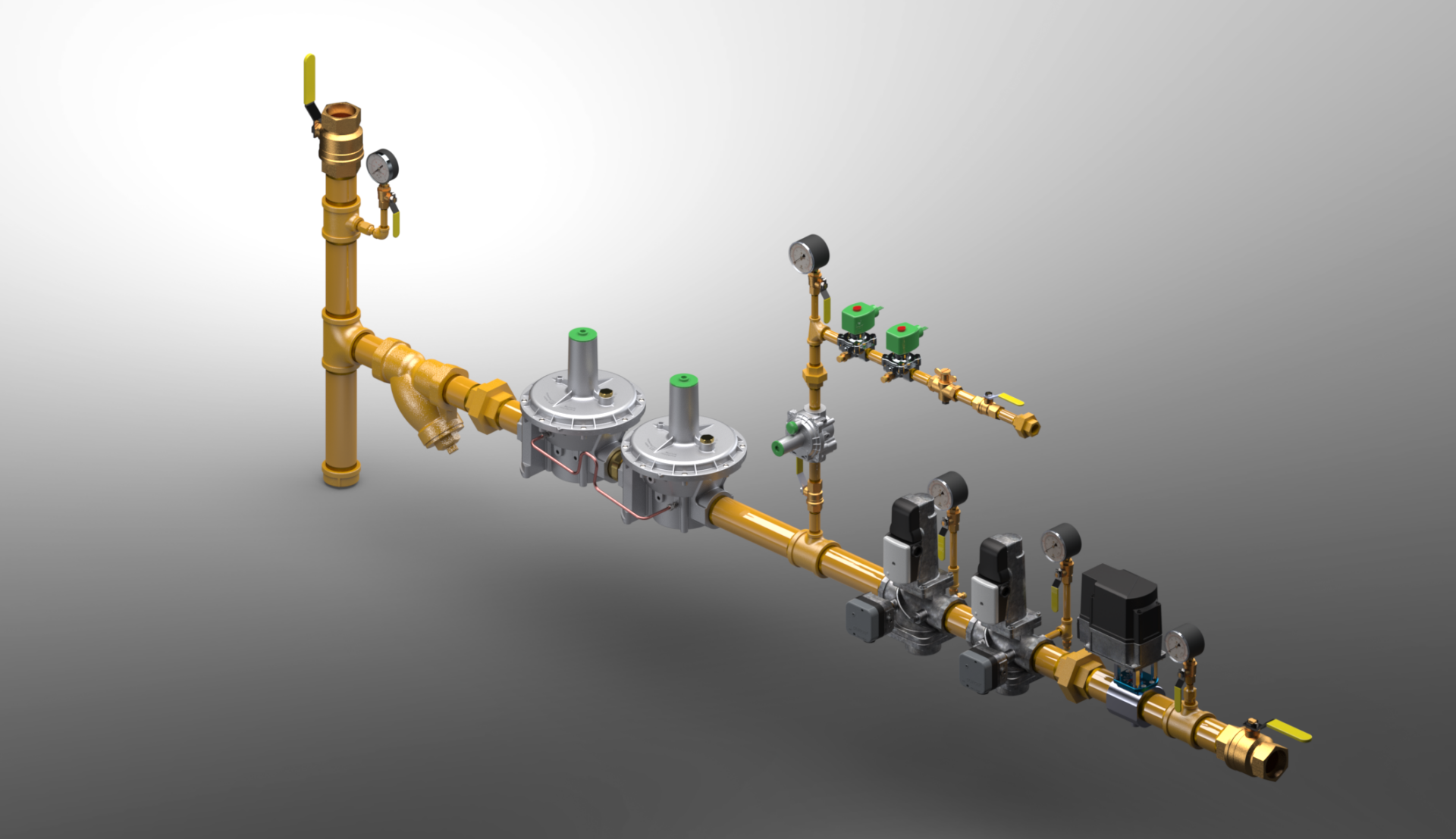
A valve safety train isn’t a single piece of equipment. Instead, it has many components including regulators, in-line strainers (“sediment traps”), safety shut-off valves (SSOV), manual valves (MV), pressure switches, and test fittings logically linked to a burner management system.
Flame-sensing components make sure that flames are present when they are supposed to be, and not at the wrong time. Other components may consist of leak-test systems, gauges, and pilot gas controls. At a minimum, there are two crucial gas pressure switches in a valve safety train, one for low pressure and one for high pressure. The low gas pressure switch ensures the minimum gas pressure necessary to operate is present. As you would assume, it will shut off fuel to the burner if the gas pressure is below the setpoint. The high gas pressure switch ensures excessive pressure is not present. It too will shut off fuel if the gas pressure is too high. Both switches must be proven safe to permit operation. Additionally, there will be an air pressure switch to ensure sufficient airflow is present to support burner operation.
Some systems have supplementary pressure switches, such as a valve-proving pressure switch. Switches such as these are typically used to enhance safety or provide other safety aspects specific to that application’s needs. A multitude of sensors within the valve safety train — pressure switches, flame detectors, position indicators — and isolation and relief valves work together in concert to prevent accidents.
Valve safety trains must be compliant with all applicable local and national codes, standards, and insurance requirements. The most common of these for North America are NFPA, NEMA, CSA, UL, FM. Annual testing and preventive maintenance are not only an NPFA requirement, but also oftentimes required by insurance agencies, equipment manufacturers, and national standards, including ANSI, ASME, and NEC.
Set Your Trap
The primary function of a valve safety train is to reliably isolate the inlet fuel from the appliance. Safety shut-off valves are purposely selected to do this. To protect these valves, the initial section of a safety train is used to condition the fuel and remove debris that could potentially damage or hinder all downstream safety components.
The first conditioning step is a sediment trap (a.k.a. dirt leg, drip leg). This trap captures large debris and pipe scale and provides a collection well for pipe condensates. The proper orientation of a sediment trap is at the bottom of a vertical feed. This downwards flow arrangement promotes the capture of debris and condensate into the trap. A horizontal feed across a sediment trap is an improper application. The second conditioning step is a flow strainer or filter element. These devices are fine particulate sieves. The removal of fine particulates from the fuel stream further protect the downstream safety devices from particulate erosion and abrasion. Taken together these conditioning steps remove particulates and condensates that might block, hinder, erode, or otherwise compromise the safety features of the downstream devices.
The Explosive Force of a Bomb
Owing to the presence of hazardous vapors and gases, a poorly designed or inadequately maintained safety train can lead to catastrophic accidents, ranging from explosions and fires to employee injuries and death. When this explosive force is unleashed, the shock wave carries equipment, debris, materials, pipes, and burning temperatures in all directions with tremendous force.
The following incidences provide just a few examples of why it is important to purchase the highest quality valve safety train and to keep it professionally maintained, inspected, and tested.
In 2018, a furnace explosion at a Massachusetts vacuum systems plant killed two men and injured firefighters as a result of fuel malfunction.
In Japan, an automobile manufacturer lost tens of millions of dollars when it was forced to shut down production for nearly a month after a gas-fueled furnace exploded due to flammable fumes building up in the tank.
In a Wisconsin bakery, an employee was seriously injured when he ignited an oven’s gas and was struck by a door that was blown off. A malfunctioning valve had allowed natural gas to build up inside the oven.
In 2017, a van-sized boiler exploded at a St. Louis box company, killing three people and injuring four others. The powerful, gas-fueled explosion launched the equipment more than 500 feet into the air.
In 2016, a boiler explosion in a packaging factory in Bangladesh enveloped the five-story building in flames, killing 23 people.
Two Dangers: Valves and Vents
Valves are mechanical devices that rely upon seats and seals to create mechanical barriers to control flow. Over time, these barriers wear out for a variety of
Glassblowing Furnace with Pipes
reasons, whether it is age, abrasion, erosion, chemical attack, fatigue or temperature. Increased wear contributes to leaks, and leaks lead to failures and hazards. Defective valves can allow gas to leak into a furnace even when the furnace is not in operation. Then, when the furnace is later turned on, a destructive explosion could occur.
Testing a valve’s integrity is an evaluation of current barrier conditions and may be used to identify a valve that is wearing out prior to failure. As such, annual valve leakage tests are an important aspect of a safety valve train inspection program. Along with annual testing, valves should be examined during the initial startup of the burner system, or whenever the valve maintenance is performed. Only trained, experienced combustion technicians should conduct these tests.
Improper venting is another danger. Here is the problem: Numerous components in a valve safety train require an atmospheric reference for accurate operation. Many of these devices, however, can fail in modes that permit fuel to escape from these same atmospheric points. Unless these components are listed as “ventless,” vent lines are necessary. Vent lines must be correctly engineered, installed, and routed to appropriate and approved locations. In addition, building penetrations must be sealed, pipes must be supported, and the vent terminations must be protected from the elements and insects. In short, vent lines are another point of potential failure for the system.
Even when vent lines are properly installed, building pressures can vary sufficiently enough that they prevent optimal burner performance. Building pressures often vary with seasonal, daily weather, and manufacturing needs, further complicating matters. Condensate in vent lines can collect and drain to low points or into the devices themselves. Heating, cooling, and building exhausters are known to influence building pressures and device responses, but so can opening and closing of delivery doors for shipping and receiving. Hence a burner once tuned for optimal operation might not be appropriately tuned for the opposite season’s operation.
The smart alternative to traditional vented valve trains is a ventless system that will improve factory safety and enhance burner operation. Ventless systems reference and experience the same room conditions where the burners are located, resulting in more stable year-round operating conditions, regardless of what is happening outside. Additionally, ventless designs typically save on total installation costs, remove leaky building penetrations, eliminate terminations that could be blocked by insects, snow or ice, improve inspection access, and ensure a fail-safe emergency response.
Final Thoughts
Valve safety trains are critical to the operation of combustion systems. Despite being used daily in thousands of industrial facilities, awareness of their purpose and function may be dangerously absent because on-site training is minimal or informal. To many employees on the plant floor, this series of valves, piping, wires, and switches is simply too complex to take the time to understand. What is known can be dangerously misunderstood.
Understanding of fuel-fired equipment, especially the valve safety train, is necessary to prevent explosions, injuries, and property damage. The truth is, although valve safety trains are required to be check regularly, they are rarely inspected, especially when maintenance budgets are cut. And while codes require training, they offer very little in terms of specific directions.
As a safety professional, the onus is on you. You and your staff must have a core level of knowledge regarding safe practices of valve safety trains, even if a contractor will be doing the preventive maintenance work. Most accidents and explosions are due to human error and a lack of training when an unknowing employee, for example, attempts to bypass a safety control. Preventive maintenance is essential to counter equipment deterioration, as is the documentation of annual inspection, recording switch set points, maintaining panel drawings, and verifying purge times. Accidents happen when this type of documentation is not available. Don’t wait for a near-miss or accident to upgrade your valve safety train.
Of the eleven economic indices reported on monthly by the Industrial Heating Equipment Association for the benefit of its member companies, four of the indices showed upward growth while only a few dropped significantly. All others remained relatively unchanged.
IHEA Auto Truck Sales April 2019
The four upward trending indices included PMI New Orders, Automobile and Light Truck Sales, Metal Prices, and the Credit Managers Index. The IHEA report, supplied monthly to IHEA member companies, goes into detail on the significance of these upward movements dedicating one full page of the report to each of eleven indices.
Indices not faring so well included Capital Expenditures, Durable Goods Orders, Factory Orders, and Home Starts. Most of the non-positive moving indices saw only slight decreases.
For a full copy of the report, contact Anne Goyer, Executive Director of the IHEA by clicking here.
IHEA PMI New Orders April 2019
IHEA Annual Meeting Kicks Off in Florida
Leaders from the heat treating and thermal processing industry are meeting this week at Lido Beach Resort in Florida, USA. This three-day industry meeting, organized by IHEA, attracts leaders from heat treat furnace manufacturers, heat treat component suppliers, and providers of heat treating supplies and consumables. This year’s meeting features discussions on heat treating and cybersecurity, an update on the impact of Washington’s policies on the heat treating industry, as well as an in-depth look at the above mentioned economic indices from IHEA’s economist.
Registration Open for NFPA 86 Update Seminar
IHEA Lido Beach Resort Spring Meeting April 2019
IHEA’s next educational event will be an NFPA 86 Update Seminar being held on May 14th from 9:00-3:00 at the Fabricators & Manufacturers Association in Elgin, Illinois. For more information, contact Anne Goyer, Executive Director of IHEA by clicking here.
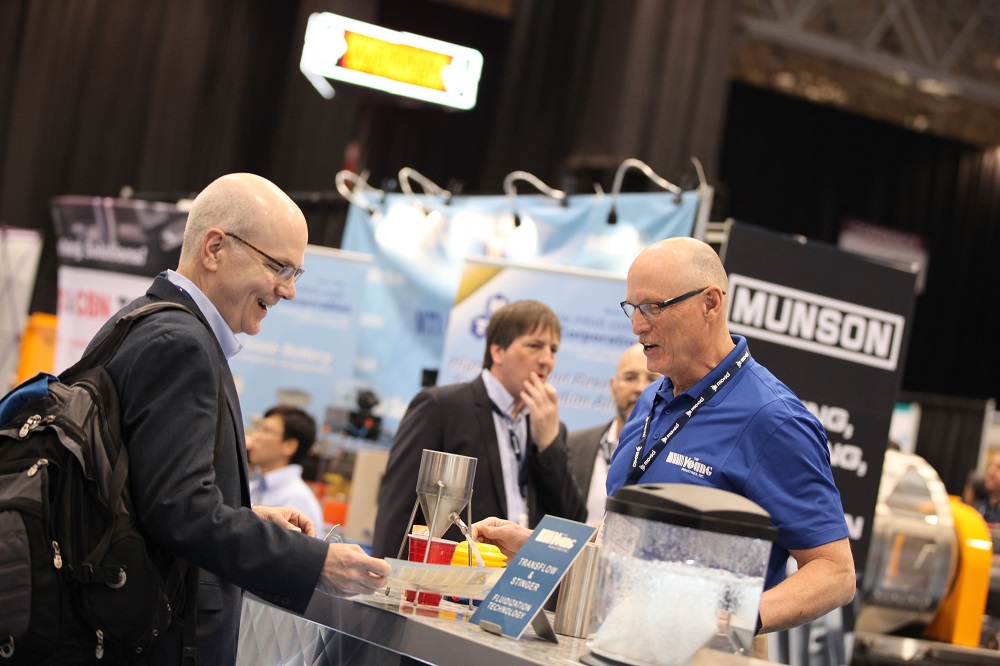
Ceramics Expo, the leading exhibition and conference for ceramic materials, manufacturing, and components, will open this week in Cleveland, Ohio, to over 3,000 executives, engineers, technical leaders, and industry peers for two days of innovation, networking, and knowledge sharing.
“The overwhelmingly positive reaction to this year’s expo, now taking place over two action-packed days, is testament to the global reputation that has been garnered by Ceramics Expo over the last five years,” said Danny Scott, event director. “By the time we open the doors on 30 April, we expect an exhibit area featuring around 300 companies from over 25 countries. Covering ceramic science, the materials and manufacturing technologies, and the finished components, is what we’re all about and it’s a pretty unique offering.”
The exhibition will host the complete supply chain, from raw material suppliers to testing equipment to ceramic manufacturers, including CoorsTek, Corning, Morgan Advanced Materials, Kyocera, SCHOTT, and Saint-Gobain as well as first-time appearances from 3M, Creatz3D, GE Global Research, Kennametal, Harris Corp and Sasol.
Running alongside the exhibition, the Ceramics Expo Conference will present sessions exploring future trends, manufacturing practices, and developments from the ceramic and glass industry. The agenda has been specially designed for engineers and decision makers from OEMs and Tier 1s in the automotive, aerospace/defense, medical, electronics, industrial, energy, and communication industries. Speaking companies include Lockheed Martin, Ford Motor Company, NASA, General Electric Aviation and Oak Ridge National Lab.
To help guide attendees through the exhibition hall, Ceramics Expo has created the Innovation Trail highlighting companies who are at the forefront of R&D, developing cutting-edge materials, technologies and solutions for a range of ceramic applications. Exhibitors include 3M, Johnson Matthey, Saint-Gobain, and Corning. The Product Showcase will feature live demonstrations of new machinery, testing services, and analysis equipment from Ceramics Expo exhibitors including 3DCERAM-SINTO, Beckman Coulter, OptiPro Systems, and The Model Shop.
Ceramics Expo provides numerous opportunities to create new business connections such as the Tuesday evening networking reception taking place on the show floor from 4:30 pm – 6:00 pm, sponsored by GeoCorp. Also—a new addition for 2019—is the dedicated B2B Matchmaking area. Using an online portal, attendees are able to optimize their time by pre-booking meetings with exhibitors and other attendees, which will then take place in the dedicated B2B area throughout the event.
Registration is still open for Ceramics Expo 2019. For more information and to register for a free pass visit www.ceramicsexpousa.com.
Family likes sharing its big news, and that’s what we are at Heat Treat Today. And we have big news to share—2 big news items, in fact.
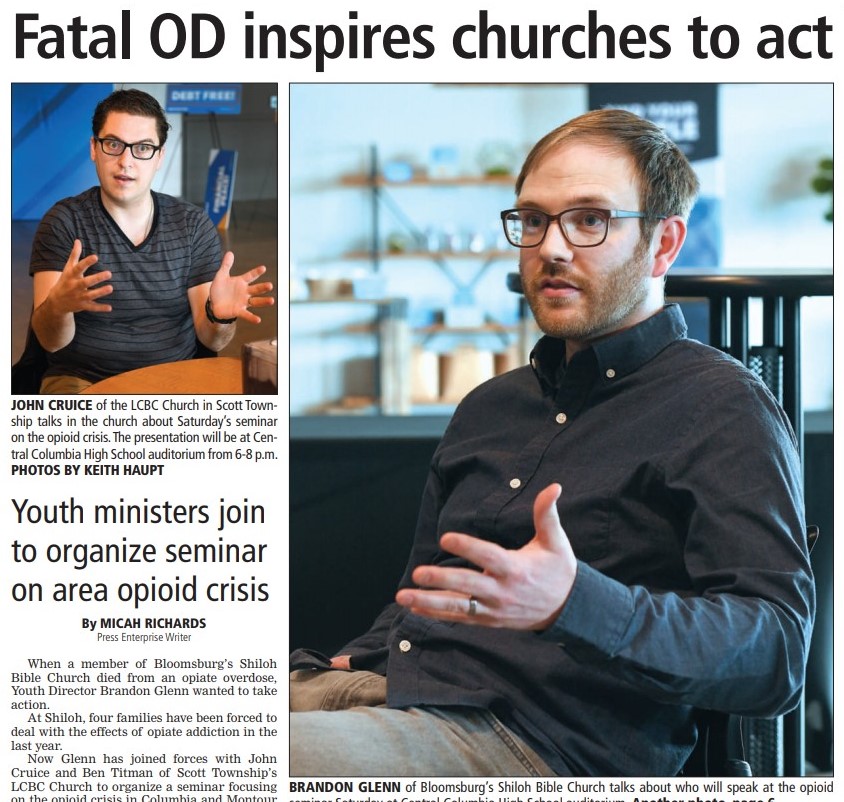
Brandon Glenn
First, Heat Treat Today’s web designer and all around IT guy, Brandon Glenn, recently made it to the front page of his local newspaper in an effort to drum up support for a very important issue hammering big cities and small municipalities from every corner of the U.S.
Pictured, right, Brandon Glenn, on the left, colleague John Cruice of LCBC Church in Scott Township, from Press-Enterprise, 3/25/19
In his position as the Youth Director at Bloomsburg Shiloh Church in Bloomsburg, Pennsylvania, Brandon was aware of many in the community who were dealing with the opioid crisis. When a member of the church congregation died of an overdose, he was energized to join the forces fighting the epidemic in central Pennsylvania.
This past March, Central Columbia High School hosted a seminar aimed at educating participants about the rise in the use of opiates and how it is affecting Columbia and Montour counties. You can read more about the seminar here: “Fatal OD Inspires Churches to Act” at the Press-Enterprise website.
You can also visit Brandon’s professional webpage here: BrandonGlenn.com
Jonathan Condon
The Heat Treat Today family would also like to offer public congratulations to Jonathan Lloyd Condon, Heat Treat Today’s audio and podcast editor, who recently became engaged to Rebecca Eyth. Jonathan also recently completed his Bachelor of Professional Studies at Berklee College of Music. Congratulations and way to go, Jonathan!
A major U.S. steel producer recently commissioned an international engineering group with the expansion of its steel plant in Osceola, Arkansas, including the supply of electric arc furnaces and other furnace lines, increasing the plant’s annual output to about 3 million tons of steel.
David Stickler, CEO, Big River Steel
Since commissioning of the new mill in 2017, Big River Steel has been producing high-quality steels, including tube grade sheet for pipeline construction, silicon steels for a wide variety of energy and electric motor applications, and advanced high-strength steels for the U.S. automotive industry.
SMS group will supply BRS with mechanical equipment, electrical and automation systems, and digitalization. After completion of the next expansion, the steel plant will have two electric arc furnaces and two twin-ladle furnaces. Installation of an additional gas cleaning system will ensure compliance with strict environmental legislation. A second strand, a second tunnel furnace, and a further downcoiler will be added to the CSP® plant. Big River Steel’s CSP® plant produces up to 1,930 millimeters wide coils, making it one of the widest CSP® plants in the world. Also as part of this project, the continuous galvanizing line (CGL) will receive an additional coiler.
Also in the second construction stage, Big River Steel will see the installation of the PQA® (Product Quality Analyzer) system developed by SMS group company MET/Con as a central module of the process automation system.
Burkhard Dahmen, Chairman of the Managing Board of SMS group
“I have purchased several technologically advanced steel production facilities from SMS over the past twenty years and I am fully confident that SMS group will again deliver a high-quality mill that sets the standard in terms of product capability, energy efficiency and environmental sustainability,” said David Stickler, CEO of Big River Steel.
“Working closely with the management and staff of Big River Steel, we have succeeded in digitalizing a highly complex steel plant in a way that meets the targets of stable and resource-saving production,” said Burkhard Dahmen, Chairman of the Managing Board of SMS group. “We are very pleased about Big River Steel’s decision to also award us the order for the next expansion stage of the steel plant and to continue on the proven successful way with SMS group as their partner.”
A New Hampshire-based manufacturer of sophisticated aluminum investment castings for predominantly aerospace applications recently expanded its capabilities with two electric drop bottom ovens.
Uni-Cast purchased the two furnaces for installation at its factory located in Londonderry, NH, from Pyradia Belfab, based in Saint-Hubert, Quebec. Pyradia designs and manufactures custom industrial equipment for aluminum heat treating, web converting, and dust collecting applications.
“After reviewing many quotes, we thought they were the best value out there. They make quality ovens at a competitive price. They have reasonable lead times and good engineering. I highly recommend them,” said Henri Fine, owner of Uni-Cast, which incorporates heat treating and precipitation hardening in the casting process in order to provide dimensional stability, strength, and hardness.
Main photo: Still image captured from video at Pyradia’s website.
DC53 Steel, a general purpose cold work mold and die steel with exceptional strength and resistance qualities, is nonetheless “only as good as the heat treatment it receives,” according to our Best of the Web resource today. Not surprisingly, manufacturers find these excellent characteristics for machining applications.
The folks at International Mold Steel, Inc., a steel distributor in Florence, Kentucky, have compiled a primer on heat treating DC53, which is known not only for its strength and resistance, as mentioned, but also for have a higher hardness than D2 after heat treatment. This is critical for machining shops where die and mold life expectancy is dependent upon proper high-temperature tempering and high hardness.
A century-old producer of die forgings recently needed to improve the process controls on its heat treating furnaces.
With process controls well over 10 years old, Clifford-Jacobs turned to Conrad Kacsik to improve its temperature process control system. The company, which serves a number of industries, including energy, aerospace, construction, mining, forestry, and rail, was eager to improve its temperature process control system, particularly because the incumbent system was producing inconsistent work.
The Challenge
Bud Kinney, Vice President of Innovation and Technology at IMT Corporation
Clifford-Jacobs was not getting consistent, repeatable results from its furnaces. The company also wanted more efficient and automated processes with data acquisition and electronic operating capability.
“We looked at a number of controls companies throughout the Midwest and interviewed them to learn about their experience with system controls and data acquisition,” said Bud Kinney, Vice President of Innovation and Technology at IMT Corporation, the parent of Clifford-Jacobs. “We knew we wanted an integrated system so we started looking at companies that did that as a matter of course. Most companies are limited to traditional controls, but Conrad Kacsik has a lot of experience doing the exact type of job we needed.”
Increasing Demands
Clifford-Jacobs makes forged parts for a variety of clients. Although forging does not generally require as much precision as other types of processes, customers are increasingly demanding, said Kinney.
“We believe that sooner rather than later things like Nadcap will come into forging, and our customers are very interested in us being able to demonstrate that our processes are always in control, even forge heating,” Kinney said. “This project helps ensure that we meet those needs. We couldn’t track things like set-point input values before. That’s another element we wanted to manage.”
Conrad Kacsik built a full process temperature control system that includes SCADA software from SpecView. They were able to retrofit the system on Clifford-Jacobs’ existing 16 furnaces, saving the company considerable expense and time. The temperature process control system uses Watlow F4T controllers paired with SpecView SCADA software, which allows for programming jobs/recipes, remote operation, secure (password protected) operation of furnaces and accurate automatic temperature recording. Conrad Kacsik also added alert lights that allow the operators to quickly see the status of each furnace from the shop floor.
H2: Benefits of Temperature Control System Integration
Clifford-Jacobs has noted several beneficial results from the new temperature control system. These include:
Increased accuracy. The new system runs each recipe exactly and records the results. The company can also control which employees can adjust temperature settings, preventing operators from rushing jobs with a higher temperature or inadvertently setting the furnace incorrectly.
Higher efficiency. With preprogramming, each furnace is always at the exact temperature it needs to be for the given task. An automatic preheat setting also safely prepares the furnace for the workday—eliminating downtime or the need to send an employee in early to start the furnaces.
More speed. Clifford-Jacobs can pre-program any recipe it needs, allowing for highly accurate and fast running of complex processes.
More convenience. Clifford-Jacobs can operate their furnaces from anywhere with an internet connection, or via an iPad used by an approved employee.
Precision for the future. The new system can be part of a Nadcap-approved process should the need arise. The SpecView software and advanced controllers automatically record each job and retain all data for verification.
The Results
“We used to have to use all kinds of resources to provide oversight on temperature control,” said Kinney. “This has given us a heating strategy. We write the recipes we want and just select from those. In addition to that, we know exactly what every furnace is doing at all times.”
The company is also pleased with the increased efficiency. They only heat product when they are ready to run production, and the furnace only uses the exact energy needed for each recipe. They are also saving on staffing, as they used to have to schedule people to ensure the furnace was at the right temperature.
“With this system, we can develop recipes for each part we make, which is both convenient and precise. It’s doing exactly what we expected it to do,” said Kinney.