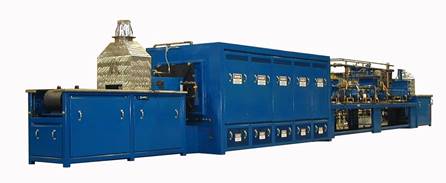
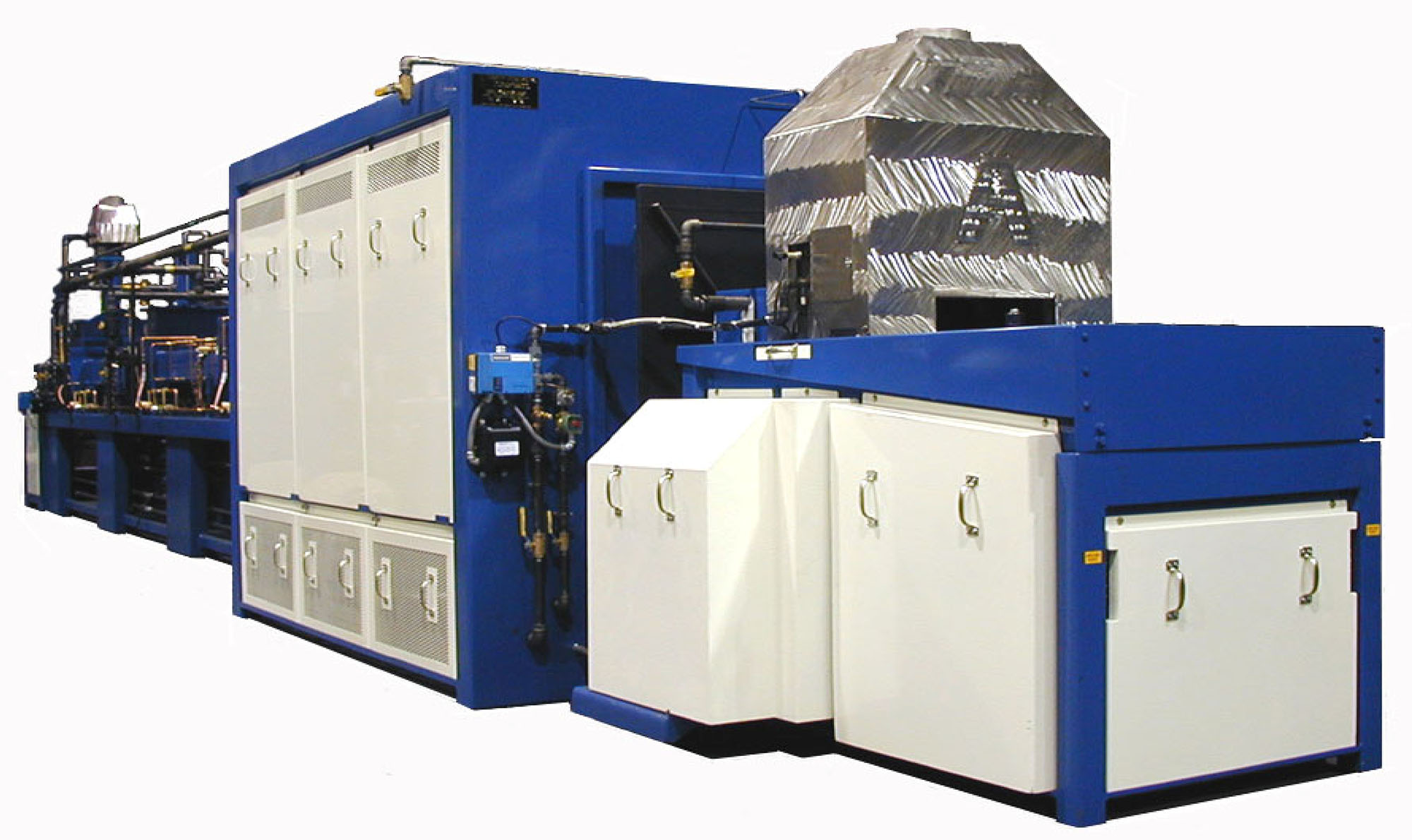
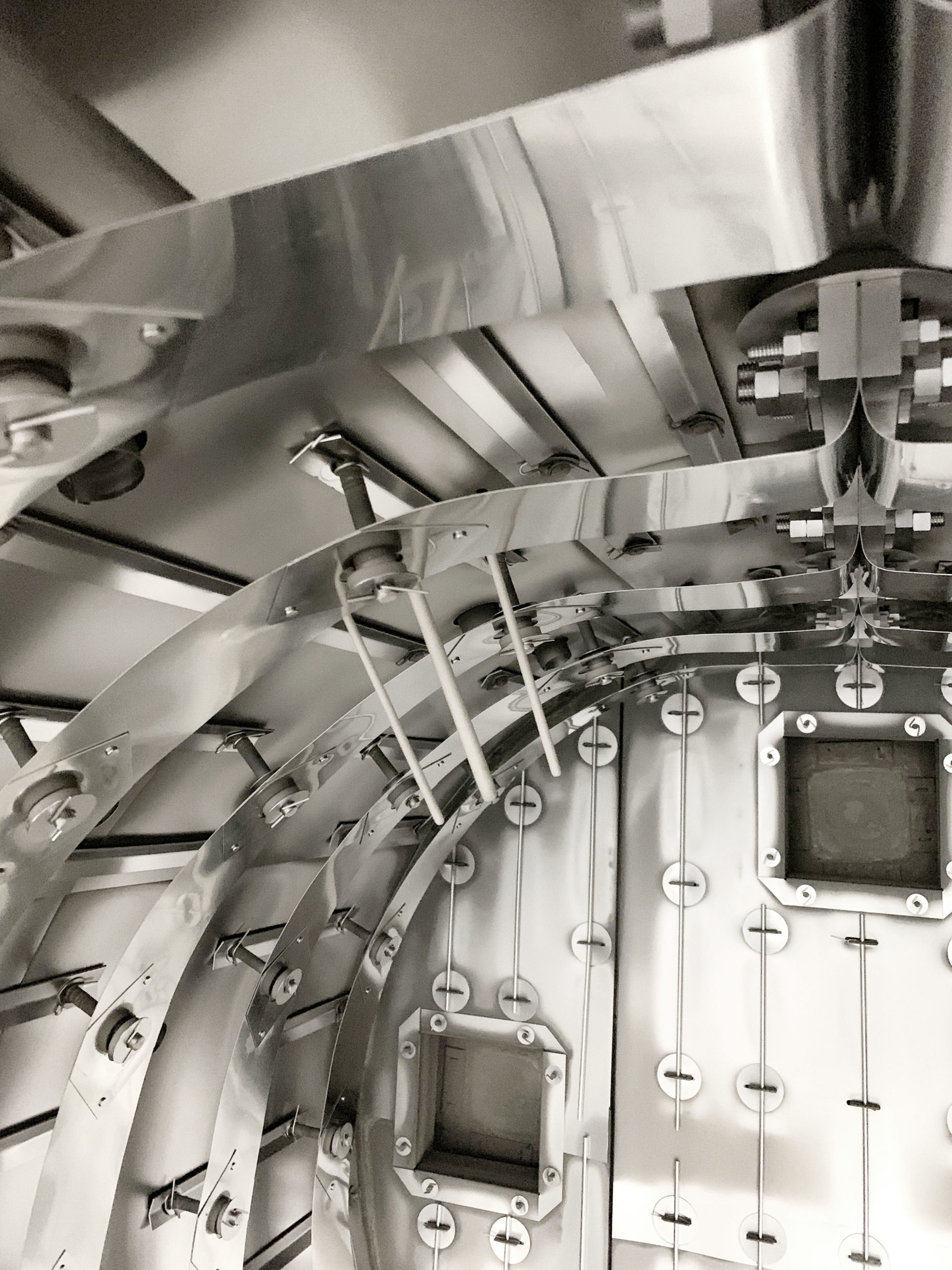
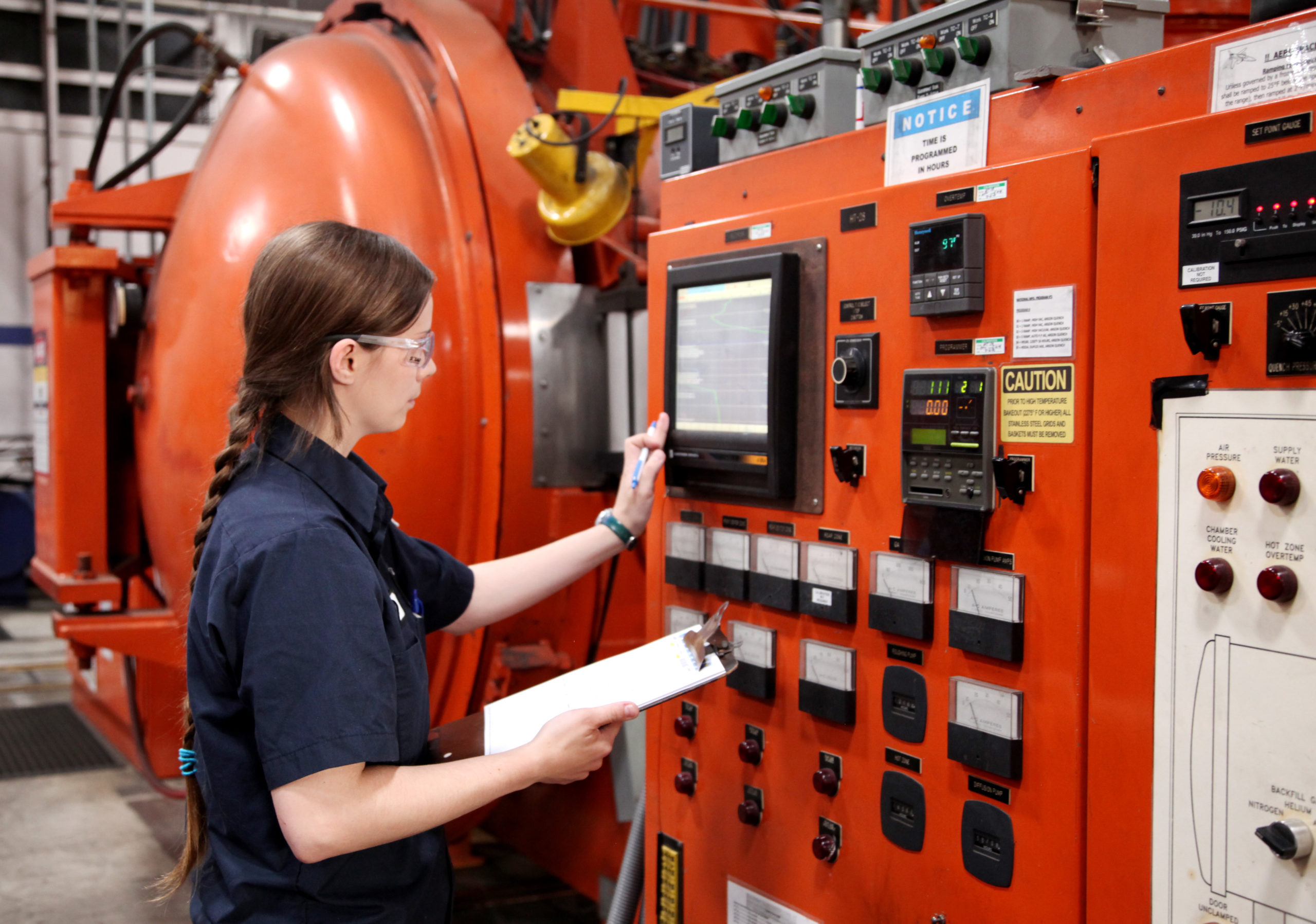
Brazing Furnace for Automotive Supplier (Image Source: Abbott Furnace Co.)
A diversified global automotive supplier, focused on metal forming, aluminum casting, fluid systems and flexible assemblies to help automakers meet their lightweight requirements, and a multinational corporation that specializes in producing chemicals and precious metals and operating in more than 30 countries worldwide, have placed orders for furnaces to be installed in the 2nd quarter of 2020. Abbott Furnace Company will design, manufacture, and install both furnaces.
The automotive supplier has placed an order for a continuous belt stainless steel brazing furnace to be installed in Mexico. They will receive a five (5) zone electrically heated industrial furnace that is rated for 2,150°F and includes a 30” wide belt, silicon carbide muffle and will feature Abbott Furnace’s Varicool convective cooling system.
The precious metals producer has placed an order for an electrically heated continuous belt calcine furnace. The industrial furnace that is rated at 1,850°F and includes an 18” wide inconel belt, silicon carbide muffle and data acquisition system.
Dan Insogna, Southeast Regional Sales Manager for Solar Manufacturing
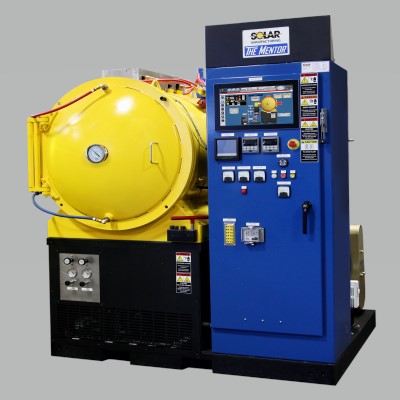
A vacuum furnace was recently shipped to a customer servicing the tool and die industry in Virginia. The Model HFL-2018-2IQ furnace features a graphite-insulated hot zone, a load weight capacity up to 250 lbs., and a maximum operating temperature of 2400°F. The furnace, called the Mentor®, is from Solar Manufacturing will be used for solution annealing, ageing, and brazing. It measures 12” wide x 12” high x 18” deep.
Model HFL-2018-2IQ furnace
“This company is a long-time customer of our sister company, Solar Atmospheres,” states Dan Insogna, Southeast Regional Sales Manager for Solar Manufacturing. “They wanted to own a Solar furnace themselves, for smaller, in-house jobs. We’re all excited they chose Solar Manufacturing for their first furnace.”
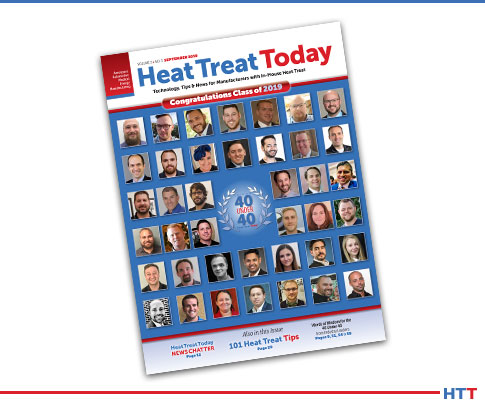
Heat Treat Today is privileged to oversee the 40 Under 40 recognition awards highlighting a group of young, up-and-coming talent in the North American heat treat industry every year. This year’s Class of 2019 is no disappointment–a group of industry elite, significant contributors to the heat treat market.
Every couple of weeks we highlight two of the current class of recipients. This week we introduce Chris Davidson of Super Systems, Inc. and Shlok Sundaresh of HEF USA.
Name: Chris Davidson
Company: Super Systems, Inc.
Position: Senior Projects Engineer
Chris has succeeded on every level which he has been assigned to. He works extremely well with his coworkers, and his jobs are always completed in a timely manner resulting in the highest respect from our customers. His successful projects range in value from a few thousand to over a million dollars. His background includes working for a major furnace OEM to understanding and implementing NFPA guidelines for multiple projects.
Nominated by: Super Systems, Inc.
Name: Shlok Sundaresh
Company: HEF USA
Position: Sr. Process Engineer
In the relatively short period of time since joining HEF, Shlok has demonstrated superior technical ability, problem solving skills, and leadership in support of our nitriding and PVD core technologies. He has proven himself to be a dedicated professional who will, per his nominators, further distinguish himself even beyond the borders of HEF. He spearheaded new application development for the company and customers with traditional case hardening technologies as well as working as a technical consultant to clients in developing heat treat specifications (salt bath FNC, PVD and DLC coatings). Shlok is Senior Process Engineer who not only supports the four sales engineers out of the Ohio office across multiple industries, but he also helps to support global colleagues for automotive projects that are developed domestically and implemented globally. He does it all with a professional and approachable demeanor.
Nominated by: HEF USA, Techniques Surfaces USA, The Timken Company, AmeriTi Manufacturing Company, Progressive Components, Dana Incorporated, Sunstar Engineering Americas
Read more about the feature at Heat Treat Today’s 40 Under 40 resource page and find out more about each of this year’s winners by clicking on their image. To nominate someone for the Class of 2020 40 Under 40, please click here.
Heat Treat Todayconducted a very unscientific and highly-fluid study on the impact of COVID-19 (coronavirus) on the North American heat treat market. By the time you read this, the impact will undoubtedly be different; but what you'll see below is a snapshot in time from Friday, February 28th, which is when most of the responses came in.
Heat Treat Today surveyed 675 heat treat industry suppliers and asked them 6 very simple questions. The survey took no more than 5 minutes to complete. Of the 675 surveyed, 104 responded, all of them completing all 6 questions.
The questions were broken down into two basic categories:
The first two questions asked what impact the coronavirus was ALREADY having on their business.
The last four questions asked them to speculate about the future impact of the coronavirus on their business.
Before giving the results, let me acknowledge as truth what one respondent so politely stated:
Unfortunately any information gathered for the coronavirus will be outdated within days because the global situation changes so frequently and rapidly. A survey of this kind has very limited value for business analysis/decisions due to the ... fluidity of the situation.
Having duly disclaimed, let's get on to the results.
One final note -- click on each image below to enlarge it for easier viewing.
Current Impact
Click to enlarge.
Question 1: Has the coronavirus already directly impacted your business/supply chain?
As you can see, over half (51%) indicate that the virus has had NO EFFECT to date. Another 11% are uncertain if there has been any effect, and roughly 38% say that the virus has already had an impact on their business.
Yes: 37.50%
No: 50.96%
Uncertain: 11.54%
Click to enlarge.
Question 2: In what way(s) has the coronavirus already directly impacted your business/supply chain?
The two main options given were:
Difficulty getting materials to build product: 11.54%, and
Limitation of travel either of employees, customer, or workers: 29.81%
Other answer included:
No impact: 46.15%
Other: 12.50%
It's not surprising that nearly half (46.15%) said there was "no impact" given that nearly half of the respondents in Question 1 indicated that there was "no impact" to date of the coronavirus on their business operations.
Anticipated Future Impact
Click to enlarge
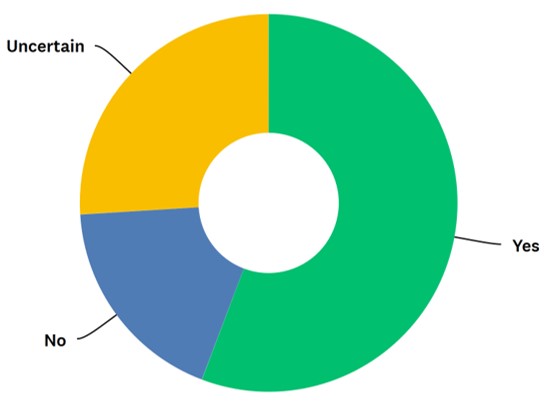
Question 3: Do you anticipate that the coronavirus will directly impact your business/supply chain?
After assessing the current impact, the next four questions focus on the future and what expected impact the coronavirus might have on business.
The results were a bit less optimistic:
Yes: 55.77%
No: 18.27%
Uncertain: 25.96%
While roughly half of the respondents indicated that the coronavirus was having no current impact, only 18% believe that it will never impact their business. The other 26% are uncertain if this global sickness will impact them or not.
Click to enlarge.
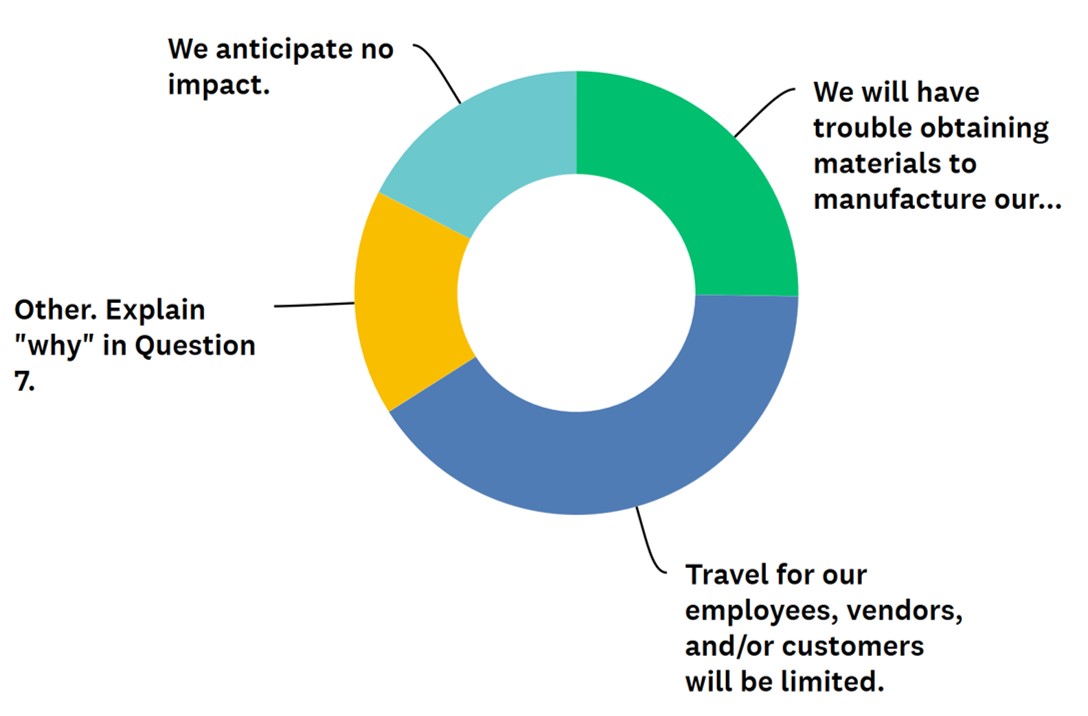
Question 4: In what way(s) do you anticipate that the coronavirus will directly impact your business/supply chain?
As with question number two, which was very similar, the answers to this question indicated that the #1 anticipated impact was restriction on travel. Coming in a close second was the ability to secure materials necessary to continue production -- supply chain issues.
Limited travel for employees, vendors, and/or customers: 40.78%
Trouble obtaining materials to manufacture our product(s): 25.24%
Other: 16.50%
No impact: 17.48%
Click to enlarge.
Question 5: How significantly do you anticipate that the coronavirus will impact your bottom line?
Assuming that there will be some impact, the question tried to get an order of magnitude of how great the impact might be. Asking respondents how they anticipated the virus will impact their bottom line seemed like a good approach. Here's what they had to say:
5% or less: 52.88%
From 6% to 10%: 30.77%
From 11% to 20%: 12.5%
More than 20%: 3.85%
It's possible that everyone in the "5% or less" category said that there would be zero impact on their bottom line; but even if that is the case, there are still 47% of the industry who believe that the coronavirus will have a 6% or greater impact on their bottom line. Only a very small percentage (4%) believe that it will have a 20% or more hit on their bottom line.
Click to enlarge.
Question 6: How long do you anticipate the coronavirus will impact your business/supply chain?
This final question tried to get a sense of how long respondents thought the virus would continue to impact their business.
Here's what they had to say:
0-2 months: 28.85%
3-6 months: 63.46%
7 months or more: 7.69%
Fortunately, it doesn't appear that the impact will be long-lived.
Question 7: Open-ended comments.
The survey was anonymous, so respondents seemed to feel comfortable giving their opinions. On two of the questions, Question 2 and Question 4, where they had the option to respond "Other," we asked them to give some explanation of their "other" response in this open-ended, final question. You can see the unedited, open-ended responses at the end of this post.
Flu vs. Coronavirus (by the numbers)
"Pandemic" is a word frequently thrown around with Coronavirus. Here are some interesting numbers from the Center for Disease Control:
CDC estimates that so far this season there have been at least 32 million flu illnesses, 310,000 hospitalizations, and 18,000 deaths from flu.
Compare that to the worldwide coronavirus numbers (as of February 28th):
Confirmed cases: 83,700
Deaths: 2,859
This is not to minimize the importance of actions against the coronavirus, but the current numbers associated with the coronavirus are a tiny fraction compared to a typical year with influenza. That's also not to minimize the great personal pain and suffering of anyone who has lost a close relative or friend to either influenza or the coronavirus.
Verbatim Comments
As promised, here are the unedited responses to Question 7 in Heat Treat Today's Coronavirus Survey. Some company names and any other identifiable information have been removed.
Being close to a porous border we anticipate migration north to find better conditions for their families. This indirect contact within the Hispanic community could impact the health of our workforce.
Contract now on hold that was signed in early January in China for [company] to supply new heat-treating equipment there.
Cost of shipping to countries hit increased 3x.
Deliveries will be late on finished products. Many parts come from China. More than we know.
Difficult getting some materials. Should improve as soon as things loosen up in China. Not killing us, but an irritation.
Economic slow down.
Facility in China had to temporarily close until the sickness peaks and wanes.
Human anticipation will be a negative factor
I am a sales rep and don't see much potential impact. Large purchases may be delayed but day-to-day needs should be OK to sell and ship.
I don’t feel it directly impacts our business unless it lasts more than a year
I have had suppliers ask about the availability to receive materials coming from Chinese suppliers, I have had questions about delivery delays from vendors/ suppliers. We are about to see in real time how good our companies are multi-sourcing critical components and not relying on conflicted materials.
I have two major concerns: 1. The virus will become Pandemic effecting world economy, 2. In the US people will overact and panic.
I think it is overblown, .1% of people die from the “normal strains” of flu, .7% from coronavirus. So if you get it, less the. 1% chance of death. Makes good news.
It appears it is directly affecting some of our upcoming travel plans, as well as we expect some parts issues to arise.
It might hurt our customers production, hence the trickle down
Little impact for us other than limiting travel. Our supply chain is stable for the moment.
Our business supply chain, business travel, product distributors have all been affected.
Shipping companies like FedEx won't ship our ordered products to China. I believe that will start to affect our other international customers.
Short term (3-6 month) impact anticipated in regard to supply of components from China and respiratory masks.
Slower sales cycle for cap-ex type projects. A wait-and-see mentality with purchases.
Some North American heat treaters have been purchasing Chinese castings sold by American based distributors. These castings are not marked with country of origin, so we encourage those who may be unaware where their castings are made to insist this information be provided. We are seeing many of our customers, who chose to go away from [company] and buy these off shore castings, unable to have their needs met. We manufacture our castings in our foundry in [location] and source our raw materials from domestic mills. So our supply chain and output is uninterrupted.
Some of our customers are global, we suffer if they suffer.
Some of the parts we are currently processing are being sourced by our customer from both China and South Korea. We have not had any delays in receiving parts but expect it to happen in the near future.
The supply chain is disrupted. But projects slated for China have been cancelled or severely delayed affecting order input.
This week I was at several customers who are screening for international travelers and not permitting anyone in their building who has traveled to China in the last 2 weeks.
Travel for our sales team may be limited. Economic concerns and supply chain issues affecting our customers could potentially slow our sales bookings. We do not expect a direct supply chain problem with our raw materials.
Travel has been altered and changed but not yet limited if required. However, we had international visitors returning home just today and they were quite concerned about the journey. We are not as much worried about the material supply yet, but thinking forward to critical items which may be impacted and considering changes to stocking programs considering our short term materials forecasts.
Unfortunately any information gathered for the coronavirus will be outdated within days because the global situation changes so frequently and rapidly. A survey of this kind has very limited value for business analysis/decisions due to the survey fluidity of the situation.
We anticipate the effects to vary; potential for some interruption to material availability and/or increases to material pricing. If China/India/Europe continue to be affected by the spread of Coronavirus, we suspect it may create a "bump" in thermal processing demand stateside. Although, if the spread of the virus becomes more prevalent stateside, a substantial shift in operational parameters may occur, which effects to our industry would be difficult to speculate.
We do not expect an impact
We export about 25% of our sales to China, South Korea and have seen some impact of about 10% on our shipments. We … sell to the oil & gas and this is also being impacted.
We had field service work lined up in China to relocate the furnace to Indonesia. We have had to abandon the project due to the logistical challenges and definitive need for Quarantine at both ends of travel. There is a significant drop in the amount of service business that we do in southeast Asia this year because of travel restrictions and Quarantine requirements.
We've experienced shortages or longer lead times from some vendors products such as our [company] controls. We also have staff and some clients that have considered driving to customer service calls, sales visits, etc. where they would normally drive, to avoid airports and large public places. There has been no significant impact yet.
When China releases restrictions, the impact will be minimal.
(Photo Source: Unsplash.com, by Free To Use Sounds)
“Optimism” may be a good description to highlight January’s Industrial Heating Equipment Association’s (IHEA) Executive Economic Summary. It states, “The US economy has started the year in better shape than had been expected. Now the attention of the economist has been focused on two questions. The first, why the headwinds that were expected to slow things down haven’t? And the second, how long can this situation be expected to last? Despite the predictions that consumers would become weary and businesses would begin layoffs at the start of 2020, “… some of the pressure was released with the ‘phase one’ deal with China and the consumer just seemed to power through their concerns.”
New home starts experienced an unexpected and encouraging rebound
The summary reports, “In looking at the index readings this month, the news is pretty good. Of the eleven, there are seven that are trending positive and four that are pointing in a more negative direction. The more important note is that the good news readings are very strong and the negative readings are not so dramatic.”
Of the seven positives indices, new housing starts experienced a dramatic rebound, and the housing sector is as strong as it has been in some time. Additionally, the reports states, “There was also some significant gain in terms of steel consumption. The automotive sector and the energy sector have helped boost demand.”
Significant growth in new orders after 5 consecutive months in decline
One other significant area of growth to note is the PMI, “There was a very impressive rebound as far as the Purchasing Managers’ Index was concerned. The overall index jumped back into expansion territory with a reading of 50.9 but an even bigger leap was noted in the New Orders index as it went from 46.8 to 52.0. Given the future orientation of the new orders data, this is good news indeed.” Other indices showing a positive growth were capital expenditures, durable goods, factory orders, and the credit manager’s index.
Those indices that weren’t as upward trending, but not “all that depressing” were new automobile/light truck sales, falling metal commodities prices due to lack of demand, and capacity utilization. The transportation index seems to be more of a concern, “The slip has been mostly in the rail and maritime sectors thus far as both have been affected by the trade wars and other interruptions in the global economy. The bottom line is that the bad news data has not been all that serious and most are likely to see some improvement in the future if the good news data keeps coming in.”
In conclusion, the news is better than expected this month with much growth. However, we can’t ignore the coronavirus and that its effect on the global economy has yet to play out completely.
The report is available to IHEA member companies. For membership information and a full copy of the 12-page report, contact Anne Goyer, Executive Director of the Industrial Heating Equipment Association (IHEA). Email Anne by clicking here.
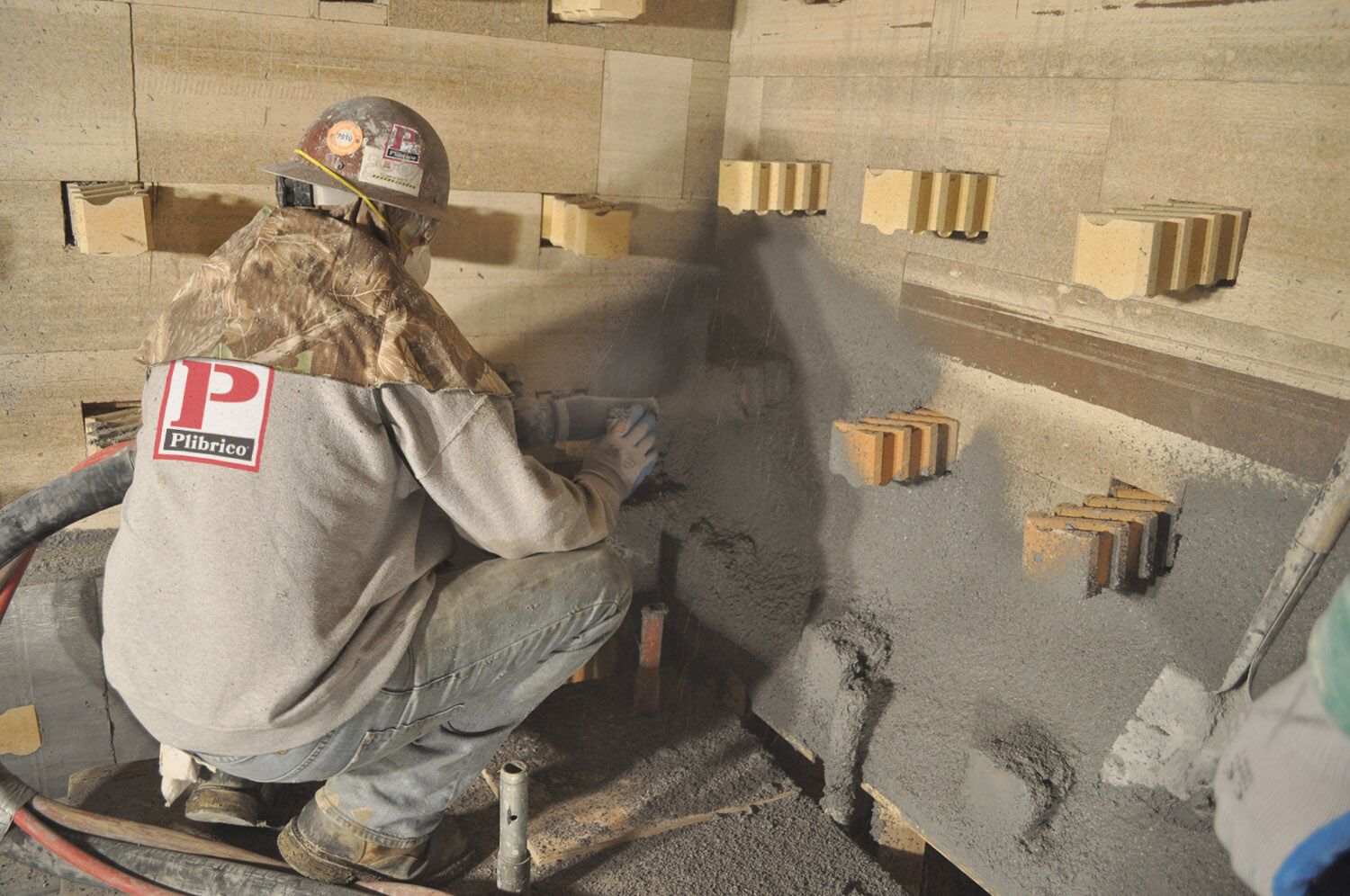
Compressed air is an essential component for most construction jobsites and production lines. For thermal operations and processing companies, compressed air assists with the removal, repair, and installation of refractories that keep employees and materials safe. It supplies the energy required to drive vital refractory equipment, such as portable pumps, nozzles, and demolition tools. With the correct safety procedures, compressed air is safe to use, has a very low weight-to-volume ratio, is easy to store, and is nonflammable. However, equipment that requires compressed air at higher pressures to operate, such as portable mixers, gun machines, jack hammers, and shotcrete/gunnite, can pose a risk, especially when used without safety devices or good working conditions.
To help prevent or control hazards, the Plibrico Company has compiled five safety precautions to take when using compressed air:
Location. Portable compressors that are run by internal combustion engines can generate deadly carbon monoxide from the exhaust gases produced in tight spaces. To prevent any problems, select a safe location with good ventilation to stage any portable compressors. Equipment should be positioned away from foot and vehicle traffic. Wheel chocks should be used to prevent drifting.
Hose Connections. Pressurized hoses can unintentionally become detached from equipment or from the couplings site and can begin to lash. Whipping hoses are known to break bones and cause cuts, contusions, and lacerations to those standing close by. To keep everyone safe, use safety coupling pins and whip checks on all hose connections.
Tripping Hazard. Hoses left strewn across walkways and equipment paths or near high-traffic areas increase the chances of a serious accident. To avoid trips and falls, hang all hoses away from walking and traveling areas.
Respirators. Using compressed air can increase dust particles in the surrounding air, making the air hazardous to breathe. Wear respirators when blasts of air suspend dust into the atmosphere.
Proper PPE. Proper personal protective equipment (PPE), such as safety glasses, face shields, hearing protection, gloves, and long-sleeved shirts, are important to harness hazards. Never use compressed air to clean workstations or clothing. Horseplay with compressed air is particularly dangerous:
An eardrum can be ruptured or an eye blown out of its socket with as little as 12 lbs. of air pressure.
Oil and grease atomized in the compressed air stream can also cause infection if accidentally injected into the skin and may lead to limb amputation.
Compressed air blown into the skin can obstruct an artery and result in an embolism. This is a condition where a pocket is created by the blast of air inside a blood vessel. Once this pocket of air enters the brain or heart, it can lead to stroke or sudden cardiac arrest.
Photo Credit: Plibrico Company
It is also a good idea to provide or locate the nearest fire extinguisher to any portable air compressor for emergency purposes.
Compressed air use is required to drive many of the different tools used for the demolition, repair, and installation of refractories used to protect thermal processing equipment. Hazard awareness and safety training allows for refractory crews to use compressed air in a safe and efficient way to complete complex tasks.
Two all-metal hot zone furnaces were recently shipped to the medical and additive manufacturing industries. Solar Manufacturing created and shipped the Models HFL-3848-EQ and HFL-3836-EQ, both featuring metallic-insulated hot zones, a load weight capacity up to 2,000 lbs., and a maximum operating temperature of 2400° F. Measuring 24” wide x 24” high x 48” deep, and 24” wide x 24” high x 36” deep respectively, each furnace was designed with the SolarVac Polaris® Control System. The furnaces were shipped to a location in Tennessee.
Dan Insogna, Southeast Regional Sales Manager for Solar Manufacturing
“Solar Manufacturing was awarded the order because we offered the best solution for their vacuum furnace needs,” states Dan Insogna, Solar’s Southeast Regional Sales Manager. “Our knowledge and experience of the additive manufacturing market set us apart from the competition. Additionally, the customer found the premium features and benefits offered with our vacuum furnace equipment impressive. We’re pleased to have helped them select furnaces that best suit the unique requirements of the industries they serve.”
Welcome to another episode of Heat Treat Radio, a periodic podcast where Heat Treat Radio host, Doug Glenn, discusses cutting-edge topics with industry-leading personalities. Below, you can either listen to the podcast by clicking on the audio play button, or you can read an edited version of the transcript. To see a complete list of other Heat Treat Radio episodes, click here.
Audio: Cutting Edge Trends in Data: Peter Sherwin, Eurotherm by Schneider Electric
In this conversation, Heat Treat Radio host, Doug Glenn, discusses future trends in data with Peter Sherwin of Eurotherm by Schneider Electric. Learn more about coming trends in data collection, including bringing current technology to the heat treat world and cybersecurity.
Click the play button below to listen.
Transcript: Cutting Edge Trends in Data: Peter Sherwin, Eurotherm by Schneider Electric
The following transcript has been edited for your reading enjoyment.
DG (Doug Glenn): Data topics are not new to Heat Treat Radio. We’ve had multiple podcasts where we’ve talked specifically about data collection, data use, and data reporting. Jim Oakes, for example, from Super Systems Inc., spoke to us back in January of 2019 about heat treating data. Nathan Smith from C3 Data also spoke to Heat Treat Radio in September of 2018 about data and, more recently, George Smith and Daniel Graham from SBS Corporation spoke to Heat Treat Radio about heat treat data. There were several other interviews that we did that hit on data even though it wasn’t the main topic of the interview. You can access all of these previous episodes of Heat Treat Radio by Googling or Binging Heat TreatRadio, or by entering www.heattreattoday.com/radio into your browser. Today, however, we’re going to discuss future trends in data. Let’s jump into the interview with Peter Sherwin.
We are here today with Peter Sherwin from Eurotherm by Schneider Electric. Peter and I have known each other for a number of years, and he is one of my go-to guys for the latest in technology and advancements and trends in the heat treat industry, especially when it comes to data or process control, power control, temperature control and that type of thing. We want to talk about trends. Since we’re at the beginning of 2020, I thought we would spend some time with Peter talking about some trends and things of that sort. We have a couple of preliminaries to get out of the way though. First off, you are with Eurotherm by Schneider Electric. If you don’t mind, elevator pitch about Eurotherm and Schneider Electric and let us know what they do. Then I would like for you to brag about yourself for a moment and tell us a little about your background. Let’s start with Eurotherm first.
Global Business Development Manager for Heat Treat, Eurotherm by Schneider Electric
PS (Peter Sherwin): Eurotherm is now, for nearly 5 years, part of Schneider Electric whose overarching theme is energy and automation solutions. As far as Eurotherm, we specialize in precision temperature power and process control as well as data management solutions, particularly impacting things like operational efficiency of the heat treat plant and reducing the cost of complying to regulations. That’s really what we aim for.
From a personal view and background, to have an open conversation, these are my views. They may or may not be backed up by the views of Eurotherm and Schneider Electric, but it just gives me a bit of freedom to talk openly.
I’ve been with the industry for the past 30 years. I started in a captive heat treater called Reynold Chain in the UK and through my career have worked for different captive as well as commercial heat treaters and even a furnace OEM. But for just over 11 years, I’ve been working for Eurotherm. We are a supplier to the heat treat industry, and heat treatment is one of our key verticals and actually our largest vertical business within Eurotherm. Currently, I run that vertical globally, so I am very fortunate to have the opportunity to see heat treatment from different aspects across different cultures and regions.
DG: You are global. We should, in fact, say that your title is a global business development manager for heat treat. So you are ‘knee deep’ if not ‘waist deep’ in heat treat pretty much around the clock.
PS: I am. That’s my vertical. That’s my background. I grew up as a trained metallurgist and have taken that forward in my career. I still practice that now and again, so it’s very useful to have that background.
DG: You are global, in the true sense of the word, because before we turned on the record button, you were telling me about your upcoming trips to India, Thailand and wherever, so you’re out and about and do see a lot of things. For our listeners edification, your perspective, because you’re not just looking at the North American market, you can speak to some global trends and things of that sort which will certainly be impactful.
So, you and I ran into each other last at the ASM heat treat show in Detroit in October of 2019, just a few months ago, and you were gracious enough to have myself and a couple of our Heat Treat Today staff people over to talk about some of the latest things Eurotherm is doing. I would like to start by asking you about those things. Talk about some of that stuff that’s going on and then we can dig deeper into some of the trends as we go forward. Tell us about what Eurotherm is, in fact, doing with some of the data acquisition and whatnot.
For more Heat TreatRadio, click image above
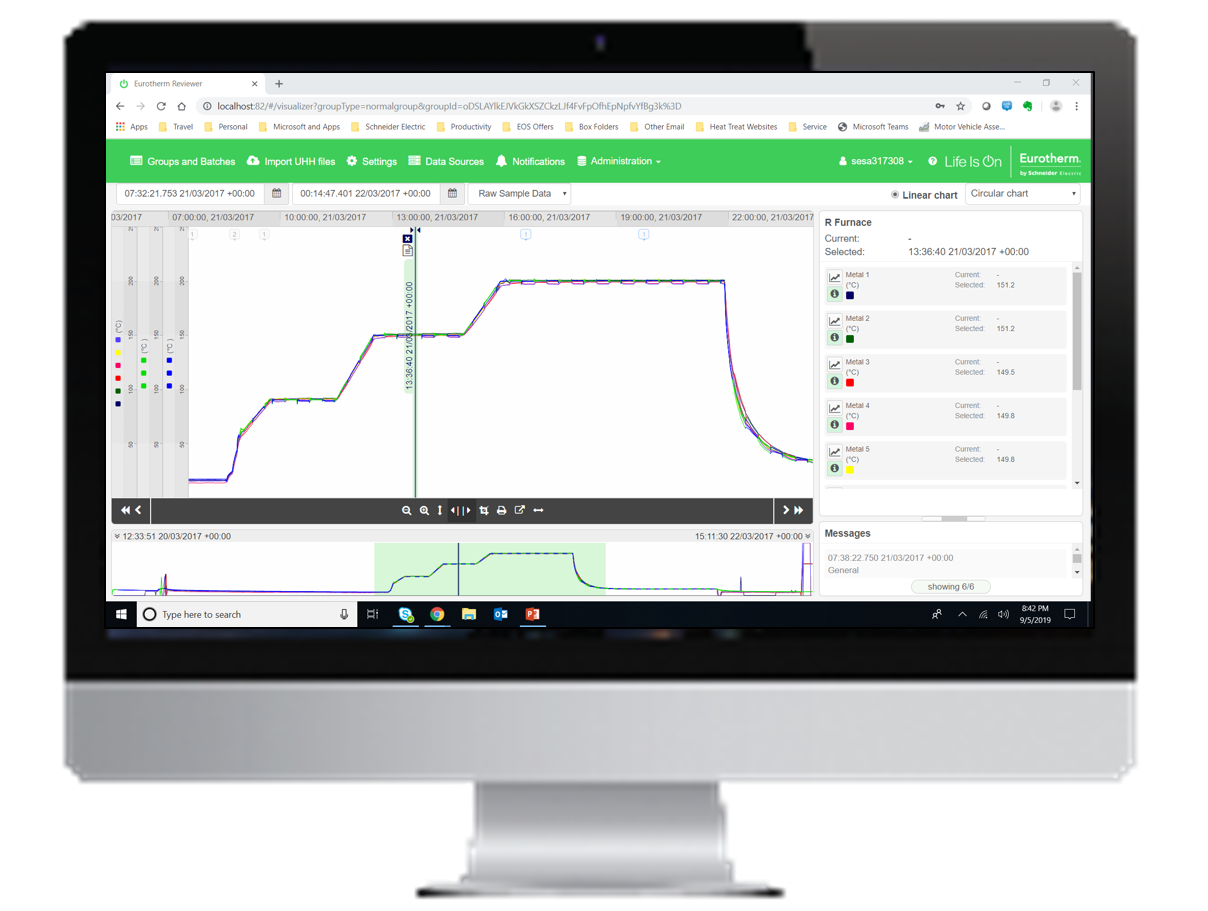
PS: It’s really expanding from the base of having devices that can capture data, whether its a PID controller or a data recorder, and then being able to do more with that information to really have an impact on operational efficiency. I think we demoed a few different platforms to you. We have to look more at cyber security these days with any kind of offer, so that’s kind of wrapped into any of the solutions that we provide today. But we look to predictive maintenance solutions. I think I demonstrated a health app on one of the machine advisor programs. We looked at the way that we can now control and manage energy much better with energy SCADA systems and we even had OEM furnace solutions where you could tie in the expertise of an OEM to the end users to give them online access to certain information so they can actually provide better service. And from a shop floor perspective, I think one of the solutions that caught a bit of buzz at the show was the augmented reality solution where you can use a tablet in front of a furnace, hold it up and through the camera you’re actually getting live information about what’s happening on that furnace. You can actually access documentation directly like electrical diagrams. It just makes the whole process of being able to maintain and operate a furnace much more efficient. So just a few of the solutions that we talked about.
DG: Yes, all very fascinating and very impressive.
Heat Treat Today has done several past podcasts on process controls and trends in data, data acquisition, and things of that sort. We talked with Jim Oakes from Super Systems, we’ve talked with Nathan Wright from C3 Data, and we’ve even talked with two gentlemen from SBS Corporation, George Smith and Daniel Graham, about some of their systems and all of them had a lot of very interesting things to say. But historically, a lot of the data collection that has gone on has been specifically for process validation, but I think almost all of these gentlemen, and I think including yourself, I’d like to get your comment on this, they see a lot of data collection now because of the volume of data we can take going beyond process validation. What are your comments about that?
Photo credit: research.samsung.com
PS: I think it’s quite useful to understand why we collect data for the process and then because of that we can expand it for use in other applications to have an impact on operational efficiency. Just taking the point about validating the process. So heat treatment is part of one of the so-called special processes because it has the ability to impact a part’s physical integrity and induce stresses within a component. And it’s in a class of thermal treatments, chemical treatments, and mechanical treatments that can actually do this. But because you don’t then test after the treatment for those stresses, and because that is more difficult and costly, you have to be very sure about how you process. So that means that you need qualified personnel, approved equipment, defined procedures and also have some verification of those procedures and the process that the parts have gone through. At the core of it, it’s very important that you’ve got very good data integrity for just validating the process. One thing at Eurotherm that we’re quite lucky and fortunate about is that we do work in other industries. One of the other industries is the life science industry and requiring to work for FDA standards means that you have to follow processes such as ALCOA+. Now, that’s not the company, it’s an acronym about how you actually capture and store and attribute the data to make sure that you’ve got that level of integrity throughout the process of data management. It’s something that with certain key clients we go a little bit deeper than the AMS 2750 standard or the CQI9, as far as being able to catch full audit trails to ensure that you’ve got that good data capture. If you’ve got that good data capture, you can then move forward with that to be able to use it for other areas, and that is where we get into operational efficiency and also having an impact on quality. From my perspective, I’ve been with the industry for the last 30 years and I’ve seen this trend. Thirty years ago, it was very much operator heavy. You could be one on one with an operator and a machine and the machines were either manual or semi-automated; they were not full automated like the furnaces that we’ve got today. So there was a lot of training of operators and different skill levels that you needed back in, say, the 90’s. As time has moved on, those processes have become more automated and they have operators running multiple machines. For them to be able to do that, we’ve got to present information in a way where if they’ve only got a few seconds or a few minutes at a furnace, they can really pick up the detail of what’s happening. That’s where we start to get into operational efficiency to effect how we use labor within a heat treatment department.
The other interesting trend as we’ve moved through the decades has been the development of regulations such as AMS 2750 and CQI9. There have been more requirements for tests and task tracking. We’ve actually needed additional QA personnel or resource to counter that requirement and make sure that we comply with those regulations. And that’s also for some technology solutions. I think that’s what Nate was talking about in his podcast about his platform trying to reduce the cost of compliance regulations. And we do the same.
DG: Regarding standards, what do you see coming in the near future for the heat treat market? What’s relevant?
PS: Relevant for the heat treaters today is what’s coming this year with the update of the standards of AMS 2750 that will go to F version, due sometime in the summer, and also CQI9 issue 4. That will come earlier, maybe just after the first quarter. Obviously, we look at these standards. We have a number of people that are on the ballot or have some involvement with the standards, and the feedback is this move from being in a paper environment to paperless. Electronic records is going to be big for both of those standards. They are going to give heat treaters some time to actually move if they do currently still use paper. But ultimately, over the next 2 or 3 years, you’ll see pretty much all heat treaters using electronic records and digital paperless systems because that’s the requirement of the standards.
DG: Maybe jump into a little bit more of the operational efficiencies. Is there anything more that we can say about that? Are there any trends that you’re seeing on how data and data management is going to help us with operational efficiencies?
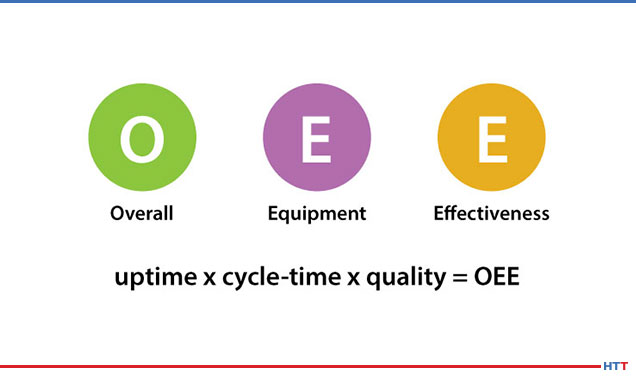
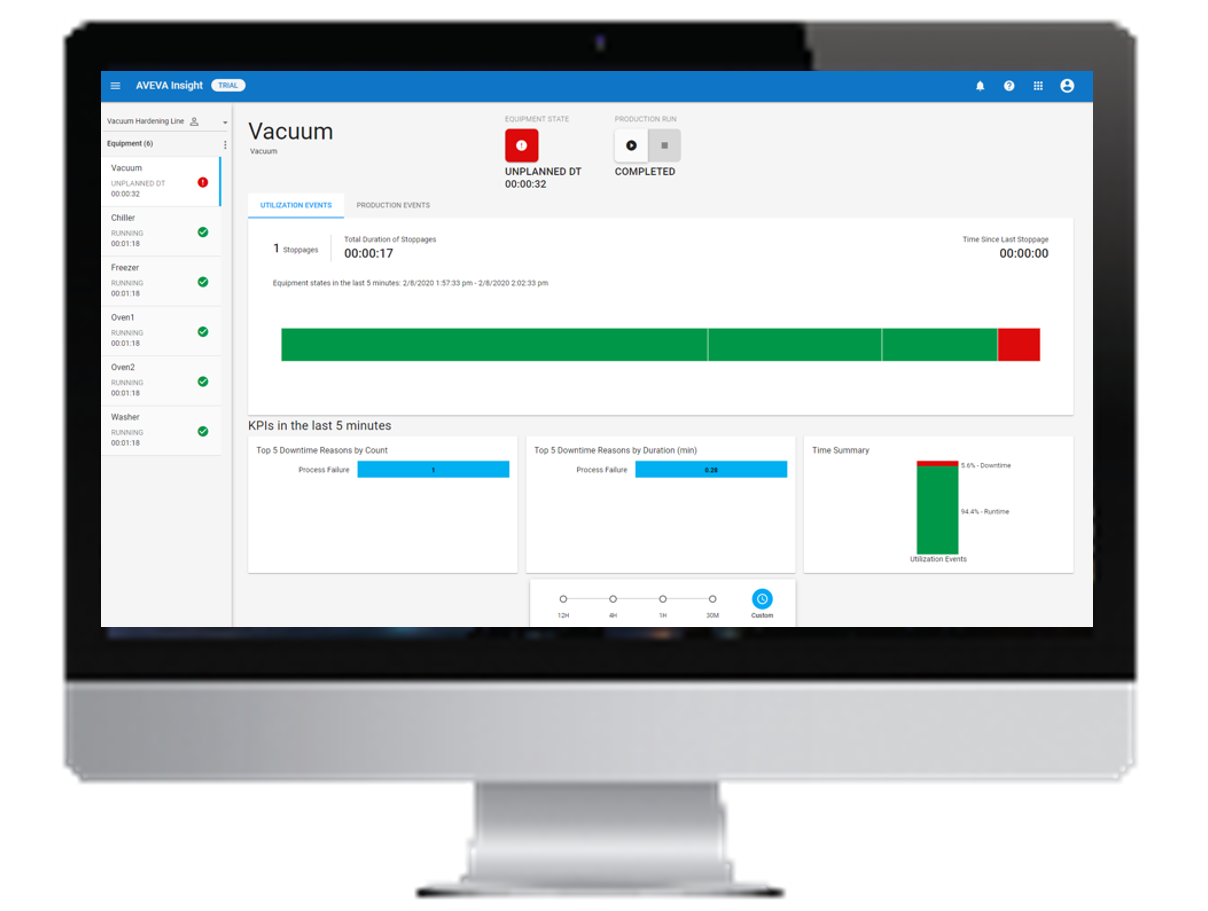
PS: Quite an interesting trend with a subject called Overall Equipment Effectiveness (OEE). This is a KPI (key performance indicator). I don’t think it’s widespread currently within the heat treatment industry, but I see it in pockets when I travel around the world. OEE is made up of three components, the first being up-time (the the availability of the furnace), second component being the cycle time, so where are you against the design performance that you might have got from the furnace OEM for how fast and well that cycle should run. And the third component is quality-how many parts do you get through right first time without needing to go back through any rework or even get into rejects. So now there is a bit of a push of, ok, so how can we use technology solutions to help companies improve their OEE? It used to be just on the manufacturing floor, but it’s now migrating a bit more to the heat treatment department, so this is something that we’ve looked at what we can do. We’re fortunate to be part of the larger Schneider Electric and we can rely on some of their resources and we’ve been able to tap into platforms that already offer OEE type solutions. So that is something that we’re seeing as a trend and something that we have solutions for, and I think it’s going to be a topic for this year.
DG: You mentioned OEE, up-time, cycle-time, and quality. I assume that built into that also is equipment utilization, right? It’s not just that the equipment is up (as in not broken down), but also in use, correct? Are we minimizing the gap times between loads, assuming it’s a batch system?
PS: Yes. It’s actually quite specific on up-time. It ignores plant maintenance because it kind of says, you have to do that to have a good running department, but it does concentrate on maybe three areas. Furnace breakdowns, so if you have something unexpected that happens. It also looks at waiting times, and that can be split into waiting times from a labor perspective, have you got the resources to actually run the furnace, or are you getting gaps because of that? And it could be fixtures or parts, so what you’re going to load into the furnace, are all of those ready, or are you waiting on those because you’re waiting on your customer or are you waiting on a pre-process? So, yes, it looks at all of those areas and identifies where those gaps are. It shows you where you’re getting trends, maybe a trend from one shift to another, so you can actually look at taking action to resolve that because it’s very valuable, the up-time of a furnace.
DG: Let’s talk about AI, analytics, machine learning and impact on things like preventative maintenance and, to a certain extent, this effects operational efficiency as well because we’re talking up-time on equipment. What are you hearing? What are you seeing?
PS: I capture a lot of this in the bubble of IoT and Industry 4.0 solutions. There are a lot of buzz words out there. There is a lot of hype, I think, over the past few years. Now some of that hype is starting to manifest itself into real solutions, but I think those have really only come out over the past couple of years. So what we do in this space is we have some predictive maintenance solutions that include a health application. Pretty much out of the box, you have data coming into an algorithm and it gives you information about the health of that particular asset. You can track that over time and so it can give you an indication of when you’re starting to get a problem, it may be on a component level on a furnace, or it may be across the entire furnace itself, but it gives you some kind of prediction so you can take action before something fails. If I go back a year or so, you kind of had to build discrete models to make this happen, and the result was as good as the model that you built. I think those have improved and they’re a bit more user friendly. And this is just going to improve over time. So I think predictive maintenance is going to be a topic that we’ll start to see having an effect this year and, as time goes on, the value of that will just increase.
DG: I know there are several different furnace and/or induction equipment companies in the industry that already have preventative, predictive maintenance programs out there. Do you think that’s going to continue to grow? Are we going to see more and more of that?
PS: Yes, without a doubt. And, in fact, one of the packages that we put together allows an OEM to provide those services to their end users. You’ve got different tiers of OEM that some can afford to invest, which is quite a substantial amount in actually providing these types of solutions. Others, not so much. There are platforms now out there that enable all OEMs to kind of jump on the bandwagon of predictive maintenance and be able to offer those remote services.
One of the areas that will come out this year, just to give you a sneak peak of it, is based on the augmented reality aspect. We already have an augmented reality solution. We work with a number of OEMs with that, but the technology has evolved to the extent [that] you can pick up a tablet, hold it up against the furnace, and [it] give[s] you valuable information about the running characteristics of that furnace. You can pick documentation up and electrical drawings, all from that tablet, all live. But what we will be able to do in 2020 is also get a remote view from an OEM actually dialing directly into that tablet and seeing what that person on the shop floor is actually seeing in front of them and being able to give them far better advice and better direction in case they’re trying to sort out an issue, to hopefully resolve that issue in a much faster time as well as cut down the cost of traveling all the time to site.
DG: Your interaction with the furnace manufacturers and/or induction equipment manufacturers, in fact you cooperate with them to help provide these systems to their end users as well.
PS: It is because of this other trend that we’ve seen with the workforce, particularly in North America. You’ve got quite a large set of baby boomers that have been retiring over the past few years and that is coming to an end, and then you’ve got millennials coming in with completely different skills. They are very tech-savvy, so some of these new solutions that we’re offering, they can get on board and get up to speed very quickly, but they lack the experience that the baby boomers have had because some of the guys and girls in the industry have been working for like 30, maybe even 40 years. They’ve amassed all of this experience and certainly that can potentially go out the business. So we’re using some of this technology to take hold of some of that expertise and augment the knowledge that the younger engineers have so that they can get up to speed a lot quicker.
DG: The younger generation are much more comfortable with a smartphone than a furnace, but if you can put some of that knowledge about the furnace on that smartphone, voila, you’ve got yourself a more quickly trained younger generation.
PS: The side effect of that is also having modern technology within a furnace department, you can start to then attract some of these younger engineers. Because if you don’t have that, there are opportunities for them elsewhere in different industries and higher technology. So we’re all competing for a limited labor pool, and updating the technology is going to have an impact on you being able to employ people a lot easier.
DG: We did a Heat Treat Radio interview with the CEO of the Inductotherm Group, a gentleman by the name of Gary Doyan. I asked him this same question. I said, “So is all the hype about Industry 4.0, is it true?” I think that the issue he got to was, just because you can collect the data doesn’t mean you ought to collect the data. That brings me to the question: There is so much data out there; what do we do with it? Just because we can collect it, should we? And what are we going to do with all the data? How do we assimilate it? How do we make sense out of it?
Digital Dashboards (Photo Credit: Eurotherm)
PS: Let me rewind the clock a little bit to when I first started in the industry and you had manual process cards. Not a lot of paper chart recorders around, and those that were around were probably just logging the temperature rather than any other data point. That has really changed. From the 2000s onward, you’ve had paperless charts within the industry, SCADA systems, a lot of information. So you’ve gone from this scarcity of data to data overload. As you’re trying to do more and more with operational efficiency, we’re just getting more and more data points. We’re fortunate, in a way, and I think Jim mentioned this on his call, that with the PLCs, etc., and the other devices we have on the shop floor, we’re collecting that data anyway. So it’s not so much the issue about capturing data, it’s been about we’ve got this massive data, we’ve got this potential overload, we don’t have the time, resources, and even sometimes the expertise to make sense of all of this information, so where do we go from here? I think this is another trend that we’re seeing. It developed in 2019, and it’s going to continue — the use of dashboards. I believe Nate touched on this as well in his interview. If you can collect that information and collate it and put it into a format that is just easy to understand and quick to get a view about what’s happening, what’s happened, what’s the direction, you can make better and quicker decisions. We see dashboards and dashboarding as a trend that’s going to just explode, as far as in the heat treatment department because you need to be able to provide that information in a better way. An example of that is what we discussed about OEE. OEE comes with its own dashboard to give you a quick view about what’s happening across your process. That’s another trend for 2020.
Digital Dashboards (Photo Credit: Eurotherm)
DG: Yes. Actually making sense of the data in bite size, quick pictures. Two more questions. I always have to ask this because I think everybody wants to know about it: cyber security. A lot of these systems that we’re talking about are either cloud-based or they have some vulnerability to outside intrusion. Can you talk a bit about any type of trends you’re seeing in cyber security?
PS: This is interesting. I started looking at all the IIOT and Industry 4.0 stuff back in 2013 and the trend for 2013–2018 was ‘what’s possible?’ What’s possible with the cloud, and with these edge devices, etc.? The last two years, you’ve then moved into ‘what’s practical?’ Because we’ve seen a lot of these cyber security issues, even within our own industry, where you’ve had furnace OEMs and end users get involved with ransomware situations, not necessarily directed at the process control layer, but more targeted to ERP systems, etc., and you could get these potential viruses through USB connections, emails coming in where you click on one of those emails and then you open up this door for hackers to come through. So it has certainly become more of an issue. We were quite early in looking at this from an industrial product point of view, and we looked at starting to harden devices to enable them to withstand cyber security attacks. The latest range of controllers, the EPC3000 range, have a level of cyber security built in. They meet what’s called an Achilles Level One standard. We are also looking, even with our legacy products, to improve their cyber security requirements and try to meet some of the requirements from this international standard IEC62443. That is being built up to try and improve the safety, availability, integrity, and confidentiality of all of the components and systems that you’ve got within your plant. We, as well as Schneider Electric, have followed that, and it’s interesting to see the resource requirements that have gone from pretty much when we’re dealing with products in the past, there was very little talked about or even planned with cyber security, to it now being the number one. This leads everything. We have to have our software development life cycle start with cyber security. So, yes, it’s accelerated and it’s right. If you open up these ports for people to come in, it can work both ways. Obviously, you’re pushing information out, you can spread information across the plant, everyone gets to know what’s going on, but you can then have other people coming in that you don’t want. You’ve got to be a little bit more careful.
Very simple things I would promote to any heat treater today, and that is start looking at manage switchers and firewalls for your operation. We do have white pages on this that actually go through some of the rudimentary things that you should do from a cyber security perspective. I’m happy for people to contact me or maybe we can give you something, Doug, that you can put up on your website so they can just access it.
Editor’s Note: Click on “White Paper” image to be linked to the white paper referred to in this section.
DG: Yes, that would be good to do. We could at least put a link over to your site so people can look at those white papers. I think that would be helpful.
I’ve got a final question for you, and it’s regarding your average every day heat treater, manufacturer of some product, aerospace, automotive or whatever, who has his own in-house heat treat shop. Let’s say they’re not doing a lot right now with IIOT, how would they get started? What would be your suggestion on how to get rolling on using data more effectively, if you will?
PS: There’s got to be a purpose, and that purpose usually is to have an effect on, say, something like operational efficiency. Trying to assess where they are now and where they want to get to and using something like overall equipment effectiveness, it is down to a KPI so you can get a percentage. You’ve got people that are world class that are like 85%, so the average is around 60%, and you’ve got some laggers that are around 40% as far as OEE. So getting that benchmark of where you are, getting an aspiration of where you want to be, and then contact anyone, like an instrument supplier that is touching on the IIOT world, like Eurotherm or others that are out there to help you on that journey. There is a lot of support. There are a lot of offers out there now that have all come up over the last couple of years. So don’t hesitate to reach out. There are people that know about this stuff and that can help, and they do want to sell it to you! Don’t be afraid of picking up the phone or sending an email because people are out there to support you. If the heat treat business as a whole improves, then everyone improves. That should be how people focus on things.
Doug Glenn, Heat Treat Today publisher and Heat Treat Radio host.
To listen to more Heat Treat Radio episodes, click here.
One of the great benefits of a community of heat treaters is the opportunity to challenge old habits and look at new ways of doing things. Heat Treat Today’s101 Heat TreatTipsis another opportunity to learn the tips, tricks, and hacks shared by some of the industry’s foremost experts.
Today’s tips come to us from Solar Manufacturing Inc., covering Vacuum Furnaces. This includes advice about avoiding disasters, improving vacuum furnace operations, how and when to use water, and troubleshooting.
Vacuum Furnace Disaster with High Temperature (2400F) Bake Out
Thoroughly understand the metallurgical definition of “Eutectic Reactions”. Never high temperature bake-out a vacuum furnace with the grids in it, i.e. 2400°F.
Heat Treat Tip #83
4 Tips to Improve Your Vacuum Furnace Operations
Four Suggestions for Improved Vacuum Furnace Operations
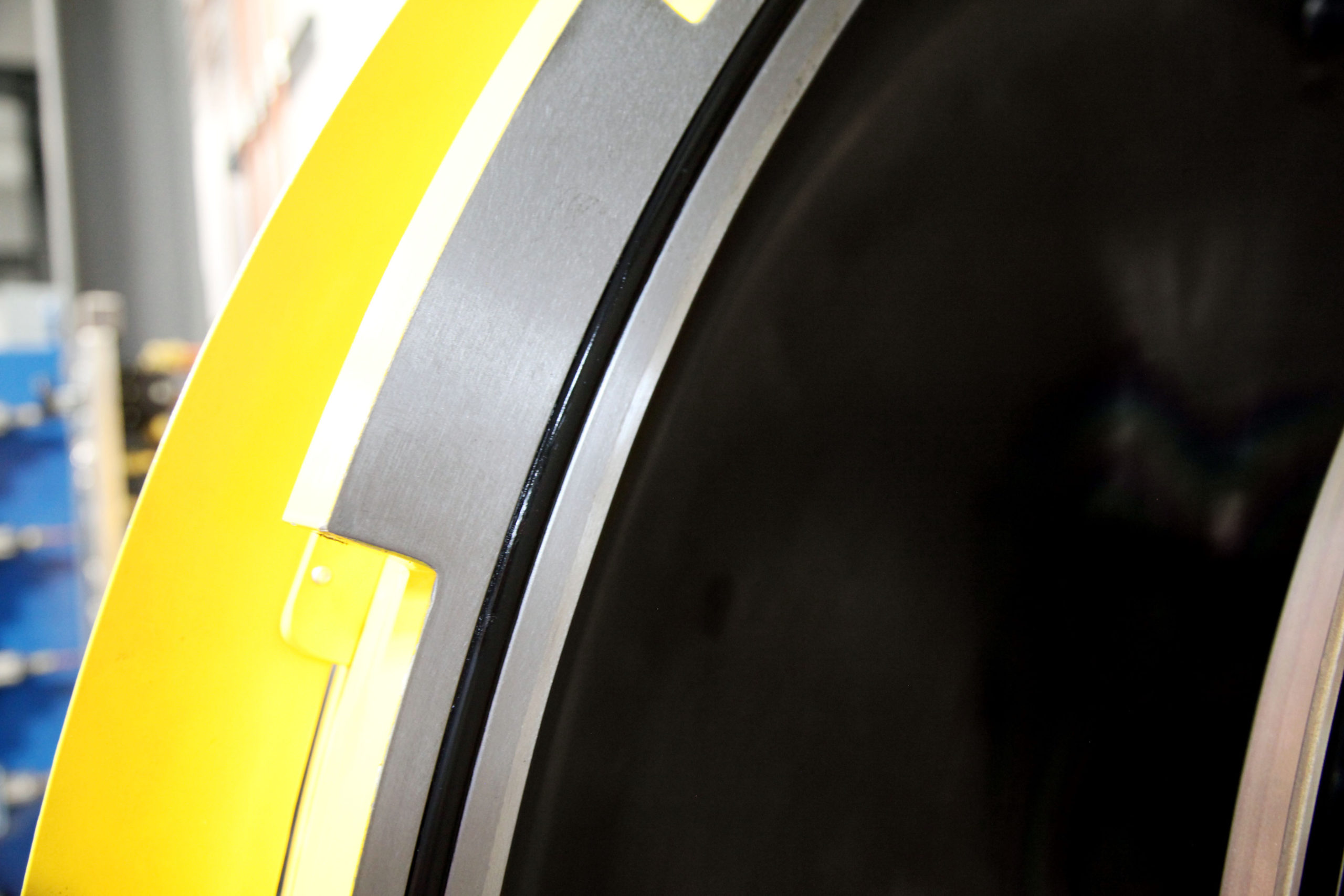
Vacuum furnace door o-ring
1. When wiping the main door O-ring and flange (which must be done every time BEFORE closing the door, especially after unloading a furnace), wipe with only your bare fingers. You risk a splinter or dirty fingers (so what, you are a heat treater), however, a bare fingertip will detect even minute scratches, nicks, or debris on an O-ring or flange. Wiping with a rag increases the likelihood that you won’t detect those conditions until it is too late. Using your bare fingers is also effective in detecting an O-ring that has become dry and in need of a new application of grease.
Thermocouples inserted into an all-metal hot zone
2. After installing a new control or overtemperature thermocouple, and especially when using a Buna N-type grommeted feedthrough, tighten the feedthrough nut quite snugly, and then retighten it after the initial pump-down, checking it again after several furnace cycles. Much of the time the grommet becomes compressed and pulled deeper into the assembly, leaving the nut loose. If this occurs, the TC could be sucked deep into the furnace during a cycle, possibly breaking when unloading the workload. Further, even a modest movement of the control thermocouple can affect the TUS results and lead to product impact concerns.
Vacuum furnace with front door bolted
3. If using an older vacuum furnace with a bolted main flange, always make sure to bolt the flange after achieving a vacuum of about -25″HG. If the door is bolted prior to sufficient evacuation, the bolts will become loose as the O-ring compresses during the pump-down portion of the process. Loose bolts could lead to a gas leak during a positive pressure quench or a vacuum leak during operation.
Recorded chart, green “pen,” of vacuum pump down record
4. During the initial evacuation of a process in a vacuum furnace, let the furnace pump until it gets to a slowly dropping rate prior to introducing partial pressure or turning on the heat. Water vapor is difficult to liberate and it can take some time, especially in a humid environment. Getting as much out as is practical prior to starting a furnace cycle is good practice in the war against discoloration.
Heat Treat Tip #84
When Water Is Your Nemesis!
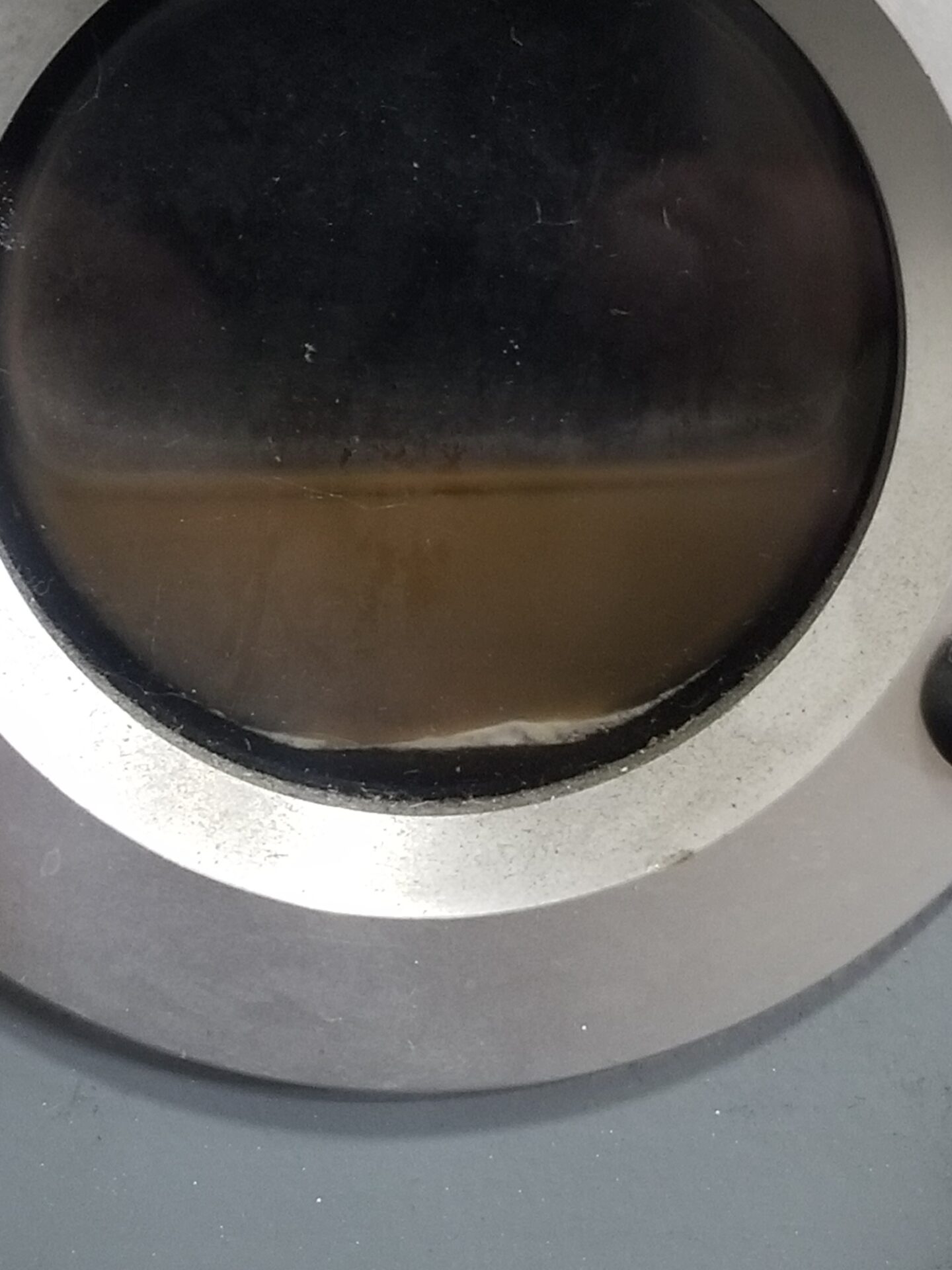
Typical Stokes 412 vacuum pump oil sight glass
On hot, humid days, moisture collects in the roughing pumps after initial cycle pump down.
• Drain as much water out as possible through the oil drain port of the vacuum pumps, usually about ½ cup of water.
• Crack open slightly, just enough for the water to drain. By cracking the gas ballast valves, this will raise the temperature of the pump and boil the rest of the water vapor off and out through the exhaust piping.
• One thing to remember with the gas ballasts open, the pumping time will be longer. So, don’t forget to close the valves after about 15 minutes.
As soon as the water is removed, only oil will remain.
Heat Treat Tip #85
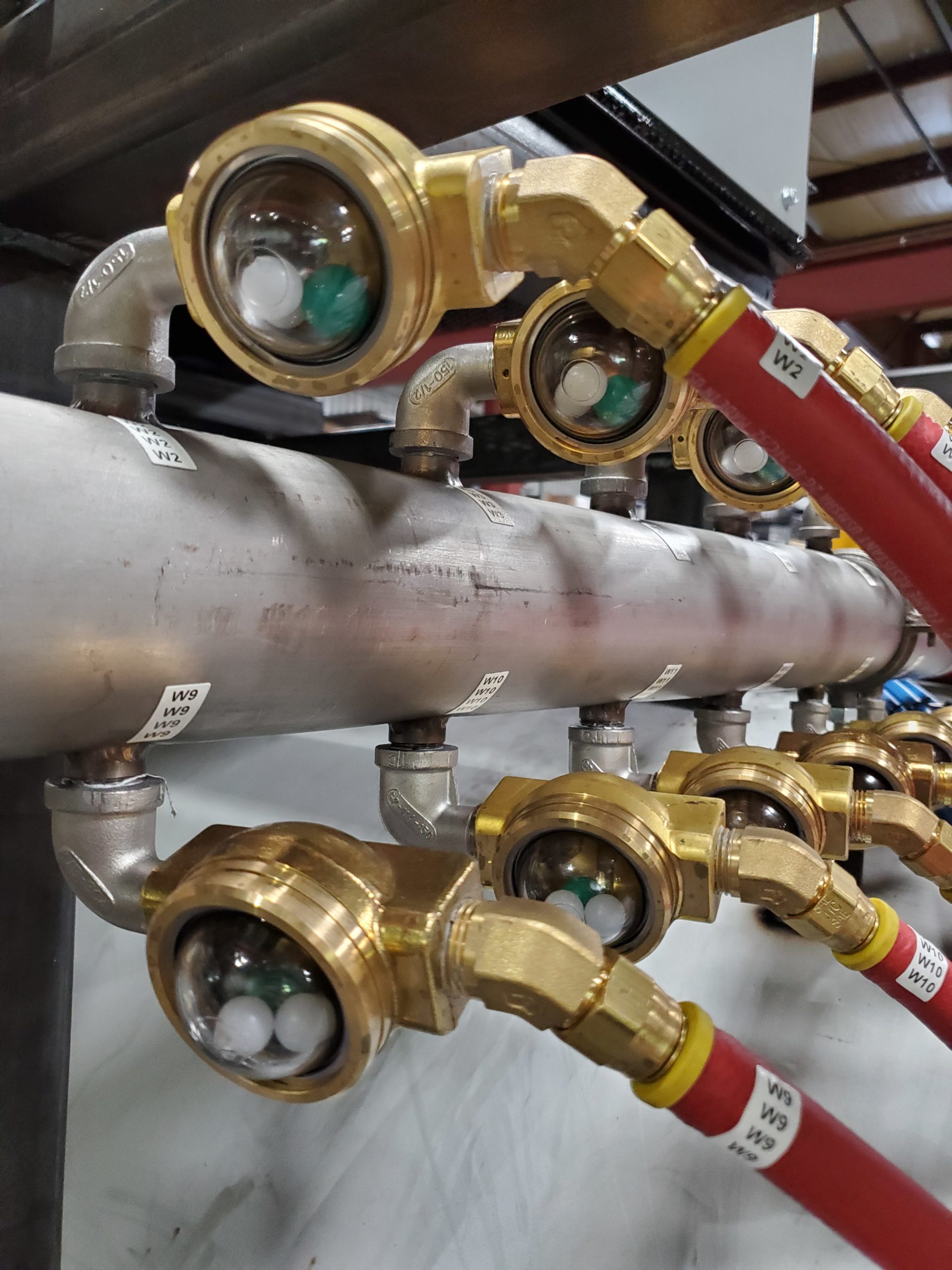
Typical vacuum chamber water quality sight meters
Cooling Water Type and Chamber Life
In the vacuum furnace world, the life of the vacuum chamber is very important. Specific care should be taken if the furnace is cooled from a domestic water supply, evaporator cooling tower, or pond water, as these sources are very rich in air and will “rust out” the chamber in less than five years. Therefore cooling water should be provided preferably from a (closed loop) air to water heat exchanger, and the cooling water quality checked monthly to the following chemistry: Water circuit flow indicators should be included to check for water turbidity, low to no particulate, in the cooling water with a site indicator type here noted.
Heat Treat Tip #86
Troubleshooting Furnace Pump Down
Jessi Tatum, furnace operator at Solar Atmospheres, Inc.
If you’re having problems obtaining a vacuum level below the 500 to 50 micron range after furnace pump down, some simple analytics will help pinpoint the potential cause. Ask yourself a few questions: If it is a humid day, how long did the furnace sit open during loading, what is the size of the load in the furnace, and were the parts oily that went in? Any “yes” answers could explain slow pump down. If you rule these out, stop the cycle and watch the coarse vacuum display of the gauge. Does it immediately start going back up by tens or hundreds of microns in a very short time? If it does, you have a large leak. Did the thermocouples get in an area where the door O-ring seals? Has the door O-ring been compromised since the last load? Has some valve been left open slightly? Are any of the gas backfill valves leaking? Was something left in the furnace that shouldn’t be there? If the furnace doesn’t leak back very quickly when you stop the furnace cycle, a contaminated vacuum gauge tube or a poorly performing pumping system could be the cause. Is the booster pump running? Are the diffusion pump heaters on and pulling proper current? By following this simple regimen, you can quickly determine what resources you’ll need to assemble to further troubleshoot the problem and get that load going.