


Heat Treat Brain Trust on Industry Innovations That Have Enhanced Automotive Heat Treating in Recent Years

This week’s Technical Tuesday installment is a Heat Treat Today original that was first published in the Heat Treat Today Automotive magazine in June 2019.

This industry is richly endowed with a heritage of experienced metallurgists and skilled professionals. This era is one of innovation and trends – especially in automotive manufacturing. How does the heritage of the industry and the vision of the future come together? We’ve compiled input from a selection of Heat Treat Today’s own industry experts on a question about new stuff going on in both the labs and the shops. (To see what other fields and specialties our Heat Treat Consultants work in, go to: www.heattreattoday.com/consultants)

Question: “Thinking about the automotive heat treating industry, what is one of the more interesting, innovative or helpful technologies, processes, materials, or products that you’ve seen recently?”

The Heat Treat Brain Trust Responds:

Sandra Midea

Sandra Midea is a consulting metallurgist and founder of Midea Group Inc.

I’ve had the opportunity to work first hand with an induction company in North Royalton, Ohio, (Induction Tooling Inc.) to create an in-house facility that develops and validates induction heat treating processes. The objective was to create a space with the right equipment and personnel where induction processes and tooling could be tested—to innovate, to provide proof of concept, to troubleshoot, and/or to validate processing parameters, in the most streamlined process available. For the automotive industry,
the lab has been used to reduce the time required to get products/processes ready for the PPAP. Bill Stuehr, the company’s president and CEO, had the vision that induction process development could occur rapidly by condensing the design, manufacturing, development, testing, and characterization and metallurgical validation processes all into one facility. With seven power supplies from different manufacturers and three material handling systems available for induction process development, an automotive supplier’s production induction heat treating department can be mimicked for power, frequency, quench & quench method, and material handling methodology. This allows incremental process and tooling development to occur in a laboratory environment without the cost of breaking into production.

This development facility is backed up with an ISO 17025 commercial metallurgical testing laboratory. Sample parts are checked for appropriate microstructure, grain size and hardness requirements and reported to the customers. Initial lots of evaluation parts can also be produced. This allows the inductor and process to be developed and validated before the tooling ships to the heat treating customer. While some process tweaks may need to occur at the final facility, the time required for a company to be ready to begin the PPAP process can be significantly reduced.


Max Hoetzl

Max Hoetzl previously served as president of IHEA and vice president of technology with Surface Combustion, Inc.

One of the most interesting things I’ve seen in the automotive heat treat industry is the use of robots to load and unload furnaces. The use of robots has significantly improved the operation in many ways.

Following are some of the examples:

  • Remove humans from hazardous environment,
  • Increase throughput,
  • Provide part loading for uniform thermal treatment.


Joe Benedyk

Joseph Benedyk is a research professor at Illinois Institute of Technology and a mining & metals consultant. (Image source: Light Metal Age)

Reducing Heat Treatment Time in the Precipitation Hardening of Aluminum Alloys

Strengthening aluminum alloys through the precipitation hardening process by solution heat treatment and aging is considered a fundamental step in the manufacturing of high strength-to-weight products that meet performance requirements in both the aerospace and automotive industries. The automotive industry is focusing on 7xxx alloys because of their high strength. Among the high strength 7xxx (Al-Mg-Zn) alloys is the mainstay alloy 7075, which can achieve a tensile strength of as high as 80 ksi when age hardened to a -T6 temper. However, to achieve these high strength levels in 7075 alloy at conventional aging temperatures requires aging for 24-48 hours, a stumbling block to its application in automotive products.
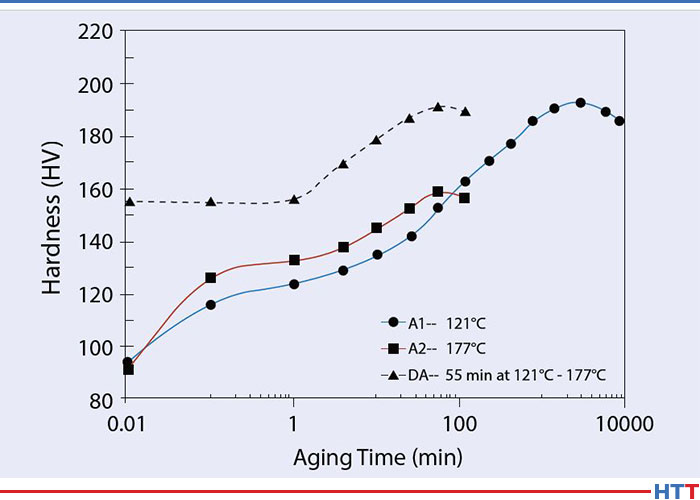
Figure 1. Comparison of age hardening curves for 7075 alloy solutionized at 914°F (490°C) and water quenched: A1 and A2 aged in a single step

Research at the Illinois Institute of Technology Thermal Processing Technology Center has shown that by selectively double aging 7075 alloy, the aging time to achieve maximum hardness and strength can be reduced to as low as two hours under laboratory conditions (see Figure 1) or demonstrably much shorter aging times in an extrusion plant trial. The obvious advantages of significantly shorter aging time for 7075 and other heat treatable aluminum alloys are not only energy savings but also increased plant productivity through much reduced processing time. The begged question of applying the double aging process to other heat treatable wrought aluminum alloy systems is under review.


Jim Senne

Jim Senne is the owner and president of MetalPro Resources, LLC.

PSA generated nitrogen has become increasingly popular for use in heat treating applications, and at a fraction of the cost, due to advances in PSA technology. Typical cost per standard unit volume are 15% to 25% of the cost of bulk liquid nitrogen. Purity can range from 95% to 99.999%, however many processes demand less than full purity. PSA technology can dial into the specific requirement, making it even more economical. The equipment has excellent reliability and requires only general maintenance on the associated air compressor and periodic filter changes. As well, the CMS (Carbon Molecular Sieve) material can last 20+ years. Processes that require a nitrogen cover gas are particularly well suited, such as induction hardening, tempering, and stress relieving. Other suitable applications include nitrogen/methanol atmosphere, FNC, N2+scavenger gas mixes, and purging.


Matt Orfe

Matt Orfe, an expert in lean manufacturing, is the head of sales and VAB product management for AeroSPC, Inc.

One of the most impressive pieces of equipment that I’ve seen in use in VAB (vacuum aluminum braze) furnaces in the automotive industry would be the in-furnace data loggers for monitoring the temperature of the parts being brazed.  The instrument is loaded into the VAB furnace with the parts to be brazed and wirelessly transmits the temperature data through the furnace chamber wall to the receiver/monitor.

This eliminates the need to plug in thermocouples with the furnace door opened, as the load sensors can be attached to the unit prior to insertion into the chamber.

Multiple thermocouples can be used with the system and multiple data logger units can be used for high volume applications. Very accurate, very easy-to-use, and very impressive!


Debbie Aliya

Debbie Aliya is founder and president of Aliya Analytical, Inc.

My instant response is always that the most innovative, interesting, and helpful technologies are educational in nature— the knowledge that allows people to make the best use of the common materials that still form the foundation of our industry. How many products would be more reliable if people properly selected, specified, and inspected the heat-treated materials that they use? How many products would be more reliable if the purchasing and specifying functions had a realistic idea of how much variation they should expect in a given part, lot, from lot to lot, and over an extended period of time? For example, how many people in engineering and purchasing know what a furnace uniformity survey is?

Purchasing often does not want to use an alloy steel, but if they need uniformity of strength, and there are different section thicknesses, they may save money and headaches if they pay the extra up-front to get the hardenability into a range that will provide consistency.

How many companies have minimum hardness or case depth specifications, without an upper limit? If the parts are to be electroplated, they increase the risk of hydrogen embrittlement, an issue that seems to come around in the industry every 10 years or so.

It wasn’t an automotive company, but I have had at least one client specify a quench and temper heat treatment for an HSLA (high strength low alloy) steel, which completely defeats the purpose of the HSLA grade system.

There are still a lot of people doing design work who think that calling out a composition requirement gives a certain strength level. For many of the European and Asian steel specifications, this is true, but the American specifications are often for composition only.

How many companies still do not require lot traceability? In the automotive world, if it’s a critical part, traceability is generally required, but there are still a lot of parts that fall through the cracks.


Doug Shuler

Doug Shuler is the owner of Pyro Consulting LLC.

The most interesting thing I have seen in the automotive heat treating industry is a new pyrometry technology software system known as C3 Data.

This solution enables those in the heat treatment industry to comply with specific industry quality requirements of pyrometry, saving enormous amounts of time in the process.

While C3 Data is currently better known in the Nadcap world for their solution for AMS2750, their new CQI-9 version should be something that heat treaters in the automotive world consider.

This fits with my motto of working smarter—not harder!


Irwin Brown

Irwin Brown is Managing Principal & Co-founder of Cosmos Consulting Group.

Nowadays, the heat treating industry, especially automotive, enjoys an abundance of riches. We are witnessing increased business volume coupled at the same time with efficient new equipment and technologies, such as additive manufacturing, AI, supply chain improvements, and amazing software. So, why are so many thermal processors unable to raise EBITDA? We are also witnessing critical worker shortages as well as many current employees voluntarily resigning in record numbers. What is the secret to improved quality and increased profits? In our work with industry clients, we found a way to lead employees to better serve customers, thus unlocking vast potential. This strategy, based upon a little deployed thirty-year old method, provides a rapid turnaround that makes productivity soar.

This “secret sauce” is Servant Leadership, which remains the best and most useful technique for transforming difficult relationships among modern multi-cultural employees. Old style command-and-control employers hesitate to recognize and acknowledge how decades-old management behavior is unsustainable with today’s workforce. More enlightened owners, in their own self-interest, value a more dedicated workforce. Employees do not leave companies; employees leave their managers.

Servant Leadership permits owners to run their business rather than having the business run them. Building strong, working relationships creates positive results and is not soft leadership. As Ken Blanchard likes to say, “the power of love beats the hell out of the love of power.” Servant Leadership costs nothing and has proven it can spearhead a rapid turnaround.


Dan Herring

Dan Herring is The Heat Treat Doctor® at The HERRING GROUP, Inc.

Intriguing question. In my mind, it is the emergence of the electric car and the innovations it will spawn. The motivation is there: a new generation that demands to be green, countries such as China passing laws on vehicle energy reduction (a so-called energy vehicle score), and technological improvements. Battery performance is rising (distance per charge), battery costs are falling (potentially lowering vehicle cost), battery life is up, and weight reduction is a reality. Another reason is the simplicity it brings to the vehicle (the absence of a multi-speed transmission, for example) and a reportedly lower cost for common repairs (this might be a bit misleading as one has only internal combustion engine vehicles to compare with).

While the transition has begun, I feel there are two major hurdles to overcome. First is infrastructure. A massive investment is required to make recharging as available to the public as stopping now to get gas. Every gas station in any country in the world must be mandated to have multiple charging stations. The hidden issue here, both domestically and around the world, is that it will require changes in the law – and the fossil fuel lobbyists are powerful, well established, and entrenched in the government sector. Also, the cost of electricity (in some regions of the world) is not price competitive. Second is public perception. Yes, everyone wants one, but who wants to be first? The phrase I like to use is that John Q. Public doesn’t mind being on the cutting edge, he just doesn’t want to be on the bleeding edge.
 

Heat Treat Brain Trust on Industry Innovations That Have Enhanced Automotive Heat Treating in Recent Years Read More »

Homocarb Pit Furnace Dispatched to Power Industry

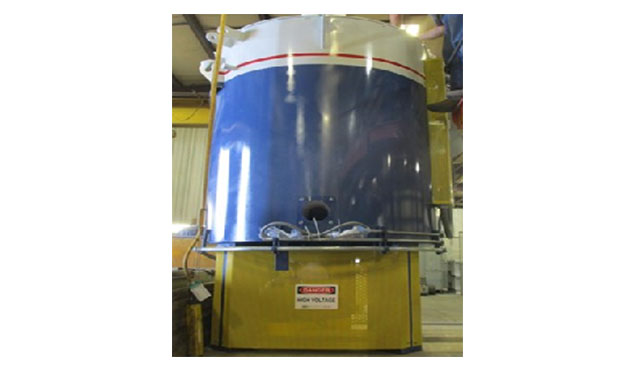
An electrically heated homocarb pit furnace was recently shipped to a manufacturer in the power industry. It is designed to work with a protective carbonaceous atmosphere. The top loading furnace, from Lindberg/MPH, is ideal for case carburizing, hardening, annealing, and carbon restoration at temperatures up to 1750°F. Gross workload is 1600 pounds, with temperature uniformity of +/-25°F at 1650°F.

The furnace can accommodate a work basket with a 25-inch diameter that is 48 inches deep, providing a clear work volume of 13.64 cubic feet. A retort minimizes atmosphere consumption and furnace-conditioning time between loads. The cover lid utilizes an electrically operated boom lift, which provides ease of loading and unloading.

(source: Lindberg/MPH)

Homocarb Pit Furnace Dispatched to Power Industry Read More »

Publisher’s Page: The Most Interesting Non-Heat Treat, Heat Treat Story You’ll Ever Watch

Doug Glenn, Publisher, Heat Treat Today

Heat Treat Today publishes four print magazines a year, and included in each is a letter from the publisher, Doug Glenn. This letter first appeared in Heat Treat Today‘s Aerospace Heat Treating magazine, March 2020. 


The first time I heard the name “Rodriguez” was at the 2015 ASM International Heat Treat Show during the “The Heat Is On” networking reception held at The Waterview Loft at Port Detroit – the same location it was held this last year (2019). I was standing beside a to-remain-nameless president of a furnace manufacturing company who had traveled extensively in his pre-heat treat days. While we were chatting at one of the outdoor cocktail tables on a lovely Detroit night, a middle-aged couple (and by that I mean a couple who were roughly my age, 54 at the time) came up and stood with us. Striking up a conversation with them, as I’m known to do with complete strangers, it became clear to us, both by their accent and by the content of the conversation itself, that they were from South Africa. They were here in the States to attend the Heat Treat Show.

When the “to-remain-nameless” furnace manufacturing president found out that this middle-aged couple was from South Africa, his eyes lit up. With enthusiasm somewhat uncharacteristic of his personality, he asked them – with great anticipation – “Do you know Rodriguez?” They looked at him as if he had two heads and after a short glance at each other replied, “Of course!” The to-remain-nameless president then looked at me, a man of roughly the same age as these two middle-aged individuals, and said, “Do YOU know Rodriguez?” Feeling a bit in the dark, I answered honestly, “No; who is Rodriquez?”

Suffice it to say, I did a lot of listening from that point forward in the conversation. It was fascinating and, to be frank, somewhat unbelievable.

As with any good story, it is best not to say too much, especially about how the story ends, but the story of Rodriguez is a fascinating story that you will NOT believe. And it is heat treat related – kind of.

I’ll tell you a bit more about Rodriguez here, but you must PROMISE to search for and watch the documentary about Rodriguez, Searching for Sugar Man. You can watch it on Netflix, and you may be able to find it other places as well. Trust me, it will be a worthwhile investment of time and, if you’re like most people who I’ve steered in that direction, your response will be something like, “No way! Not possible.”

In fact, Rodriguez was a heat treater. If you listen carefully at roughly the 1-hour mark in the documentary, you’ll find out that Rodriguez worked in the heat treat department for Chrysler, its Lynch Road Assembly plant in, interestingly enough, Detroit! According to Wikipedia, the “Lynch Road Assembly [Plant] was a Chrysler assembly plant located… near Coleman A. Young International Airport. It is now the location of The Crown Group, a powdered coatings manufacturer which supports the automotive manufacturing industry.”

That is as “heat treat” as the documentary gets, so don’t expect any more.

You need to watch this documentary, you and your entire family. My four kids were all in their teen years when we first watched Searching for Sugar Man. They were mesmerized once we got into it. Suffice it to say that Rodriguez was a musician besides being a heat treater, and what happened to him is, well… unbelievable.

If, nay, WHEN you watch it, please drop me an email (doug@heattreattoday.com) and tell me what you thought. Also, if you know of any other non-heat treat, heat treat stories, or simply movies where heat treat is mentioned, please let me know. I’m trying to compile a list of movies where at least heat treat gets a mention.

Publisher’s Page: The Most Interesting Non-Heat Treat, Heat Treat Story You’ll Ever Watch Read More »

Heat Treat TV: Company Spotlight on Wirco Inc.

Heat Treat TV pulls the best heat treat videos from the web for your viewing, and today HTTV highlights Wirco Inc.

For over 50 years, family-owned Wirco Inc. has served numerous industries around the world by supplying high quality American made heat-treated parts. As the company has aged, it has adapted to the changing times and demands of the 21st century.

This video demonstrates how its updated technology, dedication to lab-tested American-sourced products, use of 3D printing technology, and recent expansion has turned it into a state-of-the-art one-stop shop for its customers.

(Editor’s Note: Users of Firefox may have difficulty playing the below video. If so, please use another browser like Chrome.)

Click here for more information on Wirco Inc.


If you have a video you’d like included on Heat Treat TV, please send an email to editor@HeatTreatToday.com and include a link to the video.

Heat Treat TV: Company Spotlight on Wirco Inc. Read More »

Heat Treat Fringe Friday: Voice Activated Wheel Nuts Withstand Car Theft

Heat Treat Fringe Friday

Sometimes our editors find items that are not exactly “heat treat” but do deal with interesting developments in one of our four key markets: aerospace, automotive, medical, or energy. As we approach the weekend, today’s Heat Treat Fringe Friday, Best of the Web post focuses on an interesting development in the automotive industry.


Raphael Koch, research engineer, Advanced Materials and Processes, Ford of Europe (source: LinkedIn.com)

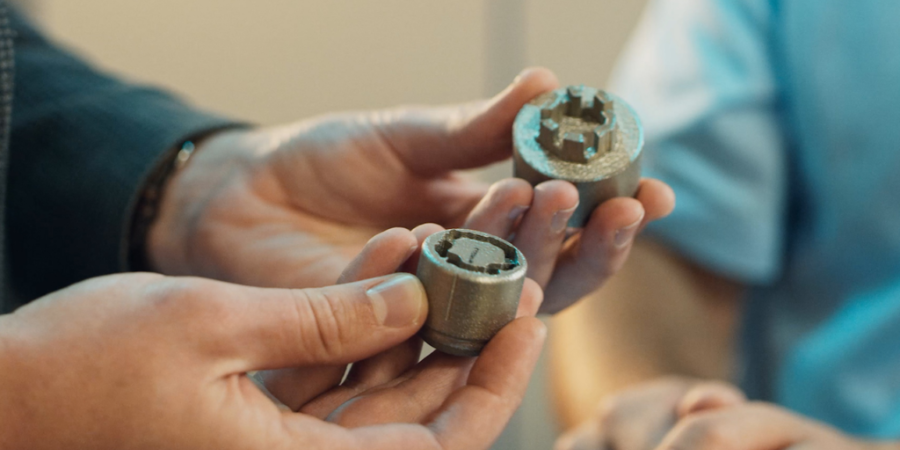
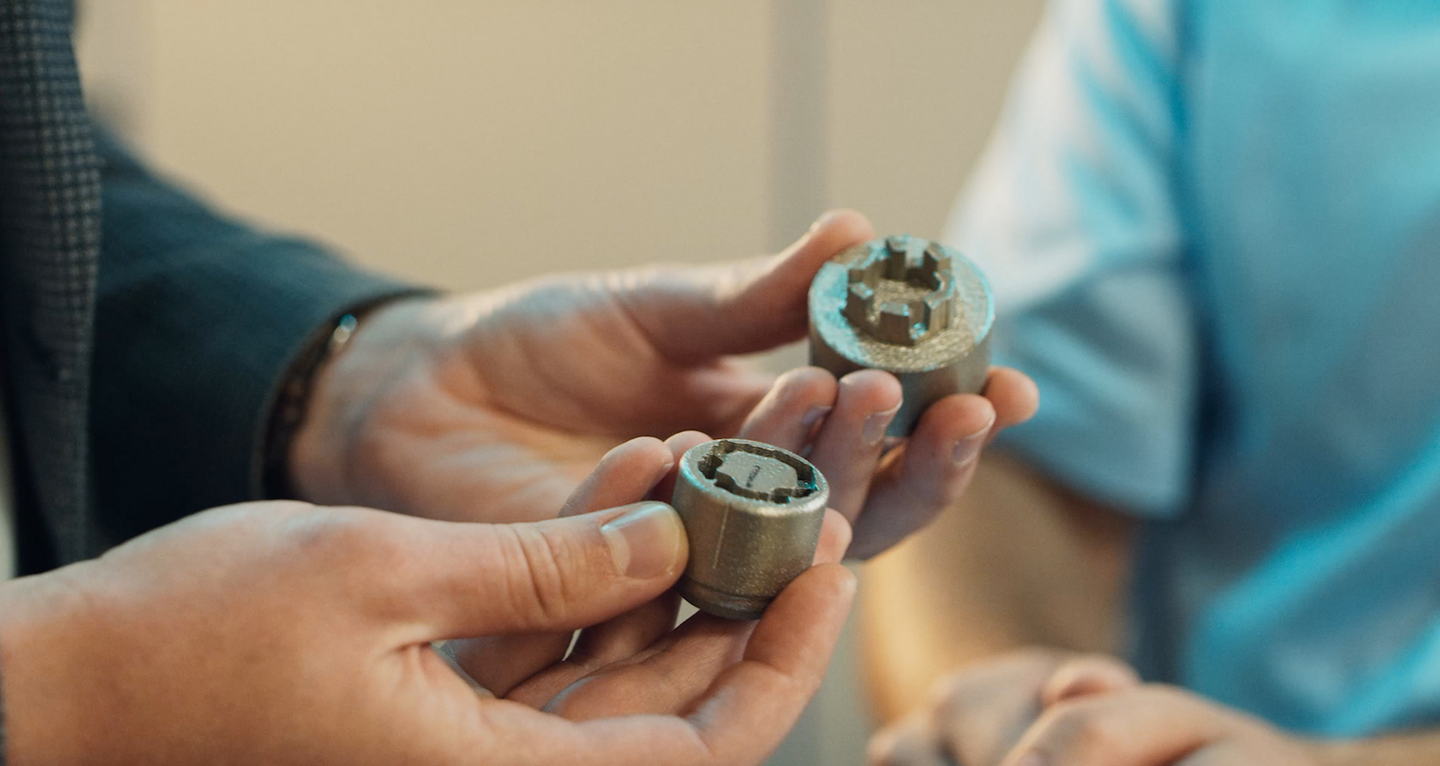
It’s one of the worst experiences a proud car owner can experience–walking out to their beloved vehicle to discover all four wheels are gone. As alloy wheels and vehicle customization have grown in popularity, component theft has unfortunately become a lucrative side business. “Some alloy wheels can cost thousands to replace, but these unique rim nuts will stop thieves in their tracks. Making wheels more secure and offering more product personalization are further proof that 3D printing is a game-changer for car production,” says Raphael Koch, research engineer, Advanced Materials and Processes, Ford of Europe.

Michael Jan Galba, Head of Global Consulting & Manufacturing Engineering at EOS (source: LinkedIn.com)

Ford engineers wanted to help customers find a solution, hence the advent of a theft resistant lug nut. The project was the result of a brainstorming session focused on finding applications for additive manufacturing within the company. In collaboration with additive manufacturing solutions provider EOS and software developer Trinckle, engineers at Ford have now developed unique locking wheel nuts using 3D printing technology. “We thought about using fingerprinting, or an iris scan or something that could actually modify the groove or curve of the lug nut,” says Michael Jan Galba, Head of Global Consulting & Manufacturing Engineering at EOS. “Trinckle proposed adapting an application they used in a completely different industry that utilized a voice wave curve.”

To read more about this story, click here.

Image: Ford Company

Heat Treat Fringe Friday: Voice Activated Wheel Nuts Withstand Car Theft Read More »

North American Automotive Steel Producer Expands Mexican Operations

A North American steel supplier announced today that it has begun operating its continuous galvanizing line, which will produce hot-dip galvanized sheet steel for the automotive market. Nucor-JFE Steel Mexico, located in Silao, Guanajuato in central Mexico, has begun trial production and will move towards full-scale sales and production once customer approvals have been obtained.

Leon J. Topalian, president and CEO, Nucor Corporation

“We are excited to expand our presence in Mexico and to use our local sales network to increase our sales into this important automotive market,” said Leon Topalian, President and CEO of Nucor. “We are proud to partner with JFE Steel Corporation of Japan and to benefit from their experience as a premier supplier of high-quality products to the automotive industry.”

The hot-dip galvanized sheet steel production facility has a production capacity of 400,000 tons annually. It can produce sheet thickness from 0.4 mm to 2.6 mm and widths of 800 mm to 1,850 mm. Nucor and JFE will each supply an equal amount of substrate to be processed at the new facility.

(Source: ASM International)

North American Automotive Steel Producer Expands Mexican Operations Read More »

Lockheed Martin Company to Build Six Presidential Helicopters

The U.S. Navy has commissioned six new presidential helicopters. Sikorsky, a Lockheed Martin company, will build six production VH-92A presidential helicopters. These helicopters are part of the 23-aircraft program of record for the U.S. Marine Corps.

Sikorsky has transferred five VH-92A helicopters into government test with the sixth completing modification and entering government test Q2 2020. The VH-92A program is on track to enter Initial Operational Test and Evaluation (IOT&E) later this year.

“Now that we are ramping up production, the VH-92A program is gaining momentum,” said Dave Banquer, Sikorsky VH-92A program director. “This second contract award demonstrates the confidence the U.S. Marine Corps has in Sikorsky’s proven ability to deliver and support the next generation presidential helicopter. The men and women of Sikorsky treasure our legacy of building and providing helicopter transportation for every president and commander in chief since Dwight D. Eisenhower. We are proud to continue that legacy with the VH-92A helicopter.”

All six of the production aircraft from the first Low Rate Initial Production contract are undergoing modifications at Sikorsky’s Stratford, Connecticut, plant and are on schedule to begin deliveries in 2021. The remaining production aircraft will be delivered in 2022 and 2023.

VH-92A presidential helicopter (Source: U.S. Navy)

Lockheed Martin Company to Build Six Presidential Helicopters Read More »

Can You HIP It? Investigating Hot Isostatic Pressing

Derek Denlinger
Corporate Lead Metallurgist
Paulo

What is HIP? Hint: It doesn’t mean you are fashionable or trendy! In this HTT original content Technical Tuesday feature, Derek Denlinger, corporate lead metallurgist for Paulo who has recently been focusing on heat treatment for additive manufacturing and hot isostatic pressing, shares how this process can improve mechanical characteristics of high-performance additive manufactured components.


Additive manufacturing has steadily asserted itself as a viable method for producing complex components in aerospace, medical, and other high-performance applications. And if you hang out in metallurgy circles (who wouldn’t want to?), you can’t hear “additive manufacturing” without also hearing about hot isostatic pressing, or HIP. That’s because the HIP process, which applies high heat and high pressure to densify parts, has shown promise in improving the mechanical characteristics of high-performance additive manufactured components.

But while that’s the most popular use case for HIP, it’s far from the only one.

HIP Applications

HIP is recently popular thanks to the prevalence of additive manufacturing for high-performance aerospace parts or medical devices like artificial hips, but the process is over 60 years old.

HIP was initially developed as a diffusion bonding technique. In diffusion bonding, high heat and pressure work together to weld similar or dissimilar metal surfaces without filler materials. However, metallurgists observed that those process characteristics also improved mechanical performance by eliminating casting porosity — the small bubbles of gas that can form during the solidification process of cast metals — and imparting a homogenous grain structure throughout the whole part. Porous parts or parts with variable grain structures are less durable and cannot stand up to the stress of severe service.

A similar phenomenon occurs during an additive manufacturing process called powder bed fusion. Powder bed fusion naturally leaves small voids within parts. Those small voids can cause big problems if they aren’t eliminated.

In addition to use alongside additive manufacturing and diffusion bonding of parts, HIP is typically specified as a densification process complementary to powder compaction and sintering as well as metal injection molding. It’s most often specified in aerospace, medical and dental, oil and gas, power generation, firearm, and jewelry manufacturing.

Materials Ideal for HIP

A wide array of materials can be HIP’ed in the high-pressure argon environment a unit creates. Such an atmosphere is ideal for:

  • Carbon steel
  • Tool steels
  • Duplex, martensitic, and austenitic stainless steels
  • Nickel-based alloys
  • Cobalt-based alloys
  • Titanium
The author, Derek Denlinger, in front of the HIP vessel

HIP Advantages

A common critique of HIP among some manufacturers is that it’s a costly, unnecessary, extra step in the manufacturing process. The word “overkill” comes to mind, and it’s true that some thermal processors aggressively market the process to manufacturers who make parts for which HIP may not be a metallurgical necessity. But when it’s appropriately specified, HIP gives manufacturers several compelling advantages both upstream and downstream in their production process.

Design & Manufacturing Freedom – Some parts feature highly complex shapes that are too complicated for traditional forging or casting. In response, manufacturers have either sacrificed performance with watered-down designs or added costly processing time by designing parts in pieces and then joining them via brazing. But the pressurized gas used in HIP finds its way into internal passages and blind features of complex parts, ensuring they achieve specified metallurgical characteristics while reducing the traditional failure risks.


Mechanical Characteristics – HIP has been shown to enhance key mechanical characteristics such as ductility, toughness, yield strength, and corrosion resistance. Fatigue, impact, wear, and abrasion resistance can also improve. Metallurgists have also observed that HIP’ed parts end up with less “data scatter.” Reducing data scatter enables design engineers to more accurately understand material performance and to know more precisely where the material’s limit exists. They can then design according to that known information.

Optimized Manufacturing – Whether parts are additive manufactured, cast, or forged, integration of HIP can streamline manufacturing. First, the combination of additive plus HIP’s densifying and solution treating capabilities mean more manufacturing stages can be accomplished in fewer steps. Second, manufacturers concerned about porosity can allow it to occur knowing that HIP can correct the issue.

Simultaneous Treatment – Older hot isostatic presses were typically designed with thicker walls which impeded quick cooling. That eliminated simultaneous treatment from the equation (and led some to believe the process was unsafe). Rapid quenching is built into many modern HIP models, allowing simultaneous heat treatment and hot isostatic pressing. The resulting time savings is significant. Improved performance of parts treated in this manner has also been observed.

Reducing Scrap – There’s always variability in manufacturing; the risk of scrapping some parts is ever-present. But HIP can help reduce scrap in two ways. First, it can be incorporated into regular production of parts with tricky designs to make up for potential upstream process deficiencies. Second, it can be applied as needed if a one-off problem occurs in a single batch. In either case, the potential savings are compelling.

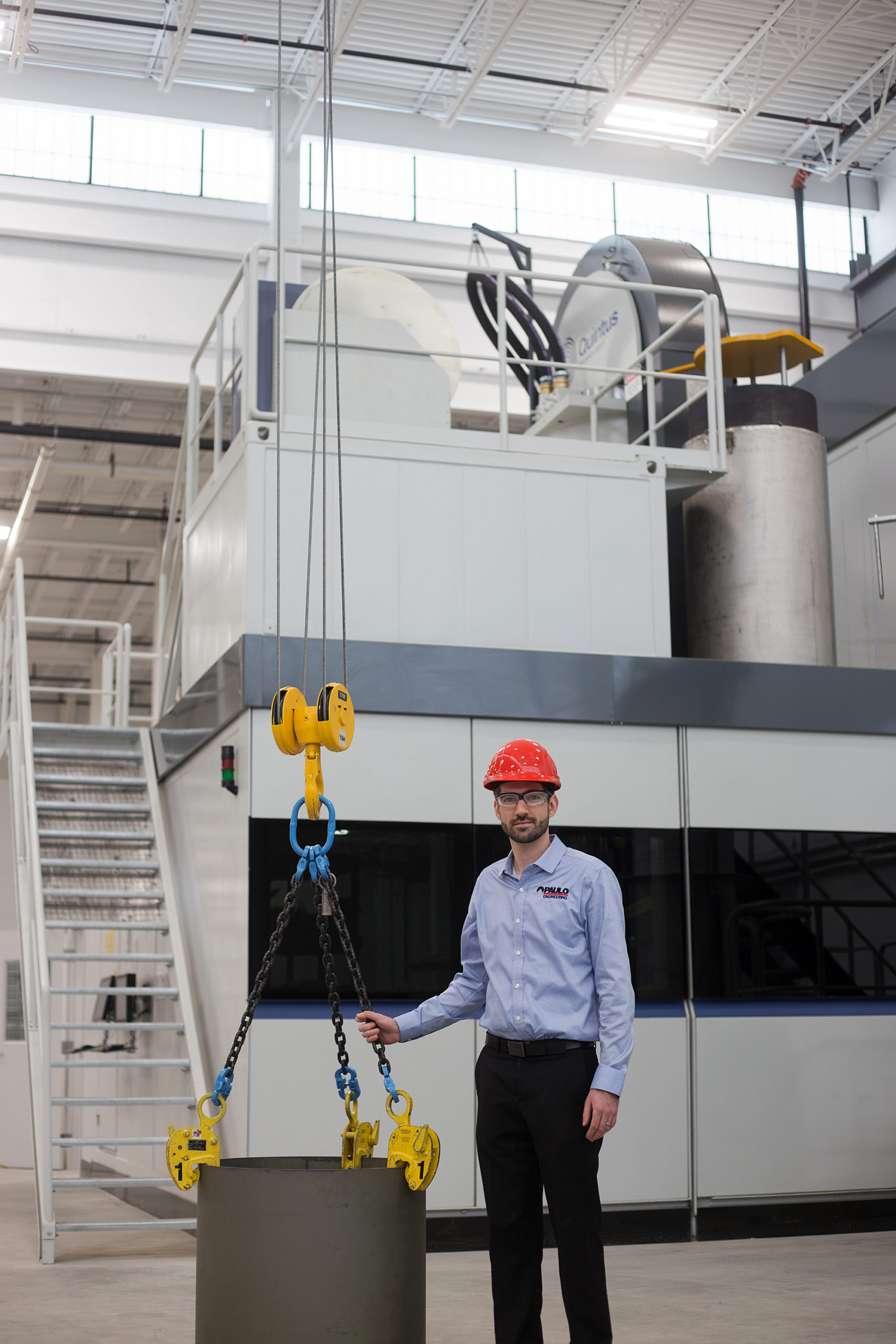
Hot isostatic pressing is creating new possibilities for manufacturers of high-performance parts. For example, the Quintus Technologies QIH 122 unit was installed into Paulo’s Cleveland Division. The rapid cooling capability of the HIP vessel is comparable to vacuum furnace quenching. These properties make it possible to HIP and solution treat parts simultaneously, imparting decidedly better metallurgical properties while reducing turnaround time.

Paulo recently installed this Quintus Technologies QIH 122 rapid cooling hot isostatic press in its Cleveland, Ohio facility.

(All Images: Paulo)


Can You HIP It? Investigating Hot Isostatic Pressing Read More »

Drone, Aerospace Composites Producer Receives Walk-In Oven

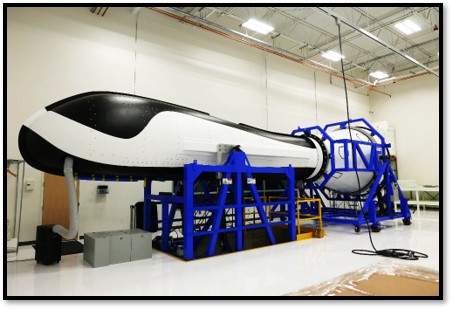
(Image Source: A3)

Composites Universal Group (CUG), an internationally recognized composite manufacturing company specializing in the production of high-quality composite components for aerospace, drones, industrial and space applications, recently received a large walk-in oven from DELTA H.

The oven features an interior volume of 12’ wide, 10’ tall, and 32’ deep, with high volume New York Blower plug fan, PowerFlame gas burner, and rapid cooling/chamber pressure control.  For vacuum composite processing, the system features multiple part temperature as well as vacuum transducers for precision monitoring of process heating.  Eurotherm Nanodac is featured with cascade control that selects the coolest part and automatically adjusts air temperature to precisely maintain the desired ramp rate, soak time, and cooling rate.

Richard Conway, CTO at DELTA H

CUG has multiple projects underway, including Vahana electric VTOL aircraft, Sierra Nevada Corp Dream Chaser Pressure Vessel, and Leidos Corp. Composite Beams. DELTA H CTO Richard Conway stated, “It is truly rewarding and exciting to be among the technology providers supporting these projects and to have a role in the cutting edge of transportation.”

(Image Source: Leidos Investor Relations)

“The DELTA H Composite Oven has performed flawlessly ever since initial startup. It’s become a critical part of our equipment listing here within CUG. . . . It is critical to our operations and the curing of our high temperature parts fabrication,” states Steve Ruege, President and Director of Sales at Composite Universal Group.

(Image Source: DELTA H)

Drone, Aerospace Composites Producer Receives Walk-In Oven Read More »

Subscribe to the Heat Treat Shop e-Newsletter!

Find Heat Treat Components, Parts, Services & Supplies!

If you’re looking for a place to find heat treat components, parts, services and supplies, sign up to receive the monthly Heat Treat Shop e-newsletter. This e-newsletter is intended to help you find all the supplies and materials you need to make your heat treat department efficient and profitable.
Click to subscribe.


Subscribe to the Heat Treat Shop e-Newsletter! Read More »