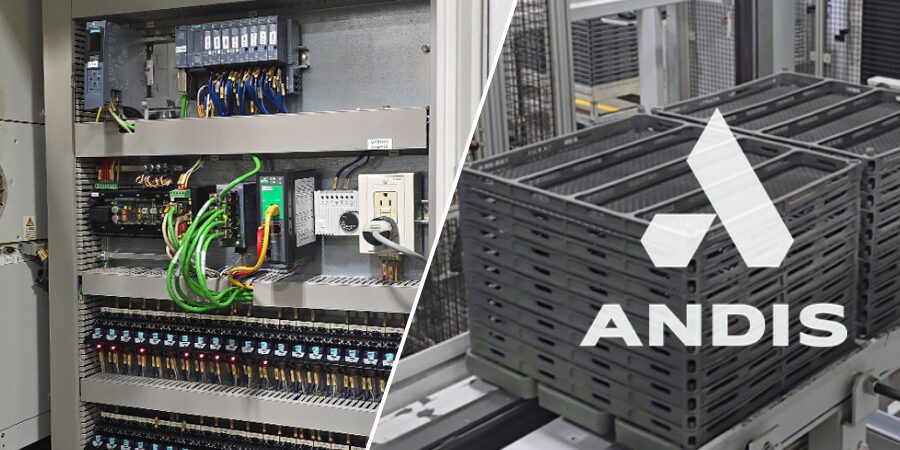
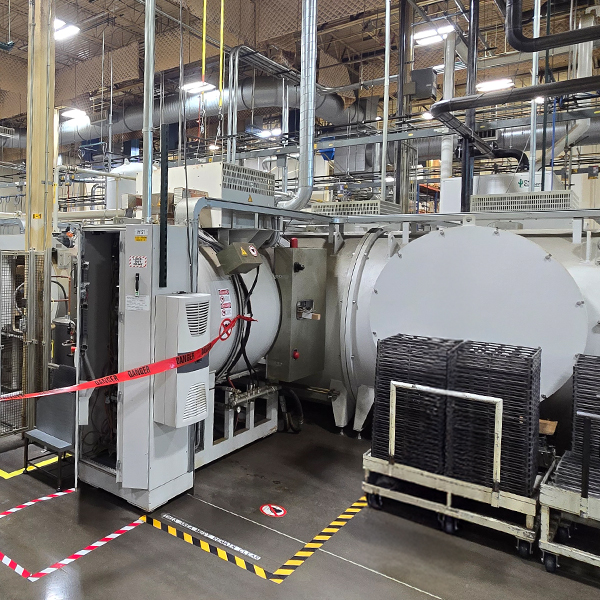
Andis Company, a U.S.-based manufacturer of grooming tools, has completed a controls upgrade on a vacuum heat treat furnace used for hardening components. The upgrade supports continued operation of a system critical to its production.
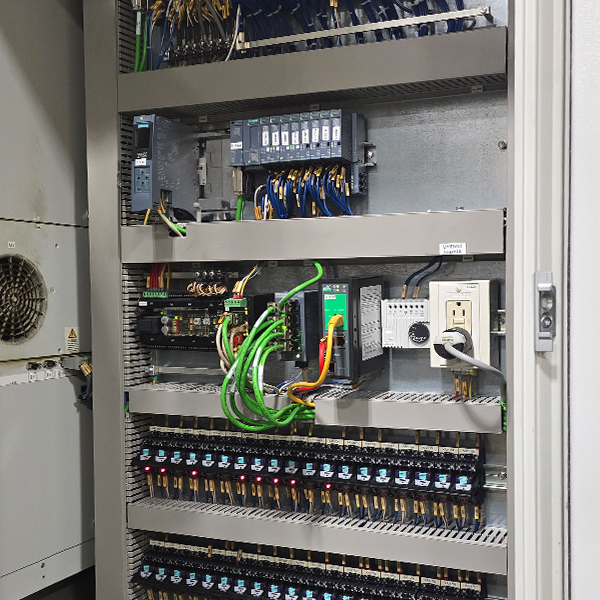
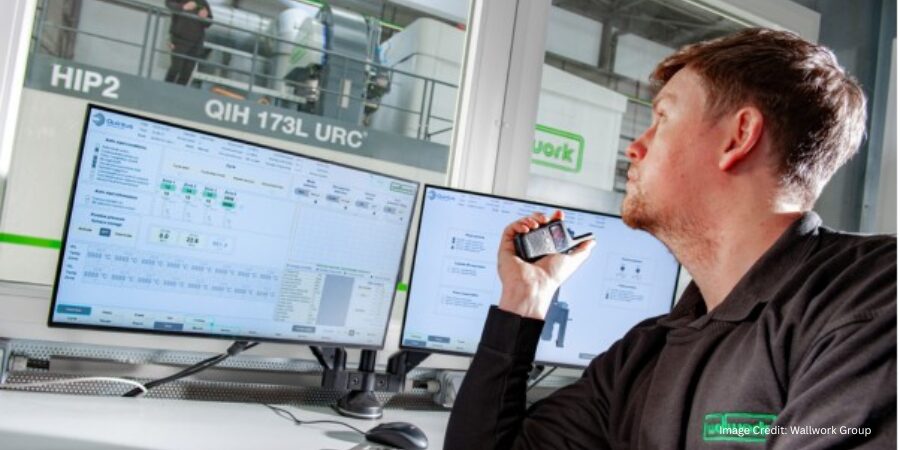
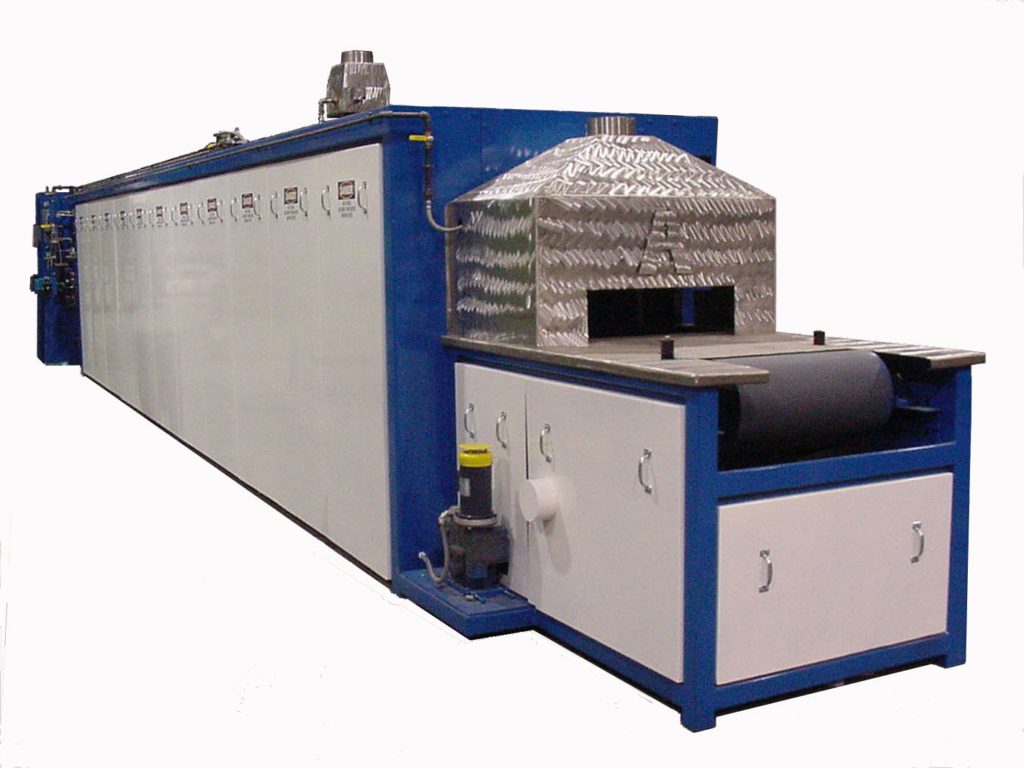
Andis Company finalized a PLC system overhaul on its ECM FLEX vacuum furnace, transitioning from an aging S7-300 processor and Profibus network to a newer S7-1500 series processor with Profinet communication. The upgrade also included remote input/output integration across the system. ECM USA supported the project planning and on-site execution, with the work completed on schedule and with minimal disruption to production.
The three-cell hardening modular furnace operates at approximately 950°C (1724°F) and includes a 20-bar gas quench, along with loading/unloading automation. Installed roughly 15 years ago to replace molten salt baths, the system supports clean heat treatment to avoid part discoloration and reduce the need for post-heat treat cleaning. The furnace remains central to Andis’s Wisconsin operations.
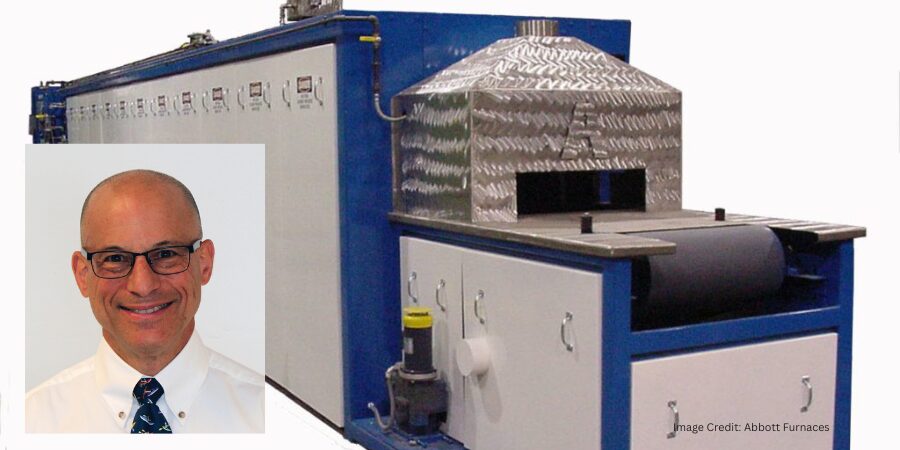
Tom Hoffelder Director of Manufacturing Support and Innovation Andis Company
The upgrade was initiated in 2025 following end-of-support announcements for legacy controls. “In 2025, we determined that we needed to fully replace the CPUs in our ECM vacuum heat treat system after Siemens announced end-of-support for significant portions of the controls,” said Tom Hoffelder, director of manufacturing support and innovation at Andis Company. “Because reliable day-to-day operation of our heat treat system is critical to our business, we worked closely [with ECM] to define the project scope and map out the execution plan.”
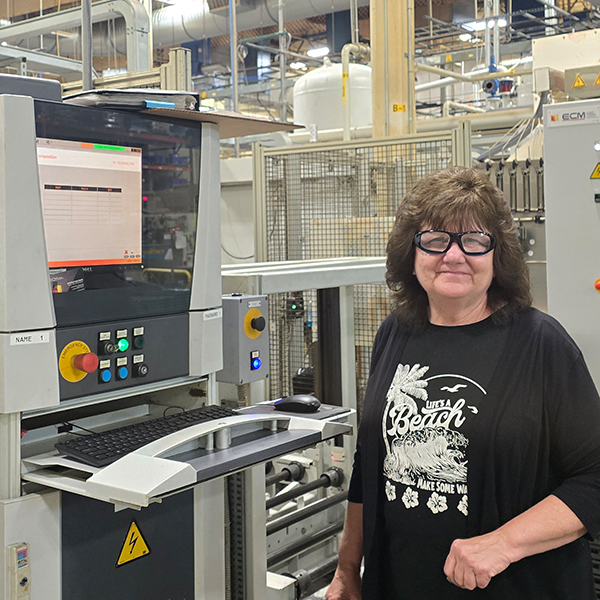
The project focused on modernizing hardware, improving long-term reliability, and maintaining throughput during installation. The updated controls and HMI remained familiar to operators, allowing the system to return to full production without additional training, Hoffelder added.
Press release is available in its original form here.
Welcome toHeat Treat Today’sThis Week in Heat TreatSocial Media. From cutting-edge AM to captivating metal artistry — and even a little big-league baseball energy — heat treat social media had a little bit of everything! We scrolled, watched, learned, and smiled our way through posts that remind us why this industry is equal parts science, craft, and creativity.
As you know, there is so much content available on the web that it’s next to impossible to sift through all of the articles and posts that flood our inboxes and notifications on a daily basis. So, Heat Treat Today is here to bring you the latest in compelling, inspiring, and entertaining heat treat news from the different social media venues that you’ve just got to see and read!If you have content that everyone has to see, please send the link to editor@heattreattoday.com.
1. Additive Edge, Up Close
Additive manufacturing in action, this post highlights how cutting-edge tech is reshaping how complex metal parts come to life.
2. 15 Bar? No Sweat!
SECO/TALKS takes on the “15 bar sounds terrifying” reaction head-on, showing how modern vacuum furnace engineering keeps extreme pressure firmly under control.
3. Metal Masterpiece
From raw metal to lifelike portraits, layered wire mesh transforms into striking art — proof that even industrial materials have a creative side.
This side-by-side look at amorphous versus crystalline structures plays out like atomic-level order versus chaos — same material, totally different story.
6. May the 4th Be Metallurgical
Bodycote celebrates Star Wars Day with a deep dive into fictional metals like beskar…because apparently, even galaxies far, far away need good materials engineering.
7. HTT Made it to the Big Leagues
Heat TreatToday lights up the big screen in Wrigley Field in true big-league fashion.
8. Bathroom Break, Metallurgy Edition
This reel turns a steel surface phenomenon into something oddly mesmerizing. Who knew that even mill scale can have a little wow factor?
The latest episode of Heat TreatRadio maps out the must-attend events — from THERMPROCESS to FNA — helping heat treaters decide where to learn, connect, and stay competitive.
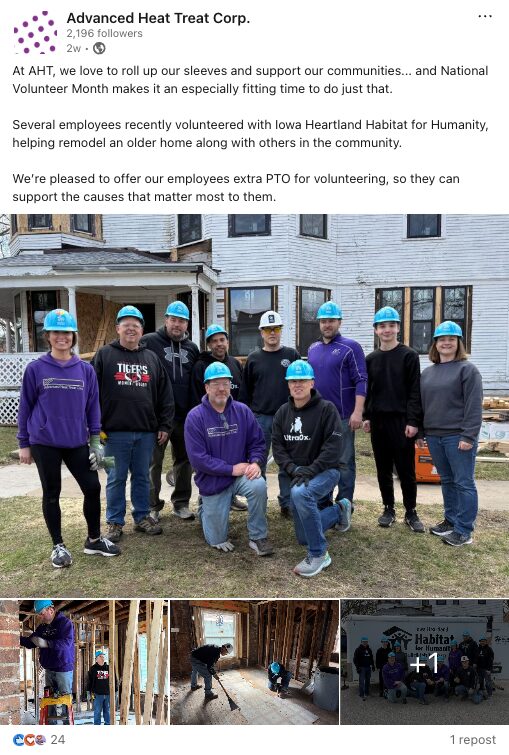
10. Sleeves Up, Giving Back
Advanced Heat Treat Corp. steps off the shop floor and into the community, rolling up their sleeves for hands-on volunteer work during National Volunteer Month.
Whether it’s giving back to the community, steel surface phenomenon in unexpected places, or metallurgy-inspired Star Wars debates, there’s always something fascinating heating up on social media. Have a great weekend!
Heat Treat Today publishes twelve print magazines annually and included in each is a letter from the publisher, Doug Glenn. This letter from the April 2026 Annual Induction Heating & Melting print edition highlights three hallmarks common to thriving companies — prioritizing people over technology, people over profit, and a relentless commitment to continuous improvement — drawing on a visit to Induction Tooling in North Royalton, Ohio, as a real-world example of these principles in action.
Michele Schaller, one of Heat TreatToday’s excellent editors (we have three excellent editors), and I recently visited Induction Tooling in North Royalton, Ohio, near Cleveland, to talk with Bill and Sherry Stuehr regarding their company’s 50th anniversary. I make it a point never to promote one company over and above other companies in this column because 1) our mission is to get good information to our readers as objectively as possible without showing preference to any one company, and 2) it would be bad business.
Meeting with the Stuehrs, however, did allow me to meditate a bit on what makes a company a good company…of which there are many in this industry. If a company is successful, the following will undoubtedly be true about that company.
1. People Over Technology
It is almost certain that the most successful companies prioritize people, both clients and employees, ahead of their technology or product offering. This may sound like heresy to some, but I’m convinced that it is true — as counterintuitive as it may appear. Ultimate business success is dependent on finding and keeping the right people employed and finding and keeping clients.
Finding and keeping competent employees is one of the most difficult business challenges in today’s world. Manual labor is not seen as something desirable. In fact, as Bill Stuehr said during our recent visit with him, “Industrial Arts” is not a thing at institutions of higher learning anymore. When Bill said those words, “Industrial Arts,” it was the first time our 30-something-year-old editor, Michele, had ever heard the words. This is telling. Kids just aren’t being educated or encouraged to go into industrial vocations. That makes finding and keeping them all the more important.
And while having a technology, product, or service that meets the client’s needs is critical to success, it is not the most important thing. Having an organization that remembers that “clients are people too” and treats them with respect and dignity is even more important in the success of a company.
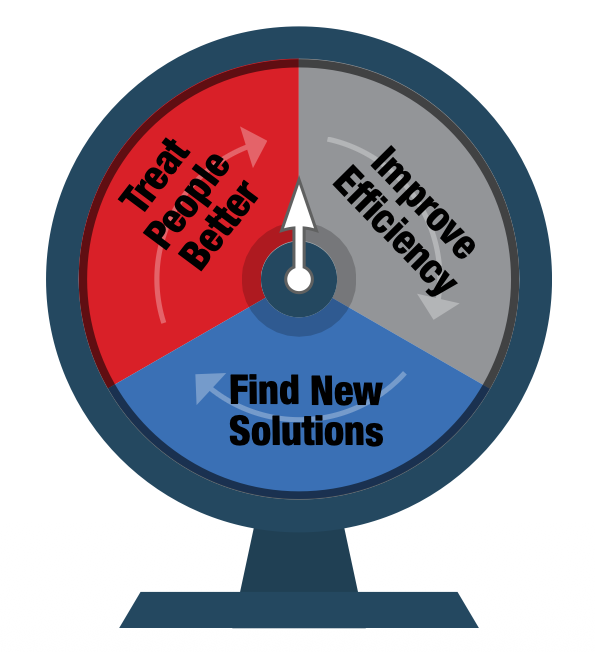
Induction Tooling lives out this trait quite well, and it is Heat Treat Today’s desire to do the same. I frequently remind our team that while we are an industrial trade publication, we are first and foremost helping people and hopefully making them happy as our “Why Statement” asserts: We believe people are happier and make better decisions when they are well informed.
The bottom line is successful companies understand that they can have the best technology, product, or service in the world, but if they are not prioritizing their people — employees, vendors, and clients — they will ultimately fail.
2. People Over Money
As with technology, money (i.e. profits) should not be sitting in the driver’s seat either. Profits are important. Profits are good (more about this in my Publisher’s Page from the Aerospace Heat Treating, March 2025 edition). But truly successful companies will regularly sacrifice profits to please their employees and/or clients. A previous employer of mine became a “spreadsheet” company as opposed to a “people” company and has suffered because of it. Companies who are willing to sacrifice profits to keep their clients or their employees happy have a vastly better chance of being a successful company.
3. Better & Better
The final characteristic that seems to be common among successful companies is the desire to advance and never be content. Lethargy and complacency are the enemies of success. You are either growing or dying; there is no neutral. Treating clients better, providing a better service, doing things more efficiently, thinking of new ways to be helpful, spending less and less on necessary expenses, finding ways to be easier to work with or for — all of these are ways that successful companies strive to be better. Companies who become complacent will ultimately fail.
Some people are naturally change-averse. That’s difficult. In business, the one constant is change and successful companies find a way to encourage and embrace continual change, continual improvement.
Embrace and Influence for Good
If you are looking to make your company successful, if you are in a position to influence the direction and culture of your company, I recommend that you encourage your company to embrace these pillars of success. There are many companies in the North American thermal processing industry that do and are successful including the good folks over at Induction Tooling.
Doug Glenn Publisher Heat TreatToday For more information: Contact Doug at doug@heattreattoday.com
Wallwork Group is doubling its hot isostatic pressing (HIP) capacity with the installation of a second HIP system to support improved component integrity and performance for aerospace applications.
The expansion at its facility in the United Kingdom supports aerospace components requiring the elimination of internal voids and improved mechanical properties, including parts produced by casting and additive manufacturing.
The new system is supplied by Quintus Technologies, a global manufacturer of high-pressure systems with operations in North America. The installation complements Wallwork’s existing thermal processing capabilities, which include vacuum heat treatment, plasma nitriding, and vacuum brazing, enabling a broader range of metallurgical services under one roof.
HIP processing subjects components to elevated temperature and isostatic gas pressure to remove internal porosity and improve structural integrity. The added capacity is expected to support increasing throughput for aerospace clients, where consistency and material performance are tightly controlled.
The expanded operation positions Wallwork to provide integrated thermal processing services to aerospace manufacturers seeking consolidated supply chains. By combining HIP with other heat treatment and surface engineering processes, the company aims to streamline processing routes and reduce handling between suppliers.
Simeon Collins Group Director Wallwork Group
Wallwork will present its expanded HIP capability and single-source aerospace support offering at FIA2026. “Farnborough 2026 is the ideal platform to show how Wallwork is investing in the future of aerospace manufacturing,” said Simeon Collins, group director of Wallwork. “Our second Quintus HIP significantly expands capacity for our [clients], while our full range of accredited thermal processing, surface engineering, and brazing services gives manufacturers a dependable single-source partner.”
Press release is available in its original form here.
In this installment of Answers in the Atmosphere, David (Dave) Wolff, an independent expert focusing on industrial atmospheres for heat treat applications, examines the powerful reducing properties and high thermal conductivity that make hydrogen a critical atmosphere in metal thermal processing.
This informative piece on hydrogen’s role in sintering, annealing, and surface protection — including how it is sourced, how it behaves inside the furnace, and how operations can safely manage this flammable atmosphere under NFPA 86 —was first released in Heat Treat Today’sApril 2026 Annual Induction Heating & Melting print edition.
Hydrogen is widely used in metal thermal processing for sintering of powdered metal fabrication technologies and for heat treatment (e.g., annealing, brazing) of bulk metal manufactured components. This column draws heavily from an interview the author had with Stephen Feldbauer Ph.D., director of Research & Development at Abbott Furnace. Abbott Furnace is a leading furnace manufacturer for continuous furnaces and furnace controls. As R&D Director, Steve leads Abbott’s work in pioneering furnace advances with a special focus on debinding and sintering.
Why Hydrogen?
Stephen Feldbauer, PhD Director of Research & Development Abbott Furnace
Hydrogen provides two desirable characteristics to heat treaters: very high chemical reducing potential and the highest thermal conductivity of any gas. The high reducing potential enables hydrogen to convert heated metal oxide coatings to pure metals. This is extremely helpful for successful sintering of powder metallurgical parts. Superior thermal conductivity enables rapid part heat up and cool down. Compared with either vacuum or inert gas atmospheres, hydrogen enables much faster throughput and achieves shorter furnace cycles.
Hydrogen-containing atmospheres are required to successfully sinter most iron-based metal parts, whether manufactured by powder metallurgy (PM), metal injection molding (MIM), or binder-jet metal additive manufacturing techniques. As-received, the iron-containing metal powders used for these advanced fabrication techniques are covered with an iron-oxide coating, making it virtually impossible to successfully sinter the particles together under reasonable temperature conditions. Reducing the oxide coating enables successful sintering.
Hydrogen-based atmospheres used with a tube or strand furnace are the primary surface protective technology used for drawn components (e.g., wire, tubing, and profiles). Hydrogen simultaneously protects the part surface from oxidation and allows metal to anneal, which softens it and restores toughness after it has been hardened by the drawing process.
Sourcing Hydrogen
Because of its high reactivity, hydrogen is almost never found in nature as a pure gas (H2). Instead, it is generally found as a component in a compound like water (H2O) or a hydrocarbon gas or liquid, such as methane (CH4), propane (C3H8), or longer hydrocarbon. In order to be used as a thermal processing atmosphere, hydrogen is liberated from these hydrogen-containing compounds to exist as a pure gas while in use in the hot furnace.
The liberation of elemental hydrogen from its compound carrier can happen at a remote plant operated by an industrial gas company provider, in which case the hydrogen would be compressed or liquified for delivery to the thermal treatment client, or may be conducted at the site of the thermal processor themselves through use of on-site generation equipment. User choices of approaches to pure hydrogen supply will be covered in future columns.
Inside the Furnace
Inside the hot furnace, hydrogen changes metal oxide coatings to pure metals by preferentially reacting with the metal oxides to produce pure metal and water vapor. Thus, the furnace atmosphere dewpoint (a measure of gaseous water content) will increase as the hydrogen simultaneously creates pure metal surfaces and produces water vapor as a byproduct. The water vapor is swept out of the furnace and replaced by the clean furnace atmosphere that flows counter current to the heated metal product. Furnace atmosphere controls for hydrogen-based atmospheres use dewpoint as a key operating parameter.
Hydrogen’s ability to protect the part surface from oxidation is critical in the annealing process. | Image Credit: Abbott Furnace
Since furnaces must open to admit parts for thermal processing, the furnace, the atmosphere system, and the procedures must all be designed to prevent unsafe conditions caused by hydrogen leaking out of the furnace, or air leaking in. Furnaces intended for a flammable gas atmosphere use doors, curtains, and pilot lights (i.e., flame curtains) to prevent hydrogen or other flammable gas from leaving the furnace without being combusted. These precautions avoid explosions inside or outside the furnace.
Furnaces for hydrogen-containing atmospheres utilize unique design and construction approaches to safely use this flammable atmosphere. In the U.S., furnace design and operation is guided by NFPA 86, the furnace code. NFPA 86 defines certain furnace design features and also defines standard operating techniques for safe operation with a combustible atmosphere, such as a hydrogen-containing atmosphere. Similar codes and standards are used in other countries.
Next month, this column will pick up the question of cost by looking at options for generation of hydrogen atmosphere blends. Generation of pure hydrogen will be a future topic.
About The Author:
David (Dave) Wolff Industrial Gas Professional Wolff Engineering
Dave Wolff has over 40 years of project engineering, industrial gas generation and application engineering, marketing, and sales experience. Dave holds a degree in engineering science from Dartmouth College. Currently, he consults in the areas of industrial gas and chemical new product development and commercial introduction, as well as market development and selling practices.
In today’s News from Abroadinstallment, we highlight several major global developments — from low-carbon steelmaking initiatives to meltshop modernization and new tube production capacity to the electrification of foundry operations — reflecting ongoing efforts to improve efficiency, reduce emissions, and modernize thermal processing worldwide.
Heat TreatTodaypartners with two international publications to deliver the latest news, tech tips, and cutting-edge articles that will serve our audience — manufacturers with in-house heat treat. Furnaces International, a Quartz Business Media publication, primarily serves the English-speaking globe, and heat processing, a Vulkan-Verlag GmbH publication, serves mostly the European and Asian heat treat markets.
Low-Carbon Steel Project Builds on EAF Route
Marcegaglia and Danieli jointly announced the signing of an agreement related to the implementation of a major steelmaking and flat-rolling facility investment in Fos-sur-Mer, France. | Image Credit: Danieli
“Marcegaglia and Danieli have signed an agreement to implement a new steelmaking and flat-rolling facility in Fos-sur-Mer, France. The plant is set to produce over 2 Mtpy of liquid steel and up to 3 Mtpy of hot-rolled stainless and carbon steel coils, covering approximately 35% of Marcegaglia’s total coil and slab demand.”
“The plant will include a modern electric arc furnace, a single-strand continuous caster for thick slabs and a conventional hot-strip mill. Danieli highlighted that this configuration will ensure production efficiency, stable operations and product quality across a range of flat steel grades.”
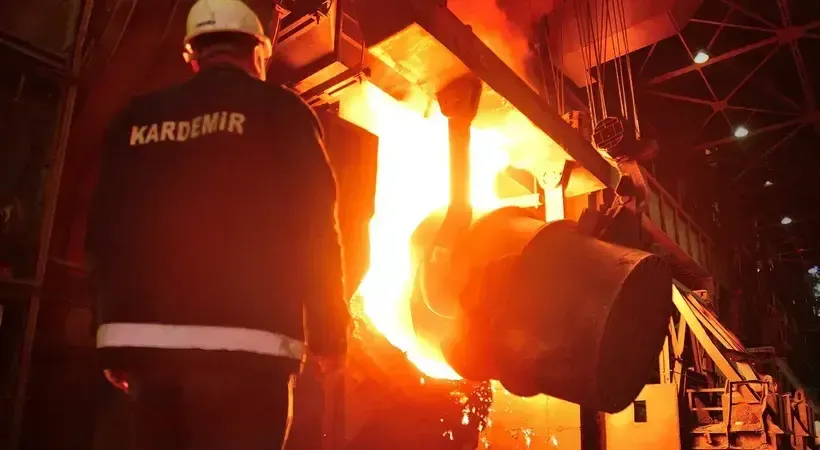
Kardemir ordered a unified digital architecture from Primetals Technologies to optimize the processes of its entire meltshop. | Image Credit: Kardemir
“Steel producer Kardemir has awarded Primetals Technologies a contract to modernise the automation environment at its meltshop in Karabük, Türkiye. The project includes modernising the automation for three LD converters (BOFs) for single ladle furnaces (LFs), and one vacuum degasser (VD). Each converter is designed for 120-ton heats.”
“The Level 2 process optimisation system will integrate all BOF, LF, and VD units into a single digital architecture, connecting metallurgical, operational, and planning data in one environment. This ‘steelmaking backbone’ provides operators and metallurgists with a shared interface and standardised procedures, improving data consistency, process execution, and transparency across shifts.”
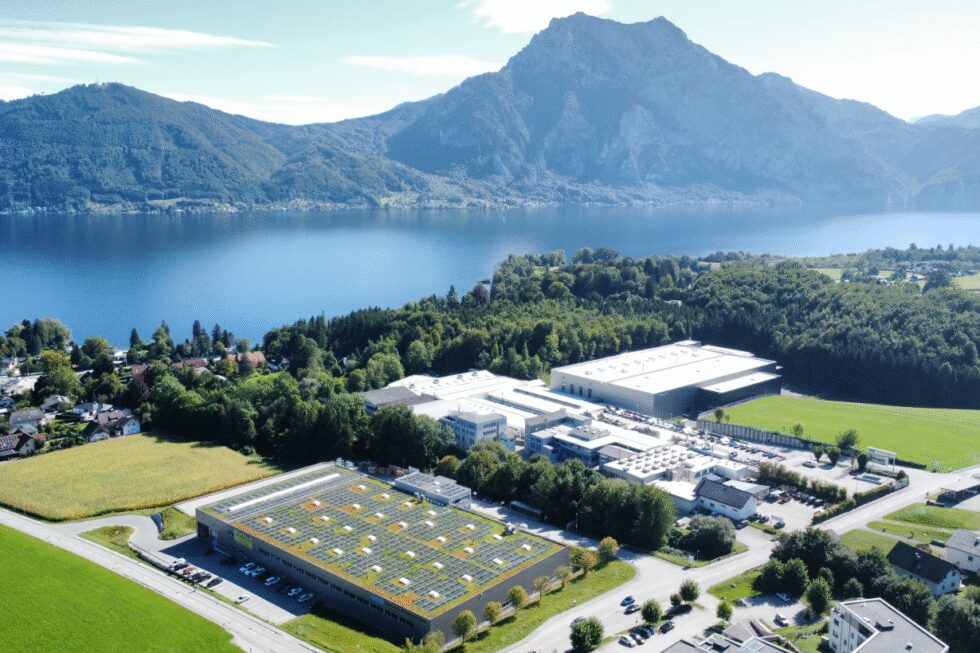
New tube plant in Altmünster has officially opened. | Image Credit: Wuppermann Metalltechnik GmbH
“Wuppermann Metalltechnik GmbH (WMT) has officially opened its new tube plant at the Altmünster site with a ceremonial event. More than 100 guests — including business partners and employees, as well as representatives from politics and industry — attended the event on April 24, 2026 and were given an exclusive insight into one of Europe’s most modern tube plants.”
“Through this investment, WMT is not only expanding its own production capacity but also significantly broadening its product range: the new state-of-the-art facility will manufacture, among other things, complex special profiles with wall thicknesses of up to 4 mm and an extended range of dimensions and strengths. Steel grades such as DP800, DP980 and 22MnB5, with tensile strengths of up to 1,000 MPa, will be processed.”
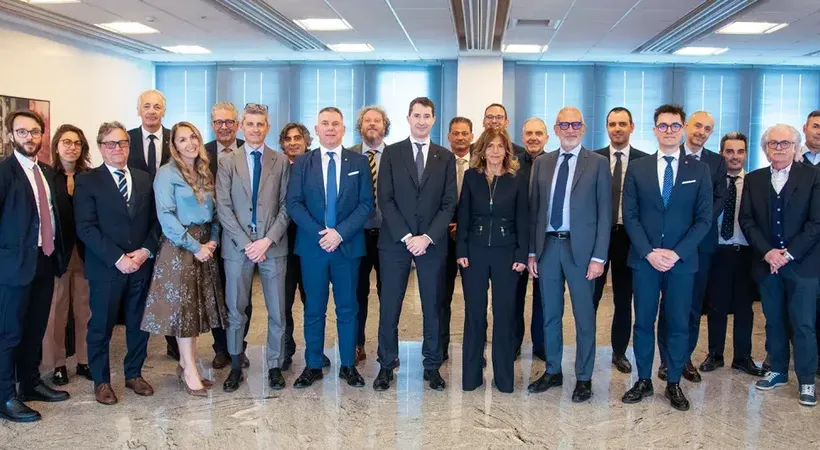
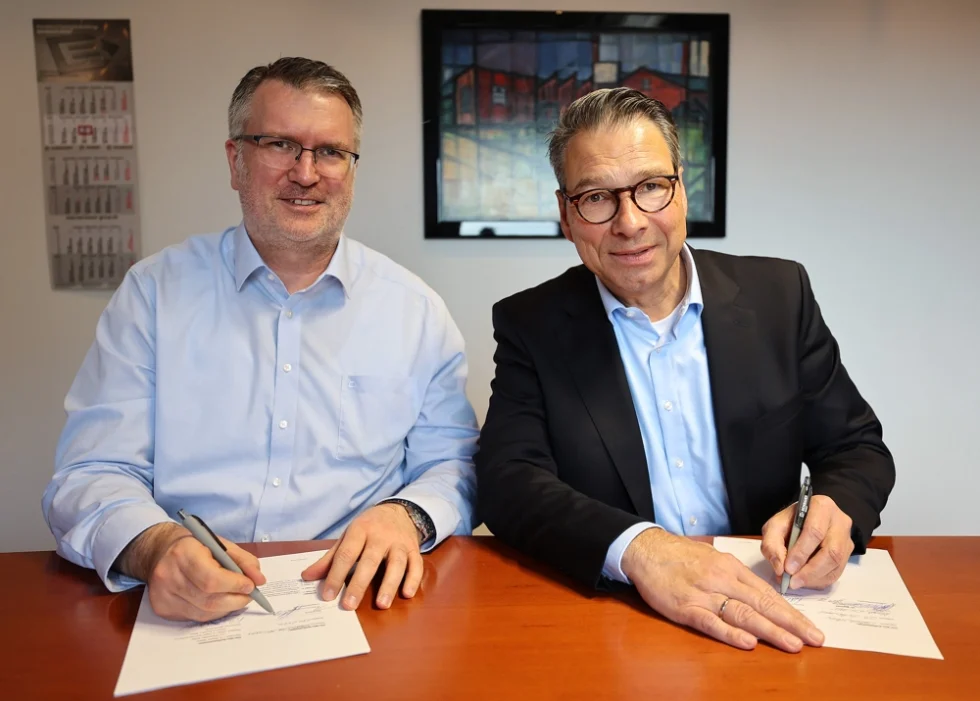
Phil Limbach (left), managing director of Beinbauer Group and Till Schreiter, CEO of ABP Induction Systems GmbH, at the contract signing. | Image Credit: ABP Induction Systems GmbH
“With the signing of the contract by Phil Limbach, member of the management of the Beinbauer Group, and ABP CEO Till Schreiter, as well as a joint site visit by the project teams of Beinbauer Casting and ABP Induction, the official starting signal was given for a groundbreaking major project.”
“In the coming months, the Schwerte foundry will undergo a fundamental technological transformation. The existing cupola furnace will be replaced by a modern, electrically powered induction melting furnace. For Beinbauer Casting, this project represents more than just a technological upgrade…The new electric arc furnace enables more sustainable production, the fulfillment of new [client] requirements, and long-term growth at the German site.”
Manual loading and batch transfers are giving way to robotic material handling in modern heat treat operations. In this Technical Tuesday installment, Dennis Beauchesne, general manager of ECM USA, examines how automation improves repeatability, boosts productivity, and reduces operator exposure to hazardous conditions near furnace hot zones — and how robotics, vision systems, and mobile transport technologies are helping heat treat facilities build safer and more efficient production environments.
This informative piece was first released in Heat Treat Today’sApril 2026 Annual Induction Heating & Melting print edition.
Robotic material handling is rapidly transforming modern heat treat operations traditionally dependent on manual loading and batch transfer. As heat treaters face increased pressure to improve throughput and working conditions while maintaining strict quality standards, automation has become a strategic investment.
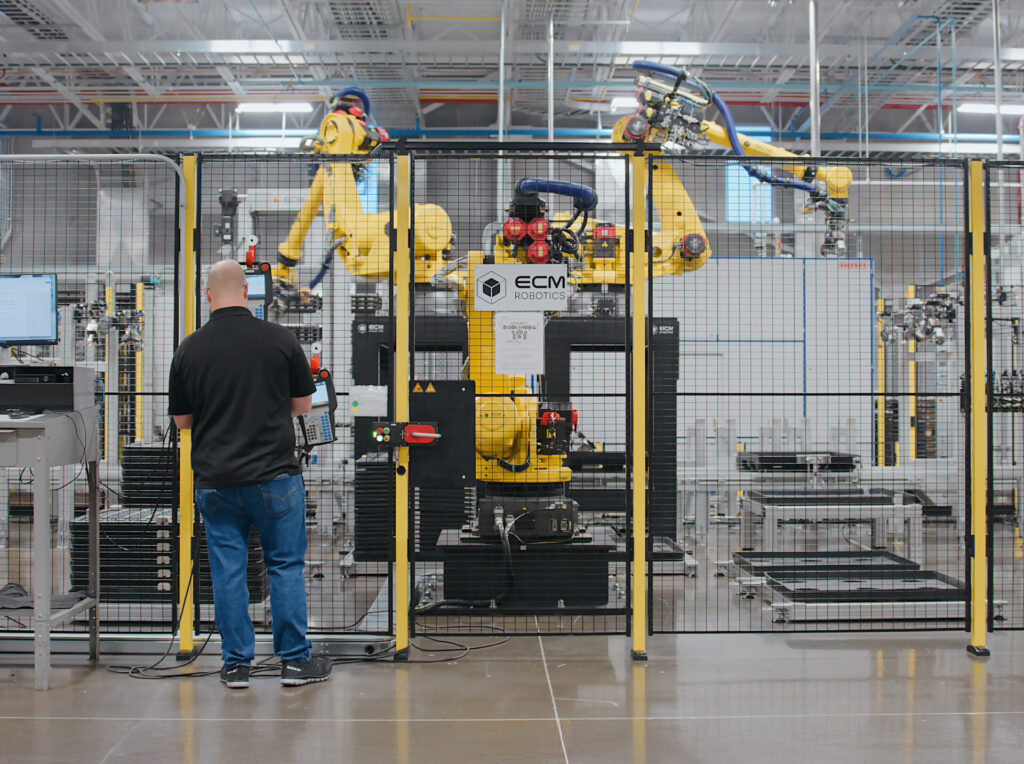
Figure 1. SEW-EURODRIVE (Lyman, SC) robotic integration by ECM Robotics features a rear robot and pallets on the left and open area on the right for dunnage storage and management | Image Credit: ECM USA
Heat treat material handling is more than simple part movement. Parts must first be positioned onto fixtures or loaded into bins which are transferred, placed into the furnace, and then moved again for quenching and/or tempering — sometimes under undesirable conditions depending on the installed technology. Additionally, a robot needs to store dunnage in the designated robot area during the processing of the parts in the furnace and then reuse it when the parts are unloaded from the furnace. Dunnage can also be stored in the heat treat area and handled by automation (Figure 1). Robotics and automation promote efficiency and repeatability in this process, which is difficult to achieve with manual operations.
Robotic Advantages
The most significant advantages of robotic material handling are repeatability, consistency, and reduction of work force. Robots execute the same motions cycle after cycle, which ensures uniform loading and proper spacing between parts within fixtures or baskets. For example, in vacuum furnaces, correct part placement is essential to achieving even heat distribution and minimizing distortion. Automated loading eliminates error caused by human fatigue or procedure changes, leading to more consistent and desirable metallurgical results and reduced scrap/re-work.
Improved throughput and increased productivity are other major justifications for robotic integration. Heat treatment can hold-up manufacturing due to cycle times and variable material flow. Robotic systems streamline loading and unloading, reduce wait time between cycles, and allow furnaces to operate at optimal capacity. In high-volume environments, robotics can be managed with upstream machining and downstream finishing processes to create a continuous, automated production line. This level of integration shortens lead times and supports just-in-time manufacturing.
Safety is equally if not more important, as handling baskets or fixtures near hot zones increases operator risk of burns and injuries. Integrating robotics improves workplace safety by removing operators from direct exposure to these hazards. This solution also addresses labor shortages by allowing skilled personnel to focus more on process optimization and quality control rather than repetitive physical tasks.
Specifically in vacuum heat treatment, robotic systems are particularly beneficial. Vacuum furnaces require precise loading to maintain thermal uniformity and protect sensitive components. Automated loaders can transfer loads between heating chambers, quench cells, and temper furnaces in a continuous process flow that minimizes temperature loss and handling delays. Metallurgical results (e.g., hardness, case depth, distortion) are also directly influenced. This is especially helpful for critical and sensitive applications, such as aerospace components and medical devices.
Robotic Components Explained
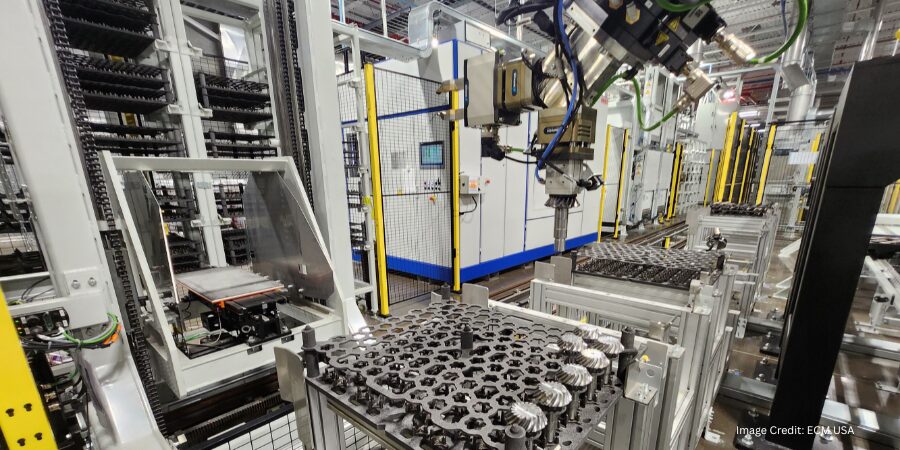
For manufacturers with in-house heat treat or commercial shops processing multiple part types, the flexibility to program and handle a wide range of part geometries, weights, and batch sizes is vital for efficient operations. Quick-change grippers, adaptive tooling, mobile transport, and vision systems are key robotic components to achieve this goal (Figure 2). Vision systems of today are far more advanced in assisting with the programming phase than those from just a few years ago.
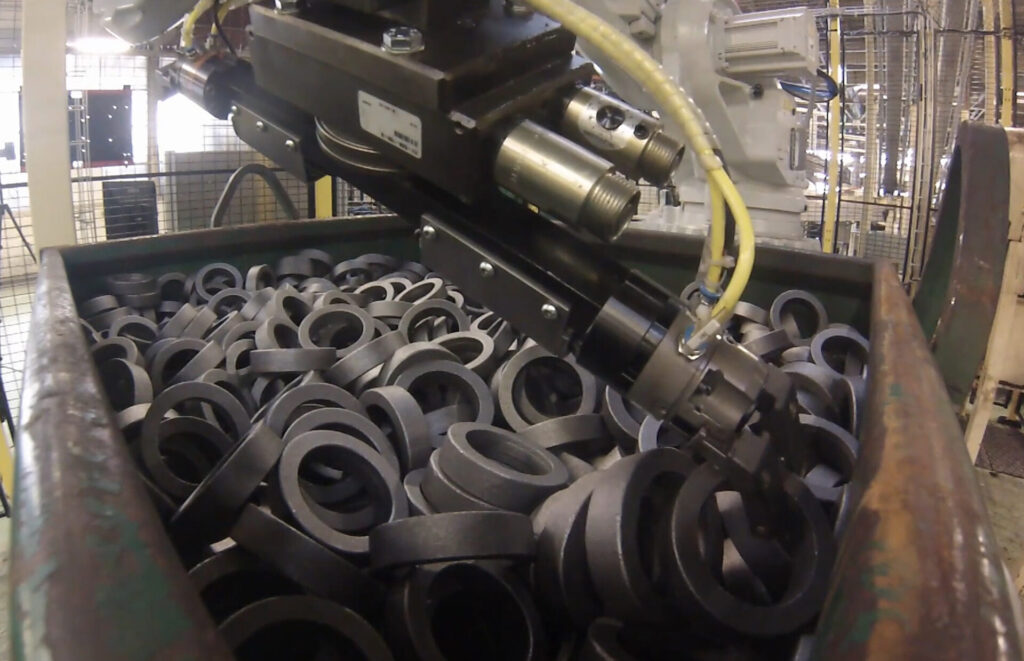
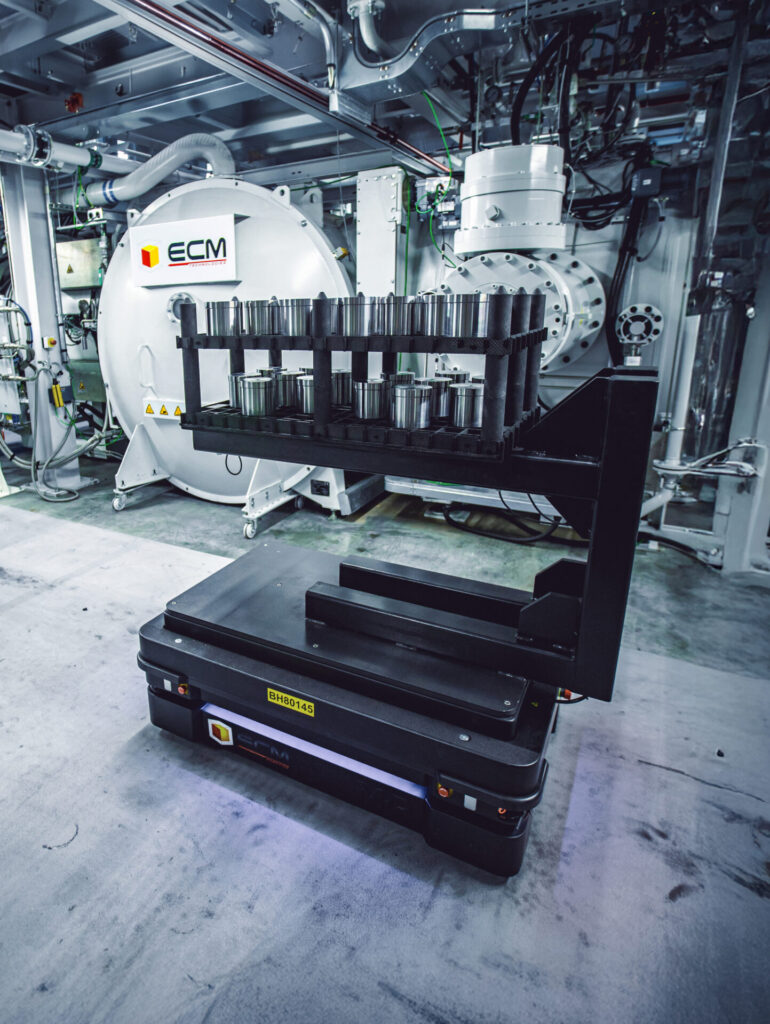
Figure 2. ECM Robotics manipulating parts | Image Credit: ECM USAFigure 3. AGV (automated guided vehicle), a portable robot that follows a path, delineated physically (e.g. lines on the floor) or through other guide posts (e.g. radio waves, magnets, lasers) | Image Credit: ECM USA
After the load building, automated mobile robots (AMR) or automated guided vehicles (AGV) can also be used to transport loads to and from the furnace. These mobile robots are integrated into factories to automate the transport of loads between different areas without requiring fixed infrastructure (rails or magnetic strips). This system coexists easily with operators and other equipment and adapts well to production floor changes. Integration of AMRs and AGVs frees up operators for more value-added tasks and reduces manual labor time (Figure 3).
Quick-change grippers or end effectors are tailored to the specific application and conditions when in use. Their design focuses on optimizing part clamping, friction, and contact while considering part geometry, cycle constraints, and precision requirements. Gripping technologies are available as pneumatic, electric, magnetic, or vacuum and can handle even the most delicate or fragile components in soft (flimsy) or hard state. Heat treat specific robotics companies, like ECM Robotics, also provide robotic machine vision systems. Integration of these vision systems improves precision and handling to optimize pick & place, palletizing, bulk unloading, and assembly.
For example, by identifying parts based on the diameter or number of teeth on the gear, these systems can then sort and track them within a heat treatment cell through part marking, tray/fixture encoding (QR codes), and weight scenarios or simply virtually through software, which removes the need to use any hardware tracking. Vision systems go beyond the physical movement of parts; by checking for surface imperfections and integrity, they are advantageous for quality assurance purposes.
The most common issue in the heat treating industry when integrating with robots has been fixture warpage. Modern 3D cameras can detect bent or warped pins and alloy trays to allow for movement to a new position. This capability allows for much more robust loading and unloading using moderately warped fixturing, which is common in heat treat operations. While the best consistency typically comes with the use of carbon fiber composite (CFC) trays, it is not necessary to upgrade to all CFC fixtures to get consistent loading and unloading as the system can be designed to handle either alloy trays or CFC as well as some systems with both.
In a recent vacuum furnace installation, a heat treater automated their gear cutting operation to prepare the dunnage before low pressure carburizing. The robotics integration simplified part storage by specific location to allow the robot to “see” with its vision system. Parts were then scanned using QR coding by laser marking and automatically connected to the part’s recipe as stored in the system. Typically, in a modular system using low pressure carburizing, individual cells are utilized and production is recipe driven. In this case, after a part was scanned, the recipe was uploaded into the next available cell, and the scanned parts and heat treat fixture were moved to the cell.
Capital Investment
While the initial capital investment in robotics can be significant, long-term returns are quickly realized through process optimization, better working conditions, reduced re-work, higher up-time, improved quality, and reduced labor hours. Predictive maintenance features and diagnostic monitoring further reduce unscheduled downtime. As manufacturers evaluate total cost of ownership, robotic material handling often proves to be a strategic solution that supports both operational efficiency and competitive positioning.
Future Impact on the Industry
In an industry where precision, repeatability, and reliability are essential, robotic material handling is increasingly valuable for modernizing heat treatment operations. By combining automation with advanced furnace technology or upgrading material handling of older furnace equipment, manufacturers can achieve safer workplace conditions, higher metallurgical quality, and greater overall process efficiency.
Looking ahead, the role of robotics in heat treatment will continue to expand alongside industry trends. Data-driven automation, AI-assisted scheduling, and collaborative robots are opening new possibilities for smarter, more connected facilities. Rather than replacing human expertise, robotics complement it by providing process precision and efficiency to allow heat treat professionals to focus on process innovation and more value-added responsibilities.
References
International Federation of Robotics. 2023. World Robotics Report.
Dennis Beauchesne brings experience of over 200 vacuum carburizing cells installed on high pressure gas quenching and oil quenching installations. He has worked in the thermal transfer equipment supply industry for over 30 years, 24 of which have been with ECM USA where he is the General Manager.
For more information: Contact Dennis Beauchesne at DB@ECM-USA.com.
Aerospace firm Velontra is leveraging metal additive manufacturing (AM) technology to support hypersonic propulsion development. Their choice of laser powder bed fusion (L-PBF) for rapid prototyping is an AM method that requires post-processing technologies — hot isostatic pressing (HIP) being key to bring these types of AM parts to their full potential.
The original source was published in Metal AM, and the following content has been adapted for our Heat TreatToday audience.
Aerospace firm Velontra is using metal additive manufacturing (AM) technology to advance hypersonic engine development, signaling continued momentum in high-performance propulsion and downstream demand for post-processing capabilities.
Velontra, a Cincinnati, Ohio-based startup, partnered with Innovative 3D Manufacturing, a rapid prototyping company in Franklin, Indiana, to produce propulsion system components using laser power bed fusion (L-PBF) technology from Renishaw. The approach enables rapid prototyping while addressing material use, dimensional tolerances, and cost constraints.
Joel Darin CTO Velontra
“Compact hypersonic propulsion systems are highly sought after by space companies, so, to remain competitive, we must develop parts quickly,” explained Joel Darin, CTO of Velontra. “In aerospace, we know that the best way to learn is by doing things, particularly if you want to be the first to launch a new technology.”
While the focus is on AM production, the resulting components require post-processing to achieve final material properties. Parts produced via L-PBF are typically subjected to stress relief and heat treatment to stabilize microstructures formed during rapid solidification. For high-temperature aerospace alloys, hot isostatic pressing (HIP) may also be applied to reduce internal porosity and improve structural integrity.
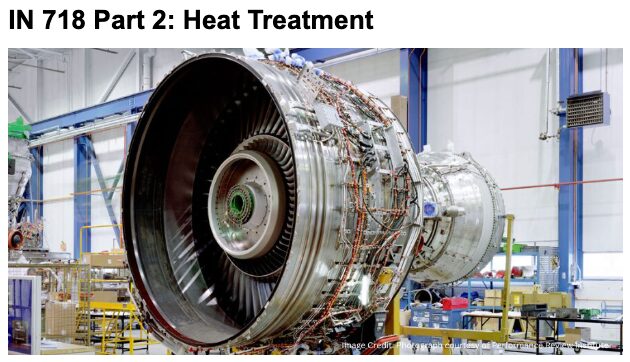
This requirement is consistent with broader industry findings for nickel-based superalloys used in propulsion systems. As noted in Dan Herring and Nikolai Alexander’s article published in Heat Treat Today’sAnnual Aerospace Heat Treating magazine (March 2026) covering IN 718 processing, powder bed fusion methods often rely on post-HIP to heal cracks and homogenize the microstructure.
To learn more about why HIP is critical for AM superalloys, read this overview of IN 718 heat treatment.Explore this look at emerging technologies to learn more about how HIP is scaling with AM.
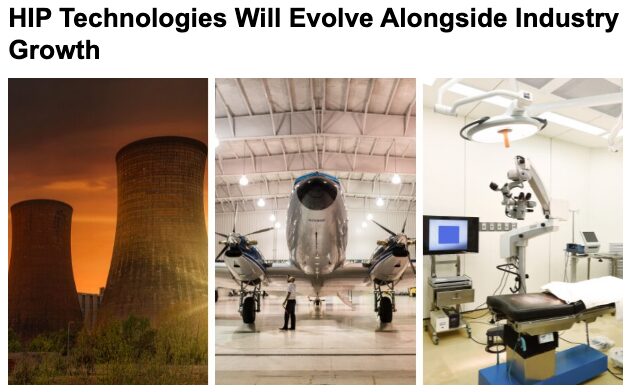
As adoption of AM expands in aerospace applications, supporting technologies such as heat treating and HIP are expected to scale alongside it. Industry perspectives highlighted in Heat Treat Today’sMedical & Energy Heat Treat magazine (December 2025) indicate that HIP capabilities are evolving in response to increased demand from additive manufacturing and advanced materials development.
The integration of AM with post-processing underscores the role of heat treating in enabling next-generation propulsion systems, where component performance under extreme conditions remains a key requirement.
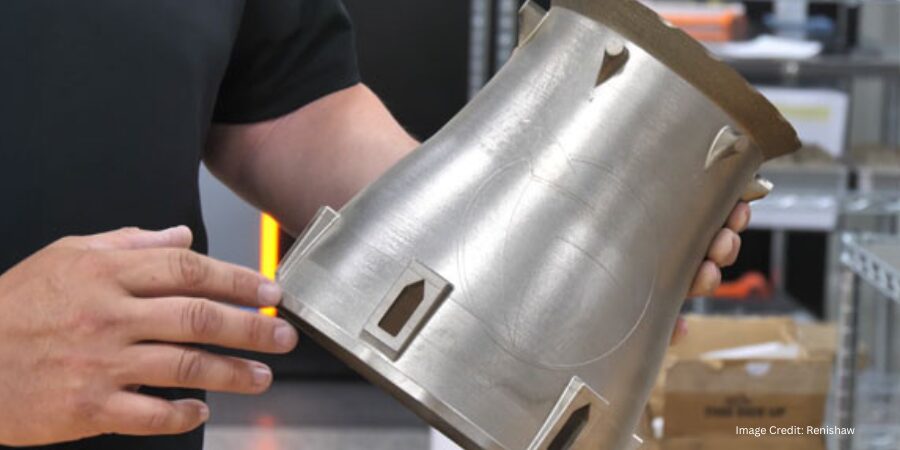
Press release is available in its original form here. Main image shows the additively manufactured afterburner casing for the hypersonic propulsion system with several components combined into one part. | Image Credit: Renishaw
We’re celebrating getting to the “fringe” of the weekend with a Heat TreatFringe Fridayinstallment: a plasma gas atomization (PGA) platform selected by a U.S. national laboratory highlights how advanced powder production is being developed at pilot scale to bridge research and industrial application in critical materials.
While not exactly heat treat, “Fringe Friday” deals with interesting developments in one of our key markets: aerospace, automotive, medical, energy, or general manufacturing.
A U.S. national laboratory has selected a plasma gas atomization (PGA) platform in support of a critical materials initiative. The pilot-scale program will enable advanced powder development for next-generation materials used in high-performance manufacturing and emerging technologies.
The system will be supplied by Retech, a division of SECO/WARWICK Group. The PGA system is designed to transition processes from validation to broader industrial deployment.
National laboratories play a role in bridging the gap between metallurgical discovery and manufacturable solutions. While early-stage research confirms material properties, pilot-scale systems evaluate process reliability, repeatability, and economic feasibility. The PGA platform aims to address these requirements through controlled processing and scalable parameters.
The system will contribute to strengthening domestic supply chains and reinforcing U.S. technical capabilities in critical materials.
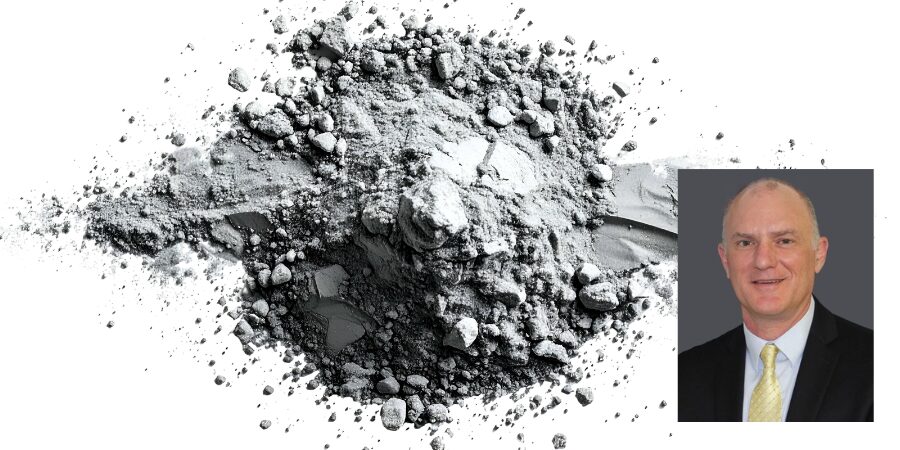
Earl Good President Retech Source: Retech
“National labs are focused not only on proving what’s possible, but on proving what’s practical,” said Earl Good, president of Retech. The PGA platform enables movement from controlled pilot-scale experimentation to production-scale capability. Its design allows processes to be scaled once validated, without requiring significant redesign, he added.
Beyond individual equipment capabilities, the platform is designed for integration with existing lab infrastructure, allowing coordination across operations, maintenance, and training. This enhances cost efficiency while maintaining performance standards.
As demand grows for domestic production of critical materials, the company continues to develop scalable solutions aimed at strengthening supply chains and materials innovation.
Press release is available in its original form here.