Matching Gases with Vacuum Heat Treatment Operations

Source: VAC AERO International

Read more: “Types of Backfill, Partial Pressure, and Cooling Gases for Vacuum Heat Treatment”
Matching Gases with Vacuum Heat Treatment Operations Read More »

Aerospace
Automotive
Medical
Energy
Manufacturing



Source: VAC AERO International
Read more: “Types of Backfill, Partial Pressure, and Cooling Gases for Vacuum Heat Treatment”
Matching Gases with Vacuum Heat Treatment Operations Read More »
 Mr. William Jones, CEO of the Solar Atmosphere Group of Companies, listened with interest to the recent Heat Treat Radio podcast featuring Phoenix Heat Treating president, Peter Hushek. Peter introduced a new 3D TUS tool, Virtual Visual Surveys.
Below, Mr. Jones offers his comments about this new tool and TUS practices in general.
If you’d like to listen to the Heat Treat Radio episode that sparked these comments, click here.
Please note that immediately following Mr. Jones’ comments is a response from Peter Hushek.
Unedited comments from Mr. Bill Jones, CEO, Solar Atmospheres & Solar Manufacturing…
Like Peter Hushek we have been in this TUS business for more time than we like to remember. So, most up to date HT companies track our TUS data on paperless video recorders and down load onto an Excel spread sheet and plot out the data a minimum of every 30 seconds. This is done with a preprogrammed digital temperature controller thru the necessary ramps, soaks, and set points. The Excel spread sheets also contains all the survey and controller TC correction factors. Prior to the survey each data point contains the preset temperature controller PID parameters. All survey TC’s are set into their preset locations per AMS 2750E with careful notation to position and correct TC length and care for equal hot / cold lengths. Prior to survey each electronic instrument is checked with a calibrated thermocouple millivolt run-up box and each instrument calibrated. Normally midafternoon each furnace under test is set up thus and the survey to run preprogrammed overnight. Our QC department downloads the data, reviews and makes the pass fail decision, within a few hours, the next day. If the TUS failed back to maintenance to look into the issues, make corrections and rerun the TUS. Problems are not always furnace related but thermocouple, TC position, jack panel, jack panel wiring, instrumentation, and numerous other issues. I view the VVS 3D presentation as an aide but only part of the story”.
William R. Jones, CEO, FASM
Solar Atmospheres Inc.
Souderton, Pa.
More about Solar Atmospheres? www.solaratm.com
And Peter Hushek’s unedited response to Mr. Jones’ comments…
In regards to the response from the listener I can say he makes some valid points. There are many issues that can affect the outcome of a TUS. We realize that the evaluation of the furnace uniformity involves many aspects and we are only addressing the data generated by the process. We believe that when companies begin the process of actual data analytics they will become more aware of the process and improve the quality of their processing as a result. VVS is only beginning to scratch the surface of the data flow that occurs daily in processing companies. We look to greater innovation through customer supplier interface as well and technological improvements that can be used as feed stock to improve future generations of this software. We are only starting the process and I hope the market realizes that this is not a static process or company.
If you haven’t done so already, clicking here to listen to the Heat Treat Radio episode being discussed above.
To find out more about VVS, go to www.virtualvisualsurveys.com.

Heat Treat CEO Comments on 3D TUS Tool Read More »
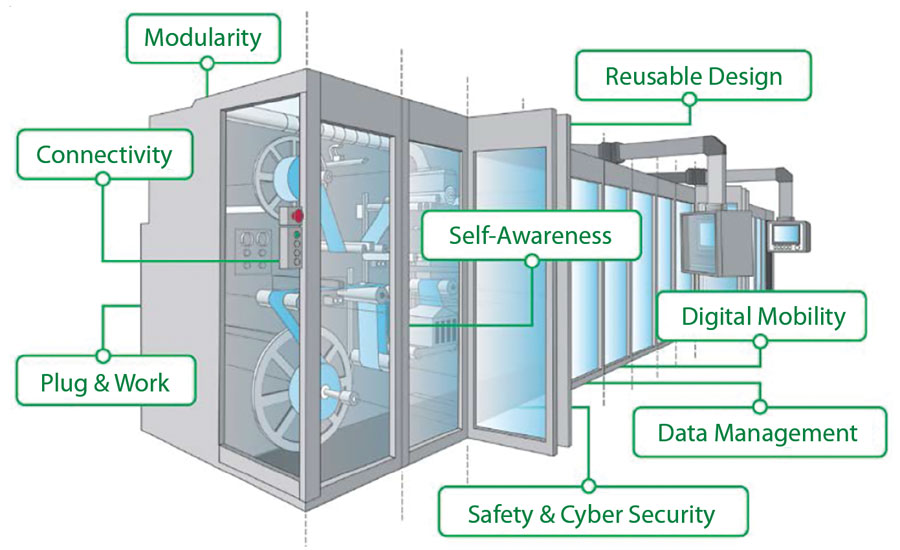
Source: Eurotherm by Schneider Electric
Read More: Industry 4.0 + IIoT=Smart Industrial Ovens & Furnaces by Perter Sherwin
Industry 4.0 + IIoT = Smart Industrial Ovens & Furnaces Read More »
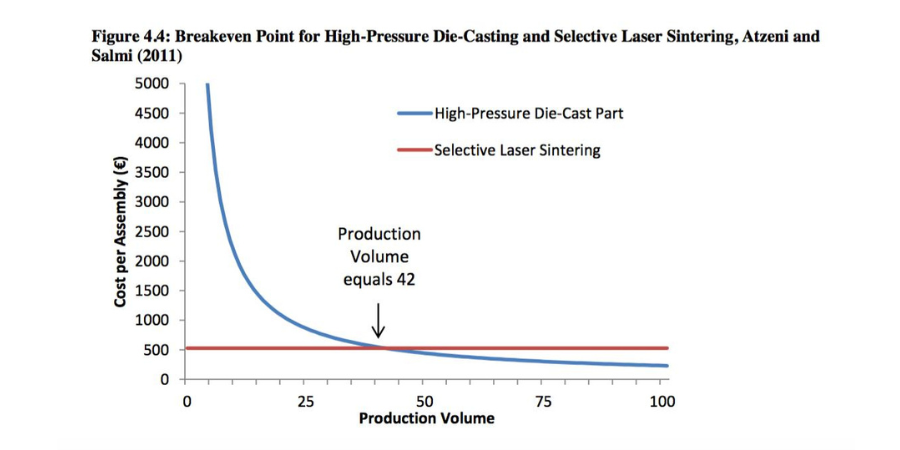
Source: Global Heat Treatment Network
“Vacuum heat treatment tasks for AM manufactured parts is the same process as traditional subtractive manufacturing and its purpose is to assure AM parts has the correct physical and metallurgical properties for specific applications. In some cases, when a bidder is involved, the purpose of the heat treatment process is to deciding and sinter parts. Most vacuum furnaces use up to 800°C degrees to relieve stress and a higher temperature of up to 1800°C for other processes.
Vacuum furnaces with high vacuum levels are preferred to heat treatment equipment to process AM parts. AM parts made from Titanium, Cobalt, Aluminum require vacuum levels of up to 10-6 mbar with 99.9995 Argon purity. Argon is the preferred gas because of its neutrality and that it has no adverse reaction with the above alloy components. Creating an Alfa surface layer on titanium parts is not desirable and should be avoided.
The small parts and small production volume influences vacuum furnaces of small to medium size. The next challenge for the heat treatment industry is to integrate heat treatment process into the AM equipment in one continuous process.”
Vacuum Heat Treatment’s Role in Additive Manufacturing (AM) 3D Printing Read More »
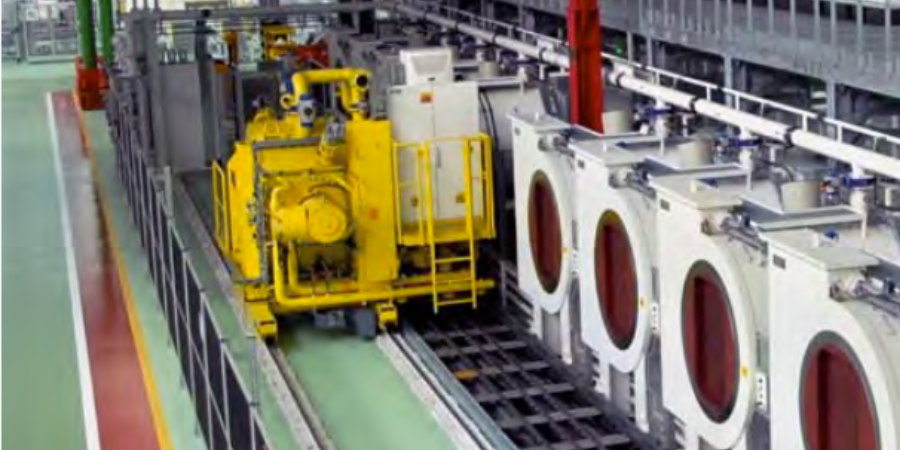
Source: Heat Processing
Enhancing Energy Efficiency of Thermochemical Vacuum-Processes and Systems Read More »
Source: Solar Atmosphere’s Vacuum Reference Series Number 2
A Temperature Uniformity Survey ( TUS ) for a vacuum furnace to satisfy AMS 2750D must be performed using established procedures and methods that fully meet the requirements of the specification and allows for consistent and more accurate results of actual furnace capabilities.
Read More: Optimizing Procedures for Temperature Uniformity Surveying of Vacuum Furnaces
Temperature Uniformity Surveying for Vacuum Furnaces Read More »