

Below Zero: The Cold Cure
Heat Treat Today is pleased to begin a new column series, Below Zero with Jack Cahn, co-founder of Deep Cryogenics International, a deep cryogenics treatment (DCT) company. In this series, Jack will explore the science, applications, limitations, and challenges of cryogenic treatment, including technology adoption, equipment, test methods, service providers, and end users.
This informative piece was first released in Heat Treat Today’s September 2025 Annual People of Heat Treat print edition.
What is DCT?
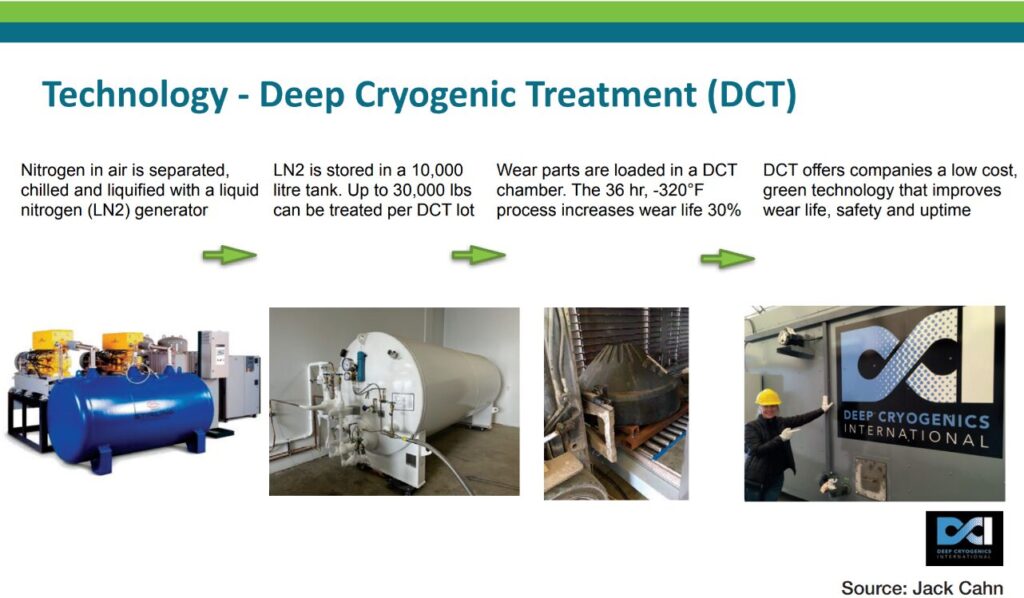
So, what is DCT and how does it differ from shallow cryogenics (-60°F to -176°F)? DCT uses a 36-hour process at -230°F to -320°F, which refines atomic-level grain structure, precipitates carbides in alloys, triggers the TRIP/TWP effect, and increases dislocation density in metals. This results in 20-40% greater wear life, 10-20% higher yield strength, and 10-20% less corrosion.
Unlike heat treatment or coatings, DCT is non-toxic, chemical-free, and generates no environmental waste. It is low-cost, works on both ferrous and non-ferrous materials, supports mixed alloys during treatment, and allows economy-of-scale batch processing. However, despite academic backing, cost-effectiveness, and acceptance by the heat treat community, DCT has remained in the undeveloped backwater of material improvement processes.
Why Is This?
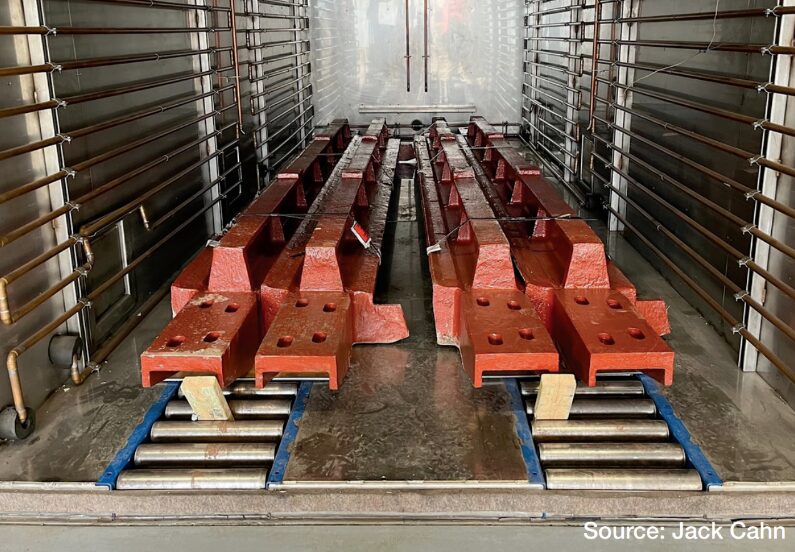
DCT doesn’t work on all metals all the time. Despite early studies and claims of 200% benefit, DCT improvement depends on the alloy chemistry, the method of manufacture, prior heat treatment, and the item’s failure mode. While lab results show significant improvements, field results often fall short, requiring further research to match materials to specific benefits. Some materials don’t improve from DCT, while others show benefit only in a single metallurgical characteristic. Extensive applied research is needed to link each material alloy to specific end-use and actual benefits.
Limited Industrial Equipment and Scale-Up
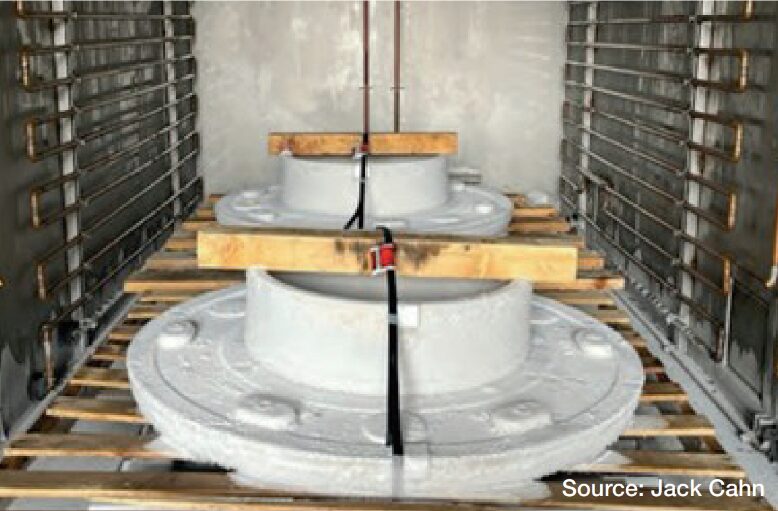
Most DCT chambers are small, modified deep freezers with high LN2 consumption due to latent heat loss. Very few can handle large industrial volumes at the required low temperatures. Until recently, DCT has bottlenecked at early Technology Readiness Levels, which has slowed adoption, especially in sectors like energy, aerospace, and automotive.
No Certification, Acceptance, or Test Standards
While heat treatments are ISO, Nadcap and ASTM certified, DCT lacks similar standards, hindering widespread industry acceptance. Although sectors like motorsports and knife-making are advocates, they don’t require testing, limiting DCT’s scalability.
Lack of Collaboration Among DCT Service Providers
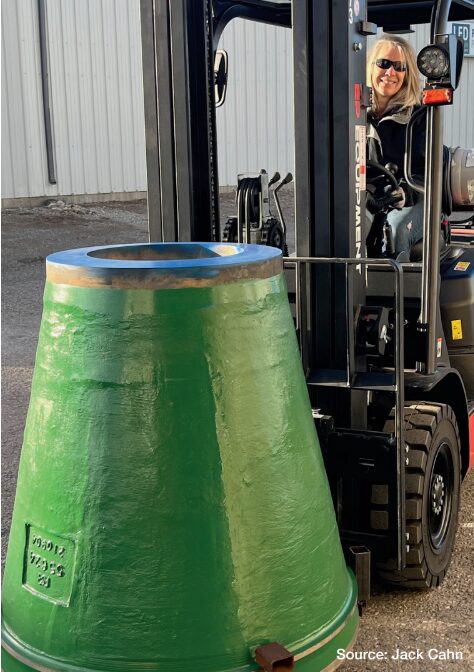
The DCT industry is fragmented. We are generally independent service providers who offer localized DCT; some of us also build DCT chambers. Fewer than 50 companies globally offer DCT as a stand-alone service, and another 750-1,000 companies (mostly existing heat treaters) provide cryogenic treatment as an ancillary service. There are dozens of heat treat organizations, industry trade groups, and trade journals that share technical advice, innovation news, or a community forum — deep cryogenics has nothing like that. Just our individual company websites, occasional articles, and reliance on DCT “chatter.”
After discussing the industry’s challenges with Applied Cryogenics Inc. President Dr. Jeff Levine and DCI President Linda Williams, I reached out to 100 DCT providers, scientists, and industry professionals. About 25% responded — scientists curious about DCT, engineers interested in certification standards, heat treaters seeking greater opportunity, and service providers keen to work together — who supported the formation of a trade organization to:
- Promote DCT technology awareness and adoption
- Create a working group to develop DCT standards and certifications
- Showcase companies, services, and products
- Increase professionalism and quality in cryogenic treatment
- Foster collaboration and knowledge-sharing
Both Megan Galeher and Anne DiPaola have offered to promote an emerging cryogenic treatment group under the CSA mantle, lending its scientific and professional credibility. Doug Glenn, publisher of Heat Treat Today, has offered similar support. Heat treaters have thrived globally by navigating the scale-up process and adhering to certification standards required by commercial and industrial users. They have also focused collaboratively on quality, innovation, and knowledge-sharing within their industry.
I believe a cryogenic treatment organization could launch under the combined CSA/heat treat umbrella. What do you think? Email your thoughts to me at jack@deepcryogenics.com, and I’ll share them in my next column. Thanks for welcoming DCT into the community!
About The Author:

Chief Technologist
Deep Cryogenics International
Jack Cahn is the chief technologist and co-founder of Deep Cryogenics International (DCT) — a U.S. cryogenic treatment facility and equipment manufacturer. With over 25 years conducting scientific testing and publishing technical articles, Jack and DCI President Linda Williams provide DCT awareness, adoption, equipment, and treatment services worldwide.
For more information: Contact Jack Cahn at jack@deepcryogenics.com.
Find heat treating products and services when you search on Heat Treat Buyers Guide.Com
Below Zero: The Cold Cure Read More »