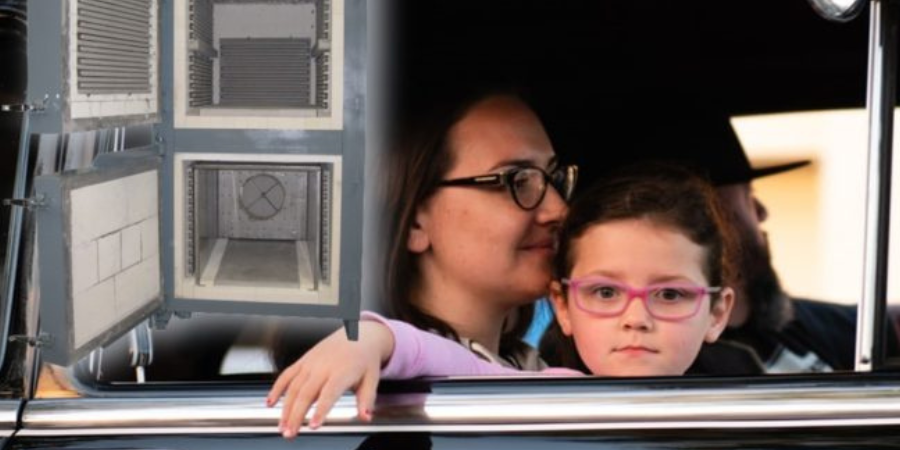
A U.S. manufacturer is set to receive a dual chamber furnace to heat treat automotive parts. This heavy duty furnace-over-oven features 12-gauge sheet steel construction with reinforced members for a solid framework and each chamber is 24” H x 24” W x 36” L.
This is the 7th large Dual Chamber 8000 Series Furnace from Lucifer Furnaces, Inc. that it has shipped to the U.S. auto manufacturer. The upper hardening chamber heats with 45 KW power to banks of elements on sides, door and back. The heating elements are designed with heavy gauge wire mounted in removable holders.
The upper chamber cast hearth plates support the workload and can be easily replaced without disturbing the heating elements. The lower tempering oven with 20 KW power features a stainless-steel liner shielding heating elements from the workload. This liner was designed as a 3-sided liner with a cast hearth plate for durability. A high cfm, ½ hp fan recirculates air past the elements and back through the chamber in a uniform pattern.
This unit was customized with a free-standing control panel providing the ability to separate control operation from the furnace environment. Each chamber has been outfitted with Honeywell Multi Program Controllers with a High Limit Backup Controller to prevent temperature excursion events.
Global manufacturer in steel products announced the sale of Acciai Speciali Terni (AST), including the associated sales organization in Germany, Italy and Turkey, to the Italian company Arvedi. The parties have agreed not to disclose the purchase price.
The transaction is subject to approval by the supervisory board of thyssenkrupp AG and merger control clearance. The closing of the transaction is expected in the first half of 2022. thyssenkrupp is also examining a possible minority shareholding in the AST group. Details of this will be negotiated up to the closing.
"This fourth transaction shows once again clearly that we are working through our priorities and making decisive progress in the transformation of thyssenkrupp," Martina Merz, CEO of thyssenkrupp AG commented. “Speed in focusing the portfolio is crucial for a successful change process. At the same time, improving performance remains our most urgent task. Here too we are well on track and will not let up."
Cavaliere Giovanni Arvedi Founder and President Arvedi,
"[This] transaction has a compelling industrial rationale for Arvedi Group," said CavaliereGiovanniArvedi, founder and president of Arvedi, "which becomes stronger by successfully completing its product mix. Furthermore, this transaction is strategic for the whole Italian economy and represents an initial step towards new exciting developments. We are very pleased that [thyssenkrupp] is considering a potential minority shareholding in AST, guaranteeing continuity and showing trust in the know-how and capabilities of our Group."
"We are pleased to have found a new owner for AST in the Arvedi Group," adds VolkmarDinstuhl, CEO of the Multi Tracks segment and Chairman of AST, "who will drive the development of the company with investments and innovations."
Progress has also been made with other portfolio companies in the Multi Tracks segment: The contract for the sale of the Mining business to the Danish company FLSmidth was signed at the end of July 2021, followed shortly afterwards by the signing of the contract for the sale of the Infrastructure business to FMC Beteiligungs KG. The sale of thyssenkrupp Carbon Components to Austrian Action Composites GmbH was completed on August 31. In addition, the closure of the heavy plate mill in Duisburg will be completed by the end of this month.
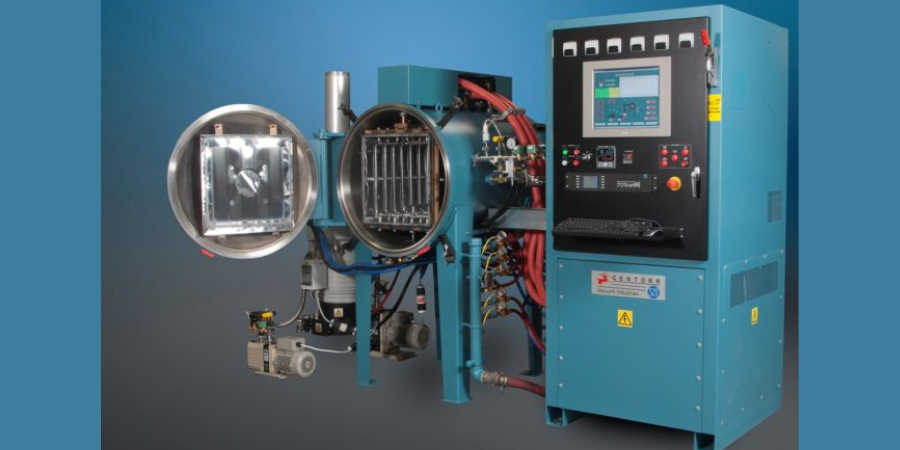
Vacuum furnace manufacturer announced it is building six furnaces for various applications in the precision processing of metals in heat treating, brazing, and annealing applications.
The product line from which these furnaces will come from, Centorr Vacuum Industries‘ Workhorse®, was introduced in the 1960’s and has been one of the company’s best-selling furnaces over the past six decades. Available in sizes from 1 cubic ft to over 100 cubic ft, this versatile furnace design has a refractory metal hot zone and high-vacuum pumping system for the processing of advanced materials requiring an extremely clean high-vacuum environment.
The furnace can also handle a variety of customer loads in either high-vacuum or partials pressures of inert gas, when necessary to protect the customer’s load.
Thermcraft, Inc., a manufacturing company of thermal processing equipment, has recently been acquired. Nancy Crafton, widow of Thomas Crafton, the former president & CEO, shared details with the company family and introduced them to the new owner, saying, "Tom would be happy to know there is a bright future for Thermcraft."
Alloy Engineering, a diverse fabricator specializing in high-temperature & corrosion-resistant alloys, notes that the acquisition fits in the company's strategy to expand their high temperature product offering. Through the purchase, the company will be able to leverage their expertise in high temperature alloys along with Thermcraft's expertise in ceramics and heaters to deliver some innovative products to both existing and new customers and markets.
"I am excited and eager," said Lee Watson, president & CEO of Alloy Engineering, "to take the reputation built by the Crafton family along with the Thermcraft employees and grow it to the next level. By merging the core competencies of both companies and taking innovative solutions to market, we will provide a solid future for both of our companies."
Heat Treat Today is happy to announce the winners of the 40 Under 40 Class of 2021! Click here to see the list, or click to access the 2021 Heat Treat Today Heat Treat Show September digital edition.
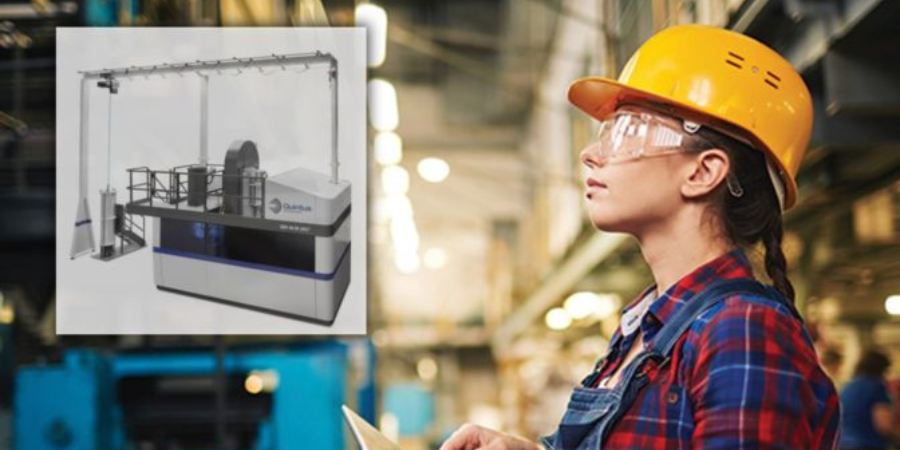
When the new additive research facility at the Oregon Manufacturing Innovation Center Research & Development (OMIC R&D) opens in Scappoose, Oregon, the facility will acquire a hot isostatic press. Operating at a temperature of 2550°F (1400°C) and a pressure of up to 30,000 psi (2070 bar), the new press will give OMIC researchers the ability to study densification of metals as well as how HPHT can modify the grain structure to enhance the mechanical properties of additively manufactured parts.
Overseen by Oregon Institute of Technology (Oregon Tech), a public polytechnic university, OMIC R&D is a collaborative effort that brings together industry and higher education with government support to conduct applied research and advanced technical training. Its mission is to increase industrial competitiveness by developing new tools and techniques to address today’s manufacturing challenges, particularly in the aerospace and defense, transportation, and metals sectors.
The Quintus TechnologiesHIP, a QIH 48 M URC® press, will allow new research into 3D printing technology and optimized material properties. The press model is equipped with Uniform Rapid Cooling, URC®, the proprietary Quintus feature that combines HIP and heat treatment in a single process. Accelerated cooling under pressure minimizes thermal distortion and improves material properties. The QIH 48 also has a hot zone of 14.8 inches (375 mm) in diameter and 47.2 inches (1200 mm) in height.
“For OMIC R&D to fulfill our mission, we must have world-class cutting-edge capabilities to support our applied research & development projects. We accomplish this by partnering with some of the best companies in the world in their respective fields and identifying and utilizing their unique technologies and expertise. Our solutions can be implemented by regional, national, and international partners to increase their competitiveness,” says Craig Campbell, executive director at OMIC. “We chose Quintus as a partner because the company is continually innovating, and developing new processes such as High Pressure Heat Treatment, or HPHT.”
The press will be housed in OMIC’s new 30,000-square-foot additive manufacturing innovation center in Scappoose, approximately 20 miles north of Portland. Scheduled for ground-breaking in late 2021 and occupancy in 2022, the facility will be adjacent to the Portland Community College/OMIC Training Center, which serves students in machining, fabrication, and mechatronics.
“Today’s globally competitive manufacturing industry demands rapid innovations in advanced manufacturing technologies to produce complex, high-performance products at low cost,” observes Dr. Mostafa Saber, associate professor of Manufacturing & Mechanical Engineering Technology at Oregon Tech. “To conduct world-class, competitive research on new high-performance metal alloys, long-lasting tools, and rapid production of complex metal structures, especially in additive manufacturing, materials densification plays a pivotal role. And that is where the advanced generation of hot isostatic pressing offers the solution. We are very excited to leverage the advantageous features offered by Quintus Technologies soon at OMIC R&D.”
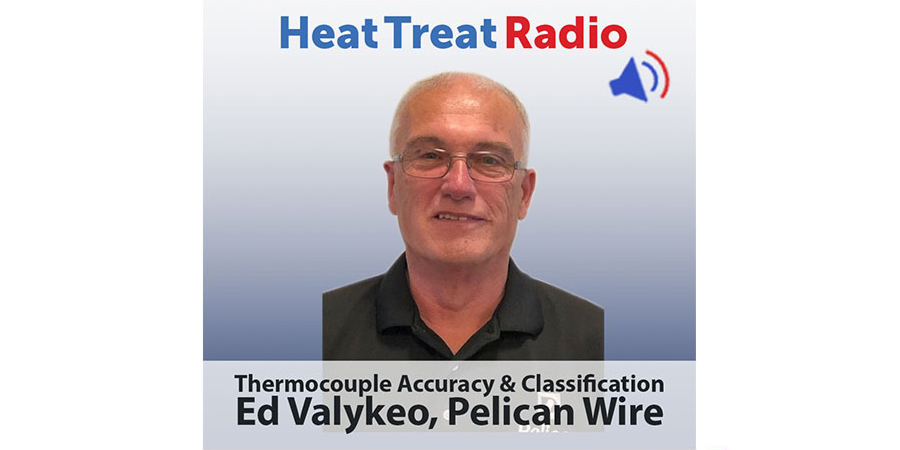
Heat TreatToday publisher Doug Glenn has a second conversation with long-time thermocouple industry expert Ed Valykeo from Pelican Wire about T/C accuracy and classifications. Listen to learn more.
This is the second episode in a series of three on Thermocouples 101. Check out the first episode of the series here.
Below, you can either listen to the podcast by clicking on the audio play button, or you can read an edited transcript.
The following transcript has been edited for your reading enjoyment.
Doug Glenn (DG): Ed, welcome back. I'm glad you were brave enough to come back. Last time, Ed, we talked about a lot of good basic thermocouple stuff. We talked about, basically, Thermocouples101 which I mentioned last time, was one of the best and most well read articles on our website, which is great. We covered a lot of different things last time. I was just reviewing it, and it's interesting, we were talking about several different men as you gave a good history of thermocouples starting back in the early 1800's and talking about guys like Alessandro Volta, where we get the word volt, and Thomas [Johann] Seebeck and the Seebeck effect or the Seebeck coefficient, and things of that sort. We talked about all the different noble thermocouples, J, K, E, N, and T, and we talked about the N leg and the P leg on all of those which was all good. It was very interesting. If you didn't listen to the first episode, you ought to go back and listen to it. It's really a pretty good summary of thermocouples, a basic primer on thermocouples. We also did some things like vocabulary for ourselves; we learned what an EMF was, electromotive force and things of that sort. It was very good.
This time, I think we want to move on to, what we could commonly classify or in a big picture classify as, standardization and accuracy discussion. But, before we do, I've got a quick follow-up question from the last episode. We had mentioned that an EMF is produced when two dissimilar metals are joined together or placed together. There is a very, very, small electric current that's created. My question is: Can you do that with any metal? Is it possible? Or do you have to have only certain types?
Ed Valykeo (EV): Theoretically, yes, you could probably join any two different metals and produce some sort of voltage. However, the accuracy of that, and if doesn't mean anything, probably not. The thermocouple base metal thermocouples that we talked about last time, are industry known, used worldwide and, quite honestly, have been perfected over many, many years. So, yes, you could generate a volt probably from any two metals, but, really, to produce an accurate thermocouple, something you can measure temperature with, you're going to want to stick to the thermocouple types that we talked about.
And again, today, we're talking about the base metal thermocouples which are known as Type K, Type J, Type T, Type E and Type N. Those are the base metal thermocouples.
DG: Let's talk a little bit about standardization of these things, and accuracy. My understanding, Ed, is that there are one or more organizations out there in the world that deal with certifying, qualifying, or giving us standards for these thermocouples. Can you tell us a little bit about those organizations? Then, we'll jump in and talk more specifically about the classifications and accuracy.
EV: Sure. One of the bodies that we use is ASTM. In ASTM-E230, are all the thermocouple tables for the different types of thermocouples, not just the base metal, but also noble metal. It's a fairly lengthy book. All the thermocouples are based on the ITS-90 scale and that is the EMF output of each one of these thermocouples at prescribed temperatures. We could go into more detail with that if you'd like, but there are a number of ways that they have extremely accurate temperature medium to measure the thermocouple output. But, that's what the tables in ASTM-E230 are based on, the ITS-90 scale.
When we talk about ASTM, there are also a couple of other standards that we use, and we'll probably get into a little bit later in the conversation when we talk about calibrating the thermocouples themselves. So ASTM-E220 and ASTM-E207 are the two that are used in calibration of the thermocouples.
DG: But, basically, the organization that does that, I don't know if we want to call them a lab or not, but the organization that does is it ASTM.
EV: ASTM is one of the bodies that publishes the books that I call the standards for thermocouples. I think I won't be mistaken, but ITS-90 is really more an IST list. They control the ITS-90.
DG: Let's move into the accuracy standards, then. I think you mentioned the ASTM-E230. Is there anything else we need to talk about as far as the accuracy standards, or did we already hit it?
EV: Certainly, in the ASTM-E230, they spell out the different types of thermocouples, as I mentioned, the base metal thermocouples, but the accuracy of each one of those is listed in the ASTM-E230.
DG: What about classification? Let's talk about the guidelines for classifying these different thermocouples.
EV: Again, ASTM-E230, and there are other publications, but, again, we use ASTM here. The classification of the thermocouples are also spelled out in ASTM-E230 and basically, we talk about special limits of error, standard limits of error and extension grade thermocouple. Again, those can be found in E230.
DG: So, when we classify those, are we classifying them based on temperature deviations or the temperature tolerances? Is that, basically, what it is?
EV: Yes. It's based on temperature tolerance. I'd like to share a quick rule of thumb for classification of those thermocouples. So, special limits of error, basically from zero degrees Fahrenheit to 500 degrees Fahrenheit, it's + or - 2 degrees, and above 500 degrees it is + or - .4%. For example, at 1000 degrees, you're looking at + or - 4 degrees; if you have 2000 degrees Fahrenheit, the tolerance at 2000 would be + or - 8 degrees for special limits of error.
On the other side of that, you've got standard limits of error, and, basically, you could just double that. From zero to 500 degrees Fahrenheit, you're talking + or - 4 degrees; at 1000 degrees would be + or - 8 degrees and at 2000 degrees, + or -16 degrees.
Where there is some confusion, and maybe some people don't understand thermocouples, is when we talk about extension grade. There are actually two types of extension grade. There are standard limits of error and special limits of error extension grade. Extension grade is just exactly as it sounds. It carries that signal from your sensor all the way back to instrumentation rather than run maybe a little more expensive wire all the back to your instrumentation, you're going to put extension grade to continue that circuit back to the instrumentation. Extension grade is the same metals as the thermocouples. If you're using Type K sensor, then you're going to want to use Type K extension grade, and so on, for the rest of the base metal thermocouples. The difference is that the extension grade material is only guaranteed to meet the tolerances up to 400 degrees Fahrenheit. If you look at ASTM-E230, the tolerances only go, on extension grade, to 400 degree Fahrenheit. And, actually, Type T is a little bit different; Type T only goes to 200.
DG: In the heat treat industry, that's not really going to do us much good, right? I mean, most of our processes are well above 400.
EV: It is. That's why you would never use an extension grade as the actual sensor. This is some of the confusion out in the industry: “Well, I can just take my extension grade, create a junction and use it to measure temperature.” You probably could up to 400 degrees, but it's not guaranteed above that temperature, and you could get yourself in trouble.
DG: So, you run extension grade outside of the furnace because, obviously, you're not above 400, so you can use extension grade to run it. I think last time we talked about no more than 100 feet rule of thumb.
Extension grade is basically this: Here's your extension cord that you can run from your regular wire, either your standard limit of error or special limit of error, from that to the box.
EV: Exactly. And so, the key to understanding extension grade is the tolerances on that extension grade are the same – say if you have special limits extension grade – it's the same as your special limits thermocouple wire, + or - 2 degrees, in this case, up to 400. It's guaranteed to meet special limits of error and then the same thing on the standard limit side. You just double those tolerances. Again, it's really the temperature that it is guaranteed to.
DG: Very good. So those are the different classifications. We've got special limits of error, which is a tighter temperature tolerance, and then we've got standard limits of error, which is a little less tight, and they we've got our extension grade which is only classified up to 400 degrees anyhow.
I know some heat treat processes require very, very tight temperature tolerances, especially in things like aluminum brazing and things of that sort. Is it possible to get anything better than special limits of error?
EV: It is. The first thing I want to say is that they're not really recognized within ASTM, these tighter tolerances. But, in the industry, certainly in heat treating and in the pharmaceutical side where they typically use Type T, we've had many requests for tighter tolerance material. Some people call it quarter limit material or half limit material, there's a bunch of different names that it goes by. So, we go to our manufacturer's of the wire and request that and, most of the times, it's a no quote. It really comes down to more of a selection process.
For us here at Pelican Wire, we have a pretty good sized stocking program of bare conductor and sometimes what we can do is mix and match to try and meet the tighter tolerance material. There are a number of ways that some of the manufacturers, in fact, the heat treaters, will request special limits materials, that must meet + or - 2 degrees up to 1000 degrees and then .2% after that. It can be done and we do it on occasion.
DG: Let's follow up on that a little bit. How do you determine the accuracy of a lot of wire, or a spool of wire? How do you go about doing that?
EV: Let me back up just a little bit and start with the actual wire producer themselves: There are not any left in the States, so, basically, all the thermocouple wires are melted overseas, whether it be Germany, France, Sweden. When they melt, they try to meet special limits of error. Now you're talking each leg has to be melted separately; they don't melt them all at one time, right? So, each “melt” or “heat”, they are shooting to make special limits of error.
This is where some of the testing specifications come into play. ASTME-207 is a test method for single thermal element thermocouple wire. I don't want to confuse our listeners, but, again, if you think about a melter that just melted or heated a melt of wire and they process it down to wire, they only have one conductor. They want to know if that one conductor is going to potentially meet special limits of error. There is a testing specification that ASTM has (ASTME-207) that you can test a single leg thermocouple wire to see if it's going to meet special limits of error. What they do is they calibrate the single leg, they get their values (the EMF output), and they have the second other leg and they do the same thing. They, then, mathematically add the EMF of those two and go back and look at the standards to see if it's going to fall within the special limits of error.
That's how the melters, the folks that are melting the individual thermocouple legs, are doing it. We users, we are an insulator wire, we put the two legs together and now we have a thermocouple. The way we test those thermocouples is by using an ASTME-220, which is a comparison method. We're taking a known standard and we're calibrating the thermocouple wire against that standard and getting the temperature deviation from that. That's how we verify that the wire is meeting the tolerance that is requested by our customers, whether it's special limits of error, standard limits of error or even extension grade.
DG: When you say "a standard", what does that test actually look like? Are you taking a thermocouple that you know is good, sticking it in a hot furnace and your test thermocouple or are you just doing it through current testing or something like that?
EV: Good question. We actually use SPRTs (resistance thermocouples) high accuracy, that we use as our standard. They're calibrated at an outside firm, so we know what the output of that resistance thermometer is, and we calibrate our sample against that. The three things you need to do a temperature calibration is the temperature medium, the reference thermometer and the equipment to capture that output or measure the voltage that's being produced. Having those, we have our reference standard that we know the EMF or the temperature output of. Now, we put our thermocouple in the furnace and we compare the two. That's how you get your deviation.
DG: There are labs, I understand, that do these certifications and things of that sort, that certify the accuracy of the thermocouple. Now, Pelican Wire does that. You do have a lab and you do certifications, right?
EV: We do. We calibrate the thermocouples and we produce a test report showing the deviation of the thermocouple for the customer.
DG: Earlier, we were talking about standards and how there's the organization ASTM. How about for these labs? Do the labs have to meet some sort of outside third party certification?
EV: There is nothing that they have to do. I will say that there are a number of standards. We're ISO9001, but we're also seeking accreditation for 17025 so that our lab is accredited to IECISO17025, which just proves that we are a quality lab. We have our quality systems in place. We have our uncertainty budgets for all the equipment we use. A customer can feel confident that the calibration report that we provide is as accurate as possible.
DG: I think covers most of the things we wanted to cover in this episode. We talked about the standardization, the special limits of error, the standard limits of error, who are the bodies out there that do the certifications/classifications, if you will. I think we covered a good bit.
I think we were going to do one more episode, Ed, and I think we're going to talk about insulating materials. I understand that one of your colleagues is going to be there to talk about that with us, John Niggle.
EV: Yes. John Niggle will join the next podcast and talk a little bit about how now that we have the thermocouple wire, what kind of insulations do we put on that wire. It depends on the medium that it's going to be used in, the heat treater or whoever.
Doug Glenn
Publisher Heat TreatToday
To find other Heat Treat Radio episodes, go to www.heattreattoday.com/radio and look in the list of Heat Treat Radio episodes listed.
Creation requires endurance and continued hard work. Find out what creative applications and research services your colleagues are committed to bringing from across the heat treat industry.
These innovations could bring the next level of innovation to your industrial plants. Enjoy!
Novel Mechanical Testing Systems Powered By Finite-Element Analysis, Optimization Algorithms, and Machine Learning
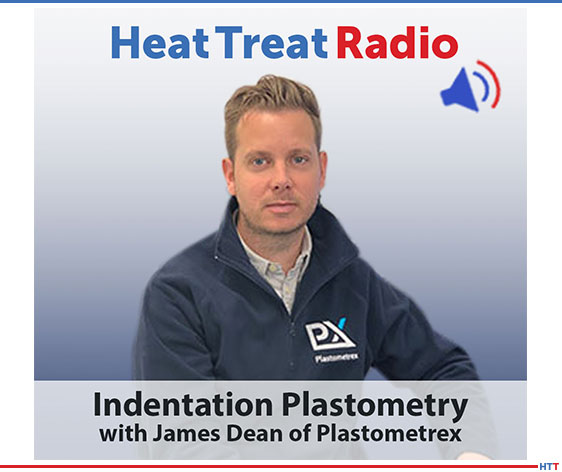
- An excerpt from a Heat TreatRadioepisode with James Dean -
Doug Glenn: You may have already stated this a little bit, but briefly: indentation plastometry is basically taking an indentation to be able to test, not just hardness or not even necessarily hardness, but the deformation or the strain of material. Do you have to know the microstructure of the material when you’re doing these tests?
James Dean: That’s a good question. In principle, no. If we were to dig deep into the mechanics of what’s going on within our system and our software package, you’d come to recognize that it’s, from a mathematical point of view at least, insensitive to microstructural features. There is a numerical method underlying this – a finite-element analysis – therefore, treating this as a continuum system doesn’t take account explicitly of the microstructure.
When you’re doing the test, it’s actually helpful to know something about the microstructure simply because our technology is all about extracting bulk mechanical behavior engineering properties. Therefore, when we do our indentation test, it is important that we are indenting a representative volume of the material.
It is important that we are capturing all of the microstructural features that give rise to the behavior you would measure in a microscopic stress strain test. Otherwise, you can’t pull out those bulk, core engineering properties, and therefore, the scale on which you do the indent is important. Your indenter has to be large relative to the scale of the microstructure. So, it’s only at that level that you need to understand or know anything about the microstructure.
DG: This test is a nondestructive test, right? You said you can actually test live materials, correct?
JD: Yes.
DG: You don’t have to destroy them, you don’t have to machine them, you don’t have to make them into something you can rip apart, right?
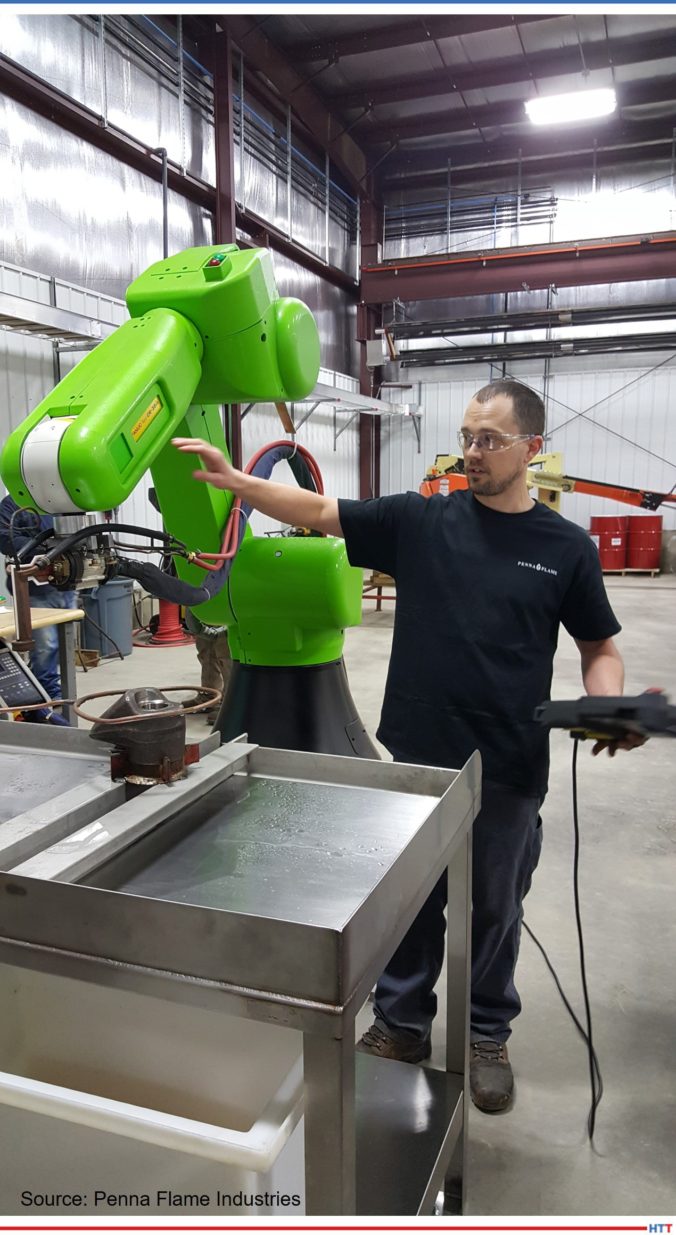
Bert demonstrates the benefits of working with a collaborative robot to induction harden steel parts. The robot gives the operator the ability to work directly next to it, as opposed to conventional robot arms where fencing and distance is required.
The computerized robotic surface hardening systems have revolutionized the surface hardening industry. These advanced robots, coupled with programmable index tables, provide an automation system that helps decrease production time while maintaining the highest quality in precision surface hardening.
A few benefits of this service are:
Increased wear resistance
Higher hardness and longer life
Less processing time
Higher efficiency and productivity
Maintain tensile strength
Quick turnaround of the project
Consistent, repeatable process
Less distortion when compared to furnace treatment
High Pressure Break Through For Additive Manufacturing
- An excerpt from a Heat TreatRadioepisode with Johan Hjärne -
DG: Doing it all- stress relief, HIP, age, or whatever. Just for clarity sake, you’ve got a typical HIP process, you’re going to heat it up, put it under very high pressure, then, normally, if you didn’t have the high pressure heat treatment capabilities, you would have to cool that part down which is typically cooled quite slowly in a conventional HIP unit, taking more time and whatnot. It then comes down to ambient, or close to ambient, where it can be held, you take it out, you put it back in another furnace (a normal furnace, not a HIP furnace), take the temperature back up, get it to the point where you want it, quick cool it, quench it, to a certain extent, to get the characteristics that you’re looking for, and you’re done. What we’re talking about here is the combination of those two processes plus potential other things like stress relief, and all that, in a single unit, correct?
JH: Yes. This has very beneficial effects on time. Many of the HIP vendors do not have HIP and heat treatment in the same facility. Now we have sold a couple of units to some new HIP vendors that have this capacity, but, historically, the HIP vendors didn’t have both HIP and heat treatment. First, the customer had to send it to a service provider for HIPing, they got the part back, they had to send it to somebody that could do the heat treat step, and then got the part back, and so on. The time, and specifically for additive manufacturing, is important. Keep in mind they can do a part pretty fast, anywhere between a day to two days, worst case a week, but then having to wait week after week after week to get the part back for the HIPing or for the heat treating.
DG: So there’s a substantial, potential time savings, for sure; not just process savings in between furnaces, but the fact that you can buy one furnace and do both of those things.
Let’s talk for just a second about what types of products are most effectively HIPed and/or, if we can, high pressure heat treated.
JH: As I said before, we really started to realize the potential with this technology with the additive manufacturing world. That is were we started to realized that we can actually make a difference here. Not only does it have a beneficial effect for the total time, but having the components under elevated temperature for a shorter period of time is actually beneficial for the microstructure; the grain doesn’t grow as much.
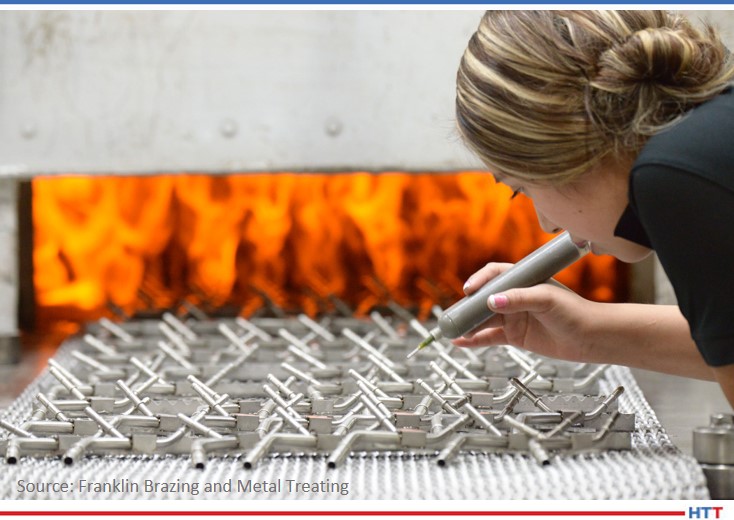
Recent improvements include a new cooling tower, chiller system, enhanced duct work, LED lighting in the plant, a renovated breakroom for the associates, a quality room for the engineering staff, a new HVAC system for the front offices, and upgrades in technology systems.
The updated technology is not only used for improving efficiency and data analysis, but also for communication. It has been key to improving operations and has had a significant impact on relationships with clients. Franklin’s ability to effectively communicate enhances collaboration, which allows FBMT’s clients to more efficiently manage their supply chains, reduce the cost of rework and scrap, and better serve their clients.
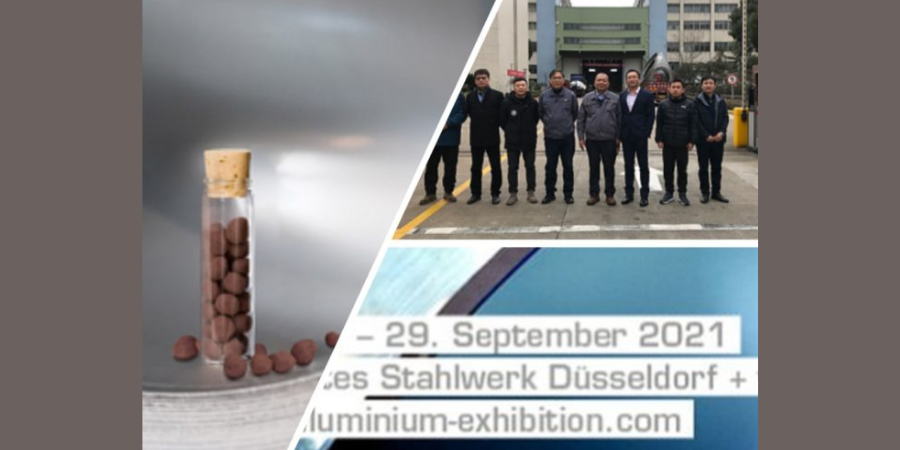
Welcome to another Technical Tuesday! Today, we look to our European information partner, heatprocessing, to share several new partnerships and innovative research that are happening globally in the world of heat treat.
Salzgitter Flachstahl and Anglo American Reach an “Understanding”
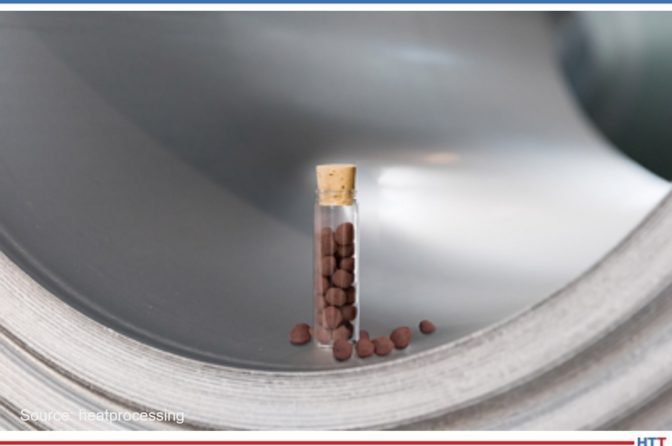
“Salzgitter Flachstahl GmbH, subsidiary of Salzgitter AG, has signed a Memorandum of Understanding (MOU) with Anglo American. The two partners will join forces in investigating the optimisation of iron ore supplies for direct reduction.
“Anglo American is one of the world’s leading mining groups. The primary aim of the joint research activities is to minimise the CO2 footprint of steel production. The MOU also covers an examination of the lowest possible CO2 process and supply chains.”
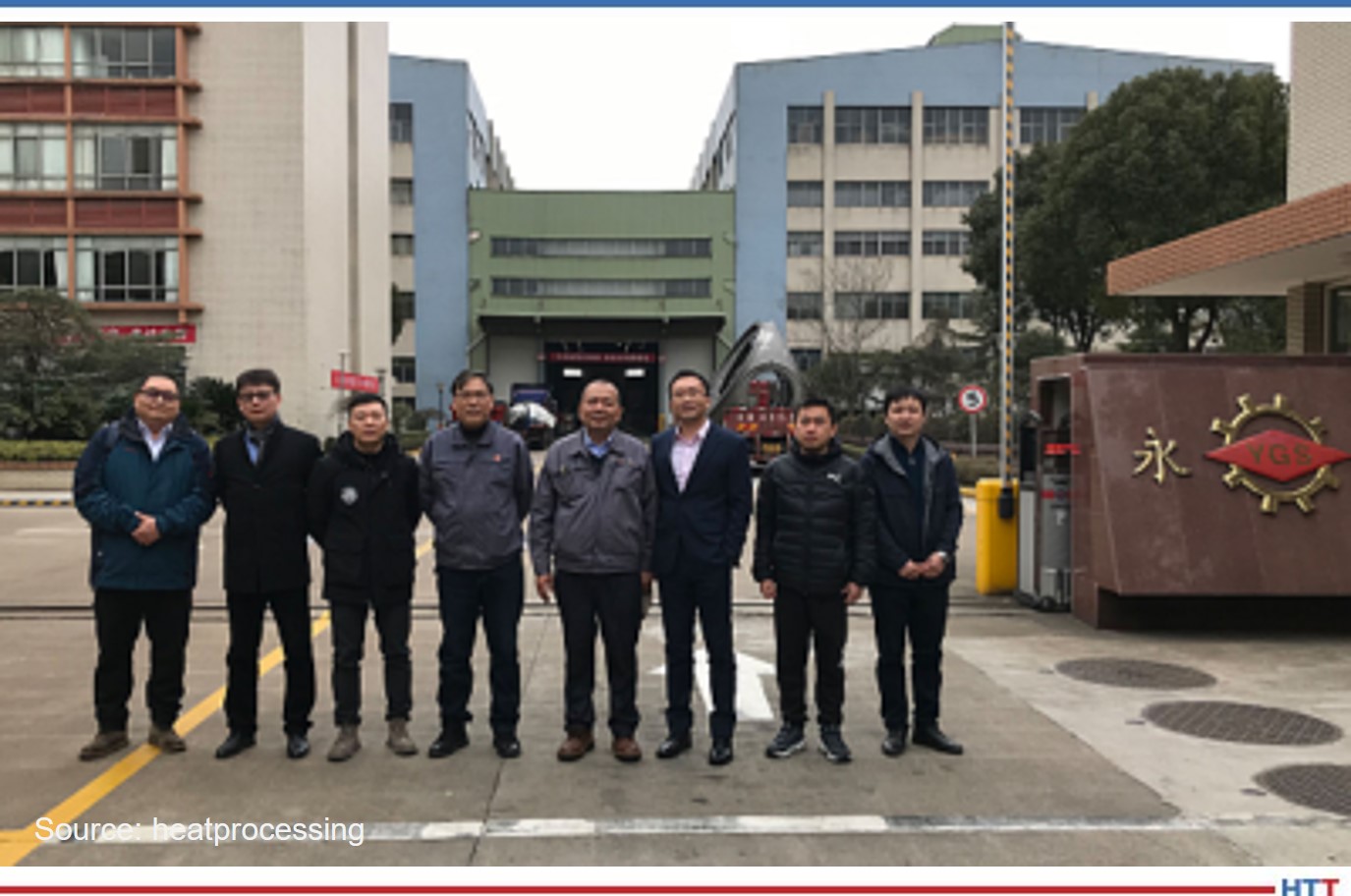
“The Yeong Guan Group (YGG) based in Taiwan has chosen ABP Induction as its partner to develop a large-scale sustainable project on the west coast of Taiwan. There, Hai Long 2, a 300 MW offshore wind farm, is to be built in the harbour area of the megacity of Taichung, whose components will be manufactured entirely by local stakeholders in Taiwan.
“Hai Long 2 is planned to be a regional industrial centre of excellence for offshore wind energy technology around Taichung. The idea is to concentrate the competence for development and planning as well as the production of corresponding components locally. This is intended to accelerate the transition to a sustainable energy supply through wind turbine technology for Taiwan and the entire Asia-Pacific region.”
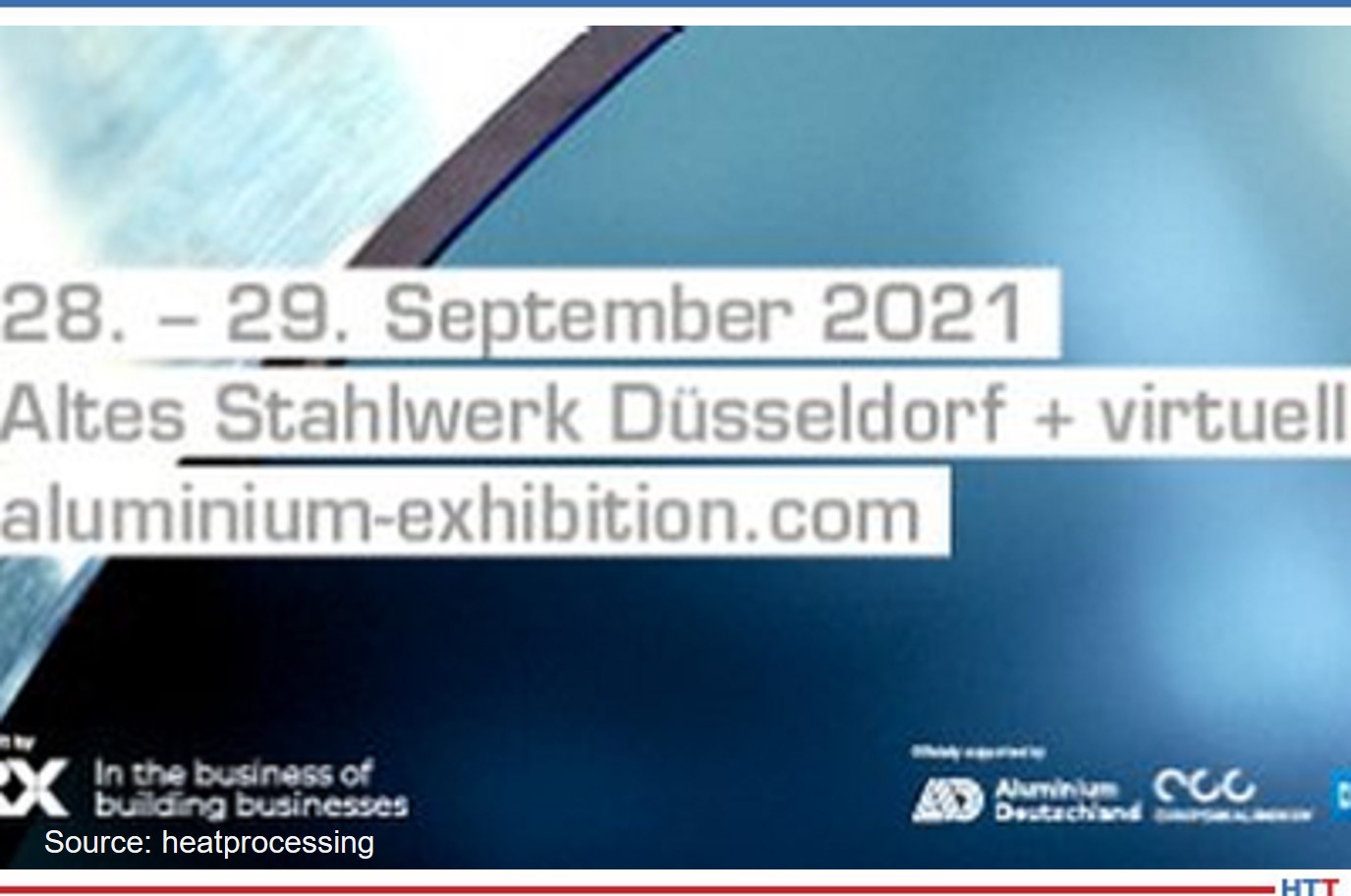
“Where steel was once used, aluminium is now driving the future: The ALUMINIUM Business Summit will celebrate its premiere at the Old Steelworks in Düsseldorf from 28 to 29 September 2021.
“With the new hybrid format of the Business Summit, ALUMINIUM, Aluminium Deutschland, the CRU Group and European Aluminium have joined forces to offer a new platform for technological, legislative and industrial exchange, enabling a constructive dialogue to tackle the biggest challenges of the future: low-carbon mobility, digitisation, sustainability and the future rules of the international market. The participants can either be present live at the networking event in Düsseldorf or follow the keynotes, discussion rounds and interviews online.”
It’s an honor to serve the good people in the heat treat industry. This labor day weekend, we hope you take a rest from the meaningful work that you do to catch a late morning coffee with those rambunctious kids, the “independent” cat, or your bedside table book.
There won’t be a Heat TreatDailyon Monday, so don’t worry about missing out!




 A U.S. manufacturer is set to receive a dual chamber furnace to heat treat automotive parts. This heavy duty furnace-over-oven features 12-gauge sheet steel construction with reinforced members for a solid framework and each chamber is 24” H x 24” W x 36” L.














 Welcome to another Technical Tuesday! Today, we look to our European information partner,