

FEATURED NEWS

Mesh Belt Atmosphere Heat Treatment Systems: Meeting Demands for Performance, Quality, and Innovation

OCMesh belt furnaces are the workhorse of the heat treating industry. With constant pressure to enhance performance and develop quality products, mesh belt furnaces are keeping up with the demand. In this article written by Tim Donofrio, vice president of Sales at CAN-ENG Furnaces International Limited, discover the ways mesh belt furnaces are addressing demands for innovation and quality.

This Technical Tuesday article appeared in Heat Treat Today’s February 2022 Air & Atmosphere Furnace Systems print edition.


Tim Donofrio
Vice President of Sales
Can-Eng Furnaces International
Source: Can-Eng Furnaces International Ltd.

Introduction

Manufacturers of high volume, high strength metal components constantly face increasing pressures to improve and develop enhanced performance and quality products while simultaneously addressing cost pressures placed upon them. The quality products include cold-formed automotive fasteners and clips, construction nails and screws, cutting and timing chain products, drive system gears, and bearing components, to mention a few. These reference components all require different types of heat treatment processes that impart a unique thermal profile which results in making the component stronger, tougher, more flexible, resistant to wear and corrosion, and improves the overall life of the component.

Mesh Belt Furnaces — Background

Mesh belt furnaces are synonymous with high volume heat treatment of formed, forged, and machined metal components that require soft handling methods to prevent part damage during processing. Furthermore, these systems are well equipped with features that reduce the opportunity for part mixing and contamination within the system. Modern mesh belt furnaces have been put into production around the world to achieve capacities from 100 lb/hr to 7000 lb/hr. Manufacturers today often favor higher capacity heat treatment systems as they offer more efficient returns on investment over lower capacity systems. The heat treatment processes ideally suited for mesh belt furnace systems include neutral hardening, marquenching, austempering, light case carburizing, carbonitriding, carbon restoration, normalizing, and tempering. In most cases, these processes include a multi-step process which involves heating the product to austenitizing temperatures under a reducing or carbon rich atmosphere, followed by an automatic transfer for drop from the furnace belt conveyor into a liquid quench conveyor system where the material transformation takes place. Quench systems vary in size and capacities and are custom designed around the product being heat treated. Design features may include agitation, fluid flow, and conveyor design which can greatly influence the quench speed and material transformation that results in the final physical properties achieved through quenching. Mesh belt heat treatment systems can implement various quench medias that include oil, polymer, water, and molten salts.

Mesh Belt Furnaces — Benefits

Mesh belt furnace benefits have grown significantly from their earlier developments that targeted reduced part damage and part mixing potential. Today, users are exploiting the benefits associated with increased part size range processing flexibility and capability. In the early days, part processing size range was limited to parts that weighed less than 1lb and were less than 4” in length. Today, with design enhancements, users can now process a product range that includes part sections ranging from 3/16” to 1-3/8”, part lengths up to 12” long, and part weights exceeding 2.5lbs each. This increased processing flexibility is made possible through the integration of modernized automated loading and transfer systems that minimize part drop heights and inertia, ensure precise loading, convey, and distribute products that protect against part damage while also ensuring dimensional stability is maintained to acceptable levels.

Additional advancements in the application and use of molten salt quenching have been recently exploited in response to the demand for low distortion and low residual stress level part processing. These demands are largely a result of customers’ needs to engineer products that outlive and outperform previous designs. This is largely a result of recent advancements made to support the shift in transportation technology; most noticeably, vehicle electrification and increased demands of vehicle propulsion systems. This has resulted in improved austemper and martemper technologies, paving the way for new molten salt handling designs that increase the overall safety and use of the systems. Specifically, new techniques for molten salt quench agitation, distribution, and quench drop chute fluid control have greatly improved the controllability of these systems and have also greatly improved the maintainability which has traditionally been difficult for users of previous designs.

Conclusion

It is well understood that the mesh belt furnace design provides significant benefits over other continuous and batch type processing systems for processing high volume and high-quality components that require exact metallurgical properties. The benefits of this system are immense, and system customization allows for further benefits to be integrated. The benefits discussed earlier represent recent advancements made to the mesh belt atmosphere furnace system that users are enjoying today. It should be recognized that several other design benefits also include:

  • Electrical heating systems, natural gas, and atmosphere reduction systems as a means of reducing users’ carbon footprint
  • Improved temperature uniformity of systems to support the expectations of the Automotive Industry Action Group (AIAG) CQI-9 guidelines
  • Hybrid quenching systems that allow for greater processing flexibility and sophisticated Industry 4.0 diagnostics, reporting and data archiving of equipment conditions, and process and product processing attributes

In closing, there are many options available to manufacturers requiring heat treating processes; therefore, the benefits of the mesh belt atmosphere heat treatment system should be strongly considered when seeking out the lowest cost of ownership for manufacturing processes.

About the Author:

Tim Donofrio, vice president of Sales at CAN-ENG Furnaces International Limited, has more than 30 years of thermal processing equipment experience. Throughout his career, he has held various positions within the custom engineered forging, commercial heat treating services, and custom engineered heat treating equipment industries.

Contact Tim at tdonofrio@CAN-ENG.com or (905) 380-6526.

Mesh Belt Atmosphere Heat Treatment Systems: Meeting Demands for Performance, Quality, and Innovation Read More »

This Week in Heat Treat Social Media: Valentine’s Day Edition

Welcome to Heat Treat Today’s This Week in Heat Treat Social Media: The Valentine’s Day Edition. You may think that case hardening means that the heart of heat treating shares no warmth for Valentine’s Day. Before you write this holiday off, see how February 14th celebrations with cards, chocolate, jewelry, and roses have heat treat and metallurgical connections.

If you have content that everyone has to see, please send the link to editor@heattreattoday.com.


1.  Share The Love . . . American Manufacturing Style

You don’t have the words to say. We get it. Well, you’re in luck. Use ANY of these free, downloadable Valentine’s Day cards to share with the ones you love.

From the Alliance of American Manufacturing: “We created a set of Made in USA Valentine’s Day cards to help spread the Made in America love this holiday — and we hope you will join us!”


2. When Manufacturing Meets Chocolate

Chocolate. The decadent dessert of choice today. And what does heat treatment and manufacturing have to do with it?

Viscous Sintering Welds Chocolate Drops, #VolcanicAsh

How to Temper Chocolate like a Materials Engineer


3. The Gift of WELL HEAT TREATED Jewelry

We know (and you know) the association of Valentine’s Day with gift giving, especially jewelry. But have you seen traditional heat treatment of sapphires in Sri Lanka and Thailand? Listen to professional and independent jewelry makers also talk about the importance of heat treatment in jewelry making.

A Bit Of History

.

Work Hardening and Annealing Jewelry

.

Heat Treating Sapphire DIY?


4. Lastly, a Rose

Who says metal isn’t romantic? Happy Valentine’s Day, folks.


This Week in Heat Treat Social Media: Valentine’s Day Edition Read More »

A Metal That Heals Itself

Source: ThomasNet

Sometimes our editors find items that are not exactly "heat treat" but do deal with interesting developments in one of our key markets: aerospace, automotive, medical, energy, or general manufacturing. To celebrate getting to the "fringe" of the weekend, Heat Treat Today presents today’s Heat Treat Fringe Friday best of the web article that will have you saying "It's alive!"

Not to be dramatic, this steel stands up to corrosion under salt water and heals itself. When the special alloy coated steel was perforated, it could repair itself with the assistance of heat or on its own. The new alloy? Apparently, the result of research done at Rice University described as "a lightweight sulfur-selenium alloy."

An excerpt:

"A coating developed using a lightweight sulfur-selenium alloy has proven effective so far in preventing corrosion after being applied to steel that’s then submerged in seawater for a month. The scientists say the formula combines several different corrosion-inhibiting methods."

Read more at "Self-Healing Steel Could Kick Corrosion to the Curb"

A Metal That Heals Itself Read More »

Heat Treat Radio Reminisces

OCWhether you're a long-time follower or a recent listener, Heat Treat Radio has a history of hits that we're highlighting in today's original content article. Read below to see how this resource for heat treaters developed and check out one of the "Top 5 Most Listened to Episodes" or “Top 5 Short Technical Episodes."


Quick History of Heat Treat Radio

Began in April 2016 by Doug Glenn, publisher of Heat Treat Today announcing the first ever episode: "Metallurgical Posterchildren: Hayley Sandgren." To date, there is a total of 70 episodes that have been released on the podcast.

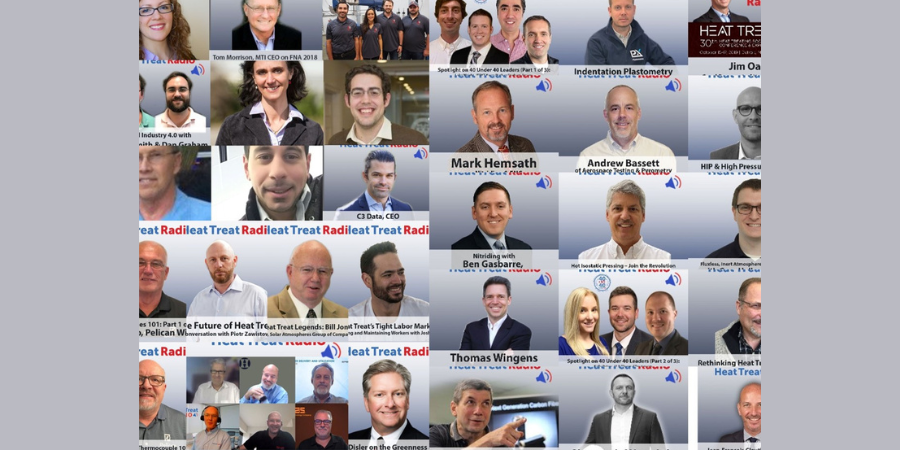
Over the years, several changes in how Heat Treat Radio presented these interviews occurred. If you've been following the podcast for awhile, you've probably seen the change in images that are used to promote the episode:


Additionally, beginning in July 2018, each episode was published with a transcript: "John Vanas on SX Oil Lifters."

The podcast has also changed in terms of delivery. Heat Treat Radio began with asking guests questions and delivering concise, clear answers. This helped the podcast deliver information to listeners, and you can listen to this yourself if you click almost any episode released before 2020. However, a shift to more conversational content happened over the years so that by 2020, you could tune in and listen to heat treating experts chat back-and-forth with Heat Treat Radio host, Doug Glenn, as if you were taking a walk around the plant with them. Now, the podcast is moving to deliver content in a fully visual form to give you the opportunity to watch and "sit in" to the conversation with them.

A quick run down of some interesting HTR facts (only according to SoundCloud listens) include what types of guests have been featured, how many episodes have been run, and who has been listening:

As a final interesting note, we found that you like to listen to Heat Treat Radio episodes the day or day after they come out; but if there is an episode that is particularly pertinent/relevant to heat treaters -- like "Heat Treat’s Tight Labor Market: Gaining and Maintaining Works with Josh Hale" -- listeners tune in on the weekends and in the afternoons during the week. Sound familiar??

Below, we compiled a series of statistics that may help you select the next episode for your Thursday, Tuesday 2:00pm, or weekend listening session.

TOP 5 MOST POPULAR EPISODES OF ALL TIME

TOP 5 SHORT TECHNICAL EPISODES

  1. Heat Treat Radio: Heat Treat Radio: Thermocouples 101 with Ed Valykeo, Pelican Wire (Part 1 of 3)
  2. Heat Treat Radio: Metal Hardening 101, Part 1 of 3
  3. Heat Treat Radio: A Discussion with David Wolff, Nel Hydrogen, COVID-19 Update
  4. Heat Treat Radio: James Jan & Andrew Martin on Development of Modeling Software
  5. Heat Treat Radio: Ben Gasbarre on Nitriding

Heat Treat Radio Reminisces Read More »

Heat Treat E-Commerce: A Growing Trend or a Passing Fad?

OCE-commerce? In the heat treating industry? Heat Treat Today was curious about this new trend, so we asked three heat treat insiders about their industry e-commerce experiences. Is e-commerce coming to the industry? Where has it succeeded; where has it failed? Is e-commerce a growing trend or is it just a passing fad? Find out if your future will include heat treat e-commerce or not!

Contributors include Shawn Orr, engineering manager, and Jonathan Lance, senior marketing specialist, at Televac®—The Fredericks Company and Clint Hall, the vice president of Marketing at Olsträd Engineering Corporation and Combustion 911.


Introduction

CBRE Group, Inc., an American commercial real estate services and investment firm, projects that U.S. e-commerce sales will increase $330 billion between 2020 and 2025. Others, like market research firm Statista, project an increase by about one-third.1 This may be the case for industry in general, but are purchasing habits of heat treaters changing, too? Could “e-commerce” be the next big thing for heat treaters?

We asked several heat treat industry insiders what they thought e-commerce could offer to heat treaters and how this service addresses a variety of purchasing needs.

What is “E-Commerce”?

Shawn Orr & Jonathan Lance: “Televac® is a designer and manufacturer of vacuum gauges, so to us e-commerce means offering our products for sale through our website and making them as easy as possible to purchase with the shortest possible lead times. Having online pricing and the ability to order online eliminates any lag time associated with waiting for a quote, email, or call from one of our sales representatives.”

Clint Hall: “We view e-commerce as (spare) part sales via the internet. We sell combustion equipment heat treaters use to keep their furnaces running.” Hall represents Olsträd Engineering Corporation’s Combustion 911 service.

[accordion style="colored"][acc title="Televac®—The Fredericks Company"]Televac® serves the heat treat industry by providing low-cost, robust, full range vacuum gauging solutions. With Televac®’s new e-commerce website, they are able to reduce lead times, while providing the same high-quality products, services, and support. [/acc][acc title="Combustion 911"]Combustion 911 is an e-commerce website which serves the heat treat industry by providing spare parts, but also complete combustion systems. Heat treaters use combustion systems to safely transport combustible fuels.[/acc][/accordion]

Getting on the Cutting Edge

These insiders shared that their initiative to implement e-commerce for heat treaters largely came from looking at the growing use of web retail in other manufacturing and service industries. They also elaborated on several practical lessons that come with spearheading a web-based, transactional initiative.

Hall: “We started Combustion 911 in 2009. We saw companies like Amazon and Walmart create a space for retail on the web, and we reasoned we could do the same thing for combustion parts. Our initial thought was to create and maintain a space where maintenance staff could easily source parts using a purchasing card, removing barriers and red tape that might keep them from getting the part quickly.”

When asked about lessons he and his team learned, he shared, “The lessons we learned were many and varied. For example, our first lesson was the need to include our phone number on the website. We thought this was going to be hands-off for us, and we were dead wrong. There are a lot of people in the world who don’t trust online shopping carts and will not use them. There are also a lot of people working with combustion equipment who need some reassurance they’re buying the right replacement part, and they’d rather speak on the phone than hash it out over email.

Second, we learned there aren’t nearly as many maintenance folks out there with purchasing cards (p-cards) as we’d thought. Most of our Combustion 911 transactions go through purchasing staff or third-party buyers.”

"[Our] first lesson was the need to include our phone number on the website. We thought this was going to be hands-off for us, and we were dead wrong." -Clint Hall, Combustion 911
Orr & Lance: “At Televac® we always do our best to position ourselves as innovators in the heat treat industry by adopting modern design and manufacturing trends. In today’s world of online retailers, we thought e-commerce was essentially a requirement to allow us to continue providing the highest quality products and services for our clients.”

They continued, “Building e-commerce functionality into an existing website wasn’t always an easy task. It was a challenge to maintain the look and feel of our website while also offering a streamlined e-commerce experience for our clients. One of the major takeaways was that it isn’t always about making an online sale, but instead it’s about maintaining quick access to the resources that our website offers to clients, like datasheets, manuals, application notes, instructional videos, and interactive tools, among others.”

The Evidence: How E-Commerce Helps Heat Treaters

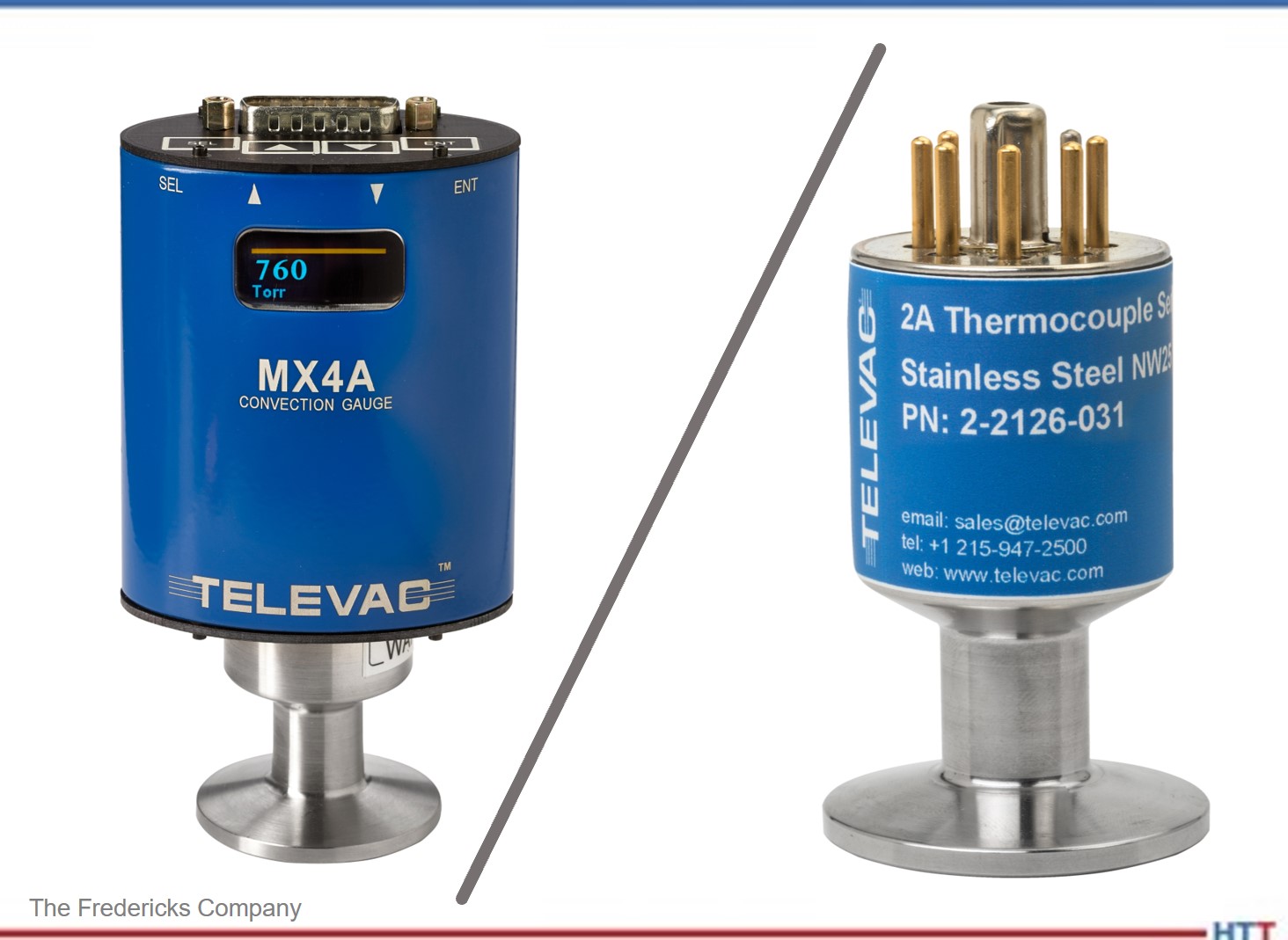
Orr & Lance: “There are many instances where we’ve seen our e-commerce website help our clients. One specific example was when a client needed 8 of our 2A thermocouple vacuum gauges to ship the same day because they had a system down. They were able to place the order on our website within minutes of realizing their need and make a payment that was processed immediately, allowing us to quickly receive the order and ship out the gauges the same day.

“We’ve also found that our e-commerce website significantly reduces the amount of time and effort required for our clients to place an order. An online order eliminates multiple emails or phone calls between our clients and the team, and streamlines the payment process. Because of these improvements, we can often reduce our lead times by several days, getting our products to our clients faster.

Example of MX4A and a 2A Thermocouple.
Photo Credit: The Fredericks Company

Hall: “The combustion market has been going through an upheaval due to the consolidation and eradication of many legacy brands. End users find themselves in a position where they need replacements for parts that have been discontinued or aren’t immediately available. We’ve been able to help users get back up and running using alternative parts with the same function, from stock.

“Additionally, e-commerce gives us a chance to reach a wider audience, which means we can help those in need find the assistance they’re looking for. It takes sustained effort to be relevant on the web, but the result is higher visibility, and the rewards are of equal benefit to us and our clients. They get the help they need, and you get the opportunity to serve them.”

The “Preferred” Purchasing Method

All three insiders attest to the ease-of-use for their clients. Whether it is measured in increased traffic to their website or how the tool has become the preferred purchasing method.

A screen capture of the navigation on Combustion 911, the e-commerce website associated with Olsträd Engineering.

Hall: “Combustion 911 has been going strong since its inception (and once we added our phone number). An unlooked-for boon in this website has been the generation of leads for system sales. We offer combustion and automation engineering, suites of parts, assembled manifolds, control panels, installation, service, the works. These services are available piecemeal or all together, and we’ve developed long-term clients from Combustion 911 inquiries in every category.”

Screen capture of the embedded functionality of e-commerce on The Fredericks Company's website.

Orr & Lance: “Since we launched our e-commerce website in 2020, we have seen a significant increase in online orders each month from clients purchasing our vacuum gauging. We’ve found that many of our clients prefer purchasing online because they want the same experience they have with other online retailers.”

Final Thoughts

Perhaps you are on the frontier of either purchasing or selling heat treat equipment, parts, or services online. As has been discussed, streamlining purchasing habits, finding a new heat treat product provider, or being able to “click” the most up-to-date product with quick shipment options are all appealing reasons to try e-commerce. But as with any change or innovation: Do your research to make sure that this service is right for you before you dive headfirst. Happy buying!


References

1 David Sparkman, “Industrial Real Estate Demand Rising,” Material Handling & Logistics (7 July 2021). www.mhlnews.com.

About the Authors:

Shawn Orr, engineering manager at Televac®The Fredericks Company, is responsible for the company’s engineering department and all engineering projects related to research and development and manufacturing.

Jonathan Lance, senior marketing specialist at Televac®The Fredericks Company, is responsible for addressing all marketing needs for the company, including website development, graphic design, digital advertising, and analytics.

Clint Hall is the vice president of Marketing at Olsträd Engineering and Combustion 911. Olsträd provides advanced combustion, controls, and automation systems across a broad spectrum of industries, and represents ESA (burners, flame safety, combustion solutions) and Elektrogas (combustion controls) in North America.

Heat Treat E-Commerce: A Growing Trend or a Passing Fad? Read More »

Don’t Vacuum-Braze Metals Containing Zinc

Source: Kay & Associates Brazing Consultants 

Are you sure you should vacuum braze that? As the title of this best of the web article suggests, vacuum brazing materials containing zinc is not a good idea. Volatized zinc can contaminate, and maybe even ruin, your vacuum furnace. But what about cadmium, lead, chromium, and magnesium? Is vacuum brazing safe for those materials?

In this article by Dan Kay, examine the vapor pressure curves of common metallic elements to be sure you know exactly when you need to worry about vaporization. And remember, operating your furnace at partial pressure does not offset the effects of vaporization.

An excerpt: 

Many people braze stainless steels (which contains chromium) at vacuum levels approaching 10-5 Torr [. . . ] You can readily see that at 10-5 Torr the temperature at which Cr volatilizes has dropped down to only about 1800F (950°C). Since nickel-brazing of stainless typically takes place at about 2000-2100°F (1095-1150°C), please understand that you will indeed be volatilizing chromium during this brazing operation, which will condense on the furnace walls, giving them a greenish/bluish coloration.

Read more: Don't Vacuum-Braze Metals Containing Zinc

Don’t Vacuum-Braze Metals Containing Zinc Read More »

EAF Steel Producer Increases Furnace Capabilities

HTD Size-PR LogoCelsa France, an EAF (electric arc furnace) steel producer specializing in the production of steel billets from steel scrap, will be increasing the technology capabilities of their 150-ton scrap AC top charge furnace in Boucau, France.

The iEAF® technology platform supplied by Tenova Goodfellow, Inc., a Canadian subsidiary of Tenova, is Celsa France’s third NextGen® system to be installed in Europe. The scope of supply will include NextGen® hardware for upstream off-gas measurement and various software solutions.

“We are pleased to continue our long-standing relationship with Tenova,” states Nicolas Claveranne, production manager at Celsa France and project manager for this project. “The NextGen® references – we are sure – will bring added value to the steelmaking operations of our plant.”

EAF Steel Producer Increases Furnace Capabilities Read More »

Mueller Brass Co. Soon to Heat Treat with New Sintering Furnace

HTD Size-PR Logo

A batch sintering furnace will be installed at Mueller Brass Co., a major supplier of brass rod and forgings in the United States. The 60" wide x 90" deep x 30" tall atmosphere box sintering furnace includes an accelerated gas cooling system to improve floor-to-floor cycle time and meet their demanding production needs.

This Gasbarre Thermal Processing Systems box furnace is designed with a maximum operating temperature of 1650°F, a capacity of 14,000 lbs., and utilizes a nitrogen atmosphere. The system incorporates an Allen-Bradley PLC with SSi 9130 control and 12.1" HMI display. Additionally, the indirect fired gas heating system incorporates parallel positioning control for efficiency and process flexibility, and an integrated oxygen analyzer gives Muller Brass Co. the proper furnace environment prior to heating.

Tall atmosphere box sintering from Gasbarre Thermal Processing Systems
Photo Credit: Gasbarre Thermal Processing Systems

Mueller Brass Co. Soon to Heat Treat with New Sintering Furnace Read More »

The Heat Treat Industry Calendar Is Ready, Are You?

OCNavigate this summer's heat treat events with Heat Treat Today's Industry Calendar. This hidden gem is located under "Resources" on www.heattreattoday.com, and it is always updating with the latest industry events. As you make your vacation plans, be sure you aren't missing any key events; this June 15th, there are three events going on. Check out these event descriptions in today's original content piece below!

If you have an event to add -- or want to give us a heads up on an event that you and others are going to attend -- feel free to reach out to the editors at editor@heattreattoday.com.


Jump over to the "Resource" tab on www.heattreattoday.com, and you'll find the Industry Calendar located fourth down. This calendar let's you search by month in list or calendar view format so that you can visualize your summer (or fall, or winter, or spring) with ease.

A couple tips to navigate the calendar:

  1. Click "Show Events in Search" to select your desired month (see Image 1).
  2. If you want to learn more about an item in the calendar, hover over the name of the event to see the image (see Image 2).
  3. Want to see the full details of the event? Click the event items, and you'll be redirected to the event page.

Preview of Summer 2022 Events: June 15, 2022 

PowderMet 2022

When: June 12 - June 15

Image 3

"The leading North American technical conference on powder metallurgy and particulate materials, PowderMet2022 is a hub for technology transfer for professionals from every part of the industry, including buyers and specifiers of metal powders, tooling and compacting presses, sintering furnaces, furnace belts. . ."

Process Heating & Cooling Show 2022

When: June 15 - June 16

The inaugural Process Heating & Cooling Show is a place for anyone involved with industrial heating and cooling processes [. . .]. This event will bring together numerous industries in the process industries including oil & gas, electronics, pharmaceuticals, food, beverages, packaging and plastics, to name a few. Plan to join us and connect face-to-face with like-minded peers, learn from business thought leaders, and uncover emerging trends and technologies."

Additive Manufacturing with Powder Metallurgy (AMPM) 2022

When: June 12 - June 15

"Focusing on metal additive manufacturing, AMPM2022 will feature worldwide industry experts presenting the latest technology developments in this fast-growing field."

There's so much more! Explore the Industry Calendar here.

The Heat Treat Industry Calendar Is Ready, Are You? Read More »

Aalberts Expands Hardening Plant Capabilities

HTD Size-PR LogoAalberts Surface Technologies Group will expand their Dzierżoniów, Poland hardening plant with a new AFT process line. The line, based on two-chamber atmosphere furnaces, will boost the plant's manufacturing of transmission components and specialized hardening processes including carburizing, nitrocarburizing, and annealing.

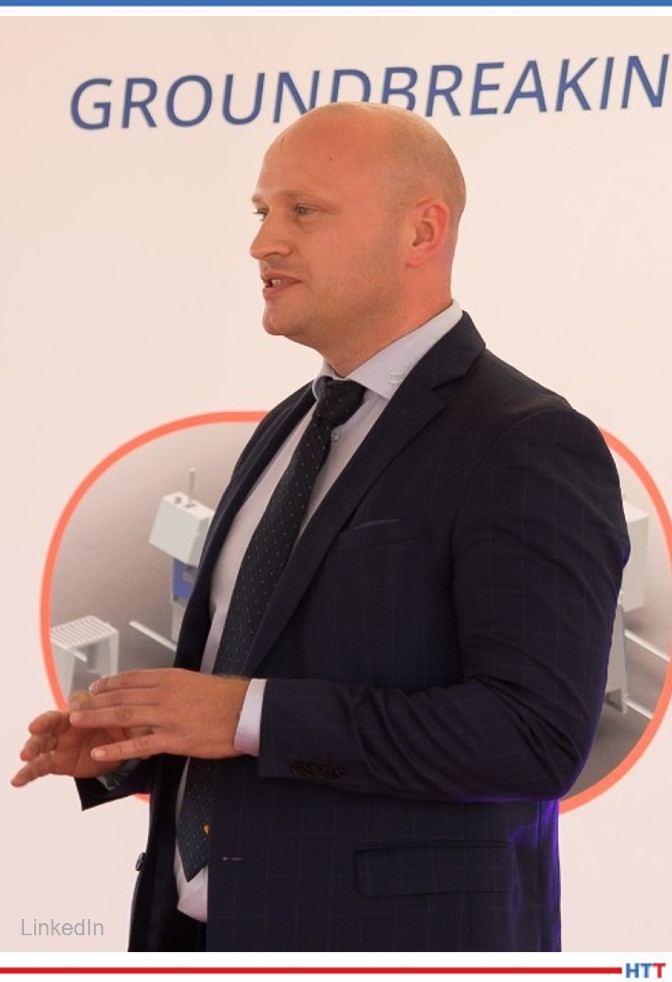
Bartłomiej Olejnik, Managing Director, Aalberts Surface Technologies Heat Sp. z o.o.
Photo Credit: LinkedIn

SECO/WARWICK, parent company of North American furnace supplier SECO/VACUUM Technologies, will provide a main furnace, a tempering furnace, and an endothermic atmosphere generator, loading/unloading devices, and auxiliary infrastructure. The line offers both conventional load arrangements with modular accessories and hardening baskets.

"The new line will significantly increase our capacity and will allow us to expand our business to other Eastern European countries,” said Bartłomiej Olejnik, managing director, Aalberts Surface Technologies Heat Sp. z o.o.


Aalberts Expands Hardening Plant Capabilities Read More »

Skip to content