

FEATURED NEWS

UK Heat Treater Joins Trade Mission to Poland to Explore Aerospace Options


Source: BQLive.com


A group of aerospace firms or suppliers from the UK’s Midlands, including a heat treating company, recently traveled to Rzeszow, Poland, which has the largest aerospace cluster within the country, on a trade mission to tour local factories and explore potential partnerships.


Read more: “First Joint Aerospace Sector Trade Mission Visits Poland”

Photo credit: Express.com

UK Heat Treater Joins Trade Mission to Poland to Explore Aerospace Options Read More »

Heat Treatment Integral to New Alum Facility in Kentucky

Heat treatment processes are among the operations planned at an automotive aluminum sheet manufacturing facility in Guthrie, Kentucky, where a gathering of business and government officials celebrated a groundbreaking this week.

Steve Fisher, president & CEO, Novelis Inc.

Representatives from Novelis, the world leader in aluminum rolling and recycling, were joined by local and state officials to recognize the investment of a 400,000 square foot, $305 million facility that will create approximately 125 jobs and produce annual nameplate capacity of 200,000 metric tons. The facility will include heat treatment and pre-treatment lines for use in vehicle parts such as body-in-white, hoods, doors, lift gates and fenders. Novelis will begin producing automotive aluminum at the site in 2020.

“The increased adoption of aluminum in cars, trucks and SUVs, coupled with more automotive manufacturing plants in the southeast makes Guthrie a strategic location to serve our customers,” said Steve Fisher, president and CEO, Novelis Inc. “With the strong, highly-skilled workforce in Kentucky, we believe our culture and commitment to building a sustainable world together will have a lasting and positive impact on this community.”

The significant positive impact of tax reform in the U.S. reinforces Novelis’ decision to expand at this time. A favorable economic environment has enabled Novelis to recently finalize key contracts totaling approximately $60 million for engineering plans, site preparation and state-of-the-art equipment for the greenfield facility. Senator Rand Paul, Congressman James Comer, Governor Matt Bevin and Senator Mitch McConnell’s staff were present at the groundbreaking ceremony.

Paul Banks, a 25-year veteran of the aluminum rolling industry, will oversee the project as Plant Manager, having previously served as Unit Manager at Logan Aluminum, a Novelis joint venture in nearby Russellville, Kentucky.

Heat Treatment Integral to New Alum Facility in Kentucky Read More »

A Heat Treater’s Primer on Getter Materials


Source: VAC AERO International


A common dilemma for operators of vacuum systems is to protect the integrity and maintain the life expectancy of components when the presence of unwanted gaseous contaminates threatens to destroy the sensitive materials in the processing environment. Getter materials are the MVPs that step up to the plate to protect work in a low-pressure vacuum environment.

Table 1 [1] Getter Capacity of Common Materials
The folks at VAC AERO International have provided a primer on getter materials which answers the heat treater’s questions, such as:

  • What is a getter?
  • What are the properties of getter materials?
  • What materials are best as getters for most heat-treating applications? What about for more sophisticated applications?
  • What are non-evaporative getters, and what role do they play?

“For heat treaters, getters are often considered a last resort to help keep parts ‘bright and clean’. In point of fact, they play an important role in successful vacuum processing of many highly sophisticated products and materials. As a result, we need to do a better job of understanding their role; how and where they can help.”


Photo Credit and caption: Titanium Discs used as a Getter Material in Brazing of Oxidation Sensitive Components – (Photograph Courtesy of California Brazing, Newark, CA)

A Heat Treater’s Primer on Getter Materials Read More »

Heat Treatment Sector to Contribute to Medical Technology Research for Improved Health Care, Medical Devices

The Heat Treatment Pty Ltd. of Queensland, Australia, will contribute to a new research hub set to drive advances in Australia’s medical technology sector by developing cost-competitive technologies for the rapid production of medical devices.

Researchers from The University of Queensland’s Faculty of Engineering, Architecture and Information Technology have teamed up with experts from industry, government, and academia to launch the Australian Research Council (ARC) Research Hub for Advanced Manufacturing of Medical Devices (AMMD Hub).

UQ Vice-Chancellor and President Professor Peter Høj

With researchers based at Cook Medical Australia, the AMMD Hub will focus on the development of advanced materials, improved manufacturing technologies and flexible processing capabilities.

UQ Vice-Chancellor and President Professor Peter Høj said one of the key goals for this hub was to create better health outcomes for patients in Australia and around the globe.

“One of the intended outcomes is to reduce the time it takes to design, manufacture and supply custom-made medical devices such as endovascular stent grafts for patients with aortic aneurysm – an increasingly common condition that currently has post-rupture survival rates of only 10 to 20 per cent,” said Professor Høj. “It’s an exciting venture with lots of potential, and we look forward to celebrating the results.”

Professor Sue Thomas, Australian Research Council CEO

Researchers have already begun work in the area of lean manufacturing to improve the production times of custom-made devices to surgeons. Projects looking at adaptive automation systems, metallic biomaterials, and collaborative robotics are also underway.

“This Research Hub’s industry-focused research collaboration will develop new, advanced materials and processes that will not only lead to tangible health outcomes for Australians but also drive new technologies and skills that are vital for the competitiveness of Australia’s medical devices industry,” said Professor Sue Thomas, Australian Research Council CEO.

The AMMD Hub brings together researchers from UQ, The University of the Sunshine Coast, The University of Sydney and RMIT with industry partners including Cook Medical Australia Pty Ltd., Robert Bosch (Australia) Pty Ltd., Heat Treatment (Qld) Pty Ltd. and QMI Solutions Ltd.

Heat Treatment Sector to Contribute to Medical Technology Research for Improved Health Care, Medical Devices Read More »

Metals Manufacturer Marks Growth with Second Micro Mill in Oklahoma

A steel and metals manufacturer based in Irving, Texas, which processes materials and services through a network of facilities that includes electric arc furnace (EAF) mini-mills and micro mills, recently dedicated a new micro mill in Durant, Oklahoma.

Barbara Smith, chairman, president, and CEO of CMC.

This is Commercial Metal Company’s second micro mill in Durant, supporting CMC’s processing and supply of steel and metals to a wide range of industries, including energy, construction, refractory, and transportation. The new technologically advanced facility will use a continuous manufacturing process which melts, casts, and rolls steel from a single uninterrupted strand, resulting in higher yields and lower energy consumption.

“We look forward to providing our customers with high-quality product combined with CMC’s outstanding service,” said Barbara Smith, chairman, president, and CEO of CMC.


Metals Manufacturer Marks Growth with Second Micro Mill in Oklahoma Read More »

Heat Treater Expands Capabilities with Ferritic Nitrocarburizing, Extends Industry Coverage


Source: Trailer-Bodybuilders.com


A metal processing company based in Lansing, Michigan, which provides numerous heat treating services such as annealing, quench & tempering, and stress relieving, recently added Ferritic Nitrocarburizing (FNC) to its process offerings.

Atmosphere Annealing, a division of Premier Thermal Solutions (PTS), supports automotive, energy, aerospace, agriculture, heavy equipment, heavy truck, rail and wire rope industries to customers throughout the U.S. Midwest.

An excerpt:

“FNC, a low-temperature process, typically is used on plain carbon steel components.  FNC is known for providing a high level of wear resistance, low distortion, improved fatigue properties and greater corrosion resistance.  Depending on requirements, FNC often is used as an alternative to carburizing and carbonitriding.”


Read more: “Atmosphere Annealing Adds FNC to Process Offerings”

Heat Treater Expands Capabilities with Ferritic Nitrocarburizing, Extends Industry Coverage Read More »

Buffalo-based Heat Treatment Provider Building Multiple Carbon Fiber Production Lines

Dr. Bill Stry, senior process technology engineer at Harper International

A global leader in complete thermal processing solutions recently extended the carbon fiber production capabilities of several cutting-edge material industries across multiple sectors by building and installing oxidations ovens.

Harper International, based in Buffalo, New York, offers thermal and velocity uniformity through the design and manufacture of carbonization technology and equipment for carbon fiber production. The company’s 3-meter wide, center-to-end parallel flow production oxidation ovens include integrated tow guidance and energy recovery, integrated roll stands with precision tow tracking, and low energy consumption per kilo of fiber.

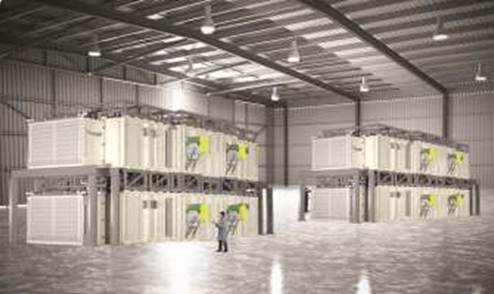
Artist drawing of the thermal processing line of oxidation ovens being built by Harper International

“Our technology advancements provide rapid startup and stable oxidation, improved air velocity and thermal uniformity at a variety of flow rates, and optimal control of the reaction ultimately enhancing fiber quality,” said Dr. Bill Stry, senior process technology engineer at Harper International.


Buffalo-based Heat Treatment Provider Building Multiple Carbon Fiber Production Lines Read More »

Radiant Tubes Longevity Improves Heat Treating: An Analysis


Source: heat processing online


Photo Credit: heat processing online

Nico Schmitz, Christian Schwotzer, and Herbert Pfeifer with the Department for Industrial Furnaces and Heat Engineering (IOB) in Germany have collaborated on an analysis of metallic recirculating radiant tubes, their purpose in the heat treating process, and their design and installation. In particular, the authors, with access to a furnace-equipped pilot plant operated by IOB, investigate the factors that affect tube productivity and contribute to tube failures. They have reported on these findings in an exclusive paper published at heat processing online, the official publication of the European Committee of Industrial Furnace and Heating Equipment Association (CECOF).

An excerpt:

“It is common to assume a homogeneous temperature distribution for construction calculations. In real operation, inhomogeneous temperature distributions occur. The temperature gradients induce thermal stresses that can substantially influence the lifetime of the tubes. In addition to that, higher furnace temperatures come along with an increasing thermal load.”


Read more: “Increasing Lifetime of Metallic Recirculating Radiant Tubes”

Photo credit: heat processing online. Caption: Radiant tube test furnace at IOB

Radiant Tubes Longevity Improves Heat Treating: An Analysis Read More »

Lightweight Vehicle Frame Draws Attention from Car Aficionados and U.S. Defense


Source: Light Metal Age


1963 Chevrolet Corvette Sting Ray

The classic Corvette makes an appearance again in Heat Treat Today‘s Best of the Web feature, this time as a test model for a project that targets development of alternative lightweight vehicle frames.

A growing market demand for alternative lightweight vehicle frames in the custom car market is driving technology “to design a lightweight frame that could be easily morphed into virtually any wheelbase, vehicle length and width without requiring additional tooling,” reports Light Metal Age, and not only are classic car enthusiasts interested, so is the U.S. Department of Defense.

An excerpt:

Beyond replica cars, this frame can be adapted for military applications, as a number of companies working with the Department of Defense have identified the need for a lightweight frame to be used in military vehicles to effectively lighten loads and increase fuel economy.”

First to unveil an innovative lightweight vehicle frame for the aftermarket, based on testing that involved the 1963-67 Corvette (C2 second generation design), was the Michigan Manufacturing Technology Center.


Read more: “Manufacturing Technology Center Unveils Lightweight Vehicle Frame”

Lightweight Vehicle Frame Draws Attention from Car Aficionados and U.S. Defense Read More »

15 Quick Heat Treat News Items to Keep You Current

15 Quick Heat Treat News Items to Keep You Current

Heat Treat Today offers News Chatter, a feature highlighting representative moves, transactions, and kudos from around the industry.

Personnel and Company Chatter

  • Construction on an expansion recently broke ground for Premier Furnace/BeaverMatic's plant 1 facility in Farmington Hills, Michigan. This expansion will provide space for a state of the art testing and training facility, additional manufacturing capabilities, as well as increased office space to allow Premier/BeaverMatic to accommodate business growth and customer needs. The additional 22,000-square foot space is expected to be completed by fall 2018.
  • Paul Banks as plant manager for Novelis Inc.'s recently announced $300 million automotive aluminum sheet manufacturing facility in Guthrie, Kentucky. Banks assumes the role of plant manager after previously serving as unit manager at Logan Aluminum, a Novelis joint venture in nearby Logan, Kentucky.
  • Electroplating and heat treating specialists Electro-Spec, headquartered in Franklin, Indiana, is expanding its operations with a new plating facility in Lexington, South Carolina, that will serve the automotive, aerospace, telecommunication, military, radio frequency and microwave, and medical markets in the southeast U.S.
  • A heat treating company based in Lima, Ohio, recently expanded its capacity with a new draw furnace and quench tank. Heat Treating Technologies expects the $3 million investment to boost the company's thermal processing offerings in carburizing, carbonitriding, annealing, hardening, normalizing, and carbon restoration.
  • An industrial oven manufacturer based near Williamsport, Pennsylvania, recently added a second manufacturing facility to its operation. JPW Industrial Ovens and Furnaces' Plant 2, will produce the company’s expanding line of standard industrial ovens. Plant 1, located in Trout Run, will continue to craft custom-made industrial ovens and serve as the company’s headquarters. The new plant is expected to create 25 new jobs within the next two years.

Equipment Chatter

  • Three natural gas-fired box furnaces were recently shipped to a parts manufacturer for the oil and gas industry by Lindberg/MPH, to be used to develop process control requirements for heat-treating and stress relieving of underground mining/drill heads. The goal is to double the life of the tooling through research which would revolutionize industry standards. The maximum operating temperature rating for the stress relieving box furnaces is 2050°F and work chamber dimensions are 36" wide x 20" deep x 24" high. The box furnaces were designed to meet a temperature uniformity of +/-15°F at 1700°F and 2050°F per the requirements of AMS 2750E, Class 3 furnaces and Instrumentation D.
  • An aluminum casting company recently received shipment of an electrically heated horizontal quench system to be used for solution treating aluminum castings for the aerospace and automotive industries. The solution treating furnace was designed and manufactured by Wisconsin Oven Corporation to heat a 2,500-pound load of aluminum, plus basket and work grid to an operating temperature of 1,020°F. The maximum temperature rating for this horizontal quench system is 1,250°F, sized for a 5'0" wide x 5'0" long x 5'0" high basket. The horizontal quench system was designed to meet AMS2750E (Class 2, Instrumentation Type C) and with reporting to meet AMS 2771E requirements.
  • A heat treating equipment manufacturer recently shipped ten furnaces to companies in California, Georgia, Ohio, Washington and Wisconsin, and also to one location in Asia. This equipment will be used to process parts for companies in the aerospace, commercial heat treating, and medical industries. Ipsen USA shipped: two TITAN® furnaces – one H2 12-bar with a 18" x 24" x 18" (457 mm x 610 mm x 457 mm) work zone and one vertical 2-bar furnace; two MetalMaster® furnaces – one vertical 6-bar with a 96" D x 96" H (2,438 mm x 2,438 mm) work zone and 10,000 pound (4,500 kg) load capacity, and one horizontal 10-bar with a 96" x 84" x 96" (2,438 mm x 2,134 mm x 2,438 mm) work zone; one VFS® horizontal internal quench 10-bar vacuum heat-treating and brazing furnace; and several custom-built atmosphere furnaces that will process parts for the aerospace industry.
  • A retort furnace was recently shipped by L&L Special Furnace Co., Inc., to a northeastern US manufacturer of motor laminations to be deployed on motors primarily for government-based aerospace products. The furnace has a work zone of 17" square with a typical load weight of 250 pounds and is built in accordance with ASTM standards. Annealing of silicon iron and similar laminations are treated in a pure dry hydrogen atmosphere. A pure dry hydrogen atmosphere is provided to balance strength and magnetics in these laminations. There is also an oxidization process that can provide a thin oxide coating layer for improved durability and resistance.
  • A global manufacturer of environmental testing equipment announced the shipment of three fast change rate automotive test chambers. These test chambers, built by Tenney Environmental, will be used for temperature and humidity testing of automotive parts. The maximum temperature rating of the automotive test chambers is 180°C and the operating temperature range is -68°C to 180°C. The work chamber dimensions are 30” W X 28.8” D X 36” H. The fast change rate test chambers can transition the air temperature in remote chambers from 20°C to -40°C with a 30-minute transition rate.

Kudos Chatter

  • Sintavia, LLC, a leading Tier One metal additive manufacturer, announced that it has achieved National Aerospace and Defense Contractors Accreditation Program (NADCAP) approval for its laser and electron beam powder bed fusion applications. The NADCAP accreditation is the latest quality certification achieved by the company and resulted from a year-long application process.
  • AIM Aerospace has earned Nadcap Merit Status at their Orange City, Iowa, facility, for AC7118 Composites Processing.  The company processes structural carbon fiber composites for key aerospace customers.
  • Plastics Extrusion has been added to the growing list of audit opportunities available through MedAccred, the medical device industry’s collective approach to critical process supply chain oversight. This newest opportunity comprises audit criteria which covers Tubing/Profile, Sheet, Film, Blown Film, Over-Jacketing, Co-Extrusion and Ram Extrusion. The audit criteria are developed by leaders in the medical device industry who are part of the MedAccred program and are focused on improving product quality and patient safety.
  • Sunlite Plastics of Germantown, Wisconsin, has become the first manufacturing facility in the world to achieve MedAccred Plastics Extrusion Accreditation, with a Scope of Accreditation covering Tubing/Profile Extrusion. Following the MedAccred audit, technical experts from leading medical device companies reviewed the audit findings and corrective actions before voting on granting each MedAccred Accreditation.
  • Medical tools manufacturers increasingly commission SECO/WARWICK technologies for product quality and strict standards compliance, according to a recent company report. For example, a U.K. company installed a 6 Bar vacuum furnace for the production of medical tools such as those used for heart bypass procedures.


Heat Treat Today is pleased to join in the announcements of growth and achievement throughout the industry by highlighting them here on our News Chatter page. Please send any information you feel may be of interest to manufacturers with in-house heat treat departments especially in the aerospace, automotive, medical, and energy sectors to the editor at editor@heattreattoday.com.

15 Quick Heat Treat News Items to Keep You Current Read More »