A major steel manufacturer recently acquired certain assets from a carbon steel tubing provider that supplies induction heat-treated tubes for automotive applications.
Nucor Corp acquired the assets from Century Tube LLC, based in Madison, Indiana, which supplies carbon steel tubing for automotive and other mechanical and structural applications. The company offers round, square, rectangular, oval and other special welded shapes of mechanical steel tubing, and is a leader in supplying induction heat-treated tubes for automotive applications. Since 1993, Century Tube has produced more than 300 million door impact beams for use in Toyota, Honda, Ford, FCA, Subaru, Nissan, and Mitsubishi vehicles.
A leading producer a state-of-the-art aluminum extrusion and forging grade billet and rolling ingot slabs with four plants in North America recently entered into an agreement with a thermal equipment supplier based in St. Louis, Missouri, for the supply of several furnaces in support of the company’s greenfield expansion in Wisconsin Rapids, Wisconsin.
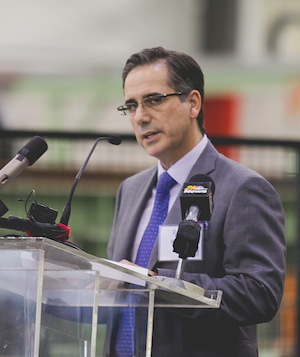
Robert Roscetti, Vice-President of Corporate Development, Matalco Inc. / Photo credit: Light Metal Age
Matalco Inc., which has facilities in Canton, Ohio; Lordstown, Ohio; Bluffton, Indiana; and Brampton, Ontario, ordered from Gillespie & Powers Inc. one 115,000 lb tilting melting furnace, one 115,000 lb tilting holding furnace, three 120,000 lb batch homogenizing ovens, and two 120,000 lb. batch coolers with charging car, and related equipment.
“We are excited about our new partnership with Gillespie & Powers Inc. for the complete furnace equipment installation and commissioning for our new Wisconsin Rapids plant,” said Robert Roscetti, Vice-President of Corporate Development, Matalco Inc. “It represents a major step forward in the construction of Matalco’s new facility, which is on schedule for first production in 2020.”
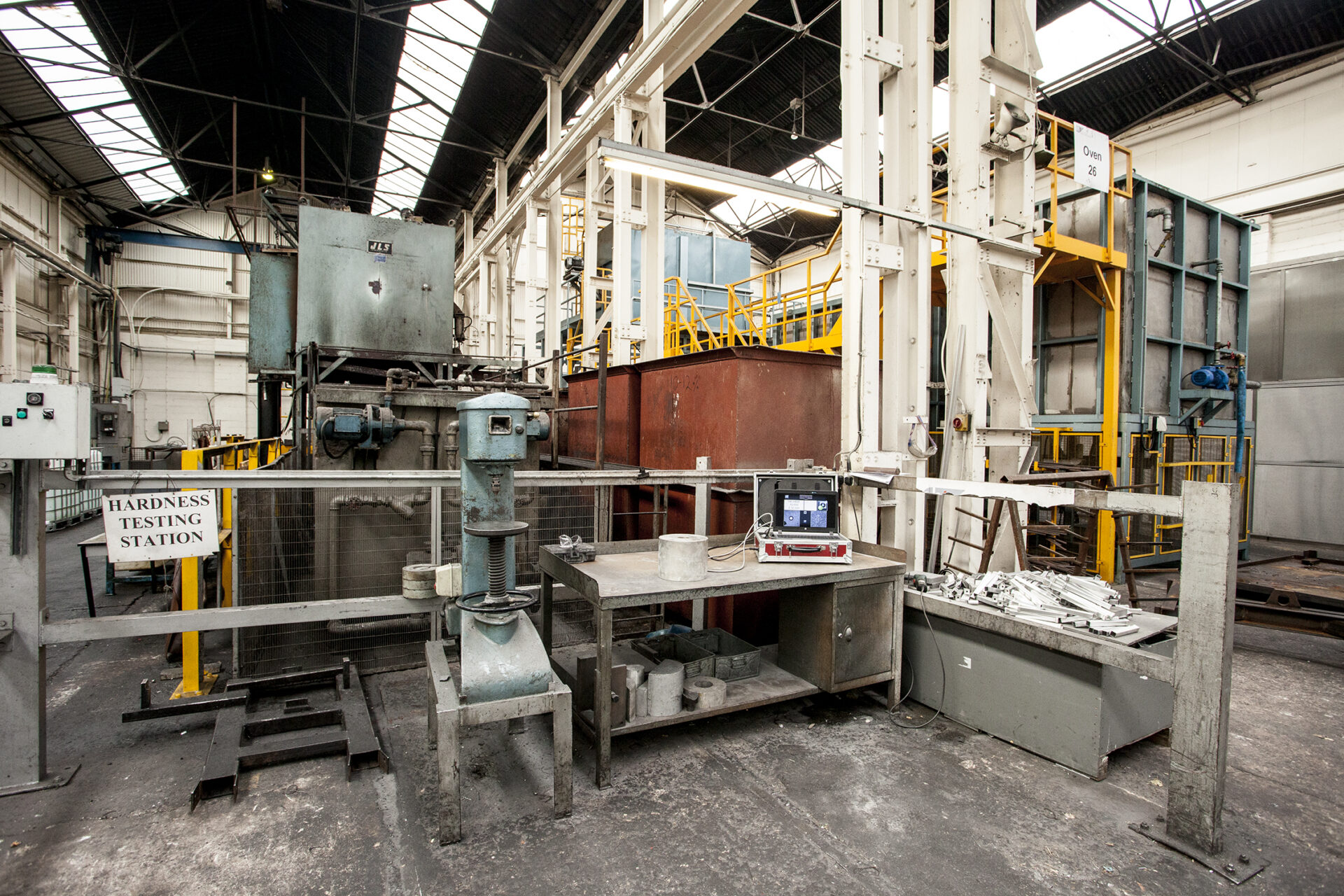
Main image credit/caption: Light Metal Age / The furnace pictured is a tilting melter in the up position of the type that will be delivered to Matalco Wisconsin.
A Cleveland, Ohio, company with metallurgy capabilities that manufactures arc welding products and systems and provides alloy brazing and soldering recently acquired a privately held supplier of custom tooling, parts, and fixtures primarily serving automotive and aerospace markets.
Christopher L. Mapes, Chairman, President and Chief Executive Officer
The acquisition by Lincoln Electric Holdings Inc. will advance the company’s automation and metal additive manufacturing capabilities and leverage its core competencies in software development and metallurgy. Baker Industries, based in Detroit, Michigan, has extensive in-house design and manufacturing capabilities, including machining, fabricating, assembly and additive manufacturing. Their operations adhere to stringent aerospace quality management standards and are AS9100D certified and Nadcap accredited.
A new metal additive manufacturing service business will launch in mid-2019 which will include the production of large-scale printed metal parts, prototypes and tooling for industrial and aerospace customers. The Baker operation, along with a new Cleveland, Ohio-based additive manufacturing development center, will provide an additive manufacturing platform to help customers improve their lead times, designs and quality in their operations.
“We are pleased to welcome Baker Industries to Lincoln Electric and to our automation portfolio’s new additive manufacturing platform,” said Christopher L. Mapes, Chairman, President and Chief Executive Officer. “Additive manufacturing is a key strategic growth area in automation, and Baker’s expertise and capabilities will assist in scaling our additive manufacturing services and expand our presence in attractive aerospace and automotive end markets.”
Main photo caption: Lincoln Electric’s new metal additive manufacturing service will launch in mid-2019 and provide large scale metal printing of industrial parts, tooling and prototypes for customers.
Mark Schahczinski, Sales Engineer, Wisconsin Oven Corporation
A metal treating company based in Raleigh, North Carolina, recently purchased five electrically heated standard draw batch (SDB) series furnaces to be used for stress relieving at its facility.
East Carolina Metal Treating received shipment of the equipment, which have maximum operating temperatures of 1250°F, from Wisconsin Oven Corporation, a Thermal Products Solutions company. Guaranteed temperature uniformity of ± 10°F at set points 300°F, 750°F, and 1250°F was documented with a 9-point temperature uniformity survey in empty oven chambers under static operating conditions.
“East Carolina Metal Treating has been incredible to work with,” said Mark Schahczinski, Sales Engineer, “and we look forward to working with them for many years to come. ECMT even filmed the installation process for these five batch ovens, and the time lapse video is available to watch on both the WOC and ECMT Facebook pages.”
The largest subcontract heat treater of aluminum alloys in the UK, accredited to process components to Prime specifications, turned to a manufacturer of Brinell hardness testing machines to develop a more efficient testing process.
Foundrax BRINtronic automatic Brinell microscope
Alloy Heat Treatment (AHT), which serves the aerospace, automotive, energy, and other sectors, has a large number of prime customer approvals including Leonardo Helicopters, Airbus, Safran, Boeing, and BAE Systems. They are accredited to heat treat to these Prime’s specifications and often work as a trusted supplier to other companies that deal directly with them. Part of the Prime specifications dictates that Brinell hardness testing is carried out prior to releasing the components. AHT settled on the Foundrax BRINtronic automatic Brinell microscope, designed by Foundrax Engineering Products, based in Wessex, England.
“Part of the release process for aluminum alloys is that we must do conductivity and hardness testing on every job that leaves us,” said Steve Roberts, Quality Director with Alloy Heat Treatment. “As such we were looking at ways that we could gain efficiencies in this process. Using the BRINtronic from Foundrax has allowed us to gain these efficiencies.”
Brinell hardness measurements were required to be taken in areas of components where access is limited by intricate machine webbing or where the nose diameter of the microscope is restricted to approximately 30mm.
Alex Austin, Managing Director, Foundrax
“One of the problems we needed to solve with equipment selection is that the microscope must get into quite intricate places,” continued Roberts. “All the other microscopes we looked at have wide noses on them so, the design of the Foundrax scope was right up our street. We’ve used the manual Foundrax microscopes for as long as I’ve been here.”
“As the microscope automatically measures the indentation at multiple points, results are instant,” said Alex Austin, Managing Director of Foundrax. “They are recorded, and of course, the operator doesn’t have to turn the microscope 90 degrees and remeasure as he would with manual measurement. There is well over a 50% saving on measuring time.”
Foundrax BRINtronic display
“Obviously, the usability of the BRINtronic suited us,” said Roberts, “because we could get it into the places that we would struggle with using the competitor’s equipment. The process of measuring was far easier with the Foundrax BRINtronic as with the others we had to try and hold it with both hands and press buttons. They weren’t particularly well balanced either so in practice we were losing efficiencies rather than gaining them.”
Main photo caption: Steve Roberts of AHT uses the BRINtronic testing machine from Foundrax.
A U.S. integrated steel producer headquartered in Pittsburgh, Pennsylvania, recently announced that it will invest more than $1 billion to construct new facilities in Pennsylvania, including a sustainable endless casting and rolling facility at its Edgar Thomson Plant in Braddock, Pennsylvania.
David B. Burritt, president and CEO of U.S. Steel
United States Steel Corporation (U.S. Steel) announcement highlights] the company’s continued commitment to steelmaking in Pennsylvania. In addition to the endless casting and rolling facility, the company plans to build a cogeneration facility at its Clairton Plant in Clairton, Pennsylvania. Both are part of the U.S. Steel’s Mon Valley Works.
The cutting-edge endless casting and rolling technology combines thin slab casting and hot rolled band production into one continuous process and, according to U.S. Steel, will make Mon Valley Works the first facility of this type in the United States, and one of only a handful in the world, replacing the existing traditional slab caster and hot strip mill facilities at the Mon Valley location.
“This is a truly transformational investment for U. S. Steel,” said David B. Burritt, president and CEO of U.S. Steel. “We are combining our integrated steelmaking process with industry-leading endless casting and rolling to reinvest in steelmaking and secure the future for a new generation of steelworkers in Western Pennsylvania and the Mon Valley. U. S. Steel’s investment in leading technology and advanced manufacturing aligns with our vision to be the industry leader in delivering high-quality, value-added products and innovative solutions that address our customers’ most challenging steel needs for the future. We believe that adding sustainable steel technology to our footprint will create long-term value for our employees, our region, our customers and our investors.”
With this investment, Mon Valley Works will become the principal source of substrate for the production of
the company’s industry-leading XG3™ Advanced High Strength Steel (AHSS) that assists automotive customers in
meeting fuel efficiency standards. This project, in addition to producing sustainable AHSS, will improve
environmental performance, energy conservation and reduce our carbon footprint associated with Mon Valley Works. First coil production is expected in 2022, contingent upon permitting and construction.
15 Quick Heat Treat News Items to Keep You Current
Heat TreatToday offers News Chatter, a feature highlighting representative moves, transactions, and kudos from around the industry.
Personnel and Company Chatter
Thomas Persson recently joined Therma-Tron-X Inc. as their newest HTF (Heat Treat Furnace) sales engineer.
Chromalox has announced the opening of its new sales and operations office in Korea.
Thomas “Tucker” Hamling II was recently appointed to the position of sales manager with ZIRCAR Refractory Composites, Inc., responsible for domestic technical sales while also providing technical guidance to the company’s customers.
A definitive agreement has been reached between Tenaris S.A. and PAO TMK, a Russian company and manufacturer of steel pipe, to acquire 100% of the shares of PAO TMK’s wholly owned U.S. subsidiary IPSCO Tubulars, Inc.
Beaumont Machine has relocated to a new larger manufacturing facility, still in the Cincinnati area, to expand the machine line for components for new markets such as semiconductor materials processing and land-based power generation, particularly turbine blades.
The American Foundry Society is pleased to welcome Tom Dore as Technical Director. Formerly a vice president at AFS Corporate Member Alu-Bra Foundry, Dore has years of hands-on experience in foundry operations, including plant engineering, heat treating, sand casting, customer quality, and sales.
Mike Winkelmann, an industry veteran, has been appointed the new General Manager of the fast-growing Mechanical Services division of Plibrico Company, LLC.
Paulo recently announced three leadership changes to the Operations team. Kyle Moore has been promoted to Plant Manager of the St. Louis Division, Tim Mohr has been promoted to Director of Strategic Programs, and Tee Rassieur has been promoted to Vice President Operations.
Beaumont Machine relocates to larger manufacturing facility in Cincinnati, Ohio.
Tom Dore appointed Technical Director of American Foundry Society
Mike Winkelmann is the new General Manager of Plibrico\’s Mechanical Services division.
Kyle Moore promoted to Plant Manager of Paulo\’s St. Louis Division.
Tim Mohr, Director of Strategic Programs, Paulo
Tee Rassieur, Vice President of Operations, Paulo
Equipment Chatter
A Tier 1 automotive manufacturer recently chose Can-Eng Furnaces International Ltd to design and commission a high-capacity, heat-treatment system, providing T-6 and T-7 processing capabilities for lightweight aluminum High Pressure Die Casting (HPDC) automotive components.
A medical device manufacturer required an oven to preheat an aluminum mold for a silicone part that was to be filled and cured in the next manufacturing step and contracted with Despatch. The company develops innovative products that improve patient outcomes by enabling minimally invasive surgery.
A company that requires the heat treating of automotive parts in baskets recently purchased the No. 1040, a 2200°F (1204°C), inert atmosphere pit furnace, from Grieve Corporation.
Can-Eng designs heat treat system for Top Tier automotive company
Grieve\’s 1040 oven for auto parts manufacturer.
Kudos Chatter
Dr. Valery Rudnev, FASM IFHTSE Fellow, the Director of Science & Technology at Inductoheat Inc., was recently appointed this year’s speaker at the Woodside Lecture of the Detroit Chapter of ASM. The Woodside Lecture is named for William P. Woodside, the founder of ASM in Detroit (1913). Dr. Rudnev will be discussing “Recent Theoretical and Practical Novelties in Induction Heat Treatment.”
Saint-Gobain recently announced that Neha Dave, business manager of Specialty Materials at Saint-Gobain Ceramics & Plastics, has been named a 2019 STEP Ahead Emerging Leader by The Manufacturing Institute. Additionally, the institute is recognizing Silham El Kasmi, operational director for Saint-Gobain Crystals in France, as a 2019 STEP Ahead Award Honoree. Dave and El Kasmi were recently honored during an Awards Dinner Gala in Washington, D.C.
The world’s largest wind-turbine blade—351 feet (107 meters) long—has been manufactured by LM Wind Power in Cherbourg, France, as part of a GE Renewable Energy Haliade-X 12-MW offshore turbine. The blade is comprised of multiple thin layers of glass-and-carbon fibers with wood, fused together with resin.
In addition, the largest rotary tilting furnace in the world has been manufactured and supplied by GHI Smart Furnaces, in a project subsidized by the Basque Government in which the company has worked together with Befesa and Tecnalia. This is the second time the company has reached a world record.
Dr. Valery Rudnev, FASM, IFHTSE Fellow, selected to give Woodside Lecture.
Neha Dave
Silham El Kasmi
GE Renewable Energy builds larges wind turbine blade in the world.
GHI builds largest rotary tilting furnace in the world.
Heat TreatToday is pleased to join in the announcements of growth and achievement throughout the industry by highlighting them here on our News Chatter page. Please send any information you feel may be of interest to manufacturers with in-house heat treat departments especially in the aerospace, automotive, medical, and energy sectors to the editor at editor@heattreattoday.com.
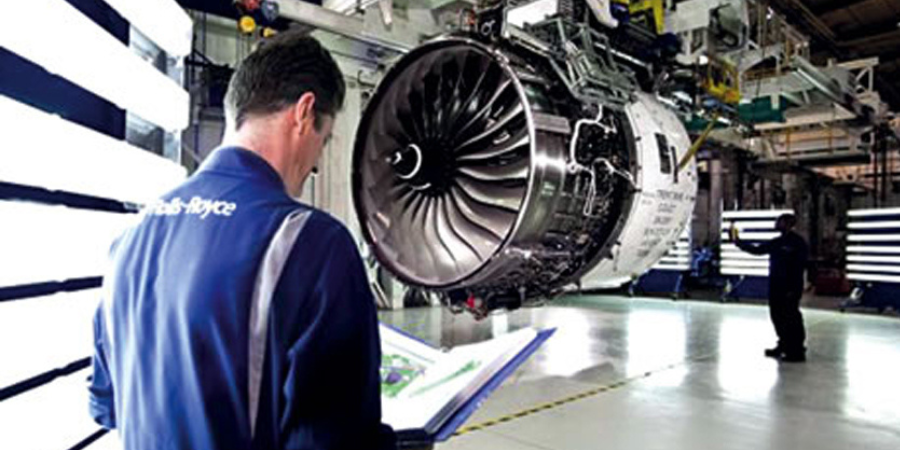
A manufacturer of power systems for aviation and other industries recently announced that it has extended its Long-Term Purchase Agreement (LTPA) with a global specialty metals company headquartered in Pittsburgh, Pennsylvania.
Rotating disc quality specialty materials will be supplied to Rolls-Royce for their Trent engine family by Allegheny Technologies Incorporated (ATI). The LTPA extends Rolls-Royce and ATI’s agreement through 2029.
“We are very pleased to have signed another long-term agreement with ATI for disc quality nickel alloys,” said Warrick Matthews, Executive Vice President, Procurement and Installations Supply Chain, Rolls-Royce. “Rolls-Royce’s supply chain requires on-time delivery of the highest quality materials. ATI’s track record of cost, quality and delivery performance has been a key consideration in award of this contract. This new contract provides an opportunity for Rolls-Royce and ATI to further develop their relationship and to enjoy engine production and services volume growth.”
Robert S. Wetherbee, ATI’s President and Chief Executive Officer
“We are pleased to extend our long-standing relationship with Rolls-Royce, partnering with them on the development of next-generation jet engines and supporting their legacy jet engine supply chain,” said Robert S. Wetherbee, ATI’s President and Chief Executive Officer. “This agreement reliably secures Rolls-Royce’s supply of critical materials for their innovative engine portfolio for the next ten years.”
John Sims, Executive Vice President, High-Performance Materials and Components Segment
“This agreement covers the production of a wide range of critical products used to make Rolls-Royce’s next-generation jet engines as well as spare parts for in-service engines. It supports ATI’s market-leading alloy development and broad production capabilities, including our iso-thermal forging operations,” said John Sims, Executive Vice President, High-Performance Materials and Components Segment. “In recognition of ATI’s commitment to innovation, quality and operational reliability, Rolls-Royce awarded ATI a majority share of all materials covered under this LTPA. We are honored to support Rolls-Royce as they work to confidently deliver on this unprecedented aerospace ramp.”
A Wisconsin-based additive manufacturing company recently came out with metal filaments encased in a binder, allowing for a two-step process of printing then heat treating to produce a safer metal 3D printing solution as well as broader use in industry applications such as
Biomedical innovators
Jet engine technology
Radiation shielding
Space exploration
Nuclear power
“Even with the furnace step, filament-based printing tends to be faster and requires less specialized training, making AM technologies more accessible to manufacturers who don’t have large numbers of specialists.” ~ Aerospace Manufacturing & Design
Main Image Credit/Caption: The Virtual Foundry Facebook page/”Stainless Steel 316L Filamet™ Filament. Printed using a FlashForge Creator Pro.”
This article on the critical role of valve safety trains in the prevention of catastrophic fuel-delivery accidents at heat treating facilities is authored by Robert Sanderson, P.E., Director of Business Development in the Combustion Safety division of Rockford Systems, LLC, based in Rockford, Illinois. Valve safety trains require regular inspections, maintenance, and training.
Heat treating, a thermal process used to alter the physical, and sometimes chemical, properties of a material or coating, is a high-temperature operation that involves the use of heating or chilling, normally to extreme temperatures, to modify a material’s physical properties — making it harder or softer, for example. Applications for heat treating are virtually endless, but at the heart of all thermal processes is the valve safety train.
These fuel-delivery devices maintain consistent conditions of gasses into furnaces, ovens, dryers, and boilers, among others, making them crucial in assuring safe ignition, operation, and shutdown. Equally important, they keep gas out of the system whenever equipment is cycled or shut off.
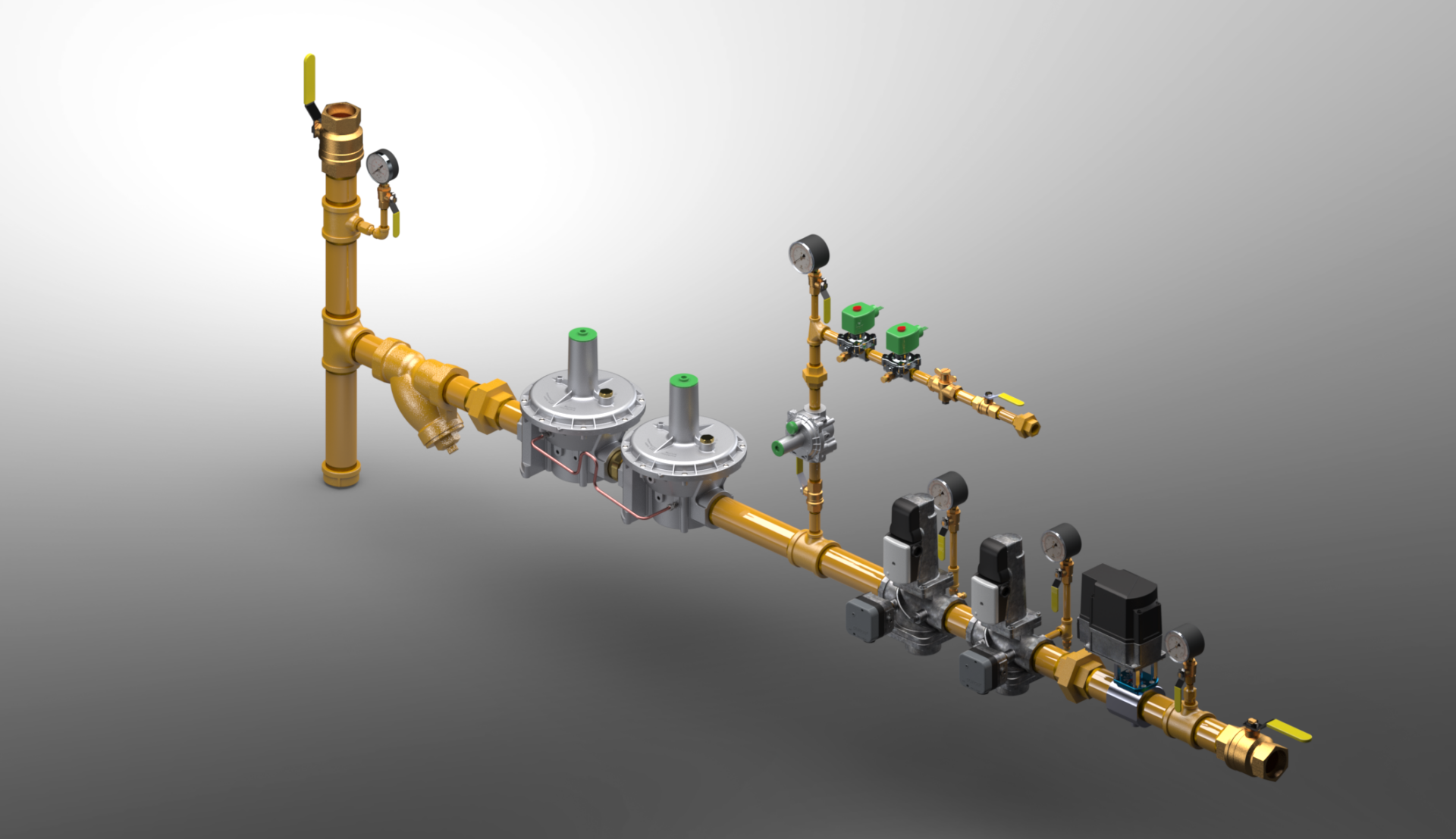
A valve safety train isn’t a single piece of equipment. Instead, it has many components including regulators, in-line strainers (“sediment traps”), safety shut-off valves (SSOV), manual valves (MV), pressure switches, and test fittings logically linked to a burner management system.
Flame-sensing components make sure that flames are present when they are supposed to be, and not at the wrong time. Other components may consist of leak-test systems, gauges, and pilot gas controls. At a minimum, there are two crucial gas pressure switches in a valve safety train, one for low pressure and one for high pressure. The low gas pressure switch ensures the minimum gas pressure necessary to operate is present. As you would assume, it will shut off fuel to the burner if the gas pressure is below the setpoint. The high gas pressure switch ensures excessive pressure is not present. It too will shut off fuel if the gas pressure is too high. Both switches must be proven safe to permit operation. Additionally, there will be an air pressure switch to ensure sufficient airflow is present to support burner operation.
Some systems have supplementary pressure switches, such as a valve-proving pressure switch. Switches such as these are typically used to enhance safety or provide other safety aspects specific to that application’s needs. A multitude of sensors within the valve safety train — pressure switches, flame detectors, position indicators — and isolation and relief valves work together in concert to prevent accidents.
Valve safety trains must be compliant with all applicable local and national codes, standards, and insurance requirements. The most common of these for North America are NFPA, NEMA, CSA, UL, FM. Annual testing and preventive maintenance are not only an NPFA requirement, but also oftentimes required by insurance agencies, equipment manufacturers, and national standards, including ANSI, ASME, and NEC.
Set Your Trap
The primary function of a valve safety train is to reliably isolate the inlet fuel from the appliance. Safety shut-off valves are purposely selected to do this. To protect these valves, the initial section of a safety train is used to condition the fuel and remove debris that could potentially damage or hinder all downstream safety components.
The first conditioning step is a sediment trap (a.k.a. dirt leg, drip leg). This trap captures large debris and pipe scale and provides a collection well for pipe condensates. The proper orientation of a sediment trap is at the bottom of a vertical feed. This downwards flow arrangement promotes the capture of debris and condensate into the trap. A horizontal feed across a sediment trap is an improper application. The second conditioning step is a flow strainer or filter element. These devices are fine particulate sieves. The removal of fine particulates from the fuel stream further protect the downstream safety devices from particulate erosion and abrasion. Taken together these conditioning steps remove particulates and condensates that might block, hinder, erode, or otherwise compromise the safety features of the downstream devices.
The Explosive Force of a Bomb
Owing to the presence of hazardous vapors and gases, a poorly designed or inadequately maintained safety train can lead to catastrophic accidents, ranging from explosions and fires to employee injuries and death. When this explosive force is unleashed, the shock wave carries equipment, debris, materials, pipes, and burning temperatures in all directions with tremendous force.
The following incidences provide just a few examples of why it is important to purchase the highest quality valve safety train and to keep it professionally maintained, inspected, and tested.
In 2018, a furnace explosion at a Massachusetts vacuum systems plant killed two men and injured firefighters as a result of fuel malfunction.
In Japan, an automobile manufacturer lost tens of millions of dollars when it was forced to shut down production for nearly a month after a gas-fueled furnace exploded due to flammable fumes building up in the tank.
In a Wisconsin bakery, an employee was seriously injured when he ignited an oven’s gas and was struck by a door that was blown off. A malfunctioning valve had allowed natural gas to build up inside the oven.
In 2017, a van-sized boiler exploded at a St. Louis box company, killing three people and injuring four others. The powerful, gas-fueled explosion launched the equipment more than 500 feet into the air.
In 2016, a boiler explosion in a packaging factory in Bangladesh enveloped the five-story building in flames, killing 23 people.
Two Dangers: Valves and Vents
Valves are mechanical devices that rely upon seats and seals to create mechanical barriers to control flow. Over time, these barriers wear out for a variety of
Glassblowing Furnace with Pipes
reasons, whether it is age, abrasion, erosion, chemical attack, fatigue or temperature. Increased wear contributes to leaks, and leaks lead to failures and hazards. Defective valves can allow gas to leak into a furnace even when the furnace is not in operation. Then, when the furnace is later turned on, a destructive explosion could occur.
Testing a valve’s integrity is an evaluation of current barrier conditions and may be used to identify a valve that is wearing out prior to failure. As such, annual valve leakage tests are an important aspect of a safety valve train inspection program. Along with annual testing, valves should be examined during the initial startup of the burner system, or whenever the valve maintenance is performed. Only trained, experienced combustion technicians should conduct these tests.
Improper venting is another danger. Here is the problem: Numerous components in a valve safety train require an atmospheric reference for accurate operation. Many of these devices, however, can fail in modes that permit fuel to escape from these same atmospheric points. Unless these components are listed as “ventless,” vent lines are necessary. Vent lines must be correctly engineered, installed, and routed to appropriate and approved locations. In addition, building penetrations must be sealed, pipes must be supported, and the vent terminations must be protected from the elements and insects. In short, vent lines are another point of potential failure for the system.
Even when vent lines are properly installed, building pressures can vary sufficiently enough that they prevent optimal burner performance. Building pressures often vary with seasonal, daily weather, and manufacturing needs, further complicating matters. Condensate in vent lines can collect and drain to low points or into the devices themselves. Heating, cooling, and building exhausters are known to influence building pressures and device responses, but so can opening and closing of delivery doors for shipping and receiving. Hence a burner once tuned for optimal operation might not be appropriately tuned for the opposite season’s operation.
The smart alternative to traditional vented valve trains is a ventless system that will improve factory safety and enhance burner operation. Ventless systems reference and experience the same room conditions where the burners are located, resulting in more stable year-round operating conditions, regardless of what is happening outside. Additionally, ventless designs typically save on total installation costs, remove leaky building penetrations, eliminate terminations that could be blocked by insects, snow or ice, improve inspection access, and ensure a fail-safe emergency response.
Final Thoughts
Valve safety trains are critical to the operation of combustion systems. Despite being used daily in thousands of industrial facilities, awareness of their purpose and function may be dangerously absent because on-site training is minimal or informal. To many employees on the plant floor, this series of valves, piping, wires, and switches is simply too complex to take the time to understand. What is known can be dangerously misunderstood.
Understanding of fuel-fired equipment, especially the valve safety train, is necessary to prevent explosions, injuries, and property damage. The truth is, although valve safety trains are required to be check regularly, they are rarely inspected, especially when maintenance budgets are cut. And while codes require training, they offer very little in terms of specific directions.
As a safety professional, the onus is on you. You and your staff must have a core level of knowledge regarding safe practices of valve safety trains, even if a contractor will be doing the preventive maintenance work. Most accidents and explosions are due to human error and a lack of training when an unknowing employee, for example, attempts to bypass a safety control. Preventive maintenance is essential to counter equipment deterioration, as is the documentation of annual inspection, recording switch set points, maintaining panel drawings, and verifying purge times. Accidents happen when this type of documentation is not available. Don’t wait for a near-miss or accident to upgrade your valve safety train.