Of the eleven economic indices reported on monthly by the Industrial Heating Equipment Association for the benefit of its member companies, four of the indices showed upward growth while only a few dropped significantly. All others remained relatively unchanged.
IHEA Auto Truck Sales April 2019
The four upward trending indices included PMI New Orders, Automobile and Light Truck Sales, Metal Prices, and the Credit Managers Index. The IHEA report, supplied monthly to IHEA member companies, goes into detail on the significance of these upward movements dedicating one full page of the report to each of eleven indices.
Indices not faring so well included Capital Expenditures, Durable Goods Orders, Factory Orders, and Home Starts. Most of the non-positive moving indices saw only slight decreases.
For a full copy of the report, contact Anne Goyer, Executive Director of the IHEA by clicking here.
IHEA PMI New Orders April 2019
IHEA Annual Meeting Kicks Off in Florida
Leaders from the heat treating and thermal processing industry are meeting this week at Lido Beach Resort in Florida, USA. This three-day industry meeting, organized by IHEA, attracts leaders from heat treat furnace manufacturers, heat treat component suppliers, and providers of heat treating supplies and consumables. This year’s meeting features discussions on heat treating and cybersecurity, an update on the impact of Washington’s policies on the heat treating industry, as well as an in-depth look at the above mentioned economic indices from IHEA’s economist.
Registration Open for NFPA 86 Update Seminar
IHEA Lido Beach Resort Spring Meeting April 2019
IHEA’s next educational event will be an NFPA 86 Update Seminar being held on May 14th from 9:00-3:00 at the Fabricators & Manufacturers Association in Elgin, Illinois. For more information, contact Anne Goyer, Executive Director of IHEA by clicking here.
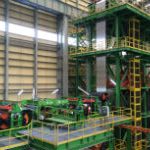
A major U.S. steel producer recently commissioned an international engineering group with the expansion of its steel plant in Osceola, Arkansas, including the supply of electric arc furnaces and other furnace lines, increasing the plant’s annual output to about 3 million tons of steel.
David Stickler, CEO, Big River Steel
Since commissioning of the new mill in 2017, Big River Steel has been producing high-quality steels, including tube grade sheet for pipeline construction, silicon steels for a wide variety of energy and electric motor applications, and advanced high-strength steels for the U.S. automotive industry.
SMS group will supply BRS with mechanical equipment, electrical and automation systems, and digitalization. After completion of the next expansion, the steel plant will have two electric arc furnaces and two twin-ladle furnaces. Installation of an additional gas cleaning system will ensure compliance with strict environmental legislation. A second strand, a second tunnel furnace, and a further downcoiler will be added to the CSP® plant. Big River Steel’s CSP® plant produces up to 1,930 millimeters wide coils, making it one of the widest CSP® plants in the world. Also as part of this project, the continuous galvanizing line (CGL) will receive an additional coiler.
Also in the second construction stage, Big River Steel will see the installation of the PQA® (Product Quality Analyzer) system developed by SMS group company MET/Con as a central module of the process automation system.
Burkhard Dahmen, Chairman of the Managing Board of SMS group
“I have purchased several technologically advanced steel production facilities from SMS over the past twenty years and I am fully confident that SMS group will again deliver a high-quality mill that sets the standard in terms of product capability, energy efficiency and environmental sustainability,” said David Stickler, CEO of Big River Steel.
“Working closely with the management and staff of Big River Steel, we have succeeded in digitalizing a highly complex steel plant in a way that meets the targets of stable and resource-saving production,” said Burkhard Dahmen, Chairman of the Managing Board of SMS group. “We are very pleased about Big River Steel’s decision to also award us the order for the next expansion stage of the steel plant and to continue on the proven successful way with SMS group as their partner.”
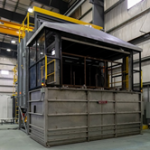
A New Hampshire-based manufacturer of sophisticated aluminum investment castings for predominantly aerospace applications recently expanded its capabilities with two electric drop bottom ovens.
Uni-Cast purchased the two furnaces for installation at its factory located in Londonderry, NH, from Pyradia Belfab, based in Saint-Hubert, Quebec. Pyradia designs and manufactures custom industrial equipment for aluminum heat treating, web converting, and dust collecting applications.
“After reviewing many quotes, we thought they were the best value out there. They make quality ovens at a competitive price. They have reasonable lead times and good engineering. I highly recommend them,” said Henri Fine, owner of Uni-Cast, which incorporates heat treating and precipitation hardening in the casting process in order to provide dimensional stability, strength, and hardness.
Main photo: Still image captured from video at Pyradia’s website.
DC53 Steel, a general purpose cold work mold and die steel with exceptional strength and resistance qualities, is nonetheless “only as good as the heat treatment it receives,” according to our Best of the Web resource today. Not surprisingly, manufacturers find these excellent characteristics for machining applications.
The folks at International Mold Steel, Inc., a steel distributor in Florence, Kentucky, have compiled a primer on heat treating DC53, which is known not only for its strength and resistance, as mentioned, but also for have a higher hardness than D2 after heat treatment. This is critical for machining shops where die and mold life expectancy is dependent upon proper high-temperature tempering and high hardness.
A century-old producer of die forgings recently needed to improve the process controls on its heat treating furnaces.
With process controls well over 10 years old, Clifford-Jacobs turned to Conrad Kacsik to improve its temperature process control system. The company, which serves a number of industries, including energy, aerospace, construction, mining, forestry, and rail, was eager to improve its temperature process control system, particularly because the incumbent system was producing inconsistent work.
The Challenge
Bud Kinney, Vice President of Innovation and Technology at IMT Corporation
Clifford-Jacobs was not getting consistent, repeatable results from its furnaces. The company also wanted more efficient and automated processes with data acquisition and electronic operating capability.
“We looked at a number of controls companies throughout the Midwest and interviewed them to learn about their experience with system controls and data acquisition,” said Bud Kinney, Vice President of Innovation and Technology at IMT Corporation, the parent of Clifford-Jacobs. “We knew we wanted an integrated system so we started looking at companies that did that as a matter of course. Most companies are limited to traditional controls, but Conrad Kacsik has a lot of experience doing the exact type of job we needed.”
Increasing Demands
Clifford-Jacobs makes forged parts for a variety of clients. Although forging does not generally require as much precision as other types of processes, customers are increasingly demanding, said Kinney.
“We believe that sooner rather than later things like Nadcap will come into forging, and our customers are very interested in us being able to demonstrate that our processes are always in control, even forge heating,” Kinney said. “This project helps ensure that we meet those needs. We couldn’t track things like set-point input values before. That’s another element we wanted to manage.”
Conrad Kacsik built a full process temperature control system that includes SCADA software from SpecView. They were able to retrofit the system on Clifford-Jacobs’ existing 16 furnaces, saving the company considerable expense and time. The temperature process control system uses Watlow F4T controllers paired with SpecView SCADA software, which allows for programming jobs/recipes, remote operation, secure (password protected) operation of furnaces and accurate automatic temperature recording. Conrad Kacsik also added alert lights that allow the operators to quickly see the status of each furnace from the shop floor.
H2: Benefits of Temperature Control System Integration
Clifford-Jacobs has noted several beneficial results from the new temperature control system. These include:
Increased accuracy. The new system runs each recipe exactly and records the results. The company can also control which employees can adjust temperature settings, preventing operators from rushing jobs with a higher temperature or inadvertently setting the furnace incorrectly.
Higher efficiency. With preprogramming, each furnace is always at the exact temperature it needs to be for the given task. An automatic preheat setting also safely prepares the furnace for the workday—eliminating downtime or the need to send an employee in early to start the furnaces.
More speed. Clifford-Jacobs can pre-program any recipe it needs, allowing for highly accurate and fast running of complex processes.
More convenience. Clifford-Jacobs can operate their furnaces from anywhere with an internet connection, or via an iPad used by an approved employee.
Precision for the future. The new system can be part of a Nadcap-approved process should the need arise. The SpecView software and advanced controllers automatically record each job and retain all data for verification.
The Results
“We used to have to use all kinds of resources to provide oversight on temperature control,” said Kinney. “This has given us a heating strategy. We write the recipes we want and just select from those. In addition to that, we know exactly what every furnace is doing at all times.”
The company is also pleased with the increased efficiency. They only heat product when they are ready to run production, and the furnace only uses the exact energy needed for each recipe. They are also saving on staffing, as they used to have to schedule people to ensure the furnace was at the right temperature.
“With this system, we can develop recipes for each part we make, which is both convenient and precise. It’s doing exactly what we expected it to do,” said Kinney.
A technology-based manufacturer of aerospace and defense parts and systems recently expanded its capability to develop and produce metal alloy additive manufacturing parts for aerospace and power systems through the acquisition of AM provider which services the aerospace, defense, medical, and industrial markets.
Eileen Drake, CEO and president of Aerojet Rocketdyne
Aerojet Rocketdyne Holdings, Inc. has acquired 3D Material Technologies (3DMT) from ARC Group Worldwide, Inc., complementing Aerojet Rocketdyne’s industry-leading capabilities to develop and produce metal alloy additive manufacturing parts for aerospace propulsion and power systems. Aerojet Rocketdyne has qualified production parts for the RL10 and RS-25 liquid rocket engines and continues to develop and demonstrate the benefits of additive manufacturing for its hypersonic propulsion systems.
“The addition of 3DMT’s capacity and expertise in metal alloy additive manufacturing expands our range of products and services in the space and defense markets,” said Eileen Drake, CEO and president of Aerojet Rocketdyne. “As we look to the future, additive manufacturing will continue to play an important role in lowering costs and production timelines. This deal allows Aerojet Rocketdyne to broaden its application of this revolutionary technology. We respect the long-standing reputation for quality and customer focus that 3DMT has built in the aerospace industry and we are thrilled to welcome them to our company.”
3DMT will continue to operate with its existing workforce at its 28,000 square ft. facility located in Daytona Beach, Florida.
Main photo credit/caption: Aerojet Rocketdyne / Hot-fire test of Aerojet Rocketdyne’s ISE-100 thruster conducted at the company’s Redmond, Washington test facility
A Dozen & a Half Quick Heat TreatNews Items to Keep You Current
Heat TreatToday offers News Chatter, a feature highlighting representative moves, transactions, and kudos from around the industry.
Personnel and Company Chatter
Mike Woolery has recently joined Plibrico Company, LLC, as its purchasing manager. Woolery will report directly to the company’s Chief Financial Officer, Rob Wasieleski.
The recent acquisition of the SME Group by Dana Incorporated, as well as the Drive Systems segment of Oerlikon Group, including the Graziano and Fairfield brands, has resulted in the addition of five facilities throughout China.
Gasbarre Industrial Furnace Systems is pleased to announce the promotion of Mike Harrison to Engineering Manager for Gasbarre (formerly J.L. Becker), in Plymouth, MI.
A global investment firm recently announced that it has closed its purchase of StandardAero.The Carlyle Group completed the purchase from Veritas Capital. StandardAero is a global provider of repair and maintenance services to the aviation industry.
R. Joseph Stratman, Chief Digital Officer and Executive Vice President of Nucor Corporation, recently announced plans to retire on June 8, 2019, after more than 29 years of service with Nucor. Effective May 19, 2019, MaryEmily Slate will be promoted to Executive Vice President and will assume responsibilities for the Tubular Products Group, logistics and certain joint ventures.
Saint-Gobain Coating Solutions, Amherst, N.Y., has recently appointed Tim Vitorino, a member of the ASM Thermal Spray Society, to the position of Product Manager for Thermal Spray Powders. In this role, he will have global responsibility for the current TSP portfolio and for new product development.
Mike Woolery, purchasing manager, Plibrico Industries
Dana Incorporated expands with new sites.
Mike Harrison, Engineering Manager,Gasbarre Industrial Furnace Systems
R. Joseph Stratman, retiring Chief Digital Officer and Executive Vice President of Nucor Corporation
MaryEmily Slate promoted to Executive Vice President, Nucor Corporation
Tim Vitorino, Product Manager for Thermal Spray Powders, Saint-Gobain Coating Solutions
Equipment Chatter
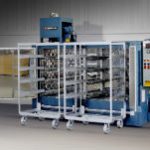
A modified shelf oven, No. 879 from Grieve Corporation, heats to 350°F (177°C) and is currently used for pre-heating bulk friction material in trays at the customer’s facility.
A continuous annealing and chemical pretreatment line for processing strip coils for the aluminum market has been contracted by Henan Tongren Aluminum Co. Ltd, which specializes in aluminum products. Tenova will deliver the new line, which will process automotive and aircraft aluminum alloys, family series 2XXX, 5XXX, 6XXX and 7XXX.
A new 12’ long car-bottom vacuum furnace with advanced pumping system and rapid cooling capability has been ordered for Solar Atmospheres’ Greenville, South Carolina, facility. The horizontal vacuum furnace has been manufactured by sister company Solar Manufacturing; installation is scheduled for early 2020.
Two CaseMaster Evolution® (CMe) vacuum furnaces have recently been delivered to an aerospace components manufacturer, and an additional CMefurnace has gone to a performance automotive manufacturer, from SECO/WARWICK Group.
No. 879 from Grieve Corporation
Continuous annealing and chemical pretreatment line, Tenova
Car-bottom vacuum furnace for Solar Atmospheres, manufactured by Solar Manufacturing
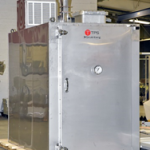
A Gruenberg explosion resistant truck-in oven has been shipped to the defense security industry by Thermal Product Solutions.
An electrically heated horizontal solution treat system with a maximum oven operating temperature of 1,100°F and a chiller system has been shipped to a manufacturer in the aerospace industry by Wisconsin Oven Corporation. Guaranteed temperature uniformity of ±10°F at set points of 870°F, 920°F, & 985°F was documented with a twelve (12) point profile test in an empty oven chamber under static operating conditions and was performed in accordance with BAC 5621F specifications.
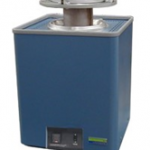
A 2012°F (1100°C) crucible furnace has been shipped to a research and development laboratory in the nuclear industry by Lindberg/MPH. This crucible furnace will be used for a wide variety of laboratory melting applications, including annealing, ashing, carbon firing, ceramic firing, hardening, melting, nitriding, normalizing, sintering, solution treating, and stress relieving.
StandardAero recently celebrated the delivery of the company’s 500th CFM International CFM56-7B turbofan engine from its overhaul facility in Winnipeg, MB, Canada. This milestone engine powered a Boeing 737 Next Generation passenger jet operated by a major North American airline supported by StandardAero via offload agreements with its valued partner GE Aviation. StandardAero launched its CFM56-7B program in June 2009,
Precision Micro is now certified to ISO 13485 – the internationally recognized quality management system for medical device manufacturers. The accreditation was awarded following a successful site audit conducted by the British Standards Institution (BSI), the national standards body of the United Kingdom.
Stratolaunch Systems Corporation recently completed the first flight of the world’s largest all-composite aircraft, the Stratolaunch. With a dual fuselage design and wingspan greater than the length of an American football field, the Stratolaunch aircraft took flight at 0658 PDT from the Mojave Air and Space Port. Achieving a maximum speed of 189 miles per hour, the plane flew for 2.5 hours over the Mojave Desert at altitudes up to 17,000 feet. As part of the initial flight, the pilots evaluated aircraft performance and handling qualities before landing successfully back at the Mojave Air and Space Port.
JTEKT North America (JNA), a supplier of steering systems, driveline components and bearing technologies was recognized with an Excellent Award in Technology & Development from Toyota Motor North America, Inc. (TMNA) at its Annual Supplier Business Meeting (ABM) in March.
The leading producer of flat-rolled aluminum products recently hosted a ribbon cutting celebration to commemorate a $4.5 million investment at its facility in Warren, Ohio. Through this investment, Novelis, Inc., will provide greater versatility for pretreatments, improves operational efficiency and reduces costs over time.
StandardAero delivers 500th CM56-7B engine.
Precision Micro is now certified to ISO 13485.
Stratolauncher completes flight.
JTEKT receives award from Toyota. L-R: Arata Ito, Jennifer Cullum, Shannon Johnson, Gregg Malpede, Bob Young, Deb Schroeder
Heat TreatTodayis pleased to join in the announcements of growth and achievement throughout the industry by highlighting them here on our News Chatter page. Please send any information you feel may be of interest to manufacturers with in-house heat treat departments especially in the aerospace, automotive, medical, and energy sectors to the editor at editor@heattreattoday.com.
A University of Texas at Arlington thesis student recently investigated thermal annealing to determine how to increase inter-bead bond strength overall in 3D printing processes.
Rhugdhrivya Rane tackled the dilemma of weak tensile strength in FDM parts and whether parameters chosen by the user — such as temperature ranges and pressure gradients — can affect an increase in inter-bead bond strength. The researcher used thermal annealing, and thermal annealing with unidirectional mechanical pressure in the Z direction, 3D printing a variety of specimens in ABS. The method of 3D printing was chosen due to its increased popularity in mainstream manufacturing.
“The parts were printed using two different sets of print parameters: high and low settings, to investigate the effect of heat treatment on both sets of print parameters. The values of temperature, time and applied pressure during heat treatment were varied to obtain a detailed comparative study and the correlation between the given variables and the increase in ultimate tensile strength.” ~ Rane
The discovery was that “higher temperatures and longer exposure to heat produced better tensile strength, along with increased ductility.”
“Though thermal annealing and uniaxial pressure cause an increase in the strength of the parts, the print parameters play a vital role in determining the initial mechanical properties of the parts. When the parts are fabricated with a higher value of flow rate and extrusion temperature, they exhibit significantly higher mechanical properties as compared to parts printed with substandard setting,” concluded the researchers. “Thus, by controlling the print parameters and using the right values of temperature and pressure we can see substantial increase in strength of FDM parts.”
Photo credit/caption: via UTA / “Tensile testing of dogbone specimens”
A commercial heat treat company which is approved to heat treat certain flight critical and flight safety configurations for prime aerospace and helicopter companies recently invested in a new Universal Batch Quench (UBQ) furnace and a Universal Batch Temper (UBTN) annealing furnace to be operated at its plant in Fraser, Michigan.
Tracy Dougherty, VP Sales, AFC-Holcroft
“We’re excited to be a part of the continued growth and expansion of Specialty Steel Treating,” said Tracy Dougherty, Vice President of Sales at AFC-Holcroft. “The customization of these furnaces combined with state of the art controls and IoT features (Remote Diagnostics™), enable both AFC-Holcroft and Specialty Steel Treating the ability to offer superior quality, performance and continuous improvement to customers.”
Delivery of the UBTN is expected in the 2nd quarter of 2019 to the Specialty Steel Treating site on Malyn Road in Fraser, with the UBQ to follow in the 3rd quarter to the Commerce Road plant, also located in Fraser.
Dr. Steve Offley (“Dr. O”), Product Marketing Manager PhoenixTM
This is the final installment in a 4-part series by Dr. Steve Offley (“Dr. O”) on the technical challenges of monitoring low-pressure carburizing (LPC) furnaces. The previous articles explained the LPC process and explored general monitoring needs and challenges (part 1), the use of data loggers in thru-process temperature monitoring (part 2), and the thermal design challenge (part 3). In this segment, Dr. O discusses AMS2750E and CQI-9 Temperature Uniformity Surveys. You can find Part 1 here,Part 2 here, and Part 3 here.
A significant challenge for many heat treaters is the need to provide products certified to either AMS27150 (aerospace) or CQI-9 (automotive). To achieve this accreditation, furnace Temperature Uniformity Surveys (TUS) must be performed at regular intervals to prove that the furnace set-point temperatures are both accurate and stable over the working volume of the furnace. Historically, the furnace survey has been performed with great difficulty trailing thermocouples into the heat zone. Although it’s possible in a batch process when considering a semi-batch or continuous process, this is a significant technical challenge with considerable compromises as summarized below.
Trailing Thermocouple TUS Process Steps
Figure 1. Typical TUS thermocouple. Positions — 9 point survey. Furnace void corners and center
TUS is often carried out using long or ‘trailing’ thermocouples that exit through the furnace door.
Furnace often needs to be cooled, then de-gassed so TUS frame can be set up in the furnace.
Thermocouples are then led out through the furnace door and connected to a data logger or chart recorder.
The furnace is then heated to surveying temperatures.
The survey is then carried out, after which furnace is cooled, and thermocouples are removed.
Disadvantages of Traditional TUS Process
Lots of furnace downtime may be involved (can be up to 24 hours).
Thermocouples have to exit the furnace door.
This may involve “wedging” the door up, or “grooving” out the hearth to get thermocouples out.
Or thermocouples may get caught in the furnace door.
A significant amount of the technician’s time is taken up preparing report.
Applying the “Thru-Process” approach to TUS, the measurement system is transferred into the furnace with the survey frame allowing the setup process to be done quickly, safely, and repeatable. (See Figure 2)
Figure 2. PhoenixTM System loaded into a furnace as part of a TUS frame. Thermocouples pre-fitted to the 8 vertices of the cube frame and center. Furnace ambient temperature recorded either with a virgin exposed junction thermocouple (typical MI) or with heat sink damper fitted.
Operating the system with RF telemetry, TUS data is transferred directly from the furnace back to the monitoring PC where at each survey level temperature stabilization and temperature overshoot can be monitored live with TC and logger correction factors applied. The Thermal View Software is developed to ensure that the final TUS report complies fully to the AMS2750E/CQI-9 standards.
Figure 3. PhoenixTM Thermal View Survey Software showing a TUS profile at three set survey temperatures. The probe map shows exactly where each probe is located and easy trace identification. Detailed TUS report generated with efficiency.
Features incorporated into the Thermal View Software to provide full TUS capability include the following:
TUS Level Library – Set-up TUS level templates for quick efficient survey level specification (Survey Temp °F, Tolerance °F, Stabilization, and Survey Times)
TUS Frames Library – Show clearly exact TUS frame construction and probe location using Frame Library Templates – Frame Center and 8 Vertices.
Logger Correction File – Create a logger correction file to compensate TUS readings automatically from the logger’s internal calibration file.
Thermocouple Correction File – Create the thermocouple correction file and use to compensate TUS readings directly.
TUS Result Table & Graph View – For each TUS temperature level, see from the graph or TUS table instantaneously full survey results.
Furnace Class Reporting – Report the specified furnace class at each temperature level.
Overview
The PhoenixTM Temperature Profiling System provides a versatile solution for both performing product temperature profiling and furnace TUS in industrial heat treatment. It is designed specifically for the technical challenges of low-pressure carburizing (LPC) whether implementing either high-pressure gas quench or oil quench methodology, providing the means to Understand, Control, Optimize and Certify the LPC Furnace and guarantee product quality and process operation efficiency and certification.