

Manufacturing Heat Treating

Tool and Die Failure, Heat Treatment Causes and Corrections

George Vander Voort has a background in physical, process and mechanical metallurgy and has been performing metallographic studies for nearly 50 years. He is a long-time member of ASTM Committee E-4 on metallography and has published extensively in metallography and failure analysis. He regularly teaches MEI courses for ASM International and is now doing webinars. He is a consultant for Struers Inc. and will be teaching courses soon for them.  His website, www.georgevandervoort.com, not only details his consulting services but also houses over one hundred articles, studies, or instructional graphics on topics related to physical, process and mechanical metallurgy. The following is an overview and an excerpt of failure factors from “Identifying the Cause of Tool and Die Failure”, published in 2016. There are particular elements to this study which relate to the heat treat industry.

Steels used for tools and dies differ from most other steels in several aspects. First, they are used in the manufacture of other products by a variety of forming processes. Second, tools and dies are generally used at a higher hardness than most other steel products; 58 to 68 Rockwell C is a typical range. Dies for plastic molding or hot working are usually used at a lower hardness, typically from 30 to 55 Rockwell C.

These high hardness values are required to resist anticipated service stresses and to provide wear resistance. However, the steels must also be tough enough to accommodate service stresses and strains without cracking. Premature failure caused by cracking must be avoided, or at least minimized, to maintain minimum manufacturing costs. Unexpected tool and die failure can shut down a manufacturing line and disrupt production scheduling. Tools and dies must also be produced with the proper size and shape after hardening so that excessive finishing work is not required. Heat-treatment distortion must be controlled, and surface chemistries must not be altered. Because of the careful balance that must be maintained in heat treatment, control of the heat-treatment process is one of the most critical steps in producing successful tools and dies. In addition to controlling the heat-treatment process, tool and die design and steel selection are integral factors in achieving tool and die integrity.

The following list is excerpted and abridged to highlight phases or processes related to heat-treat. The explanation behind each factor is available at the original post.

A number of factors can be responsible for tool and die failures. They include:

1. Mechanical design. The design must be compatible with the steel grade selected, the procedures required to manufacture the tool or die, and the use of the tool or die. . . .

The importance of good design cannot be overemphasized. Poor design can cause or promote heat-treatment failures before any service life is obtained, or it may reduce service life dramatically.

In designing a tool or die, a host of factors must be considered. In practice, separating the design stage from grade selection is difficult because the two steps are interdependent. The choice of a certain grade of steel, such as one that must be brine- or water-quenched, will have a substantial bearing on all aspects of design and manufacture. In general, any steel grade that requires liquid quenching demands very conservative, careful design.

Air-hardening grades tolerate some design and manufacturing considerations that could never be endured by a liquid quenching grade. The design must also be compatible with the equipment available–heat-treatment furnaces and surface-finishing devices, for example. . . .

2. Grade selection. The grade of steel selected must be compatible with the design chosen, the manufacturing processes used to produce the tool or die, and the intended service conditions and desired life. . . .

3. Steel quality. The material must be macrostructurally sound, free of harmful inclusions to the degree required for the application, and free of harmful surface defects.

Despite the care taken in the manufacture and inspection of tool steels, faulty materials occasionally cause tool and die failures. However, such problems are rare. The most common of these defects are voids from secondary pipe, hydrogen flakes, surface cracks, porosity or microvoids, cooling cracks, segregation, and poor carbide distributions. Improper control of annealing may also produce non-uniform carbide distribution or carbide networks that may influence heat-treatment uniformity, lower ductility, or impair machinability.

4. Machining processes. The machining processes used to produce the tool or die must not alter the surface microstructure or surface finish and must not produce excessive residual stresses that will promote heat-treatment problems or service failures.

Machining problems are a common cause of tool and die failures. It is generally best to avoid machining directly to the finish size unless pre-hardened die steels are used. Obtaining perfect control of surface chemistry and size during heat treatment is difficult. Thus, some final grinding is usually needed after heat treatment. The presence of decarburization is generally quite detrimental. Also, because stresses are high in heat treatment and in service, rough machining marks must be avoided. Identification stamp marks are another common source of failures in heat treatment and in service; they should be avoided.

5. Heat-treatment operation. Heat treatment of tools and dies must produce the desired microstructure, hardness, toughness, and hardness at the surface and in the interior.

Improper heat-treatment procedures are the single largest source of failures during heat treatment, in subsequent processing steps, or in service. Each tool steel grade has a recommended austenitizing temperature range, which is generally rather narrow; a recommended quench medium; and recommended tempering temperatures and times for optimum properties. Some grades are more forgiving than others.

6. Grinding and finishing operations. Grinding and finishing operations must not impair the surface integrity of the component.

7. Tool and die setup. Alignment of tools and dies must be precise to prevent irregular, excessive stresses that will accelerate wear or cause cracking.

8. Tool and die operation.


Read the full study and report, including images of tool steel failure examples, at “Identifying the Cause of Tool and Die Failure”.


Tool and Die Failure, Heat Treatment Causes and Corrections Read More »
SSAB Modernizes Hot-Dip Galvanizing Line No. 3 at Finnish Facility

Swedish specialty steel producer SSAB will modernize its continuous hot-dip galvanizing line No. 3 in Hämeenlinna, Finland. The upgrade essentially involves switching the old air-knife into a new air knife system from Duma-Bandzink with strip stabilization and the integration of an inductive booster in the furnace. The conversion measures will be implemented in cooperation with SMS group, Drever International and EMG Automation. The measures will be realized at the end of this year (2017).

The installation of a new Duma-Bandzink Jet-Pro air knife system with EMG eMASS® strip stabilization – in the so-called “Integrated Solution” – will help to save zinc and improve the quality of the coating. The line will be designed for strips between 0.4 to 3.0 millimeters thick and 650 to 1,550 millimeters wide. In the process section, the strips will be zinc-coated at speeds of up to 160 meters per minute. Inductive strip pre-heating to about 350 degrees Celsius will increase the capacity of the furnace.

SSAB Modernizes Hot-Dip Galvanizing Line No. 3 at Finnish Facility Read More »

Italian Manufacturers Order Annealing Furnaces from Austrian Heat Treatment Supplier

Two major Italian manufacturers have ordered bell annealer furnaces to expand their existing lines.

Leading bolt manufacturer, Fontana Luigi S.p.A., based in Veduggio, has commissioned an expansion to an existing HICON/N2® bell annealer facility for heat treatment of non-pickled steel wire coils. Both phases will be nearly identical in design to ensure flexibility between the facility components to achieve maximum throughput capacity. The start of production is scheduled for July 2018 for the new phase.

Ori Martin S.p.A., an electric furnace steel mill facility in Brescia, purchased the supply and installation of an additional gas-fired HICON/N2® bell annealer facility to heat treat unpickled steel wire coils in a controlled nitrogen process atmosphere. The clear inside diameter of the new facility, which will go into operation May 2018, is 4,050 mm, with a stack height of 2,500 mm.

Austrian heat treatment supplier Ebner provided and installed the equipment for both companies.

Italian Manufacturers Order Annealing Furnaces from Austrian Heat Treatment Supplier Read More »

Joe Powell Comments on Marquenching and Austempering

Last week, we ran a news release about ThermoFusion in California expanding their heat treat capabilities to include marquenching and austempering (click here to see that release). In that short article, some comments were made about the aggressiveness of various quench methods and their effect on distortion and cracking.

Joe Powell, of Akron Steel Treating Company, Integrated Heat Treating Solutions, LLC, IQDI Products, LTD., and IQ Technologies Inc, one of the heat treat industry’s foremost experts on quenching, wrote in to help educate all of us a bit more on the finer points of quenching. Below are his comments. Joe can be reached at JoePowell@akronsteeltreating.com.


Doug,

In your recent article, you stated that Marquenching and Austempering use a “less aggressive” quench cooling rate, “and reduce distortion caused by rapid temperature change (thermal shock)” which is only half true.  The main mechanism that allow a molten salt quench to reduce distortion is the elimination of mixed phase cooling – there is no slow film boiling (gas) phase cooling mixed with the high-evaporative cooing phase of nucleate boiling, but only a single phase of all liquid convection cooling.   It’s the non-uniformity of cooling at the surface of the part that will distort or crack the part not so much the rate of cooling.

Joe

Joseph A. Powell, President
Akron Steel Treating Company

Integrated Heat Treating Solutions, LLC
IQDI Products, LTD. 
IQ Technologies Inc

Joe Powell Comments on Marquenching and Austempering Read More »

UPC Energizes Aging Carburizing Cell for Axle Gears Manufacturer

A U.S.-based axle gears manufacturer recently commissioned hardware and software enhancements to add to their existing heat treat cell and automation.

Migration of legacy controls was not economically feasible, and after investigating options to boost equipment functionality, the customer opted to integrate a new PLC that bridges the gap between the heat treat cell and new robotic loading cell. The new control system installed by United Process Controls, Inc., (UPC) provides operators with a quick display of the furnace status, functions, and operational data of three AFC Holcroft carburizing pusher furnaces. Furnaces were similarly adjusted to liaise with the new robotic loader. In addition, material handling data from the registers of the old PLCs was transferred to the new robot cell to help increase the factory information system. UPC was also retained to program and connect the updated furnace controls, including the new conveyor line, and charge cars to the factory information system.

UPC Energizes Aging Carburizing Cell for Axle Gears Manufacturer Read More »

No Cal Heat Treat Services Supplier Adds Austempering, Marquenching Capabilities

A brazing and heat treating services supplier based in Northern California has announced the expansion of process services to their heat treating line. ThermoFusion now offers marquenching and austempering, in addition to their annealing, hardening, vacuum, and hydrogen services, for clients in the aerospace, automotive, medical, energy and general manufacturing industries.

Marquenching and austempering use a less aggressive quenchant, reducing the cooling rate slightly, and reducing distortion caused by rapid temperature change (thermal shock).  In high carbon material, these alternative processes allow for the formation of bainite instead of martensite, which allows spring steels to remain “springy” as they get hard.


No Cal Heat Treat Services Supplier Adds Austempering, Marquenching Capabilities Read More »

Tracked Vehicle Rollers Get Controlled Heat Treatment Using Movicon SCADA

Source: Process and Control Today


The accuracy and energy efficiency of the heat treatment for rollers used in heavy duty tracked vehicles such as earth moving equipment, construction, and mining equipment, diesel and natural gas engines, and industrial gas turbines have been improved by the use of a control system based on Movicon SCADA.

The automated production line is part of a large factory in Bologna, Italy, and comes complete with a tempering process involving various heat treatment furnaces, one for annealing,  one for austenitizing, one for the tempering process used for the final heat treatment and three baths for the in‐between quenching process of the austenitized pieces. This is followed by the final stage where a programmed controlled robot is used for the palletization stage to unload, and store finished pieces transported through on the conveyor. The first step is the austenitizing process involving an annealing furnace which heats the metal to obtain a uniform solid structure with complete solubilization of the Cementite (iron carbide) to improve and reinforce both steel roller resistance and endurance. This is followed by the quenching process where three banks have been provided to shunt through more pieces quicker into the first available bath to increase the plant’s productive capacity and protect their quality which may diminish if exposed too long in open air. The baths carry out a repeated process of cooling and tempering by reheating the pieces at specific temperature ranges until the metal reaches the perfect hardness suited for the rollers’ purpose. Once this process is completed, the pieces continue on to the tempering furnace for the final process where they are reheated to a temperature lower than the one used in the quenching stage. Once this temperature has been reached the pieces are then slowly cooled down with temperatures gradually lowered until completely cooled to ensure that tension is reduced within the metal without altering its hardness. When finished the pieces are then ready for palletization by being stacked onto pallets and stored appropriately and ready for the next procedures.

Read more: “Tracked Vehicle Rollers Get Controlled Heat Treatment Using Movicon SCADA”

Tracked Vehicle Rollers Get Controlled Heat Treatment Using Movicon SCADA Read More »

TMK IPSCO restarts operations at Tulsa Port of Catoosa

Source:  Tulsa World

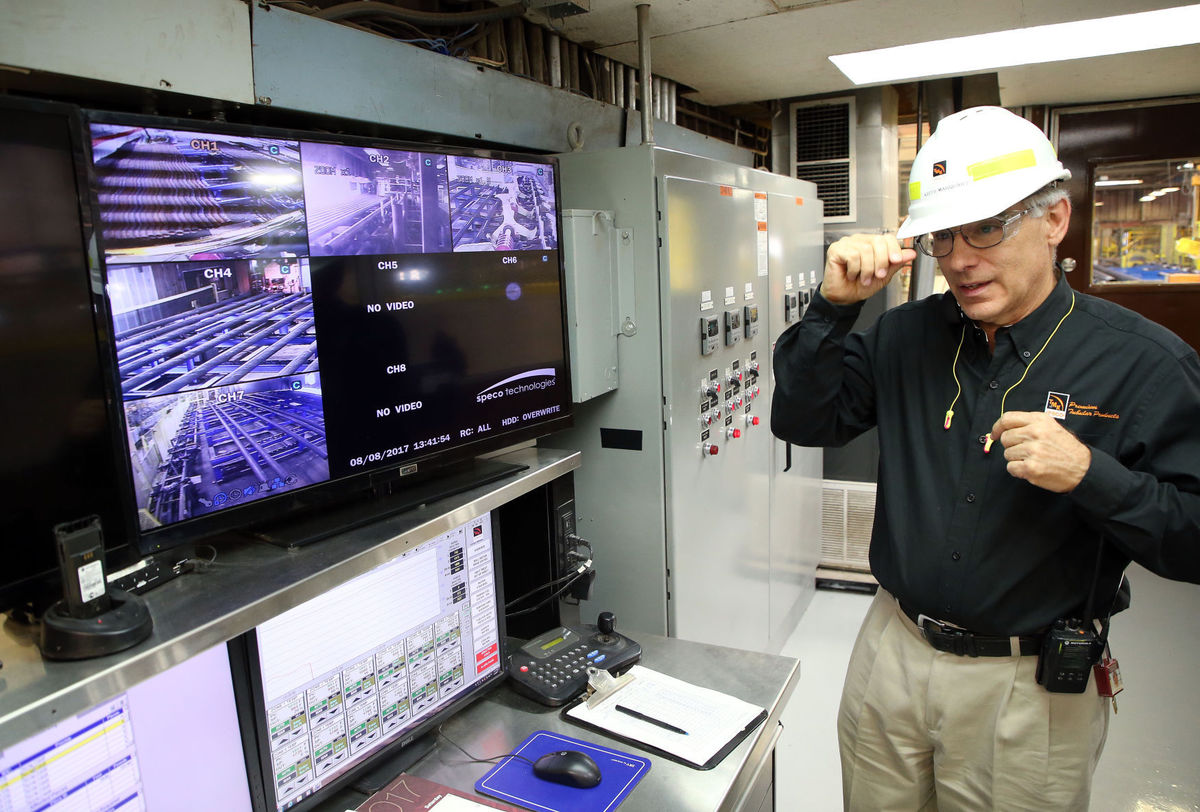
Keith Marquart leads a tour of the control room of the TMK IPSCO facility at the Tulsa Port of Catoosa. Photo Credit: Cory Young/Tulsa World

When the price of oil nosedived, one of this area’s casualties was TMK IPSCO, which idled its plant in September 2015.

“There was really no business for us,” said Joel Mastervich, vice president and chief operating officer of the company, which does welding, heat-treating, and threading on pipes used in drilling operations. “We had to make tough decisions back then. So we did.”

TMK IPSCO celebrated the restart of operations—and the creation of 168 jobs by year’s end—at a news conference August 8, 2017, at the Tulsa Port of Catoosa.

Read more: “Manufacturer restarts operations at Tulsa Port of Catoosa

TMK IPSCO restarts operations at Tulsa Port of Catoosa Read More »

Austal Delivers Aluminum EPF Catamaran to U.S. Navy

  Source: Light Metal Age

Austal USA recently delivered the USNS Yuma, the eighth Expeditionary Fast Transport (EPF) vessel, an aluminum catamaran, to the U.S. Navy. The 338-foot long Yuma is capable of transporting 600 tons 1,200 nautical miles at an average speed of 35 knots and is designed to operate in austere ports and waterways, providing added flexibility to U.S. warfighters worldwide.

Around 700 tonnes of aluminum in the form of plate, extrusions, and forgings is used in the construction of the Yuma. Custom panels created by friction stir welding are joined with custom extrusions using a combination of TIG and gas metal arc welding. Although no surface treatment is used above the waterline, the hull is painted below the waterline. Aluminum provides a strong weight ratio and enables Austal to produce a ship that can efficiently achieve high speeds with a shallow draft. The structure weight of an aluminum ship is approximately half that of a steel ship and is comparable to fiberglass. Other benefits of using aluminum in marine applications are that it is also easy to form, resistant to corrosion, doesn’t require paint to protect the surface, can be welded with well-established commercial processes, and is easy to repair.

Read more: Austal Delivers Aluminum EPF Catamaran to U.S. Navy

Austal Delivers Aluminum EPF Catamaran to U.S. Navy Read More »

Skip to content