

induction heat treat

Optimizing Your Induction Heating System

Whether you need insight on enhancing your energy utilization, managing induction systems (troubleshooting), or prolonging equipment longevity, today’s Technical Tuesday original content feature will keep you well-informed.

Heat Treat Today has coalesced technical information across articles from key experts, including tips to improve your energy efficiency, a walk-through guide for troubleshooting your induction system, and ten practical tips for improving your equipment longevity.


Induction and Sustainability Tips Part 2: Efficient Power

As energy efficiency becomes a driving force in modern heat treating, manufacturers are turning to smarter induction technologies to cut waste and lower costs. In this second installment of Heat Treat Today’s sustainability series, explore how AC-to-DC conversion, intelligent power feedback systems, and advanced diagnostics can transform your induction heating setup into a cleaner, more consistent, and cost-effective process.

“Furthermore, transformers operate at optimal efficiency when under a reduced load – i.e., less than 70% output in steady-state heating – rather than ramping up to the full operating temperature. Another advantage of the DC-type transformer is that its operating power factor is very close to 1.0, which lowers the utility company’s calculation of peak demand surcharges.”

Read the full article here: Induction and Sustainability Tips Part 2: Efficient Power


10 Steps To Troubleshoot Your Induction System

Facing erratic heating, poor consistency, or unexpected shutdowns in your induction system? This comprehensive guide walks heat‑treat operators through a ten‑step diagnostic framework for identifying and resolving common induction issues.

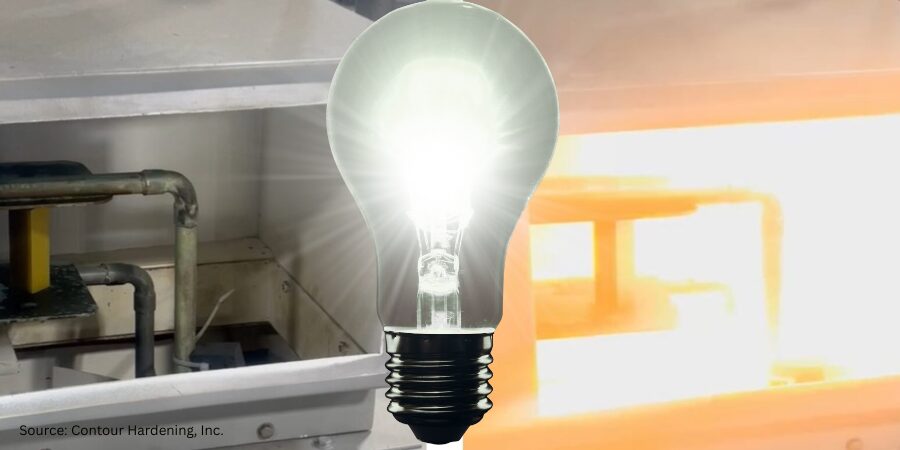
Figure 2. Induction system components
Source: Contour Hardening, Inc.

“The induction process involves many characteristics such as: position of the piece within the induction coil, load positions, cooling positions, cycle times, applied electric power, and others. It is important that the professional can identify the failure and the particular situation at the moment in which it is occurring.

On some occasions, the failures are not evident and therefore it is essential to analyze the part that has been treated. This analysis can be key to understanding situations such as poor depth due to electrical power or decrease in output frequency, among other possible scenarios.”

Read the full article here: 10 Steps To Troubleshoot Your Induction System


New and Improved Tips for Induction Equipment Longevity

Heat treaters are always looking for ways to extend the life of their induction tools, but what methods are proven maintenance strategies? Focusing on the durability of coils, bus bars, inductors, and quench components, this technical article will give you practical and reliable tips to promote longevity in your equipment.
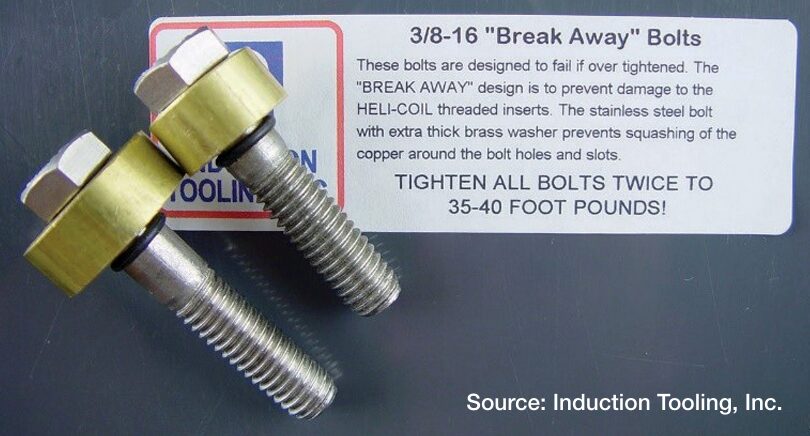
Figure 2. Break-Away bolts designed to fail beneath the washer if over tightened

“More than coils — When working to optimize the life of induction equipment, don’t focus solely on the coils. Bus bars, inductors, and quenching equipment are also key to success. 

Austenitic stainless steel — Use austenitic stainless steel for fasteners, fittings, and hose clamps, and remember, non-ferrous is the way to go.  

CNC machining — Manufacturing with a 5-axis CNC machine ensures quality and consistency.  

“Break-Away” bolts — For fasteners, use “Break-Away” bolts on contact surfaces. These bolts are designed to fail beneath the washer if they are overtightened, a design that prevents damage to the threaded insert inside the copper contact.”

Read the full article here: New and Improved Tips for Induction Equipment Longevity


Find heat treating products and services when you search on Heat Treat Buyers Guide.com


Optimizing Your Induction Heating System Read More »

Letter from the Publisher: Heat Treat Green Is Coming

Heat Treat Today publishes eight print magazines a year and included in each is a letter from the publisher, Doug Glenn. This letter first appeared in Heat Treat Today's March 2023 Aerospace Heat Treating print edition.


Doug Glenn
Publisher and Founder
Heat Treat Today

Depending on where you live, “green” started to appear outside in March.

Contact us with your Reader Feedback!

Such was the case this March with Heat Treat Today. Our efforts were “greening up” around here as well. With the push for sustainability and environmental corporate responsibility, we decided to start the industry’s first and only “green” heat treat annual magazine edition and quarterly e newsletter. The Heat Treat Today team has been working on these items for several months now, but we are officially announcing them this month and encouraging you to watch for them both in May.

Whether you’ve been mandated to make your in-house heat treat operation more sustainable, or you want to do it simply because it’s the right thing to do, we’re here to help.

NEW Green Technologies in Heat Treat Annual Print Edition

Heat Treat Today's May print magazine will be the inaugural yearly focus on Green Technologies in North American heat treat. We’ll have articles and special editorial sections focused on sustainable technologies currently or soon-to-be available in the North American heat treat industry. This highly-focused issue will give industry suppliers a chance to shout loud and far about the technologies they have that will help you make your in-house heat treat operation more sustainable and productive. We anticipate topics such as:

  • Induction heating equipment
  • Electrical furnaces and ovens, including vacuum furnaces
  • High-efficiency gas-fired equipment
  • High-efficiency burners
  • Efficiency-maximizing control systems
  • Energy-saving insulating materials
  • Emission control or capture
  • Eco-friendly quench media
  •  Economizing cooling systems
  • Industrial gas economizing systems
  • High-efficiency radiant tubes
  • High-efficiency heating elements

Potentially, there will be many other topics added to this list. There should be something for everyone who is interested in making their in-house heat treat operations, or commercial heat treat shop, more sustainable. I hope you look forward to receiving your copy and enjoying the content . . . in May!

NEW Quarterly Heat Treat Green E-Newsletter

Sustainable technologies come into the market more than once a year, so, Heat Treat Today is launching a new quarterly e-newsletter this May that focuses on sustainable heat treat technologies for the North American marketplace. This e-newsletter, aptly named Heat Treat Green, will also focus on emerging and currently available sustainable technologies and products that will help your heat treat operations reduce environmental waste in a responsible manner. We anticipate that this e-newsletter will be deployed in the months of February, May, August, and November each year.

Do You Have a Green Story To Tell?

In both the annual magazine edition and the quarterly e-newsletter, we’d be interested in publishing your in-house heat treat sustainability story if you have one to tell. Our readers benefit from hearing what other manufacturers are doing to make their heat treat operations more sustainable. Many chief compliance officers or others in your organization responsible for promoting sustainable practices are typically quite interested in telling their sustainability stories. If that’s you or your company, we’d like to help you get the word out to the North American heat treat industry. Please contact our editors at editor@heattreattoday.com, and we’ll be sure to be in touch

Finally, if you’re a supplier to the North American heat treat industry and your product has a sustainability story to tell, you also should contact our editors: editor@heattreattoday.com.

Keep your eyes peeled for Heat Treat Green!


Find heat treating products and services when you search on Heat Treat Buyers Guide.com


Letter from the Publisher: Heat Treat Green Is Coming Read More »

Heat Treat Simulation Imaging Through Time: 2019–2021

OC

Heat treat induction coils, forgings, AM parts, and gears. What do they all have in common? R&D specialists have been creating simulations to make for more precise heat treating and solve issues like cracking or imperfect coil design. This original content piece pulls together 8 images for you on this Technical Tuesday so you can review the progress of simulation software for the heat treater over the last several years. Enjoy!


1. June 2019: Induction Heat Treatment & the Role of Simulation Software

Contact us with your Reader Feedback!

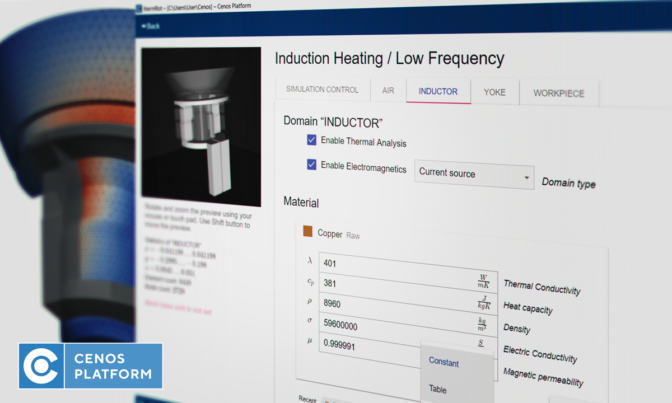
Looking for highly customizable induction heating solutions? Computer simulation can be the answer. Dr. Mihails Scepanskis and Dr. Vadims Geza, both of CENOS LLC, share how simulation is best employed in this summer 2019 throw back. Here's an excerpt: "Computer simulation for induction heating is a powerful tool that enables engineers to investigate or design a physical system and process using a virtual mathematical model, thus saving time and money on numerous physical design iterations."


2. September 2019: Simulation of Induction Heating of Steel Billets for Forging

How does one go about optimizing a progressive induction heating system for a steel billet? With 3D simulation. The platform elaborated upon in this article shares how both single and multiple coil designs can be simulated as well as the material and frequency for a full experiential test.

3. November 2019: Heat Treat Radio: James Jan & Andrew Martin on Development of Modeling Software

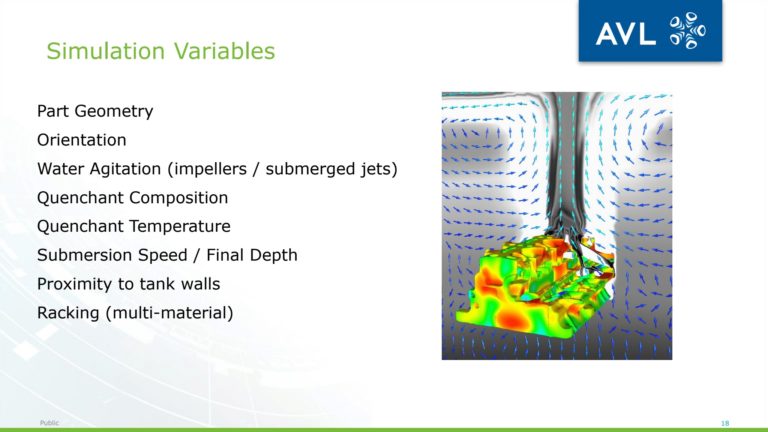
Simulation software was also used by Ford Motor Company to solve issue of cracking in cylinder heads. This was a problem that many competitors of the automotive company also had, so figuring out a solution that would save resources, time, and money was critical. Listen to the conversation or read the transcript when you click the link above.

4. March 2020: Simulation Software and 3D Printers Improve Copper Coils

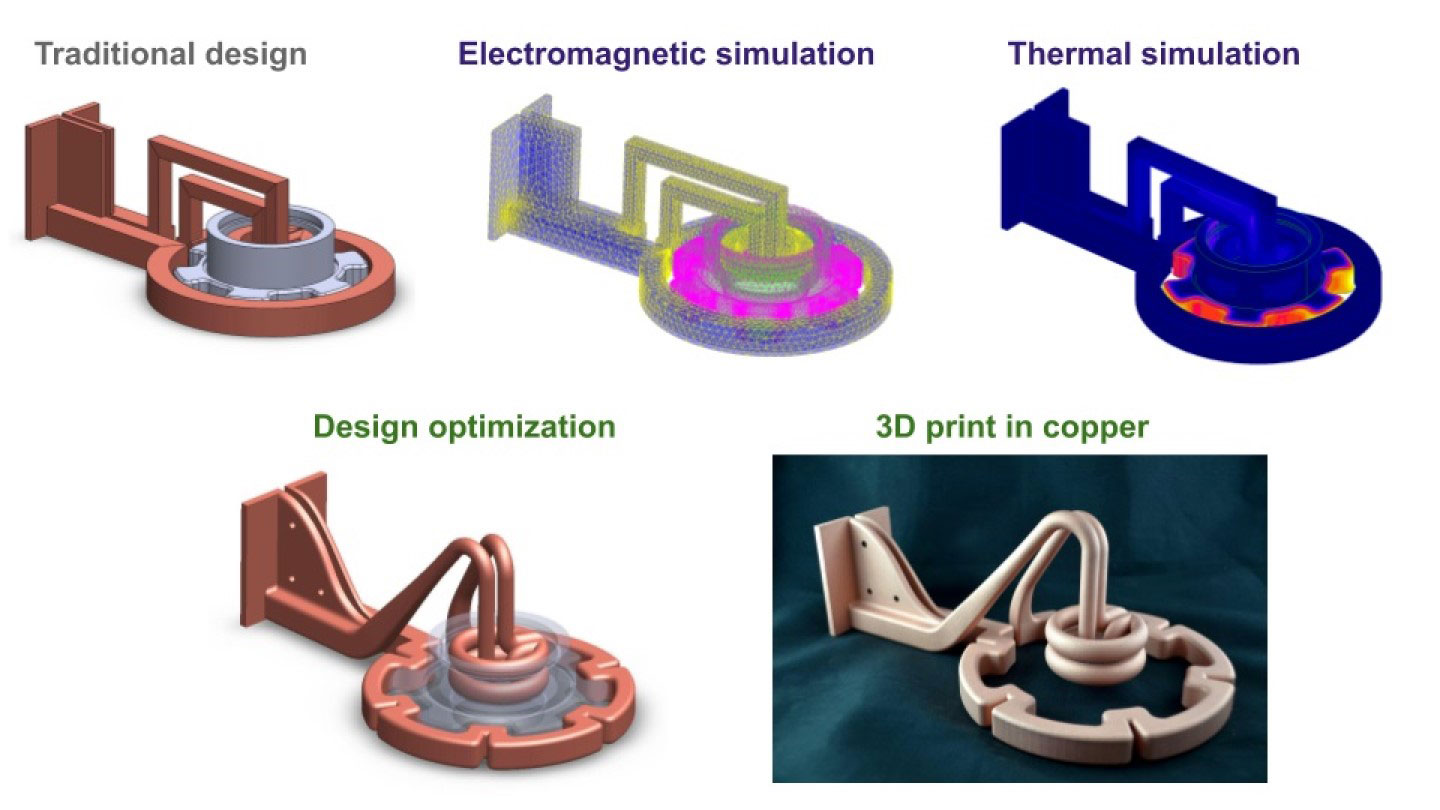
With additive manufacturing and especially 3D printed designs, engineers are better able to design complex parts. With part manufacturing that can solve challenging and precise problems, simulation software can help develop 3D digital prototypes to test and add extra layers of complexity. Read this article about the role of simulation in 3D printed designs.

5. June 2020: Predicting the Effects of Composition Variation for Heat Treatment of Aerospace Alloys

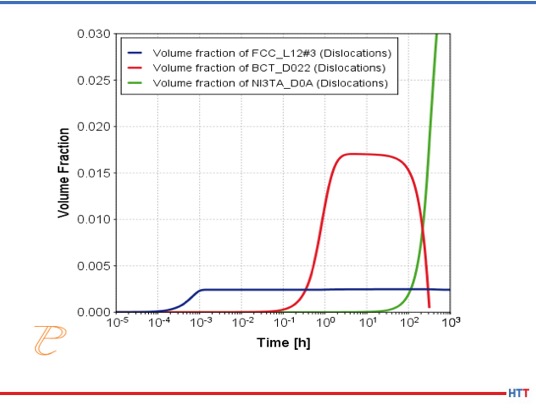
Variability between parts can mess up your heat treat operations if heat treat operators are not careful. Beyond knowing what composition is in your alloys, simulation can help predict what will happen to the different parts during heat treatment. Adam Hope and Paul Mason of Thermo-Calc Software reveal that "[the] examples shown [in this article] have illustrated how modeling and simulation tools such as those based on the CALPHAD approach can be used to predict variability arising due to material composition."

TC-PRISMA Precipitation simulations using nominal IN625 powder compositions measured at the dendrite boundaries. Recalculated based on Reference 3.


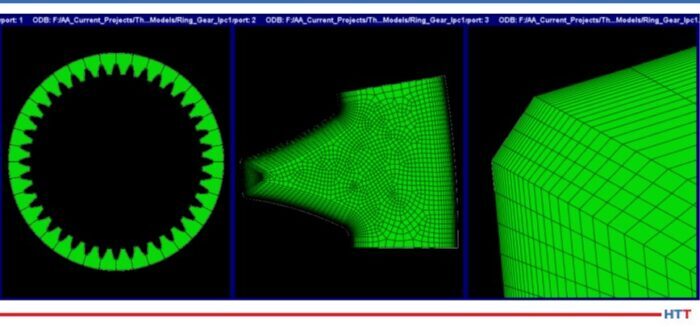
6. November 2020: Case Study: The Low-Pressure Carburizing Process Improvement for a Ring Gear

LPC got you feeling low? In this case study from DANTE Solutions, learn how the the simulation software helped a heat treater improve their LPC schedule and successfully dissolve carbides in the case of ring gears. Two of the takeaways were: "The heat treatment simulation software DANTE model parameters for carbon diffusivity, carbide formation, and carbide dissociation fit from experimental data," and "The software successfully predicted the results of a low-pressure carburizing process that was resulting in poor part performance during rolling contact fatigue."

7. January 2021: 9 Industry 4.0 Terms You Should Know

This brief reference guide will bring you up-to-speed on the Industry 4.0 terms you should know, especially as the world of manufacturing continues to rapidly change and people begin mentioning "Industry 5.0" more and more.

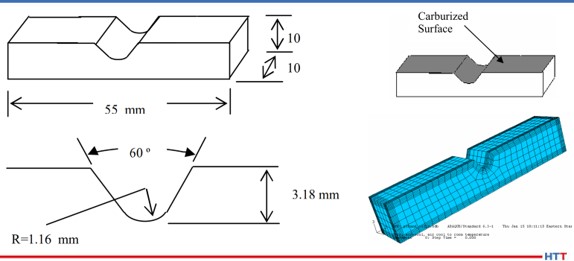
8. May and June 2021: Fatigue Improvement for Gear Steels in Helicopter Powertrains Phase 1 and Phase 2

In this two-part article series in 2021, we look at how the precise heat treating of gears can be improved with simulation software. Check it out!

Coupon dimensions, selectively carburized surface, and finite element model


Find heat treating products and services when you search on Heat Treat Buyers Guide.com


Heat Treat Simulation Imaging Through Time: 2019–2021 Read More »

Skip to content