


featured

Message from the Editor: ASM Executive Leadership Forum

Heat Treat Today publishes twelve print magazines a year and included in each is a letter from the editor. This letter is a pre-release from the December 2025 Annual Medical and Energy Heat Treat print edition. In today’s letter, Bethany Leone, managing editor at Heat Treat Today, shares about the ASM Heat Treat show of 2025.


Attending the bi-annual Heat Treat show is always a thrill. The ASM Heat Treat Society did not disappoint, bringing a full line up of technical sessions and engaging panels to attend between walking the busy show floor, itself packed with cutting edge research presentations and informative booths of key players. I had the opportunity to attend more sessions than usual this year to hear what concerns in industry were being raised at this event. 

On Monday, October 20, ASM President Dr. Navin Manjooran, chaired the first ever Executive Leadership Forum, bridging the concerns and forecasts of industry leaders with the bold training methods of frontline academic leaders. The event was specifically hosted for the IMAT conference attendees at the collocated 33rd Heat Treating Society Conference and Exhibition. 

Dr. Manjooran underlined the intent of creating stronger collaborations between these two groups, with the first moderator, Renee Parente, director of Technology and Product Engineering at Advanced Micro Devices (AMD), further emphasizing the goal of accelerating innovation through open discussions like these. 

Industry Panel 

At this forum, the first panel included a Q&A portion moderated by Renee Parente with the following four industry panelists: 

  • Dr. Aziz Asphahani, FASM, chairman and CEO of Questek Innovations 
  • Dr. David Furrer, FASM, principal fellow and discipline lead for materials and processes at Pratt & Whitney 
  • John R. (Chip) Keough, PE, FASM, chairman and president at Lightspeed Concepts/Joyworks LLC 
  • Dr. Dehua Yang, FASM, president at Ebatco 
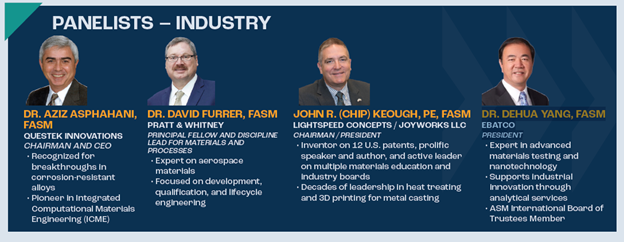
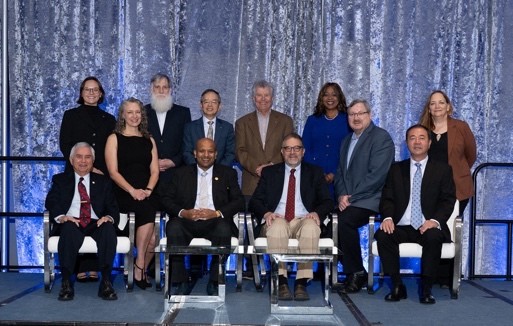
ASM Executive Leadership Panel Industry Panelists
Source: ASM International

From this panel came key thoughts on how research in the business world was being developed to further commercial efforts. First, there was a consensus that corporations were investing in research internally but were instead looking to start-ups to absorb the energies of research and development needs. While academic-industry partnerships were valuable, the concern over IPs was reviewed with Dr. Furrer adding that it is commitment to collaborative internal research efforts and external research industry partnerships that is most meaningful. He also added that the new generation of engineers are entering the workforce with new tools of industry at the ready to implement, and this shift needs to be welcomed to keep pace with the speed of innovation.  

Another important thread of discussion in this panel was the need to both accelerate the development of higher performance materials (Dr. Asphahani), as well as implement this development in a connected manner across engineering counterparts, like the quality, manufacturing, and design departments (Dr. Furrer) for effective product development.  

Academic Panel 

The academic panel revealed specifics on exciting current and developing efforts to train the rising workforce. Dr. Viola L. Acoff, the dean of engineering at the University of Mississippi, passionately shared the success of her breakthrough course design to retain freshmen metallurgy students through a hands one MTE 101 course, which includes access to a fully functioning foundry and efforts to grow already present real-world industry experience through industry-sponsored programs. 
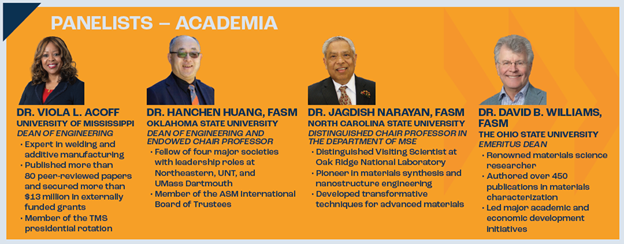
ASM Executive Leadership Panel Academia Panelists
Source: ASM International

While the panel acknowledged the ongoing efforts to prepare students to use AI and other technologies of Industry 4.0 (and 5.0), there was a mixture of other emphases, including: 

  • the “plug-and-play” graduate who does not need remediation training at their first job (especially emphasized by Dr. Christopher Berndt, distinguished professor, Surface Science and Engineering at Swinburne University of Technology
  • a focus on developing materials engineers who think critically 
  • a close look at the publication system, with some specifically advocating the need to rethink this system as the barometer for engaged students and commercially focused research 

The four-person academic panel was completed by Dr. Hanchen Huang, FASM, dean of Engineering and endowed chair professor at Oklahoma State University, and Dr. David B. Williams, FASM, dean emeritus at The Ohio State University. The moderator was Dr. Zi-Kui Liu, FASM, Dorothy Plate Enright Professor in MSE at The Pennsylvania State University

Panelists pose with Dr. Navin Manjooran (front, center right) and Master of Ceremonies Nicole Hudak Nicole Hudak (back left).

Audience 

I sat in a room amidst several dozen heat treat decision makers from both the commercial and teaching ground of heat treat, ranging from student and early career to research veteran and recently retired. Audience members asked their questions after both of the panels and mingled after the session to share a few words amongst ourselves and the generous speakers.  

Clearly, concern for the next generation of materials experts to meet industry needs — both in training and in availability of personnel — was of primary importance. Be it the question of how industry was investing in secondary and primary education interventions or a side discussion questioning how the leaders of both panels were driving young people toward entrepreneurial competition, the room buzzed with interest. 

Summary 

One comment Dr. Furrer shared outside of the panel session was his interest in how the focus of academia was shaping the opportunities available to upcoming industry leaders and engineers. 

Despite the government panel being unable to participate in the forum due to the ongoing government shutdown, this forum proved to be emblematic of Dr. Manjooran’s summary of ASM’s most important attribute: the ability through connections — memberships, partnerships, etc. — to advance materials worldwide.  


Bethany Leone
Managing Editor
Heat Treat Today
Contact: Bethany Leone at bethany@heattreattoday.com


Message from the Editor: ASM Executive Leadership Forum Read More »
News from Abroad: Global Fairs, Acquisition, and Power Deal

In today’s News from Abroad installment, we highlight The Bright World of Metals 2027 GIFA, METEC, THERMPROCESS and NEWCAST conferences, an aluminum exctrusion company’s recent acquistion of Induction Professionals, and a twelve month power deal for an Australian aluminum smelter.

Heat Treat Today partners with two international publications to deliver the latest news, tech tips, and cutting-edge articles that will serve our audience — manufacturers with in-house heat treat. Furnaces International, a Quartz Business Media publication, primarily serves the English-speaking globe, and heat processing, a Vulkan-Verlag GmbH publication, serves mostly the European and Asian heat treat markets.


Global Metal Fairs Open for Registration

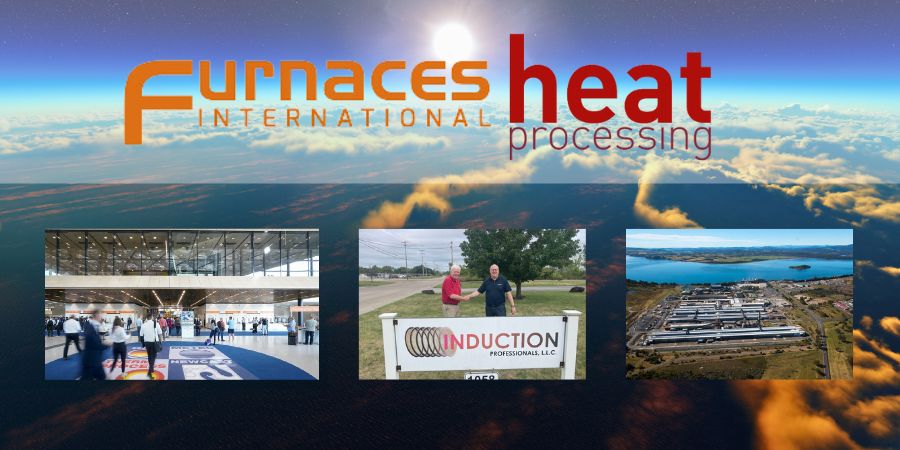
Lively atmosphere at the Bright World of Metals in Düsseldorf: GIFA, METEC, THERMPROCESS and NEWCAST will once again unite the key sectors of the metal and foundry industry in 2027. (Source: Messe Düsseldorf / C. Tillmann)
Source: Heat Processing

“Four world-leading trade fairs, one common goal: to shape the future of the global metal and foundry industry. From 21 to 25 June 2027, ‘The Bright World of Metals’ will bring together international market leaders, hidden champions and newcomers in Düsseldorf — from iron and steel to aluminum and other non-ferrous metals. The focus is on the central topics of the industry: Green Transformation — Sustainability and Decarbonization — Digitization and Automation, Resource Efficiency and Circular Economy, Young Talent as well as Global Networking and Knowledge Transfer.

“These topics shape the programme, the exhibition areas and forums and form the framework for innovation, transformation and future viability of the international metal and foundry industry. Companies can now register online and secure their place.”

READ MORE:Ready for Transformation: Registration for GIFA, METEC, THERMPROCESS and NEWCAST 2027 now open” at heat processing.

Extrutec North America acquires Induction Professionals

The new company will be situated in Induction Professionals former facility in Youngstown, Ohio. Source: Furnaces International

“Aluminium extrusion company Extrutec North America, has acquired Induction Professionals, leading to the formation of the new company Induction Professional Solutions (IPS). The acquisition will combine Extrutec’s energy efficient technology with Induction Professionals extensive experience to provide customers with advanced heating solutions.

“Uwe Günter, managing partner of Extrutec, said: “We are thrilled to welcome Induction Professionals assets and expertise into the Extrutec family. This is an exciting and strategic step for our company. By integrating Induction Professionals’ capabilities into our North American operations, we are well-positioned to offer a comprehensive portfolio of the most modern, energy-efficient induction heating solutions. We are committed to building on the foundation of trust and quality that Tom Kearney and his team have established.”

READ MORE:Extrutec North America acquires Induction Professionals” at furnaces-international.com.

Lifeline Power Deal Extended for Aluminum Smelter

The future of the Rio Tinto-owned smelter based in northern Tasmania, was put in jeopardy as its 10-year power agreement was set to expire on 31 December.
Source: Furnaces International

“Bell Bay Aluminium has, in-principle, agreed a 12-month extension to their deal with Hydro Tasmania. The future of the Rio Tinto-owned smelter based in northern Tasmania, was put in jeopardy as its 10-year power agreement was set to expire on 31 December, reported ABC.

“In a statement on their website, the Australian Aluminium Council, said: ‘Today’s announcement between the Tasmanian Government and Rio Tinto’s Bell Bay Aluminium to extend the power arrangements until December 2026 is a welcome stepping stone towards what will hopefully be a long-term solution. This news will be welcomed by the employees and people of Tasmania who rely on the smelter for jobs, its local economic contribution, and the vital role it plays in the Tasmanian grid.’”

READ MORE: “Bell Bay Aluminium secures lifeline power deal extension” at furnaces-international.com.

News from Abroad: Global Fairs, Acquisition, and Power Deal Read More »
Heat Treat Economic Indicators for November: Strong Growth Markers

Heat Treat Today has gathered the four heat treat industry-specific economic indicators for November 2025. The November industry-specific economic indicators reinforce the overall trend toward growth that began in September of 2025.

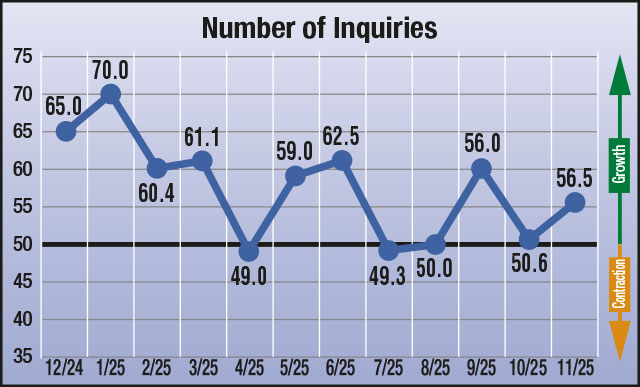
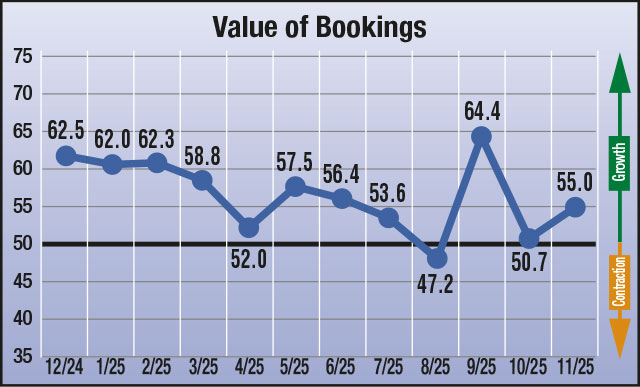
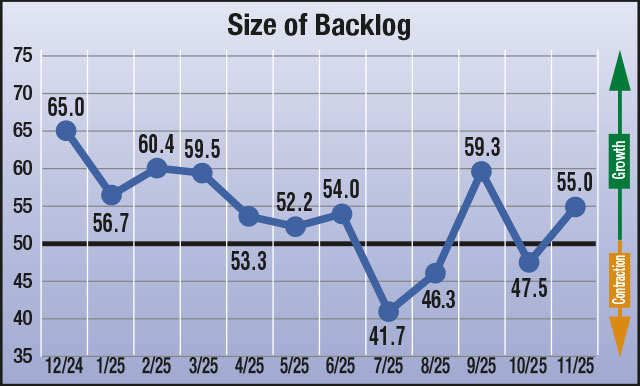
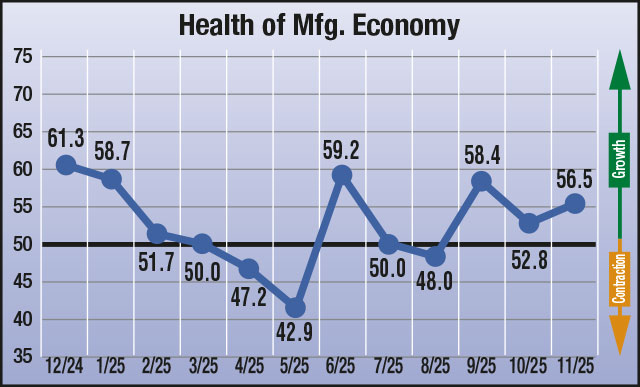
November’s industry-specific economic indicators showed all four indices in growth. The Inquiries stayed in growth, rising to 56.5 (from 50.6 in October). Bookings rose to 55.0 (from 50.7 in October). The Backlog index rose out of contraction to 55.0 (up from 47.5 in October). Finally, the Health of the Manufacturing Economy index remained in growth at 56.5 (up from 52.8 in October).

All of the graphs suggest that the undercurrent of growth, which began in late summer, is continuing to rise as we look to the end of the year.

The results from this month’s survey (November) are as follows: numbers above 50 indicate growth, numbers below 50 indicate contraction, and the number 50 indicates no change:

  • Anticipated change in Number of Inquiries from October to November: 56.5
  • Anticipated change in Value of Bookings from October to November: 55.0
  • Anticipated change in Size of Backlog from October to November: 55.0
  • Anticipated change in Health of the Manufacturing Economy from October to November: 56.5

Data for November 2025

The four index numbers are reported monthly by Heat Treat Today and made available on the website. 

Heat Treat Today’s Economic Indicators measure and report on four heat treat industry indices. Each month, approximately 800 individuals who classify themselves as suppliers to the North American heat treat industry receive the survey. Above are the results. Data started being collected in June 2023. If you would like to participate in the monthly survey, please click here to subscribe.


Heat Treat Economic Indicators for November: Strong Growth Markers Read More »
Customize To Build Better Furnaces

Custom furnace design isn’t just about performance upgrades — it’s about process reliability. Vacuum furnaces built for general use, however, often fall short in high-precision industries. This Technical Tuesday installment comes to us from Scott Herzing, vice president of Engineering at Paulo. Explore how purposeful furnace design, smarter controls, and targeted customization can transform vacuum heat treatment.

This informative piece was first released in Heat Treat Today’s November 2025 Annual Vacuum Heat Treating print edition.


The reliability and consistency of vacuum heat treatment processes depend heavily on furnace design and performance. Standard furnace configurations typically serve general heat treating applications adequately. However, for industries with extremely demanding requirements, such as aerospace, automotive, and power generation, small variations in furnace design can lead to substantial impacts on part quality, increasing risks and costs. Achieving exceptional process control and repeatability often requires custom furnace modifications tailored specifically to the unique requirements of each process.

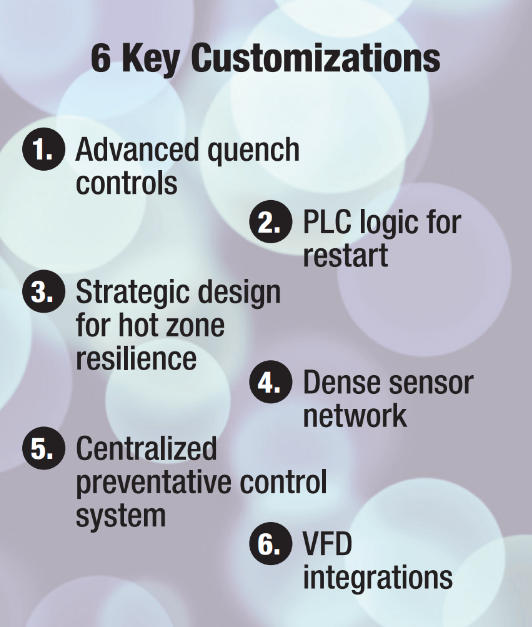
Extensive customization of vacuum furnaces can initially seem costly and complex. It takes experience operating and refining vacuum furnaces to know which adjustments deliver the greatest impact. This article taps into the more than fifty years of heat treating wisdom from Paulo with six key factors that drive better furnace performance, enhance reliability, reduce downtime, and create measurable efficiency gains.

Why Customization Matters

Conventional vacuum furnace models offered by manufacturers are generally designed to meet broad market demands. This often results in equipment that effectively balances functionality, affordability, and ease of use for a wide range of applications. However, certain high-precision thermal processing applications, especially those involving aerospace components like single-crystal turbine blades demand much stricter temperature uniformity, controlled quenching rates, and near-perfect repeatability from cycle to cycle.

In these cases, standard configurations can introduce variability that compromises quality. A better path is a case-by-case approach, evaluating specific process risks and targets critical components for modification. Precision upgrades can be integrated where they have the greatest impact, achieving the required level of process control. This makes it possible to achieve near-zero scrap rates, dramatically boost reliability, and achieve repeatability that far exceeds industry norms.

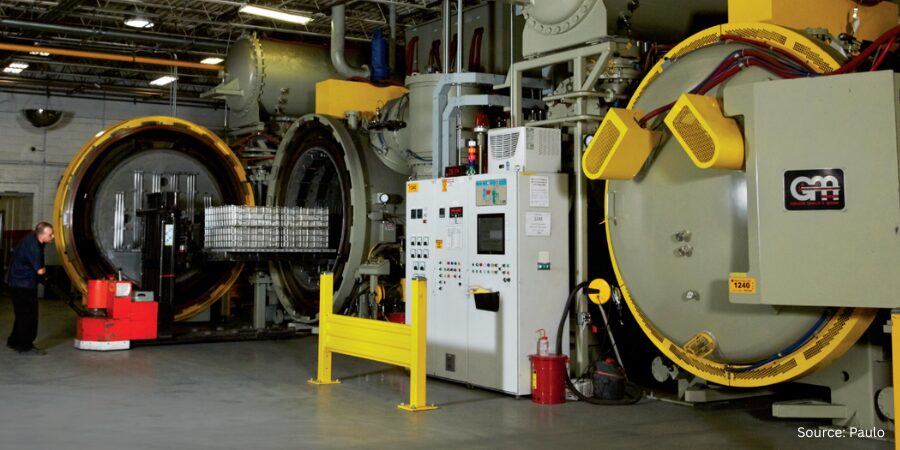
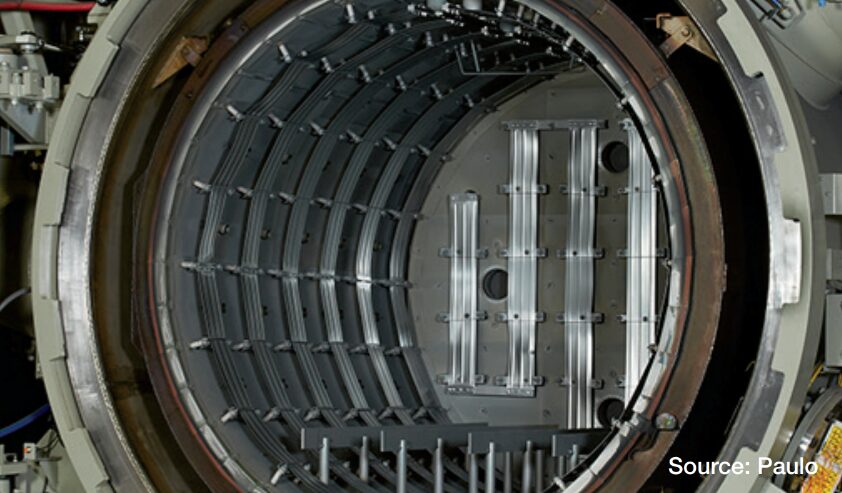
Interior of vacuum furnace

Advanced Pressure and Cooling Control

Repeatable quench dynamics is a game-changer when it comes to part quality. Integrating advanced gas control capabilities that extend beyond basic pressure management can help you improve heat treating results. To do this, you need to precisely control the rate at which gas is introduced into the vessel using proportioning valves, not just the pressure setpoint. For controlled cooling cycles, systems also need to manage the fan start speed, allowing you to tailor the convective heat transfer to the geometry and mass of each part. This level of precision ensures consistent metallurgical results and protects part integrity.

Automation-Ready Resilience

In multi-furnace environments that rely on automation and minimal staffing, power-failure restart behavior cannot be left to chance. Adding dedicated PLC logic for restart allows the system to record the exact state at interruption, verify safe conditions on recovery (atmosphere, temperature, motion, interlocks), and automatically sequence a safe restart when criteria are met. This reduces scrap risk, protects equipment, and stabilizes throughput, especially when only a few operators are covering many furnaces.

Hot Zone Design and Material Selection

A major component directly influencing furnace reliability and overall performance is the hot zone. As the central area where thermal processing occurs, the hot zone repeatedly experiences extreme temperature fluctuations, making its design crucial to operational efficiency and product quality.

Standard vacuum furnaces use thinner insulation layers and lower-cost materials to control initial investment costs. However, advanced hot zones can dramatically outperform these standards by incorporating thicker insulation layers, strategically placed air gaps, and specialized insulation materials, such as high-quality molybdenum, graphite felt, or carbon-fiber-carbon (CFC) boards.

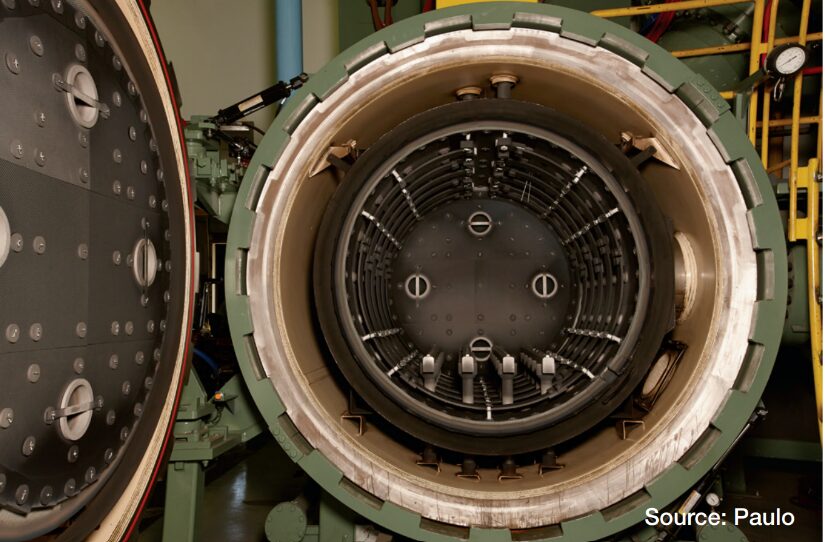
Vacuum furnace hot zone

These advanced materials not only prolong hot zone life but also substantially reduce heat loss, minimizing energy consumption and improving thermal uniformity. The enhanced durability also results in fewer service interruptions, less downtime, and lower long-term maintenance costs, ultimately justifying the higher initial investment. At Paulo, this is how we’re able to reliably run around 29,000 cycles per year in over thirty furnaces at our Cleveland facility.

Additionally, the hot zone’s construction details, including how insulation and heating elements are attached, can significantly affect longevity and reliability. Standard fasteners or attachment mechanisms may perform well in general applications but frequently deteriorate under high-stress thermal cycling. High-performance fasteners specifically engineered for high-temperature stability reduce the risk of premature failure and minimize downtime.

Enhanced Sensor Integration

Furnace reliability and consistency rely heavily on the accuracy, quantity, and strategic placement of sensors within the furnace chamber. Manufacturers’ vacuum furnace designs typically include a limited number of sensors monitoring basic parameters, such as temperature, pressure, and vacuum levels. Increasing the number and distribution of sensors throughout the furnace interior allows for a more detailed and accurate understanding of conditions during processing. By placing multiple sensors at critical points within the hot zone and throughout key furnace components, operators can detect subtle differences in temperature distribution, heat flow, gas pressures, and quench rates that might otherwise go unnoticed. This enhanced sensor density provides the detailed data necessary for real-time process adjustments, early detection of equipment issues, and predictive maintenance interventions, significantly improving process reliability and part consistency.

In addition, the rich data captured by a denser sensor network improves traceability and enables rapid identification of root causes when process deviations occur, ultimately reducing the risk of quality issues and equipment downtime.

Centralizing Your Control System

One often-overlooked factor in achieving highly consistent heat treating results is the adaptability and responsiveness of furnace control systems. Modern furnace control architectures benefit from a centralized SCADA layer with deep PLC integration. By recording every PLC input (thermocouples, switches, interlocks, drives, flows, pressures), the system enables technicians to diagnose issues without walking out to the furnace and manually testing components. With complete signal histories available, furnace issues can often be diagnosed and resolved remotely in minutes, improving first-pass resolution and minimizing production disruption.

Integrated control software should do more than log data; it should actively protect quality:

  • Automated compliance control: Continuously track process parameters, alarm on deviations, and initiate quality quarantines when limits are exceeded to prevent suspect parts from re-entering the supply chain.
  • Element-health monitoring: Monitor heating-element resistance to detect early signs of a heating system issue. If an anomaly is detected, automatically stop the heating process to protect parts and prevent secondary furnace damage.

These safeguards shift intervention upstream and reduce reliance on manual inspection alone.

Extending Auxiliary Equipment Life with VFDs

Variable-frequency drives (VFDs) on pumping systems can substantially extend motor and bearing life by matching speed to process demand and reducing mechanical stress. When control logic conditions are met, slowing pumps lowers load, heat, and vibration, which are key contributors to premature failures.

  • Without VFDs: Bearings on 615 blowers typically require replacement every 1–2 years, and motor failures occur more frequently than acceptable.
  • With VFDs + logic-based speed reduction: Bearing-change intervals extend to 10–20 years, with no motor problems, reflecting a step-change in reliability and lifecycle cost.

This targeted upgrade is a practical, high-ROI improvement that also helps decrease unplanned downtime.

Practical Realities and Final Considerations

Extensive furnace customization offers clear advantages, but it is not always practical for every operation or budget. In many cases, targeted, incremental upgrades — such as refining hot-zone insulation and attachment methods, adding or repositioning select sensors, or phasing in improved control software and deeper data storage/analysis — deliver measurable gains in reliability and process quality without large upfront costs.

Another practical path is to partner with a commercial heat treater that has already engineered and validated these enhancements at an industrial scale. This option can accelerate access to higher levels of precision and repeatability without requiring capital investment, engineering bandwidth, and learning curve of doing it all in-house.

Ultimately, achieving reliable and repeatable heat treatment results involves careful consideration of furnace design and functionality, aligned closely with your process requirements and economic realities. While extensively customized furnaces represent the ideal for particularly demanding applications, understanding the targeted areas where smaller customizations can yield significant improvements empowers heat treaters across the industry.

About The Author:

Scott Herzing
Vice President of Engineering
Paulo

Scott Herzing is vice president of Engineering at Paulo. He leads the company’s metallurgical, project and automation engineering, fabrication, and lean technology groups. With over 27 years at Paulo, Scott applies his passion for leadership, engineering, and problem-solving to help customers achieve advanced heat treating outcomes.

For more information: Contact Scott Herzing at sherzing@paulo.com.

Customize To Build Better Furnaces Read More »
Tube Annealing Furnace for Stainless Steel and Special Alloys Manufacturer

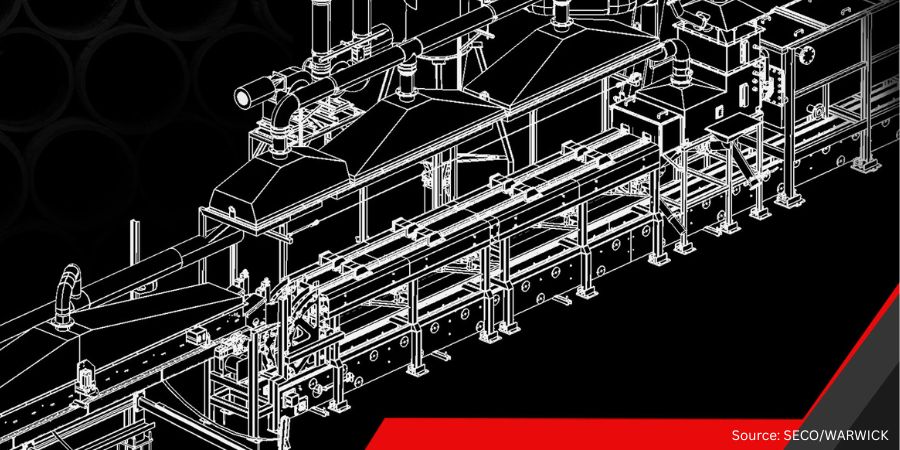
Alleima, a manufacturer of steel components and special alloys, will receive a new tube annealing furnace. The electric atmospheric furnace line is intended for bright annealing of high-alloy tubes and will be used in the production of nuclear applications components.

SECO/WARWICK is providing the furnace as their 5,000th device.

The tube annealing system
Source: SECO/WARWICK
Piotr Skarbiński
Vice President of Aluminum and CAB Products Segment
SECO/WARWICK
Magnus Mellberg
Production Unit Manager
Alleima
Source: LinkedIn

“Our partnership with SECO/WARWICK has lasted for many years. We are delighted that we could celebrate it in a special way, as our impressively large tube annealing line (over 140 meters long – 460 ft) happens to be the 5,000th SECO/WARWICK device. We feel that together we are creating not only a remarkable history, but also the future as this solution will help us spread our wings,” said Magnus Mellberg, production unit manager at Alleima.

“The furnace was created specifically for this partner’s needs. It will allow them to increase production capacity…This is important as the demand for high-alloy components in this market has increased. It is an unusual construction, verified through analysis and simulations, and implemented in reality. It offers very good technological results after the annealing process,” explained Piotr Skarbiński, vice president of the Aluminum and CAB Business Segments at the SECO/WARWICK Group.

Press release is available in its original form here.

Tube Annealing Furnace for Stainless Steel and Special Alloys Manufacturer Read More »
All-Metal Hot Zone Furnace for Solar Atmospheres

Solar Atmospheres has expanded its operations with an additional all-metal hot zone furnace. The new system significantly expands the company’s capacity to heat treat highly sensitive materials such as precipitation-hardened stainless steels, nickel-chrome-based superalloys, titanium, and niobium. The new unit is installed at their Hermitage, Pennsylvania facility and will meet the stringent demands of the aerospace and medical industries.

Michael Johnson, Sales Director at Solar Atmospheres of Western Pennsylvania, stated: “The all-metal vacuum furnace plays a critical role in delivering the purest possible processing environment. This level of cleanliness and control results in pristine end products that meet the most demanding industry standards. We’re proud to partner with the engineers at Solar Manufacturing to bring this advanced technology to fruition.”

The furnace incorporates strategically placed isolation valves, an oversized main valve, a high-capacity diffusion pump, and a polished stainless-steel chamber. Capable of achieving vacuum levels below 5 x 10⁻⁶ Torr, the system ensures bright, contamination-free results.

Press release is available in its original form here.

All-Metal Hot Zone Furnace for Solar Atmospheres Read More »
Ryerson and Olympic Steel Announce Merger

Ryerson Holding Corporation, a value-added processor and distributor of industrial metals, and Olympic Steel, Inc., a U.S. metals service center, announced that they have entered into a definitive agreement to merge. The merger will enhance the combined company’s presence as the second-largest North American metals service center and will bring Olympic Steel’s complementary footprint, tempering capabilities, and heat treated product offerings into Ryerson’s network of value-added service centers.

The deal is expected to generate approximately $120 million in annual synergies by the end of year two via procurement scale, efficiency gains, commercial enhancement, and network optimization. The merger adds Olympic Steel’s thermal processing services and metals to Ryerson’s existing offerings.

As part of the transaction, Michael D. Siegal, executive chairman of Olympic Steel’s Board of Directors, will be appointed chairman of the Board of Directors (“Board”) of the combined company and Olympic Steel will also appoint three other directors to the combined 11-member Board. Eddie Lehner, president and chief executive officer (“CEO”) of Ryerson, will serve as CEO of the combined company, with Richard T. Marabito, CEO of Olympic Steel, serving as president and chief operating officer.

Eddie Lehner said, “This merger represents an immensely attractive and unique opportunity for Ryerson and Olympic Steel as it combines our two organizations, which couldn’t be more complementary and synergistic around the products, services, footprint, and customer experience…The combination of our organizations will further scale the digital investments that Ryerson has made to bring Olympic Steel’s capabilities and formidable expertise into a larger network and provide our customers with greater network density, faster lead times, and a wider array of custom solutions from pick-pack-and-ship to finished parts…I look forward to working with Rick and the entire Olympic Steel organization with shared mission, passion, and purpose to unite our teams in reaching our vast potential together.”

“We are very excited about the combination of Ryerson and Olympic Steel and the trajectory of the business going forward,” added Steve Larson, chairman of Ryerson’s Board. “We look forward to welcoming Michael and the additional Olympic directors to the already strong Ryerson board. They bring a wealth of experience and perspective.”

Michael Siegal added, “This is a significant milestone for the business my father and uncle started more than 70 years ago. We went from private to public in 1994, and now we enthusiastically take this next step to accelerate Olympic Steel’s continued growth.”

Press release is available in its original form here.

Ryerson and Olympic Steel Announce Merger Read More »

Atmosphere Group Now “Aichelin Americas”

The Atmosphere Group contains many familiar subsidiaries to the heat treatment world: AFC-Holcroft, Atmosphere Heat Treating, Inc., Austemper Inc., and Nitrex NTS (Nitrex, G-M Enterprises, and UPC-Marathon). Now, the U.S. operating holding company will carry out business for the Region Americas under a new name: Aichelin Americas.

Marty Poljan will continue to lead the region as president and CEO of Aichelin Americas. The group has announced that Tracy Dougherty has been promoted to president of Sales & Service and that Paul Oleszkiewicz has been promoted to president of Operations. Together, Tracy and Paul bring more than 50 years of leadership experience in the heat treating industry.

“Our clients don’t simply buy equipment — they make a long-term decision about who they can rely on,” says Poljan. “This leadership structure reflects that reality. We are here to be a consistent, service-driven partner — not just at installation, but through every maintenance cycle, modernization and capacity expansion that follows.”

“This industry has shifted,” notes Dougherty. “Responsive service, modernization support, and clear accountability over the lifespan of their equipment. That’s where our focus is, and where it will remain.”

Delivering on that promise operationally is Paul Oleszkiewicz, president of Operations, whose three decades at Nitrex have been dedicated to engineering execution, process reliability, and technical precision.

“Engineering leadership in heat treating comes down to repeatability and trust,” says Oleszkiewicz. “A furnace isn’t just a product — it’s a long-term production system. Our responsibility is to deliver with consistency and to stand behind that equipment with real technical support.”

“A furnace isn’t just a product — it’s a long-term production system”

As Aichelin Americas continues to align its manufacturing capabilities, aftermarket service network, and engineering resources across its combined brands, it is able to offer access to a leadership team that has lived the operational realities of all things thermal processing.

Press release is available in its original form here.

Atmosphere Group Now “Aichelin Americas” Read More »
Refractory Insulation: The Quiet Defender of Furnace Longevity

When it comes to furnace linings, most heat treaters focus on the hot-face materials, the heavy-duty refractories taking the brunt of molten metal, corrosive slags, and extreme heat. And just behind that armor lies a quiet defender: the refractory insulation layer. This layer is often the last line of defense between a functioning furnace and a costly, catastrophic failure. In this Technical Tuesday installment, Roger M. Smith, director of technical services for Plibrico Company, LLC helps readers understand the valuable role of refractory insulation for thermal stability.

This informative piece was first released in Heat Treat Today’s October 2025 Ferrous & Nonferrous Heat Treatments/Mill Processing print edition.


Why Refractory Insulation Matters

Refractory insulation is more than a buffer or a back-up. It provides structural support to the working lining, maintains shell temperatures within safe limits, and cushions the entire structure against the stresses of expansion and contraction. When this layer fails, you don’t just lose insulation, you risk cracks, shell overheating, and lining collapse. In other words, it can turn a maintenance project into a full-blown emergency.

The Strength Factor: Why Compressive Strength Counts

If there’s one property that deserves special attention, it’s compressive strength. The insulation layer is like the foundation of a house: if it cannot support the load above it, the whole structure suffers. Insufficient compressive strength can lead to creeping, crushing, and distortion, all of which compromise the stability of the hot-face refractory.

At green or ambient conditions, most types of insulating refractories, including monolithic, mineral wool, and ceramic fiber boards, exhibit similar compressive resistance, typically in the range of 40−50 psi at 10% deformation, but strength changes significantly once the furnace heats up.

For example, most mineral wool and ceramic fiber boards contain organic binders that burn off at around 475°F, reducing their compressive strength by roughly 50% at furnace operating temperatures (based on the board manufacturer’s technical data sheets, see Table A). Over time, this can increase thermal conductivity through the reduced thickness of the insulating layer.

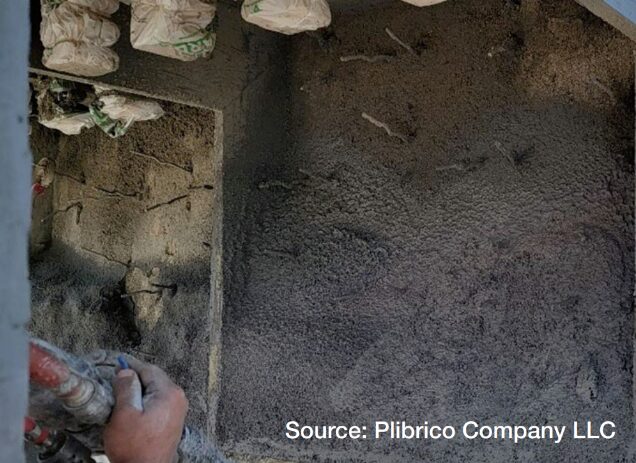
In contrast, monolithic lightweight insulating castables, like Plibrico’s Plicast Airlite 25 C/G, not only retain their compressive integrity as the temperatures rise, but they actually gain strength, according to ASTM C165 test data as the material fully sets and stabilizes under heat.

Figure 1. Monolithic insulation, gunned in place, stays strong and gains compressive strength during heat-up.

This difference matters: compressive strength is not static. It changes as the material heats up and insulating products that hold their strength at service temperatures provide a more stable, safe, and reliable support for the hot-face lining.

The takeaway? Stronger, more stable insulation is not just filler. It’s an active structural layer that helps prevent hot-face sagging, cracking, and premature failure, directly contributing to longer furnace life.

Thermal Stability: More Than Just Heat Resistance

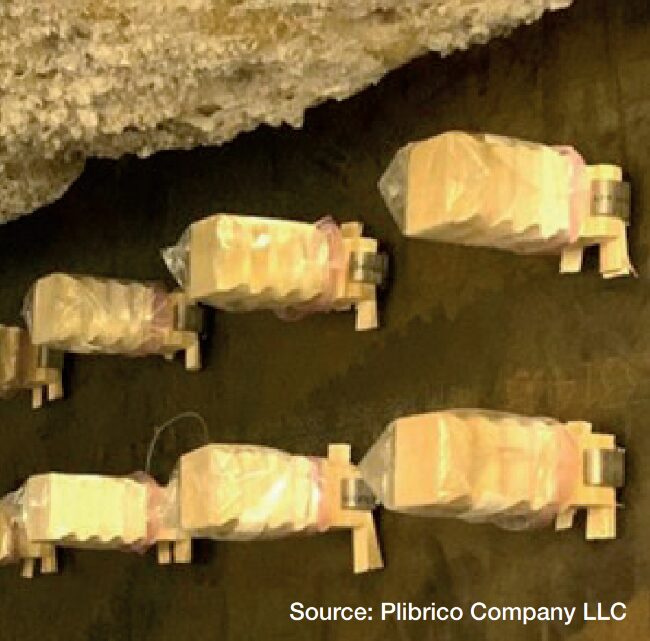
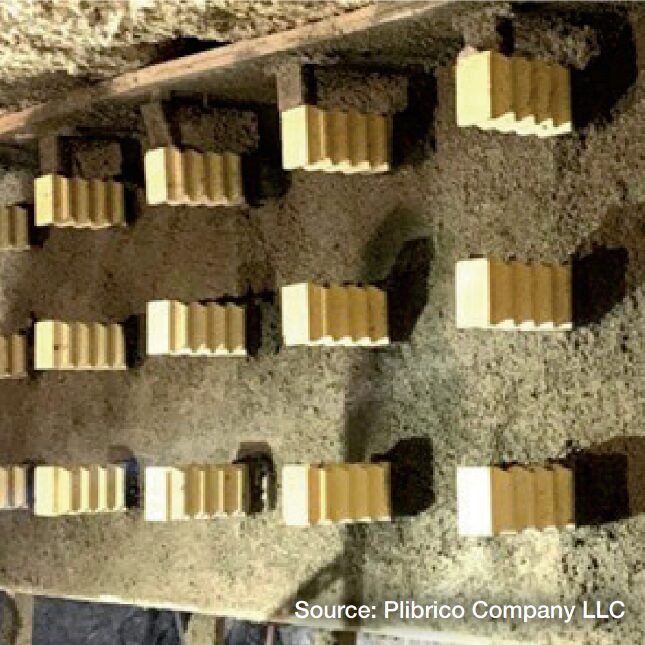
Figure 2. Confirmed anchor layout and fully prepped furnace wall ready for monolithic insulation installation.

Compressive strength plays a direct role in thermal stability. Denser, stronger castables with lower porosity are far better at resisting gas penetration, chemical attack, and erosion than lightweight, weaker alternatives.

When insulation loses stability, it can create voids, cracks, and hot spots, risks that threaten not only the hot-face layer but the furnace shell itself. This is why density and porosity are critical: denser insulating castables maintain their structure under load, resist infiltration, and provide reliable support for the hot face.

By contrast, mineral wool and board products often weaken as their organic binders burn off at service temperatures, leading to deformation and unpredictable thermal gradients.

Monolithic lightweight insulating castables can offer a more robust alternative. They retain their integrity as temperatures climb and can even gain compressive strength as they fully set and sinter during heat-up. This added stability reinforces the hot-face layer and helps prevent failures during thermal cycling.

There’s another layer to this: long-term thermal cycling. Furnaces rarely stay at one steady temperature; they ramp up, cool down, and undergo countless micro-cycles during operation. Insulation that can absorb these changes without cracking or delaminating is critical for avoiding premature lining failures.

In short, thermal stability is structural stability — the better your insulation performs under heat and cycling, the longer your furnace lining will last.

Designing for Expansion: Building Flexibility Into the System

Here’s where many lining failures start: in the different layers of lining expanding at different rates.

Figure 3. Completed furnace wall insulation installation, finished in half the time required for board installation.

Hot-face refractories, often dense high-alumina castables, have significantly different thermal expansion coefficients compared to the lighter, more porous insulating castables behind them. The hot face may swell aggressively under load, while the insulation expands far less. If those differences are not accounted for, the result is tensile stresses, delamination, and cracking at the interface between layers. Over time, those cracks can grow, creating pathways for heat and corrosive agents to reach deeper into the lining.

This is where thoughtful design makes all the difference:

  • Anchor systems must hold both layers securely but flexibly, allowing each to expand without transferring destructive stresses. Using materials like monolithic refractories adds another advantage: their insulating properties help better protect the base of refractory anchors, reducing localized heat buildup and minimizing stress concentrations that can lead to cracking or premature anchor failure.
  • Installation sequencing should avoid locking the hot-face layer too tightly to the insulation, preventing “shear failure” during heat-up.
  • Layer composition must be selected so the expansion mismatch is minimized, balancing mechanical stability with thermal shock resistance.

When expansion is designed for, rather than ignored, the entire lining behaves like a single, flexible system instead of two incompatible parts competing for space.

Practical Tips for Getting It Right

Prioritize compressive strength. Choose insulation with enough strength to support the hot-face lining under load. Materials like monolithic lightweight insulating castables maintain or even increase compressive integrity at service temperatures, improving overall lining stability.

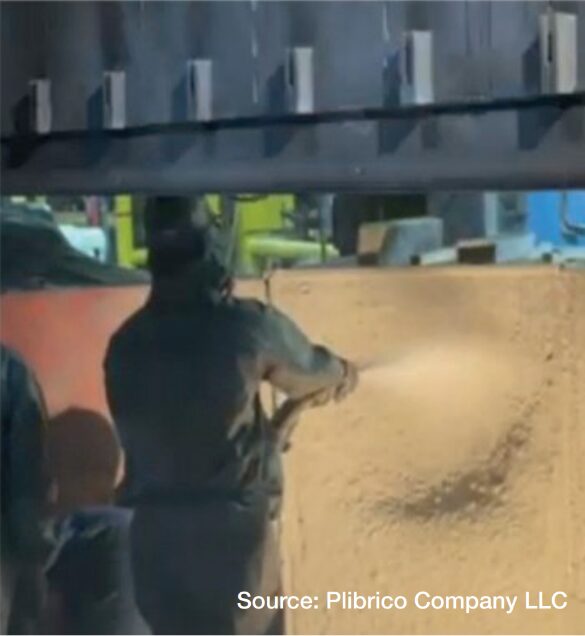
Figure 4. Gunned to the ideal thickness, insulation built with compressive strength can handle stress, prevent cracking, and maintain shape under heat.

Pick the right material for the zone. Not every insulating castable is created equal. Match density, chemistry, and expansion to the application.

Control the install. Low-water mixes, vibration placement, and proper curing are non-negotiables if you want consistent density and strength.

Don’t skip the heat-up schedule. Rushing dry-out or startup is one of the fastest ways to ruin a lining before it is even in service.

Revisit your anchor design and how you install around it. Poorly designed anchor layouts can lead to stress points and premature lining failures, so reviewing and optimizing the design is one of the cheapest ways to prevent costly mechanical issues. Plus, consider the installation method: board insulation requires time-consuming cutting and fitting around each anchor, while monolithic insulating refractories like Plicast Airlite 25 C/G can be installed around anchors in less than half the time, reducing labor while improving performance.

Built to Last

Insulation is not just about slowing heat loss, it is also about standing firm when your furnace is under its heaviest load. The right refractory insulation, engineered with compressive strength as a priority, gives your lining the backbone to absorb mechanical stresses, resist cracking, and maintain its shape through the punishing cycles of heat-up and cool-down. It does not just protect the shell; it supports the hot face, prevents hot spots, and preserves the entire system’s structural integrity.

Compression Recovery Data

ProductTemperature (ºF)Compressive Resistance at 10% Deformation (psi)
Monolithic Insulation
Lightweight Castable/Gunite
(Plibrico Plicast Airlite 25 C/G)
23040
65041
100047
Mineral Wool Board
(published)
ambient38
Ceramic Fiber Board
(published)
ambient50
200023
3rd Party Test Lab – Orton Labs
ASTM C165 Measuring Compressive Properties of Thermal Insulations

Note: Mineral Wool and Ceramic Fiber Boards contain organic binders that burn off by 475ºF. This reduces the strength of the board by 50% along with decreasing other important properties including thermal conductivity.
Table A. Compressive strength at service temperatures: comparison of compressive resistance (10% deformation) between monolithic insulation lightweight castable/gunite materials such as Plibrico’s Plicast Airlite 25 C/G and mineral wool and ceramic fiber boards at increasing temperatures.

Choosing monolithic insulating castables that gain strength at operating temperatures, instead of mineral wool or ceramic fiber boards that lose half their capacity as binders burn away, is an investment in lining longevity. Get this layer right, and you secure longer campaigns, lower maintenance costs, and the confidence that your furnace can keep pace with production demands. Get it wrong, and you risk premature failures, costly outages, and avoidable downtime. In the end, refractory insulation built for compressive strength and stability is not just a detail, it is what keeps your furnace, and your operation, running at its best.

About The Author:

Roger Smith
Director, Technical Services
Plibrico

Roger Smith is a seasoned professional in the refractory industry. With Master of Science in Ceramic Engineering from the University of Missouri – Rolla, Roger has over 15 years of experience in the processing, development, and quality assurance of both traditional and advanced ceramics. He has a proven track record in developing innovative ceramic formulations, scaling up processes for commercial production, and optimizing manufacturing operations.

For more information: Visit www.plibrico.com.

Refractory Insulation: The Quiet Defender of Furnace Longevity Read More »
2 CAB Furnaces Commissioned for Auto Manufacturer

Two EV/CAB lines will be installed for a major manufacturer of heat exchangers for trucks, passenger cars, and new energy technologies. The furnaces are designed to meet the stringent requirements of the automotive industry for the production of components for commercial vehicles and to ensure long-lasting and reliable operation in demanding industrial conditions.

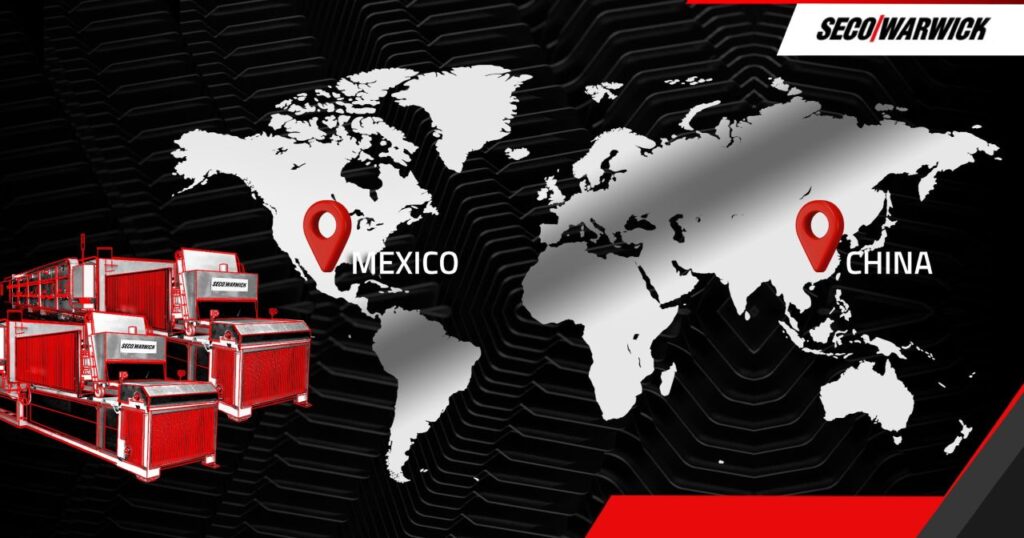
SECO/WARWICK, a supplier of controlled atmosphere brazing technology and more with North American locations, will deliver the two EV/CAB lines: one installation will occur in Mexico and the other in China for the Chinese manufacturer’s in-house heat treat operations.

Piotr Skarbiński
Vice President of Aluminum and CAB Products Segment
SECO/WARWICK

Both lines are modern aluminum brazing solutions dedicated to the production of key cooling system components for electromobility and classic automotive applications. One line has a belt width of 1900 mm, destined for the Chinese location, and was designed for battery cooling plate production, while the Mexican line is 1800 mm wide and will be dedicated to the production of automotive heat exchangers.

“We are proud that one of the leaders in automotive thermal management consistently chooses SECO/WARWICK technology. Our CAB lines…[fulfill] future requirements regarding automation, efficiency and ecology,” commented Piotr Skarbiński, vice president of the Aluminum and CAB Product Segments at SECO/WARWICK.

The two CAB lines ensure temperature distribution uniformity in the brazing process of wide components. The furnace designs involved a convection preheating chamber, radiant brazing furnace, and cooling zones with air jacket and final cooling.

Press release is available in its original form here.

2 CAB Furnaces Commissioned for Auto Manufacturer Read More »