A U.S. steel producer recently announced plans to construct a state-of-the-art electric arc furnace (EAF) mill for flat roll steel in the U.S. southwest with an eye to serve the Mexican flat roll steel market.
Mark. D. Millett, Steel Dynamics President and Chief Executive Officer
Steel Dynamics, Inc. (SDI), based in Fort Wayne, Indiana, anticipates the facility to have an annual production capacity of approximately 3.0 million tons with the capability to produce the latest generation of Advanced High Strength Steel products. The project will include a galvanizing line with an annual capacity of 450,000 tons with a product offering serving the energy, automotive, and equipment manufacturing industries.
SDI currently expects to locate the facility in the southwestern United States in order to reach the underserved Mexican flat roll steel market as well as the southern and southwestern states. Determination of the final site location is subject to state and local government infrastructure and incentive support with an expectation of construction beginning in 2020, followed by the commencement of operations in the second half of 2021.
“We believe our unique operating culture, coupled with our considerable experience in successfully constructing and operating cost-effective and highly profitable steel mills, positions us well to execute this greenfield opportunity and to deliver strong long-term value creation,” said Mark. D. Millett, President and Chief Executive Officer. “We plan to utilize new technologies that will further reduce the gap between existing EAF and integrated steel mill production capabilities.”
15 Quick Heat Treat News Items to Keep You Current
Heat TreatToday offers News Chatter, a feature highlighting representative moves, transactions, and kudos from around the industry.
Personnel and Company Chatter
Mike Paponetti recently accepted the position of Sales Manager at Solar Atmospheres South Carolina. Prior to accepting this position, Mike was the Regional Sales Manager at Solar’s Hermitage, Pennsylvania, facility.
Alliance Steel LLC has announced plans to relocate the company from the northwest suburbs of Chicago, Illinois, to Gary, Indiana, where a new plant will allow the company to consolidate its multi-structure facility into a single-structure facility.
William M. Brown, Harris Corporation Chairman, President, and CEO, has been named chairman of the Aerospace Industries Association (AIA) Board of Governors for 2019. He succeeds outgoing AIA Chairman Tom Kennedy, chairman and CEO of Raytheon.
A new 107000-square-foot facility will focus on additive manufacturing, advanced composites, assembly, and industry 4.0 processes for aerospace design and manufacturing. GKN Aerospace’s new Global Technology Centre in Bristol, United Kingdom, has received support through the UK Governments Aerospace Technology Institute.
A provider of heat treatments and specialist thermal processing servicesheld an official opening ceremony last week at its brand new facility on the Advanced Manufacturing Park (AMP), Rotherham, Yorkshire. Bodycote‘s new advanced heat treatment center, now fully operational and supporting customer requirements, offers a range of heat treatment services and has been established to support the aerospace and power generation markets in the UK and Europe.
An Iowa-based foundry recently sold its operating assets to its Galesburg, Illinois-based sister company, Aluminum Castings Company, an aluminum sand castings foundry. The transition will include the relocation of the ALCAST Midwest Works LLC‘s heat treating and grinding operations back to the Fairfield facility from their Clarence, Missouri, facility.
A supplier of live tooling for the North American machine tool industry, Prospect Heights, Illinois-based Heimatec Inc., has become part of a new corporation, Platinum Tooling Technologies Inc.
German car maker Porsche AG and Schuler, Inc., a Canton, MI-based provider of metalforming technologies and products announced plans to build an innovative press shop together for the car factory of the future. The objective of Schuler and Porsche’s joint venture is to create a so-called Smart Press Shop as part of a networked Industry 4.0 approach. The new press shop’s pioneering technologies will enable the highly flexible production of complex car body parts; whereby the focus will be on aluminum body panels and small batch production.
Constellium contracted with Tri-Arrows Aluminum Holding Inc. (TAAH) for the supply of cold coils from its Logan plant in Kentucky for up to five years as part of its agreement with UACJ Corporation and TAAH, its U.S. subsidiary, to acquire TAAH’s 49% stake in Constellium-UACJ ABS, LLC. Constellium’s plant in Muscle Shoals, Alabama, will continue to ramp-up its Auto Body Sheet substrate capability to gradually become Bowling Green’s sole supplier of cold coils.
Equipment Chatter
A Japanese customer has placed an order with EBNER to expand an existing HICON/H2® bell annealer facility. The facility, which spheroidizes and recrystallizes coils of steel strip, will be upgraded with two additional gas-fired heating bells.
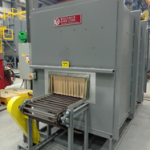
A natural gas-fired conveyor oven was shipped to a supplier of the oil and gas industry by Wisconsin Oven Corporation. This conveyor oven will be used for the preheating and powder coating of couplings. This conveyor oven has sufficient capability to heat 1,000 pounds per hour of steel parts from 70° F to 1000° F. In addition, Wisconsin Oven Corporation announced the shipment of a natural gas-fired conveyor oven to a leader in the forging industry. This conveyor oven will be used as a preheating oven for aluminum billets.
A Gruenberg truck-in-oven was recently shipped to the oil and gas industry by Thermal Product Solutions. The truck in oven will be used to test parts used for downhole drilling.
EBNER expands an existing HICON/H2® bell annealer facility
Wisconsin Oven Corp ships a natural gas-fired conveyor oven shipped to oil and gas industry
Wisconsin Oven Corp ships a natural gas-fired conveyor oven shipped to forging industry
Alloy Engineering Company, an industry leader in the design and manufacture of alloy equipment for high-temperature and corrosive industrial applications, celebrated its 75th anniversary in the month of November. The Berea, Ohio, company’s equipment is used for both commercial and in-house heat treating, and for processes such as annealing, hardening, carbo-nitriding, carburizing, nitriding, tempering, brazing, and sintering.
SMS Group has won the German Design Award in 2018.
Paulo is celebrating its milestone 75th year in business. The company was founded in 1943 in St. Louis, conceived originally as Paulo Products Company was originally conceived as a manufacturer with heat treatment provided as a secondary service. Helping customers succeed by offering thermal processing solutions is where the company excelled. Founders husband and wife Ben and Pauline Rassieur had previously worked for Central Mine Equipment Company. Pauline, after whom Paulo is named, was one of the first women to earn an engineering degree from the University of Missouri.
SMS Group has won the German Design Award 2019 in the category “Industry” for the additively manufactured 3D spray header. The component for which plant and mechanical engineering company SMS group has received the German Design Award 2019 in the category “Industry” is a spray head used to cool dies in forging presses.
Heat Treat Today is pleased to join in the announcements of growth and achievement throughout the industry by highlighting them here on our News Chatter page. Please send any information you feel may be of interest to manufacturers with in-house heat treat departments especially in the aerospace, automotive, medical, and energy sector to the editor at editor@heattreattoday.com.
Researchers at Idaho National Laboratory have discovered how to extend the useful life of superalloys by thousands of hours by employing a unique recipe of heating and cooling to create a microstructure that can withstand extreme heat. The discovery could improve materials performance for electrical generators and nuclear reactors.
An excerpt:
“The key is to heat and cool the superalloy in a specific way. That creates a microstructure within the material that can withstand high heat more than six times longer than an untreated counterpart.”
Dr. Subhashish Meher, INL postdoctoral researcher in Materials Science and Engineering
“We came up with a way to make a superalloy that is much more resistant to heat-related failures. This could be useful in electricity generators and elsewhere,” said Subhashish Meher, an INL materials scientist, lead author of a new Science Advances paper describing the research.
Photo credit and caption: INL.gov/”INL materials scientist Subhashish Meher uses a local electron atom probe at the Center for Advanced Energy Studies to study the microstructure of treated superalloys.”
Heat TreatToday recently unveiled its Heat TreatConsultants page in the October 2018 print edition (available in digital format here) and at FNA in Indianapolis, Indiana. We offer this comprehensive listing of heat treat industry consultants as part of our efforts to help minimize the effects of heat treat “brain drain.” With so many heat treat brains growing older, the expertise that once used to reside inside of manufacturing operations is dwindling. Where, then, do manufacturers with in-house heat treat departments go when they need heat treat answers?
Turn toHeat TreatToday and our comprehensive list of heat treat industry consultants, which we will introduce to you one by one in this occasional feature, “Meet the Consultants”. There is no more comprehensive list of heat treat consultants. Learn more about Debbie Aliya of Aliya Analytical Inc, and then click through to the page to read more details about each consultant. We are adding more regularly. Contact them directly, or call us and we’ll introduce you to them. Whether it’s a technical process question, a safety concern, a compliance issue, or a business related question, one of our heat treat consultants will be able to help. If you are a consultant and would like to be listed, please contact Doug Glenn.
Name: Debbie Aliya Company Name: Aliya Analytical, Inc. Location: Wyoming, Michigan Years In Industry: 30+ Consulting Specialties:
Debbie brings 32 years of experience in development and use of applied critical and creating thinking skills in failure analysis, materials selection and characterization, and specification preparation for structural applications to the industry. She founded and serves as president of Aliya Analytical, Inc., which for almost 25 has served manufacturing clients in failure analysis and materials characterization, and education and training of manufacturing company employees. Debbie is a highly sought-after instructor, presenter, and author and editor of scholarly and non-scholarly works, including articles, journals, and industry handbooks and guides. In addition, she is a student and educator in interfaith and thinking skill optimization studies.
Publications or Significant Accomplishments:
Founded, president of Aliya Analytical, Inc., in Grand Rapids (1994, incorporated 2004 to present)
Adjunct Technology Faculty, Grand Rapids Community College (1990-1993); Montcalm Community College (1993-1996); Ferris State University (MI) (1994); Western Michigan University (2000); various math and physics courses, including basic metallurgy and materials science and formability of sheet metal
Chair or Co-chair of various committees or proceedings, including, Society of Manufacturing Engineers, Materials Solutions Conference/American Society for Metals (ASM International), Failure Analysis Committee/American Society for Metals (ASM International), Society for Machinery Failure Prevention Technology, Society of Automotive Engineers (West Michigan)
Expert witness at depositions in local, state and federal trial proceedings
Contributor to multiple industry journals, including Journal of Failure Analysis and Prevention (and predecessor, Journal of Practical Failure Analysis), Lubrication and Fluid Power: Journal of Machinery, Industrial Heating, Journal of Materials Engineering and Performance,
A frequent lecturer, present at international, national, and regional conferences, including Society for Machinery Failure Prevention Technology Conference, ASMI/ASNT chapters, Materials Science & Tech Conference/American Society for Metals (ASM International), Minnesota Microscopy Society, ASMI Student Chapter at the Government Engineering College (Pune, India), Michigan Microscopy Society Conference, American Society for Nondestructive Testing
Instructor, MEI faculty, ASM International, Failure Analysis and Prevention and Heat Treating of Steel (part-time)
Founding Member, Root Cause Forum (Yahoo Group)
Member of the Editorial Board of the Journal of Failure Analysis and Prevention, and its predecessor, Journal of Practical Failure Analysis, American Society for Metals (ASM International) (2001-2006)
Co-Editor, Section 4, Metals Handbook Volume 11, American Society for Metals (ASM International), Authored: “The Failure Analysis Process: An Overview,” “Metals Chemical Analysis in Failure Analysis,” “Hydrogen Embrittlement of High Strength Steels” (from “Hydrogen Damage”); Co-compiler/Author of Volume Glossary (2002 edition)
Author, “Sectioning of Metallurgical Specimens,” Co-author, “Physical Metallurgy in Metallography,” Metals Handbook Volume 9 (2004 edition), American Society for Metals (ASM International) (2004)
Author, “Mechanisms and Causes of Failure in Heat Treated Steel Components,” chapter in Failure Analysis of Heat Treated Steel Components, Canale, Mesquite & Totten, published by ASM International (2008)
Contributing columnist to “The Experts Speak”, Industrial Heating (2009-present)
Experis contract with Cummins, Inc., in Columbus, Indiana, failure analysis consultant (2011-2012)
Links to Heat Treat Today or Other Online Resources
At 41 feet long and 21 feet wide, weighing in at nearly 10,000 pounds, the world’s first 3D-printed bridge has been approved and tested for pedestrian traffic in Eindhoven, in the Netherlands, approximately 90 minutes south of where it was constructed by four robots in Amsterdam.
MX3D, in partnership with more than 30 global industrial partners, completed the final deck and structural tests and finalized the sensor design earlier this year. In October, at Dutch Design Week, visitors provided the foot traffic needed to generate the first data set from the sensing system. The next phase will be to use the sensor data to build a digital twin model to monitor foot traffic in real-time, then installation over a canal in Amsterdam.
The structure is a testament to the possibilities of large-scale 3D printing, but this is just the tip of the iceberg. ~ ThomasNet.com
With the purchase of a gas nitride unit, a custom heat treat processing equipment manufacturer and leading provider of full-service induction hardening process services extends its strategy to expand offerings in the automotive sector and expand deeper into the aerospace market.
Ben Crawford, Contour CEO and President
Contour, which recently acquired the gas nitride unit from a major U.S. furnace manufacturer for installation at its headquarters in Indianapolis, Indiana, in late spring 2019, began manufacturing induction heat treat systems and offering commercial induction processing services. The purchase of a gas nitride unit allows Contour to expand services focusing on distortion critical, complex parts for clients. With the addition of nitriding, it allows increased offerings to solve complex parts demanding dimensional control through engineered processes.
“Innovation is what Contour was built on,” said Neil Merrell, director of heat treat. “Today is no different. Our customers rely on Contour’s controlled heat-treatment processes, 100% hardness verification, and dimensional inspections. Our goal is to drive out part variation and provide a repeatable dimensionally accurate part.”
“We have an extremely deep and talented bench of in-house engineering and metallurgical teams, and they couldn’t be more excited about Contour’s entry into the Gas Nitride market,” said Ben Crawford, Contour CEO and President. For several years, Contour has planned having a more significant presence in the aerospace, agricultural, heavy truck and light automotive industries. The purchase of this gas nitride unit will allow us to do just that and compliment our induction and dimensional services.”
“We plan to make Gas Nitriding capabilities available to our clients at our Silao, Mexico, plant in the near future,” added Crawford. “We are committed to offering innovative thermal heat treat solutions to our clients globally and this investment is proof of our commitment.”
Controlling process temperature with accuracy and without extensive operator involvement is a crucial task in the heat treat shop and calls for the use of a temperature controller, which compares the actual temperature to the desired control temperature, also known as the setpoint, and provides an output to a control element. This comparative process relies upon an algorithm, the most commonly used and accepted in the furnace industry being the PID, or Proportional-Integral-Derivative, control.
“This popular controller is used because of its robust performance in a wide range of operating conditions and simplicity of function once understood by the processing operator,” writes Real J. Fradette, a Senior Technical Consultant with Solar Atmospheres, Inc, and the author of “Understanding PID Temperature Control as Applied to Vacuum Furnace Performance” (with William R. Jones, CEO, Solar Atmospheres, Inc, contributing).
The PID algorithm consists of three basic components, Proportional, Integral, and Derivative which are varied to get optimal response. If we were to observe the temperature of the furnace during a heating cycle it would be rare to find the temperature reading to be exactly at set point temperature. The temperature would vary above and below the set point most of the time. What we are concerned about is the rate and amount of variation. This is where PID is applied. ~ Fradette
In this week’s Technical Tuesday, we direct our readers to Fradette’s article at Solar Manufacturing’s website where he and Jones cover the following on PID temperature controllers:
Definitions, e.g., Closed Loop System; Proportional (GAIN); Integral (RESET); and Derivative (RATE)
Actual operation of a PID temperature controller, including understanding PID dimensions and values; and general rules for manually adjusting PID
In one of the largest acquisitions in aerospace history, a high technology product and service provider to the building and aerospace industries recently announced the completion of its purchase of a company that provides avionics and information technology systems and services to government agencies and aerospace manufacturers.
United Technologies Corporation’s (UTC) acquisition brings together Rockwell Collins and UTC Aerospace Systems to create Collins Aerospace Systems.
Gregory Hayes, United Technologies Chairman and Chief Executive Officer
“Collins Aerospace brings together two great companies with unmatched expertise in developing electrical, mechanical and software solutions,” said Gregory Hayes, United Technologies Chairman and Chief Executive Officer. “We will have a laser focus on developing innovative solutions for customers and generating strong returns for shareowners.”
In addition, the Farmington, Connecticut-based, UTC announced its intention to spin off its commercial businesses, Otis and Carrier (renamed, formerly Climate, Controls & Security), into independent entities. The acquisition and separation will result in three global companies:
United Technologies, comprised of Collins Aerospace Systems and Pratt & Whitney, to be a systems supplier to the aerospace and defense industry; Collins Aerospace was formed through the combination of UTC Aerospace Systems and Rockwell Collins;
Otis, the world’s leading manufacturer of elevators, escalators and moving walkways; and
Carrier, a global provider of HVAC, refrigeration, building automation, fire safety, and security products.
“Our decision to separate United Technologies is a pivotal moment in our history and will best position each independent company to drive sustained growth, lead its industry in innovation and customer focus, and maximize value creation,” said Hayes. “Our products make modern life possible for billions of people. I’m confident that each company will continue our proud history of performance, excellence, and innovation while building an even brighter future. As standalone companies, United Technologies, Otis and Carrier will be ready to solve our customers’ biggest challenges, provide rewarding career opportunities, and contribute positively to communities around the world.”
Dogs come in all shapes, sizes, and colors, and in the case of certain breeds, they are also prone to higher incidences of hereditary defects, deformities, or infirmities.
Dr. Kevin Parsons, an orthopedic veterinarian, Langford Vets
Small dogs can present particular health issues that are a challenge to correct because their size and weight offer little to no margin for error. In dachshunds and Shih Tzus, abnormal bone growth can sometimes cause their front paws to point outwards. And pugs, and other breeds with corkscrew tails, are susceptible to spinal problems caused by misshapen bones. Fortunately, if diagnosed in time, these conditions can be treated with surgery, but with such small animals, corrective surgery to drill and cut bones, stabilize vertebrae or reposition limbs is a laborious and intricate process.
Two animal specialists from Britain, Dr. Kevin Parsons, an orthopaedic vet based at the small animal hospital at Langford Vets, in Bristol, and a former colleague Tom Shaw a neurosurgeon, now at Willows Veterinary Centre and Referral Service in Solihull are pushing the boundaries of additive manufacturing in veterinary science and are applying it to both scenarios. They have been exploring the world of 3D-printed anatomical guides and titanium implants, manufactured on a GE Additive Arcam EBM Q10plus in South Wales, as a means to provide animals suffering from malformation an opportunity to live longer, pain-free lives.
Integral to Langford Vets’ additive journey has been its partnership with Swansea-based CBM Wales (CBM) – a commercially focused advanced research, product development and batch manufacturing facility, established by the University of Wales Trinity Saint David.
Dr. Ffion O’Malley, CBM Wales
Dr. Ffion O’Malley and an experienced team of additive manufacturing designers and engineers at Swansea-based CBM Wales (CBM) — a commercially focused advanced research, product development and batch manufacturing facility, established by the University of Wales Trinity Saint David — oversee production of bespoke surgical guides (either in polymer or metal) and titanium implants to match exactly to each individual patient’s anatomy to restore mechanical and/or aesthetical functions. Each implant design, follows precise specifications from the Langford Vets’ surgical team, using CT or MRI diagnostic imaging data.
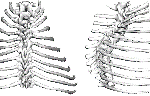
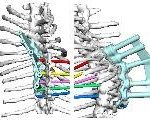
Diagnosis: Topsey (pictured above), at aged one, was diagnosed by Tom Shaw with hind limb weakness caused by a severe spinal malformation. CBM Wales were briefed to produce a stabilisation implant required to work in conjunction with a surgical drilling guide.
Surgical Guide: Five drill cylinders were used to guide the pilot drill to achieve the correct trajectories. The bone bound surface of this surgical guide contoured the spinal anatomy so that it located and fit accurately onto the bone.
Implant: Ten screw holes were designed onto the implant and located in the same position as the drill cylinders to achieve the correct trajectories. The bone bound surface of this Titanium implant contoured the spinal anatomy so that it located and fit accurately onto the bone.
The Q10plus is particularly well-suited for medical implant manufacture and has been developed for easy powder handling and fast turnaround times. The EBM process takes place in a vacuum and at elevated temperatures, which results in stress-relieved implants with properties better than cast and comparable to wrought materials.
The bespoke implants are built in Titanium Ti6Al4V ELI, which is certified to the USP Class VI standard for biocompatibility and is extensively used for FDA and CE marked implants. CBM has ISO 9001:2015 certification for the provision of a design, prototyping and small batch manufacturing service and ISO 13485:2016 & EN ISO 13485:2016 certification for the design and manufacture of custom made 3D-printed surgical guides and implants.
An India-based independent heat exchanger manufacturer for the domestic automobile industry recently purchased a controlled atmosphere brazing system to reduce energy costs as well as improve production quality and operate within the latest environmental regulations.
NBR Cooling Systems commissioned the signature controlled atmosphere brazing (CAB) cooling system from SECO/WARWICK.
Liu Yedong, Managing Director, SECO/WARWICK RETECH
“We selected SECO/WARWICK because they provided a high-quality production assurance which we needed to keep our plant running efficiently along with low atmosphere consumption, minimum maintenance, and repeatable process results, all at a low capital cost investment,” said Aarif Hussain, NBR Cooling Systems managing director. “A SECO/WARWICK CAB system was definitely our first option – the company leverages many years of experience and guarantee continuous trouble-free operation at a high technological level and provides local contact, care and service.”
“We are pleased to support NBR Cooling Systems’ vision to become the leader in the national and international market for commercial heat exchangers and air conditioning systems for the automotive industry,” said Liu Yedong, Managing Director, SECO/WARWICK RETECH (China).