

Furnace Diagnostics for Validation, Preventative Maintenance, and R&M

OCOne of the most important advances in batch integral quench (BIQ) furnace systems has been the development of innovative control systems. Many BIQ manufacturers have developed their own highly sophisticated and cutting-edge control systems.

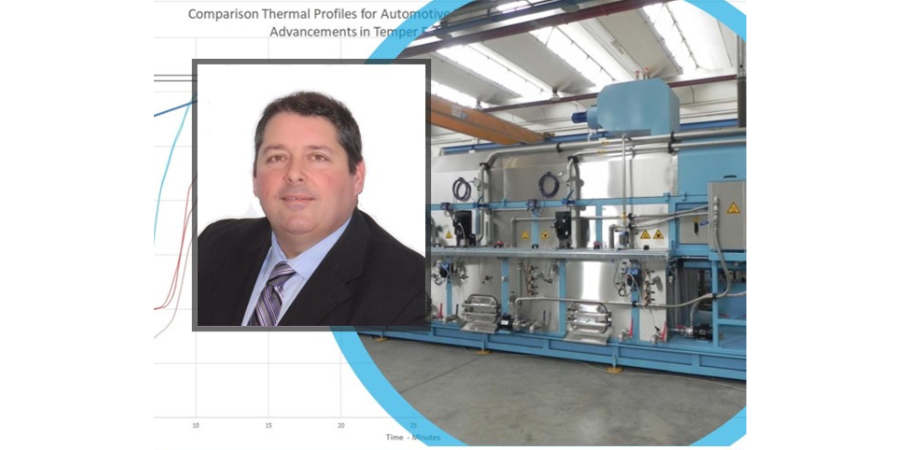
This Technical Tuesday, we explore one such system written by Daniel Hill, PE, sales engineer at AFC-Holcroft. This original content article was originally published in the February 2021 Air and Atmospheres, the IQ Edition.


Daniel Hill, PE
Sales Engineer
AFC-Holcroft
Source: AFC-Holcroft

With continuing advancements of smart devices, integrated controls systems, and the Industrial Internet of Things (IIoT), we have at our fingertips an abundance of data, both the traditional and newly developed. How to convert that data into useful information, and more importantly how to leverage that information into day-to-day operations to reap the benefits, becomes the difference maker in a competitive landscape.

Recognizing these trends, AFC-Holcroft has built upon a suite of software modules that includes Remote Diagnostics™ to also offer Maintenance Module™ and Calibration Mode™. All three modules are in commercial service having been integrated with BatchMaster™ controls system features on Universal Batch Integral Quench (UBQ) furnaces. End-user response and adoption have been positive with new synergies and feedback leading to ongoing enhancements. In this article, we will discuss how these advancements are affecting the future of furnace diagnostics and some examples of their benefits in many day-to-day situations.

Dynamic Furnace Calibration & Diagnostics

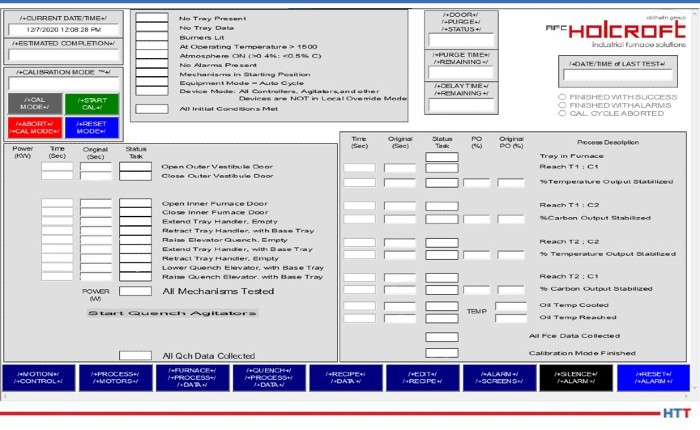
Perhaps the most interesting of the three modules is the Calibration Mode, a patent-pending diagnostics software designed to dynamically test furnace operation for verification of proper functionality over a wide range of subsystems and devices. Notably, furnace and quenchant heating/cooling thermal loads are strategically cycled for response monitoring of typical production needs. Likewise, furnace atmosphere is cycled for response and stability. Additional systems and metrics such as agitation attributes, tray motion and positioning, time to quench, and elevator operation are activated and evaluated.

Once the calibration cycle is complete, the data and responses are compared to original commissioning data and design thresholds to generate a time-stamped diagnostic report with straightforward pass/fail results. With this module, the operator can ensure proper operation at a moment’s notice without additional external testing devices and have the data available to back it up.
It was designed to integrate optional device packages to elevate its diagnostics capabilities exponentially by targeting efficiency and optimization of operation including:

  • Combustion efficiency monitoring
  • Vibration monitoring
  • Power consumption monitoring

Process Troubleshooting

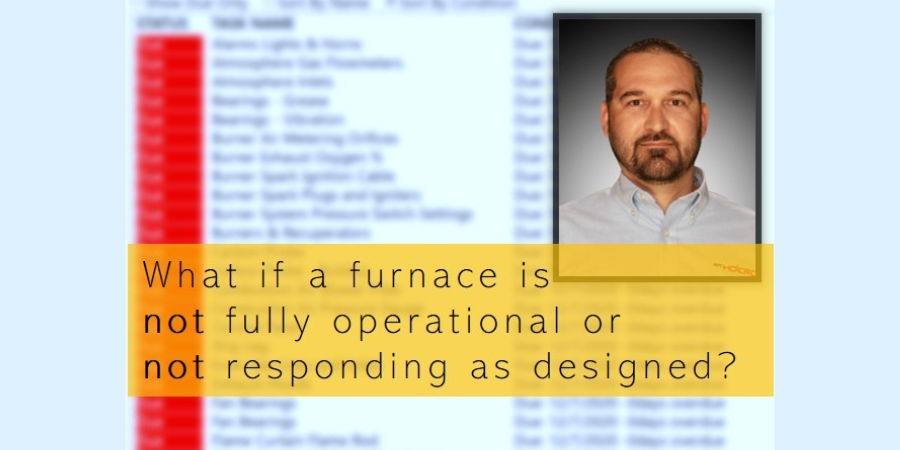
As its base premise, this module was created as a means for operators to proactively verify that the furnace is both fully operational and responding as designed. But what happens if it is not? Calibration Mode can be initialized at any time for deeper analyses by first reporting the current status of subsystems and devices and then for further comparison against initial commissioning data or cumulatively against any previous calibration iterations, making it a powerful tool for rapid diagnostics.

With the auto-generated reports and comparison tools in hand, operators or maintenance team members can pivot directly into troubleshooting any deficiencies identified for quick resolution. Once more, a follow-up can be run to ensure the deficiency is corrected after making appropriate adjustments or repairs. This saves valuable time and resources, improves availability, and likely increases profitability.

Calibration Mode™ Screen
Source: AFC-Holcroft

Compliance with Industry Specifications

Whether following automotive (CQI-9), aerospace (AMS2750), military, energy, or other specifications, universal themes requiring the user to implement regular assessments, surveys, and the monitoring of the process equipment are paramount. Today, the Calibration Mode is being used to supplement these efforts in a number of ways:

  • Creating reports with Calibration Mode for job audit in annual Heat Treat System Assessments (HTSAs)
  • Producing objective evidence for process equipment validation before and after a major rebuild or modification
  • Collecting and analyzing data over time and reacting to it
  • Running with TUS as another layer of equipment verification
  • Running with Quench System Monitoring as another layer of verification

PPAP, Control Plan, & PSW Inclusion

The production part approval process (PPAP) must be a collaboration between the customer and heat treater to ensure a clear understanding of all elements before, during, and after the processing. Calibration Mode can be utilized as a verification tool initially when processing parts for a PPAP to document the furnace capability and that it is meeting original OEM specifications. If repair or rebuilds are required while that PPAP is still valid, Calibration Mode can be run to demonstrate the equipment in operational condition on a Part Submission Warrant (PSW). Moreover, Calibration Mode can be incorporated into control plans both as a control method for ongoing production and also as part of a reaction plan to diagnose nonconformance.

Dedicated Equipment Vs. Changeover of Equipment Running Multiple Processes

A major benefit of batch processing equipment is the inherent flexibility it offers–especially to commercial heat treaters who are serving multiple customers with many different processes. Often customer specifications for heat treating include clauses preferring dedicated equipment with strict allowances on changeover of equipment. Typically, changeover of equipment for multiple processes requires customer personnel to review and approve the heat treater’s changeover procedures and must include verification prior to start of production (including atmosphere). This changeover process must be documented in the heat treater’s process control plan. Consider running Calibration Mode at changeovers as a means to consistently verify conditions and provide documentation to the benefit of all involved.

Intelligent Preventative Maintenance

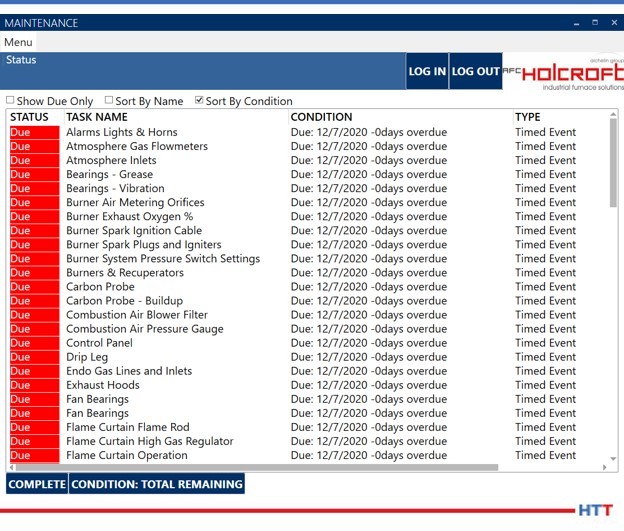
Maintenance Module™ also takes advantage of the latest advancements. This module is designed and pre-programmed to include the OEM recommended preventative maintenance tasks based upon pre-defined intervals, sometimes utilizing conditional statements, or where appropriate, predictive algorithms based upon operating time, temperatures, and number of cycles. This database of tasks and report queries provides an intelligent roadmap for the preventative maintenance of the furnace. As such, maintenance task statuses are elevated and flagged for action complementary to accrued usage and actual conditions so that all-important resources can be prioritized and best served.

Maintenance Module™ Screen
Source: AFC-Holcroft

Leveraging Diagnostics through the Cloud

Finally, Remote Diagnostics™ was conceived to increase furnace uptime and availability through the analysis of equipment performance data. Real, data-driven reliability and maintainability (R&M) information supports continuous improvement efforts. As a first step, the abundance of data delivered through the IIoT is aggregated to effectively parse, diagnose, and highlight operational inefficiencies.
Next, virtual conference sessions are led by AFC-Holcroft personnel to collaborate with users on best practices, identify training needs, aid in knowledge capture, and provide optimization plans moving forward in a classic continuous improvement cycle.

Interestingly enough, it has become a source of synergy for continuous improvement efforts by allowing us to better understand users’ needs and incorporating them into designs and equipment of the future.

Addressing important day-to-day situations, Calibration Mode, Maintenance Module, and Remote Diagnostics are helpful tools for the forward-thinking BIQ furnace operator.


About the Author: Daniel Hill, PE, is a sales engineer with AFC-Holcroft, based in Wixom, Michigan. AFC-Holcroft is a leading North American manufacturer of industrial furnace systems used in the heat treatment of ferrous and non-ferrous metals.

Furnace Diagnostics for Validation, Preventative Maintenance, and R&M Read More »

How are Vacuum Furnaces Used for Minting Coins?

Source: TAV VACUUM FURNACES

How does coin production benefit from vacuum heat treating? Is hardening, tempering, and machining required?

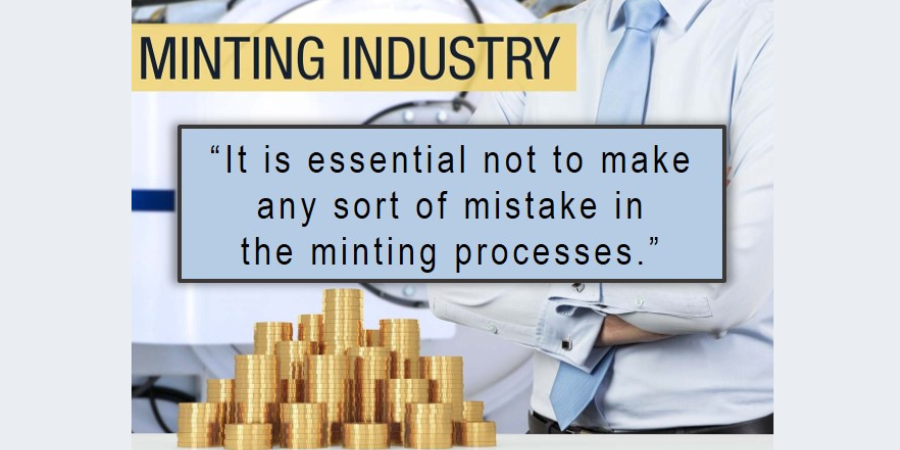
In this Best of the Web, take a look at what it takes to create “the master die” and the importance of vacuum heat treating in the minting process. The article offers a few contextualizing points around the topics of green energy and maintaining a safe workplace.

An excerpt:

[blockquote author=”TAV VACUUM FURNACES” style=”1″]The master die is then hardened and tempered to produce a positive tool called hob. Note that the master die is not used to produce coins. What do we need to produce our first coin?[/blockquote]


Read more at “Minting Industry: The Importance of Vacuum Heat Treatments


All images sourced from TAV VACUUM TECHNOLOGIES.

How are Vacuum Furnaces Used for Minting Coins? Read More »

U.S. Defense Contractor Expands Heat Treat Capabilities

HTD Size-PR Logo

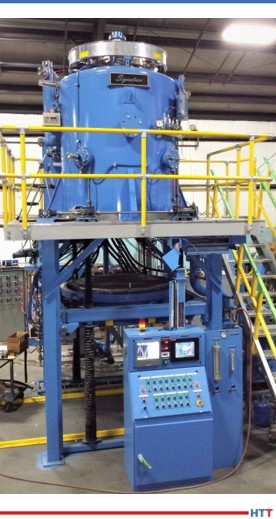
Vacuum Sintering Furnace from Signature Vacuum Systems, Inc.
Source: Signature Vacuum Systems, Inc.

A United States defense contractor will expand their heat treat capabilities with a custom ceramic sintering vacuum furnace. The furnace will be provided with a 36” diameter x 48” high work zone in a graphite hot zone rated for 3362°F (1850°C).

The Model VBS-12 ordered, will increase production capacity and is the fifth furnace from the supplier, Signature Vacuum Systems, Inc., to be manufactured and installed in this contractor’s facility.

“Our strength[…] is solving problems and delivering solutions,” said Greg Kimble, president of Signature Vacuum Systems, Inc. “We have enjoyed the progression of this relationship over the years and we are committed to providing quality products and dependable services.”


(photo source: Defence-Imagery at Pixabay.com)


Unless identified otherwise, all other images from unsplash.com.

U.S. Defense Contractor Expands Heat Treat Capabilities Read More »
Heat Treaters Acquire Multi-Chamber Systems for Low Pressure Carburizing

HTD Size-PR LogoAn automotive supplier and a hydraulic pump manufacturer will acquire multi-chamber vacuum furnace system for low pressure carburizing.

For the automotive supplier of innovative driveline solutions, the system is estimated to reduce CO2 emissions significantly for vacuum carburizing versus an existing atmosphere carburizing furnace. For the hydraulic pump manufacturer, the modular flexibility of this specific furnace was the most important advantage.

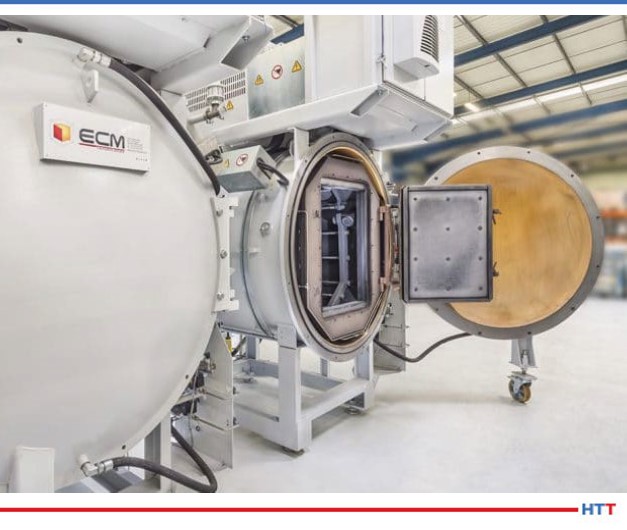
ECM Flex Multi-Chamber System
Source: ECM USA, Inc.

The supplier, ECM USA, Inc., notes that their Flex Multi-Chamber System is built as a standard system with the possibility to further expand its capacity and/or to upgrade to a high level of automation (robots, AGVs, vision systems, or other 4.0 elements). In addition to modularity, several processes can be handled in the Flex furnace, such as: low pressure carburizing (LPC), vacuum tempering and a combination of vacuum sintering followed by hardening.

This stems from advanced automation technology -- including robotics -- acting as driving forces behind increased use of more eco-friendly applications outside the LPC-HPGQ sector. This includes, but is not limited to, multiple tool steel processing systems, brazing applications, and rapid thermal processing (RTP) systems.

Heat Treaters Acquire Multi-Chamber Systems for Low Pressure Carburizing Read More »
Turbine Manufacturer Receives Heat Treat Vacuum Furnace

HTD Size-PR Logo

Heat treat equipment to modernize a turbine manufacturing facility has recently been delivered to the client. Included in the order were a single chamber high vacuum furnace with high pressure gas quenching and a separate vacuum tempering furnace with built-in nitriding capability and auxiliary equipment.

With a pressing production start date, all units were pre-accepted, including a hot test process run after five months. Heat treat parts supplier was ALD Vacuum Technologies GmbH (ALD). “Many of us put our hearts and souls into making this happen,” wrote Joachim Boss, vice president of Heat Treatment at ALD. “Special thanks go to our mechanics team with Andy Adler and to the electrical engineering and commissioning pair, Rico Englert and Markus Kunkel.” The company also highlights Natalie Roemer and Joachim Boss, who accompanied the project from its very start back in 2013 to its 2021 conclusion.

From left to right: Natalie Roemer, Product Manager; Rico Englert; Andy Adler; Joachim Boss, Vice President Heat Treatment; and Markus Kunkel.
Source: ALD Thermal Vacuum Technologies GmbH


(source: Siemens Pressebild at wikipedia.com)


Turbine Manufacturer Receives Heat Treat Vacuum Furnace Read More »

Mesh Belt Heat Treatment System Advancements for Automotive Fastener Production

OC

Tim Donofrio
Vice President of Sales
CAN-ENG Furnaces International Limited
Source: Can-Eng Furnaces International

Manufacturers of high volume, high strength precision automotive fasteners have constantly faced increased product quality standards, delivery and price pressures over the last decade. These pressures force manufacturers to seek new developments and creative methods for improving their long-term competitive positions.

This Technical Tuesday article by Tim Donofrio, vice president of sales at CAN-ENG Furnaces International Limited, will discuss two developments of mesh belt heat treatment systems – innovative tempering and dephosphating systems – that have been successfully integrated and exploited by manufacturers to maintain their competitive position.

Heat Treat Today first published this Original Content article in the Air and Atmosphere 2021 print magazine. Access the digital version of the magazine here. Contact Karen Gantzer for more information on how to contribute to future editions.


Introduction

Methods for heat treating threaded fasteners have evolved significantly over the last 20 years. Earlier versions of low-capacity shaker hearth, rotary hearth, and plate belt systems have now become extinct in favor of modern, highly efficient, continuous soft handling mesh belt heat treatment systems.

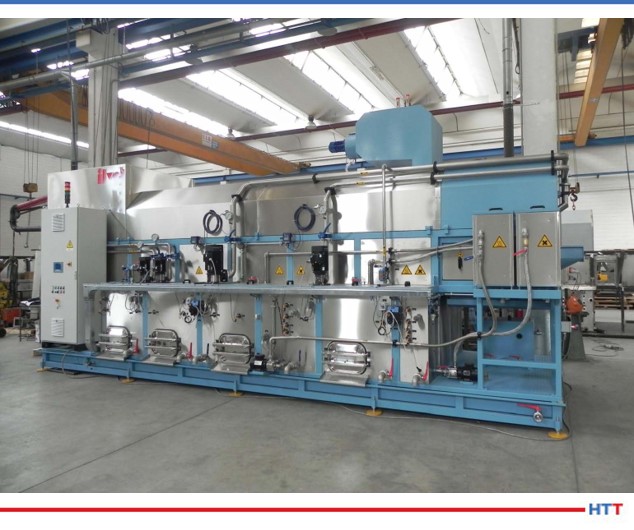
Figure 1. Mesh belt fastener heat treatment system
Source: Can-Eng Furnaces International

Today’s mesh belt fastener heat treatment systems (Figure 1) integrate soft handling techniques that use bulk dunnage unloading and sophisticated metering systems. These metering systems uniformly distribute fasteners across the conveyor width, avoiding any inconsistent loading that could vary the heat-up and soak times which can impact the fasteners’ mechanical properties distribution. Fasteners are conveyed through various washing, austenitizing, quenching, tempering, and post-treatment soluble oil processes, while carefully controlling critical processing parameters that ensure compliance to DIN EN ISO-898 fastener manufacturing standard and, more recently, Automotive Industry Action Group (AIAG) CQI-9 heat treatment system assessments.

With the integration of soft handling conveyors and low inertia part transfers, modern mesh belt furnaces can significantly reduce the opportunity for part damage and the likelihood of part mixing. Further system efficiencies are realized through external furnace load preparation, allowing for precise presentation of fasteners to the conveyor belt, resulting in minimal empty belt gaps between lots for part traceability integrity.

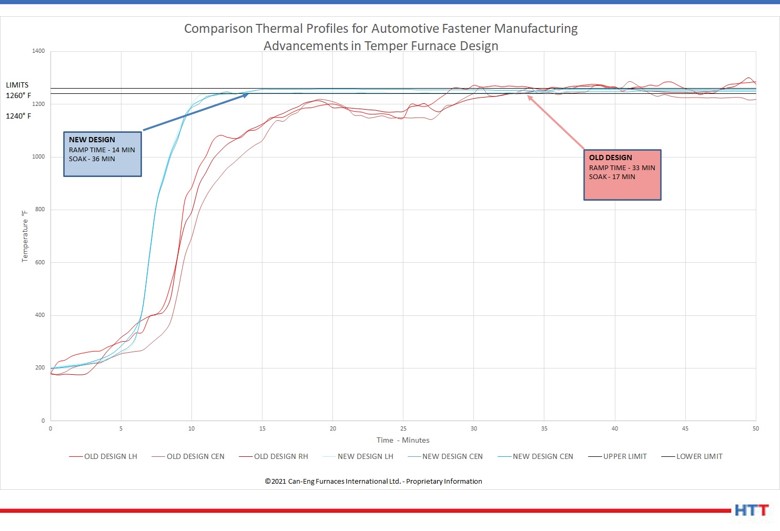
Figure 2. Comparison of automotive fastener temper furnace thermal
profiles following integration of technology advancements
Source: Can-Eng Furnaces International

Temper Furnace Uniformity Improvements

With increased quality objectives placed upon fastener manufacturers, furnace systems must be more and more precise. One of the most critical steps in the fastener heat treatment process is tempering, which is performed after austenitizing and quenching. Tempering is performed to increase iron-based alloy toughness, resulting in the reduction of excess hardness that occurs after subjecting the fastener to temperatures below the critical temperature for a defined period of time required for transformation. As quality restriction limits are imposed, so is the need to reduce the product temperature variation to meet the desired metallurgical and mechanical properties distribution.

With advancements in tempering furnace design, modern high capacity (+6000 lbs/hr) mesh belt temper furnaces can achieve product temperature uniformities of ±10°F or better, which is half of the allowable temperature uniformity survey (TUS) limits set out in AIAG CQI-9 assessment at ±20°F for continuous tempering furnaces (Figure 2).

These improvements in performance are made possible through the use of modern computational fluid dynamic (CFD) modeling tools. CFD modeling gives engineers the ability to conduct higher level analysis and optimization of the furnace’s forced recirculation and heating systems, internal furnace geometry, and product-to-airflow relationship.

Today, users of modern temper furnaces enjoy design improvements that increase the overall process reliability, while also exceeding the quality expectations of their customers.

Integration of Dephosphate Removal Systems

For a long time, washers integrated into continuous heat treatment systems have been considered to have companion equipment status, with not much attention paid to their product quality and total cost of ownership. The importance of washer design is currently changing, mainly due to a desire to protect furnace internal components, increase uptime, and improve the quality of the final product.

Washer design configurations include rotary drum, belt, and batch bin systems. For the purpose of this discussion, we will focus on the continuous rotary drum and belt washers for integration with high-capacity mesh belt fastener heat treatment systems (Figure 3). Both systems, if properly designed, can provide suitable performance, with each system providing enhanced features depending upon the fastener size and performance expectations. Careful consideration should be taken during the application review process to identify the configuration that best suits the range of products that will be processed.

Most modern manufactured fasteners are mechanically formed from carbon and alloy steel coils and are normally coated with a phosphate lubricant which is applied to reduce cold forming friction and increase tooling life and part quality. It is widely understood that DIN EN ISO 898 Part 1, Class 12.9 requirements for fasteners specifies that phosphate lubricants be removed prior to heat treatment as phosphate elements can diffuse into the austenite during the heat treatment process and form delta ferrite, which can lead to fastener brittleness and crack propagation failures.

Figure 3. High-capacity in-line rotary dephosphating system
Source: Can-Eng Furnaces International

A recent trend in the industry is the increase in demand for integrated inline pre-heat treatment dephosphating systems. Although not a new requirement to the North American fastener market, more demand has recently been recognized largely due to increased demand for 12.9 strength class fasteners and increased localization of European automotive fasteners (Volkswagen/Audi), who specify strength class 10.9 and greater be dephosphated before heat treatment.

To satisfy these demands, modern heat treatment manufacturers are often integrating inline continuous dephosphating capability as part of their pretreatment strategies. The aqueous chemical removal of phosphate can be by acid or alkaline, however due to the risk of hydrogen-induced brittle fracture, the alkaline processes are preferred. Pretreatment wash systems implement a multi-stage process that includes:

  1. Oil removal & rinse
  2. Dephosphate
  3. Rinse 1
  4. Rinse 2
  5. Drying

Careful consideration must be taken to guarantee wash solutions are completely removed and fasteners are properly rinsed prior to entry into the high temperature furnace to ensure protection of the furnace internals and product quality concerns.

The fasteners are conveyed either by independent conveyors or continuous rotary drums that transport fasteners through each stage of the washing and dephosphating process. Careful consideration and control of wash solution concentration, solution circulation, product dwell time, solution temperatures, and avoidance of contamination is integrated into the equipment design as it is paramount to successful dephosphating integration and final product quality.

The effectiveness of the removal of phosphate is determined by colorimetric analysis, also known as the “blue test.” In this test, a defined quantity of product with a known surface area is immersed into a chemical solution, which will react with any residual phosphate present to form a blue color. The intensity of the color is proportional to the amount of phosphate present.

The effective removal of the phosphate layer prior to the heat treatment is critical to the final fastener quality. Modern dephosphating systems, when properly integrated with the pretreatment and heat treating system, can provide the manufacturer with improved processing flexibility and product quality performance at the lowest cost per pound to process.


About the Author: Tim Donofrio, vice president of sales at CAN-ENG Furnaces International Limited, has more than 30 years of thermal processing equipment experience. Throughout his career, he has held various positions within the custom engineered forging, commercial heat-treating services, and custom engineered heat treating equipment industries.


Mesh Belt Heat Treatment System Advancements for Automotive Fastener Production Read More »

Heat Treating Partnership Develops Modern Metal Treatment Solutions

HTD Size-PR LogoBetween science and business, the evolution of heat treatment is taking large strides. A global heat treat solutions manufacturer and a Polish laboratory hardening plant are developing modern solutions to metal treatment needs.

For the past decade, SECO/WARWICK, the global manufacturer and parent of North America SECO/VACUUM Technologies of metal heat treatment equipment and technologies, and HART-TECH, a hardening plant with scholarly shareholders — professors, doctors of science, process engineers — have been working together to engage in the evolving science of modern metal heat treatment solutions.

Together with professor Piotr Kula’s team from the faculty of Mechanical Engineering at the Łódź University of Technology, the company implemented projects and research, and collaborated on the technical capabilities of the equipment in terms of the latest research and innovations in the discipline. As this work progressed, the cooperation started to involve product development through equipment testing in practical business applications.

Robert Pietrasik, Sc.D. Eng
Management Board CEO and a Technological Department Head Director
HART-TECH Sp. z o. o.

In 2009, the initiative of three researchers from the Institute of Materials Science and Engineering of the Łódź University of Technology — professor Piotr Kula, professor Antoni Rzepkowski, and Robert Pietrasik, Sc.D. Eng. — brought to life the HART-TECH hardening plant, which currently holds 11 specialized devices for vacuum metal treatment, equipment provided by the global heat treat manufacturer.

The hardening plant specializes in: hardening, carburizing, nitriding, sulfonitriding, steel tempering processes, and more. They apply the latest technologies to modify, change, and improve products. In turn, SECO/WARWICK modifies their equipment designs to meet the exact needs of the customer.

“Our experience and process facilities enable us to perform very demanding and difficult processes,” explained Robert Pietrasik, Sc.D. Eng, president of the board of HART-TECH. “We are renowned to be experts in the impossible since we have vast scientific knowledge and expertise as well as reliable technological back-up from SECO/WARWICK. This cooperation enables us to specialize in highly demanding and difficult jobs requiring the best quality.”

The companies seek new implementations with technologies and processes/modifications that will make the heat treatment process more efficient, allow optimizations, or even defining new technologies. SECO/WARWICK equipment is for trials, experiments and tests. The devices allow for the control and monitoring of a given process, and their design provides for additional safety margins that make it impossible to exceed temperature, power and speed limits. The furnaces are enable many processes with the use of one device. Commercial hardening plants especially value the versatility when serving many different customers from various industries and sectors.

Sławomir Woźniak, SECO/WARWICK Branded
Sławomir Woźniak
CEO
SECO/WARWICK
Source: secowarwick.com

“On the one hand,” said Sławomir Woźniak, CEO of SECO/WARWICK Group, “HART-TECH is a particular partner with whom we have very close cooperation in terms of the technologies and processes. On the other hand, this customer is something of an extreme. They quickly switch from what the device was intended for to what more can be done with it.”

“Our [partner’s] curiosity of the world motivates us to develop new innovations,” added Maciej Koreckivice president of the Vacuum Business Segment at SECO/WARWICK Group. “We attentively listen to the feedback from our customers. This enables us to create tailor made solutions that always respond to the needs 100%. With HART-TECH, we share the passion and a huge, constant drive for excellence.”

After the hardening plant’s growth in their heat treating capacities over several years, they found themselves, like others confronting hardening deformations. Therefore, HART-TECH was in need of a device enabling gas quenching to minimize the problem. The company selected a single-chamber Vector® furnace for high-pressure gas quenching (10 bar) with nitrogen cooling.

The dynamic expansion of HART-TECH motivated them to place an order for another Vector® furnace for high-pressure gas quenching (15 bar).

The last device ordered summarizes the 10-year cooperation between the two companies: another CaseMaster Evolution® (CMe) unit — a two-chamber, third-generation furnace for batch processing with oil cooling. It offers a significant advantage in shortening the production process and improving the quality targets.

“Certainly, the expansion of our hardening plant has not been a conventional one,” says Pietrasik. “We need to remember that the developing market needs were a significant factor affecting the purchase of new devices by HART-TECH[…] We started with one customer and furnaces rented from Łódź University of Technology on an hourly basis. Now, all our vacuum furnaces come from SECO/WARWICK[..] More than 1300 customers and a technology partner are probably the best recommendation for us and for this partnership.”

“We are not interested in the intended purpose of the device,” Sylwester Pawęta, Sc.D., Eng, operations director and shareholder of HART-TECH, “but in what it can really do, what are its technological limits.”

“Continuous feedback from trials of equipment operated under the maximum load, used in an intensive way, shows us what we need to reinforce and improve to maintain the highest treatment parameters for the entire lifetime of the device, and also how we can upgrade them to work even better. Sometimes, this is a real trial by fire, or a test bench,” summarised M. Korecki.


Images sourced from SECOWARWICK.com.

Heat Treating Partnership Develops Modern Metal Treatment Solutions Read More »

13 Quick Heat Treat News Chatter Items to Keep You Current

Heat Treat Today offers News Chatter, a feature highlighting representative moves, transactions, and kudos from around the industry.

Equipment Chatter

  1. A new feature on Ipsen’s PdMetrics dashboard monitors incoming three-phase utilities, voltage and frequency on vacuum furnaces. This addition offers further diagnostics for the diffusion pump heater assembly.
  2. AMETEK STC’s JOFRA ASC-400 Advanced Signal Calibrator now includes a built-in help function that offers a graphical solution to connect with the ASC-400s current set-up. The end result is time saved and reduced errors.


Personnel/Company Chatter

  1. Andrew Clark from Advanced Heat Treat Corp. has been promoted to induction equipment operator.
  2. AVS is pleased to announce the successful transfer of ownership from Steven Levesque to Jacob (Jake) Krashan.
  3. Solar Atmospheres Greenville, SC facility announced it had been awarded GE Aviation approval.
  4. Solar Atmospheres of California (SCA) has installed and recently commissioned the state’s largest commercial Solar + Energy Storage System. By combining onsite generation, an advanced energy storage system, and an artificial intelligence powered analytics platform, SCA will optimize energy use by automatically switching between onsite generation, battery power, and grid power.
  5. Bodycote announced the opening of a new Syracuse, NY heat treatment facility.
  6. SECO/VACUUM, SECO/WARWICK’s North American’s vacuum furnace company, received orders in 2020 from the aerospace and defense sectors, with the tool and die market also placing orders.
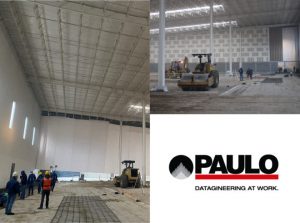
  7. Paulo announced plans to double the size of its Monterrey, Mexico facility to meet the demand from the automotive industry for the heat treatment of brake components in passenger cars and trucks.
  8. Ambrell’s first system retired after nearly 35 years of service.


Kudos Chatter

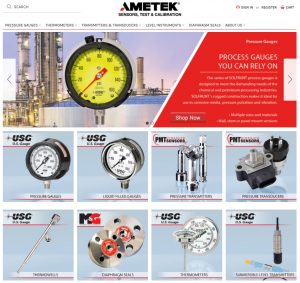
  1. AMETEK STC launched a new webshop for pressure measurement industries.
  2. Schneider Electric is ranked the world’s most sustainable corporation by Corporate Knights.
  3. Hubbard-Hall announced its certification as a Woman Owned Small Business by the Women’s Business Enterprise National Council (WBENC). Molly Kellogg leads the specialty chemical producer and distributor headquartered in Waterbury, CT as the chairman, CEO, president, and 6th-generation owner.


Heat Treat Today is pleased to join in the announcements of growth and achievement throughout the industry by highlighting them here on our News Chatter page. Please send any information you feel may be of interest to manufacturers with in-house heat treat departments especially in the aerospace, automotive, medical, and energy sectors to editor@heattreattoday.com.


13 Quick Heat Treat News Chatter Items to Keep You Current Read More »