

TEMPERING NEWS

Vacuum Tempering Furnace Strengthens Aerospace Capacity

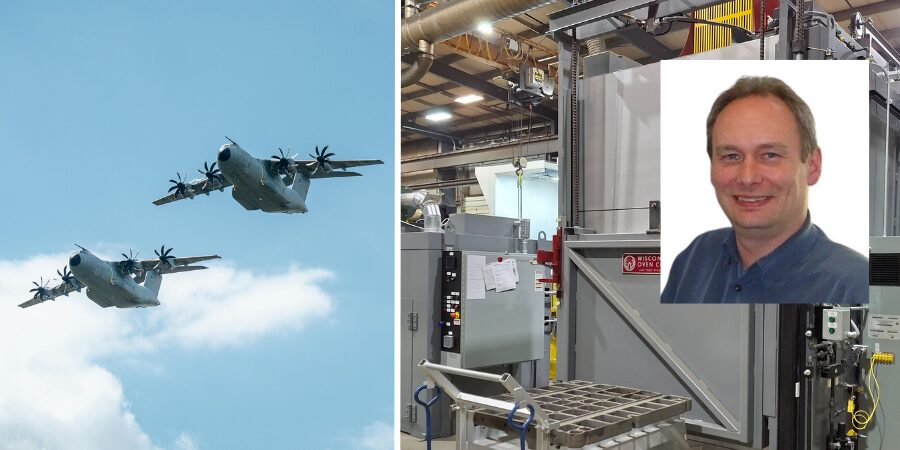
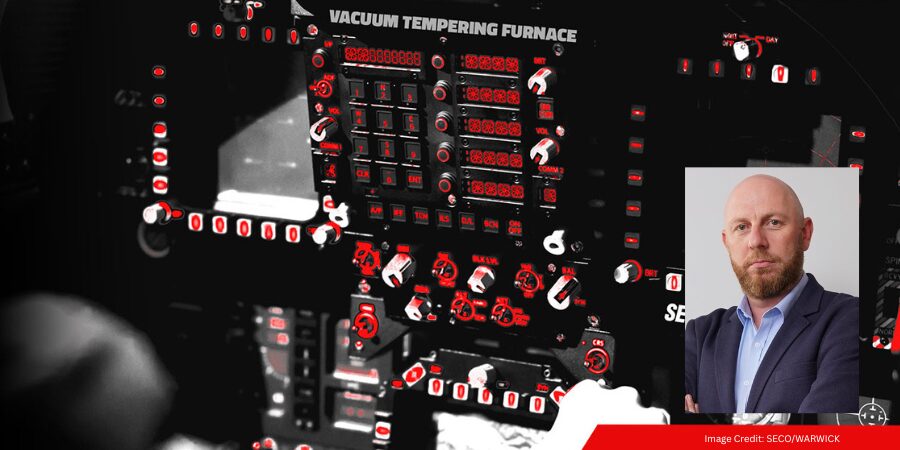
An international aircraft motion-control manufacturer is expanding its heat treat process capacity by ordering an additional low-temperature vacuum tempering furnace to support tempering, ageing, and other sub-critical heat treating of precision components. The equipment will be used to maintain consistent thermal processing standards for aerospace applications.

The repeat order will be supplied by SECO/WARWICK‘s U.S. subsidiary. The furnace is a low-temperature vacuum tempering unit capable of operating up to 1380°F (750°C) within a 24 × 24 × 36 in (600 × 600 × 900 mm) work zone and supports a 1750-lb (~800 kg) load capacity. Designed to meet AMS2750F Class 2 temperature-uniformity-survey (TUS) requirements (±10°F/±5.6°C), it uses nitrogen convection for both heating and cooling, with final cooling provided by an internal recirculation blower and water-cooled heat exchanger for stable, efficient cycles.

Piotr Zawistowski
Managing Director
SECO/WARWICK USA

This additional furnace joins an existing suite of heat treat equipment at the manufacturer’s facilities, which already includes multi-chamber CaseMaster Evolution models and a Vector single-chamber high-pressure gas-quench vacuum furnace from SECO/WARWICK. These installations reflect long-standing collaboration on thermal processing solutions for aerospace components.

According to Piotr Zawistowski, managing director of SECO/WARWICK USA, the ongoing investments by this aerospace partner reflect confidence in the technical expertise and support provided by SECO/WARWICK and the performance consistency of its vacuum tempering solutions.

Press release is available in its original form here.

Vacuum Tempering Furnace Strengthens Aerospace Capacity Read More »
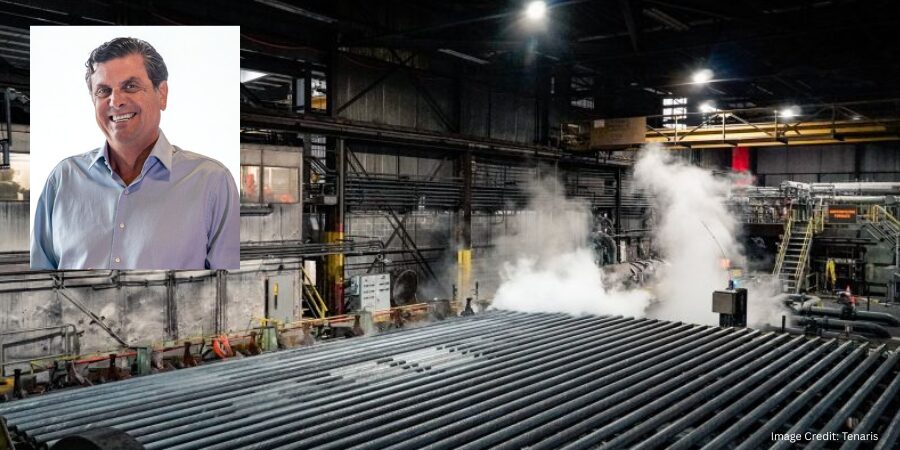
Tenaris OCTG Production Restarts In-House Heat Treating

Global pipe manufacturer Tenaris has reactivated quenching and tempering operations at its Koppel, Pennsylvania facility, restoring a critical stage of in-house heat treating capacity that supports domestic oil country tubular goods (OCTG) production for the U.S. energy sector. The restart reinforces supply chain reliability for clients requiring high-performance steel pipe.

Guillermo Moreno
President
Tenaris U.S.

The reactivation follows Tenaris’s broader investment in its Pennsylvania operations and coincides with the reopening of the adjacent steel mill. “Reopening the heat treatment and finishing lines in Koppel reinforces the strength of our domestic production capabilities for our clients across the U.S.,” says Guillermo Moreno, Tenaris U.S. President. “Koppel remains a cornerstone of our U.S. operations, allowing us to deliver high-quality steel products that support U.S. energy and industrial needs.”

Tenaris operates an integrated steel pipe manufacturing system across Pennsylvania and Ohio. At the Koppel facility, steel billets are produced in an electric arc furnace and shipped to Ambridge, Pennsylvania, where they are rolled into seamless OCTG to client specifications. The pipes are then returned to Koppel for quenching and tempering, followed by finishing, nondestructive testing, and inspection.

In the final stage of production, the pipes are sent to Tenaris’s Brookfield, Ohio, facility for threading and final inspection before shipment to oil and gas clients across the United States. With the Koppel heat treatment lines back online, Tenaris strengthens its U.S. production capabilities and continues delivering high-performance steel products for energy and industrial applications.

Press release is available in its original form here.

Tenaris OCTG Production Restarts In-House Heat Treating Read More »

Draw Batch Oven Shipped for Aerospace and Military Application

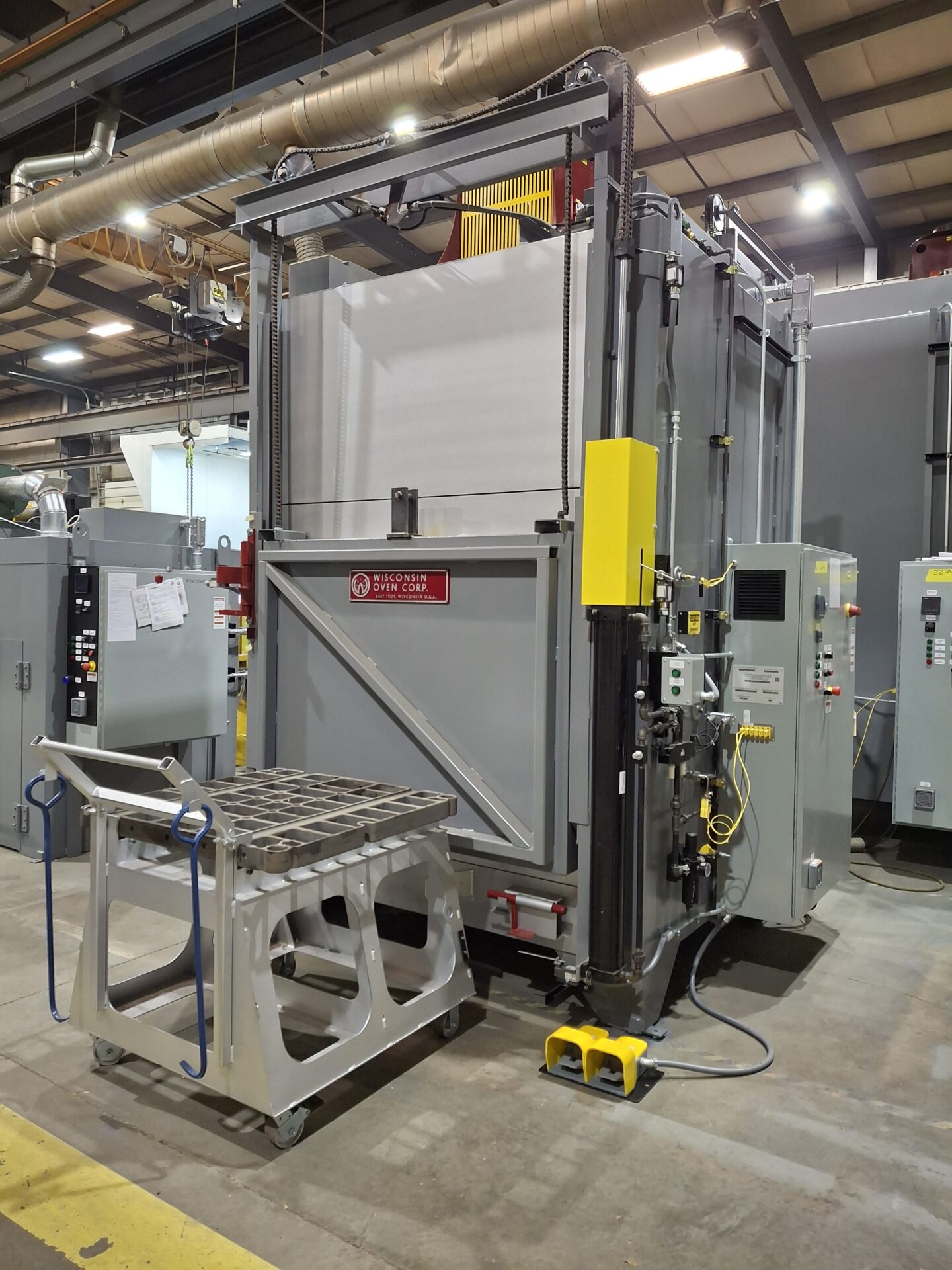
A United States military base will receive an electrically heated draw batch oven for use in heat treating aerospace components. The industrial oven was engineered to meet critical safety requirements and the stringent demands of aerospace heat treating.

Electrically heated draw batch oven to heat various steel parts for aerospace components. Source: Wisconsin Oven Corporation
Doug Christiansen, Senior Application Engineer of Wisconsin Oven Corporation

Manufactured by Wisconsin Oven Corporation, the system features combination-style airflow that delivers both horizontal and vertical upward heat flow to ensure optimal heating rates and consistent temperature distribution across the product. Temperature uniformity has been verified through a Class 1 Temperature Uniformity Survey (TUS) conducted in accordance with pyrometry specification AMS 2750H, with achieved uniformity of ±5°F at 200°F, 700°F, and 1200°F.

“This draw batch oven was designed with additional safety features for operators, tight uniformity, and compliance standards required by the U.S. Military. The temperature uniformity survey was performed prior to shipment to verify compliance with AMS 2750H Class 1 requirements,” said Doug Christiansen, senior application engineer.

The oven features “can” style construction with a heavy plate exterior and six inches of high-temperature insulation for durability and thermal efficiency. A custom portable load/unload cart allows operators to stage the load before heating and remove it for cooling.

The UL508A-certified control panel includes a Eurotherm 3504 programmable temperature controller with advanced auto-tune and Ethernet communication. It also features a high-limit instrument to prevent over-temperature conditions, along with low-voltage calibration TC jack plugs and a variable frequency drive for the recirculation blower.

Press release is available in its original form here.

Draw Batch Oven Shipped for Aerospace and Military Application Read More »

Ryerson and Olympic Steel Announce Merger

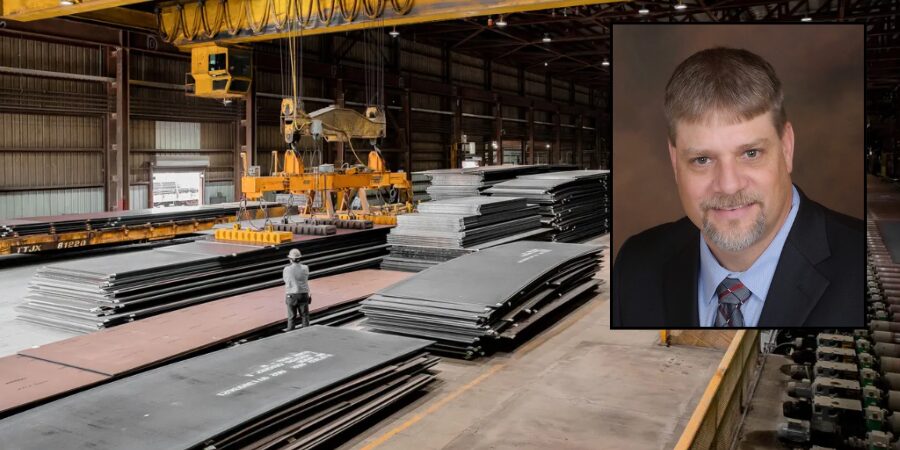
Ryerson Holding Corporation, a value-added processor and distributor of industrial metals, and Olympic Steel, Inc., a U.S. metals service center, announced that they have entered into a definitive agreement to merge. The merger will enhance the combined company’s presence as the second-largest North American metals service center and will bring Olympic Steel’s complementary footprint, tempering capabilities, and heat treated product offerings into Ryerson’s network of value-added service centers.

The deal is expected to generate approximately $120 million in annual synergies by the end of year two via procurement scale, efficiency gains, commercial enhancement, and network optimization. The merger adds Olympic Steel’s thermal processing services and metals to Ryerson’s existing offerings.

As part of the transaction, Michael D. Siegal, executive chairman of Olympic Steel’s Board of Directors, will be appointed chairman of the Board of Directors (“Board”) of the combined company and Olympic Steel will also appoint three other directors to the combined 11-member Board. Eddie Lehner, president and chief executive officer (“CEO”) of Ryerson, will serve as CEO of the combined company, with Richard T. Marabito, CEO of Olympic Steel, serving as president and chief operating officer.

Eddie Lehner said, “This merger represents an immensely attractive and unique opportunity for Ryerson and Olympic Steel as it combines our two organizations, which couldn’t be more complementary and synergistic around the products, services, footprint, and customer experience…The combination of our organizations will further scale the digital investments that Ryerson has made to bring Olympic Steel’s capabilities and formidable expertise into a larger network and provide our customers with greater network density, faster lead times, and a wider array of custom solutions from pick-pack-and-ship to finished parts…I look forward to working with Rick and the entire Olympic Steel organization with shared mission, passion, and purpose to unite our teams in reaching our vast potential together.”

“We are very excited about the combination of Ryerson and Olympic Steel and the trajectory of the business going forward,” added Steve Larson, chairman of Ryerson’s Board. “We look forward to welcoming Michael and the additional Olympic directors to the already strong Ryerson board. They bring a wealth of experience and perspective.”

Michael Siegal added, “This is a significant milestone for the business my father and uncle started more than 70 years ago. We went from private to public in 1994, and now we enthusiastically take this next step to accelerate Olympic Steel’s continued growth.”

Press release is available in its original form here.

Ryerson and Olympic Steel Announce Merger Read More »

$74 Million Heat Treat Expansion for Alabama Facility

SSAB is investing approximately $74 million to expand its heat treat capacity at its Axis, Alabama facility. The expansion will support the production of premium steel products.

Andy Bramstedt
General Manager
SSAB Alabama
Source: Linkedin

“This expansion will bolster our capacity to produce high-strength steel brands such as Hardox and Strenx and will also increase SSAB Alabama’s truck shipping capacity.” said Andy Bramstedt, general manager of SSAB Alabama.

The project will encompass the construction of a new building equipped with a state-of-the-art tempering furnace, and improvements to the infrastructure.

“We have been working on this investment for a long time, and it is very gratifying to see it come to fruition. This investment will not only expand our capacity for niche products, which are in high demand, but also enable us to offer a broader product range from our Alabama facility,” said Kjell Baeckman, head of Sales Special Steels for SSAB. 

Mobile Chamber
President and CEO
Bradley Byrne
Source: Mobile Chamber

The expansion anticipates the creation of 12 new jobs in the local community.

Mobile Chamber president and CEO Bradley Byrne said, “By expanding production of high-strength, specialized steel, SSAB is reinforcing Mobile County’s role in driving innovation and supplying critical materials to key sectors across North and South America.”

This initiative is set to commence in 2025 and is expected to be completed in 2027.

Press release is available in its original form here.


$74 Million Heat Treat Expansion for Alabama Facility Read More »

Steel Parts Manufacturer Expands Annealing Capabilities

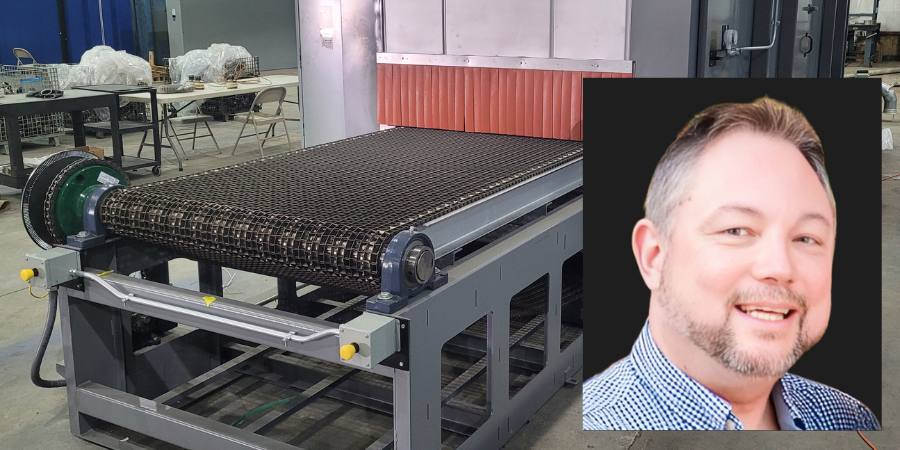
A North American manufacturer has bolstered its heat treatment capabilities for annealing steel parts after induction hardening. The two-zone belt conveyor furnace shipped to the facility ensures precise temperature control, energy efficiency, and compliance with AIAG specification CQI-9.

“The customer chose to enhance the operating efficiency of the oven with the E-Pack™ Energy Efficiency Package. Depending on utility rates, operating temperature, and weekly usage, customers may achieve significant annual energy savings with this upgrade,” said Tom Trueman, senior application engineer for Wisconsin Oven Corporation.

Tom Trueman
Senior Applications Engineer
Wisconsin Oven Corporation

Wisconsin Oven Corporation designed the conveyor furnace with the capacity to heat 2,400 pounds of steel per hour from 70° to 350°F with a maximum temperature rating of 500°F and the ability to anneal the components after induction hardening. The recirculation system features a top-down airflow design with a 32,000 CFM blower, with each of the two zones utilizing 16,000 CFM. The temperature for both zones is controlled by a Watlow F4T digital recorder/controller, which provides Ethernet communication capabilities and PID temperature control with adaptive tuning. As a factor in its CQI-9 compliance, a temperature uniformity survey was conducted, documenting uniformity of ±10°F at 350°F with verified part soak.

To maximize energy efficiency, the oven has been upgraded with an E-Pack™ Energy Efficiency Package, which includes 2” thicker insulation in the walls, floor, and roof, as well as variable frequency drives on the recirculation blowers.

The press release is available in its original form here.


Steel Parts Manufacturer Expands Annealing Capabilities Read More »

Truck Beam Heat Treat Line For Auto Industry

A truck beam heat treat line with two large walking-beam furnaces is currently being installed for a leading Latin American auto structural component designer and manufacturer. The industry leader will use one furnace for austenitizing and the other for tempering. The truck beams are 13 in (33 cm) wide, 4.5 in (11.5 cm) high, and 49 ft (15 m) long, weighing at about 625 lb (285 kg). A closely controlled environment is necessary in order to induce the required change to the steel beams’ crystal structure.

The furnace line will be provided by NUTEC Bickley, their third such order for this auto industry manufacturer.

New furnace line from Nutec Bickley
Source: Nutec Bickley

The austenitizing furnace is a continuous unit, capable of treating 60 beams (roughly equivalent to 17 tons of steel) per hour. It has an operating temperature of 1670°F (910°C), and a maximum temperature of 2010°F (1100°C). There are 10 automatic control zones, designed to promote temperature uniformity.

There are 29 high-velocity burners, sited above the load. These allow for low NOx emissions, featuring stable high excess air and excess fuel operation, direct spark ignition, integral air and gas meters, sturdy cast construction and flame rod ionization. The burner configuration creates gas recirculation and allows uniform heating of the load and better heat transfer to the product through radiation mechanisms and convection.

The furnace employs NUTEC Bickley’s IMPS™ combustion system for energy savings, enhanced process control, optimal kinetic energy utilization from burners, temperature uniformity without excess air, a high turndown ratio, and other key benefits.

The tempering furnace — capable of heat treating beams at a rate of 60 pieces per hour — has an operating temperature of 915°F (490°C) and a maximum temperature of 1110°F (600°C). There are six automatic control zones and the heating method for tempering is via air circulation with a vertical flow pattern, ceiling to floor with six centrifugal fans.

Both of these furnaces benefit from insulation based on the patented Jointless® ceramic fiber system that allows fast heating and cooling and reduces heat storage. Using MacroModules, this insulation is 8 in (20 cm) thick in the combustion zones. Thermal efficiency has also been guaranteed with a specifically design of the door frame and canopy for both access and exit doors. Both furnaces are fully NFPA 86 compliant.

The press release is available in its original form here.


Truck Beam Heat Treat Line For Auto Industry Read More »

blue bg, left image of airplane on airstrip with sunset, right image of automotive engine

Doncaster’s Atmosphere Furnace Purchase To Bolster In-House Heat Treatment Capabilities

An aerospace, industrial gas turbine, and automotive market leader has expanded its heat treatment operations with a recently purchased air atmosphere furnace. Connecticut-based Doncaster Precision Castings will use the new furnace to support annealing, tempering, and heat treatment of steel and castings.

Doncaster Precision Castings previously received a similar model for use in its heavy-duty industrial processes within the aerospace and automotive sectors. The furnace, supplied by L&L Special Furnace, has a maximum temperature of 1850°F (1010°C) and a capacity to handle a typical load weight of 2,000 pounds.


The press release is available in its original form here.

Find Heat Treating Products And Services When You Search On Heat Treat Buyers Guide.Com

Doncaster’s Atmosphere Furnace Purchase To Bolster In-House Heat Treatment Capabilities Read More »

Heat Treat Operations Modernize with 9 Hardening Furnaces

Nine heat treat furnaces are set to modernize the operations of a manufacturer’s heat treat facilities. This move is intended to create cleaner, safer, more cost-effective operations while also allowing for finer process control and a reduced carbon footprint.

The nine furnaces are being fabricated by SECO/VACUUM, a division of SECO/WARWICK Group: three Vector® vacuum furnaces and six tempering furnaces with supporting auxiliary systems. This returning heat treat client currently operates twelve SECO/VACUUM furnaces at their various locations throughout North America. They will incorporate the new furnaces as a continuation of their strategic planning to modernize all facilities from atmospheric heat treatment to vacuum processes.

Piotr Zawistowski
Managing Director
SECO/VACUUM TECHNOLOGIES, USA
Source: SECO/WARWICK

Each of the nine units are front-loading, horizontally configured furnaces with a 36″ x 36″ x 48″ working volume and a 3300 lb. capacity. The Vector® is a single-chamber gas quenching vacuum furnace using high pressure quench (2 to 25 bar) which can be applied to a variety of heat treating processes and applications. These particular Vectors will be used primarily for hardening. Tempering is a process primarily used to increase the toughness of hardened ferrous-alloy parts. The tempering process is typically applied after a hardening process.

Heat treating operations will have to shut down entirely during the modernization changeover. To minimize disruption, SECO/VACUUM will also serve as the general contractor, overseeing the installation of the new furnaces, auxiliary systems, wiring, piping, and ventilation needed prior to commissioning and operator training.

“It is a testament to our commitment to our partner’s success that they not only continue to return for more furnaces, but that they place their trust us in to manage the entire project in order to get them back to serving their customers,” said Piotr Zawistowski, managing director at SECO/VACUUM.

The press release is available in its original form here.


Find heat treating products and services when you search on Heat Treat Buyers Guide.Com


Heat Treat Operations Modernize with 9 Hardening Furnaces Read More »

Tool & Die Capabilities Increase with Heat Treat Box Furnace

An electric box furnace, currently headed to a Midwest equipment provider, will ultimately be installed at a Snap-on production facility that services tool and die support within the company’s production line.

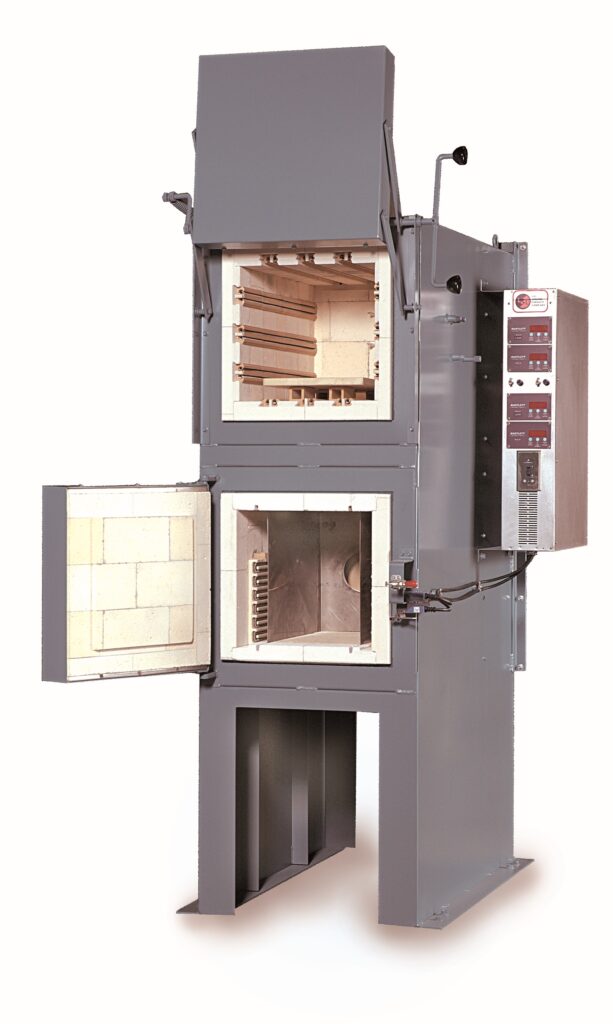
The model QDD29 economical dual-chamber heat treating and tempering oven from L&L Special Furnace has a compact over/under design that saves floor space and provides reliable heat treating in-house.

QDD29 economical dual-chamber furnace (Source: L&L Special Furnace)

The top chamber is primarily deployed for heat treating tool steels at temperatures up to 2200°F; the tempering chamber is suited to temperatures up to 1250°F and has a recirculation baffle that makes it suitable for small aluminum work as well. The hardening and tempering chambers have interior dimensions of 12” wide by 8” high by 24” deep, with total external dimensions of 55” wide by 70” tall by 56” deep.

The QDD29 is controlled with digital single setpoint controls along with overtemperature protection. Solid-state relays drive the heating elements in a control circuit.

This press release is available in its original form upon request.


Find Heat Treating Products and Services When You Search on Heat Treat Buyers Guide.com

Tool & Die Capabilities Increase with Heat Treat Box Furnace Read More »

Skip to content