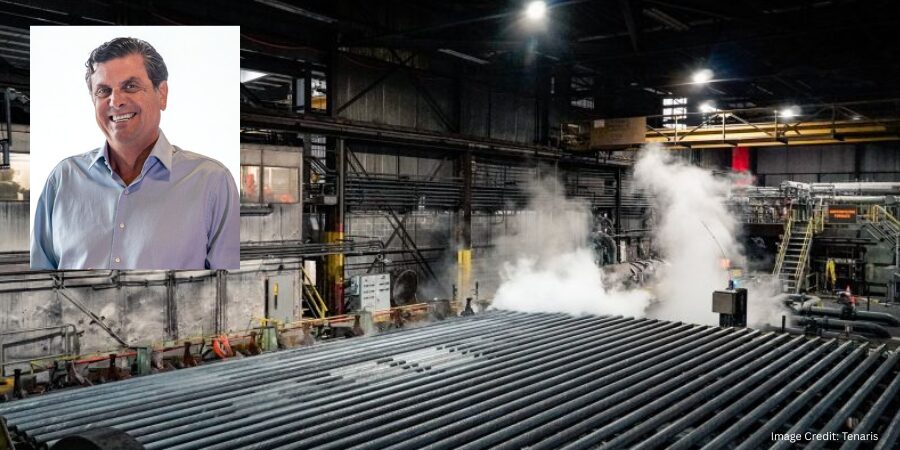
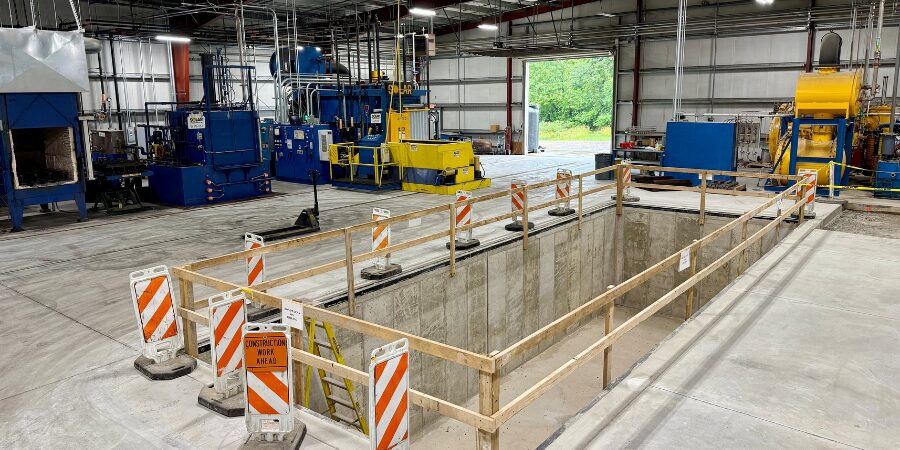
Global pipe manufacturer Tenaris has reactivated quenching and tempering operations at its Koppel, Pennsylvania facility, restoring a critical stage of in-house heat treating capacity that supports domestic oil country tubular goods (OCTG) production for the U.S. energy sector. The restart reinforces supply chain reliability for clients requiring high-performance steel pipe.
Guillermo Moreno President Tenaris U.S.
The reactivation follows Tenaris’s broader investment in its Pennsylvania operations and coincides with the reopening of the adjacent steel mill. “Reopening the heat treatment and finishing lines in Koppel reinforces the strength of our domestic production capabilities for our clients across the U.S.,” says Guillermo Moreno, Tenaris U.S. President. “Koppel remains a cornerstone of our U.S. operations, allowing us to deliver high-quality steel products that support U.S. energy and industrial needs.”
Tenaris operates an integrated steel pipe manufacturing system across Pennsylvania and Ohio. At the Koppel facility, steel billets are produced in an electric arc furnace and shipped to Ambridge, Pennsylvania, where they are rolled into seamless OCTG to client specifications. The pipes are then returned to Koppel for quenching and tempering, followed by finishing, nondestructive testing, and inspection.
In the final stage of production, the pipes are sent to Tenaris’s Brookfield, Ohio, facility for threading and final inspection before shipment to oil and gas clients across the United States. With the Koppel heat treatment lines back online, Tenaris strengthens its U.S. production capabilities and continues delivering high-performance steel products for energy and industrial applications.
Press release is available in its original form here.
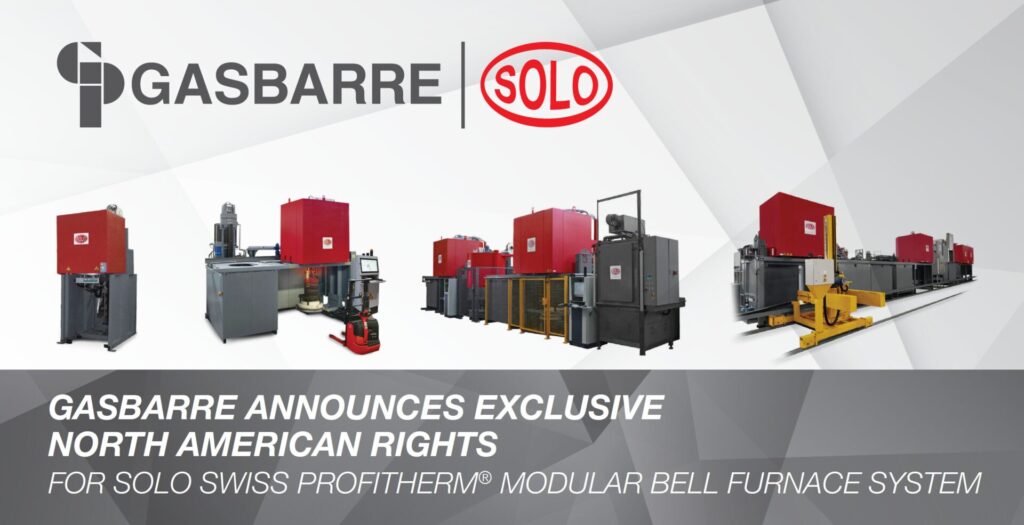
Gasbarre Thermal Processing Systems announced the expansion of its modular furnace offerings for the North American market through an exclusive licensing agreement with SOLO Swiss SA. The agreement grants Gasbarre rights to manufacture, promote, and sell a ProfiTherm® modular bell furnace system, strengthening Gasbarre’s equipment portfolio for commercial and captive heat treat operations serving a range of industrial markets.
Source: Gasbarre Thermal Processing Systems
The licensed system is a modular arrangement of bell furnaces and quench tanks that enables direct, rapid transfer from furnace to quench. The configuration is positioned as a practical alternative to traditional integral quench batch furnaces, particularly for operations seeking greater flexibility and reduced infrastructure requirements.
Designed with a compact footprint, the system minimizes installation complexity by eliminating the need for pits and reducing overall plant disruption. A metallic retort design supports faster furnace conditioning and quicker process changeovers while limiting refractory exposure to process gases to help extend refractory life. The system also eliminates many traditional internal nickel-alloy material handling components — such as roller rails, chain guides, and handler heads — reducing consumable wear, downtime, and the risk of furnace jams while simplifying service access.
The ProfiTherm system supports a wide range of heat treating processes, including austermpering, marquenching, carburizing, carbonitriding, and neutral hardening, with quench options that include water/polymer, oil, and salt. Typical parts processed include gears, pinions, and sprockets, bearing components such as races, rings, and rollers; shafts, hubs, couplings, and yokes; high-strength pins and fasteners; and general industrial wear and drive components. Target applications include captive heat treat departments and commercial shops serving general industry, aerospace, defense, and bearing markets.
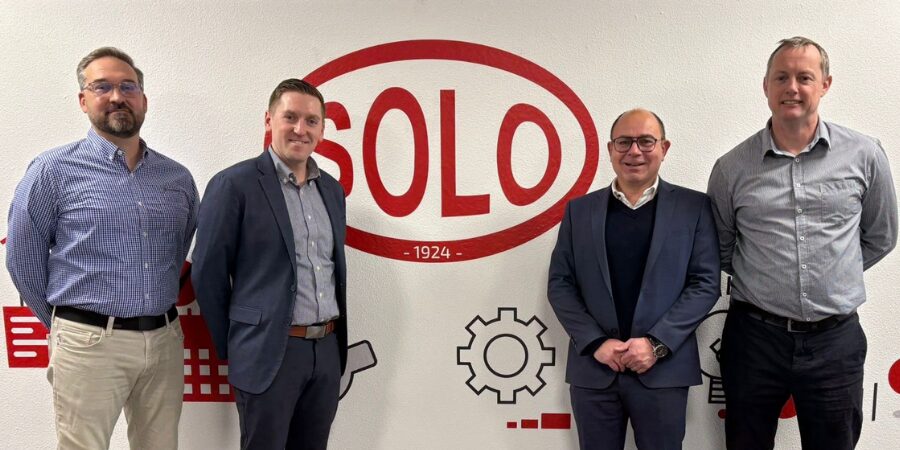
Press release is available in its original form here.Additional information provided by Gasbarre. Featured image shows (from left to right) Dan Hill, product development manager of Gasbarre; Ben Gasbarre, EVP sales & marketing of Gasbarre; David Salerno, CEO of SOLO; and David Howard , sales director of SOLO.
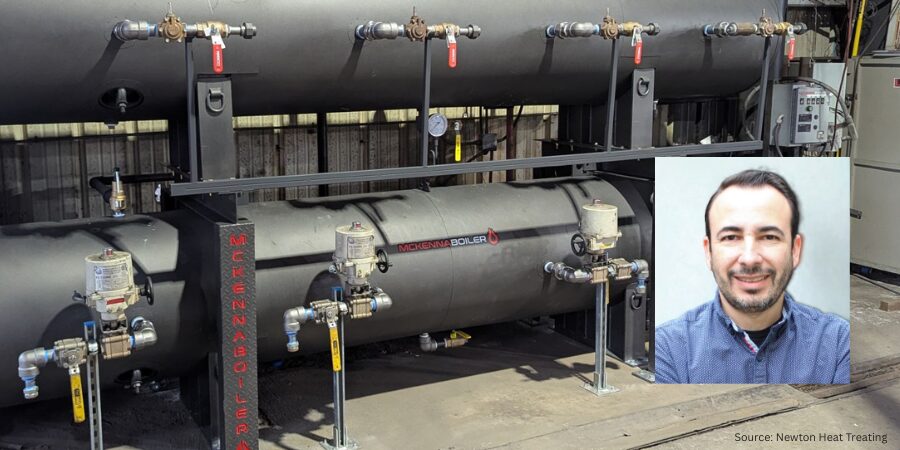
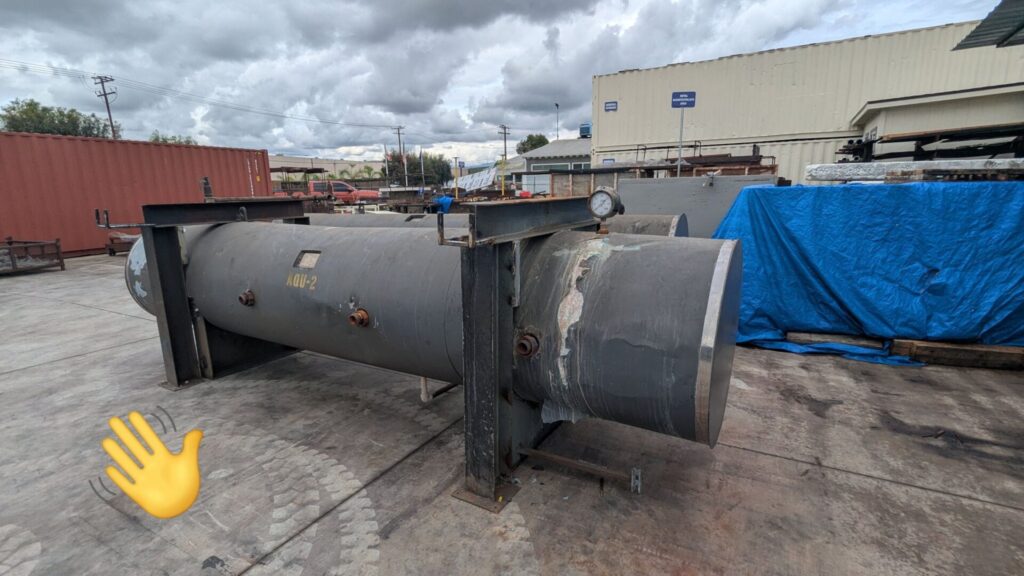
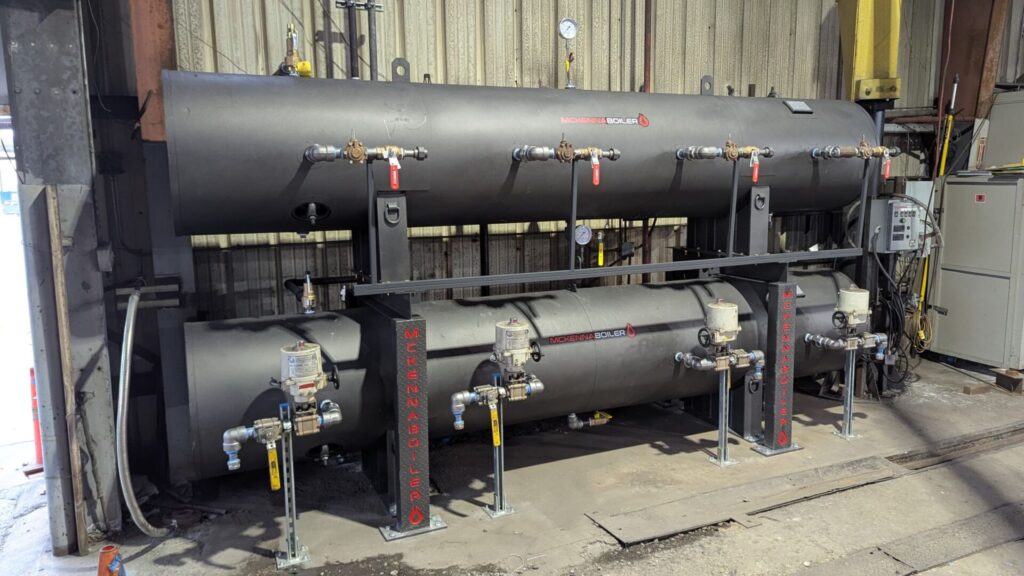
Newton Heat Treating has completed a major equipment upgrade, replacing steam accumulators that had been in service for 20 years in its uphill quenching/cold stabilization operation. The upgrade directly impacts the company’s aerospace processing capabilities, with many parts destined for optical components in space applications undergoing this critical heat treatment process.
Saying goodbye to the old steam accumulators SOURCE: Newton Heat TreatingNew steam accumulators fully installed SOURCE: Heat TreatingJohn Avalos Quality Engineer Newton Heat Treating
According to the company, the new steam accumulators have delivered immediate operational improvements. The heat treat transfer time from the steam accumulators to the steam chambers (where parts are inserted) is faster, providing better tensile stress reduction. Energy efficiency has also improved, with steam blasting time cut by about 10%.
John Avalos, quality engineer at Newton Heat Treating, reported, “primary operator who runs this process, Alfred Ojeda, said that the new steam accumulators don’t take as long to pressurize.” This will cut down on processing time, he explains.
Newton Heat Treating partnered with McKenna Boiler Works, Inc. for the installation project, which was completed on time and to specifications.
The uphill quenching/cold stabilization process is essential for aerospace components, particularly those requiring precise dimensional stability and stress relief for mission-critical optical systems used in space.
Want to learn more about uphill quenching? Check out the Heat TreatRadio episode where Newton Heat Treating CEO Greg Newton and John Avalos discuss this little-known but highly effective process for controlling residual stress in aluminum alloys.
Press release is available in its original form here. Additional details provided by the company.
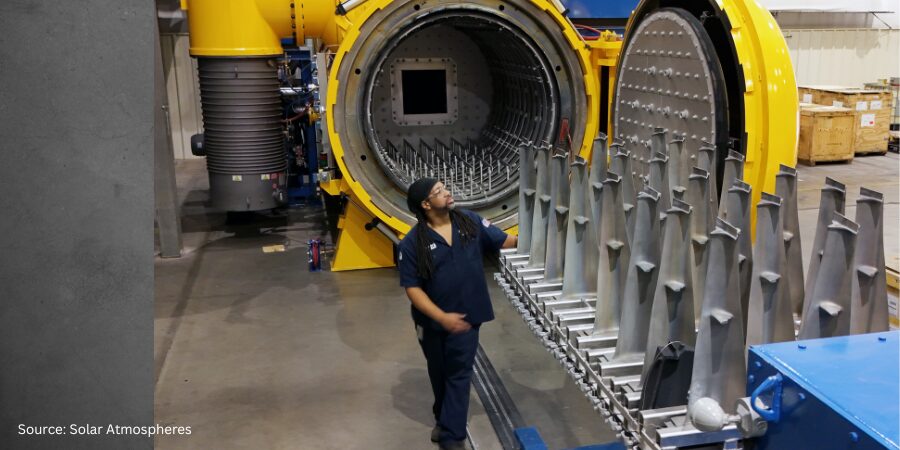
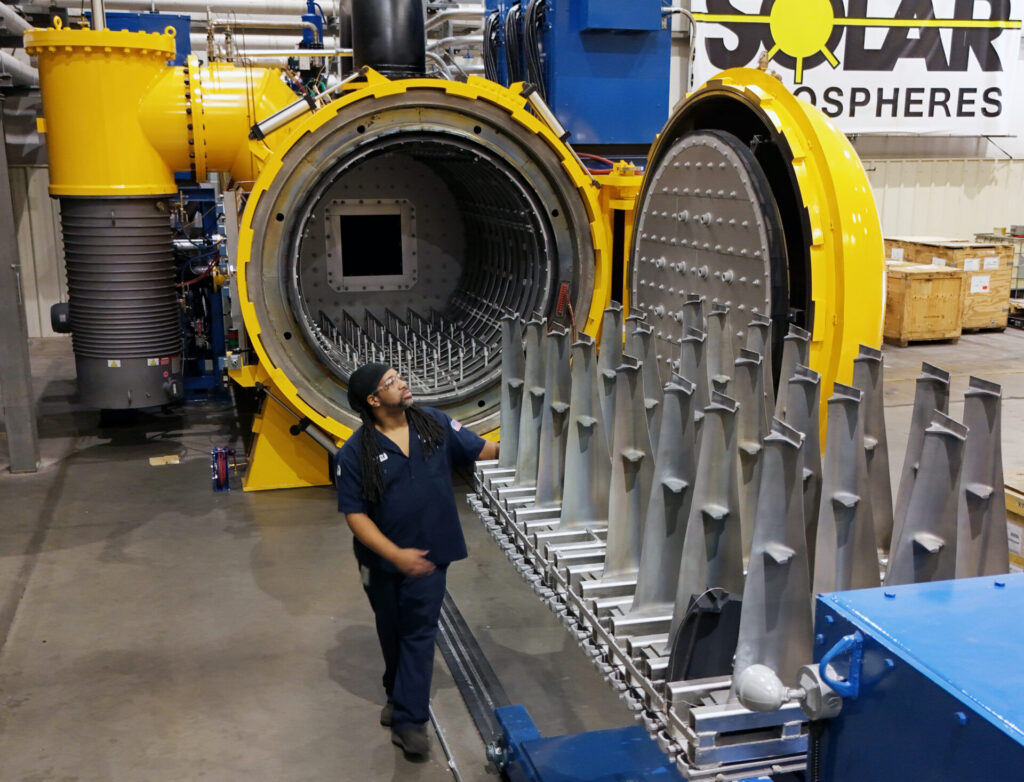
Solar Atmospheres has commissioned and installed a new 10-bar vacuum furnace at its Greenville, SC facility. The horizontal furnace can process loads up to 12,000 pounds and expands the company’s capacity for high-pressure quenching of large components and workloads.
Solar Atmospheres new 10-bar vacuum furnace Source: Solar AtmospheresSteve Prout President Solar Atmospheres Southeast
Manufactured by its sister company Solar Manufacturing, the furnace features a working zone measuring 48” wide x 48” high x 96” deep. Its pumping package achieves an ultimate vacuum level of 1×10⁻⁶ Torr, ensuring performance for processing titanium and other high-grade alloys requiring pristine vacuum environments
Steve Prout, president of Solar Atmospheres Southeast, commented: “We’re proud to offer our customers another regional option for high-pressure quenching of large components and workloads, while also providing the opportunity to reduce processing costs through economies of scale.”
Press release is available in its original form here.
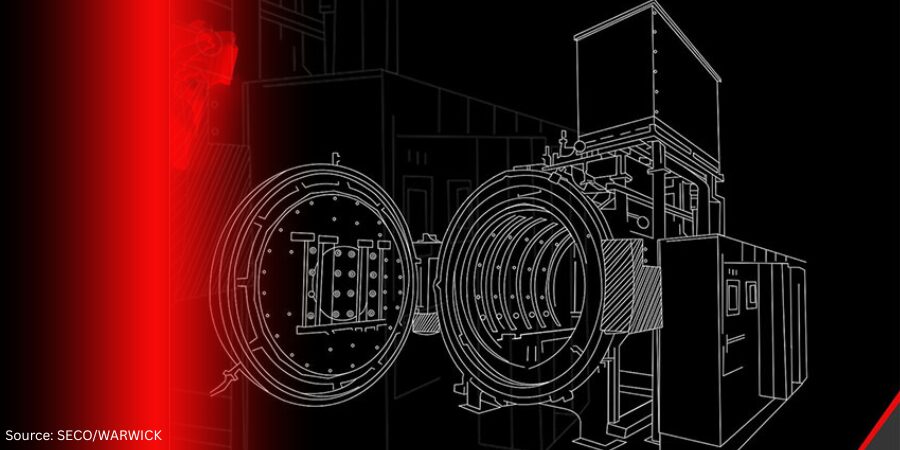
A metal heat treater is expanding their operations with a new vacuum furnace. The high-pressure quench vacuum furnace will be used for a wide range of processes such as vacuum hardening, tempering, solution treatment, aging, annealing, brazing and high-pressure gas quenching, servicing the automotive, aerospace, toolmaking and machinery sectors.
Shital Vacuum Treat will receive the furnace fromSECO/WARWICK, and it will comply with the NADCA (North American Die Casting Association) global standard for the heat treatment of tools and dies and enable faster preparation for NADCAP certification.
The single-chamber Vector vacuum furnace will be equipped with an advanced 15 bar (abs) gas cooling system, enabling rapid and uniform cooling of loads with complex geometries. It features a round heating chamber with high temperature uniformity ±5°C (9°F), convection heating up to 850°C (1562°F), and a vacuum system based on Leybold mechanical and Roots pumps.
“SECO/WARWICK is not just a supplier – they are part of our family. The new furnace will allow us to increase our production capacity and serve customers better. Quality and repeatability are paramount for us…Thanks to high-pressure cooling and the ability to work with different process gases, the furnace fits perfectly with the requirements of a commercial hardening plant that serves clients from various industrial sectors. Its NADCA compliance and readiness for Nadcap certification allows us to provide services to clients from the most demanding industries, such as aerospace and automotive,” commented Vilas Kolekar, marketing director for Shital Vacuum Treat Pvt. Ltd.
Shital Vacuum Treat Pvt Ltd in the Indian market not only provides comprehensive heat treatment services but also acts as a technology advisor.
Press release is available in its original form here.
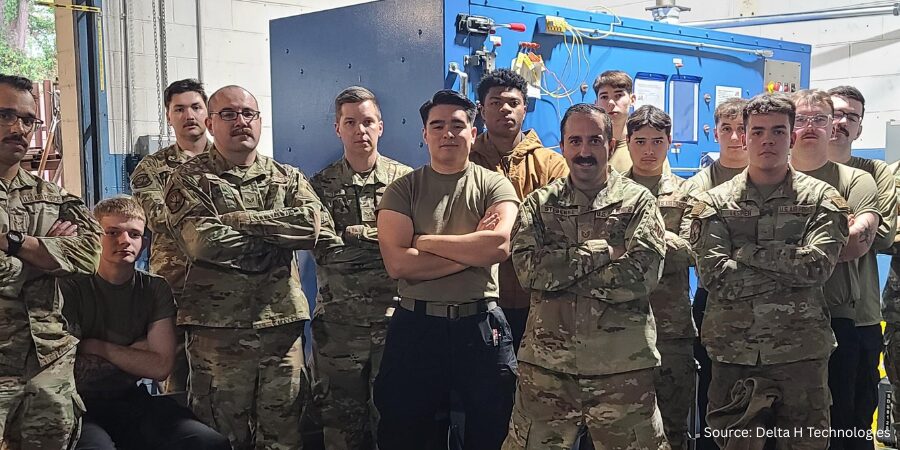
A U.S. Air Forcecontract has been awarded for 38 advanced aerospace heat treating furnaces. The furnaces will enhance mission-critical aircraft maintenance capabilities at bases across the United States and overseas.
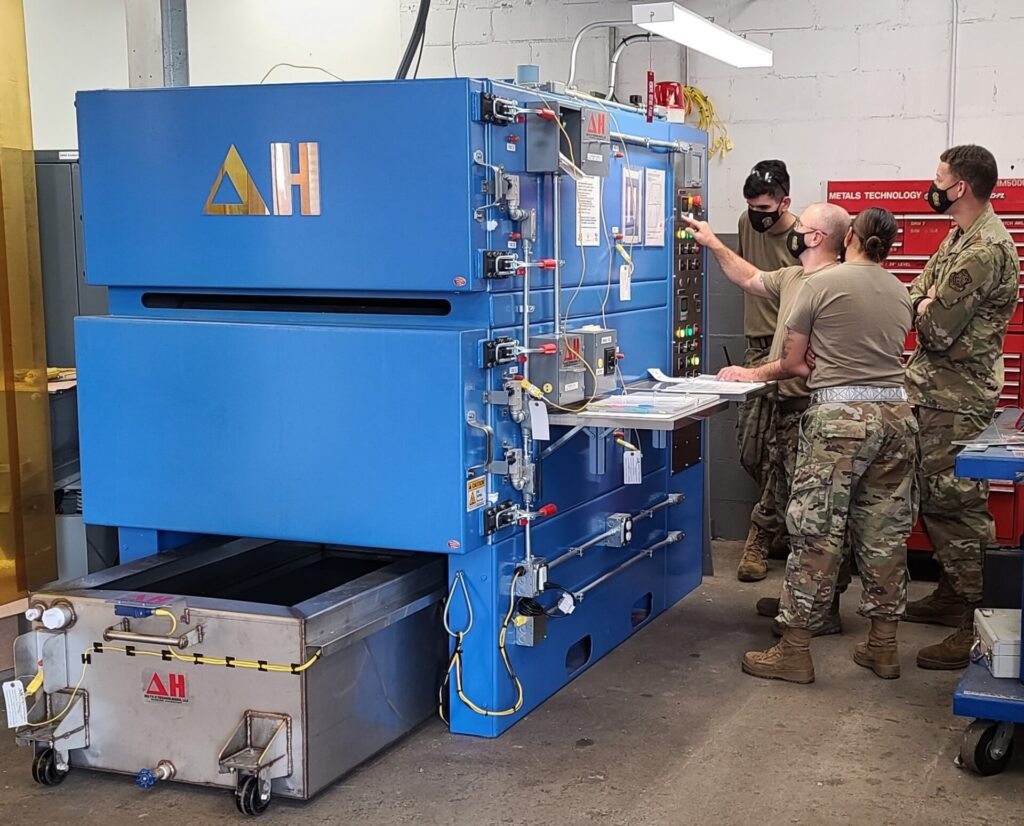
Phillips Corporation Federal Division and DELTA H® Technologies will provide the furnaces. Of the 38 are 13 Model DCAHT®-181248-1200/500-MIL units and 25 Defender Series Model DEF-DC-RH-242436/1200-CH-242436/1200 units. Deliveries are scheduled over the next year to provide the USAF with heat treating capacity for aviation-grade metals to meet AMS2750H compliance and NAVAIR TO 1-1A-9 standards.
“Phillips Federal is honored to support the U.S. Air Force through this partnership,” said Kelley Padham, president of Phillips Corporation, Federal Division. “Our collaboration with DELTA H Technologies continues to expand the boundaries of advanced manufacturing for the Department of Defense — empowering readiness, resilience, and rapid innovation wherever our warfighters serve.”
Service member team working with new Delta H furnace Source: Delta H Technologies
Richard Conway, director and CTO of DELTA H Technologies and a U.S. Air Force veteran, added: “Ten years ago, the Air Force asked us to help solve a problem. As an engineer and veteran, it became a personal mission to provide the best heat treating solutions possible. Today, knowing the USAF relies on DELTA H and Phillips Federal for this critical technology is deeply humbling.”
The DCAHT® Model has dual convection-heated chambers with certified TUS work volume at 18” W × 12” H × 48” L. The lower chamber operates to 1200°F for aluminum solution heat treating with a roll-away quench tank, and an upper chamber which operates up to 500°F for aluminum aging.
The Defender Series Model has dual TUS-certified work volumes at 24” W × 24” H × 36” L. The convection chamber operates between 200°F–1200°F with rapid cooling from 1000°F to <200°F in under 30 minutes, enabling complete solution heat treating, annealing, and aging (T6). The radiant chamber operates between 1000°F–2000°F, with inert gas atmosphere capability.
Press release is available in its original form here.
A prominent aerospace company known for producing advanced, high-precision components for the global aviation and aerospace engine industry has been shipped a vacuum carburizing furnace. Headquartered in North America, the company’s aerospace division has been a trusted resource for the aeroengine sector for decades.
Vacuum carburizing furnace for aerospace Source: Solar Manufacturing
To support the development of a specialized carburizing process, Solar Manufacturing partnered closely with the R&D team at its sister company, Solar Atmospheres, a heat treating affiliate. Collaborative testing was conducted at Solar Atmospheres’ Technology Center in Souderton, Pennsylvania, where engineers from both organizations worked together to fine-tune the process to meet the specific metallurgical specifications.
“This collaboration was invaluable in achieving the desired metallurgical results,” said Rick Jones, regional sales manager at Solar Manufacturing.
The delivered system features a graphite-insulated hot zone measuring 48” wide × 48” high × 60” deep, capable of reaching temperatures up to 2400°F (1370°C). The furnace can accommodate workloads up to 5,000 pounds and includes an internal gas cooling system that provides rapid 2-bar nitrogen quenching.
Press release is available in its original form here.
Following foundation preparations, Solar Atmospheres will be installing a new titanium drop bottom water quench furnace at their Hermitage, Pennsylvania, location. The new addition will ensure consistent metallurgical results for demanding aerospace and industrial applications.
The new furnace is rated for a maximum operating temperature of 1850°F ±10°F and is designed to process titanium bar and forging loads of up to 7,500 pounds. Measuring 14′ by 54″ wide by 48″ high, workloads will be rapidly transferred into a 7,000-gallon, recirculated water quench tank within seconds.
This investment opens the door to expanded titanium solution treating capabilities and supports Solar Atmospheres’ commitment to innovative thermal processing solutions.
Press release is available in its original form here.
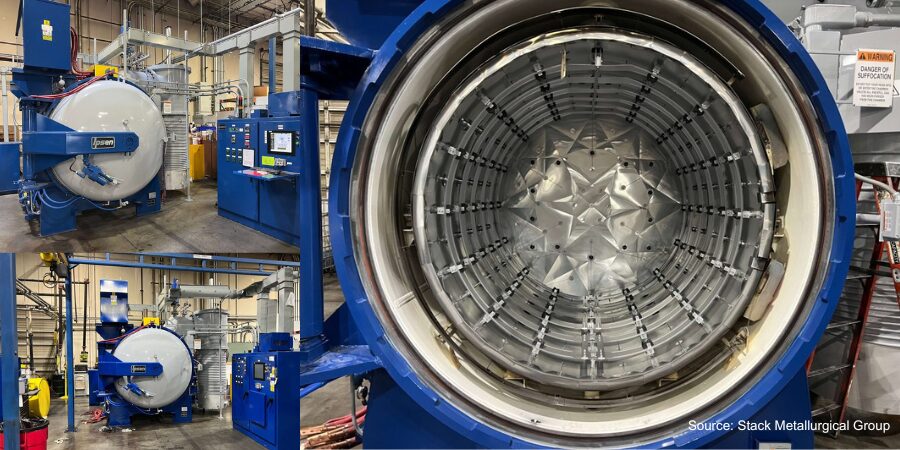
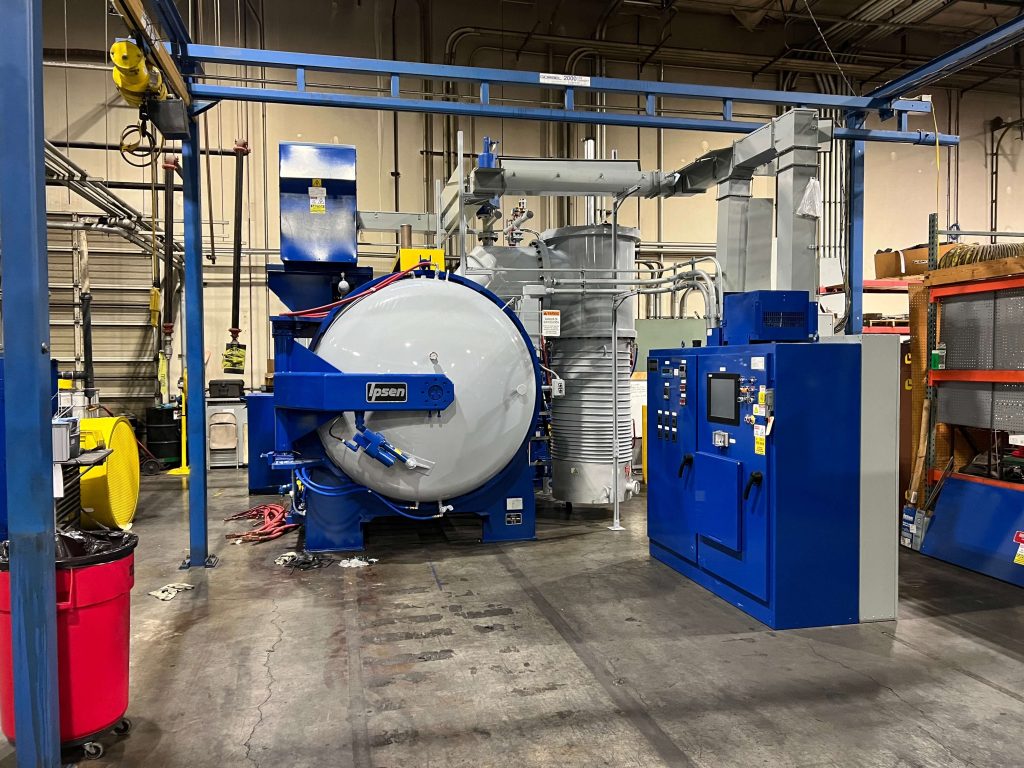
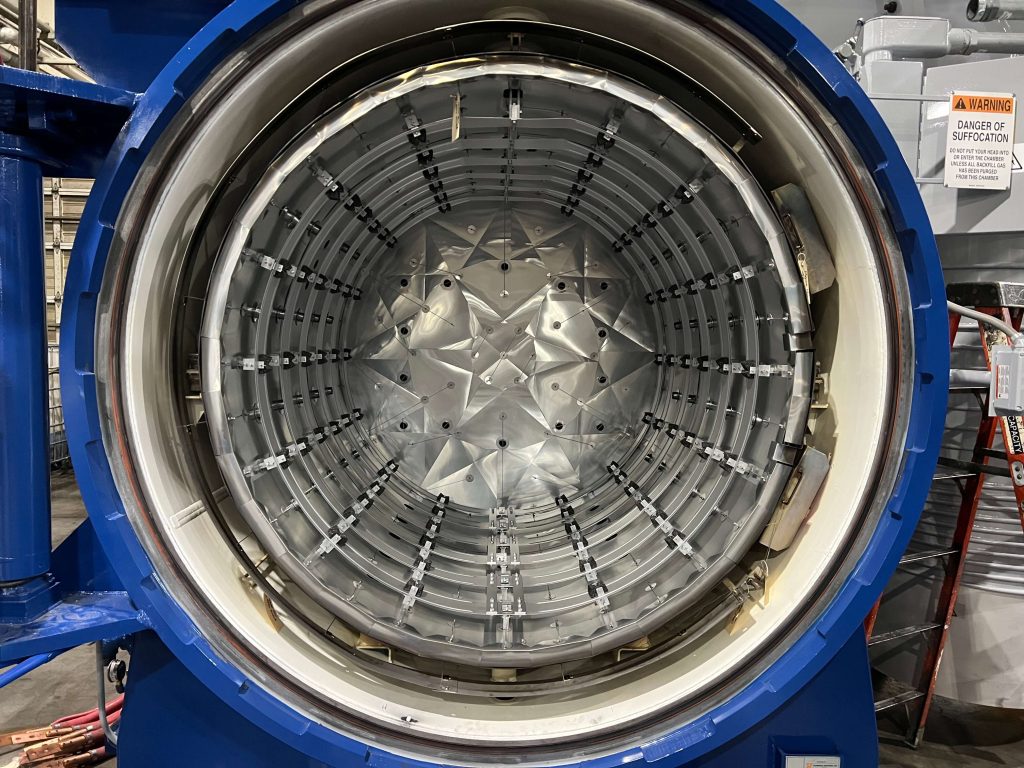
A U.S. heat treater has expanded their operations with the installment of a horizontal vacuum furnace. Stack Metallurgical Group announced the addition of a 6 bar quenching TurboTreater furnace at their Portland facility.
Stack services aerospace, medical, and cutlery industries, among others. The company shared, “Stack is continuing to show our commitment to excellence by investing in a brand new 6 Bar quenching, Turbotreater horizontal vacuum furnace from Ipsen. This is more than a purchase; it’s a substantial investment in our facilities and, more importantly, in our valued customers.”
The Ipsen vacuum furnace features internal quenching with 360-degree cooling uniformity, decreases cycle times up to 20%, and reduces gas consumption up to 40%. The furnace handles heavy loads and operates for multiple processes, including hardening, tempering, brazing, sintering, and annealing.
Press release is available in its original form here.
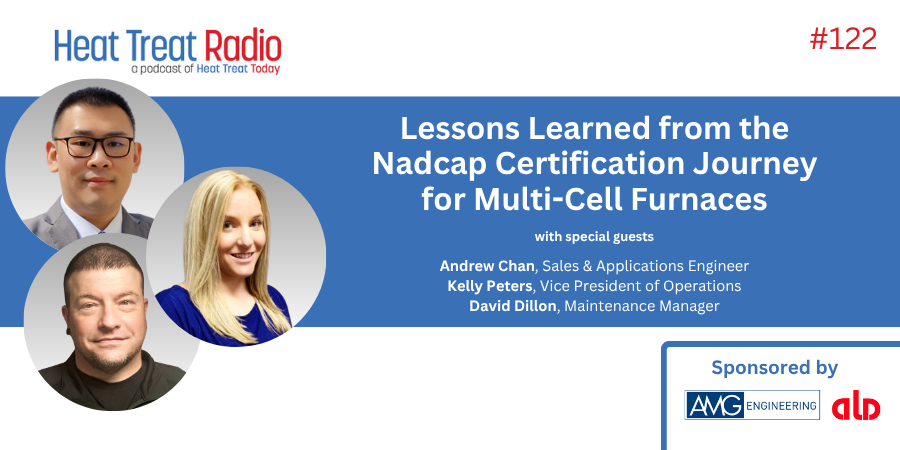
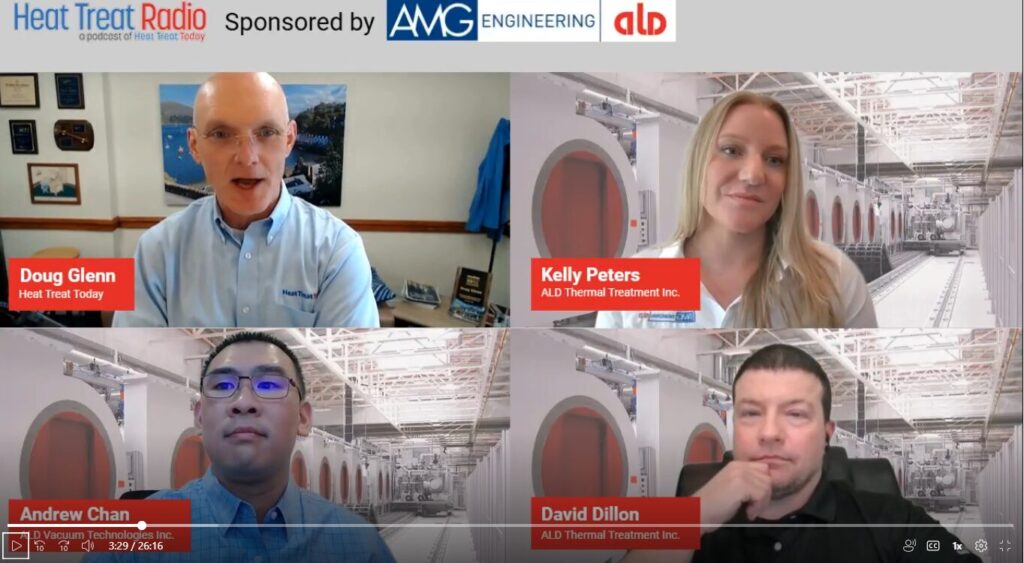
In thisHeat Treat Radio episode, Doug Glenn talks with Andrew Chan, sales and applications engineer, ALD Vacuum Technologies North America Inc, Kelly Peters, vice president of operations, and David Dillon, maintenance manager for ALD Thermal Treatment Inc.
Listen as guests share their experiences navigating the complex requirements, challenges, and organizational changes needed for Nadcap certification. Their journey discovering how multi-cell heat treatment furnaces can come into Nadcap compliance underscores the importance of technology, training, and continuous improvement.
Listeners will learn practical insights into achieving and maintaining Nadcap accreditation for advanced heat treatment processes.
Below, you can watch the video, listen to the podcast by clicking on the audio play button, or read an edited transcript.
Doug Glenn: In preparation for this episode, we discussed the situation that sparked our desire to engage in this conversation, which involved both ALD and some of your customers. We wanted to discuss people not knowing that a multi-cell heat treatment furnace could be Nadcap-certified. Can you tell us a little bit about that?
Andrew Chan: ALD participates in all the major heat treatment trade shows, including the last two Furnaces North America events, and we noticed a lack of awareness that multi-cell heat treatment furnaces can be Nadcap certified. We found through interactions with visitors at our booth and conversations during the social hours that people really had it engraved in their minds that only single cell heat treatment equipment could be Nadcap certified.
This was true until about five years ago with the newest revision of AMS2769D. Therefore, the real impetus is just to bring awareness to the industry that you’re now able to certify and use multi-cell heat treatment equipment for aerospace applications. With that, you getvolume capacity, which historically has been associated with the automotive industry, both the OEMs and their suppliers, but we can bring that benefit to the aerospace market and lower heat treatment costs.
Understanding Multi-Cell Furnace Systems (05:15)
Doug Glenn: What are multi-cell heat treatment furnaces, how are they designed, and how do they work?
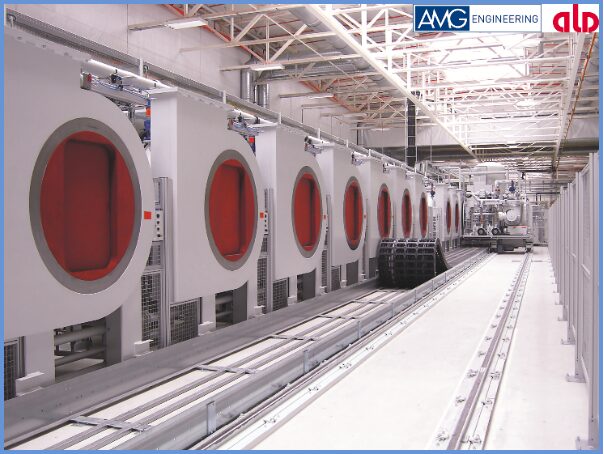
Andrew Chan: An example of a multi-cell furnace is our ModulTherm® or our SyncroTherm® furnace. As you can see in this image, these are individual vacuum chambers, which we call a treatment cell, and you can line up about fourteen of these in a row. Each one is dedicated to heat treating a single load.
ALD’s ModulTherm® system, an example of multi-cell furnaces
The treatment cell has its own insulation, heating elements, process, and gas; all of these are serviced by a single transfer car that you can see down at the end of the rail with the track. Then, our quenching cell is attached to that transfer car. We have this movable transfer car that loads and unloads the parts, and then we quench them immediately after pulling them out of each treatment cell. We can also do oil quenching, but the oil quench would just be a fixed tank — it would not be on this movable transfer car.
Doug Glenn: Are you talking about a high pressure gas quench?
Andrew Chan: Yes, this is a high pressure gas quench. Historically it’s been helium, but we can also do nitrogen, since helium costs have started to increase over the last couple decades.
Doug Glenn: Is that transfer car under vacuum during the transfer?
Andrew Chan: Yes, everything is done under vacuum. We transfer between the red doors, which are basically like isolation doors.When we pull the load out to quench it, it’s done very quickly, also under vacuum, we quench up to 20 bar.
Doug Glenn: Is this your ModulTherm model?
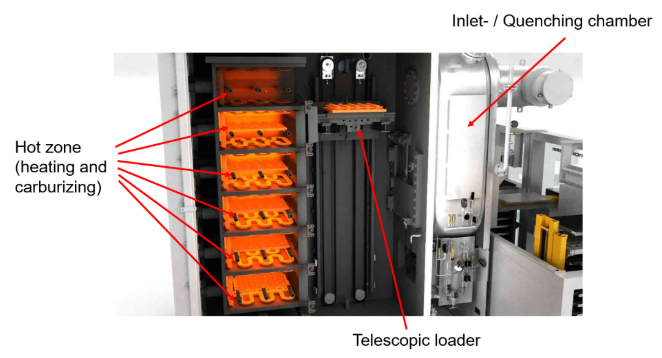
Andrew Chan: Yes, this image is of our ModulTherm. This second image is of our SyncroTherm model, which is like a mini ModulTherm.
Nadcap certification is possible for multi-cell furnace systems, like the SyncroTherm®
We describe this model like a pizza oven. We have multiple hot zones stacked on top of each other, and the footprint for the hot zone is approximately 500 x 600 millimeters. It is a smaller footprint than the ModulTherm model. Everything is under the same vacuum environment, and then similarly, we have a transfer — a telescopic loader that moves the load between the hot zone and the quench — and then a single quenching chamber, which also functions as the inlet and outlet for the load.
What is Nadcap Certification? (8:25)
Doug Glenn: What is Nadcap certification?
Kelly Peters: Nadcap certification is a comprehensive approach to aerospace and specifications. It covers maintenance, pyrometry, heat treater training, quality control, and even contract review. It focuses more on the process, not so much on the product, and it is audited by a third-party organization called PRI (Performance Review Institute).
PRI will review your processes, supporting data, and entire management system. The accreditation process involves an internal audit completed by the organization with some corrective actions. Then, you can complete your initial audit with PRI.
You must complete that internal audit first, and then once you go through the initial audit, you’ll be assigned a staff engineer. This person will review the findings from that initial audit, as well as your corrective actions and supporting data.
If the staff engineer approves, you’ll move on to the next stage, which is actually going in front of an engineering team where they vote on whether you’ll be accredited.
When it comes to heat treatment specifically for Nadcap, however, the audit really covers all of your AMS specifications, processes, relevant instrumentation, pyrometry, etc.
Doug Glenn: Is the team of engineers that you mentioned internal or through PRI?
Kelly Peters: They are through PRI.
Doug Glenn: Is this certification and audit exclusively for the aerospace industry or is it applied to other industries?
Kelly Peters: Nadcap is primarily foraerospace and defense.
Process of ALD’s Nadcap Journey: Challenges and Timeline (10:25)
Doug Glenn: Once you realized that you could Nadcap certify your equipment that Andrew and his team build, how did your Nadcap process go? Can you tell us how you got started and the timeline?
Kelly Peters: The process was definitely very intimidating at first. In general, I would say the average time period in the industry is about 18 months of preparation before you find yourself goingthrough the actual PRI audit.
In our case, it took us about a year. We had a lot to do within that year. There were four months that it was all initial procedure revision. This step involves reviewing maintenance, production, and quality control processes and procedures to ensure they meet Nadcap requirements.
You also have to go through commercial compliance. Therefore, you want to ensure that you’re meeting those specifications from the commercial side, specifically during contract review and processes.
The largest portion of preparing was data collection and organizationalchanges, which took us about six to seven months to accomplish because you have to gather all the data necessary, implement changes, and then make those changes daily to ensure you’re actually in compliance.
By the time you do your self-audit, you’re already zoning in on those items and initiating corrective actions to prepare for accreditation. About two months later, we scheduled our actual PRI audit and had them on-site.
Doug Glenn: What do you mean by “organizational changes”?
Kelly Peters: I’m implying changes to operational organization, for example, your management system.
Overcoming Doubts and Technical Hurdles (14:28)
Doug Glenn: Dave, I assume you were involved with this process from the beginning.
Dave Dillon: Yes, I was involved quite a bit.
Doug Glenn: Were there any major potholes that occurred where you had to change a flat tire after you hit it?
Dave Dillon: The biggest issue initially was how new the process was to us, which felt overwhelming — we didn’t know what to expect. As such, we had self-doubt. When we overcame that and started getting into the nuts and bolts of the process, the biggest challenge was reviewing our existing requirements from customers and our controlling standards, ensuringthey met the Nadcap requirements. If they didn’t, we had to bring them up to that standard.
Heat Treat Radio Episode #122 Andrew Chan, Kelly Peters, and David Dillon sharing their Nadcap experience
Doug Glenn: What was the most intimidating piece of the process or that stood out as a really difficult step?
Kelly Peters: From my perspective, this goes right back to what Andrew said at the beginning of our discussion where there was a time when you didn’t believe you could get this accreditation for these ModulTherm systems. Because we were so ingrained in that thought process — that this was going to be such a hard, difficult challenge to get through — that we had to break through the barrier and realize that most of the challenge is in you, not so much in the system.The specifications are out there. Your job is to follow them. Your job is to implement them. It can be done.
Dave Dillon: The biggest challenge for me was all the pyrometry requirements from AMS2750. We were doing it all on the fly, and we didn’t hire any additional staffing, so it was very challenging at first. Then eventually we determined that we needed to have our own pyrometry technician to make sure the testing was completed within the time allotted.
Doug Glenn: When we discussed this before, you mentioned that you guys had engaged C3 Data to help you along the process. Can you tell us about that?
Dave Dillon: Our pyrometry technician is an internal guy, but we started out by doing everything by hand — all of the paperwork, documentation, etc. Someone had recommended C3 Data to us, and after we reviewed their software, we realized it was a perfect process for us. The software allows us to eliminate human error. It gives you automatic checks, and then it provides a digital record for the auditors — great software.
Doug Glenn: Kelly, what was your experience with C3 Data?
Kelly Peters: Dave is definitely the one taking care of the groundwork, so I don’t have personal experience with C3 Data. However, I did notice that our internal findings were less driven by human error, as Dave was saying, because we were no longer using manual Excel spreadsheets and so didn’t have the ability to accidentally hit the wrong number. The data became more reliable.
Doug Glenn: When it finally came time to do the actual PRI audit, how intimidating was that and how did it go?
Dave Dillon: To be honest, it was terrifying. We were all nervous becauseit was allso new to us — it seemed very overwhelming. But the auditors, to their credit, are very good, and they help you through it. The most surprising part of the audit was that we were able to get accredited on our initial audit.
Doug Glenn: I also understand you earned Nadcap merit. Can you tell us what that is?
Kelly Peters: A unique aspect of the Nadcap accreditation is that once a company meets a certain criteria, that company can enter a merit program, which means you can go up to 24 months between your audits. Currently,Port Huron is at our 18-month mark, and that happened just after our last audit, so we’re very proud of that.
Lessons Learned and Ongoing Improvements (19:46)
Doug Glenn: What are some lessons learned from this experience?
“When it comes to lessons learned, ensuring that your new hires and your current staff are continually getting training, which is true with any type of process in manufacturing and business.” Source: Canva Pro
Kelly Peters: When it comes to lessons learned, ensuring that your new hires and your current staff are continually getting training, which is true with any type of process in manufacturing and business. For pyrometry, we need to make sure we have a contingency. Dave knows it all, but if Dave wins the lottery tomorrow, we need someone to be able to step in and take over that process. Therefore, continual improvement, training, and reinforcing are critical because it’s all about maintaining a system, just like any other system that you have in place. I certainly would say that is not necessarily a challenge, but something to keep an eye on.
Doug Glenn: Andrew, were you involved with the Nadcap approval process on the equipment side?
Andrew Chan: I was not involved with the process for their specific equipment at Port Huron. However, from an equipment supplier perspective, it’s been challenging to help people understand that it’s possible to certify this equipment in the first place.
We’re starting to see more interest in this now. Since we have this long history with our specific design, it doesn’t require many changes to make the equipment Nadcap certified. We have a comprehensive control system that does everything automatically, including data recording and being able to interrogate the data historically. With a couple tweaks to the equipment, like making sure the gas is dry and clean, and adjustments on the pyrometry side, it’s possible to be certification-ready. You just have to find someone that’s willing to take the equipment and go through the process that the equipment at Port Huron went through.
Uses of Multi-Cell Furnaces (22:34)
Doug Glenn: What would the ideal company profile be that could benefit from knowing about this certification and having this equipment?
Andrew Chan: This is dependent upon the parts that a company is producing. The ModulTherm is geared more towards larger pieces. The SyncroTherm is more of a competitive product and we have seen it used for aerospace before. The SyncroTherm is probably the right solution for most of our customers looking to get into this process.
The ModulTherm is for high throughput, component heat treating.The automotive industry was one of the first industries to adopt it. In a way, they are more advanced than the aerospace industry, as they were able to adopt multi-cellular heat treatment into their industry.This is one of innovations that the aerospace industry is catching up on.
We haven’tquite seen the demand on the ModulTherm side yet, but the SyncroTherm is probably the right furnace — something small that heat treats aerospace components with a small footprint and a very rapid turnaround time.
Doug Glenn: Well, that’s great guys. Thanks very much. Kelly, Andrew, Dave, thanks for being with us. Hopefully it’s going to be helpful to some of our listeners, so appreciate you being here.
About the Guests
Andrew Chan sales and applications engineer ALD Vacuum Technologies North America Inc
Andrew Chan has a background in Materials Science & Engineering and has been with ALD Vacuum Technologies North America Inc since 2020. Andrew supports ALD’s vacuum heat treatment customers to specify new equipment builds and heat treatment process troubleshooting. In addition, Andrew is responsible for EB-PVD technologies and assists with the vacuum metallurgy portfolio.
Kelly Peters vice president of operations ALD Thermal Treatment Inc
Kelly Peters has been with ALD Thermal Treatment Inc since 2007, throughout her career at ALD she has held different job responsibilities primarily within R&D and Quality. Kelly Peters is a Heat TreatToday40 under 40 Class of 2020 nominee.
David Dillon maintenance manager ALD Thermal Treatment Inc.
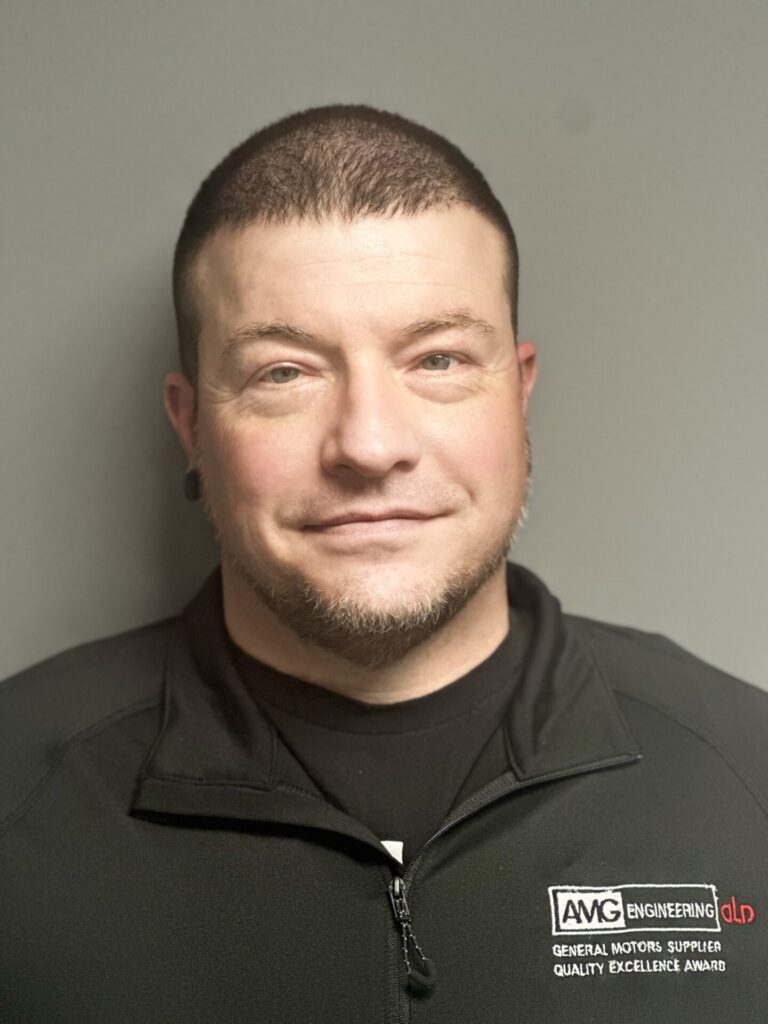
David Dillon has been with ALD Thermal Treatment Incsince 2006, working on equipment installations and maintenance locally in Port Huon. Dave now not only manages local maintenance activities but assists the parent company in equipment installations and services when needed