


AEROSPACE HEAT TREAT NEWS

Titanium Drop Bottom Furnace To Be Installed

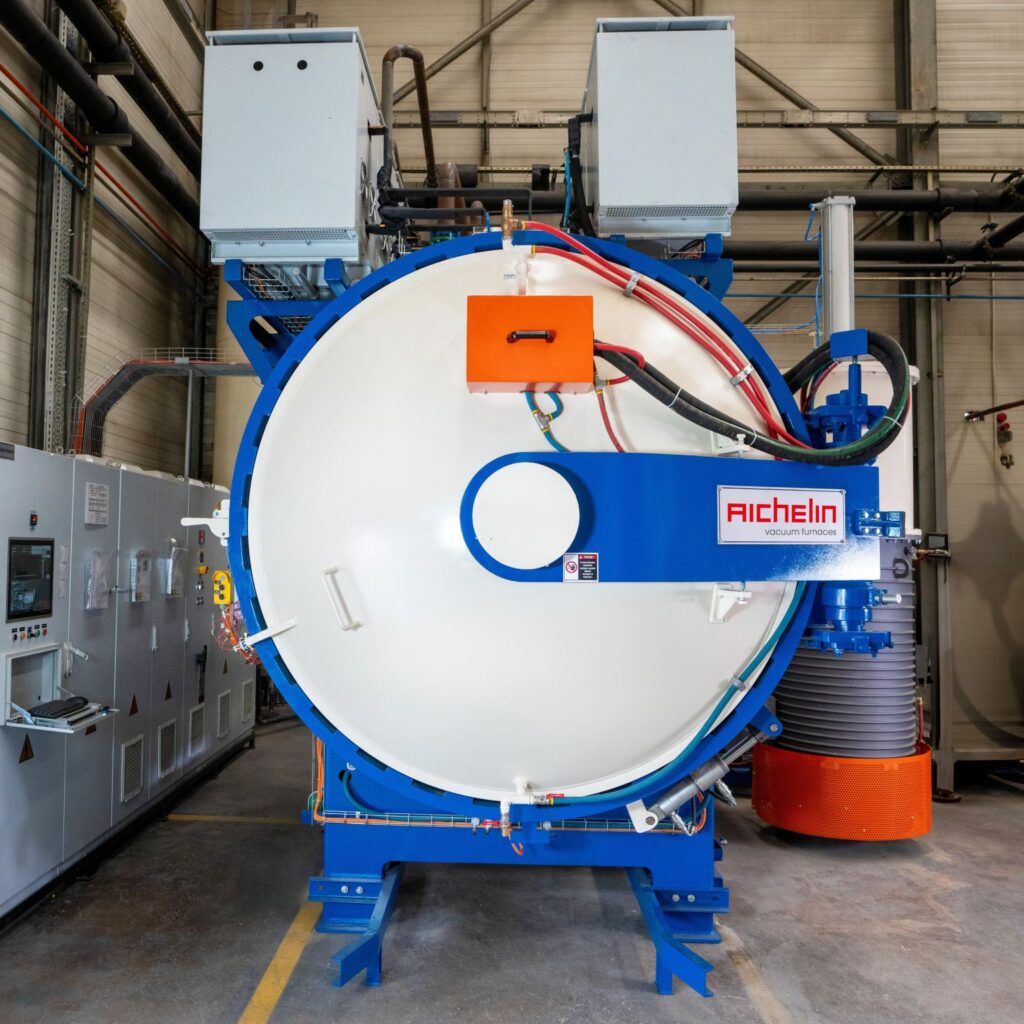
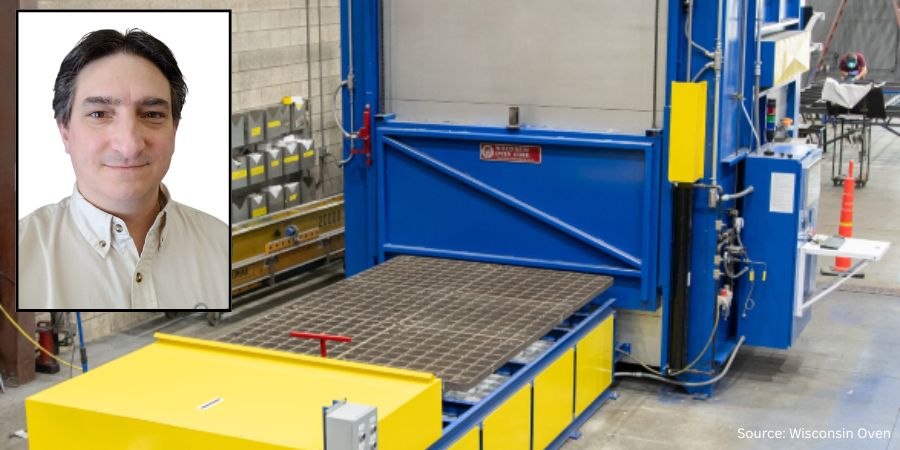
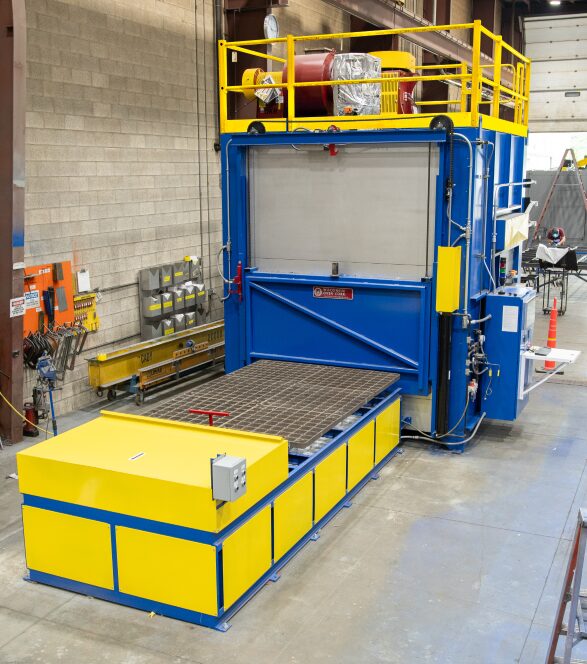
Following foundation preparations, Solar Atmospheres will be installing a new titanium drop bottom water quench furnace at their Hermitage, Pennsylvania, location. The new addition will ensure consistent metallurgical results for demanding aerospace and industrial applications.

The new furnace is rated for a maximum operating temperature of 1850°F ±10°F and is designed to process titanium bar and forging loads of up to 7,500 pounds. Measuring 14′ by 54″ wide by 48″ high, workloads will be rapidly transferred into a 7,000-gallon, recirculated water quench tank within seconds.

This investment opens the door to expanded titanium solution treating capabilities and supports Solar Atmospheres’ commitment to innovative thermal processing solutions.

Press release is available in its original form here.


Titanium Drop Bottom Furnace To Be Installed Read More »

Single Crystal Casting VIMs Developed for Aerospace

Three induction vacuum melting furnaces will be delivered to an industrial foundry specializing in parts production for the aerospace industry.

Sławomir Woźniak
CEO
SECO/WARWICK Group

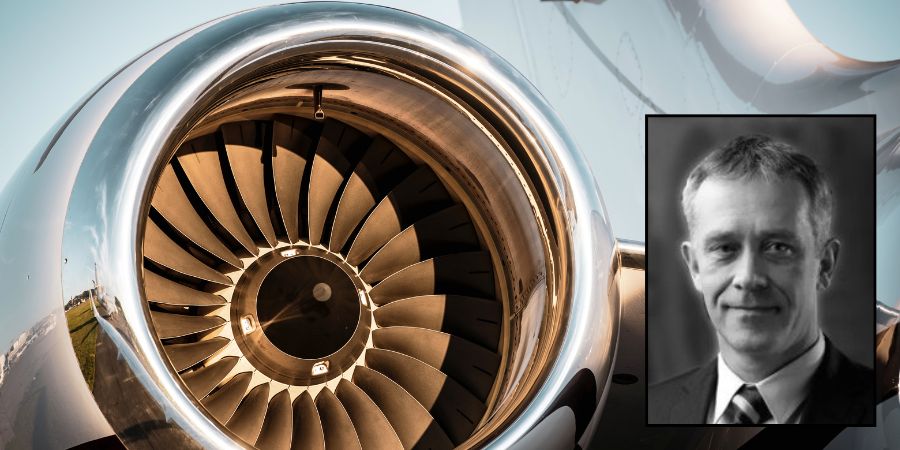
The three furnaces will increase the European partner’s production facilities and includes VIM technology for using directional solidification or single crystal casting of nickel and cobalt superalloys.

“In the VIM DS/CS furnace, the client can obtain castings using directional solidification or single crystal technology. The well-designed furnace structure…allows the user to produce the highest quality castings,” said Sławomir Woźniak, CEO of the SECO/WARWICK Group, a thermal processing solutions provider with North American locations.

The furnaces on order have a maximum capacity of 40kg.

The growing importance of vacuum metallurgy is partly a consequence of the continuously changing production needs of aviation. The most modern jet engines utilize advanced blades cast using single crystal technology.

Press release is available in its original form here.


Single Crystal Casting VIMs Developed for Aerospace Read More »

U.S. Air Force Provided In-House Heat Treating Furnace

A Defender Series furnace has been provided for Al Udeid Air Base, providing the U.S. Air Force with mission-critical capability to heat treat all aviation-grade metals used in aircraft maintenance.

SAF Metals Technology Technicians – Al Udeid Air Base, Qatar Qualified Heat Treaters for Military Aircraft
Source: DELTA H®

DELTA H® and Phillips Federal commissioned the dual-chamber system which features a radiant heat lower chamber (1,000°F–2,000°F, 12”W x 12”H x 48”D TUS volume) with inert atmosphere. A convection heat upper chamber (200°F–1,200°F, 18”W x 12”H x 48”D) is capable of rapid cooling from 1,000°F to below 200°F in under 30 minutes, allowing solution heat treating and aging (T6) in the same chamber before part freezing is required.

Al Udeid Air Base – Doha Qatar
Source: DELTA H®
Richard & Mary Conway DELTA H® TECHNOLOGIES, LLC
Source: DELTA H®

Commissioning included hands-on training and qualification of USAF Metals Tech personnel in system operation, AMS2750 compliance, TUS/SAT execution (via SuperSystems SDS 8120), pyrometry recordkeeping management, and heat treating fundamentals for aviation grade metals.

Director and CTO of DELTA H, Richard Conway, shares: “Mary and I were honored to work directly with the outstanding Airmen at Al Udeid true professionals whose determination to master heat treating reflected their deep commitment to the mission. It was humbling to see our furnace system play a small part in supporting their readiness. In a time of growing uncertainty, DELTA H is proud to stand with our Warfighters on the front lines, providing the tools they need to defend freedom.”

Retired, SMSgt, John (JD) Murray
Product Manager
Phillips Federal
Source: Linkedin

Product manager at Phillips Federal, USAF Retired, SMSgt, John (JD) Murray shares: “As a Retired USAF Aircraft Metals Technician with multiple deployments to my credit, I am overjoyed to see the deployed location receive the best equipment possible. DELTA H furnaces are essential to keep our aircraft flying, fighting, and winning.”

The furnace is equipped with a dual-bath quench tank supporting both water and oil quenching, and final testing confirmed AMS2750 compliance with the convection chamber achieving Class 1 (±5°F) and the radiant chamber Class 3 (±15°F) uniformity. PMEL completed all calibrations, certifying the system for immediate aircraft parts processing.


Press release is available in its original form here.


U.S. Air Force Provided In-House Heat Treating Furnace Read More »

Aviation Manufacturer Expands In-House Vacuum Heat Treat

An in-house heat treat manufacturer of highly specialized aviation parts will be increasing their vacuum heat treat abilities with a horizontal furnace.

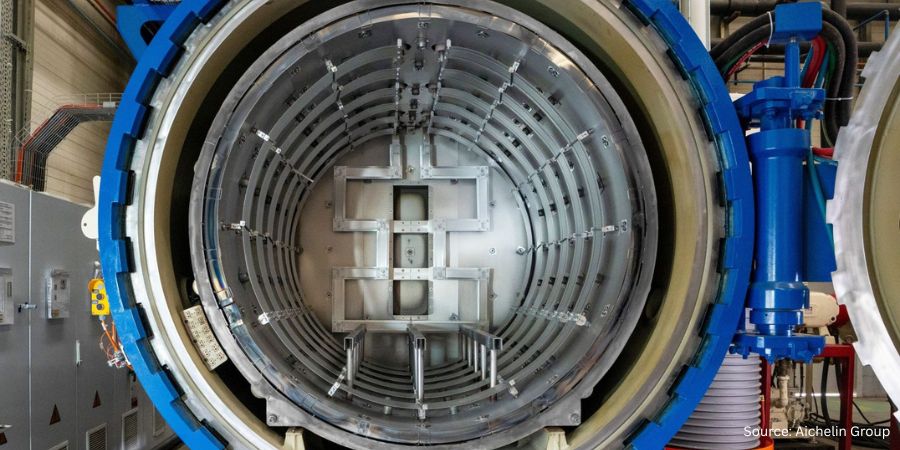
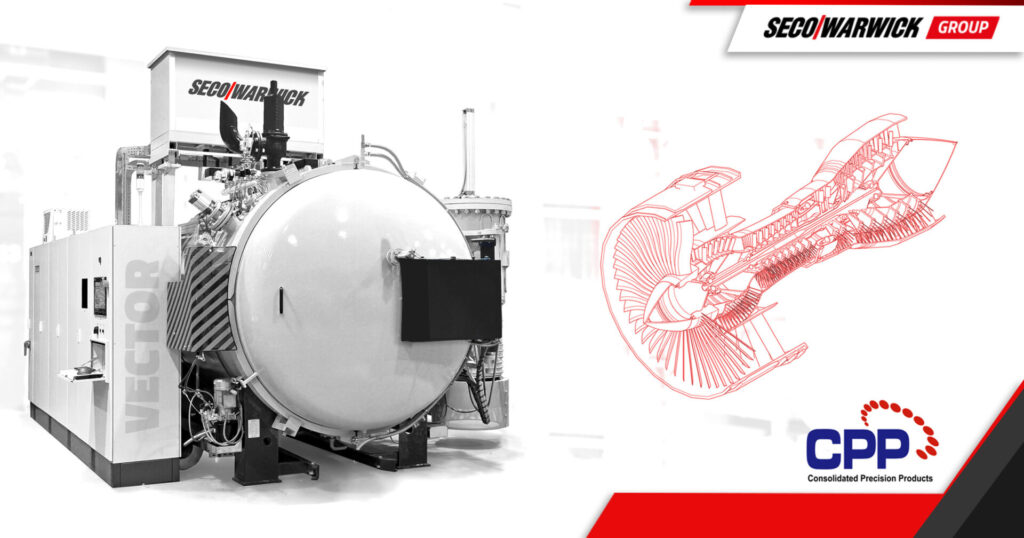
SECO/WARWICK will be providing the Chinese aviation manufacturer with the Vector vacuum furnace, which will include a graphite chamber and gas cooling system.

Source: SECO/WARWICK
Maciej Korecki
Vice President of Business of the Vacuum Furnace Segment
SECO/WARWICK

“The partner who ordered the Vector vacuum furnace is just starting their operation…In the case of aviation, these values are of significant importance. The quality of the parts produced can determine the safety of many people, so precision is our foundation and the highest value,” summarized Maciej Korecki, vice president of the vacuum furnaces segment at the SECO/WARWICK Group.

The furnace dimensions are 900x600x900 mm with a maximum load capacity is 800 kg.

Press release is available in its original form here.


Aviation Manufacturer Expands In-House Vacuum Heat Treat Read More »

Vacuum Induction Melting Furnaces for Aerospace & Energy Industries

A Chinese partner has purchased two vacuum induction melting (VIM) furnaces for melting and producing castings that will support the aerospace and energy industries.

Sławomir Woźniak
CEO
SECO/WARWICK Group

SECO/WARWICK Group will be providing the two VIM furnaces, which will be shipped to China. The first of the two furnaces on order is a 50 kg VIM induction furnace for producing castings in an equiaxed structure. The furnace is unique due to its high degree of automation. It is often a chosen solution in the field of vacuum metallurgy. Various metals can be processed in vacuum metallurgy furnaces, such as titanium and its alloys, silicon, nickel, or cobalt alloys. The second furnace is the JetCaster VIM DGCC, used to produce high-quality precision turbine blade castings in the aerospace and energy industries.

Sławomir Woźniak, CEO of SECO/WARWICK Group, stated how the furnace benefited “the field of unidirectional crystallization castings of nickel- and cobalt-based superalloys. Years of work by our R&D engineers on the development of new unidirectional crystallization casting technology has allowed us to create a device equipped with a supersonic argon stream cooling system.”

“The growing popularity of VIM furnaces and the increasing importance of vacuum metallurgy is a consequence of the constantly changing production needs of heavy industries.” said Liu Yedong, managing director of SECO/WARWICK China.

Liu Yedong
Managing Director
SECO/WARWICK China.

Press release is available in its original form here.


Vacuum Induction Melting Furnaces for Aerospace & Energy Industries Read More »

Manufacturer Upgrades Hot Zone For Aerospace Industry

A prominent United States-based global aerospace company replaced a hot zone for their vacuum furnace. The company performs thermal processing on a variety of critical aerospace components used across multiple aircraft platforms.

John Hahn
Aftermarket Sales Manager
Solar Manufacturing
Source: Linkedin

Solar Manufacturing was contracted to replace an Ipsen VFC-924 hot zone.

John Hahn, aftermarket sales manager at Solar Manufacturing, noted: “They trusted our engineering and service teams to design and build a hot zone with key modifications that would enhance performance and longevity.”

The hot zone was implemented with improvements to boost hot zone efficiency, serviceability, and lifespan, such as graphite felt insulation for thermal efficiency, CFC 0.050” hot face for increased durability, and CFC edge trim throughout (door, bottom, and top bung) to extend hot zone life.

Press release is available in its original form here.


Manufacturer Upgrades Hot Zone For Aerospace Industry Read More »

Company Expands Services In Aerospace Industry and Beyond With Vacuum Furnace

A company that services the aerospace industry has expanded its thermal processing capabilities with a new vacuum furnace, growing their operations into multinational thermal processing.

Piotr Zawistowski
Managing Director
SECO/VACUUM

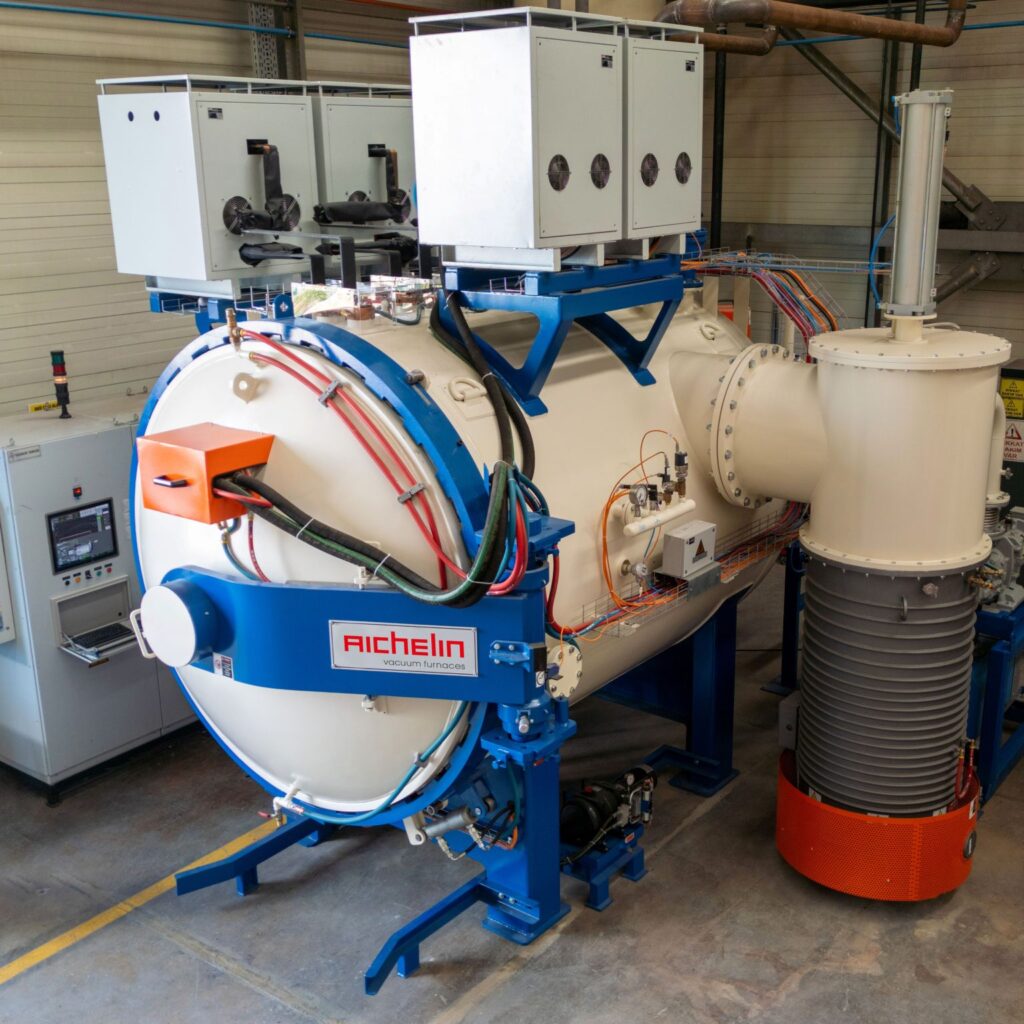
SECO/WARWICK has produced the vacuum furnace, which is customized to meet the rigorous heat treating standards of the aerospace industry, one of the industries they serve. As such, the 6-bar Vector is equipped for dual gas quench with nitrogen, argon, or any partial-pressure of the two, automatically set and maintained according to the batch recipe. It is also equipped with a high-vacuum system with a diffusion pump, key features for many aerospace-grade thermal processes.

Director of Operations, one of the family-business owners, stated, “Our ongoing success is powered by our partnership with SECO/WARWICK. This state-of-the-art furnace introduces advanced automation, ensuring faster turnaround times while maintaining the highest quality standards for our customers. Additionally, this new technology enhances our capabilities, granting us the confidence to enter new markets and secure new opportunities with exceptional reliability.”

“We never take that partnership for granted.” Piotr Zawistowski, Managing Director of SECO/VACUUM, responded.

This new Vector is horizontally configured with a 24x24x36 inch (600x600x900 mm) hot zone equipped for a payload of 1750lbs (800kg).

Press release is available in its original form here.


Company Expands Services In Aerospace Industry and Beyond With Vacuum Furnace Read More »

Aerospace Growth Drives New Furnace Order

A top-tier supplier in the aerospace industry has placed an order for a 6-bar vacuum furnace designed to meet the rigorous requirements of aerospace component manufacturing.

Mark Hemsath
President
Nitrex/UPC-Marathon

Nitrex’s G-M Enterprises division in Corona, California, has seen new vacuum furnace orders as aerospace demands accelerate.

Mark Hemsath, President of Nitrex/UPC-Marathon, commented on the current trend: “The surge in the aerospace sector is a very welcomed occurrence.”

Press release is available in its original form here.


Aerospace Growth Drives New Furnace Order Read More »

Aviation Industry Supplier Expands with HPGQ Furnace

A screws and fasteners manufacturer for the aviation industry is expanding its heat treating operations with a vacuum furnace with high-pressure gas quenching (HPGQ) and high vacuum for multipurpose and dedicated applications. The vacuum’s heating chamber is 16x16x24 in (400x400x600 mm), a compact design that accommodates the company’s small in-house hardening plant while still being large enough to enable efficient heat treatment of multiple components at once.

Maciej Korecki
Vice President of Vacuum Business Segment
SECO/WARWICK

The SECO/WARWICK furnace is designed with the ability to work on both nitrogen and argon and includes a round heating chamber with a temperature uniformity of +/-9oF (+/-5oC), and convection heating up to 1590°F (850°C). The Vector HV (high vacuum) furnace meets standards required in the heat treatment of components intended for the aviation industry; material heating processes require cleanliness (which is why an additional argon-partial pressure system was used) and a high heating temperature of 2192oF (1200oC).

“The Client required very short cooling times, which are possible with the use of a 15 bar abs gas blower,” said Maciej Korecki, vice president of the vacuum segment, SECO/WARWICK Group. “Our advantage is that it is a proven solution (our standard but adapted to the partner’s specific requirements). Vector offers wide personalization possibilities, which significantly reduces project costs and ensures faster implementation time.”

Press release is available in its original from here.


Aviation Industry Supplier Expands with HPGQ Furnace Read More »
Aviation Research Improved with Vacuum Furnace

A manufacturer of aviation engine parts is enhancing its research capabilities with the acquisition of an adapted vacuum furnace to investigate the improvement of aviation components. The company has plans to build a new research center where the customized furnace will be used for laboratory materials testing.

Maciej Korecki
Vice President of Vacuum Business Segment
SECO/WARWICK

The manufacturer currently operates a SECO/WARWICK vacuum furnace used in the production of aircraft engine parts. The newly purchased Vector® furnace is equipped with isothermal quenching, which allows the cooling process to operate with better control of the load temperature and blower control using a frequency inverter. In addition, the SECO/PREDICTIVE system, a furnace monitoring and diagnostics option, allows users to detect the risk of failure before it occurs and thus minimizes unplanned downtime.

“Compact, specially adapted Vector furnaces are suitable for both scientific institutes and production plants that are looking for new material solutions and want to improve their components,” said Maciej Korecki, vice-president of the Vacuum Furnace Segment at SECO/WARWICK. “This furnace will not be used in series production, but in development processes, contributing to the creation of innovative solutions for the aerospace industry.”

SECO/WARWICK rebuilt the heating chamber so that the dimensions of the working space allow for effective development processes and installed a temperature uniformity system for temperatures reaching above 2372oF (1300oC). The purpose of personalization is to enable the system to produce an effective heat treatment of dedicated parts provided for the investment project, specifically R&D research on aircraft engine parts.

The Vector furnace designed for this client is characterized by the use of two gases: argon for partial pressure (ensuring the process purity, required by restrictive aviation standards) and nitrogen for hardening. It also has a dew point sensor for each gas. This is a system which solves one of the critical aspects of heat treatment, which is to prevent water vapor condensation, causing the processed load surface oxidation.

Press release is available in its original form here.


Aviation Research Improved with Vacuum Furnace Read More »