Let’s discover new tricks and old tips on how to best serve air and atmosphere furnace systems. In this series, Heat Treat Today compiles top tips from experts around the industry for optimal furnace maintenance, inspection, combustion, data recording, testing, and more. Part 3, today's tips, examines AI and record keeping. Look back to Part 1 here for tips on seals and leaks and Part 2 here for burners and combustion tips.
This Technical Tuesday article is compiled from tips in Heat Treat Today's February Air & Atmosphere Furnace Systems print edition. If you have any tips of your own about air and atmosphere furnaces, our editors would be interested in sharing them online at www.heattreattoday.com. Email Bethany Leone at bethany@heattreattoday.com with your own ideas!
1. Use AI To Simplify Your Maintenance
Contact us with your Reader Feedback!
"cloud view of heat treating operation" Source: NITREX
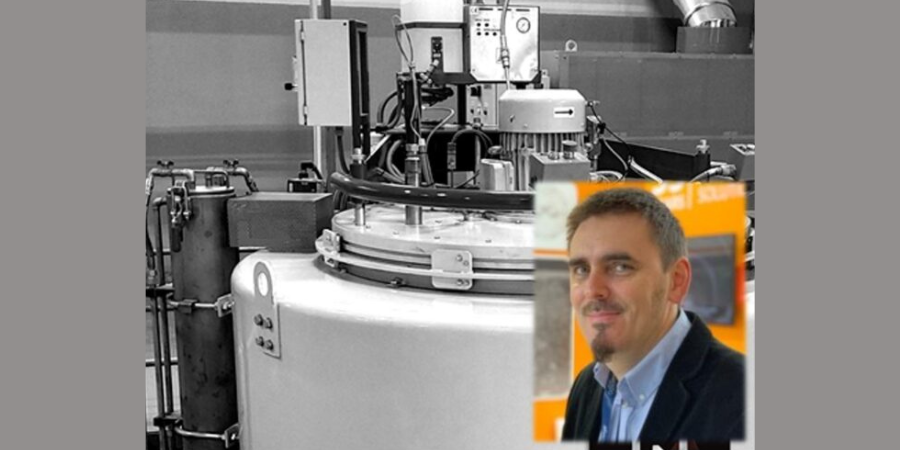
Simplify your maintenance! Today, using artificial intelligence (AI) software allows the “Cloud” to do the hard work. NITREX has introduced QMULUS, a web-based software solution, with each of its nitriding systems, which examines key parameters to determine if your furnace is having any issues. Gas flows, amperage, motors, and cycles are all monitored for health factors. But QMULUS is so much more than that. It also analyzes input usages and calculates the cost of each run; logs all data relevant to running processes more efficiently; and provides an easy and seamless cloud view of heat treating operations.
This is a very simple tip that is often overlooked when customers are focused on meeting production goals instead of the maintenance of their equipment. It is critical to record the operating settings of their furnace systems when parts are coming out at their best, or simply before issues arise. When something goes awry in the process and troubleshooting is required, service technicians hear all too often that there is no record of what the ideal or correct setpoints are for various systems. Nearly every item on a modern heat treating furnace (or in its control panel) has a setpoint or position that can be recorded or physically marked. Now, clearly some items are more critical than others when it comes to air and atmosphere settings. Below are a few items you’ll want to have setpoint/positioning records of before they require troubleshooting:
Flowmeter setpoints (at the furnace and generator)
Blower/pump/motor VFD setpoints (primarily frequency setpoints and ramp rates)
Manual or actuated damper positions on flues
Regulator setpoint (from pressure gauge or in-line test port)
High/low pressure switch setpoints
Any air/gas/atmosphere ratios for various recipe steps
Burnout frequency and duration (if applicable)
An added incentive to record these settings is the preventative maintenance benefit. The best way to avoid supply chain issues and delivery delays is to fix a problem before it grows into a bigger issue. When a setpoint/setting is correct but product quality begins changing, it is a warning sign that consumables may be approaching end of life (such as nickel catalyst in endothermic gas generators) or components require maintenance (such as air inlet filter replacements).
Marcin Stokłosa Project Manager NITREX Poland LinkedIn.com
A turnkey system has been delivered to SAGLAM METAL, a Turkish commercial heat-treating company. With this new addition, the company now offers controlled nitriding, nitrocarburizing, and post-oxidation treatments for a wide range of metal applications to different markets.
The turnkey system delivered to SAGLAM METAL includes a 5500 lb. load capacity pit-type furnace, as well as technologies for controlled gas nitriding, controlled nitrocarburizing, and in-process post-oxidation. The system is used to nitride/nitrocarburize a variety of different parts, part sizes, and materials to various specifications for the automotive, extrusion, tooling, and other manufacturing industries.
“SAGLAM selected NITREX based on the recommendation of our local representative, in addition to nitriding/nitrocarburizing results,” stated Marcin Stokłosa, project manager at NITREX Poland.
Find heat treating products and services when you search on Heat Treat Buyers Guide.com
Heat Treat Today publishes eight print magazines a year and included in each is a letter from the publisher, Doug Glenn. This letter first appeared in Heat Treat Today's February 2023 Air & Atmosphere Furnace Systems print edition.
Doug Glenn Publisher and Founder Heat TreatToday
When dealing with temperatures in excess of 1000°F, one would think that a ±0.1°F variation would not be a big deal. Apparently, not!
Contact us with your Reader Feedback!
As of the most recent AMS2750 standard, 1/10th of a degree Fahrenheit matters — and if your process recorders are not recording temperatures down to 1/10th of a degree, you are out of compliance.
This is a big deal and a real hardship for many in the Heat Treat Today audience.
At the most recent Nadcap meeting held in Pittsburgh this last October, I had the chance to discuss this most recent stringent requirement with some of the people who were responsible for putting it in the standard. Even after talking to them, I’m not sure I fully understand why it is we went in this direction, and I’m not alone.
The Background
"the new AMS2750 standard requires accuracy to 1/10th of degree." Source: Heat TreatToday
Here’s a very short explanation of how we got here. Both Revision D and E of AMS2750 required compliance temperatures to be ±2°F or ±1.1°C (“or ±0.2%” was added in Revision E). That pesky “.1” in ±1.1°C appears to be the source of this most current “situation.” The folks using °C were recording temperatures down to 1/10th of a degree, while the folks using °F — which was not a small number of people — were
not. So, the standards committee needed to make a decision on what to do about this discrepancy. The options were to round up or down or to the nearest integer for both °F and °C people OR require EVERYONE to record their temperatures down to 1/10th of a degree. After surveying end-users, the committee decided that end-users wanted to be required to record the 1/10th of a degree rather than round it up or down to the nearest integer. Thus, the new AMS2750 standard requires accuracy to 1/10th of a degree.
Thoughts
Even as I type it, it doesn’t make sense. Why would end-users want to record temperatures down to 1/10th of a degree? If you’re at 1750°F, a full 1°F amounts to only 0.05% of your total temperature. It is inconceivable that 1% makes that much of a difference in nearly 100% of all standard heat treat processes. In those very few processes where temperature tolerances ARE required to be that tight, SAE’s AMEC committee could have come up with a separate standard.
Most temperature recorders and reporting devices don’t currently allow for the display of anything to the right of the decimal, especially above temperatures at or above 1000°F. That’s because no instrumentation company in the history of heat treating ever anticipated that end-users would want to know, much less be required to record, anything to the right of the decimal.
Even if recorders and other instruments were capable of displaying 1/10th of a degree readings, most temperature sensing devices are nowhere near that accurate. Special case T/Cs can do it in certain situations, but by and large, thermocouples are calibrated to ±2°F or higher. How much sense does it make to worry about recording 1/10th of a degree accuracy from a thermocouple (and wire) that is rated at ±2°F or ±5°F.
Let’s pretend for a minute that our thermocouples could accurately and consistently record temperatures down to 1/10th of a degree. The question that really needs to be asked is: Just because we CAN do it, does that mean we SHOULD do it? As stated earlier, for that vast majority of heat treatment processes a full degree of temperature variance won’t typically make a difference.
As some of the people I’ve talked to about this situation have readily admitted, well-intended quality committees such SAE’s AMEC committee, who have inadvertently started this little kerfuffle, are not perfect. This would be a case in point. The men and women who make up the heat treat industry’s quality systems are excellent people: highly detailed and well-motivated. But, as all of us are, they are prone to over-do the things they’re good at. In this case, that’s deciding to take it down to 1/10th of a degree when rounding to the next closest integer probably would have done the trick.
Postscript: I’m open to your responses to this column, positive or negative. And, assuming there is no foul language or threats of physical violence (!), we would be glad to publish your comments. Please let us know what you think: htt@heattreattoday.com
Find heat treating products and services when you search on Heat Treat Buyers Guide.com
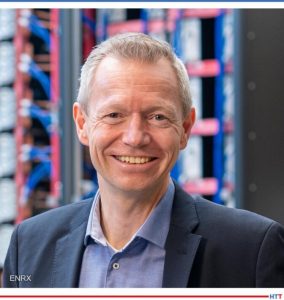
Industrial induction heating expert EFD Induction and inductive charging and power supply innovator IPT Technology will combine to form ENRX. On March 27, 2023, the new brand will officially launch. Under the new name, ENRX will provide induction technology for inductive heating, charging, and power supply with low or no carbon footprint.
Bjørn Eldar Petersen CEO of ENRX Source: ENRX
Magnus Vold CCO of ENRX Source: LinkedIn
“We are a new company with more than 70 years of experience in induction heating,” says Bjørn Eldar Petersen, CEO of ENRX. “We now have a new brand, ENRX, and many products in the pipeline.”
ENRX, with locations in North America and headquarters in Skien, Norway, has 1,100 employees. The new brand bringing EFD Induction and IPT Technology together will hold over 1,200 patents for induction technology.
“Inductive wireless charging and contactless power supply are technologies for the future,” says Magnus Vold, CCO of ENRX. “In the new world that is emerging, everything is based on automation, digitalization and electrification."
Find heat treating products and services when you search on Heat Treat Buyers Guide.com
Steve Wyatt President of Aalberts surface technologies – HIP|braze|heat treatment Source: Aalberts surface technologies
Aalberts surface technologies – HIP | braze | heat treatment announces expansion of its austempering capabilities and capacity in Canton, OH and Ft. Smith, AR.
Three atmosphere-to-salt furnaces will be added at the existing facility in Canton, OH. Infrastructure will be engineered in Canton to allow for up to six austempering furnaces in the future. The austempering and marquenching equipment is anticipated to be online in Q4 2023.
In response to growing demand in the region, additional austempering capacity will be added to the plant in Ft. Smith, AR, with one furnace to be installed in Q3 2023 and another planned for Q4 2024.
A leading U.S. manufacturer of high-quality alloy steel and carbon steel closed-die forgings will have five furnaces installed and their combustion system updated between May and December 2023. Onsite work will be completed one furnace at a time, so that in any given month no more than one furnace will be out of operation.
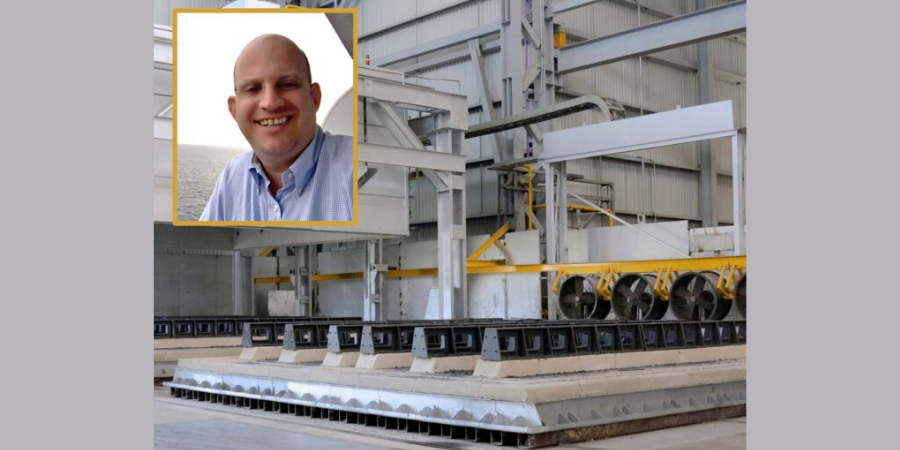
Rodrigo González VP Metals at Nutec Bickley Source: LinkedIn
This project involves five new lift-up furnaces from Nutec Bickley – two for tempering and three for austenitizing. Each furnace will be fitted with a NFPA 86 compliant combustion system. Operation will be based on a fuel-only control system (fixed air modulating gas). When complete, the newly lined units (9in/23cm thick ceramic fiber modules) will work to operational temperature ranges of 900°F–1950°F for the austenitizing furnaces, and 840°F–1600°F for the tempering furnaces.
The control panel will be installed next to the existing furnace panels and will be prewired and positioned before the furnace replacements begin. They will be wired across the quench pit to the local furnace areas prior to the first furnace being converted. A master PLC will be supplied to integrate the five furnaces and communication with the two existing quench tanks, manipulator/charging machine, the two panel views, the SCADA system, two recording units, and the central hydraulic system.
“[O]ur observation over many years in this sort of undertaking is that the closer the cooperation and the better the flow of information, then the nearer one can get to the optimum progress levels,” commented Rodrigo González, VP Metals at Nutec Bickley.
Find heat treating products and services when you search on Heat Treat Buyers Guide.com
Let’s discover new tricks and old tips on how to best serve air and atmosphere furnace systems. In this series, Heat Treat Today compiles top tips from experts around the industry for optimal furnace maintenance, inspection, combustion, data recording, testing, and more. Part 2, today's tips, examines burner and flame safety. Look back to Part 1 here for tips on seals and leaks.
This Technical Tuesday article is compiled from tips in Heat Treat Today's February Air & Atmosphere Furnace Systems print edition. If you have any tips of your own about air and atmosphere furnaces, our editors would be interested in sharing them online at www.heattreattoday.com. Email Bethany Leone at bethany@heattreattoday.com with your own ideas!
1. Operating with a Multiple Burner System
Contact us with your Reader Feedback!
If a furnace or oven has a multiple burner combustion system with only one valve train, a multi-burner combustion safeguard should be used. This ensures that if one burner fails, they all go out.
Source: Bruce Yates, "Ten Tips for Safeguarding Combustion Processes"
#multiburner #combustion #safety
2. Regularly Inspect Retort Alloys
Source: Nitrex
Retort alloys must be inspected on a regular basis. Hot spots can be identified by bulges. Plastic deformation occurs due to overheating, causing the hotter section to bulge because it is surrounded by stronger metal. Inspect your retorts or radiant tubes for deformations. In addition, constant thermal cycling can cause problems with some alloys. Look for cracks in welds or near welds. Some leak detection methods can also detect alloy issues or overheating.
Localized overheating could indicate a problem with the burner or the heating element. Early detection and correction can save you a lot of money on expensive alloys.
Flame supervision may be defined as the detection of the presence or absence of flame. If a flame is present during the intended combustion period, the supervisory system will allow a fuel flow to feed combustion. If the absence of flame is detected, the fuel valves are de-energized.
This basic definition does not consider the hazard potential during startup or ignition, however. A dangerous combustible mixture within a furnace or oven consists of the accumulation of combustibles (gas) mixed with air, in proportions that will result in rapid or uncontrolled combustion (an explosion). It depends on the quantity of gas and the air-to-fuel ratio at the moment of ignition.
Source: Bruce Yates, "Ten Tips for Safeguarding Combustion Processes"
#flamedetection #combustion #valves
4. Remember that Flame Safety Starts with Purging
The sequence for flame safety starts with purging the furnace or oven. Purge time should allow for four air changes.
Fuel valves can — and do — leak gas. The purpose of purging is to remove combustible gases from the combustion chamber before introducing an ignition source. The four air changes in the combustion chamber are based on a worst-case scenario that includes having a burner chamber that is completely filled with gas.
Once airflow for purge is verified, the proof-of-valve closure is confined and safety limits are proven. Then the purge timer — which may or may not be integral to the combustion safeguard — determines the period of time required to evacuate the combustion chamber.
Source: Bruce Yates, "Ten Tips for Safeguarding Combustion Processes"
Maciej Korecki Vice President of Business of the Vacuum Furnace Segment SECO/WARWICK
A manufacturer of a wide variety of vacuum circuit breakers ordered vacuum furnaces for metal heat treatment. The circuit breakers must be brazed with high vacuum.
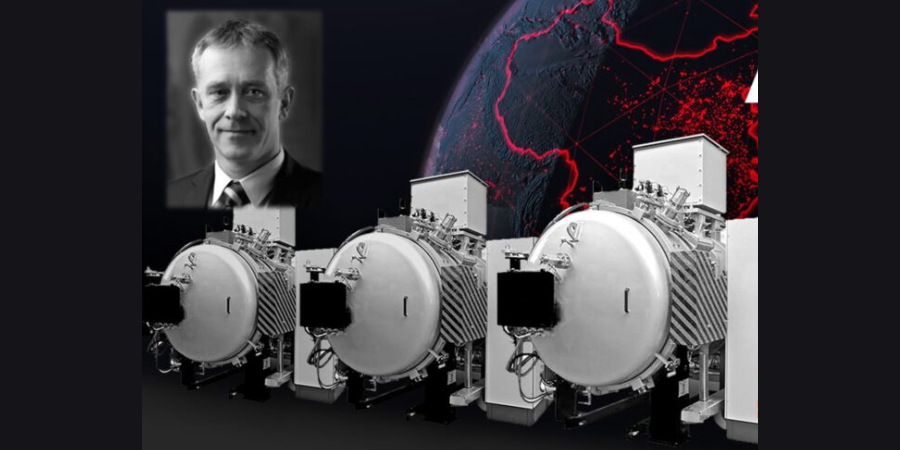
In 2017, the first furnaces provided were two SECO/WARWICK furnaces. The most recent expansion is three Vector vacuum furnaces that provide high vacuum level and temperature uniformity within the entire load.
"[T]he specificity of this electric power control production requires incredible precision. Circuit breakers need a high level of vacuum and temperature uniformity. They are brazed in vacuum furnaces in a very high vacuum; therefore, it was necessary to use an efficient pumping system consisting of a turbomolecular pump and a dry pump." Maciej Korecki, vice president of the Vacuum Products Segment at SECO/WARWICK Group, a manufacturer with North American locations.
Find heat treating products and services when you search on Heat Treat Buyers Guide.com
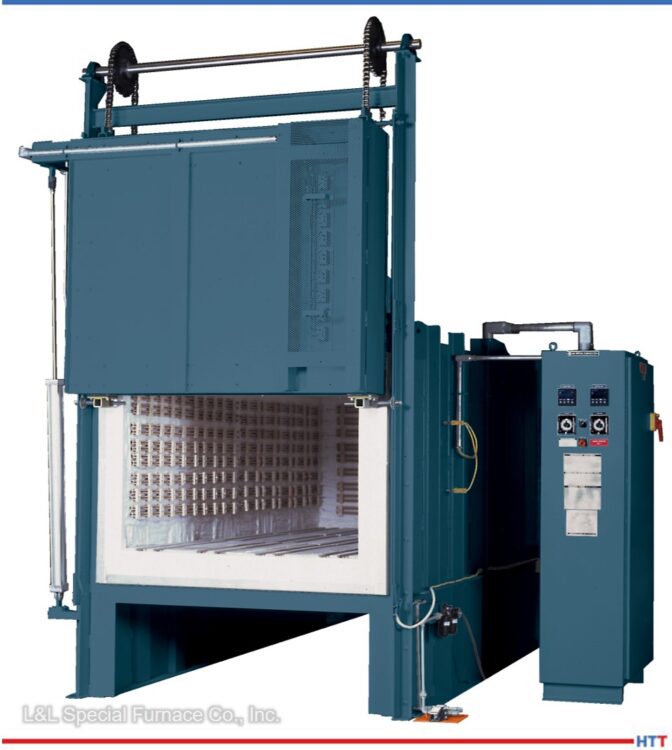
A front-loading box furnace delivered to a northeastern U.S. supplier of titanium castings will expand the manufacturer’s aerospace and gas turbine castings heat treat abilities. The company supplies to the aerospace and power generation fields and deals with exotic metals that are ideal for superior products using the lost wax process for castings, such as nickel and cobalt-based alloys.
L&L Special Furnace Co., Inc. Box Furnace Source: L&L Special Furnace Co., Inc.
The L&L Special Furnace Co., Inc. model FB435 has an effective work area of 48” wide by 32” tall by 60” deep and has certifiable temperature uniformity of ±10°F from 500 to 1,850°F. Additionally, the elements are very evenly spaced around the chamber and the furnace is lined with ceramic fiber on the sides and top.
The furnace case is sealed internally for atmosphere control, and an inert blanketing gas such as nitrogen is used to displace oxygen present within the work chamber. This provides a surface finish in which oxidization is less likely to form on the part. The atmosphere is delivered automatically through a flow panel by the furnace control.
Find heat treating products and services when you search on Heat Treat Buyers Guide.com
Where did the ±0.1°F AMS2750 requirement come from and how should heat treaters approach this specification, an important change that entails major buy-in? Andrew Bassett, president and owner of Aerospace Testing and Pyrometry, was at the AMS2750F meeting. He shares the inside scoop on this topic with Heat Treat Today and what he expects for the future of this standard.
Heat Treat Radio podcast host and Heat Treat Today publisher, Doug Glenn, has written a column on the topic, which you can find here; read it to understand some of the background, questions, and concerns that cloud this issue.
Below, you can watch the video, listen to the podcast by clicking on the audio play button, or read an edited transcript.
The following transcript has been edited for your reading enjoyment.
Doug Glenn: Andrew Bassett, president and owner of Aerospace Testing and Pyrometry, Inc., somewhere in eastern Pennsylvania. We don’t know because you’re on the move! What is your new address, now, by the way?
Contact us with your Reader Feedback
Andrew Bassett: We are in Easton, Pennsylvania at 2020 Dayton Drive.
Doug Glenn: Andrew, we want to talk a bit about this ±0.1°F debate that is going on. It was actually precipitated by the column that I wrote that is in the February issue.
I just wanted to talk about that debate, and I know that you’ve been somewhat involved with it. So, if you don’t mind, could you give our listeners a quick background on what we are talking about, this ±0.1°F debate.
Andrew Bassett: To be honest with you, being part of the AMS2750 sub team, one of the questions came up for us during the Rev F rewrite was this 0.1°F readability — wanting to kind of fix this flaw that’s been in the standard ever since the day that AMS2750 came out. With instrumentation, for instance, you have ±2°F (the equivalent would be 1.1°C). At 1.1°C, the question became, If your instrumentation does not show this 0.1 of a degree readability, how can you show compliance to the standards?
Andrew Bassett President Aerospace Testing and Pyrometry Source: DELTA H
Then, it morphed into other issues that we’ve had in the previous revisions where we talk about precise temperature requirements, like for system accuracy testing: You’re allowed a hard number ±3° per Class 2 furnace or 0.3% of reading, whichever is greater. Now, we have this percentage. With anything over 1000°F, you're going to be able to use the percentage of reading to help bring your test into tolerance. In that example, 1100°F, you’re about 3.3 degrees. If your instrumentation doesn’t show this readability, how are you going to prove compliance?
That’s what it all morphed into. Originally, the first draft that we proposed in AMS2750F was that all instrumentation had to have 0.1°F readability. We got some feedback (I don’t know if I want to say “feedback” or "pitchforks and hammers") that this would be cost-prohibitive; most instrumentation doesn't have that readability, and it would be really costly to go out and try to do this. We understood that. But, at the end of the day, we said: The recording device is your permanent record, and so that’s what we’re going to lean on. But we still had a lot of pushback.
We ended up putting a poll out to AMEC and the heat treating industry to see what their opinions were. We said that with the 0.1 readability (when it came to a percentage reading), recording devices would read hard tolerances. So, for instance, an SAT read at 3° would be just that, not "or .3% of reading."
There was a third option that we had put out to the community at large, and it came back as the 0.1° readability for digital recorders, so that’s where we ran with the 0.1° readability.
When it was that big of an issue, we didn’t make the decisions ourselves; we wanted to put it out to the rest of the community. My guess is not everyone really thought the whole thing through yet. Now people are like, ok, well now I need to get this 0.1° readability.
Again, during the meetings, we heard the issues. Is 0.1° going to really make a difference to metal? If you have a load thermocouple that goes in your furnace and it reads 0.1° over the tolerance, does it fail the load? Well, no, metallurgically, we all know that’s not going to happen, but there’s got to be a line in the sand somewhere, so it was drawn at that.
"...that hard line in the sand had to be drawn somewhere..." Source: Unsplash.com/Willian Justen de Vasconcellos
That’s a little bit of the background of the 0.1° readability.
Doug Glenn: So, basically, we’re in a situation, now, where people are, in fact (and correct me if I’m wrong here), potentially going to fail SATs or tests on their system because of a 0.1° reading, correct? I mean, it is possible, correct?
Andrew Bassett: Yes. So, when the 0.1° readability came out in Rev F, we gave it a two-year moratorium that with that requirement, you still had two more years. Then, when Rev G came out, exactly two years to the date, we still had a lot of customers coming to us, or a lot of suppliers coming back to us, and saying, “Hey, look, there’s a supply shortage on these types of recorders. We need to buy some time on this.” It ranged from another year to 10 years, and we’re like — whoa, whoa, whoa! You told us, coming down the pike before, maybe you pushed it down the road, whatever, probably Covid put a damper on a lot of people, so we added another year.
So, as of June 30th of 2023, that requirement is going to come into full play now. Like it or not, that’s where the standard sits.
Doug Glenn: So, you’re saying June 30th, 2023?
Andrew Bassett: Yes.
Doug Glenn Alright, that’s good background.
I guess there were several issues that I raised. First off, you’ve already hit on one. I understand the ability to be precise, but in most heat treatment applications, one degree is not going to make a difference, right? So, why do we push for a 0.1° when 1° isn’t even going to make a difference?
Andrew Bassett: We know that, and it’s been discussed that way. But, again, that hard line in the sand had to be drawn somewhere, and that was the direction the community wanted to go with, so we went with that. Yes, we understand that in some metals, 10 degrees is not going to make a difference, but we need to have some sort of line in the sand and that's what was drawn.
Doug Glenn: So, a Class 1. I was thinking the lower number was a tighter furnace. So, a Class 1 (±5), and you’re saying, that’s all the furnace is classified for, right, ±5? So, if you get a reading of 1000°, it could be 1005° or it could be 995°. Then, you’re putting on top of that the whole idea that your temperature reading has got to be down to 0.1°. There just seems to be some disconnect there.
So, that was the first one. You also mentioned the instrumentation. It’s been pointed out to me, by some of the instrumentation people, that their instruments are actually only reading four digits. So up to 99.9 you actually have a point, but if it goes to 1000°, you’re out of digits; you can’t even read that. I mean, they can’t even read that down to a point.
"So, if you get a reading of 1000°, it could be 1005° or it could be 995°." Source: Unsplash.com/Getty Images
Andrew Bassett: Correct. On the recording side of things, we went away from analog instrumentation. The old chart papers, that’s all gone, and we required the digital recorders with that 0.1° readability, as of June 30th of this year.
Again, the first draft was all instrumentation. That would be your controllers, your overtemps, and we know that limitation. But everyone does have to be aware of it. We still allow for this calibration of ±2 or 0.2%. If you’re doing a calibration, let’s say, on a temperature control on a calibration point at 1600° and the instrument only reads whole numbers, you can use the percentage, but you would have to round it inward. Let’s use 1800°, that would be an easier way to do it. So, I’m allowed ±2 or 3.6° if I’m using the percentage of reading, but if the instrument does not read in decimal points for a controller or overtemp, you would have to round that down to ±3°.
Doug Glenn: ±3, right; the 0.6° is out the window.
Andrew Bassett: Correct. I shouldn’t say we like to bury things in footnotes, but this was an afterthought. In one of the footnotes, in one of the tables, it talks about instrumentation calibration that people need to be aware of.
Doug Glenn: Let’s just do this because I think we’ve got a good sense of what the situation is, currently. Would you care to prognosticate about the future? Do you think this is going to stand? Do you think it will be changed? What do you think? I realize you’re speaking for yourself, here.
Andrew Bassett: I’m conflicted on both sides. I want to help the supply base with this issue but I’m also on the standards committee that writes the standard. I think because we’re so far down the road, right now — this requirement has been out there since June 2022 — I don’t see anything being rolled back on it, at this point. I think if we did roll it back, we have to look at it both ways.
If we did roll this back and say alright, let’s just do away with this 0.1° readability issue, we still have to worry about the people processing in Celsius. Remember, we’re pretty much the only country in the world that processes in Fahrenheit. The rest of the world has been, probably, following these lines all along. If we rolled this back, just think about all the people that made that investment and moved forward on the 0.1° readability and they come back and say, “Wait a minute. We just spent a $100,000 on upgrading our systems and now you’re rolling it back, that’s not fair to us.”
At this point, with the ball already rolling, it would be very interesting to see when Nadcap starts publishing out the audit findings when it comes to the pyrometry and this 0.1° readability to see how many suppliers are being hit on this requirement and that would give us a good indication. If there are a lot of yeses on it then, obviously, a lot of suppliers haven’t gone down this road. My guess is, for the most part, anybody that’s Nadcap accredited in heat treating — and this goes across chemical processing, coatings, and a few other commodities — I think has caught up to this.
Personally, I don’t think this is going to go away; it’s not going to disappear. It’s going to keep going down this road. Maybe, if people are still struggling with getting the types of devices that can have that 0.1° readability, then maybe another year extension on it, but I don’t know where that is right now. I haven’t gotten enough feedback from aerospace customers that say, "Hey, I can’t get the recorder." I mean,
Doug Glenn: I just don’t understand, Andrew, how it’s even physically possible that companies can record something as accurately as 0.1° if the assembly or thermocouple wire is rated at ±2°? How is that even possible that you can want somebody to be accurate down to ±0.1° when the thing is only accurate up to ±2°?
Andrew Bassett: Right, I get that. We can even go a lot further with that and start talking about budgets of uncertainty. If you look at any reputable thermocouple manufacturer or instrument calibration reports that are ISO 17025, they have to list out their measurements of uncertainty, and that gives you only the 98% competence you’re going to be within that accuracy statement.
Yes, I get the whole issue of this .1° readability. There were good intentions were to fix a flaw, and it spiraled. We’ve seen where PLCs and some of these high logic controllers now can show the .1° readability, but they automatically round up at .5°. Are you now violating the other requirements of rounding to E29? Now, I think we’ve closed out the poll in the standard, but you’re right. We were trying to do the right thing. Personally, I don’t think we gave it all that much further thought on that except hey, let’s just make recorders this way and this should be okay.
Doug Glenn: Right. No, that’s good. Let me be clear, and I think most everybody that was involved with the standards are excellent people and they’re trying to do the right thing. There is no dissing on anybody that was doing it. I’m not a furnace guy, right, I’m a publisher — but when I look at it, I’m going: okay, you’re asking somebody to be as accurate as 0.1° on equipment that can only do ±2°. That’s a 4° swing and you’re asking them to be within 0.1°, basically.
Andrew, this has been helpful. It’s been good hearing from you because you’re on the frontline here. You’ve got one foot firmly planted in both camps.
Andrew Bassett: I’m doing my best to stay neutral with it all.
Doug Glenn: Anyhow, I appreciate it, Andrew. You’re a gentleman. Thanks for taking some time with us.
Andrew Bassett: Thanks, Doug. Appreciate it.
About the expert: Andrew Bassett has more than 25 years of experience in the field of calibrations, temperature uniformity surveys, system accuracy testing, as well an expertise in pressure, humidity, and vacuum measurement calibration. Prior to founding Aerospace Testing & Pyrometry, Andrew previously held positions as Vice President of Pyrometry Services and Director of Pyrometry Services for a large commercial heat treater and Vice President and Quality Control Manager for a small family owned business.








 Find heat treating products and services when you search on Heat Treat Buyers Guide.com