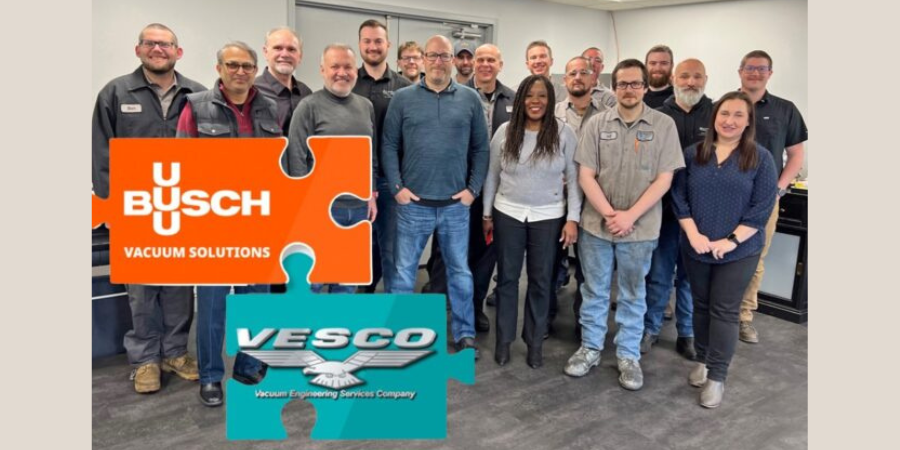
Busch Vacuum Solutions U.S. has acquired the VESCO Division (VESCO-McLaughlin, Inc.) from McLaughlin Furnace Group. The VESCO Division, located in East Windsor, CT, is an industrial service company specializing in heat treating and metallurgy industries and was purchased by McLaughlin Furnace Group in 2017.
Turgay Ozan President of Busch LLC Source: LinkedIn
McLaughlin Furnace Group, the seller of the VESCO Division, continues to serve clients in the aerospace & defense, automotive, energy & environment, metalworking & fabrication, and semiconductor fabrication industries focusing on atmosphere heat treating equipment and best-of-class customer service.
“With this acquisition, we are excited to be able to offer our customers an even more comprehensive range of vacuum services in the heat treat and metallurgy industries,” said Turgay Ozan, president of Busch LLC.
VESCO will be rebranded and will expand its current business operations under the brand name of VESCO – A Company of the Busch Group, while continuing uninterrupted service.
Find heat treating products and services when you search on Heat Treat Buyers Guide.com
Let’s discover new tricks and old tips on how to best serve air and atmosphere furnace systems. In this series, Heat Treat Today compiles top tips from experts around the industry for optimal furnace maintenance, inspection, combustion, data recording, testing, and more. Part 1, today's tips, examines seals and leak points.
This Technical Tuesday article is compiled from tips in Heat Treat Today's February Air & Atmosphere Furnace Systems print edition. If you have any tips of your own about air and atmosphere furnaces, our editors would be interested in sharing them online at www.heattreattoday.com. Email Bethany Leone at bethany@heattreattoday.com with your own ideas!
1. Tip-Up Furnace Perimeter Insulation Maintenance Is Key to Efficiency & Quality
Contact us with your Reader Feedback!
Due to their construction, the insulation at the perimeter of a tip-up furnace is subject to more abuse than typical furnace insulation. Whether from the repeated stress of cycling the case open and closed — or from high temperature operation — fiber modules will eventually begin to shrink/compact. Be watchful for high case temperatures (or worse: case discoloration and paint damage) as a signal that insulation issues are present in that area.
Heat-damaged case wall Source: Premier Furnace Specialists
An air/atmosphere tight seal is critical for maintaining heating efficiency and process quality. Inspect the seal material around the furnace perimeter often and replace sections that are worn. Common perimeter seals are sand seals, fiberglass tadpole tapes, and insulating fiber blankets. These sealing materials are easy to keep on hand to ensure a quality seal is never delayed by lengthy lead times or supply chain issues.
Seals are everywhere on any furnace. Do you know where all the seals and leak points are? Rope gaskets is an obvious example; high temperature gaskets need to be flat, smooth, and unbroken. Another clear example is in the world of vacuum furnaces: O-rings need to be clean and protected from abrasion. Almost every item of your furnace is sealed in some manner. It is best to replace seals as part of a preventative maintenance program. While your nose can detect ammonia, vacuum leaks require special helium leak detectors and a lot of training. Your furnace manufacturer’s service technician can assist in identifying problem areas and developing a maintenance routine to keep your furnace running. And a simple electronic manometer is great to have handy for running leak-down tests using positive pressures. Auto supply stores sell inexpensive halogen detectors, and some people use smoke bombs to detect leaks.
Changes are inevitable, but the world today is shifting oh so rapidly, keeping us on our toes. Two men from different parts of the world, both with significant experience within the heat treating community, reflect on the implications of these changes in the heat treat industry. With each new topic, will their views align?
The experts are Thomas Schneidewind, editor-in-chief of heat processing magazine, and Doug Glenn, publisher and founder of Heat TreatToday. Thomas’s expertise lies in the European market while Doug’s resides in the North American market. We will feature their responses in each print magazine. Will their views align? Time will tell. Enjoy this fifth installment of an ongoing column. This column was first published in Heat TreatToday’s February 2023 Vacuumprint edition.
To what extent have high energy prices affected heat treaters?
Thomas Schneidewind, Editor-in-Chief, heat processing magazine
Thomas Schneidewind Editor-in-Chief heat processing Magazine
In Europe, many companies are in shock. The energy crisis threatens the existence of energy-intensive companies. The hardening industry is coming under pressure as sharp price increases for electricity and gas lead to business losses. This is because the higher prices cannot be passed on to the customers, whose contracts do not allow price increases during the term of a contract. Most hardening shops are small or medium-sized businesses, while their customers are large companies and corporate groups.
Contact us with your Reader Feedback!
Hardening plants must find short-term solutions to cushion the cost shock and ensure the survival of their business. Add this with a view to the long-term goal of decarbonization. Because, in the future, process heat must be carbon free. Whether energy-intensive production is still possible in Europe in the future will be decided by the flexibility and inventiveness of the industry. The task now is to find intelligent answers and to reduce the use of fossil fuels more quickly than planned.
An important step in this direction is the modernization of existing plants – retrofitting can become the efficiency turbo that saves the day in difficult times. Hardening plants should further develop electrically operated equipment and strive for intelligent furnace control. The use of energy saving motors for pumps, circulators, and fans is another option. Insulation on side walls and ceilings in high temperature furnaces and energy recovery from waste heat are among the basic measures.
Modern burner technology also offers the potential to reduce energy consumption. Hydrogen as a heating gas will become an important option in the future. Hydrogen fueled burners have been around for some time but are not currently used in contract hardening shops. Because there are good ideas and positive trials, but no long-term experience and reliable cost comparisons, it will take a little longer until a significant introduction in contract heat treatment takes place. Until then, there are still some problems to be solved, such as safety, availability, investment costs, and especially the price of green hydrogen.
One thing is certain: investments are necessary. OEMs are already making high demands on future carbon-neutral processing and delivery in their contracts, since many automotive manufacturers are striving for a climate-neutral value chain – dictated by regulatory framework conditions. Hardening shops first must survive this difficult phase to then benefit from modernization investments. The aim is to offer customers carbon-neutral heat treatment. Companies can only achieve this by using green technologies. There is no other way.
Doug Glenn, Publisher, Heat Treat Today
Doug Glenn Publisher and Founder Heat TreatToday
In North America, energy is typically one of the top three expenses in nearly all heat treat processes. Commercial heat treaters know this well because it is their business to know the costs associated with their livelihood. Manufacturers with in-house heat treaters, on the other hand, often don’t properly allocate all the true costs associated with their heat treating processes. However, energy costs are fairly easy to allocate, even for them, and it’s safe to say: energy prices are skyrocketing.
The impact of rising energy prices can be measured in the price for each BTU that goes into the heat treat process. Often, 50% to 200% increases have not been unusual in the U.S.
But less obvious costs that are not so easy to measure also impact heat treaters. For example, transportation, which is energy intensive, adds to overall processing costs, especially if not done in-house.
Even LESS obvious is the effect that rising energy costs have on quality, innovation, and standard operating procedures (SOP). When corporate profits plummet due to rising energy costs, all aspects of the business are scrutinized, not just the areas where energy is most intensively used. This oftentimes results in cuts to “non-essential” expenses, which may mean reducing new product or process development initiatives, cutting back on borderline or “unnecessary” quality or safety measures (!), and re-examining SOPs to make further cuts.
The rising cost of energy could even impact the competency of heat treat operators. During COVID, I spoke to a nurse who explained that quality of care was reduced when a large number of nurses left the profession because they chose not to take the vaccines or boosters. Patients receiving emergency medical care did not notice any shortage of personnel, but the fact was that the nurses filling the critical roles were not as proficient or qualified as the expert nurses they replaced. In a similar way, when energy prices skyrocket and cuts must be made, the internal allocation of resources may compromise some aspects of the business that are not as clear to the customer.
When energy prices rise as drastically as they have, companies will examine how they can cut costs and help maintain profits, which is a GOOD and appropriate thing. It will take time for heat treaters to adjust to the recent energy price spike. Adjustments won’t be cost-free. The question is: Which part of the company will pay?
Find heat treating products and services when you search on Heat Treat Buyers Guide.com
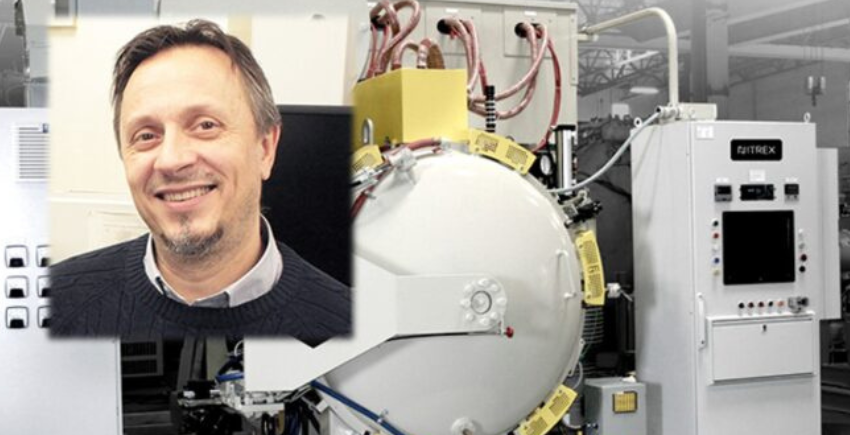
The Korea Institute of Materials Science (KIMS), a government-funded research institute under the Ministry of Science and ICT, has invested in a new vacuum furnace from a manufacturer headquartered in North America.
Nikola Dzepina Nitrex Regional Manager – Asia Source: NITREX
KIMS conducts a wide range of technological R&D activities, including process improvements, application development, material enhancement, testing, and evaluation. The new Nitrex vacuum furnace will support domestic companies -- including Hanwha Aerospace, Doosan Enerbility, Sung-il Turbine, and Samjeong Turbine -- in a development project that aims to improve the cycle efficiency of industrial land-based gas turbines.
The furnace is a horizontal type 2-Bar external quench equipped with a curved molybdenum wide band heating element arranged in a circular configuration around the main hot zone. Its work area measures 15″ in width by 15″ in height by 24″ in length (381 x 381 x 610 mm).
“The Nitrex system can support a wider range of R&D projects and metals,” said Nikola Dzepina, regional manager in Asia at Nitrex. “With the ability to achieve higher vacuum levels with 10-6 Torr ultimate range, the furnace can heat treat parts at temperatures up to 1,371°C (2,500°F).”
Find heat treating products and services when you search on Heat Treat Buyers Guide.com
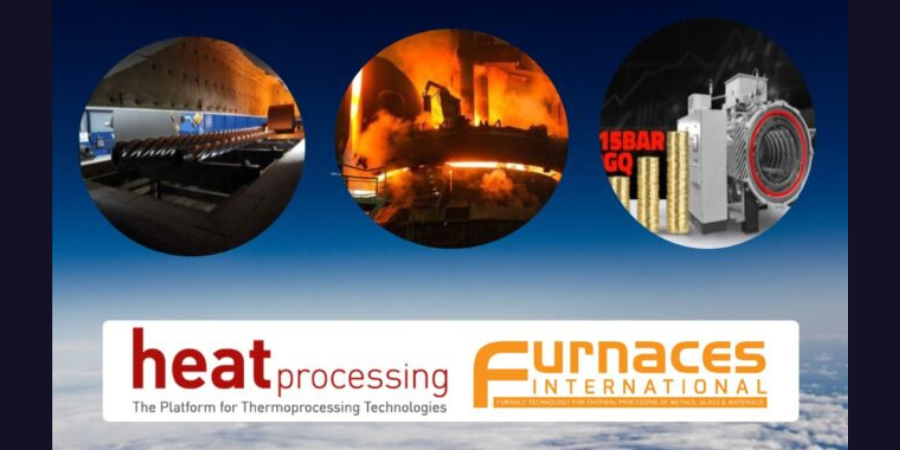
Heat Treat Today is partnering with two international publications: heat processing, a Vulkan-Verlag GmbH publication that serves mostly the European and Asian heat treat markets, and Furnaces International, a Quartz Business Media publication that primarily serves the English-speaking globe. Through these partnerships, we are sharing the latest news, tech tips, and cutting-edge articles that will serve our audience — manufacturers with in-house heat treat.
In this installment, we look at updates on industry events around the globe, such as mills, mint, and the Middle East.
Mathevon Group and Bodycote Partner for Oil & Gas Industry Solution
Mud rotors for surface coating Source: Bodycote
“Bodycote has entered into a partnership with Mathevon Group to develop the market in the [Middle East] and, in particular, Saudi Arabia. The agreement brings together Bodycote’s expertise in thermal spray coatings for the oil & gas industry and Mathevon’s knowledge of the production of internal components of gate valves for oil & gas. Mathevon is a world-class provider of safety parts in stainless steel and superalloys, which are subject to severe service applications and has a long history of servicing oil & gas OEM supply chains.”
Shiu Wing Steel to produce recycled steel Source: Furnaces International
“Shiu Wing Steel, Hong Kong’s first and only steel-rolling mill, plans to produce recycled steel to meet growing demand created by China’s green ambitions in Hong Kong and other cities in the Greater Bay Area (GBA) development zone, according to a report by South China Morning Post. The 65-year-old steelmaker plans to build an electric-arc furnace at its plant in Tuen Mun to produce 700kt (kilotons) of recycled steel a year by 2025 and expand its presence in the GBA, Dario Pong, Shiu Wing’s executive director, said in an interview.”
European Mint Chooses Vacuum Furnace To Harden Dies for Coins
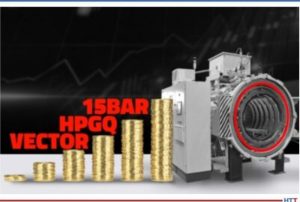
Vector furnaces to harden the dies Source: SECO/WARWICK
“This is the eighth mint to choose SECO/WARWICK solutions. The Vector furnaces will be used to harden the dies necessary for the production of coins for both circulation and collector series. Vector vacuum furnaces with 15 Bar high-pressure gas quenching perfectly match the mint’s operating characteristics. Vector enables fast heat treatment while the working space is optimal for the production of dies, coins, medals and orders.”
Maciej Korecki Vice President of Business of the Vacuum Furnace Segment SECO/WARWICK
An industrial automation manufacturer has ordered a heat treatment system to establish a captive hardening plant within their machine park. The line of two vacuum furnaces, an atmosphere furnace, and a washer will harden and carburize parts, specifically gears, pinions, and shafts.
SECO/WARWICK, a manufacturer with North American locations, will produce the furnaces to harden and vacuum carburize the elements used in motor reducer production. These parts figure in the automation applications production process for industries such as automotive, aviation, food and printing.
“In these times of constant problems with maintaining the supply chain, having captive heat treatment within a machine park provides our partners with a huge competitive advantage and independence," says Maciej Korecki, vice president of the Vacuum Furnaces Segmentat SECO/WARWICK Group. "Within a relatively small area, we can create a heat treatment system that will meet the Partner’s needs."
Find heat treating products and services when you search on Heat Treat Buyers Guide.com
Los termopares: elementos indispensables para lograr un acertado tratamiento térmico, pero ¿cómo elegir el más indicado para su necesidad particular? ¿Qué exigen las normas actuales? A continuación una explicación, por Víctor Zacarías, director general de Global Thermal Solutions México, que le ayudará a saber escoger el termopar adecuado.
Palabras clave: Termopar, Tratamiento térmico, Pirometría, Medición y Control de Temperatura, AMS2750, CQI-9
Read the Spanish translation of this article in the version below, or see both the Spanish and the English translation of the piece where it was originally published: Heat Treat Today's February's Air & Atmosphere Furnace Systems print edition.
Si quisieras aportar otros datos interesantes relacionados con los termopares, nuestros editores te invitan a compartirlos para ser publicados en línea en www.heattreattoday.com. Puedes hacerlos llegar a Bethany Leone al correo bethany@heattreattoday.com
Víctor Zacarías Director General Global Thermal Solutions México
La norma aeroespacial SAE AMS2750 y las evaluaciones automotrices de AIAG CQI-9, CQI-11, CQI-12, y CQI-29 son los estándares universalmente aceptados para el control de temperatura en operaciones de procesamiento térmico. Entre muchas cosas, describen los requisitos para el uso y control de los termopares empleados en hornos y estufas de proceso. En este artículo te comparto los requisitos de estas normativas para que puedas tomar una decisión correcta al elegir un termopar y de esta manera contar con una medición repetible que te asegure un proceso confiable.
1. Aplicación
Contact us with your reader feedback!
Para la selección apropiada de un termopar para la medición, control y/o registro de la temperatura debes considerar en primer lugar el tipo de proceso previsto. En la elección del termopar adecuado, toma en cuenta algunos factores que pudieran alterar su desempeño como:
El rango de temperatura en el que estará en uso
El tipo de atmósfera al que estará expuesto
Posible interferencia eléctrica
La precisión requerida por la especificación aplicable, etc.
En función de lo anterior, las normativas refieren una clasificación específica para los termopares en función de su fabricación y su aplicación final:
a) Termopares base y termopares nobles
b) Termopares desechables y no desechables
2. Tipos de termopar y su aislamiento
2.1 Termopar base o termopar noble
Un termopar base está fabricado de aleaciones básicas como hierro, cromo, níquel, cobre, etc., y constituyen los tipos más comunes en la industria por su versatilidad y costo: los termopares tipo K, E, J, N, y T. Un buen proveedor de sensores te recomendará un termopar de este tipo en función de la aplicación, el rango de temperatura y tu presupuesto (ver Tabla 1).
Tabla 1: Rango de temperatura y uso de los termopares más comunes Source: GTS México
Por otro lado, un termopar noble está fabricado a partir de metales como platino y rodio: termopares tipo R, S y B. Éstos termopares son más estables a altas temperaturas y mantienen su precisión por mayor tiempo; sin embargo, tienen un costo elevado debido a que se fabrican a partir de metales preciosos. Debido a esta naturaleza, los termopares nobles son la elección preferida para aplicaciones de tratamiento térmico al vacío y procesos de alta temperatura.
2.2 Termopares desechables o no desechables
El segundo criterio de las normativas lo constituye el material con el que se protegen los elementos del termopar.
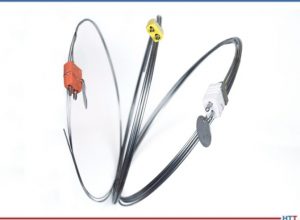
Los termopares desechables son aquellos cuyos elementos están revestidos por materiales como fibra de vidrio, tejido cerámico o recubrimiento polimérico y generalmente se suministran en forma de carrete o bobina. Esta presentación permite al usuario cortar el cable a la medida y fabricar el termopar al unir los dos alambres de un extremo por torsión o soldadura, lo que los hace ideales por ejemplo para aplicaciones de un solo uso como una prueba TUS o termopares de carga (ver Figura 1).
Figura 1: TUS usando termopar desechable tipo K aislado en fibra cerámica Source: Trucal, Inc.
En contraste un termopar no desechable normalmente está protegido con aislamiento cerámico o mineral y revestido en su exterior por una carcasa metálica (los elementos no están expuestos en esta configuración), lo que le proporciona un mayor tiempo de vida útil y por eso se prefieren para emplearse como termopares de control o registro (ver Figura 2).
Figura 2: Termopares no desechables tipo N y K de aislamiento mineral Source: GTS México
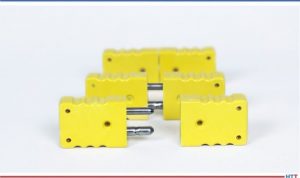
Cualquiera que sea la aplicación, cuando se requiere realizar interconexiones de cableado para la instalación del sensor, dichas conexiones se deben realizar usando conectores y terminales estándar como las que se muestran en la Figura 3, ya que tanto AMS2750 como CQI- 9 prohíben el empalme del cableado.
Figura 3: Conectores estándar tipo K Source: GTS México
3. Calibración
De acuerdo con la normatividad, todos los termopares usados en operaciones de procesamiento térmico deben haber sido calibrados antes de usarse por primera vez. Para ello, el usuario del termopar debe asegurarse de contar con calibraciones trazables al laboratorio nacional como lo es el NIST en Estados Unidos o su equivalente en México (CENAM).
Las normas de pirometría defi nen los rangos aceptables de error para los termopares en función de su aplicación fi nal: 1) termopares patrón, 2) termopares de prueba (SAT y TUS), 3) termopares de control y registro y 4) termopares de carga. La Tabla 2 describe los máximos errores permitidos a elegir dependiendo del uso del sensor.
Tabla 2: Precisión requerida para sensores de temperatura según AMS2750 y CQI-9 Source: GTS México
Una vez instalado el termopar, el responsable de la operación de tratamiento térmico tiene que deberá documentar la fecha en la que éste entra en servicio, ya que la norma establece un tiempo de vida útil de un sensor en función de la aplicación del mismo.
Al recibir el reporte/certifi cado del termopar, el usuario debe revisar el contenido del documento, pues las normas también definen de manera específi ca la información mínima que debe aparecer en un informe de calibración, que incluye pero no se limita a:
1. Lecturas de prueba
2. Lecturas observadas
3. Factores de corrección
4. Fuente de los datos
5. Acreditación del laboratorio
6. Método de calibración empleado
El certifi cado de calibración puede amparar termopares individuales o un grupo de termopares fabricados a partir del mismo lote (carrete).
Es muy importante observar que tanto AMS2750 como CQI-9 requieren que todas las calibraciones sean realizadas por organismos acreditados en la norma ISO/IEC 17025, por lo que siempre recomiendo que revises el certifi cado de acreditación antes de seleccionar a tu proveedor.
4. En Resumen
Si alguna vez has comprado el termopar equivocado, se lo molesto que puede resultar. Por lo tanto aquí te comparto un resumen para seleccionar el sensor adecuado para su aplicación en 5 sencillos pasos:
1. Define el tipo de termopar: base ( K, T, J, E , N, y M) o noble (S, R, y B)
2. Define el tipo de aislamiento que requieres: fibra textil, polímero, cerámico, metálico, etc.
3. Especifi ca el rango exacto de temperatura en el que operará el sensor
4. Especifi ca el uso del sensor: termopar patrón (estándar), termopar para SAT/TUS, termopar de control / carga
5. Solicita el certifi cado de calibración conforme a la normativa aplicable (AMS2750 o CQI-9)
Referencias
ASTM International. ASTM E230, Standard Specification for Temperature-Electromotive Force (emf) Tables for Standardized Thermocouples, Rev. 2017.
Automotive Industry Action Group. CQI-9 Special Process: Heat Treat System Assessment, 4th Edition. June 2020
International Organization for Standardization. ISO/IEC 17025, General Requirements for the Competence of Testing and Calibration Laboratories, 3rd Edition. 2017.
Nadcap AC7102/8 Audit Criteria for Pyrometry, Rev. A, 2021
Sobre el autor: Víctor Zacarías es ingeniero metalúrgico egresado de la Universidad Autónoma de Querétaro con estudios en Gerencia Estratégica por parte del Tec de Monterrey. Con más de 15 años de experiencia en la gestión de tratamientos térmicos, actualmente es director general de Global Thermal Solutions México. Víctor ha realizado numerosos cursos, talleres y evaluaciones en México, Estados Unidos, Brasil, Argentina y Costa Rica y ha participado en el Grupo de Trabajo de Tratamiento Térmico de AIAG (CQI-9) y en el Comité de Ingeniería de Materiales Aeroespaciales de SAE.
Thermocouples: You can’t accurately heat treat without them. But how can you choose the best one for your needs? What do current regulations require? Read this helpful explanation, by Víctor Zacarías, managing director of Global Thermal Solutions Mexico, to find out how to choose the right thermocouple.
Keywords: Thermocouple, Heat Treatment, Pyrometry, Temperature Measurement and Control, AMS2750, CQI-9
Read the English version of the article below, or find the Spanish translation when you click the flag above right!
This Technical Tuesday article, first published in English and Spanish translations, is found in Heat Treat Today's February's Air & Atmosphere Furnace Systems print edition.
If you have any facts of your own about thermocouples, our editors would be interested in sharing them online at www.heattreattoday.com. Email Bethany Leone at bethany@heattreattoday.com with your own trivia!
Víctor Zacarías Managing director Global Thermal Solutions México
The SAE AMS2750 aerospace standard and the AIAG CQI-9, CQI-11, CQI-12, and CQI-29 automotive assessments are the universally accepted standards for temperature control in thermal processing operations. Among many things, they describe the requirements for the use and control of thermocouples used in process ovens and furnaces. In this article you will find the requirements of these regulations so that you can make a correct decision when choosing a thermocouple, and thus have a repeatable measurement that ensures a reliable process.
1. Application
Contact us with your Reader Feedback!
For the appropriate selection of a thermocouple for the control and/or recording of temperature, you must first take into account the type of process. In choosing the right thermocouple, consider some factors that could alter its performance, such as:
The temperature range at which it will be in use
The type of atmosphere to which it will be exposed
Possible electrical interference
The accuracy required by the applicable specification, etc.
Based on the above, existing regulations refer to a specific classification for thermocouples based on their manufacture and final application. These classifications are:
a) Base thermocouples and noble thermocouples
b) Expendable and non-expendable thermocouples
2. Types of Thermocouples and Their Insulation
2.1 Base Thermocouple or Noble Thermocouple
A base thermocouple is made of basic alloys such as iron, chrome, nickel, copper, etc., and they are the most common types in the industry due to their versatility and cost. Base thermocouples are types K, E, J, N, and T. A good supplier of sensors will recommend a thermocouple based on the application, the temperature range, and your budget (see Table 1).
Table 1: Temperature range and application of most common thermocouples Source: GTS México
On the other hand, a noble thermocouple is made from metals such as platinum and rhodium: types R, S, and B thermocouples. These thermocouples are more stable at high temperatures and maintain their accuracy for a longer time. However, they have the highest cost since they are made from precious metals. Due to this nature, noble thermocouples are the preferred choice for vacuum heat treatment applications and high temperature processes.
2.2 Expendable or Non-expendable Thermocouples
The second criteria from the regulations are the material which protects the elements of the thermocouple.
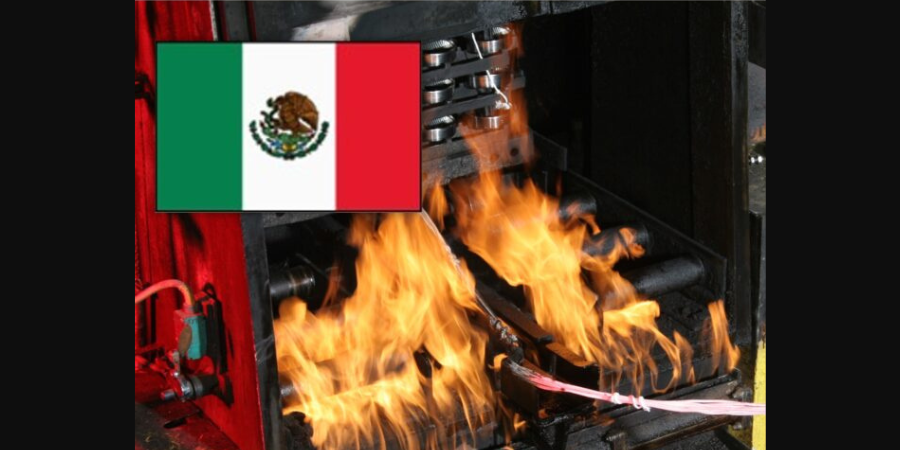
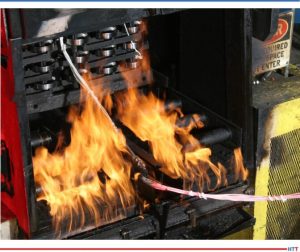
Expendable thermocouples are those whose elements are covered by materials such as fiberglass, ceramic fabric, or polymeric coating and are generally provided in the form of a spool. This form allows the user to cut the cable to size and manufacture the thermocouple by joining the two wires by twisting or welding, making them ideal for single use applications such as a TUS test or charging thermocouples, for example (see Figure 1).
Figure 1: TUS using type K expendable thermocouple insulated in ceramic fiber Source: Trucal, Inc.
In contrast, a nonexpendable thermocouple is normally protected with ceramic or mineral insulation and covered on the outside by a metallic sheath (the elements are not exposed in this configuration), which gives it a longer useful life. Therefore, it is preferred for use as a control or recording thermocouple (see Figure 2).
Figure 2: Non-expendable type N and K mineral insulated thermocouples Source: GTS México
Whatever the application, when wiring interconnections are required for sensor installation, these connections must be made using standard connectors and terminals such as those shown in Figure 3, as both AMS2750 and CQI-9 prohibit the wiring splice.
Figure 3: Standard type K connectors Source: GTS México
3. Calibration
According to regulations, all thermocouples used in the heat treatment operation must have been calibrated before being used for the first time. The user of the thermocouple must ensure that they have calibrations traceable to a national laboratory such as the NIST in the United States or its equivalent in Mexico (CENAM).
Pyrometry standards defi ne the acceptable error ranges for thermocouples depending on their final application. These categories for final application include: standard thermocouples, test thermocouples (SAT and TUS), control and recording thermocouples, and load thermocouples (see Table 2). Table 2 describes the maximum errors allowed to be selected depending on the use of the sensor.
Table 2: Accuracy required for temperature sensors according to AMS2750 and CQI-9 Source: GTS México
Once the thermocouple is installed, the person responsible for the heat treatment operation must document the date on which it comes into service, since the regulations establish the life of a sensor based on its application.
When receiving the report/certificate of the thermocouple, the user must review the content of the document, since the standards specifically define the minimum information that shall appear in a calibration report, which includes but is not limited to:
1. Test readings
2. Actual readings
3. Correction factors
4. Data source
5. Laboratory accreditation
6. Calibration method used
The calibration certificate can cover individual thermocouples or a group of thermocouples manufactured from the same lot (spool).
It is very important to note that both AMS2750 and CQI-9 require all calibrations to be conducted by ISO/IEC 17025 accredited organizations, so ensure that you review the accreditation certificate before selecting your supplier.
4. In Summary
If you’ve ever bought the wrong thermocouple, you know how annoying it can be. Therefore, here is a quick guide to select the right sensor for your application in five easy steps:
1. Define the type of thermocouple: base (K, T, J, E, N, and M) or noble (S, R, and B)
2. Define the type of insulation you require: textile fiber, polymer, ceramic, metallic, etc.
3. Specify the exact temperature range in which the sensor will operate
4. Specify the use of the sensor: standard thermocouple, SAT/TUS thermocouple, control/load thermocouple
5. Request the calibration certificate in accordance with the applicable regulations (AMS2750 or CQI-9)
References
ASTM International. ASTM E230, Standard Specification for Temperature-Electromotive Force (emf) Tables for Standardized Thermocouples, Rev. 2017.
Automotive Industry Action Group. CQI-9 Special Process: Heat Treat System Assessment, 4th Edition. June 2020.
International Organization for Standardization. ISO/IEC 17025, General Requirements for the Competence of Testing and Calibration Laboratories, 3rd Edition. 2017.
Nadcap AC7102/8 Audit Criteria for Pyrometry, Rev. A, 2021
About the Author: Víctor Zacarías is a metallurgical engineer from the University of Queretaro with studies in Strategic Management from Tec de Monterrey. With over 15 years of experience in Heat Treatment Management, he is currently the managing director of Global Thermal Solutions México. He has conducted numerous courses, workshops, and assessments in México, the United States, Brazil, Argentina, and Costa Rica. He has been a member of the AIAG Heat Treat Work Group (CQI-9 committee) and the SAE Aerospace Materials Engineering Committee.
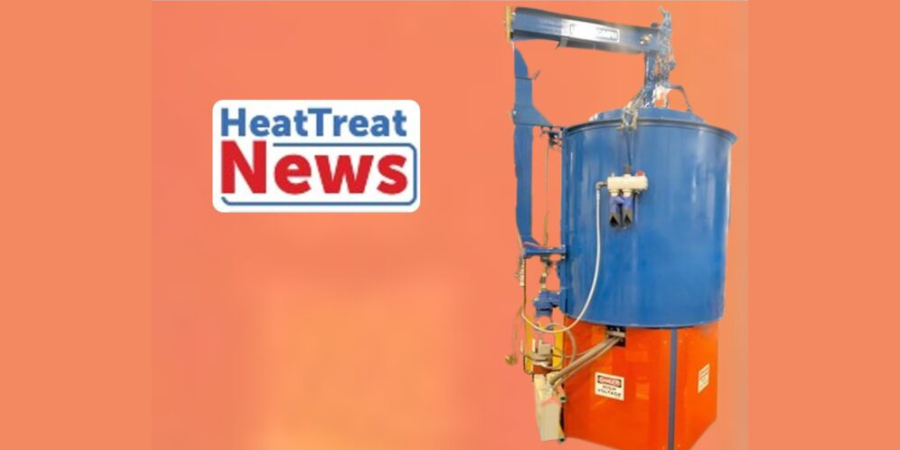
A tooling manufacturer is expanding with an electrically heated, steam atmosphere pit furnace for steam treating parts. The steam treating process creates a uniform blue-black finish on the surface of parts, which improves wear and corrosion resistance.
Lindberg/MPH, a manufacturer based in Michigan, shipped the steam treating furnace which has a maximum temperature rating of 1,250°F and work chamber dimensions of 22" diameter x 36" depth. The pit furnace is insulated with vacuum formed ceramic fiber modules that allow for rapid heat up rates and fast control response. A circulation fan distributes heat evenly throughout the chamber which ensures rapid and uniform heat transfer throughout the product load.
“This steam atmosphere pit furnace has the sufficient capacity to process a workload of 1,200 lbs," comments Kelley Shreve, application engineering manager at Lindberg/MPH. "This furnace was also designed with a custom powered lid for ease of loading."
Find heat treating products and services when you search on Heat Treat Buyers Guide.com
Welcome to Heat TreatToday's This Week in Heat TreatSocial Media. You know and we know: there is too much content available on the web, and it’s next to impossible to sift through all of the articles and posts that flood our inboxes and notifications on a daily basis. So, Heat TreatToday is here to bring you a hot take of the latest compelling, inspiring, and entertaining heat treat chatter from the world of social media.
Today, check out some posts on everything from a new design to an interactive periodic table to ways to shore up your heat treat knowledge. Don't forget to thank an engineer for Engineer Appreciation Week!
Check out a winner from the Metal Powder Industries Federation 2022 PM Design Excellence Awards Competition. This device is used in laparoscopic surgeries! In order to make the curved jaw piece needed for the instrument, the powder metallurgy metal injection molding process was used. Take a look at this piece from all angles with the video below.
2. Continuing Education
Each of these posts brings an educational aspect for you in your heat treat knowledge base. Something new or something to refresh those brain cells, take some learning moments with these posts.
7 Components To Think About with an Industrial Oven Purchase
DFARS Compliance, Free eBook
Preventing Refractory Anchoring System Failures
Advancing 3D Printed Metals with HIP
Interactive Periodic Table 2.0
3. "Molten" Videos
Too hot to handle? We think not. Check out some of these action shots.
4. The Reading (and Podcast) Corner
Time to take your afternoon coffee and read or listen to a few technical pieces from around the industry, or put on an episode of Heat TreatRadio to enjoy as you commute home!
Here's a recent edition from expert Mike Mouilleseaux on underrated heat treat processes.
With a nod to engineering week, this article delves into categorizing things. "Art or Engineering" explores how to think about products, maybe stretching to think differently about labels applied to things.
5. Engineer Appreciation Week
Spreading the love this week for the engineers among us. Thanks for everything that you do!
6. Updating the Office Space!
This office model might be something you want to incorporate? Looks like some great spots to go over the heat treat paperwork and take the calls.






 Find heat treating products and services when you search on Heat Treat Buyers Guide.com









 Heat Treat