

FEATURED NEWS

GSU Purchases Furnace from PA Manufacturer

Georgia Southern University (GSU) in Statesboro, Georgia, recently purchased a horizontal front-loading vacuum furnace from a Pennsylvania based heat treat furnace manufacturer.

GSU plans to use Solar Manufacturing’s Mentor® furnace primarily for vacuum thermal processing research and development of various iron-based alloys, including additive manufactured parts.

The Mentor® includes a graphite shielded hot zone and heating elements, with a work zone size of 12″ wide x 12″ high x 18″ deep, and a weight capacity of 250 pounds. Solar Manufacturing reports that this furnace complies with aerospace specification AMS2750E to process in an argon or nitrogen atmosphere or in high vacuum in the 10-6 Torr range with a 6” Varian diffusion pump. The furnace incorporates a control system package with a large graphic touchscreen overview and can be programmed to control gas quench rate up to two bar pressure and achieve temperature uniformity up to 2400° F.

Dan Insogna, Southeast Sales Manager, Solar Manufacturing
Dan Insogna, Solar Manufacturing

“We are pleased to provide a solution to GSU’s growing research and development efforts, and we know the Mentor® vacuum furnace will benefit the university with this research,” said Dan Insogna, Solar Manufacturing’s Southeast Sales Manager.


GSU Purchases Furnace from PA Manufacturer Read More »

Induction Heat Treat: Considerations for Inductor Design


Source: Fluxtrol.com

Induction heat treaters know that proper coil design is crucial to increasing longevity, improving production quality, and cutting costs. Among the topics addressed in this paper about induction heat treat coil design and fabrication (presented by R. Goldstein, W. Stuehr, and M. Blackby at ASM International) are these:

  • The design and fabrication of induction heating coils over the years
  • The Variable of Flow and the Influence of Frequency
  • Control and Presentation
  • Structure, Quenching, and Cooling
The paper closes out with a case study using computer simulation to show typical temperature distributions in a single-shot induction hardening coil.
A good place to start whenever preparing parts for induction heat treating is the consideration of inductor design. The authors provide this list (an excerpt):
[spacer color="264C84" icon="Select a Icon"]

Considerations for Inductor Design

Induction heat treating coils are available in many shapes and sizes and must perform a variety of tasks in a given induction heat treating application. Depending on the application, the induction coil design requirements include:

  • Meet heat treatment specifications in desired production rates
  • Be robust enough to tolerate manufacturing variations
  • Mount into the induction machine
  • Have electrical parameters that match the induction power supply
  • Deliver quench
  • Have a satisfactory lifetime
  • Have satisfactory efficiency
  • Be repeatable from inductor to inductor

In developing a new induction heat treating coil and process, the first question is whether the component will be produced on an existing system or if a new machine must be built. In many cases, the part producer’s desire is to develop new tooling for an existing machine with spare capacity. This reduces the degree of freedom and can make the induction coil design procedure more complicated because a less-than-optimal frequency or coil style will be necessitated to fit the existing machine (Ref 16).

To determine the ability to use existing equipment, it is necessary to make an analysis of the part to be heat treated. Part material, prior processing, geometry, production rate, and heat treatment specifications all play roles. The part material and prior processing determine what the minimum heat treatment temperature should be, along with how much time is allowed for cooling. The part geometry and heat treatment specifications indicate how much energy is required, what the preferred frequency ranges are, and what type of induction method (i.e., single shot, scanning) is best suited for the application. Finally, the production rate determines how much power and/or how many spindles or stations are required.

Read more: "Design and Fabrication of Inductors for Induction Heat Treating"


Induction Heat Treat: Considerations for Inductor Design Read More »

SC Heat Treating Company Adds HIP to Support Aerospace Industry

A vacuum brazing and heat treating company recently announced plans to expand its Greenville County, SC, operations to accommodate a new hot isostatic press.  This equipment is designed to improve ductility and stress resistance of critical, high-performance manufactured materials.

Accurate Brazing, a division of Aalberts N.V., one of the largest heat treating and brazing companies in the world, is upgrading approximately 20,000 square feet of an existing facility in Greenville County to install the HIP. Since 1989, Accurate Brazing  has provided heat treating and brazing applications to support aircraft, ground turbine and power generation markets. The company heat treats materials that include stainless steel, super alloys, copper and refractory materials.

Aalberts N.V. employs approximately 16,500 people at more than 150 locations in 50 countries around the globe. The $13 million expansion project is expected to create at least eight additional jobs and be complete in the second quarter of 2020.

"Accurate Brazing is a very important member of our business community and we are proud of their growth and success," said Greenville County Council Chairman and Board Member of the Greenville Area Development Corporation H.G. "Butch" Kirven.

Photo credit: www.upstatescalliance.com


.

SC Heat Treating Company Adds HIP to Support Aerospace Industry Read More »

A Baker’s Dozen Quick Heat Treat News Items to Keep You Current

A Baker’s Dozen Quick Heat Treat News Items to Keep You Current

Heat Treat Today offers News Chatter, a feature highlighting representative moves, transactions, and kudos from around the industry.

Personnel and Company Chatter

  • Tom Spicer recently joined Gasbarre Industrial Furnace Systems (OEM of J.L. Becker brand equipment) as a Field Service Technician. Tom brings over 20 years of industry experience to the Plymouth, Michigan, company, having previously worked with OEMs assembling and servicing equipment and in maintenance at a commercial heat treat facility.
  • Changes at DANTE: The month of May saw the transition of Dan Londrico and Stefan Habean from intern to staff engineer. Charlie Li moved from Vice President to President of the company, and Lynn Ferguson became Emeritus. Edward Lee, a mechanical engineering student at The Ohio State University, joined the DANTE team as an intern.
  • Sławomir Woźniak has been appointed by the Supervisory Board at the SECO/WARWICK Group to the role of President of the Management Board. The new President has been appointed for the same period as the joint term of the new Management Board, which spans the next three full financial years.
  • Ajax TOCCO Magnethermic / Emmedi would like to congratulate Don Gibeaut on his election to Chairman of the North American Management Board of Directors (NAMB) for the International Tube Association (ITA). Don is the product manager for ATM’s Tubular Products Division.
  • A materials technology engineering group recently completed a partial acquisition of a provider of metal additive manufacturing (AM) services and advanced end-use components. Sandvik acquired a 30% stake in privately owned Beam IT, which supplies metal AM end components to demanding industries, including automotive, energy and aerospace, and holds several relevant quality certifications to serve these industries.
  • A new hot isostatic press (HIP) has been delivered and installed at Paulo’s Cleveland Division. The furnace was built by Quintus Technologies. The 30,000-sqft expansion to house the HIP vessel is complete and will provide the Cleveland Division room for additional expansion to support customer needs.
  • GE Additive recently announced that the company has made a significant investment in its electron beam melting (EBM) technology, with the purchase of an additional 17 A2X systems and 10 Spectra H systems. Avio Aero, a GE Aviation company, currently operates a fleet of 35 Arcam machines at its recently expanded site in Cameri, Italy. The additional EBM systems will be installed at GE Aviation and Avio Aero facilities in the US and Europe and will be used primarily for the production of titanium aluminide (TiAl) blades on the low-pressure turbine for the GE9X engine.
  • Metal Exchange Corporation (MEC), headquartered in St. Louis, MO, is forming a new joint venture with Novellini Industries Srl in Mantova, Italy. Called novALmec, the newly formed company will supply aluminum billet capacity to the European market.

  • An automotive supplier recently ordered a nitrocarburizing furnace for a new component line for a major carmaker. SECO/WARWICK commissioned the high-volume, horizontal retort furnaces, which will allow the customer to produce parts for North American suppliers. In addition to ferritic nitrocarburizing, the furnaces can provide clean, stress relief processing.
  • Four atmosphere controlled, aluminum coil annealing furnaces, which will be used to anneal automotive body stock and common alloy sheet coils, have been ordered by a leading U.S. aluminum producer from Consolidated Engineering Company.
  • A quench tank has been installed by Baker Furnace, a division of Thermal Product Solutions, for a supplier in the heat treatment industry. The customer had two quench tanks and three drop bottom furnaces and needed the third quench tank in order to optimize quench loads per day.

  • During the 2019 CCAI Annual Meeting in Hilton Head, South Carolina, the Chemical Coaters Association International held their annual awards ceremony to recognize the CCAI Chapter Users and Suppliers of the Year and announce the 2019 James F. & David J. Wright Lifetime Achievement Award recipient. The 2018-19 Chapter Award winners are: Central States Chapter – Frank Laster, A-1 Paint Powder and Sandblasting LLC and Ron Cudzilo, George Koch Sons LLC; Georgia Chapter – Wayne Pettyjohn, Georgia Power Company; Las Vegas Chapter – Tony Sclafani, AR Iron, LLC and Sercy Spears, TIGER Drylac, Inc. USA; Northern Illinois Chapter – Matt Ambrose, Henkel Corporation; Salt Lake City Chapter – Ginny Phommavongsay, Martin Door Mfg.; Southern California Chapter – Shivie Dhillon, Sundial Powder Coating, Tony Sclafani, AR Iron, LLC and Luis Hernandez, Coral Chemical Co.; Twin Cities Chapter – Mark Walsworth, Retired and Jim Henningsen, Troy Chemical; West Michigan Chapter – In memory of Herb Knape, Knape Industries Inc., and Jason Meekof, Industrial Metal Cleaning; and Wisconsin Chapter – Justin Jarmuz, Wacker Neuson Corp. and Matt Roeser, DuBois Chemical Co.
  • During the July 9th Collier County Board of County Commissioners meeting, Pelican Wire was named the Collier County ‘Business of the Month’ and was recognized by the Board for being a manufacturing leader in Collier County for over forty years.
  • On July 11th, Solar Atmospheres hosted 28 high school students enrolled in the Summer Engineering Institute (SEI) at Lehigh University. The group also included a few members of Lehigh University undergraduate students and staff. The SEI program, under the guidance of Director Dr. Laura Moyer, is a two-week residential program, running two sessions back to back. Students are nominated by faculty of local high schools, and the program specifically targets under-represented groups including girls, first-generation students, and students who might otherwise have limited opportunities to study in the fields of science, technology, engineering, and math (STEM).

Heat Treat Today is pleased to join in the announcements of growth and achievement throughout the industry by highlighting them here on our News Chatter page. Please send any information you feel may be of interest to manufacturers with in-house heat treat departments especially in the aerospace, automotive, medical, and energy sectors to the editor at editor@heattreattoday.com

A Baker’s Dozen Quick Heat Treat News Items to Keep You Current Read More »

Metal Additive, Heat Treat Manufacturer Opens New Facility

A leading Tier One metal additive manufacturers for the aerospace and defense industry that produces multiple furnaces has officially opened the doors to its new 55,000 square foot advanced manufacturing facility, located in Hollywood, Florida. The new plant, which also serves as the company’s headquarters, recently celebrated its grand opening.

Sintavia LLC’s facility houses over $25 million of advanced manufacturing equipment including multiple furnaces, medium and large scale metal printers, EDMs, post-processing machines, and wet-booths. Some of the industrial engineering improvements of the building include separate manufacturing rooms segregated by alloy, a large-scale powder management system, an uninterruptible power supply, an inert gas farm, and a final production acceptance quality control room.

The new facility is capable of producing tens of thousands of parts representing in excess of $100mm of AM revenue annually. The expansion is anticipated to bring more than 130 new jobs for skilled employees and support staff to South Florida.

“This new facility is the first of its kind in North America to offer large-scale AM production coupled with a robust aerospace quality management system,” said Brian Neff, Sintavia’s Chairman and Chief Executive Officer. “As we grow, it will serve as a template for future vertically-aligned advanced manufacturing facilities around the U.S. and the world.” Over 150 customers, industry partners, and government officials attended the opening.

Photo: (Business Wire) Multimedia Gallery URL and thefabricator.com

Metal Additive, Heat Treat Manufacturer Opens New Facility Read More »

Heat Treat Equipment Manufacturer Partners with Tech Giant, Develops Augmented Reality System

A major provider of innovative heat processing solutions recently developed an augmented reality (AR) system in conjunction with a global technological corporation to adapt its holographic computer systems to metallurgical applications in the manufacturing environment.

SECO/WARWICK introduced SECO/LENS, an adaption of Microsoft’s HoloLens, to bring the advances in virtual reality to manufacturing enabling users to view equipment, systems, and processes in 3D; this is the first use of this technology by heat treatment industry.

Slawomir Wachowski, Automation Department Director for SECO/WARWICK

SECO/LENS can superimpose a 3D model of a specific piece of heat treating equipment or an entire technological line, providing the most optimal layout of the production line on the plant floor for the line’s monitoring, diagnostics, maintenance, remote repair, and planning. SECO/LENS is intended to create an accurate visualization of the system, permitting staff training on the operation of the equipment without the need for expensive and time-consuming travel.

“SECO/LENS is a new era of working with SECO/WARWICK devices—it’s the era of interaction,” said Slawomir Wachowski, Automation Department Director for SECO/WARWICK. “Introduction of virtual technologies to the production process, training, and operation of our devices are significant benefits, more intuitive device operation, increased mobility, increased efficiency and reduced response times to service requests.”


Image credit: SECO/WARWICK YouTube Channel 

Heat Treat Equipment Manufacturer Partners with Tech Giant, Develops Augmented Reality System Read More »

10 Heat Treat Tips: Vacuum Furnaces

Heat Treat 2019 is coming, and one of the great benefits of gathering with a community of heat treaters is the opportunity to challenge old habits and look at new ways of doing things. Heat Treat Today’s 101 Heat Treat Tips is another opportunity to learn the tips, tricks, and hacks shared by some of the industry’s foremost experts. The inaugural list of 101 Heat Treat Tips was published in the FNA 2018 Special Print EditionThis special edition is available in a digital format here.

Today's Technical Tuesday features 10 Tips -- all from the Vacuum Furnaces category and all supplied by the same equipment manufacturer.

Heat Treat Today is compiling the 2019 101 Heat Treat Tips list for the fall issue to be distributed at Heat Treat 2019, the biennial show from the ASM Heat Treating Society to be held in Detroit, Michigan, October 14-17, 2019. If you have a heat treat-related tip that would benefit your industry colleagues, you can submit your tip(s) to doug@heattreattoday.com or editor@heattreattoday.com.


Heat Treat Tip #24

Dirt In, Dirt Out!

Parts going into the furnace should be as clean as possible. Avoid placing parts in the furnace that contain foreign object debris (FOD). FOD on work surfaces going into the furnace will contaminate the furnace and the parts themselves. Dirty work in, dirty work out. FOD comes in many forms. Most common: oil, grease, sand in castings or grit blasting operations, and metal chips that generally originate from the manufacturing process before the parts are heat treated. It could also be FOD from the shipping process such as wood or plastic containers used to ship the parts.


Heat Treat Tip #26

Solenoid valves could be the problem if helium detection fails.

When a Helium Leak Detector Doesn't Help

If an air leak cannot be found with a helium mass spectrometer, take apart the gas backfill or partial pressure solenoid valves to ensure they are clean. A small piece of debris can cause a valve to leak a process gas into the furnace that will not be found with a leak detector. Debris is often found in the valve seats when piping to the valve was disturbed in some way such as new piping or repair that stirs up contaminants in the line.


Heat Treat Tip #46

O2 Analyzer Helps Ensure Gas Purity

In addition to monitoring dewpoint at the farthest location from the gas source in your heat treat facility, an oxygen analyzer is also recommended as an additional tool for monitoring gas purity. Generally, the analyzers used to measure dew point drift low over time. One may think they have a very low dew point gas, however, it could be the dew point analyzer is beginning to fail. Quarterly checks of the dew point analyzer's accuracy should be taken; some OEMs recommend replacing the sensors annually. Oxygen analyzers provide a more stable reading over a period of time and build redundancy in confirming gas purity when coupled with the dew point analyzer.


Heat Treat Tip #48

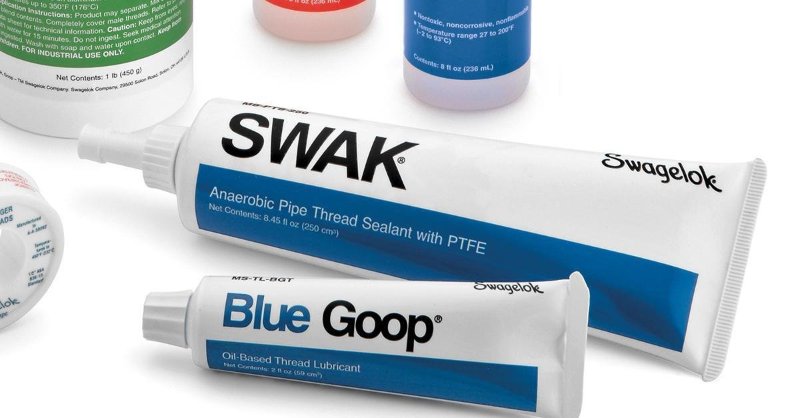
Seal Threaded Connections

SWAK from Swagelok is a great thread sealing option. (photo source: LinkedIn)

Ensure threaded connections have adequate sealing protection on them to prevent air leaks through the threads where applicable. Wipe off excess sealant once the connection is made.

  1. SWAK from Swagelok is excellent
  2. Apply to the male threads only, not on any other surface as it could contaminate the system the component is being installed on.
  3. Excess SWAK can be removed with a solvent such as acetone
  4. Finger tight first, then tighten with a wrench
  5. After the sealant is dry (recommend 24hrs by manufacturer) do not loosen as this could break the seal once cured.

Heat Treat Tip #61

Start With the Obvious

When a problem arises with the furnace, always start the troubleshooting process with the last item that was worked on. Start with the obvious; don't look for a needle in the haystack. For example, if the furnace will not pump into high vacuum and maintenance was just performed on the furnace with the pneumatic pressure valves being shut to perform that maintenance operation, the pneumatic valve to the main poppet valve on the diffusion pump may not have been re-opened, causing the diffusion pump main poppet valve to not open.


Heat Treat Tip #74

Make Sure Your Gas Meets Spec

Ensure each delivery of process gas is accompanied by a certification identifying purity, oxygen content, and dew point. For example, nitrogen should be 99.998% pure, 10 ppm oxygen max, and a dewpoint no higher than -89°F. With contaminated gas or gas that does not meet the criteria above, parts processed in the furnace and subjected to the partial pressure of the gas or quenched with the gas may also become contaminated, typically in form of oxidation and/or decarburization. Generally varying purity is not a concern, however, the specific purity of the gas required needs to be conveyed to the gas supplier and a certification supporting the gas type you ordered was delivered. An accompanying certification by the gas supplier goes a long way in audits and other disputes.


Heat Treat Tip #76

Specification Checklist for Vacuum Furnace Purchase

If you're planning on purchasing a new vacuum furnace, create a technical specification for the manufacturer(s) that clearly outlines the performance, functions, and accessories required on the furnace. The specifications should be reviewed by multiple departments including but not limited to engineering, quality, production, and management.

  1. List of department sign-offs required (engineering, production, maintenance, quality)
  2. Applicable documents required (i.e., AMS2750E, AMS2769)
  3. List of parameters to be recorded (temperature, pressure, flow rate, etc.)
  4. List of required alarms
  5. Physical location of furnace and associated components such as control system and surge tank
  6. Units of measurement (°F or °C, torr or Pascals, minutes or hours)
  7. How many process gases and what type
  8. Cooling rate requirements (This will help decide what quench pressure design furnace is required, for example, 2 bar or 10 bar.)
  9. How many work thermocouples are required
  10. What pre-testing verification is required for final acceptance. For example, thermal uniformity survey temperature points and tolerances, vacuum pump downtime and levels, leak up requirements, quench tests, process validation tests.

Wipe both door flanges and O-ring every time.

Heat Treat Tip #84

Clean the Door—Every Time!

Wipe down the front door O-ring and both flanges every time before the door is closed to ensure there is no debris on the O-ring or flange. Over time, the debris will damage the O-ring and pit the flange causing sealing issues.


Heat Treat Tip #91

Include Maintenance Team in New Vacuum Purchase Process

Include the maintenance manager in any furnace purchase decision. The manager and team are the ones tasked with troubleshooting, repair, and preventative maintenance. The maintenance manager will make sure the furnace has clear access for maintenance and replacement of major components including vacuum pumps, cooling motor, hot zone, and heat exchanger. The longer it takes to repair the furnace, the more downtime and lost revenue because the furnace is not running.


Heat Treat Tip #94

A properly greased O-ring will ensure a solid, leak-free seal.

Inspect Replacement O-Rings

When replacing an O-ring, be sure the new O-ring is clean and undamaged (free of cuts, nicks, tears, or gouges) and that the splice joint is solid and true. Use a conservative amount of vacuum grease on the O-ring to ensure a tight sealing furnace. Not too much grease is needed. Rule of thumb: a light gloss or sheen, but no build-up.


All of today's tips were submitted by Solar Manufacturing.


If you have a heat treat-related tip that would benefit your industry colleagues, you can submit your tip(s) to doug@heattreattoday.com or editor@heattreattoday.com


10 Heat Treat Tips: Vacuum Furnaces Read More »

Metal A.M. Solutions Provider Enters Initiative to Develop Processes for Titanium Alloys Aero Parts

A leading provider of metal additive manufacturing solutions recently announced that it has entered into an ambitious research and development (R&D) initiative with a metallurgist expert and one of the world leaders in high-performance steels, superalloys, titanium, and aluminum and a multinational aerospace corporation.

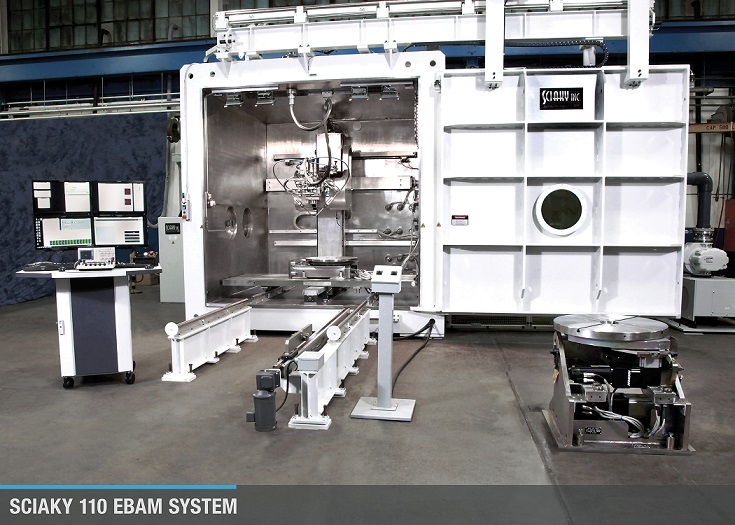
Sciaky EBAM®system
Sciaky EBAM®system

The goal of the R&D initiative between Sciaky, Inc., a subsidiary of Phillips Service Industries, Inc.; Aubert & Duval; and Airbus, and piloted by the Saint Exupéry Institute for Research in Technology (IRT) is to couple traditional metallurgy—high-power closed die forging—with emerging wire fed metal 3D printing techniques—in this case, Sciaky’s groundbreaking Electron Beam Additive Manufacturing (EBAM®) process—to develop new processes for manufacturing titanium alloys aircraft parts.

The Production Engineering laboratory of the National School of Engineering in Tarbes, France, will serve as an academic partner for this project, also known as the Metallic Advanced Materials for Aeronautics (MAMA) project.

Scott Phillips, president and CEO of Sciaky, Inc

In this first phase, the project has global funding just under $4.8M (€ 4,2 M) of which 50% are supported by the French State as part of the “Investing in the Future” program (PIA – Programme Investissement d’Avenir), the other 50% being funded by its industrial partners.

“Sciaky is proud to work with the Saint Exupéry IRT, Aubert & Duval, and Airbus on this exciting project,” said Scott Phillips, president and CEO of Sciaky, Inc. “Industrial metal additive manufacturing technology continues to break new ground every day, and Sciaky is committed to keeping EBAM at the forefront of this movement.”

Metal A.M. Solutions Provider Enters Initiative to Develop Processes for Titanium Alloys Aero Parts Read More »

Nitrogen Generator Manufacturer Expanding to Higher Capacity Facility

A major manufacturer of nitrogen generators which provides technology for heat treating applications, as well as for many other markets, recently announced plans to expand in Wilmington, North Carolina, into a higher capacity manufacturing facility.

South-Tek Systems (STS), the nation’s highest volume manufacturer of N2GEN®), will be transitioning operations into a custom-designed 66,000-square-foot building — 10 times their current space — in order to accommodate growth in production and improve workflow.

The expansion (from 6,600 sq. ft to 66.000 sq. ft!!) will accomplish a few key developments:

  • Increased space for 4 more new engineers in manufacturing/production, which will flesh out R&D;
  • Inventory improvement, which will decrease lead times from order to shipping;
  • Laboratory environment on site, which will enhance N2% purity and flow rate certification;
  • More efficient delivery due to better highway/port access.

Scott Bodemann, president of South-Tek Systems

“In almost reaching the maximum capacity of South-Tek’s current facility, we have perfectly timed the move to our new building We are excited to transition into the larger space as it will increase our efficiencies as well as allow us to better plan for our customer’s future nitrogen generator needs,” said Scott Bodemann, president of South-Tek Systems.

Dan Herring, The Heat Treat Doctor®

“As a technical consultant for the South-Tek organization, I congratulate the company on their continued commitment to and investment in the heat treatment industry by manufacturing nitrogen generators for both atmosphere and vacuum furnace systems,” said Dan Herring, The Heat Treat Doctor®. “Their units are designed with output volumes from a few cubic feet per minute to systems that are able to produce well over 30,000 cubic feet per hour. The worldwide demand for South-Tek nitrogen units has resulted in the company growth and now the expansion of their manufacturing capabilities. Their long-life systems are capable of producing nitrogen purities of up to 99.999% (10 PPM and lower) to meet any heat treatment application need.”


Photos provided by South-Tek Systems

Nitrogen Generator Manufacturer Expanding to Higher Capacity Facility Read More »

Powder Metal Alloys Facility Expansion to Support A.M. Demand

A North American manufacturer of powder metal products recently announced plans to expand its Pennsylvania facility, adding new production capabilities to support additive manufacturing and other technologies.

Photo: Daily American

North American Höganäs High Alloys, founded in 1896 in Johnstown, Pennsylvania, will construct a 24,000-square-foot building this location and purchase new machinery to support the global demand for high alloy products, which include stainless steel powders, iron alloy powders, nickel alloy powders, electrolytic iron powders and chips, manganese and silicon powders, and the proprietary GLIDCOP dispersion strengthened copper products.

Linda R. Thomson, president and CEO of the non-profit economic development organization JARI

“Pennsylvania’s powder metals industry is a major contributor to our manufacturing sector,” said Pennsylvania Governor Tom Wolf. “Höganäs’ decision to expand here is great news for Pennsylvania manufacturing, and will provide at least 25 reliable, family-sustaining jobs for Cambria County workers.”

“JARI is pleased to provide support to Höganäs as the company expands their operations in the City of Johnstown,” said Linda R. Thomson, president and CEO of the non-profit economic development organization JARI. “Höganäs is a world-class, internationally recognized company with state-of-the-art products that is meeting the demands of the new manufacturing age. We appreciate the continuation of the proud Cambria County tradition of leading the way for innovation and we thank the Wolf Administration for their continuous support.”

“This exciting investment, with the greatly appreciated support from the Governor’s Action Team and JARI, will help Höganäs continue to grow in Pennsylvania and provide innovative products for our customers in several quickly developing market areas,” said Dean Howard, President Americas Continent.

Photo credit: Höganäs


Powder Metal Alloys Facility Expansion to Support A.M. Demand Read More »