

Leone

Heat Treat Radio #27: Women in Heat Treat

Welcome to another episode of Heat Treat Radio, a periodic podcast where Heat Treat Radio host, Doug Glenn, discusses cutting-edge topics with industry-leading personalities. Below, you can either listen to the podcast by clicking on the audio play button, or you can read an edited version of the transcript. To see a complete list of other Heat Treat Radio episodes, click here.


Audio: Women in Heat Treat

In this conversation, Heat Treat Radio host, Doug Glenn, interviews the two founders of the LinkedIn group, Women in Heat Treat, Ellen Conway-Merrill, Vice President of DELTA H, and Roseanne Brunello, owner of manufacturing rep firm Mountain Rep. They will discuss their new group and plans for the future.

Click the play button below to listen.


Transcript: Women in Heat Treat

The following transcript has been edited for your reading enjoyment.

On March 8 of this year, the world celebrated International Women’s Day.  At roughly the same time, two women from the heat treat industry gave birth to a new LinkedIn group called Women in Heat Treat.  Today, we’re going to talk to these two trailblazing women about their new group and their plans for the future.  Who are these two women?  Let’s meet them now briefly, and then come back and talk with them about their plans.

Ellen Conway Merrill, VP at DELTA H

Ellen Conway-Merrill (EC):  My name is Ellen.  I am the Vice President of DELTA H.

Doug Glenn (DG):  That’s Ellen Conway-Merrill, and her company, DELTA H, is located in Carroll, OH, which is close to Columbus, OH.

Next we’ll meet–

Roseanne Brunello (RB):  This is Roseanne Brunello, and I have been in manufacturing for 37 years working as the owner of a manufacturing rep firm by the name of Mountain Rep.

DG:  Roseanne Brunello is also from Ohio, near Cleveland. So we’re here today with Ellen Conway-Merrill from DELTA H.  Ellen, if you don’t mind, spend a minute telling us about who you are, and also a bit about DELTA H.

EC:  I am the Vice President of DELTA H, and it is a family business. My dad, Richard Conway, is the chief technology officer, and he started DELTA H 30 years ago.  It started out as a service company, mostly doing consulting and service work, and it has grown from there.  My twin brother and I joined forces with him, which was kind of serendipitous as it wasn’t planned on happening and it just did.  We joined him in 2009 and never looked back.  We’ve been with him for about 11 years and it’s been an incredible ride.  Over those past 10 years, we’ve been getting more and more interested in manufacturing our own brand and it’s been a huge success.  DELTA H really focuses on specific niches and certain industries.  We’ve done really well in the aerospace industry designing heat treat furnaces that are specifically meant towards certain applications such as aluminum heat treating, titanium steels, and what we see in aircraft MRO or an OEM or parts manufacturer. We really cater to those companies.  We are also in automotive plastics composites, which is a huge industry for us with our walk-in ovens.  That’s what we mostly focus on.

DG:  Here again is Roseanne Brunello, telling us a little more about her and her company, Mountain Rep.

RB:  This is Roseanne Brunello, and I have been in manufacturing for 37 years, working as the owner of  a manufacturing rep firm by the name of Mountain Rep.  For many of those years, I was in the component and sub-assembly industry, leaning more toward the aerospace industry, which of course let me learn plenty about heat treat along the way.  In the meantime, I moved home to Cleveland about 6 years ago to help take care of my mom and wound up kind of refocusing the company to lend myself toward the heat treat world, which has been kind of fun. I thought I was more specialized when I was in manufacturing with parts; well, boy, heat treat is even more specialized.  I’m proud to be in the industry–there are not very many women, which is why we decided to start this little association.

DG:  Good! That’s exactly what I wanted to ask you about. That’s what caught my eye. You and Ellen Conway-Merrill from DELTA H started a group on LinkedIn. First off, give us the name of the group and then how the two of you came about to create it.

RB:  She is a great gal.  She called me actually and said that she was doing some research on women in heat treat and didn’t find anything and invited me down to her facility in Columbus to show me what they do and to see if we wanted to start some kind of group- see if the activity was there, then maybe we could turn it into an association.  It’s called Women in Heat Treat.  It doesn’t have to be women only, but our focus is to educate women and help promote women within this industry.

DG:  Ellen explains a little more deeply what motivated her to think about starting a women in heat treat group.

EC:  It’s kind of funny how it happened.  Roseanne and I connected a while back. I think she actually posted something on LinkedIn about the stem work that she does, which is one of my original passions with my background actually being in education, of all things.  I didn’t go to school for heat treating or anything like that; it was education.  She posted something about one of her programs and I reached out to her and that’s how we connected. We finally met at the heat treat show this past October  in Detroit, and we stayed connected.  Some time passed.  I’m actually the membership chair of the association of women in the metals industry.  I was doing some organizing with them and I had thought, “Is there a women in heat treat group out there?”  I did some searching on Google and nothing came up.  I figured if anyone new about it, it would be Roseanne as she’s been in the industry for a long time and knows a lot of people.  We got to talking and she thought it was a great idea too.  So we decided to at least start with LinkedIn and just see where it went and we seemed to get a lot of interest right away.

Roseanne Brunello, owner of Mountain Rep.

DG:  So that’s how the group got started.  The next question was forward-looking.  Where is this group going?

EC:  I feel the overall mission or goal would be to promote and develop the growth of women in the heat treat industry.  I do feel like women can benefit themselves and their companies’ relationships, education, and shared knowledge.  I envision with Roseanne that we can develop programs and activities very similar to what I’m already doing in the AWMI (Association of Women in Metal Industries) program and set up keynote speakers.  Roseanne and I talked about a show coming up at ASM International and doing a women’s get-together there.  We could have a keynote speaker that comes in and talks with us.  Within that group, the goal would be to enhance skills and experience, address challenges confronting the industry, and of course always promote career growth.  These are just ideas, but again, like I said, it is like-minded people in a very niche industry.

DG:  Right.  And these women that you’re appealing to in the heat treat industry, do they need to be technical in nature, engineering oriented, that type of thing?

EC:  No, I’m not!  As I said, my background is education and a big part of my role here is mostly running the business and sales side.  My technical background is that I know enough to be dangerous but I’m nowhere near being an engineer or a metallurgist or anything like that.  That is part of it though. This is open for anyone, whether it’s a sales background, business background, metallurgical, design, or engineering. The more the merrier. I feel like having those different backgrounds is what’s going to make the group really shine in getting all aspects of that.

DG:  Roseanne also had something to say about the purpose of the group.

RB:  A lot of times women are considered for jobs like the receptionist or the buyer even, but to actually be selling furnaces or be the operations manager of the heat treat company is kind of rare for women.  So we’re encouraging that.  Women are very good at multitasking.  A lot of times having a heat treat facility, you better be pretty good at multitasking.  We think women can do a good job in this industry.  We’re here to mentor the younger ones and help promote them.

DG:  So Roseanne, shortly after seeing the group, I wondered if men were allowed to join.  I saw that a few had, so I felt safe to go ahead and join.  I hope you don’t mind.

RB:  Well, that’s great.  We want men in it.  I hate to be the one that admits that the men know a lot more than us women, but in some cases they certainly do.  They’ve been around this industry a lot longer than us women, and we’re going to take it by storm though.

DG:  Ellen, how about you?  You’re ok with men being members of the Women in Heat Treat group?

EC:  It’s open to both women and men and anyone seeking to develop all aspects of their career advancement and professional development.  I think that the ultimate goal is to increase the number of women employed in the heat treat industry.  I think that if we work together, both men and women, we can definitely make that mission happen.

DG:  How has the response been to-date?  Have you had some heat treat women joining?
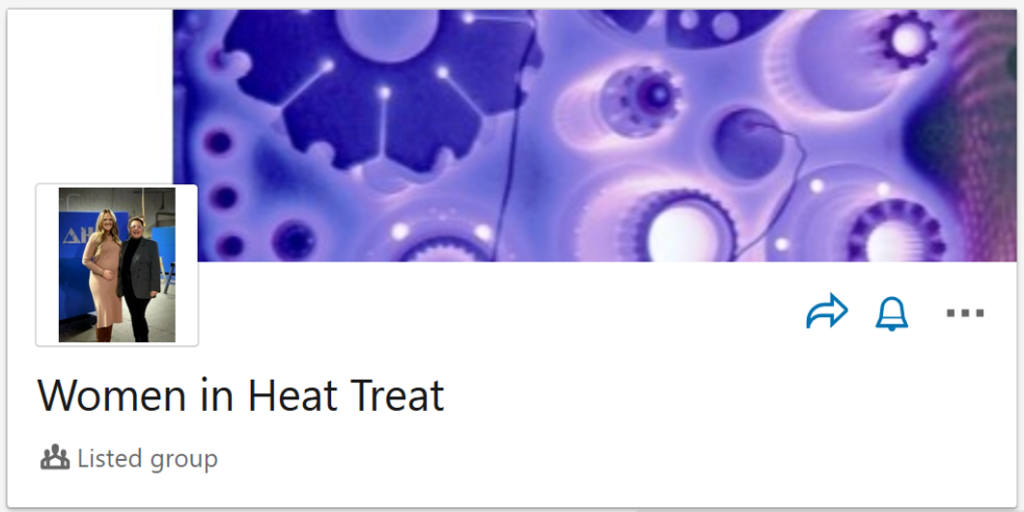
Look for this banner on their LinkedIn page!

RB:  There have been many already.  And it looks like it’s growing pretty rapidly already.  To name names, there is Maryann Dickman, who has ANS.  The Advanced Nitriding Solutions facility is not like an old fashioned heat treat facility, it is as clean and as pristine as you can imagine, all done in flowers and white leather and purple and it is beautiful.  I think that’s where we’re going to see things going.  I don’t think these old dark, lit, dirt floor heat treaters are going to be around much longer with the green affiliations that these companies are doing.  They don’t want ammonia on their floors, or what have you.  I think you’re going to be seeing the heat treat company of the future more and more.

There is also Christy from Stanton Industries, who is so much a woman and beautiful.  She has a stocking facility right here in Columbus and she stocks vacuum pump parts right in her facility.  Whatever she could do to be involved, she is so into it.  We have people from Euclid Heat Treating Co., Diedra is the daughter or granddaughter, and she is very involved and is involved in the heat treat society.  There are quite a few really great women that we’re going to bring all together and hopefully kick off the whole thing.  I’m hoping some kind of gala at IMAT, which is in September.  We’re going to have a party, that’s for sure.

DG:  So what are your future plans?

RB:  We hope that the interest is grand and that we turn it into an association.  It could be an international association.  I’m all for reaching out to students.  I love mentoring the younger people.  Many women go into engineering, but then it seems like they don’t stick with it for whatever reason of their own.  Maybe they stop to have children, or whatever, but we want to give them some kind of platform where they can reenter the industry or not leave it at all.  We’re kind of here as a support group, and women have been known to have support groups for just about everything.  Now we have one for heat treat.

EC:  We’re definitely going to stay focused on LinkedIn.  I think it’s a really great tool for networking and expanding communication.  Roseanne is very involved with ASM, and there is a show coming up in the Fall.  We have talked about setting up a program there for women in heat treat or women in materials and just having a group there that gets together and again, just seeing where it goes.  I don’t know if there is going to be a ton of interest.  I hope there is, and I think there will be.  We’re going to just keep trucking away and see what happens.

DG: Thank you ladies.  I might mention that Heat Treat Today 40 under 40 classes for the last two years have had a solid representation of young women.  This might be a good time to remind everyone that nominations for the 2020 class of 40 under 40 are now open at www.heattreattoday.com/40under40nominate, so please feel free to nominate any young women, or men, you feel are worthy.

Doug Glenn, Publisher, Heat Treat Today
Doug Glenn, Heat Treat Today publisher and Heat Treat Radio host.

To find other Heat Treat Radio episodes, go to www.heattreattoday.com/radio and look in the list of Heat Treat Radio episodes listed.

Heat Treat Radio #27: Women in Heat Treat Read More »

The Class of 2019 40 Under 40: Miguel Fajardo & Tony Marton

Heat Treat Today is privileged to oversee the 40 Under 40 recognition awards highlighting a group of young, up-and-coming talent in the North American heat treat industry every year. This year’s Class of 2019 is no disappointment–a group of industry elite, significant contributors to the heat treat market.

Every couple of weeks we highlight two of the current class of recipients. This week we introduce Miguel Fajardo of John Deere and Tony Marton of The Timken Company.


Name: Miguel Fajardo

Company: John Deere

Position: Heat Treat & Fabrication Manufacturing Engineer

Miguel is responsible for the development of heat treatment manufacturing lines at John Deere Mexico and has collaborated with different John Deere sites around the globe on developing better heat treatment processes. He is currently enrolled on several HT symposiums and participating on a 6sigma contest for heat treatment lines. Day to day, Miguel demonstrates his commitment to heat treatment processes, seeking cost reductions and improvements to product quality, using tools like 6sigma. He has experience in a materials laboratory performing failure analysis, mechanical testing, and metallographic tests. He is a reference within the company in technical knowledge. His responsibilities are not limited to heat treatments; he is also in charge of forging and hardfacing processes, as well as machining and turning, where his materials knowledge has helped close gaps and and reduce costs. Today the John Deere factory that employs Miguel is on path to become a global excellence center for heat treatment manufacturing to support all John Deere sites in the world.

Nominated by: John Deere


Name: Tony Marton

Company: The Timken Company

Position: Senior Metallurgical Engineer, Process Design & Development

Tony is dedicated to building his existing knowledge and to applying his experience of heat treat manufacturing to the Timken bearing business. Since joining the team in late 2017, he has assumed new responsibilities quickly and dedicates his time to learning more about the bearing business. He is currently working on strategic plans to implement new heat treat processes for the company at several global manufacturing locations. He also is working on analyzing the heat treated dimensional results of specific product portfolios to develop rules for the growth and variation within various heat treat processes. He performs these analyses quickly and provides direction for engineering and supplier quality to help improve product results. In addition to his projects at work, he has been very involved in 2 of the company’s 4 Associate Resource Groups that all collaborate to improve the Diversity & Inclusion of the associates worldwide. Tony is also a high school volleyball coach and plays competitive volleyball in his spare time.  Tony is a well-rounded associate who has been a great benefit to his team and to The Timken Company.

Nominated by: the Timken Company


Read more about the feature at Heat Treat Today’s 40 Under 40 resource page and find out more about each of this year’s winners by clicking on their image. To nominate someone for the Class of 2020 40 Under 40, please click here.

The Class of 2019 40 Under 40: Miguel Fajardo & Tony Marton Read More »

Simulation Software and 3D Printers Improve Copper Coils

This informative feature was contributed by CENOS, a simulation software developer. Read on to learn about how 3D printing is revolutionizing the heat treat world, particularly in the production of copper coils.

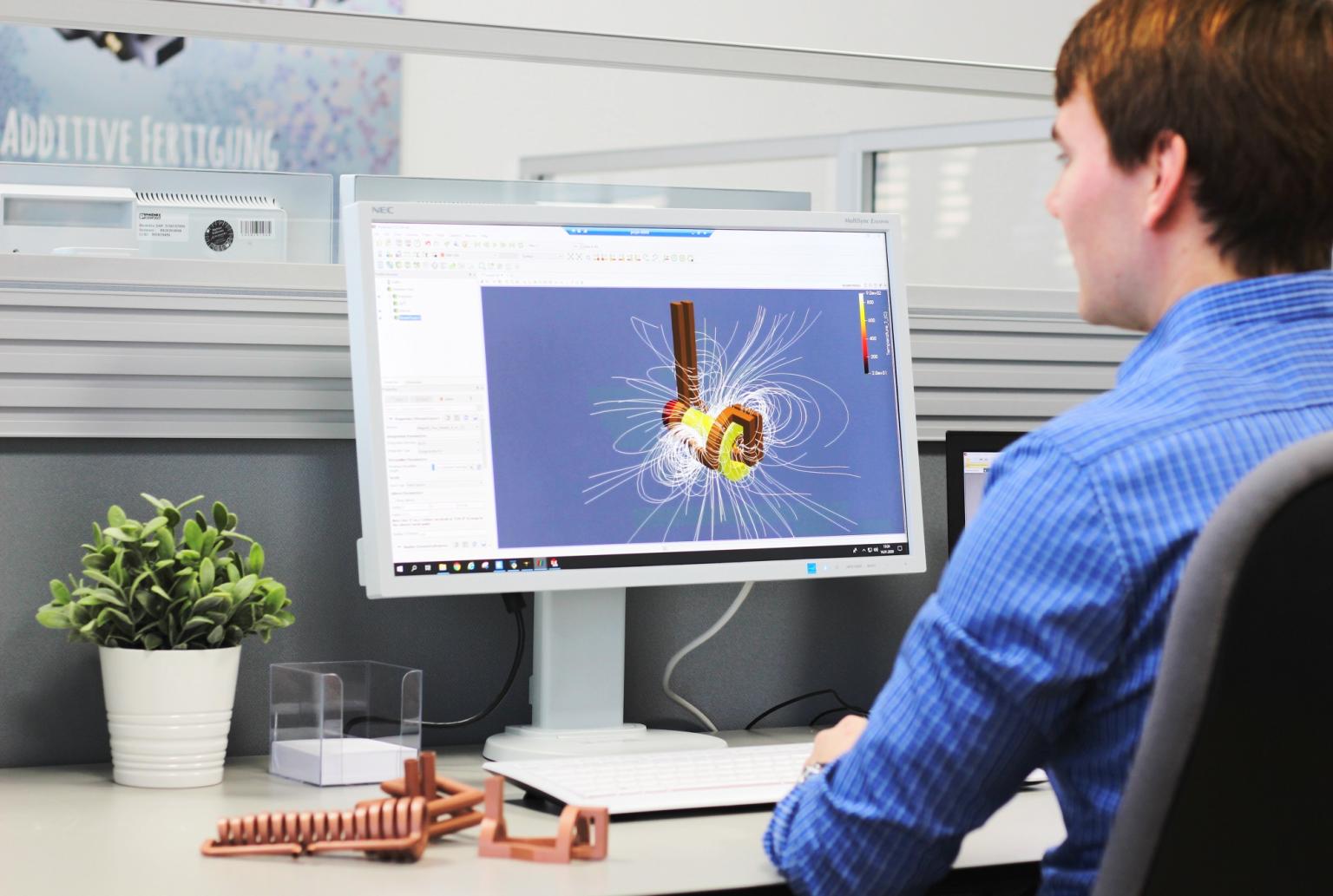
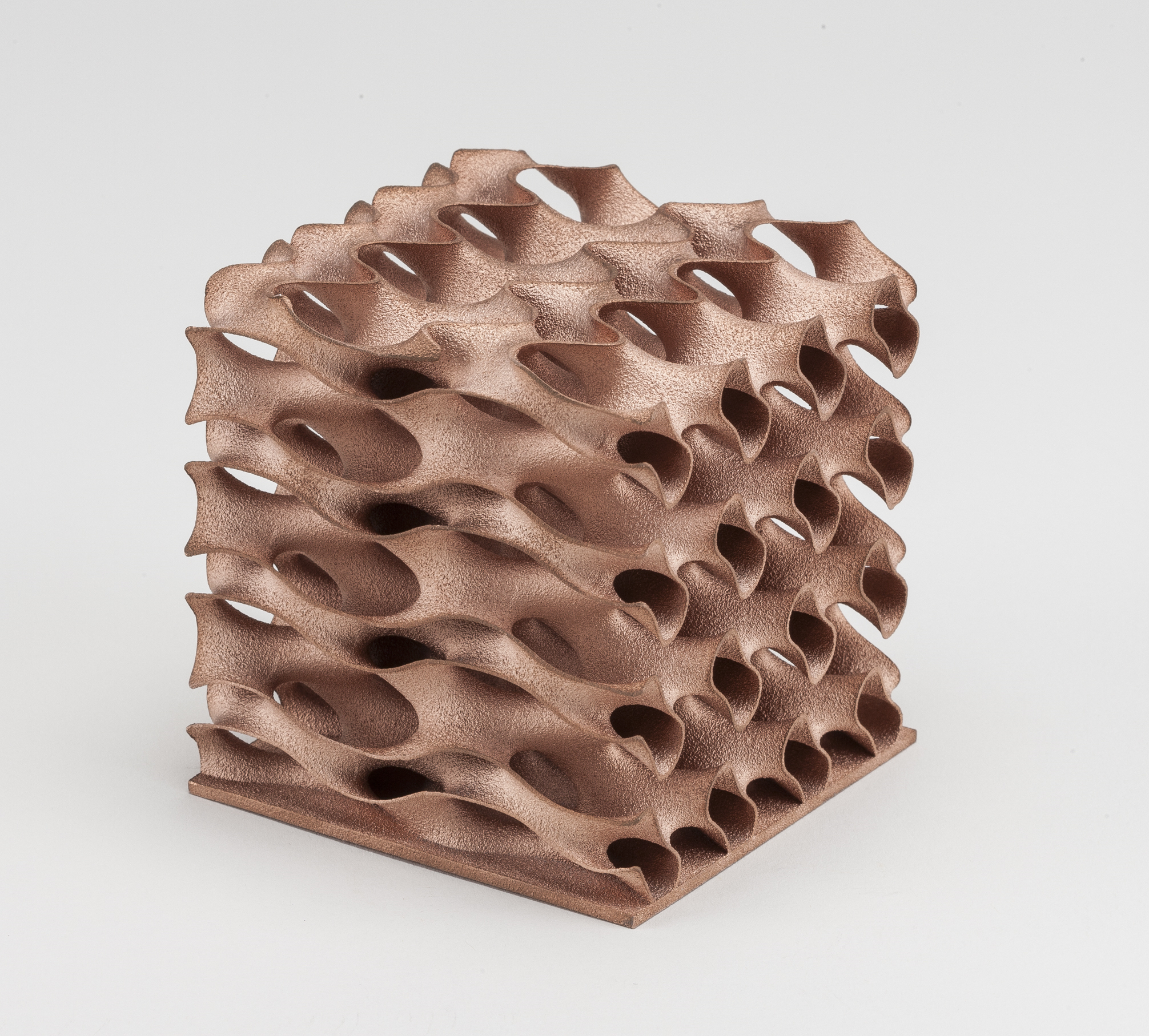
3D printing, also known as “additive manufacturing,” is a hot topic now as it broadens possibilities for on-demand and customized products, even with complex geometries. It eliminates the need for welding, soldering, bending, and similar steps in coil design as 3D printers build the object in one piece and in the exact shape as drawn in CAD.

(source: PROTIQ)

“3D printing unleashes design opportunities for induction coils, while 3D simulation software allows validating design performance. . . . We believe that 3D printing of copper will grow even more in significance for coil production, and possibly even become a part of the conventional manufacturing process,” said Max Wissing, Development Engineer at PROTIQ.

Currently additive manufacturing is widely used for steel parts, and for a long time printing machines were not able to print pure copper items. But now the technology has developed, and since the second half of 2019, it’s possible to print on demand 100% pure copper coils. Some companies with notable success offering this innovation are PROTIQ and GH Induction.

Main Benefits Simulations Enable Together with 3D Printing:

  • freedom of design
  • optimized geometry
  • more homogeneous heating
  • lower lead time
  • less material waste
  • cost reduction

3D Printed Copper Comparison:

RS-cooper Pure copper
Electrical conductivity: 50 MS/m Electrical conductivity 58 MS/m
Elongation at break: 25% 100% IACS
Improved strength for high loads Elongation at break: 50%
Tensile strength: 230 Mpa Tensile strength: 220 Mpa
Yield strength: 180 Mpa Yield strength: 125 Mpa
Density: 98% Density: 99.8%

Fewer Man-Hours, Faster Processes

Coils are a critical part of induction heat treatments as they must be replaced from time to time due to deterioration. This interrupts production and requires several man-hours for recalibration. In comparison to conventional manufacturing, 3D printing induction coils offer great benefits.

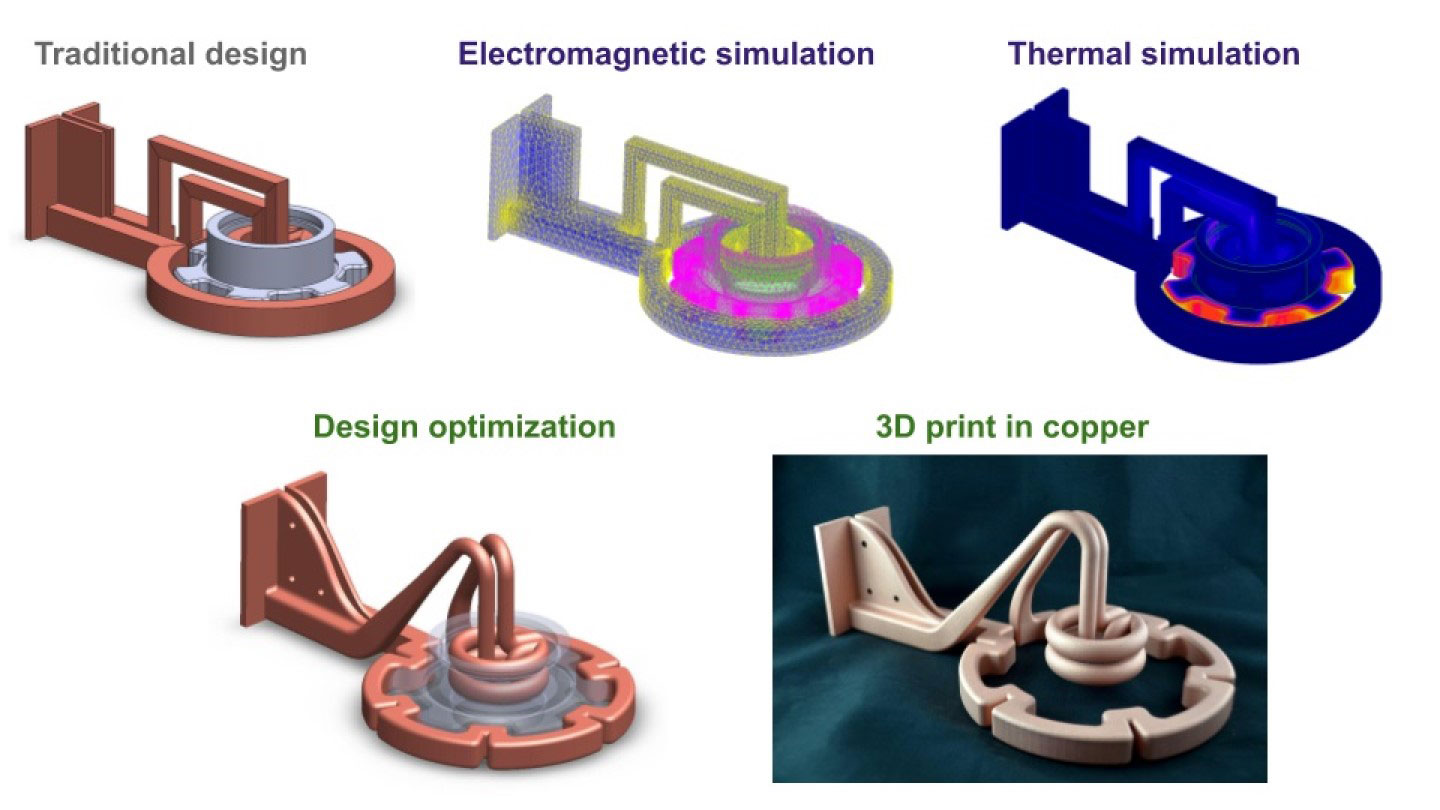
First, additive manufacturing provides better reproducibility and higher accuracy compared to the manual bending, which reduces necessary recalibration times. Second, it allows lower cost and faster production of inductors. Finally, using numerical simulation methods, the coil’s heat pattern is precisely predicted and visualized, helping optimize inductor geometry. This allows for creating a perfect coil with the first prototype.

Simulation and 3D Printing Process Illustration:

(source: PROTIQ)

Simulations as the Enabling Factor for Coil Durability

Simulations allow full freedom of design and point out places for improvement in producing a more efficient coil production process. 3D printers build objects layer upon layer, allowing them to make even complex geometries in one piece without soldering. Simulation of the design process allows predicting coil heating, which altogether results in a longer coil lifetime. Because there is no need to bend or join parts together with heat treatment, this also allows for eliminating some intermediate steps of the supply chain. Another notable benefit is that the lifetime of 3D printed coils can exceed conventionally manufactured copper coils up to two times, as reported by PROTIQ’s automotive industry clients.

Currently there are only a few copper coil printing companies because the material is not easily processed in additive manufacturing.

Comparison of maximum copper coil dimension as a single piece:

PROTIQ GH Induction
Length: 250mm Length: 200mm
Width: 250mm Width: 200mm
Height: 300mm Height: 100mm

The possible size of the printed coils varies between really small ones, measuring only a few millimeters, and bigger shapes that are used in the automobile industry. Coils that exceed the maximum printable dimensions can be joined together afterward via welding or brazing without problems.

Regarding the time, copper coils can be printed within a few days. Compared to the conventional way, which takes up to several weeks, this method enables fast-paced product tests and generates flexibility for the customer due to shorter delivery times.

3D Printing Future Forecast

GlobeNewswire market research shows that the global 3D printing metals market is estimated at USD $774 million in 2019 and is projected to reach USD $3,159 million in revenue by 2024. This suggests we will see even more and bigger 3D printed metal parts.

In a greater perspective, Boeing is demonstrating an impressive point that additive manufacturing currently has no limits. Boeing’s GE9X engines are now fully 3D printed, combining more than 300 engine parts into just seven 3D printed components.

Taking into consideration all of the benefits listed above, one has to wonder whether additive manufacturing will become the norm in the coming decades in many of the traditional manufacturing processes.

(source: PROTIQ)

Simulation Software and 3D Printers Improve Copper Coils Read More »

Boeing Attack Aircraft Design Revealed in FARA Competition

Boeing Defense, Space, and Security recently revealed the single-engine, single-rotor helicopter it is proposing to the U.S. Army as part of the Future Attack Reconnaissance Aircraft (FARA) prototype competition, initiated in 2018. The goal of the contest, part of the Army’s broader Future Vertical Lift program, is to develop a successor to the Bell OH-58 Kiowa scout helicopters used for observation, utility, and direct fire support.

Mark Cherry, Vice President and General Manager of Boeing’s Phantom Works (source: Boeing)

“We’re offering more than a helicopter,” stated Mark Cherry, vice president and general manager of Boeing’s Phantom Works. “We’re offering an affordable and fully integrated system for the Army, the mission and the future. We’ve blended innovation, ingenuity and proven rotorcraft experience with extensive testing and advanced analysis to offer a very compelling solution.”

Boeing emphasized that its FARA design meets the Army’s current mission needs “while evolving as technologies and missions change.”

The FARA competition awarded design in April 2019 to AVX Aircraft, Bell Helicopter, Boeing, Karem Aircraft, and Sikorsky Aircraft. Two manufacturers will be selected to proceed with their designs this year, and the prototypes will be delivered in 2023.

(source: Boeing)

Boeing Attack Aircraft Design Revealed in FARA Competition Read More »

Three Batch Steam Treaters Shipped to Medical, Automotive Industries

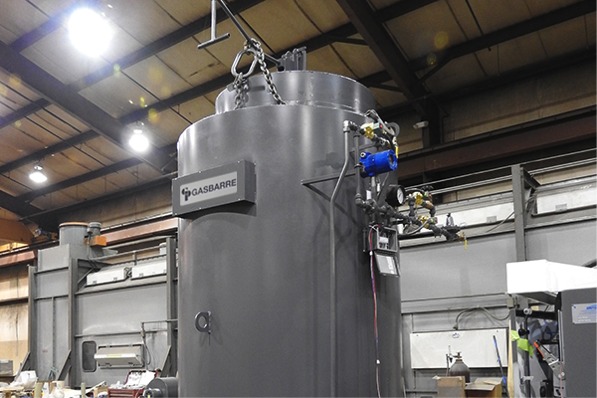
(source: Gasbarre Products, Inc.)

Three batch steam treaters were recently shipped to the medical and automotive industries. Gasbarre Thermal Processing Systems recently received three separate orders for batch steam treating equipment. The batch steam treaters produce an oxide layer that promotes corrosion and wear resistance properties and provides an attractive surface finish. The three unique orders range in size from 18” to 30” in diameter and 12” to 48” deep. The gross load weight capacity ranges from 300lbs to 1800lbs with Gasbarre supplying the production tooling. The equipment is electrically heated and has a maximum operating temperature rating of 1400℉.

Steam treating processes are used in many different industries. As such, these orders will be shipped to companies that provide products to the medical, additive manufacturing, automotive and consumer products industries.

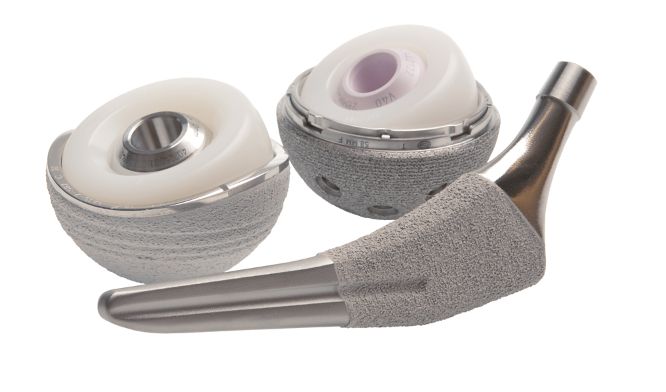
Stryker Hero JR Hip Replacement
Source: Stryker.com

Three Batch Steam Treaters Shipped to Medical, Automotive Industries Read More »

GKN Aerospace to Collaborate with GE and Saab for Swedish Air Force

The Swedish Air Force has selected GKN Aerospace for technical product support and maintenance, repair, and overhaul (MRO). GKN Aerospace will provide these services as well as spare parts supply for the Gripen E RM16 aircraft engines of the Swedish Air Force. The RM16 is the Swedish name for the engine based on the General Electric F414 that powers the F-18 Super Hornet. GKN Aerospace’s continued support to the platform was confirmed by the Swedish Defense Material Administration (FMV) in January. GKN Aerospace will closely collaborate with Saab and GE to build up the necessary infrastructure and competence for the new engine type.

Joakim Andersson, President of Engines at GKN Aerospace

President of Engines for GKN Aerospace Joakim Andersson said, “GKN Aerospace is proud to further expand our relationship with FMV, GE, and Saab to the new RM16 aero-engine support. Our unique and efficient engine maintenance and support capabilities have served the Air Force operations since 1930.”

GKN Aerospace is also the original equipment manufacturer (OEM) and type certificate holder of the Gripen C/D RM12 aero-engine and has been supporting the RM12 aero-engines since the first Gripen aircraft went into service in 1997.

(source: GKN Aerospace)

GKN Aerospace to Collaborate with GE and Saab for Swedish Air Force Read More »

Heat Treat Brain Trust on Industry Innovations That Have Enhanced Automotive Heat Treating in Recent Years

This week’s Technical Tuesday installment is a Heat Treat Today original that was first published in the Heat Treat Today Automotive magazine in June 2019.

This industry is richly endowed with a heritage of experienced metallurgists and skilled professionals. This era is one of innovation and trends – especially in automotive manufacturing. How does the heritage of the industry and the vision of the future come together? We’ve compiled input from a selection of Heat Treat Today’s own industry experts on a question about new stuff going on in both the labs and the shops. (To see what other fields and specialties our Heat Treat Consultants work in, go to: www.heattreattoday.com/consultants)

Question: “Thinking about the automotive heat treating industry, what is one of the more interesting, innovative or helpful technologies, processes, materials, or products that you’ve seen recently?”

The Heat Treat Brain Trust Responds:

Sandra Midea

Sandra Midea is a consulting metallurgist and founder of Midea Group Inc.

I’ve had the opportunity to work first hand with an induction company in North Royalton, Ohio, (Induction Tooling Inc.) to create an in-house facility that develops and validates induction heat treating processes. The objective was to create a space with the right equipment and personnel where induction processes and tooling could be tested—to innovate, to provide proof of concept, to troubleshoot, and/or to validate processing parameters, in the most streamlined process available. For the automotive industry,
the lab has been used to reduce the time required to get products/processes ready for the PPAP. Bill Stuehr, the company’s president and CEO, had the vision that induction process development could occur rapidly by condensing the design, manufacturing, development, testing, and characterization and metallurgical validation processes all into one facility. With seven power supplies from different manufacturers and three material handling systems available for induction process development, an automotive supplier’s production induction heat treating department can be mimicked for power, frequency, quench & quench method, and material handling methodology. This allows incremental process and tooling development to occur in a laboratory environment without the cost of breaking into production.

This development facility is backed up with an ISO 17025 commercial metallurgical testing laboratory. Sample parts are checked for appropriate microstructure, grain size and hardness requirements and reported to the customers. Initial lots of evaluation parts can also be produced. This allows the inductor and process to be developed and validated before the tooling ships to the heat treating customer. While some process tweaks may need to occur at the final facility, the time required for a company to be ready to begin the PPAP process can be significantly reduced.


Max Hoetzl

Max Hoetzl previously served as president of IHEA and vice president of technology with Surface Combustion, Inc.

One of the most interesting things I’ve seen in the automotive heat treat industry is the use of robots to load and unload furnaces. The use of robots has significantly improved the operation in many ways.

Following are some of the examples:

  • Remove humans from hazardous environment,
  • Increase throughput,
  • Provide part loading for uniform thermal treatment.


Joe Benedyk

Joseph Benedyk is a research professor at Illinois Institute of Technology and a mining & metals consultant. (Image source: Light Metal Age)

Reducing Heat Treatment Time in the Precipitation Hardening of Aluminum Alloys

Strengthening aluminum alloys through the precipitation hardening process by solution heat treatment and aging is considered a fundamental step in the manufacturing of high strength-to-weight products that meet performance requirements in both the aerospace and automotive industries. The automotive industry is focusing on 7xxx alloys because of their high strength. Among the high strength 7xxx (Al-Mg-Zn) alloys is the mainstay alloy 7075, which can achieve a tensile strength of as high as 80 ksi when age hardened to a -T6 temper. However, to achieve these high strength levels in 7075 alloy at conventional aging temperatures requires aging for 24-48 hours, a stumbling block to its application in automotive products.

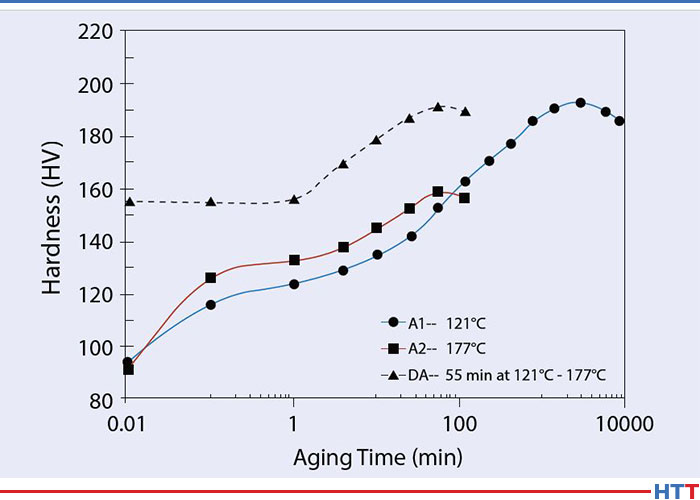
Figure 1. Comparison of age hardening curves for 7075 alloy solutionized at 914°F (490°C) and water quenched: A1 and A2 aged in a single step

Research at the Illinois Institute of Technology Thermal Processing Technology Center has shown that by selectively double aging 7075 alloy, the aging time to achieve maximum hardness and strength can be reduced to as low as two hours under laboratory conditions (see Figure 1) or demonstrably much shorter aging times in an extrusion plant trial. The obvious advantages of significantly shorter aging time for 7075 and other heat treatable aluminum alloys are not only energy savings but also increased plant productivity through much reduced processing time. The begged question of applying the double aging process to other heat treatable wrought aluminum alloy systems is under review.


Jim Senne

Jim Senne is the owner and president of MetalPro Resources, LLC.

PSA generated nitrogen has become increasingly popular for use in heat treating applications, and at a fraction of the cost, due to advances in PSA technology. Typical cost per standard unit volume are 15% to 25% of the cost of bulk liquid nitrogen. Purity can range from 95% to 99.999%, however many processes demand less than full purity. PSA technology can dial into the specific requirement, making it even more economical. The equipment has excellent reliability and requires only general maintenance on the associated air compressor and periodic filter changes. As well, the CMS (Carbon Molecular Sieve) material can last 20+ years. Processes that require a nitrogen cover gas are particularly well suited, such as induction hardening, tempering, and stress relieving. Other suitable applications include nitrogen/methanol atmosphere, FNC, N2+scavenger gas mixes, and purging.


Matt Orfe

Matt Orfe, an expert in lean manufacturing, is the head of sales and VAB product management for AeroSPC, Inc.

One of the most impressive pieces of equipment that I’ve seen in use in VAB (vacuum aluminum braze) furnaces in the automotive industry would be the in-furnace data loggers for monitoring the temperature of the parts being brazed.  The instrument is loaded into the VAB furnace with the parts to be brazed and wirelessly transmits the temperature data through the furnace chamber wall to the receiver/monitor.

This eliminates the need to plug in thermocouples with the furnace door opened, as the load sensors can be attached to the unit prior to insertion into the chamber.

Multiple thermocouples can be used with the system and multiple data logger units can be used for high volume applications. Very accurate, very easy-to-use, and very impressive!


Debbie Aliya

Debbie Aliya is founder and president of Aliya Analytical, Inc.

My instant response is always that the most innovative, interesting, and helpful technologies are educational in nature— the knowledge that allows people to make the best use of the common materials that still form the foundation of our industry. How many products would be more reliable if people properly selected, specified, and inspected the heat-treated materials that they use? How many products would be more reliable if the purchasing and specifying functions had a realistic idea of how much variation they should expect in a given part, lot, from lot to lot, and over an extended period of time? For example, how many people in engineering and purchasing know what a furnace uniformity survey is?

Purchasing often does not want to use an alloy steel, but if they need uniformity of strength, and there are different section thicknesses, they may save money and headaches if they pay the extra up-front to get the hardenability into a range that will provide consistency.

How many companies have minimum hardness or case depth specifications, without an upper limit? If the parts are to be electroplated, they increase the risk of hydrogen embrittlement, an issue that seems to come around in the industry every 10 years or so.

It wasn’t an automotive company, but I have had at least one client specify a quench and temper heat treatment for an HSLA (high strength low alloy) steel, which completely defeats the purpose of the HSLA grade system.

There are still a lot of people doing design work who think that calling out a composition requirement gives a certain strength level. For many of the European and Asian steel specifications, this is true, but the American specifications are often for composition only.

How many companies still do not require lot traceability? In the automotive world, if it’s a critical part, traceability is generally required, but there are still a lot of parts that fall through the cracks.


Doug Shuler

Doug Shuler is the owner of Pyro Consulting LLC.

The most interesting thing I have seen in the automotive heat treating industry is a new pyrometry technology software system known as C3 Data.

This solution enables those in the heat treatment industry to comply with specific industry quality requirements of pyrometry, saving enormous amounts of time in the process.

While C3 Data is currently better known in the Nadcap world for their solution for AMS2750, their new CQI-9 version should be something that heat treaters in the automotive world consider.

This fits with my motto of working smarter—not harder!


Irwin Brown

Irwin Brown is Managing Principal & Co-founder of Cosmos Consulting Group.

Nowadays, the heat treating industry, especially automotive, enjoys an abundance of riches. We are witnessing increased business volume coupled at the same time with efficient new equipment and technologies, such as additive manufacturing, AI, supply chain improvements, and amazing software. So, why are so many thermal processors unable to raise EBITDA? We are also witnessing critical worker shortages as well as many current employees voluntarily resigning in record numbers. What is the secret to improved quality and increased profits? In our work with industry clients, we found a way to lead employees to better serve customers, thus unlocking vast potential. This strategy, based upon a little deployed thirty-year old method, provides a rapid turnaround that makes productivity soar.

This “secret sauce” is Servant Leadership, which remains the best and most useful technique for transforming difficult relationships among modern multi-cultural employees. Old style command-and-control employers hesitate to recognize and acknowledge how decades-old management behavior is unsustainable with today’s workforce. More enlightened owners, in their own self-interest, value a more dedicated workforce. Employees do not leave companies; employees leave their managers.

Servant Leadership permits owners to run their business rather than having the business run them. Building strong, working relationships creates positive results and is not soft leadership. As Ken Blanchard likes to say, “the power of love beats the hell out of the love of power.” Servant Leadership costs nothing and has proven it can spearhead a rapid turnaround.


Dan Herring

Dan Herring is The Heat Treat Doctor® at The HERRING GROUP, Inc.

Intriguing question. In my mind, it is the emergence of the electric car and the innovations it will spawn. The motivation is there: a new generation that demands to be green, countries such as China passing laws on vehicle energy reduction (a so-called energy vehicle score), and technological improvements. Battery performance is rising (distance per charge), battery costs are falling (potentially lowering vehicle cost), battery life is up, and weight reduction is a reality. Another reason is the simplicity it brings to the vehicle (the absence of a multi-speed transmission, for example) and a reportedly lower cost for common repairs (this might be a bit misleading as one has only internal combustion engine vehicles to compare with).

While the transition has begun, I feel there are two major hurdles to overcome. First is infrastructure. A massive investment is required to make recharging as available to the public as stopping now to get gas. Every gas station in any country in the world must be mandated to have multiple charging stations. The hidden issue here, both domestically and around the world, is that it will require changes in the law – and the fossil fuel lobbyists are powerful, well established, and entrenched in the government sector. Also, the cost of electricity (in some regions of the world) is not price competitive. Second is public perception. Yes, everyone wants one, but who wants to be first? The phrase I like to use is that John Q. Public doesn’t mind being on the cutting edge, he just doesn’t want to be on the bleeding edge.


Heat Treat Brain Trust on Industry Innovations That Have Enhanced Automotive Heat Treating in Recent Years Read More »

Homocarb Pit Furnace Dispatched to Power Industry

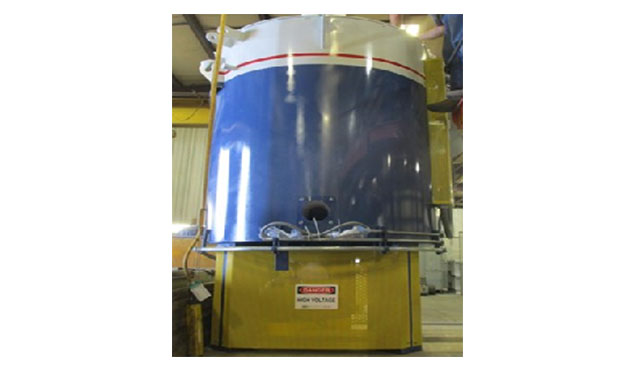
An electrically heated homocarb pit furnace was recently shipped to a manufacturer in the power industry. It is designed to work with a protective carbonaceous atmosphere. The top loading furnace, from Lindberg/MPH, is ideal for case carburizing, hardening, annealing, and carbon restoration at temperatures up to 1750°F. Gross workload is 1600 pounds, with temperature uniformity of +/-25°F at 1650°F.

The furnace can accommodate a work basket with a 25-inch diameter that is 48 inches deep, providing a clear work volume of 13.64 cubic feet. A retort minimizes atmosphere consumption and furnace-conditioning time between loads. The cover lid utilizes an electrically operated boom lift, which provides ease of loading and unloading.

(source: Lindberg/MPH)

Homocarb Pit Furnace Dispatched to Power Industry Read More »

Heat Treat Fringe Friday: Voice Activated Wheel Nuts Withstand Car Theft

Heat Treat Fringe Friday

Sometimes our editors find items that are not exactly “heat treat” but do deal with interesting developments in one of our four key markets: aerospace, automotive, medical, or energy. As we approach the weekend, today’s Heat Treat Fringe Friday, Best of the Web post focuses on an interesting development in the automotive industry.


Raphael Koch, research engineer, Advanced Materials and Processes, Ford of Europe (source: LinkedIn.com)

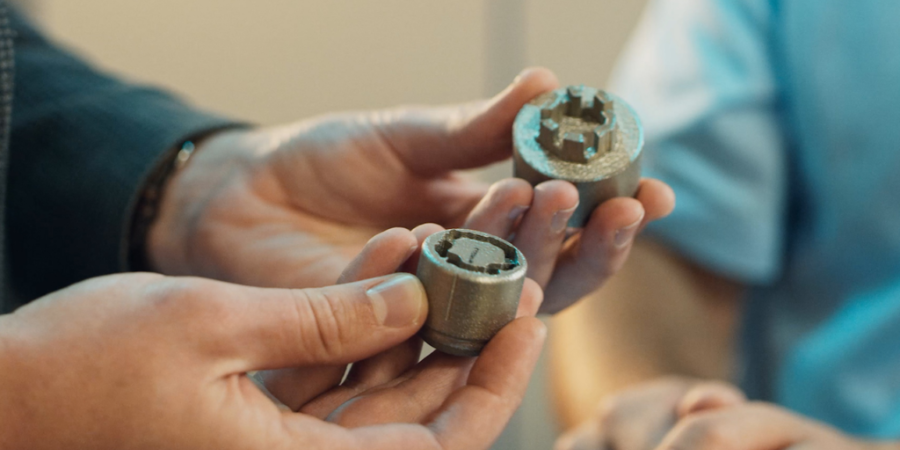
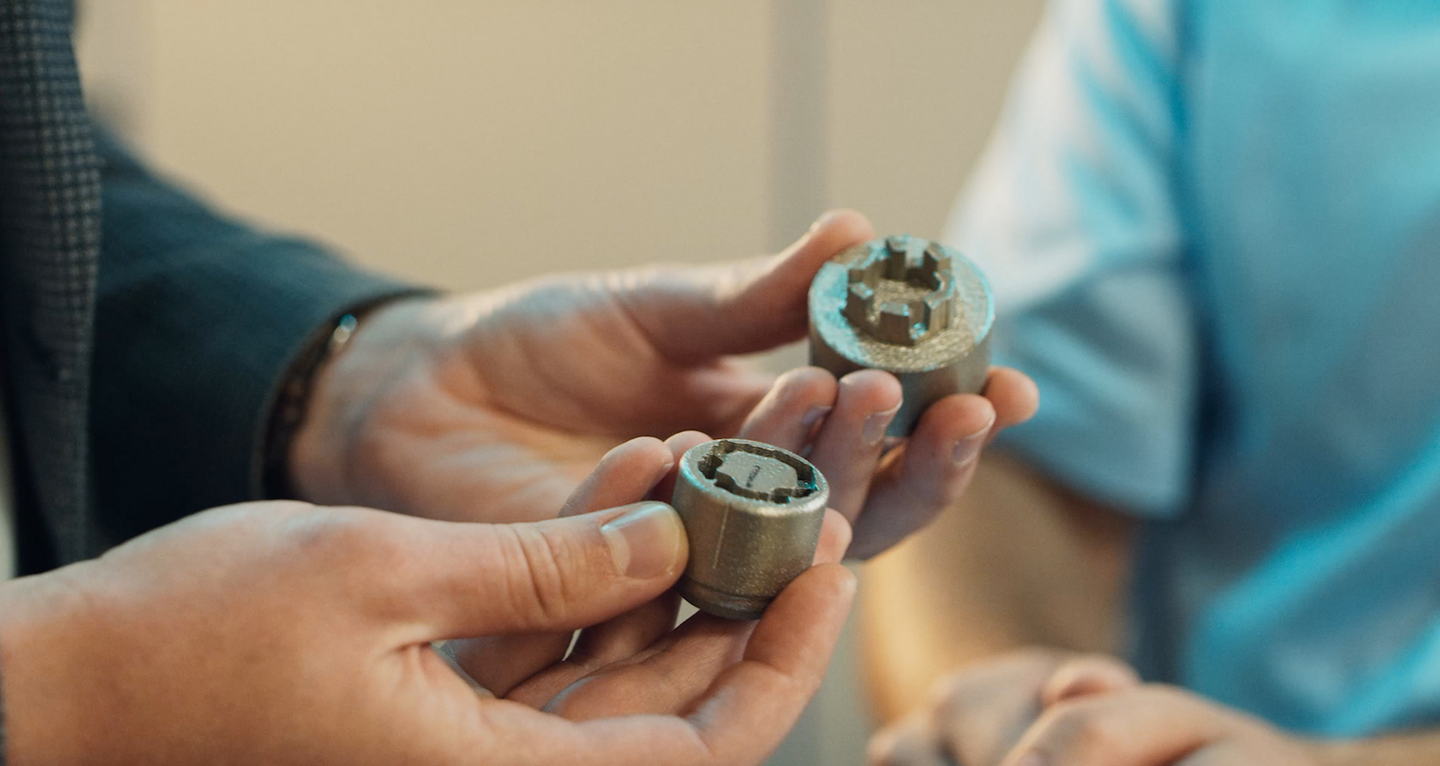
It’s one of the worst experiences a proud car owner can experience–walking out to their beloved vehicle to discover all four wheels are gone. As alloy wheels and vehicle customization have grown in popularity, component theft has unfortunately become a lucrative side business. “Some alloy wheels can cost thousands to replace, but these unique rim nuts will stop thieves in their tracks. Making wheels more secure and offering more product personalization are further proof that 3D printing is a game-changer for car production,” says Raphael Koch, research engineer, Advanced Materials and Processes, Ford of Europe.

Michael Jan Galba, Head of Global Consulting & Manufacturing Engineering at EOS (source: LinkedIn.com)

Ford engineers wanted to help customers find a solution, hence the advent of a theft resistant lug nut. The project was the result of a brainstorming session focused on finding applications for additive manufacturing within the company. In collaboration with additive manufacturing solutions provider EOS and software developer Trinckle, engineers at Ford have now developed unique locking wheel nuts using 3D printing technology. “We thought about using fingerprinting, or an iris scan or something that could actually modify the groove or curve of the lug nut,” says Michael Jan Galba, Head of Global Consulting & Manufacturing Engineering at EOS. “Trinckle proposed adapting an application they used in a completely different industry that utilized a voice wave curve.”

To read more about this story, click here.

Image: Ford Company

Heat Treat Fringe Friday: Voice Activated Wheel Nuts Withstand Car Theft Read More »

North American Automotive Steel Producer Expands Mexican Operations

A North American steel supplier announced today that it has begun operating its continuous galvanizing line, which will produce hot-dip galvanized sheet steel for the automotive market. Nucor-JFE Steel Mexico, located in Silao, Guanajuato in central Mexico, has begun trial production and will move towards full-scale sales and production once customer approvals have been obtained.

Leon J. Topalian, president and CEO, Nucor Corporation

“We are excited to expand our presence in Mexico and to use our local sales network to increase our sales into this important automotive market,” said Leon Topalian, President and CEO of Nucor. “We are proud to partner with JFE Steel Corporation of Japan and to benefit from their experience as a premier supplier of high-quality products to the automotive industry.”

The hot-dip galvanized sheet steel production facility has a production capacity of 400,000 tons annually. It can produce sheet thickness from 0.4 mm to 2.6 mm and widths of 800 mm to 1,850 mm. Nucor and JFE will each supply an equal amount of substrate to be processed at the new facility.

(Source: ASM International)

North American Automotive Steel Producer Expands Mexican Operations Read More »

Skip to content